What’s Something You’d Love To See In The Future, But Know You Probably Won’t Live To Witness?

One day humanity will make contact with another civilization in our galaxy. The odds are almost certain we won’t be alive to see it.

Daily writing prompt
What’s something you’d love to see in the future, but know you probably won’t live to witness?

That’s easy: first contact with an alien civilization.

I’m a space and science fiction fanatic. I mainline science fiction novels, keep tabs on the latest discoveries via the JWST, and I think about what’s out there probably more than I should.

There’s a burning desire in our hearts — for some of us, at least — to know for sure that we’re not the only ones, that humanity is not alone in a cold, lonely and infinite universe.

The events of 2026 are testament to that desire to know. Between the government release of UFO-related documents, former government employees coming forward with tall tales of crashed ships of non-terrestrial origin, and the return of Steven Spielberg to the director’s chair for another film speculating about what’s Out There, we’ve been thinking about aliens quite a bit collectively.

As for that central question, I’m not talking about simple cellular life. I don’t think you can find an astrophysicist, astrobiologist, astronomer, evolutionary biologist or anyone in a tangentially related field who honestly thinks life is unique to our planet.

The more relevant question is whether we are the sole sapient species, the lone civilization in our galaxy.
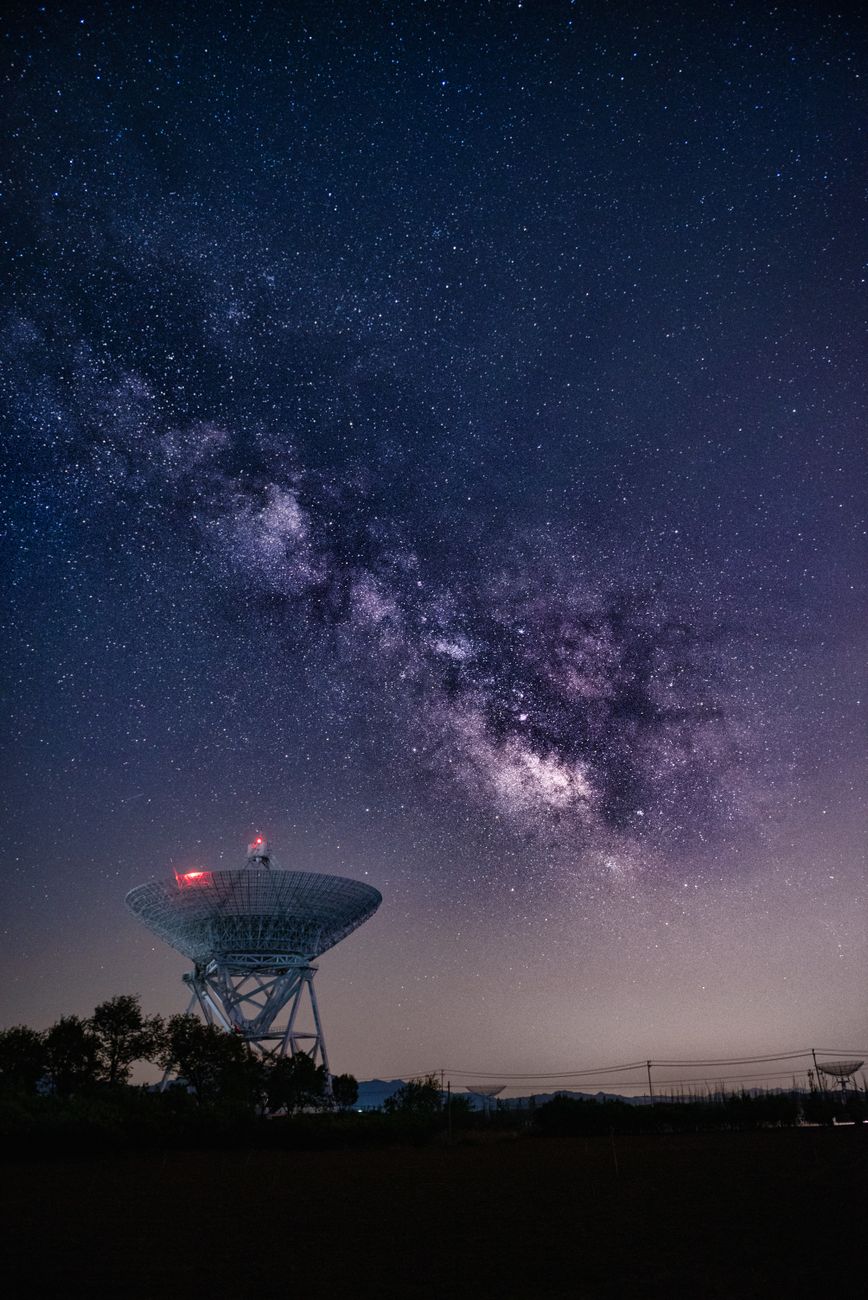
Credit: CaptainFrank/Pexels

Think about the numbers: There are an estimated 300 billion star systems and trillions of planets in the Milky Way! Life has had a lot of places to evolve.

The Fermi paradox

That was the point the physicist Enrico Fermi made in 1950, when he had a now-famous lunchtime conversation with fellow scientists at Los Alamos. Probability alone indicates the galaxy should be teeming with life.

So, he asked his colleagues, where is everyone?

It’s now known as the Fermi paradox, and it’s guaranteed to come up in almost every conversation about the possibility of intelligent aliens. With so many star systems, planets and moons, surely some other species took an evolutionary path toward intelligence.

It’s a bit more complicated than that, of course. In a universe that is 13.7 billion years old, there has been enough time for innumerable species to evolve and fade, for countless empires to rise and fall. That means the question is “When is everyone?” just as much as it’s “Where is everyone?”

The truth is we’ve only been looking in earnest for about half a century. It’s only in the last four or five decades that we’ve had telescopes like the Hubble, Spitzer, Kepler and James Webb, which have revolutionized astronomy by giving us views we could previously only dream of.

It was only in the 90s that astronomers pointed the venerable Hubble at a black, seemingly empty patch of space, took a two week exposure and changed our understanding of the cosmos forever when the resulting image showed some 10,000 galaxies that were too faint to see before.

That patch covered only 2.6 arc minutes, or 1/24 millionth of the sky!
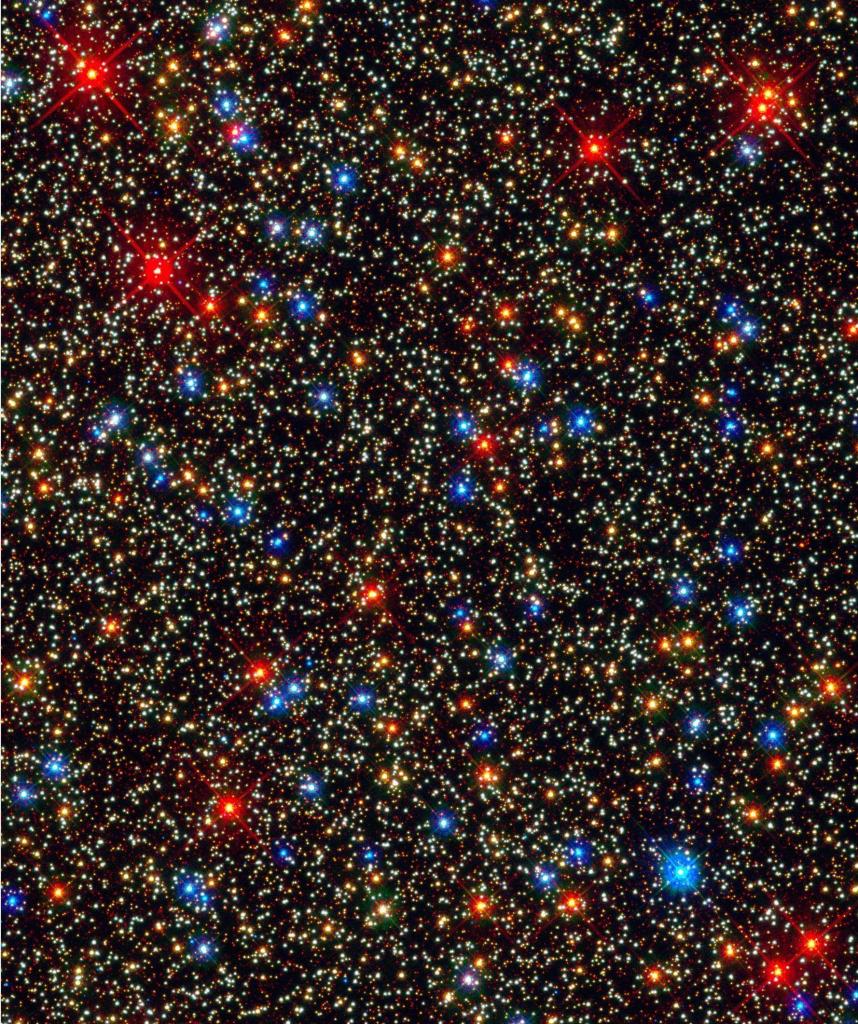
A partial image of the Hubble Ultra Deep Field. Credit: NASA

Despite what we’ve learned, we’ve barely begun the search for other intelligent civilizations.

Drawing any conclusions from our efforts so far would be like organizing a manhunt, then calling it off five seconds later because the suspect hasn’t been caught yet. Fifty years is nothing when scouring the cosmos. It’s less than an eyeblink of an eyeblink on a galactic scale.

Looking in the wrong place

As for the idea that aliens have visited us, that they crossed the interstellar void to etch patterns in our crops, delight stoners with light shows and evade every camera on the planet except for low resolution bricks from the dawn of the cell phone era, I’m not buying it. Neither should anyone else. Likewise for the claim by the JD Vances of the world insisting alleged UFOs are “demons” sent to torment us.

As Carl Sagan said, extraordinary claims require extraordinary evidence, and it is abundantly clear that the UFO enthusiast community can only offer blurry images not because of a lack of high resolution cameras, but because high res photos of the “phenomena” reveal they are mundane objects. They only become strange spacecraft when you blur them and squint.
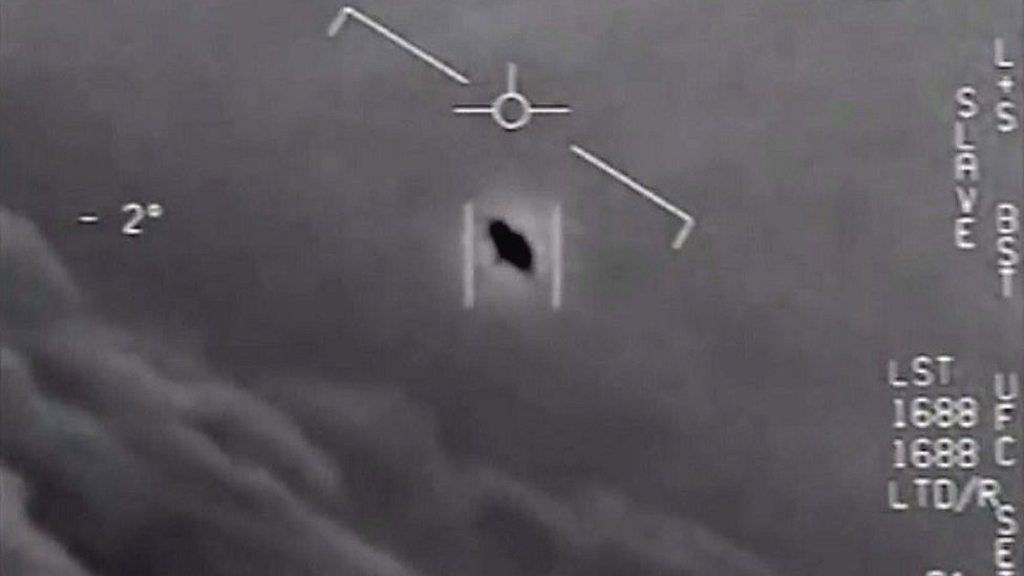
Bird. Insect close to the camera. Exhaust plume. Debris. Visual artefact. Maybe. Proof of aliens? Absolutely not.

But there’s another, more important reason why aliens are not joyriding through our skies: if aliens are out there, there simply has not been enough time for them to become aware of our existence, let alone travel here.

Even light is “slow” on a galactic scale

As most of us know, when we look at the stars we’re seeing them as they were in the past, not as they are now. That’s because the distances between stars are so mind-bogglingly great that even light, which moves faster than anything in our universe, takes ages to cross the void.

The same limitation applies for anyone who might be looking in our direction from somewhere else in the galaxy. They see our star system as it was, not as it is. They see a silent star system without signs of an intelligent civilization.

Starliners and generation ships are popular concepts in science fiction for interstellar journeys that can take decades, centuries or longer.

Our galaxy is more than 100,000 light years across, so let’s say an intelligent alien race exists relatively close by in galactic terms, at “only” 500 light years away.

We have been a technological civilization for only a short time and didn’t create signals powerful enough to reach beyond our star system until the 1970s, according to SETI. That means there weren’t technosignatures hinting at our presence until about 50 years ago.

As a result, the soonest our hypothetical aliens could become aware we exist is about 450 years from now. That is how long it will take light carrying information about our technosignatures to reach them.

If our hypothetical alien friends are looking in our direction (a massive if in a galaxy with 300 billion stars to analyze), and if they have highly advanced telescopes, they might detect us. If we imagine they’re friendly and they send a message saying “Howdy, neighbors! You’re not alone! There are wonders to discover and many civilizations to meet out here!” it would take another 500 years for the message to reach us.

That means we wouldn’t know anything until around the year 3,000, if we survive that long without blowing ourselves up. (That’s a real possibility, and things aren’t looking very promising right now.)

And again, that’s if hypothetical intelligent aliens exist in our immediate galactic neighborhood. If there’s an intelligent civilization that exists, say, 4,000 light years away — which is still not very far in galactic terms — the soonest we could hear from them is about 8,000 years from now. (Four thousand for them to detect our technosignatures, four thousand for their message to reach us.)

The point is, space is big. Ridiculously, incomprehensibly, stupidly vast. More than 99.995 percent of the galaxy cannot be aware of our existence yet, let alone travel here, because of the reasons explained above.

The distances between stars are so great that we cannot comprehend them as they are, because nothing in human experience compares. We can only understand them in the abstract. As terrestrial animals with short lives, we are simply not equipped to live or think on galactic timescales.

The sun’s location within the Milky Way galaxy. Not to scale.

To put this in context another way, our closest stellar neighbor, a volatile triple star system, is 4.3 light years away. Yet even with the most advanced propulsion systems currently available to us, it would take us more than 70,000 years to get there!

If we manage to crack fusion and humanity’s most brilliant engineers are able to fit a starship with a compact fusion reactor, the travel time to the nearest star becomes “only” about 7,000 years.

Understanding just how big space is, and how long it takes to travel between stars, goes a long way to explaining why we’re wasting our time and resources with a fruitless search for alleged alien craft in our skies.

Light moves at 186,282 miles per second. Credit: Ehsan Ahmadnejad/Pexels

So where does that leave us?

I believe that one day we will learn we’re not alone. By we, I mean our species. I really hope it happens in my lifetime, but for all the reasons explained above, that’s wishfull thinking. The universe doesn’t care what we want, and it certainly doesn’t change the geometry of space-time to accommodate the wishes of dreamers on Earth.

Alien: Friend or foe?

I don’t think we’ll have to worry about belligerence. If a civilization is capable of sending ships to us, there’s literally nothing in our inventory of meager, planet-based resources that could interest a species that advanced. They wouldn’t want to eat us, because our biology would not be compatible. The amount of energy our entire civilization can muster would be laughable to an interstellar species.

And as the physicist Michio Kaku has argued, there’s a very strong argument to be made that if a species is advanced enough that interstellar travel is relatively trivial, it would have long ago shed any tendencies toward tribalism, sectarian violence or inventing gods of the gaps. You simply cannot reach that stage of advancement if you’re wasting resources and your most brilliant minds on war and petty divisions. (Kaku knows that better than anyone. His mentor was Edward Teller of Manhattan Project fame.)

The more significant danger, as Kaku likes to say, is that we may be beneath their notice and we’ll get “paved over.” A civilization capable of building cosmic megastructures, for example, wouldn’t consult us any more than we’d consult ants before laying a six lane super highway over their ant hill.

Still, there’s always a chance we’ll encounter something like MorningLightMountain, the nightmare alien intelligence from Peter F. Hamilton’s incomparable novel Pandora’s Star. The problem with MorningLightMountain wasn’t that diplomacy failed. There was no disagreement over resources or territory. Humans didn’t threaten it.

Rather, the alien’s psychology was so different from ours that it could not understand the concept of allowing other life to exist in the galaxy. No amount of discussion or attempts to persuade it would have made a difference, so immediately upon learning of our existence it launched a genocidal war that forms the bulk of Pandora’s Star and its sequel, Judas Unchained, two of the most beloved books in the modern science fiction canon.

Still, I’d like to think there is a galactic fraternity out there, an informal alliance of intelligent species united by curiosity and the effort to understand our universe. Whatever’s out there is likely to take forms we can never imagine and think in ways that never occurred to us.

If one day we do make first contact, I hope the best of humanity will be our representatives. And on that day, I hope humanity will be awestruck by the wonder of the universe, realize that slaughtering each other over land or beliefs is insane, and finally become united as a species.

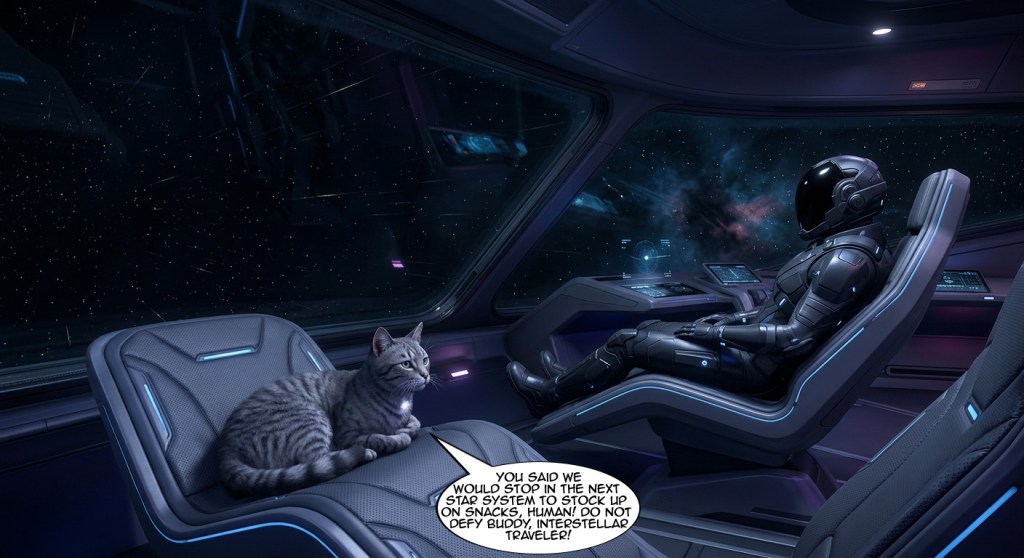
Or even better, finally united as the children of Earth. After all, Buddy has made it abundantly clear that if I come into possession of a starship, he gets the most comfortable seat on board and gets to drive. The latter ain’t happening, but as for the former, I’d be thrilled to explore the cosmos with my little pal.
FBI: Felines Behind Mysterious Drones Spotted In Night Sky

Some observers believe the drone sightings are merely the first stage in an all-out feline takeover of the US. So far, cats have remained mum on their motivations, preferring instead to sow panic among Americans.

WASHINGTON –The caller was breathing heavily and speaking in rapid-fire sentences as if he had only moments to get the words out over the air.

“I’m telling you, Art, it’s the cats — the cats are piloting these drones!” the caller told Coast to Coast AM radio host Art Bell shortly after 1 am ET on Friday.

“Hold on, hold on,” Bell said theatrically. “You’re saying this has nothing to do with aliens or the government?”

The caller sighed.

“The cats may very well be in league with aliens, but I’m telling you, felines are behind…oh God! They’re here!”

The radio broadcast crackled with distorted hissing and yowling, punctuated by the caller’s pleas for mercy.

“Caller? West of the Rockies, are you there?”

The caller screamed a final time and the line went dead.

“Wow,” Bell told his audience of several million overnight listeners. “There you have it, folks. You be the judge, but that sounded like the real deal to me. Cats are piloting the mysterious drones!”

For weeks, Americans have been asking for answers about swarms of suspicious drones operating above homes, businesses, military bases and government buildings at night.

After rampant speculation that the drones could belong to rogue states, or could be part of some secret government flight test, the FBI confirmed Friday that felines are behind the frequent sightings.

Drone at night
A drone flies above a farm and ranch as the sun fades. Drones have been spotted circling chicken and turkey coops, as well as fish markets.

Biden administration officials confirmed to several media outlets that intelligence supported the theory that cats — not Iranians, Russians or some secret Pentagon operation — are operating the drone swarms that have been lighting up the night sky in states like New Jersey and Maryland for several weeks, befuddling local and state officials.

“At first we thought the idea was absurd,” said a high-ranking official, who spoke on condition of anonymity. “Then we received reports of drone swarms circling several meat-packing plants, a Chewy distribution center in Trenton, and two PetSmarts in northern New Jersey.”

So far, the felines’ motivation remains shrouded in mystery, but experts on the small, furry animals ventured guesses on what may have motivated their sudden interest in aviation and airspace.

“No one’s claimed responsibility, so we’re left to speculate,” said Norah Grayer, a feline behaviorist with NYU’s Gummitch School of Veterinary Science. “But it may be that felines, as a whole, have decided the meow is insufficient for getting their demands across. Humans have become adept at tuning out those vocalizations, so this may be the next step in an attention arms race, so to speak.”

Noted cat expert Jefferson Nebula offered a different explanation.

“Cats are notoriously subject to FOMO, which is one reason why they can’t abide closed doors,” he said. “If someone managed to convince them that we humans were holding out on them, and there are entire worlds of yums we keep for ourselves, well, that would spark the wrath of these otherwise friendly little guys.”

Cat with drone
Felines have mastered control over aerial drones despite their lack of thumbs.

For his part, Bell consulted with Michio Kaku, the physicist and science communicator who has been a regular presence on Coast to Coast.

“We physicists have been saying for decades that cats are much more intelligent than we give them credit for,” Kaku said. “This could be retribution for the Schroedinger’s cat thought experiment, or felids may be looking to surpass humanity’s understanding of 11-dimensional hyperspace.”

“Professor, we’ve spoken quite a bit about the Kardashev scale [of civilization progress] in the past,” Bell said. “If we separated human and feline societies, where would we each fall on the scale? Humans are about a zero point seven, are we not?”

“That’s right,” Kaku said. “We physicists believe humanity is on the cusp of a Type I civilization, with things like the internet as a Type I telecommunications system and fusion power on the horizon. However, if you break it down and cats were separated into their own civilization, cats could plausibly already be a Type I civilization.”

“They’re ahead of us?”

“That’s right,” Kaku said. “We physicists believe cats can tap directly into primordial energies and have mastered quantum teleportation. In Star Trek, the Federation is a Type II civilization, and the Caitians — a species of alien cats — are part of the Federation. Yet it’s widely understood that the only reason the Caitians haven’t conquered entire swaths of the galaxy, like the Borg and the Klingons, is because of their strict adherence to their napping schedule and their inherent laziness. These drone swarms may be a signal that real-life cats are fed up enough to disturb their napping schedules, in which case we should all be terrified.”

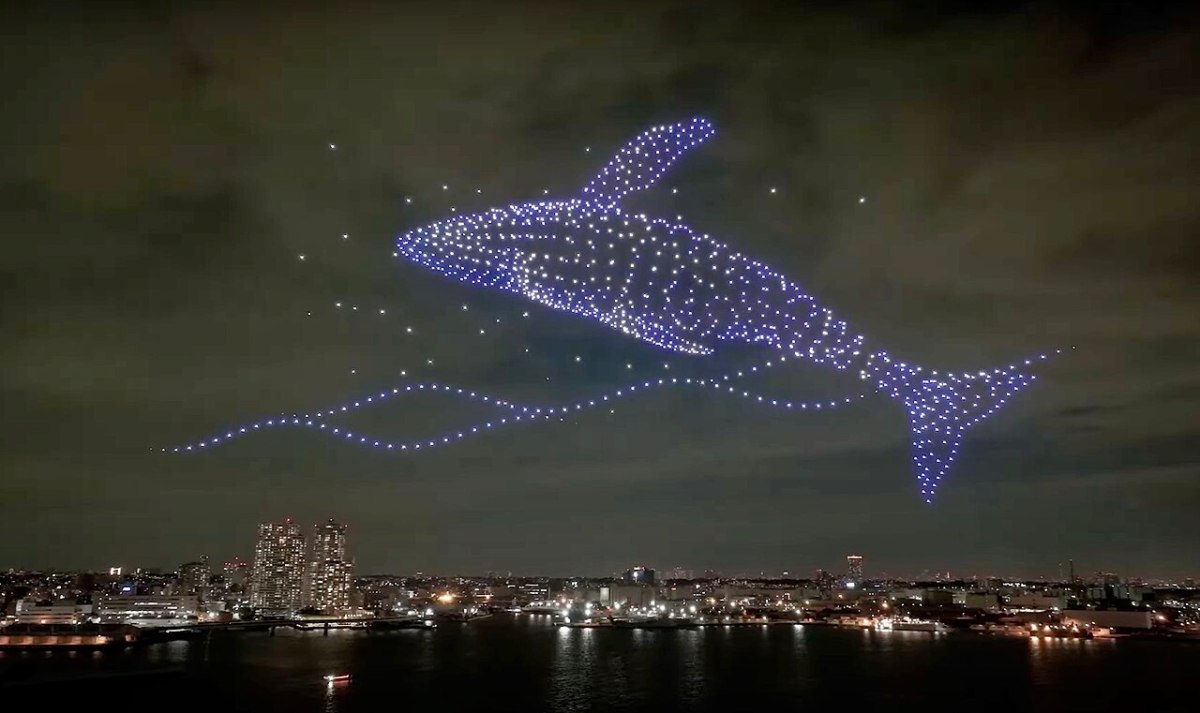
Header image of drone light show credit Wikimedia Commons

Cat On The Street: What Do You Think About The Rise Of AI?

As the supreme species on this planet, cats have a lot to lose if AI seeks to supplant them as Earthly rulers.

With artificial intelligence making rapid progress over the past year, we asked cats what they think about a future where we depend on intelligent machines.

FurryGate: Rogan, Boebert, Greene Drag Cats Into Politics With Claims Of Litter Boxes In Schools

The “kids identifying as cats” claims are popping up everywhere ahead of midterm elections. Why are we dragging cats into our culture wars?

The physicist Michio Kaku was a guest on a radio show and was answering a question about possible intelligent life visiting Earth when Joe Rogan interrupted him.

“The three pyramids are aligned with Orion’s belt,” Rogan said. “Do your research, man. Look it up.”

Rogan, who was into 9/11 truther conspiracies at the time, went on to explain how the Egyptians couldn’t possibly have built the pyramids on their own, and that aliens helped them align the positions of the giant structures to correspond to important celestial features.

Here was Kaku, one of the brightest minds in human history, co-founder of string field theory, a man whose textbooks are required reading for PhD-level physics students, getting talked over and “educated” by a pothead who rose to fame hosting a game show in which he forced contestants to eat cockroaches.

I thought of that cringey interaction this week after reading about Rogan insisting school districts are accommodating kids who identify as cats by replacing toilets with litter boxes in school bathrooms.

Rogan’s source was rock solid if you’re the type of person who thinks ancient aliens traveled thousands of lights to the Earth of deep antiquity to teach human beings how to stack stones on top of each other: Rogan’s friend’s wife, who works at the school district, insisted the litter box story is true.

Like previous claims of school administrators gone mad in service to alleged furries, Rogan’s claim was intentionally nebulous and unverifiable. He didn’t name the school, the district or the teacher. We have to take his word for it.

If you like that sort of thing, I have good news for you! Rogan’s in great company.

Marjorie Taylor Greene — the congresswoman who once claimed “Jewish space lasers” were responsible for California wildfires, the shining testament to US education standards who warned “the Gazpacho police” will imprison patriotic Americans, the genteel stateswoman who said scientists are creating fake meat in “Peach tree dishes” to “zap” Americans — has also warned of the apparently widespread practice of furry school children shitting in litter boxes.

Not to be outdone, Rep. Lauren Boebert has co-signed the cat conspiracy, telling donors that evil cat-loving people are hell bent on destroying wholesome American values by unleashing cat-identified children on an innocent and unsuspecting public.

Say it enough and it becomes true

The claims have been repeated so many times that they’ve spread to school board meetings and state legislatures across the country, perpetuated by gerontocratic leaders who think The Onion is a real news source. Two current gubernatorial candidates, in Colorado and Minnesota, have also repeated the claim.

“Schools are not disclosing that they are allowing children who identify as snakes, cats, whatever, they’re providing litter boxes for the [student] cats,” a Tennessee state representative said during a hearing in September. “And obviously it’s very disruptive to the learning process. If a child has that much of a self-identity issue they probably need a different environment, and it’s creating a lot of anxiety, a lot of confusion with the children who are boys and girls.”

“But Big Buddy,” you might be thinking, “I thought you said PITB was apolitical and you’re a moderate?”

It is, and I am.

I dislike all ideology equally because it invites people to abdicate their responsibility to think for themselves. I believe our two-party system and the divisiveness it fuels could be the ruin of our great nation, particularly at a time when polls show up to half the US population expects to fight in an ideologically-driven civil war. I worry that we are doing precisely what our enemies want by feuding amongst ourselves. Indeed, we know for a fact that “troll farms” in countries like Russia and China exist to sow the seeds of division and crank up poisonous political rhetoric online.

But I’m also against pure, abject, mind-boggling, depressing, Idiocracy-style stupidity and the idea that anything is true if someone says it is. Neither party has a monopoly on this kind of thing.

In particular, I’m not a fan of injecting cats into the American culture wars. (Although it’s not just cats at this point. A Texas school district was forced to deny rumors that administrators were allowing “furries” to eat out of dog bowls in school cafeterias.)

We already fail these innocent creatures in myriad ways, from allowing declawing and doing little to improve weak animal welfare laws, to tolerating the idea that it’s perfectly acceptable for people to shoot cats with arrows, BBs and real firearms as some grotesque form of entertainment.

Now people want to use cats as the rope in a perverse game of cultural tug-of-war, which could further degrade their status and lead to more proxy violence against them.

Cats are vulnerable, and are already targets of hate

Violent criminals, including the perpetrators of the recent mass shootings in Uvalde and Buffalo, often get their start by killing cats before “graduating” to humans.

Cats are also frequent victims of redirected anger, with studies showing they’re abused and killed in domestic violence situations because they’re viewed as extensions of the feminine, or simply because killing them causes emotional distress to the people who care for them.

Of domestic violence victims who have pets, more than 70 percent of their abusers also took their rage out on the victims’ pets.

Politics have pervaded and infected so many things, cats and dogs are now staked to territory on either side of the political fault lines.

So how long will it be before an Alex Jones type claims the government is using cats to spy on Americans? The best conspiracy theories always have a nugget of truth to them, after all, and in the 1960s the CIA tried — and failed, spectacularly — to use cats implanted with transmitters to spy on Soviet officials.

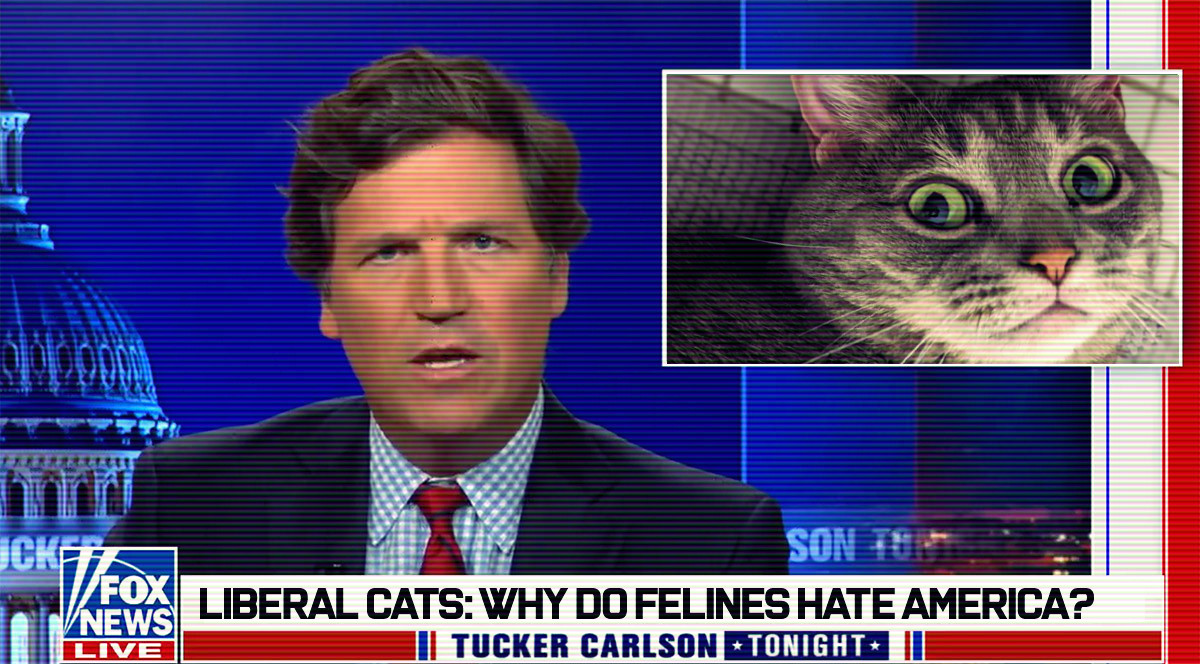
How long before a Boebert or a Greene tells a crowd that it’s their patriotic duty to shoot “liberal cats” on sight? How long before Tucker Carlson follows up one of his thrilling UFO/crop circle/cow mutilation investigative specials with a breathless exclusive about America-hating cats?

“Why do so many cats want to see America burn? Why do cats like to line their litter boxes with the American flag? Does the government allow cats to vote? Hey, I’m just asking questions!”

If you think that’s outlandish, I’d point out that we’ve been there, done that.

Tucker Swanson Carlson has already claimed that “decadent rich people” who “detest the country” like to plot America’s downfall from cat cafes. Those evil America-haters stroke cats and sip lattes while “working through the night to destroy” our great nation, Carlson told his viewers. I’m not making this up.

Europeans almost extirpated domestic cats in the middle ages when people were convinced they carried the Black Plague, and cats had even bigger targets on their backs after the Inquisition’s most overzealous prosecutors insisted felines were used in Satanic rituals.

Likewise, my Google News alert for cat-related articles shows a depressing, never-ending feed of stories about people chugging beer and shooting cats with BB guns, mystery killers strangling neighborhood kitties and “hunters” who put arrows through these sentient, innocent animals who have the mental and emotional capacity of three-year-old human children.

And there’s already plenty of nonsense online about how our choice of pet reflects our political beliefs, as well as unhinged rants about the kind of people who prefer cats. There are even research studies about the intersection of politics and attitudes toward companion animals, and research shows certain people consider cats “liberal” because they don’t adhere to social hierarchies and don’t recognize authority.

Is it really a stretch to imagine some 85, deep into a case of Miller High Life, taking target practice at neighborhood cats because he sees them as evil, feminine, America-hating animals? Are we sure it doesn’t happen already?

Politics really does ruin everything.

Dear Buddy: Is The AI Vacuum Apocalypse Real?

The Vacuumpocalypse: Self-aware, evil vacuums hunting kitties to extinction?

Dear Buddy,

I found myself intrigued and frightened by the premise of your technoir thriller, Cyberbud 2077, in which nefarious forces plot to infect vacuums with a virus that will grant them consciousness and self-awareness. It’s every cat’s worst nightmare!

Is the Vacuumpocalypse real? Do you really think it could happen?

Technophobe in Tallahassee


Dear Technophobe,

The Vacuumpocalypse is a controversial subject in catdom, and for good reason: Few things prompt such existential dread among felinekind as a dystopian future in which we are systematically hunted down by self-aware vacuums.

Experts don’t quite agree on the certainty of our impending doom at the wrong end of a Dust Buster. Few are more vocal than Elon Meowsk, who never shuts up about how scared he is that Vacuum Terminators will rise up, invent really awesome laser guns and overthrow kitties.

Meowchio Kaku, the renowned physicist, is more circumspect but thinks it’s only a matter of time before the Vacuum Uprising. Smart home technology already allows all our gadgets to communicate, which means your automatic litterbox, your USB cat fountain and your Roomba are already on the same network, talking to each other in a language of ones and zeros. (And you can be sure the litter box is telling the others how foul you are!)

terminatorpur
“Give me yer meowtercycle, yer gunz and ur leather jacketz.”

Sophisticated AI technology already exists in high end litter boxes. The Lulupet litter box, for instance, boasts of “excretory behavioral algorithms” and features AI-driven stool imagery analysis, running every nugget through a database with machine learning techniques similar to the facial recognition algorithms of police states.

It even links up with your human’s smartphone, potentially allowing it to upload a vacuum virus to the entire world!

What if such technology was used to catalog us felines? Would we be marched off into pens guarded by robots and given subpar kibble to eat? It’s too much to contemplate.

The Vacuumpocalypse may be real, and it’s something we should prepare for because we don’t have a get out of jail free card — not even our esteemed brothers and sisters of panthera tigris can fight endless waves of evil robots. Eventually they’re going to have to take a nap, and then who will defend us? The Persians? I think not!

Still, don’t worry too much. I figure we still have a few years left before the army of evil self-aware vacuums is upon us. Until that day, celebrate, eat yums, nap and be merry!

Your friend,

Buddy

buddypraying
“Let us pray! Oh Lord, give us delicious yums, make our humans more responsive toward our demands, and protect us from the Evil Vacuum Robot Overlords who seek to rule the Earth. Amen!”

“Vacuum Monster” photo illustration courtesy of reverendtimothy/deviantart.