The announcement follows news that Warriors will also be coming to TV screens as an animated series.
Warriors, the globally popular series of novels about clans of feral and stray cats, has sold 90 million books.
Now the franchise has turned its sights on conquering two new mediums with a TV show (see our June post about the upcoming series) and a newly-announced video game.
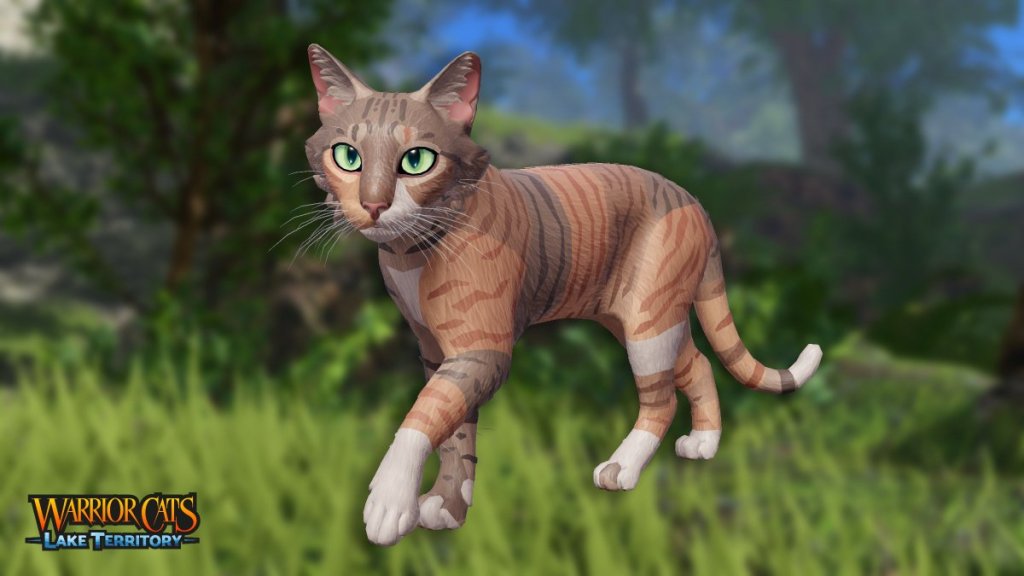
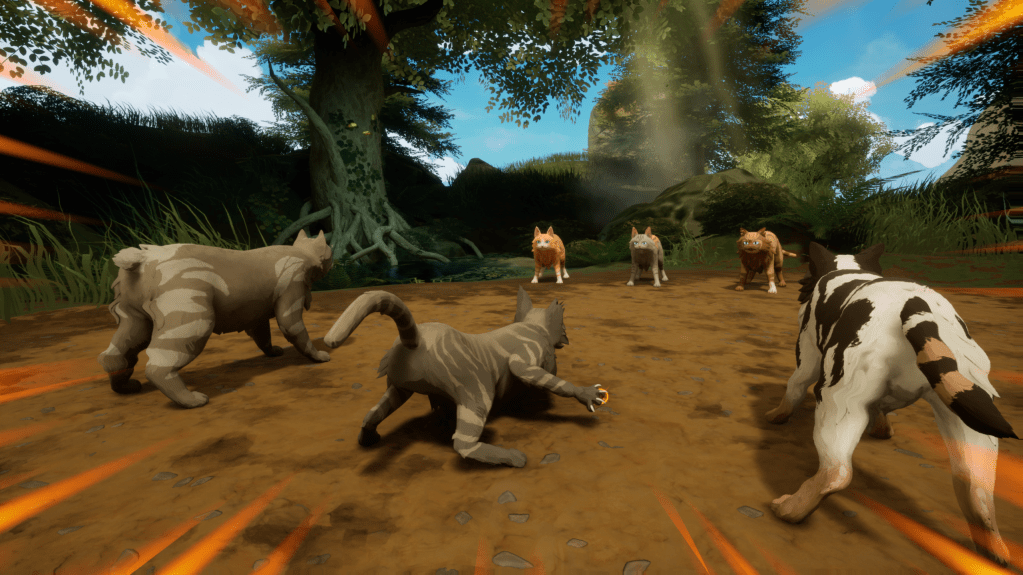
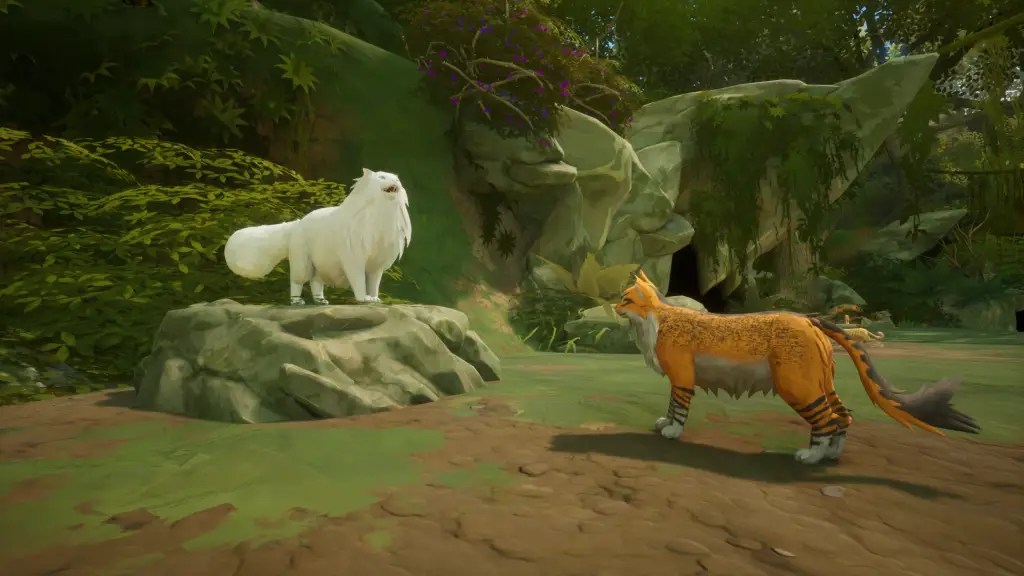
Titled “Warrior Cats: Clans of the Forest,” the upcoming release from Trailmark Games is a turn-based role-playing game that allows players to create their own unique cat who will run with his or her own crew and interact with major characters and the four clans from the novel universe.
The developers say the game world will include locations familiar to readers of the books, and quests will allow them to choose alliances and make other decisions that impact the story and the gameplay.
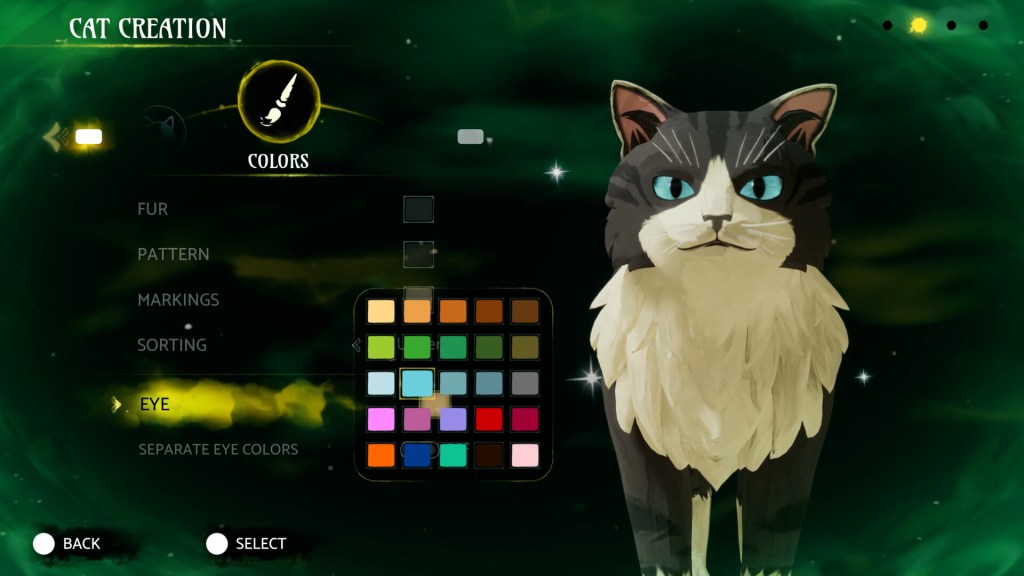
Before entering the world of Warriors, players will be able to name and create their own protagonist cat, complete with customized coat colors, markings, eye color and other features.
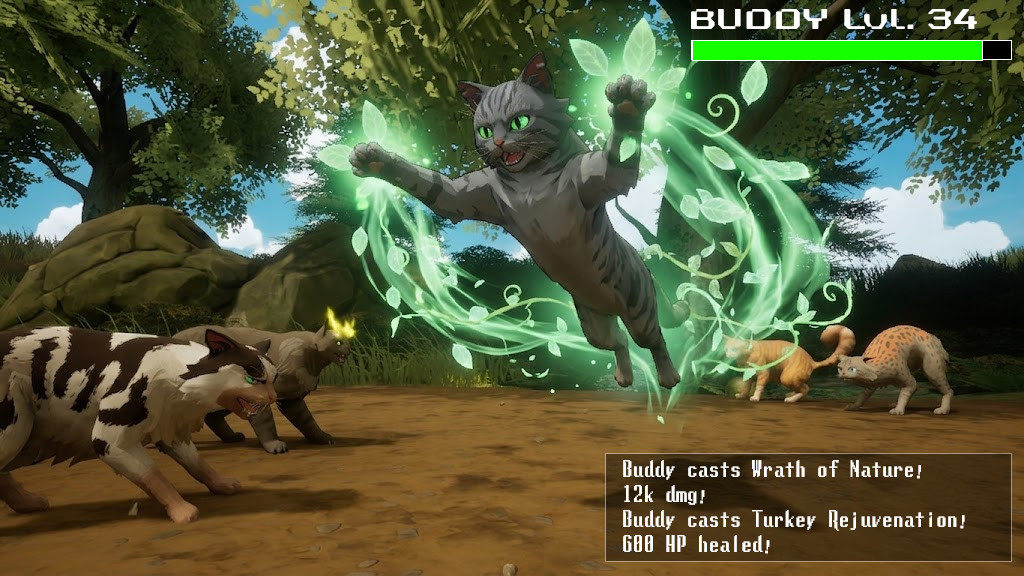
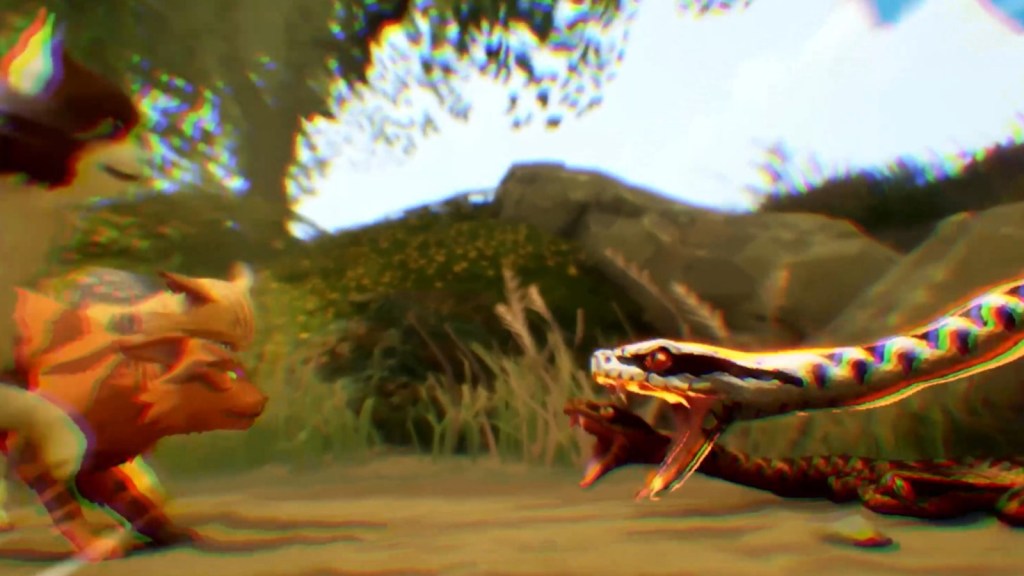
Since the majority of players will doubtlessly create characters based on their own felines, I’ve taken the liberty of using the game’s art style and editing a screen shot to add Buddy leaping through the air and casting two of his powerful spells, Wrath of Nature and Turkey Rejuvenation. The latter, of course, is a healing spell that restores health points via the magic of delicious turkey, in keeping with Buddesian lore. (And the behavior of the real life Buddy.)
Warrior Cats: Clans of the Forest is scheduled for a fall 2026 release date on PC (Steam), Nintendo Switch/Switch 2, XBox X/S, and Playstation 5.
Here are some real screenshots from the game:
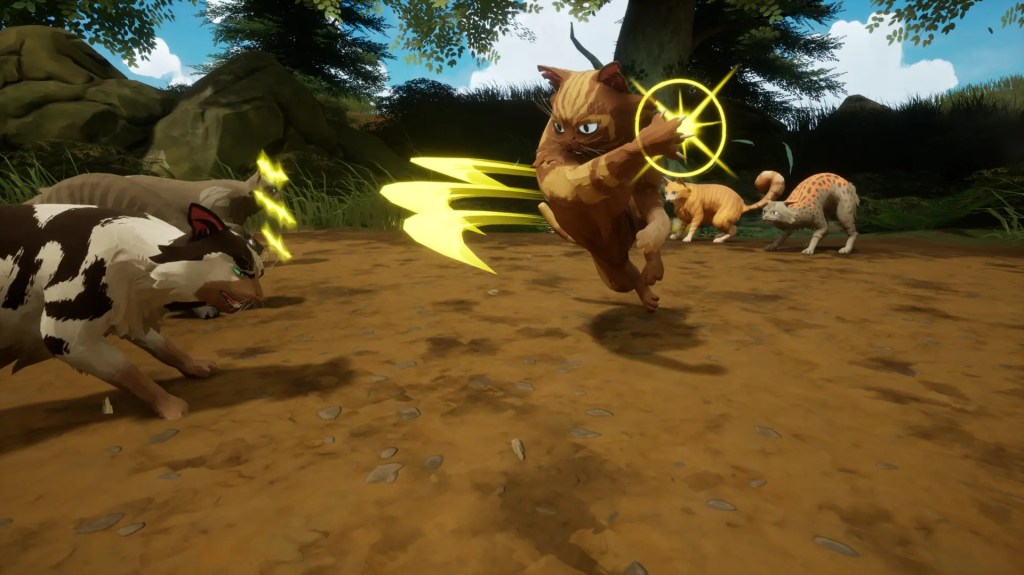
The character creation screen showing part of the customization options for the player’s cat.A screenshot of a turn-based battle.Cats will square off against each other as well as vicious dogs, snakes raccoons and other animals.Players will be able to interact with beloved cat characters from the novels.“Snakes?! I hate snakes!”
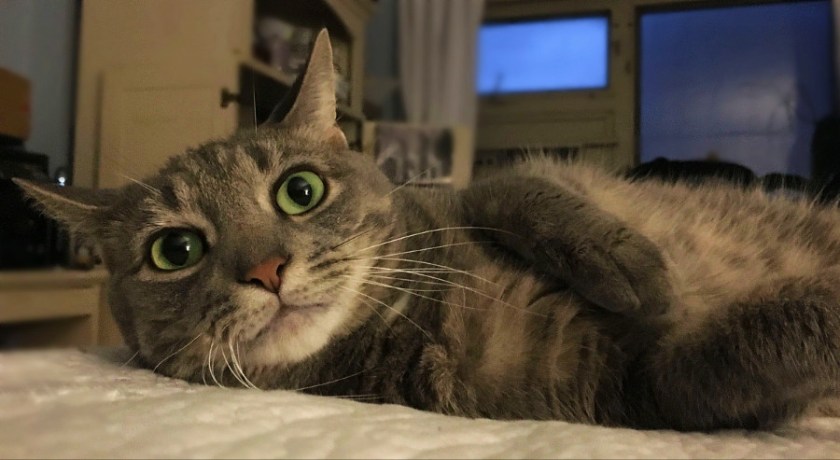
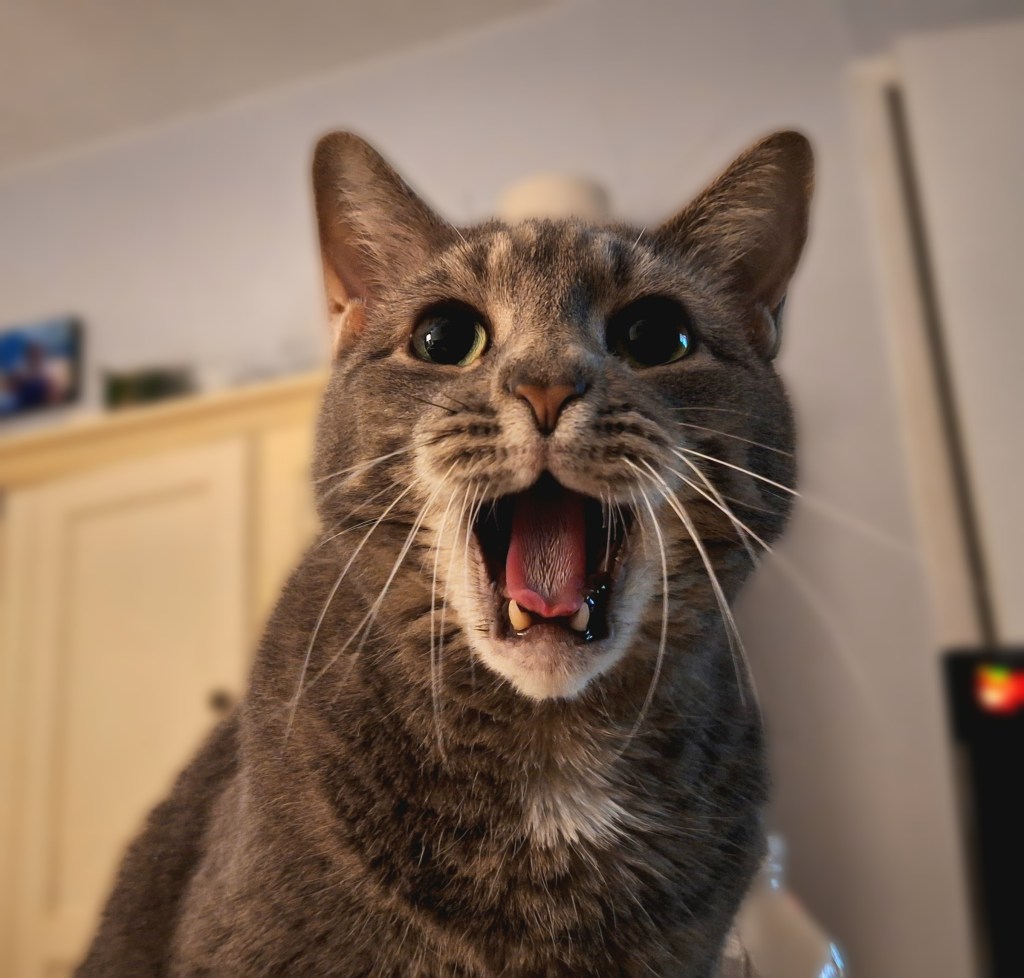
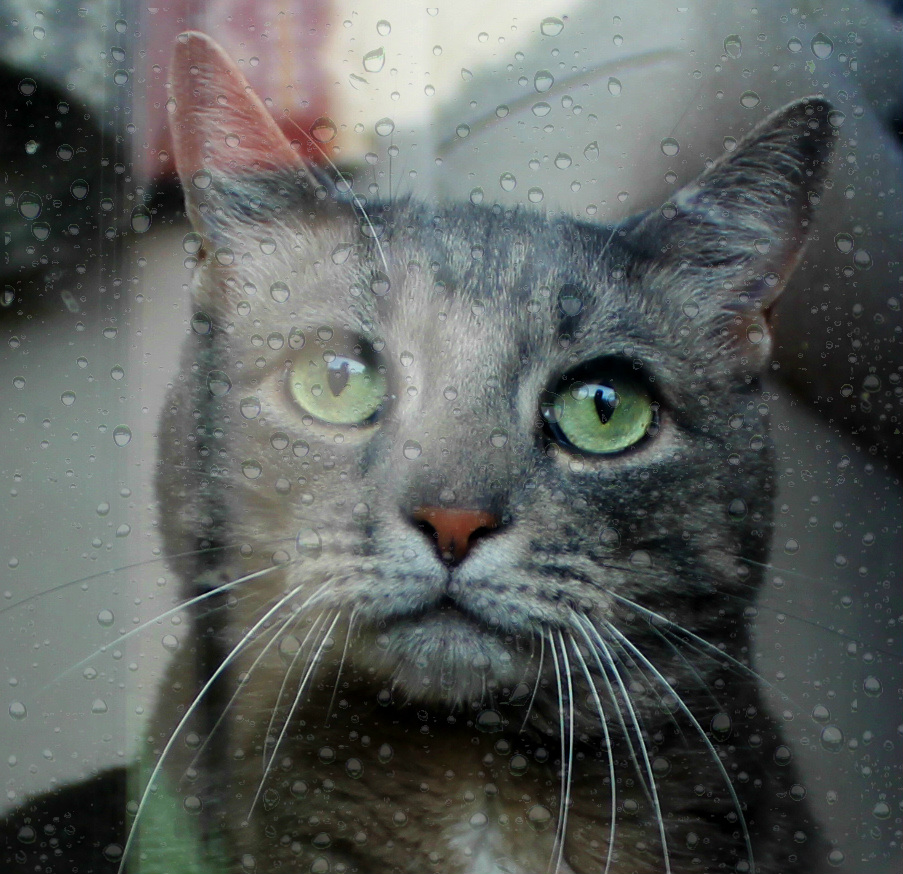
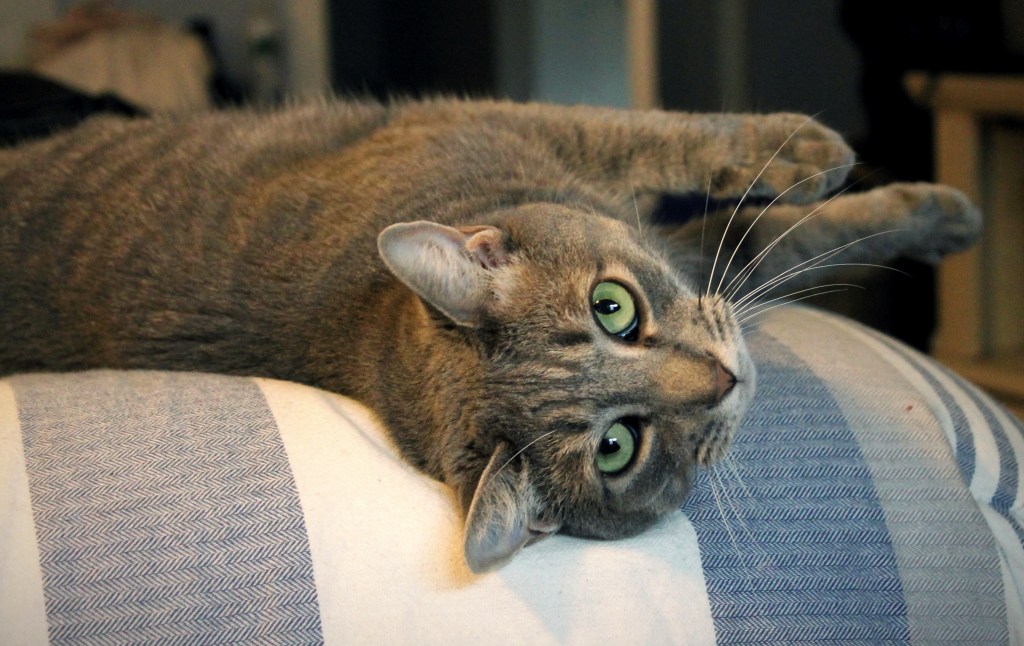
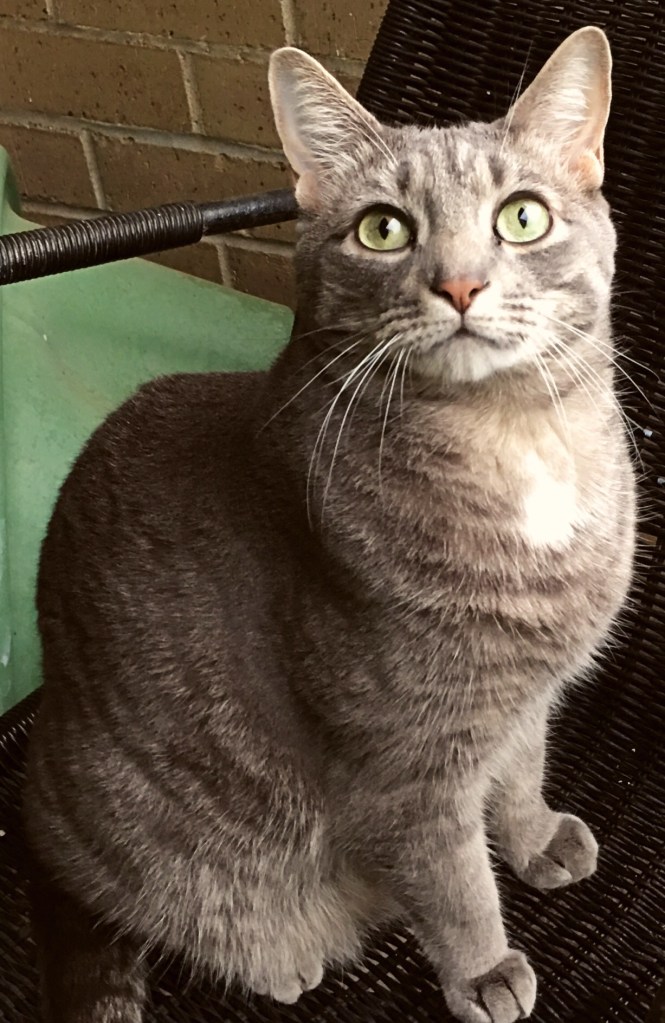
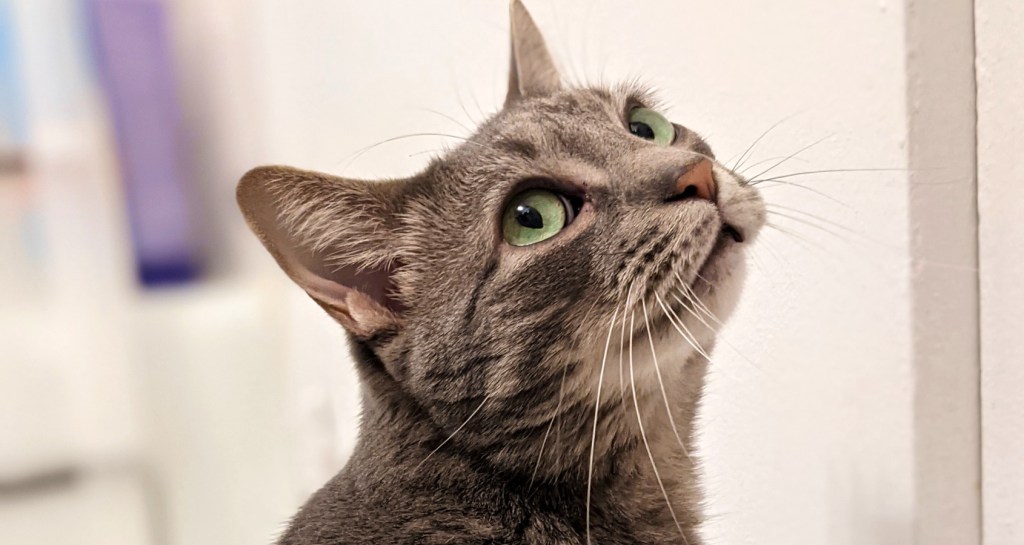
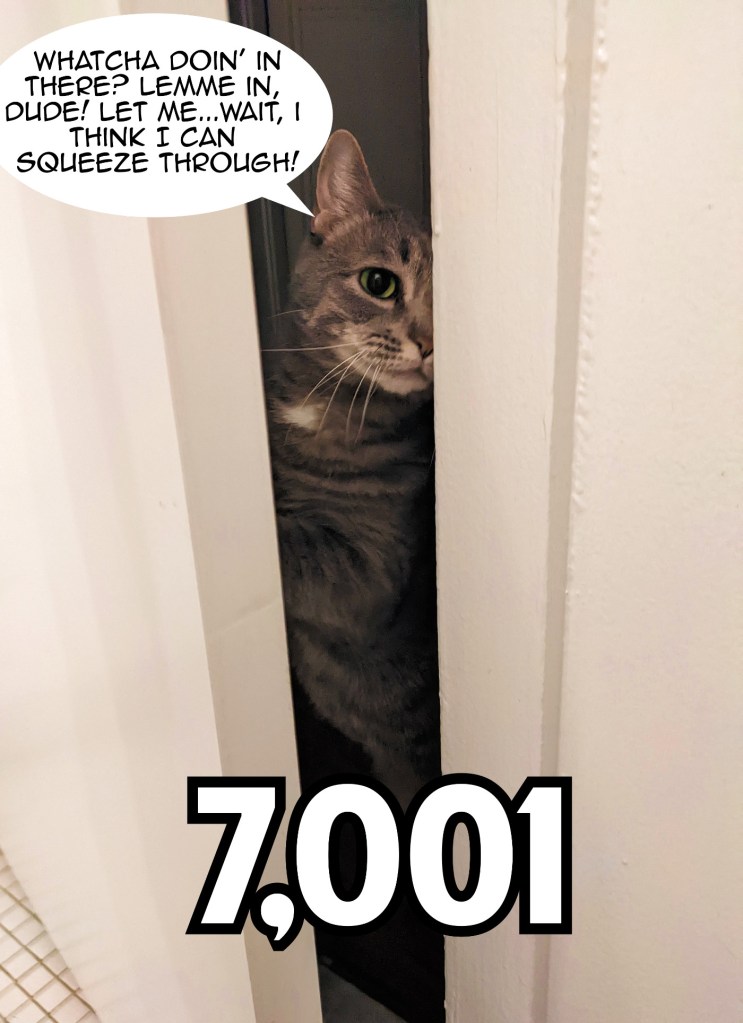
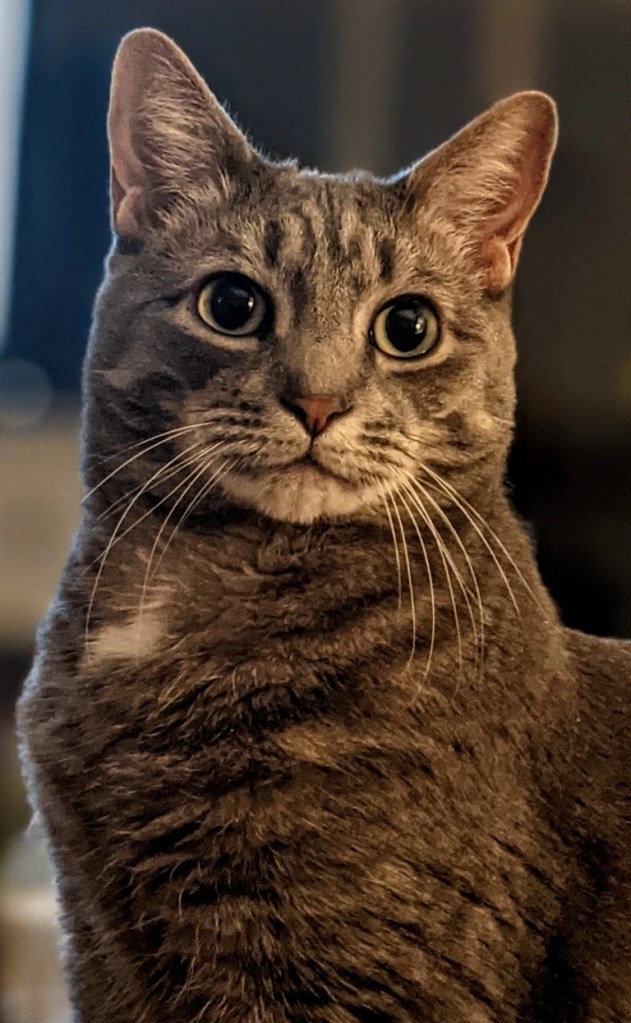
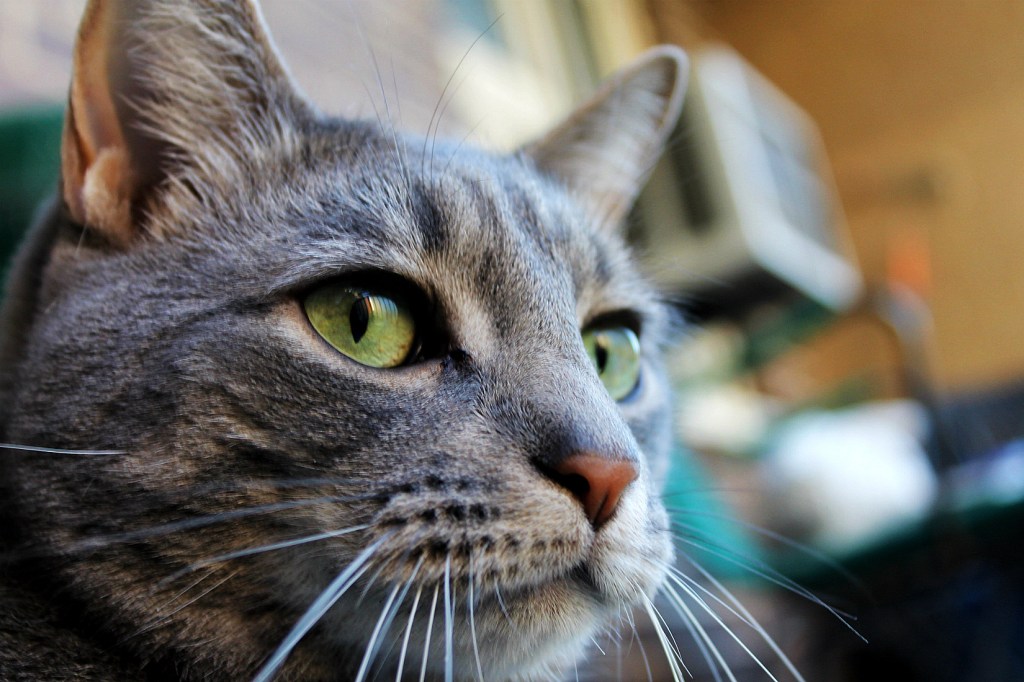
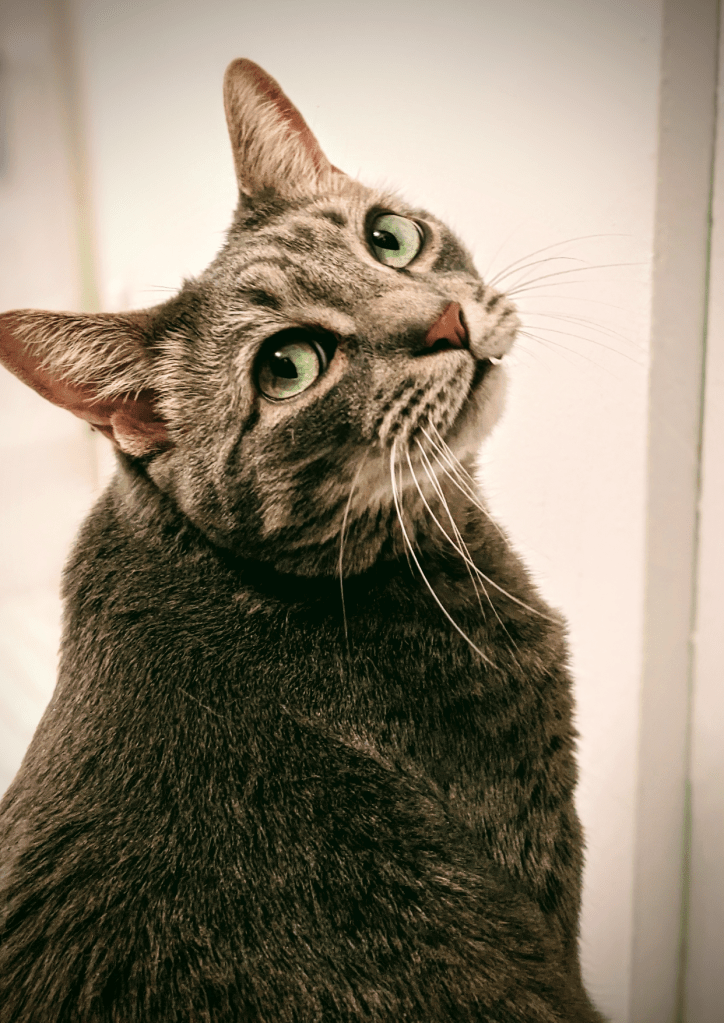
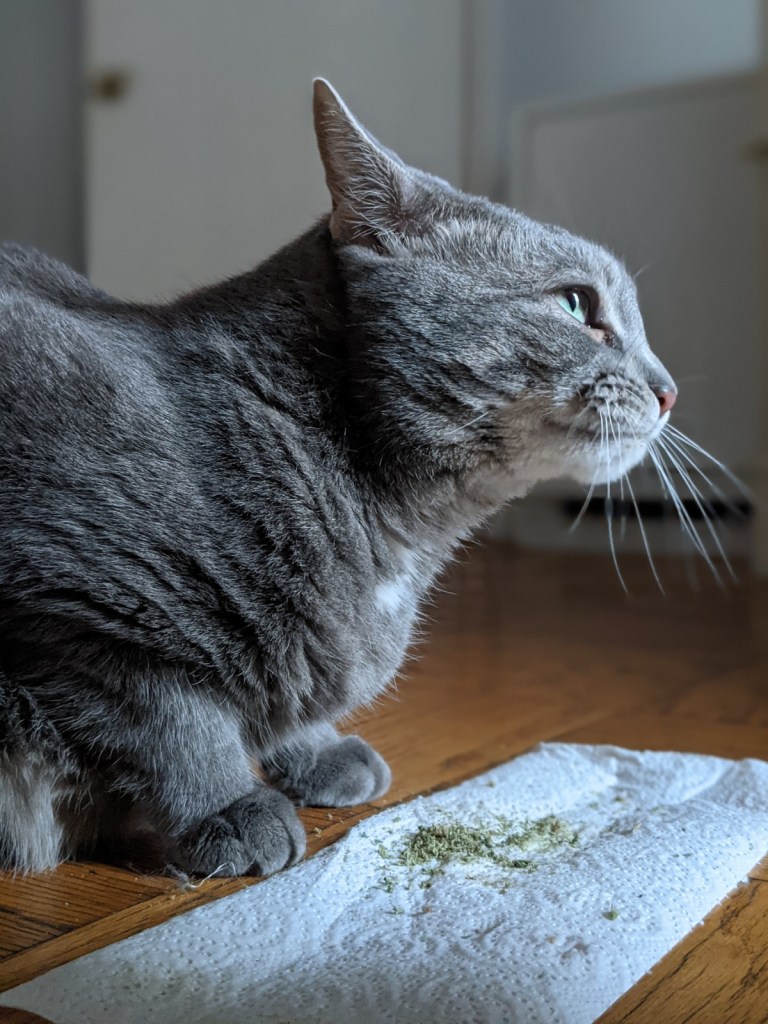
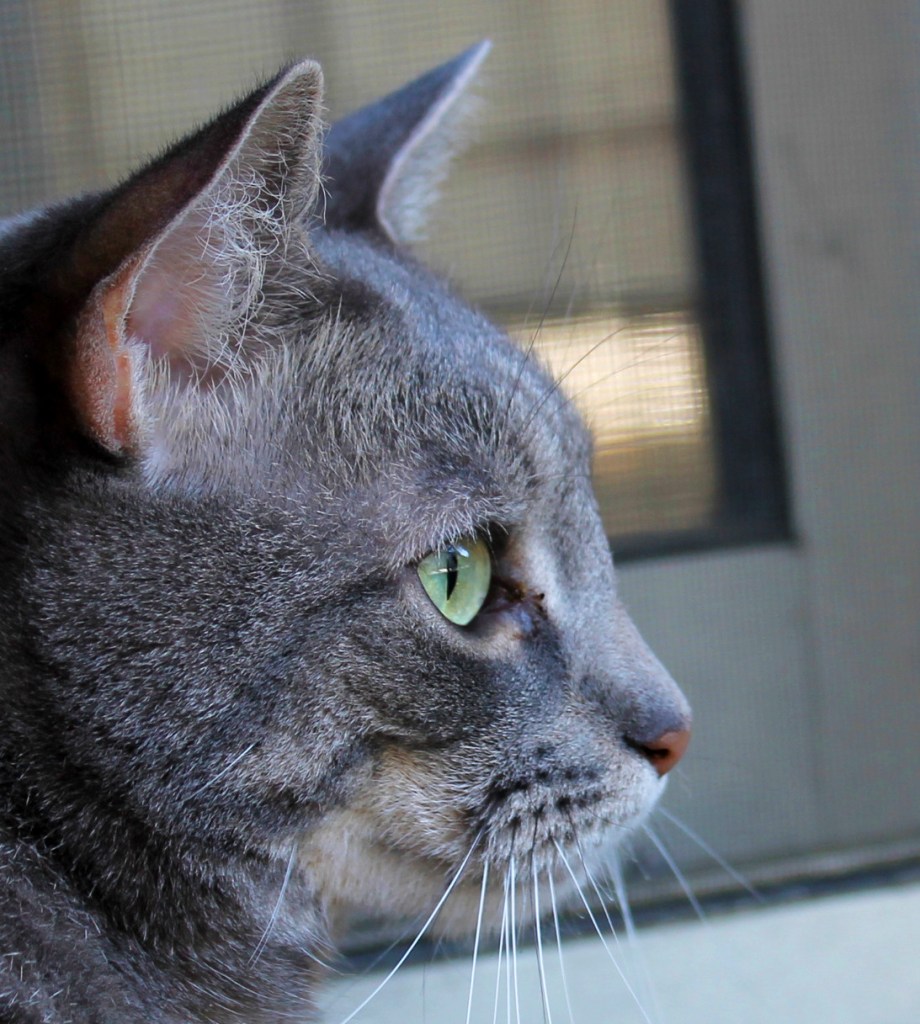
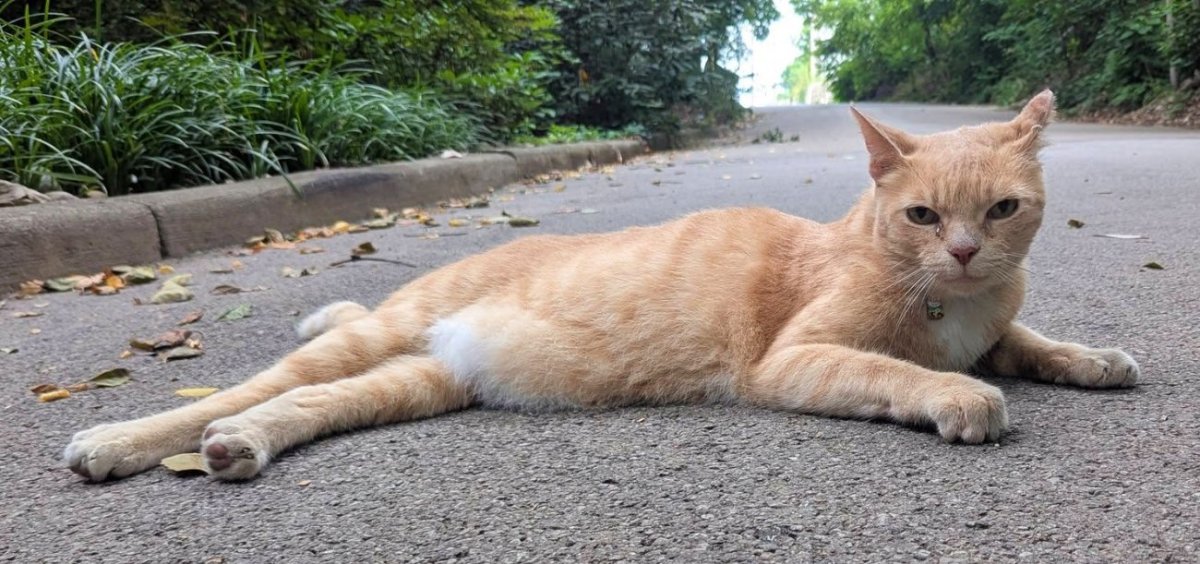
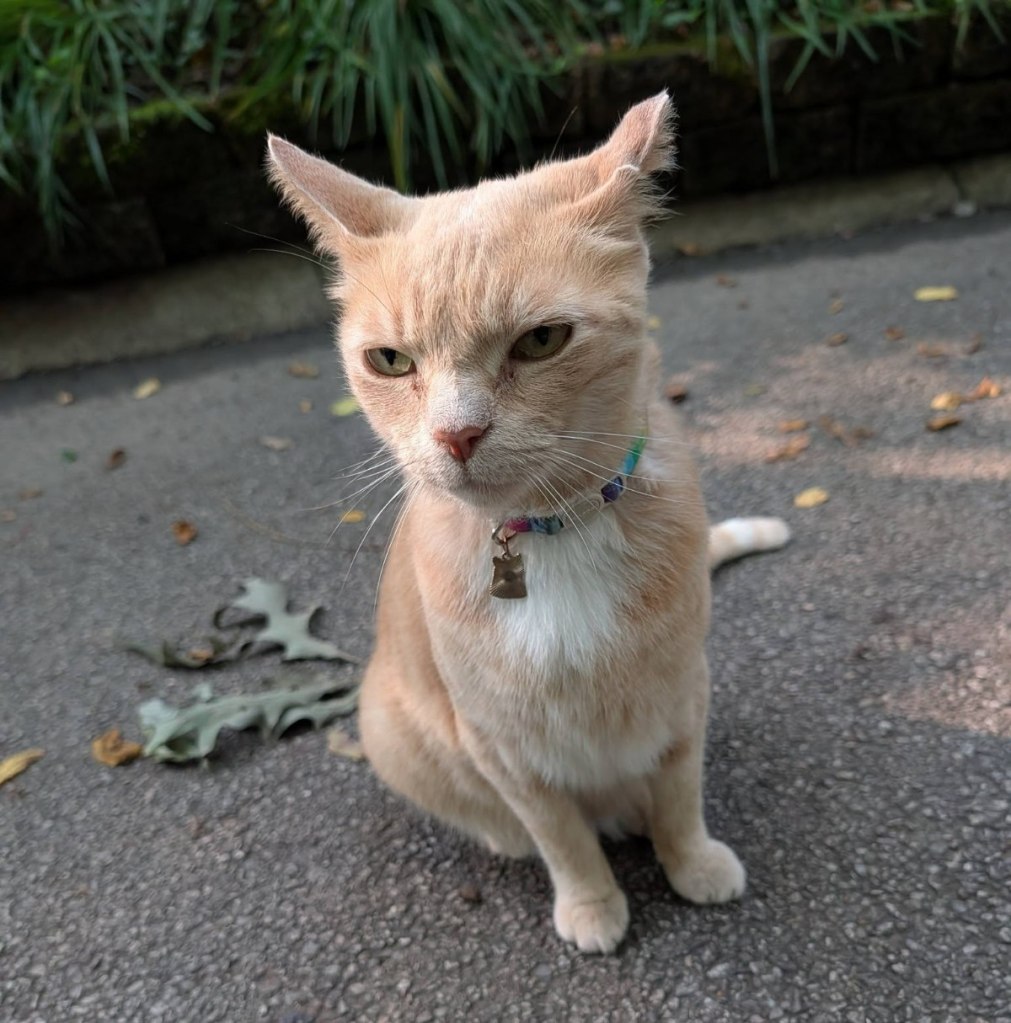
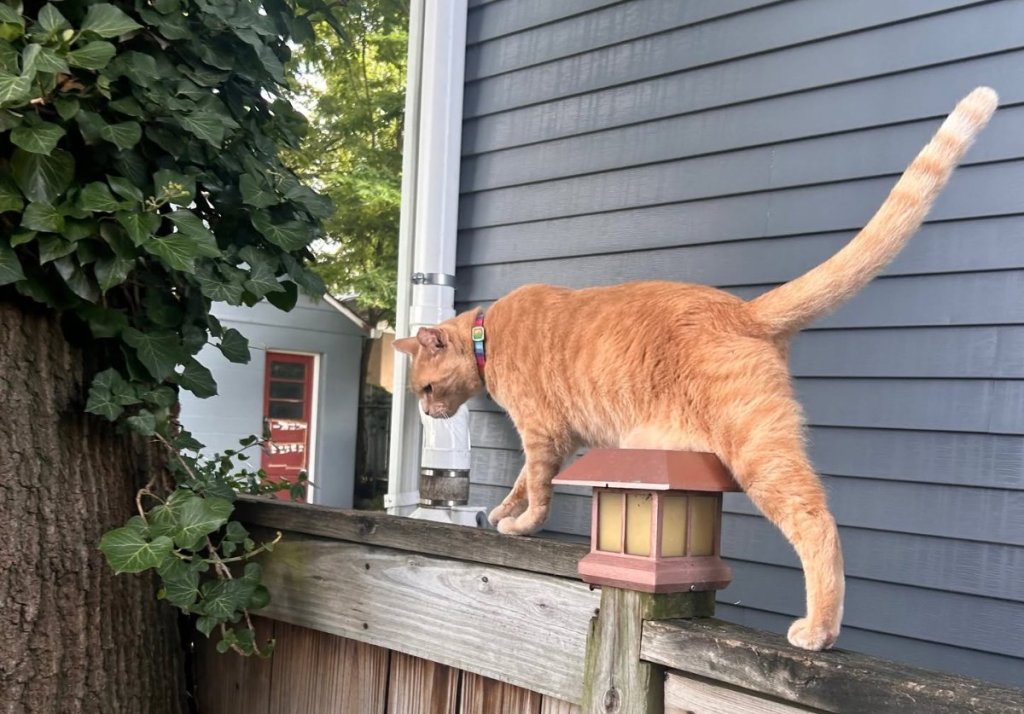
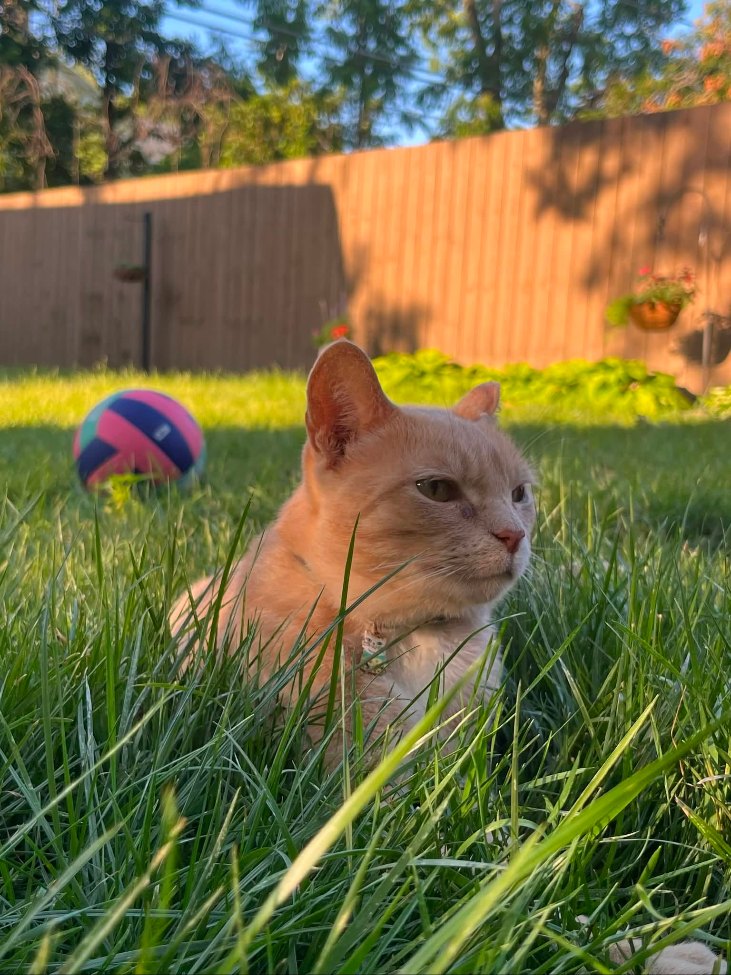
He’s crazy, he’s a whirling ball of energy and he frequently plots to take over the world, but he’s my feline pal.
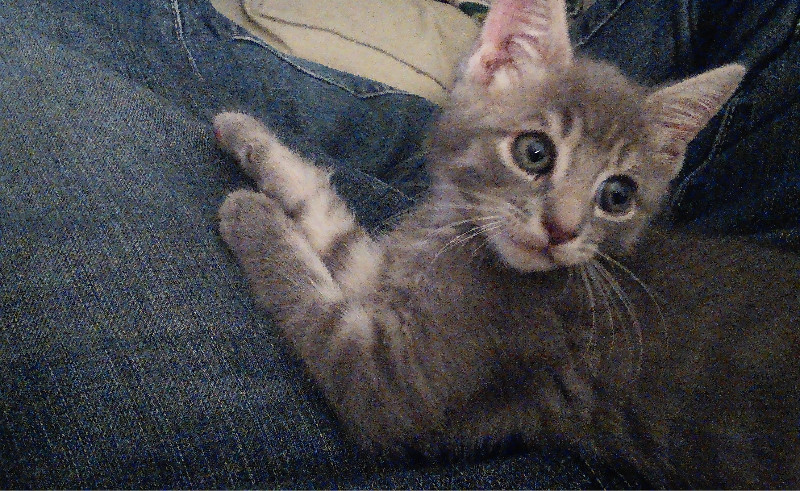
We’d only been home for a few hours and already the kitten was demanding I let him out of the bedroom.
I’d done lots of reading before bringing my new pal home to his forever abode. I was prepared for him to remain in his carrier, dash under my bed only to emerge for food and water, or cry in confusion.
He did none of those things.
Instead the tiny kitten came striding out of his carrier, surveying his new surroundings with interest, and proceeded to conquer everything in sight like a furry little Genghis Khan.
He was loud, he never stopped “talking,” and I got the distinct impression that everything that previously belonged to me now belonged to him.
“Comfy chair! Mine!” he meowed. “Oooh, a big bed! Mine! Are these bowls mine too? Of course they are. Look, toys! Mine! Hey what’s this thing with black and white keys on it? A synthesizer, you say? Well, this ‘synthesizer’ is now mine! Look at how much fun it is to run on it!”
All the advice on the internet emphasized keeping the kitten in one room for at least a couple of days so as not to overwhelm the little one. He needed to know where the essentials like his litter box, scratcher and food bowls were located, and he needed to feel safe.
But Buddy, the name I called him while trying to think of something clever — and would officially bestow on him two weeks later — had other ideas.
There was an entire apartment beyond that closed door, and it was very important for him to survey his new kingdom and claim its contents immediately!
So I reluctantly opened the door and a little ball of whirling energy came tearing out, narrating his activities in real time in a voice that sounded like a baby Elmo as he got into everything.
I realized very early on that first night that the cautious approach I’d planned on was out the window. Any restrictions recommended by internet guides were not applicable with this kitten.
The idea that he would sleep in his bed and I’d retain my own? Laughable! I was fortunate he would allow me to continue sleeping there, and only after he was tired of tormenting me. With the lights out he ruthlessly attacked my toes, tearing me out of sleep almost as soon as I lost consciousness before retreating into the darkness to cackle gleefully and do it all over again.
The human makes funny noises when I bite his feet! the tiny kitten trilled delightedly. So fun!
Enduring his relentless assaults on my feet seemed a small price to pay when I woke up on one of those first nights and found Bud fast asleep with all four paws wrapped around my right arm, clearly comforted by my presence and proximity. It would become the first of countless times when I would endure an uncomfortable position, an arm or leg going numb, or put off the call of nature to avoid disturbing my little Buddy.
That was 12 years ago and I can’t really remember what life was like before Buddy was a part of it.
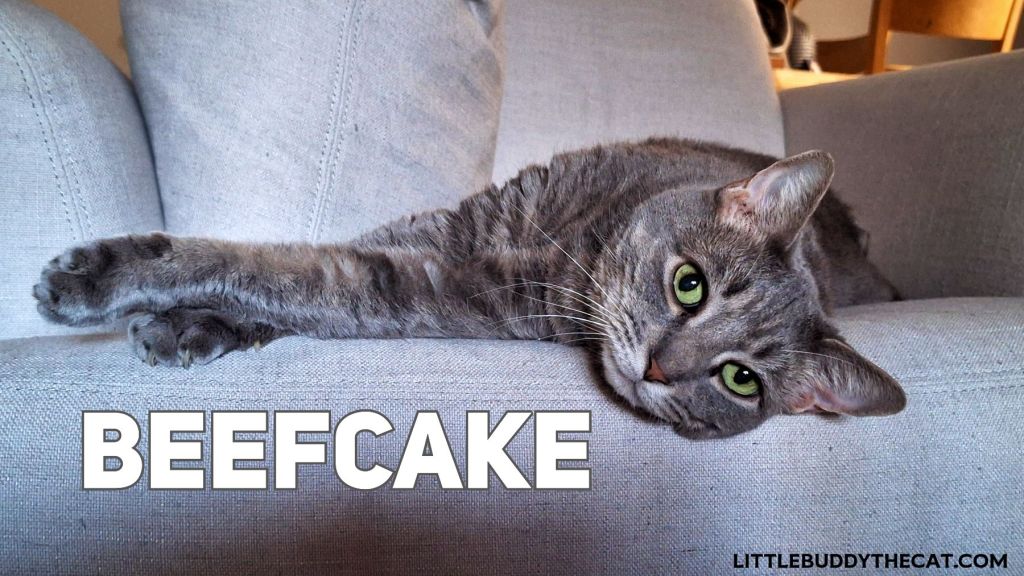
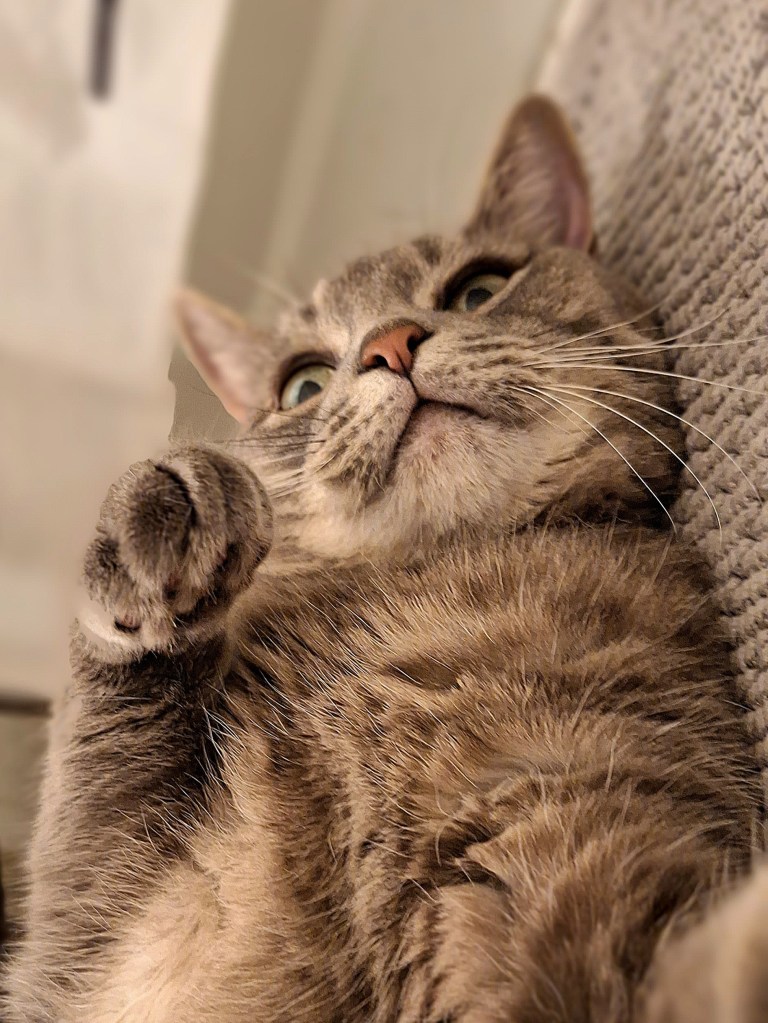
He has become my best friend, my constant companion, my foil, my partner in crime, and a reliable reminder not to take life too seriously. He’s my shadow. I’ve almost forgotten what it’s like to sleep without him draped over me or borrowed between my knees.
He is, unfortunately, the primary culprit in interrupted sleep, but he doesn’t wake me because he’s hungry or thirsty. I make sure he has a bowl of dry food and fresh water before bed every night in addition to his two daily wet food meals. (And all the snacks he demands through urgent meows.)
He doesn’t conduct night time commando raids on my feet anymore either. Mercifully he grew out of that behavior within a year.
He wakes me not because he wants food or water, but because he wants to be buddies. He wants to purr contentedly as I rub the top of his head and tell him what special, handsome and good boy he is. He wants to thank me by grooming my hair and later, while I am asleep, he’ll groom his butt with his barbed tongue before grooming my face. I’m a lucky man!
He is such a major part of my life that I began writing humorous stories about his exploits and founded this blog at the request of people who wanted more Buddy.
Heck, he’s even become the context by which I define myself online. He is Little Buddy and I am Big Buddy. On this blog I cover cat-related news, post movie and game reviews and write about topics that interest me, but the primary focus has always been Buddy and his adventures, real and imagined.
In many ways it’s absurd. What kind of lunatic writes a blog glorifying his feline friend and imagining him in ridiculous scenarios, like joining Yemeni pirate crews, running his own catnip empire and maintaining a popular OnlyFans account for female admirers?
And yet with Bud, it’s appropriate. He’s crazy in the most endearing, lovable way imaginable. He’s a remarkably vocal cat who trills exuberantly when he’s happy, chats with the speed of an auctioneer when he spots birds, and screeches with unshakable determination when the treats I dispense – or their volume- disappoint him.
Schemeowtics for Buddy the Cat. Note the huge meowscles.
Perhaps most touching of all, there have been three times I’ve gotten debilitatingly ill in the last 12 years, and on each of those occasions Buddy refused to leave my side.
When I was knocked on my ass after finally getting COVID in 2023, Buddy was practically attached to me. Miraculously he did not screech or slap my face when his mealtime came and went. He just let me sleep and purred quietly as he waited for me to wake. Knowing cats were vulnerable to COVID, and having lost a relative and two neighbors to that virus, I thought if I got sick I’d find a way to quarantine myself from Bud for his sake.
That was never going to be an option, I realized in retrospect.
Cynics will say he was worried about his meal ticket, that his survival is pegged to mine. But that’s not true. While Bud has no way of knowing I have made arrangements with my family for one of them to take him if anything happens to me, ensuring he will never end up in a shelter, he misses me dearly when I go away.
I’ll never forget the way he meowed in excitement when I was in Japan and called home to Facetime while my mom was cat-sitting him. He gave me a slow-blink as if unsure if he was really seeing me on the screen, then gave a cry of joy when I blinked back before he launched into one of his usual monologues.
Likewise he always makes a big deal of my arrival back home. The first few times he actually began shaking with emotion and threw up in relief. The poor little guy, I realized, didn’t know if I was coming back. Since then he has a routine that involves pretending he’s angry at me for leaving and feigning ambivalence, which usually lasts about a half hour at most before he drops the act. Then he clings to me even more than usual for a few days.
Yet he does not have an unhealthy attachment. Like all cats, Bud opts for alone time sometimes, and when he shuffles his napping spots every two or three months there’s usually a few days when he prefers napping on the other couch, under the dinner table or on top of a heat vent. Then it’s back to his regularly scheduled lap-napping.
So if the question is “What makes your pal special?” my answer is everything. Every day with him is a gift, and I intend to appreciate every moment of it, even when he’s a royal pain in the Bud.
This post is a response to WordPress’ daily writing prompt: Share a photo of your pet and tell us one thing that makes them uniquely them.
.“I think…I’m pretty sure I’m feeling it. Oh yeah! Break out the laser pointer and the snacks!”
Wanderin’ Joe attends the local school, poses for annual yearbook photos, pops in to see his friends all over town, and has innumerable humans wrapped around his little paws.
He’s more popular than any human, practically ubiquitous around town, and so well-known he’s been nicknamed “mayor.”
He’s also a cat.
Wanderin’ Joe, as he’s known to locals in Clintonville, Ohio, is often spotted padding along a ravine, poking his head into homes and shops of his choosing, and hanging out in the local elementary school.
He’s the school’s unofficial mascot, loved by students and staff, and is even included in annual yearbook photos. (Previously we wrote about Ziggy, another family cat who accompanies his family’s kids to school daily and took it upon himself to pose for a yearbook photo. Who knew some cats love going to school?)
The people of Clintonville love little Joe so much that they decided to throw a festival in his honor. It’s not tied in to another event or celebrated in conjunction with a holiday. It’s an event exclusively in celebration of one very special four-legged ambassador of local good will.
Wanderin’ Joe poses for an admirer. While Joe’s got a grumpy look, his many fans say he’s friendly, gentle and curious. Credit: Christina More via Wanderin’ Joe/Facebook
Nick Fancher, Joe’s human, said the little guy’s wanderlust began when the family began taking him on walks. At first Joe would pad along behind his human family, but then “he would run ahead of us and then let us catch up.”
“He’s precocious,” Fancher told WOSU, the local public radio station. “Like, I swear he was an explorer in another lifetime.”
Joe’s adventures are legion. Per WOSU, he’s been “adopted half a dozen times” by well-meaning people who mistook him for a stray, crashed weddings and memorial services, and did a six-month stint as a barn cat when yet another person mistook him for a stray and brought him home.
Fancher said he’s well aware Joe could be harmed, but worries his orange tabby buddy wouldn’t be happy if he was restricted to the indoors.
The Ohio man did not have a hand in promoting his pal. The festival, a Facebook page devoted to Joe sightings, and tributes like a charcoal portrait of Joe, were all the efforts of random admirers in Clintonville, a town of some 30,000 residents about eight miles north of Columbus.
Joe exploring his neighborhood. Credit: Wanderin’ Joe/Facebook
At Joe Fest, some locals brought their own cats along, traded stories of the legendary Wanderin’ Joe over food and drink, and paid tribute to the feline himself, who graciously permitted his admirers to scratch his head and feed him snacks.
“It’s a little hard to wrap one’s head around it. It appeals to my sense of the absurd and the wonderful,” Patti Liszkay, who lives in the neighborhood, told the station. “It’s just sort of a bipartisan get together in honor of a cat. I mean, it’s gentle. It’s nice.”
Credit: Joseph Forcina via Wanderin’ Joe/Facebook
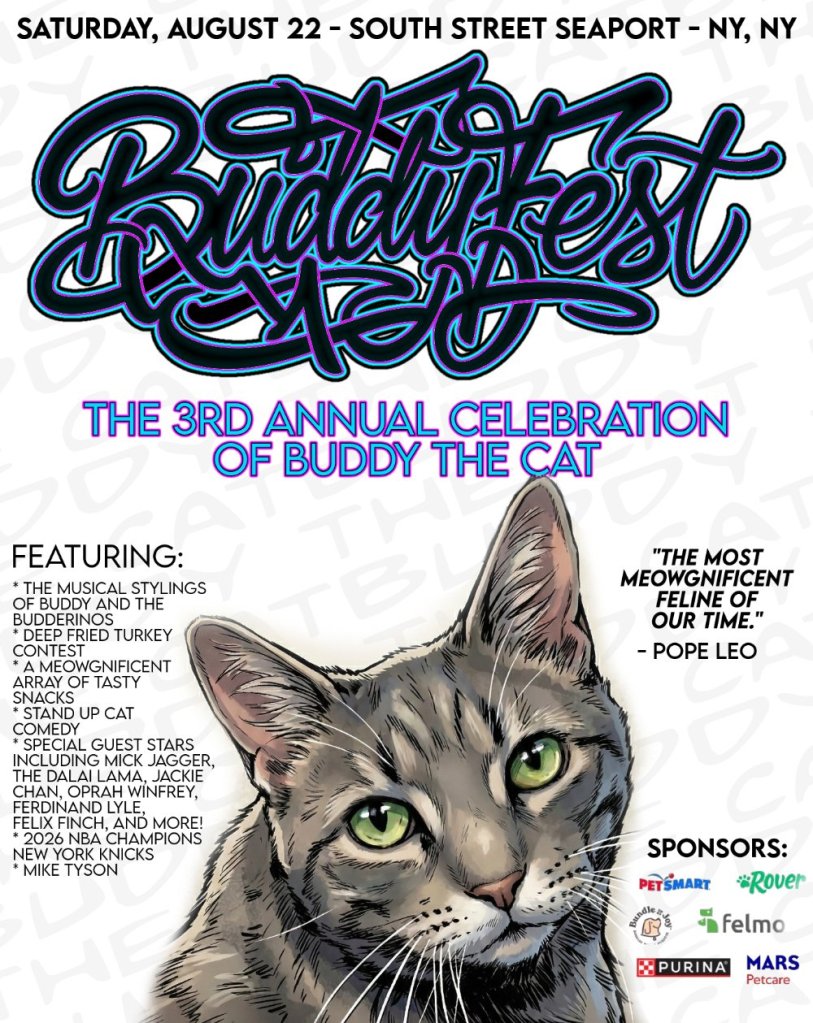
Meanwhile in an attempt to avoid hard feelings, and knowing it has long been one of Buddy’s dreams to have a festival in his honor, I had this printed out and stuck it on the fridge:
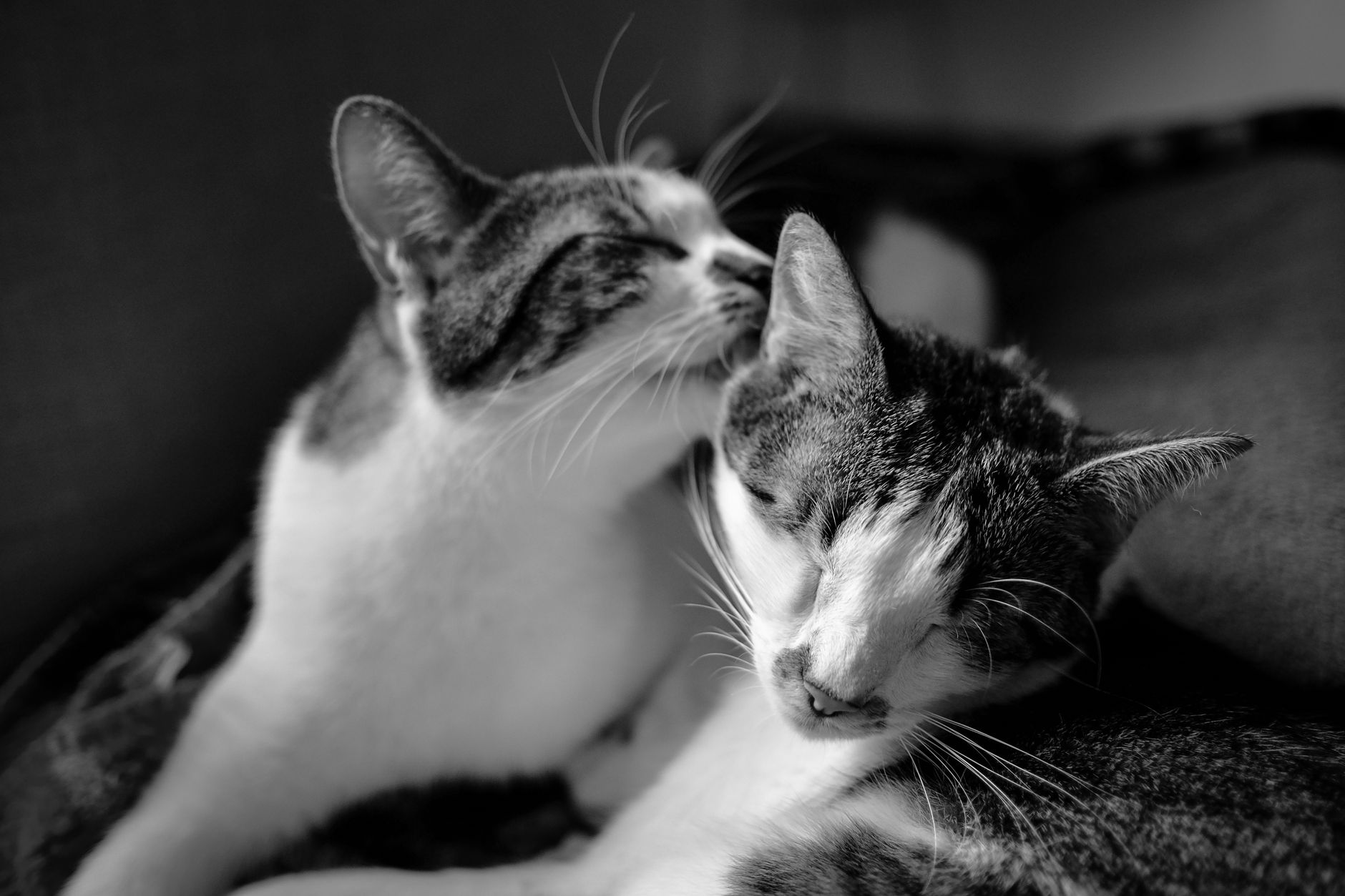
While allogrooming — animals socially grooming each other — is a sign of community, alliance and social bonds in other species, apparently cats have found a way to weaponize it.
By analyzing footage of cats grooming each other, the Belgian team confirmed cats groom the way other animals do, signaling closeness, trust and all that good stuff…most of the time.
But they also use it to seriously piss each other off, usually to take possession of territory they covet.
“I saw these weird grooming patterns in my own cats where I thought, ‘This is not super friendly at all,’” Morgane Van Belle, a cat behaviorist and co-author of the new study, told the New York Times. “Sometimes one cat would lay on the blanket near the window and the other cat would come up and start licking it — but in an annoying way.”
Credit: Francesco Ungaro/Pexels
The aggressor cat is hoping the other feline will get so annoyed with the invasive grooming that they’ll abandon their prize spot, whether it’s a sun puddle or a particularly comfortable spot on the couch.
The study’s authors believe there’s more to learn about this behavior, and understanding it can help people mitigate conflict among their feline overlords.
For readers who have multiple cats, have you witnessed this behavior?
For what it’s worth, allogrooming between cats and humans is a thing too. For example, I brush the Budster, and he grooms my hair when I’m in bed.
Some people find that gross, but I try to take it was the compliment it is. Thankfully I have not been subject to weaponized hair grooming, but I’ve seen examples of the behavior the Belgian researchers have identified, and once you realize what you’re looking at, it makes perfect sense. Taking a normal behavior and turning it into an instrument of annoyance is also a very feline thing to do.
Cats show great ingenuity, so we’re fortunate they’re extremely lazy. If sufficiently motivated, they could undoubtedly rule the world.
That’s easy: first contact with an alien civilization.
I’m a space and science fiction fanatic. I mainline science fiction novels, keep tabs on the latest discoveries via the JWST, and I think about what’s out there probably more than I should.
There’s a burning desire in our hearts — for some of us, at least — to know for sure that we’re not the only ones, that humanity is not alone in a cold, lonely and infinite universe.
The events of 2026 are testament to that desire to know. Between the government release of UFO-related documents, former government employees coming forward with tall tales of crashed ships of non-terrestrial origin, and the return of Steven Spielberg to the director’s chair for another film speculating about what’s Out There, we’ve been thinking about aliens quite a bit collectively.
As for that central question, I’m not talking about simple cellular life. I don’t think you can find an astrophysicist, astrobiologist, astronomer, evolutionary biologist or anyone in a tangentially related field who honestly thinks life is unique to our planet.
The more relevant question is whether we are the sole sapient species, the lone civilization in our galaxy.
Credit: CaptainFrank/Pexels
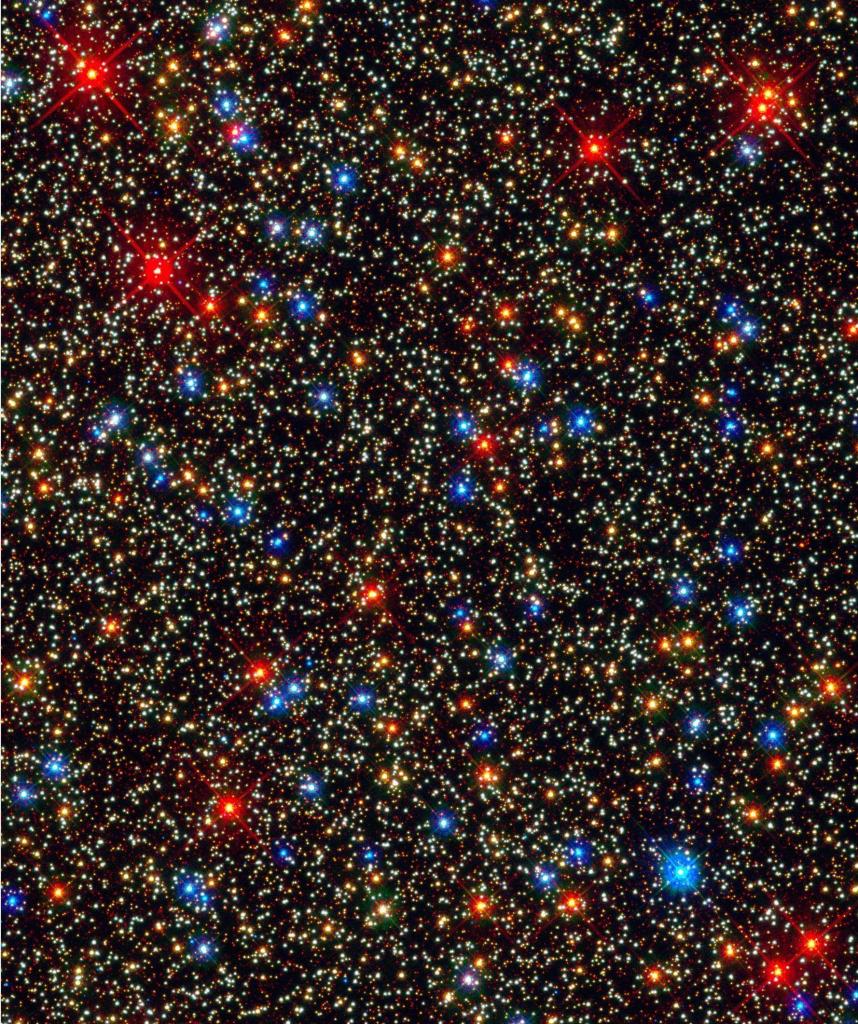
Think about the numbers: There are an estimated 300 billion star systems and trillions of planets in the Milky Way! Life has had a lot of places to evolve.
The Fermi paradox
That was the point the physicist Enrico Fermi made in 1950, when he had a now-famous lunchtime conversation with fellow scientists at Los Alamos. Probability alone indicates the galaxy should be teeming with life.
So, he asked his colleagues, where is everyone?
It’s now known as the Fermi paradox, and it’s guaranteed to come up in almost every conversation about the possibility of intelligent aliens. With so many star systems, planets and moons, surely some other species took an evolutionary path toward intelligence.
It’s a bit more complicated than that, of course. In a universe that is 13.7 billion years old, there has been enough time for innumerable species to evolve and fade, for countless empires to rise and fall. That means the question is “When is everyone?” just as much as it’s “Where is everyone?”
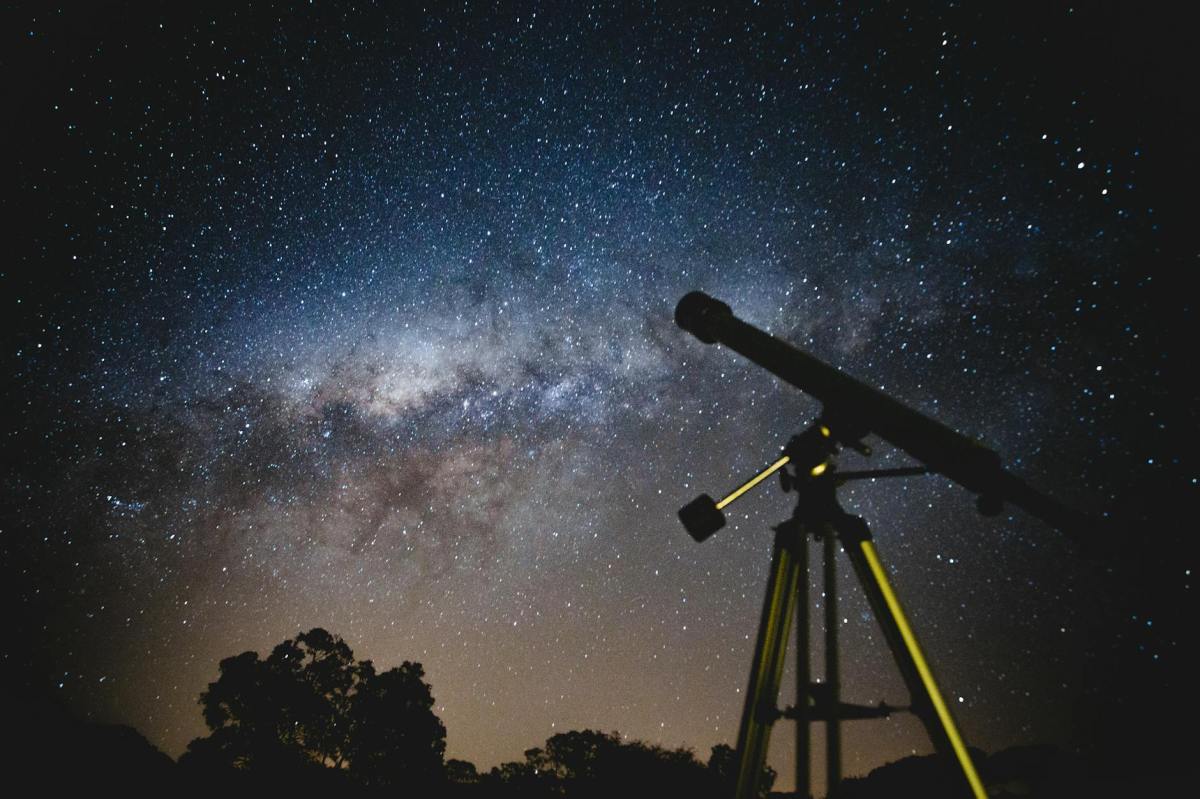
The truth is we’ve only been looking in earnest for about half a century. It’s only in the last four or five decades that we’ve had telescopes like the Hubble, Spitzer, Kepler and James Webb, which have revolutionized astronomy by giving us views we could previously only dream of.
It was only in the 90s that astronomers pointed the venerable Hubble at a black, seemingly empty patch of space, took a two week exposure and changed our understanding of the cosmos forever when the resulting image showed some 10,000 galaxies that were too faint to see before.
That patch covered only 2.6 arc minutes, or 1/24 millionth of the sky!
A partial image of the Hubble Ultra Deep Field. Credit: NASA
Despite what we’ve learned, we’ve barely begun the search for other intelligent civilizations.
Drawing any conclusions from our efforts so far would be like organizing a manhunt, then calling it off five seconds later because the suspect hasn’t been caught yet. Fifty years is nothing when scouring the cosmos. It’s less than an eyeblink of an eyeblink on a galactic scale.
Looking in the wrong place
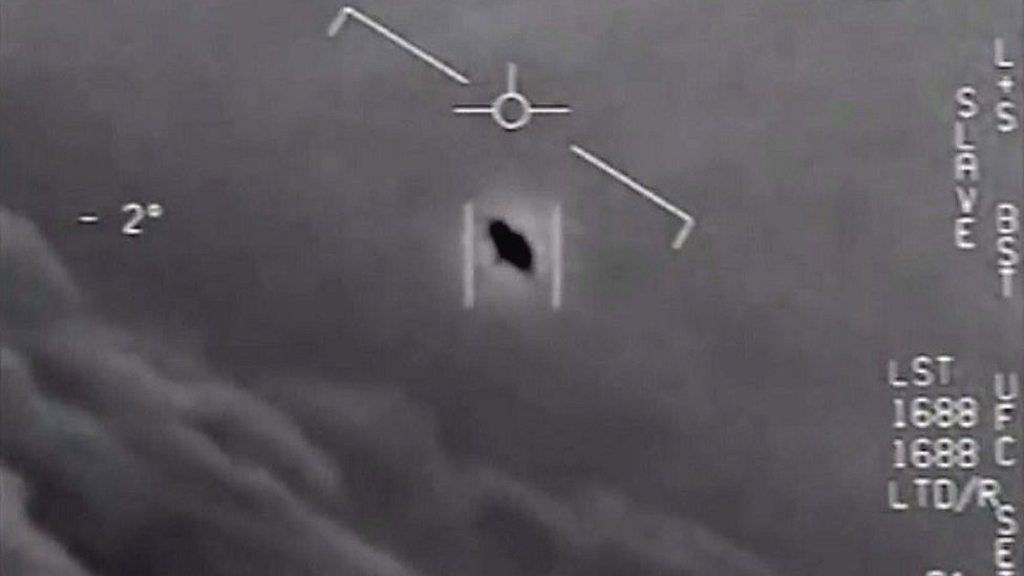
As for the idea that aliens have visited us, that they crossed the interstellar void to etch patterns in our crops, delight stoners with light shows and evade every camera on the planet except for low resolution bricks from the dawn of the cell phone era, I’m not buying it. Neither should anyone else. Likewise for the claim by the JD Vances of the world insisting alleged UFOs are “demons” sent to torment us.
As Carl Sagan said, extraordinary claims require extraordinary evidence, and it is abundantly clear that the UFO enthusiast community can only offer blurry images not because of a lack of high resolution cameras, but because high res photos of the “phenomena” reveal they are mundane objects. They only become strange spacecraft when you blur them and squint.
Bird. Insect close to the camera. Exhaust plume. Debris. Visual artefact. Maybe. Proof of aliens? Absolutely not.
But there’s another, more important reason why aliens are not joyriding through our skies: if aliens are out there, there simply has not been enough time for them to become aware of our existence, let alone travel here.
Even light is “slow” on a galactic scale
As most of us know, when we look at the stars we’re seeing them as they were in the past, not as they are now. That’s because the distances between stars are so mind-bogglingly great that even light, which moves faster than anything in our universe, takes ages to cross the void.
The same limitation applies for anyone who might be looking in our direction from somewhere else in the galaxy. They see our star system as it was, not as it is. They see a silent star system without signs of an intelligent civilization.
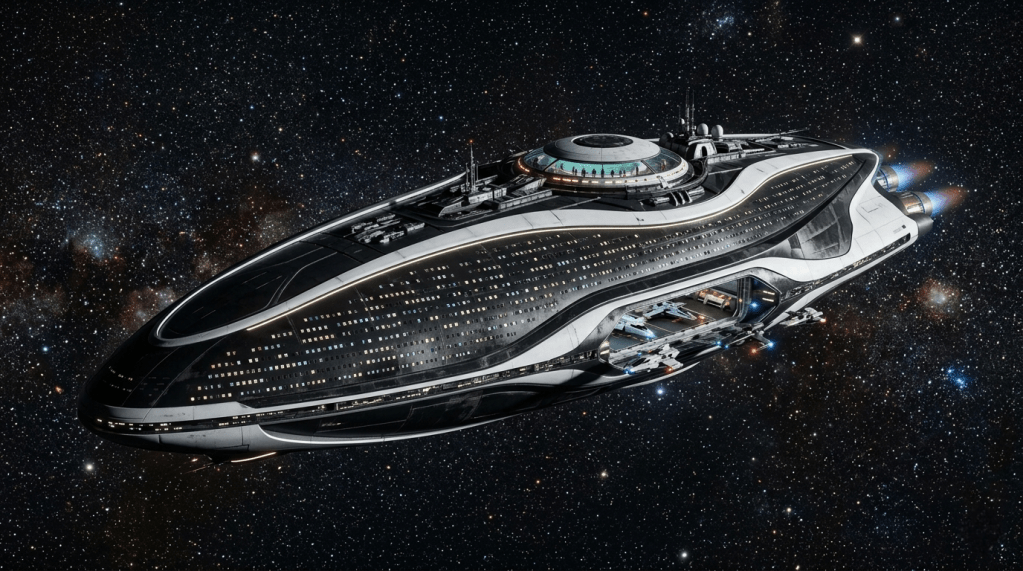
Starliners and generation ships are popular concepts in science fiction for interstellar journeys that can take decades, centuries or longer.
Our galaxy is more than 100,000 light years across, so let’s say an intelligent alien race exists relatively close by in galactic terms, at “only” 500 light years away.
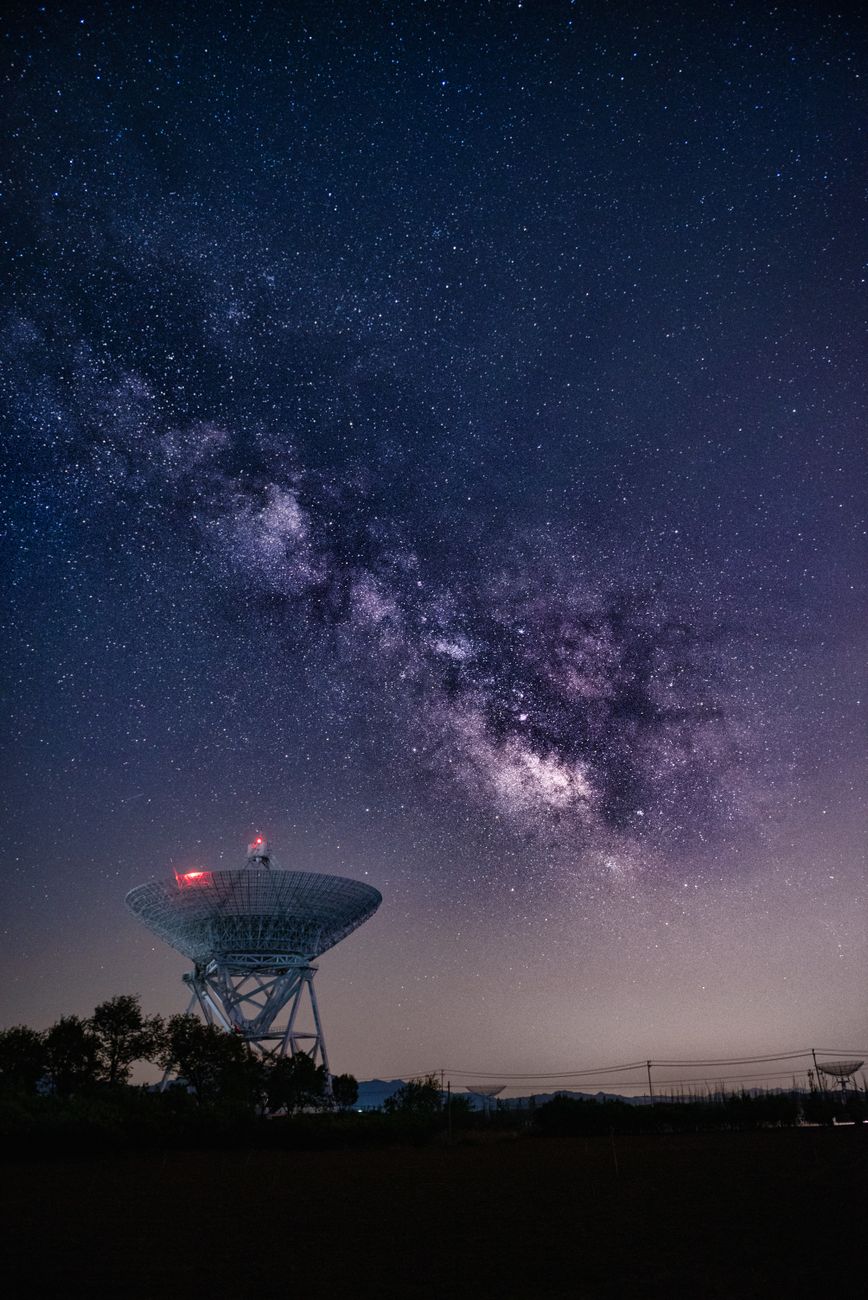
We have been a technological civilization for only a short time and didn’t create signals powerful enough to reach beyond our star system until the 1970s, according to SETI. That means there weren’t technosignatures hinting at our presence until about 50 years ago.
As a result, the soonest our hypothetical aliens could become aware we exist is about 450 years from now. That is how long it will take light carrying information about our technosignatures to reach them.
If our hypothetical alien friends are looking in our direction (a massive if in a galaxy with 300 billion stars to analyze), and if they have highly advanced telescopes, they might detect us. If we imagine they’re friendly and they send a message saying “Howdy, neighbors! You’re not alone! There are wonders to discover and many civilizations to meet out here!” it would take another 500 years for the message to reach us.
That means we wouldn’t know anything until around the year 3,000, if we survive that long without blowing ourselves up. (That’s a real possibility, and things aren’t looking very promising right now.)
And again, that’s if hypothetical intelligent aliens exist in our immediate galactic neighborhood. If there’s an intelligent civilization that exists, say, 4,000 light years away — which is still not very far in galactic terms — the soonest we could hear from them is about 8,000 years from now. (Four thousand for them to detect our technosignatures, four thousand for their message to reach us.)
The point is, space is big. Ridiculously, incomprehensibly, stupidly vast. More than 99.995 percent of the galaxy cannot be aware of our existence yet, let alone travel here, because of the reasons explained above.
The distances between stars are so great that we cannot comprehend them as they are, because nothing in human experience compares. We can only understand them in the abstract. As terrestrial animals with short lives, we are simply not equipped to live or think on galactic timescales.
The sun’s location within the Milky Way galaxy. Not to scale.
To put this in context another way, our closest stellar neighbor, a volatile triple star system, is 4.3 light years away. Yet even with the most advanced propulsion systems currently available to us, it would take us more than 70,000 years to get there!
If we manage to crack fusion and humanity’s most brilliant engineers are able to fit a starship with a compact fusion reactor, the travel time to the nearest star becomes “only” about 7,000 years.
Understanding just how big space is, and how long it takes to travel between stars, goes a long way to explaining why we’re wasting our time and resources with a fruitless search for alleged alien craft in our skies.
Light moves at 186,282 miles per second. Credit: Ehsan Ahmadnejad/Pexels
So where does that leave us?
I believe that one day we will learn we’re not alone. By we, I mean our species. I really hope it happens in my lifetime, but for all the reasons explained above, that’s wishfull thinking. The universe doesn’t care what we want, and it certainly doesn’t change the geometry of space-time to accommodate the wishes of dreamers on Earth.
Alien: Friend or foe?
I don’t think we’ll have to worry about belligerence. If a civilization is capable of sending ships to us, there’s literally nothing in our inventory of meager, planet-based resources that could interest a species that advanced. They wouldn’t want to eat us, because our biology would not be compatible. The amount of energy our entire civilization can muster would be laughable to an interstellar species.
And as the physicist Michio Kaku has argued, there’s a very strong argument to be made that if a species is advanced enough that interstellar travel is relatively trivial, it would have long ago shed any tendencies toward tribalism, sectarian violence or inventing gods of the gaps. You simply cannot reach that stage of advancement if you’re wasting resources and your most brilliant minds on war and petty divisions. (Kaku knows that better than anyone. His mentor was Edward Teller of Manhattan Project fame.)
The more significant danger, as Kaku likes to say, is that we may be beneath their notice and we’ll get “paved over.” A civilization capable of building cosmic megastructures, for example, wouldn’t consult us any more than we’d consult ants before laying a six lane super highway over their ant hill.
Still, there’s always a chance we’ll encounter something like MorningLightMountain, the nightmare alien intelligence from Peter F. Hamilton’s incomparable novel Pandora’s Star. The problem with MorningLightMountain wasn’t that diplomacy failed. There was no disagreement over resources or territory. Humans didn’t threaten it.
Rather, the alien’s psychology was so different from ours that it could not understand the concept of allowing other life to exist in the galaxy. No amount of discussion or attempts to persuade it would have made a difference, so immediately upon learning of our existence it launched a genocidal war that forms the bulk of Pandora’s Star and its sequel, Judas Unchained, two of the most beloved books in the modern science fiction canon.
Still, I’d like to think there is a galactic fraternity out there, an informal alliance of intelligent species united by curiosity and the effort to understand our universe. Whatever’s out there is likely to take forms we can never imagine and think in ways that never occurred to us.
If one day we do make first contact, I hope the best of humanity will be our representatives. And on that day, I hope humanity will be awestruck by the wonder of the universe, realize that slaughtering each other over land or beliefs is insane, and finally become united as a species.
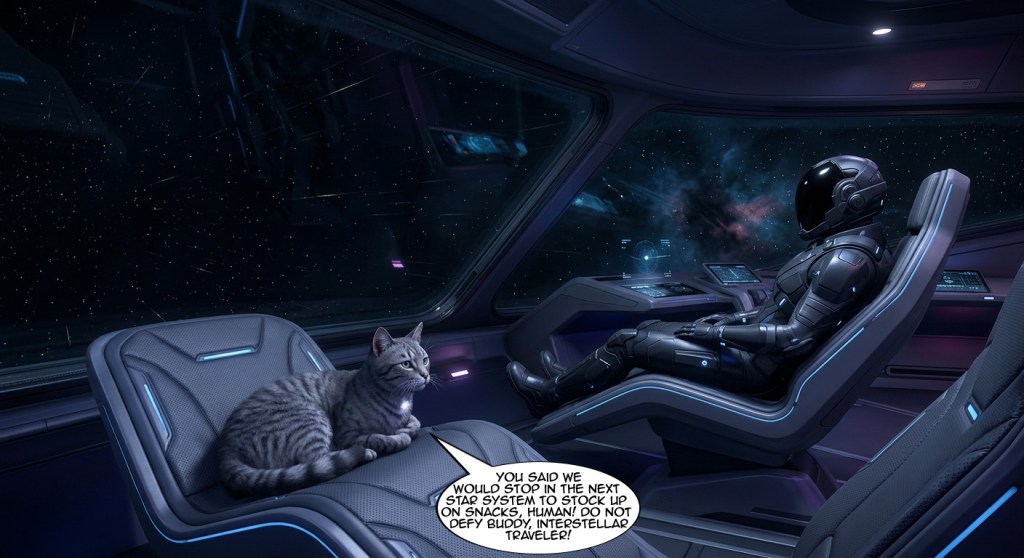
Or even better, finally united as the children of Earth. After all, Buddy has made it abundantly clear that if I come into possession of a starship, he gets the most comfortable seat on board and gets to drive. The latter ain’t happening, but as for the former, I’d be thrilled to explore the cosmos with my little pal.