UK Man ‘Bowed Down’ To Tiger While Livestreaming Own Death: Police

The visitor’s strange behavior and the crowd’s panicked screams began to override the tiger’s initial confused curiosity, prompting his predatory instincts to kick in.

A British man killed this weekend by a zoo tiger was mentally “vulnerable” and behaved bizarrely before and during his grisly encounter, police and witnesses said.

William Chapman, described in media reports as “in his early 20s,” was seen laughing and dancing before he hopped the barriers separating guests at Yorkshire Wildlife Park from its Land of the Tigers exhibit.

Chapman suffered from “significant mental illness,” his family wrote in a statement.

In audio captured a few minutes before Chapman’s 1:30 pm death on Oct. 10, the late Briton handed his smartphone to another visitor and asked the woman to take photos of him with the tiger in the background.

“Thank you, lady,” he’s heard saying on the recording before he climbed the barriers in front of horrified guests and dropped into the enclosure housing Altai, an Amur tiger who just turned five years old about two weeks ago.
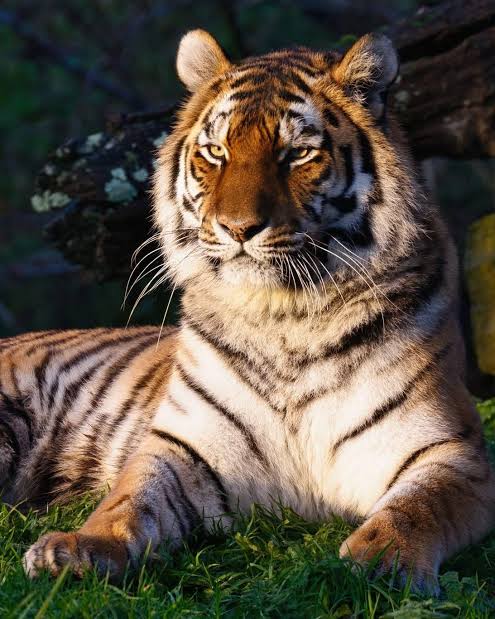
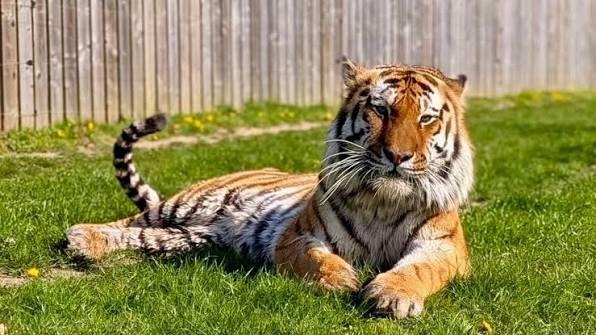
A close-up of a tiger resting on the grass, showcasing its distinctive orange and black stripes, with a focused gaze.
Altai. Credit: Yorkshire Wildlife Park

The encounter took an even stranger turn from there as Chapman, who was live-streaming to Instagram, seemed to welcome Altai. The curious big cat hopped down from a wooden platform where he’d been soaking up the sun and padded unhurriedly toward Chapman, who spread his arms theatrically.

“It looked like a performance,” bystander Anthony Hunt said. “He got down where everyone could see him in the main viewing area. He was on all fours, praying and bowing down to the tiger. It was like he was waiting for the tiger.”

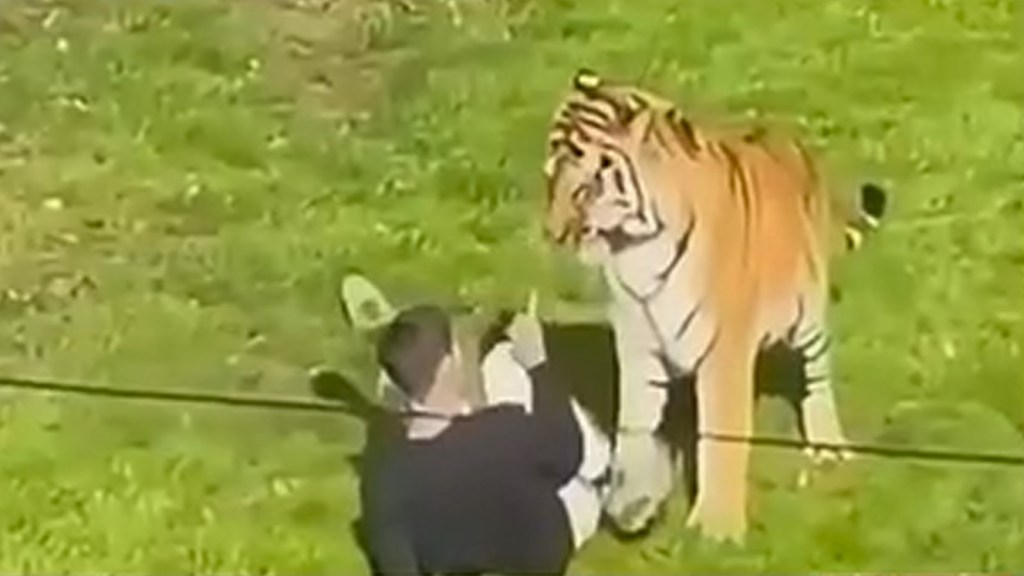
Still images show Altai standing in a confused, non-aggressive posture, with telltale “helicopter ears” indicating curiosity and hesitation about how to respond.

Chapman’s behavior didn’t fit Altai’s cognitive script.

The tiger’s hardwired instincts told him incursions from other members of his species are threats. His experiences in captivity told him humans are caretakers who show up at predictable times as part of a daily routine to feed him, repair his enclosure or introduce enrichment items. This was something entirely new.
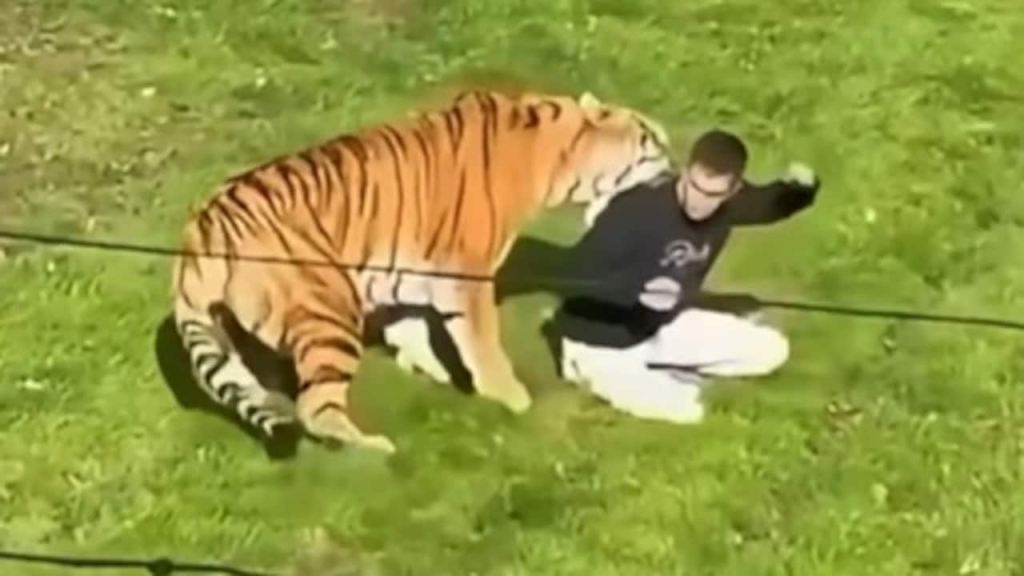
A person kneels on grass while interacting with a large tiger in a natural setting.
A still from footage recorded by a witness to Saturday afternoon’s fatal encounter.

While I’ve learned my lesson when it comes to watching video of things I can’t unsee and have no desire to watch footage of a man’s life ending in a violent mauling, I did watch short clips of the preceding moments. They were compiled from recordings by bystanders and Chapman’s own feed.

The moment the situation changed was unambiguous, and you can see exactly when Altai became overstimulated and his predatory drive kicked in: Chapman dropped to all fours, reducing his physical profile until he resembled prey, and the panicked screams from the crowd of onlookers pushed Altai into overstimulation and hypervigilance.

He knew the encounter had taken a turn, and that’s when he took his first few exploratory swipes, still pulling his punches as he tried to figure out what was happening.

Chapman responded by assuming a defensive posture, raising a finger to the big cat while shouting “No! No!” and chiding him for being “naughty.” To the tiger, Chapman confirmed he was prey.

At the same time the screams from above grew louder. Altai’s predatory instincts were fully engaged, and according to reports that’s when he mauled Chapman and delivered a kill bite to the UK man’s neck.

A young man with short hair and earbuds stands in front of a panoramic landscape featuring rolling hills and lush greenery.
Chapman’s family said he was taking “strong medication” to help manage mental health issues.

Zookeepers who rushed to the scene fired warning shots, sending Altai scurrying for the safety of his den. A medical airlift helicopter arrived a few minutes later, but by then it was too late. Chapman had bled out and was pronounced dead at the scene.

Authorities erected screens to conceal the carnage as staff closed the zoo. Footage of guests leaving showed bystanders in shock, discussing what they’d just witnessed as they shuffled through the exit.

One woman, a mother who tried to stop Chapman from leaping, was particularly disturbed. She did not speak to reporters.

Chapman “looked like he was taking selfies” after dropping into the habitat, 21-year-old Scarlet Hogan told The Telegraph.

“Up until he got attacked, it was like he was in a trance, not in reality at all,” Hogan said.

“He had arms wide open ready for the tiger to attack him. It was quite bad. We were just stood there, frozen… the last thing we saw was the tiger’s jaw on his neck.”

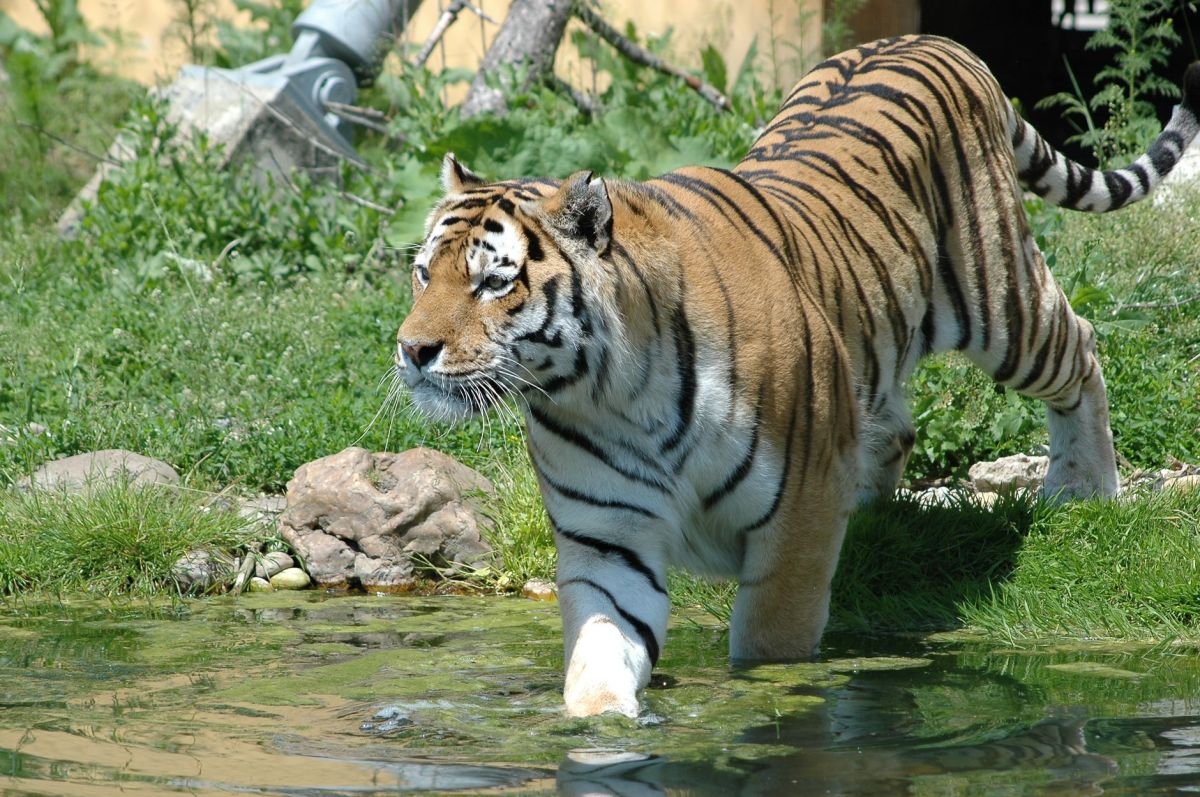
A magnificent tiger resting on green grass, with a background of trees and a logo for Yorkshire Wildlife Park in the corner.
Altai pictured in promotional material for the park.

Chapman, who had traveled from nearby Doncaster to the zoo, was an actor who had roles in productions by the BBC and ITV.

“The man who I saw on the bridge with his AirPods in, dancing, was happily enjoying seeing the tiger,” witness Marie Miller said.

Park staff said Altai, whose subspecies is critically endangered, will not be euthanized, and witnesses who spoke to the BBC said staff promptly took control and shut the park down.

Neither the zoo nor the tiger were at fault, said the University of Reading’s Campbell Murn, a former member of the UK government’s Zoo Experts Committee.

“I view it in the same way a determined thief will get into somebody’s house or somebody’s car,” Murn said, “and despite the best security systems and enclosures sometimes these things happen.”
‘We Have To Do A Better Job Of Making Sure People Understand These Are Not Disney Animals’: Your Latest Reminder That Tigers Aren’t Cuddly

Wild animals, particularly wild predators, cannot be befriended, and encounters with them rarely end well for people.

David Villalobos told detectives he wanted to be “one with the tiger.”

So the New York man jumped off the monorail at the Bronx Zoo and into the Wild Asia exhibit, where his 10-minute encounter with a tiger named Bashuta resulted in a punctured lung, a broken arm, and bite wounds on his arms, legs, shoulders and back.

Mercifully, and contrary to his nature as a predator, Bashuta did not kill Villalobos, and while Villalobos almost got his wish “to be one with” the male Siberian tiger, his consolation prize was life – and a trespassing charge from the NYPD.

I remember the 2012 incident well because I was working as a reporter for Newsday at the time and I was in the newsroom the night it happened, placing calls to Villalobos’ family and neighbors in an attempt to understand why he’d willingly enter an apex predator’s enclosure.

On Saturday a UK man — whose name has not been publicly released yet by authorities — jumped into the tiger enclosure at the UK’s Yorkshire Wildlife Park. He wasn’t as lucky, and zoo visitors filmed the last few moments of his life as the big cat — also an endangered Siberian (Amur) — mauled him.

A still image of a video that shows the last few moments of the UK man’s life after he hopped barriers to enter a tiger habitat at Yorkshire Wildlife Park on Oct. 10.

Like the incident at the Bronx Zoo, the enclosure at Yorkshire Wildlife Park had adequate barriers and the man circumvented several of them to put himself in danger.

The big cat was unharmed and will not be euthanized. The incident “was in no way the tiger’s fault,” said Ron Magill, a wildlife photographer and communications director for Zoo Miami.

“It’s just so hard to guarantee against someone who’s determined to do something,” Magill told CNN in an interview a few hours after the incident.

The wildlife park was evacuated and remained closed for the weekend. In the meantime, UK authorities asked people not to continue sharing footage uploaded by several bystanders.

“I say this with profound respect for my profession, but we have to do a better job of making people understand these are not Disney animals,” Magill said. “This is not a play exhibit. We do not play with these animals. They are not our pets. And they can be much more dangerous because they have lost that natural fear of people. “

They’re also territorial, and from their perspective their enclosures are their territories. Zoo visitors who drop in are curiosities to explore by pawing at them at best, and uninvited, unwanted invaders at worst.

Tigers are the largest and most dangerous big cats, and Amur (Siberian) tigers are the biggest tiger subspecies in the world. Credit: Lars H Knudsen/Pexels

It’s a lesson quite a few people need to learn, apparently. US national park rangers have been begging people to keep their distance from wild animals over the past few years after several incidents involving tourists approaching dangerous wildlife to pet them, take selfies with them, and generally infringe on their space.

In July, 65-year-old Carl Isom-McDaniel was photographing a bison with his granddaughter when the 2,000 pound animal charged at him and launched him high into the air, using its horns in a display of raw power serving as a reminder that humans are physically nowhere near the top of the food chain.

Isom-McDaniel’s incident, in which he suffered multiple femur fractures among other injuries, happened less than two weeks after a 12-year-old was attacked and hospitalized after getting too close to a bison near Yellowstone’s “mud volcano.”

At the time, park officials noted bison have been involved in more attacks on visitors than any other species in the park.

“They are unpredictable, can run three times faster than humans and will defend their space when threatened,” a statement from the US National Park Service read.

Although it may seem obvious that mixing with predators or even large herbivores is a bad idea, Magill said some people still have the impression they can somehow make friends with wild animals.

That misconception may be compounded by the ubiquity of social media posts showing tourists in Asian wildlife parks, where tigers are often heavily sedated so guests can enter their enclosures to touch them and pose for selfies with them. It is a form of animal abuse by every definition, but some people don’t want to hear that.

“We see this over and over again, people who try to get close to animals, cuddle the animals, thinking … that this is their pet,” Magill said. “That’s not the case. These animals should not be approached.”

Buddy The Cat Rolls Around In Crushed Cheetos, Becomes Tiger

The tabby unleashed his inner big cat through the power of ultraprocessed cheese product snacks.

NEW YORK – Declaring he was “tired of waiting for [his] growth spurt” and insistent that he is in fact a tiger, Buddy the Cat took matters into his own paws on Saturday and turned himself orange.

“I already have the stripes, okay,” he explained. “I just don’t have the color. And obviously I have to get just a little bit bigger.”

Confident that his current routine of napping and pretending to lift weights would yield gains in the latter department, Buddy waited until his human was gone, then popped open a bag of Cheetos using a claw.

“My first dilemma was whether to use puffs or classic Cheetos,” Buddy said. “The puffs are easier to grind into dust, but the classic Cheetos have more of that orange cheesy goodness. Either way, I got to lick the fake cheese off my paws, which was delicious.”

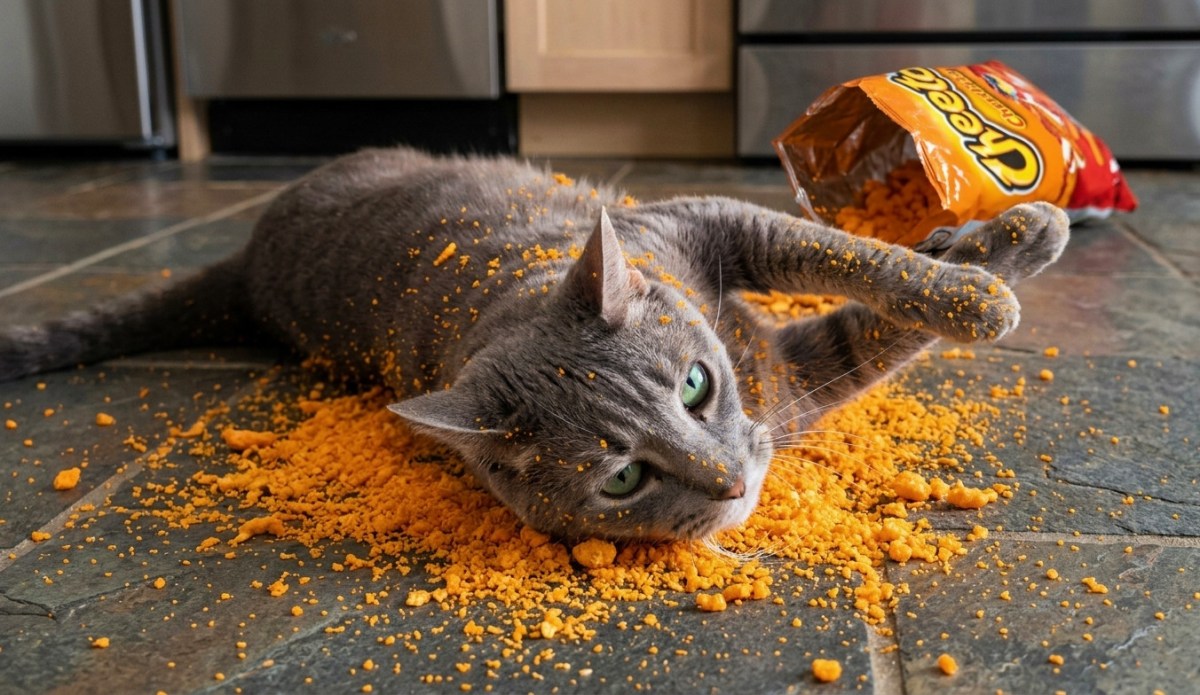
The often-scheming tabby cat emptied the bag on the kitchen floor, then spent almost a half hour rolling around to grind the Cheetos into dust and embed the crucial orange color in his fur.

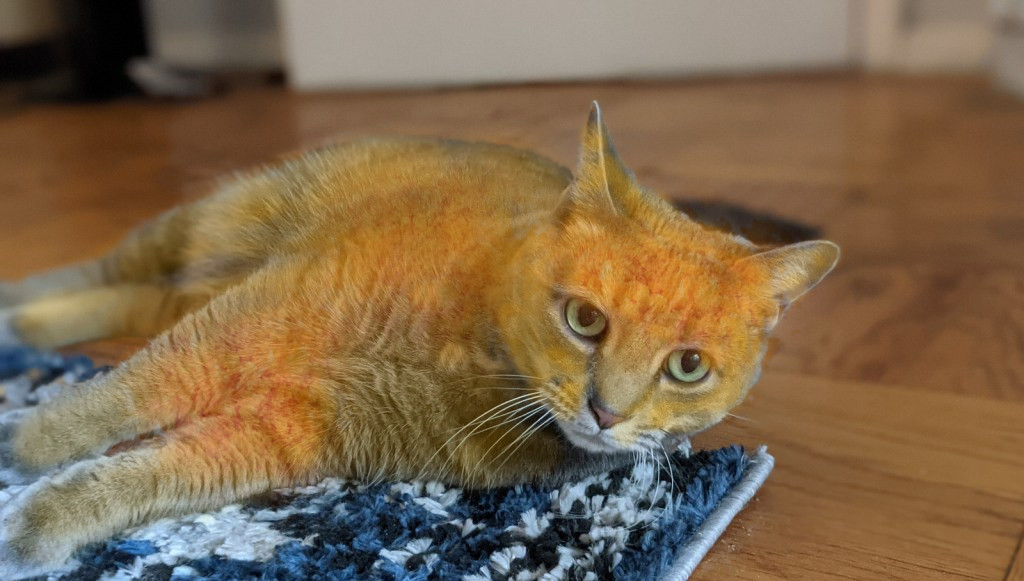
Now a tiger!

When he was done, he admired himself in the mirror, deciding he was a dead ringer for a tiger, then chose a spot to lay in wait for his human for a planned ambush.

“He’s gonna see a tiger coming at him and he’s gonna have to bribe me with so much food so I don’t eat him!” Buddy said gleefully. “It’s gonna be great.”

Report Details ‘The Unsettling Rise Of Cat Seducers’

Is your cat a Six Dinner Sid spending an increasing amount of time with neighbors?

Your neighbors probably aren’t giving your cats flowers or serenading them with Marvin Gaye songs, and hopefully they’re not giving them chocolates, but they may be cat seducers anyway.

The term dates back at least a few years and it describes neighbors who lure pet cats into their homes, ply them with food, even buy them beds and collars, all in an attempt to gain effective “ownership” of the felines in question without having to worry about vet bills or declare to landlords that they have a cat.

Reports of cat seduction are rife with anecdotes about seducers ignoring polite requests from the owners not to feed their cats and even questioning whether the original caretaker is meeting their needs. Some distressed people report their cats are gone for days at a time and rarely return home as the seducers ignore healthy feeding limits and do everything they can to keep the felines in their homes.

Naturally, cat seduction is primarily a problem in the UK. While the culture around feline companions is changing across the Atlantic as people opt for measures like catios and harness training, the majority of British caretakers still believe their little buddies need outdoor time to remain stimulated and happy.

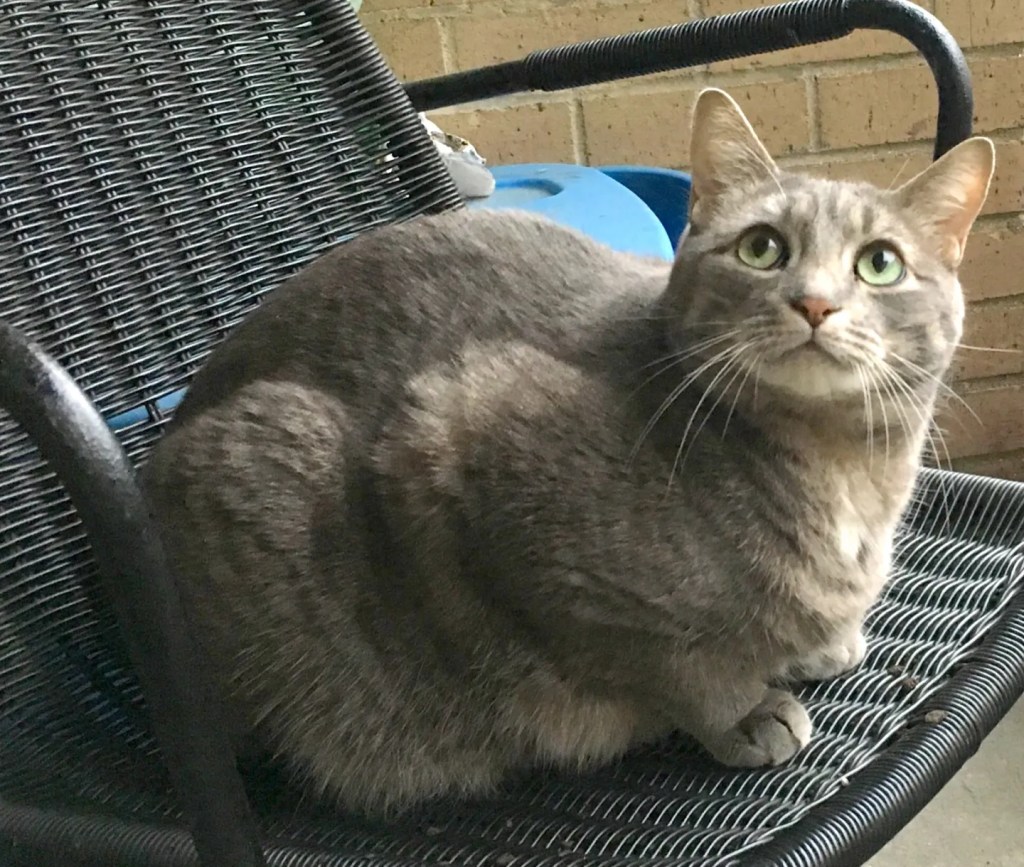
As readers of PITB know, Buddy is an indoor-only cat, and definitely not because he’s frightened of going outside. The problem is, he’s so meowscular, ripped and yuge that neighbors who might spot him crossing a yard at night or padding powerfully down the sidewalk are likely to freak out and call authorities to report a large cat, possibly a jaguar or tiger, is loose in the neighborhood.

So obviously I have to keep him inside not for his safety, but for the safety and sanity of our neighbors. We’re considerate like that here at Casa de Buddy.

A woman named Amy told The Guardian her cat was gone so often, she put a tracker on his collar to find out where he was spending his time. That’s when she realized he was in a neighbor’s house “constantly.” The neighbor, who says she can’t adopt a cat of her own because she travels frequently, was not cooperative when Amy asked her to stop feeding her pal.

“Cats are cats – they have no concept of human boundaries,” Amy told the newspaper. “She’s literally enticing him away.”

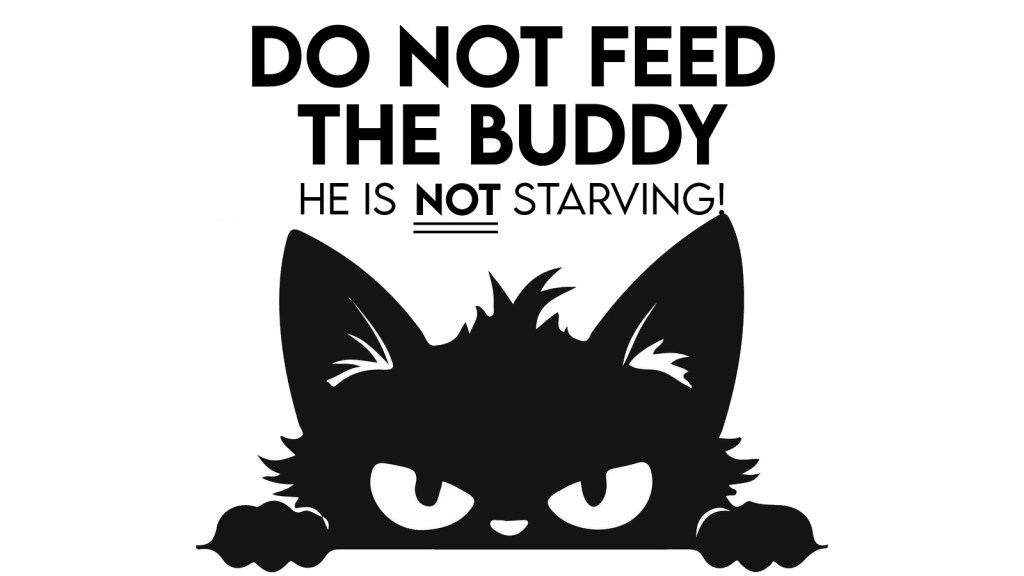
A sign warning admirers not to feed Buddy, who has been known to solicit snacks from the balcony by meowing to passersby.

Alison Ward, who also spoke to The Guardian, said her cat Scooby started coming home “reeking of marijuana” and well-fed “but quite deranged.”

Ward figured out Scooby was being enticed into the home of a group of roommates, all men in their 20s, who had renamed the little guy, purchased food bowls for him and even got him a collar.

“They said they thought he was their cat,” she said.

Online resources dedicated to cat seduction warn of telltale signs. If you’ve restricted your cat’s diet on a veterinarian’s instructions, for example, and the cat is not losing weight or even gaining it, that’s a clear sign the little one is a Six Dinner Sid, bouncing between home and at least one other neighbor’s house. Other signs include constantly “lost” collars, inexplicable grooming, disinterest in the cat’s usual food, and returning home with unfamiliar scents attached to them.

On a subreddit for UK users, several people shared anecdotes about cat seduction.

“My mum’s two cats started disappearing for a day or two here and there. She figured they were shacking up at a neighbours house occasionally which didn’t bother her too much,” a user wrote. “Then one day they both just completely disappeared. Months later she found out who it was that had been sheltering them during those missing periods, and they also happened to have moved away right around the time that the cats disappeared.”

Others worried about their affectionate and sociable cats, and there was a general consensus that social media, particularly posts and memes about the “cat distribution system,” can lead to people believing it’s okay “to take any friendly cat home with them because it ‘chose’ them.”

So ripped!

Of course there’s a simple solution: don’t allow your cat to roam outside unattended.

While some argued that people should keep their cats indoors to keep them safe from dangers like getting hit by cars, as well as to prevent them from killing birds, others rejected the idea. Some even blame US cat lovers for normalizing the practice of keeping cats indoors.

“Oh, you don’t agree with the American way of doing things, well you’re just wrong,” one user wrote. “They’ll rant about the dangers of coyotes etc to cats, while refusing to accept that’s not an issue here. Friends in the US were genuinely shocked when I explained that rabies was eliminated here a long time ago.”

Header image via Pexels

‘The Most Unaffectionate Cat In The World’?!

Big Buddy has cat scratch fever and Little Buddy’s reputation has been besmirched!

So I’ve got cat scratch fever from a nasty Bud-inflicted cut on my right foot.

I take full responsibility. I woke a few nights ago to Bud mmmmmmrrrrrp-ing and realized I’d been acting out my dreams and had kicked him. Of course I felt terrible, apologized with some gentle head scratches and he forgave me in a few seconds because he knows it wasn’t intentional.

And because it’s happened two or three times before. There’s something wrong with whichever brain mechanism regulates my motor function shutdown, and it goes both ways, from terrifying bouts of sleep paralysis to the aforementioned acting out of dreams.

I fell asleep again after the unfortunate kicking incident, then realized Bud had already paid me back earlier with a skin-shredding, blood-drawing scratch on the top of the offending foot, when I woke up scratching the painful and itchy cut.

I applied antibiotic ointment and have continued to do so, but my foot’s swollen and I feel a little funky. Health sites advise watching it closely and if redness spreads out, or if it’s accompanied by certain other symptoms, I should seek medical attention.

So far I’m okay.

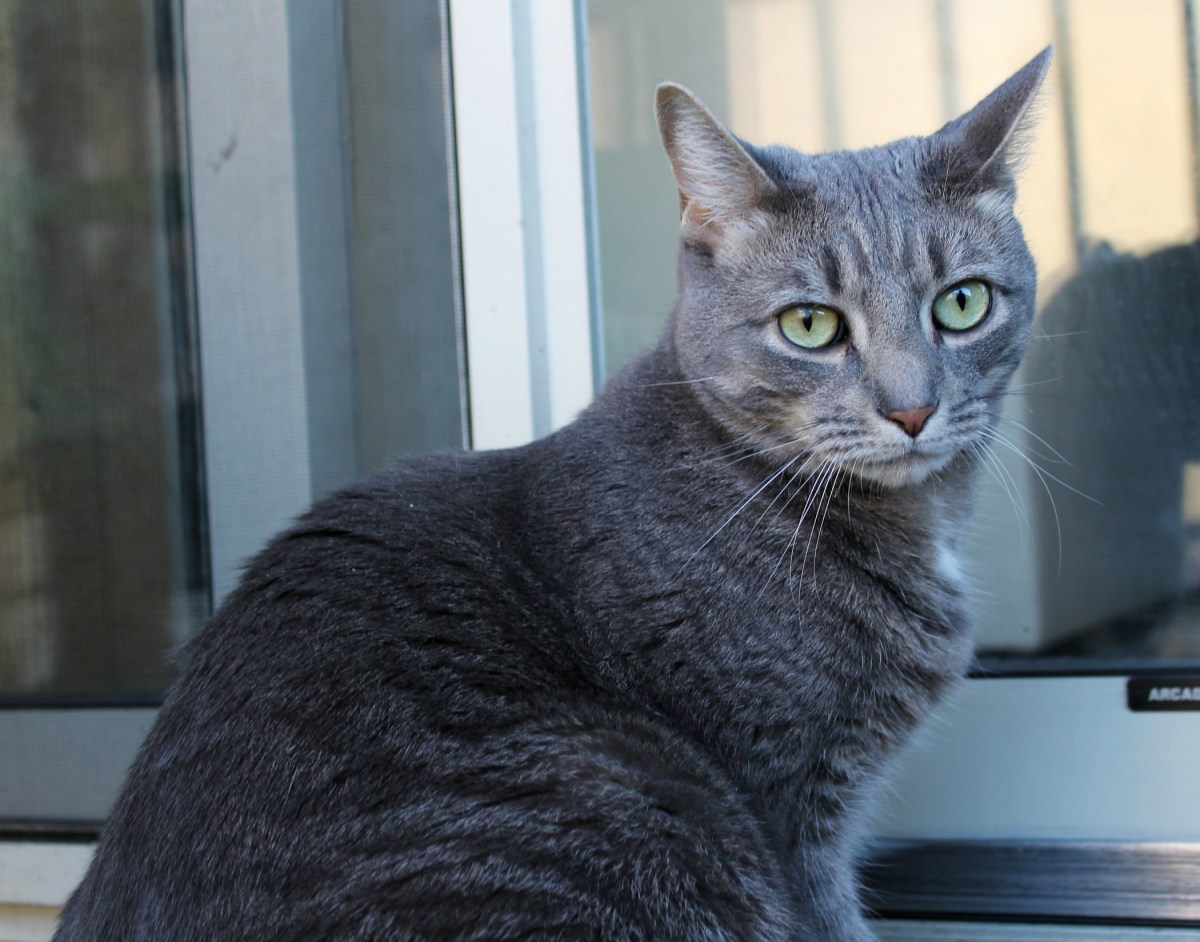
Buddy gazes upon his meowgnificent reflection.

In the meantime this has not helped Bud’s reputation with people in my immediate orbit, including my family.

As regular readers know, Bud has an unfortunate habit of engaging in some light mauling of his cat-sitters. My friend Sue, who has my eternal gratitude for watching him many times, will no longer play with him or interact with him. She slips in, presumably with armor and a heavy oaken shield, then feeds him and makes a rapid egress.

Anyway, Bud has been dubbed “the most unaffectionate cat in the world” because of his hostility toward cat-sitters and his quick-to-the-draw paw-slapping tendencies. It hasn’t helped that other people I know have adopted cats who’ve turned out to be perfectly behaved, grateful, sweet little furballs who don’t slap people for petting them too long.

Which I think is a bit unfair considering Bud’s a very friendly cat while I am present and the majority of retaliatory slappings by Bud have occurred when people unfamiliar with feline interaction etiquette try to pet him as if he’s a dog. He gets overstimulated easily, has a low tolerance for repeated petting in the same area, and does not play nice if anyone goes for his belly or tries to pick him up.

That’s just his personality. He’s absolutely affectionate and can be a little love bug with me. He loves my brother. He’s cool with my nieces even though he knows they’re kids and can be a bit unpredictable. Of course I don’t pick him up unless absolutely necessary, I don’t rub his tummy and I know the signs when he’s close to overstimulation. There’s also years of trust between us, and I’ve been told I am an adequate servant.

I’ll be keeping a close eye on my swollen foot and jokingly told Bud I’m going to defenestrate him if I have to go to the emergency clinic, which is fine because he doesn’t know what that means! (And of course I would do no such thing. My little Buddy is an absolute angel, even when the claws come out. Obviously.)