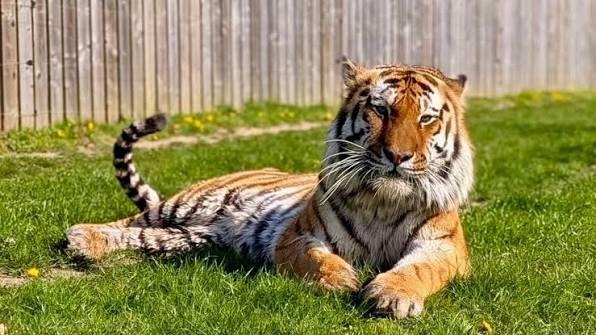
UK Man ‘Bowed Down’ To Tiger While Livestreaming Own Death: Police

The visitor’s strange behavior and the crowd’s panicked screams began to override the tiger’s initial confused curiosity, prompting his predatory instincts to kick in.

A British man killed this weekend by a zoo tiger was mentally “vulnerable” and behaved bizarrely before and during his grisly encounter, police and witnesses said.

William Chapman, described in media reports as “in his early 20s,” was seen laughing and dancing before he hopped the barriers separating guests at Yorkshire Wildlife Park from its Land of the Tigers exhibit.

Chapman suffered from “significant mental illness,” his family wrote in a statement.

In audio captured a few minutes before Chapman’s 1:30 pm death on Oct. 10, the late Briton handed his smartphone to another visitor and asked the woman to take photos of him with the tiger in the background.

“Thank you, lady,” he’s heard saying on the recording before he climbed the barriers in front of horrified guests and dropped into the enclosure housing Altai, an Amur tiger who just turned five years old about two weeks ago.
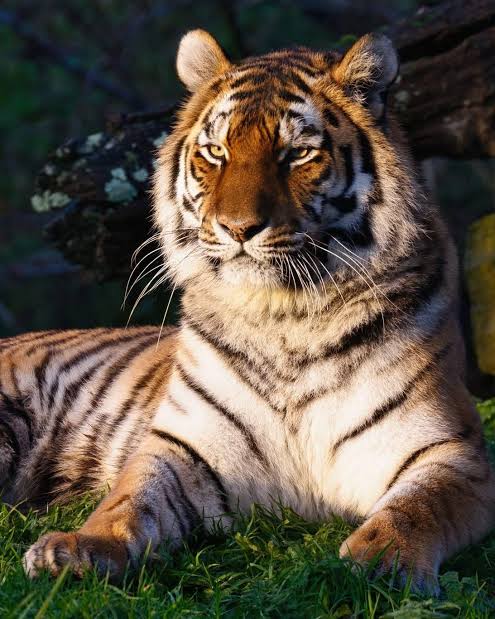
A close-up of a tiger resting on the grass, showcasing its distinctive orange and black stripes, with a focused gaze.
Altai. Credit: Yorkshire Wildlife Park

The encounter took an even stranger turn from there as Chapman, who was live-streaming to Instagram, seemed to welcome Altai. The curious big cat hopped down from a wooden platform where he’d been soaking up the sun and padded unhurriedly toward Chapman, who spread his arms theatrically.

“It looked like a performance,” bystander Anthony Hunt said. “He got down where everyone could see him in the main viewing area. He was on all fours, praying and bowing down to the tiger. It was like he was waiting for the tiger.”

Still images show Altai standing in a confused, non-aggressive posture, with telltale “helicopter ears” indicating curiosity and hesitation about how to respond.

Chapman’s behavior didn’t fit Altai’s cognitive script.

The tiger’s hardwired instincts told him incursions from other members of his species are threats. His experiences in captivity told him humans are caretakers who show up at predictable times as part of a daily routine to feed him, repair his enclosure or introduce enrichment items. This was something entirely new.
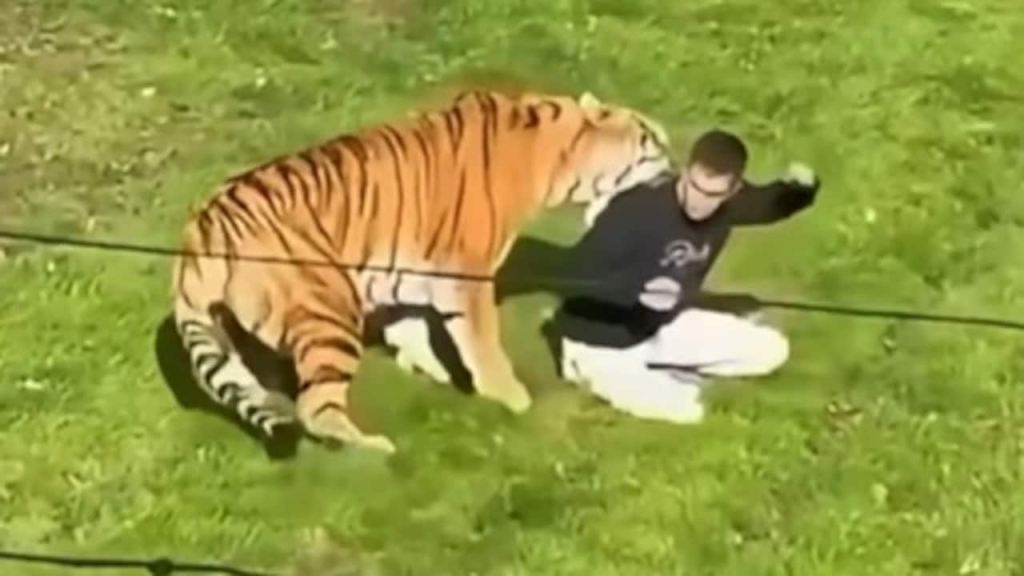
A person kneels on grass while interacting with a large tiger in a natural setting.
A still from footage recorded by a witness to Saturday afternoon’s fatal encounter.

While I’ve learned my lesson when it comes to watching video of things I can’t unsee and have no desire to watch footage of a man’s life ending in a violent mauling, I did watch short clips of the preceding moments. They were compiled from recordings by bystanders and Chapman’s own feed.

The moment the situation changed was unambiguous, and you can see exactly when Altai became overstimulated and his predatory drive kicked in: Chapman dropped to all fours, reducing his physical profile until he resembled prey, and the panicked screams from the crowd of onlookers pushed Altai into overstimulation and hypervigilance.

He knew the encounter had taken a turn, and that’s when he took his first few exploratory swipes, still pulling his punches as he tried to figure out what was happening.

Chapman responded by assuming a defensive posture, raising a finger to the big cat while shouting “No! No!” and chiding him for being “naughty.” To the tiger, Chapman confirmed he was prey.

At the same time the screams from above grew louder. Altai’s predatory instincts were fully engaged, and according to reports that’s when he mauled Chapman and delivered a kill bite to the UK man’s neck.

A young man with short hair and earbuds stands in front of a panoramic landscape featuring rolling hills and lush greenery.
Chapman’s family said he was taking “strong medication” to help manage mental health issues.

Zookeepers who rushed to the scene fired warning shots, sending Altai scurrying for the safety of his den. A medical airlift helicopter arrived a few minutes later, but by then it was too late. Chapman had bled out and was pronounced dead at the scene.

Authorities erected screens to conceal the carnage as staff closed the zoo. Footage of guests leaving showed bystanders in shock, discussing what they’d just witnessed as they shuffled through the exit.

One woman, a mother who tried to stop Chapman from leaping, was particularly disturbed. She did not speak to reporters.

Chapman “looked like he was taking selfies” after dropping into the habitat, 21-year-old Scarlet Hogan told The Telegraph.

“Up until he got attacked, it was like he was in a trance, not in reality at all,” Hogan said.

“He had arms wide open ready for the tiger to attack him. It was quite bad. We were just stood there, frozen… the last thing we saw was the tiger’s jaw on his neck.”
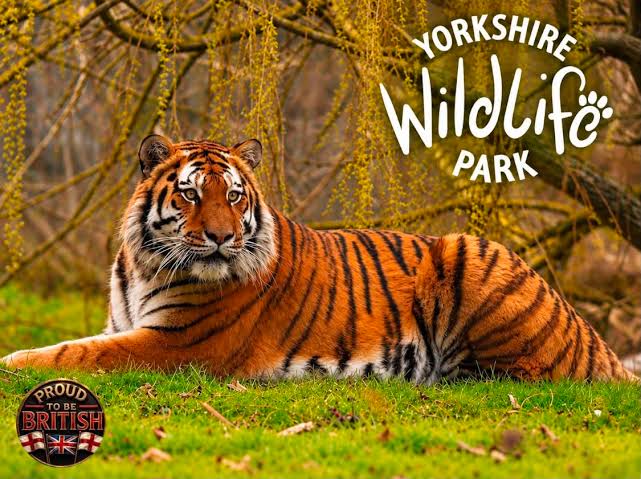
A magnificent tiger resting on green grass, with a background of trees and a logo for Yorkshire Wildlife Park in the corner.
Altai pictured in promotional material for the park.

Chapman, who had traveled from nearby Doncaster to the zoo, was an actor who had roles in productions by the BBC and ITV.

“The man who I saw on the bridge with his AirPods in, dancing, was happily enjoying seeing the tiger,” witness Marie Miller said.

Park staff said Altai, whose subspecies is critically endangered, will not be euthanized, and witnesses who spoke to the BBC said staff promptly took control and shut the park down.

Neither the zoo nor the tiger were at fault, said the University of Reading’s Campbell Murn, a former member of the UK government’s Zoo Experts Committee.

“I view it in the same way a determined thief will get into somebody’s house or somebody’s car,” Murn said, “and despite the best security systems and enclosures sometimes these things happen.”
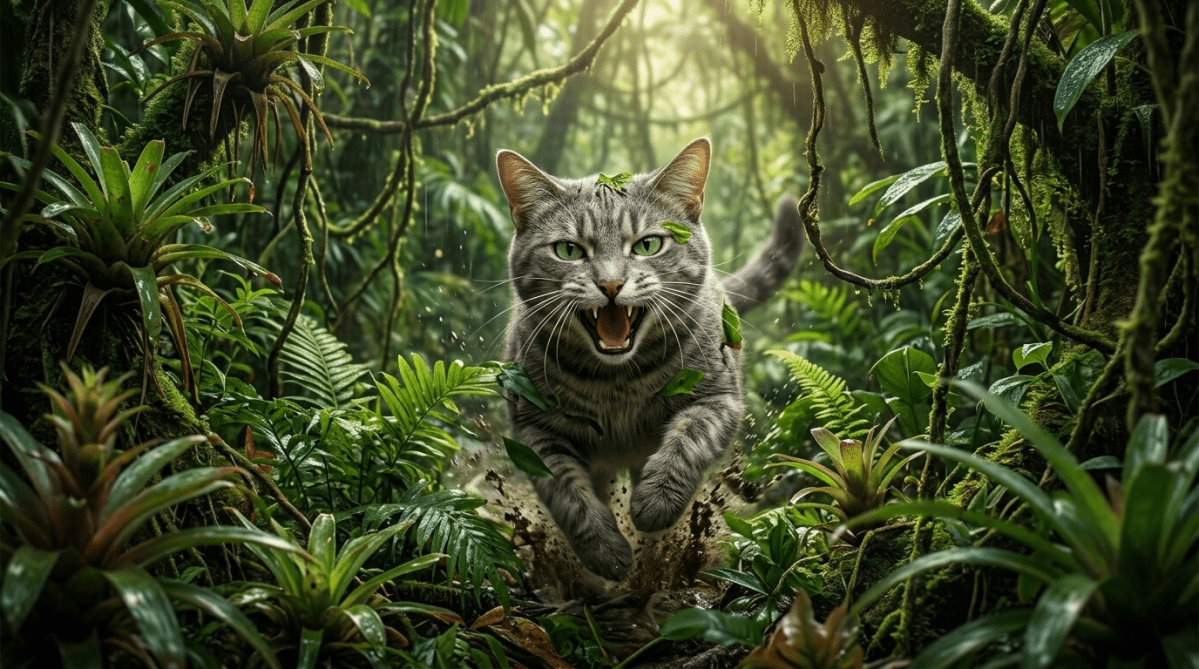
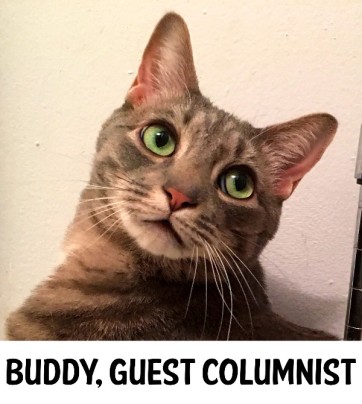
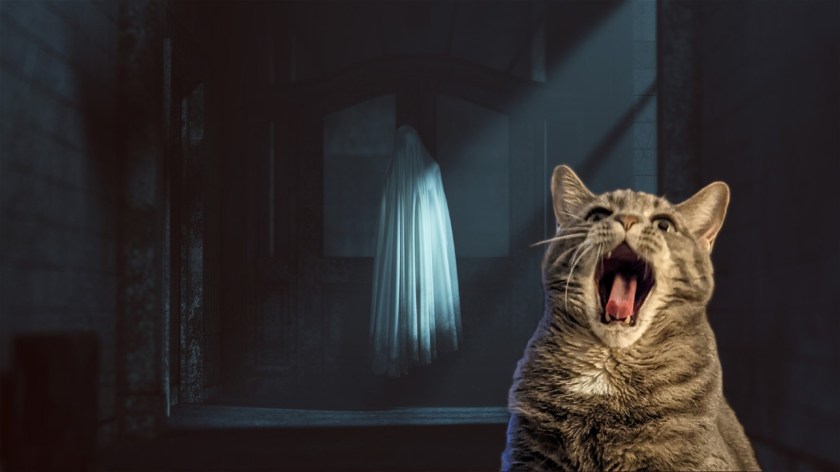
Point-Counterpoint: ‘I Am An Apex Predator!’ Vs ‘OMG, What Was That Noise?!? Go Check It Out, Human!’

Buddy the Cat asserts he is a powerful apex predator who fears no man or beast, while Buddy the Cat runs and hides the moment there’s an unfamiliar sound in his domicile.

I Am An Apex Predator!

Behold! I have the gait of a lion, the bite force of a tiger, the stealth of a jaguar, and the relentlessness of a leopard!

My meowscles ripple meowscularly as I stalk my prey by moonlight! One second all looks safe and calm, and the next I’m leaping from cover in a burst of feline power to ambush my unfortunate prey!

Lesser creatures have nightmares about me. Indigenous cultures celebrate my legend in oral traditions. Craftsmen carve bas reliefs illustrating my mastery over all beasts. Shamans invoke my speed and strength. My toys quake at the mere mention of my name!

I am Buddy, and I am a ferocious cat! RAWRRR!!!

‘OMG, What Was That Noise?!? Go Check It Out, Human!’

Holy crap, dude! What the heck was that?

I’m just gonna run and hide under the bed while you investigate that awful, terrifying noise! No, YOU check it out. Are you crazy? I’m not going anywhere near there! What if it’s, like, a serial killer or a chalupacabra?

Where’s it coming from? The kitchen? The bathroom? Oh God! I told you, there are monsters living in the toilet and they can emerge at any second to murder us in our naps! We should have nailed the toilet seat down years ago! You didn’t listen to me, so you’re gonna have to fend off the monsters while I lend you moral support from three rooms away.

What? Duuuude.

Was it really your smartphone alarm on vibrate? Whew! For a moment there, I thought we were in trouble.

Now I’m gonna need you to rub my head while I sit in your lap and you tell me what a good, brave boy I am. If it really had been monsters, they would have gotten their butts kicked by me. I was brave, wasn’t I?

If you slander me by claiming I freaked out and ran to hide under the bed, I will be forced to accuse you of peddling fake news!

Point-Counterpoint presents two essays taking opposing positions on a topic. Join us again next week, when Buddy the Cat will debate Buddy the Cat on another important topic.

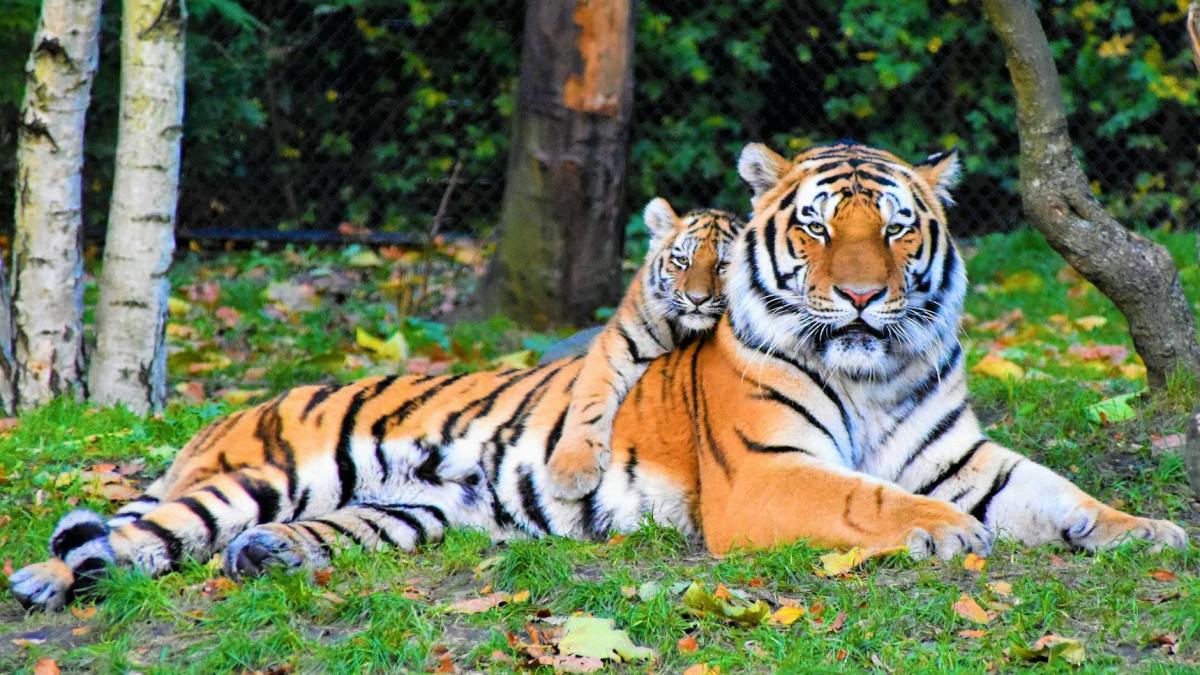
Wordless Wednesday: The Glorious Amur Tiger

Today we’re admiring photos of the majestic Amur (Siberian) tiger, a species that has been pulled back from the brink of extinction thanks to the hard work of conservationists.

The Amur tiger, panthera tigris altaica, is the largest subspecies of the largest cat in the world.

Click an image in the gallery to view a higher resolution version:

All images in the gallery above via Wikimedia Commons. Header image via Pexels.

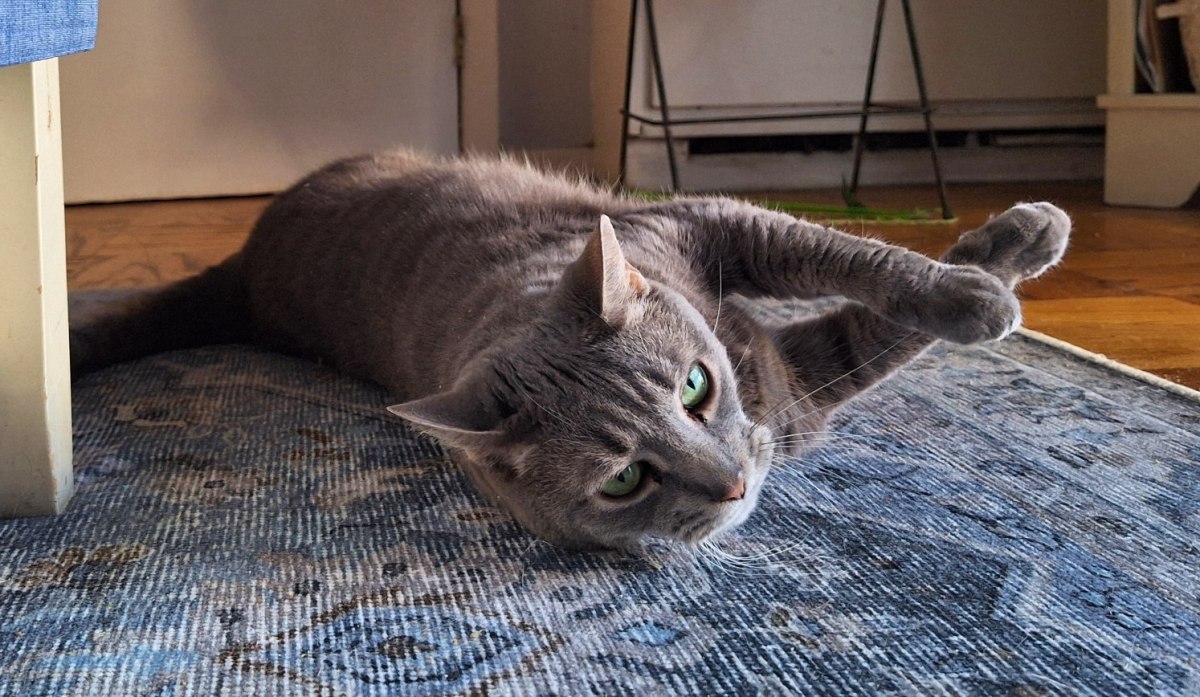
Masterful Technique, Superb Skill: Buddy Demonstrates How Cats Hunt

While ferocity comes naturally to cats, hunting skill must be honed. Only those who are the most dedicated to their craft can claim the title of Apex Predator!

Watch an apex predator hone his supreme hunting skills and show his toys who’s boss!

After 10,000 Years, Dire Wolves Walk The Earth Again

The surprise announcement came from Colossal Biosciences, a company best known for its project to bring back the woolly mammoth.

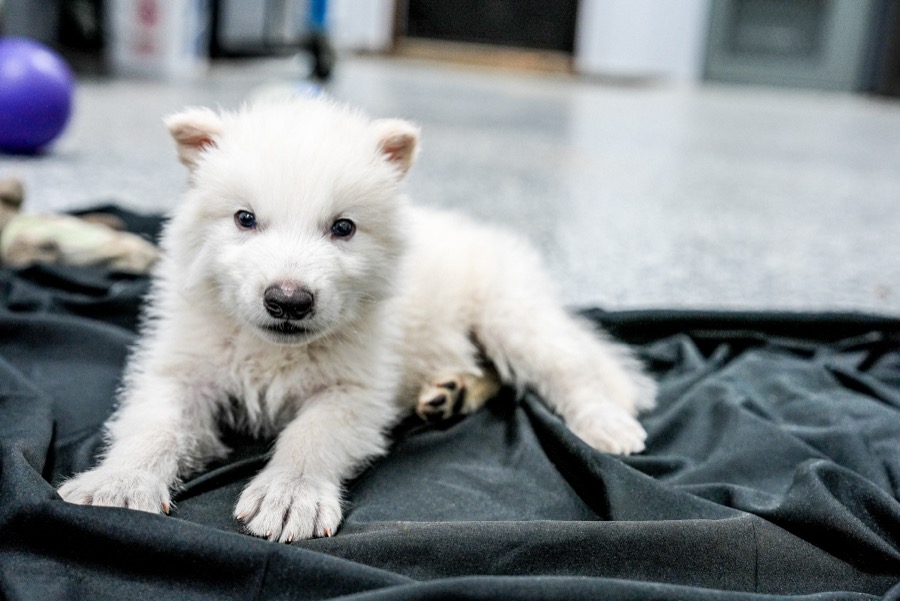
A US biotech company shocked the world Monday when it announced the births of three dire wolf puppies, bringing back a species that hasn’t lived for more than ten millennia.

Or a version of that species, at least.

Scientists with Colossal Biosciences extracted DNA “from a 13,000 year old tooth and a 72,000 year old skull and made healthy dire wolf puppies,” Colossal CEO Ben Lamm said in a statement.

Of course, it wasn’t that simple.

The dire wolf, Aenocyon dirus, was heavier, stockier and had thicker fur than modern-day gray wolves. In addition, its bite was incredibly strong, generating more force than any living species of canid.

To create the dire wolf puppies, Colossal used the genomes reconstructed from the tooth and skull, spliced them with gray wolf DNA, and made 20 gene edits in 14 genes. Healthy embryos were implanted in three surrogates — large, mixed-breed dogs — and were successfully delivered.

Romulus, one of two male dire wolf pups born late in 2024. Credit: Colossal Biosciences

Remus, who was born at the same time as Romulus. Credit: Colossal Biosciences

Whether the new puppies are officially dire wolves is up for debate and beyond the scope of this post, but just like humans and chimpanzees share 98.7 percent of their DNA, dire wolves and gray wolves share 99.5 percent of their DNA.

The species also existed concurrently with gray wolves and there was interbreeding between the populations, meaning gray wolves already have dire wolf lineage.

As a result, the puppies may be more dire wolf than some are willing to admit. Just how far a “de-extinction” project has to go for the animals to qualify as their namesakes will be debated for years, and there are innumerable questions for which we won’t have answers until the pups grow and scientists monitor their behavior in addition to their physical health.

They won’t behave precisely the way their ancestors did, since they are growing up in a captive environment with teams of specialists constantly monitoring them. The wolves are “essentially living the Ritz Carlton lifestyle of a wolf. They can’t get a splinter without us knowing about it,” Colossal’s chief science officer, Beth Shapiro, told the New York Times.

Whether bringing back dire wolves is a “good” thing is also a topic for another day, at least as far as this post goes. You may disagree, and feel free to say so in the comments, but this is a subject you could write half a library of books on, encompassing ecological, moral and philosophical questions that don’t have easy answers.

It’s made even more complex by the situation we find ourselves in, with our own behavior and relentless expansion killing off more than 70 percent of the world’s wildlife since 1970, according to the World Wildlife Fund. The company wants to use its technology to help critically endangered species, like the red fox, avoid extinction.

Colossal has partnered with leaders in the fields of genetics and bioethics, as well as organizations that specialize in animal welfare. The puppies are in a sizable, custom-built facility in an undisclosed location, secured by “zoo grade” barriers, and the company enlisted the help of the SPCA to create an environment appropriate for them. Colossal says their care regimen will include socialization and the development of pack dynamics.

A newborn dire wolf pup. Credit: Colossal Biosciences

The company has well-publicized projects to bring back woolly mammoths and the dodo, and ultimately, its founders say they want to restore balance in places where apex predators have been brought to extinction by human activity.

“This project demonstrates the awesome potential for advances in genetic engineering and reproductive technologies to recreate lost diversity,” Andrew Pask, a Colossal board member and professor of biosciences at the University of Melbourne, said in a statement. “Apex predators are critical to stabilizing entire ecosystems and their loss from the landscape can have profound impacts on biodiversity.”


The pups are named Romulus, Remus and Khaleesi. That last name is in homage to the character Daenerys Targaryen (Emilia Clarke) from the book series A Song of Ice and Fire, and Game of Thrones, the television adaptation. Dire wolves play a major part in the narrative, and the series is credited with bringing the long-extinct animals back into the popular imagination.

Jon Snow (Kit Harrington) discovers an orphaned dire wolf pup in the first season of Game of Thrones. The pup, who grows into a fierce and massive adult wolf named Ghost, plays a pivotal role in many major events in the series. Credit: HBO

Khaleesi, a female dire wolf, named after the character Daenerys Targaryen from Game of Thrones. Credit: Colossal Biosciences