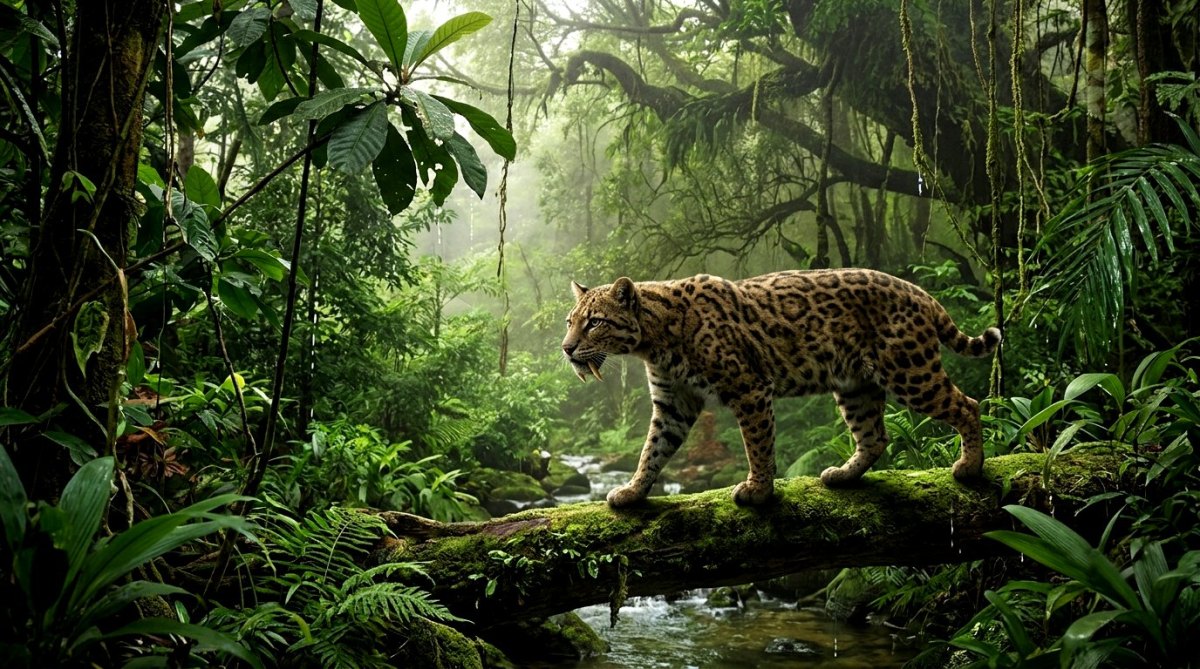
Their greatest strength was also their greatest weakness, which is why modern big cats have smaller, sturdier teeth.
Saber-toothed cats — an umbrella term for a wide variety of felid species with massive, scimitar-like teeth — are some of the most terrifying prehistoric predators, carnivorousness incarnate.
But it turns out the teeth that give them their name and their fearsome reputation were also their greatest weakness.
The problem? While the oversized upper canines were optimal for delivering kill bites and tearing into flesh, they could break if the teeth met bone with force.
“Slicing and crushing are basically the two main things a carnivorous mammal’s teeth can do,” said Narimane Chatar, a postdoc at UC Berkeley studying carnivores. “But for saber-toothed animals, there’s a clear trade off. Those upper canines were extremely efficient but also break very easily.”
As experts on extant big cats are well aware, a hypercarnivore with broken or damaged fangs can struggle to take down their typical prey. That’s what often turns tigers, leopards and lions into man-eaters. (Interestingly, there are no documented accounts of man-hunting jaguars. Jaguar attacks on humans are exceedingly rare, and while they have killed humans, there’s no jaguar equivalent of the Chamapawat Tiger or the Leopard of Rudraprayag.)
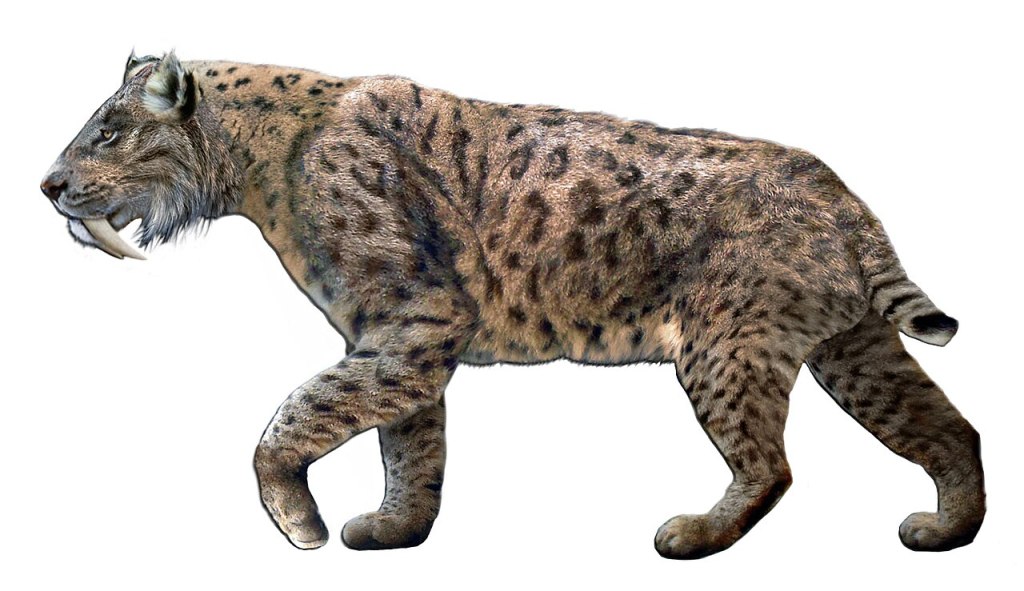
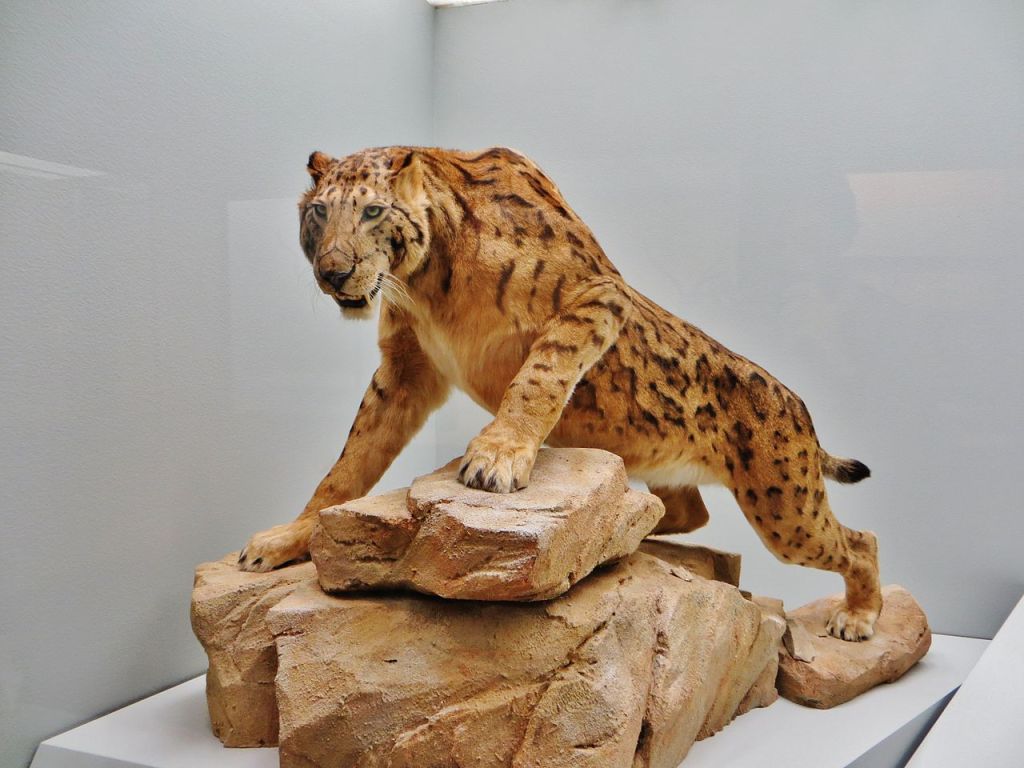
A reconstruction of Smilodon, commonly known as the saber-toothed tiger, although it’s not closely related to modern tigers.A reconstruction of Megantereon, a saber-toothed cat that went extinct as late as 350,000 years ago.
During her research, Chatar found the skull and teeth of a saber-toothed cat in Berkeley’s archives and realized it was not the same species associated with saber-toothed cats in the Americas.
Although Smilodon and Homotherium are the most well-known species, “there was a crazy variety of saber-toothed cats,” Chatar said.
Her research has confirmed the prehistoric cat’s sword-like fangs were double-edged, literally and figuratively. Per UC Berkeley:
“In simulations, 3D-printed saber teeth from various species proved ideal at penetrating a gel with the consistency of flesh but fractured easily against simulated bone. In the former tests, Smilodon came out on top. In the latter, Smilodon fared the worst.“
Smilodon lived in the Americas and went extinct about 8,200 years ago. Los Angeles’ La Brea Tar Pits have yielded a number of preserved skeletal remains, making Smilodon and its three sub-species among the best-known prehistoric felids.
Smilodon and Megantereon images via Wikimedia Commons.
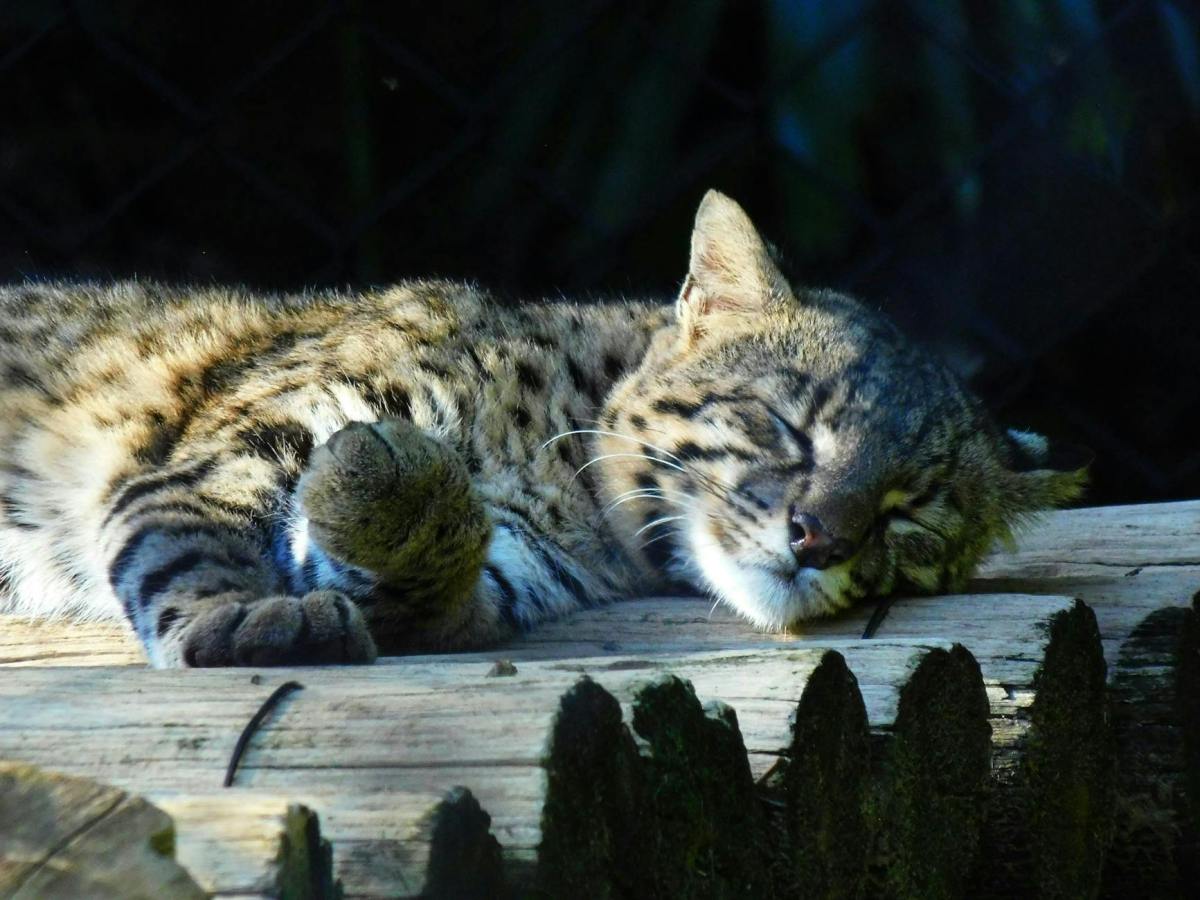
Cats spend most of their time sleeping, which leaves them in a vulnerable position.
Aubrey Plaza is delightfully weird.
Anyone who’s seen her on a late night talk show or in an impromptu interview knows what I’m talking about. Instead of the practiced, carefully crafted anecdotes celebrities tell to make themselves seem more interesting, or the hard focus on promoting a particular project, Plaza seems to revel in awkward pauses, bizarre responses and stories that most people would never tell about themselves.
She does it all with a deadpan expression so you can never quite tell if she’s joking. That’s part of the fun.
I hadn’t seen her in much until Emily the Criminal, about a woman whose frustration at trying to make ends meet with dead-end jobs leads her down a highly illegal path, revealing a talent for deception she never knew she had.
Plaza in Emily the Criminal.
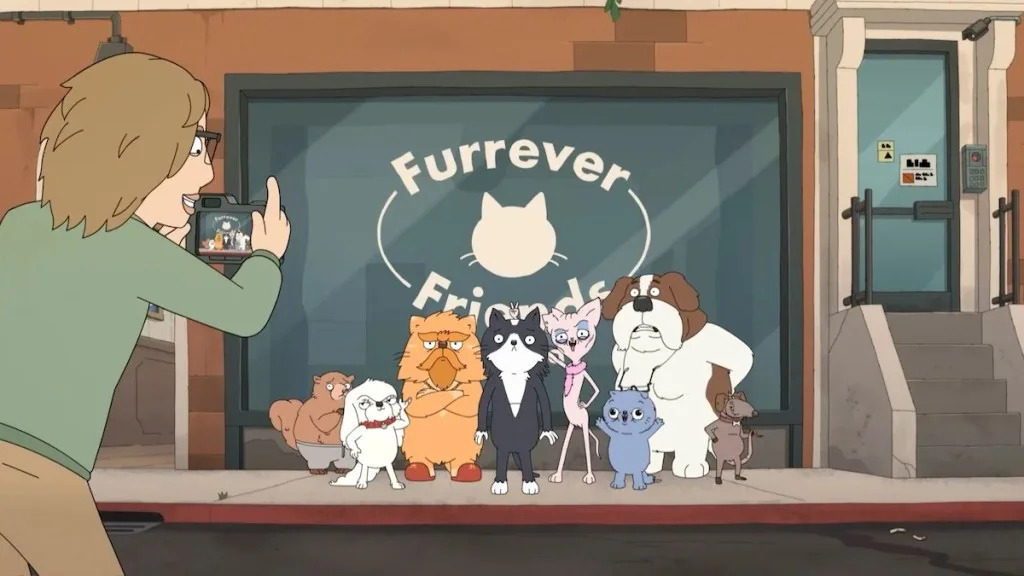
Now she’s starring in Kevin, an animated show about an eponymous tuxedo cat who decides that when his humans break up, he’s going to break up with them too. Instead of going with one of them, Kevin decides to move “into a local pet rescue in Astoria, Queens, where a band of misfit animals helps him discover what he truly wants out of life,” according to the series’ logline.
Plaza co-created the series with Joe Wengert, and Jason Schwartzmann, who we loved in Bored To Death, will voice Kevin. The show will premiere on April 20 on Prime Video.
A still from Kevin.
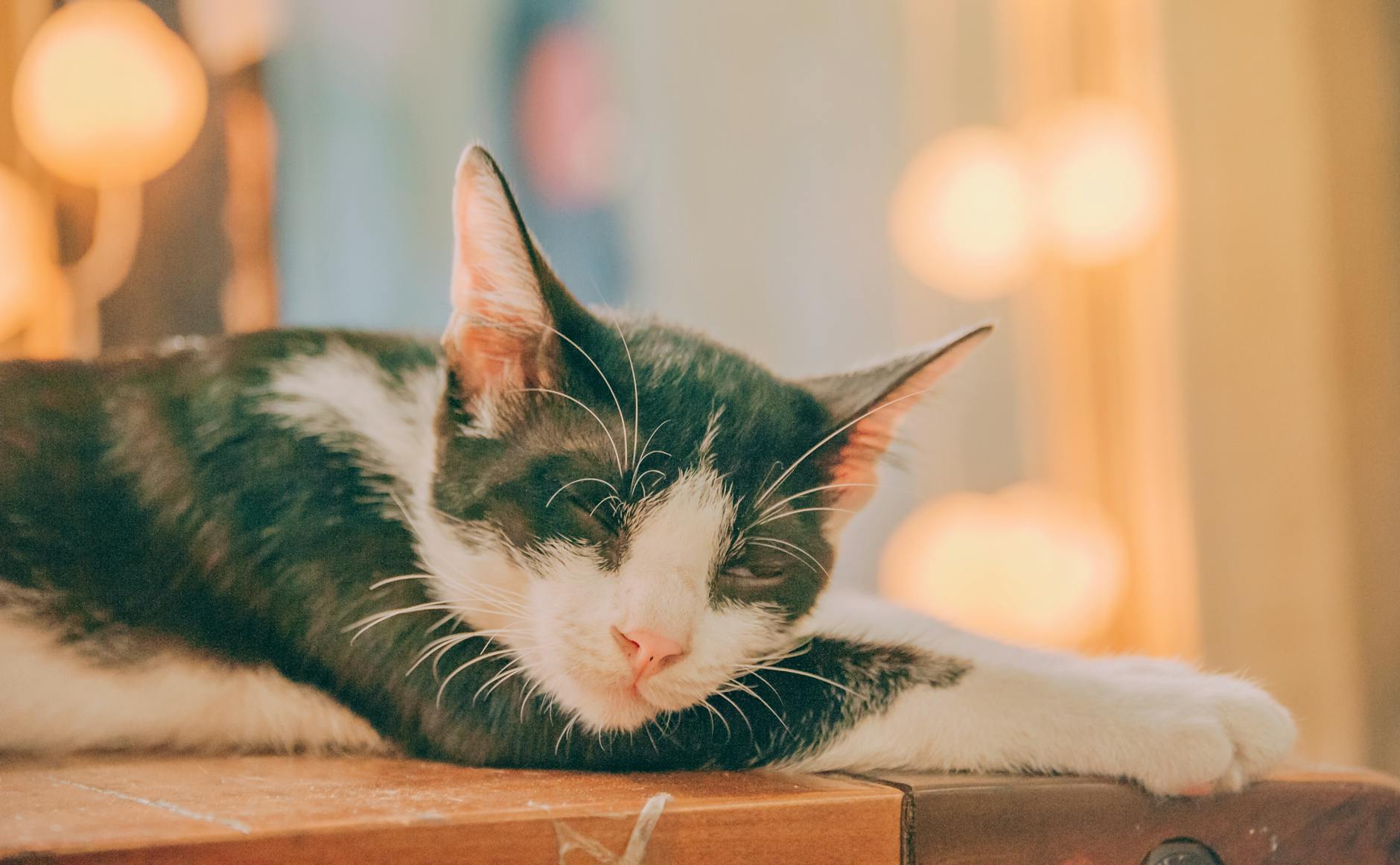
Cats prefer sleeping on their left side, but why?
Two out of three cats prefer sleeping on their left side, which immediately raises two questions: why do they prefer sleeping that way, and how do we know such a seemingly obscure piece of information?
In 2025, a team of scientists from Italy and Germany analyzed more than 400 random online videos of our furry overlords in their rest state, and the numbers were consistent. Cats definitely have a preferred side to sleep on, and it’s the left.
As for why, in a research paper published in Current Biology last summer, the scientists say there are several reasons, but the primary one is that the right side of the brain processes shapes and visual sensory input.
Since the right hemisphere of the brain controls the left side of the body in mammals, due to the way nerve fibers cross at the base of the brain, a cat opening its eyes and seeing the world from the left side is able to more quickly assess information and react.
Credit: Min An/Pexels
That’s a pretty big deal for cats, as a story in Science Focus notes. As both predator and prey, felines have to respond quickly not only to potential threats, but also potential lunch.
That is especially true for a species that spends the majority of its time sleeping deeply or napping, meaning they’re physically vulnerable to attack most of the time. That explains why our cats are able to spring to alertness immediately from a nap, and why their most restful sleep comes when they’re absolutely sure they’re safe.
Anecdotally, that makes sense. Bud clearly feels safest when he sleeps on me or burrows between my knees, and it’s subsequently harder to rouse him from slumber compared to, say, when he catches some Zs on the couch by himself or retreats to another favorite napping spot.
Perhaps unsurprisingly, he also bucks the trend and likes to sleep on his right side. We are, after all, talking about a cat who still hasn’t figured out that wand toy games simulate hunting, and that they should end with a “kill bite” rather than Bud’s favored method, which is bouncing happily on his back paws while bobbling the toy in his front paws.
He may have the instincts of his wild ancestors, but all he knows is the comfort and warmth of human homes.
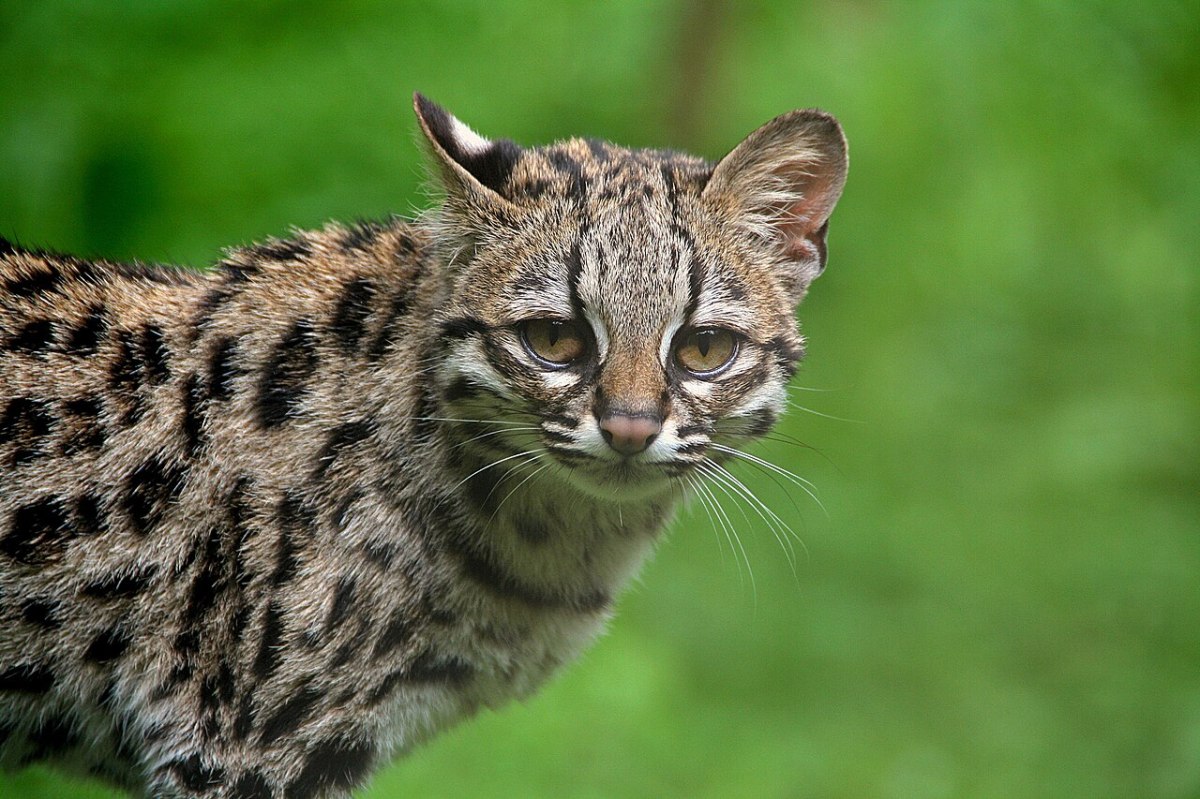
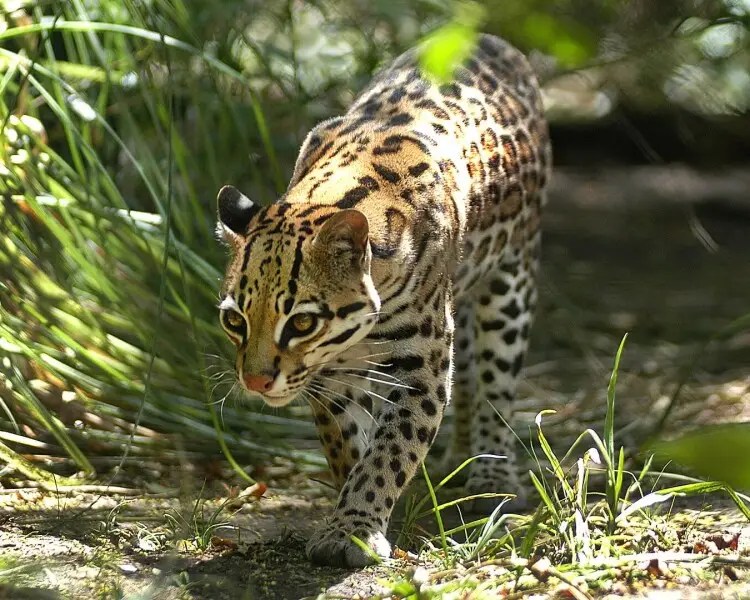
Strongly resembling ocelot cubs, margays have a unique biological adaptation to tree-climbing and a devious ability that gives them a massive advantage over their prey.
Taxonomic name:Leopardus wiedii Genus: Felis (small cats) Weight: Between 5 to 9 pounds with typical felid sexual dimorphism Lifespan: More than 20 years in captivity Gestation: About 80 days Litter size: Single kitten, rarely more than one Distribution: Central America, including Brazil, Paraguay, Peru, Chile, Ecuador, Venezuela, Guyana, Colombia, Panama and parts of Mexico IUCN Red List Status: Near threatened
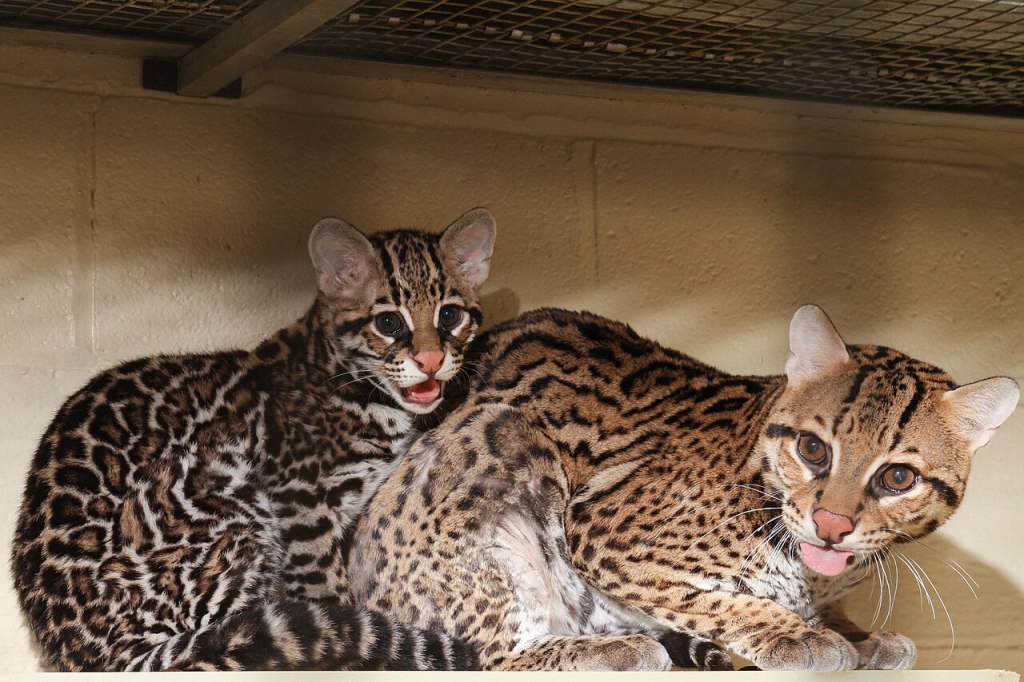
If you’re fortunate enough to catch a glimpse of a margay, you might think you’re looking at an ocelot cub.
The two species look remarkably similar, sharing beautiful rosette patterns in their fur, intense eyes and prominent facial stripes.
But ocelots are medium-size cats that can top out at 35 or 40 pounds, while margays are even smaller than domestic felines, weighing between five to nine pounds.
An ocelot cub with, left, with its mother. Margays are easily mistaken for ocelot kittens. Credit: Mark Dumont via Wikimedia Commons
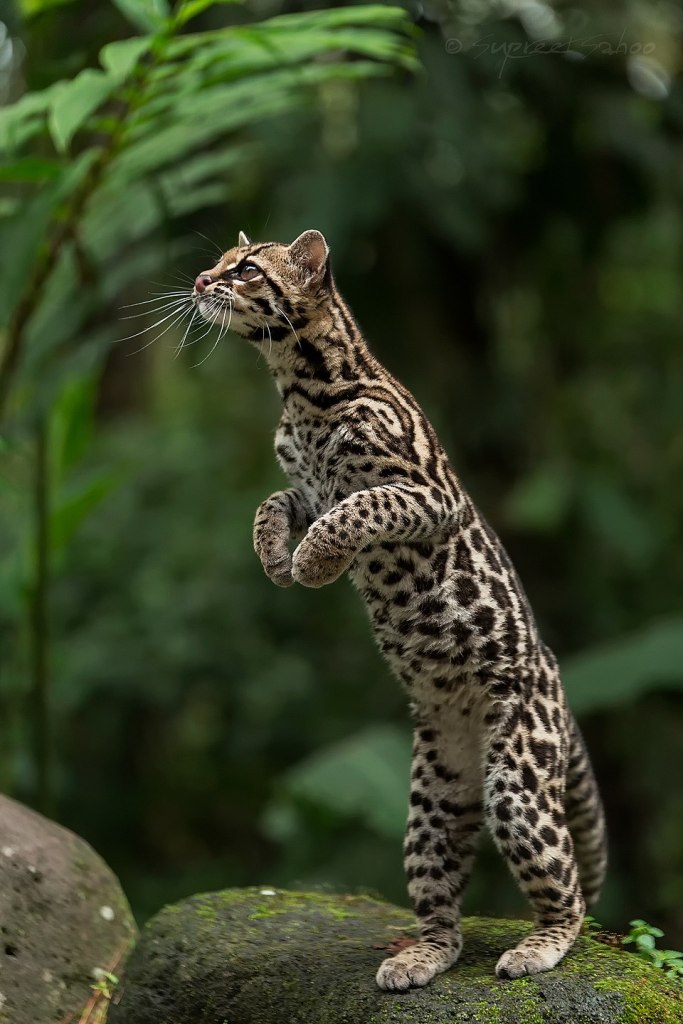
Living in jungles teeming with life, margays have a distinct advantage that allows them to escape land-based predators while making them a threat to monkeys and other critters living in the branches — they are outstanding climbers with unique biological adaptations that allow them to do things other cats cannot.
Credit: Supreet Sahoo via Wikimedia Commons
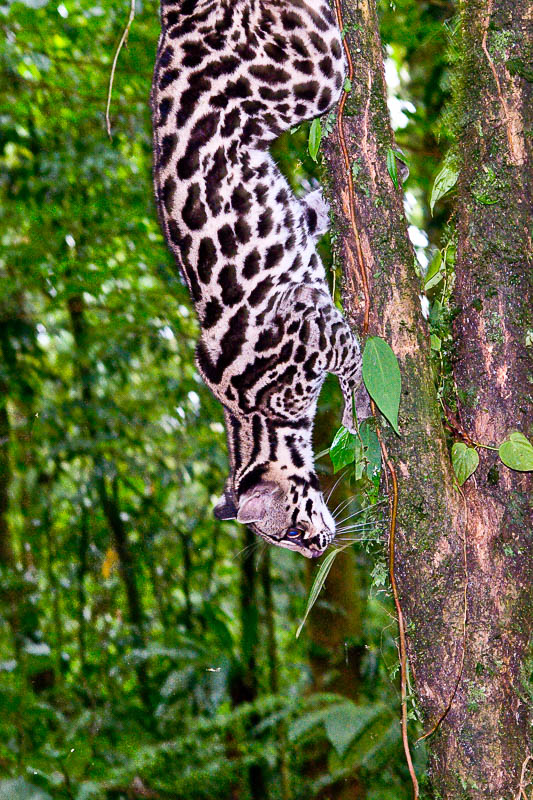
The most dramatic example is their ankle joints, which allow them to rotate 180 degrees as the little spotted cats anchor themselves to trunks and branches. As a result, margays don’t just climb with speed and ease, they are capable of swiftly evacuating trees by climbing down head-first like squirrels.
Other cat species lack that adaptation, which is one reason why we often hear about domestic cats who find themselves uncomfortably high up in trees or on utility poles, refusing to come down for days despite hunger and coaxing by humans trying to help.
A margay demonstrating its ability to climb head-first down a tree thanks to its unique ankle joints. Credit: James Kaiser
Margays are outstanding jumpers in addition to their unrivaled climbing ability, able to leap six to eight times their own height. It’s easy to see how these diminutive cats can intercept birds and monkeys far above the jungle floor in addition to hunting terrestrial mammals.
Indeed, using their large tails as a counterbalance, margays traverse branches with a swiftness and sure-footedness that rivals the gibbon.
The jungle’s tricksters
They’re also remarkably clever. Scientists have documented margays mimicking the vocalizations of monkeys, their favorite prey. In one documented example, a margay imitated the call of a baby tamarin, then ambushed the adult tamarins who approached to investigate the sound.
That’s a surprising adaptation for a cat species, and we should be thankful they’re tiny. The thought of tigers or leopards with that ability is terrifying.
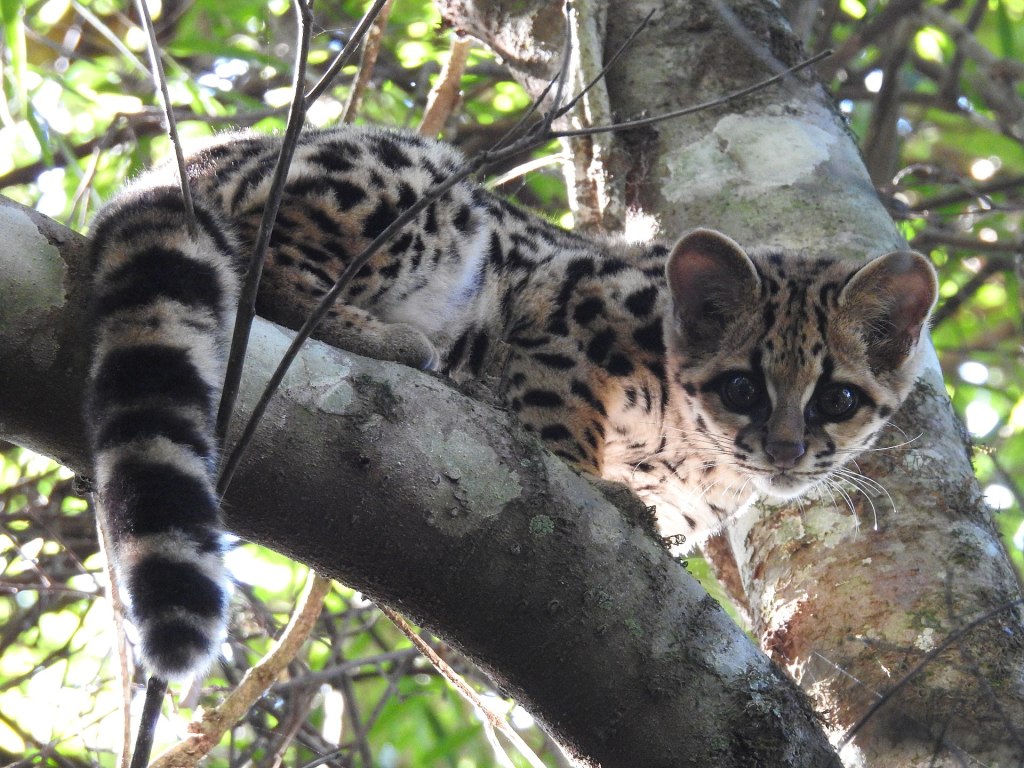
Margays are solitary and due to their size, they’re both predator and prey. Because of that, these tiny cats spend the majority of their time well above ground level and are usually found deep in old growth jungles where they can blend into dense vegetation, hiding among leaves and branches, where their coat patterns help them blend in.
Like all wildcats, margays face increasing pressure from habitat loss, poaching and other threats, and they’re classified as near-threatened on the IUCN Red List.
Credit: Anderson Cristiano Hendgen via WikimediaCredit: Wikimedia Commons
Header image credit Clément Bardot via Wikimedia Commons
Copyright 2026 – Pain In The Bud – May not be reproduced without permission
Badlands is a romp through a vividly realized alien world filled with danger. It’s also a film with heart.
Hollywood pumps out so much disappointing content, especially in the age of streaming, that it’s easy to become disillusioned with movies altogether.
But every once in a while there’s a film that reminds you how much fun movies can be, hitting all the right emotional notes while taking you completely out of this world for two blissful hours.
Predator: Badlands is that kind of movie. Unexpectedly funny and poignant, it also delivers the kind of action audiences have come to expect from the Predator franchise — and then some.
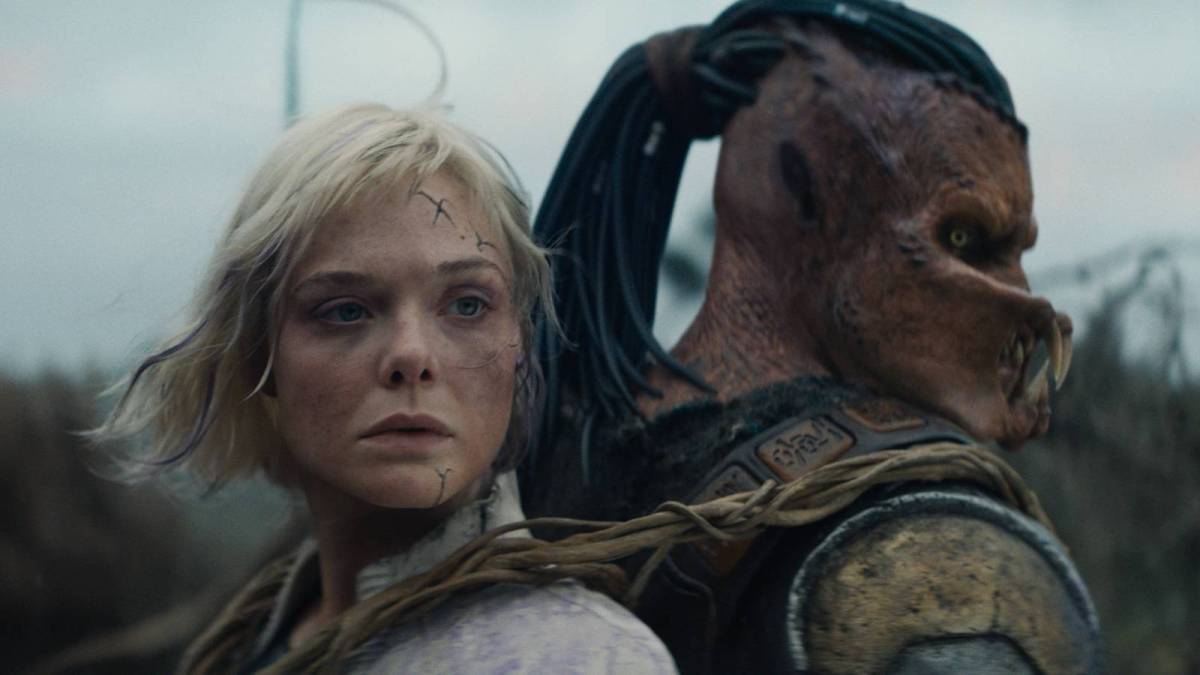
The biggest change here is that, for the first time, a Yautja (the alien species we call the Predators) is the protagonist.
Njohrr is a Yautja clan leader who believes Dek is not strong enough to earn his place in the clan.
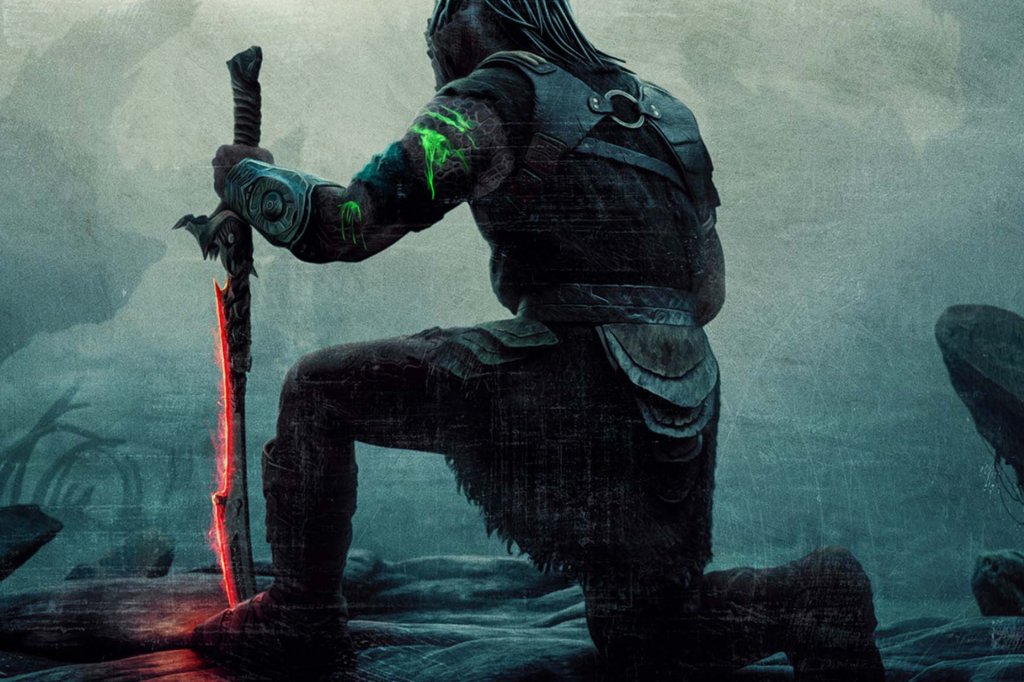
Dek isn’t just any Yautja. He’s a youngster who is horribly wronged in the opening minutes of the film and sent to Genna, a place his species calls the “death planet” because virtually every form of life there is monstrous and spectacularly lethal.
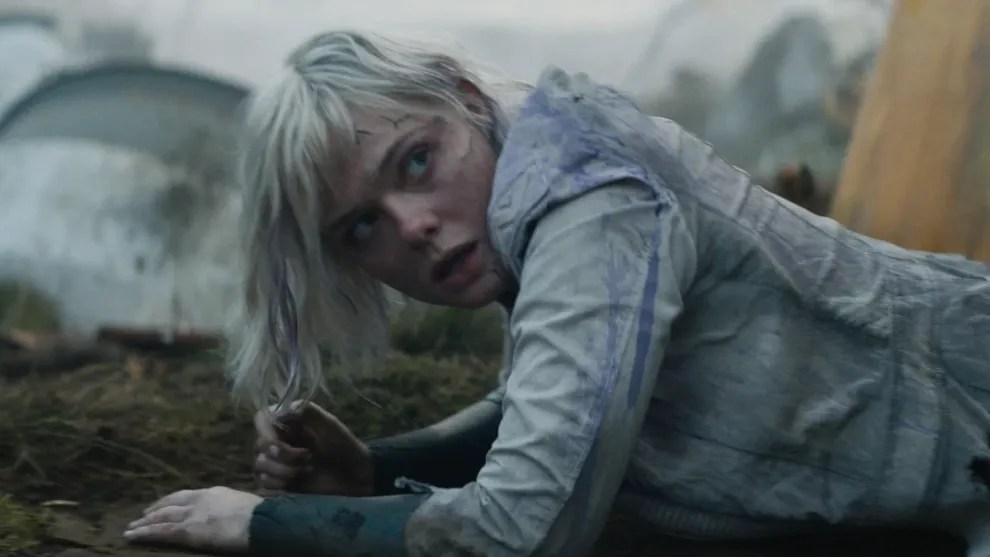
His own death is a foregone conclusion on the brutal world until he meets two unlikely allies: Thia, a damaged synthetic (android) built by the notorious Weyland-Yutani corporation, and Bud.
Bud steals the show, but I wouldn’t dream of robbing anyone of the pleasure of experiencing Bud the way writer/director Dan Trachtenberg intended, so I will say no more.
Elle Fanning and Dimitrius Schuster-Koloamatangi play Thia and Dek, respectively. Fanning adds a human element as she and Dek team up initially for survival, then out of loyalty to each other.
Badlands has a lot of heart and a script that knows just when to slice the tension. In one quiet scene after surviving an encounter with a particularly nasty creature, Thia (an energetic Elle Fanning) raves about the experience and the excitement of accompanying Dek and Bud on a hunt.
“The Dynamic Trio! Remember when we went down the tree? That monster’s mouth? I mean… Uggh. Didn’t smell great, didn’t smell great, but we got him. We got him! Thank you, seriously, for that experience. Truly amazing. Thrilling! Truly thrilling.
“What was your favorite part?” she asks the young Yautja.
“When my sword pierced the creature’s skull and its blood ran down my face,” Dek deadpans.
Dek is not invincible, and he’s without the vast majority of his arsenal, with only his trusty heat sword to defend against the hyper-aggressive fauna of Genna.
This is Trachtenberg’s second Predator film, and Badlands exists because he proved there was life still left in the franchise with 2022’s Prey.
That movie was unfortunately streamed direct to Hulu without a theatrical release, as were several big time films that year, because of a resurgent COVID wave. (Remember the Delta variant?)
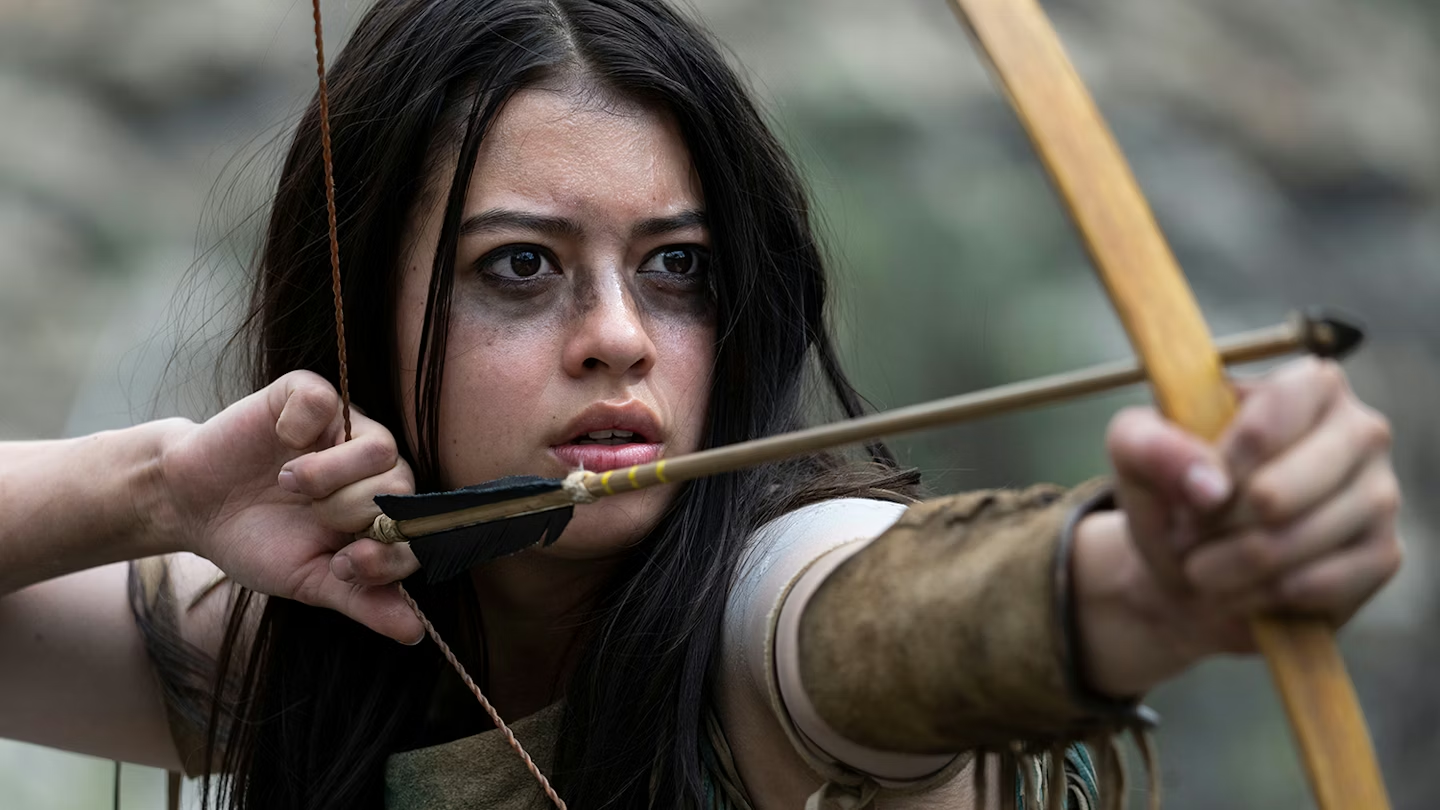
But critics and audiences, including your humble Buddesian correspondents, found a lot to like in the story of Naru (Amber Midthunder), a young Comanche woman living on the Great Plains in 1719. After encountering a Yautja, Naru warns her tribe that a mysterious and dangerous creature is stalking their lands, but they laugh at her and accuse her of telling tall tales — until they see the Yautja for themselves, at which point they don’t find it amusing anymore.
Midthunder was fantastic, and Prey balanced its historical setting with stunning action sequences and quiet character moments.
Amber Midthunder as Naru in 2022’s Prey.
In earlier installments, including Prey, the Yautja were always the antagonists. We knew they were a warrior culture, that they followed an honor code and possessed fantastically advanced technology, but for the most part the Yautja remained a blank slate aside from some non-canonical media (mostly novelizations, comics and games) that attempted to expand the universe.
Badlands demystifies the Yautja somewhat out of necessity, which is always a dangerous gamble (just ask the xenomorph of Alien fame, which lost its mystique half a dozen sequels ago), but significantly raises the emotional stakes.
Dek isn’t invincible. Circumstances have robbed him of most of his arsenal, he’s thrown into a perilous and unfamiliar world, and he’s haunted by the fresh memories of the tragedy that sets off the events of the film.
That makes it easy for the audience to identify with and root for Dek, despite the difficulty of conveying emotions with alien facial features. Dimitrius Schuster-Koloamatangi deserves credit not only for imbuing Dek with physicality, but also for getting the most he can out of the Yautja youngster’s brooding body language, howls of frustration and slowly dawning realization that he can choose his own path in life.
It may take a planet teeming with horrors to make an underdog of a Yautja, but Badlands succeeds on that count.
Predator: Badlands set a record for the franchise with a $40 million opening weekend, and pulled in $184 million total at the box office. It was made available for streaming this week. With the financial success, and the positive reviews from critics and fans alike, it’s possible we’ll see Dek, Thia and Bud continue their adventures in a sequel.
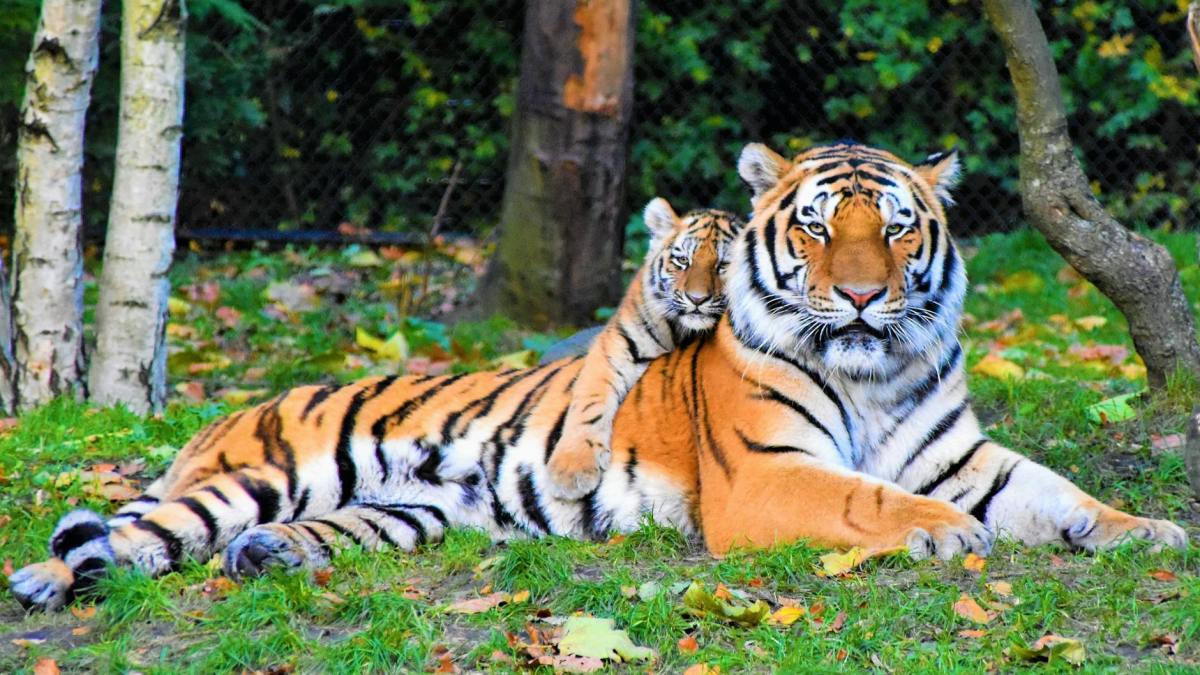
Today we’re admiring photos of the majestic Amur (Siberian) tiger, a species that has been pulled back from the brink of extinction thanks to the hard work of conservationists.
The Amur tiger, panthera tigris altaica, is the largest subspecies of the largest cat in the world.
Click an image in the gallery to view a higher resolution version:
All images in the gallery above via Wikimedia Commons. Header image via Pexels.