Their greatest strength was also their greatest weakness, which is why modern big cats have smaller, sturdier teeth.
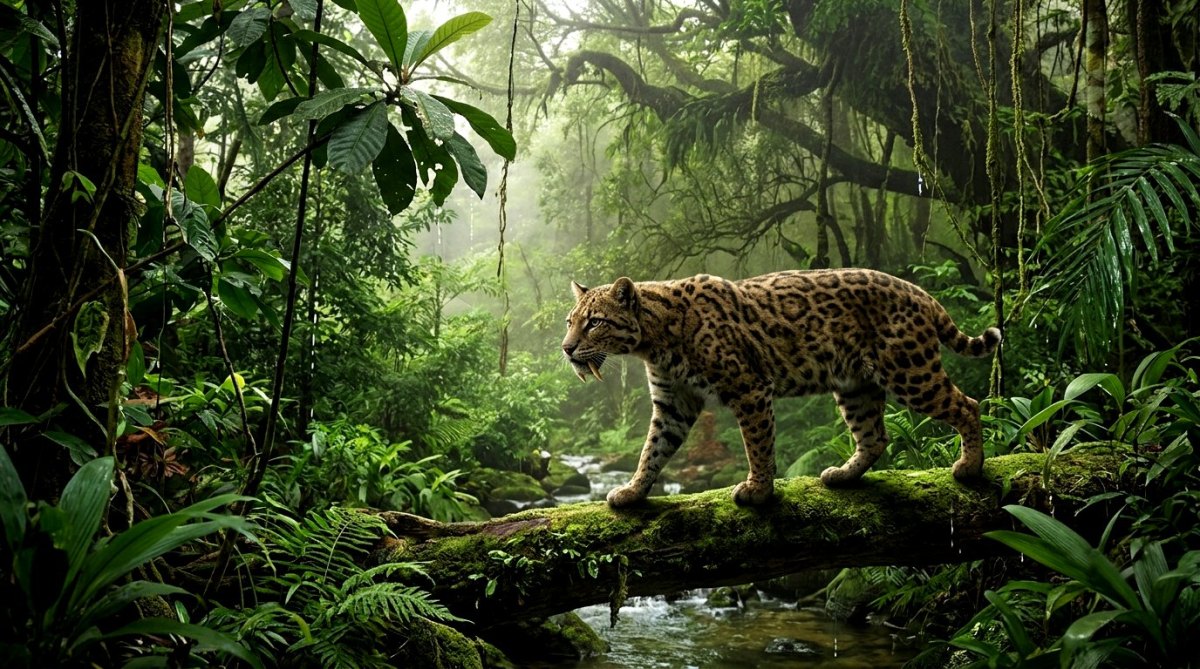
Saber-toothed cats — an umbrella term for a wide variety of felid species with massive, scimitar-like teeth — are some of the most terrifying prehistoric predators, carnivorousness incarnate.
But it turns out the teeth that give them their name and their fearsome reputation were also their greatest weakness.
The problem? While the oversized upper canines were optimal for delivering kill bites and tearing into flesh, they could break if the teeth met bone with force.
“Slicing and crushing are basically the two main things a carnivorous mammal’s teeth can do,” said Narimane Chatar, a postdoc at UC Berkeley studying carnivores. “But for saber-toothed animals, there’s a clear trade off. Those upper canines were extremely efficient but also break very easily.”
As experts on extant big cats are well aware, a hypercarnivore with broken or damaged fangs can struggle to take down their typical prey. That’s what often turns tigers, leopards and lions into man-eaters. (Interestingly, there are no documented accounts of man-hunting jaguars. Jaguar attacks on humans are exceedingly rare, and while they have killed humans, there’s no jaguar equivalent of the Chamapawat Tiger or the Leopard of Rudraprayag.)
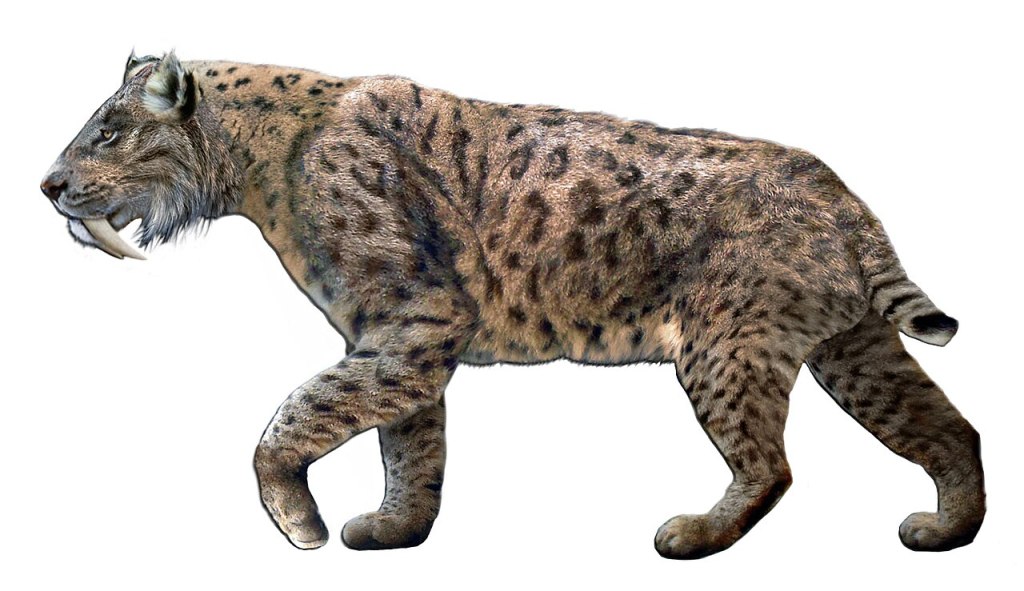
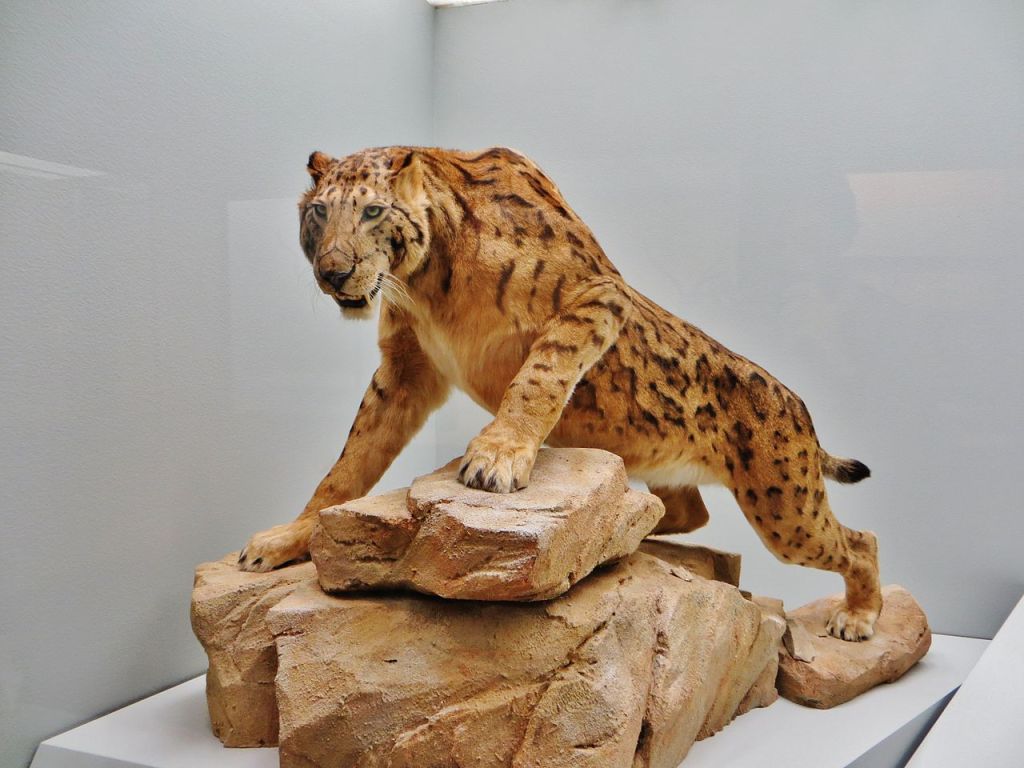
A reconstruction of Smilodon, commonly known as the saber-toothed tiger, although it’s not closely related to modern tigers.A reconstruction of Megantereon, a saber-toothed cat that went extinct as late as 350,000 years ago.
During her research, Chatar found the skull and teeth of a saber-toothed cat in Berkeley’s archives and realized it was not the same species associated with saber-toothed cats in the Americas.
Although Smilodon and Homotherium are the most well-known species, “there was a crazy variety of saber-toothed cats,” Chatar said.
Her research has confirmed the prehistoric cat’s sword-like fangs were double-edged, literally and figuratively. Per UC Berkeley:
“In simulations, 3D-printed saber teeth from various species proved ideal at penetrating a gel with the consistency of flesh but fractured easily against simulated bone. In the former tests, Smilodon came out on top. In the latter, Smilodon fared the worst.“
Smilodon lived in the Americas and went extinct about 8,200 years ago. Los Angeles’ La Brea Tar Pits have yielded a number of preserved skeletal remains, making Smilodon and its three sub-species among the best-known prehistoric felids.
Smilodon and Megantereon images via Wikimedia Commons.
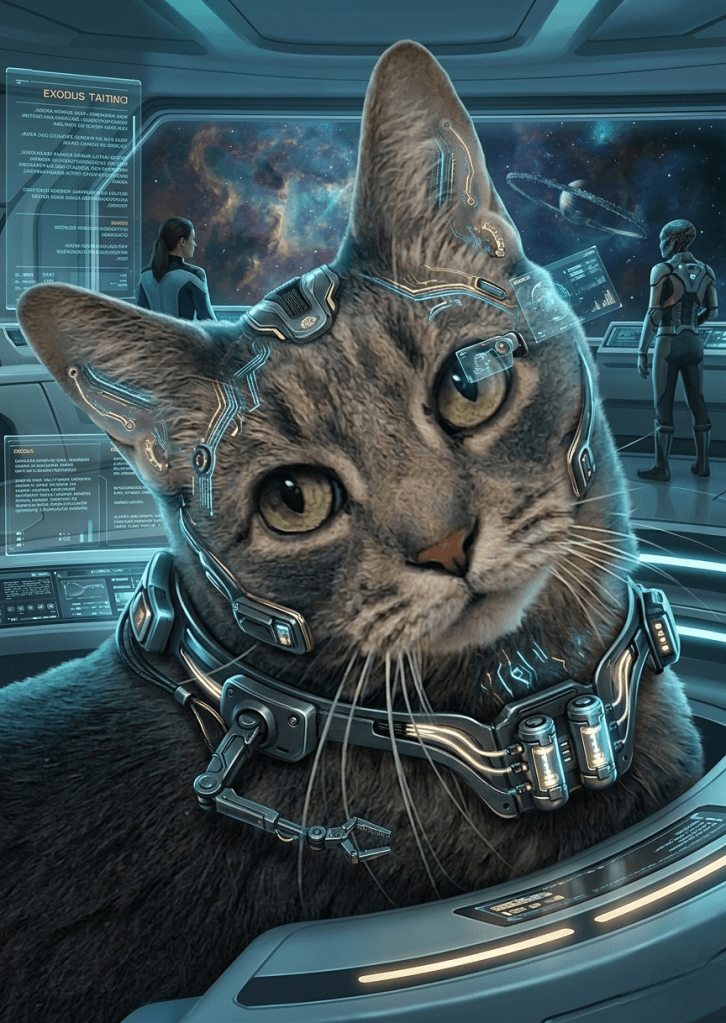
The new science fiction franchise consists of novels, a short film, a game due out next year, and an encyclopedic art book. It’s got a compelling narrative, deep lore and all the trappings of great SF, and best of all it has awesome big cats.
Exodus is a hugely anticipated upcoming game from the team behind the beloved Mass Effect series, but it’s so much more than that.
It’s also a 900-plus page science fiction novel, Exodus: The Archimedes Engine by the outstanding novelist Peter F. Hamilton. A second book, Exodus: The Helium Sea, also authored by Hamilton, is due for release on June 16. A short film in the Amazon Prime Video series Secret Level, titled Exodus: Odyssey, further expands the fictional universe and its lore, as does an “encyclopedia” hardcover about the Exodus universe, its major factions, planets and technology.
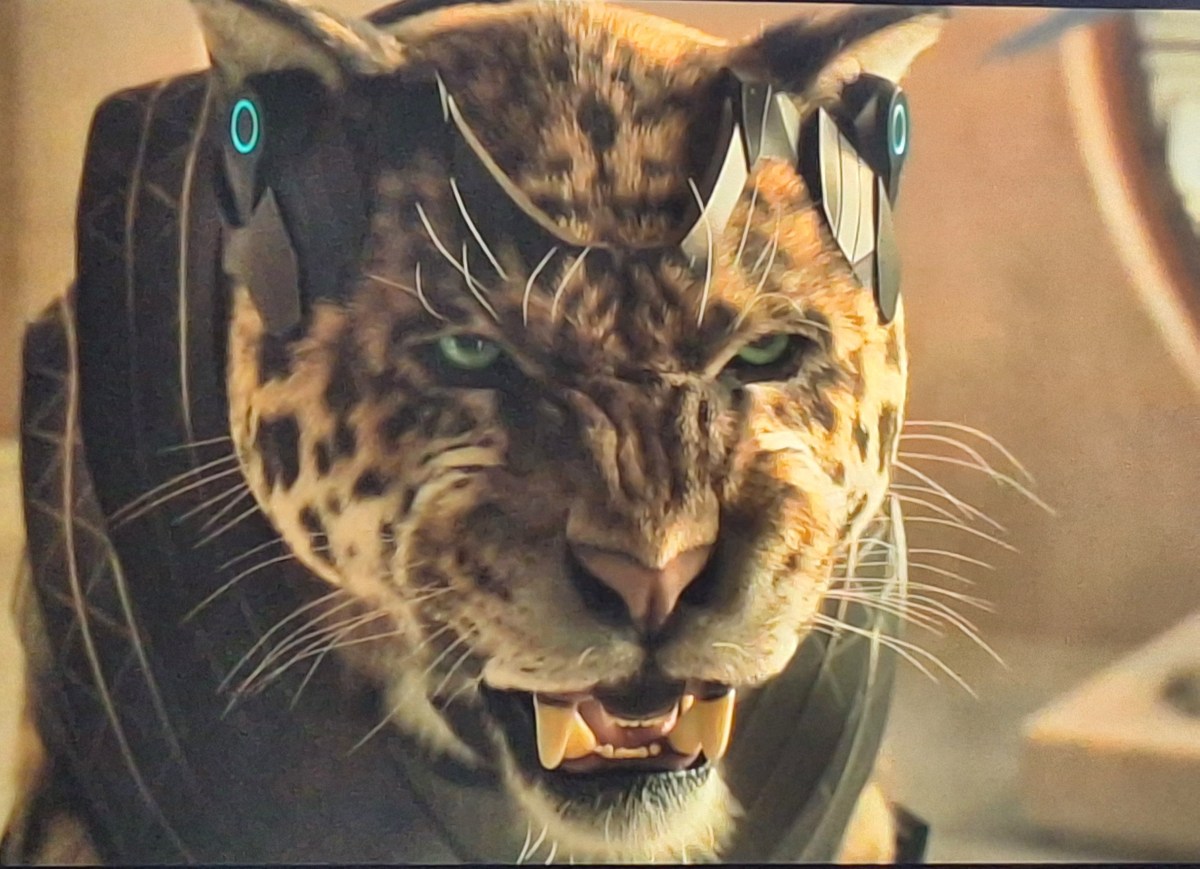
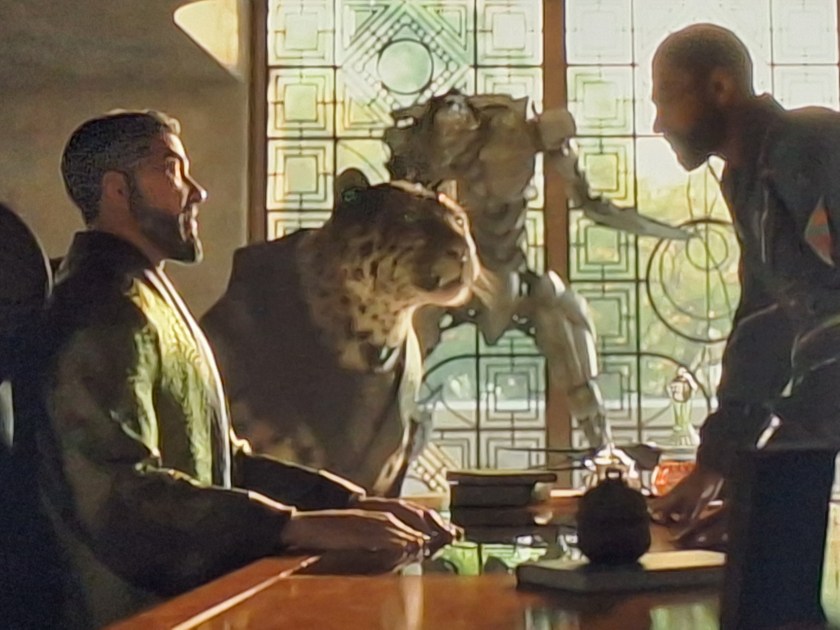
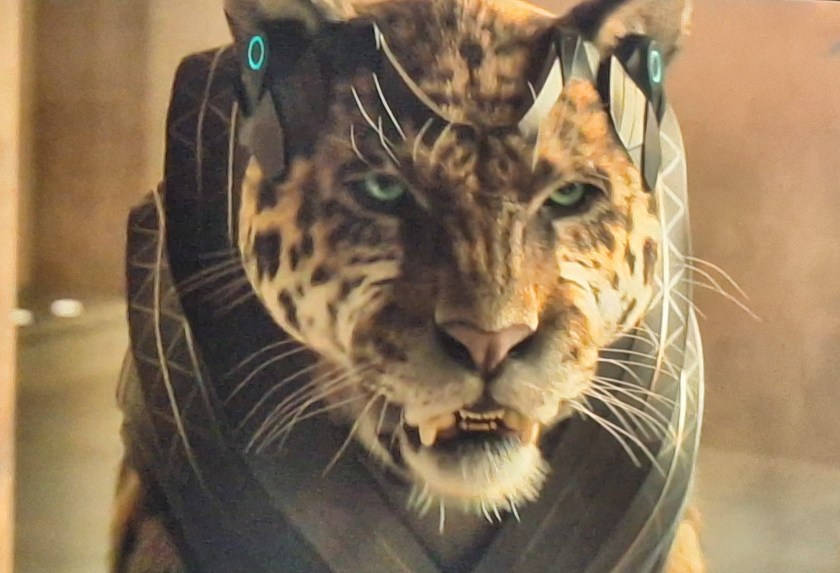
The screenshots in this post are from Exodus: Odyssey, and depict an Awakened Jaguar.
In Exodus, certain animals are “Awakened,” meaning they’ve been genetically modified to give them cognitive and physical gifts.
In the case of big cats, it means they’re smart enough to understand human language, follow complex instructions, interact with technology, and make decisions. Big cats are companions, guards and serve as intimidating special units in the military.
The Awakened Jaguar in this scene is the companion and guardian of a planetary governor. He’s very protective of his human and immediately leaps up to growl in warning when a visitor takes an aggressive step forward.
The Awakened Jaguar leaps up as a conversation becomes intense.Awakened animals can wear tech peripherals, weapons, armor and tools. Big cats are mostly muscle, guards, soldiers and are used to intimidate enemies, while planetary police forces use Awakened dogs and one prominent character is an Awakened octopus who occupies a tank in his own personal mech, allowing him freedom of movement outside of water.
In Exodus: The Archimedes Engine, there’s a scene depicting Awakened Lions deployed with the military. They’re considerably larger than terrestrial elephants, weighing several tons, standing three times the height of adult men. They’re terrifying to behold, which is precisely why the Celestial military has them accompany their generals as honor guards.
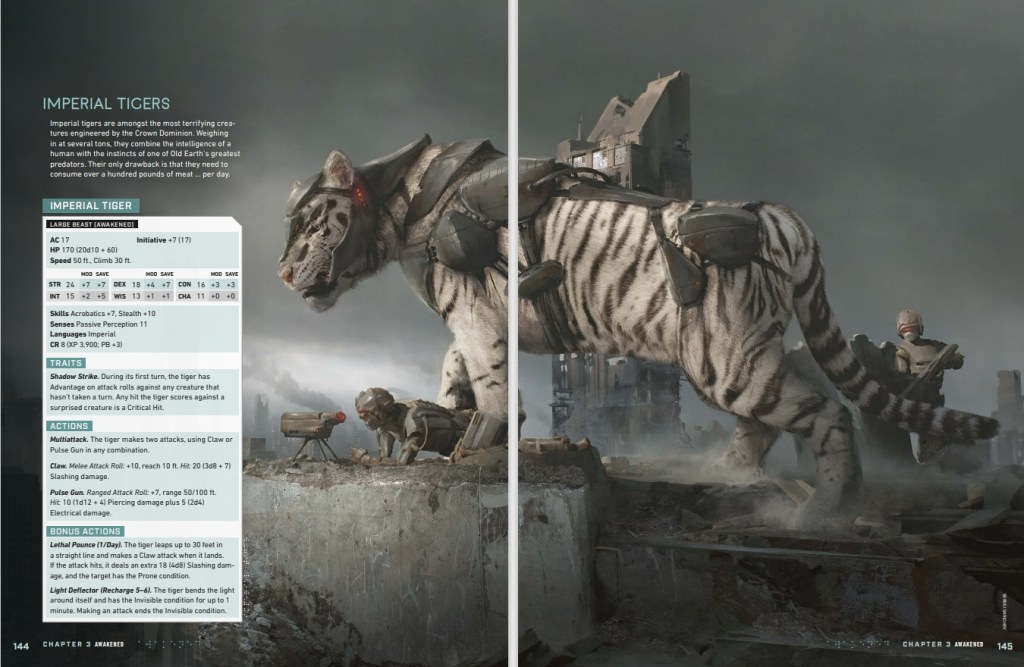
There are also Awakened Tigers who are bigger and much more intelligent than their Earthly counterparts, with fur that can function as active camouflage. The Awakened Tigers are described and illustrated in a companion book, which notes that while the genetically modified big cats are powerful, intimidating and extremely effective, they also have voracious appetites, scarfing down more than a hundred pounds of meat per day.
The Exodus encyclopedia shows an Awakened Tiger standing protectively over a recon soldier:
A two-page illustration of an Awakened Tiger from the Exodus Encyclopedia.
As for the story behind Exodus, I cannot say enough good things about Exodus: The Archimedes Engine.
Hamilton is known for sprawling far-future narratives that combine memorable characters with fabulous technology, vividly imagined societies and awe-inspiring discoveries in the cosmos.
Many of his novels deal with humanity’s encounters with alien civilizations, which range from the serenely benevolent (the Raiel) to the terrifyingly genocidal (MorningLightMountain) and everything in between.
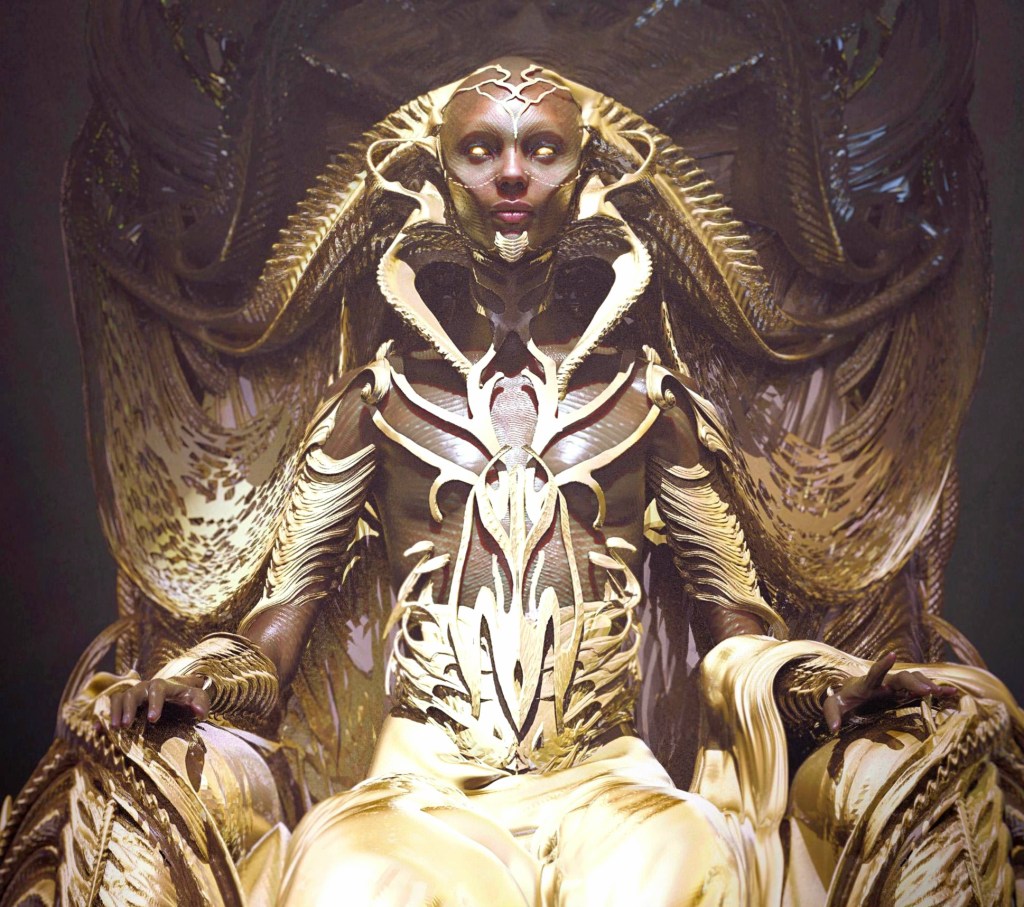
Exodus departs from that template to tell a story about a conflict between regular humans and the Celestials, post-humans who have spent tens of thousands of years on a self-guided evolutionary path that has transformed them into creatures that no longer bear any resemblance to the rest of humanity.
A Celestial queen from the Crown Dominion. The Crown Dominion’s Celestials appear bizarre to us but are actually among the more “normal” looking of the Celestial factions. The most inhuman are said to be the dread Mara Yama and the Talloch-Te.
To say the Celestials consider themselves better than “baseline” humanity is a drastic understatement — Celestial societies have no qualms about breeding humans for specialized labor and roles, emphasizing traits like subservience and loyalty.
In other words, regular humans are treated the same way many in our current society treat animals, as commodities and resources to exploit.
Naturally that does not sit well with people, and the central narrative follows a rebellious group who seek to free every faction from Celestial shackles.
I’m looking forward eagerly to Exodus: The Helium Sea, the second epic novel set for release in six short weeks. I was a bit anxious that a series of novels as a tie-in to a game would be somehow not as great as Hamilton’s usual books, but I should have known the author doesn’t do anything half-assed. The first book introduced compelling mysteries and answered a lot of burning questions, but left plenty to look forward to and resolve.
And as much as I’m hyped for the story, I’m also crossing my fingers for more big cats. Maybe I can convince the creative team that their universe needs an Awakened Buddy…
“No, dude, I get the captain’s quarters! I will generously allow you to use my bed and you will continue to have the honor of being my pillow and stuff.”
The species has webbed feet and lives in some of the most remote regions in the world.
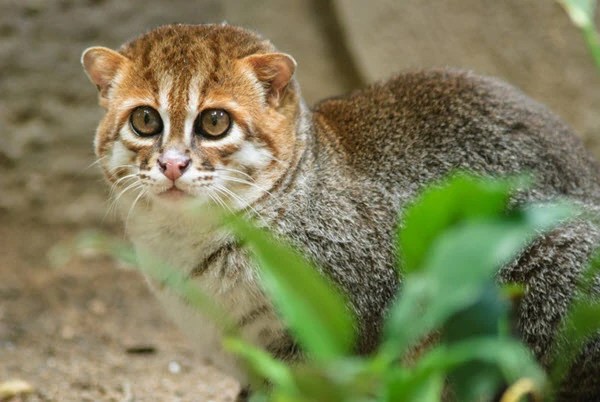
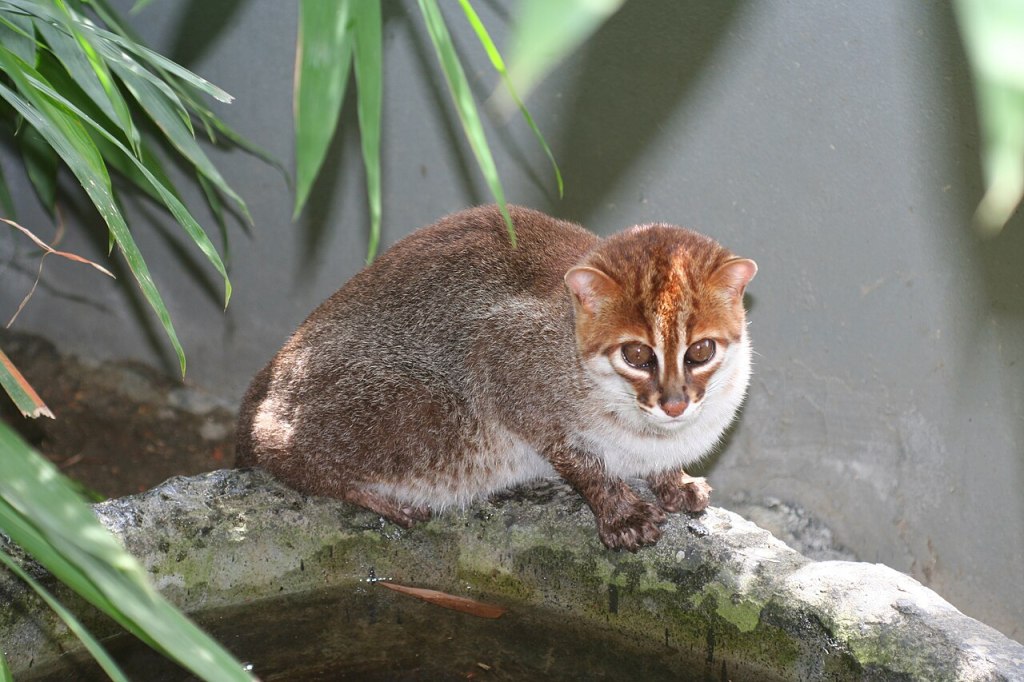
The flat-headed cat is one of the most elusive and rare felines in the world, and for three decades conservationists thought it had died out in Thailand, leaving only a handful of places where the species still eked out an existence.
Now there’s good news: the tiny feline, which weighs about half as much as a house cat, has been spotted in a remote region of the country.
Camera traps set up for an ecological survey starting last year detected flat-headed cats 29 times in Thailand’s Princess Sirindhorn Wildlife Sanctuary, according to the country’s Department of Parks, Wildlife and Plant Conservation. One of the sightings was a female and her cub, an encouraging sign that shows the local population is breeding.
Credit: Jim Sanderson/Wikimedia Commons
The sanctuary covers five square kilometers of rainforest and peat swamps. Along with the flat-headed cat and several unique species of birds, it’s also home to the endangered hairy-nosed otter.
Conservationists believe about 2,500 flat-headed cats remain in the wild. The species is mostly nocturnal and has webbed feet, helping the tiny wildcats navigate mangrove swamps and rivers in its rainforest habitat. Known as Prionailurus planiceps in scientific nomenclature, the flat-headed cat is most closely related to the fishing cat (Prionailurus viverrinus), which also has webbed feet, and the leopard cat.
Finding evidence of the endangered feline in Thailand is “exciting, yet concerning at the same time,” said Kaset Sutasha of Kasetsart University.
That’s because it means the surviving population is severely fragmented, which makes it more difficult for the cats to breed and could lead to genetic bottlenecks.
But Atthapol Charoenchansa, director general of Thailand’s parks department, also called it a “significant win” for conservation efforts. Knowledge of its presence in Thailand provides more opportunity to study the rare felines to better understand their behavior and protect them from extinction.
Jaguars, pumas, ocelots and margays are able to thrive in the same jungles, a unique arrangement that sheds light on how each species lives.
The jungles of Guatemala are teeming with life.
The guttural calls of howler monkeys haunt the rainforest from above, where scarlet macaws hop branches in flashes of red, yellow and blue.
On the forest floor opossums, peccaries, and oversize rodents called pacas move through dense brush, occasionally picked out by the few shafts of light able to break through the canopy. Ocellated turkeys plumed in iridescent copper and emerald advertise themselves to potential mates with thumping sounds, while spider monkeys perch on the weathered stones of long-forgotten Mayan cities that were swallowed by the jungle centuries ago.
As in most tropics, the apex predators are cats — four different species, to be exact. Jaguars sit at the top, unchallenged. Pumas, close in size if not ferocity, also find sustenance in the rainforest alongside ocelots and margays.
Margays are smaller than house cats and resemble tiny ocelots. They’re outstanding climbers, expert hunters, and spend most of their time in trees. Unlike most cat species, which are crepuscular, margays are nocturnal. Credit: Clement Bardot/Wikimedia Commons
How do four medium carnivorous species exist side by side?
By dividing time, space and items on the menu, according to a new study.
Ocelots are extremely adaptable: they’re excellent climbers and swimmers, and can thrive in various environments. Credit: Victor Landaeta/Pexels
The felids hunt at different levels of the jungle at different times of day, and while there’s overlap between prey, each species has its own distinct diet, according to a research team from Oregon State University. Their paper, Niche partitioning among neotropical felids, was published earlier this month in the Journal of Animal Ecology.
As the big kids on the block, jaguars primarily eat peccaries (pig-like ungulates that weigh up to 88 pounds), armadillos, deer and, sadly, ocelots. Apparently membership in Club Felid does not grant the smaller wildcats a pass. Ocelots top out at about 35 pounds, while the largest jaguars weigh in at about 350 pounds, making the smaller cats easy prey.
Pumas opportunistically prey on peccaries and brocket deer, but the majority of their diet is composed of monkeys, both spider and howler. Ocelots and margays naturally go for smaller prey, sticking mostly to rodents and opossums.
As the largest and most powerful cats in the western hemisphere, jaguars are the apex predators of their environment. Credit: Atlantic Ambience/Pexels
While jaguars hunt on the ground and have a well-documented habit of slipping into the water to prey on caiman and crocodiles, pumas, ocelots and margays take advantage of their climbing abilities and lighter frames to reach arboreal prey. That allows pumas, for example, to snag monkeys and arboreal opossum species from the canopy, so they don’t have to compete with jaguars.
The team verified the “spatial, temporal, and dietary niche partitioning” within the Maya Biosphere Reserve by using ground camera traps, arboreal camera traps and fecal samples, which allowed them to confirm the prey each species has been consuming.
Interestingly, margays are the pickiest — or perhaps most limited — of the bunch, preying on only seven species, while the other three cats regularly hunt between 20 and 27 different kinds of animals.
The information gleaned from the study not only helps researchers understand how these species interact with their environment, but also can help guide conservation decisions to safeguard them against extinction.
Pumas, also known as cougars and mountain lions, are adaptable and elusive. Credit: Catherine Harding Wiltshire/Pexels
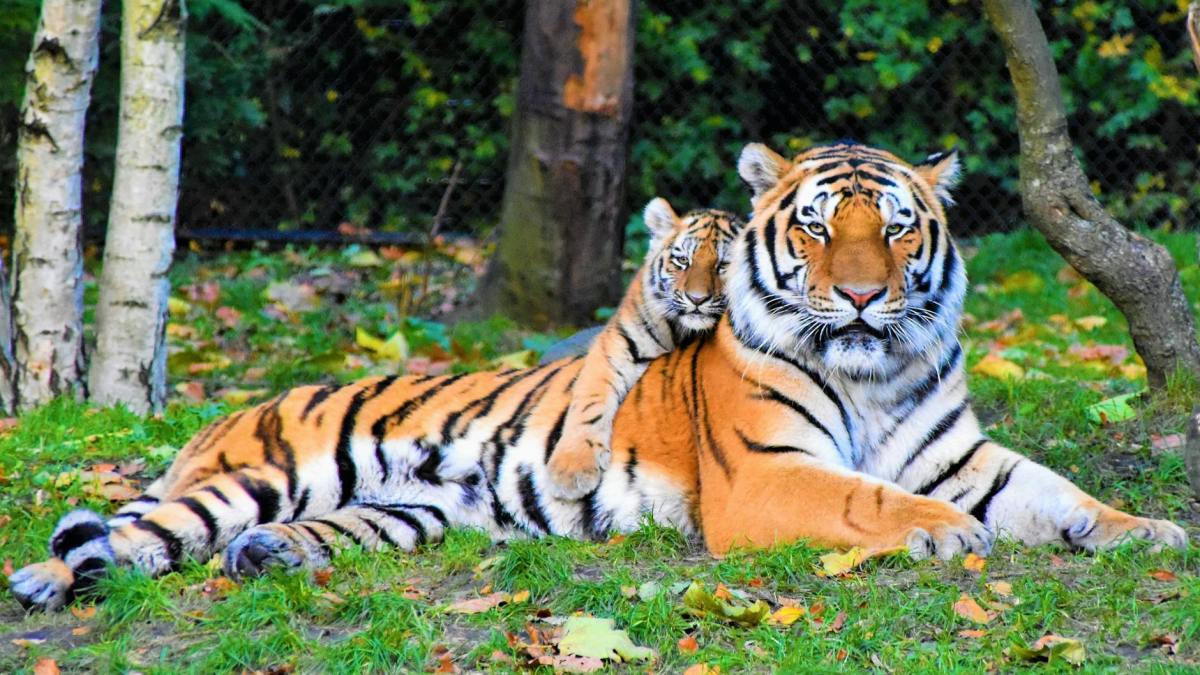
Today we’re admiring photos of the majestic Amur (Siberian) tiger, a species that has been pulled back from the brink of extinction thanks to the hard work of conservationists.
The Amur tiger, panthera tigris altaica, is the largest subspecies of the largest cat in the world.
Click an image in the gallery to view a higher resolution version:
All images in the gallery above via Wikimedia Commons. Header image via Pexels.