The Big Cats Of ‘Exodus’ Are Badass

The new science fiction franchise consists of novels, a short film, a game due out next year, and an encyclopedic art book. It’s got a compelling narrative, deep lore and all the trappings of great SF, and best of all it has awesome big cats.

Exodus is a hugely anticipated upcoming game from the team behind the beloved Mass Effect series, but it’s so much more than that.

It’s also a 900-plus page science fiction novel, Exodus: The Archimedes Engine by the outstanding novelist Peter F. Hamilton. A second book, Exodus: The Helium Sea, also authored by Hamilton, is due for release on June 16. A short film in the Amazon Prime Video series Secret Level, titled Exodus: Odyssey, further expands the fictional universe and its lore, as does an “encyclopedia” hardcover about the Exodus universe, its major factions, planets and technology.

Matthew McConaughy is enthusiastically involved, as an actor and producer. (Allright, allright, allright!)

Oh, and it has big cats!

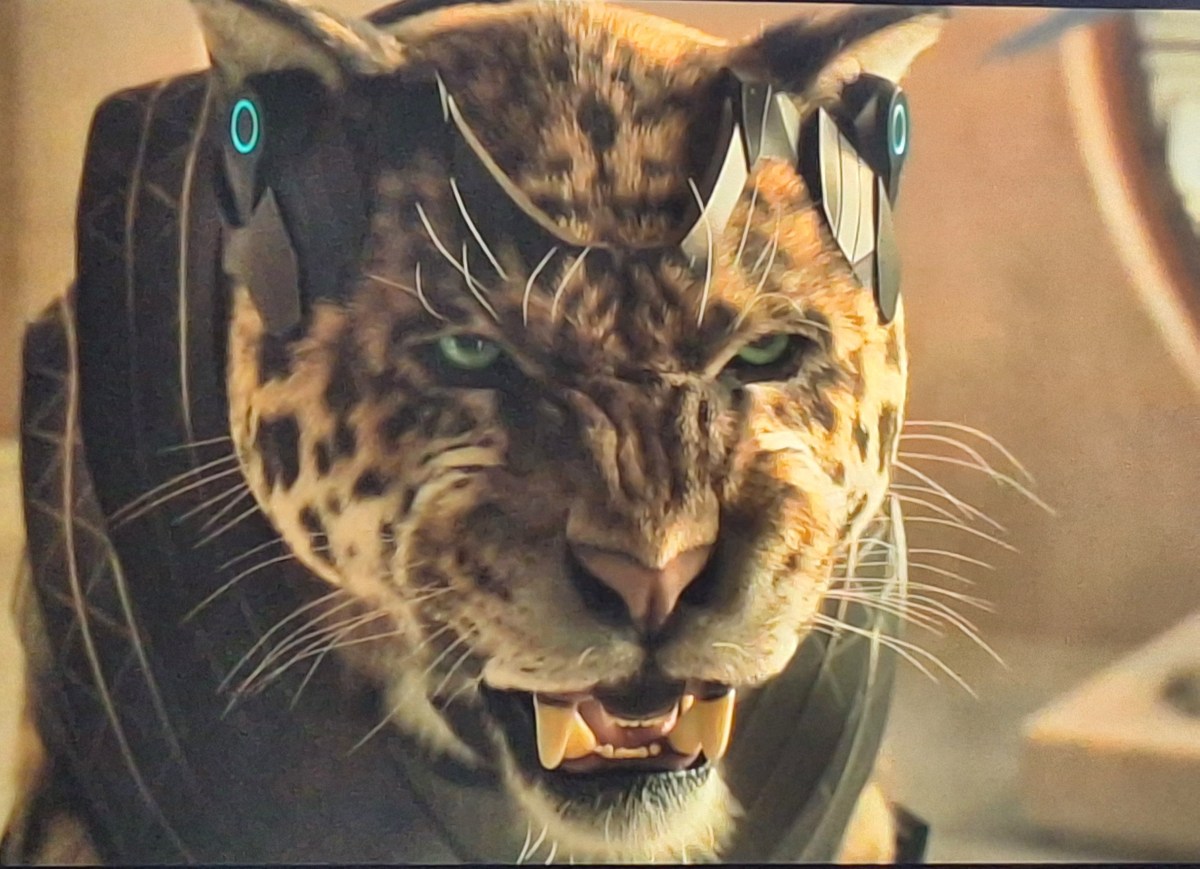
The screenshots in this post are from Exodus: Odyssey, and depict an Awakened Jaguar.

In Exodus, certain animals are “Awakened,” meaning they’ve been genetically modified to give them cognitive and physical gifts.

In the case of big cats, it means they’re smart enough to understand human language, follow complex instructions, interact with technology, and make decisions. Big cats are companions, guards and serve as intimidating special units in the military.

The Awakened Jaguar in this scene is the companion and guardian of a planetary governor. He’s very protective of his human and immediately leaps up to growl in warning when a visitor takes an aggressive step forward.
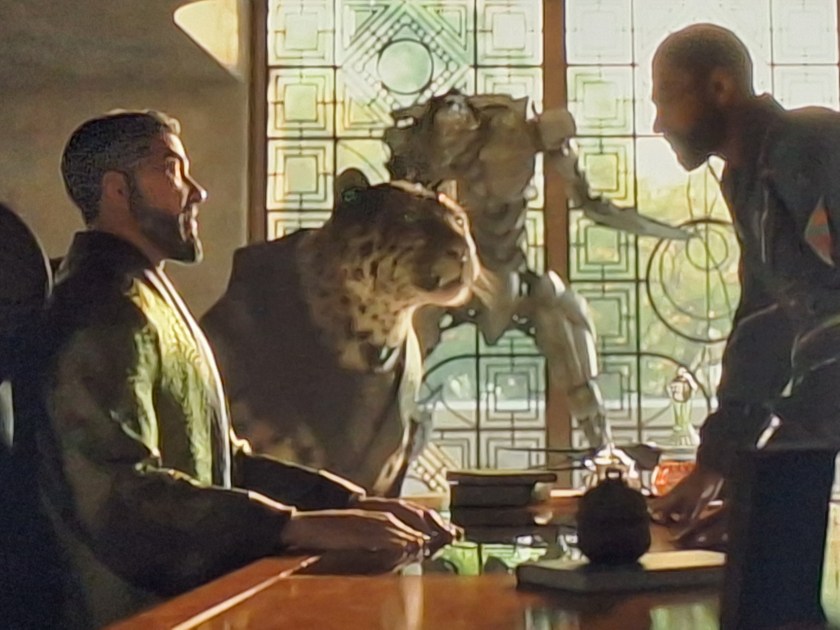
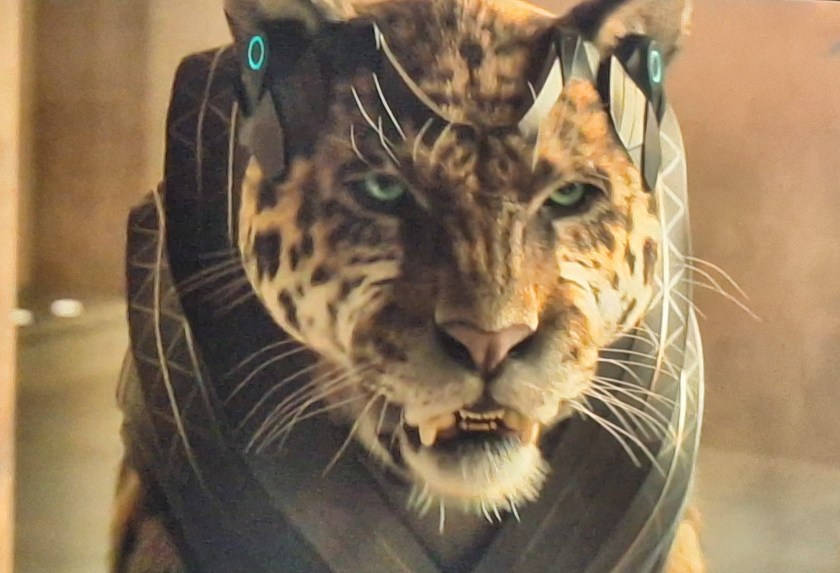
The Awakened Jaguar leaps up as a conversation becomes intense.
Awakened animals can wear tech peripherals, weapons, armor and tools. Big cats are mostly muscle, guards, soldiers and are used to intimidate enemies, while planetary police forces use Awakened dogs and one prominent character is an Awakened octopus who occupies a tank in his own personal mech, allowing him freedom of movement outside of water.

In Exodus: The Archimedes Engine, there’s a scene depicting Awakened Lions deployed with the military. They’re considerably larger than terrestrial elephants, weighing several tons, standing three times the height of adult men. They’re terrifying to behold, which is precisely why the Celestial military has them accompany their generals as honor guards.

There are also Awakened Tigers who are bigger and much more intelligent than their Earthly counterparts, with fur that can function as active camouflage. The Awakened Tigers are described and illustrated in a companion book, which notes that while the genetically modified big cats are powerful, intimidating and extremely effective, they also have voracious appetites, scarfing down more than a hundred pounds of meat per day.

The Exodus encyclopedia shows an Awakened Tiger standing protectively over a recon soldier:
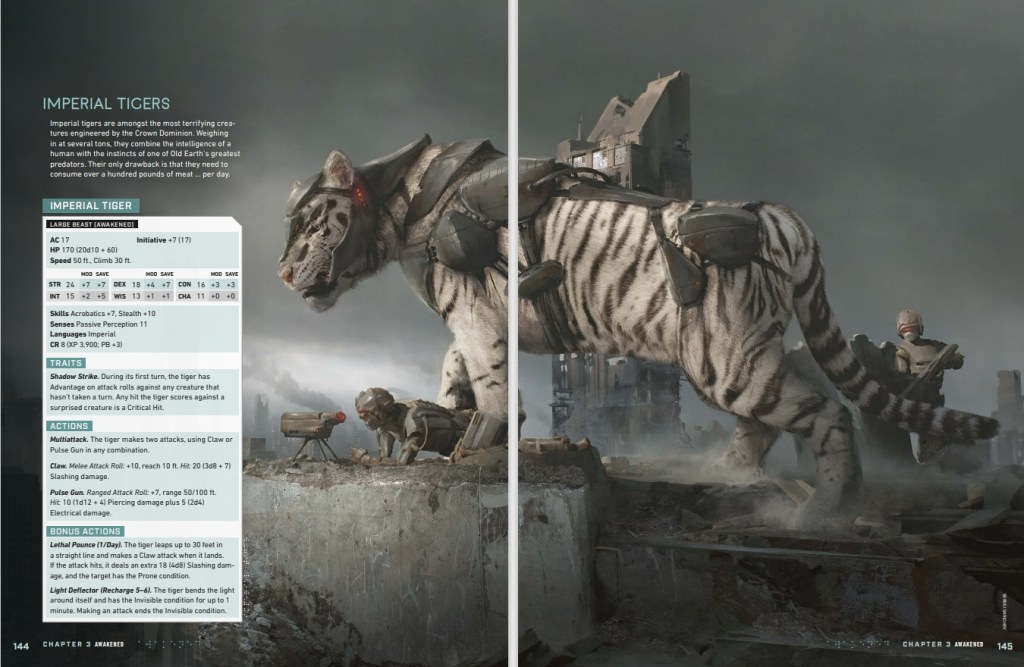
A two-page illustration of an Awakened Tiger from the Exodus Encyclopedia.

As for the story behind Exodus, I cannot say enough good things about Exodus: The Archimedes Engine.

Hamilton is known for sprawling far-future narratives that combine memorable characters with fabulous technology, vividly imagined societies and awe-inspiring discoveries in the cosmos.

Many of his novels deal with humanity’s encounters with alien civilizations, which range from the serenely benevolent (the Raiel) to the terrifyingly genocidal (MorningLightMountain) and everything in between.

Exodus departs from that template to tell a story about a conflict between regular humans and the Celestials, post-humans who have spent tens of thousands of years on a self-guided evolutionary path that has transformed them into creatures that no longer bear any resemblance to the rest of humanity.
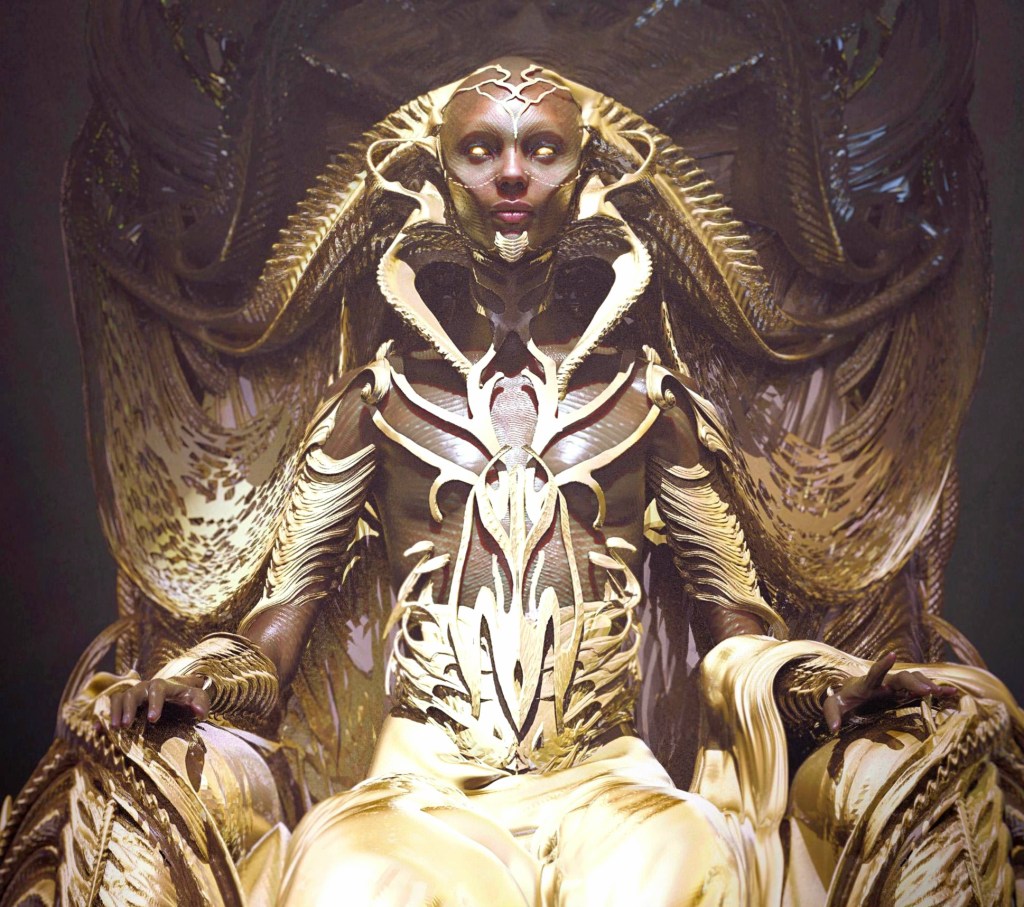
A Celestial queen from the Crown Dominion. The Crown Dominion’s Celestials appear bizarre to us but are actually among the more “normal” looking of the Celestial factions. The most inhuman are said to be the dread Mara Yama and the Talloch-Te.

To say the Celestials consider themselves better than “baseline” humanity is a drastic understatement — Celestial societies have no qualms about breeding humans for specialized labor and roles, emphasizing traits like subservience and loyalty.

In other words, regular humans are treated the same way many in our current society treat animals, as commodities and resources to exploit.

Naturally that does not sit well with people, and the central narrative follows a rebellious group who seek to free every faction from Celestial shackles.

I’m looking forward eagerly to Exodus: The Helium Sea, the second epic novel set for release in six short weeks. I was a bit anxious that a series of novels as a tie-in to a game would be somehow not as great as Hamilton’s usual books, but I should have known the author doesn’t do anything half-assed. The first book introduced compelling mysteries and answered a lot of burning questions, but left plenty to look forward to and resolve.

And as much as I’m hyped for the story, I’m also crossing my fingers for more big cats. Maybe I can convince the creative team that their universe needs an Awakened Buddy…
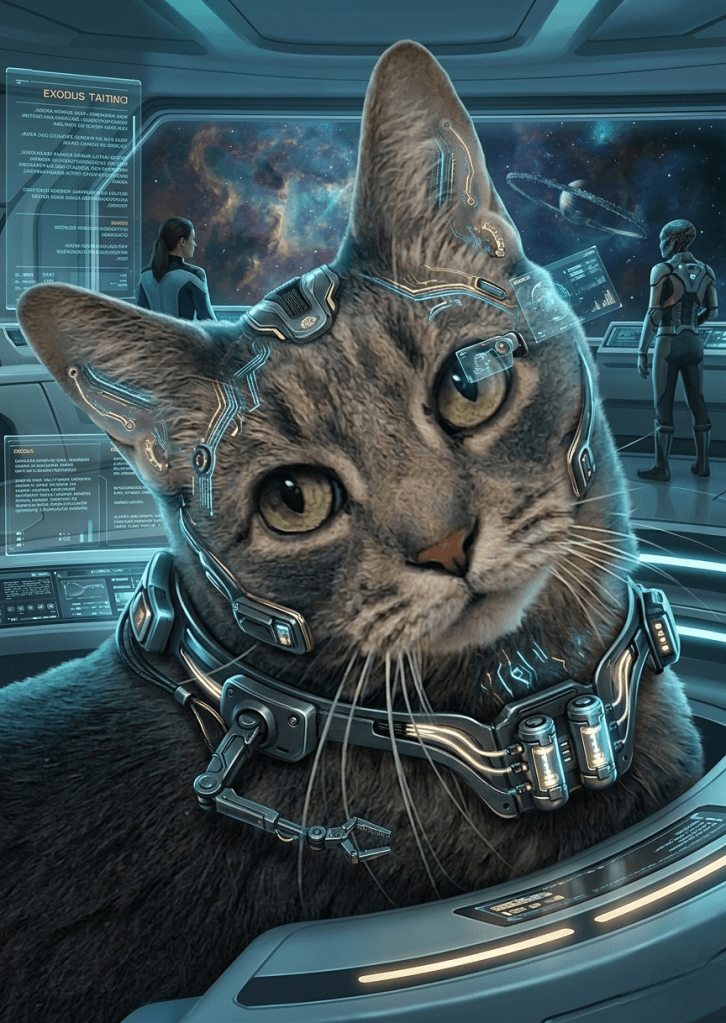
“No, dude, I get the captain’s quarters! I will generously allow you to use my bed and you will continue to have the honor of being my pillow and stuff.”

PITB Reviews: ‘The Peripheral’ Is A Refreshingly Original Science Fiction Thriller

Amazon’s newest streaming hit is heady, fast-moving and a lot of fun. There’s nothing else on TV like it.

Amazon’s newest big-budget prestige drama, The Peripheral, imagines a near future when technology has become even more deeply embedded in every day life.

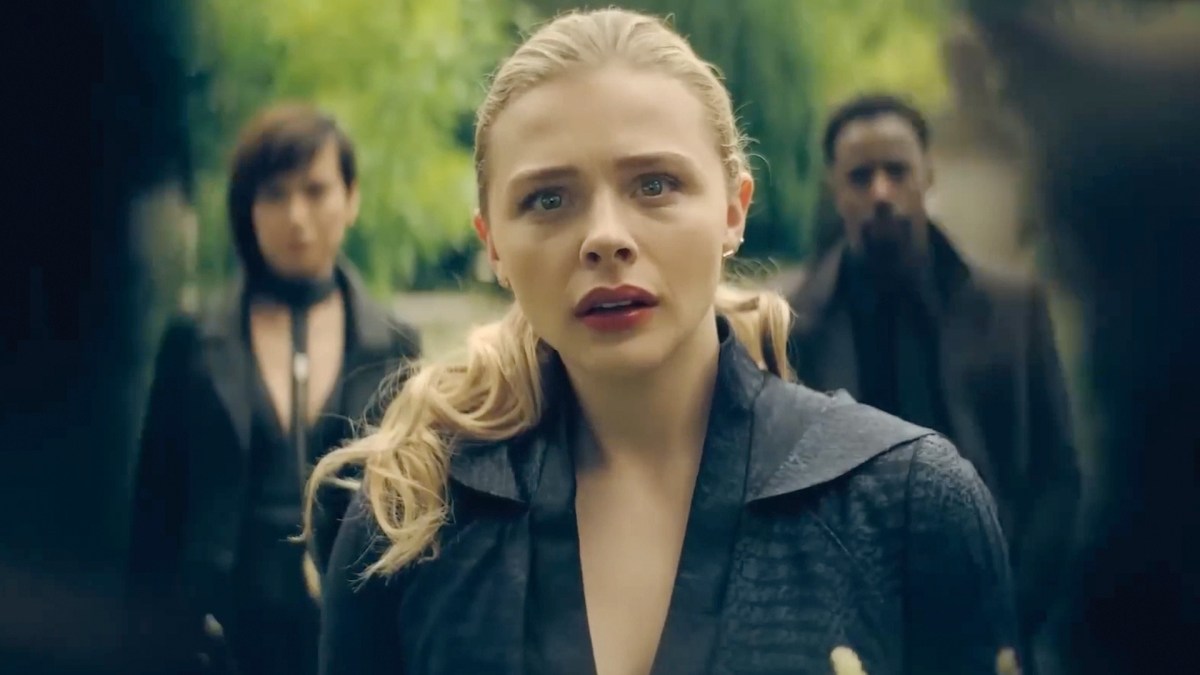
Flynne Fisher (Chloe Grace Moretz) is a young woman who lives in North Carolina’s rural Blue Ridge Mountains, works in a 3D print shop by day and plays virtual reality games by night.

The story is set a decade from now in 2032, and while Flynne’s brother, Burton (Jack Reynor), plays startlingly realistic VR games for fun, Flynne plays them for money. Although Burton is a former United States Marine Corps infantryman and war veteran, his sister is the superior player when it comes to video games, and she’s so good that well-heeled players across the world pay her to carry them through high-difficulty levels.

If that seems fanciful, consider that it already happens in real life: some people fork over big bucks to highly skilled players who can help them win in multiplayer video games like Fortnite, or run them through the most challenging missions in online role playing games to get coveted in-game gear.

Flynne’s side hustle allows her to afford expensive medication for her sickly mother. Apparently in 2032, Democrats and Republicans are still squabbling over how to pass meaningful prescription drug reforms while remaining in the good graces of the corporate behemoths who finance their campaigns. Some things never change.

When a Colombian company called Milagros Coldiron offers Flynne a hefty chunk of change to beta test their newest game — and the incredibly immersive new headset it comes with — Flynne thinks she’s just taking a lucrative but routine job, one that will help pay for her mom’s meds for at least a few weeks.

What she doesn’t know is that her life is going to change drastically the moment she steps into the newest form of virtual reality, revealing things about her world and herself that she never imagined.

The Peripheral
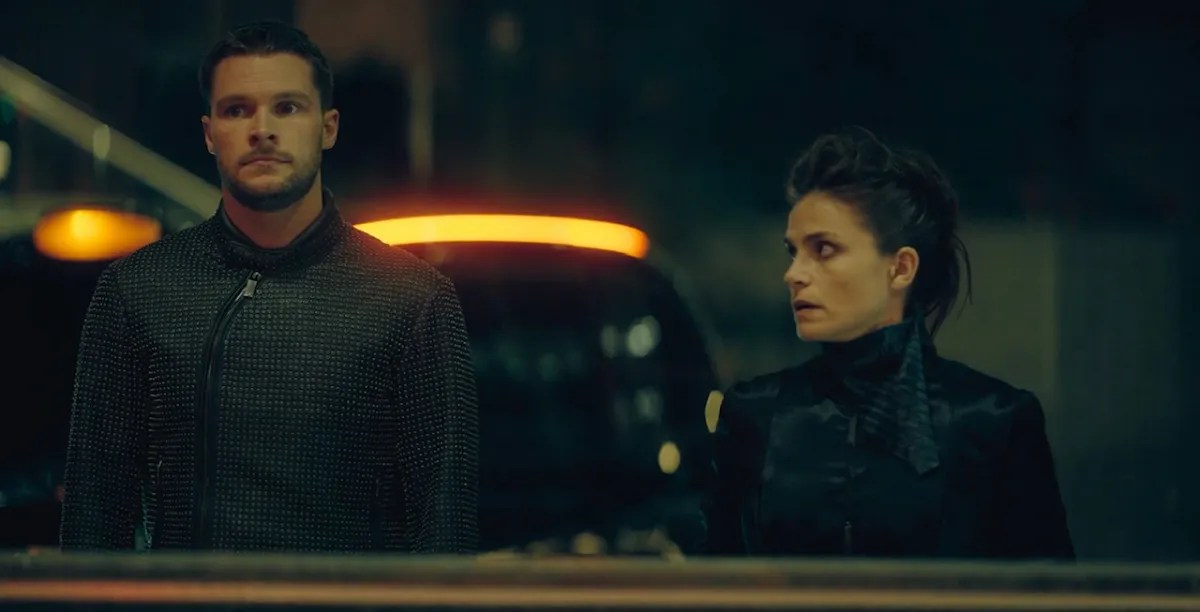
Jack Reynor as Burton Fisher and Charlotte Riley as Aelita West in The Peripheral.

There’s so much more to the story, and in fact we’ve barely scratched the surface, but The Peripheral is the kind of show best appreciated by knowing as little as possible going in.

The ambitious new series is based on a 2014 novel by technoprophet William Gibson of Neuromancer fame. Gibson envisioned the concept of cyberspace in 1981, more than a decade before the first mass market commercial dial-up services were available.

At the time, the idea of exploring almost photorealistic worlds in virtual reality was a radical new idea, and it took more than 35 years for technology to catch up by making it feasible. (We’re still not quite there yet. VR tech has improved by leaps and bounds, and we’re beginning to see the first deeply immersive VR games, but Mark Zuckerberg’s much-hyped version of the metaverse, for example, has fallen flat and been pilloried by press and players alike.)

By choosing to adapt Gibson’s work, Amazon has dipped into the largely untouched world of literary science fiction.

While the science fiction of movies and TV has been treading the same worn ground and returning to the same tired concepts for decades, SF novels are a rich source of astonishingly inventive big ideas, from the existential stories of Liu Cixin (The Three Body Problem) to the galaxy-spanning space opera of the late, great Iain M. Banks, to the gothic horror-tinged, wildly imaginative universe of Revelation Space by Welsh astrophysicist Alastair Reynolds.

Indeed, Netflix is developing a series based on The Three Body Problem, with Game of Thrones showrunners David Benioff and D.B. Weiss taking the helm. Amazon has acquired the rights to Banks’ first Culture novel, and Netflix’s highly-praised anthology series Love, Death + Robots adapted two of Reynolds’ short stories as episodes.

Finally we’ve moved beyond the Alien clones, Star Wars sequels, prequels, spinoffs and crossovers, as well as the unfulfilling JJ Abrams mystery box offerings that have made up the bulk of live action science fiction on the big and small screens.

There are no candy-colored light swords in The Peripheral, nor are there spandex-clad superheroes or franchise installments designed with merchandise sales in mind. Instead, we get a story for adults, one that gives the audience a lot to think about while also holding a mirror up to our own world, as the best science fiction always does.

After all, technology changes but people don’t. Human nature is a constant. What we do with our shiny new toys says a lot about us as a species and civilization.

Although The Peripheral begins with the comparatively low-stakes world of virtual reality, its scope rapidly expands until, by the end of the first episode, it becomes clear the show is asking its audience to grapple with existential questions about humanity and our future.

The Peripheral demands its audience’s full attention as it introduces concepts like the parallel universes of M-theory, nanotechnology and the idea that even if matter can’t be shifted between time and space, information in the form of photons can.

Gibson uses these heady concepts in his narrative sandbox, forcing his characters to consider wild concepts like the possibility that there may be infinite versions of themselves existing in infinite branching realities.

How would you react knowing there’s a version of yourself who chose to study classical literature and move to Athens, or a version who became a software programmer, authored a lucrative app and lives in a Manhattan penthouse? Can you imagine having a different wife or husband, or a different child? (Are there realities in which I am not the loyal and loving servant of Buddy? In that case, who is feeding him snacks, and are they doing it promptly?)

Cherise Nuland
T’Nia Miller radiates malice as Cherise Nuland.

Of course, none of this stuff would matter without interesting characters and a compelling narrative. Moretz and Reynor have the chemistry of a real brother and sister in the way they regularly bicker but ultimately love each other. Eli Goree’s Connor is a man of wonderful paradoxes, and T’Nia Miller steals every scene she’s in as the delightfully malicious Cherise Nuland, an antagonist who loves making her enemies squirm while dispensing witticisms in cut glass RP.

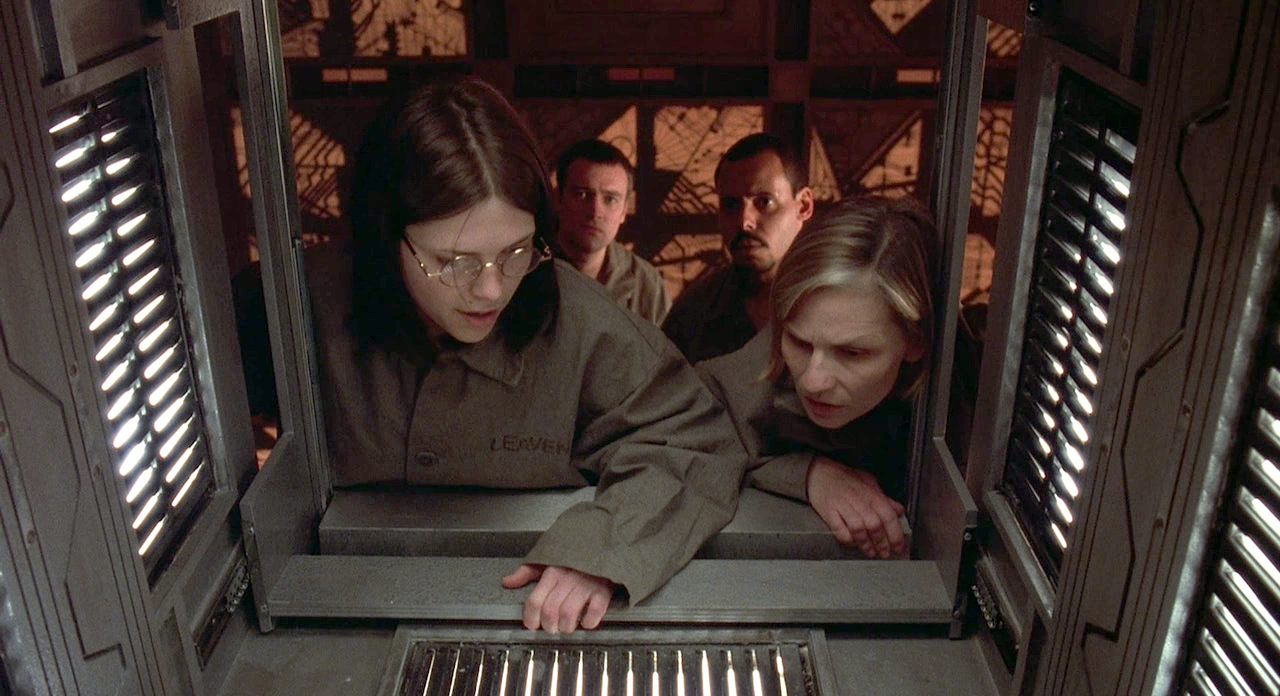
For longtime SF fans, there’s another compelling reason to give the series a shot: Canadian writer-director Vincenzo Natali, best known for his mind-bending 1997 indie film Cube, is an executive producer and directs four of the season’s episodes. Natali is a pro at incorporating heady ideas in ways that enhance his narratives instead of weighing them down.

The first season just concluded, and you can stream all eight episodes on Amazon Prime. Bud and I are already looking forward to The Peripheral’s return.

cube-pic-6
Cube writer-director Vincenzo Natali is behind the lens for half of The Peripheral’s episodes.