‘Project Hail Mary’ Is A Surprisingly Poignant Take On What Could Be Out There — And A Buddy Comedy Too!

Venture out into the cosmos and we might find an existential threat — or we may find friends who welcome us into a joyous fraternity among the stars.

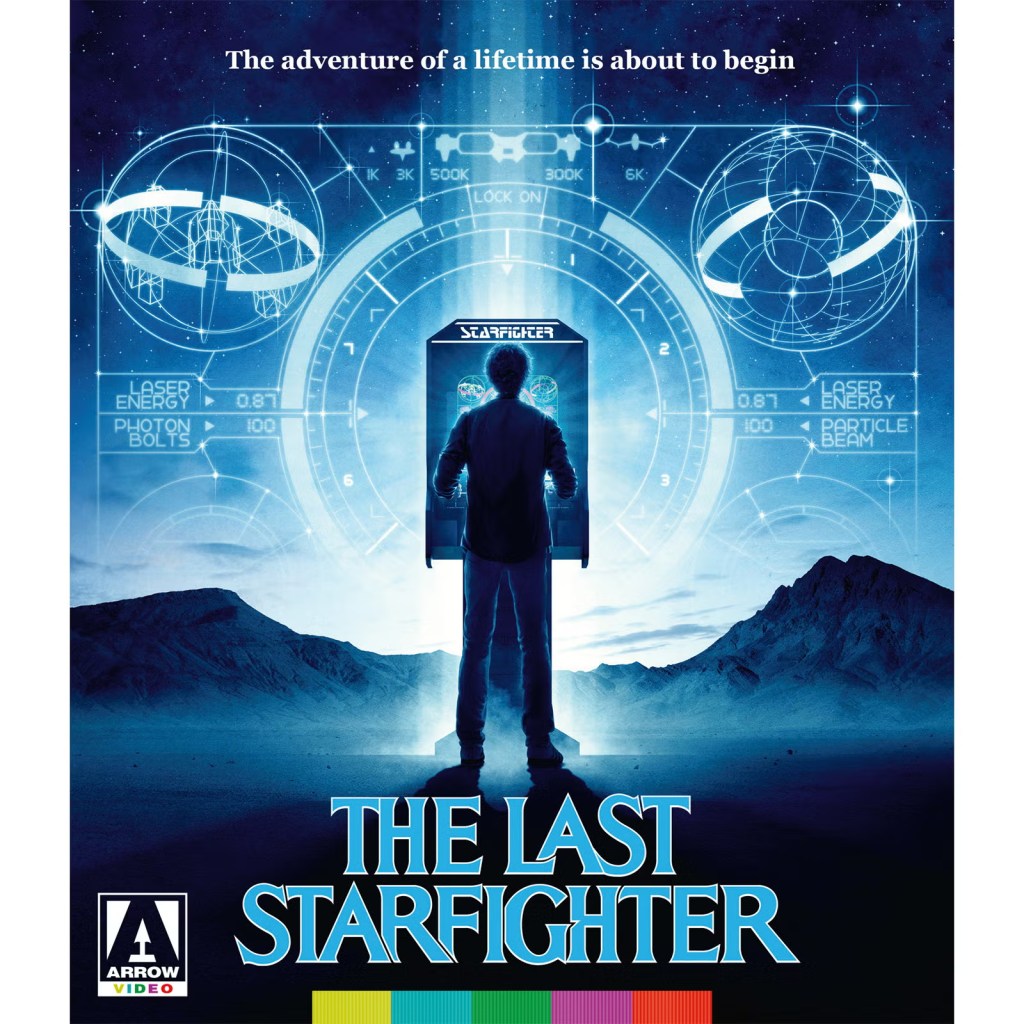
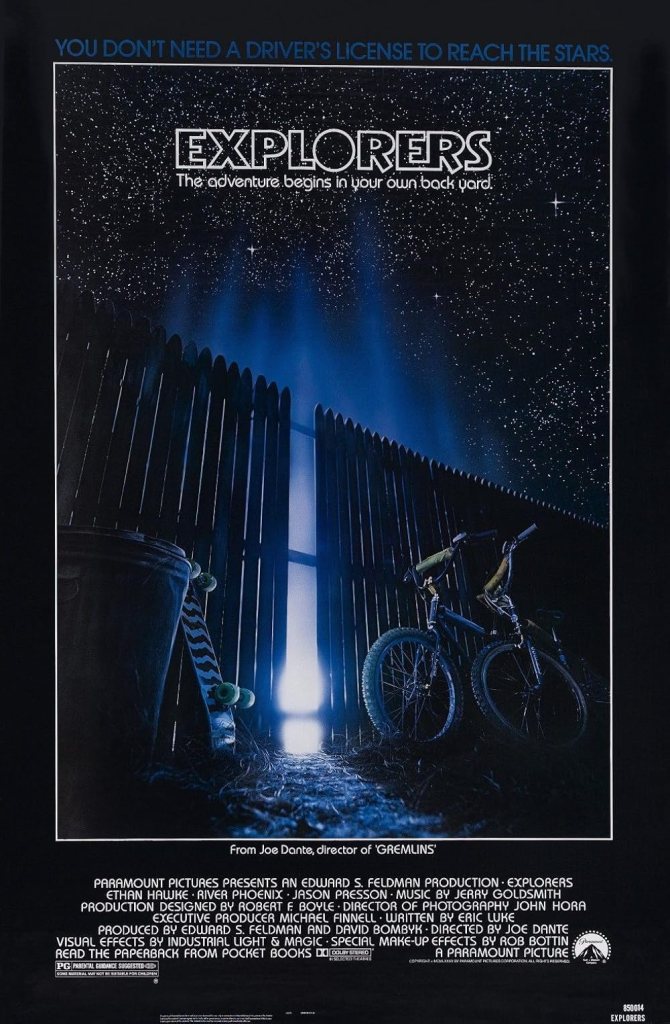
ET. The Last Starfighter. Explorers. Enemy Mine. Arrival.

While Alien is nightmare fuel combining dread in its purest form and the hallucinogenic visuals of one of modern history’s most disturbed artists -creating a vision of extraterrestrial life so horrific that many audiences couldn’t deal with what they were seeing when it hit theaters in 1979 – science fiction also has a strong tradition of imagining friendship in the stars.

Audiences love it when their spacefaring hero finds a buddy.

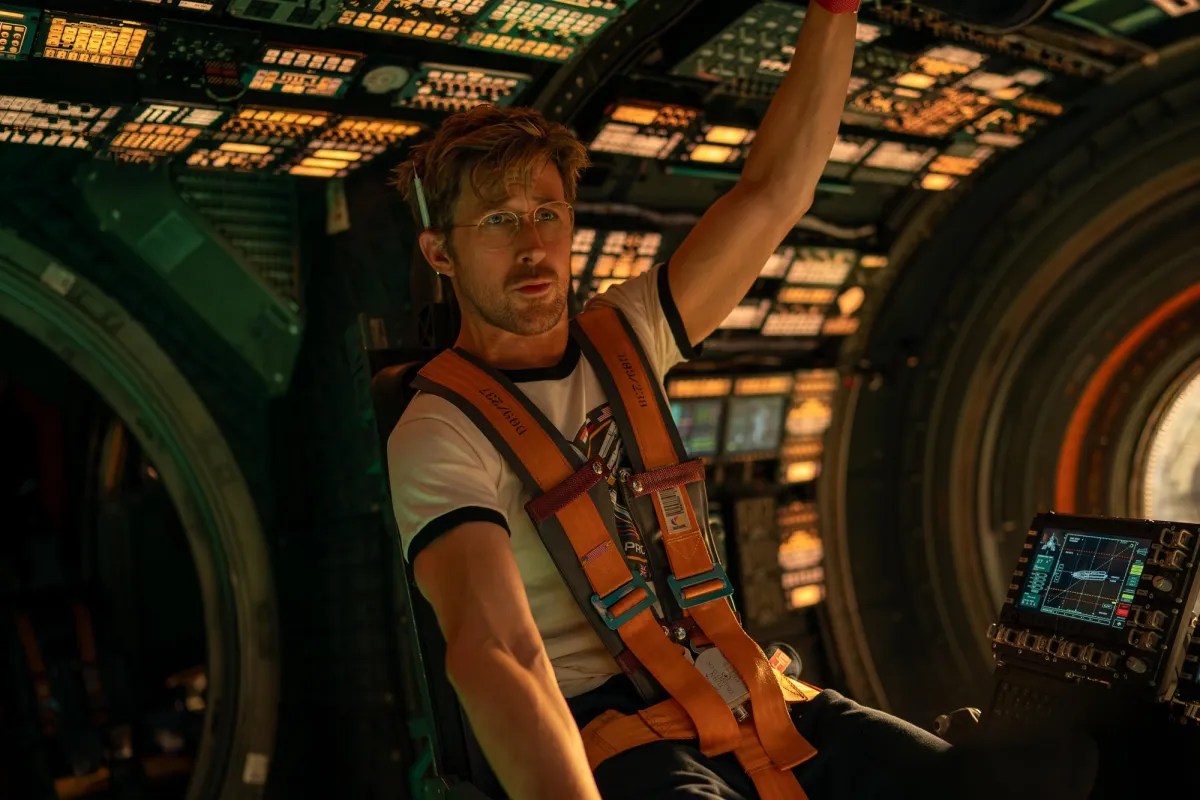
Project Hail Mary is that kind of movie, but it doesn’t look that way at first. Dr. Ryland Grace (Ryan Gosling) is a biologist who was laughed out of higher education when he published papers arguing that our ideas about what’s necessary for life to spark were all wrong.

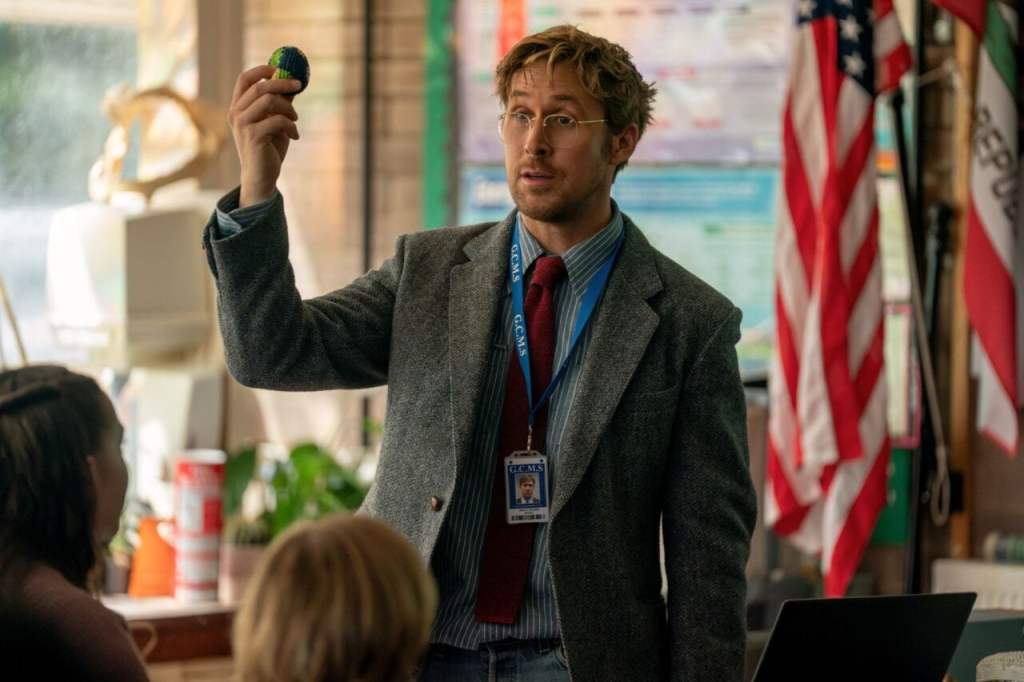
Grace is an enthusiastic middle school science teacher when we meet him through the eyes of a UN official who recruits him for what will be known as Project Hail Mary.

The movie uses classroom scenes for exposition, as the young students beg Goslin’s Dr. Grace to tell them why the astrophage endangers Earth. Credit: MGM

The sun is dying. No one’s sure why until an amateur astronomer named Irina Petrova discovers a wispy line of infrared radiation bridging Venus to our home star. The newly-Christened Petrova Line is made of astrophage, a virus-like organism that feeds on stellar energy, robbing the star of its power.

What begins as a gradual, almost imperceptible drop in the sun’s energy quickly accelerates and the Earth’s temperature begins to plummet.

The same papers that got Grace exiled from academia land him a spot on the worldwide project to study and destroy the astrophage. The usual assumptions about how life operates are not cutting it, and the project needs all the independent thinkers it can find to look for a solution.

If they can’t find one, the dying sun will leave the Earth in a deep freeze. In turn it will bring on a new ice age, the destruction of most of Earth’s arable farmland, mass extinction of plants and animals, then famine and all the horror that comes with it.


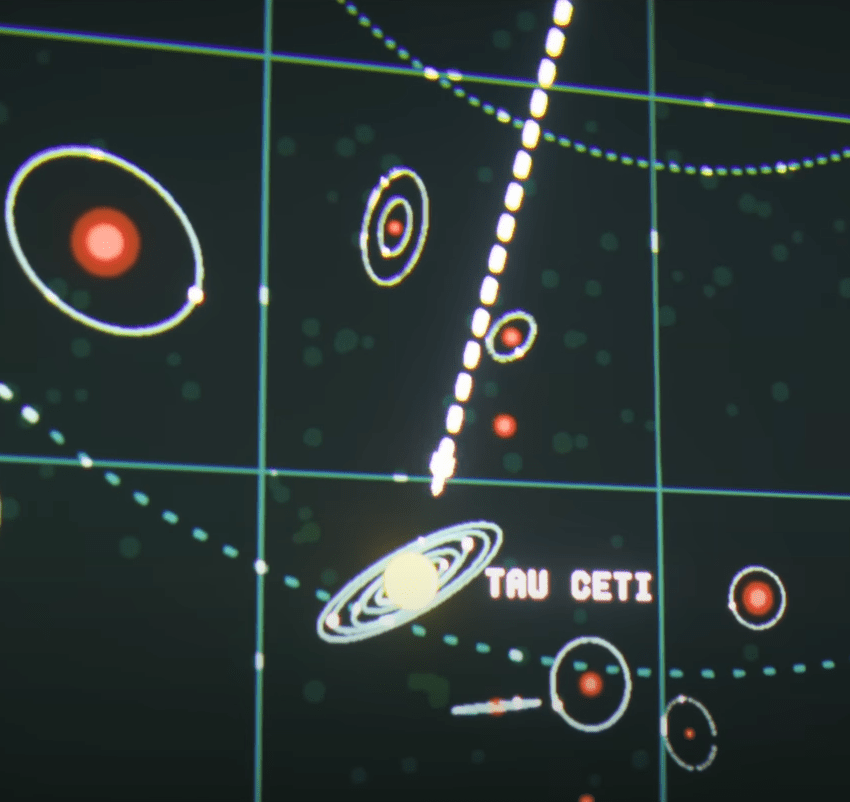
The narrative cuts between past (Grace’s introduction to the project and its early days) and present, when Grace is one of three crew members headed to the star system Tau Ceti to find out why it’s the only star in our cluster that hasn’t been infected with astrophage. In our entire galactic neighborhood, only Tau Ceti — a G-type star similar to our sun about 12 light years out — continues to burn bright.

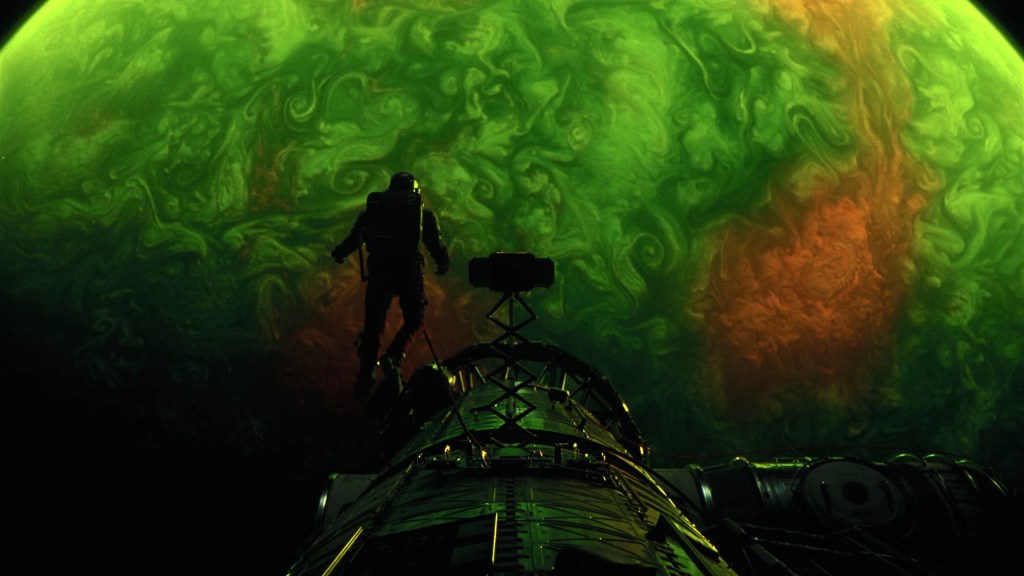
The movie offers some spectacular, sometimes even trippy space vistas, such as this one of the planet Tau Ceti E. Credit: MGM

It turns out humans are not the only ones desperate to know why Tau Ceti is not dying, and that’s where the movie goes from interesting to emotionally resonant, poignant and a heck of a lot of fun.

There’s plenty of mystery, tension, and awe at the beauty of creation, all against the backdrop of Grace’s evolving relationship with his unexpected buddy.

This is a movie that would have been a major challenge for any lead actor, and Gosling not only imbues Grace with with a self-conscious, cautious bearing, he also does a great job of carrying long scenes without the benefit of another expressive human face to help him sell the action and drama.

What could have been convoluted science is explained to the audience in simple and effective terms. The problem is outlined elegantly, and the stakes are made very clear. If no one can figure out how to stop the astrophage, humanity will likely survive in the near term, but only in miserable, resource-depleted, technologically retrograde pockets of people who regard others as a threat. Eventually even those holdouts will succumb to cold and starvation.

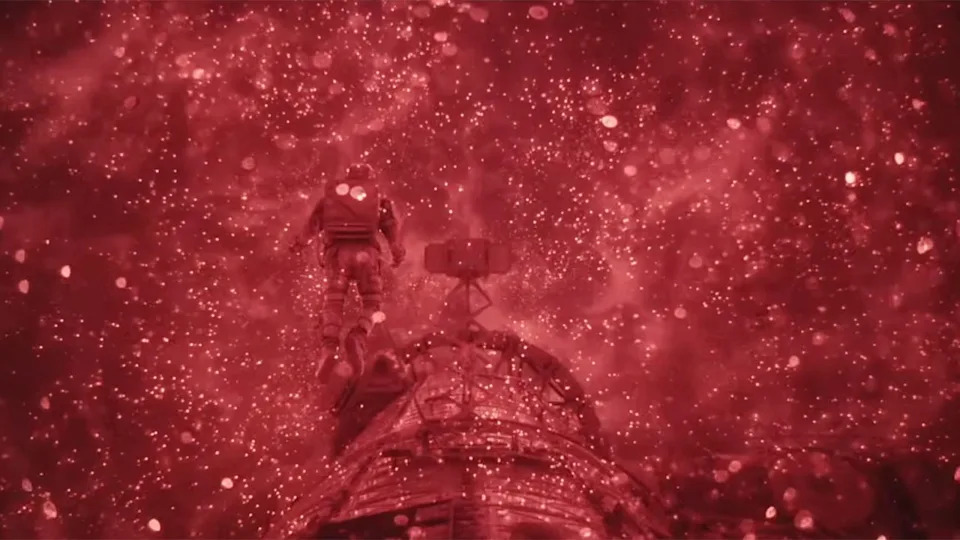
The same image of Tau Ceti E from above, but this time viewed in a different wavelength of light that reveals the astrophage traveling along Tau Ceti’s own Petrova Line.

The film doesn’t trivialize space either. An interstellar journey is the kind of thing we might be able to accomplish with the pooled resources of humanity, the brightest engineers, designers and scientists of our species, but it’s also a long, extremely dangerous and difficult undertaking.

Thus the name Project Hail Mary. It’s a long shot, audacious and unlikely to succeed, but as Sandra Hüller’s UN project leader explains to Goslin’s Grace, the only alternative is to do nothing and wait to die.

Perhaps most importantly from a science perspective, the film offers a clever way for the project to generate the energy needed to send a ship to Tau Ceti at near-light speed. Currently we might be able to build a viable vessel, which would be a monumental design and engineering challenge, but it would take more than 150,000 years to travel that far with our best current propulsion systems. More energy — and speed — is a must, especially when the mission is a race against time, with only a few decades before our planet freezes over.

The movie’s solution won’t help us in real life, but within the context of the narrative it’s a clever way of traversing enormous distances in a short time instead of the thousands of years it would normally take.

Every star within dozens of light years of Earth is infected with astrophage and dimming except for Tau Ceti. Why?

Plausible science provides the framework for the story, but its payoff is emotional, and Dr. Grace’s experiences with his strange new friends will remain with you after the credits roll.

If you’re like me and didn’t rush to see this in the theaters because you found The Martian — based on a book by the same author — overhyped, do yourself a favor and spend an evening in Project Hail Mary‘s world. It’s a journey well worth taking, and the rare movie that leaves you with a glow by the time the credits roll.

Project Hail Mary is currently streaming on Amazon Prime video.

Even a SF-horror fan like me would love to see more lighthearted science fiction in the mold of Project Hail Mary and classic 1980s science fiction adventures like The Last Starfighter and Explorers.

Watch Mafia Cats Throw Their Weight Around In Pixar’s ‘Gatto’ Trailer

The animation studio’s forthcoming movie is about crime cats who rule Venice with an iron paw.

Cats are cute and furry but they’re also tyrants who are ruthless when it comes to getting what they want.

Maybe that’s why they’re perfect as mobsters, something the creative minds at Pixar realized when they decided their next animated feature would involve feline mafiosos.

Titled Gatto, the movie is slated to hit theaters in 2027, but you can see a preview below. In the film’s first trailer, Mark Ruffalo’s Nero, a skinny black cat, assists the local mafia boss cat, voiced by Laurence Fishburne, in interrogating a ginger tabby about a missing can of tuna.

They’re quite serious about the missing tuna until they get distracted in a most feline way:

Which reminds me: it’s been ages since we checked in on Buddy’s sworn enemies, Los Gatos cartel, and the Machiavellian maneuvers of the catnip wars… The cartels vs the meowfia promises to be a catnip clash for the ages!

Buddy cuts a dashing figure in his slick Italian suit.

The Big Cats Of ‘Exodus’ Are Badass

The new science fiction franchise consists of novels, a short film, a game due out next year, and an encyclopedic art book. It’s got a compelling narrative, deep lore and all the trappings of great SF, and best of all it has awesome big cats.

Exodus is a hugely anticipated upcoming game from the team behind the beloved Mass Effect series, but it’s so much more than that.

It’s also a 900-plus page science fiction novel, Exodus: The Archimedes Engine by the outstanding novelist Peter F. Hamilton. A second book, Exodus: The Helium Sea, also authored by Hamilton, is due for release on June 16. A short film in the Amazon Prime Video series Secret Level, titled Exodus: Odyssey, further expands the fictional universe and its lore, as does an “encyclopedia” hardcover about the Exodus universe, its major factions, planets and technology.

Matthew McConaughy is enthusiastically involved, as an actor and producer. (Allright, allright, allright!)

Oh, and it has big cats!

The screenshots in this post are from Exodus: Odyssey, and depict an Awakened Jaguar.

In Exodus, certain animals are “Awakened,” meaning they’ve been genetically modified to give them cognitive and physical gifts.

In the case of big cats, it means they’re smart enough to understand human language, follow complex instructions, interact with technology, and make decisions. Big cats are companions, guards and serve as intimidating special units in the military.

The Awakened Jaguar in this scene is the companion and guardian of a planetary governor. He’s very protective of his human and immediately leaps up to growl in warning when a visitor takes an aggressive step forward.

The Awakened Jaguar leaps up as a conversation becomes intense.
Awakened animals can wear tech peripherals, weapons, armor and tools. Big cats are mostly muscle, guards, soldiers and are used to intimidate enemies, while planetary police forces use Awakened dogs and one prominent character is an Awakened octopus who occupies a tank in his own personal mech, allowing him freedom of movement outside of water.

In Exodus: The Archimedes Engine, there’s a scene depicting Awakened Lions deployed with the military. They’re considerably larger than terrestrial elephants, weighing several tons, standing three times the height of adult men. They’re terrifying to behold, which is precisely why the Celestial military has them accompany their generals as honor guards.

There are also Awakened Tigers who are bigger and much more intelligent than their Earthly counterparts, with fur that can function as active camouflage. The Awakened Tigers are described and illustrated in a companion book, which notes that while the genetically modified big cats are powerful, intimidating and extremely effective, they also have voracious appetites, scarfing down more than a hundred pounds of meat per day.

The Exodus encyclopedia shows an Awakened Tiger standing protectively over a recon soldier:

A two-page illustration of an Awakened Tiger from the Exodus Encyclopedia.

As for the story behind Exodus, I cannot say enough good things about Exodus: The Archimedes Engine.

Hamilton is known for sprawling far-future narratives that combine memorable characters with fabulous technology, vividly imagined societies and awe-inspiring discoveries in the cosmos.

Many of his novels deal with humanity’s encounters with alien civilizations, which range from the serenely benevolent (the Raiel) to the terrifyingly genocidal (MorningLightMountain) and everything in between.

Exodus departs from that template to tell a story about a conflict between regular humans and the Celestials, post-humans who have spent tens of thousands of years on a self-guided evolutionary path that has transformed them into creatures that no longer bear any resemblance to the rest of humanity.

A Celestial queen from the Crown Dominion. The Crown Dominion’s Celestials appear bizarre to us but are actually among the more “normal” looking of the Celestial factions. The most inhuman are said to be the dread Mara Yama and the Talloch-Te.

To say the Celestials consider themselves better than “baseline” humanity is a drastic understatement — Celestial societies have no qualms about breeding humans for specialized labor and roles, emphasizing traits like subservience and loyalty.

In other words, regular humans are treated the same way many in our current society treat animals, as commodities and resources to exploit.

Naturally that does not sit well with people, and the central narrative follows a rebellious group who seek to free every faction from Celestial shackles.

I’m looking forward eagerly to Exodus: The Helium Sea, the second epic novel set for release in six short weeks. I was a bit anxious that a series of novels as a tie-in to a game would be somehow not as great as Hamilton’s usual books, but I should have known the author doesn’t do anything half-assed. The first book introduced compelling mysteries and answered a lot of burning questions, but left plenty to look forward to and resolve.

And as much as I’m hyped for the story, I’m also crossing my fingers for more big cats. Maybe I can convince the creative team that their universe needs an Awakened Buddy…

“No, dude, I get the captain’s quarters! I will generously allow you to use my bed and you will continue to have the honor of being my pillow and stuff.”

Wordless Wednesday: Movie Stars

Little Buddy is the brains and the badass. Big Buddy is the sidekick. Script by Little Buddy.

Wait, I’m the sidekick? Why am I the sidekick?

An Actress Might Lose Out On An Oscar Because She Says She Hates Cats

The reaction says volumes about our society’s sense of proportionality, our collective understanding of animals, and our ability to politely disagree on topics we feel strongly about.

This hasn’t been a great week for feline PR.

Not only did two celebrities come out with bizarrely forceful anti-cat sentiments, but from their statements, they both “hate” cats because they’ve misinterpreted feline behavior.

The fallout hasn’t been good either, for the actress and rapper involved, or for the more extreme animal lovers who have responded with disproportionate rage.

The first comes from rapper Docheii, who insists cats “genuinely aren’t friendly animals.”

“yall be scratched and beat tf up by your own animals I can’t lmaoooo,” the towering intellect from Florida wrote on social media.

Cats, she asserted, “don’t wanna be domesticated.”

Presumably she got that information from the Pew Center for Feline Public Opinion, and the rest of us simply aren’t privy to the latest opinion polls among cats. And here I thought our furry friends were mostly ambivalent about anything that doesn’t involve napping, playing and eating. (I took an informal poll of Bud. He responded with a simple “Fetch me a snack, will you, human?”)

A promo shot of Doechii, real name Jaylah Ji’mya Hickmon

Regardless, even if there was some way to ascertain how cats feel about a process their ancestors initiated — one that takes thousands of years to result in speciation — it’s irrelevant. The decision was made 10,000 years ago when The First Kitteh was drawn to a human settlement by the promise of rodential prey in abundance.

Modern cats have no more say in the matter than we have in our ancestors slaughtering dodos. It happened. We can’t change the past.

The actress vs the ‘pedigree bitch’

The second bit of anti-feline sentiment comes from Jessie Buckley, an Irish actress who is weirdly proud of forcing her husband to ditch his two pet cats when they began dating. She talks as if she’s been waging a personal war against the species, and her reason for disliking felines also indicates a fundamental misunderstanding of their behavior.

Buckley’s comments were made on a podcast late in 2025, but resurfaced this week and went viral as her Oscar buzz reached its peak. On the podcast, Buckley said one of her husband’s cats was a “pedigree model bitch” who was orchestrating a “coup” against her.

She thinks the cat had it out for her: “I’d come home and there’d just be, like, poo on my pillow.”

This is actually sad, because people who really know cats, who understand why they behave certain ways, will immediately understand that they don’t have accidents out of spite. If the cat was eliminating outside her litter box, there was a legitimate underlying problem causing her a great deal of stress.

She could have been injured, she could have been sick, or she could have been plagued by the cumulative stress brought on by the presence of a hostile woman who ludicrously saw her as competition. Our furry friends are much more perceptive than generally realized, especially when it comes to our emotional states, and Buckley’s hostility would have been immediately apparent.

Buckley with co-star Paul Mezcal, who was equally enthusiastic in his intense dislike of felines, telling an interviewer: “Yeah, f— cats!”

Alas, Buckley didn’t reluctantly ask her then-boyfriend to give up his cats. She demanded it, then did a victory lap when he complied, which makes me suspect she was merely taking the whip out for a test drive before further commitment. If he’s willing to abandon two pets, he’s almost certainly going to be a pushover when she begins to prune his friends from his life, starts dressing him the way she likes, maybe even monitors his phone. *shudder*

“It’s me or the cats,” Buckley said she told her husband. “But I won!”

Congratulations, I guess?

The rage of cat lovers

As ludicrous as it seems, the backlash may cost Buckley an Oscar. Personally I don’t keep up with the approximately 200 awards ceremonies actors hold to fete themselves annually, but apparently Buckley turned in a solid performance in a movie called Hamnet.

She was considered the front-runner for an Academy Award. Now critics are openly wondering about her chances.

As always, these sorts of statements reveal a lot more about the people involved than they do about cats. I just wish people understood the species a little better, so maybe attitudes won’t default to anger or hostility if, say, a scared cat scratches a person who corners her, or a kitty with a stomach bug pukes on the carpet.

When a toddler gets sick, we don’t respond by yelling at the kid, blaming him and chasing him off. We make sure he’s okay, give him some medicine or take him to the doctor, and clean up the mess. Cats are essentially furry little toddlers, with the same innocence as children. When we adopt them, we agree to care for them.

Both Buckley and Docheii have been hammered on social media since their comments went viral, and it’s important to address that too. They expressed opinions. That doesn’t make them “pieces of s—,” “worthless human beings,” “scum” or any of the other nasty things some people have been saying.

We can disagree with them without overreacting, even in the age of dehumanizing online conversation.

Maintain yourselves!

And honestly, it makes all of us look bad. The day Walter Palmer returned to work is forever seared into my mind. Palmer was the American dentist who infamously and illegally lured Cecil the lion out of a protected area and killed him to take his head as a trophy in 2015.

Worse, Palmer — who had a history of getting in trouble for breaking the law while hunting — killed Cecil with a bow and arrow in order to claim some meaningless hunting record for himself and bungled the point-blank kill shot his guides had lined up for him. Cecil, who was an iconic lion with a distinct mane, suffered for hours before he died.

People were understandably angry, and protesters showed up outside Palmer’s office the day he returned to work. Most of them behaved themselves. But as Palmer made his way toward the front door of his dental practice, one of the protesters let loose a blood-curdling scream and shouted “WAAAAALTER PAAAAALMER!“, vowing vengeance for Cecil.

Palmer returning to work while media and protesters crowd him.

That moment of unhinged, unregulated rage overshadowed the good intentions of every person who registered their displeasure calmly and politely — and provided ample ammunition to those who enjoy painting all animal lovers as lunatics.

Buckley and Doechii expressed opinions we don’t like, and that’s their right. The best thing we can do is explain why they’ve misinterpreted feline behavior, and show them that cats really are loving, friendly animals — it just takes a little patience and trust. I say that as the faithful servant of a cat who can be particularly prickly and a complete lovebug, depending on the circumstance.

In the meantime, celebrities who hate cats should probably take a pass on broadcasting their intense dislike and save themselves the resulting headache. Sadly, we no longer have any sense of proportionality when it comes to disagreements, and no one gets a fair shake when things are litigated via social media.