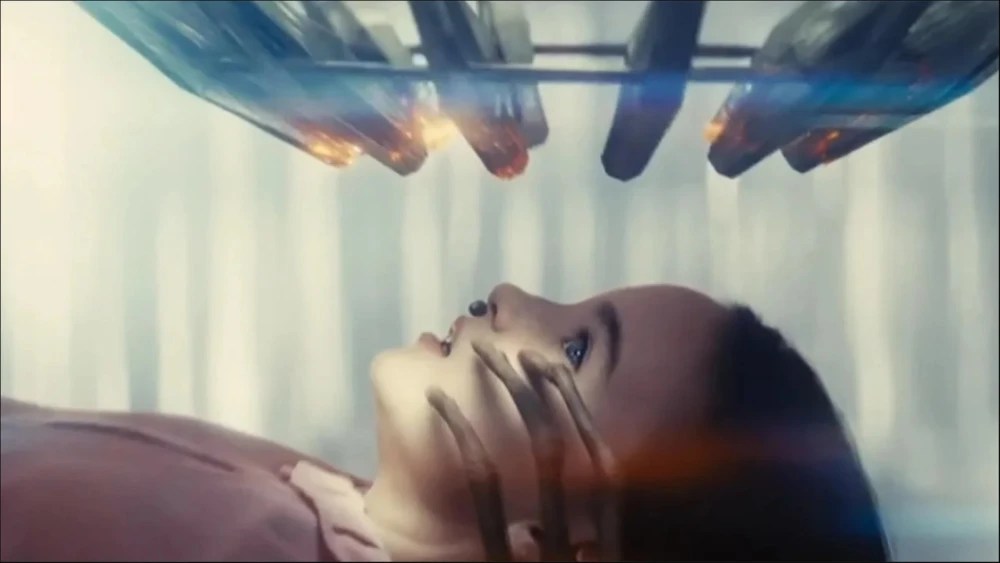
This is Indiana Jones and the Crystal Skull Spielberg, not E.T. or Jurassic Park Spielberg.
The early impressions from previews of Disclosure Day were surprising, considering Steven Spielberg had returned to the genre and subject that vaulted him into the pantheon of iconic American directors.
The filmmaker, who was responsible for bringing classics like E.T., Close Encounters of the Third Kind, Minority Report and Jurassic Park to enchanted audiences, decided to return to the fertile imaginative ground of wondering what’s Out There in the stars.
Unfortunately Spielberg’s answer, at least in 2026, is to regurgitate every conspiracy theory about aliens that the UFO enthusiast crowd has dreamed up for decades, opting for the same old while ignoring the limitless possibilities of the cosmos.
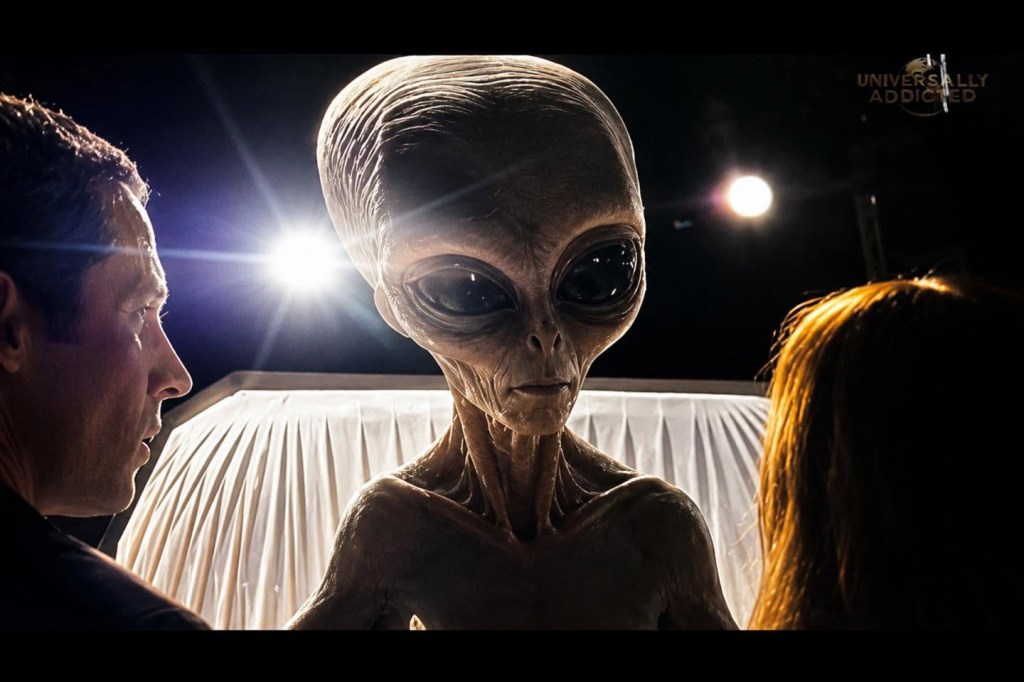
The mundanities Spielberg prefers include remarkably advanced aliens who can traverse the endless galactic void but are apparently incapable of landing spacecraft on a planet without crashing, androform extraterrestrials who look exactly like the “grays” on every kitschy Roswell tourist stop sign, and the idea that some shadowy government agency is keeping all of these wondrous revelations from us because – drum roll please – we can’t handle the truth!
An alien, who looks exactly like we thought it would, tells Emily Blunt and Josh O’Connor where to find the best chicken sandwich near Roswell. Credit: Universal Pictures/Amblin Entertainment
We know crop circles were invented by a pair of pranksters in the UK decades ago. We know precisely how they did it because they demonstrated the method on camera for journalists. But to Spielberg, crop circles are still distinctly alien phenomena.
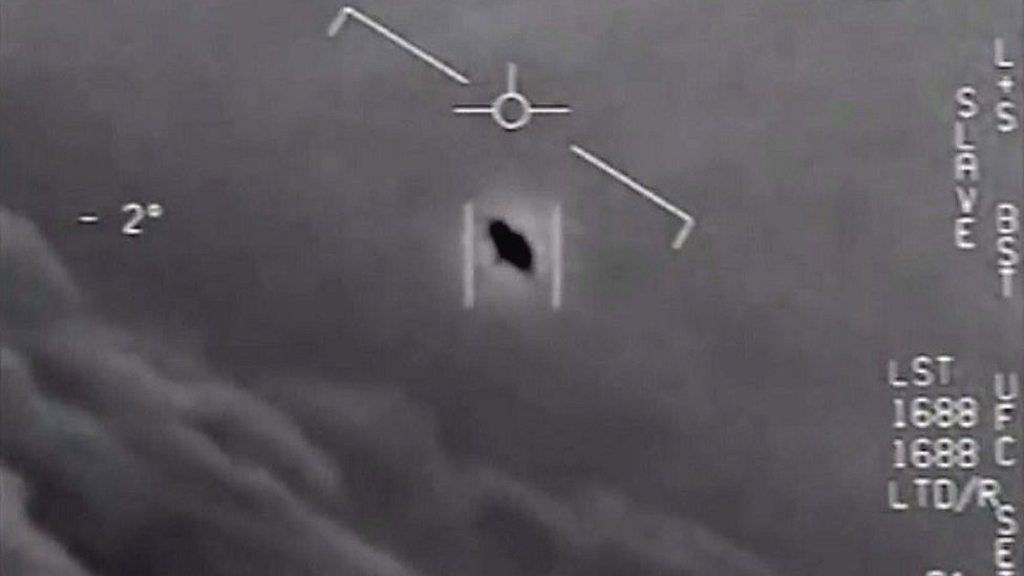
We know the “UFO” footage captured by American jet pilots are exhaust plumes and visual artefacts. We know glimpses of seemingly physics-defying craft are ordinary objects rendered extraordinary because of the way gimbaled camera systems track moving objects, with their internal glass apertures and infrared glare saturating the sensors until saucer-like shapes appear.
We know the forced perspective of a camera zoomed in on a moving object, even a slow-flying weather balloon, creates an optical illusion of hypersonic speed compared to the ground. Few things have been as relentlessly held up as evidence, and as closely scrutinized by experts in every field from aeronautics to digital forensics. These are not mysteries and haven’t been for decades.
We know our very existence remains invisible to more than 99.995 percent of the galaxy because we’ve only been emitting clear technosignatures for about half a century, and there simply hasn’t been enough time for the light to reach beyond a minuscule pocket of the Milky Way.
Yet Spielberg thinks the most interesting answers aren’t to be found in the endless inky black of interstellar space, but right here in ‘Merica, in secret government files and footage of alien autopsies.
The problem is, those things aren’t interesting. We’ve heard them all a thousand times.
Disclosure Day follows two people with apparently superhuman abilities granted to them by aliens: Emily Blunt’s Margaret Fairchild, a meteorologist for the local Kansas City ABC affiliate, and Josh O’Connor’s Daniel Kellner, a former hacker turned cybersecurity expert who works for the Wardex Corporation.
Wardex is the government but it’s not the government. It has all the resources of a federal law enforcement agency like the FBI, but it masquerades as a separate entity for plausible deniability and because, we’re told, even US presidents aren’t privy to The Truth about aliens. (“Presidents are civilians in eight years” Colin Firth’s sinister Noah Scanlon says as he explains why Wardex handles all alien-related business.)
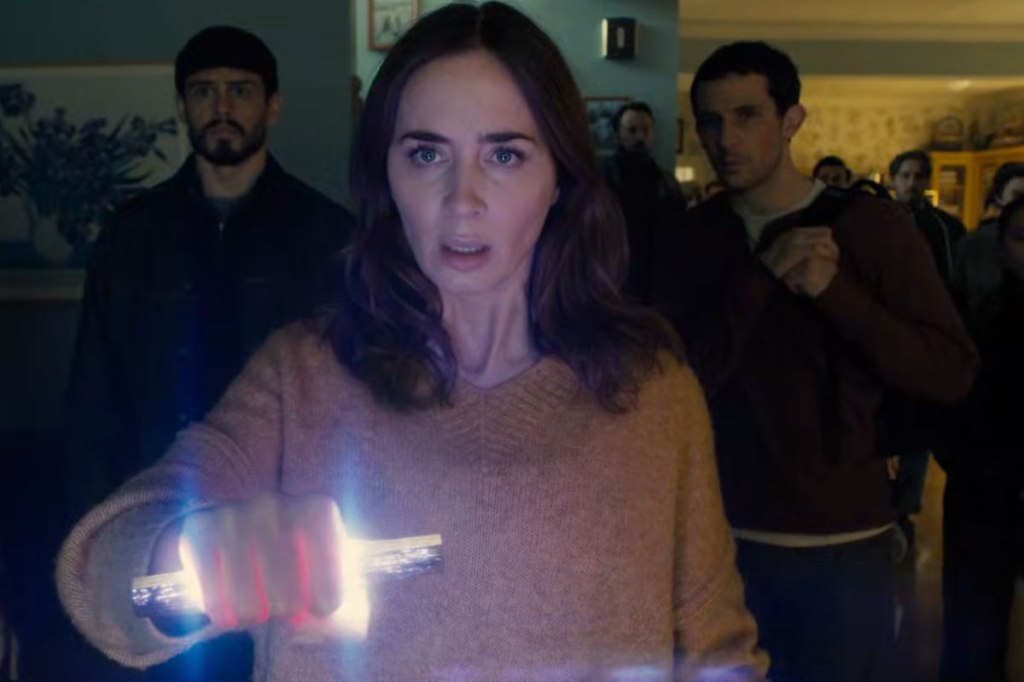
Emily Blunt holds a stolen remote control from an alien flatscreen TV. Credit: Universal Pictures/Amblin Entertainment
Most of the movie involves the Wardex baddies chasing Fairchild and Kellner through a series of summer blockbuster set pieces. There are dramatic motel room escapes, a car chase that ends with our heroes leaping onto a train, secret safe houses, lots of phone and location tracing from high-tech command centers, and repeated scenes of Fed-like black Chargers rolling up on buildings.
Wardex is intent on stopping Fairchild and Kellner before they can go public with their secret stash of stolen alien videos.
Meanwhile we see glimpses of news reports about a world on the brink of nuclear annihilation. We’re not told much except that the conflict involves the Russians (of course), North Korea and perhaps other rogue states, and that everyone’s got their fingers on their respective red buttons.
Thus, disclosure is precisely what we need to end the hostilities, unite the human race and embrace our alien friends, even though our government tortured some of them after their disastrous landing attempts in American farm fields.
For the record, I do think humanity would be united by the revelation that we’re not alone in the galaxy, but I think fear would be the primary driver. There’s no fear like that of the Other, and if people hear aliens are coming, they’ll make a run on every gun shop, pharmacy and liquor store while the world’s governments huddle together to figure out the viability of nuking incoming craft in orbit.
No one wants it to get as far as “Take me to your leader,” particularly not with who’s in charge right now.
If you’re a self-described UFOlogist who enjoys conspiracy theories and thinks Art Bell really was speaking to aliens on Coast to Coast AM, then this movie will be your wet dream. You were right! The aliens look exactly like they do on the sides of Alienware PCs, they absolutely suck at landing, and they burn circles into our crops after abducting us!
If you just wanted to be entertained and maybe encounter some innovative takes on non-terrestrial intelligent life, you will be sorely disappointed. Spielberg lost his magic sometime before Indiana Jones and the Crystal Skull, and we just refuse to acknowledge that sad turn of events.
Venture out into the cosmos and we might find an existential threat — or we may find friends who welcome us into a joyous fraternity among the stars.
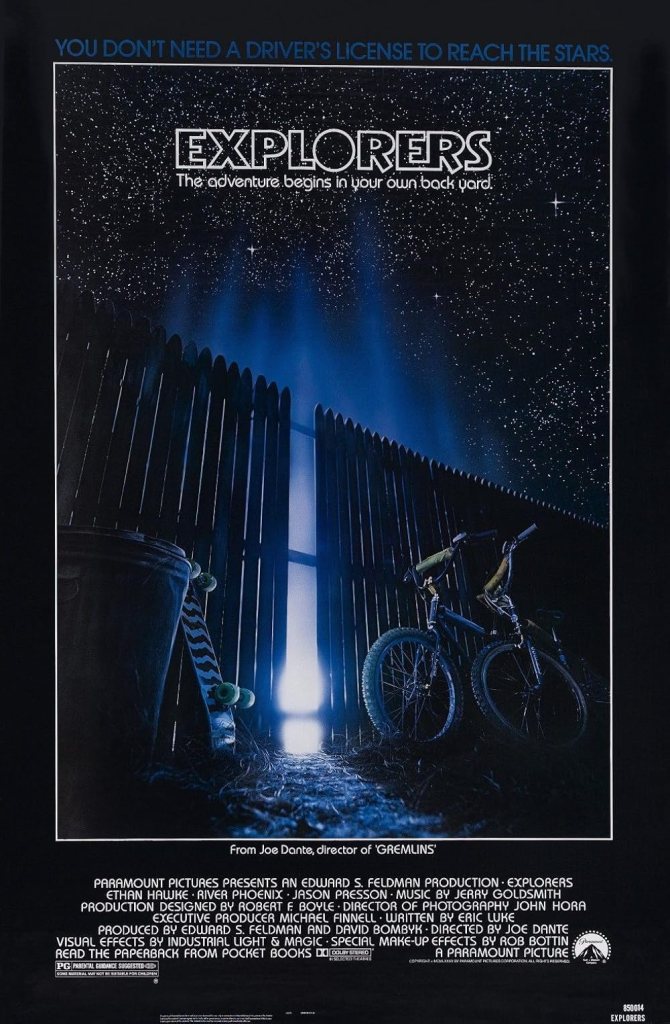
ET. The Last Starfighter. Explorers. Enemy Mine. Arrival.
While Alien is nightmare fuel combining dread in its purest form and the hallucinogenic visuals of one of modern history’s most disturbed artists -creating a vision of extraterrestrial life so horrific that many audiences couldn’t deal with what they were seeing when it hit theaters in 1979 – science fiction also has a strong tradition of imagining friendship in the stars.
Audiences love it when their spacefaring hero finds a buddy.
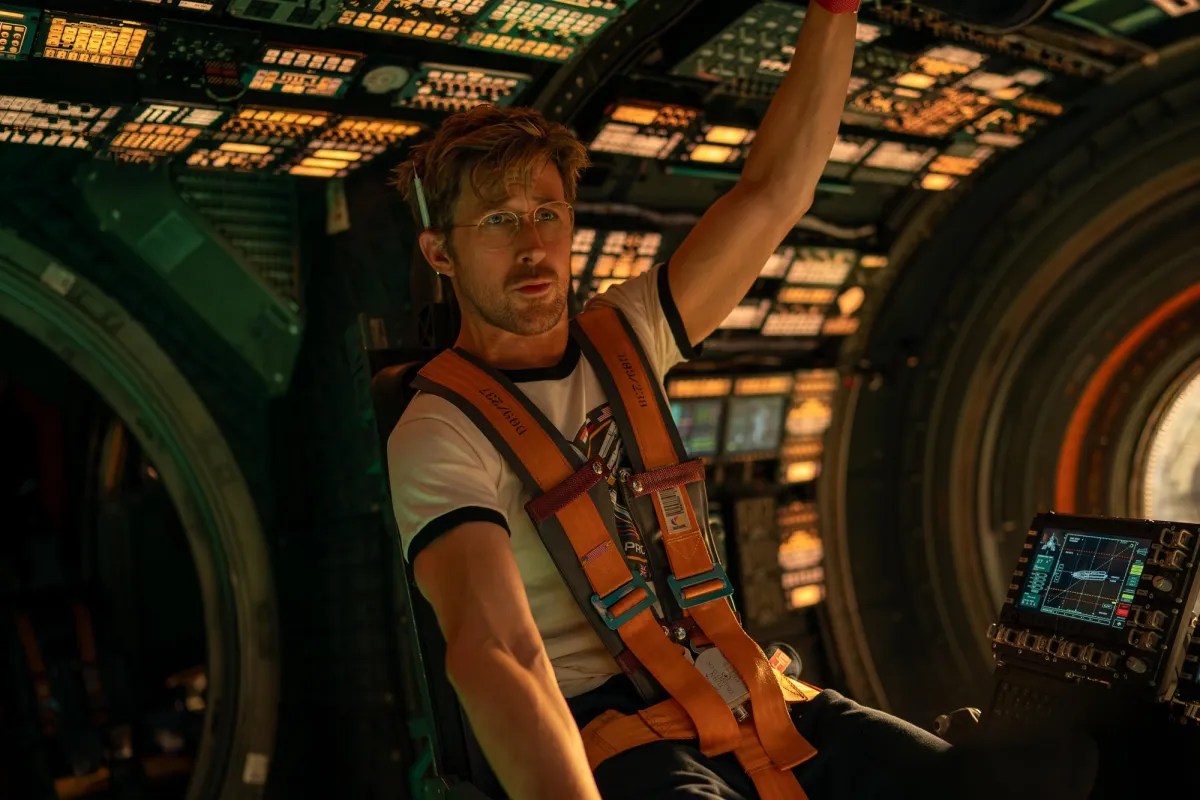
Project Hail Mary is that kind of movie, but it doesn’t look that way at first. Dr. Ryland Grace (Ryan Gosling) is a biologist who was laughed out of higher education when he published papers arguing that our ideas about what’s necessary for life to spark were all wrong.
Grace is an enthusiastic middle school science teacher when we meet him through the eyes of a UN official who recruits him for what will be known as Project Hail Mary.
The movie uses classroom scenes for exposition, as the young students beg Goslin’s Dr. Grace to tell them why the astrophage endangers Earth. Credit: MGM
The sun is dying. No one’s sure why until an amateur astronomer named Irina Petrova discovers a wispy line of infrared radiation bridging Venus to our home star. The newly-Christened Petrova Line is made of astrophage, a virus-like organism that feeds on stellar energy, robbing the star of its power.
What begins as a gradual, almost imperceptible drop in the sun’s energy quickly accelerates and the Earth’s temperature begins to plummet.
The same papers that got Grace exiled from academia land him a spot on the worldwide project to study and destroy the astrophage. The usual assumptions about how life operates are not cutting it, and the project needs all the independent thinkers it can find to look for a solution.
If they can’t find one, the dying sun will leave the Earth in a deep freeze. In turn it will bring on a new ice age, the destruction of most of Earth’s arable farmland, mass extinction of plants and animals, then famine and all the horror that comes with it.
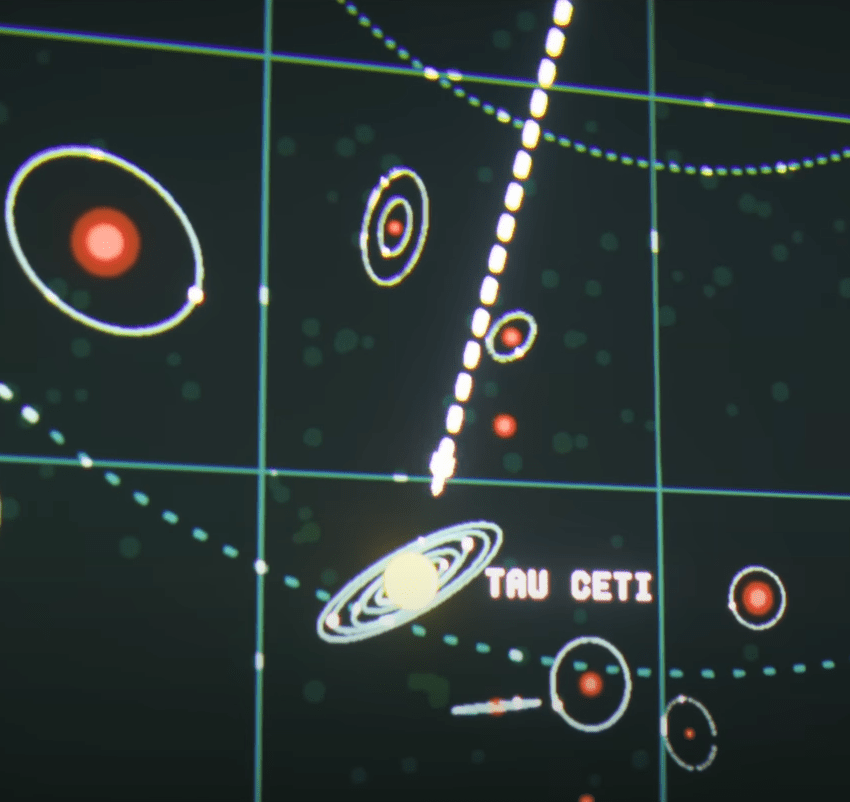
The narrative cuts between past (Grace’s introduction to the project and its early days) and present, when Grace is one of three crew members headed to the star system Tau Ceti to find out why it’s the only star in our cluster that hasn’t been infected with astrophage. In our entire galactic neighborhood, only Tau Ceti — a G-type star similar to our sun about 12 light years out — continues to burn bright.
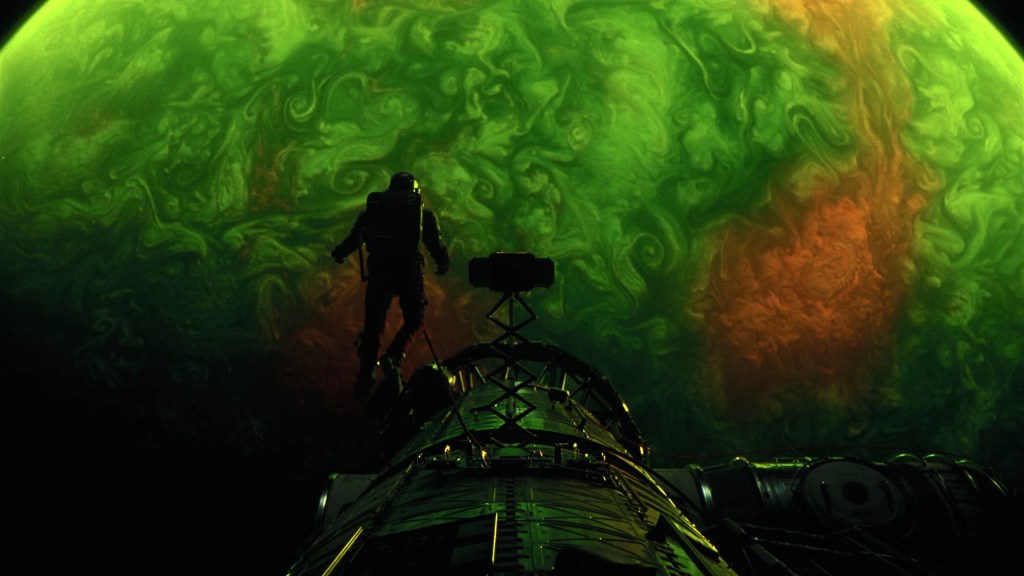
The movie offers some spectacular, sometimes even trippy space vistas, such as this one of the planet Tau Ceti E. Credit: MGM
It turns out humans are not the only ones desperate to know why Tau Ceti is not dying, and that’s where the movie goes from interesting to emotionally resonant, poignant and a heck of a lot of fun.
There’s plenty of mystery, tension, and awe at the beauty of creation, all against the backdrop of Grace’s evolving relationship with his unexpected buddy.
This is a movie that would have been a major challenge for any lead actor, and Gosling not only imbues Grace with with a self-conscious, cautious bearing, he also does a great job of carrying long scenes without the benefit of another expressive human face to help him sell the action and drama.
What could have been convoluted science is explained to the audience in simple and effective terms. The problem is outlined elegantly, and the stakes are made very clear. If no one can figure out how to stop the astrophage, humanity will likely survive in the near term, but only in miserable, resource-depleted, technologically retrograde pockets of people who regard others as a threat. Eventually even those holdouts will succumb to cold and starvation.
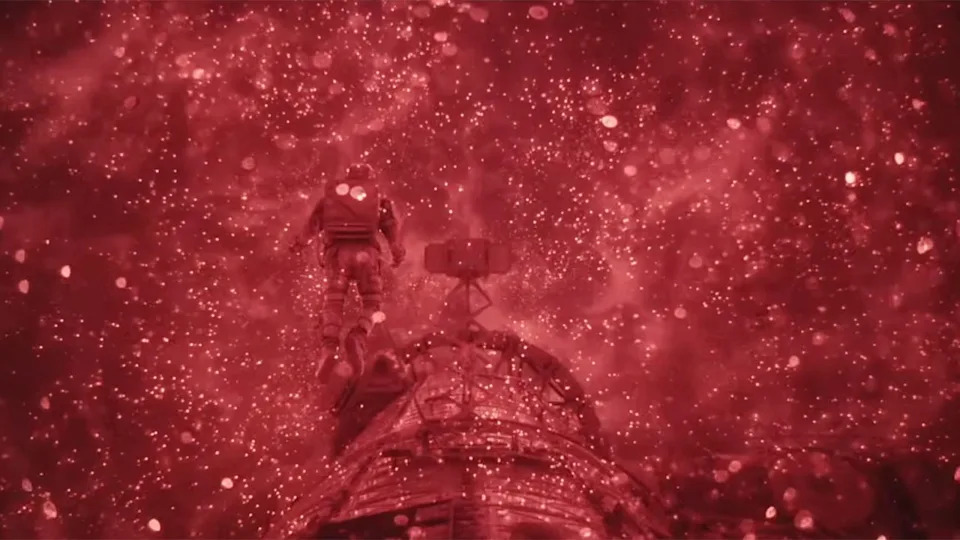
The same image of Tau Ceti E from above, but this time viewed in a different wavelength of light that reveals the astrophage traveling along Tau Ceti’s own Petrova Line.
The film doesn’t trivialize space either. An interstellar journey is the kind of thing we might be able to accomplish with the pooled resources of humanity, the brightest engineers, designers and scientists of our species, but it’s also a long, extremely dangerous and difficult undertaking.
Thus the name Project Hail Mary. It’s a long shot, audacious and unlikely to succeed, but as Sandra Hüller’s UN project leader explains to Goslin’s Grace, the only alternative is to do nothing and wait to die.
Perhaps most importantly from a science perspective, the film offers a clever way for the project to generate the energy needed to send a ship to Tau Ceti at near-light speed. Currently we might be able to build a viable vessel, which would be a monumental design and engineering challenge, but it would take more than 150,000 years to travel that far with our best current propulsion systems. More energy — and speed — is a must, especially when the mission is a race against time, with only a few decades before our planet freezes over.
The movie’s solution won’t help us in real life, but within the context of the narrative it’s a clever way of traversing enormous distances in a short time instead of the thousands of years it would normally take.
Every star within dozens of light years of Earth is infected with astrophage and dimming except for Tau Ceti. Why?
Plausible science provides the framework for the story, but its payoff is emotional, and Dr. Grace’s experiences with his strange new friends will remain with you after the credits roll.
If you’re like me and didn’t rush to see this in the theaters because you found The Martian — based on a book by the same author — overhyped, do yourself a favor and spend an evening in Project Hail Mary‘s world. It’s a journey well worth taking, and the rare movie that leaves you with a glow by the time the credits roll.
Project Hail Mary is currently streaming on Amazon Prime video.
Even a SF-horror fan like me would love to see more lighthearted science fiction in the mold of Project Hail Mary and classic 1980s science fiction adventures like The Last Starfighter and Explorers.
That’s easy: first contact with an alien civilization.
I’m a space and science fiction fanatic. I mainline science fiction novels, keep tabs on the latest discoveries via the JWST, and I think about what’s out there probably more than I should.
There’s a burning desire in our hearts — for some of us, at least — to know for sure that we’re not the only ones, that humanity is not alone in a cold, lonely and infinite universe.
The events of 2026 are testament to that desire to know. Between the government release of UFO-related documents, former government employees coming forward with tall tales of crashed ships of non-terrestrial origin, and the return of Steven Spielberg to the director’s chair for another film speculating about what’s Out There, we’ve been thinking about aliens quite a bit collectively.
As for that central question, I’m not talking about simple cellular life. I don’t think you can find an astrophysicist, astrobiologist, astronomer, evolutionary biologist or anyone in a tangentially related field who honestly thinks life is unique to our planet.
The more relevant question is whether we are the sole sapient species, the lone civilization in our galaxy.
Credit: CaptainFrank/Pexels
Think about the numbers: There are an estimated 300 billion star systems and trillions of planets in the Milky Way! Life has had a lot of places to evolve.
The Fermi paradox
That was the point the physicist Enrico Fermi made in 1950, when he had a now-famous lunchtime conversation with fellow scientists at Los Alamos. Probability alone indicates the galaxy should be teeming with life.
So, he asked his colleagues, where is everyone?
It’s now known as the Fermi paradox, and it’s guaranteed to come up in almost every conversation about the possibility of intelligent aliens. With so many star systems, planets and moons, surely some other species took an evolutionary path toward intelligence.
It’s a bit more complicated than that, of course. In a universe that is 13.7 billion years old, there has been enough time for innumerable species to evolve and fade, for countless empires to rise and fall. That means the question is “When is everyone?” just as much as it’s “Where is everyone?”
The truth is we’ve only been looking in earnest for about half a century. It’s only in the last four or five decades that we’ve had telescopes like the Hubble, Spitzer, Kepler and James Webb, which have revolutionized astronomy by giving us views we could previously only dream of.
It was only in the 90s that astronomers pointed the venerable Hubble at a black, seemingly empty patch of space, took a two week exposure and changed our understanding of the cosmos forever when the resulting image showed some 10,000 galaxies that were too faint to see before.
That patch covered only 2.6 arc minutes, or 1/24 millionth of the sky!
A partial image of the Hubble Ultra Deep Field. Credit: NASA
Despite what we’ve learned, we’ve barely begun the search for other intelligent civilizations.
Drawing any conclusions from our efforts so far would be like organizing a manhunt, then calling it off five seconds later because the suspect hasn’t been caught yet. Fifty years is nothing when scouring the cosmos. It’s less than an eyeblink of an eyeblink on a galactic scale.
Looking in the wrong place
As for the idea that aliens have visited us, that they crossed the interstellar void to etch patterns in our crops, delight stoners with light shows and evade every camera on the planet except for low resolution bricks from the dawn of the cell phone era, I’m not buying it. Neither should anyone else. Likewise for the claim by the JD Vances of the world insisting alleged UFOs are “demons” sent to torment us.
As Carl Sagan said, extraordinary claims require extraordinary evidence, and it is abundantly clear that the UFO enthusiast community can only offer blurry images not because of a lack of high resolution cameras, but because high res photos of the “phenomena” reveal they are mundane objects. They only become strange spacecraft when you blur them and squint.
Bird. Insect close to the camera. Exhaust plume. Debris. Visual artefact. Maybe. Proof of aliens? Absolutely not.
But there’s another, more important reason why aliens are not joyriding through our skies: if aliens are out there, there simply has not been enough time for them to become aware of our existence, let alone travel here.
Even light is “slow” on a galactic scale
As most of us know, when we look at the stars we’re seeing them as they were in the past, not as they are now. That’s because the distances between stars are so mind-bogglingly great that even light, which moves faster than anything in our universe, takes ages to cross the void.
The same limitation applies for anyone who might be looking in our direction from somewhere else in the galaxy. They see our star system as it was, not as it is. They see a silent star system without signs of an intelligent civilization.
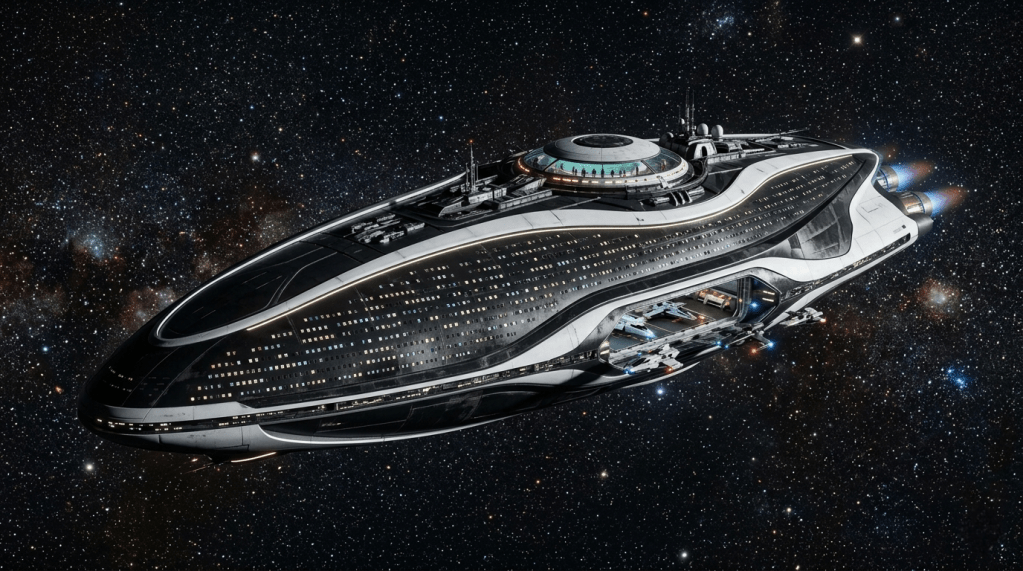
Starliners and generation ships are popular concepts in science fiction for interstellar journeys that can take decades, centuries or longer.
Our galaxy is more than 100,000 light years across, so let’s say an intelligent alien race exists relatively close by in galactic terms, at “only” 500 light years away.
We have been a technological civilization for only a short time and didn’t create signals powerful enough to reach beyond our star system until the 1970s, according to SETI. That means there weren’t technosignatures hinting at our presence until about 50 years ago.
As a result, the soonest our hypothetical aliens could become aware we exist is about 450 years from now. That is how long it will take light carrying information about our technosignatures to reach them.
If our hypothetical alien friends are looking in our direction (a massive if in a galaxy with 300 billion stars to analyze), and if they have highly advanced telescopes, they might detect us. If we imagine they’re friendly and they send a message saying “Howdy, neighbors! You’re not alone! There are wonders to discover and many civilizations to meet out here!” it would take another 500 years for the message to reach us.
That means we wouldn’t know anything until around the year 3,000, if we survive that long without blowing ourselves up. (That’s a real possibility, and things aren’t looking very promising right now.)
And again, that’s if hypothetical intelligent aliens exist in our immediate galactic neighborhood. If there’s an intelligent civilization that exists, say, 4,000 light years away — which is still not very far in galactic terms — the soonest we could hear from them is about 8,000 years from now. (Four thousand for them to detect our technosignatures, four thousand for their message to reach us.)
The point is, space is big. Ridiculously, incomprehensibly, stupidly vast. More than 99.995 percent of the galaxy cannot be aware of our existence yet, let alone travel here, because of the reasons explained above.
The distances between stars are so great that we cannot comprehend them as they are, because nothing in human experience compares. We can only understand them in the abstract. As terrestrial animals with short lives, we are simply not equipped to live or think on galactic timescales.
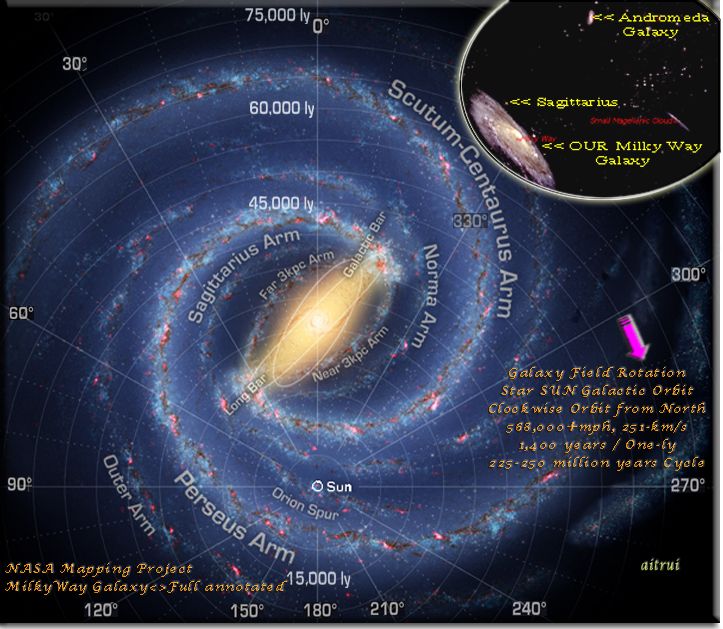
The sun’s location within the Milky Way galaxy. Not to scale.
To put this in context another way, our closest stellar neighbor, a volatile triple star system, is 4.3 light years away. Yet even with the most advanced propulsion systems currently available to us, it would take us more than 70,000 years to get there!
If we manage to crack fusion and humanity’s most brilliant engineers are able to fit a starship with a compact fusion reactor, the travel time to the nearest star becomes “only” about 7,000 years.
Understanding just how big space is, and how long it takes to travel between stars, goes a long way to explaining why we’re wasting our time and resources with a fruitless search for alleged alien craft in our skies.
Light moves at 186,282 miles per second. Credit: Ehsan Ahmadnejad/Pexels
So where does that leave us?
I believe that one day we will learn we’re not alone. By we, I mean our species. I really hope it happens in my lifetime, but for all the reasons explained above, that’s wishfull thinking. The universe doesn’t care what we want, and it certainly doesn’t change the geometry of space-time to accommodate the wishes of dreamers on Earth.
Alien: Friend or foe?
I don’t think we’ll have to worry about belligerence. If a civilization is capable of sending ships to us, there’s literally nothing in our inventory of meager, planet-based resources that could interest a species that advanced. They wouldn’t want to eat us, because our biology would not be compatible. The amount of energy our entire civilization can muster would be laughable to an interstellar species.
And as the physicist Michio Kaku has argued, there’s a very strong argument to be made that if a species is advanced enough that interstellar travel is relatively trivial, it would have long ago shed any tendencies toward tribalism, sectarian violence or inventing gods of the gaps. You simply cannot reach that stage of advancement if you’re wasting resources and your most brilliant minds on war and petty divisions. (Kaku knows that better than anyone. His mentor was Edward Teller of Manhattan Project fame.)
The more significant danger, as Kaku likes to say, is that we may be beneath their notice and we’ll get “paved over.” A civilization capable of building cosmic megastructures, for example, wouldn’t consult us any more than we’d consult ants before laying a six lane super highway over their ant hill.
Still, there’s always a chance we’ll encounter something like MorningLightMountain, the nightmare alien intelligence from Peter F. Hamilton’s incomparable novel Pandora’s Star. The problem with MorningLightMountain wasn’t that diplomacy failed. There was no disagreement over resources or territory. Humans didn’t threaten it.
Rather, the alien’s psychology was so different from ours that it could not understand the concept of allowing other life to exist in the galaxy. No amount of discussion or attempts to persuade it would have made a difference, so immediately upon learning of our existence it launched a genocidal war that forms the bulk of Pandora’s Star and its sequel, Judas Unchained, two of the most beloved books in the modern science fiction canon.
Still, I’d like to think there is a galactic fraternity out there, an informal alliance of intelligent species united by curiosity and the effort to understand our universe. Whatever’s out there is likely to take forms we can never imagine and think in ways that never occurred to us.
If one day we do make first contact, I hope the best of humanity will be our representatives. And on that day, I hope humanity will be awestruck by the wonder of the universe, realize that slaughtering each other over land or beliefs is insane, and finally become united as a species.
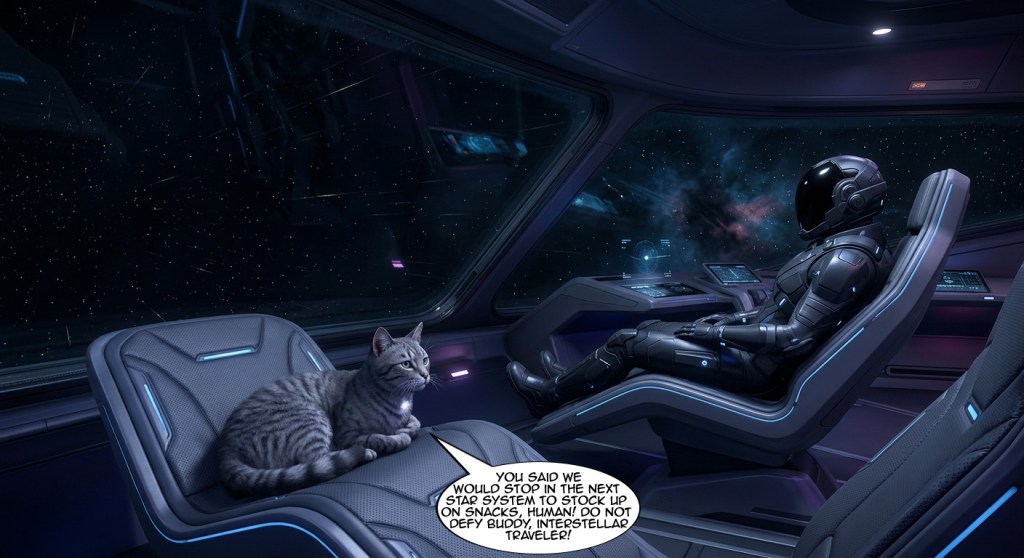
Or even better, finally united as the children of Earth. After all, Buddy has made it abundantly clear that if I come into possession of a starship, he gets the most comfortable seat on board and gets to drive. The latter ain’t happening, but as for the former, I’d be thrilled to explore the cosmos with my little pal.
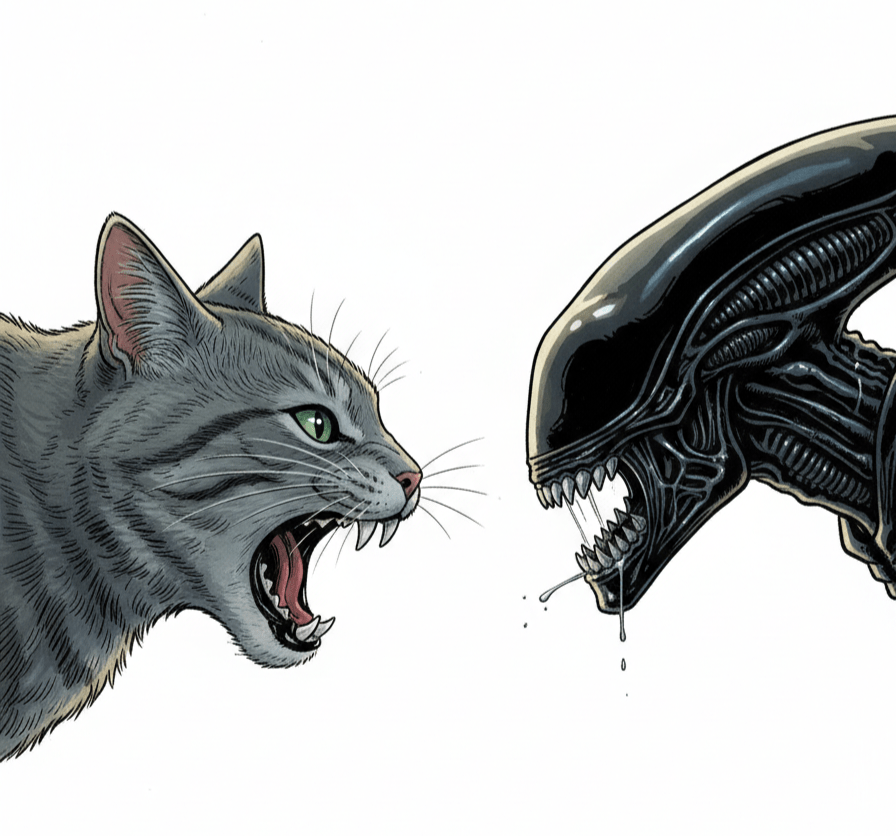
A reboot of the iconic scifi-horror film upends the balance of power, placing the feline at the very top where he should be.
The long-anticipated Alien reboot starring Buddy the Cat hit theaters this weekend with audiences flocking to see the modernized classic after effusive praise from critics.
Featuring the new tag line “In space no one can hear you scream — unless you’ve got Buddy on your side,” the reboot reimagines the science fiction-horror classic as a cautionary tale about messing with cats.
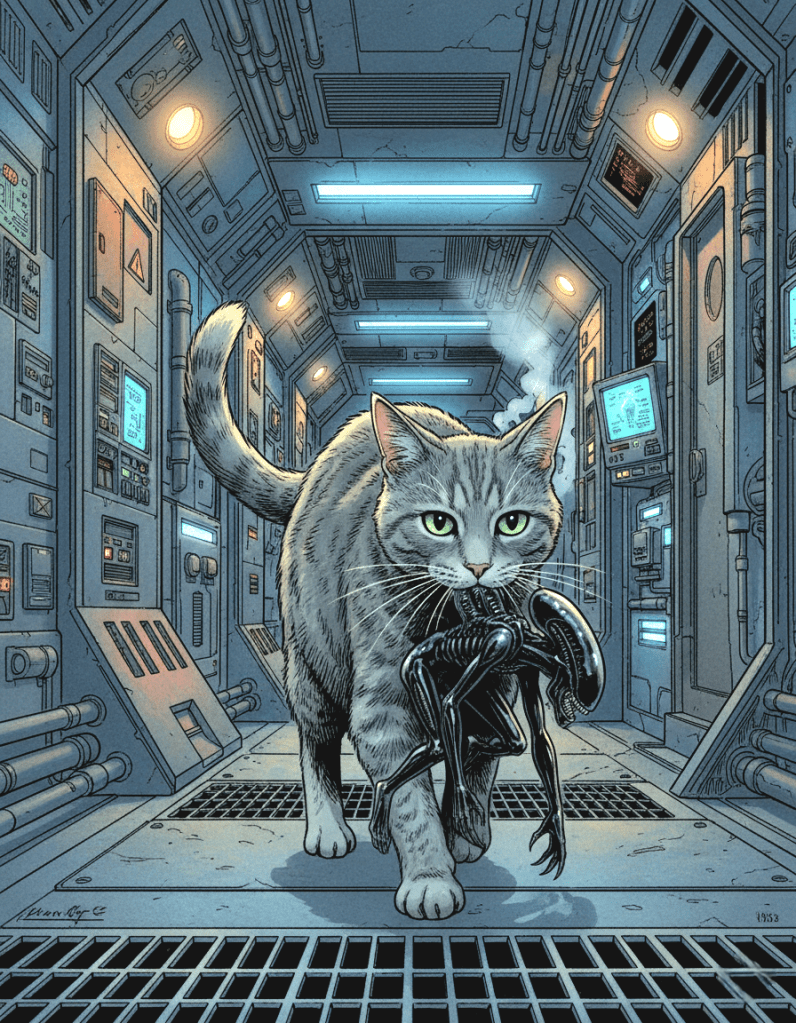
“While the original built tension over almost two hours and inspired an overwhelming feeling of dread in viewers, the new Alien clocks in at just 28 minutes and ends right after the iconic chestburster scene,” critic Ferdinand Lyle wrote. “Instead of screeching into the shadows of the ship to commence its turbocharged metabolic processes, only to emerge later as a fully formed creature who terrorizes the crew, this alien is immediately caught by Buddy, who delivers a swift kill bite and deposits it in front of the humans. They reward him with a chorus of ‘Good boy!’ and rub his head while plying him with snacks, and the credits roll. Now that’s efficient storytelling!”
The Alien 👽 was no match for Buddy, who woke from a nap to dispatch the creature with brutal efficiency.
The new version is “the ultimate FAFO flick,” raved the AP’s Misty Lemire.
“The central message here is ‘Don’t tangle with Buddy.’ The apex predator of the cosmos is no match for the apex predator of Earth.”
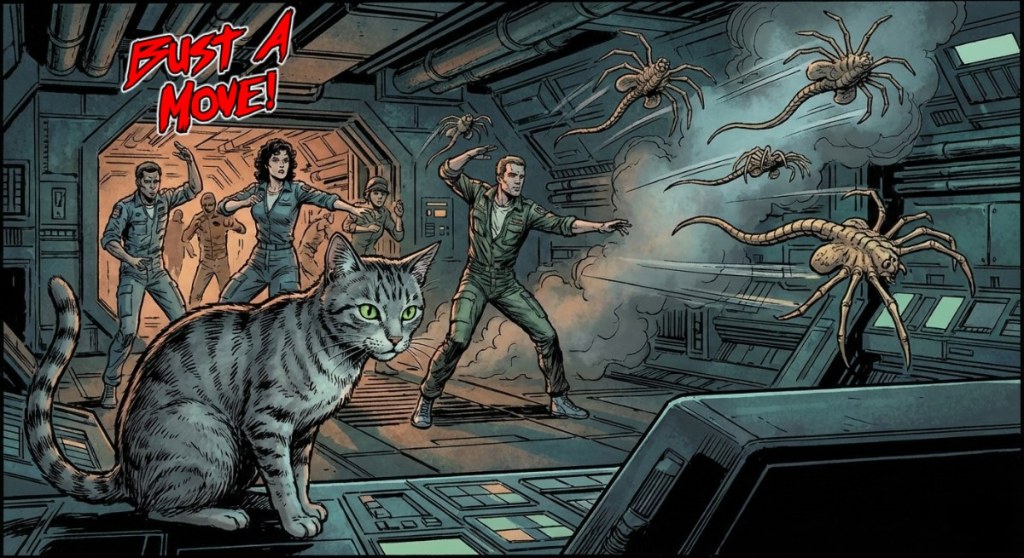
Other critics were enamored with a post-credits dance scene featuring Buddy, the crew of the Nostromo and dozens of face-huggers who fly through the air, forcing the cast to bust impressive dance moves to avoid the dangerous creatures. At one point Buddy launches into a breakdance routine. The actress who plays Ripley wags a finger at a xenomorph and declares “You just got served!”
“It’s clever, light and wildly entertaining,” one critic wrote. “Buddy’s got some magnificent dance moves!”
Others praised Buddy for his impressive physique. In an interview with Entertainment Weekly, Buddy said he’d been training non-stop for eight months for the role, eating a high-protein diet and spending five hours a day napping in the gym to accentuate his meowsculature.
“The effort paid off big time,” a review from Calico Critics noted. “Buddy looks more ripped and impressive than he ever has, and he was already competing against a high bar he set during his previous films.”
In the post-credits dance scene, Buddy and the Nostromo crew perform a synchronized routine while dodging facehuggers.
However, not everyone was impressed. Reached this weekend at his New Zealand bunker, where he’s fled “until America isn’t annoying anymore,” director James Cameron called the Alien reboot “derivative, low-calorie cinema junk.”
“Remember when I had characters saying ‘Hasta la vista’ and ‘Adios, muchachos’? That was really cool. I was one bad hombre,” Cameron said. “Audiences might think this is a good film, but that’s because they haven’t seen the wonders of Avatar XVII yet. Just wait, it’s gonna be awesome. And there are no cats.”
Would your cat resemble a sphynx if you shaved its fur? Buddy the Cat investigates!
Dear Buddy,
Do all cats look like sphynxes underneath their coats? What I mean is, if someone were to shave off all your fur, would you look like a weird wrinkly little alien thing too?
Wondering In Wyoming
Dear Wondering,
Who told you that? Is Big Buddy planning to have me shaved? Is he gonna condemn me to one of those “groomers” and have me transformed into some undignified, naked, dumb-looking creature?
I will end him!
Buddy
Dear Buddy,
Whoah, hold up there, champ! No one’s got anything planned for you, it’s just a hypothetical. I’m genuinely curious about the no fur thing, that’s all. And I asked you because you’re the expert on every topic!
Wondering in Wyoming
Wondering,
Okay, okay, but I’m not letting my guard down. As the wise man George W. Bush once said: “Fool me once, shame on you. Fool me…uh, you can’t get fooled again!”
I thought about your question and became more curiositized as well because sphynxes are weird and I don’t want to look like those freaks. Get mistaken for one and the next thing you know, they’re bringing you back to their mothership.
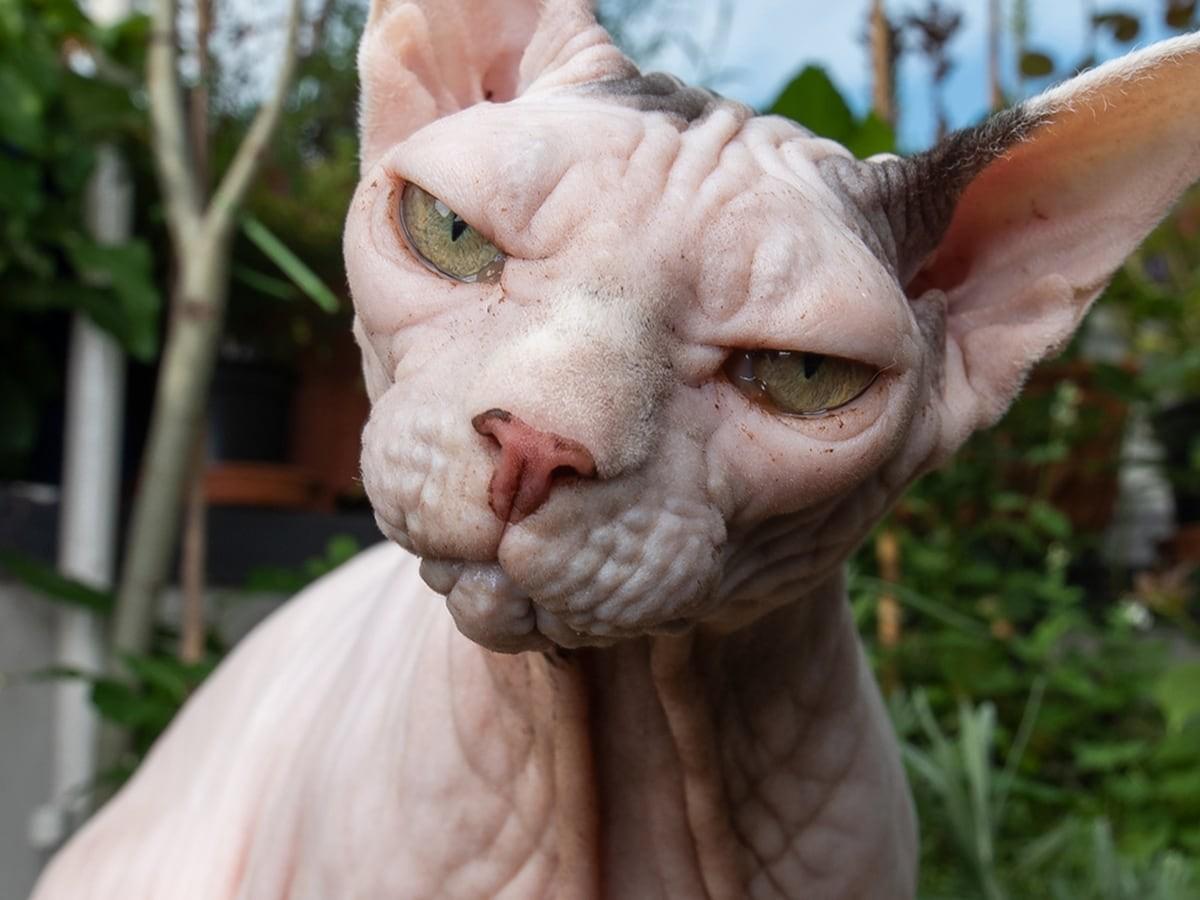
Above: These sphynxes are plotting your doom! They want to beam you up to their ship, test your skin for potential scratching post material, and eat your brains.
I can assure you that I would not resemble a sphynx if somehow I was overpowered (a tall order that would require a small army), drugged and shaved of my luxurious fur. I would just look more ripped, as there wouldn’t be any long fur to cover up my six pack and my rippling meowscles.
Due to his impressive meowsculature, Buddy would simply look even more ripped if someone with a death wish tried to shave his fur.
As for other cats, apparently they would not look like sphynxes either, because those freaks are uniquely covered in wrinkly skin, which is probably a side effect of the strange atmospheric conditions on their homeworld.
During my detailed investigatory investigation, I found images of domestic shorthairs, Maine Coons, Persians, Bengals, ragdolls and many other types of cats who were forced to endure ignominious “lion cuts” and other ridiculous “grooming” efforts. While many of them looked skinny and much less impressive without their fur bulking them up, they pretty much look like regular cats with a fuzzy, velvety coat instead of fluff.
Not as ripped as me, obviously, but not like sphynxes either.
I hope that answers your question. Remain vigilant, my friend! One never knows when one’s devious human might decide to humiliate one by shaving off all of one’s fur.