
Earlier this week we noted an Australian celebrity chef’s enthusiasm for eating a “pussycat sandwich,” but Maggie Beer isn’t the only famous Aussie who has raved about eating cats.
An Australian football (soccer) player, Tony Armstrong, spoke in glowing terms about eating cat meat in an interview with The Guardian a year ago, enthusing that it was “the yummiest.”
“We had it in the Western Desert and cooked it in a fire, wrapped in foil,” Armstrong told the newspaper. “It was like the most delicious rotisserie chicken I’ve ever had.”
Armstrong’s interviewer, Sian Cain, the Guardian’s deputy culture editor for Australia, didn’t bat an eye or consider the answer worthy of a follow-up question. She just moved on, asking him if rising early for “breakfast telly” was as difficult as keeping in shape for football.
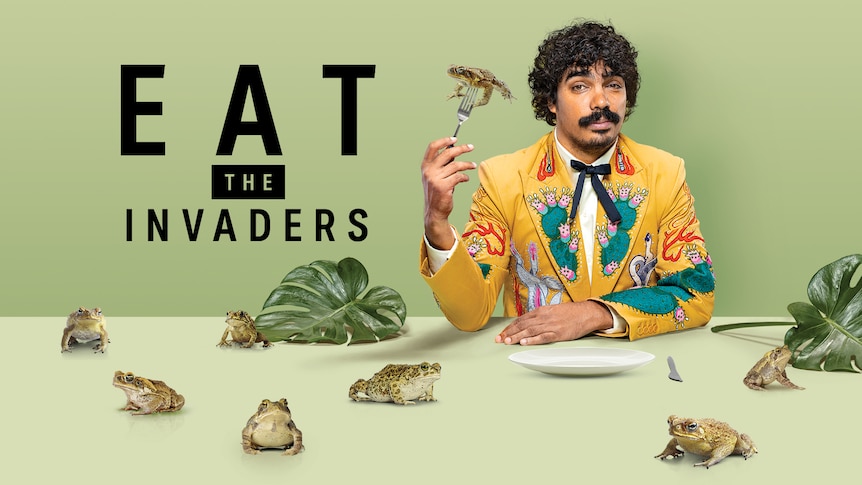
Armstrong consumed the cat meat for his television show, Eat The Invaders, which casts it as an attempt to “turn our unwanted ecological trash into desirable culinary gold.”
That’s what the life of a cat is casually referred to in certain mainstream segments of Australian culture: “unwanted ecological trash.”
As we noted in our post about Beer’s “pussycat sandwich,” the casual way this is talked about in Australia provides a window into the way some people there think about animal life in general and felines in particular.
Not all of them, of course. There are lots of people for whom the idea of eating intelligent companion animals is extremely disturbing. But the idea is widespread enough to make it onto mainstream Australian television without much of an uproar, undoubtedly because Australians are constantly told felines — not industrialization, pollution, pesticides, traffic collisions, man-made environmental hazards, and habitat loss — are almost solely responsible for declining populations of native fauna.
When the choice is between modifying our own behavior or blaming animals who cannot speak for themselves, it’s always easier to shift the blame than to, say, derail development projects or outlaw the use of harmful chemicals.
Just look at the decades-long controversy involving the weedkiller Roundup despite the damage it does to other plants, animals and the people working directly with the substance. Despite successful lawsuits on behalf of cancer patients and evidence that chemicals in the herbicide cause cancer, the EPA says it’s safe. Roundup and other glyphosate-based herbicides are widely used in Australia as well, but that fact is rarely raised in discussions about protecting native fauna and flora.
In a promo for Eating the Invaders, after blaming “colonial ancestors” for introducing non-native species and repeating the claim that cats kill 3 billion animals per year in Australia (an assertion for which there is no evidence), Armstrong casts himself as a crusader righting ecological wrongs.
“But what if we could help,” he asks in a voiceover, “by reimagining this problem as a tasty solution?”
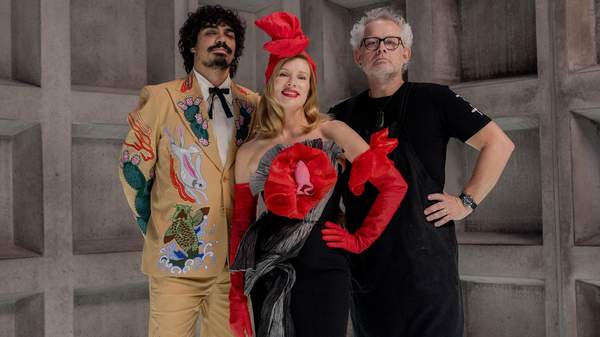
In the series, Armstrong works with chef Vince Trim and “artist and curator” Kirsha Kaechele, who credits herself with staging “immersive feasts [that] transform invasive species into art.”
Kaechele says she has no qualms about eating intelligent domesticated animals.
“In some cases you should and could eat it into eradication,” Kaechele says.
Just as there is no hard evidence that cats are the primary force behind species extinction, there is no data to support the idea that randomly killing and eating cats has any positive impact on species survival.
But eating cats isn’t just about saving the world, Kaechele explains. It’s about aesthetics as well.
“In these feasts,” she says, “every element has to be art.”
By that she means she fashions cutlery, centerpieces and containers from the deceased animals.
Kaechele is no stranger to controversy. As an amateur troll, she’s known for attention-grabbing stunts. She’s faced legal complaints for opening an Australian lounge/art gallery that admitted women only, “so men feel as excluded as possible,” and attended one of her subsequent hearings with 20 female supporters who dressed like her and moved in sync with her.
The appearance was “performance art,” she claimed. The judge disagreed, calling it a disrespectful display. Kaechele was also blamed for gentrifying a New Orleans neighborhood after Hurricane Katrina, snapping up and later allegedly abandoning five properties and allowing them to decay. They were subsequently taken over by squatters while Kaechele was MIA, presumably globetrotting and enlivening people’s drab existences by “transforming them into art.”
“Women are better than men in every respect,” Kaechele says in one video, echoing the provocateur Dick Masterson’s assertion that “men are better than women.”
The difference is that Masterson is a character created by a comedian. Whether individual people find his act amusing or not, Masterson performs for an audience of men and women who are well aware his schtick is tongue in cheek. Kaechele may or may not believe what she’s saying, but one thing she’s not doing is comedy. No one’s laughing.
She’s a deeply unserious person who shouldn’t be anywhere near any conversations about conservation.
As for Trim, he can’t bring himself to admit he’s cooking cats. To him, they’re no different than anything else in his fridge or pantry.
“It’s really exciting to be using a lot of these invasive ingredients that we have,” he said.
It’s one thing to consider the possibility that species like cats are signficant drivers of native species extinction, and another to prove they are measurable contributors compared to the hundreds of ways human behavior impacts animal life.
But you have to be really far up your own ass to keep a straight face while claiming you’re saving the world by eating cats, and even more divorced from reality to characterize it as a form of artistic expression.
Perhaps most concerning, telling people that cats are “yummy” could inspire others to try it for themselves, and turning it into a trend would be an entirely new level of barbarism.
Say what you will about people who participate in China’s infamous Yulin dog meat festival. At least they plainly admit they eat dogs and cats because they like the taste without clinging to any pretense that they’re creating high art or saving the planet.


I just want to cry.
LikeLike
As upsetting as this stuff is, at least we know and can call it out.
LikeLike
I had written an entire comment and then of course WordPress wouldn’t let me in because WordPress’s WordPress. I hadn’t been there in a while and it was a nightmare to try to get into write this. These barbarians need to be hunted down, put in too small of cages for days and made to believe that they were going to die at any time and only because we can’t actually kill them. I cannot even imagine what kind of mind thinks this is normal or humane. I haven’t been here in a long, long time because I’ve been going through some really bad, bad depression and health problems and I really thought this was a joke until I got further down and realized that there are people like this in the world which didn’t make anything else in my mind any better I know it’s not good to wish ill upon others, but I wish ill upon them. I don’t even know but how can you find this acceptable…
LikeLike
Hey Brenda – Sorry you ran into problems posting, WordPress is definitely quirky.
I just want to say that although humor is a big part of PITB, I would not joke about something like this. I was searching to find out if there had been any reaction to the Maggie Beer story when I saw this, which apparently flew under the radar when the Eat The Invaders show premiered.
But yeah, I’ll joke about Bud thinking he’s a big, intimidating tiger when he’s a 12 pound cat who sounds like Elmo, but never about people eating cats. It’s sad and infuriating.
I hope you’re feeling better, depression is not fun.
Agreed, I do not wish harm on anyone, but the propaganda has to stop. The first embedded video in this post is from a scientist who says exactly what I’ve been saying about the bad science behind the claims of feline predatory impact, and the ninth paragraph leads to one of her preprint papers debunking the commonly-cited claims about cats in Australian “studies,” which again are not actual studies, but meta-meta-analyses of old studies that have little or nothing to do with the predatory impact of cats.
Here’s the link again so you don’t have to search the text for it:
https://www.researchgate.net/publication/403979226_Bella_and_Charlie_Are_Not_the_Problem_-_It's_Us_The_Real_Drivers_of_Wildlife_Decline_in_NSW
I always say I feel like a broken record with this subject, because I do, because it’s difficult to believe the claims of cats killing 3 billion animals per year in Australia (and 29 billion in the US) is what passes for acceptable scholarship in conservation. The people who author the cat-blaming studies are literally inventing numbers, and they know it.
LikeLike
To Brenda. Not a doctor and i would never advise a person how to deal with depression. I only know it is not clinical for me but that is a guess. My depression comes and goes. Not as bad now. But when i was younger it was. Was really bad on the days when cat rescue was on the down side. But the upside always tops the downside. Was bad when i had to bury kitten in my garden who was a runt and did not make it.Other was death of my sister from breast cancer.The way i combated depression through the years was exercise and natural remedies. And i stay away from media and watch my favorite shows. I Love Lucy is one of them.
LikeLike
This makes grim reading. The trouble is that in today’s world, driven as it is by superficial social media, the ideas espoused by this man could easily gain traction.
LikeLike
It begs the question how common this is in Australia if they’re doing TV shows about it and celebrity chefs are getting in on it.
I keep saying this and feel almost like a tape recorder getting rewound, but when people are constantly beat over the head with claims reported uncritically, the claims become fact in people’s minds, no matter how far from reality they are.
And no matter how many times I see the claims about feline predatory impact, no matter how many times I see variations on the same meta-analyses that rely on the same handful of decades-old questionnaires as the basis for their “data,” I just can’t believe this is what passes for acceptable scholarship in conservation circles. It’s mortifying, it’s wrong, and it leads to destructive policy. It also casts doubt on all science when a handful of people are willing to be dishonest for the sake of an agenda. Look at the climate studies that were fudged — 30 or 40 years later, people who deny human impact on plants and animals are still pointing to those fudged studies as proof that the whole field is invalid, even though they are outnumbered by literally thousands of sound, well-intentioned studies by professionals.
Credibility is hard fought and takes ages to build, with the combined efforts of thousands of professionals, but it can be destroyed in almost no time by a handful of bad actors.
LikeLiked by 1 person
I was wrong. These people are not sick. THEY ARE DEMENTED!! Hope someone gets sick and dies!!
LikeLike
That these kind of people are given any kind of platform is appalling. I think it’s an indicator that we’re seeing sociopathy become acceptable. I say we need to bring back shame and people like this should be called out as you are doing here. They want attention, true, but if it’s really negative attention perhaps they’ll stop.
As hard as these stories are to read, I really appreciate you drawing attention to them. As a thinking and feeling human being, I cannot comprehend the kind of mindset that delights in killing anything other than cockroaches and I don’t delight in doing that, really.
LikeLike
I asked myself the same question, whether giving these people attention is giving them what they want. However, the “artist” has also put out a book about eating invasive species and is involved in “art” projects like making furniture from cat bones, as well as other items from animals like camels, so she’s trying to make this a thing.
I am not a fan of the inherent disingenuousness of using the pretense of art to deflect criticism. Using that “logic,” you can do just about anything and justify if by calling it art or claiming it has cultural significance. Of course artistic value is always subjective, but like the Supreme Court definition of obscenity, when it comes to using the pretense of art to justify anti-social behavior, you’ll know it when you see it.
LikeLike
This is just getting more stupid by the day. I guess negative publicity, like they say, is better than none…
LikeLike
In many ways that’s the point, especially in circles in which “art” is a catch-all for virtually any activity outside social norms. Dressing up anti-social behavior as artistic or spiritual is an easy way to avoid criticism and get away with things that otherwise would never be tolerated.
Witness the “performance art” called Internal Semiotics circa 2010 — on a subway or in a park, that’s a criminal charge for public indecency, exposure, sex crime. In a space called an “art gallery,” with a few hundred hipsters in attendance, with bad poetry shoehorned into the act, it’s a daring piece of “performance art.” Yet the behavior is precisely the same.
LikeLike
Eating roast kitty?? I feel sick. But I’ve heard some people eat roast lizard too. Possibly the cat- eaters just want attention from the public. Anyway, very uncivilized behavior.
LikeLike
Barbarity repackaged as “art,” to shield it from criticism and lend it the air of legitimacy.
LikeLike
Not only disgusting to consume, wear, and make art out of companion animals, but dumb as dirt too. Computer is down so no research in front of me but there have been warnings not to consume wild-living animals, even to deer-hunters, due to various pathogens they may carry. And, there was were warnings about cats and bird flu, which as I recall, made some cats really sick, and can be passed to humans. (Birds ate our ferals’ leftovers.) Surely there are some known or unknown microbes consumed by wild-living animals in Australia too. Another irony, there would be no one of European descent in Australia if cats hadn’t controlled rodents on ships.
LikeLike
A good point, re: the health risks of eating feral cats. I don’t know much about that and I assume much of it is mitigated by cooking, but still.
You also hit on a good point in that all this fretting about cats ignores the point that they were crucial for the survival of early settlers, and in fact the entire human race since we don’t know what would have happened if early human settlements on any continent would have survived without the protection afforded by cats, from diseases as well as from having their food reserves consumed by rodents.
As for eating companion animals, in a way I realize it might create a tiered system in which we artificially value some animal life over others, but the fact remains that dogs and cats have lived with us for a combined 40,000 years or more. We have shaped them, acclimated them to our protection and behavior, altered them genetically since long before we knew genetics existed, and more than any other species, they are attuned to our emotions and actions. They have become so in tune with us that they are typically aware of our moods before we are.
It’s just wrong to treat them like prey and food.
LikeLiked by 1 person
Still without major research capability, but I was thinking mainly of prion disease, which has been found in deer brains. No known human cases from deer but some advisories not to eat the meat of hunted animals in areas it’s been found. Less well known, prions in squirrel brains; due to an isolated little-known custom in Appalachia of a dish containing squirrel brains, called “squirrel burgoo” I believe, there were a few human deaths from this. So, reason for caution in consuming wild-living creatures IMO. I really don’t like the idea of viewing any animals at all as food, so I don’t – can’t due to gut disease anyway. I’m sad to have to feed animal protein to cats, but unlike humans cats must have animal protein, they can’t exist on plant proteins like humans can. And you’re so right about our complicated relationships with cats and dogs. Maybe includes horses too.
LikeLike
Human scum kill more mammals, animals, birds, fish, reptiles etc than ANY cat ever would. Stop blaming cats. You blame cats .. it’s because you’re a MORON!!!! Blame the real killer … HUMANS
LikeLike
I keep reminding myself that these people do not represent all Australians. It’s kind of like the manosphere. I get angry, then remind myself that some people will do anything to get attention.
LikeLike