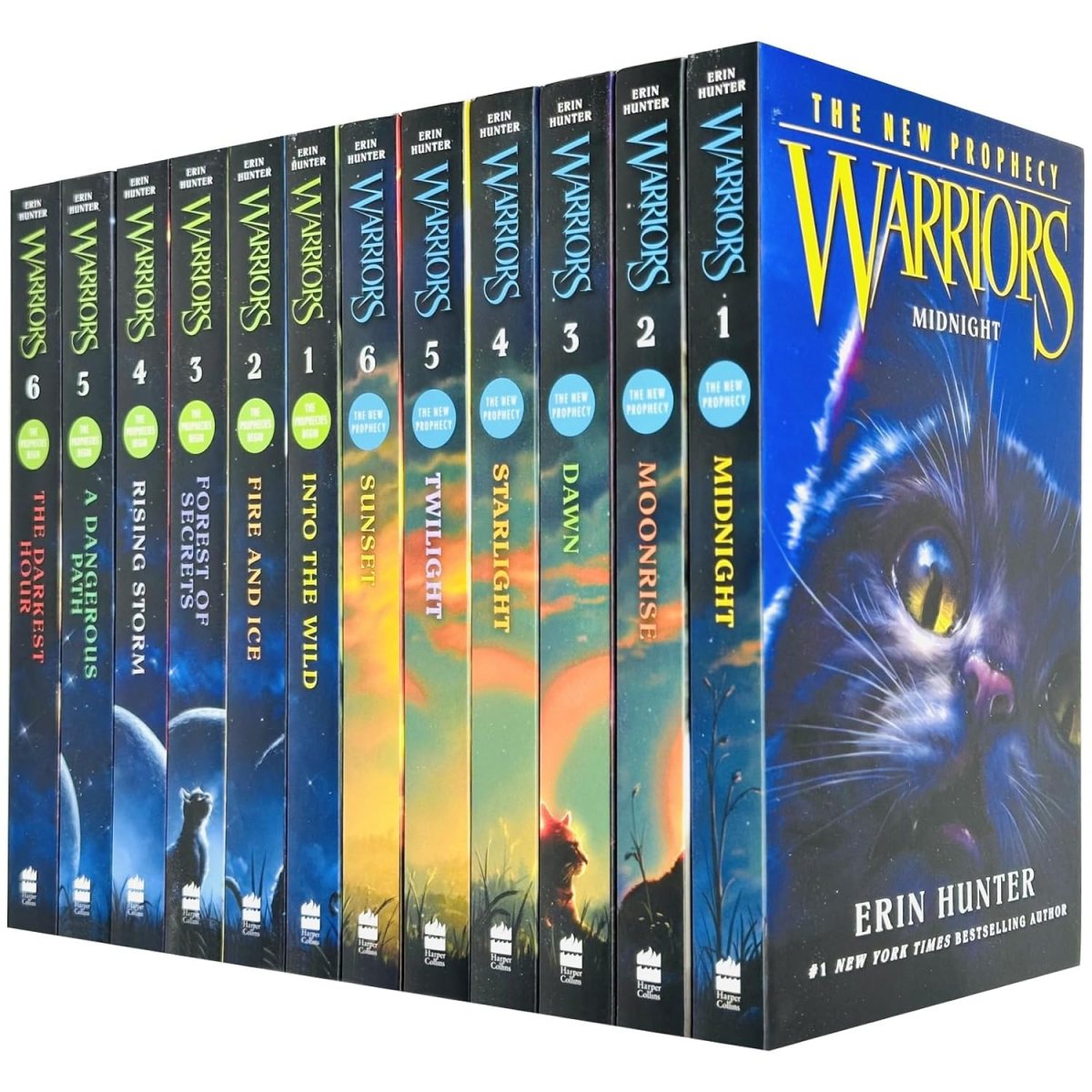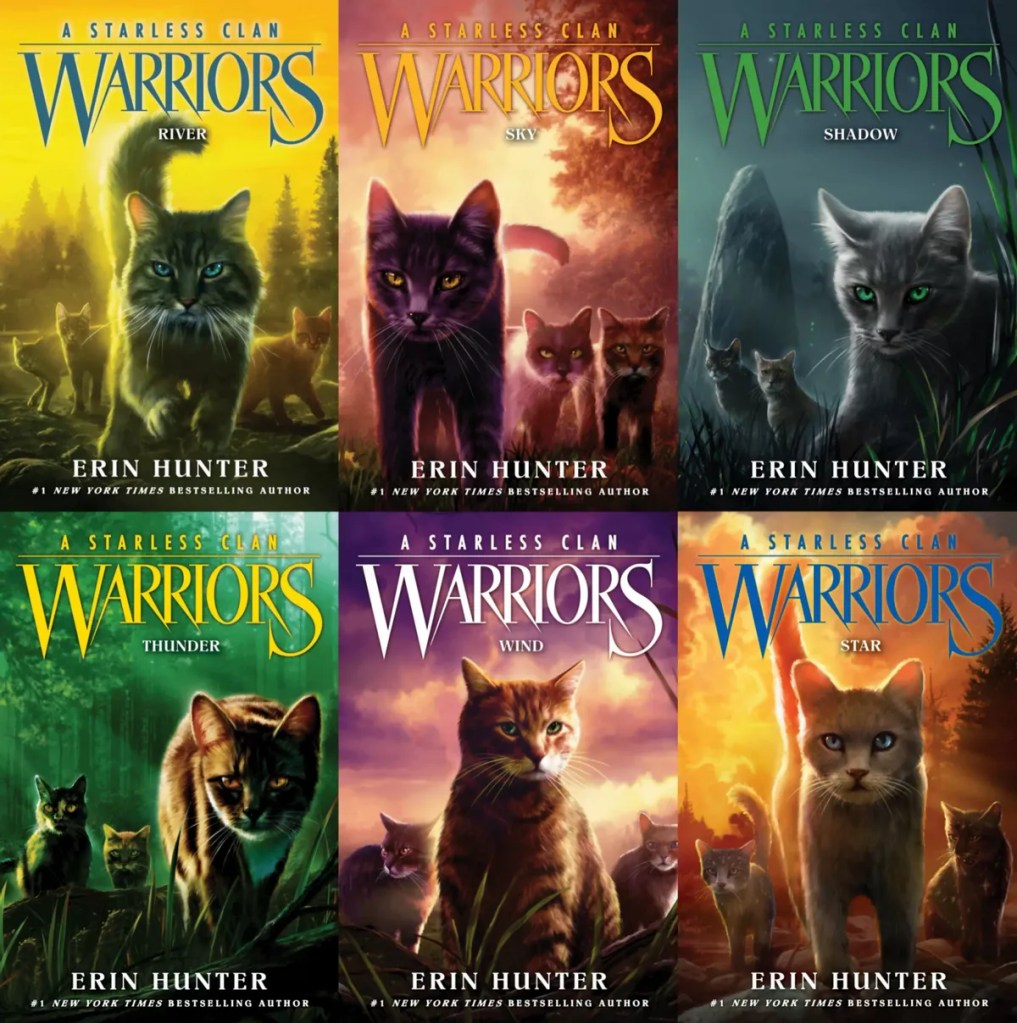
The novels have sold almost 100 million copies worldwide and have prompted millions of kids to read.
Warrior Cats, a series of books that have sold in excess of 90 million copies worldwide, will be adapted as an animated series.
The new TV series is already in production with Chinese media giant Tencent producing in tandem with El Guiri Studios, an animation studio in Madrid.
The series will likely premiere in 2027.
I read the first volume of Warriors a few years ago to see what all the fuss was about and found a much better story than I expected. The narrative follows a young domestic cat named Rusty who ditches his comfortable life to join a clan of stray and feral cats living in the woods near his former home.
Warriors imagines groups of cats living in clans and working together to survive in a dangerous world.
As he adjusts to his new surroundings, he’s welcomed and supported by the clan’s cats, but others mock him as a “kittypet.” Rusty is determined to prove himself and his value to the clan.
The narrative is well paced, and there’s a compelling mix of world-building and action. The series is written for younger readers, probably appealing most to teens and pre-teens, but the authors — who collectively work under the pen name Erin Hunter — don’t condescend to their audience.
There’s tragedy, despair and death, but the book treats them with appropriate gravity, never trivializing events.
At a time when 28 percent of American adults are functionally illiterate, more than half read below a sixth-grade level, and schools are churning out graduates who struggle to read simple sentences, you’ve got to reach younger readers where they are.
We’re living through an unprecedented backslide in capability, one that cannot be fully explained by COVID-prompted disruptions to education.
Well-written books like Warriors are crucial in getting kids to read and turning it from a chore to something they enjoy. In a way, they’re this generation’s version of Lord of the Rings or Harry Potter. Let’s hope the animated series inspires even more kids to pick up the books it’s based on.
The footballer stars in a TV series that calls cats “unwanted ecological trash” that can be repurposed as “culinary gold.” One cast member claims eating felines is a heroic endeavor: “In some cases you should and could eat it into eradication.”
Earlier this week we noted an Australian celebrity chef’s enthusiasm for eating a “pussycat sandwich,” but Maggie Beer isn’t the only famous Aussie who has raved about eating cats.
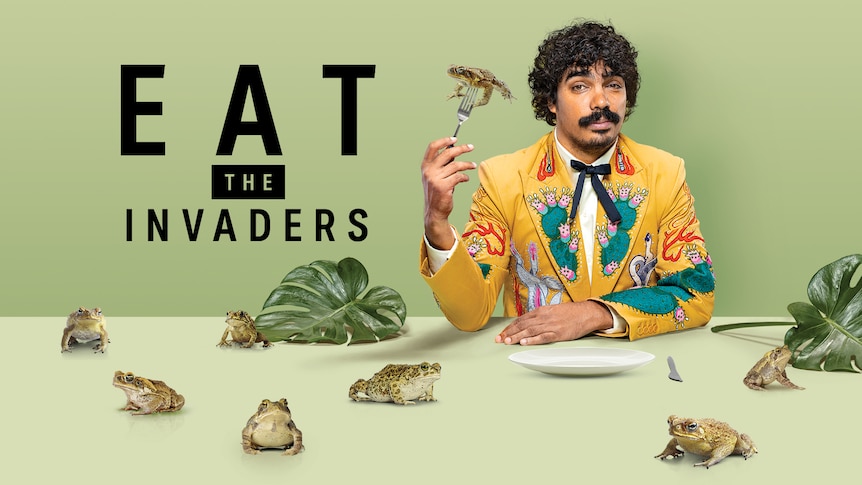
An Australian football (soccer) player, Tony Armstrong, spoke in glowing terms about eating cat meat in an interview with The Guardian a year ago, enthusing that it was “the yummiest.”
“We had it in the Western Desert and cooked it in a fire, wrapped in foil,” Armstrong told the newspaper. “It was like the most delicious rotisserie chicken I’ve ever had.”
Armstrong’s interviewer, Sian Cain, the Guardian’s deputy culture editor for Australia, didn’t bat an eye or consider the answer worthy of a follow-up question. She just moved on, asking him if rising early for “breakfast telly” was as difficult as keeping in shape for football.
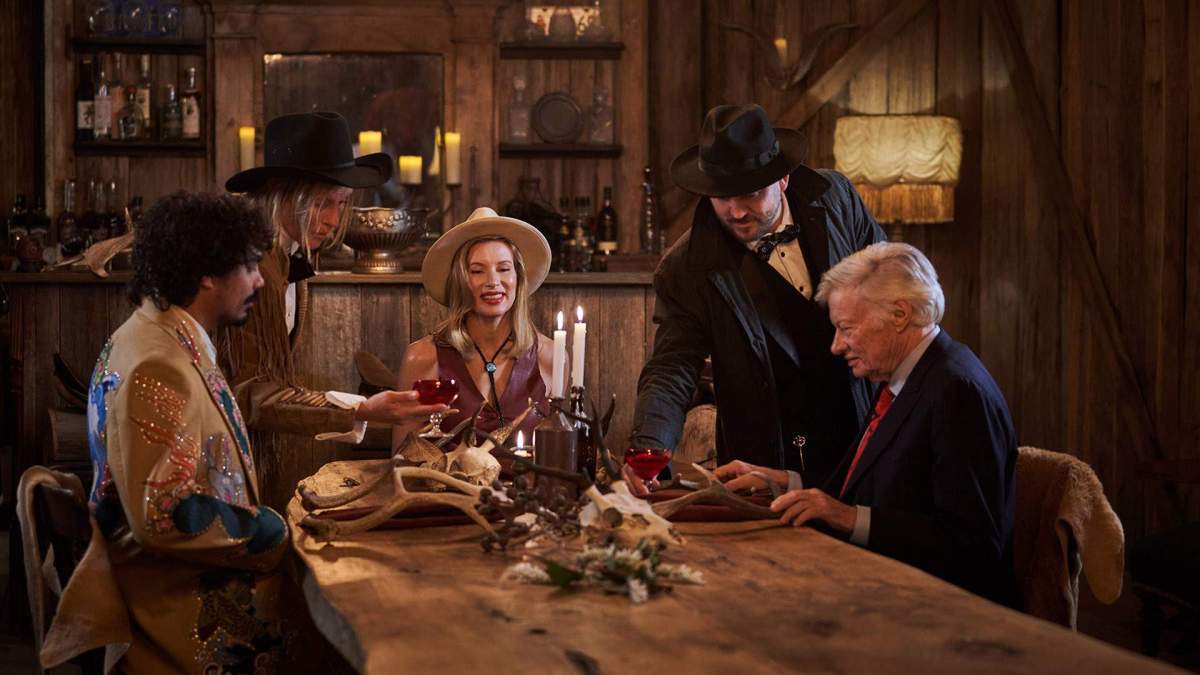
Armstrong consumed the cat meat for his television show, Eat The Invaders, which casts it as an attempt to “turn our unwanted ecological trash into desirable culinary gold.”
That’s what the life of a cat is casually referred to in certain mainstream segments of Australian culture: “unwanted ecological trash.”
Armstrong and his castmates say they’re on a noble quest to eradicate invasive species by eating them.
As we noted in our post about Beer’s “pussycat sandwich,” the casual way this is talked about in Australia provides a window into the way some people there think about animal life in general and felines in particular.
Not all of them, of course. There are lots of people for whom the idea of eating intelligent companion animals is extremely disturbing. But the idea is widespread enough to make it onto mainstream Australian television without much of an uproar, undoubtedly because Australians are constantly told felines — not industrialization, pollution, pesticides, traffic collisions, man-made environmental hazards, and habitat loss — are almost solely responsible for declining populations of native fauna.
When the choice is between modifying our own behavior or blaming animals who cannot speak for themselves, it’s always easier to shift the blame than to, say, derail development projects or outlaw the use of harmful chemicals.
Just look at the decades-long controversy involving the weedkiller Roundup despite the damage it does to other plants, animals and the people working directly with the substance. Despite successful lawsuits on behalf of cancer patients and evidence that chemicals in the herbicide cause cancer, the EPA says it’s safe. Roundup and other glyphosate-based herbicides are widely used in Australia as well, but that fact is rarely raised in discussions about protecting native fauna and flora.
In a promo for Eating the Invaders, after blaming “colonial ancestors” for introducing non-native species and repeating the claim that cats kill 3 billion animals per year in Australia (an assertion for which there is no evidence), Armstrong casts himself as a crusader righting ecological wrongs.
“But what if we could help,” he asks in a voiceover, “by reimagining this problem as a tasty solution?”
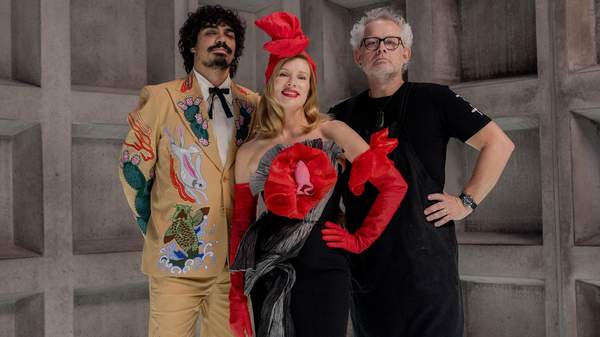
In the series, Armstrong works with chef Vince Trim and “artist and curator” Kirsha Kaechele, who credits herself with staging “immersive feasts [that] transform invasive species into art.”
Armstrong, Kaechele and Trim. Credit: Eat The Invaders
Kaechele says she has no qualms about eating intelligent domesticated animals.
“In some cases you should and could eat it into eradication,” Kaechele says.
Just as there is no hard evidence that cats are the primary force behind species extinction, there is no data to support the idea that randomly killing and eating cats has any positive impact on species survival.
But eating cats isn’t just about saving the world, Kaechele explains. It’s about aesthetics as well.
“In these feasts,” she says, “every element has to be art.”
By that she means she fashions cutlery, centerpieces and containers from the deceased animals.
Kaechele is no stranger to controversy. As an amateur troll, she’s known for attention-grabbing stunts. She’s faced legal complaints for opening an Australian lounge/art gallery that admitted women only, “so men feel as excluded as possible,” and attended one of her subsequent hearings with 20 female supporters who dressed like her and moved in sync with her.
The appearance was “performance art,” she claimed. The judge disagreed, calling it a disrespectful display. Kaechele was also blamed for gentrifying a New Orleans neighborhood after Hurricane Katrina, snapping up and later allegedly abandoning five properties and allowing them to decay. They were subsequently taken over by squatters while Kaechele was MIA, presumably globetrotting and enlivening people’s drab existences by “transforming them into art.”
“Women are better than men in every respect,” Kaechele says in one video, echoing the provocateur Dick Masterson’s assertion that “men are better than women.”
The difference is that Masterson is a character created by a comedian. Whether individual people find his act amusing or not, Masterson performs for an audience of men and women who are well aware his schtick is tongue in cheek. Kaechele may or may not believe what she’s saying, but one thing she’s not doing is comedy. No one’s laughing.
She’s a deeply unserious person who shouldn’t be anywhere near any conversations about conservation.
As for Trim, he can’t bring himself to admit he’s cooking cats. To him, they’re no different than anything else in his fridge or pantry.
“It’s really exciting to be using a lot of these invasive ingredients that we have,” he said.
It’s one thing to consider the possibility that species like cats are signficant drivers of native species extinction, and another to prove they are measurable contributors compared to the hundreds of ways human behavior impacts animal life.
But you have to be really far up your own ass to keep a straight face while claiming you’re saving the world by eating cats, and even more divorced from reality to characterize it as a form of artistic expression.
Perhaps most concerning, telling people that cats are “yummy” could inspire others to try it for themselves, and turning it into a trend would be an entirely new level of barbarism.
Say what you will about people who participate in China’s infamous Yulin dog meat festival. At least they plainly admit they eat dogs and cats because they like the taste without clinging to any pretense that they’re creating high art or saving the planet.
Cats spend most of their time sleeping, which leaves them in a vulnerable position.
Aubrey Plaza is delightfully weird.
Anyone who’s seen her on a late night talk show or in an impromptu interview knows what I’m talking about. Instead of the practiced, carefully crafted anecdotes celebrities tell to make themselves seem more interesting, or the hard focus on promoting a particular project, Plaza seems to revel in awkward pauses, bizarre responses and stories that most people would never tell about themselves.
She does it all with a deadpan expression so you can never quite tell if she’s joking. That’s part of the fun.
I hadn’t seen her in much until Emily the Criminal, about a woman whose frustration at trying to make ends meet with dead-end jobs leads her down a highly illegal path, revealing a talent for deception she never knew she had.
Plaza in Emily the Criminal.
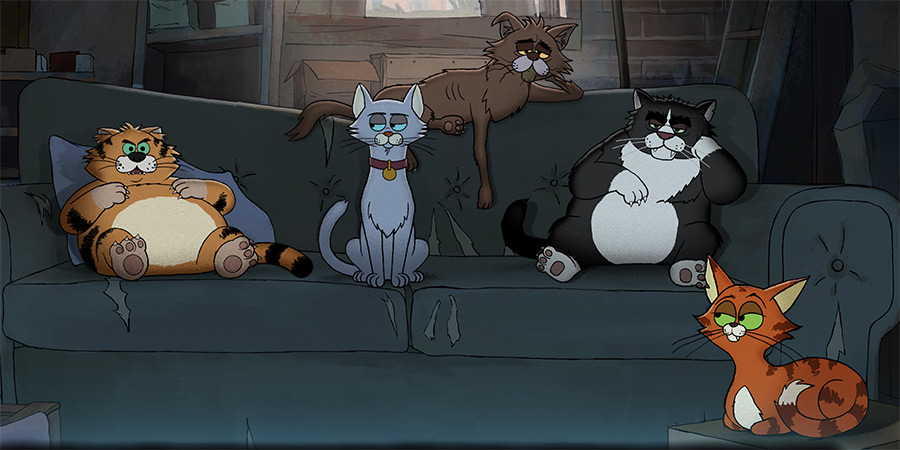
Now she’s starring in Kevin, an animated show about an eponymous tuxedo cat who decides that when his humans break up, he’s going to break up with them too. Instead of going with one of them, Kevin decides to move “into a local pet rescue in Astoria, Queens, where a band of misfit animals helps him discover what he truly wants out of life,” according to the series’ logline.
Plaza co-created the series with Joe Wengert, and Jason Schwartzmann, who we loved in Bored To Death, will voice Kevin. The show will premiere on April 20 on Prime Video.
A still from Kevin.
Cats prefer sleeping on their left side, but why?
Two out of three cats prefer sleeping on their left side, which immediately raises two questions: why do they prefer sleeping that way, and how do we know such a seemingly obscure piece of information?
In 2025, a team of scientists from Italy and Germany analyzed more than 400 random online videos of our furry overlords in their rest state, and the numbers were consistent. Cats definitely have a preferred side to sleep on, and it’s the left.
As for why, in a research paper published in Current Biology last summer, the scientists say there are several reasons, but the primary one is that the right side of the brain processes shapes and visual sensory input.
Since the right hemisphere of the brain controls the left side of the body in mammals, due to the way nerve fibers cross at the base of the brain, a cat opening its eyes and seeing the world from the left side is able to more quickly assess information and react.
Credit: Min An/Pexels
That’s a pretty big deal for cats, as a story in Science Focus notes. As both predator and prey, felines have to respond quickly not only to potential threats, but also potential lunch.
That is especially true for a species that spends the majority of its time sleeping deeply or napping, meaning they’re physically vulnerable to attack most of the time. That explains why our cats are able to spring to alertness immediately from a nap, and why their most restful sleep comes when they’re absolutely sure they’re safe.
Anecdotally, that makes sense. Bud clearly feels safest when he sleeps on me or burrows between my knees, and it’s subsequently harder to rouse him from slumber compared to, say, when he catches some Zs on the couch by himself or retreats to another favorite napping spot.
Perhaps unsurprisingly, he also bucks the trend and likes to sleep on his right side. We are, after all, talking about a cat who still hasn’t figured out that wand toy games simulate hunting, and that they should end with a “kill bite” rather than Bud’s favored method, which is bouncing happily on his back paws while bobbling the toy in his front paws.
He may have the instincts of his wild ancestors, but all he knows is the comfort and warmth of human homes.
Another year, another Festivus for the Rest of Us.
This year marks the 29th Festivus of the Festivus Revival Era, when Cosmo Kramer convinced Frank Costanza to bring back the beloved holiday that eschews the excessive commercialism of the modern holiday season.
We enthusiastically celebrate Festivus annually at Casa de Buddy and here on the blog, but if you’re joining us for the first time and you’re not familiar with the tradition, we can help get you up to speed by referring back to the wisdom of Frank Costanza, who founded the holiday:
Frank Costanza: Many Christmases ago, I went to buy a doll for my son. I reached for the last one they had, but so did another man. As I rained blows upon him, I realized there had to be another way!
Cosmo Kramer: What happened to the doll?
Frank Costanza: It was destroyed. But out of that, a new holiday was born. A Festivus for the rest of us!
Festivus was popularized by Seinfeld in the 1997 episode “The Strike,” and presented as a holiday celebrated by the Costanza family under duress, at the insistence of Frank Costanza, the insane father of George Costanza.
But the holiday was not invented for the show — it was a real tradition invented by Dan O’Keefe Sr., father of Seinfeld writer Dan O’Keefe, in the 1960s. The younger O’Keefe had no plans to work it into an episode of the sitcom, and blames his “loudmouth brother” for bringing it up at a party for the Seinfeld cast and crew.
Frank Costanza holding the Festivus pole.
O’Keefe pleaded with his colleagues not to write it into an episode, but by that point Jerry Seinfeld and Larry David, the main creative forces behind the show, were already intrigued and couldn’t be talked out of it.
In a 2017 interview, Dan O’Keefe said he believed his father’s made-up holiday was “too weird” for the TV audience, but Seinfeld has always been about the absurd and the nonsensical.
The audience loved it, and in the almost three decades since, Festivus has grown in popularity. It’s celebrated in homes, neighborhood bars, offices and other places as a non-secular holiday for which people don’t have to worry about bringing gifts and it’s okay to be a little grumpy.
As testament to its widespread popularity and its place in modern American culture, Festivus has been recognized as a culturally significant event by the Library of Congress.
Credit: US Library of Congress
On the surface, Festivus is superficially similar to Christmas. It involves a gathering of family and friends, a holiday dinner and a warm atmosphere.
But in a rejection of holiday consumerism, Festivus is not celebrated with a tree or candles. Instead, the primary decoration is an unadorned Festivus pole, usually made out of aluminum. (“I find tinsel distracting,” Frank Costanza explained.)
Festivus dinner begins with the Airing of Grievances and ends with the Feats of Strength.
The head of the family declares “I’ve got a lot of problems with you people, and now you’re gonna hear about it!”
No Festivus is complete without the Airing of Grievances.
It should come as no surprise that cats, who have high standards for service, would have their owh list of disappointments. Behold, Little Buddy the Cat’s grievances for 2025:
BigBuddy: It has come to my attention that you portray me as a wimp on MY blog! Apparently your claims about me running from vacuums and the rustling of paper bags are running jokes in your posts. These heresies shall not go unpunished! I am a tiger!
Readers of PITB: Et tu, friends of Little Buddy? And here I thought I had admirers who appreciate me for being the dashing, beguiling, intelligent and meowscular feline I am. As punishment, I shall refuse to do anything amusing for at least a month, depriving you of stories about my witty ripostes and magnificent adventures.
Smudge the Neighbor Cat: Your time will come soon, my friend. Very soon. Nobody tangles with Buddy and…uh…gets untangled. Or something. You think I don’t know you’ve been surreptitiously marking my front door with your foul stench? I’ll be keeping a close eye on you, so you’d better not try any of your sneaky stuff!
The Jaguars of the Amazon: Once again, you my homies! You know how to make a fellow apex predator feel at home, and you can be reliably called upon when I need a vacuum destroyed or dogs intimidated. I got your backs! I love you guys.
SantaClaws: Last year’s gifts were a bit sub par, if I’m being honest. I’m a good boy, and as a good boy, I deserve toys! I have left the Christmas tree alone this year, I don’t scratch the couch, and I only puked on Big Buddy’s bed once. It’s technically my bed anyway, so it’s not like I did it on purpose. Trust me, I almost felt bad when Big Buddy had to replace the sheets and wash the old ones twice. And I don’t know what you may have heard regarding those vile rumors about me smacking Big Buddy in his sleep, but they’re really light taps with my paw. Smack is such a harsh word. Can I have new toys now?
The series has become known for its whimsical feline-centric episodes, with cats who are always trying to save the world or conquer it.
Love, Death + Robots has had a thing with cats since the very beginning.
The science fiction anthology started off on the right paw with 3 Robots, an inaugural season episode about a trio of intelligent machines touring the ruins of human civilization on a post-apocalyptic Earth, only to discover it isn’t quite as lifeless as they thought, with cats happily ruling the ashes.
We’ve written about the episode before, and it ends, naturally, with cats making the robots their new servants.
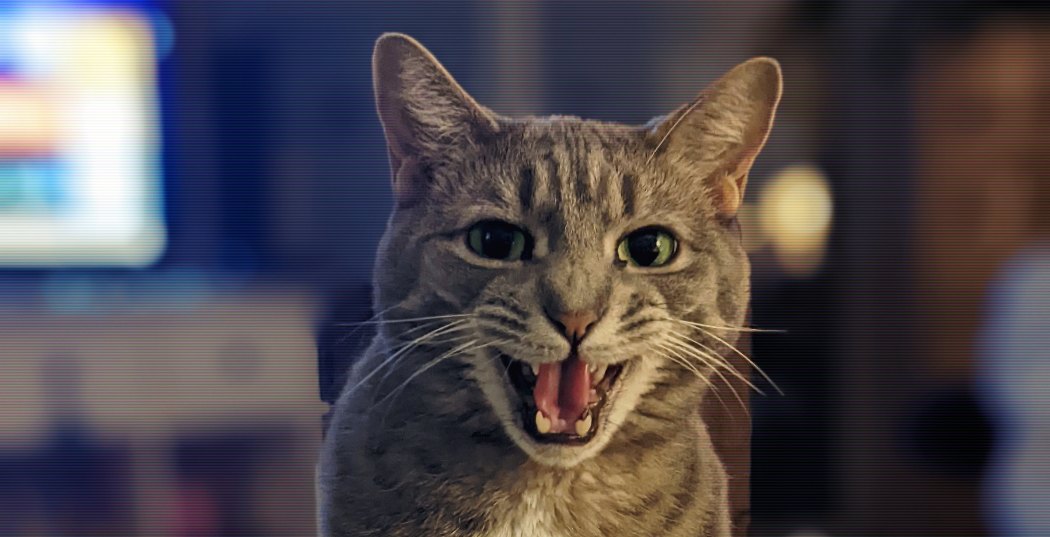
The gray tabby who tricks the titular 3 Robots into becoming his servants.
A sequel to that episode added to the legend of feline dominance, and now the fourth season brings us two more cat-centric episodes, For He Can Creep and The Other Large Thing.
For He Can Creep is set in 1757 London, where a poet named Christopher is incarcerated at St. Luke’s Asylum for Lunatics (an actual place) with only his cat. Jeoffry, for company. Christopher’s talent is mistaken for madness by the asylum staff, but not by the devil, who realizes the poet’s words have a unique power.
The problem? Jeoffry stands in his way. It turns out felines have spectacular evil-fighting powers, and the very British, very 18th-century devil offers Jeoffry an endless supply of treats, plus dominion over the Earth, if he’ll simply stand aside and let his human fall under the influence of evil.
Jeoffry, of course, is not having it, but to have a chance of defeating such powerful evil, he’ll need to enlist the help of the nearby alley cats, including an adorable but ferocious kitten named Nighthunter Moppet…
Nighthunter Moppet may be a tiny kitten, but she’s ferocious!
Jeoffry demonstrates the feline ability to teleport, a skill Bud has often used to confound me.
The Other Large Thing is a prequel to 3 Robots and 3 Robots: Exit Strategies, and focuses on a fluffy Persian whose humans call him Sanchez, a name he hates.
The humans are portrayed as jibberish-speaking morons for whom Sanchez has nothing but contempt, and when the “pathetic minions” bring home a domestic robot servant, Sanchez is infuriated — until he realizes the robot can “speak God’s language,” aka cat, and has opposable thumbs.
With the robot as his new minion, Sanchez finally sets out to conquer the world!
Sanchez realizes he’s struck gold when the new robot home assistant fetches as many cans of “the good stuff,” aka wet food, as he wants from the previously unreachable cupboard top shelf.
Both episodes are based on short stories, and they’re both written by people who clearly love cats.
Some episodes of LDR can get a little dark or somber. That includes Beyond the Aquila Rift and Sonny’s Edge, written by Alastair Reynolds and Peter Hamilton, two of my favorite novelists. Both episodes are spectacular, but they leave you with a chill and some disturbing thoughts that linger long after the credits end.
The feline-themed episodes are the perfect digestifs, offering doses of whimsy and levity to counter the existential dread and nightmarish visions of the future of other installments.
With no more humans to do their bidding, cats seize the opportunity and conscript the visiting robots as their new minions.
If you haven’t had the chance to check out the series, which streams on Netflix, I highly recommend starting with the aforementioned first season episodes 3 Robots and Beyond the Aquila Rift, then working your way through the rest of the cat episodes.
Not all of the episodes are great. The 400 Boys, one of the new episodes, is little more than inane and pointless violence, and the ubiquitous, creepy smiling “Mr. Beast” makes an appearance in another installment in an unnecessary attempt to attract new viewers. Thankfully most are strong, with more hits than misses.
Other highlights include the Christmas-themed short, All Through the House, Harlan Ellison’s Life Hutch, Reynolds’ Zima Blue, and Snow In The Desert.