Up Close With The Bronx Zoo’s Baby Snow Leopard And Tigers

An unseasonably warm November day presented a great opportunity to visit the world-class zoo right in my backyard.

The Bronx Zoo’s newest resident is Sarka, a baby snow leopard. While Sarka was snoozing away the early afternoon, I was lucky enough to catch her mother, Dari, gently grooming the five-month-old cub.

Sarka means “shark” in Nepali, and her elusive species live high in the mountains of Nepal, Mongolia, Pakistan, India and China. Often called “ghosts of the mountains” thanks to their ability to evade detection and the remote locales they haunt, snow leopards are extremely well-adapted to the cold and can jump a remarkable 50 feet in a single bound.
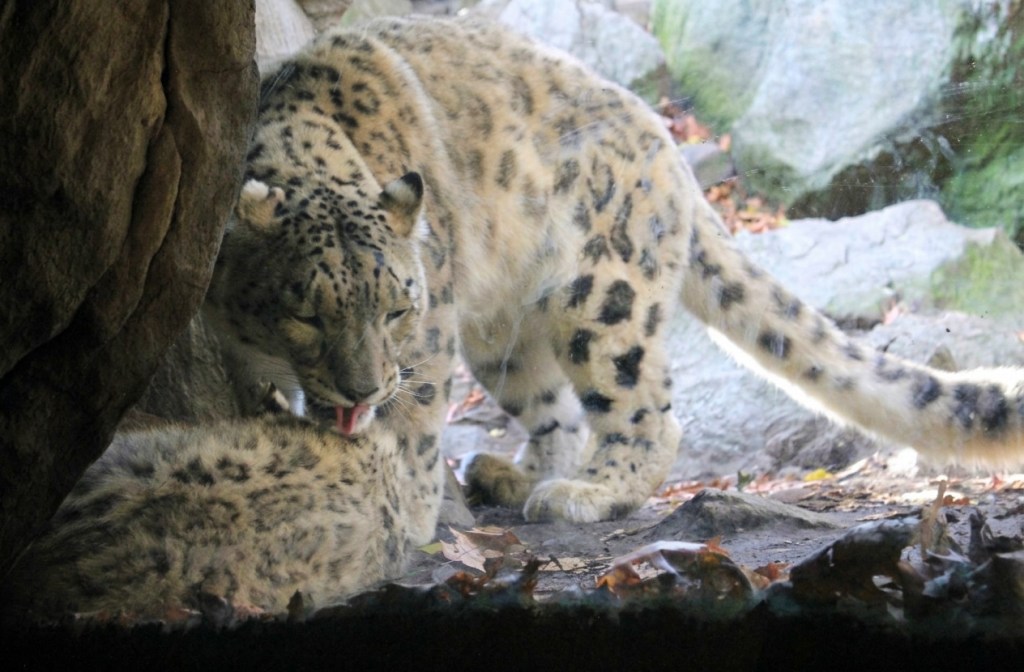
Clouded leopard grooming another clouded leopard among rocks and foliage
Credit: Pain In The Bud

The proud mom is doing a great job taking her of her daughter, but managed to take a few minutes for herself as she sat down a pace away and began to relax.

Dari and Sarka have their own enclosure and I was fortunate enough to get as close as possible despite the crowds. I’d forgotten schools were off, and lots of families took the opportunity to visit the zoo on a remarkably warm November day.
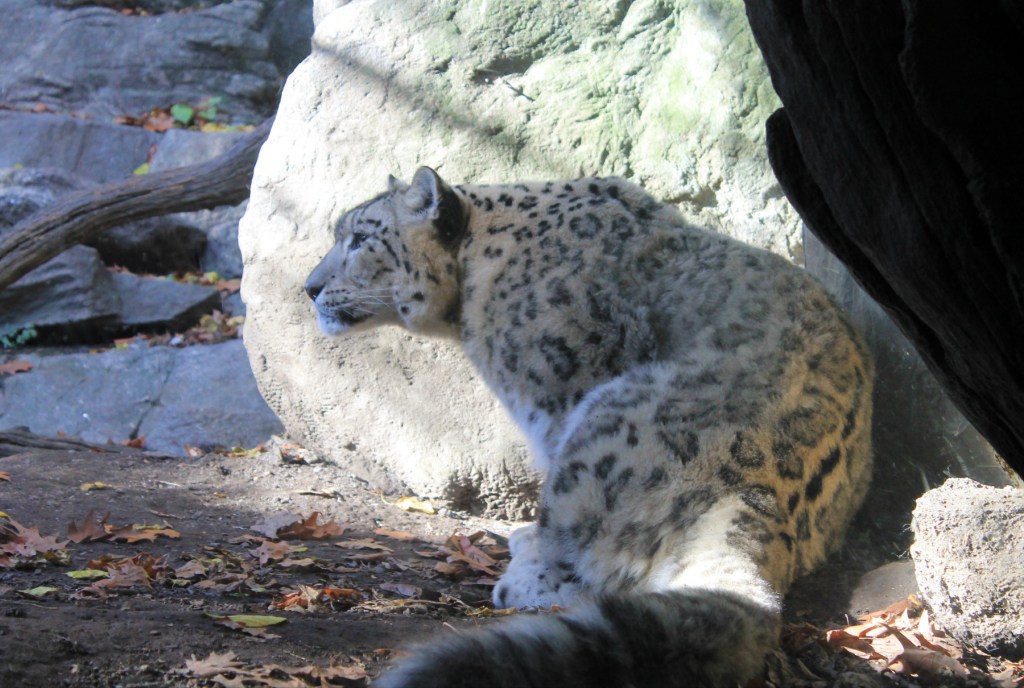
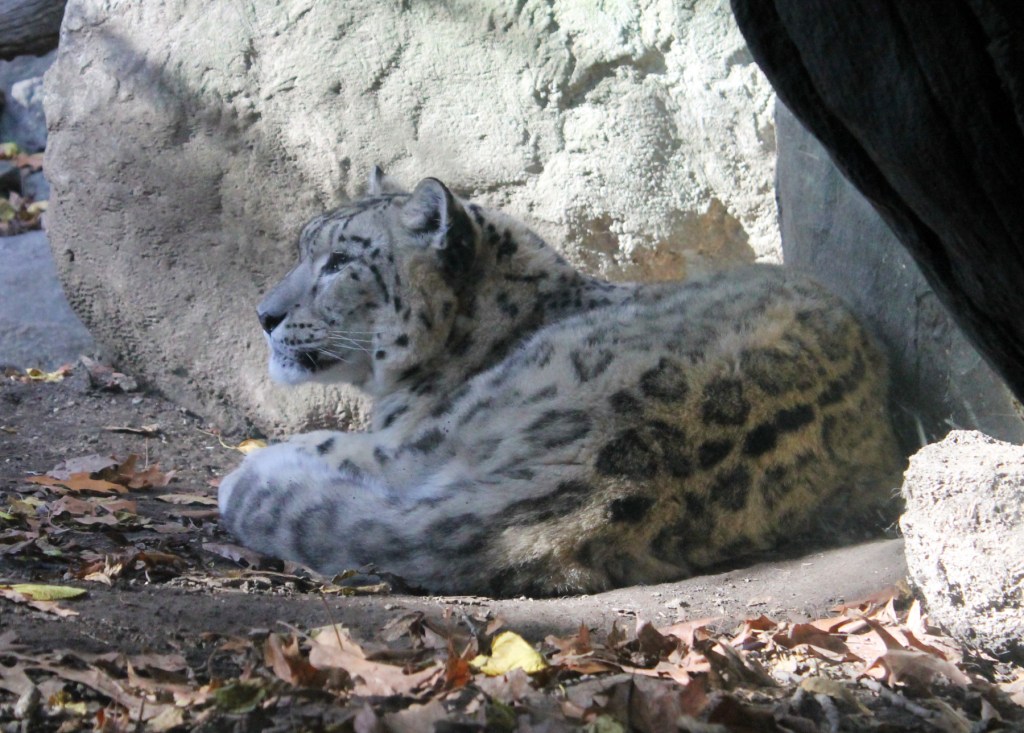
Snow leopard resting among rocks in a shaded enclosure
Credit: Pain In The Bud
A snow leopard resting on the ground among rocks and fallen leaves
Credit: Pain In The Bud

Because Sarka didn’t stir from her nap during my visit, here’s a photo of her with her mom via the Wildlife Conservation Society, the non-profit that runs the zoo:
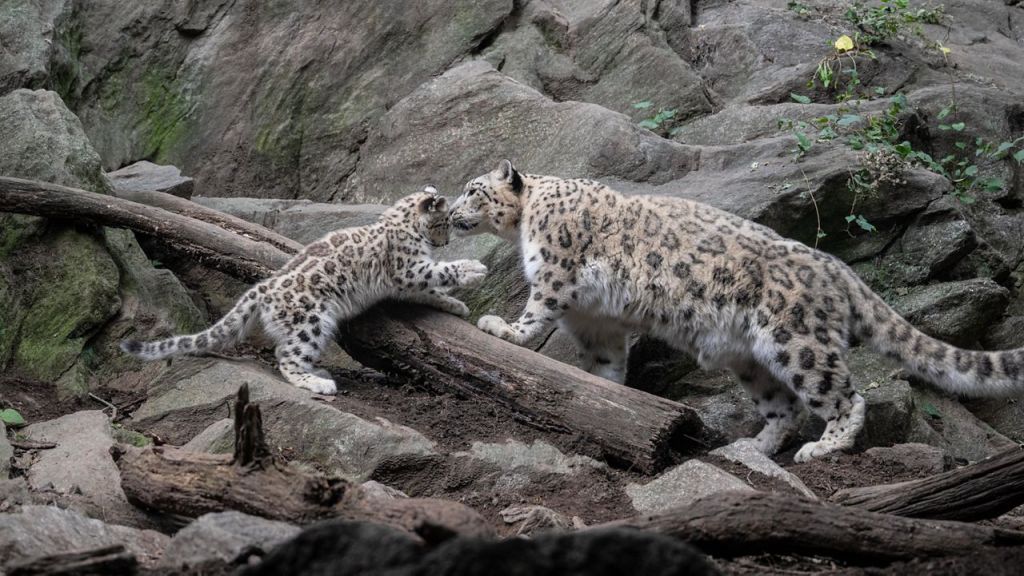
Two snow leopards interacting on a fallen log among rocky terrain.
Credit: Wildlife Conservation Society

Occupying the enclosure between the red panda and the snow leopards in the zoo’s Himalayan Highlands section was this Temminck’s tragopan, a type of pheasant. Her feather colors mark her as female in contrast to the bright plumage of male tragopans. The species is native to the mountain forests of Asia.
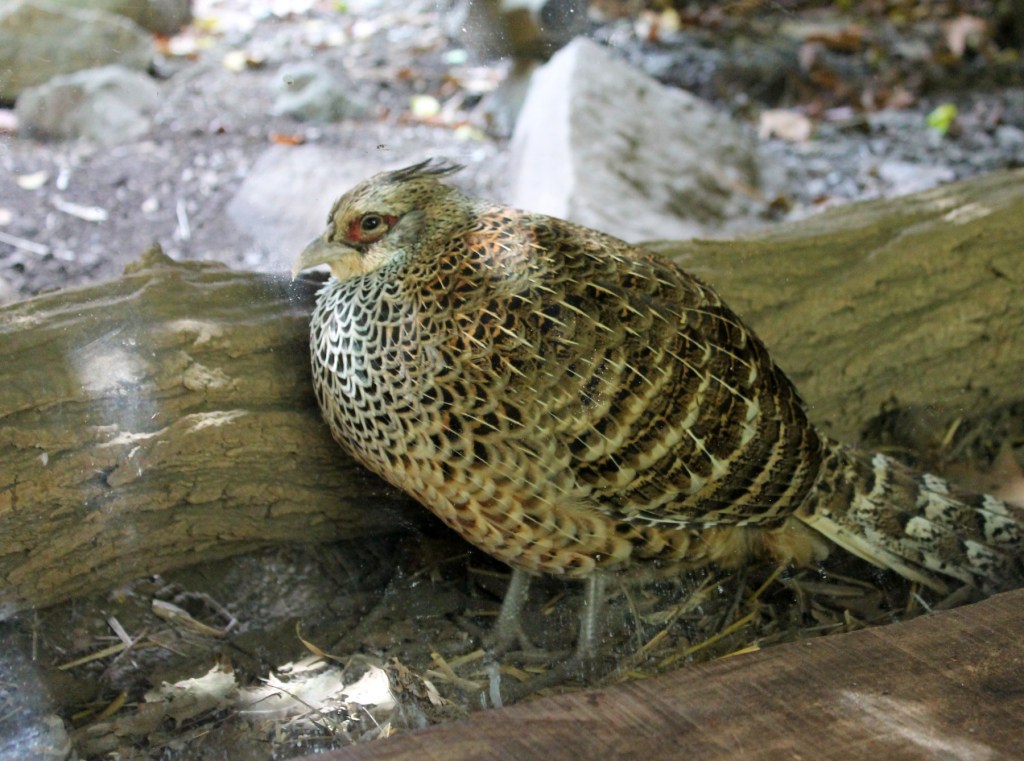
A patterned pheasant standing on a fallen log in a woodland setting
Credit: Pain In The Bud

As is my custom, I spent most of my time at the big cat exhibits.

The lions occupy a large, grassy enclosure that mimics the savanna they’d normally call home, which means they have the option to ignore zoo guests and do their own thing. Every time I’ve been to the Bronx Zoo they’ve been far in the distance, and that was true this time too. Most were in their dens, leaving a lone male laying out in the grass with his back to visitors, making it clear he didn’t want to know anything or see anyone. And that’s cool. I’m glad the lions have the option to do that, even if it doesn’t make for the best photo opportunities.

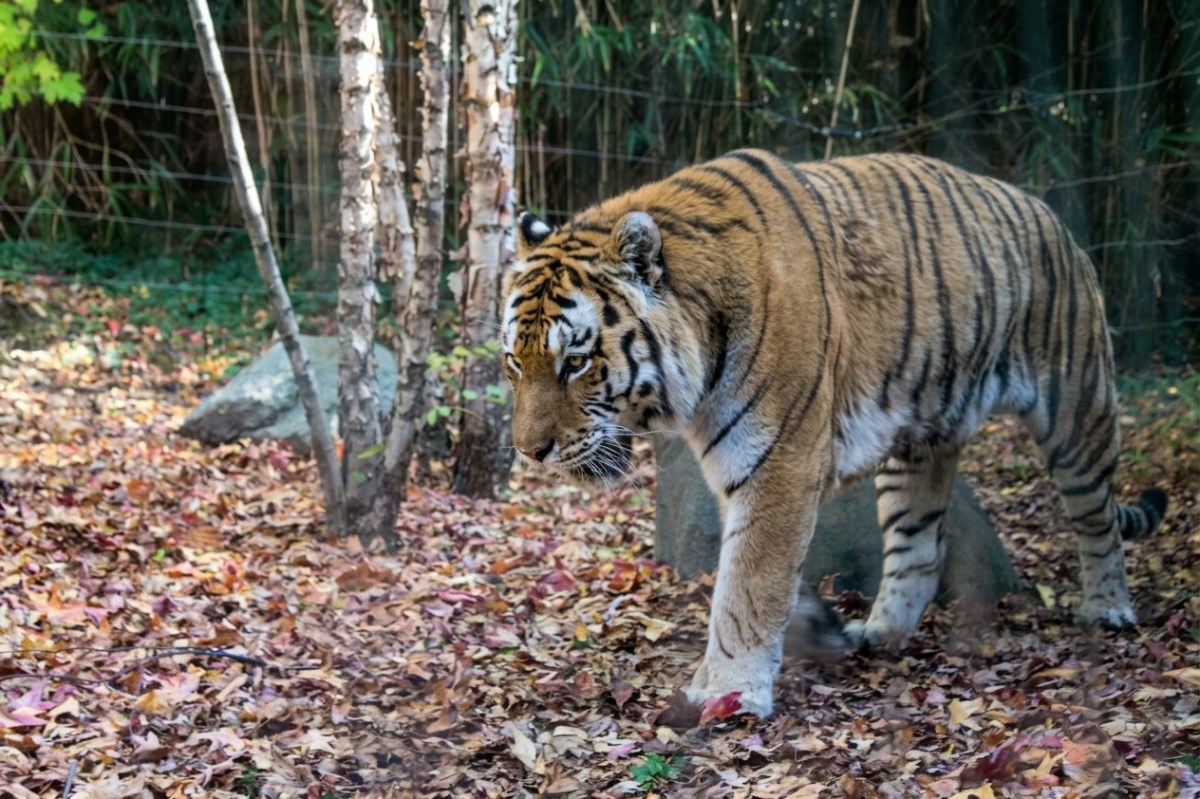
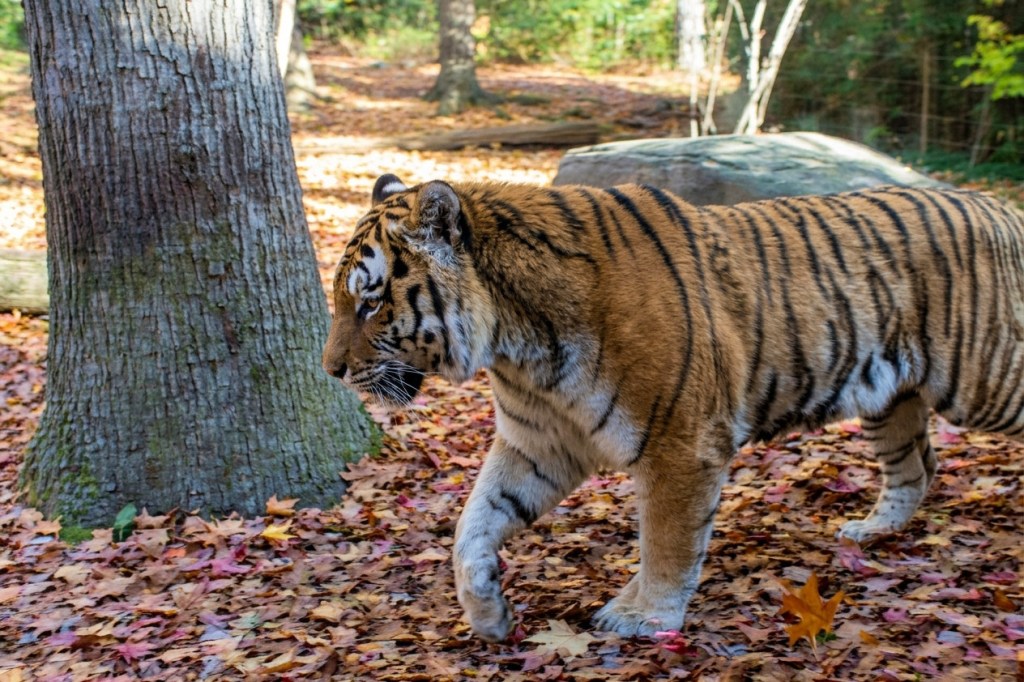
Tiger Mountain is a different matter. Two Amur (Siberian) tigers were on the prowl in separate enclosures. In the larger of the two, a massive male put on a show for visitors as he scent-marked his territory, dousing a pair of trees with projectile urine before making a circuitous route that avoided the part of the enclosure near the viewing area.

I waited quite a while and was considering moving to the next enclosure when the big guy decided to strut his stuff, walking right past the big glass windows.
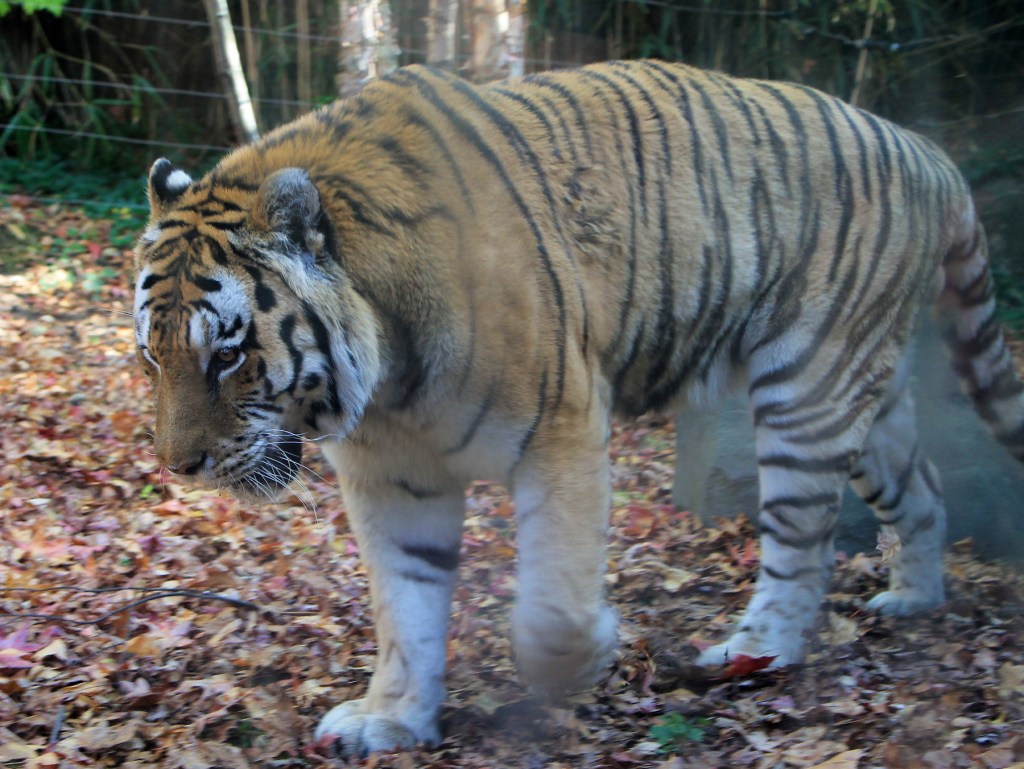
A Bengal tiger walking through a leafy forest enclosure
Credit: Pain In The Bud

I know they’d never allow me to do it, and if I tried they’d throw me out of the zoo in about two nanoseconds, but I enjoyed the idea of bringing Bud to Tiger Mountain and holding him up to watch the passing tiger. Either he’d freak out or he’d try to paw bump the big cat. Could go either way, really.

Unfortunately there was only so much I could do about the smudges and dirt that had accumulated on the thick glass in some areas, which is why parts of these photos look blurry:
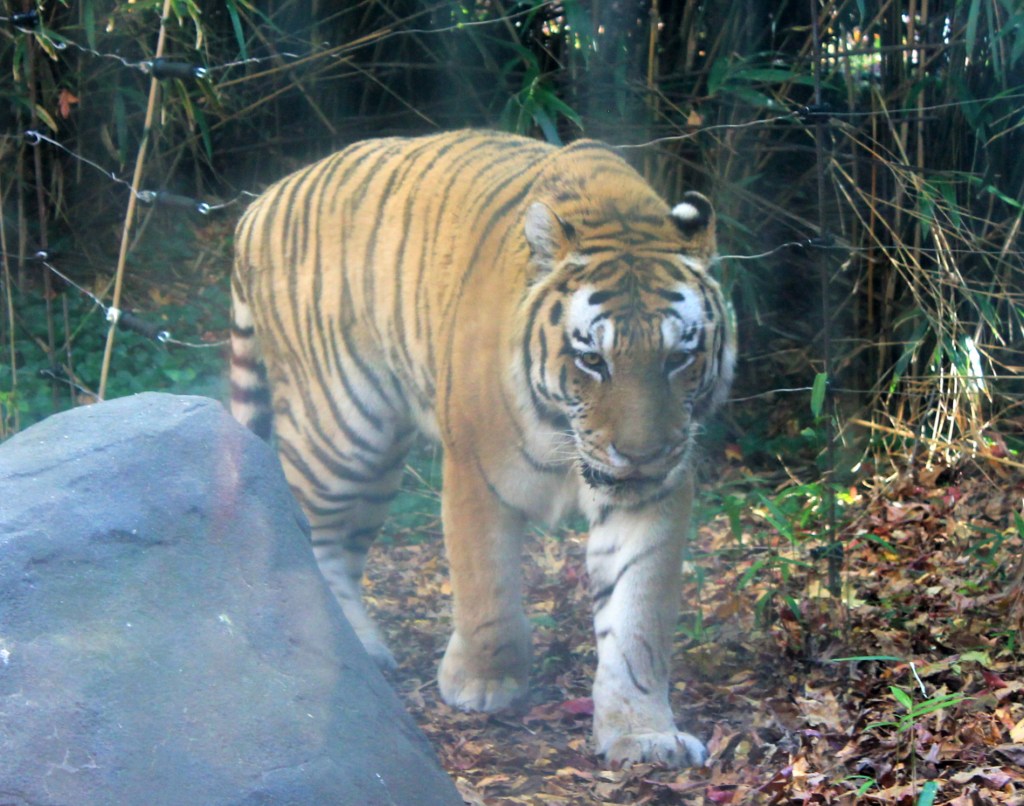
Tiger walking through a wooded enclosure near a large rock
Credit: Pain In The Bud
Bengal tiger walking through a forest covered in autumn leaves
Credit: Pain In The Bud

This red panda apparently took a cue from the lions and didn’t even move a limb during the 15 minutes I watched and waited. Can you imagine sleeping like that?
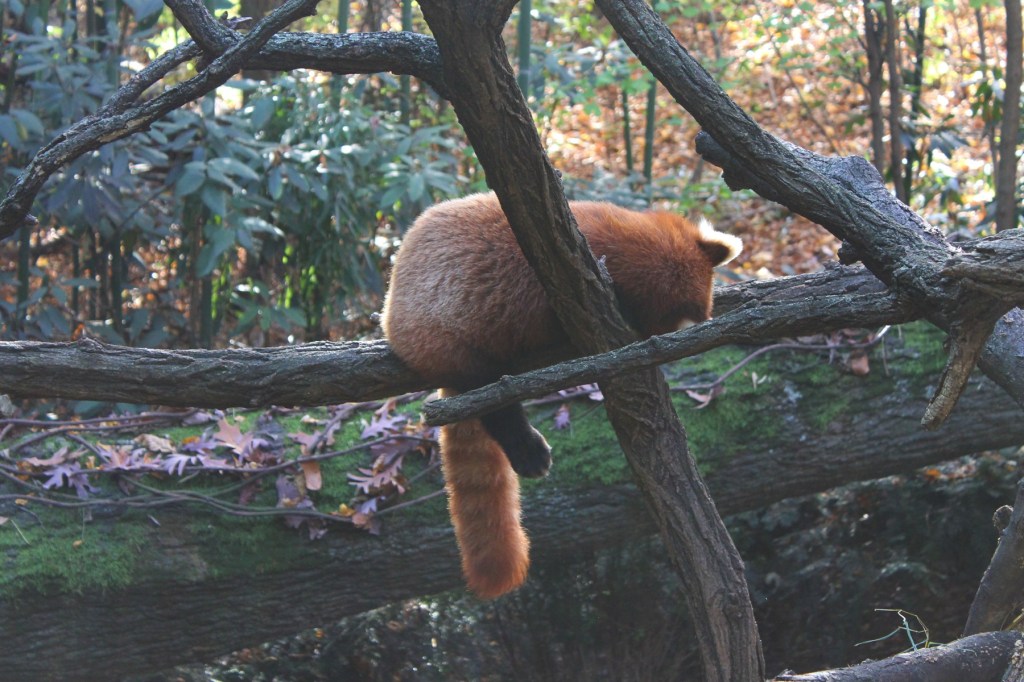

Red panda resting on a tree branch in a forest enclosure
Credit: Pain In The Bud
Stone monument with a carved human face surrounded by autumn foliage and bamboo
A Cambodian temple-style structure near the entrance to the Asia section of the park. Credit: Pain In The Bud

The geladas were apparently having some sort of meeting far up in the hills of their sizable enclosure, but this rock hyrax wandered right up to me and allowed me to snap a few close shots of her doing something hyraxian before someone’s kid pounded on the glass and sent her scurrying.
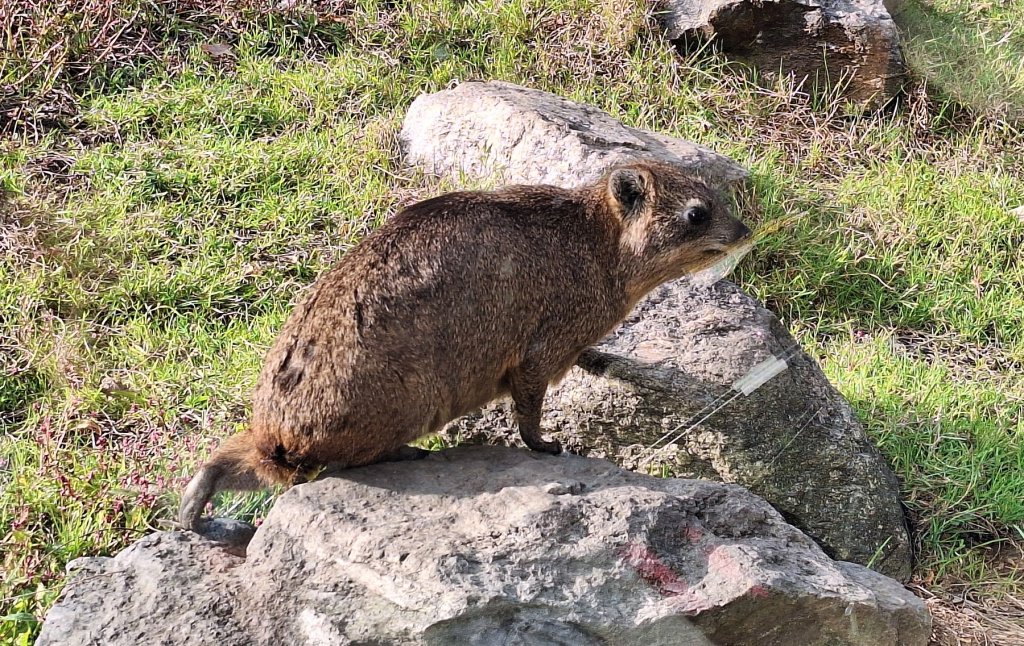
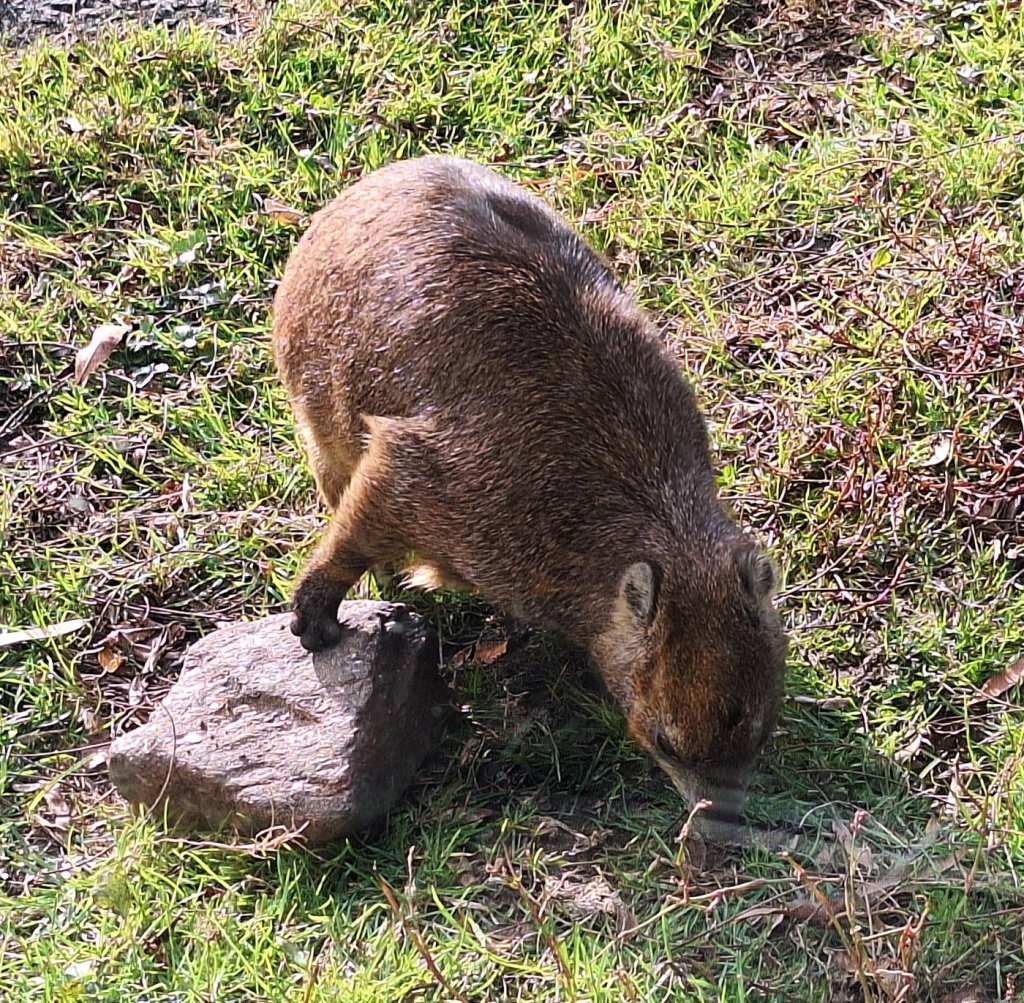
Brown rodent standing on rocks in a grassy outdoor habitat
Credit: Pain In The Bud
Brown wombat sniffing the grass beside a log outdoors
Credit: Pain In The Bud

Once again I failed to bring the right lens to get decent shots of the giraffes and other animals who occupy large exhibits and often congregate in the distance. I tried to compensate by shooting in RAW format to capture more detail and crop if need be, but quickly ran out of storage on my Canon’s card and had to rely on my Galaxy smartphone camera for the last couple exhibits.
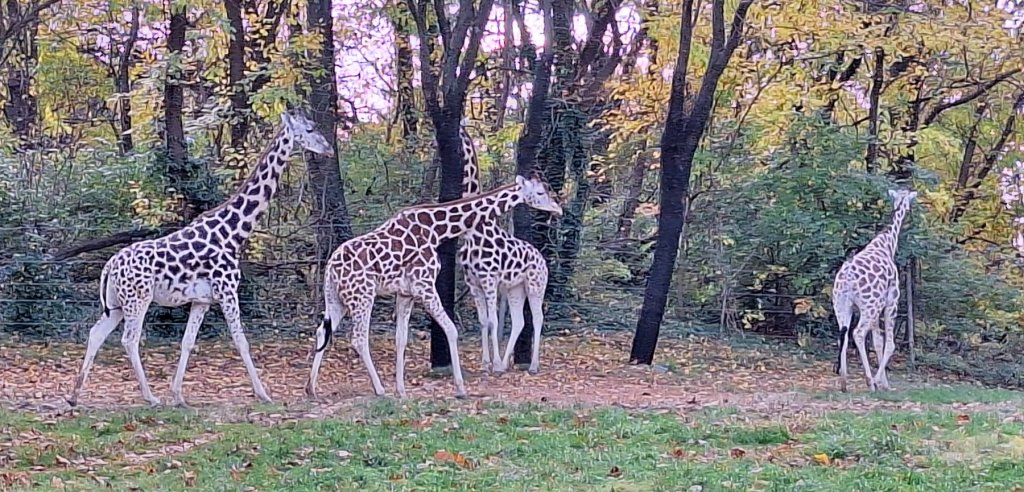
A group of giraffes walking through a wooded zoo enclosure in autumn.
Credit: Pain In The Bud

We’ll end with this fine fellow. Not a great shot from my phone cam, but I think he captures the spirit of the season with his languid movements and refusal to budge from the apparently comfortable dip in the ground he’d claimed. It’s 65 degrees in mid-November, but someone forgot to tell this bear. He looks ready to zonk out for the season.
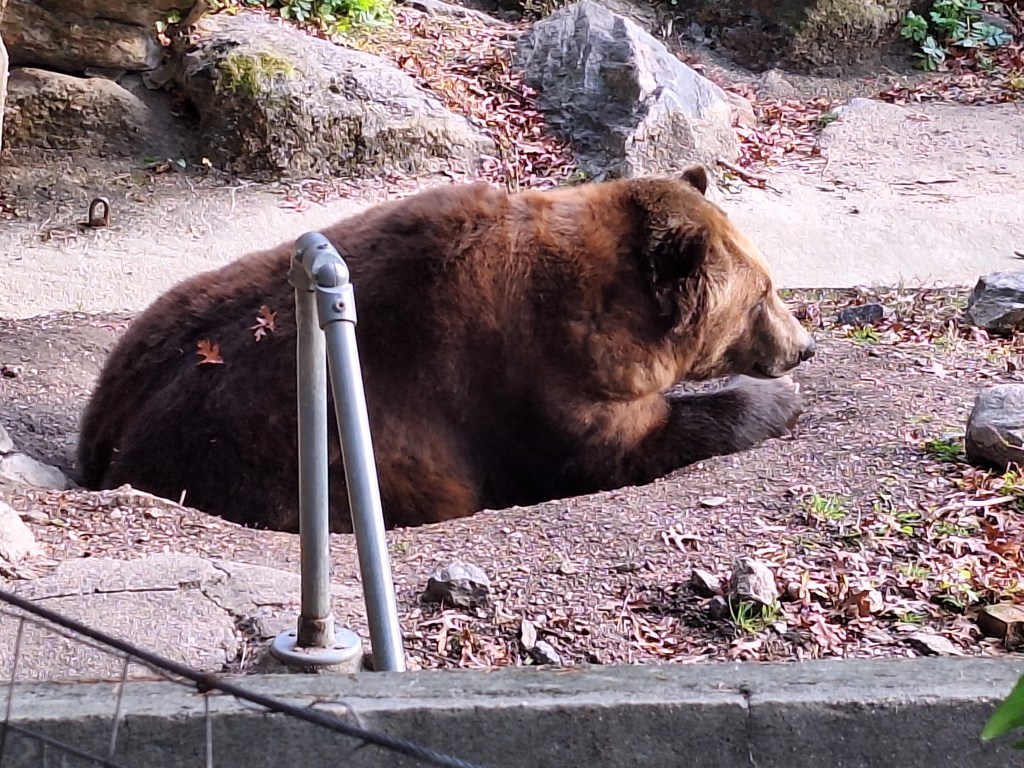
Brown bear resting in a rocky enclosure beside a metal barrier.
Credit: Pain In The Bud

Woman’s Ankles Mauled After She Falls Into Zoo’s Buddy Exhibit

Witnesses described the harrowing encounter as a woman fell into the silver-furred Buddy exhibit at the Bronx Zoo this week.

NEW YORK – Corey Anderson couldn’t watch as the woman tumbled into the zoo habitat.

The Manhattan man had taken his kids to the zoo and the little ones were pointing excitedly at the silver-furred Buddy exhibit when a woman climbed the barrier to get a better look, slipped and fell into the enclosure with the tiny apex predator.

“I grabbed my kids, shielded their eyes and had just turned away,” Anderson recalled with a shudder. “The sounds…it was horrific. It sounded like an enraged Elmo demolishing a plate of wings.”

Smartphone footage shot by other guests confirmed the grisly sequence. The woman landed awkwardly but was apparently unhurt as she stood and began to dust herself off, unaware of the intimidating shadow creeping up on her from behind.

“Absolute mayhem,” is the way Franz Muller described it. “Die mächtige katze! Das grauen! I have never seen ankles bleed as much as I have on this day!”

After initially shocking the uninvited guest with a swipe at her bare skin, the silver-furred Buddy proferred a single paw as if expecting something from the woman, “but when it became clear she was empty-handed, the Buddy flew into a rage and launched himself at her lower extremities,” Muller said.

Zookeepers arrived quickly amid the screams of shocked guests and held up a vacuum in warning, the footage shows. When the silver-furred Buddy hissed but showed no signs of retreating, one of the zookeepers flipped the power switch.

“The Buddy stopped, hackles raised, then bolted for the safety of his den,” said another witness, Eleni Xanthopoulou.

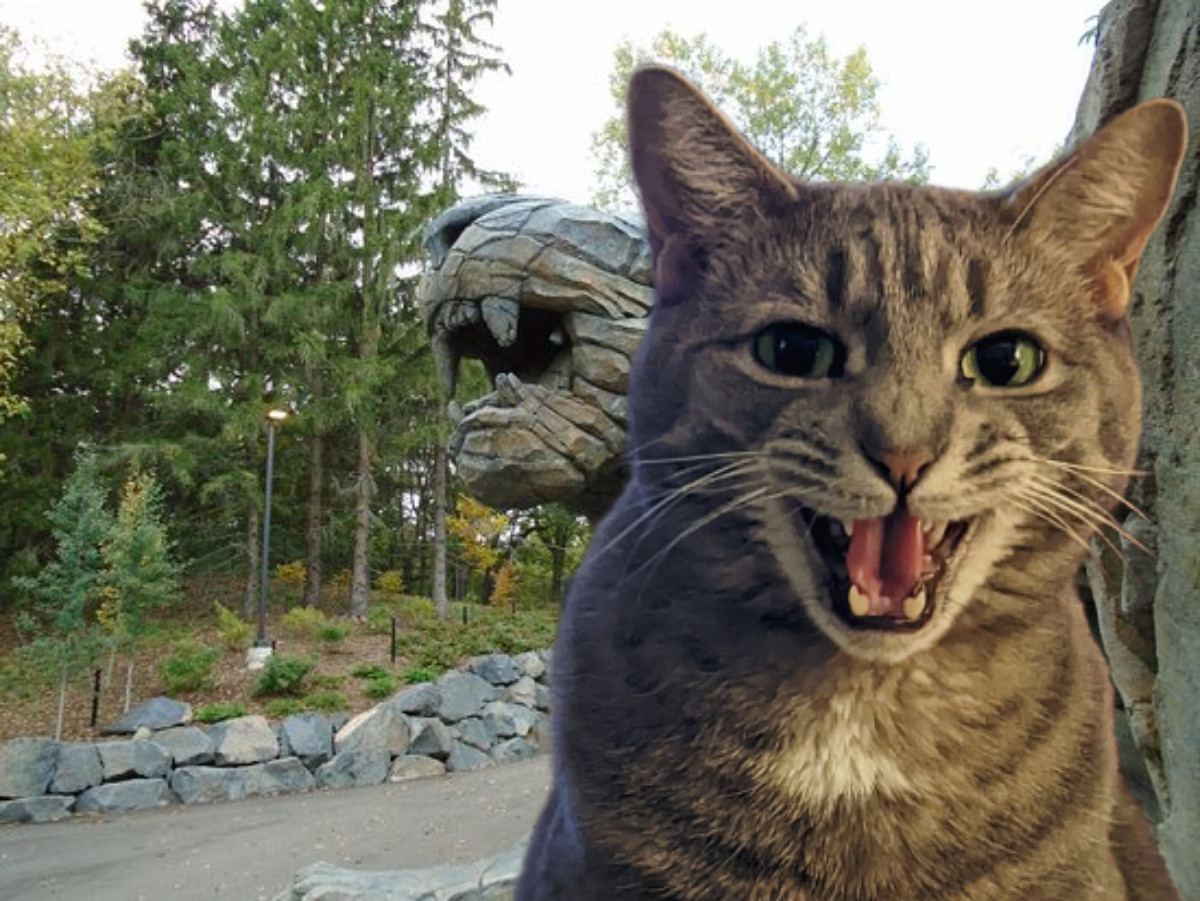
A scene featuring two men in period clothing sitting in a dimly lit bar, with a tabby cat prominently in the foreground.
The silver-furred Buddy with Lyle, center, and Sir Malcolm Murray, president of the zoo’s board of trustees.

The victim, a 32-year-old interior designer, was rushed to an emergency medical clinic, where she was treated for “multiple lacerations to the ankles, feet and lower legs,” police said.

Bronx Zoo Officials said the silver-furred Buddy would not be punished for the attack.

“He did nothing wrong,” head carnivore keeper Ferdinand Lyle said as he cradled the deadly cat. “He’s such a good boy. Who’s a good boy? You are, aren’t you? Yes, yes, a good boy!”

‘We Have To Do A Better Job Of Making Sure People Understand These Are Not Disney Animals’: Your Latest Reminder That Tigers Aren’t Cuddly

Wild animals, particularly wild predators, cannot be befriended, and encounters with them rarely end well for people.

David Villalobos told detectives he wanted to be “one with the tiger.”

So the New York man jumped off the monorail at the Bronx Zoo and into the Wild Asia exhibit, where his 10-minute encounter with a tiger named Bashuta resulted in a punctured lung, a broken arm, and bite wounds on his arms, legs, shoulders and back.

Mercifully, and contrary to his nature as a predator, Bashuta did not kill Villalobos, and while Villalobos almost got his wish “to be one with” the male Siberian tiger, his consolation prize was life – and a trespassing charge from the NYPD.

I remember the 2012 incident well because I was working as a reporter for Newsday at the time and I was in the newsroom the night it happened, placing calls to Villalobos’ family and neighbors in an attempt to understand why he’d willingly enter an apex predator’s enclosure.

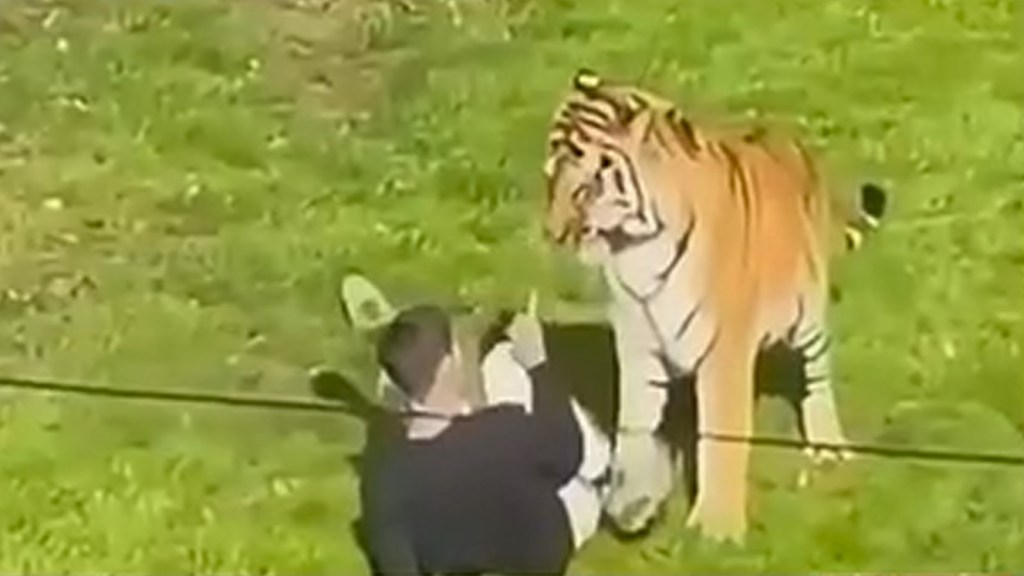
On Saturday a UK man — whose name has not been publicly released yet by authorities — jumped into the tiger enclosure at the UK’s Yorkshire Wildlife Park. He wasn’t as lucky, and zoo visitors filmed the last few moments of his life as the big cat — also an endangered Siberian (Amur) — mauled him.

A still image of a video that shows the last few moments of the UK man’s life after he hopped barriers to enter a tiger habitat at Yorkshire Wildlife Park on Oct. 10.

Like the incident at the Bronx Zoo, the enclosure at Yorkshire Wildlife Park had adequate barriers and the man circumvented several of them to put himself in danger.

The big cat was unharmed and will not be euthanized. The incident “was in no way the tiger’s fault,” said Ron Magill, a wildlife photographer and communications director for Zoo Miami.

“It’s just so hard to guarantee against someone who’s determined to do something,” Magill told CNN in an interview a few hours after the incident.

The wildlife park was evacuated and remained closed for the weekend. In the meantime, UK authorities asked people not to continue sharing footage uploaded by several bystanders.

“I say this with profound respect for my profession, but we have to do a better job of making people understand these are not Disney animals,” Magill said. “This is not a play exhibit. We do not play with these animals. They are not our pets. And they can be much more dangerous because they have lost that natural fear of people. “

They’re also territorial, and from their perspective their enclosures are their territories. Zoo visitors who drop in are curiosities to explore by pawing at them at best, and uninvited, unwanted invaders at worst.

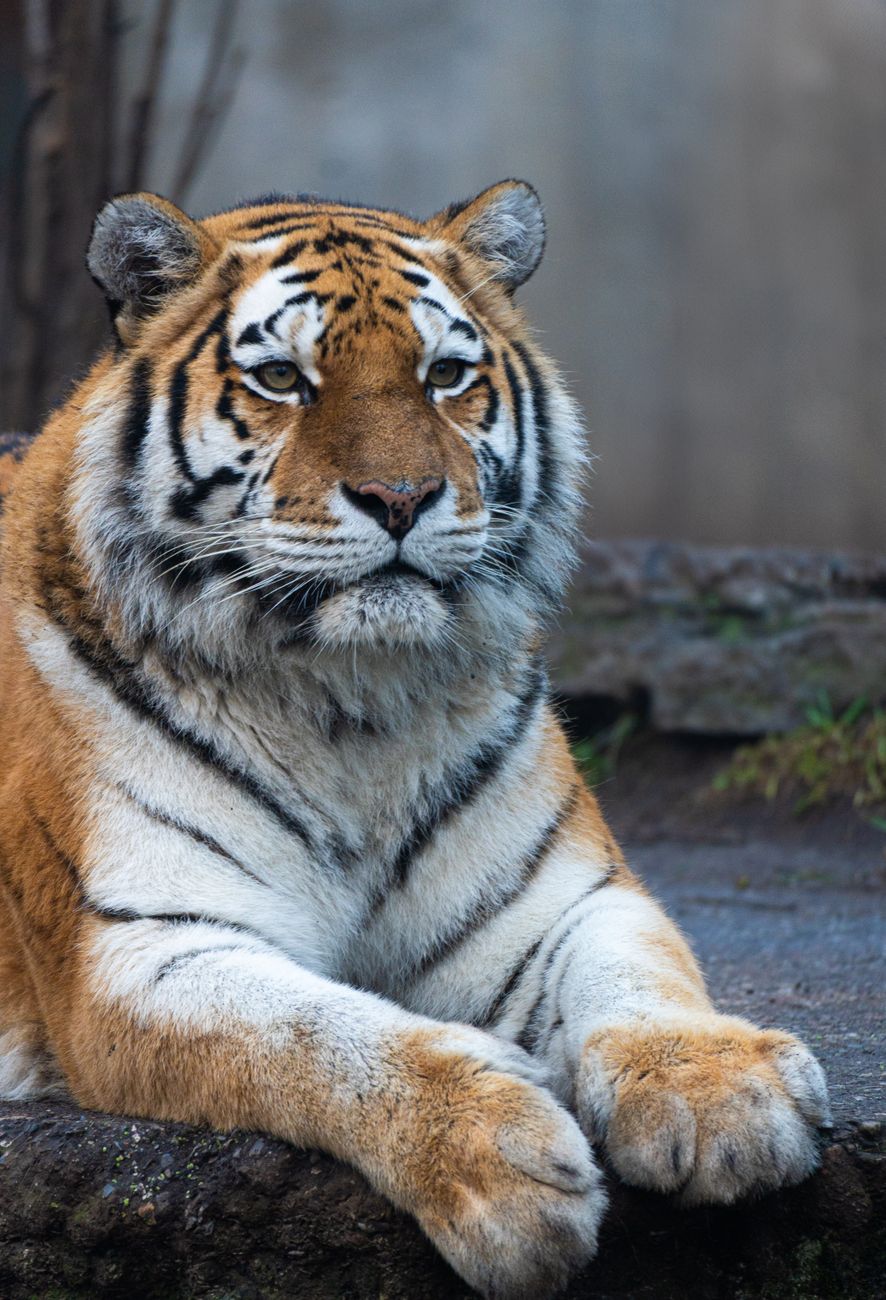
Tigers are the largest and most dangerous big cats, and Amur (Siberian) tigers are the biggest tiger subspecies in the world. Credit: Lars H Knudsen/Pexels

It’s a lesson quite a few people need to learn, apparently. US national park rangers have been begging people to keep their distance from wild animals over the past few years after several incidents involving tourists approaching dangerous wildlife to pet them, take selfies with them, and generally infringe on their space.

In July, 65-year-old Carl Isom-McDaniel was photographing a bison with his granddaughter when the 2,000 pound animal charged at him and launched him high into the air, using its horns in a display of raw power serving as a reminder that humans are physically nowhere near the top of the food chain.

Isom-McDaniel’s incident, in which he suffered multiple femur fractures among other injuries, happened less than two weeks after a 12-year-old was attacked and hospitalized after getting too close to a bison near Yellowstone’s “mud volcano.”

At the time, park officials noted bison have been involved in more attacks on visitors than any other species in the park.

“They are unpredictable, can run three times faster than humans and will defend their space when threatened,” a statement from the US National Park Service read.

Although it may seem obvious that mixing with predators or even large herbivores is a bad idea, Magill said some people still have the impression they can somehow make friends with wild animals.

That misconception may be compounded by the ubiquity of social media posts showing tourists in Asian wildlife parks, where tigers are often heavily sedated so guests can enter their enclosures to touch them and pose for selfies with them. It is a form of animal abuse by every definition, but some people don’t want to hear that.

“We see this over and over again, people who try to get close to animals, cuddle the animals, thinking … that this is their pet,” Magill said. “That’s not the case. These animals should not be approached.”

Buddy Visits Leopards, Finds Himself On The Menu

Buddy’s back at it, trying to befriend big cats. Emboldened by his success with the tolerant and wise jaguars, the reckless tabby has his sights set on the savanna and its temperamental predators, the leopards. Can Buddy win the admiration of these notoriously dangerous felids, or will he end up as a light snack for a spotted cat?

VIRUNGA NATIONAL PARK, Democratic Republic of Congo — “What the heck is that?”

A leopardess raised her head in response to her mate’s question, gazing down from the sturdy limb of an acacia tree where she’d taken refuge from the scorching midday sun.

Two hundred yards ahead, a tiny gray cat was padding toward them, picking his way carefully around rocks and occasionally disappearing in the high grass.

“There’s nothin’ that a hundred men on Mars could ever do,” the little feline sang as he walked. “I bless the rains down in Africa! I bless the rains down in…”

The diminutive feline stopped near the base of the tree and looked up at the leopards.

“Jambo!” he meowed enthusiastically. “My name is Budvuvwevwevwe Budyetenyevwe Buddabe Ossas!” he announced. “You can call me Buddy!”

Jambo!

The adult leopards were momentarily stunned until one of the cubs awoke from her nap, spotted Buddy and exclaimed: “Look, mommy, lunch!”

The small cat flashed a wide smile.

“That’s a great idea! I’ve already eaten, but you know what they say: a lunch a day barely keeps the rumbles at bay! I’m a three-lunch cat, myself. So what are we having?”

Another cub piped up.

“That’s not lunch, that’s a snack!” he told his sister.

“And what a cute little snack he is!” the female cub said, gracefully dropping from her napping spot in the tree.

Buddy’s eyes bulged.

“You’re…you’re talking about me?”

The male cub did a squeaky impression of a roar.

“Do you see any other single-serve snacks around?”

Buddy licked his lips, his effort to hide his fear betrayed by his rising hackles and tail, which now resembled a quivering spiked club.

“I…I…I am a cat,” he said in his best impression of an authoritative meow. “I’m practically your cousin!”

The female was just paces away now and moving too fast for Buddy’s liking as he backpedaled.

“The question is,” she said, “are you tasty like cousin Serval or cousin cheetah?”

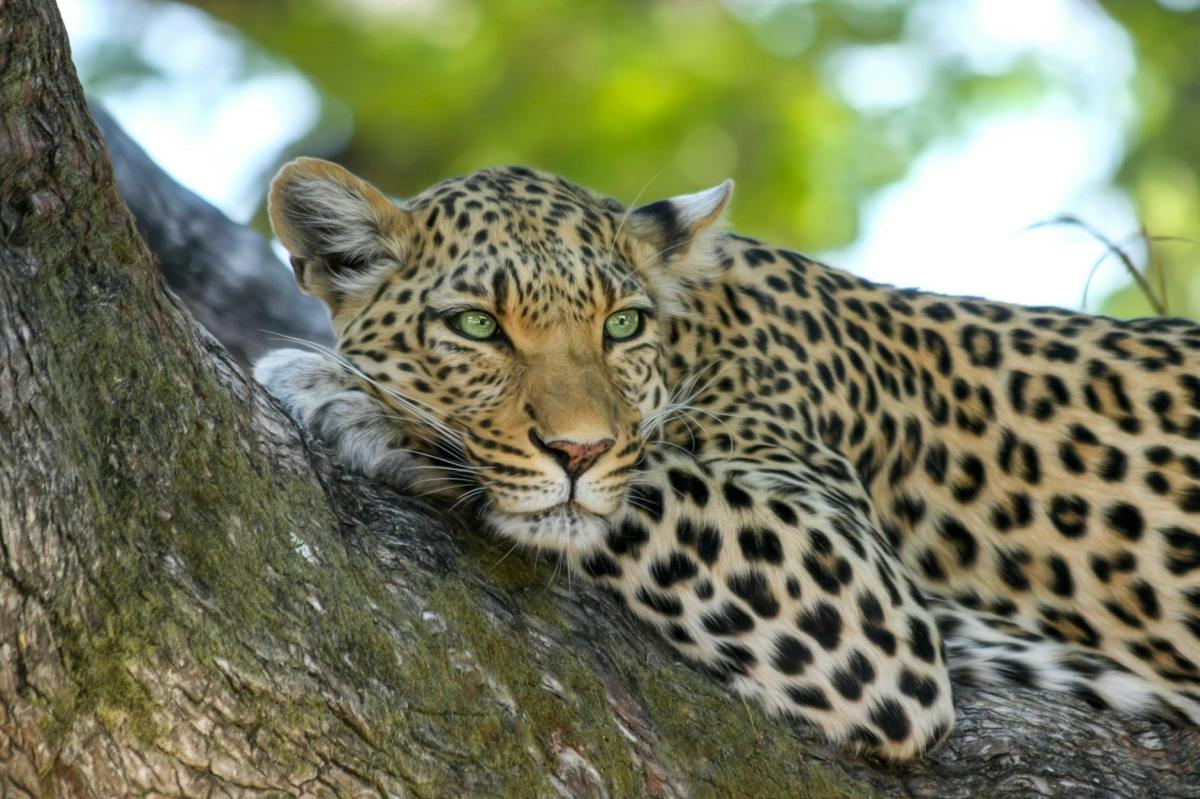
An image of a leopard cub
Credit: RudiHulshof/iStock

Buddy changed tactics.

“This is an outrage! Not even the tigers tried to eat me! This is…this is, uh, catibalism!”

The cubs were circling him now.

“Mommy, can we have a snack?” the male cub called, looking back at his mother on the tree.

“As long as it doesn’t spoil your dinner later,” came the reply.

“It won’t, mamma!”

Buddy gulped.

The cubs closed the distance, ready to strike, and Buddy was babbling while pleading for his life when the earth itself shook.

Branches jolted and leaves dropped. A flock of birds nesting in a nearby tree took off, silhouettes etching ephemeral geometric patterns in the sky. In the distance, a baboon shrieked a warning to its troop.

The cubs went from aggressive to retreat in the span of an instant, and even their parents looked alarmed, taking off after their young.

Buddy watched them flee, wondering if he should bolt in another direction as something incomprehensibly gargantuan lumbered toward him, shaking the trees.

He’d emptied his bowels by the time a gigantic head poked through the foliage, followed by the rest of the colossal beast. It was gray-skinned, leathery and bizarre, unlike anything Buddy had ever seen.

“Giant space aliens!” he screamed, turning around and running right into a tree trunk.


“Ahhhhh! Don’t eat me!”

Buddy awoke in a sweat, his fur damp in the soupy, stifling heat.

An entire platoon of the peculiar beasts stood around him, their sizes ranging from 25 Buddies in mass to freakishly large individuals sporting pairs of prodigious teeth that looked like scimitars made of bone.

“Einstein’s awake,” one of them rumbled, and the rest turned from stuffing themselves with leaves to get a better look at the Liliputian animal before them.

“What is that thing?” one of them asked.

“It’s a fun-size cheetah!” one exclaimed confidently.

“No, it’s a baby Serval!” another said. “But the color’s all wrong.”

In the distance, a giraffe poked its head above the tree line, pausing to munch on the silky pink flowers of a mimosa tree.

Buddy was saved from hungry leopards by friendly giant space aliens!

Buddy cautiously pushed himself up on his paws. These aliens did not seem interested in eating him.

“Greetings,” he said. “I am a feline, a cat from planet Earth! What planet do you come from?”

There was a pause, then trumpeting, cacaphonic laughter.

“‘What planet are you from?'” one of the great beasts mimicked, sparking a second round of giggles that sounded like the trombone section of an orchestra, if someone had slipped the players psychedelics.

“We are elephants, and this is our home,” said the leader, a magnificent female. “And you, little one, are fortunate we happened by.”

Buddy puffed himself up.

“I think you mean the leopards were lucky,” he said, flexing his meowscles. “They didn’t want to tangle with these guns.”

The elephants chortled. “Can we keep him? He’s funny!”

The matriarch shook her massive head.

“He is far from home, and he should return before he runs into leopards again, or something worse,” she said.

Buddy looked unsure of himself.

“But I’m homies with the jaguars and the tigers! I thought…you know, I could be down with the leopards too. Us big cats gotta stick together, ya know? It’s hard out there for an apex predator. By the way, got any lunch?”

One of the elephants raised her trunk, pointing east toward a herd of intimidating horned beasts.

“Lunch,” she said. “Think you can take them?”

Buddy gulped.

“Go home, little one.”


Buddy’s version of events!

“So anyway,” Buddy said, addressing his human, “that’s how I impressed the leopards, and they made me their king. In fact, they bestowed the honorific ‘Paka mkubwa na mwenye misuli hodari,’ which means ‘great and mighty muscled cat’ in Swahili!”

“Sounds like you had quite an adventure! That’s impressive, Bud!” Big Buddy said.

“It is! It is!” Buddy said, nodding vigorously.

Big Buddy made a whistling sound.

“Was that before or after you peed yourself in terror?”

“What? I…no, I told you, they made me their king! Where did you hear this, this slander?”

Big Buddy reached for his iPad, pulling up images of a terrified Little Buddy running from leopard cubs on the savanna, Buddy running head-first into a tree, and Buddy cowering before a herd of elephants.

“A wildlife tour was nearby during your ‘coronation,’ but this is probably just a gray tabby who looks exactly like you and happened to be right where you were crowned,” he said. “Congratulations, Your Meowjesty!”

Wordless Wednesday: Awesome Photos Of Tigers Swimming!

For tigers, going for a dip on a hot day is pure bliss.

Most cats wouldn’t go near water if even if you lured them with a giant spread of catnip and Temptations on an inflatable table.

But tigers? They love it. Here are some shots of the world’s biggest cats taking a dip.

A Malayan tiger named Azul going for a swim at the Bronx Zoo. Credit: Julie Marsen Laher, Wildlife Conservation Society

Siberian tigers in a tub at a sanctuary in Russia. Credit: digger03/Flickr

This meme made me laugh.

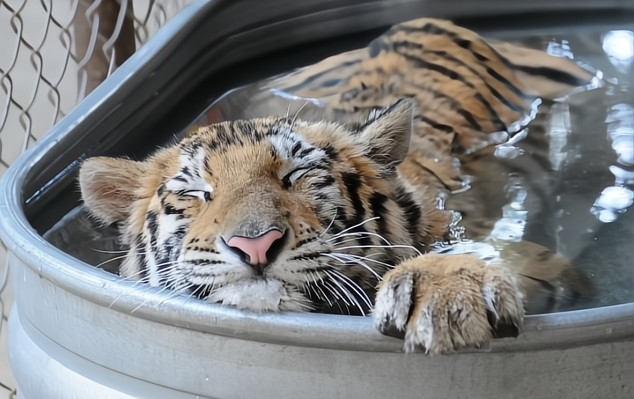
Aasha was rescued from a traveling circus after an inspector found her sickly, suffering from ringworm and only 30 pounds at 8 months old. She’s flourished since she was brought to a sanctuary where she’s been given proper care, a good diet and a calm environment. Aasha is also pictured in the feature photo up top.

A tigress and her cubs cooling off in a river in India. Credit: Sandesh Kadur

Sundarban tigers are a subspecies of the Bengal who live in mangrove forests and are well-adapted to swimming. This Sundarban tiger was spotted on a wildlife tour in India. Credit: Soumyajit Nandy/Wikimedia Commons

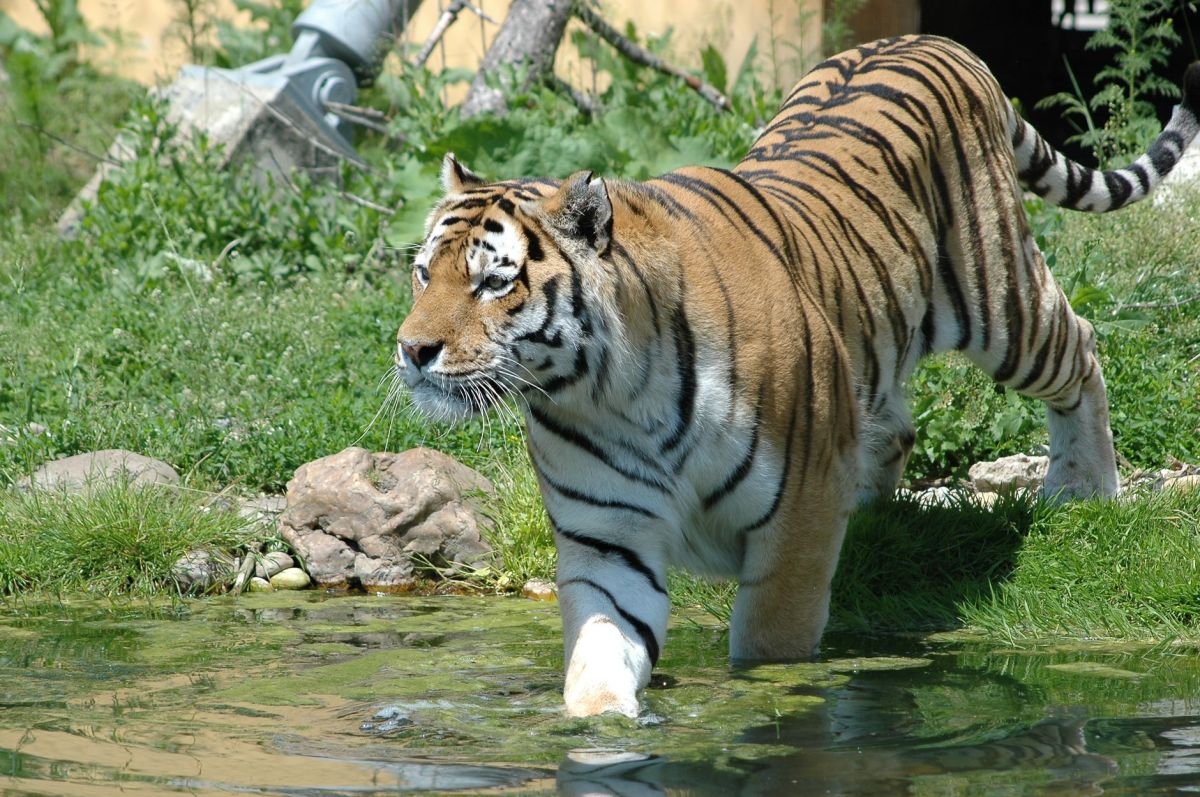
This tiger cooled off on a hot day at the Dortmund Zoological Garden in Dortmund, Germany. Credit: Hans Stieglitz/Wikimedia Commons