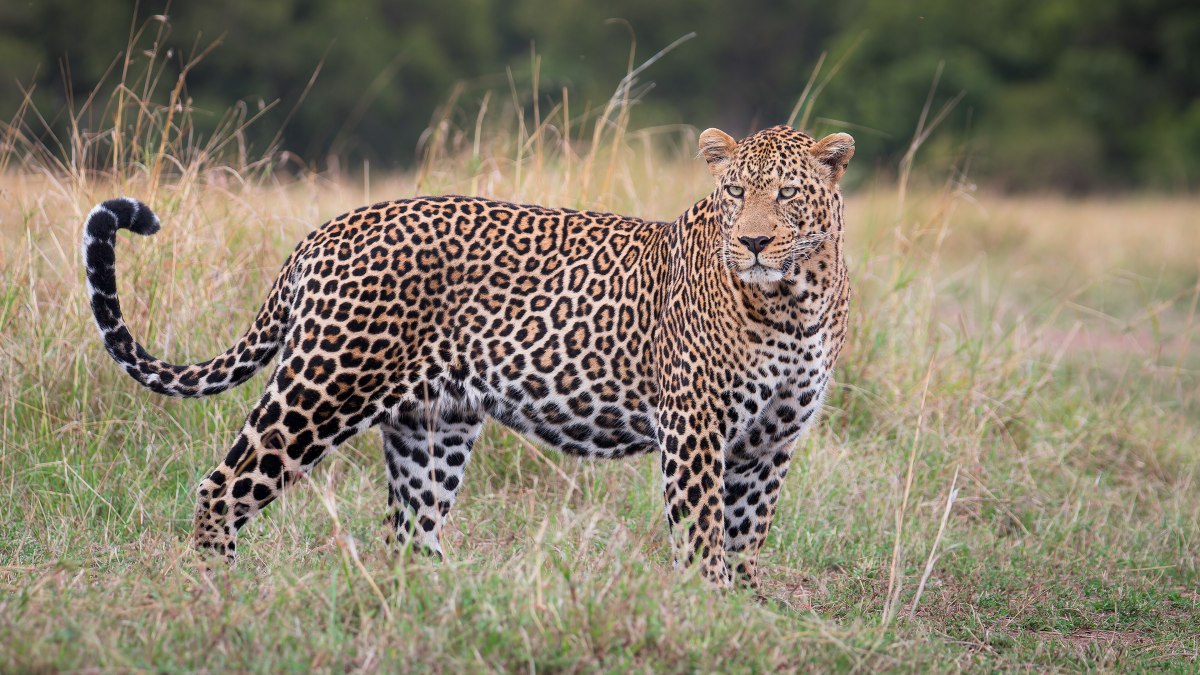
Amazing Cats: As Solitary Night Hunters Surrounded By Danger, Leopards Must Watch Their Backs

Stealthy, lethal and skilled, leopards are apex predators, but they contend with bigger cats and pack animals who pose a danger to them and their cubs.

Taxonomic name: Panthera pardus
Genus: Panthera (big cats)
Weight: Between 82 and 198 pounds with typical felid sexual dimorphism
Lifespan: Between 12 and 15 years in the wild and up to 23 years in captivity
Gestation: 90 to 105 days, or about three months
Litter size: Two to four cubs who remain with their mothers for up to two years
Distribution: Leopards boast the widest range of any big cat, with populations in at least 62 countries spanning from sub-Saharan Africa to Russia, China and the Koreas
IUCN Red List Status: Vulnerable
Illustration of a leopard's face with distinct spots and striking green eyes, enclosed in a circular border.

Leopards occupy a precarious position in the hierarchy of predators.

They’re true big cats who are extraordinarily dangerous and skilled hunters, but they’re never the baddest on the block by measures of pure size or strength.

Throughout their range, which stretches from the savannas of Africa to the verdant jungles of Asia, they are forced to compete with animals who exceed them in raw physical power, or derive their advantage through strength in numbers.

In Africa leopards, known as panthera pardus in binominal nomenclature, play second fiddle to their sturdier, more intimidating cousins, panthera leo. Lions aren’t just bulkier and brawnier, they’re also unique among big cats because they live in social groups. Lions cooperate on hunts, allowing them to take down anything they come across, and the entire animal kingdom gives them a wide berth.

In Asia leopards bow to the biggest, baddest cats on the planet, panthera tigris. While lots of people mistakenly believe lions are the kings of the cat world, that distinction goes to their striped, stealthy cousins. Tigers are the heaviest, physically largest and most powerful cats, making them the apex predators on land.
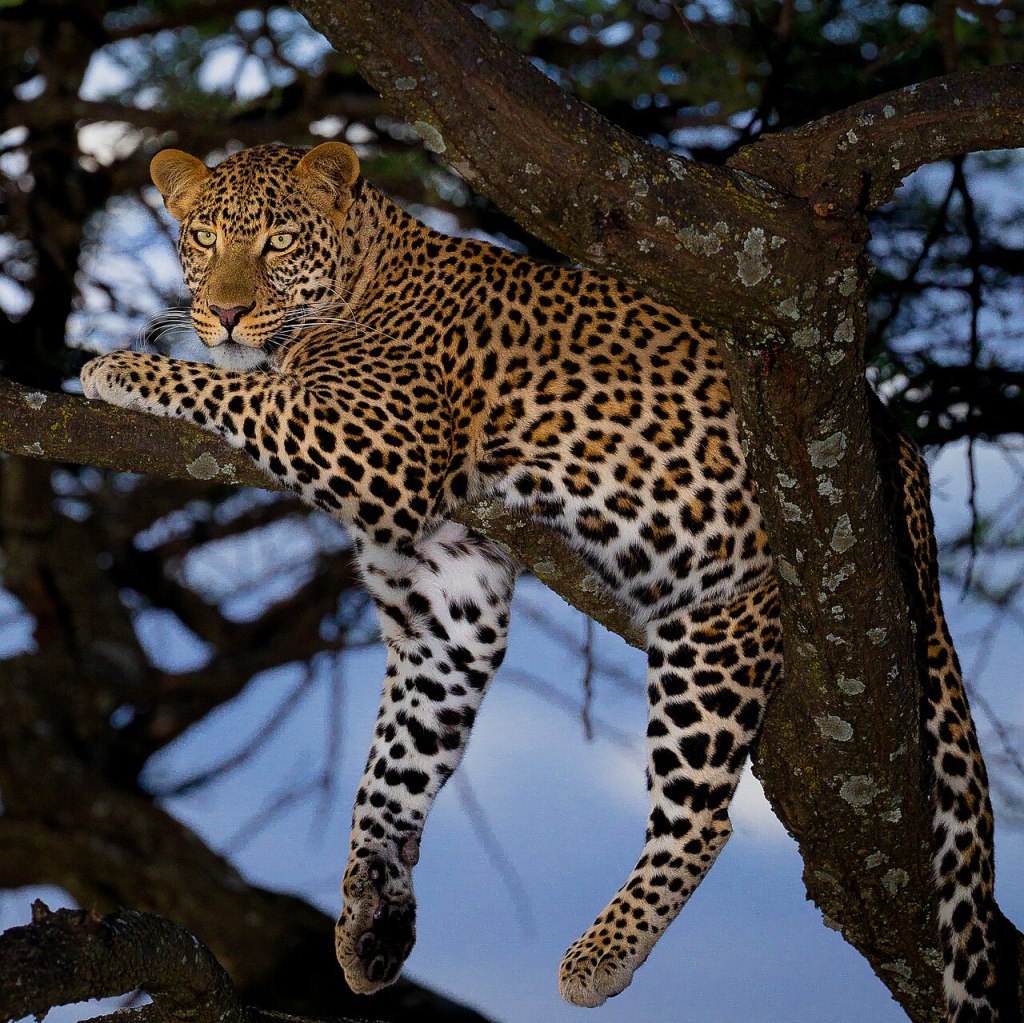
A leopard resting on a tree branch, looking alert with its head turned slightly.
A leopard in the Maasai Mara in Kenya. Credit: Sumeet Moghe/Wikimedia Commons

It’s not just other cats who put pressure on leopards. Hyenas, wild dog packs, dangerous herd animals and colossal animals like elephants and rhinos pose a danger to the spotted big felids, if not directly then in competition for food and territory.

So for leopards to successfully thrive, they’re forced to rely on their other unique skill sets, including impressive adaptability and intelligence. They hunt when others rest, eat in places out of reach of their competitors, and know when to cut their losses.

While tigers hunt in daylight, leopards stalk their prey in the darkness. Tigers and lions have the luxury of eating out in the open, as wild dogs know it would be suicidal to lay claim to kills belonging to a pride or a tiger pushing 700 pounds. Leopards aren’t guaranteed that luxury.

Leopards aren’t just physically vulnerable to species they share a range with, they’re also at risk of going hungry. Leopards can expend their finite energy on successful hunts only to be forced to abandon their kills to lion prides and canine packs. They can mitigate the risk by dragging their kills up into trees using their powerful limbs and sure footedness, or taking them into the tangle of the underbrush, though neither method is fool-proof.

Perhaps that’s one reason why, despite being the smallest and lightest of the big cats, leopards have a reputation for being particularly ferocious.

The Champawat tigress, also known as the Demon of Champawat, is history’s most notorious man-eater, but the lesser-known Panar Leopard was equally deadly, with more than 400 confirmed kills. The Leopard of Rudraprayag, contemporary with both, had a shorter reign of terror but took 125 human lives.

All three were killed by the legendary hunter Jim Corbett, whose name was synonymous with taking out man-eaters for decades before he became a big cat conservationist later in life. In his book Man-Eaters of Kumaon, Corbett described leopards as the trickiest big cats to track, and hunting them — as opposed to the canned kills favored by modern “sportsmen” — presents significant physical danger and risk of death even to experienced hunters.

Considering the level of self-awareness, understanding and deceptiveness displayed by animals like the Champawat tigress, who changed her tactics several times as Corbett tried to close in on her and nearly killed him by setting up a clever ambush, for Corbett to attribute even greater wiles to leopards speaks to their extraordinary ability to adapt on the fly and anticipate what their enemy might do.

When it comes to hunting man, there are two things that distinguish leopards from their tiger and lion counterparts. (And if you’re wondering where jaguars fall on the list, they don’t. There are no recorded cases of prolific man-eating jaguars, a fact often attributed to the animals’ tightly controlled abilities and reputation for calmly assessing situations. Jaguars very rarely kill humans, and when they do it’s because people have threatened them or their cubs, leaving them no chance to withdraw safely.)
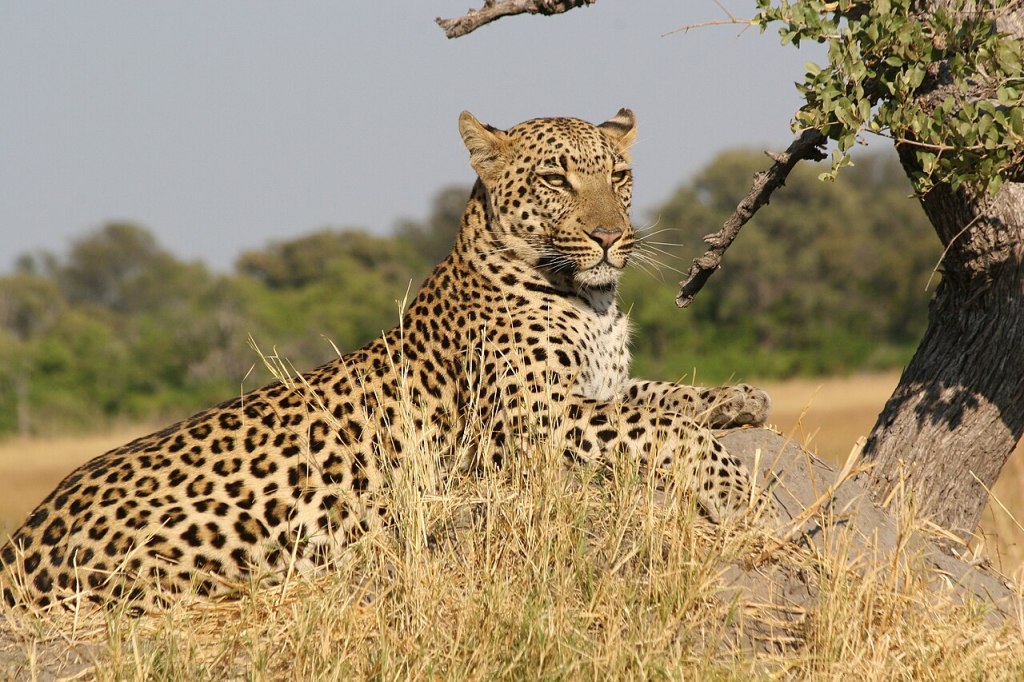
A leopard lounging on a rock surrounded by grass and trees in a natural habitat.
Credit: Wikimedia Commons

As disruptive as man-eating tigers are, people living in areas stalked by them can find refuge indoors. Tigers hunt by day and won’t enter human-built structures, but leopards have no such limitations.

Both the Panar and Rudraprayag leopards, as well as other man-eaters of their species, were known to barrel through doors or leap through windows at all hours to catch sleeping humans unaware and drag them screaming into the night. It’s pure nightmare fuel and has a profound psychological effect. When man-eating leopards terrorize an area, there’s no true sanctuary.

While lions and tigers become man-eaters due to injuries — broken teeth most commonly — and old age, leopards do so because of opportunity and convenience.

For example, the man-eating leopards who terrorized India in the late 1910s and early 1920s acquired a taste for human flesh because the Spanish flu ripped through regions where they range. Survivors were hesitant to handle their bodies to bury them, and leopards found easy meals. From there, experts believe the big cats realized hunting humans is often easier than hunting agile ungulates and other typical prey — at least in the short term, before humans organize and retaliate.

Leopards are often confused with at least two other cat species, jaguars and pumas. It may be somewhat difficult to tell leopards and jaguars apart in a zoo without the benefit of signage, but in the wild they don’t co-exist. Anyone who encounters a spotted cat in the wild in Africa or Asia is looking at a leopard, while jaguars are native to the Americas, ranging across most of South America and the southern US.

Otherwise, there are visual differences. Jaguars are bulkier and more muscular, with shorter limbs, and their rosettes or “spots” have small flecks inside them. Leopards have longer limbs and may have broken rosettes, but generally do not have the small flecks and dots within their rosettes.
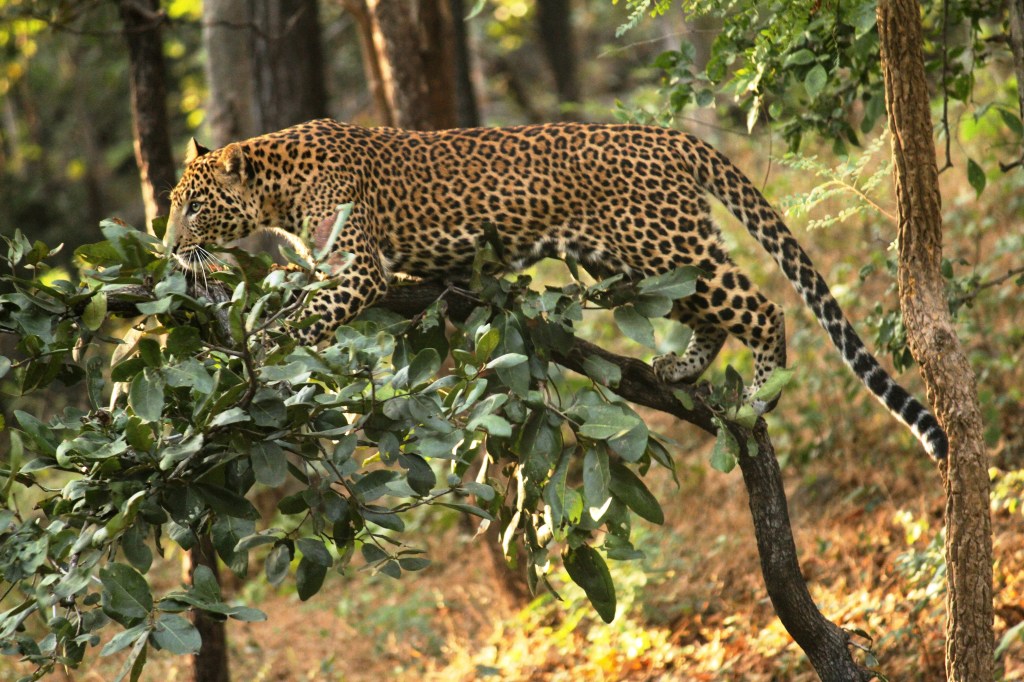
A leopard gracefully perched on a thick branch of a tree, surrounded by lush green leaves and a natural forest backdrop.
Credit: David Raju/Wikimedia Commons

As for pumas, they look nothing like panthera pardus or panthera onca (jaguars), and they are not true big cats, lacking the ability to roar and boasting a different lineage. But because pumas, jaguars and leopards are all colloquially called “panthers,” some people confuse them.

Both leopards and jaguars have melanistic (black) variants, but their coats are not entirely black. Under the right lighting conditions their rosettes are visible, making it possible to differentiate them visually. There are legends of melanistic pumas, but no one’s been able to verify them.

As opportunistic hunters, a leopard’s lunch or dinner is whatever it can reasonably catch, and along with pumas they’re generalists and will eat just about anything despite their individual preferences.

They’re masterfully stealthy and can ambush prey in a multitude of ways, including from above thanks to their excellent climbing abilities. Leopards are exceptionally strong despite their relatively small size compared to other big cats, and they’re able to drag carcasses larger and heavier than themselves up trees. They can descend from trees head-first, giving them an enormous advantage when attacking from elevation.
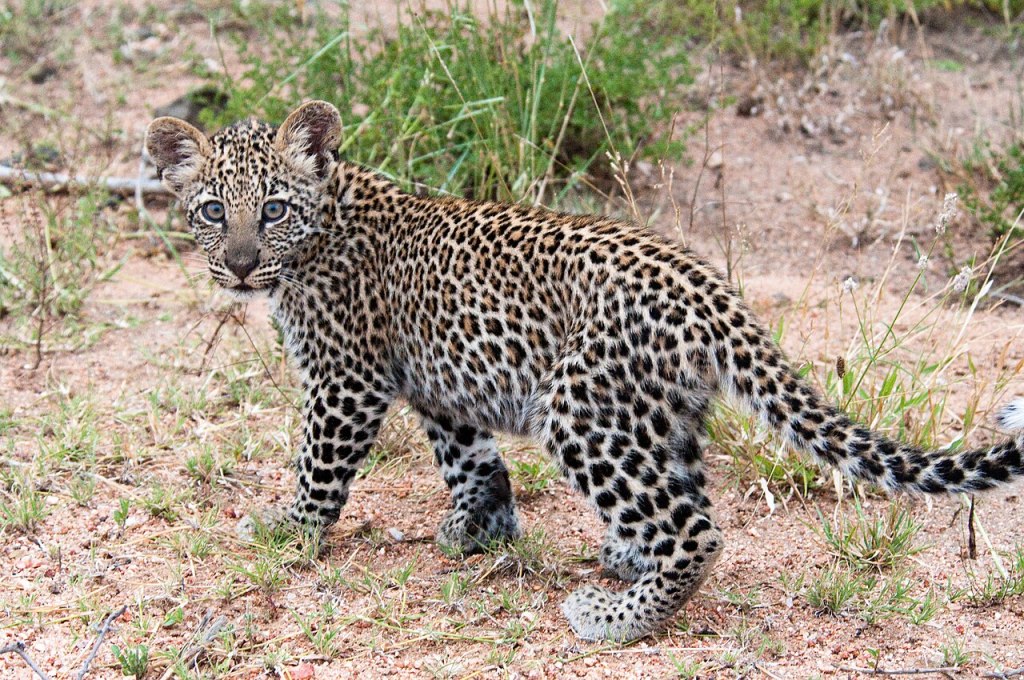
A young leopard cub standing on the sandy ground surrounded by green grass, looking curiously at the camera.
A leopard cub. Credit: Chris Eason/Wikimedia Commons

Sadly, leopards numbers are in decline across the world. Habitat fragmentation plays a major part, as does poaching to feed the insatiable Chinese traditional “medicine” market for big cat parts, which are used in tonics and folk recipes. They’re also hunted by nomadic tribes in Africa for their skins.

Then there’s the cruelty of nature itself. As adaptable and successful as adult leopards are, getting to that point involves trial and error, lots of learning and luck. By some estimates fewer than half of leopard cubs reach adulthood, with the others succumbing to other predators, poachers and illegal wildlife traders who sell the cubs to people who buy them as status symbol pets.

For more information about conservation efforts, visit the WildCat Conservation Alliance and Panthera, two of the largest global organizations dedicated to preserving leopards and other wild cat species.

Previously:

Amazing Cats: Dwilling In Dense Jungles, Margays Are Tricksters And Champion Climbers

Amazing Cats: The Mysterious Marbled Cat

Amazing Cats: The Rusty-Spotted Cat

Amazing Cats: The Jaguar, ‘He Who Kills With One Bound’

Amazing Cats: The Puma

Amazing Cats: The Sunda Clouded Leopard

Amazing Cats: The Adorable Colocolo, Feline of the Pampas

Amazing Cats: The ‘Fire Tiger’ Is The Stuff Of Legend

Amazing Cats: Ocelots Love Trees, Water And Calvin Klein’s Obsession For Men

Amazing Cats: Pallas Cats Are The Grumpy Little Hobbits Of The Feline World

Amazing Cats: The Jaguarundi Is Adept, Adaptable And Mysterious
Poacher Trampled By Elephants While Trying To Shoot Rhino, South African Parks Officials Say

“Elephants are extremely intelligent and, as people say, they never forget,” a parks spokesman said.

A poacher looking to kill a rhinoceros for its horn was trampled by elephants, whose fury was so great that they reduced him to “a very large bloodstain around the clothing he was in,” South African parks officials said.

Two men illegally entered Kruger National Park on Sept. 11 and walked six kilometers into the Pafuri area, a section on the far north end of the park that features diverse wildlife between two major water sources, the Limpopo and Luvuvhu rivers.

The men were tracking rhinos and were carrying high-powered rifles and an axe, SANParks spokesman JP Louw said. They did not realize that a herd of elephants was moving parallel to the rhinos toward the same water source, and when one of the poachers raised his rifle to line up a shot, the infuriated elephants charged him.

The surviving poacher ran in another direction. When he made it home and reported his partner was missing, he told police he heard the man screaming. He’s been arrested and faces charges of attempted poaching and illegally entering the park.

Rangers found the tracks left by the men and followed them to the site where the elephants charged. They had trampled the poacher so thoroughly that there was little left besides his pulped body and the remains of his clothes, authorities said.

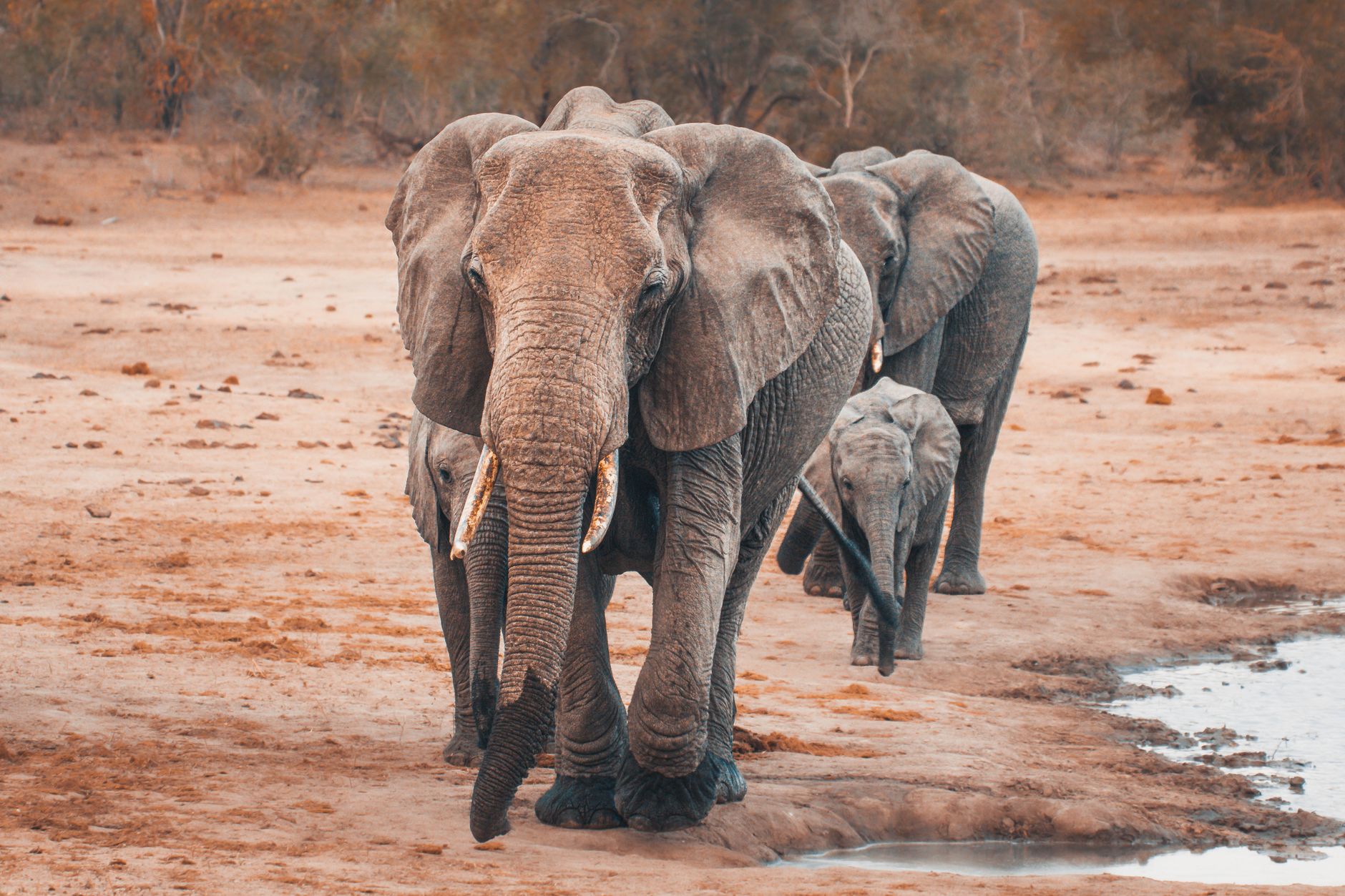
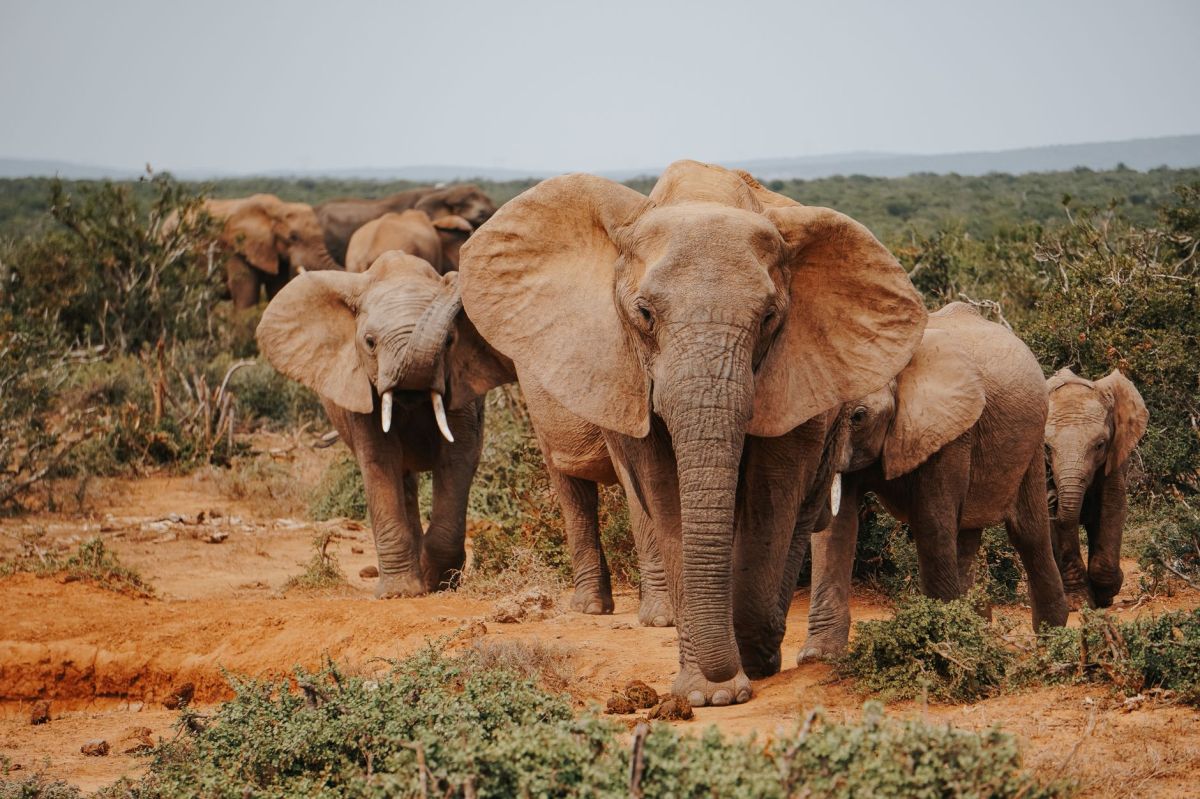
A group of elephants walking towards the camera near a water source in a dry landscape.
Credit: Wayne Lubbe/Pexels

Rangers also found a dead buffalo, which they believe the men killed before their fatal encounter with the elephants.

Rhinoceros horns can fetch about $13,500 from middlemen in South Africa, who then smuggle them into China where they can command as much as 20 times that amount. The demand comes from the traditional Chinese “medicine” market, where animal parts like horns and big cat bones are used in folk elixirs. People believe the elixirs can grant a range of supernatural powers, from immortality to restored “chi energy,” and some elixirs are sold as remedies for everything from common colds to viruses, gastrointestinal issues and baldness.

Traditional Chinese “medicine” is based on concepts invented in deep antiquity and targets a system of “meridians,” pathways said to exist in the body that practitioners claim are the conduits for chi energy.

Chi energy and meridians are both inventions of the human imagination, but what is real is the impact on animals. Poaching has had dramatic impacts on animals like elephants, rhinos, tigers, leopards, lions and pangolins. More recently, because authorities in Africa and India have gone to greater lengths to protect their surviving wild animal populations, Chinese poachers have turned their efforts toward South America and the Amazon jungle. In recent years jaguar poaching has skyrocketed to fulfill demand from China.

In a dramatic example from October of 2025, fishermen in Brazil rescued a severely wounded jaguar who had been shot by poachers and had made a desperate escape into the Amazon river. The fisherman found the wounded big cat bleeding and barely clinging to a piece of debris.

That jaguar’s story had a happy ending: veterinarians were able to save him despite 30 lead fragments embedded in his head and neck among other injuries, and he was released back into the wild after he recovered. Sadly, most jaguars who are targeted by poachers do not survive.

Instances of poachers killed by elephants aren’t novel either. In another incident in Kruger National Park, a poacher was trampled by an elephant, then eaten by a pride of lions.

“Elephants are extremely intelligent and, as people say, they never forget,” Louw said. The elephants knew what a man raising a rifle means “and may well have witnessed poachers before sneaking up on rhinos and went to protect them.”

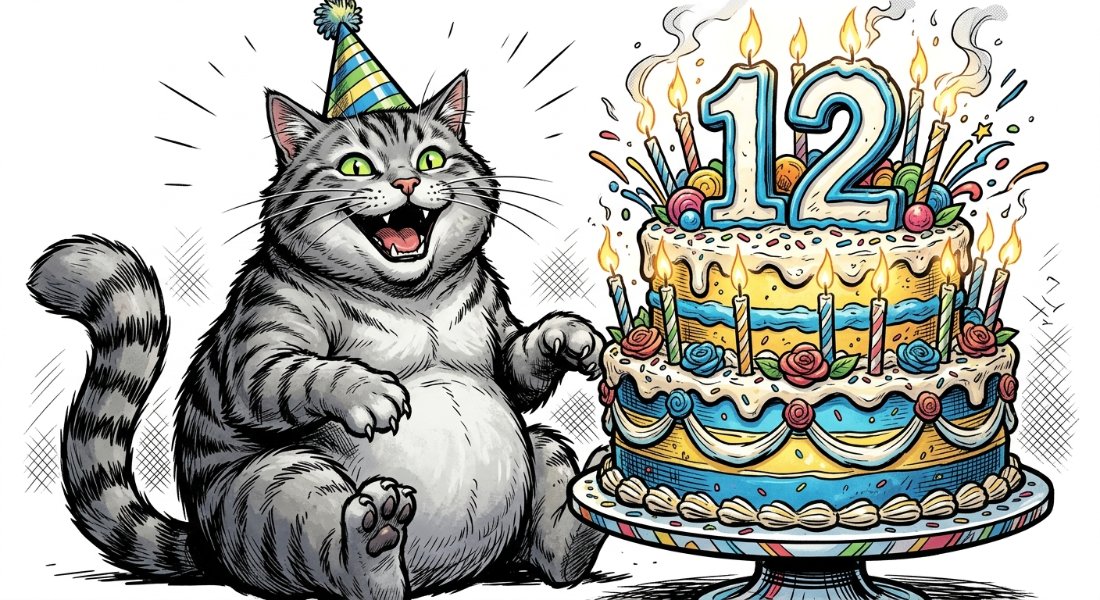
Happy 12th Birthday, Little Buddy!

Let the catnip flow and the good times roll.

This weekend marks 12 years since I took home an energetic, bold, curious, talkative gray tabby kitten.

In some ways it feels like it can’t possibly be 12 years since I adopted the Budster, but it also feels like the little dude has been around forever. He’s such an outsize presence with a huge personality, and he never lets you forget he’s around.

As we celebrate the loudmouthed, opinionated, turkey-loving little guy, here are some of his adventures as chronicled here on PITB:

  • The time he was named Sexiest Cat Alive by CatPeople magazine.
  • The time he broke into the tiger enclosure at the Bronx Zoo to hang with his “homies” and was claimed as a cub by a tigress who gave him big, sloppy tongue baths.
  • The time he traveled to the Amazon to hang out with jaguars and was oddly accepted by them after he shared turkey and showed them how to make more comfortable beds.
  • The time Sir David Attenborough made a documentary about “the silver-furred Buddy” in “his native habitat, the living room.”
  • The time he was tricked by a Nigerian scammer, then got revenge by sending a lion to recover his money.
  • The time he issued his little red book filled with his wisdom, like this nugget: “Observe the human, and its wretched species, always in thrall to an invented concept called time. The time is what you say it is. I say it’s time for a snack.”

Bud must have been born some time in February of 2014, but since I don’t know the day, his adoptiversary is his de facto birthday.

We’ve got a long weekend ahead of us, including a party, a dance contest, a cocktail hour with Bud’s jaguar friends, and of course the grand fireworks display on Sunday night. There will be catnip and turkey for all.

Happy birthday, Bud!

People Think This Nebula Resembles A Smiling Cat, PLUS: What Kind Of Music Soothes Felines?

Your cat’s taste in music may or may not align with your own.

Before we get into today’s cat news, I received an email asking why there hasn’t been much Buddy on the site lately.

Fear not, friends of Buddy! The little guy is down in the Amazon visiting his jaguar pals, but he’ll be home in time for the most important holiday of the year, Turkey day. He wouldn’t miss it for the world!

Buddy with a jaguar buddy in the Amazon, where there’s a special felid conference on new napping techniques.

A smiling cat?!

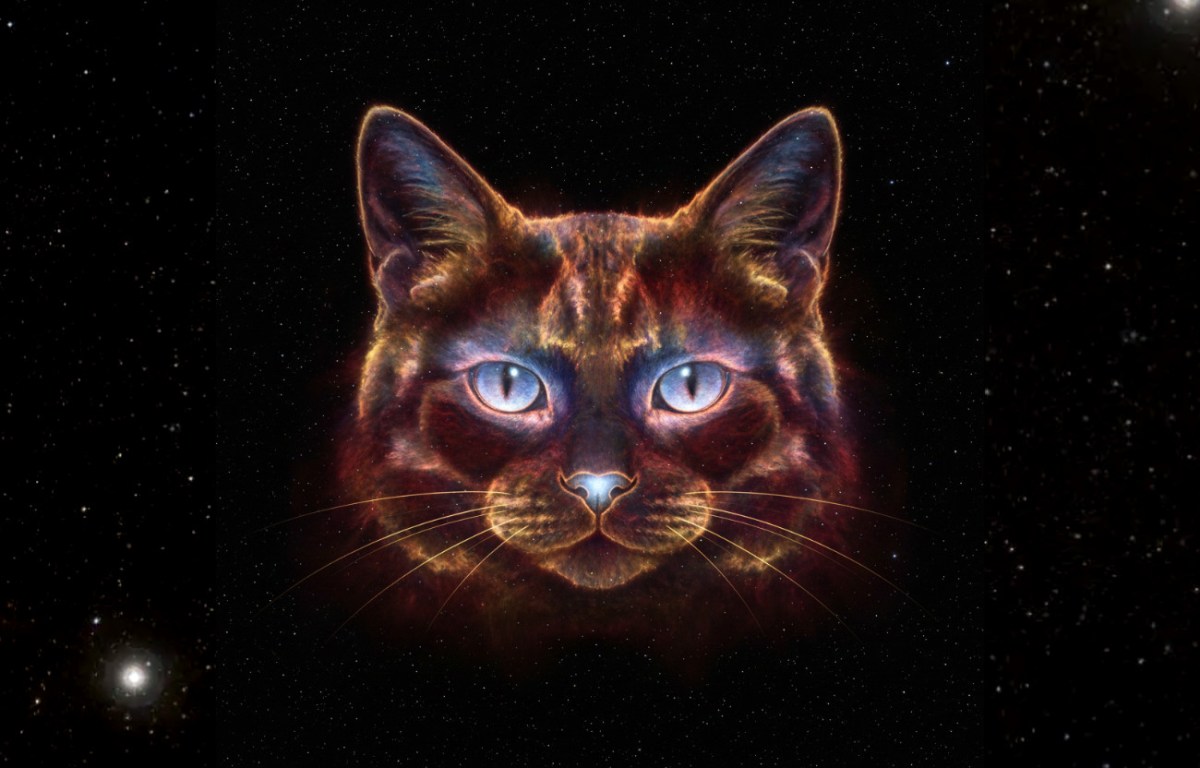
A story on Space.com says people see a “smiling cat” in images of a nebula, although we’re not so sure.

The nebula in question is Sh2-284, or Sharpless 284. It spans about 150 light years and sits about 15,000 light years from our star system near the edge of the Milky Way, in an outer spiral arm.

From a certain orientation, there may be suggestions of cat-like ears and eyes, although if there is a smile, it’s crooked and deranged-looking. Maybe the cat’s on pain pills from the vet?

There’s an opportunity here, since the nebula doesn’t have a nickname. The Buddy Nebula has a nice ring to it!

Here’s an image from NASA:

This spectacular picture of the Sh2-284 nebula has been captured in great detail by the VLT Survey Telescope at ESO’s Paranal Observatory. Sh2-284 is a star formation region, and at its centre there is a cluster of young stars, dubbed Dolidze 25. The radiation from this cluster is powerful enough to ionise the hydrogen gas in the nebula’s cloud. It is this ionisation that produces its bright orange and red colours. This image is part of the VST Photometric Hα Survey of the Southern Galactic Plane and Bulge, led by Janet Drew at the University of Hertfordshire in the UK.

And here’s an annotated image from astrophotographer Jim Thommes that shows us what we’re looking at and the immediate galactic neighborhood:

In Star Trek there’s always a convenient nebula nearby when the Enterprise — or Voyager, Titan or Discovery — needs to “hide” from some well-armed belligerent, and science fiction in general creates the impression that they’re like space swamps.

In reality nebulas are regions where the interstellar medium — the space between stars — is filled with gas, cosmic dust and inert matter. Some are stellar nurseries — places where stars are “born” — and some are the remnants of dead stars and the planets that orbited them.

They can seem to glow red, orange, green or blue depending on the elements present. Some of them reflect starlight while others are like filters, with the gases and dust lending their color to the nebulae structure.

Cats are pretty well-represented in the cosmos, from a human perspective. From the cat’s paw nebula to the Cheshire Cat galaxies, to the Lynx, Leo and Leo Minor constellations, astronomers have seen cats in the sky for millennia.

Does music help cats relax?

Although the research is limited, some studies have indicated certain genres of music can help our little buddies chill out. And if research into the canine response to music is any indication, we should expect to see more evidence for cats enjoying tunes.

When it comes to what kind of music is most effective, studies point to classical music with a slow tempo, as well as reggae and soft rock “with simple rhythms, slower tempos and no heavy percussion,” according to a new story from the BBC.

Just listening to some meowsic!

A 2016 study looked at the effect of music on 12 female cats who were recovering from spay surgery. The research team played “three different genres of music: classical music (CM), ‘Adagio For Strings (Opus 11)’ by Samuel Barber; pop music (PM), ‘Torn’ by Natalie Imbruglia; and heavy metal (HM), ‘Thunderstruck’ by AC/DC.”

The team measured heart rate, breathing rate and pupil dilation, concluding that classical music was most effective, followed by the Imbruglia song and AC/DC last. (Maybe next time they can slide The Tony Danza Tapdance Extravaganza in there for some extra fun.)

Anecdotally, Bud did not respond well to composer David Teie’s Music for Cats, but he hangs out and nods along to funk, classic 90s New York hip hop, retrowave, nu-disco, reggae and certain kinds of rock, which is almost certainly because he grew up hearing that stuff with me.

So maybe there’s a nature vs nurture element to feline musical preferences, although I wouldn’t hold out hope for cats who enjoy the Tony Danza Tapdance Extravaganza. Some things are best left alone.

Zoo Visitors Shocked To See Tabby Cat Napping With Lions, Jaguars And Tigers

Zoologists were at a loss to explain how the tabby cat moved effortlessly among the big cats without becoming a light snack.

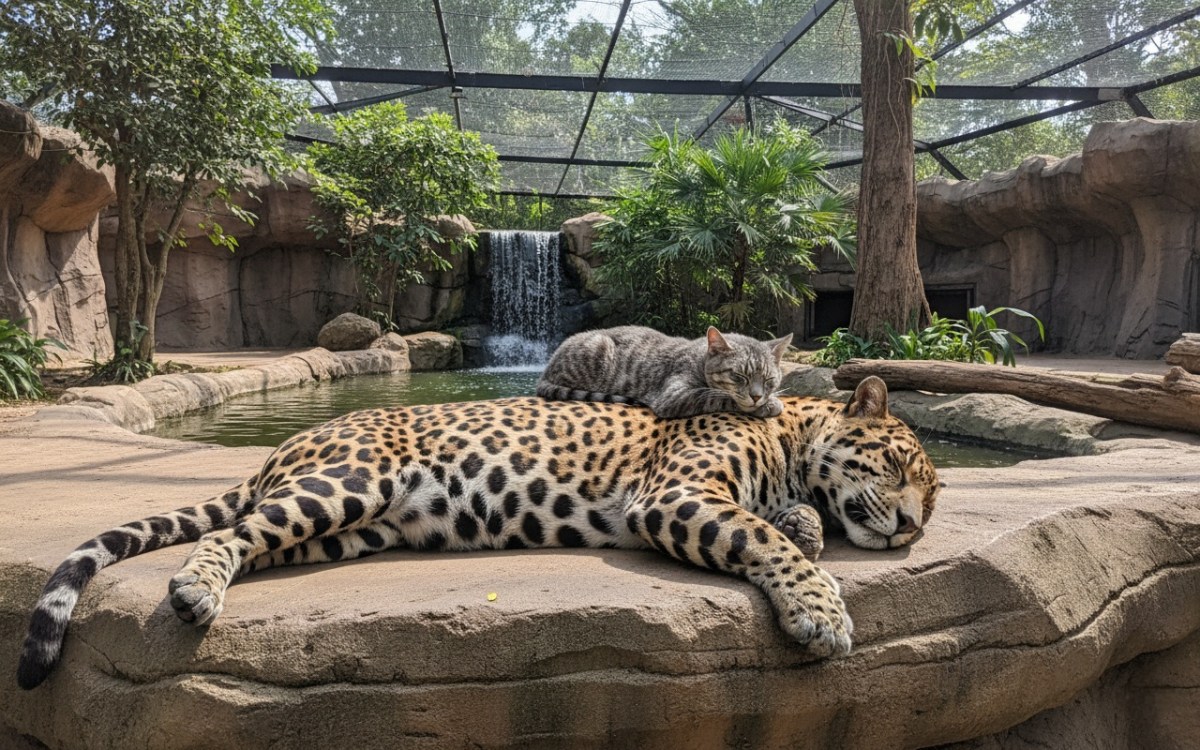
NEW YORK — Zoo visitors and keepers alike were flabbergasted at the sight of a small gray tabby cat lounging in several big cat enclosures on Monday.

Zoologists and a security team were called to the tiger exhibit at 11:45 am when guests reported the domestic cat had somehow entered the enclosure and had settled down between two adult Bengal tigers for a nap.

“It almost looked like the little cat was demonstrating his form for the tigers,” said Al Farelli, who brought his two girls to the zoo Monday and witnessed the strange event. “Both tigers copied the small cat’s posture and then they all dozed off.”

Buddy the Cat enjoying a late morning nap with tigers Zeus, left, and Achilles, right.

Zookeepers, initially fearing for the tiny cat’s safety, were conferring and were trying to coax the domestic feline toward a keeper entrance when the little cat lifted his head and hissed. Zeus, taking notice, followed the smaller cat’s lead and growled at the keepers.

“Never seen anything like it, and I’ve been working with predators for more than 20 years,” said Wendy Johnson, a senior zookeeper.

Zoo staff breathed a sigh of relief when the feline left the enclosure about an hour later, but were incredulous when they received guest reports that the cat had popped up again in Jaguar Jungle.

“We’re just standing there and admiring these majestic big cats when a gray kitty comes padding into the enclosure with his tail up, as if he didn’t have a care in the world,” said Melissa Matthews, a Manhattanite who was at the park with friends.

“Then when the jaguars saw him I gasped because I thought he was about to become an hors d’oeuvre for one of them,” she said, shuddering. “But they chuffed happily, exchanged paw bumps with the little guy and groomed him.”

Once again, the tabby cat settled down for a nap, laying on top of a jaguar named Ixchel.

Buddy finally made his way to the lion exhibit by late afternoon, settling down to nap with a lion named Colossus.

Meanwhile a New York man arrived at the zoo, explaining he’d seen clips of the bizarre scene on social media and recognized the feline as his cat, Buddy.

“He’s always doing this!” the man told zoo staff. “There was the time leopards almost ate him on the Masi Mara, the incident in the Amazon when he took ayahuasca with jaguar shamans, and the debacle when he tried to make himself king of the rusty spotted cats.”

As of late Monday the man was seen arguing with the silver tabby and trying to bribe him out of the enclosure with an impressive snack spread.