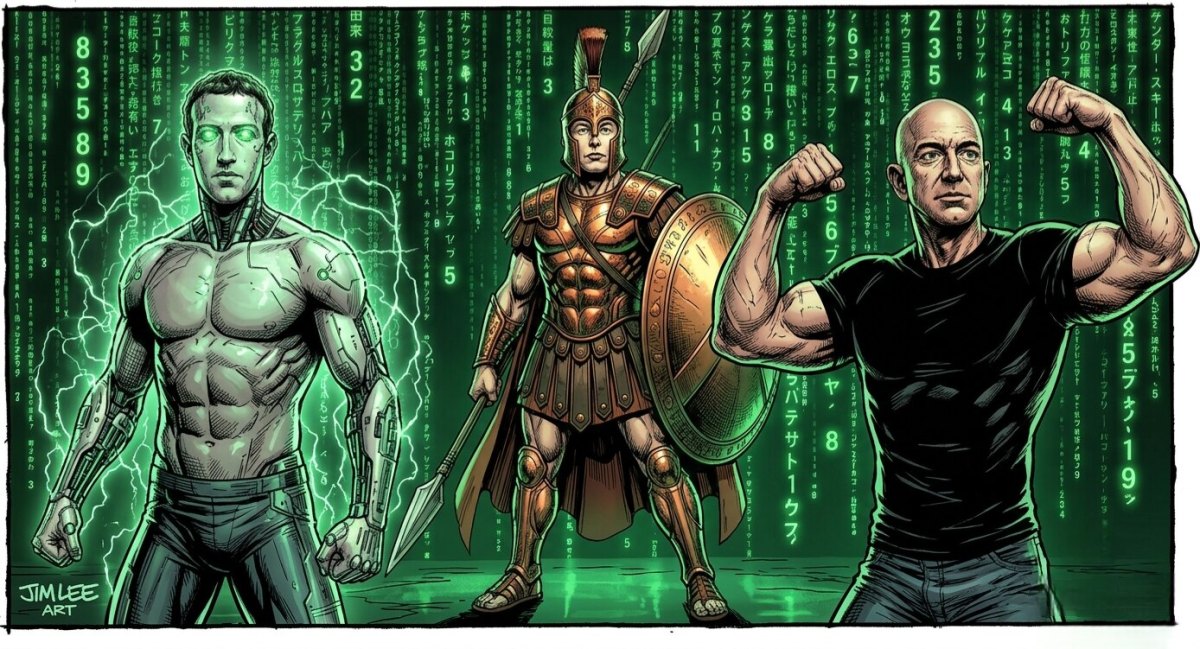
More than a few times over the past few years I’ve read comments from the tech oligarchs — Elon Musk, Mark Zuckerberg, Peter Thiel, Jeff Bezos and company — and thought, “He’s definitely read [insert science fiction novel here.]”
Zuckerberg, for instance, was clearly besotted with Neil Stephenson’s Snow Crash when he renamed his company Meta and poured a literal fortune into his watered down version of the metaverse imagined in the novel.
Snow Crash came out in 1992 before the vast majority of people had dial-up internet, let alone a concept of cyberspace or the always-on, interactive mobile internet of today. It’s hugely influential among tech enthusiasts, and it’s one reason Stephenson and other SF novelists were paid to be “idea guys” for tech companies.
Now Musk has name-dropped Iain Banks in a viral interview with The Economist this week, which ended with the wealthiest man in human history going into a full meltdown and throwing a tantrum over sensible, obvious questions. It’s remarkable that a man who built a peerless business empire has the emotional maturity of a toddler, although the closer you look at Musk’s businesses, the more it becomes obvious their valuations are not tethered to reality any more than he is.
The problem is that Musk, like the others, moves through life in a bubble surrounded by people who tell him he walks on water, and no one in his orbit would dream of suggesting he’s confused about something, let alone actually mistaken. Yes, Elon! That’s brilliant, Elon! You are a gift to all mankind, Elon!
Elon’s favorite science fiction
When The Economist’s interviewer pressed Musk on his contradictory views about society and equality, Musk told her she should read Banks’ work. Unfortunately either he hasn’t read it either, or somehow managed to make it through those thick volumes without absorbing themes that may as well be emblazoned in neon.
Banks, for the uninitiated, was a Scottish science fiction writer of astonishing talent.
He was best known for writing a series of novels collectively known as The Culture, which portray a far future utopia, a post-scarcity human society. The Culture is run by ultra-benevolent, conscientious AIs called Minds who not only serve as the serene caretakers and shepherds of humanity, but oversee all the automation and logistics that transform society into the prosperous, fair and idyllic commonwealth the novels imagine. Machines, in other words, do all the work people don’t want to do.
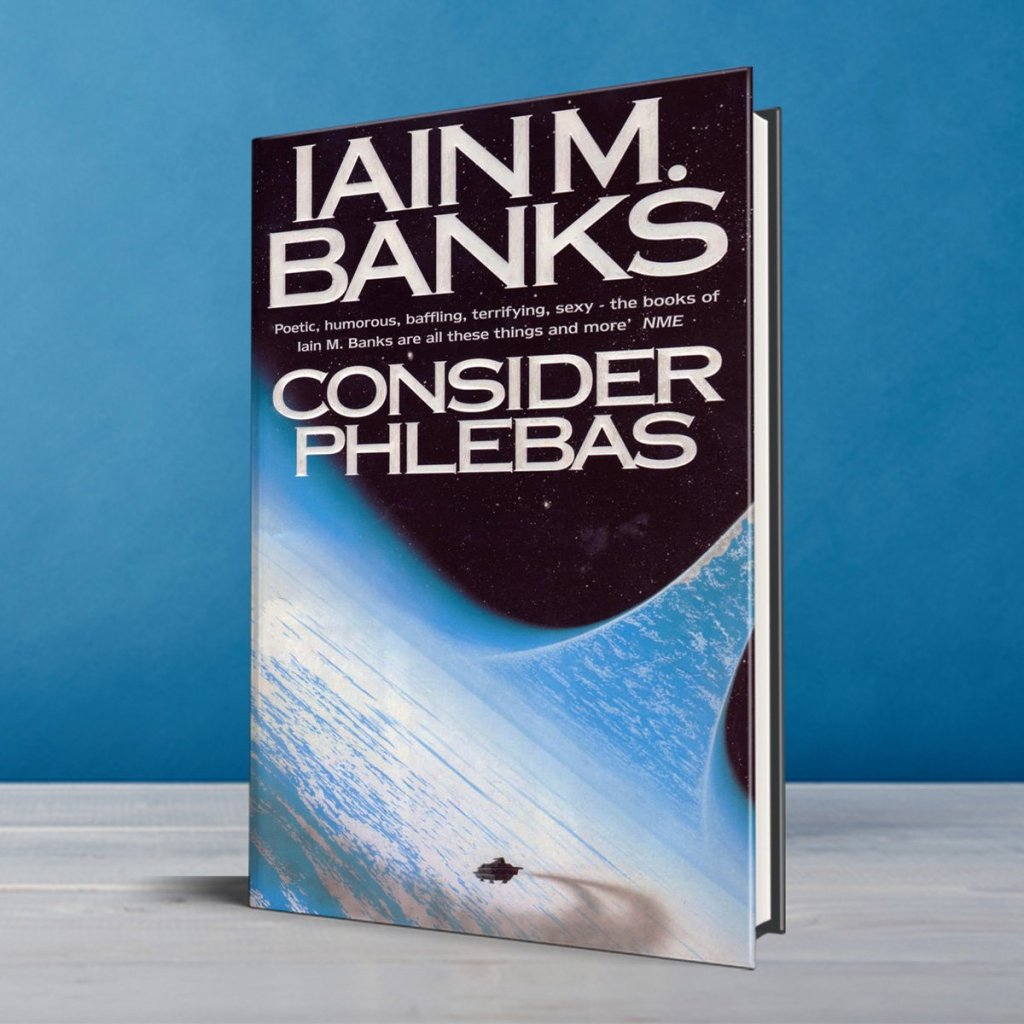
When I read The Culture novels, I saw what almost everybody else sees: the work of an author who is uncomfortable with ideological extremes, views a blended socialist model as possible and even preferable in a situation where resources are no longer scarce, and is more than willing to kick the crap out of the society he imagined by showing its worst aspects, cognitive dissonances and potential pitfalls, perhaps as a warning not to take it too seriously. (And as a humble admission that he’s just making this stuff up, so really, don’t get carried away with it.)
All of it is rendered in gorgeous, shimmering prose, populated by characters who are a riot to spend time with, and garnished with dialog that reveals a rare gift for capturing the rhythms and beauty of the English language.
Banks, unfortunately, is no longer around. He died in 2013 after a diagnosis of incurable gall bladder cancer, and the literary world is significantly poorer for that loss.
But he made his political views known in interviews and his personal life in addition to his novels, which is why it’s hard to believe Musk thinks MAGA and Trumpism are atavistic forms of The Culture‘s utopian, fair society.
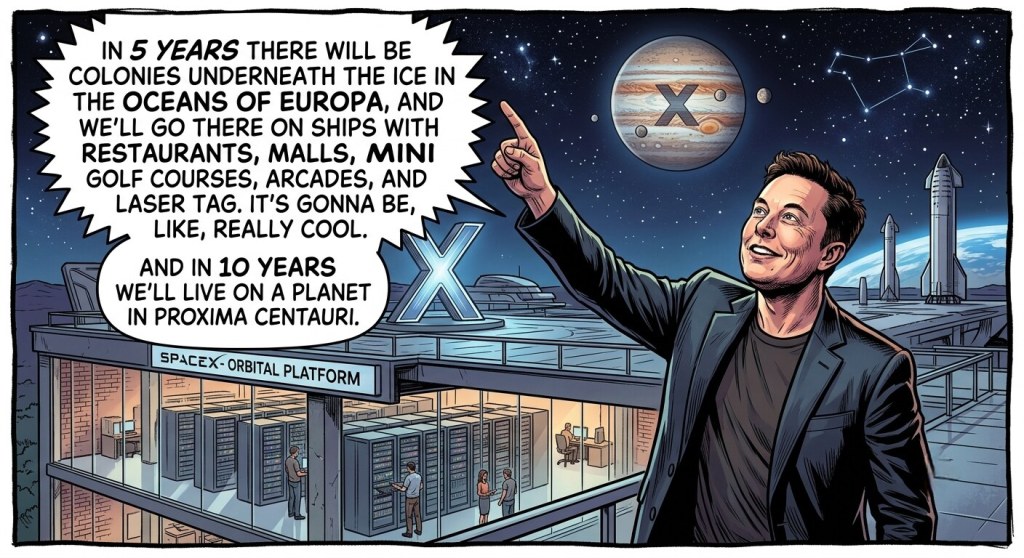
On the one hand, Musk claims we’re 10 years from the kind of post-scarcity society portrayed in science fiction novels, that we’ll all have endless resources and get to fill our days pursuing our personal interests because money won’t mean anything. It’s an aspirational if unrealistic claim.
On the other hand, as The Economist’s interviewer pointed out, Musk has been relentless in his hoarding of wealth, gives no money to charity, and seems to amuse himself primarily by pouring fuel on the culture war fires.
Culture wars, rage bait and pseudo-andriea (ψευδανδρεία)
The tech CEO and world’s wealthiest man is remarkably committed to playing the heel online.
He constantly wades into arguments regardless of whether he knows anything about the subject matter. He delights in making incendiary comments about topics like Islam and immigration. And he is seemingly incapable of going one day without showing us his inner child.
“I literally challenged Vladimir Putin to one on one physical combat over Ukraine” he wrote on X last year before crediting himself and his Starlink service for the smaller country’s battlefield successes against Russia.
A few months later he bragged that he was the first “[A]merican druid in [D]iablo to clear abattoir of zir and ended that season as best in the USA,” which might be the second-most ridiculous thing a human being has written, surpassed only by his fantasy of the entire world cheering as he defeats Putin mano e mano. (Musk lied about his video game “accomplishments,” unsurprisingly. Gamers, who are not as credulous as Musk imagines, quickly figured out that moneybags paid a pro gamer to log into his account, play as him, and achieve the top ranking so the world could unite in awe at Elon Musk’s magnificent button-pushing skills. 1337, ladies and gentlemen.)
He cleared the Abattoir of Zir! Hand this man a Medal of Freedom, give him the powers that used to belong to congress and let him cook! And if he wants to cosplay as Achilles and Hector Vladimir Putin into surrendering, wonderful! It’ll save us billions in munitions and aid to Ukraine.
As The Economist’s interviewer continued asking follow-ups about Musk’s imaginary technological heaven, the trillionaire was “so agitated by facing real questions that he just resorted to whining about how awful the media can be. He seemed to think that his popularity on X, the platform he owns, was evidence that most people actually love him,” Gizmodo noted:
“A quarter billion people follow me,” Musk said, referring to his X followers, adding “I think a lot more people actually like me than don’t.” The billionaire then said that “a lot more people hate you and the media more than you realize.”
Beddoes acknowledged that many people hate journalists, but Musk kept going, repeating “they hate you, they hate you,” like an emotionally wounded child. Musk, flailing, tried to come up with some way to attack The Economist specifically.
“There are more people that die in Europe from heat deaths than people that die from gun deaths in America. Why aren’t you writing an article about air conditioning?” asked Musk.
“Well, we’ve done several on air conditioning, and we had on our cover last week a whole long piece about…” said Beddoes.
“Pro-air conditioning?” Musk asked sheepishly.
“Very pro-air conditioning,” she responded. “You should read us sometime.”
Peter Thiel plays a Lvl 82 Mage
Musk and Zuckerberg aren’t the only ones.
Peter Thiel occupies a different realm. The man who runs the most comprehensive database on the personal details of Americans, whose company enjoys government contracts worth billions and has surpassed every federal agency as the avatar of Big Brother, not only named his business after a wizard’s magical device from The Lord of the Rings, but has spent the last year or two on a worldwide tour in which he lectures attendees on the anti-Christ.
Drawing on the work of Vladimir Solovyov (the 19th century Russian philosopher, not the Putin propagandist who dresses like the admiral of a galactic war fleet), and combining it with peculiar fringe Catholicism, Thiel likes to tell his audiences that the anti-Christ is inbound, he’ll be a technocrat who speaks often of peace and human rights, and he’ll be helped by evil villains like people advocating for AI safety and environmental stewardship.
Very convenient, that. In Thiel’s telling, the anti-Christ’s minions are precisely the same people who want guardrails on his businesses.
In addition to being an obvious fan of The Lord of the Rings, Thiel lists the aforementioned Stephenson as a major influence along with Atlas Shrugged and Dangerous by Milo Yiannopolous. I’m not even going to comment on that except to say what awful company for Stephenson.
These are windows into the world view of a paranoid man who now controls all of our data and wants us to be assured we’re very safe in the hands of Peter Thiel, who will safeguard our browsing habits and protect us from the anti-Christ and his minions.
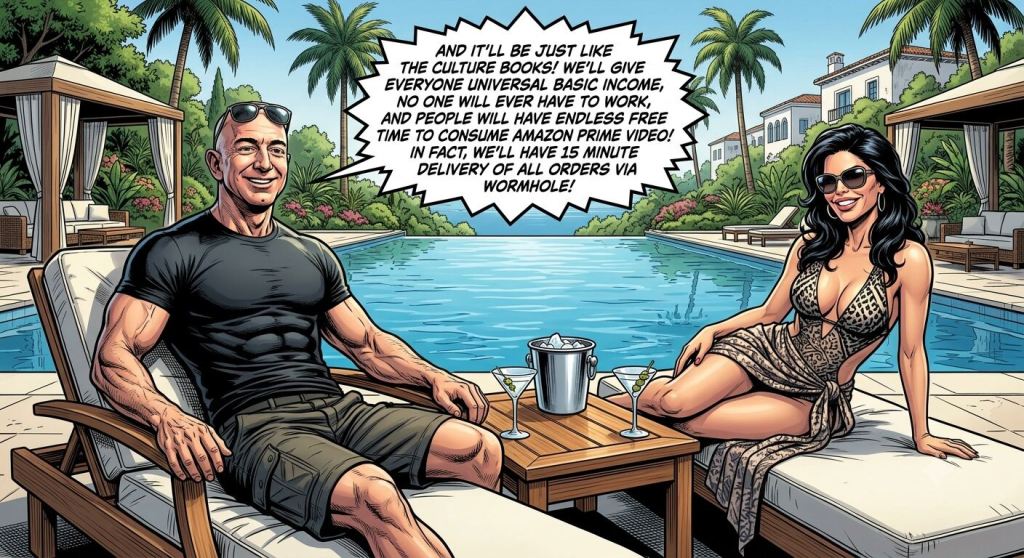
Bezos, too, is a fan of Stephenson, Banks et al, and his public statements indicate he saw what he wanted to see in those stories regardless of what their authors intended.
Understanding the books that spark the imagination of men with so much power is, I’d argue, an essential element in understanding how they think, what they want, and where they believe they’re taking us as a species.
Because make no mistake, these men believe they will decide the future of humanity. What happens from here is impossible to predict, but we’d be negligent to dismiss the collective power and influence of the wealthiest individuals in the history of our species, men who can not only outright buy small countries but also own enormously influential media platforms, private spaceflight companies and communications networks. Amazon Web Services, for example, provides almost a third of all cloud services worldwide, while tens of millions use Starlink to access the internet in more than 160 countries.
In their view, the tech oligarchs will determine what happens from here. Not democratically elected politicians, not voters themselves, not people who have devoted their lives to studying how society works.
They don’t feel indebted to the rest of our species and don’t envision giving us a seat at the table. In an attempt to explain why he doesn’t donate money to charity and sits on an incomparable mountain of wealth like an autistic Smaug, Musk says his work itself is so valuable that no amount of charitable giving could match the gifts he already bestows on mankind. That’s also why he courts mates with a charming pick-up line (“Want to have my babies?“) and maintains a compound in Texas where his concubines raise his Little Musks, who have names like Æ 么-010011 Ʃrik Technomancer and ąƬh33ną Sŏmni-4ㆁ4.
Propagating his Muskian DNA, he believes, is the greatest gift he could give to humankind alongside the technology products produced by his companies.
Tech oligarchs think they’re destined to usher us into a glorious new era in which people live on Mars and Europa, our eyes collectively turn to interstellar colonization, the evil forces of evil (anyone skeptical of them) will be defeated along with the anti-Christ, and this society will be idyllic and judicious with everyone standing as “equals” save the immortal oligarchs, who will occupy permanent positions above humanity, their lives extended indefinitely by the medichines, nanobot-supplemented blood and cybernetic enhancements that exist in their favorite novels.
They, of course, will decide how resources are divided, where research money is diverted, which projects take priority. That’s a scary thought when you consider none of them have expressed much compassion for society’s least fortunate, and some of them have long records of hostility toward people at the bottom.
It’s bad enough that they are staunch in their conviction that their wealth makes them best-qualified to determine our collective future. If they can’t distinguish between fiction and reality, that’s very much our problem whether we like it or not.
If you like reading PITB’s content, please consider whitelisting us in your ad blocker. PITB is a human-owned and operated, non-corporate site. We do not collect data on our readers. This site is not affiliated with TheCatGuy or other scrapers who reprint our content without consent.