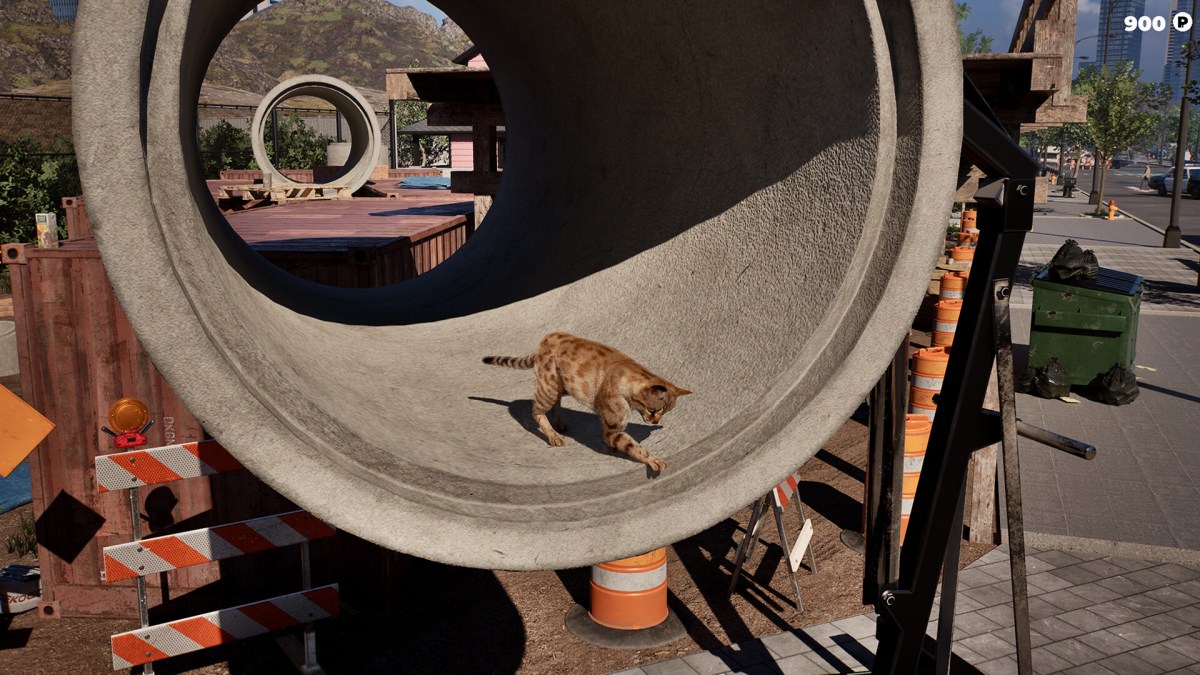
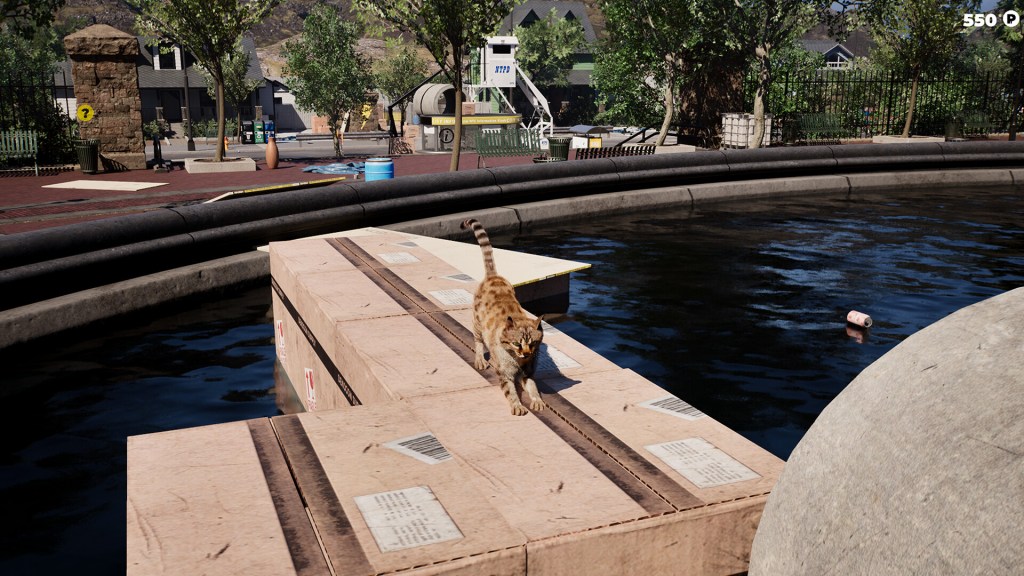
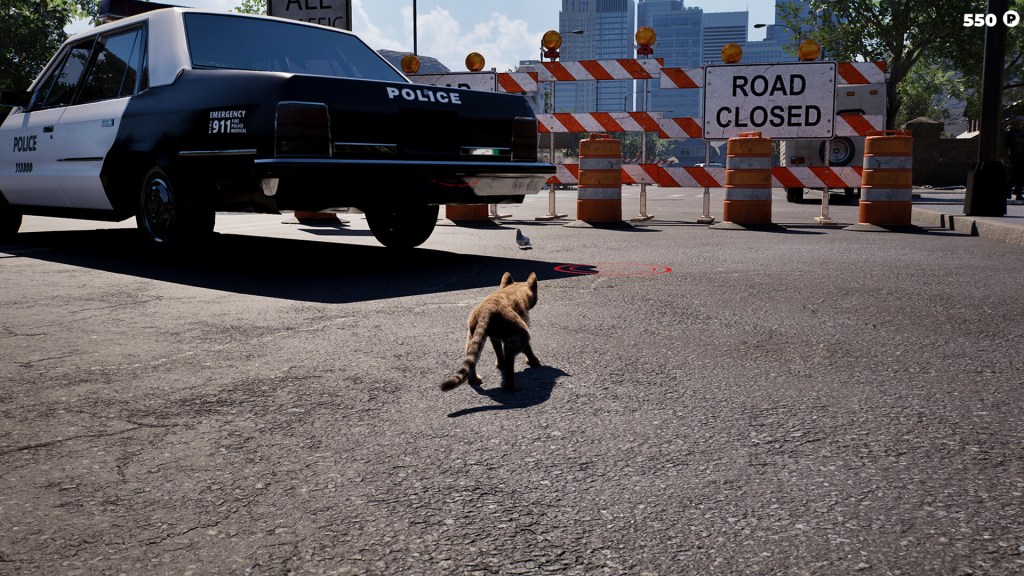
With the success of games like Stray and Little Kitty, Big City, it’s become clear there’s an escapism market for video game players who find it relaxing to step into the paws of our feline friends.
While Stray is an adventure game with heavy doses of mystery and atmospheric science fiction, Cat Life Simulator looks like it’s trying to scratch the same itch as Little Kitty by allowing gamers to experience the whimsical side of feline existence.
That is to say, don’t expect any major challenges, boss fights, or RPG mechanics like leveling up.
In a game like this, the journey is the point, and we use “journey” in a very loose sense here, since it can include napping, knocking objects over for fun and causing havoc.
The closest thing to a challenge mechanic we can see in the trailer is avoiding water. As we all know, our furry friends are generally not fond of getting wet. You wouldn’t either if you were walking around with the equivalent of a fur coat you can partially shed in the warm months but can never fully ditch. (Unless you have a human who brings you to a groomer, which for many cats may rank worse than getting soaked.)
As casual-friendly as Cat Life Simulator looks, the visuals are decidedly high end, and the early hardware recommendations indicate this is a game that will require a decent video card at least.
The game is listed as “coming soon” on Steam with no specific date. We’ll keep you posted as more information becomes available.
The new science fiction franchise consists of novels, a short film, a game due out next year, and an encyclopedic art book. It’s got a compelling narrative, deep lore and all the trappings of great SF, and best of all it has awesome big cats.
Exodus is a hugely anticipated upcoming game from the team behind the beloved Mass Effect series, but it’s so much more than that.
It’s also a 900-plus page science fiction novel, Exodus: The Archimedes Engine by the outstanding novelist Peter F. Hamilton. A second book, Exodus: The Helium Sea, also authored by Hamilton, is due for release on June 16. A short film in the Amazon Prime Video series Secret Level, titled Exodus: Odyssey, further expands the fictional universe and its lore, as does an “encyclopedia” hardcover about the Exodus universe, its major factions, planets and technology.
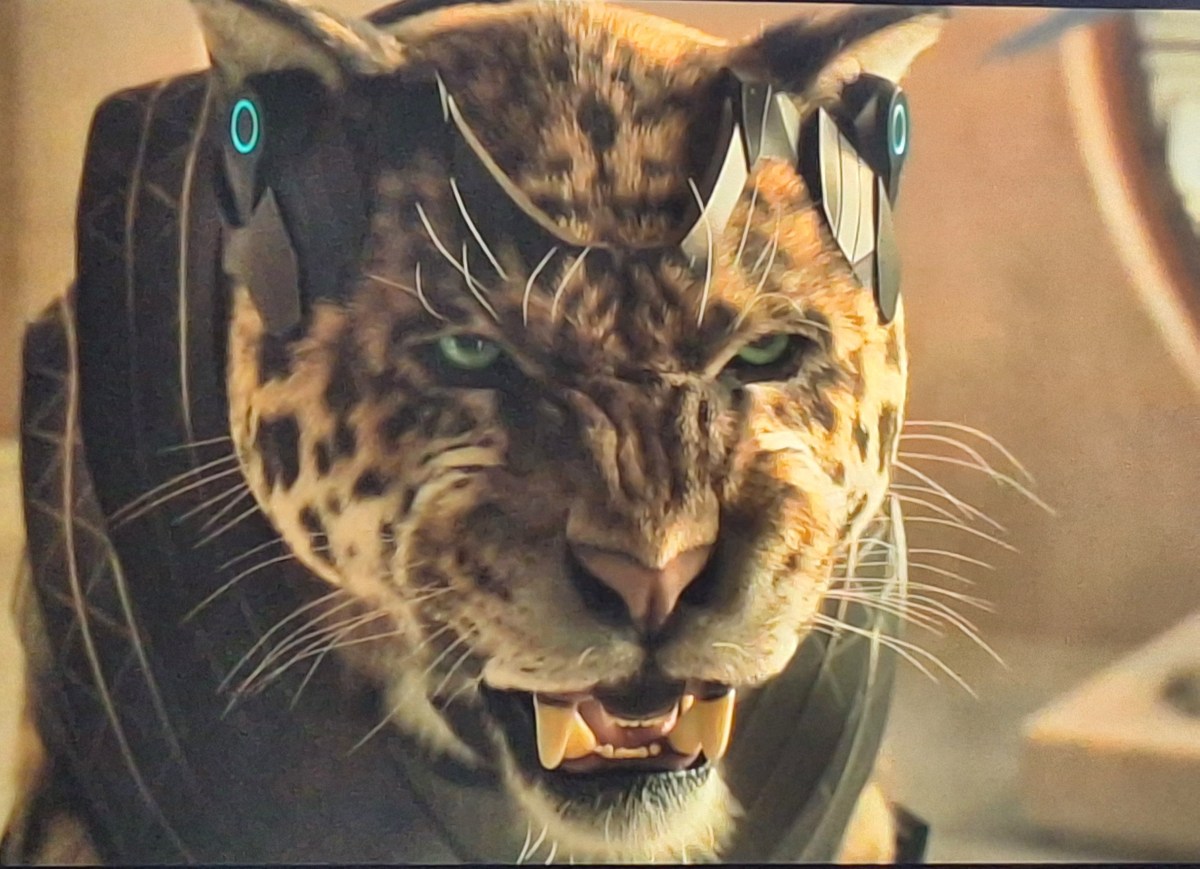
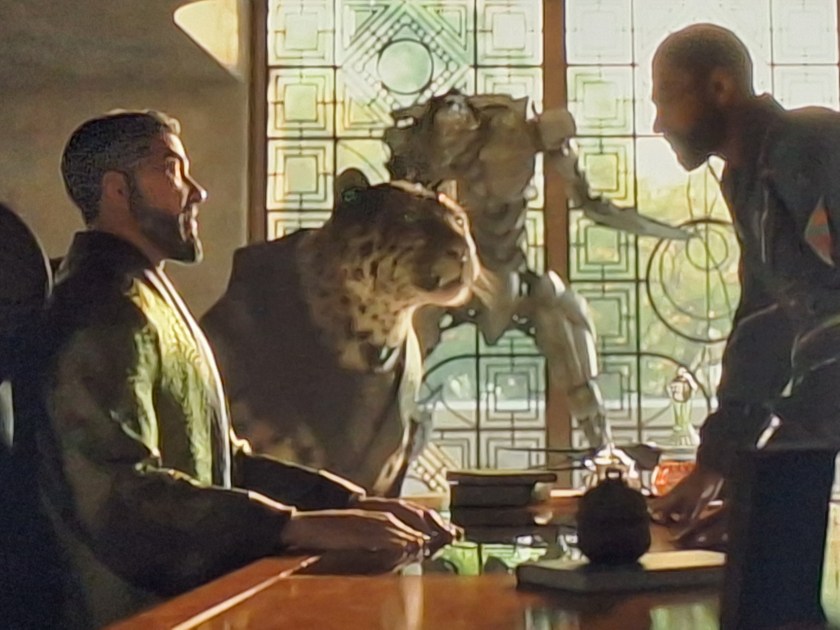
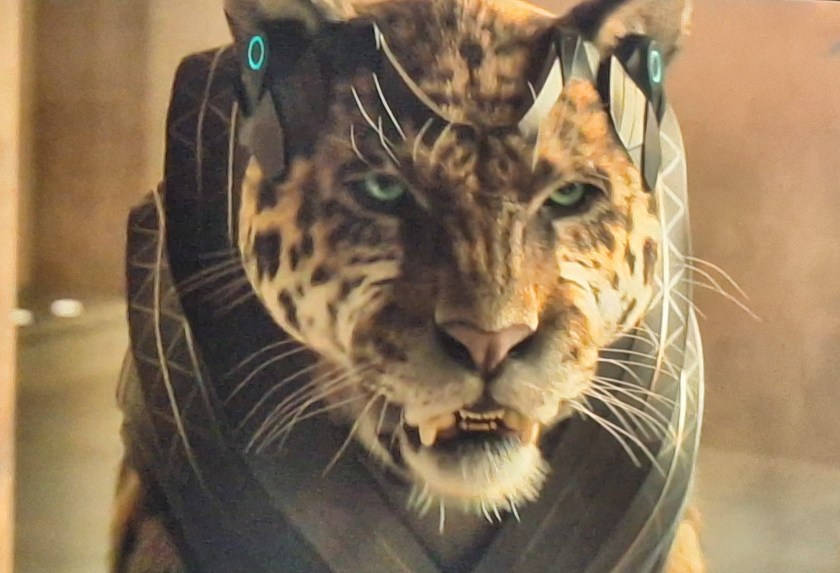
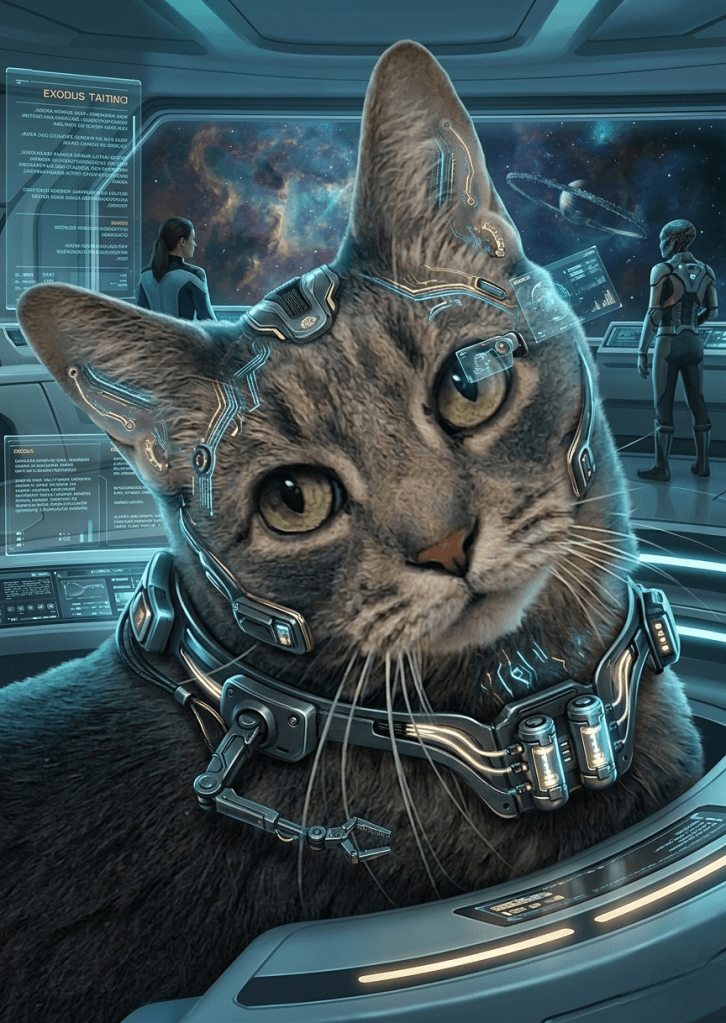
The screenshots in this post are from Exodus: Odyssey, and depict an Awakened Jaguar.
In Exodus, certain animals are “Awakened,” meaning they’ve been genetically modified to give them cognitive and physical gifts.
In the case of big cats, it means they’re smart enough to understand human language, follow complex instructions, interact with technology, and make decisions. Big cats are companions, guards and serve as intimidating special units in the military.
The Awakened Jaguar in this scene is the companion and guardian of a planetary governor. He’s very protective of his human and immediately leaps up to growl in warning when a visitor takes an aggressive step forward.
The Awakened Jaguar leaps up as a conversation becomes intense.Awakened animals can wear tech peripherals, weapons, armor and tools. Big cats are mostly muscle, guards, soldiers and are used to intimidate enemies, while planetary police forces use Awakened dogs and one prominent character is an Awakened octopus who occupies a tank in his own personal mech, allowing him freedom of movement outside of water.
In Exodus: The Archimedes Engine, there’s a scene depicting Awakened Lions deployed with the military. They’re considerably larger than terrestrial elephants, weighing several tons, standing three times the height of adult men. They’re terrifying to behold, which is precisely why the Celestial military has them accompany their generals as honor guards.
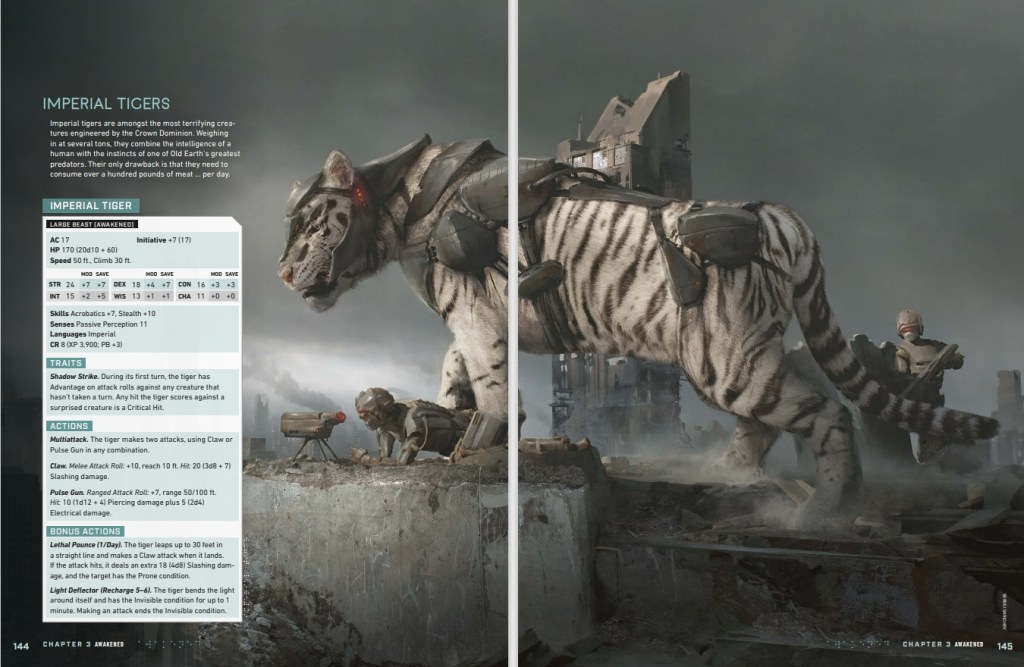
There are also Awakened Tigers who are bigger and much more intelligent than their Earthly counterparts, with fur that can function as active camouflage. The Awakened Tigers are described and illustrated in a companion book, which notes that while the genetically modified big cats are powerful, intimidating and extremely effective, they also have voracious appetites, scarfing down more than a hundred pounds of meat per day.
The Exodus encyclopedia shows an Awakened Tiger standing protectively over a recon soldier:
A two-page illustration of an Awakened Tiger from the Exodus Encyclopedia.
As for the story behind Exodus, I cannot say enough good things about Exodus: The Archimedes Engine.
Hamilton is known for sprawling far-future narratives that combine memorable characters with fabulous technology, vividly imagined societies and awe-inspiring discoveries in the cosmos.
Many of his novels deal with humanity’s encounters with alien civilizations, which range from the serenely benevolent (the Raiel) to the terrifyingly genocidal (MorningLightMountain) and everything in between.
Exodus departs from that template to tell a story about a conflict between regular humans and the Celestials, post-humans who have spent tens of thousands of years on a self-guided evolutionary path that has transformed them into creatures that no longer bear any resemblance to the rest of humanity.
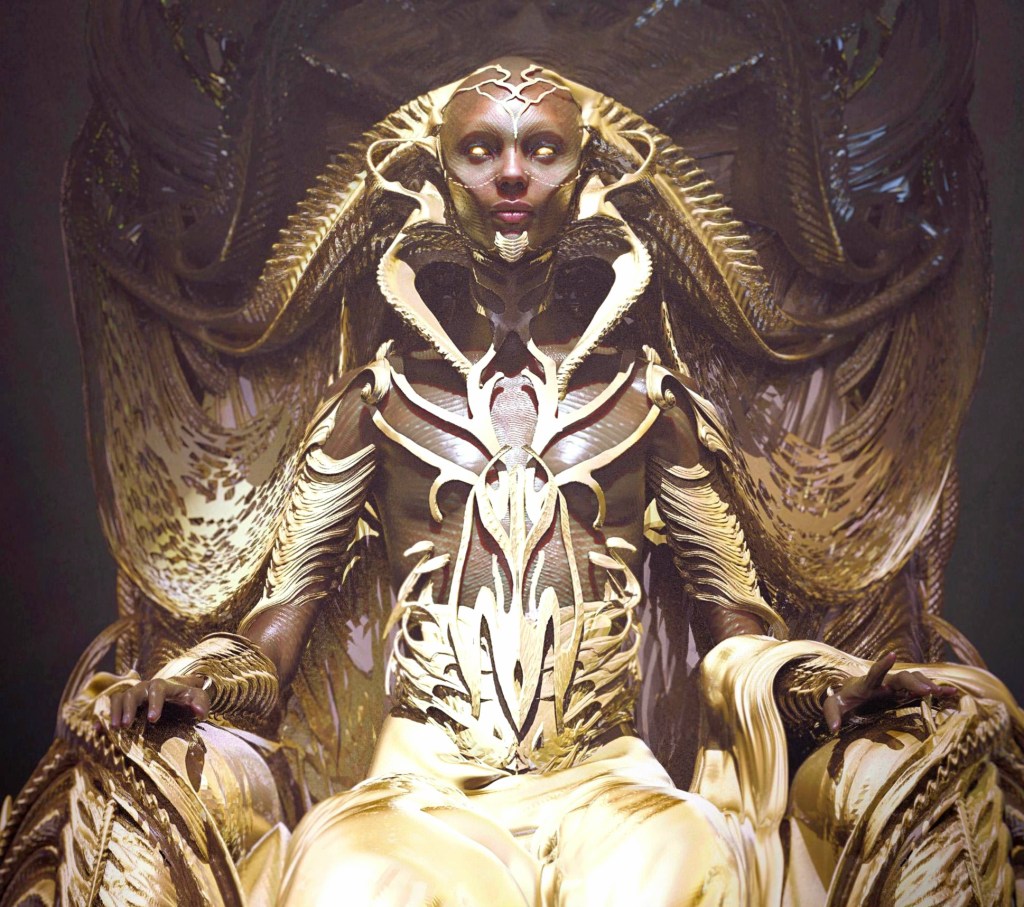
A Celestial queen from the Crown Dominion. The Crown Dominion’s Celestials appear bizarre to us but are actually among the more “normal” looking of the Celestial factions. The most inhuman are said to be the dread Mara Yama and the Talloch-Te.
To say the Celestials consider themselves better than “baseline” humanity is a drastic understatement — Celestial societies have no qualms about breeding humans for specialized labor and roles, emphasizing traits like subservience and loyalty.
In other words, regular humans are treated the same way many in our current society treat animals, as commodities and resources to exploit.
Naturally that does not sit well with people, and the central narrative follows a rebellious group who seek to free every faction from Celestial shackles.
I’m looking forward eagerly to Exodus: The Helium Sea, the second epic novel set for release in six short weeks. I was a bit anxious that a series of novels as a tie-in to a game would be somehow not as great as Hamilton’s usual books, but I should have known the author doesn’t do anything half-assed. The first book introduced compelling mysteries and answered a lot of burning questions, but left plenty to look forward to and resolve.
And as much as I’m hyped for the story, I’m also crossing my fingers for more big cats. Maybe I can convince the creative team that their universe needs an Awakened Buddy…
“No, dude, I get the captain’s quarters! I will generously allow you to use my bed and you will continue to have the honor of being my pillow and stuff.”
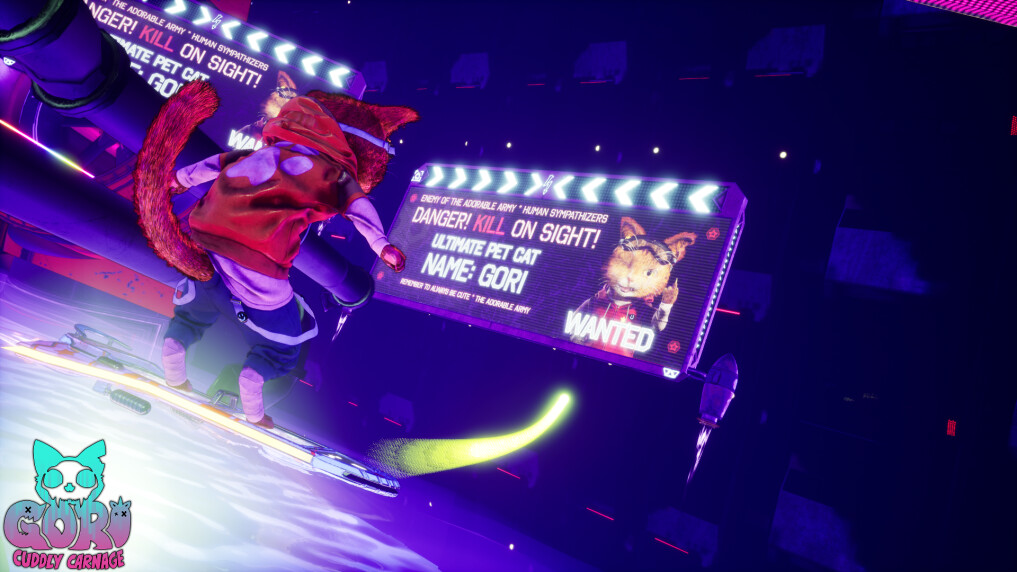
Gori is a cat game for people with a sense of humor and a love for high-octane, chaotic fun.
There’s a moment in the very first stage of Gori: Cuddly Carnage when you get your first weapon upgrade, and your talking hoverboard, Frank, chimes in: “Yeah! A new weapon! Let’s try it on those little shits!”
The “little shits” Frank is referring to are undead unicorns, cute little bad guys who squeak and hop but will murder feline protagonist Gori if he doesn’t kill them first.
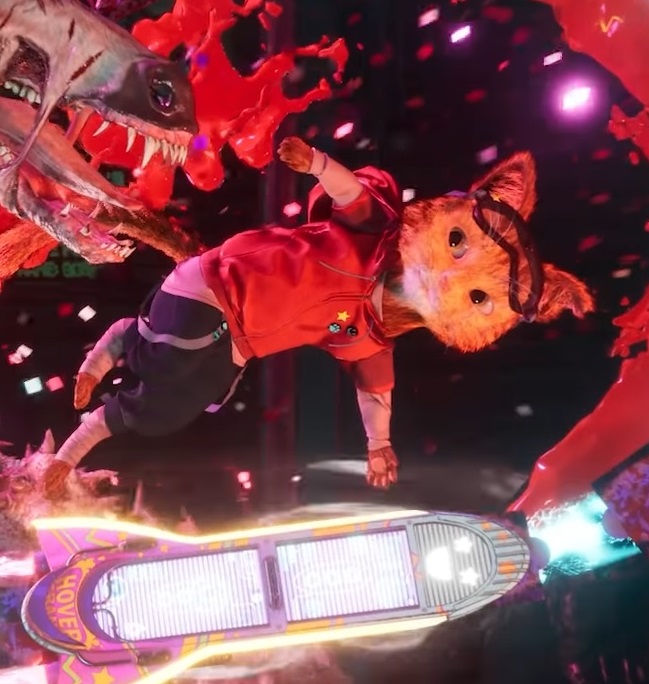
And that’s what Gori: Cuddly Carnage is about: killing enemies, and doing it in the most stylish way possible, with satisfyingly-animated moves that involve spinning, smashing and slashing the bad guys with your hoverboard as you zoom through neon-lit levels at a frenetic pace. All of this is set to a grinding metal soundtrack, with high-sustain solos and singers extolling the awesomeness of Gori.
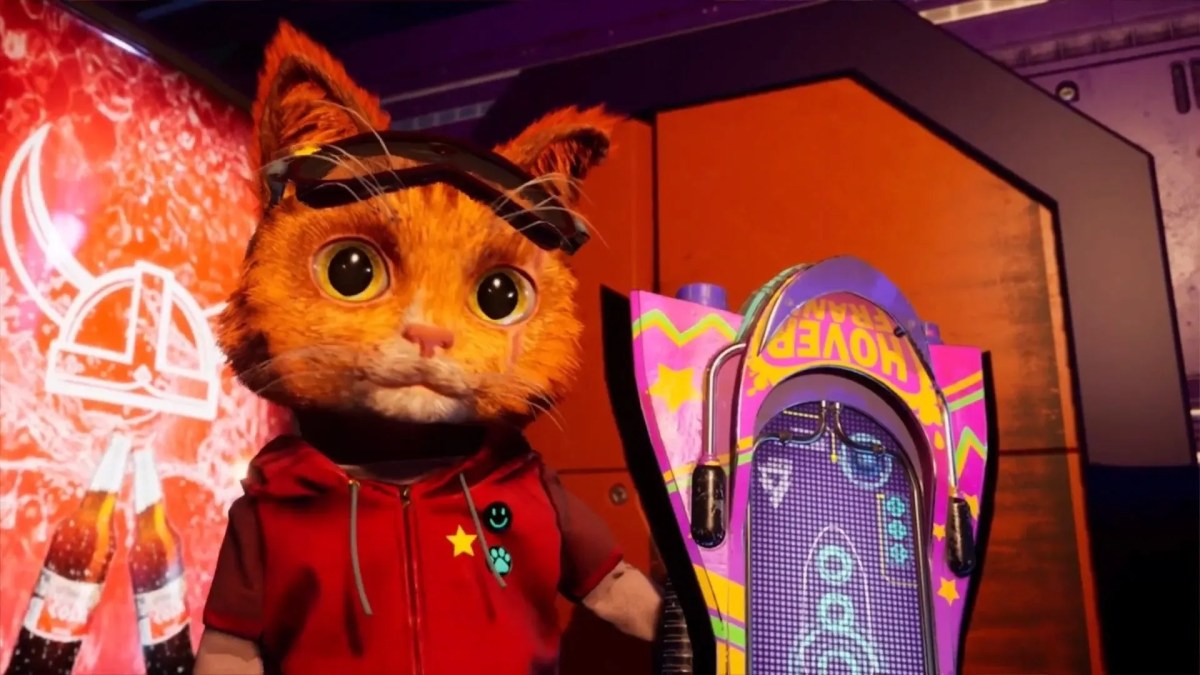
Gori himself is a cute orange tabby cat who happily meows as he executes rail slides and jumps, but this is not a game for children. Developers Wired Productions and CouchPlay have aimed this at cat lovers with a dark sense of humor and gamers who enjoy the nonstop war dance of games like Ghostrunner and the modern Doom franchise, which reward you for an improvisational and fast-paced approach to challenges.
The more quickly you complete levels, the more acrobatic your approach, the higher your score.
Cuddly Carnage’s gameplay feels more like Jet Grind Radio and Ghostrunner than Tony Hawk, despite our hero getting around on a board. Credit: Angry Demon Studio
The game gives you four difficulty choices, from Indoor Cat (“Easily slay enemies left and right in between naps!”) to Cuddly Carnage, the most difficult setting that promises aggressive enemies who hit hard. I’m terrible at games that involve heavy wall-running and constant speed, so I chose the second-easiest difficulty, although the difficulty level seems to have less to do with pace than it does the challenge posed by enemies. Next time I’ll kick it up a notch.
If there’s a story here, it’s almost incidental and serves only to introduce the comically absurd setting. Gori’s spaceship is destroyed, and he’s landed on the ruin of a planet abandoned by its human settlers to find a new ship. Why does he need a ship? To find yums and toys, of course.
The early game looks a bit like the third installment of Borderlands and plays like a faster version of Jet Grind Radio with the aforementioned elements of balletic violence. Hilariously, the first level is littered with what look like abandoned Tesla Cybertrucks, which you can slash in half with your hoverboard to collect resources.
Gori hovers and battles his way through bright, neon-lit streets filled with bizarre and hilarious enemies. Credit: Angry Demon Studio
Cuddly Carnage eases you in, showing you how to execute moves and how to navigate the levels by rail grinding. The idea is to stay airborne as long as possible, using your feline agility and Frank’s boost abilities, descending only to unleash whoopass on your enemies.
While Gori: Cuddly Carnage represents another welcome “play as a cat” game, it’s a completely different beast than 2022’s slow-paced, thoughtful Stray or this year’s playful Little Kitty, Big City.
We played the PC version via Steam, but the game is also available on current versions of XBox, Nintendo Switch, and PS4/5. Steam reviews are extremely positive so far, with 97 percent of reviewers recommending taking a spin with the manic meowster.
Gori is designed as a cute orange tabby, but he’s also a slob: his ship is littered with toys and empty cat food cans, and he loos like he could use a good grooming.
As we noted on Sunday, Larry the Cat just celebrated his 12th anniversary as chief mouser at No. 10 Downing St., the UK prime minister’s residence and office. The Atlantic has a new gallery featuring photos of Larry’s adventures over the years, and it’s fantastic.
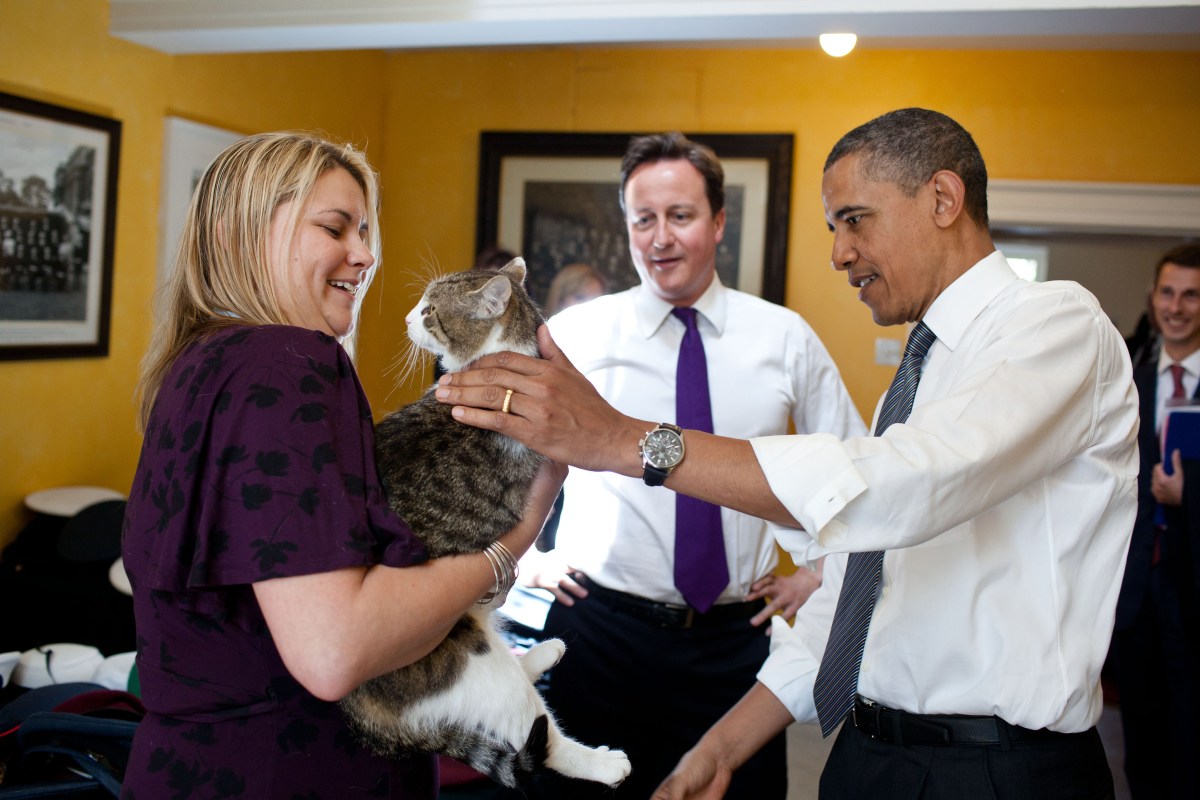
See Larry chase a pigeon, tolerate former President Barack Obama, pose for the press, bolt from a Mitsubishi bigwig, cautiously supervise a police dog working on his turf, hang out with photographers and steal the show during meetings of world leaders.
The gallery also includes rare photos of Larry inside No. 10 (during which he’s mostly gazing longingly at his turf outside) and other amusing moments from his long tenure as de facto head of government in the UK.
(Top image credit: Pete Souza/White House photo)
Cuddly carnage!
The camera pans from a wet, neon-lit street to the jagged remains of a wall spray painted with “Death to Humans” when a tiny head pops up, with the unmistakable shape of cat ears and the markings of a ginger tabby.
Zoom in: An orange tail speeds by, its owner just out of the frame, then the guitars kick in and Gori the cat stylishly disembowels some freak monster from atop his trusty Back To The Future-style hoverboard.
The game is called Gori: Cuddly Carnage, and it looks completely ridiculous, absolutely glorious and a hell of a lot of fun.
Gori stylishly puts down a monster. Credit: Angry Demon Studio and Wired Productions
It’s from Angry Demon Studios and Wired Productions, the same people behind the well-received 80s/90s nostalgia trip Arcade Paradise, so the production values look great and Gori shares some elements of the retrowave aesthetic prevalent in Paradise.
It probably won’t get the kind of hype that the feline-centricStray received, nor will people laud it for educating players about cat behavior, but that’s okay. It’s not that kind of game. Gori: Cuddly Carnage is still in development with no announced release date, but we’ll be keeping an eye on it.
Gori the “ultimate pet cat” on his hoverboard. Credit: Angry Demon Studio/Wired Productions
Plus: The Cat Fancier’s Association holds a cat-and-owner costume contest.
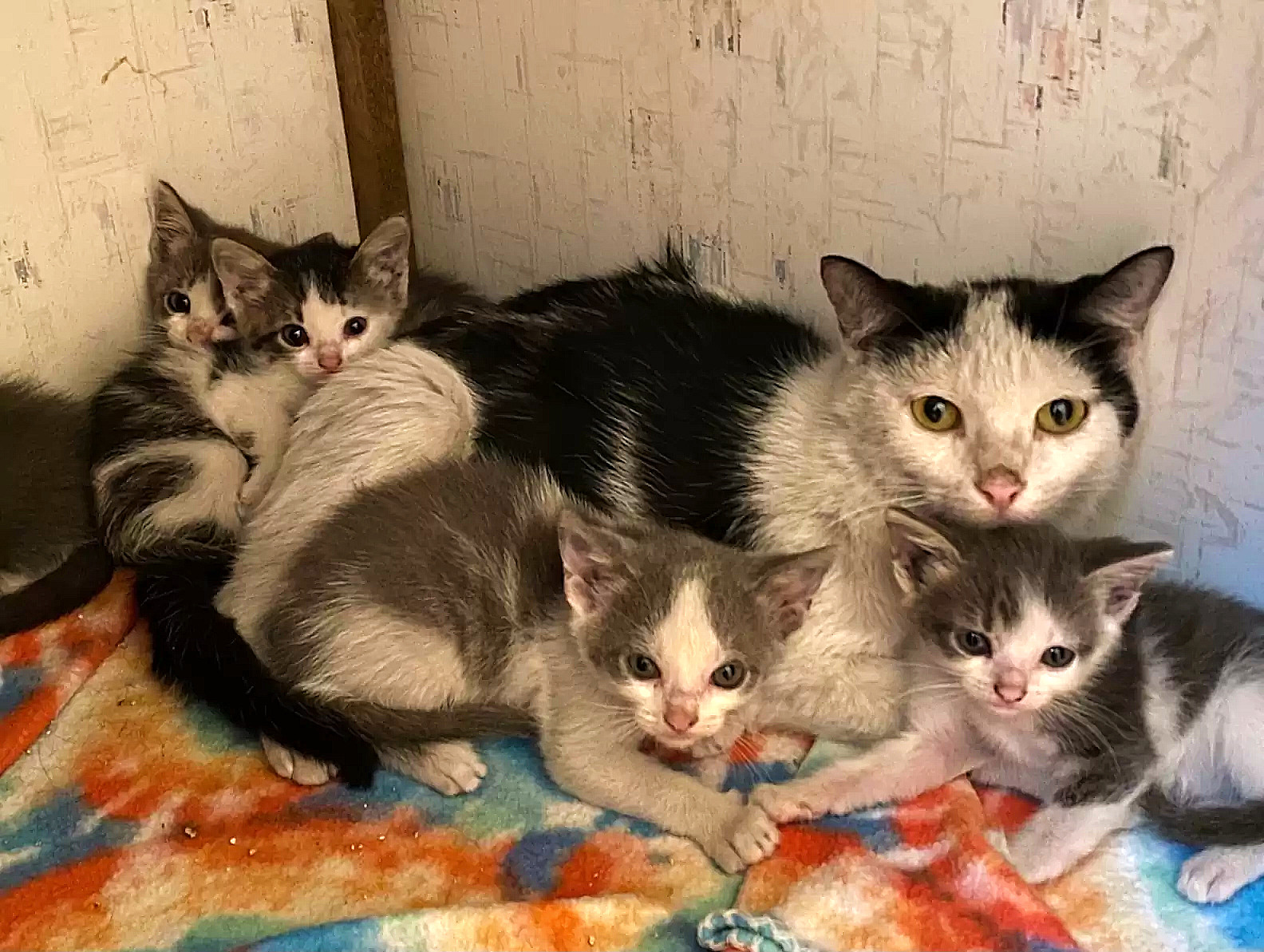
When volunteers in Elkhart, Indiana, went to trap a mom and her kittens near an industrial site, one of the babies panicked and ran straight into a hole, taking a tumble into a drainage pipe beneath.
The rescuers from a non-profit TNR group called Catsnip didn’t give up on the four-week-old baby even after finding her proved to be much more difficult than they imagined. They called off the search in Elkhart — about 160 miles north of Indianapolis — the first night when it was too dark to keep working. They dropped food for the scared fluffball, whom they could hear but still could not locate in the dark, tight subterranean space.
The next morning they were back at it, trying to literally flush the kitten out before a volunteer named Ashley descended via a manhole 75 feet from the spot where the kitten had fallen in.
The entire saga took about 48 hours and hinged on Ashley who, because of her small size, was able to squeeze into a pipe and crawl 30 feet to the terrified baby cat — then had to crawl out backwards the way she came while cradling the little one.
Piper was reunited with her mom and littermates after the rescue. Credit: Catsnip
It was worth it for the volunteers, who named the kitten Piper in honor of her adventure, gave her fluids and formula from a dropper, then reunited her with her mom. Read about the whole encounter at The Dodo. (And serious props to Ashley! Just thinking about what she had to do makes me shudder. Cats may love tight spaces, but most humans do not.)
Hey! That’s Buddy’s MO!
As gamers who generally prefer more depth, the Buddies never got on the Fortnite bandwagon, so we weren’t aware that Fortnite has a character named Meowscles until encountering this article from Cracked.
Meowscles has a Buddesian physique. Credit: Epic Games
As you can see, Meowscles was clearly inspired by Bud, who is known for his incredibly ripped physique and totally isn’t a bit chubby. (“That’s all muscle, not fat!” Buddy insists.)
Fortnite is a battle royale-style game in which up to 100 players compete against each other in live matches. The game is free-to-play, with developer Epic Games making its money by selling cosmetic items as microtransactions. Meowscles is one of about 1,400 different “outfits” players can purchase to customize their characters.
The game has been a monumental success for Epic, earning billions and leading the company to launch the Epic Games Store, the first serious competitor to Steam, which has been the dominant platform for PC gamers for years. Epic has been so flush with cash that’s it’s been giving away free games every week to lure customers away from Steam, even upping the freebies to a new game every day during the holidays.
Cat and Owner Costume Contest?!?
In Massachusetts, the Cat Fancier’s Association held its ninth annual cat and owner costume contest on Sunday. Unfortunately, the only story we can find about the event comes from the local public radio affiliate, so there’s not much in terms of photos.
If you were going to enter such a contest with your cat, what costumes would you and your fluffy overlord wear?
I’m thinking maybe I’d be a Targaryen with Bud as a baby dragon perched on my shoulder in honor of Game of Thrones/House of the Dragon. But that might offend little dude, who tends to think of himself as a hulking tiger. Perhaps the easier and more realistic “costume” would be Bud dressed as a king, snug in his own little carrier designed to look like a royal palanquin, with me carrying the palanquin as his dutiful servant. Thus, art imitates life.