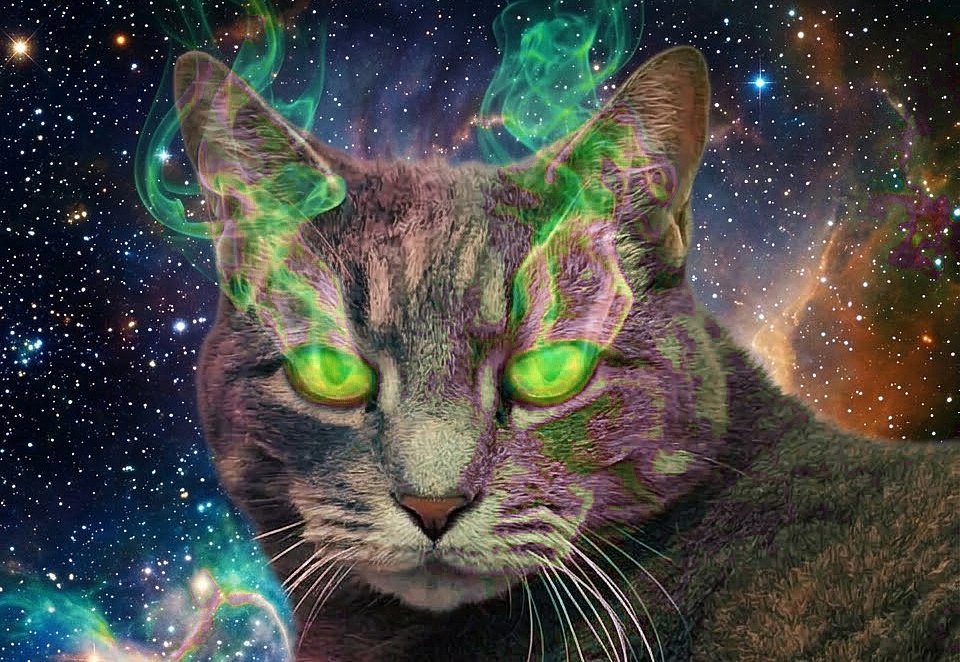
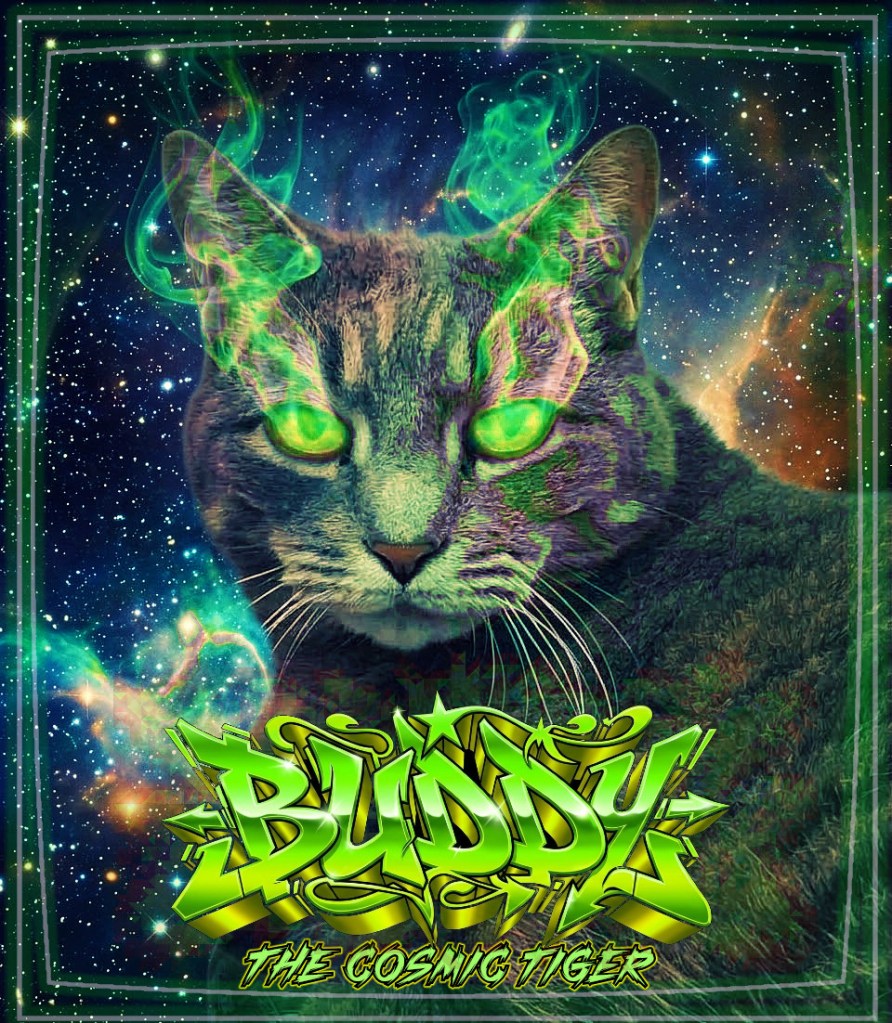
Cheesy Photoshops glorifying my egotistical feline overlord are fun!
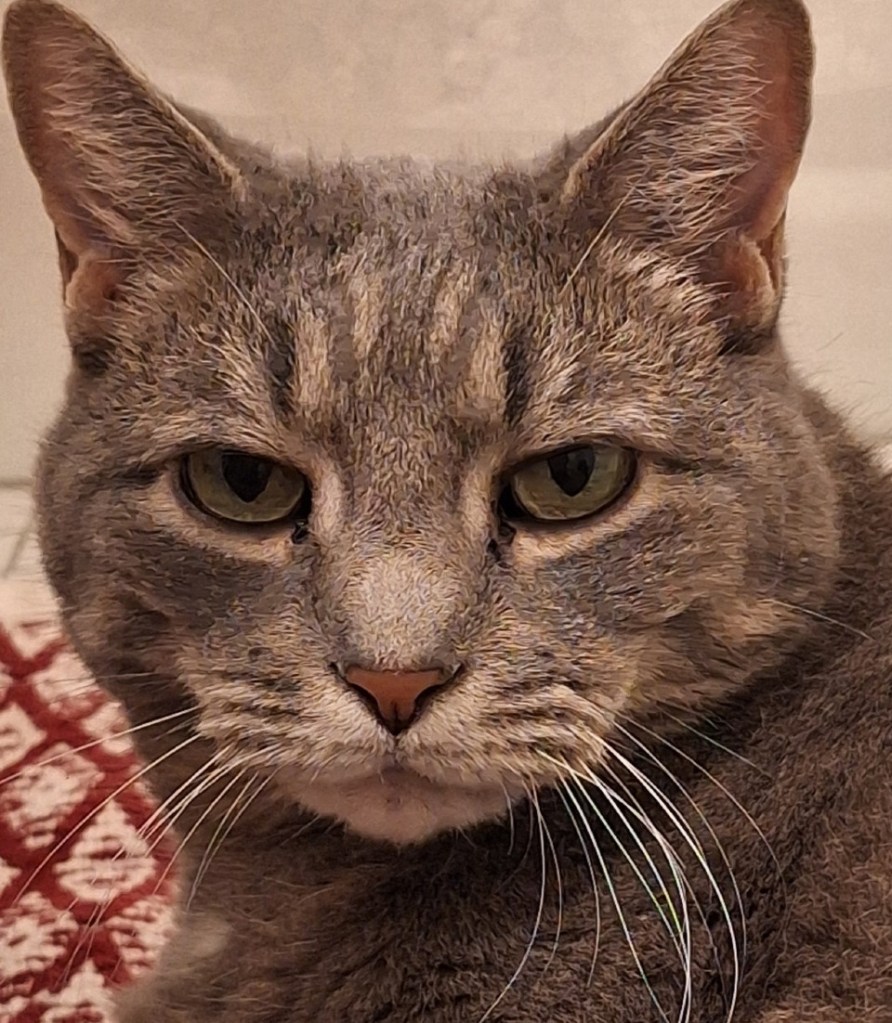
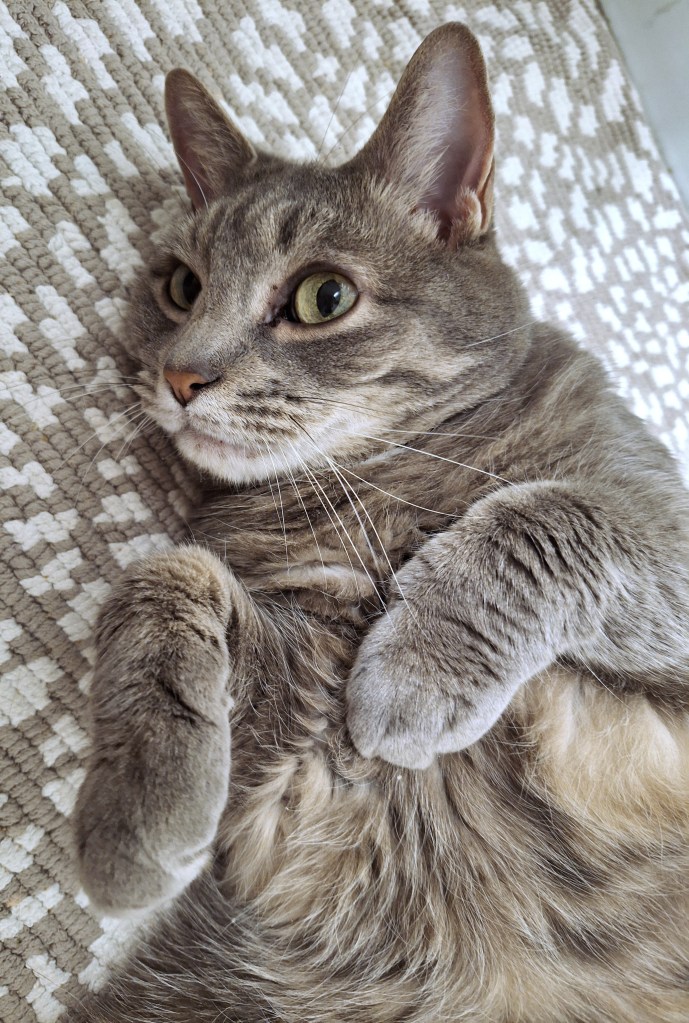
Since hopping off the AI image bandwagon I’ve rediscovered the joys of crappy Photoshops and playing with typesetting. I took the photo yesterday and thought Bud looked pretty regal and majestic.
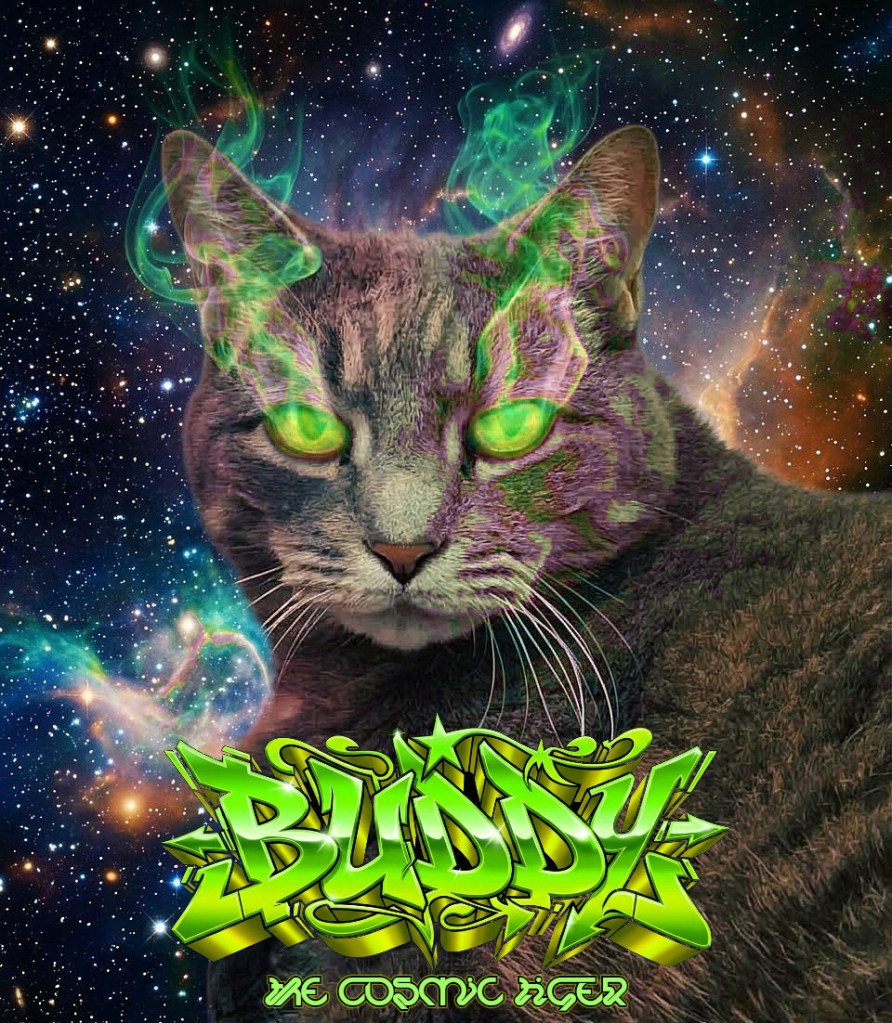
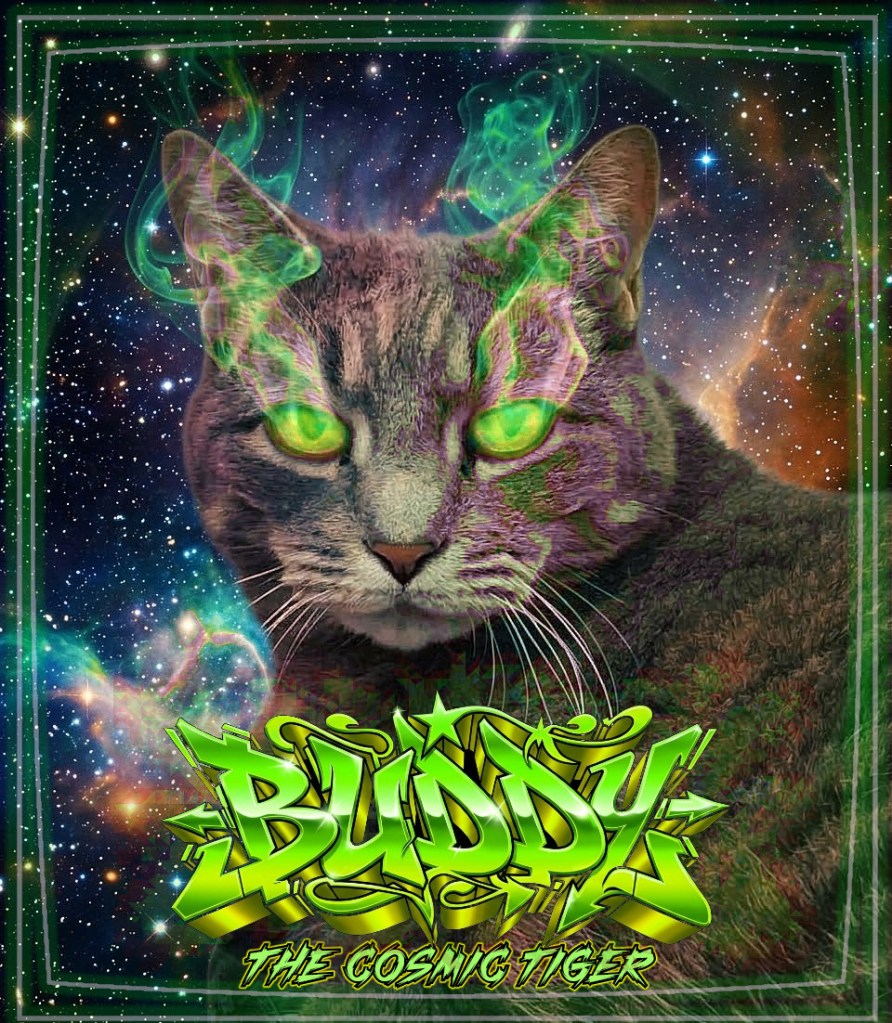
Here is Buddy transformed to Cosmic Tiger Buddy in all his glory with his name rendered in classic wildstyle, like something you might see on the L in the 90s Bronx…if someone were corny enough to choose Buddy as their tag.
(*) The second typeset is a modified font called Knotted Center, which may not score many points for legibility, but looks pretty cool in the proper context. The third typeset is a font called TrashBrutal.
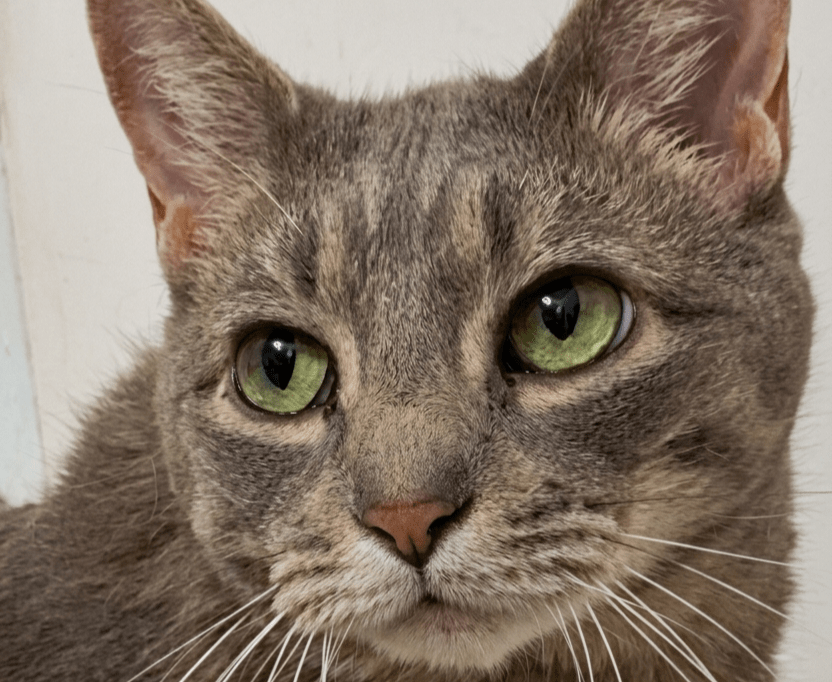
It’s little Buddy! What more could you possibly want?
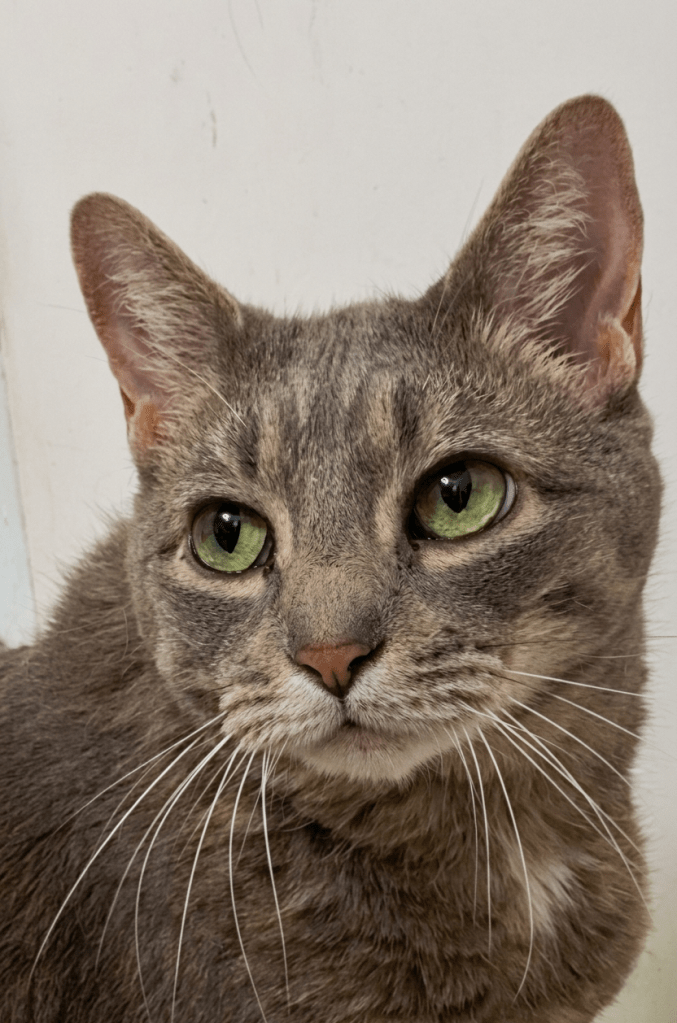
I took this photo on Monday, capturing Bud in the moments between him screeching at me, I believe for snacks. Although it could have been a demand for me to sit on the couch so he can then sit on me. I forget.
There is a practical side to taking random photos like this, which is that it’s easier to really look at nonverbal indicators of health and mood. In this photo his ears are up and relaxed, his whiskers are relaxed, and he’s chill. Aside from making loud and insistent demands of me, that is. Anyway, here he is in all his 12-year-old glory:
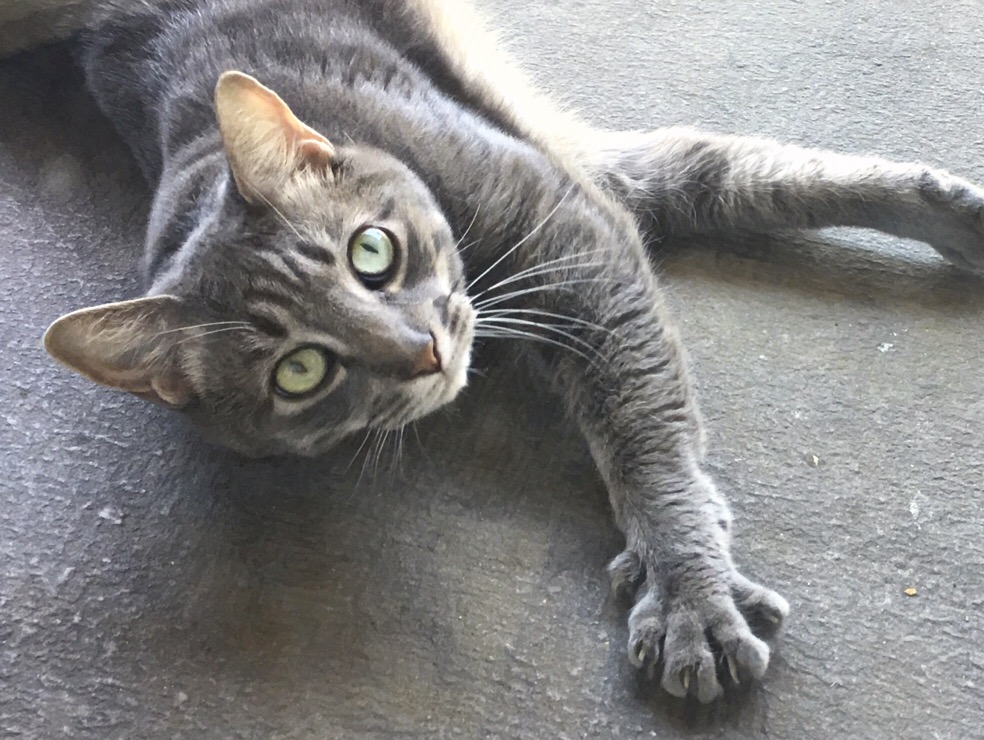
Mirror mirror on the wall, who’s the most silly looking of them all?
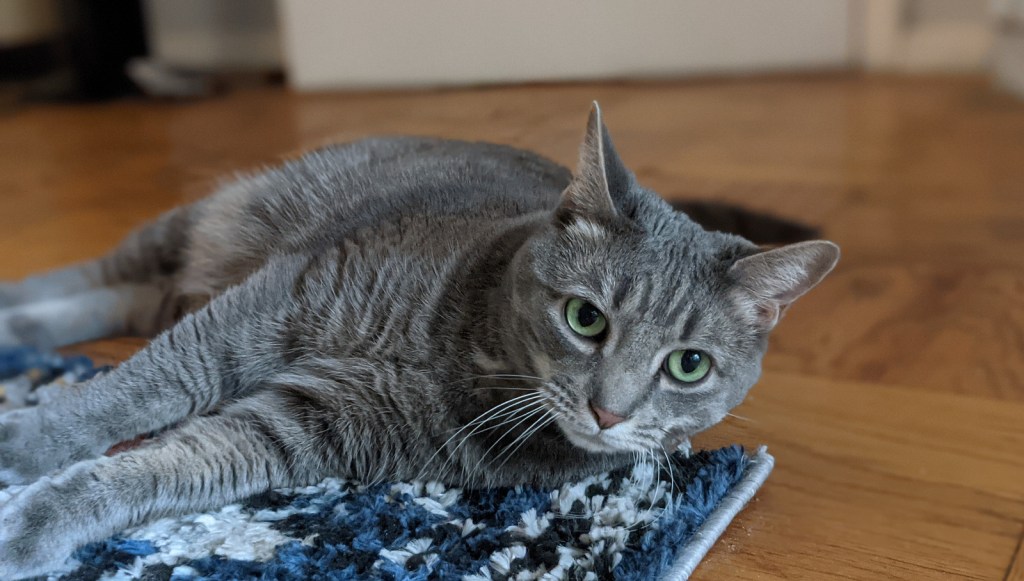
Look at all that fur! Bud could almost pass as a long haired cat if you only saw him laying down like this.
With our first 90-plus-degree days yesterday and today here in New York, a lot of that fur is going to end up on the floor, the couch and my bed if I don’t sneak in some brief brushing sessions when I can:
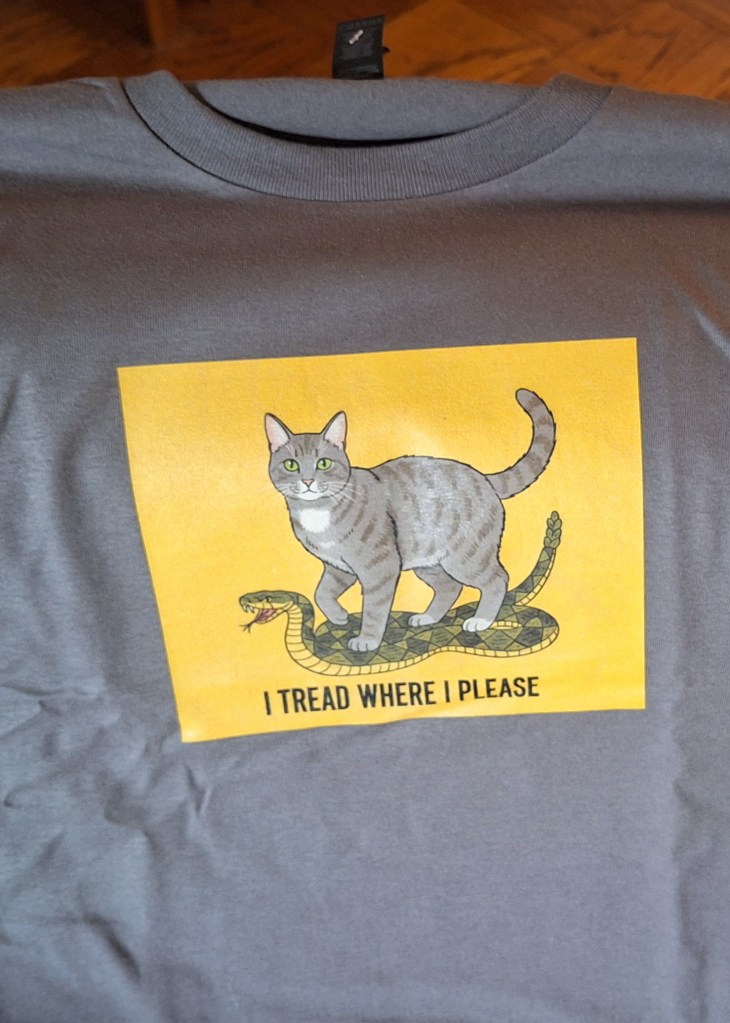
In other news, I’m very excited to share that PITB t-shirts will be available very soon!
I received t-shirts of two of the print designs and they look great. The plan is to begin with four designs and expand from there. Here’s a photo of one of the launch designs, the Budsden flag:
No money, no prizes, just cute cats and bragging rights.
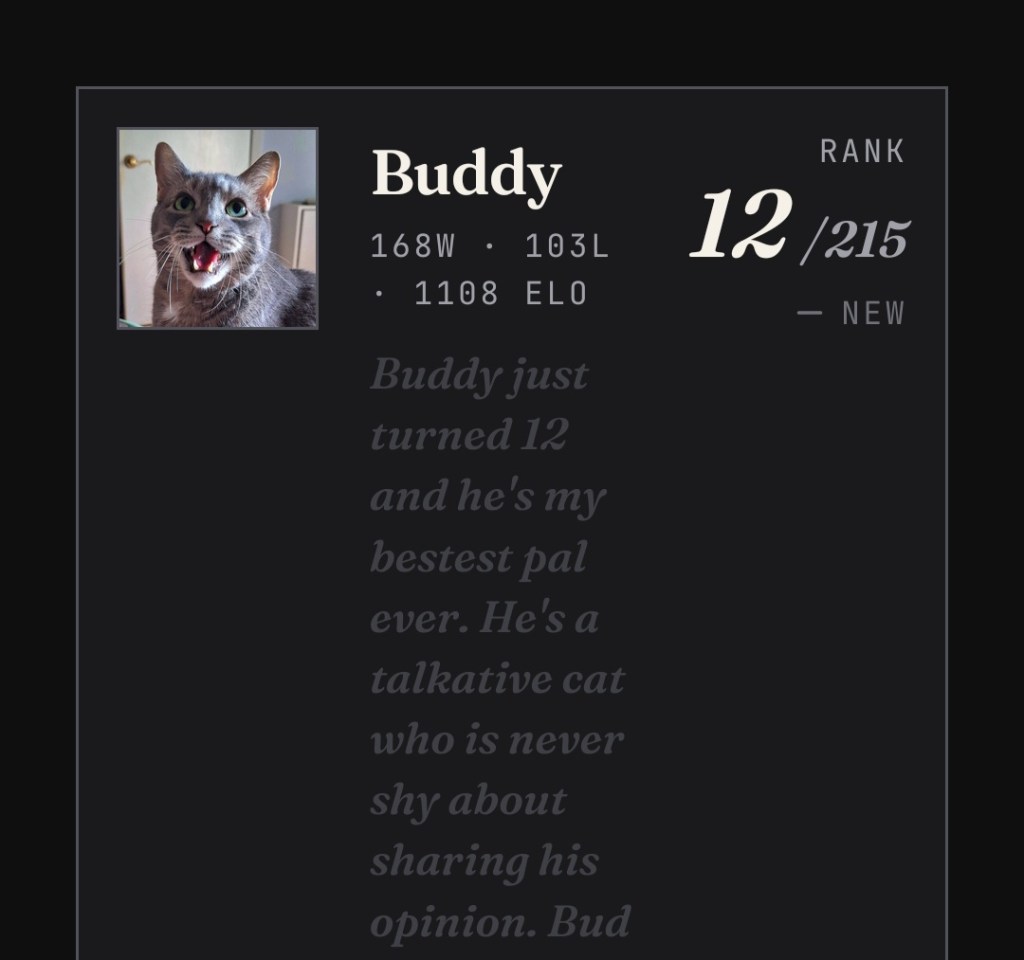
A post on BoingBoing Tuesday alerted me to the existence of CatRank, a site that allows users to view cat photos two at a time and pick the one they like better.
Or as the site puts it, “tap the superior cat.”
When you make your selection, the page instantly refreshes with two new cats. Per BoingBoing:
“A big part of winning seems to have to do with getting the right photo of your cat, which is a challenge on its own — anyone who has tried to photograph a cat knows they rarely cooperate on command. All cats are created equally, of course, but this site is like an online pageant they’ll never even know they participated in.”
I decided to volunteer Bud for the “pageant” and uploaded a derpy photo of him looking excited. If memory serves, he was happily pawing at a wand toy at the time.
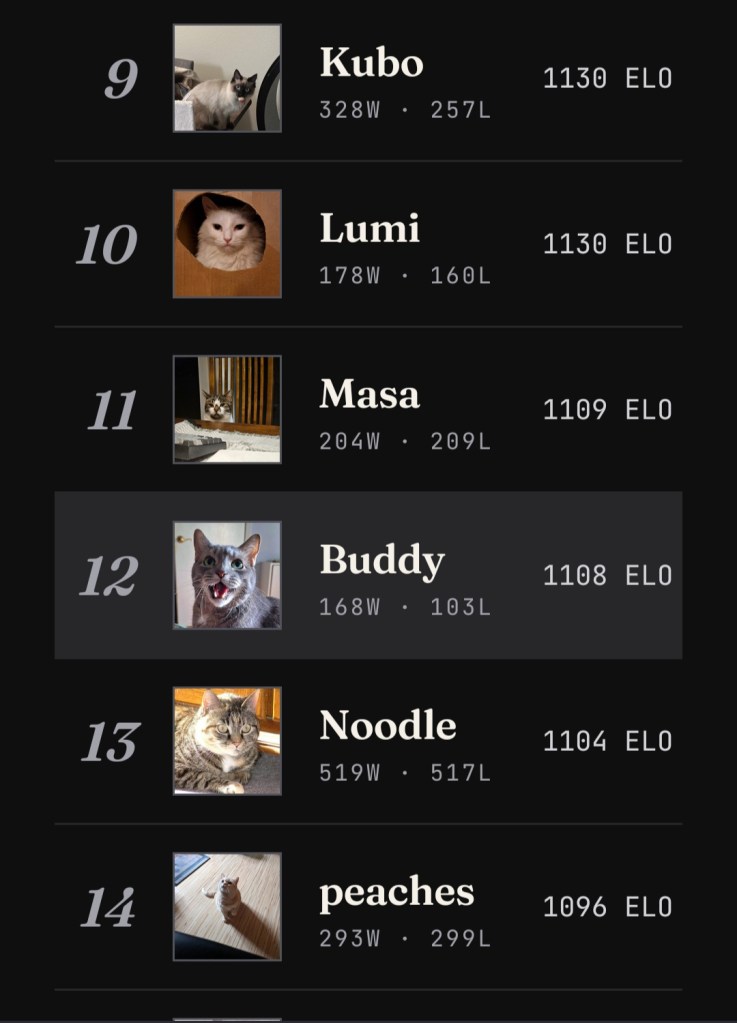
He was #34 on Tuesday, #12 last night, dropped all the way to #68 earlier today, and was #22 last time I checked.
A screenshot from yesterday when Bud’s derpy grin was winning him points.
The rankings have a simple win/loss component and a weighted ELO component, borrowed from chess and sports, that awards more points for “wins” against high-ranking “opponents.”
As for my own voting habits, I tend to vote for photos more tightly focused on the kitties since the images are relatively small as presented on the site. It’s difficult to see a feline’s features if the image isn’t cropped properly. I’ve got a subconscious bias toward clear, well-lit photos of voids since they’re notoriously difficult to shoot, and because they’re often unfairly overlooked.
My only real complaint is the top photo for most of this week is AI-manipulated, and at least one other is an AI creation. It looks like the vast majority are legitimate photos of real cats, though I’m sure we’ll see more generated images as the site becomes more popular.
You can upload as many as three of your own cats and write short bios for them.
Which is pointless because there’s no prize or money involved, just bragging rights, but people can be weird.
Ah well. Naturally, Bud expects all readers of his blog to head to the site and vote for him, and if you don’t he’ll do something ferocious and meowscular.
“They better vote for me or else!” he says. “If they don’t I’m gonna do something tremendous, something the likes of which they’ve never seen before, believe me. A lot of people are saying I’m the most handsome cat, a lot of people are saying it. I’m the most — and by the way, no other cat is as stylish as me. It’s incredible. So readers better vote for me by 10 am tomorrow and if they don’t, I’m gonna make more threats and extend the deadline. It’s tremendous.”
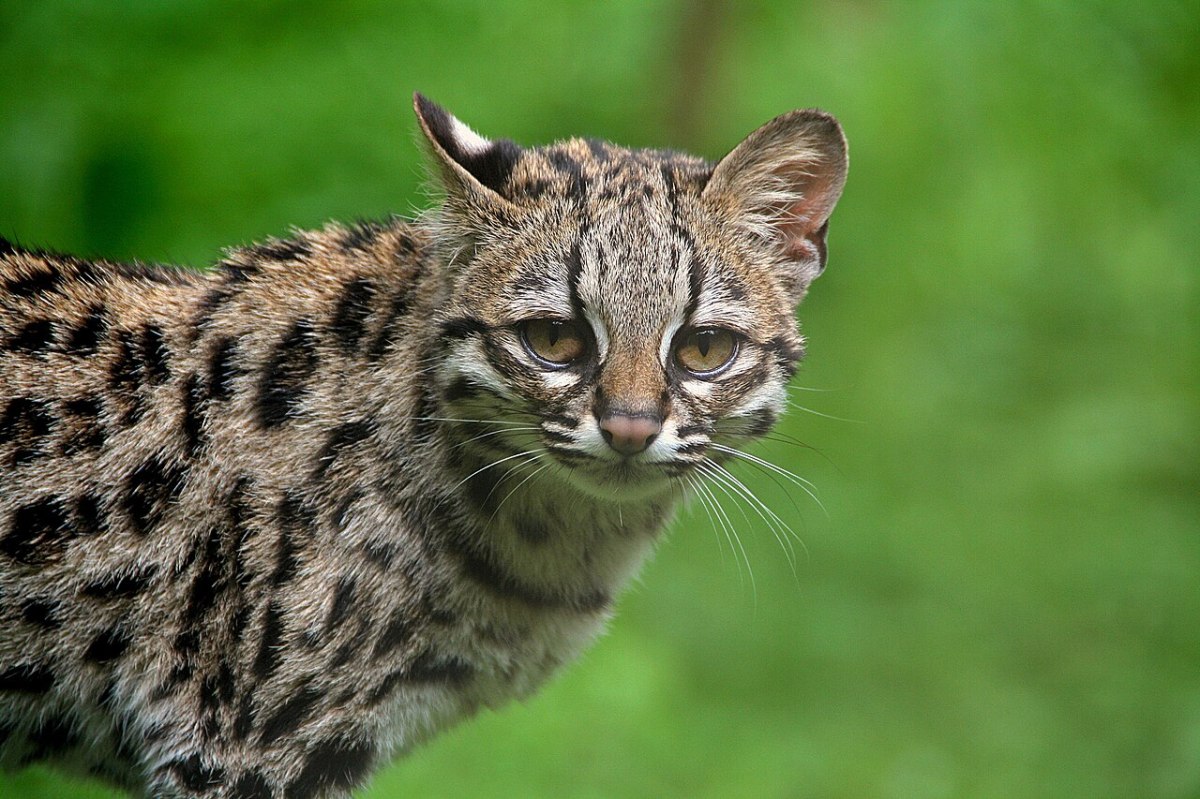
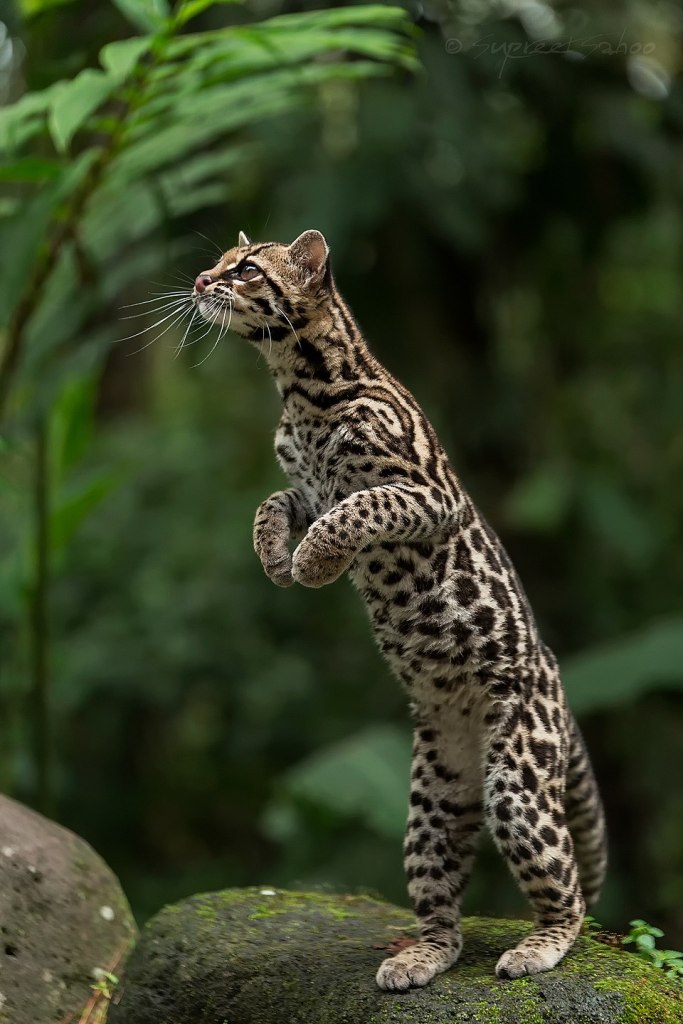
Strongly resembling ocelot cubs, margays have a unique biological adaptation to tree-climbing and a devious ability that gives them a massive advantage over their prey.
Taxonomic name:Leopardus wiedii Genus: Felis (small cats) Weight: Between 5 to 9 pounds with typical felid sexual dimorphism Lifespan: More than 20 years in captivity Gestation: About 80 days Litter size: Single kitten, rarely more than one Distribution: Central America, including Brazil, Paraguay, Peru, Chile, Ecuador, Venezuela, Guyana, Colombia, Panama and parts of Mexico IUCN Red List Status: Near threatened
If you’re fortunate enough to catch a glimpse of a margay, you might think you’re looking at an ocelot cub.
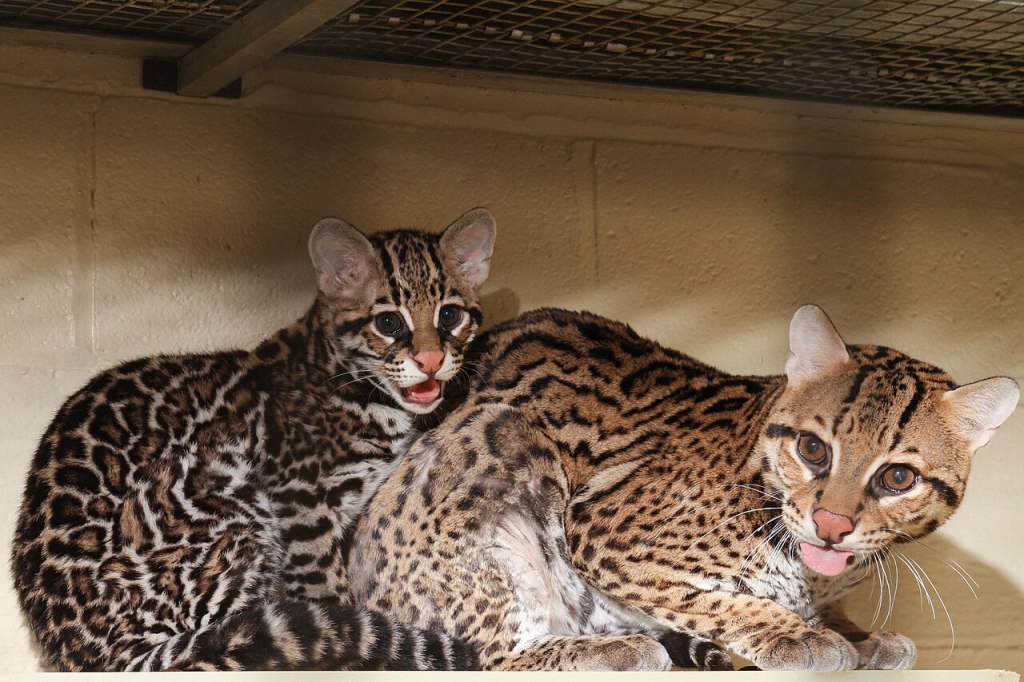
The two species look remarkably similar, sharing beautiful rosette patterns in their fur, intense eyes and prominent facial stripes.
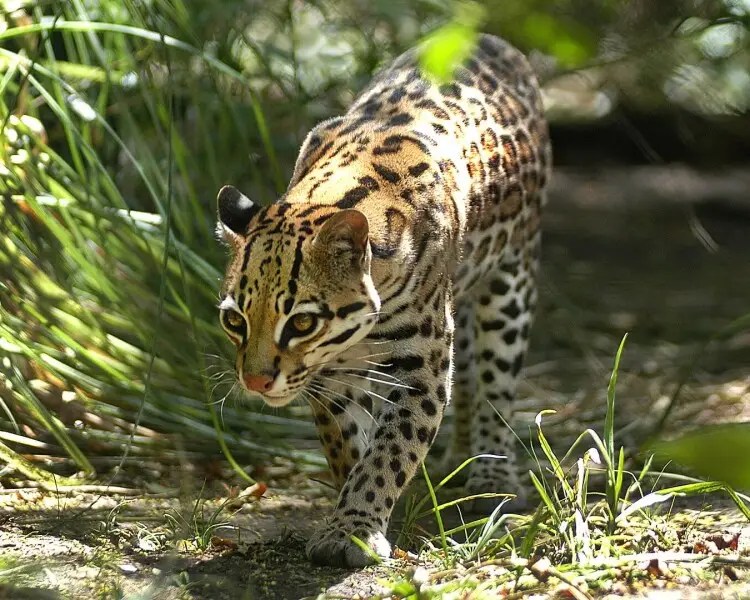
But ocelots are medium-size cats that can top out at 35 or 40 pounds, while margays are even smaller than domestic felines, weighing between five to nine pounds.
An ocelot cub with, left, with its mother. Margays are easily mistaken for ocelot kittens. Credit: Mark Dumont via Wikimedia Commons
Living in jungles teeming with life, margays have a distinct advantage that allows them to escape land-based predators while making them a threat to monkeys and other critters living in the branches — they are outstanding climbers with unique biological adaptations that allow them to do things other cats cannot.
Credit: Supreet Sahoo via Wikimedia Commons
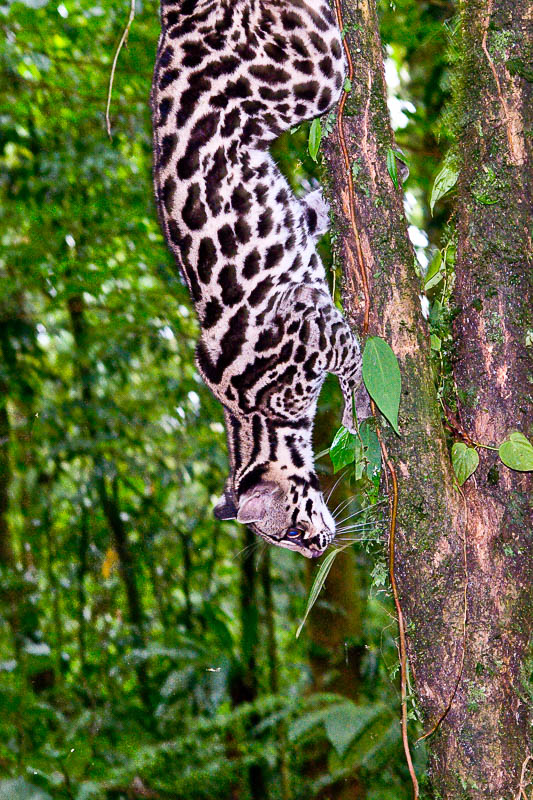
The most dramatic example is their ankle joints, which allow them to rotate 180 degrees as the little spotted cats anchor themselves to trunks and branches. As a result, margays don’t just climb with speed and ease, they are capable of swiftly evacuating trees by climbing down head-first like squirrels.
Other cat species lack that adaptation, which is one reason why we often hear about domestic cats who find themselves uncomfortably high up in trees or on utility poles, refusing to come down for days despite hunger and coaxing by humans trying to help.
A margay demonstrating its ability to climb head-first down a tree thanks to its unique ankle joints. Credit: James Kaiser
Margays are outstanding jumpers in addition to their unrivaled climbing ability, able to leap six to eight times their own height. It’s easy to see how these diminutive cats can intercept birds and monkeys far above the jungle floor in addition to hunting terrestrial mammals.
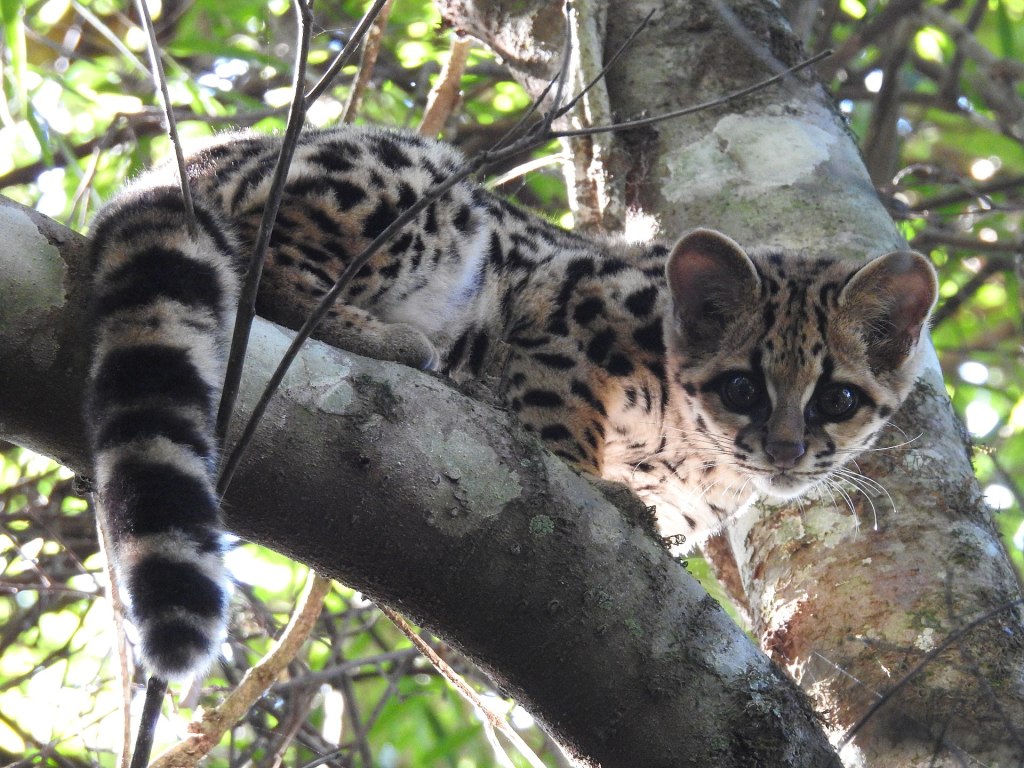
Indeed, using their large tails as a counterbalance, margays traverse branches with a swiftness and sure-footedness that rivals the gibbon.
The jungle’s tricksters
They’re also remarkably clever. Scientists have documented margays mimicking the vocalizations of monkeys, their favorite prey. In one documented example, a margay imitated the call of a baby tamarin, then ambushed the adult tamarins who approached to investigate the sound.
That’s a surprising adaptation for a cat species, and we should be thankful they’re tiny. The thought of tigers or leopards with that ability is terrifying.
Margays are solitary and due to their size, they’re both predator and prey. Because of that, these tiny cats spend the majority of their time well above ground level and are usually found deep in old growth jungles where they can blend into dense vegetation, hiding among leaves and branches, where their coat patterns help them blend in.
Like all wildcats, margays face increasing pressure from habitat loss, poaching and other threats, and they’re classified as near-threatened on the IUCN Red List.
Credit: Anderson Cristiano Hendgen via WikimediaCredit: Wikimedia Commons
Header image credit Clément Bardot via Wikimedia Commons
Copyright 2026 – Pain In The Bud – May not be reproduced without permission