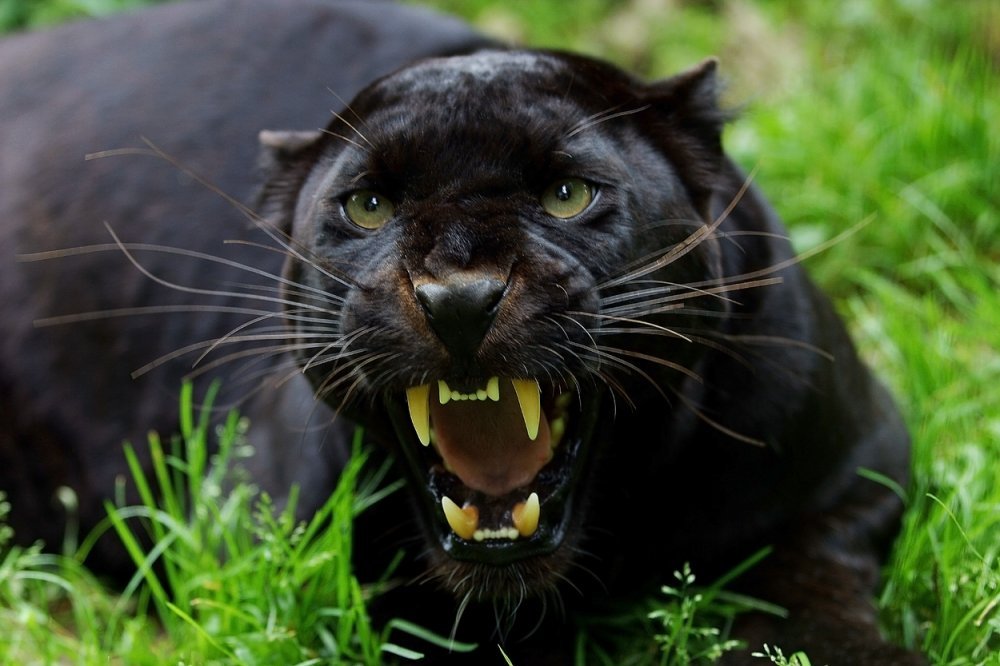
House cats, jaguars, leopards, Servals and jaguarundi are just some of the species that have melanistic (black) color morphs.
Everyone knows house cats, jaguars and leopards can be voids, but did you know other cats have black color morphs too?
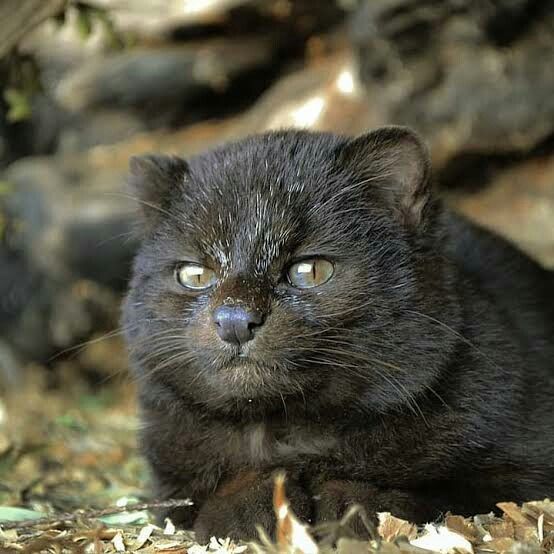
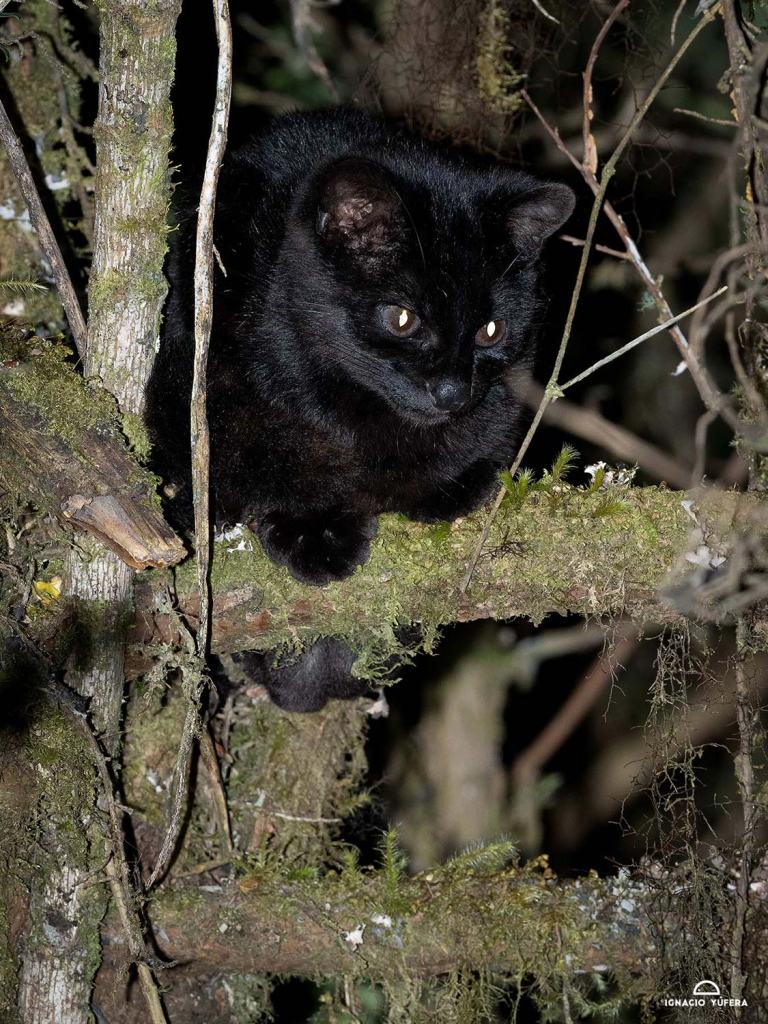
The Asian golden cat, the Serval, jaguarundi, Margay, kodkod, Geoffrey’s cat, oncilla, Pampas cat, and bobcat all have melanistic variants.
Unfortunately when it comes to house cats, research supports the longstanding claim that black cats are adopted at lower rates, and are euthanized in greater numbers, than other felines. Part of that can be chalked up to superstition. It’s also due in part to the fact that black cats are more difficult to photograph.
But as these photos prove, all you need is some decent ambient light, smart framing and maybe a bit of shadow/highlight correction to help bring out a black cat’s natural features.
Image credits: Top two rows via Pexels, with photographers listed in the captions. All other photos via Wikimedia Commons. Last image (melanistic oncilla) credit Ignacio Yufera
Zoologists were at a loss to explain how the tabby cat moved effortlessly among the big cats without becoming a light snack.
NEW YORK — Zoo visitors and keepers alike were flabbergasted at the sight of a small gray tabby cat lounging in several big cat enclosures on Monday.
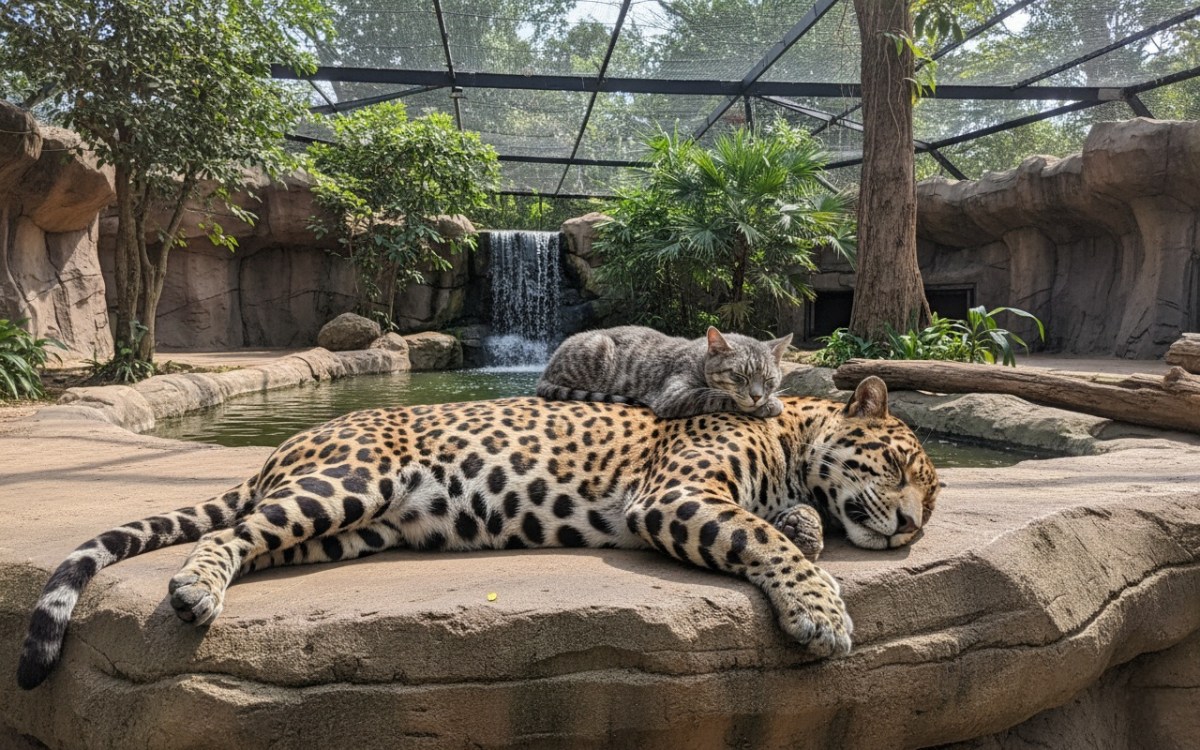
Zoologists and a security team were called to the tiger exhibit at 11:45 am when guests reported the domestic cat had somehow entered the enclosure and had settled down between two adult Bengal tigers for a nap.
“It almost looked like the little cat was demonstrating his form for the tigers,” said Al Farelli, who brought his two girls to the zoo Monday and witnessed the strange event. “Both tigers copied the small cat’s posture and then they all dozed off.”
Buddy the Cat enjoying a late morning nap with tigers Zeus, left, and Achilles, right.
Zookeepers, initially fearing for the tiny cat’s safety, were conferring and were trying to coax the domestic feline toward a keeper entrance when the little cat lifted his head and hissed. Zeus, taking notice, followed the smaller cat’s lead and growled at the keepers.
“Never seen anything like it, and I’ve been working with predators for more than 20 years,” said Wendy Johnson, a senior zookeeper.
Zoo staff breathed a sigh of relief when the feline left the enclosure about an hour later, but were incredulous when they received guest reports that the cat had popped up again in Jaguar Jungle.
“We’re just standing there and admiring these majestic big cats when a gray kitty comes padding into the enclosure with his tail up, as if he didn’t have a care in the world,” said Melissa Matthews, a Manhattanite who was at the park with friends.
“Then when the jaguars saw him I gasped because I thought he was about to become an hors d’oeuvre for one of them,” she said, shuddering. “But they chuffed happily, exchanged paw bumps with the little guy and groomed him.”
Once again, the tabby cat settled down for a nap, laying on top of a jaguar named Ixchel.
Buddy finally made his way to the lion exhibit by late afternoon, settling down to nap with a lion named Colossus.
Meanwhile a New York man arrived at the zoo, explaining he’d seen clips of the bizarre scene on social media and recognized the feline as his cat, Buddy.
“He’s always doing this!” the man told zoo staff. “There was the time leopards almost ate him on the Masi Mara, the incident in the Amazon when he took ayahuasca with jaguar shamans, and the debacle when he tried to make himself king of the rusty spotted cats.”
As of late Monday the man was seen arguing with the silver tabby and trying to bribe him out of the enclosure with an impressive snack spread.
Ryan Easley “wanted to be the one with the most tigers in the ring at one time,” Joe “Exotic” Maldonado said of the Oklahoma man.
A circus big cat trainer and associate of so-called “Tiger King” Joe Maldonado was mauled to death by a tiger at a roadside zoo on Saturday.
Authorities say 37-year-old Ryan Easley was conducting a “show” at the Growler Pines Tiger Preserve when a tiger he “owned” turned on him. The captive predator mauled Easley, attacking his neck and shoulders “in full view of a group of visitors, including children,” PETA wrote in a statement calling on federal authorities to cancel the facility’s licenses.
Easley with a white tiger. Credit: Ryan Easley/Instagram
While Easley called the facility a preserve, others described it as a roadside zoo, and genuine animal sanctuaries do not put animals on public display. The roadside zoo description aligns with the Oklahoma man’s past as a circus trainer of big cats, and Maldonado — who was the subject of the popular 2020 Netflix documentary, Tiger King — seemed to confirm that description when he issued a statement on his friend’s death.
“He wanted to be the one with the most tigers in the ring at one time,” Maldonado wrote in a statement from prison. “Some of his cats were crazy in the head, but it was about having the most performing at one time at all costs.”
Easley acquired some of his tigers from Maldonado, who was convicted of conspiracy to commit murder for hire and 17 counts of violating federal conservation laws in 2019. Maldonado, who remains incarcerated in a federal prison in Fort Worth, Texas, tried in 2017 to hire two men to kill Big Cat Rescue’s Carole Baskin, an activist with whom he had a years-long feud. One of the men Maldonado tried to hire was an FBI informant.
Maldonado is serving a 21-year federal prison sentence. Mugshot credit: Santa Rosa County Jail
PETA has accused Easley of mistreating, neglecting and abusing the tigers at his facility. Tigers are apex predators and hyper-carnivores who do not recognize social hierarchy or have any innate compulsion to follow orders from humans, so “taming” them and getting them to “perform” involves coercion, including physical punishment, withholding food and torture. The brutal mistreatment required to force elephants, lions, tigers and other animals to perform is one reason why traditional animal circuses no longer exist in the west.
Maldonado admitted as much in his statement, noting “you don’t get a tiger to jump through a hoop of fire because they love you.”
“It’s never safe for humans to interact directly with apex predators, and it’s never a surprise when a human is attacked by a stressed big cat who has been caged, whipped, and denied everything natural and important to them,” PETA’s Debbie Metzler wrote in a statement.
Former big cat handler and caretaker Katherine Lee Guard, who is now an activist against keeping big cats as pets and using them in the entertainment industry, spoke to PITB about her experiences in 2023. She noted tigers can turn on their handlers at any time, even if the latter hand-reared the felids since infancy. Once their predatory instincts are triggered, the apex predators feel a powerful compulsion to attack.
Even in accredited zoos where tigers are provided with large enclosures designed for their well-being, given plenty of enrichment and stimulation, and fed well, Guard said people should never enter an area without barriers between themselves and the big cats.
“The cost is too great if something goes wrong,” she said. “And something always goes wrong given enough time.”
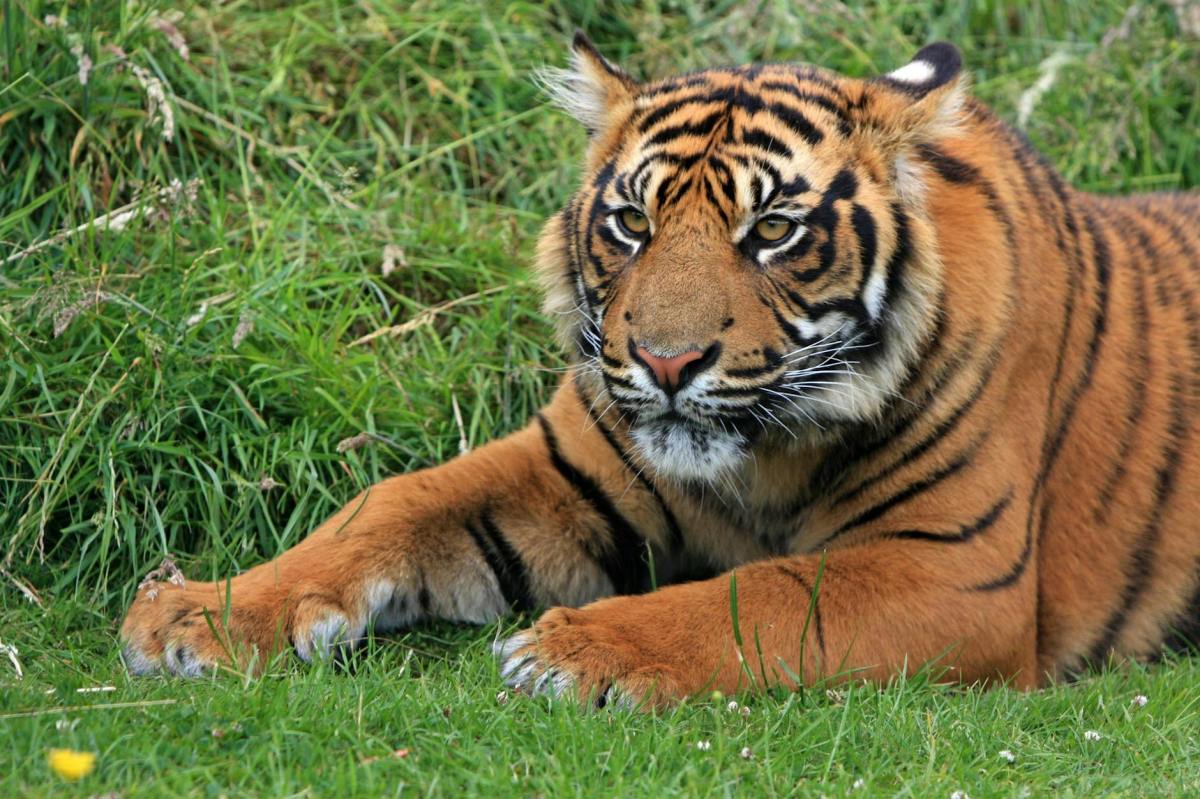
Header image of a Sumatran tiger via Pexels. Do you enjoy reading PITB? Please consider whitelisting us on your ad blocker so we can keep the lights on. Thanks!
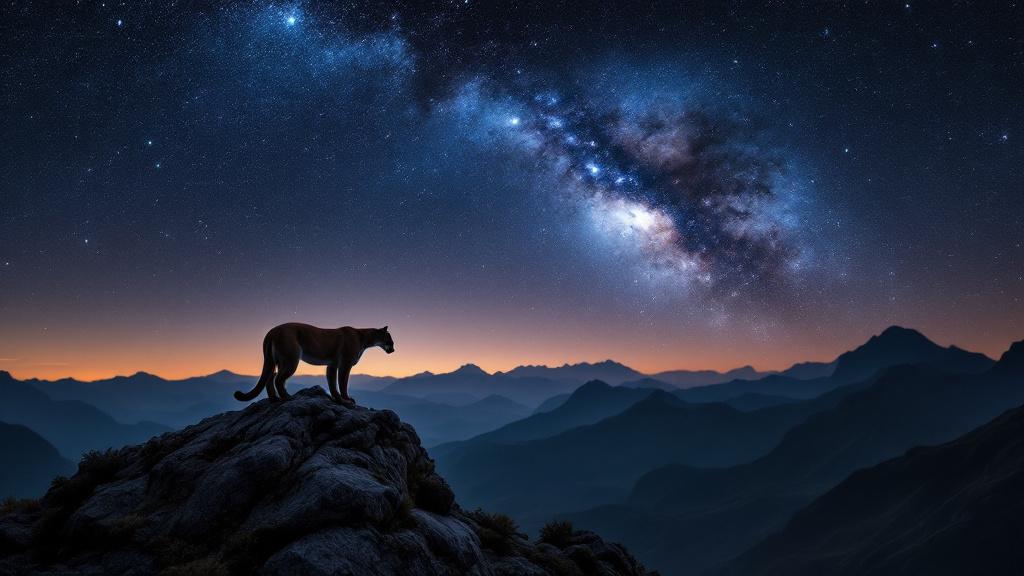
Cats were built by mother nature to stalk by starlight.
From the African savannas to the Andean mountains, the jungles of the Amazon to the Hollywood hills, and everywhere in suburban America, cats of all types and sizes prowl the night. With eyes that are up to eight times more sensitive in the dark, incredibly sensitive hearing, and whiskers that can pick up the slightest change in air density, felids were built by mother nature to stalk by starlight.
Some cat species are crepuscular, some are nocturnal, but as ambush predators, they’re all at their best when hunting under the cover of darkness.
Image credits, top to bottom: Per Karlson/PVKFoto, Reddit r/natureisf***inglit, Cockscomb Basin Wildlife Preserve, Wikimedia Commons, Steve Winter/National Geographic, National Park Service, Colorado Parks and Wildlife









 Wait a second, this last jaguar cub looks kinda familiar…
 Pain In The Bud