He Got Virginia’s Harshest-Ever Animal Abuse Penalty. It’s NOT Enough

Some people should not be allowed back into society, for the protection of people and animals.

Rodney Travis Jr. will spend the next 15 years in prison.

The 27-year-old Virginia man has received the harshest animal abuse penalty in his state’s history for what prosecutors called “acts of unspeakable evil”: Travis “adopted” dozens of cats from shelters, then checked into hotel rooms and tortured them for an online audience, who paid him for his acts of savagery.

I’m not going to get into exactly what he did. I’ve read about similar cases and I’m still haunted by the horrific things people do to cats for the sick bastards who get some sort of grotesque thrill from the suffering of animals.

What I will say is that 15 years is not enough.

This man needs to be permanently removed from society. I don’t believe the death penalty is consistent with a general respect for life, and it would be the easy way out.

Travis should sit in a prison cell for the rest of his life and think about what he did to animals, innocent creatures who feel pain just as much as we do.
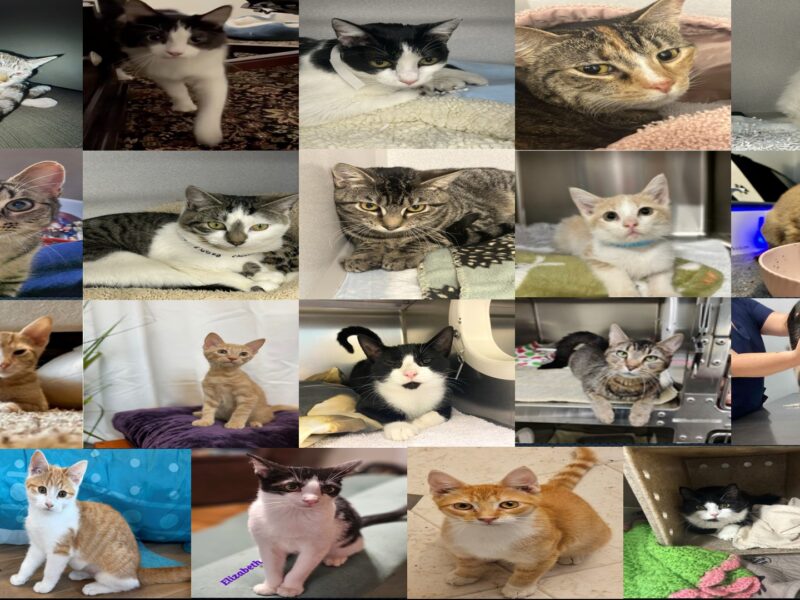
Collage of various cats in different poses and settings, showcasing their distinct features and expressions.
Some of Travis’ victims.

He should remain segregated from human society for the rest of his life, because a person who is capable of planning such acts of barbarity, who used multiple identities to fool shelters and rescues, who taunted suspicious rescuers and inflicted so much pain and suffering, is emphatically not a person who can be released back into society.

Travis was caught thanks to the efforts of an entire network of animal lovers who helped track him down, and by a concerned hotel employee, who informed police when Travis checked into a hotel at 2 a.m. and departed about seven hours later, leaving blood and cat fur behind.

In addition to brutally torturing cats, Travis admitted to making $400,000 by posing as a good guy, uploading images of the injured cats online, and accepting donations he said were for veterinary care. He also claimed some of the cats had been diagnosed with cancer, opening Instagram accounts for each cat and relying on the sympathy of well-intentioned animal lovers.

In addition to proving how intentional and calculating Travis was in his crimes, this should be a reminder to everyone that our charitable dollars are best spent on reputable organizations that are registered as non-profits and have Form 990s filed with the IRS in good standing, with the documentation available on public sites like GuideStar. Too many bad actors, including people who operate rage-bait sites that post animal abuse cases and solicit money for things like running petitions, vacuum up cash from people they deceive.

Do not let him out

Statistics on recidivism, particularly for the kind of crimes Travis committed, do not bode well for anyone unlucky to encounter Travis when he is released – human or animal.

Animal life has intrinsic value, and that’s reason enough to keep Travis imprisoned, but we also know people who harm animals are very likely to move on to human victims as well. The evidence is overwhelming.

People who harm animals are five times as likely to harm humans compared to non-violent criminals. Forty three percent of school shooters had animal abuse incidents in their past. School shooters in Uvalde, Parkland and Buffalo, the authors of some of the worst school massacres in American history, all had records of animal abuse and abuse involving cats specifically.

Of those school shooters with histories of killing and torturing animals, some 90 percent committed “up close and personal” mutilation, bludgeoning, burning or strangling of their non-human victims.

Psychological studies of animal abusers show faulty brain wiring that results in a lack of empathy, extreme callousness, histories of anti-social behavior and lack of impulse control.
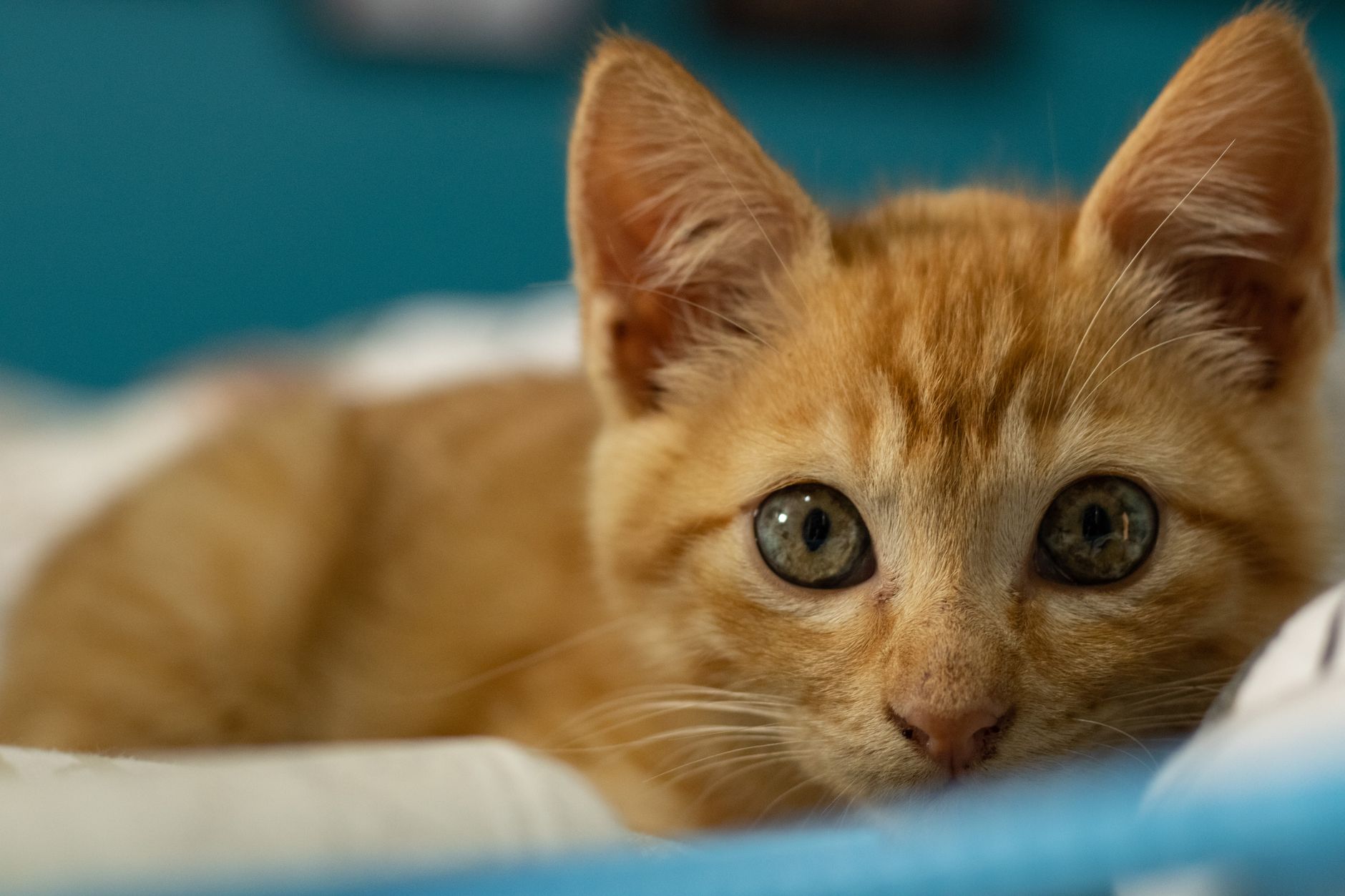
Anyone who tortures or kills beautiful, innocent animals should face the same punishments society inflicts on people who torture or kill humans. Credit: Mayara Caroline Mombelli/Pexels

These are not people we should be allowing back into society, no matter how many misguided people argue that their victims are “just” cats, dogs and other animals. Every sign points to recidivism, yet somehow we act as if it’s a ludicrous idea to sentence people to long prison terms for animal abuse crimes.

Equally important is the fact that our politicians, who never met a special interest they wouldn’t take money from, have utterly failed to meaningfully update animal abuse laws or make penalties commensurate with the brutality of the crimes in question.

We accept endemic corruption, naked self-interest and the destruction of our country because we think politician A or B is some crucial vote in ultimately meaningless culture war nonsense, then act as if we’ve been given mana from heaven when one or two deign to listen to the handful of overworked, under-funded animal welfare organizations with vague promises that maybe, at some nebulous time in the future, they might allow a committee hearing on an animal abuse problem that has existed for decades.

That needs to stop. Our “public servants” need to be held accountable at the polls for their inaction.

Travis tortured 26 cats that we know of. Only four survived. He posted the videos to Youtube, Instagram and TikTok, platforms that collectively have an abysmal record of responding to animal abuse reports and seem to have a policy of doing absolutely nothing until law enforcement or an animal rights charity with national reach comes calling.

We, and most especially the animals, deserve better than this.
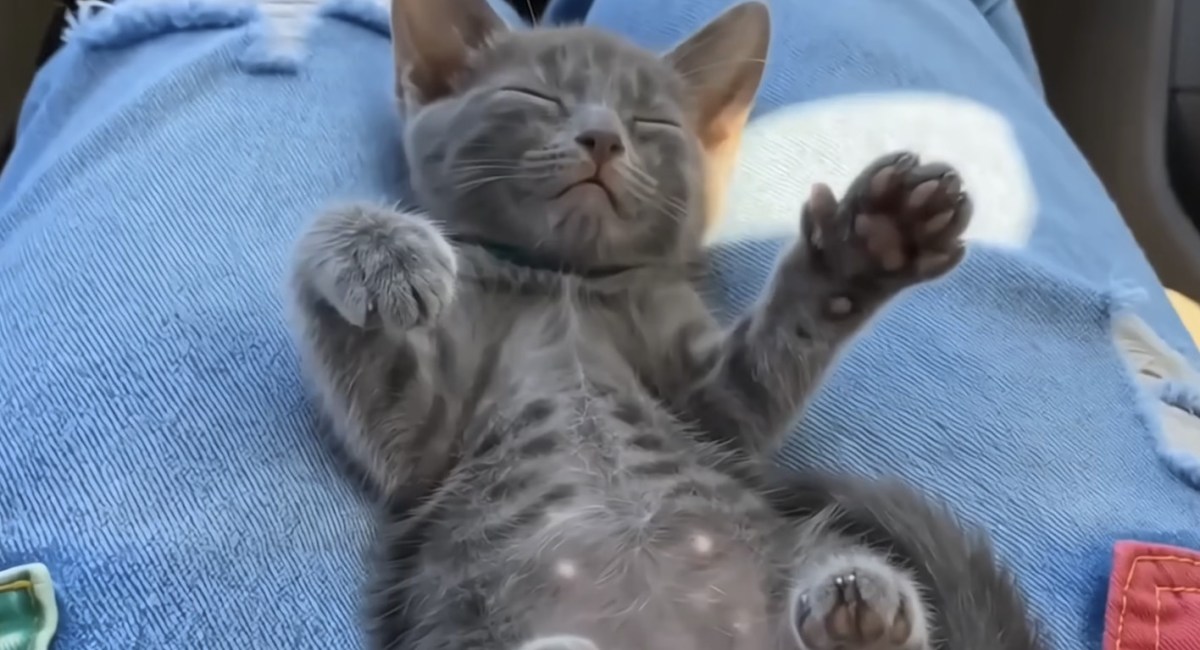
Man Rescues Adorable Kitten From Desert Road, Falls In Love

The little one was in a bad way, but she’s since recovered and is growing into a strong, healthy cat with a doting human dad.

Maybe there’s something to the idea that people who claim they don’t like cats just haven’t met the right cat.

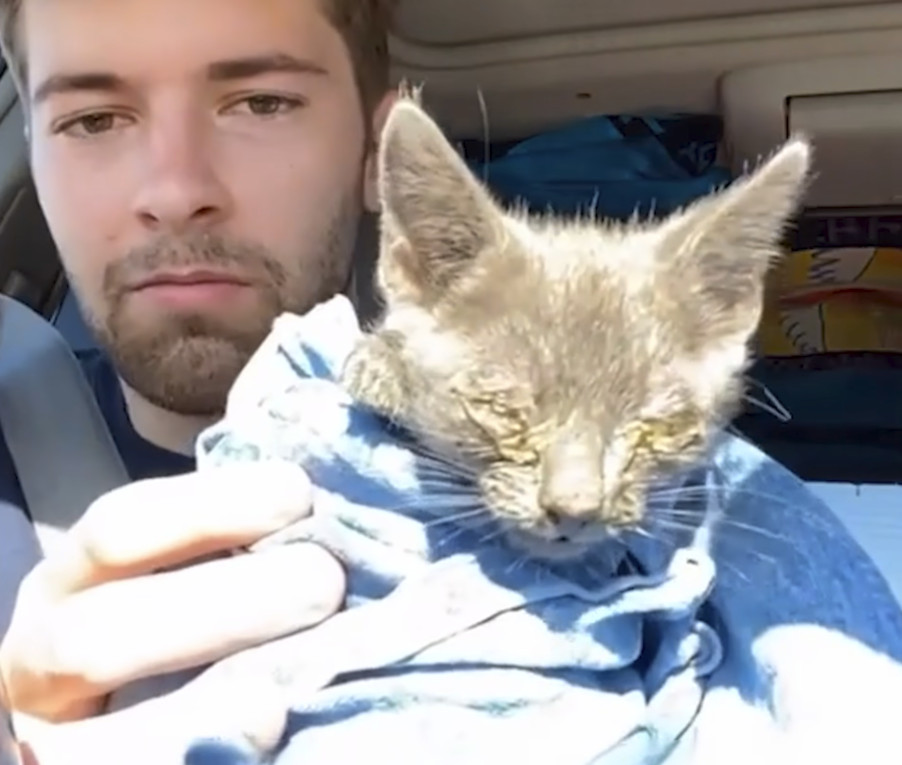
In this video a man named Sam shares the story of how he rescued and adopted his kitten, Scythe. The gray kitten had been abandoned or somehow separated from her mother at just four weeks old and was in a bad way.

At first Sam thought the little shape on the side of the road was a dark-colored rock and was shocked when it popped up and started moving toward him. It was a tiny kitten, her eyes gummed up and shut, following the sounds of his van’s engine. (External playback on the Youtube video has been disabled by the channel’s owner, but you can see Sam and Scythe in action here.)

Scythe immediately after Sam rescued her from a desert road.

Sam took her inside the van where his air conditioning was blasting and cleaned her up a bit. The next day he took her to the vet, but could tell she was suffering.

“She was just looking up at me, so small and scared,” he said. “I hated feeling so helpless, knowing I couldn’t do anything to make her feel better.”

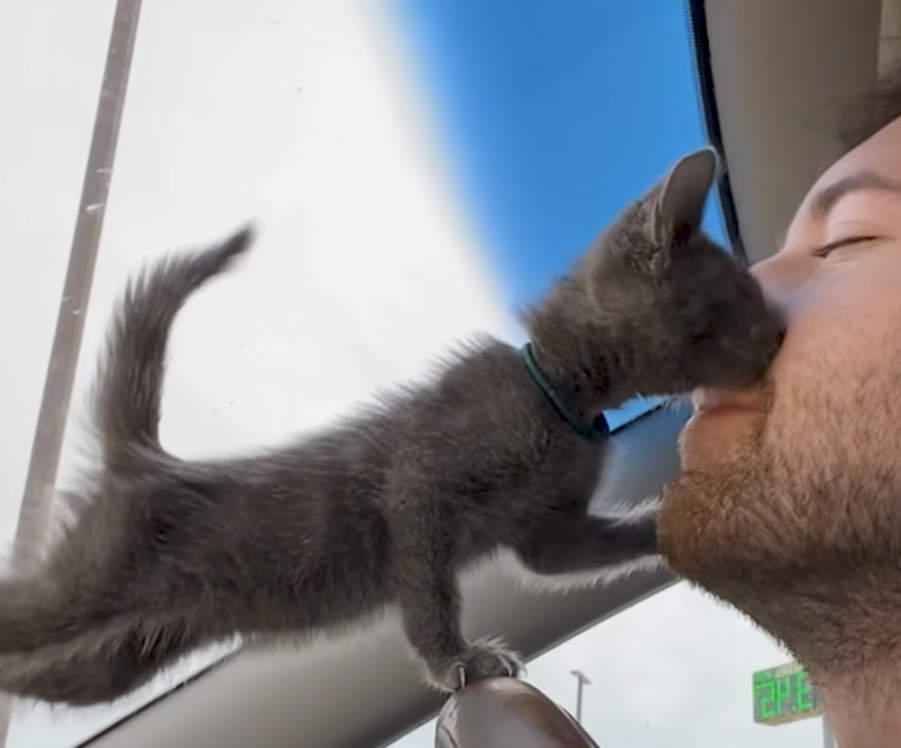
Despite the hardship she’d suffered, Scythe warmed up to Sam quickly.

“I remember the first time she felt love,” he said of her reaction when he began gently petting her. “It felt like the most healing thing for her was knowing people cared about her.”

Scythe warms to Sam.

He felt her tugging at his heartstrings, but there were two big problems: he’s allergic to cats, and his job requires him to hit the road for days at a time, often parking in places where the van bakes in the sun.

“I wasn’t thinking about keeping her at first. I had some friends saying ‘Oh, we’ll take her.’ But we had so much fun together, I ended up being like, I can’t give this cat away.”

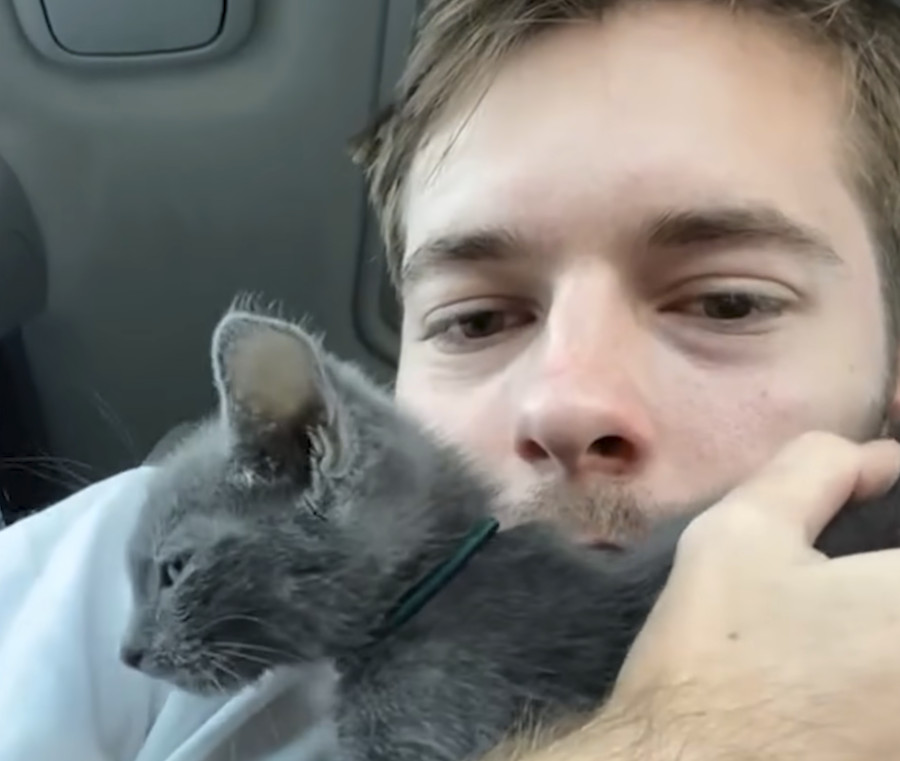
Sam decided he’d compromise and bring Scythe home, where his parents care for her during his work trips. When he returns, the little cat is overjoyed and can’t wait to play with him.

“I already knew from a few days in that our bond was so strong, and we both began to feel it much more as we traveled together,” he said. “I never thought I’d be a cat dad, but now I can’t believe I ever hesitated to keep her.”

How sweet! It reminds me of me and the Budster, except with a lot less cat-slapping-human action and more gratitude. That’s okay, though. I love my feline overlord too. This is further proof that all it takes it one special cat to convert nonbelievers to the feline side.

Youtuber Builds Feline Basketball Arena, Hotel After Previously Building Subway For His Cats

The Youtuber known as Xing goes to extraordinary lengths to create scaled-down places for his cats to play and lounge in within his Cat Town.

Xing, the Youtuber who previously turned heads by building a working subway system for his cats, isn’t finished transforming his Cat Town into a one-of-a-kind extravagance for his little buddies.

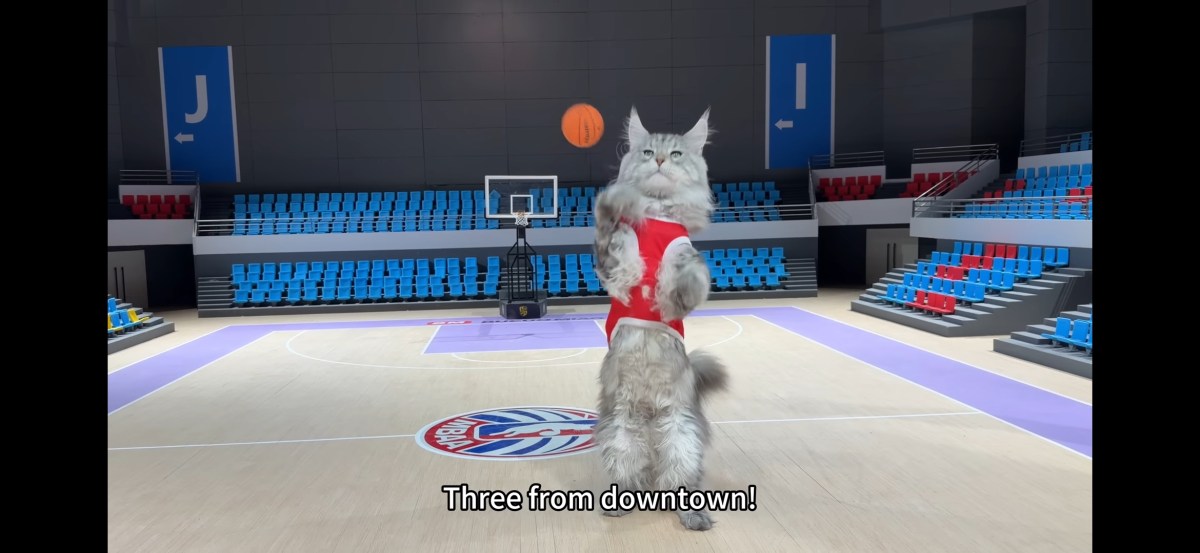
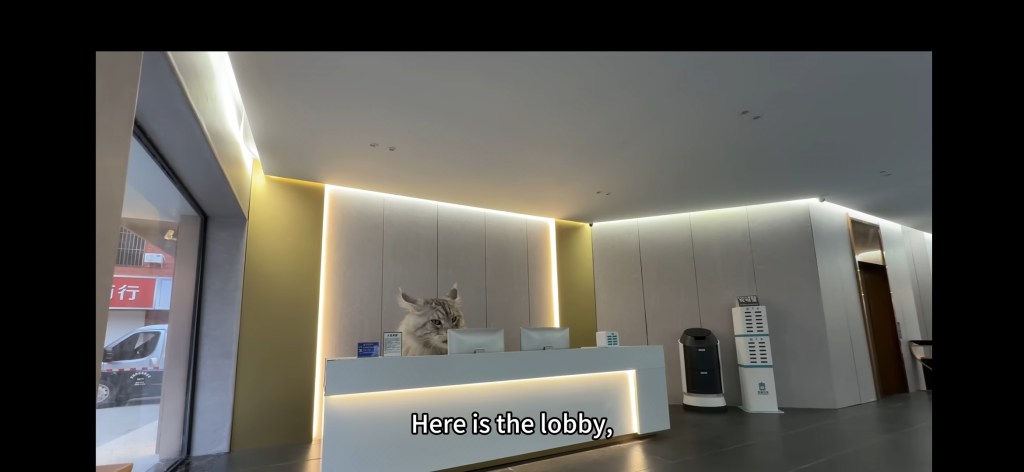
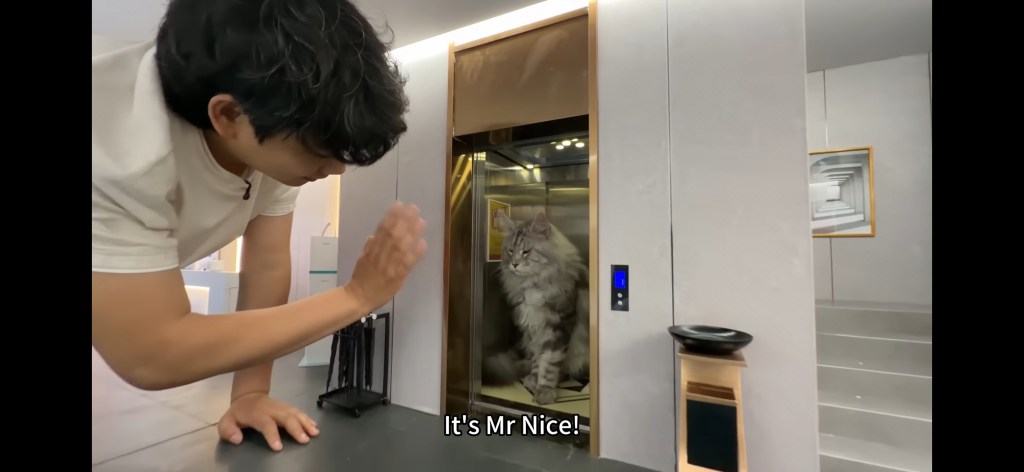
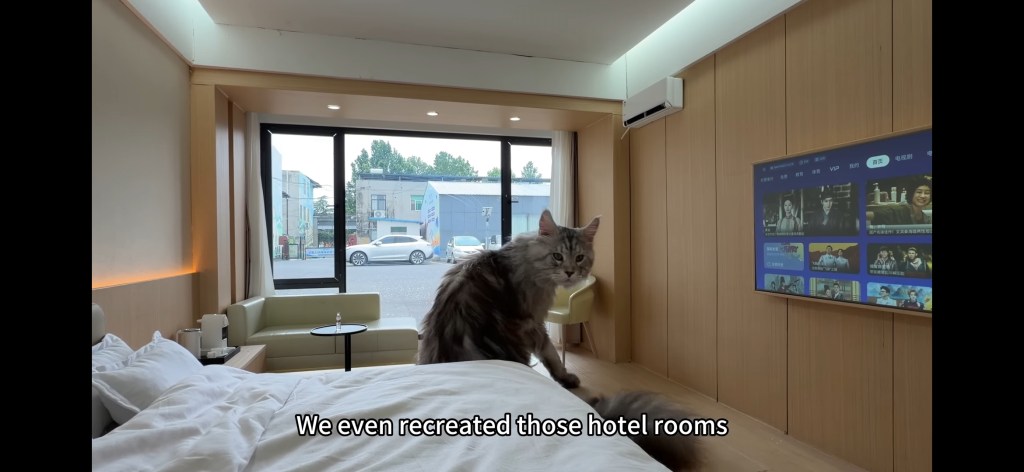
The Youtuber’s latest creations are a 3,500-seat, air-conditioned, to-scale feline basketball arena with its own real hardwood court and a cat hotel.

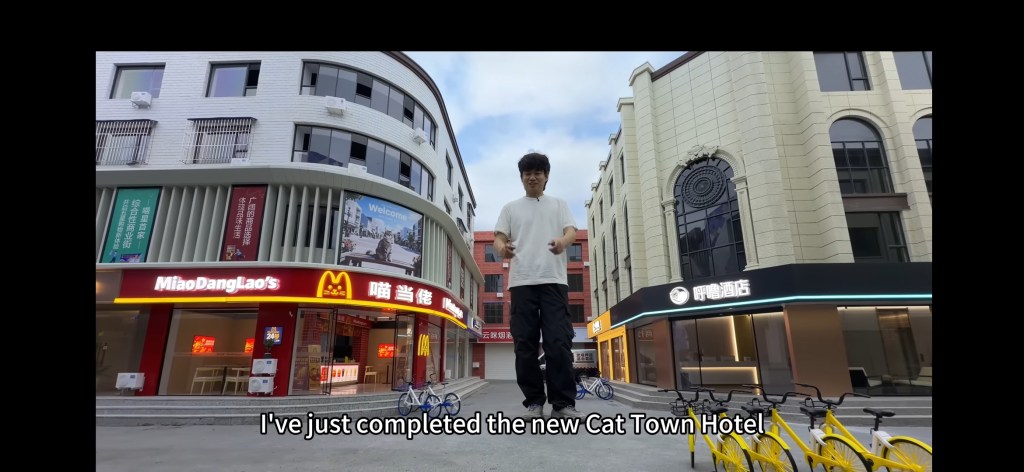
Xing also showed off the exterior of Cat Town, which has a McDonald’s and several empty buildings.

He’s soliciting ideas from viewers on what he should build next. While I love the subway and the arena, I think he should try something a little more practical, something his cats will definitely use. The cat hotel is different, since it’s entirely possible one or more of his cats will use the hotel room as a private getaway, but it does raise an interesting question: what would a cat want?

For most cats, including Xing’s fluffy Maine Coon, a pool wouldn’t be a great choice, but what about a hot tub? A Japanese capsule-style hotel with cozy rooms that fulfill the feline desire for tight spaces? A bowling alley where cats can knock pins over to their hearts’ content? A town park? A golf course filled with sand traps for…uh, never mind that last idea.

Here are some shots of the hotel lobby, elevator and guest rooms:

And here’s Xing showing off the impressive scale of Cat Town. He says he’s got a lot more room to build, so we won’t see an end to these impressive projects any time soon.

This Animal Was Going To Be Someone’s Lunch. Now It’s A Beloved Star

Can an ocean-dwelling invertebrate make music? Mattias Krantz thought so. Proving his point took months of work, creative thinking and perseverance.

Mattias Krantz got Tako from a Japanese seafood market.

“That guy,” he told the person manning the stall, pointing to a common octopus sitting in shallow water with others of its kind, not even given room to swim before it was to become someone’s meal.

It is the ultimate as far as random interventions of fate go, and I kept thinking about Tako’s almost-end on a plate while watching musician Mattias Krantz teach the clever animal how to play piano.

Octopus are smart. Comparing animal intelligence to human intelligence is always a flawed and imprecise effort, not least because of differences in psychology and evolution, but the eight-armed invertebrates have cognitive abilities on par with humans at three years old. That is to say, some of their cognitive gifts exceed those of small children, some fall short, and some are about equal. It’s always going to be apples to oranges between species.

Octopus learn quickly simply by observing. They remember individual people even if they haven’t seen them for months. They play, explore and even decorate their dens. In the wild, species like the mimic octopus perform nature’s most astonishing acts of imitation, not only changing the hue, texture and patterns of their skin, but also their shape and the way they move. They can imitate dozens of creatures, blend into the sand, and disguise themselves as plants and rocks. When a predator approaches, the mimic octopus takes on the shape, color and behavior of another predator — a highly venomous fish, for example — and scares off the aggressor. That requires serious smarts.

Technically, saying Tako is playing piano may be a stretch. Octopus can’t hear, so Krantz rigged Tako’s tank with a device that turns sound to rhythmic pulses in the water.

Yet there is no denying that Taku took to the piano with enthusiasm, happily played it, even looked forward to it every day when Krantz’ multiple iterations of waterproof keyboards finally reached a point where the animal could reliably manipulate the keys. (Krantz had to create switches Tako could pull, for example, as it’s difficult for the invertebrates to push keys.)

Krantz’ determination is admirable. The Swedish musician, known for his quirky projects, overcame major hurdles that would have stopped most people, and navigating some of those challenges required radical reconsideration of how humans and animals interact with the world.

Yet Krantz and Tako got there in the end, and the piano is only one part of it. Tako is short for takoyaki, a Japanese fried octopus dish. Watching Tako’s interest and enthusiasm as he tackled the piano day after day, you can’t help but think about his less fortunate tankmates, and our collective ambivalence to the overwhelming evidence that we share this planet with billions of other minds, each with their own thoughts and feelings.

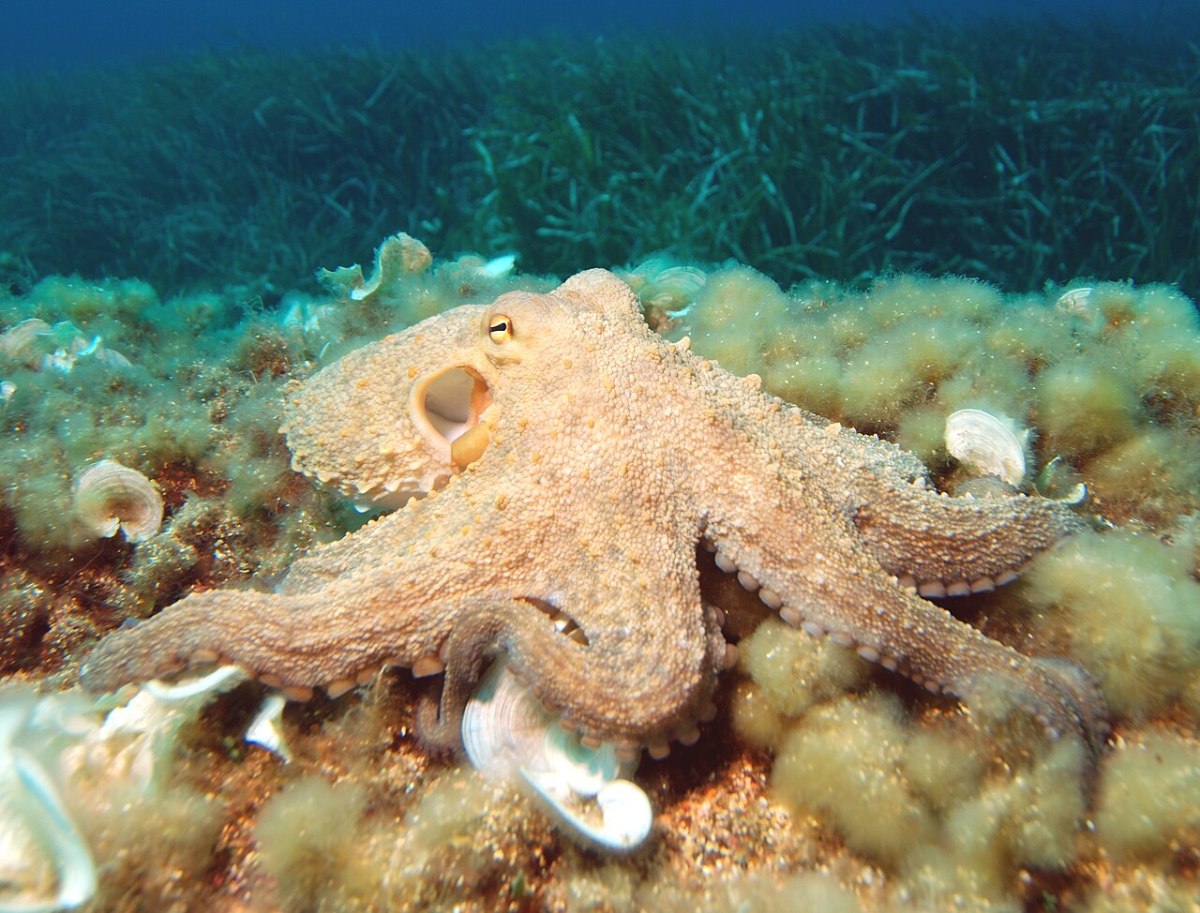
Header image of common octopus credit Albert Kok/Wikimedia Commons

Maru, Youtube Star Feline, Dies At 18

With his comical expressions and determination to squeeze in the tiniest of containers, Maru developed a loyal following. For a time, he held the record for the web’s most popular animal.

Maru the cat, who was once the most-viewed animal on the internet, passed away after a short battle with lung cancer.

The 18-year-old Scottish Fold was one of the first viral animal sensations on the video platform, and his videos have amassed a staggering 578 million views over the years. In 2017, Guinness World Records named him the most popular animal on the internet, lending credence to the joke that the internet was invented to share photos and videos of our feline overlords.

His name, which means “round” in Japanese, was an apt descriptor, and viewers found laughs and distraction while watching his antics. More often than not, his adventures included boxes and other containers he could barely fit in.

For Maru, the smaller the box, the bigger the challenge. Credit: Mugumogu/Youtube

Maru’s face was familiar even to people who weren’t big Youtube watchers, with internet users authoring several popular memes using his image over the years.

Maru’s human, who shared the bad news in a video, said she brought the little guy to the vet when his behavior changed and he stopped eating. His health rapidly deteriorated and he passed away on Sept. 6.

In one of his most-watched videos, the chonky Scottish Fold comically takes a tumble while trying to scale his cat tree, and demonstrates his dedication to laziness by laying on his back, half-heartedly batting his paws at a wand toy while his human tries to get him up.

In the video announcing Maru’s death, his human thanked his fans for being invested in his life for so many years.

“Maru was a laid-back and calm cat,” she wrote, “but at the very last moment he made a mad dash.”

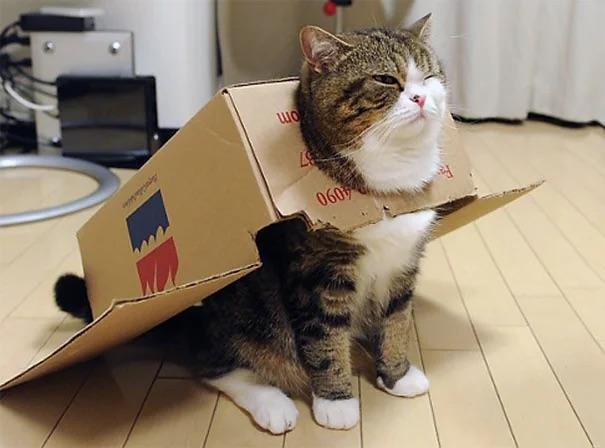
Header image credit Mugumogu/Youtube