A Big Game Hunter Was Trampled By Elephants: To Some He Was A Saint, To Others A Killer

The California man was hunting another animal when a herd of African elephants charged him and his professional guide.

The reaction to the trampling death of a “big game hunter” this month can be broken down to two main camps.

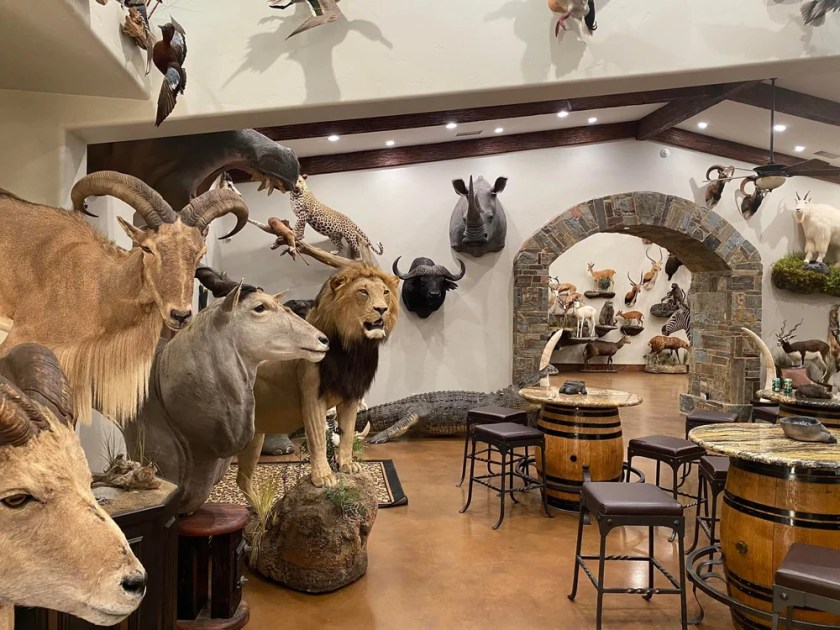
One side is in a celebratory mood, saying Ernie Dosio deserved to be trampled by African elephants on April 17 in Gabon, central Africa. His death was poetic justice, they say, delivered by animals of a species Dosio hunted, whose preserved and mounted heads he proudly displayed on his extensive trophy walls back home in California.

On the opposite end are people engaged in the hagiography of the 75-year-old business owner, describing him as a “pillar of the community” and a “great guy” who gave generously to charity.

We like our narratives black and white, our heroes and villains clearly delineated. To most people, Dosio was one or the other.

In reality, the two sides of Dosio are not mutually exclusive. It’s entirely possible he was a good member of the community who had compassion for people. It’s also true that contrary to claims that he was a “conservation hunter,” Dosio took pride in killing animals from critically endangered and protected species, like many who think their wealth entitles them to rob the Earth of wonderful and unique forms of life so they can collect trophies.
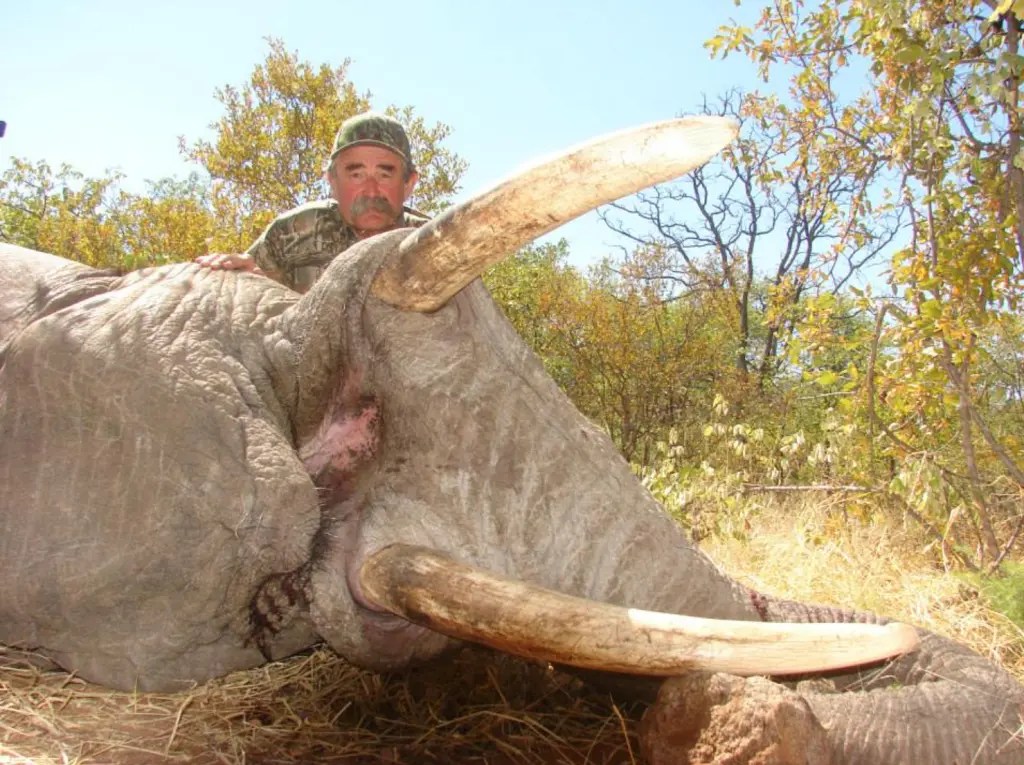
Dosio posing with an elephant he killed on an earlier trip.

Indeed, the concept of a “conservation hunter” is an oxymoron. The pro-hunting side says the fees hunters pay for licenses, guides and other services are crucial to fund conservation efforts.

The truth is that the majority of the money finds its way into the pockets of officials in kleptocracies. If the contributions of so-called conservation hunters are supposed to make a difference, then reality proves them to be an abject failure: population numbers for endangered species like elephants, lions, cheetahs and rhinos continue to trend down, and those species will be extinct in a decade or two if we don’t put a stop to poaching, hunting, habitat loss and other threats.

I also have a problem with calling these people hunters.

These men and women are not Jim Corbett roughing it on foot in the British Raj, using their skill and knowledge of the land to take out vicious man-eaters at great risk to themselves.

They are weekend warriors, wealthy tourists who pay tens of thousands of dollars to kleptocratic governments for their blessing to “harvest” the animals they kill. It’s big business: in South Africa alone, the trophy hunting industry brought in $120 million, according to a 2015 estimate. That number is likely considerably higher today.

When he was killed, Dosio was hunting for a yellow-backed duiker, a rare antelope listed as near-threatened on the IUCN red list. He paid Gabon’s government a $40,000 fee to “harvest” the animal.

Trophy hunters don’t stalk by moonlight, rifle in hand, looking for tracks and camping rough.

They are chauffeured around by hired drivers in comfortable, climate-controlled luxury off-road vehicles. They have servants who pitch their tents, cook their meals, light their fires and guard their camps.

They do not track their targets. They pay men to lure the unsuspecting creatures directly into their paths using food as a lure. The lions, leopards and other animals they kill don’t even realize they’re being hunted before the rifle shots end their lives.

Then the hunters retreat to the air-conditioned comfort of their vehicles while their hired servants do the dirty work of beheading the animals so they can be packed up, prepped for display and shipped back to the US, where they will join the heads of other animals killed by these wealthy men and women. Men and women who proudly show off their kills when they invite people to their homes, recounting their heroics to the bored guests, who make appropriately polite noises to pretend they’re impressed.
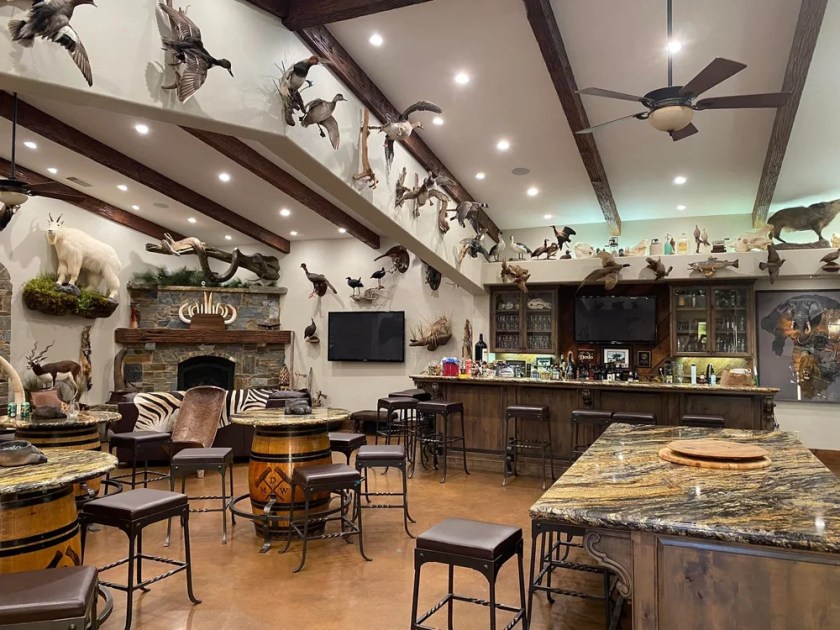
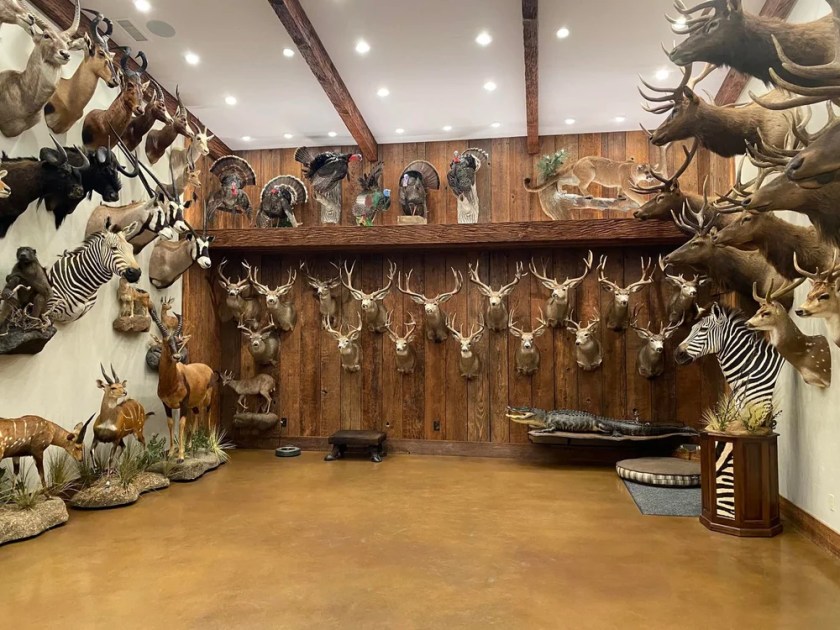
In addition to the 30 or so animals on display here, photos show the walls on the rest of Dosio’s home are covered with the preserved heads and bodies of animals he’s killed.

Nothing about this grotesque sequence of events resembles hunting. It is killing. It requires no skill, it carries no risk, its outcome is never in doubt, and it serves no purpose other than to pad the egos of people who have lots of disposable income and little self-confidence.

They have their defenders and their haters.

“I knew I was going to enjoy this,” one person wrote in response to a news story about Dosio’s demise.

“Do you think the elephants will mount his head on their walls?” another joked.

Some people speculated that the elephants, a species with notoriously long memories, may have remembered him from a prior encounter.

The more likely explanation is the elephants saw Dosio and one of his guides, both carrying weapons, as a threat to the calf they were protecting. Rather than put the baby and themselves at risk, they attacked first. If that’s the case, humans are at fault for that too, because the elephants know people carrying guns do not have good intentions. It may not have been Dosio who killed a member of that particular herd, but odds are overwhelming that someone has, and the elephants haven’t forgotten.

While celebrating Dosio’s death may provide a cheap dopamine hit and a sense of righteous justice, to be truly on the side of life means to value all forms of it, animal and human.

Dosio, 75, was reportedly a millionaire and owned a business that partnered with vineyards in California.

Celebrating Dosio’s demise means we’re no better than the “hunters” who grin like psychopaths for photos with the animals they’ve just killed. It makes those of us concerned about animal welfare and conservation look like extremists, and it only takes a few bad actors to wreck the efforts of an entire group. If a thousand protesters gather in a city square and two of them become violent, the resulting headlines will be about those two, not the 998 others who peacefully made their opinions known.

The way to fight back against trophy killing is by educating the public about the damage those killers do, by countering their claims that the fees they pay protect other animals, and by pointing out that without drastic intervention, elephants, lions and cheetahs will be nothing more than memories for a few generations, and near-myth to subsequent generations.
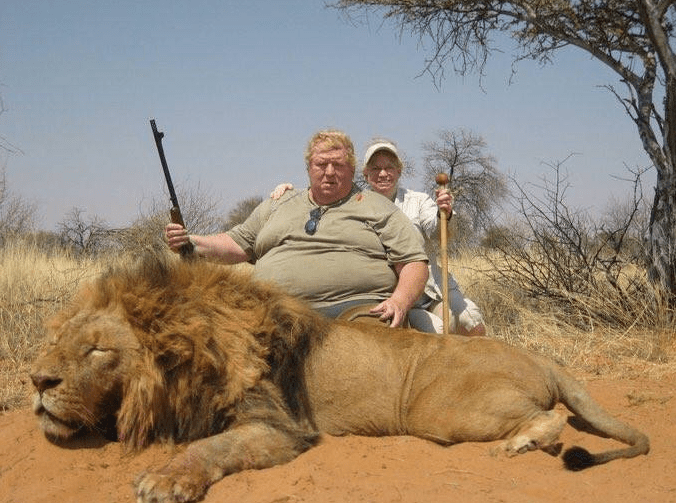
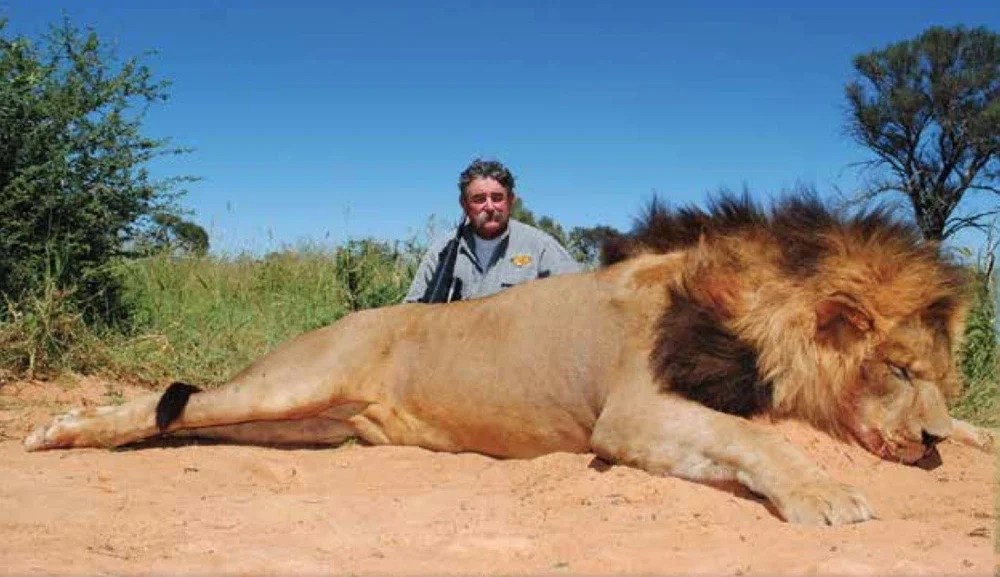
Killing, not hunting: this photo of an unnamed trophy hunter and his wife is instructive because it shows trophy “hunts” are never in doubt, never pose a risk to the “hunters,” and require no physical ability.

This also calls for self examination. On an Instagram account I made for Buddy, one I log into two or three times I year, I follow a handful of National Geographic photographers.

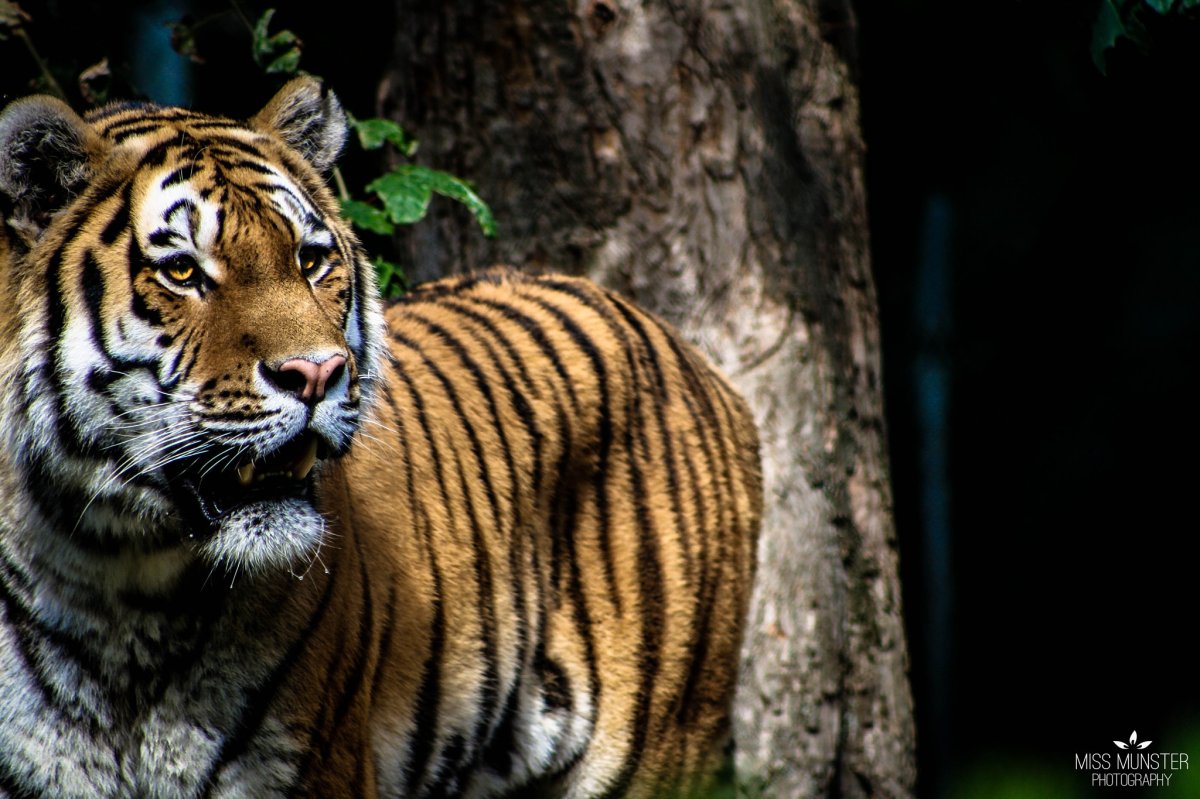
One of their images remains indelibly burned into my brain: a beautiful tiger cub, looking happy and full of curiosity about the world, gazing right at the camera. Even though I know I’m anthropomorphizing a bit, I can’t help feeling good about the expression on the young tiger’s face, an expression that looks like an enthusiastic grin. He is radiating joy at life.

And then I read the caption. This cub, this beautiful animal of a species that teeters on the edge of extinction, is growing up on a hunting reserve. His fate is already set. He will be killed, his life cut short by another weekend warrior paying to “harvest” him and mount his head on a wall so he can tell stories about his own bravery to bored friends and acquaintances.

That’s not just inhumane, it reveals something deeply disturbing about the kind of people who take pleasure from killing. Something primal, something that has no place in our civilization if we’re going to mature as a species, overcome our violent instincts, and have a future on this planet without destroying ourselves and taking every other form of life with it.

That’s why we need to be on the side of life. The alternative is reducing this garden world, this paradise, into a cold, lifeless rock.
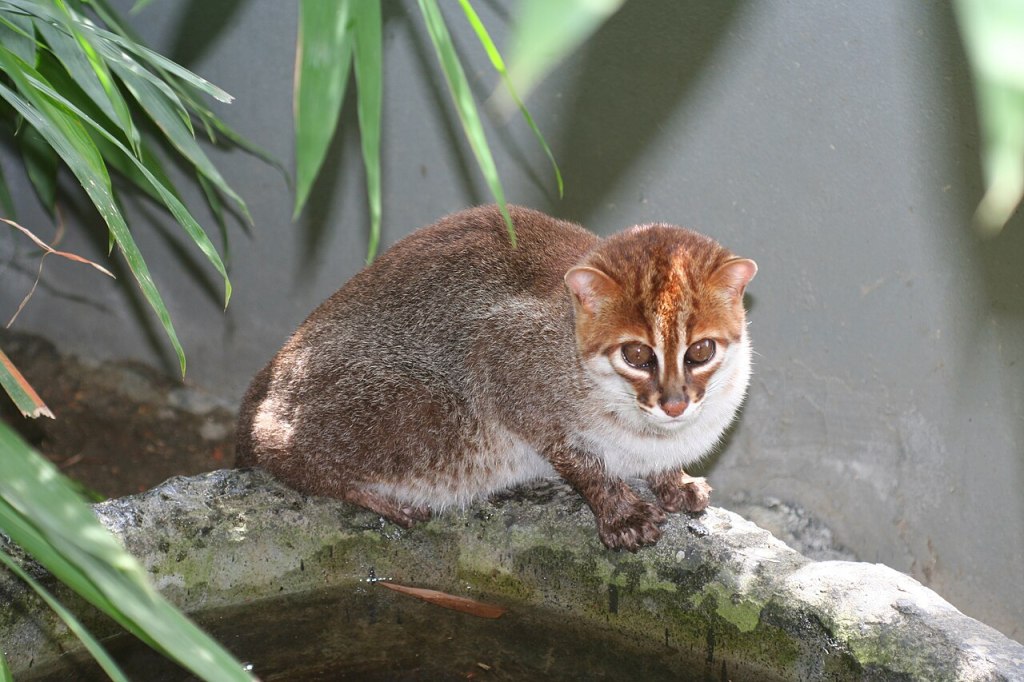
Camera Traps Spot Wildcat That Hadn’t Been Seen In 30 Years

The species has webbed feet and lives in some of the most remote regions in the world.

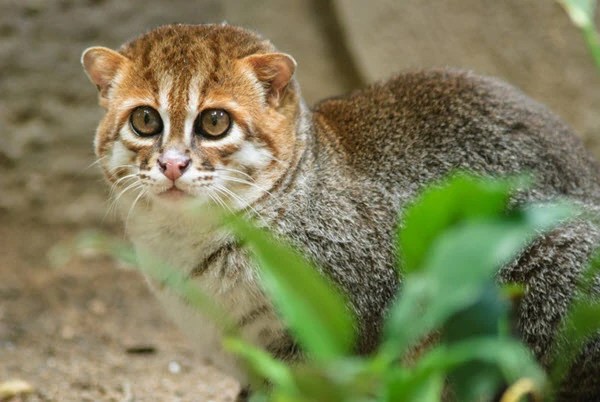
The flat-headed cat is one of the most elusive and rare felines in the world, and for three decades conservationists thought it had died out in Thailand, leaving only a handful of places where the species still eked out an existence.

Now there’s good news: the tiny feline, which weighs about half as much as a house cat, has been spotted in a remote region of the country.

Camera traps set up for an ecological survey starting last year detected flat-headed cats 29 times in Thailand’s Princess Sirindhorn Wildlife Sanctuary, according to the country’s Department of Parks, Wildlife and Plant Conservation. One of the sightings was a female and her cub, an encouraging sign that shows the local population is breeding.

Credit: Jim Sanderson/Wikimedia Commons

The sanctuary covers five square kilometers of rainforest and peat swamps. Along with the flat-headed cat and several unique species of birds, it’s also home to the endangered hairy-nosed otter.

Conservationists believe about 2,500 flat-headed cats remain in the wild. The species is mostly nocturnal and has webbed feet, helping the tiny wildcats navigate mangrove swamps and rivers in its rainforest habitat. Known as Prionailurus planiceps in scientific nomenclature, the flat-headed cat is most closely related to the fishing cat (Prionailurus viverrinus), which also has webbed feet, and the leopard cat.

Finding evidence of the endangered feline in Thailand is “exciting, yet concerning at the same time,” said Kaset Sutasha of Kasetsart University.

That’s because it means the surviving population is severely fragmented, which makes it more difficult for the cats to breed and could lead to genetic bottlenecks.

But Atthapol Charoenchansa, director general of Thailand’s parks department, also called it a “significant win” for conservation efforts. Knowledge of its presence in Thailand provides more opportunity to study the rare felines to better understand their behavior and protect them from extinction.

Rangers In India Race To Capture Man-Eating Tiger Before Mobs Kill It

Angry locals say they’ll kill the tiger if forest rangers do not after the predator ambushed and ate a mother of two in southern India on Friday.

Forest rangers are on the hunt to capture a man-eating tiger who killed a woman and dragged her body into a forest on Friday, while frustrated locals say they’ll destroy the predator if the government does not.

The victim, a 45-year-old woman named Radha, was employed by a local coffee plantation in Mananthavady and was harvesting coffee beans when the big cat ambushed her, according to multiple reports in local media. Mananthavady is a city of about 47,000 people in southern India surrounded by rural farmland.

A Thunderbolt team — a special forces unit trained in counter-insurgency — was patrolling the area when they found blood and signs of a struggle. They followed the tiger’s pug marks into a nearby forest, where they found Radha’s body “half eaten,” the New Indian Express reported.

The victim was a mother of two and was buried in a service earlier today, according to the news service Bharat.

The attack and the livid response of people in the area highlight the conflicts that India must manage as it works to save tigers, the country’s critically endangered national animal, while also protecting the public. India’s government has relocated thousands of families away from the vast country’s 27 tiger preserves, but the big cats are oblivious to the boundaries of the preserves.

Earlier this month, people living in several contiguous towns over a stretch of more than 130 miles in eastern India barricaded themselves indoors, refusing to leave for work or to travel to local markets, after a pair of hungry tigers had drifted off a preserve and had begun to feast on local livestock.

A tiger who was seized and relocated from a roadside zoo operated by Joseph “Tiger King” Maldonado-Passage. Credit: Wikimedia Commons

In Mananthavady, locals threatened a hartal, a form of strike aimed at gaining concessions from the government, if the tiger is not killed. Forest rangers and local government leaders said they would capture and relocate the tiger, who has been spotted on a trail camera, but the locals say that’s not good enough.

“If you can’t shoot the tiger, then shoot us instead,” one protester told forestry officials.

Others said they’d take matters into their own hands if authorities don’t kill the tiger. It’s not an empty threat: in 2019, a mob of enraged villagers beat a tigress to death after she attacked a person.

Radha was the third person to be killed by tigers in the area since 2023, when two farmers were killed by the endangered apex predators in incidents about 11 months apart.

In addition to the anger and grief felt by family and friends of the victims, the government’s compensation program is also controversial. Radha’s family will receive ₹11 lakh, according to reports, which was about $12,800 in USD according to exchange rates on Jan. 25.

The program has been condemned by people who say the government is wrong to put an arbitrary monetary value on human life, and in recent years there have been attempts to provide families with resources like job training in addition to monetary compensation. The issue remains a sore spot and a topic of ongoing litigation because the government did not compensate victim families for decades, and does not automatically provide compensation if the victims trespass onto preserve land.

Tigers are the largest and most dangerous of all cat species, and are arguably the most dangerous land animal on the planet, but the vast majority of them do not attack humans and give people a wide berth. Unlike most other felids, they enjoy water and swimming, especially in warm climates. Credit: Warren Garst/Wikimedia Commons

In the meantime, a team comprised of rangers, veterinarians, expert trackers and others — totaling about 100 people — was racing to get to the tiger before the mobs do, utilizing drones, traps and thermal imaging cameras to find and capture the elusive predator.

“The animal is still roaming in the same vicinity, and we are strengthening local patrols to prevent further casualties,” KS Deepa, chief conservator of forests in the region, told local media.

Most tigers who turn man-eater do so because they can no longer take down their usual prey without difficulty, either due to old age or because their teeth are damaged. The infamous Champawat tigress, who killed 436 people during a decade-long reign of terror from the late 1890s through 1907, turned man-eater when a hunter’s bullet shattered one of her canines.

It’s wasn’t clear what forestry officials planned to do with the tiger if it’s captured, but they told reporters they are forbidden by law from killing the animal unless other options are exhausted.

“There are three ways to capture the tiger,” A.K. Saseendran, India’s minister of forests and wildlife, told The Hindu. “We will try to cage it as the first step. If that fails, we will try to tranquilize it and move it out of Wayanad. Killing the tiger is the last resort.”

Amazing Cats: The Sunda Clouded Leopard

This singular species of wildcat exists only on two islands and has evolved to live a semi-arboreal existence deep in the jungle.

While tigers, lions and domestic cats are the stars of the felid world and command the lion’s share (pun intended) of the attention, even from cat lovers, there are obscure species living in far-off locations where they’re rarely glimpsed by human eyes.

There’s the fishing cat, the black-footed cat and the sand cat, and then there are species that are obscure even among the obscure. The Sunda clouded leopard fits into that category, inasmuch as the unique felid can fit into any category.

Like orangutans, the Sunda clouded leopard can be found in only two places in the world: the Indonesian islands of Borneo and Sumatra. They’re faced with the same existential threat that has pushed orangutans dangerously close to extinction, which is the relentless destruction of old-growth jungle to clear land for more palm oil plantations.

Sunda clouded leopard
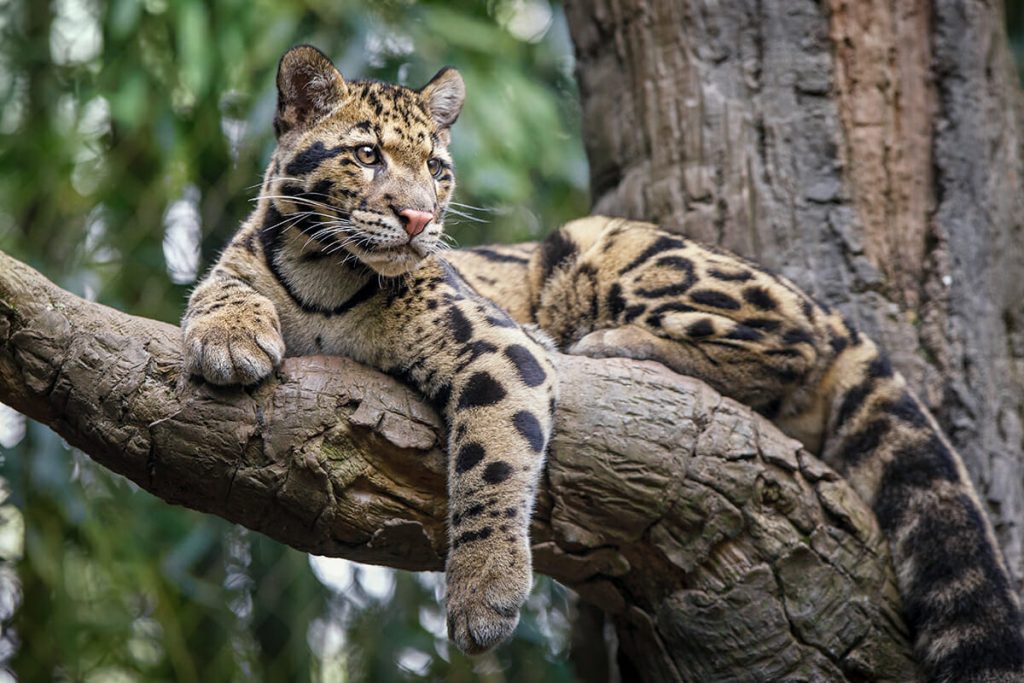
The species has an incredibly long tail that can match or exceed the length of its body. The large tail is crucial in a jungle environment, where it acts as a counterbalance high above the ground. Credit: Panthera

Palm oil is coveted by multinational corporations in the food and cosmetics businesses, and it’s in everything from chocolate and instant noodles to lipstick and margarine, according to the World Wildlife Fund.

The problem with razing old growth jungle and forest is that it doesn’t just grow back. They’re extremely delicate ecosystems that have arrived at a natural balance over thousands of years, with every species of animal and plant contributing something vital to the vibrant tapestry of life the jungles host and support. You can’t just plant trees and usher animals to a new home. It would take hundreds of years for those new jungles to even superficially resemble the lifegiving old growth jungle.

There are heartbreaking images of shocked orangutans sitting in the ruins of their former homes, with nothing but the stumps of trees and dozer-trodden vegetation as far as the eye can see.

Those are the lucky ones. The loggers who work for massive multinational corporations aren’t bound by rules or ethics, and they won’t wait for animals to clear out before they destroy.  They often shoot orangutans on sight regardless of whether the animals are carrying young.

Baby boot camp
Roux, a baby orangutan in a “boot camp” for orphans, learns how to walk. Credit: Phys.org

That’s the primary reason why Borneo and Sumatra are now home to entire academies for orangutan orphans, who spend at least eight years learning how to fend for themselves with the help of specialists who teach lessons that would normally be taught by the orphan orangutans’ mothers. They include the very basics, like how to move and climb through the jungle, as well as crucial information such as which berries to avoid while foraging.

While there’s no “academy” for clouded leopards and the felids are more adept at avoiding human wrecking crews, they’ve suffered the same fate as orangutans when it comes to dwindling jungles.

This is the situation Sunda clouded leopards find themselves in, so when a trail camera recently captured footage of a mother and her two cubs, conservationists were thrilled.

The footage comes from camera traps belonging to the Orangutan Foundation, and it’s the first time anyone’s managed to obtain video of the Bornean clouded leopards with cubs in tow. The brief video shows the little family bounding through the jungle. They quickly move past the camera, but not before one of the cubs stops to look right at it with typical kitten curiosity.

Sunda clouded leopards are extraordinary cats. Size-wise, they are firmly in the “medium size wildcat” category, with males weighing about 50 pounds. Despite that, they are members of pantherinae, the genus of big cats, having diverged from a common ancestor shared with tigers, leopards, lions and jaguars.

As further proof of their in-between status, Sunda clouded leopards can neither purr nor roar. Typically, each species of felid can do one or the other. Even the species’ scientific nomenclature, neofelis nebulosa, references its intermediate status. (If you encounter alternate taxonomy for them, it’s because the clouded leopards of Borneo and Sumatra are considered distinct subspecies.)

“Due to a different bone structure in their neck, the clouded leopard cannot roar like the larger cats, but also cannot purr because it lacks the fully ossified hyoid bone that allows small cats this ability,” the Smithsonian National Zoo’s keepers explain.

Sunda clouded leopards have several unique adaptations that allow them to thrive in arboreal environments. Their massive tails act as crucial counterweights, allowing them to traverse branches high above the ground without falling. Their paws and paw pads are specialized for gripping tree branches, and their ankles can articulate in ways other felid ankles cannot, allowing the jungle-dwelling wildcats to descend from trees head-first.

Domestic cats infamously lack this adaptation, which is why firefighters are also part-time cat rescuers, coaxing the terrified little ones down from trees, utility poles and rooftops.

sundacloudedleopard
Credit: Panthera

The clouded leopards of Borneo and Sumatra are also undeniably cute. People have noticed, which is why one of Google’s auto-complete suggestions for Sunda clouded leopard suggests the word “pet” as an addition. It’s okay to fantasize about having a clouded leopard buddy, but in addition to the fact that they are endangered, they’re also wild animals.

Consider the fact that across the estimated 200,000 years of our species’ existence, homo sapiens have domesticated precisely one felid species, and even that’s not entirely accurate. Felis catus played just as much of a role — and arguably more — than humans did in their own domestication. As predators and obligate carnivores, they are unique among domestic animals, and it took and equally unique set of circumstances to bring cat and man together.

Instead of lamenting the fact that Sunda clouded leopards can’t be pets, we can admire them in the best way possible, from a distance, while helping ensure the survival of this extraordinary, distinctive species by donating to groups like Panthera, the WWF and Global Conservation.

Previously:

Amazing Cats: The Mysterious Marbled Cat
Amazing Cats: The Rusty-Spotted Cat
Amazing Cats: ‘He Who Kills With One Bound’
Amazing Cats: The Puma

What It’s Like To Care For World’s Oldest Cat, Plus: Utah Zoo’s New Kitten Is Cute But Deadly!

A London woman’s cat, Flossie, just celebrated her 29th birthday, making her the oldest cat in the world. And in Utah, a zoo just debuted an adorable little predator.

Happy Sunday, everyone, and if you’re on the east coast of the US like we are, we hope you’re safe and warm during this year’s first snow.

We’ll start off with a bit of significant news first reported in the The Buddesian Times: the famous artist and sculptor Meowchelangelo has unveiled a glorious marble statue of our favorite feline hero, “striding like a colossus toward evil-doers in the distance, his rippling muscles rendered in magnificent Calacatta Borghini,” which is marble from the same quarry in Carrara, Italy, that supplied the raw material for another masterpiece, the Renaissance sculpture commonly known as “David.”

The statue, which honors Buddy’s recent valorous defense of a helpless dog during a vicious attack by a pack of 72 coyotes, will likely be installed in Manhattan, although Washington’s city council is lobbying hard for it, promising the famous statue of Abraham Lincoln in his eponymous monument would be removed for the Buddesian likeness.

buddesiantimes
Today’s edition of the Buddesian Times with a front-page story on the statue.

The World’s Oldest Cat still moves like a kitten

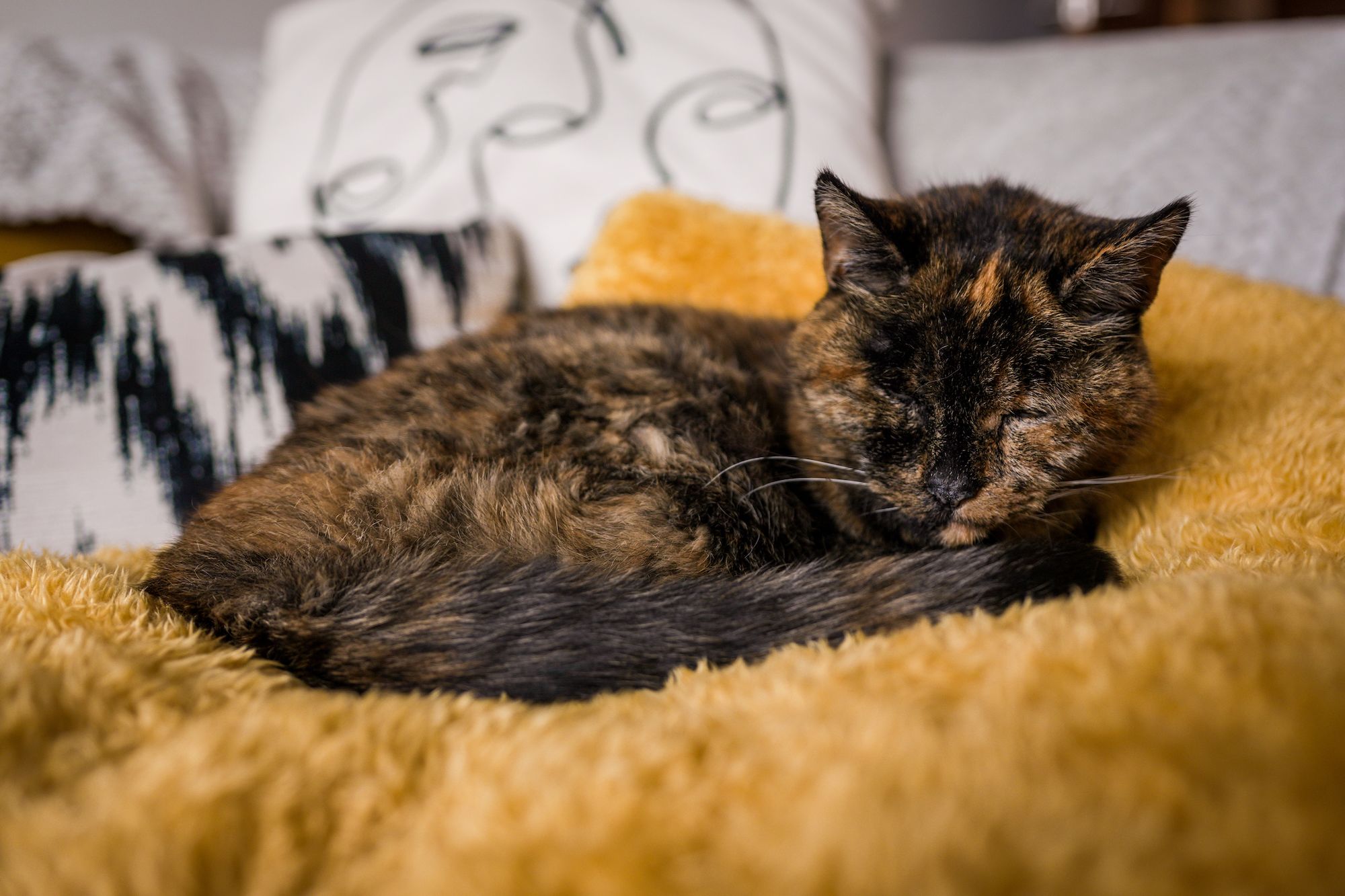
The Guardian has an interesting column from Vicki Green, cat mom to Flossie, who at 28 years old is the Guinness World Records certified oldest domestic cat in the world.

Flossie, who was born in December of 1995, is as old as Green, who attributes the tortoiseshell’s longevity to “luck, and because she was loved by her previous owners.” Flossie was initially an outdoor kitten who lived in a managed colony until she was adopted by her first human, who died when Flossie was 14 years old.

The woman’s sister took Flossie in next but died after 10 years. Her son became the long-lived feline’s third servant, but after three years he brought her to Cat’s Protection in London, saying he could no longer provide the level of care Flossie deserved and needed.

Shortly after, Green was looking to adopt a cat and saw Flossie’s listing online.

“At the time, I thought it was an error and that she must be 17,” she wrote. “Cats Protection told me she was still available to adopt and that no, she was in fact 27, the same age as me.”

Green thought Flossie would likely only live a few more months, but “she’d at least spend them in a nice, warm flat, be fed well and get treats as well as a comfy bed.”

“To my surprise,” Green wrote, “I’ve had her for over a year now and she’s still going strong.”

Flossie napping
Flossie takes lots of naps but is surprisingly active and playful for her age. Credit: Vicki Green

Despite her advanced age, Flossie is active, seeks attention and still plays with her favorite toys. Green got miniature stairs for the senior kitty to easily reach the couch, but Flossie doesn’t use them, preferring to jump up instead.

“The biggest difficulty is dealing with the fact that there may soon come a time when she passes. I’m in denial about that. I look at her and just think she doesn’t look old at all,” Green wrote. “Yet who knows? She could well be on the way to becoming the oldest cat in history. Though even if she doesn’t break the current record of 38 years and three days, at least I’ll know she had a great retirement home.”

Gaia the three-pound terror debuts in Salt Lake City

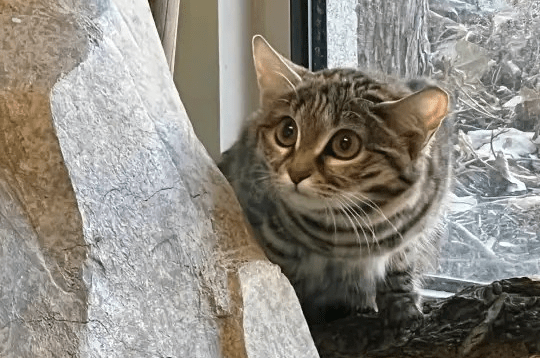
Black-footed cats are known primarily for three things: they’re outrageously cute, they’re diminutive and they’re remarkably deadly.

Of course with a maximum weight of three pounds, only tiny prey have to worry about the fury of these furry little guys. The rest of us get to point and go “Aww!”

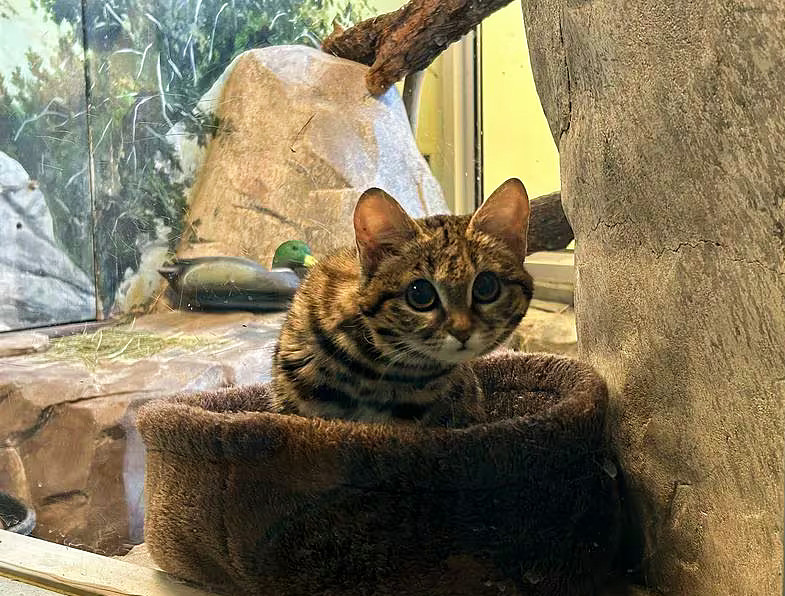
Gaia the black-footed kitten
Gaia’s personality is “large and feisty” according to zookeepers. Credit: Hogle Zoo

Native to the savannas of southern Africa, black-footed cats are excellent hunters, but like all felines they’re also prey, and they’re the subject of a worldwide zoological breeding and conservation program due to declining numbers in the wild.

The newest success story for those breeding efforts is Gaia, an eight-month-old black-footed kitten who just made her debut at Hogle Zoo in Utah.

Zookeepers describe baby Gaia’s personality as “large and feisty,” and they expect she’ll be popular with zoo visitors.

She’s now the second of her species at Hogle, joining Ryder, a male. They haven’t been introduced yet. A carefully supervised introduction is “in the cards, but we’ll let these two feline friends get acquainted when Gaia reaches maturity,” the zoo said.