Amazing Cats: As Solitary Night Hunters Surrounded By Danger, Leopards Must Watch Their Backs

Stealthy, lethal and skilled, leopards are apex predators, but they contend with bigger cats and pack animals who pose a danger to them and their cubs.

Taxonomic name: Panthera pardus
Genus: Panthera (big cats)
Weight: Between 82 and 198 pounds with typical felid sexual dimorphism
Lifespan: Between 12 and 15 years in the wild and up to 23 years in captivity
Gestation: 90 to 105 days, or about three months
Litter size: Two to four cubs who remain with their mothers for up to two years
Distribution: Leopards boast the widest range of any big cat, with populations in at least 62 countries spanning from sub-Saharan Africa to Russia, China and the Koreas
IUCN Red List Status: Vulnerable

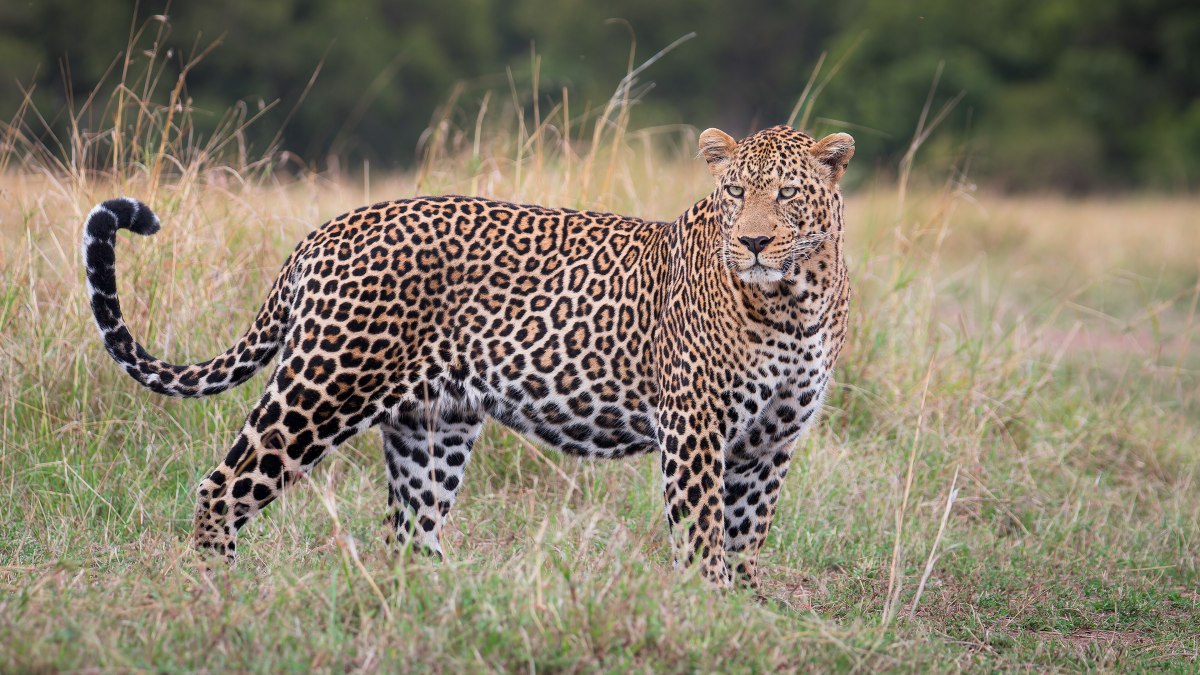
Illustration of a leopard's face with distinct spots and striking green eyes, enclosed in a circular border.

Leopards occupy a precarious position in the hierarchy of predators.

They’re true big cats who are extraordinarily dangerous and skilled hunters, but they’re never the baddest on the block by measures of pure size or strength.

Throughout their range, which stretches from the savannas of Africa to the verdant jungles of Asia, they are forced to compete with animals who exceed them in raw physical power, or derive their advantage through strength in numbers.

In Africa leopards, known as panthera pardus in binominal nomenclature, play second fiddle to their sturdier, more intimidating cousins, panthera leo. Lions aren’t just bulkier and brawnier, they’re also unique among big cats because they live in social groups. Lions cooperate on hunts, allowing them to take down anything they come across, and the entire animal kingdom gives them a wide berth.

In Asia leopards bow to the biggest, baddest cats on the planet, panthera tigris. While lots of people mistakenly believe lions are the kings of the cat world, that distinction goes to their striped, stealthy cousins. Tigers are the heaviest, physically largest and most powerful cats, making them the apex predators on land.
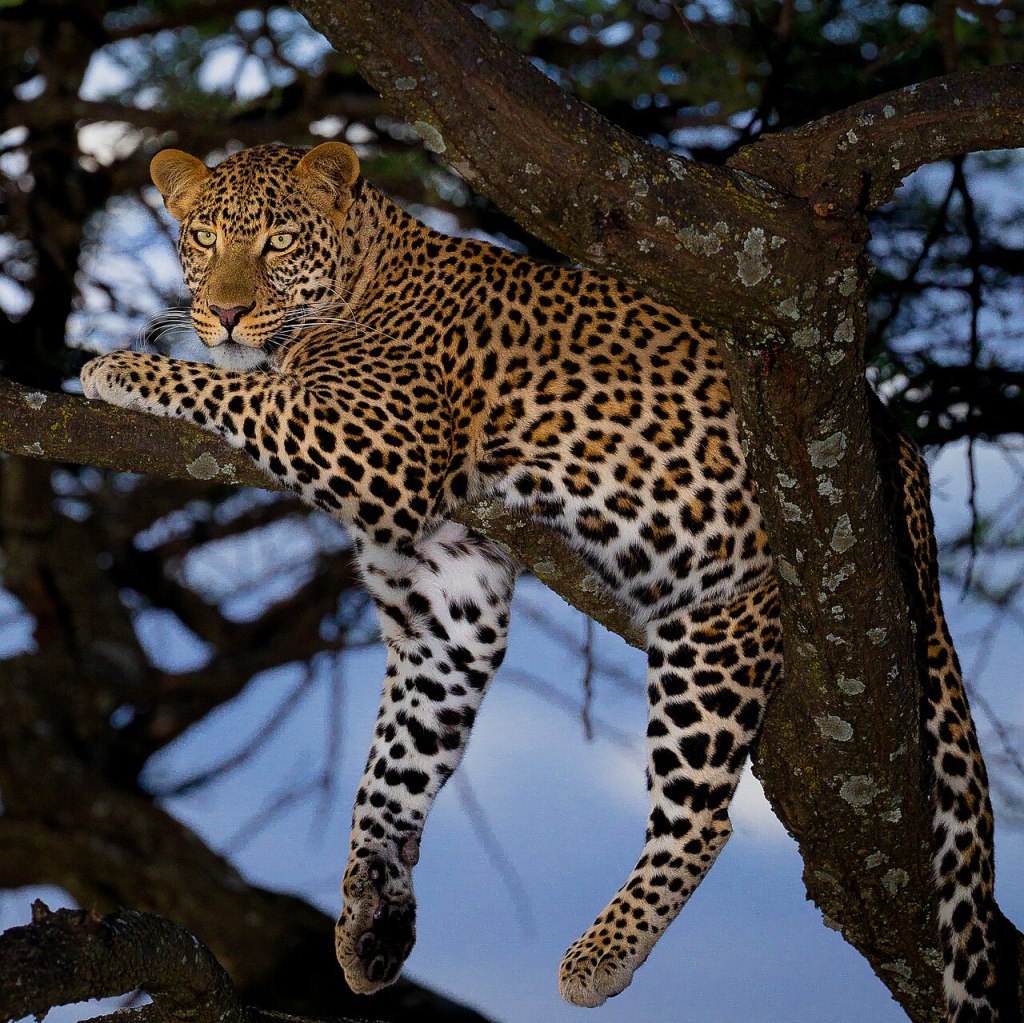
A leopard resting on a tree branch, looking alert with its head turned slightly.
A leopard in the Maasai Mara in Kenya. Credit: Sumeet Moghe/Wikimedia Commons

It’s not just other cats who put pressure on leopards. Hyenas, wild dog packs, dangerous herd animals and colossal animals like elephants and rhinos pose a danger to the spotted big felids, if not directly then in competition for food and territory.

So for leopards to successfully thrive, they’re forced to rely on their other unique skill sets, including impressive adaptability and intelligence. They hunt when others rest, eat in places out of reach of their competitors, and know when to cut their losses.

While tigers hunt in daylight, leopards stalk their prey in the darkness. Tigers and lions have the luxury of eating out in the open, as wild dogs know it would be suicidal to lay claim to kills belonging to a pride or a tiger pushing 700 pounds. Leopards aren’t guaranteed that luxury.

Leopards aren’t just physically vulnerable to species they share a range with, they’re also at risk of going hungry. Leopards can expend their finite energy on successful hunts only to be forced to abandon their kills to lion prides and canine packs. They can mitigate the risk by dragging their kills up into trees using their powerful limbs and sure footedness, or taking them into the tangle of the underbrush, though neither method is fool-proof.

Perhaps that’s one reason why, despite being the smallest and lightest of the big cats, leopards have a reputation for being particularly ferocious.

The Champawat tigress, also known as the Demon of Champawat, is history’s most notorious man-eater, but the lesser-known Panar Leopard was equally deadly, with more than 400 confirmed kills. The Leopard of Rudraprayag, contemporary with both, had a shorter reign of terror but took 125 human lives.

All three were killed by the legendary hunter Jim Corbett, whose name was synonymous with taking out man-eaters for decades before he became a big cat conservationist later in life. In his book Man-Eaters of Kumaon, Corbett described leopards as the trickiest big cats to track, and hunting them — as opposed to the canned kills favored by modern “sportsmen” — presents significant physical danger and risk of death even to experienced hunters.

Considering the level of self-awareness, understanding and deceptiveness displayed by animals like the Champawat tigress, who changed her tactics several times as Corbett tried to close in on her and nearly killed him by setting up a clever ambush, for Corbett to attribute even greater wiles to leopards speaks to their extraordinary ability to adapt on the fly and anticipate what their enemy might do.

When it comes to hunting man, there are two things that distinguish leopards from their tiger and lion counterparts. (And if you’re wondering where jaguars fall on the list, they don’t. There are no recorded cases of prolific man-eating jaguars, a fact often attributed to the animals’ tightly controlled abilities and reputation for calmly assessing situations. Jaguars very rarely kill humans, and when they do it’s because people have threatened them or their cubs, leaving them no chance to withdraw safely.)
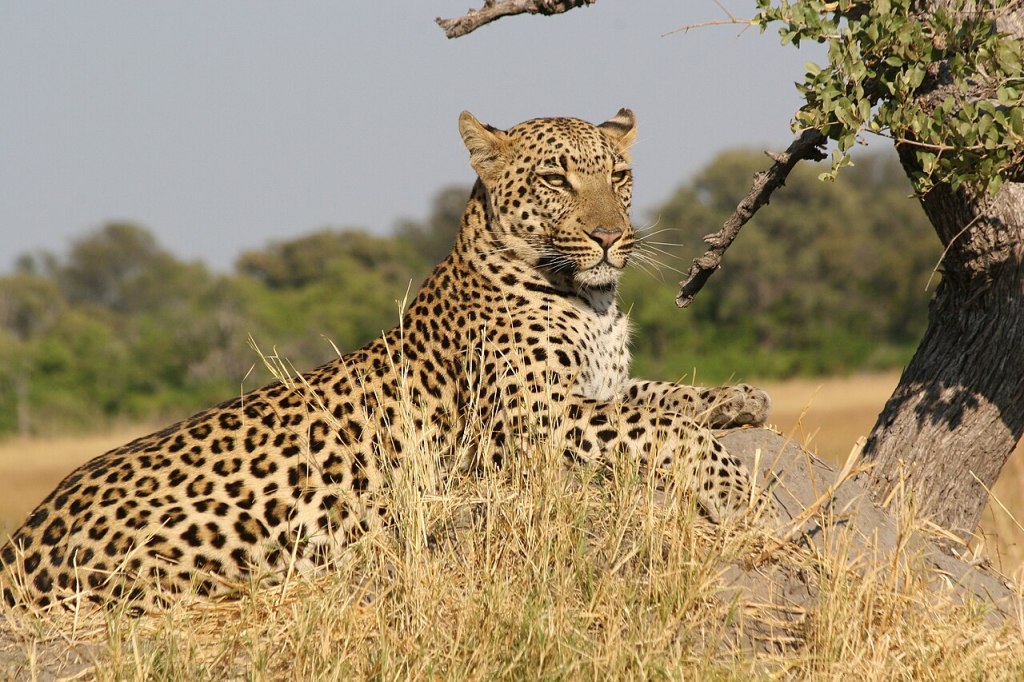
A leopard lounging on a rock surrounded by grass and trees in a natural habitat.
Credit: Wikimedia Commons

As disruptive as man-eating tigers are, people living in areas stalked by them can find refuge indoors. Tigers hunt by day and won’t enter human-built structures, but leopards have no such limitations.

Both the Panar and Rudraprayag leopards, as well as other man-eaters of their species, were known to barrel through doors or leap through windows at all hours to catch sleeping humans unaware and drag them screaming into the night. It’s pure nightmare fuel and has a profound psychological effect. When man-eating leopards terrorize an area, there’s no true sanctuary.

While lions and tigers become man-eaters due to injuries — broken teeth most commonly — and old age, leopards do so because of opportunity and convenience.

For example, the man-eating leopards who terrorized India in the late 1910s and early 1920s acquired a taste for human flesh because the Spanish flu ripped through regions where they range. Survivors were hesitant to handle their bodies to bury them, and leopards found easy meals. From there, experts believe the big cats realized hunting humans is often easier than hunting agile ungulates and other typical prey — at least in the short term, before humans organize and retaliate.

Leopards are often confused with at least two other cat species, jaguars and pumas. It may be somewhat difficult to tell leopards and jaguars apart in a zoo without the benefit of signage, but in the wild they don’t co-exist. Anyone who encounters a spotted cat in the wild in Africa or Asia is looking at a leopard, while jaguars are native to the Americas, ranging across most of South America and the southern US.

Otherwise, there are visual differences. Jaguars are bulkier and more muscular, with shorter limbs, and their rosettes or “spots” have small flecks inside them. Leopards have longer limbs and may have broken rosettes, but generally do not have the small flecks and dots within their rosettes.
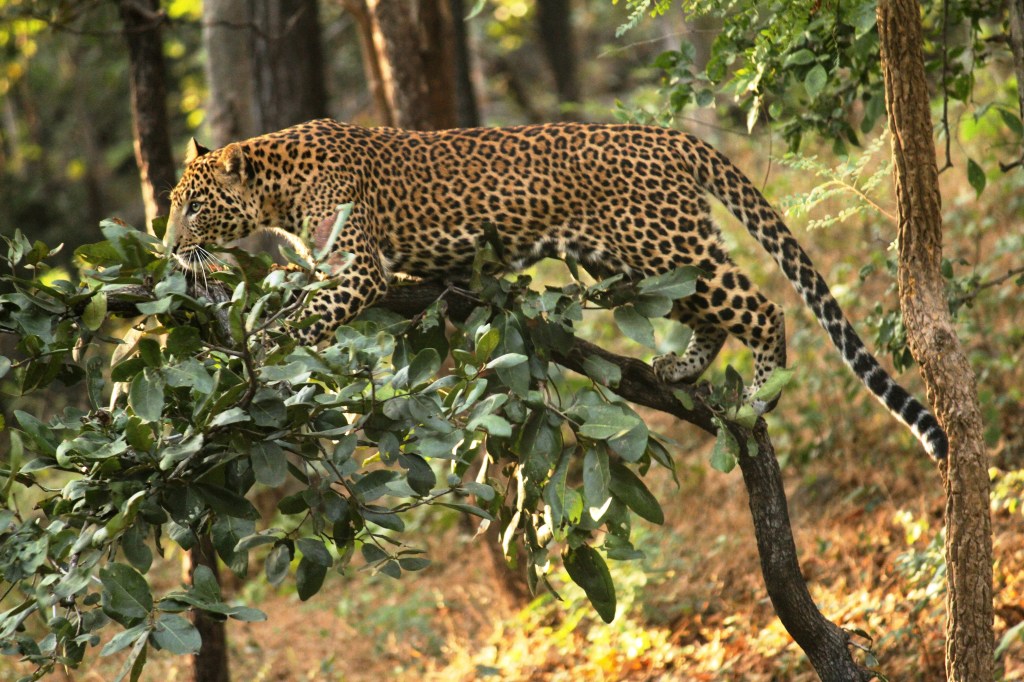
A leopard gracefully perched on a thick branch of a tree, surrounded by lush green leaves and a natural forest backdrop.
Credit: David Raju/Wikimedia Commons

As for pumas, they look nothing like panthera pardus or panthera onca (jaguars), and they are not true big cats, lacking the ability to roar and boasting a different lineage. But because pumas, jaguars and leopards are all colloquially called “panthers,” some people confuse them.

Both leopards and jaguars have melanistic (black) variants, but their coats are not entirely black. Under the right lighting conditions their rosettes are visible, making it possible to differentiate them visually. There are legends of melanistic pumas, but no one’s been able to verify them.

As opportunistic hunters, a leopard’s lunch or dinner is whatever it can reasonably catch, and along with pumas they’re generalists and will eat just about anything despite their individual preferences.

They’re masterfully stealthy and can ambush prey in a multitude of ways, including from above thanks to their excellent climbing abilities. Leopards are exceptionally strong despite their relatively small size compared to other big cats, and they’re able to drag carcasses larger and heavier than themselves up trees. They can descend from trees head-first, giving them an enormous advantage when attacking from elevation.
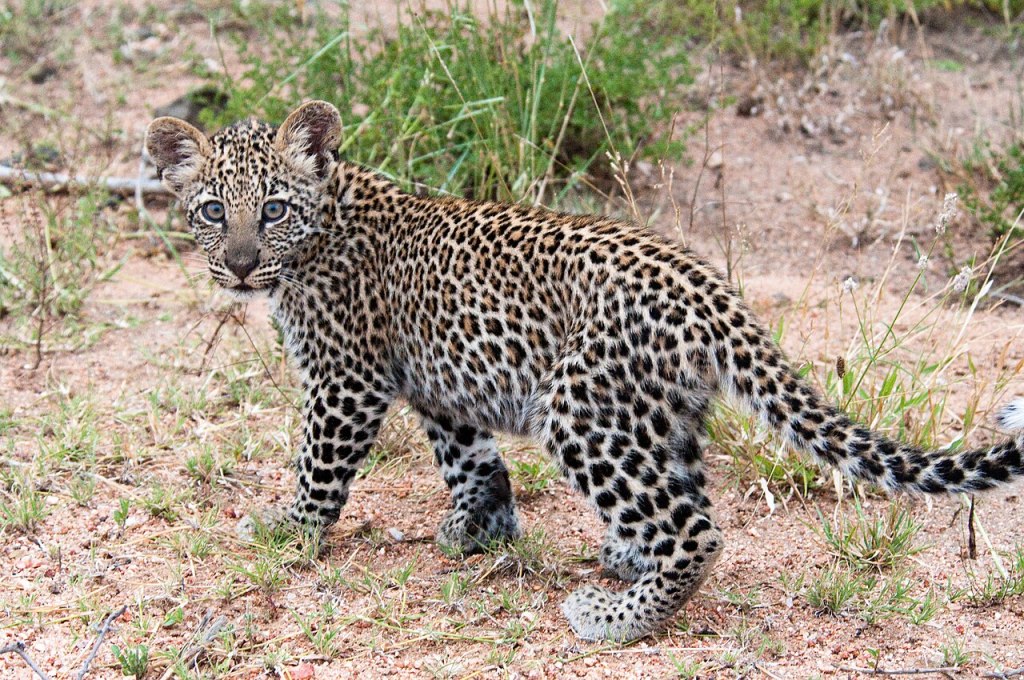
A young leopard cub standing on the sandy ground surrounded by green grass, looking curiously at the camera.
A leopard cub. Credit: Chris Eason/Wikimedia Commons

Sadly, leopards numbers are in decline across the world. Habitat fragmentation plays a major part, as does poaching to feed the insatiable Chinese traditional “medicine” market for big cat parts, which are used in tonics and folk recipes. They’re also hunted by nomadic tribes in Africa for their skins.

Then there’s the cruelty of nature itself. As adaptable and successful as adult leopards are, getting to that point involves trial and error, lots of learning and luck. By some estimates fewer than half of leopard cubs reach adulthood, with the others succumbing to other predators, poachers and illegal wildlife traders who sell the cubs to people who buy them as status symbol pets.

For more information about conservation efforts, visit the WildCat Conservation Alliance and Panthera, two of the largest global organizations dedicated to preserving leopards and other wild cat species.

Previously:

Amazing Cats: Dwilling In Dense Jungles, Margays Are Tricksters And Champion Climbers

Amazing Cats: The Mysterious Marbled Cat

Amazing Cats: The Rusty-Spotted Cat

Amazing Cats: The Jaguar, ‘He Who Kills With One Bound’

Amazing Cats: The Puma

Amazing Cats: The Sunda Clouded Leopard

Amazing Cats: The Adorable Colocolo, Feline of the Pampas

Amazing Cats: The ‘Fire Tiger’ Is The Stuff Of Legend

Amazing Cats: Ocelots Love Trees, Water And Calvin Klein’s Obsession For Men

Amazing Cats: Pallas Cats Are The Grumpy Little Hobbits Of The Feline World

Amazing Cats: The Jaguarundi Is Adept, Adaptable And Mysterious
A Big Game Hunter Was Trampled By Elephants: To Some He Was A Saint, To Others A Killer

The California man was hunting another animal when a herd of African elephants charged him and his professional guide.

The reaction to the trampling death of a “big game hunter” this month can be broken down to two main camps.

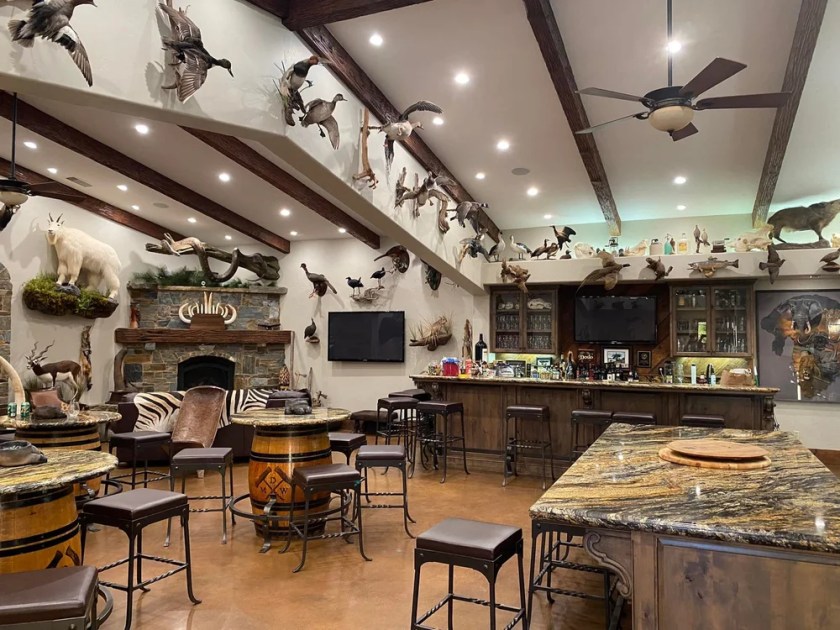
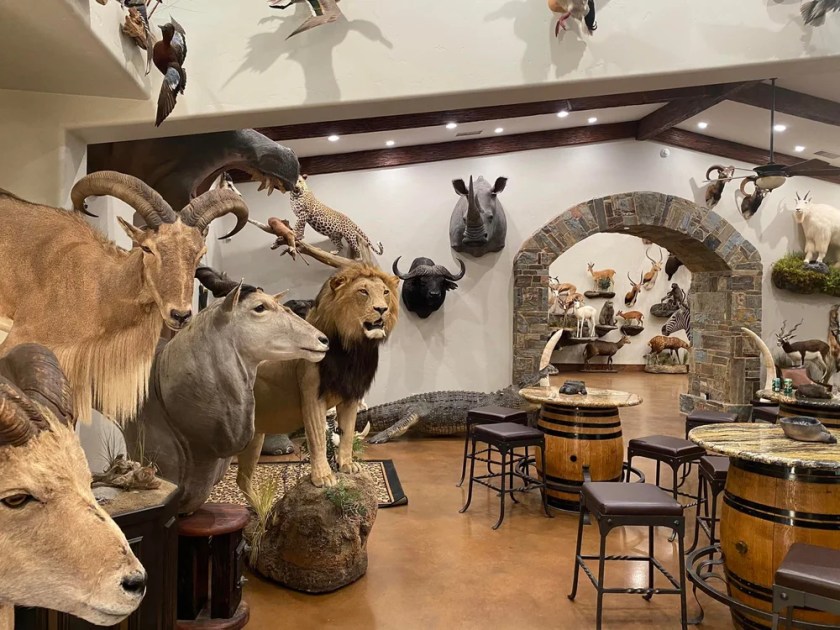
One side is in a celebratory mood, saying Ernie Dosio deserved to be trampled by African elephants on April 17 in Gabon, central Africa. His death was poetic justice, they say, delivered by animals of a species Dosio hunted, whose preserved and mounted heads he proudly displayed on his extensive trophy walls back home in California.

On the opposite end are people engaged in the hagiography of the 75-year-old business owner, describing him as a “pillar of the community” and a “great guy” who gave generously to charity.

We like our narratives black and white, our heroes and villains clearly delineated. To most people, Dosio was one or the other.

In reality, the two sides of Dosio are not mutually exclusive. It’s entirely possible he was a good member of the community who had compassion for people. It’s also true that contrary to claims that he was a “conservation hunter,” Dosio took pride in killing animals from critically endangered and protected species, like many who think their wealth entitles them to rob the Earth of wonderful and unique forms of life so they can collect trophies.

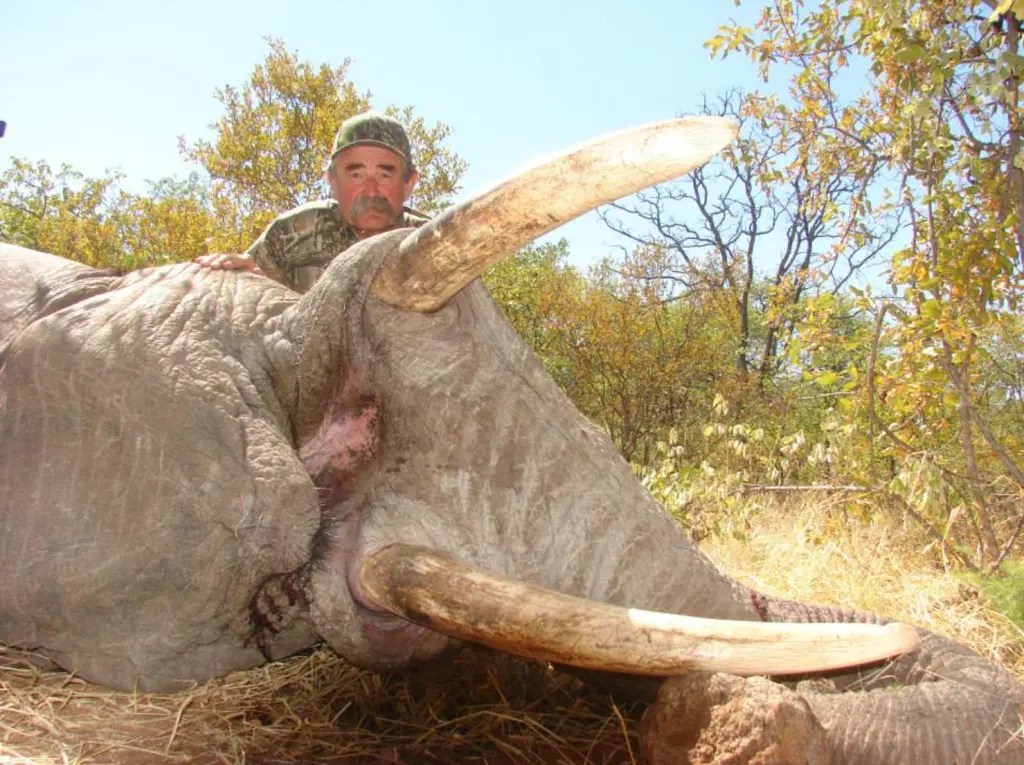
Dosio posing with an elephant he killed on an earlier trip.

Indeed, the concept of a “conservation hunter” is an oxymoron. The pro-hunting side says the fees hunters pay for licenses, guides and other services are crucial to fund conservation efforts.

The truth is that the majority of the money finds its way into the pockets of officials in kleptocracies. If the contributions of so-called conservation hunters are supposed to make a difference, then reality proves them to be an abject failure: population numbers for endangered species like elephants, lions, cheetahs and rhinos continue to trend down, and those species will be extinct in a decade or two if we don’t put a stop to poaching, hunting, habitat loss and other threats.

I also have a problem with calling these people hunters.

These men and women are not Jim Corbett roughing it on foot in the British Raj, using their skill and knowledge of the land to take out vicious man-eaters at great risk to themselves.

They are weekend warriors, wealthy tourists who pay tens of thousands of dollars to kleptocratic governments for their blessing to “harvest” the animals they kill. It’s big business: in South Africa alone, the trophy hunting industry brought in $120 million, according to a 2015 estimate. That number is likely considerably higher today.

When he was killed, Dosio was hunting for a yellow-backed duiker, a rare antelope listed as near-threatened on the IUCN red list. He paid Gabon’s government a $40,000 fee to “harvest” the animal.

Trophy hunters don’t stalk by moonlight, rifle in hand, looking for tracks and camping rough.

They are chauffeured around by hired drivers in comfortable, climate-controlled luxury off-road vehicles. They have servants who pitch their tents, cook their meals, light their fires and guard their camps.

They do not track their targets. They pay men to lure the unsuspecting creatures directly into their paths using food as a lure. The lions, leopards and other animals they kill don’t even realize they’re being hunted before the rifle shots end their lives.

Then the hunters retreat to the air-conditioned comfort of their vehicles while their hired servants do the dirty work of beheading the animals so they can be packed up, prepped for display and shipped back to the US, where they will join the heads of other animals killed by these wealthy men and women. Men and women who proudly show off their kills when they invite people to their homes, recounting their heroics to the bored guests, who make appropriately polite noises to pretend they’re impressed.

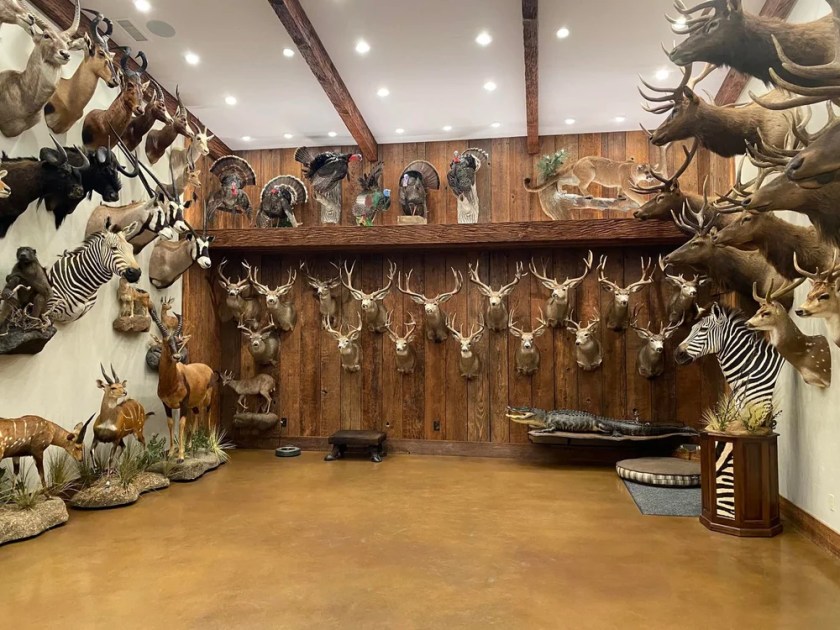
In addition to the 30 or so animals on display here, photos show the walls on the rest of Dosio’s home are covered with the preserved heads and bodies of animals he’s killed.

Nothing about this grotesque sequence of events resembles hunting. It is killing. It requires no skill, it carries no risk, its outcome is never in doubt, and it serves no purpose other than to pad the egos of people who have lots of disposable income and little self-confidence.

They have their defenders and their haters.

“I knew I was going to enjoy this,” one person wrote in response to a news story about Dosio’s demise.

“Do you think the elephants will mount his head on their walls?” another joked.

Some people speculated that the elephants, a species with notoriously long memories, may have remembered him from a prior encounter.

The more likely explanation is the elephants saw Dosio and one of his guides, both carrying weapons, as a threat to the calf they were protecting. Rather than put the baby and themselves at risk, they attacked first. If that’s the case, humans are at fault for that too, because the elephants know people carrying guns do not have good intentions. It may not have been Dosio who killed a member of that particular herd, but odds are overwhelming that someone has, and the elephants haven’t forgotten.

While celebrating Dosio’s death may provide a cheap dopamine hit and a sense of righteous justice, to be truly on the side of life means to value all forms of it, animal and human.

Dosio, 75, was reportedly a millionaire and owned a business that partnered with vineyards in California.

Celebrating Dosio’s demise means we’re no better than the “hunters” who grin like psychopaths for photos with the animals they’ve just killed. It makes those of us concerned about animal welfare and conservation look like extremists, and it only takes a few bad actors to wreck the efforts of an entire group. If a thousand protesters gather in a city square and two of them become violent, the resulting headlines will be about those two, not the 998 others who peacefully made their opinions known.

The way to fight back against trophy killing is by educating the public about the damage those killers do, by countering their claims that the fees they pay protect other animals, and by pointing out that without drastic intervention, elephants, lions and cheetahs will be nothing more than memories for a few generations, and near-myth to subsequent generations.

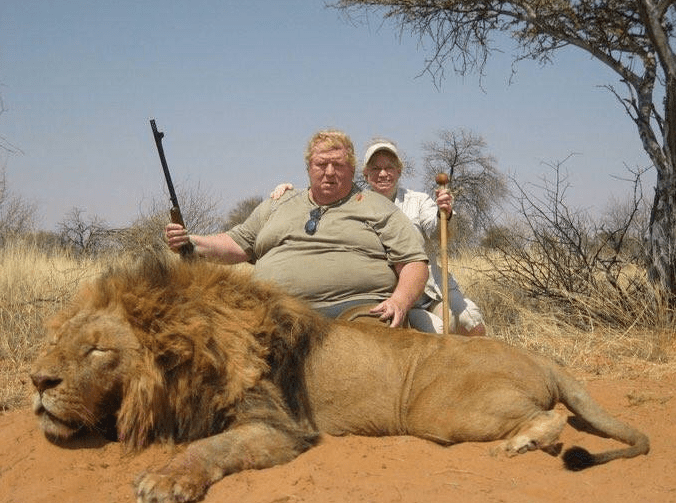
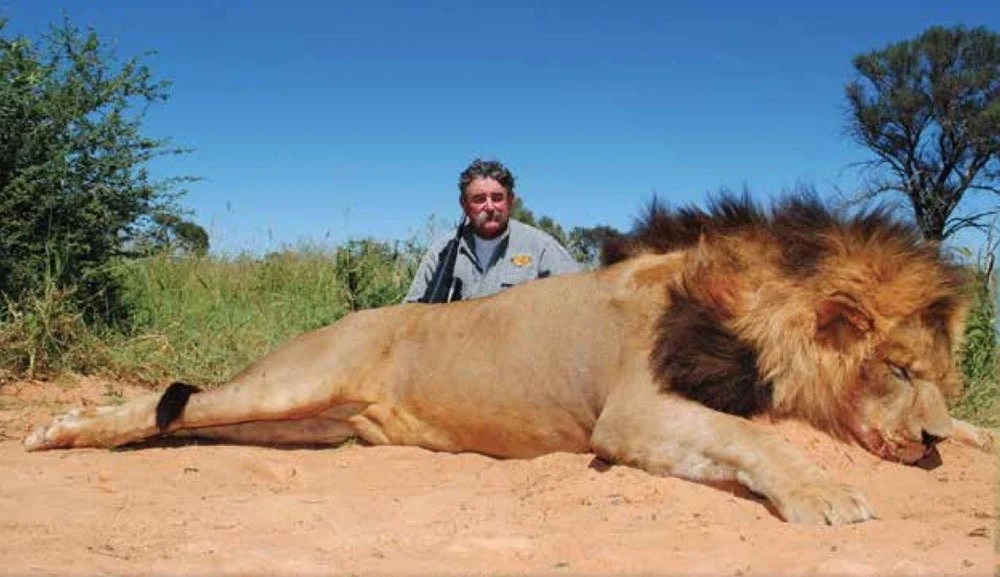
Killing, not hunting: this photo of an unnamed trophy hunter and his wife is instructive because it shows trophy “hunts” are never in doubt, never pose a risk to the “hunters,” and require no physical ability.

This also calls for self examination. On an Instagram account I made for Buddy, one I log into two or three times I year, I follow a handful of National Geographic photographers.

One of their images remains indelibly burned into my brain: a beautiful tiger cub, looking happy and full of curiosity about the world, gazing right at the camera. Even though I know I’m anthropomorphizing a bit, I can’t help feeling good about the expression on the young tiger’s face, an expression that looks like an enthusiastic grin. He is radiating joy at life.

And then I read the caption. This cub, this beautiful animal of a species that teeters on the edge of extinction, is growing up on a hunting reserve. His fate is already set. He will be killed, his life cut short by another weekend warrior paying to “harvest” him and mount his head on a wall so he can tell stories about his own bravery to bored friends and acquaintances.

That’s not just inhumane, it reveals something deeply disturbing about the kind of people who take pleasure from killing. Something primal, something that has no place in our civilization if we’re going to mature as a species, overcome our violent instincts, and have a future on this planet without destroying ourselves and taking every other form of life with it.

That’s why we need to be on the side of life. The alternative is reducing this garden world, this paradise, into a cold, lifeless rock.

At Almost 700lbs, Hercules The Tiger Is A Symbol Of His Species’ Comeback

The huge Bengal may be the biggest tiger in India, and has already become a draw for tourists visiting from other parts of the country.

Hercules looks like a heavyweight boxer reincarnated as a tiger.

The massive apex predator was virtually unknown outside of India’s Kumaon district until this week, when a tourist posted a short video of the nearly 700-pound animal lumbering out of the brush and into clear view as he crossed a dirt path between rural villages.

The Bengal, who may be the biggest cat in India, is majestic. His gait is leisurely, as if he knows that anyone or anything he may encounter will clear a path the moment they see him. His fur doesn’t hide the rippling muscle underneath, and as he spots a group of tourists with cameras aimed at him, he bares his teeth momentarily, then pretends as if they don’t exist as he takes his sweet time crossing the path.

“In my entire career, I have never seen such a giant tiger,” Prakesh Arya, a divisional forest officer, told the New Indian Express.

For conservationists, tourists and the government of India, whose national animal is the Bengal, Hercules’ existence is proof that Project Tiger is on the right track. The project is a national effort to save the iconic species, grow its population, and protect it from poachers.

Hercules’ territory includes Ramnagar, a town in northern India known as they gateway to Jim Corbett National Park. The preserve is named after the renowned tiger hunter who took down the Demon of Champawat, a tigress who had killed at least 435 people during a decade-long rein of terror.

Corbett, who described tigers as “large-hearted gentlemen” who were unfairly maligned, was known for his prowess in hunting down man-eating tigers and leopards, but later in life he turned to conservation, realizing that Earth’s biggest cats were in danger of extinction if drastic efforts weren’t taken to save them. That was a century ago.

Now India devotes significant resources to their protection and well-being, with an entire corps of dedicated professional rangers and anti-poaching teams tracking the animals and constantly patrolling the vast country’s 58 tiger preserves, which cover 82,836.44 square kilometers.

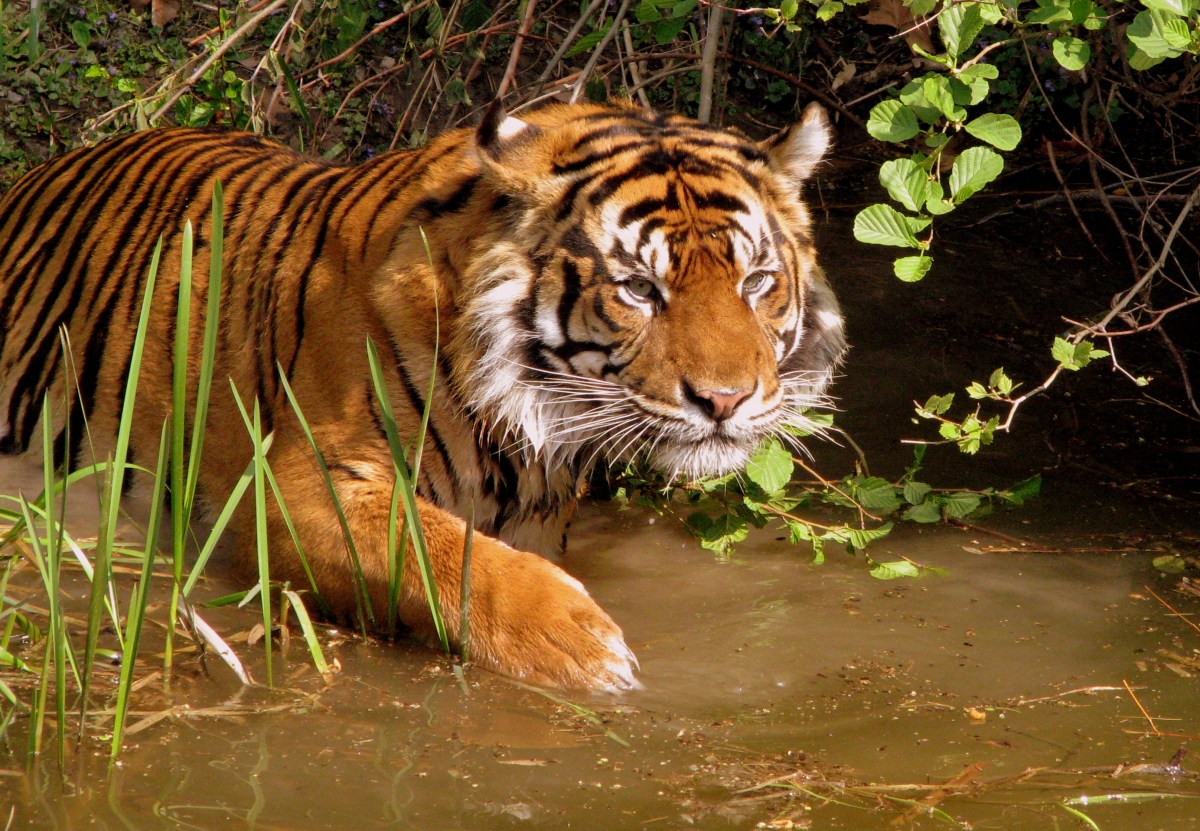
A large tiger cools off in water on a hot day. Credit: Warren Garst/Wikimedia Commons, Colorado State University Library

For tigers like Hercules, having large contiguous ranges gives them the chance to live the way nature intended. Experts say the abundance of prey in the reserves, especially in the region Hercules calls home, has resulted in larger, more robust cats of the type that were once a memory.

“This is a clear symbol of the rich biodiversity and the success of our management efforts in this forest area,” Arya said.

In turn, the presence of the iconic cats has revitalized tourism. Tourists who have seen Hercules described the experience as “overwhelming.”

“Seeing ‘Hercules’ was an unforgettable experience,” Priya Sharma, a tourist from Delhi, told the Express.


Rangers In India Race To Capture Man-Eating Tiger Before Mobs Kill It

Angry locals say they’ll kill the tiger if forest rangers do not after the predator ambushed and ate a mother of two in southern India on Friday.

Forest rangers are on the hunt to capture a man-eating tiger who killed a woman and dragged her body into a forest on Friday, while frustrated locals say they’ll destroy the predator if the government does not.

The victim, a 45-year-old woman named Radha, was employed by a local coffee plantation in Mananthavady and was harvesting coffee beans when the big cat ambushed her, according to multiple reports in local media. Mananthavady is a city of about 47,000 people in southern India surrounded by rural farmland.

A Thunderbolt team — a special forces unit trained in counter-insurgency — was patrolling the area when they found blood and signs of a struggle. They followed the tiger’s pug marks into a nearby forest, where they found Radha’s body “half eaten,” the New Indian Express reported.

The victim was a mother of two and was buried in a service earlier today, according to the news service Bharat.

The attack and the livid response of people in the area highlight the conflicts that India must manage as it works to save tigers, the country’s critically endangered national animal, while also protecting the public. India’s government has relocated thousands of families away from the vast country’s 27 tiger preserves, but the big cats are oblivious to the boundaries of the preserves.

Earlier this month, people living in several contiguous towns over a stretch of more than 130 miles in eastern India barricaded themselves indoors, refusing to leave for work or to travel to local markets, after a pair of hungry tigers had drifted off a preserve and had begun to feast on local livestock.

A tiger who was seized and relocated from a roadside zoo operated by Joseph “Tiger King” Maldonado-Passage. Credit: Wikimedia Commons

In Mananthavady, locals threatened a hartal, a form of strike aimed at gaining concessions from the government, if the tiger is not killed. Forest rangers and local government leaders said they would capture and relocate the tiger, who has been spotted on a trail camera, but the locals say that’s not good enough.

“If you can’t shoot the tiger, then shoot us instead,” one protester told forestry officials.

Others said they’d take matters into their own hands if authorities don’t kill the tiger. It’s not an empty threat: in 2019, a mob of enraged villagers beat a tigress to death after she attacked a person.

Radha was the third person to be killed by tigers in the area since 2023, when two farmers were killed by the endangered apex predators in incidents about 11 months apart.

In addition to the anger and grief felt by family and friends of the victims, the government’s compensation program is also controversial. Radha’s family will receive ₹11 lakh, according to reports, which was about $12,800 in USD according to exchange rates on Jan. 25.

The program has been condemned by people who say the government is wrong to put an arbitrary monetary value on human life, and in recent years there have been attempts to provide families with resources like job training in addition to monetary compensation. The issue remains a sore spot and a topic of ongoing litigation because the government did not compensate victim families for decades, and does not automatically provide compensation if the victims trespass onto preserve land.

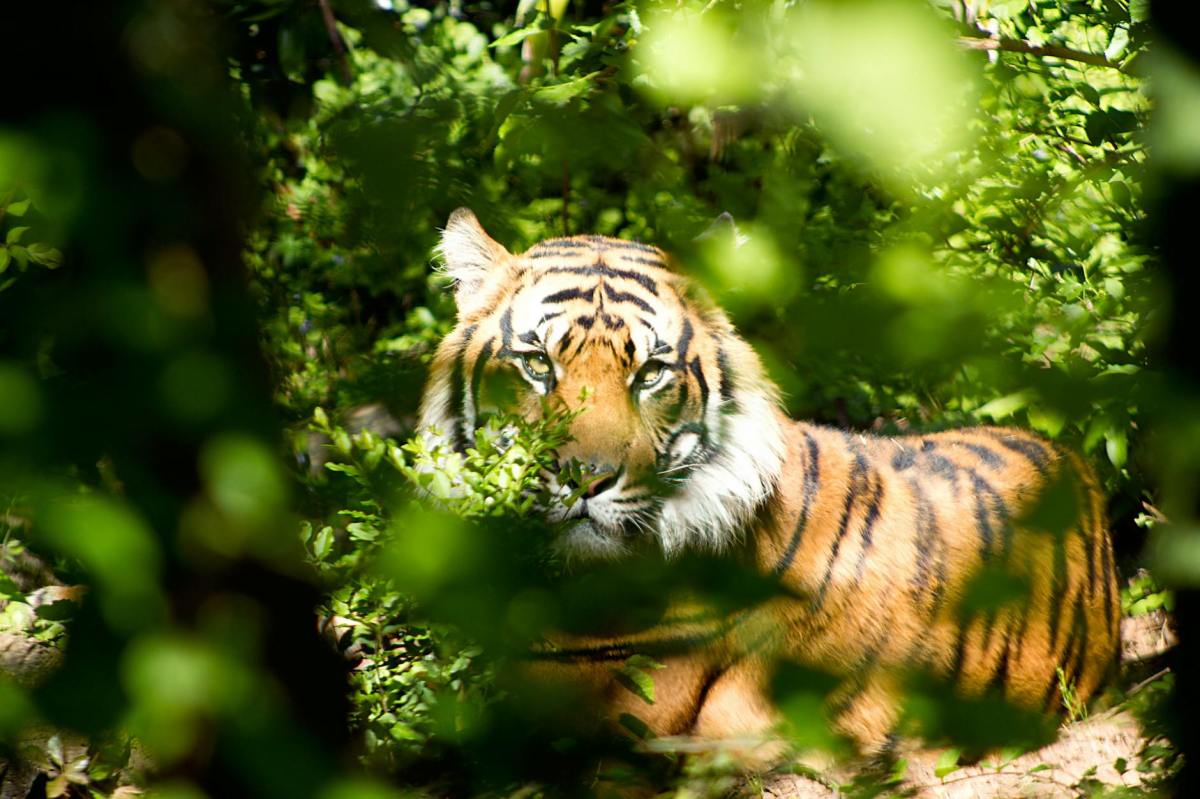
Tigers are the largest and most dangerous of all cat species, and are arguably the most dangerous land animal on the planet, but the vast majority of them do not attack humans and give people a wide berth. Unlike most other felids, they enjoy water and swimming, especially in warm climates. Credit: Warren Garst/Wikimedia Commons

In the meantime, a team comprised of rangers, veterinarians, expert trackers and others — totaling about 100 people — was racing to get to the tiger before the mobs do, utilizing drones, traps and thermal imaging cameras to find and capture the elusive predator.

“The animal is still roaming in the same vicinity, and we are strengthening local patrols to prevent further casualties,” KS Deepa, chief conservator of forests in the region, told local media.

Most tigers who turn man-eater do so because they can no longer take down their usual prey without difficulty, either due to old age or because their teeth are damaged. The infamous Champawat tigress, who killed 436 people during a decade-long reign of terror from the late 1890s through 1907, turned man-eater when a hunter’s bullet shattered one of her canines.

It’s wasn’t clear what forestry officials planned to do with the tiger if it’s captured, but they told reporters they are forbidden by law from killing the animal unless other options are exhausted.

“There are three ways to capture the tiger,” A.K. Saseendran, India’s minister of forests and wildlife, told The Hindu. “We will try to cage it as the first step. If that fails, we will try to tranquilize it and move it out of Wayanad. Killing the tiger is the last resort.”

The Cost Of Living With Tigers: People In Rural India Hide Indoors As Foresters Track 2 Hungry Big Cats

Tiger attacks are a real danger in rural India, where the big cats kill people and livestock. To protect the species, the government pulls off a difficult balancing act aimed at minimizing inter-species conflict.

In his memoir, Man-Eaters of Kumaon, legendary tiger hunter (and later staunch conservationist) Jim Corbett described how he and his men arrived to find a ghost town when they tracked a man-eating tiger to a rural village.

Every door was closed and locked, shutters were closed tight, and despite the fact that it was harvest time, not a single person was working the nearby fields.

The people who lived there had good reason to be petrified. The infamous Champawat tigress had killed more than 430 people by that point, including a young woman from the village just a few days earlier. Usually the tigress would vanish from an area after a kill, frustrating locals and hunters by popping up virtually anywhere in a 50-mile radius, but for some reason she stuck around the village and sat on the outskirts at night, keeping the local people awake with her calls.

Corbett’s famed hunt of the “demon of Champawat” happened in 1907, and although it might sound like a problem from the past, it’s current reality for people in parts of India, Nepal and, to a lesser extent, the sparsely populated mountain forests in eastern Russia.

In Garwha and Ranchi, two towns in eastern India about 215km (133 miles) apart, “villagers have stopped using forest routes to reach markets and are reluctant to leave their homes for work,” the Times of India reported on Monday.

That’s because hungry tigers have been on the prowl, demonstrating little fear of people as they help themselves to livestock. Between Jan. 1 and Jan. 6, the tigers killed and ate three cattle and a buffalo.

Siberian tiger
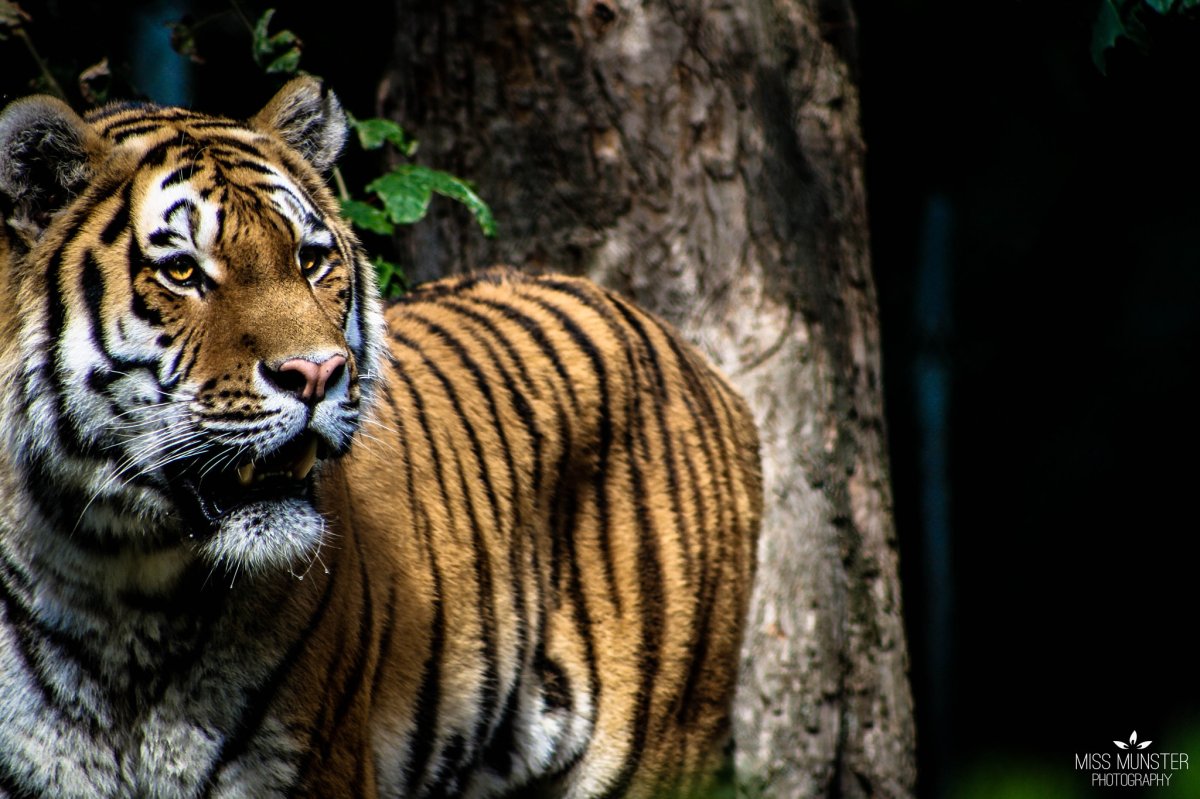
Tigers require large, contiguous tracks of land measuring in the hundreds of square miles. India and Russia have both set aside massive preserves for the apex predators to increase their numbers in the wild. Image credit: Wikimedia Commons

So far they’ve eluded camera traps, but forest rangers say they believe there are two tigers because of the distance between Garwha and Ranchi, which is almost three times the typical tiger range.

In places where big cats live in proximity to humans, especially farmers, the government pays compensation to the owners of livestock killed and eaten by the predators.

There’s also a separate, more controversial compensation program for the families of people killed by tigers. Recent court cases in the country have hinged on the cold calculations of attaching monetary value to human life, and whether families are owed compensation if their relatives knowingly entered tiger preserves.

For India, it’s part of a delicate balancing act between conserving the country’s national animal and one of nature’s most beloved species, and avoiding the ire of people who are impacted by their presence. When big cats prey on livestock, if the government does not address the situation, locals will eventually take matters into their own hands and try to kill the apex predators. That usually doesn’t work out well for either side.

On average, about 60 people are killed each year by tigers in India, according to government statistics. There’s been a sharp increase in victims in recent years, with tigers taking 110 human lives in 2022 and 83 in 2023, although it’s not yet clear why.

As for livestock, a 2018 study by wildlife biologists with the Corbett Foundation documented 8,365 reported instances of big cats killing cattle, buffalo and other animals between 2006 and 2015. That works out to about 830 per year, with tigers responsible for 570 livestock kills on average and leopards responsible for the rest.

To reduce the number of inter-species conflicts, the government of India has relocated thousands of families away from the country’s 27 tiger preserves in addition to compensating farmers for their losses.

Tiger sub
A tiger cub on a preserve in India. Credit: Wikimedia Commons

On a tangential note, this is another reason why the persistent claims of big cats stalking the British countryside strain credulity.

To paraphrase wildlife conservationist Egil Droge of the University of Oxford, when big cats live in an area, you know it because the signs are everywhere — massive and unmistakable pug marks (paw prints) on the ground, trees left with deep gauges by males marking their territory, and dung also serving as a territorial marker.

“I’ve worked with large carnivores in Africa since 2007 and it’s obvious if big cats are around. You would regularly come across prints of their paws along roads. The rasping sound of a leopard’s roar can be heard from several kilometres,” Droge wrote in a 2023 post about alleged big cat sightings in the UK.

Last but not least, big cats eat. A lot. A reliable supply of large prey animals is necessary to support even the smallest of breeding populations, and felids of all species are known to go for easy meals — in this case livestock — when the opportunity presents itself.

Still, the idea refuses to die, and there are still regular reports from people who have seen large cats and insist they’re not our domesticated friends.

Leopard in a pub
“So we left the sheep there at the edge of the field and made sure the lady saw us before we buggered off over the fence. Next day, we was in all the papers! A right laugh that was, mate.”