A Big Game Hunter Was Trampled By Elephants: To Some He Was A Saint, To Others A Killer

The California man was hunting another animal when a herd of African elephants charged him and his professional guide.

The reaction to the trampling death of a “big game hunter” this month can be broken down to two main camps.

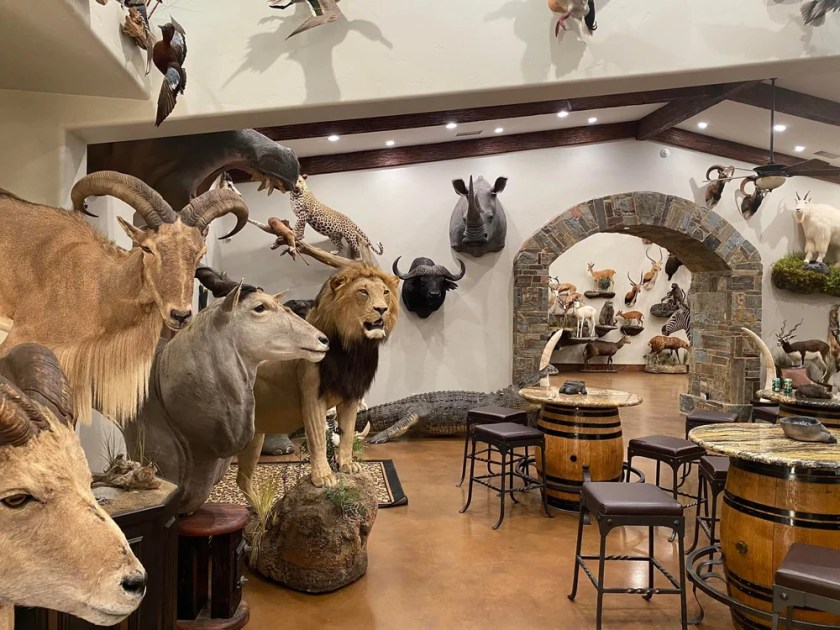
One side is in a celebratory mood, saying Ernie Dosio deserved to be trampled by African elephants on April 17 in Gabon, central Africa. His death was poetic justice, they say, delivered by animals of a species Dosio hunted, whose preserved and mounted heads he proudly displayed on his extensive trophy walls back home in California.

On the opposite end are people engaged in the hagiography of the 75-year-old business owner, describing him as a “pillar of the community” and a “great guy” who gave generously to charity.

We like our narratives black and white, our heroes and villains clearly delineated. To most people, Dosio was one or the other.

In reality, the two sides of Dosio are not mutually exclusive. It’s entirely possible he was a good member of the community who had compassion for people. It’s also true that contrary to claims that he was a “conservation hunter,” Dosio took pride in killing animals from critically endangered and protected species, like many who think their wealth entitles them to rob the Earth of wonderful and unique forms of life so they can collect trophies.
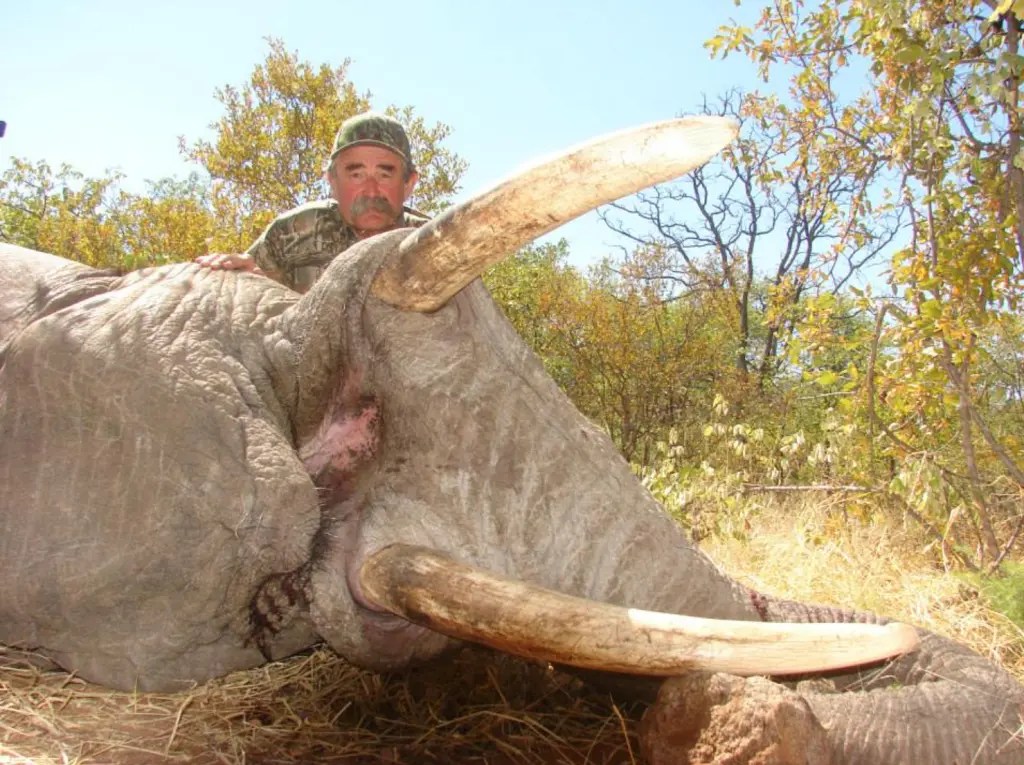
Dosio posing with an elephant he killed on an earlier trip.

Indeed, the concept of a “conservation hunter” is an oxymoron. The pro-hunting side says the fees hunters pay for licenses, guides and other services are crucial to fund conservation efforts.

The truth is that the majority of the money finds its way into the pockets of officials in kleptocracies. If the contributions of so-called conservation hunters are supposed to make a difference, then reality proves them to be an abject failure: population numbers for endangered species like elephants, lions, cheetahs and rhinos continue to trend down, and those species will be extinct in a decade or two if we don’t put a stop to poaching, hunting, habitat loss and other threats.

I also have a problem with calling these people hunters.

These men and women are not Jim Corbett roughing it on foot in the British Raj, using their skill and knowledge of the land to take out vicious man-eaters at great risk to themselves.

They are weekend warriors, wealthy tourists who pay tens of thousands of dollars to kleptocratic governments for their blessing to “harvest” the animals they kill. It’s big business: in South Africa alone, the trophy hunting industry brought in $120 million, according to a 2015 estimate. That number is likely considerably higher today.

When he was killed, Dosio was hunting for a yellow-backed duiker, a rare antelope listed as near-threatened on the IUCN red list. He paid Gabon’s government a $40,000 fee to “harvest” the animal.

Trophy hunters don’t stalk by moonlight, rifle in hand, looking for tracks and camping rough.

They are chauffeured around by hired drivers in comfortable, climate-controlled luxury off-road vehicles. They have servants who pitch their tents, cook their meals, light their fires and guard their camps.

They do not track their targets. They pay men to lure the unsuspecting creatures directly into their paths using food as a lure. The lions, leopards and other animals they kill don’t even realize they’re being hunted before the rifle shots end their lives.

Then the hunters retreat to the air-conditioned comfort of their vehicles while their hired servants do the dirty work of beheading the animals so they can be packed up, prepped for display and shipped back to the US, where they will join the heads of other animals killed by these wealthy men and women. Men and women who proudly show off their kills when they invite people to their homes, recounting their heroics to the bored guests, who make appropriately polite noises to pretend they’re impressed.
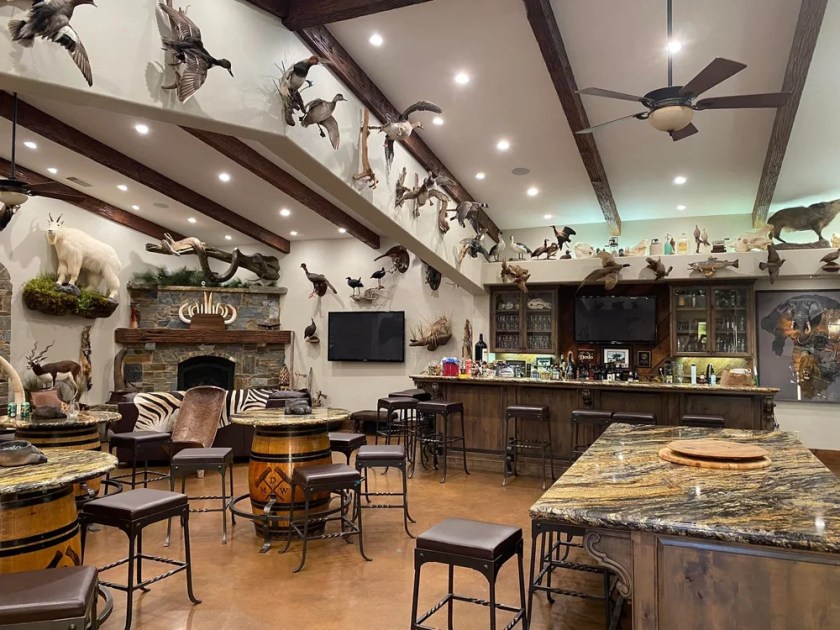
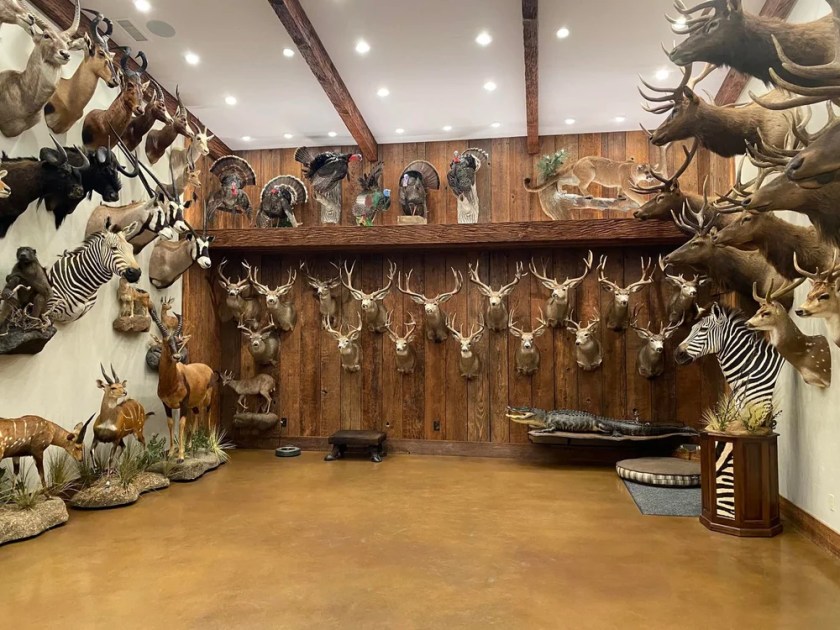
In addition to the 30 or so animals on display here, photos show the walls on the rest of Dosio’s home are covered with the preserved heads and bodies of animals he’s killed.

Nothing about this grotesque sequence of events resembles hunting. It is killing. It requires no skill, it carries no risk, its outcome is never in doubt, and it serves no purpose other than to pad the egos of people who have lots of disposable income and little self-confidence.

They have their defenders and their haters.

“I knew I was going to enjoy this,” one person wrote in response to a news story about Dosio’s demise.

“Do you think the elephants will mount his head on their walls?” another joked.

Some people speculated that the elephants, a species with notoriously long memories, may have remembered him from a prior encounter.

The more likely explanation is the elephants saw Dosio and one of his guides, both carrying weapons, as a threat to the calf they were protecting. Rather than put the baby and themselves at risk, they attacked first. If that’s the case, humans are at fault for that too, because the elephants know people carrying guns do not have good intentions. It may not have been Dosio who killed a member of that particular herd, but odds are overwhelming that someone has, and the elephants haven’t forgotten.

While celebrating Dosio’s death may provide a cheap dopamine hit and a sense of righteous justice, to be truly on the side of life means to value all forms of it, animal and human.

Dosio, 75, was reportedly a millionaire and owned a business that partnered with vineyards in California.

Celebrating Dosio’s demise means we’re no better than the “hunters” who grin like psychopaths for photos with the animals they’ve just killed. It makes those of us concerned about animal welfare and conservation look like extremists, and it only takes a few bad actors to wreck the efforts of an entire group. If a thousand protesters gather in a city square and two of them become violent, the resulting headlines will be about those two, not the 998 others who peacefully made their opinions known.

The way to fight back against trophy killing is by educating the public about the damage those killers do, by countering their claims that the fees they pay protect other animals, and by pointing out that without drastic intervention, elephants, lions and cheetahs will be nothing more than memories for a few generations, and near-myth to subsequent generations.
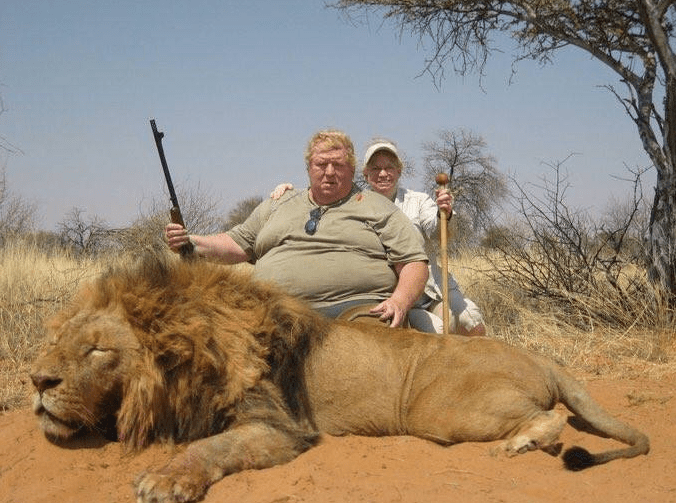
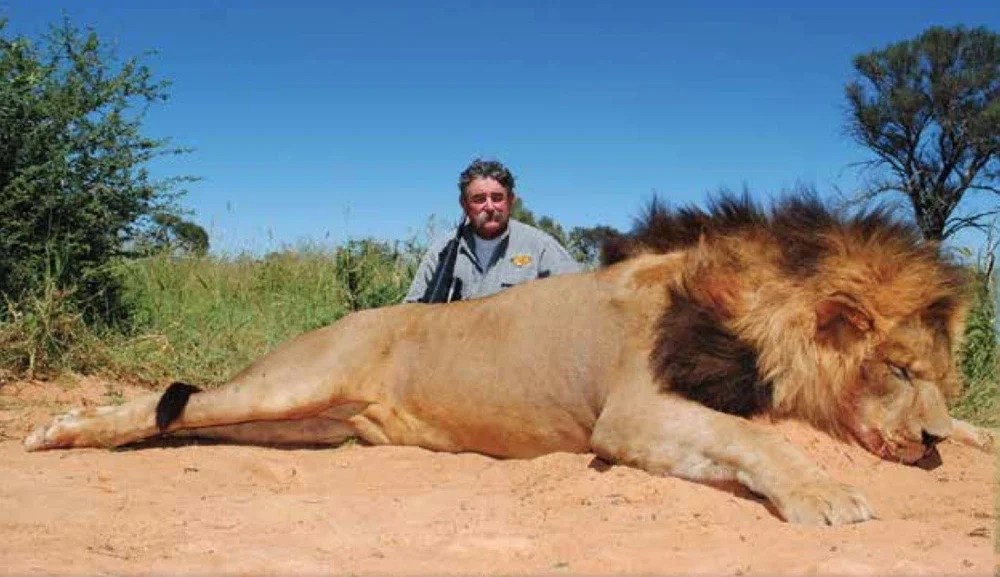
Killing, not hunting: this photo of an unnamed trophy hunter and his wife is instructive because it shows trophy “hunts” are never in doubt, never pose a risk to the “hunters,” and require no physical ability.

This also calls for self examination. On an Instagram account I made for Buddy, one I log into two or three times I year, I follow a handful of National Geographic photographers.

One of their images remains indelibly burned into my brain: a beautiful tiger cub, looking happy and full of curiosity about the world, gazing right at the camera. Even though I know I’m anthropomorphizing a bit, I can’t help feeling good about the expression on the young tiger’s face, an expression that looks like an enthusiastic grin. He is radiating joy at life.

And then I read the caption. This cub, this beautiful animal of a species that teeters on the edge of extinction, is growing up on a hunting reserve. His fate is already set. He will be killed, his life cut short by another weekend warrior paying to “harvest” him and mount his head on a wall so he can tell stories about his own bravery to bored friends and acquaintances.

That’s not just inhumane, it reveals something deeply disturbing about the kind of people who take pleasure from killing. Something primal, something that has no place in our civilization if we’re going to mature as a species, overcome our violent instincts, and have a future on this planet without destroying ourselves and taking every other form of life with it.

That’s why we need to be on the side of life. The alternative is reducing this garden world, this paradise, into a cold, lifeless rock.
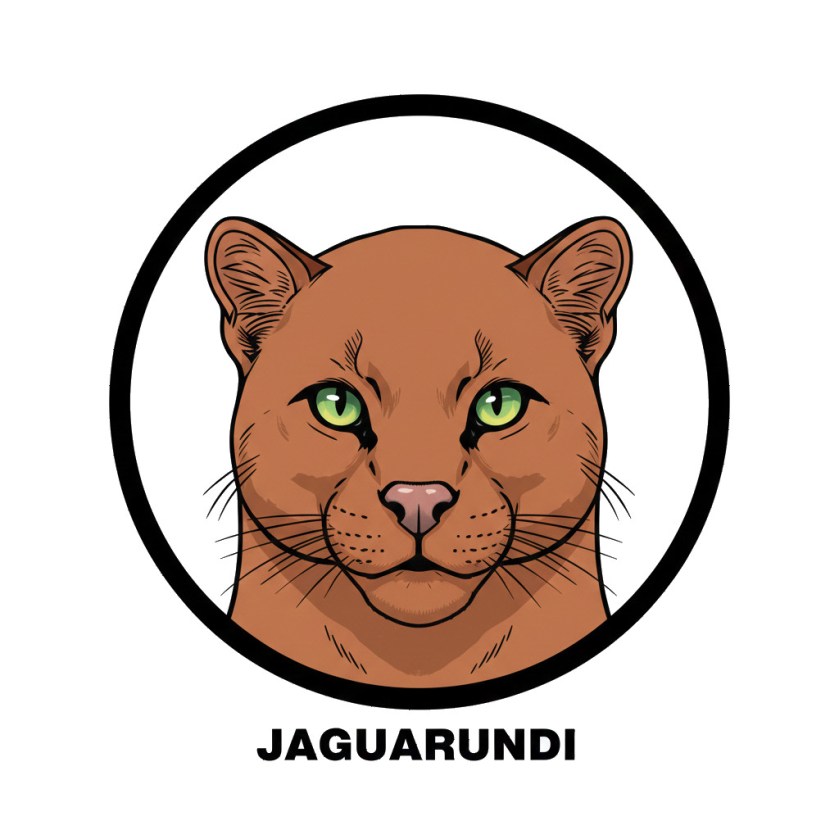
Amazing Cats: The Jaguarundi Is Adept, Adaptable And Mysterious

With their otter-like features, their squeaky vocalizations and their mastery of multiple environments, jaguarundis are unique in the world of cats.

Jaguarundi

Taxonomic name: Herpailurus yagouaroundi
Genus: Felis (small cats)
Size: Males weigh up to 20 lbs, with typical sexual dimorphism for felid species
Lifespan: Up to 20 years in captivity
Gestation: 75 days
Litter size: Between one and four kittens per litter
Distribution: Almost the entirety of South America as well as the southern US
IUCN Red List status: Least concern, but threatened by habitat loss

If you spot a jaguarundi in the wild, there’s a good chance you won’t know what you’re looking at.

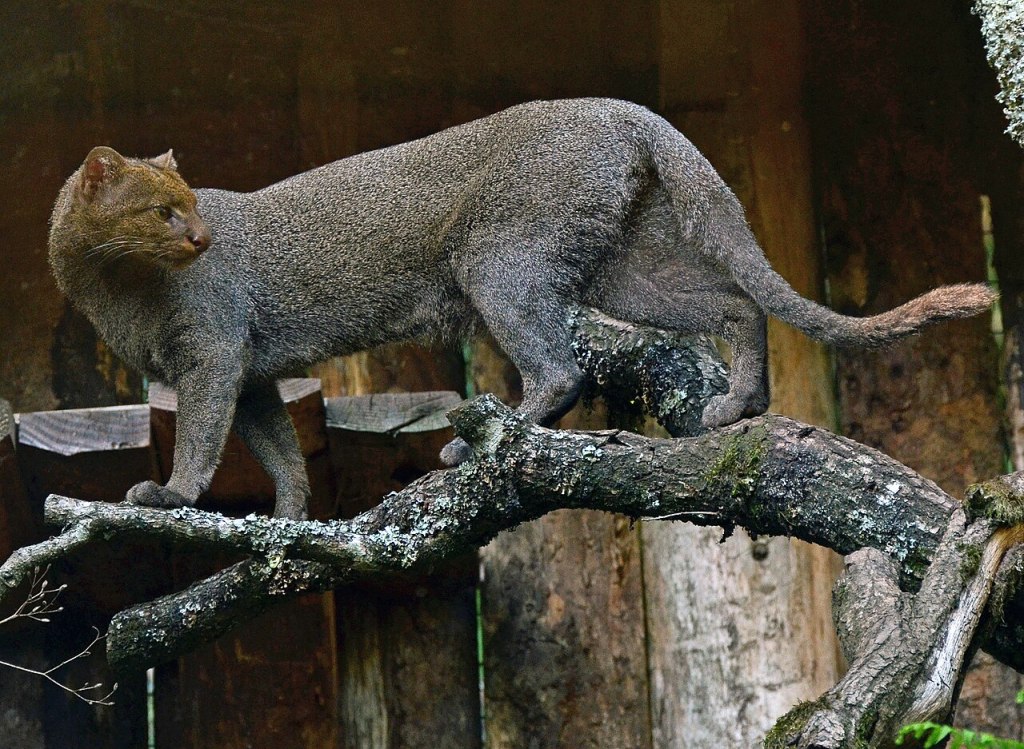
Their sleek, elongated bodies are almost weaselesque when seen from the side, an impression made stronger by the way their heads are shaped in profile. From some angles they can strongly resemble otters, an likeness strengthened by their short, dusky coats.

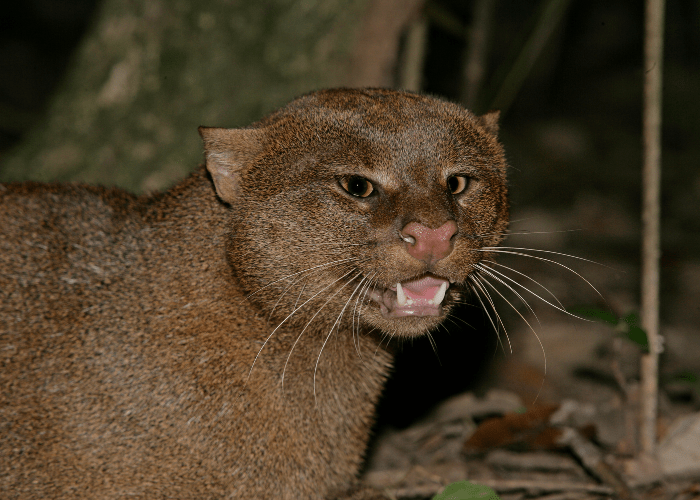
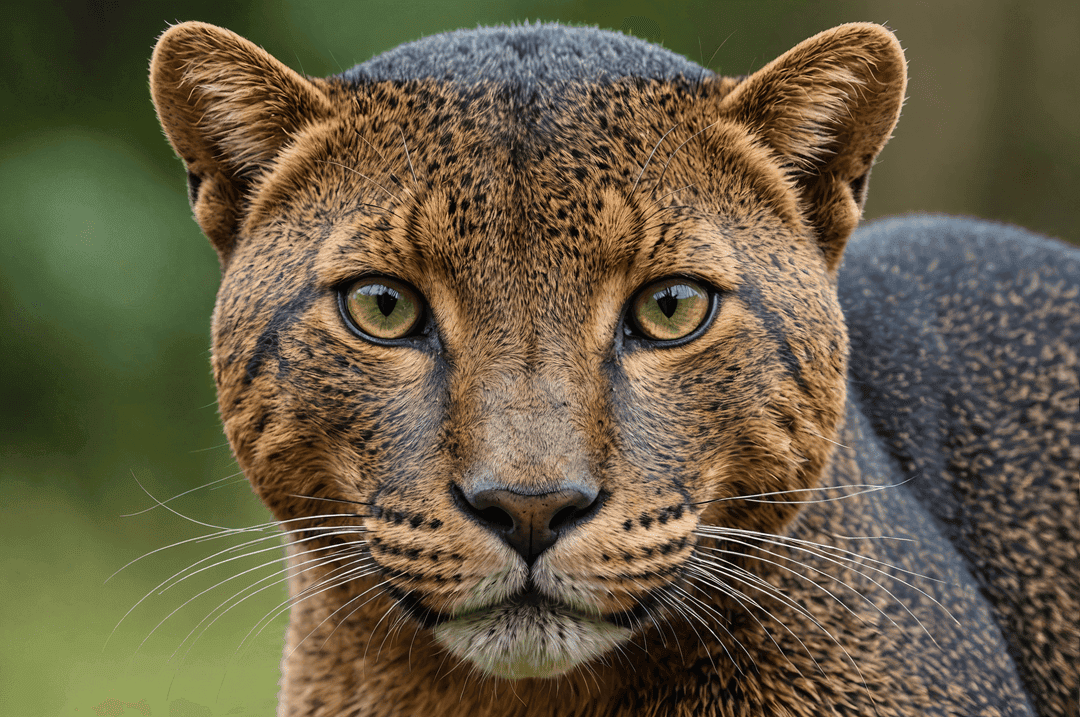
But seen head-on they’re definitely cats, and even though they’re small felines — about one and a half to two times the size of domestic kitties — their facial features can be reminiscent of big cats, especially their broader noses, rounded ears and the set of their eyes.

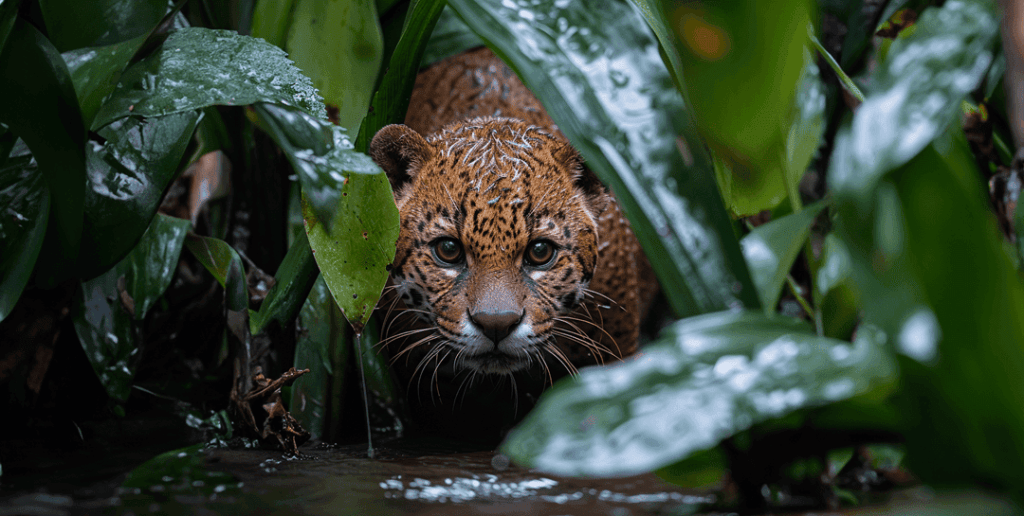
Seen from an angle like this, jaguarundis resemble jaguar cubs:

Indeed, jaguarundi means “dark jaguar” in Old Guarani, an extinct predecessor of the Tupi family of indigenous languages that were spoken in South America for thousands of years before the arrival of the conquistadors and the Spanish language. Modern variants of the language still exist in countries like Paraguay, which may account for the enduring names of several species of western hemisphere cats. (Jaguar itself is based on the indigenous Tupi word “yguara,” and pumas have dozens of surviving names with indigenous roots to go along with their many names in English.)

As New World cats, jaguarundis boast an impressive range that stretches from southern Argentina through Latin America and into the lower US states.

Like their larger cousins, the jaguars, jaguarundis are comfortable in the water and are strong swimmers. They’re also adept hunters on land, excellent climbers, and they’re impressively sure-footed while traversing branches high above ground level.

In short, the adaptable felines can just about do it all.

Note the otter-like appearance of the jaguarundi head in side profile.

In the wild, jaguarundis have been known to hunt prey as large as small deer and help themselves to seafood snacks when the mood strikes them, but analyses of their diets shows they have a strong preference for mammals, particularly a variety of wild rodents found in dense jungles and forests.

Jaguarundis don’t just look different compared to other cats — they sound different as well.

Conservationists call the jaguarundi’s vocalizations “whistles” and “chirps,” but to us they sound more like squeaks.

Take a listen for yourself:

It’s illegal under the Big Cat Public Safety Act to keep jaguarundis as pets, and the jaguarundi curl, a breed meant to mimic the appearance of the jaguarundi, is not related to the wild cat.

While they’re known to range in Texas and Arizona, sightings of jaguarundis are rare. From a distance their movement looks almost indistinguishable from those of house cats, and they’re famously elusive — by the time most people do a double take, the shy felines have disappeared into tall grass, brush or jungle.

Images via Wikimedia Commons

Previously:

Amazing Cats: The Mysterious Marbled Cat
Amazing Cats: The Rusty-Spotted Cat
Amazing Cats: ‘He Who Kills With One Bound’
Amazing Cats: The Puma

Amazing Cats: The Sunda Clouded Leopard

Amazing Cats: The Adorable Colocolo, Feline of the Pampas

Amazing Cats: The ‘Fire Tiger’ Is The Stuff Of Legend

Amazing Cats: Ocelots Love Trees, Water And Calvin Klein’s Obsession For Men

Amazing Cats: Pallas Cats Are The Grumpy Little Hobbits Of The Feline World

Puma P-22’s Potential Successor Tries Out Hollywood Range

The new puma will have big paw prints to fill if it decides to make its famous predecessor’s range its own. People in Los Angeles are thrilled to have another mountain lion prowling the Hollywood Hills.

When the mountain lion known as P-22 died in late 2022, people in Los Angeles were so distraught they painted murals of him on building facades, buried him after a indigenous tribal funeral and even held a festival in his honor.

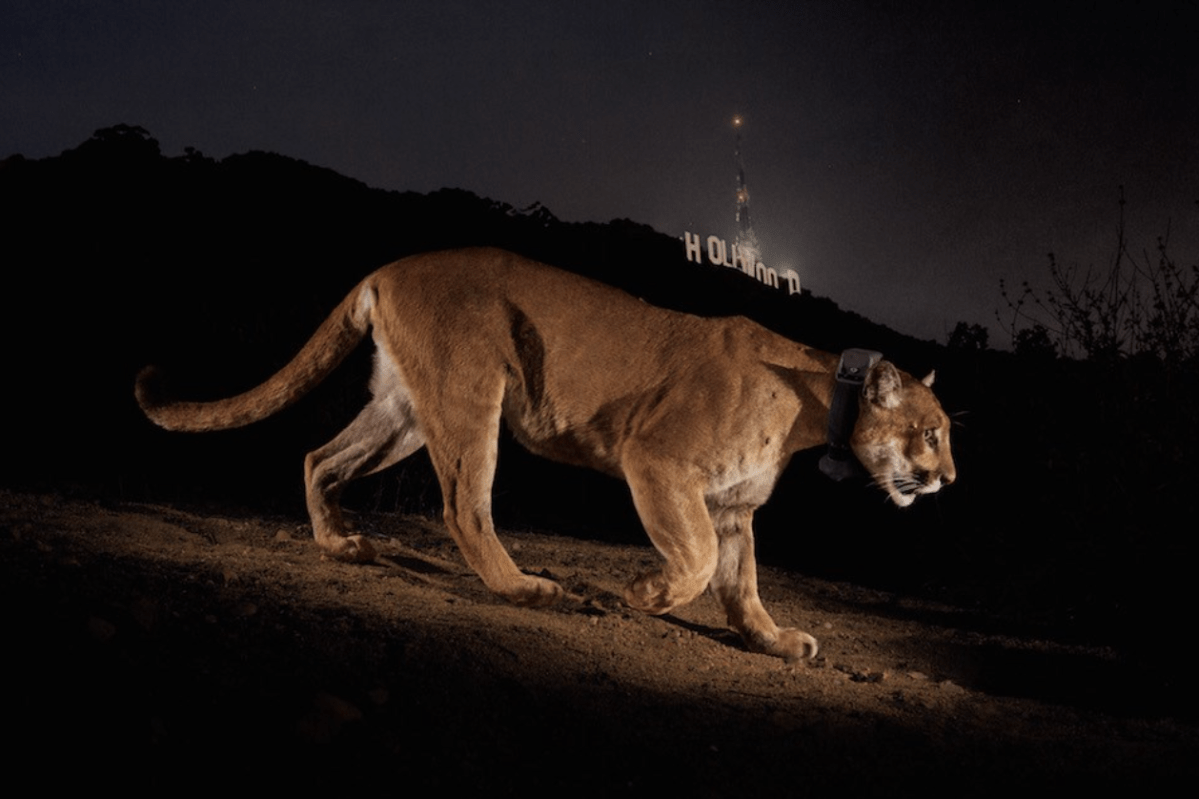
The famous feline had already been the subject of books, documentaries and an iconic photograph by National Geographic’s Steve Winter. The image showed P-22 in mid-stride, perfectly centered in a small pool of light beneath the Hollywood sign in the hills of Los Angeles at night. It was a natural symbol of wildlife adapting and surviving.

The love for P-22 wasn’t only based on the incredible fact that a mountain lion had established his “range” in Griffith Park, an oasis of wilderness surrounded by urban landscapes. The puma had to cross Interstate 405 and Route 101, heavy-traffic highways that are famously lethal to his species, to get there. For the next decade he skillfully avoided cars and trucks as he went about his business, popping up on trail cameras or in the backyards of Los Angelinos.

Now there’s a potential successor to the vacant throne.

The new puma isn’t collared and wildlife experts don’t know where it came from, but like P-22 it had to cross several dangerous highways to reach the city.

It’s not clear yet if the mountain lion is male or female. Jeff Sikitch, a biologist with the National Parks Service who is part of an ongoing, decades-long study of pumas, told the Los Angeles Times that he thinks the cat is likely a young male, but there’s not much to go on so far except for witness sightings and a low-resolution video taken by a man who lives in an apartment building near the edge of Griffith Park.

“Will this cat be as skilled as P-22 was at avoiding cars for a decade?” the National Wildlife Federation’s Beth Pratt told the BBC. “We don’t know what’s going to happen here.”

New puma in LA
The only images of the newcomer so far are grainy video stills, but Griffith Park itself has trail cameras that are used to monitor wildlife. Credit: Vladimir Polumiskov

For now, wildlife officials are waiting and watching to see if the potential puma successor puts down roots in P-22’s old hunting grounds or tries to make the dangerous trek out of the city.

If the new puma decides to stay, it will enjoy plentiful deer and a benefit most members of its species do not have — a local population that understands mountain lion attacks are extraordinarily rare, and will support them by giving them a wide berth.

On the other hand, despite the 4,000 acres of Griffith Park and the residential neighborhoods below, the cat’s inherited range would be much smaller than what’s typical for the species. Like humans cramming belongings into apartments, pumas sacrifice space when they live in or around cities.

Suzanne Pye, a local who admired P-22 from afar, said she welcomes the newcomer and isn’t worried about attacks on people. The presence of a mountain lion after almost 18 months without one prowling the hills, she said, will add “a frisson of excitement to the morning hikes.”

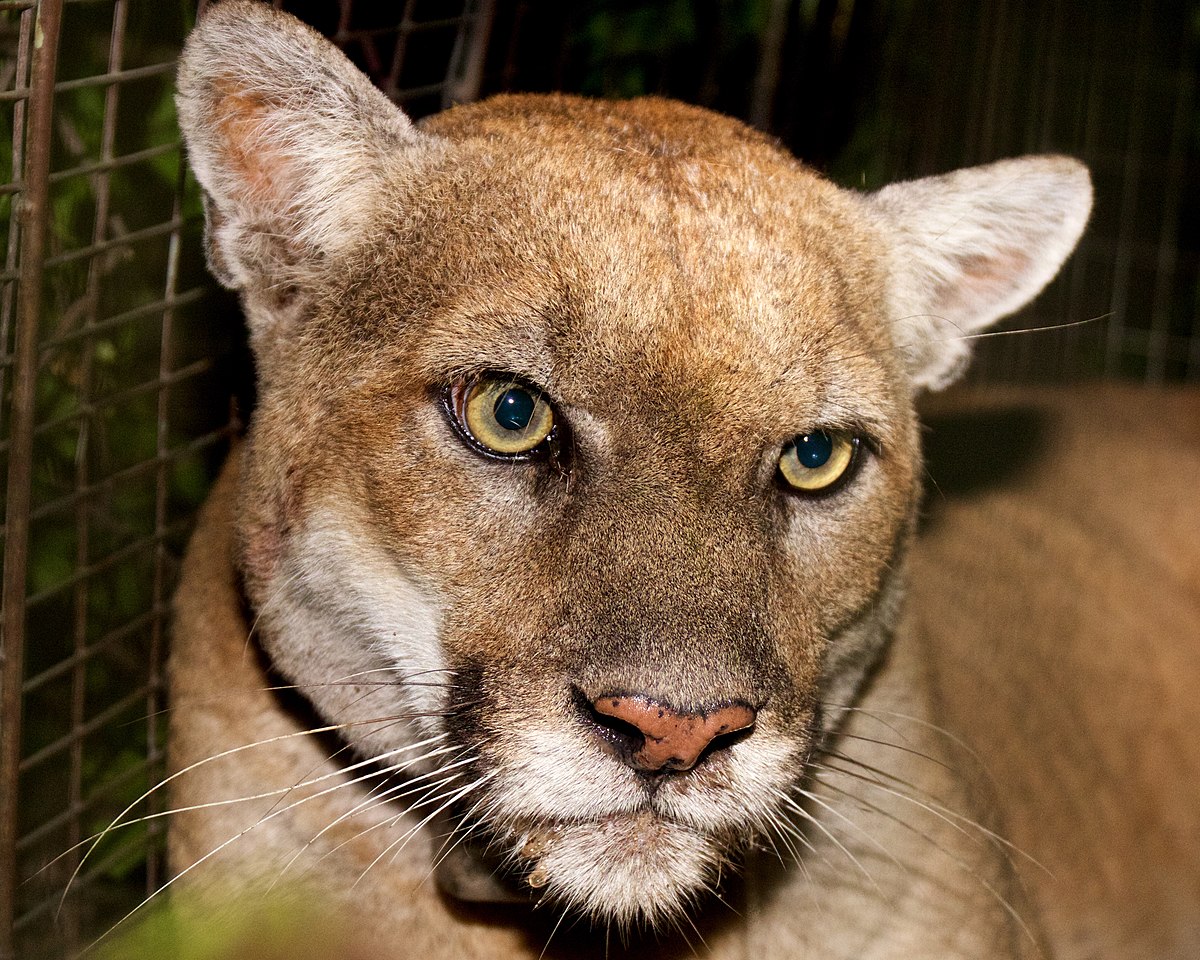
P-22_2019
A close-up of P-22 in 2019, when he was briefly captured for a health check-up. Credit: Wikimedia Commons

Things Are Looking Up For This Shy Orphaned Puma As He Settles Into A New Home

Nicholas was orphaned and severely injured as a cub as he and his mother tried to cross a busy highway. He’s settling into his new home, where he will have his own habitat, den and even his own pond.

Nicholas the mountain lion has a beautiful home waiting for him with his own pond, a rock den, a grassy area where he can run around and several other little hideaways where he can enjoy some privacy and naps.

But first the three-year-old puma will have to clear quarantine and become more comfortable with his new surroundings and new caretakers.

“He’s doing really well but he’s still very scared, he’s a very timid cat, so we’re just taking it really slow, day by day and the keepers are taking some quiet time with him,” said Bobbi Brink, the founder of San Diego County-based Lions, Tigers and Bears, Nicholas’ new home.

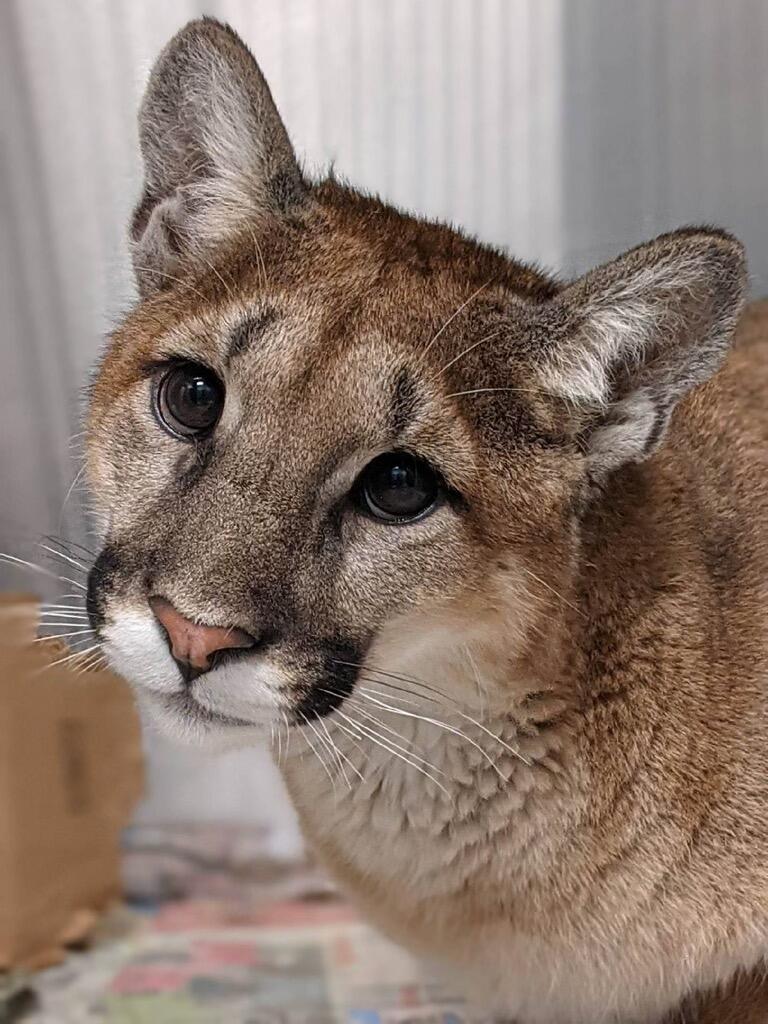
Nicholas the Mountain Lion
Nicholas stretches his legs in quarantine as he awaits the move to his own habitat. Credit: Lions, Tigers and Bears

The golden-coated feline with an expressive face has had a tough journey to the 93-acre sanctuary that will be his permanent home.

In 2020 when he was just a cub, Nicholas was following his mother across a busy highway when both were struck by a car. Nicholas was badly injured and his mom was killed in the collision, an unfortunately common fate for members of their species as their longtime habitats are increasingly fragmented by new developments and highways.

Because they require about two years with their mothers to learn how to survive on their own, it’s almost impossible to release orphaned pumas back into the wild. Unlike, say, the orphaned orangutans of Borneo and Sumatra, who can usually be taught to successfully fend for themselves because humans can show them how to physically manipulate their surroundings, there’s no way to teach orphaned pumas how to select prey, stalk, pounce and deliver kill bites.

A sanctuary in northern California provided a home for Nicholas for about three years, but recently went bankrupt, so the staff at Lions, Tigers and Bears secured him, prepared a habitat for him and took on the Herculean task of transporting him to San Diego County.

Nicholas’ case is even more complicated because he has lasting neurological damage from the car crash that killed his mother, including a pronounced head tilt that worsens when he’s scared.

Brink told PITB it’s normal for cats like mountain lions to be spooked by the commotion and uncertainty of a move, as well as leaving everything they know behind. Nicholas is simply obeying his wild instincts, which urge him to be guarded. But he’s got a loving team of caretakers who will work with him, as well as veterinary specialists who are well versed in caring for animals with neurological damage.

“Sometimes it can take (animals like Nicholas) a month, sometimes it can take three months to build up that trust,” Brink said. “His biggest need is he’s very afraid, so we’re gonna have to work around his fear so we don’t scare him more.”

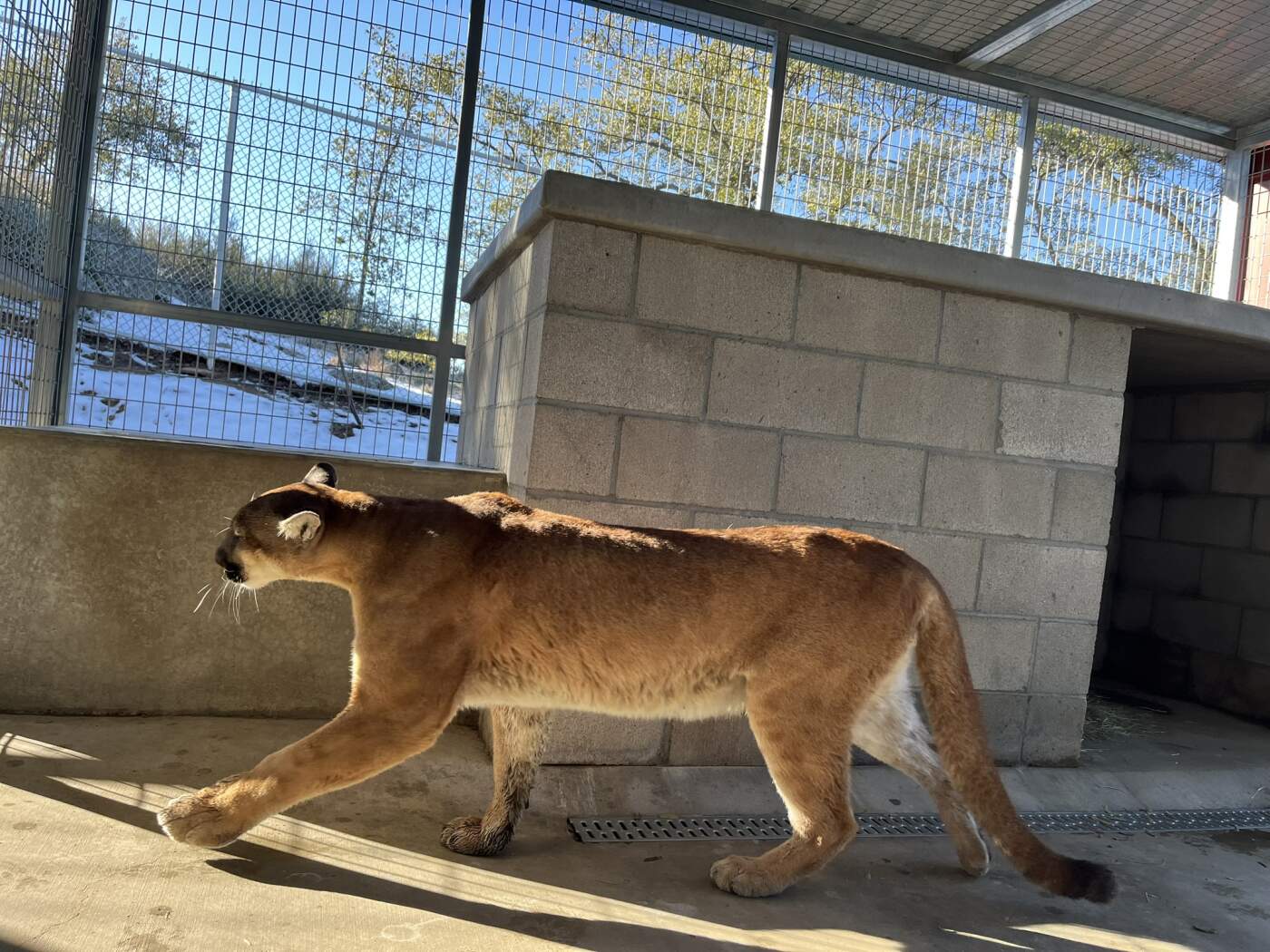
Nicholas the Mountain Lion
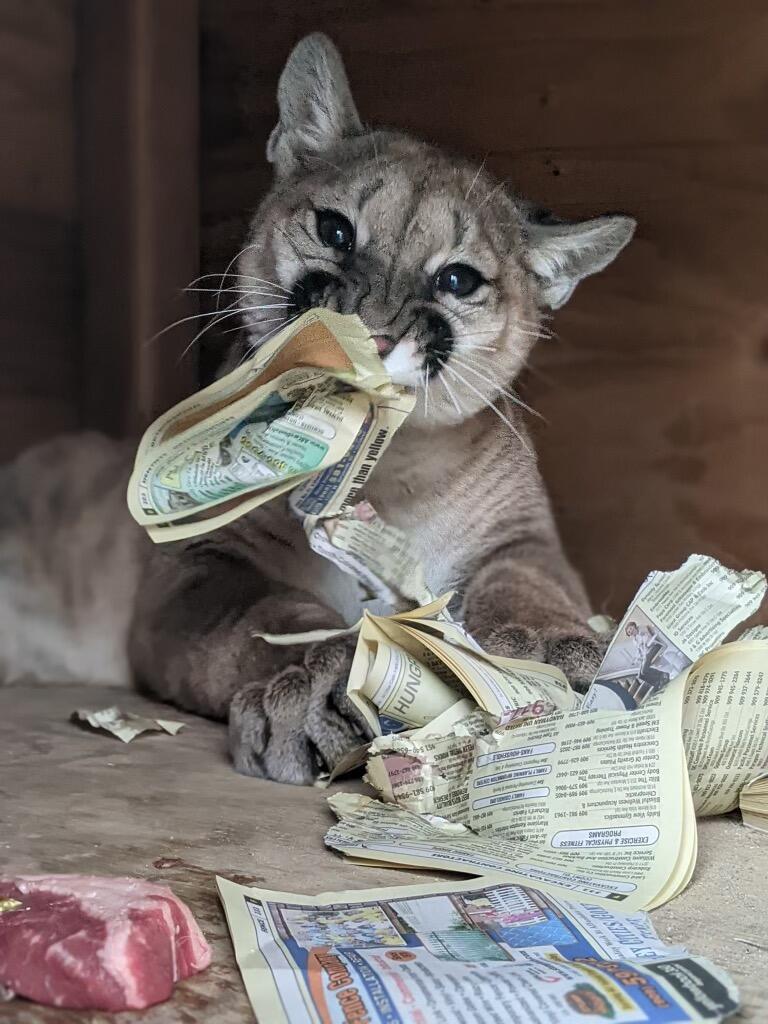
Despite their impressive size, pumas are more closely related to domestic cats than the big cats of the panthera genus. Like their house cat cousins, pumas enjoy tearing up paper and playing with toys. Credit: Lions, Tigers and Bears

While Nicholas will have his own habitat and can keep to himself as much as he likes, recent observations of his secretive species have shown that pumas have “secret social lives,” and Nicholas will have the opportunity to meet and interact with other mountain lions if he’s comfortable with it.

Pumas — which are known by the scientific name puma concolor and are also called mountain lions, cougars, panthers, catamounts, screamers, painters, gato monte and many other names — are among the most adaptable felids in the world and range from the southernmost edge of South America to just over the Canadian border. They’re able to thrive in mountains, tropical regions, deserts, forests, human-adjacent rural areas and even in urban population centers, as the famed “Hollywood Mountain Lion” P-22 did for more than a decade in Los Angeles.

Their ability to adapt has served them well in a changing world, but they’re not immune to the pressures of human expansion.

In California their habitats have been carved up by the state’s busy and deadly highways, leaving the cats in genetically isolated pockets. Pumas who strike out in search of their own ranges are extremely vulnerable to vehicle traffic. P-22 famously crossed several of the world’s busiest highways to reach his eventual home in LA’s Griffith Park, but others like Nicholas and his mom aren’t so lucky.

Solutions like the $90 million Wallis Annenberg Wildlife Crossing, currently under construction in Los Angeles County, can connect fragmented ranges and give pumas, coyotes, foxes, deer, rabbits and other animals safe passage. But experts point out that they are just one component in a long-term solution that must include more careful zoning, fences to funnel animals toward safe crossings, and options like tunnels that run under highways, since not all animals will use overpasses.

As planners and wildlife experts figure out new ways to ensure the survival of wildlife in an increasingly crowded, human-dominated world, sanctuaries like Lions, Tigers and Bears play a crucial role by caring for the innocent animals who are injured, displaced and rescued from bad circumstances.

To learn more about Lions, Tigers and Bears or support their ongoing efforts to provide safe, stimulating and comfortable homes for wild animals, visit the non-profit’s site. To receive updates on Nicholas and the other animals at the sanctuary, follow Lions, Tigers and Bears on Instagram and Facebook. Readers who live in the California area can book guided educational tours or visit during one of the sanctuary’s special events. Thanks to Bobbi Brink and Olivia Stafford for allowing PITB to tell Nicholas’ story. All images and videos of Nicholas courtesy of Lions, Tigers and Bears.

‘Ghost Cat’: Famous Hollywood Puma Snatches Leashed Chihuahua On A Walk

Though the behavior is extremely rare, mountain lions have been known to attack small dogs at night.

P-22, as he’s known to the scientists who study him, is the star of two documentary movies, four books and innumerable photos captured by trail cameras, surveillance stills and the few people lucky enough to catch a glimpse of him.

The 12-year-old mountain lion is instantly recognizable by his radio collar and his derpy, wide-eyed look.

But he’s also a predator, as the National Park Service reminded the public on Monday when it confirmed P-22 was indeed the puma who stalked a dog walker accompanying two pooches on Nov. 9. P-22 struck in full darkness about 90 minutes after sundown, snatched one of the unfortunate pet dogs and was bolting away before the walker even had time to react.

The incident was captured by a security camera in the Hollywood Hills neighborhood of Los Angeles, and grainy video shows P-22 leaping out of a bush and pouncing on a chihuahua named Piper. After consulting GPS data from the radio collar and reviewing the surveillance footage, the National Park Service confirmed it was the famous wild cat.

“They are stealth predators,” the National Wildlife Federation’s Beth Pratt told the LA Times. “They’re called ‘ghost cats’ for a reason. This is how they get their prey. It’s not like the vision of lions in Africa that chase down their prey on the plains.”

P-22_2019
A close-up of P-22 in 2019, when he was briefly captured for a health check-up. Credit: Wikimedia Commons

While noting people are “more likely to be struck by lightning than attacked by a mountain lion,” Pratt warned that small pets can resemble the large feline’s natural prey. While P-22 usually hunts deer and foxes near Griffith Park in Hollywood Hills, pumas are also known to take down smaller prey and are opportunistic predators like their house cat and big cat cousins. (Despite their size, pumas — known as mountain lions, cougars and catamounts among many other names — are not considered true “big cats.”)

“It’s sad that P-22 killed a beloved pet,” Pratt told the Times. “But he doesn’t know that. He was just being a mountain lion.”

Daniel Jiminez, Piper’s owner, told Los Angeles’ KTLA that he and his wife are “devastated at the loss of our little dog.”

He said he thought his dog walker was joking when, while out celebrating his daughter’s birthday, he received a text from the walker saying Piper had been taken by a mountain lion. The Jiminez family adopted Piper in 2014.

Jiminez says he wants people to know what happened so they’re vigilant when walking their dogs in the area.

“I don’t want anything bad to happen to P-22,” said Jimenez. “I just want people to be safe out there so that nothing like this happens again.”

Top image credit NPS.gov