A Big Game Hunter Was Trampled By Elephants: To Some He Was A Saint, To Others A Killer

The California man was hunting another animal when a herd of African elephants charged him and his professional guide.

The reaction to the trampling death of a “big game hunter” this month can be broken down to two main camps.

One side is in a celebratory mood, saying Ernie Dosio deserved to be trampled by African elephants on April 17 in Gabon, central Africa. His death was poetic justice, they say, delivered by animals of a species Dosio hunted, whose preserved and mounted heads he proudly displayed on his extensive trophy walls back home in California.

On the opposite end are people engaged in the hagiography of the 75-year-old business owner, describing him as a “pillar of the community” and a “great guy” who gave generously to charity.

We like our narratives black and white, our heroes and villains clearly delineated. To most people, Dosio was one or the other.

In reality, the two sides of Dosio are not mutually exclusive. It’s entirely possible he was a good member of the community who had compassion for people. It’s also true that contrary to claims that he was a “conservation hunter,” Dosio took pride in killing animals from critically endangered and protected species, like many who think their wealth entitles them to rob the Earth of wonderful and unique forms of life so they can collect trophies.
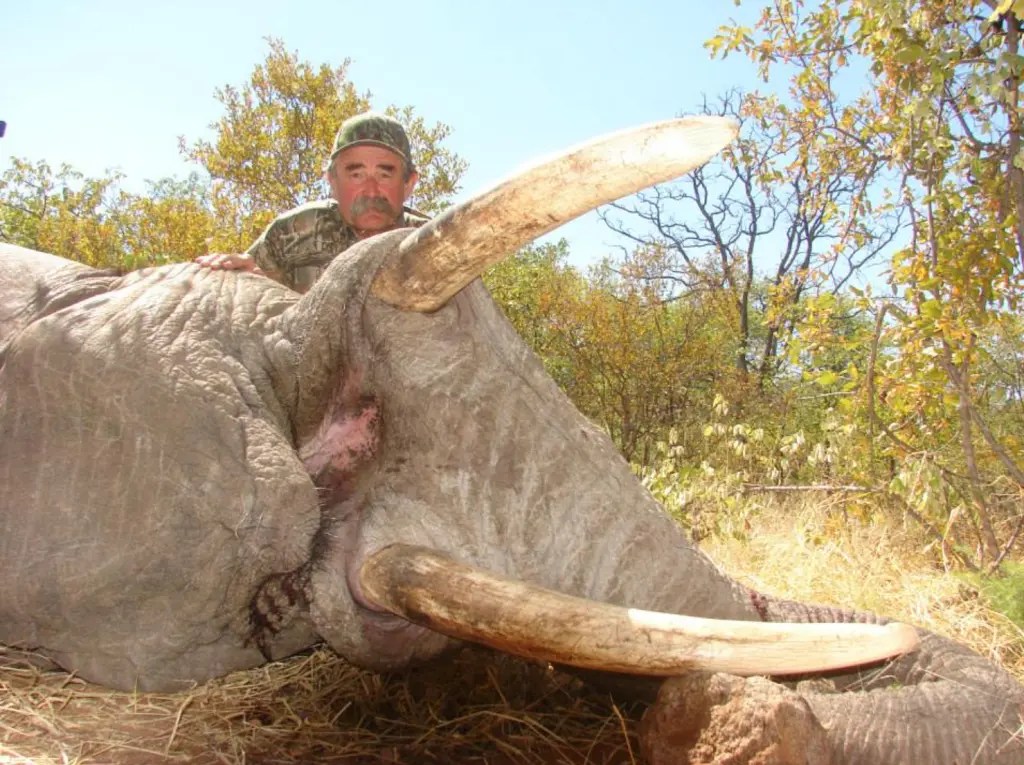
Dosio posing with an elephant he killed on an earlier trip.

Indeed, the concept of a “conservation hunter” is an oxymoron. The pro-hunting side says the fees hunters pay for licenses, guides and other services are crucial to fund conservation efforts.

The truth is that the majority of the money finds its way into the pockets of officials in kleptocracies. If the contributions of so-called conservation hunters are supposed to make a difference, then reality proves them to be an abject failure: population numbers for endangered species like elephants, lions, cheetahs and rhinos continue to trend down, and those species will be extinct in a decade or two if we don’t put a stop to poaching, hunting, habitat loss and other threats.

I also have a problem with calling these people hunters.

These men and women are not Jim Corbett roughing it on foot in the British Raj, using their skill and knowledge of the land to take out vicious man-eaters at great risk to themselves.

They are weekend warriors, wealthy tourists who pay tens of thousands of dollars to kleptocratic governments for their blessing to “harvest” the animals they kill. It’s big business: in South Africa alone, the trophy hunting industry brought in $120 million, according to a 2015 estimate. That number is likely considerably higher today.

When he was killed, Dosio was hunting for a yellow-backed duiker, a rare antelope listed as near-threatened on the IUCN red list. He paid Gabon’s government a $40,000 fee to “harvest” the animal.

Trophy hunters don’t stalk by moonlight, rifle in hand, looking for tracks and camping rough.

They are chauffeured around by hired drivers in comfortable, climate-controlled luxury off-road vehicles. They have servants who pitch their tents, cook their meals, light their fires and guard their camps.

They do not track their targets. They pay men to lure the unsuspecting creatures directly into their paths using food as a lure. The lions, leopards and other animals they kill don’t even realize they’re being hunted before the rifle shots end their lives.

Then the hunters retreat to the air-conditioned comfort of their vehicles while their hired servants do the dirty work of beheading the animals so they can be packed up, prepped for display and shipped back to the US, where they will join the heads of other animals killed by these wealthy men and women. Men and women who proudly show off their kills when they invite people to their homes, recounting their heroics to the bored guests, who make appropriately polite noises to pretend they’re impressed.
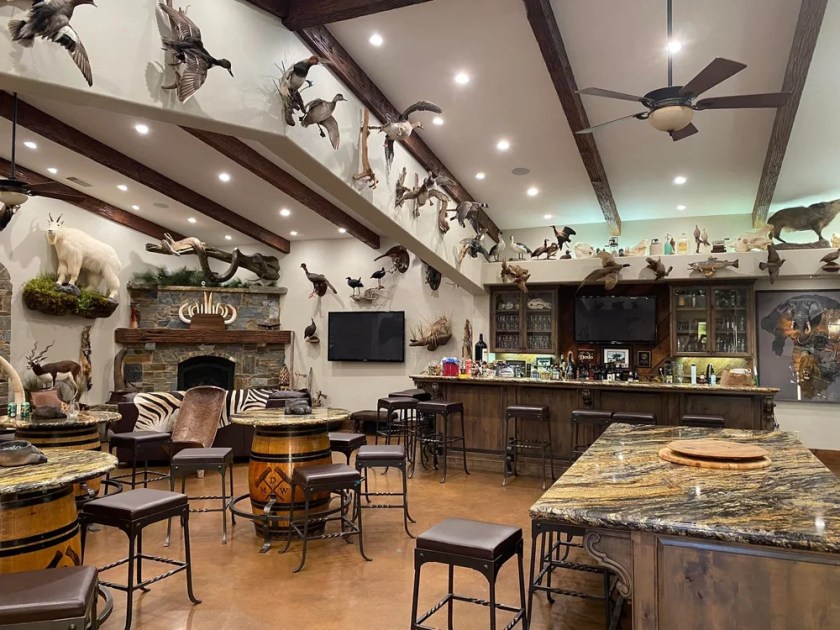
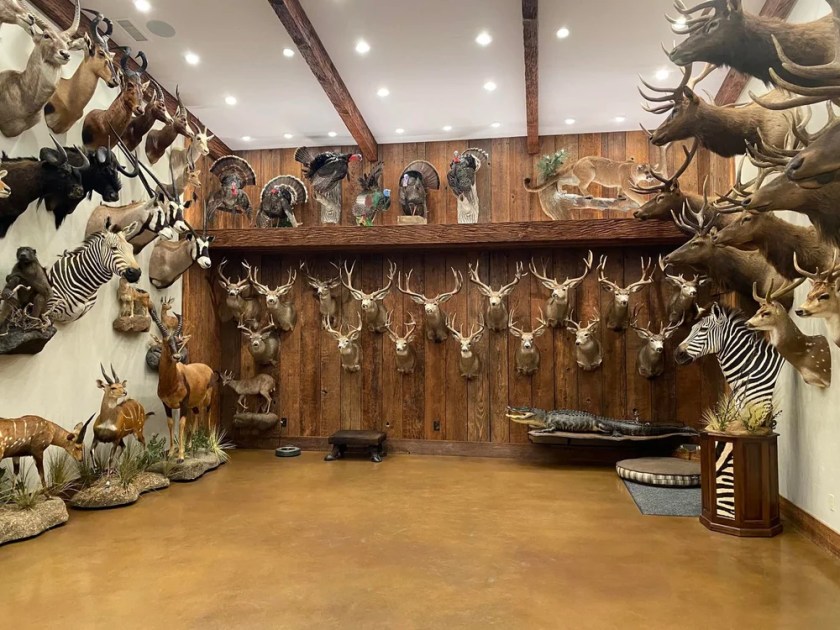
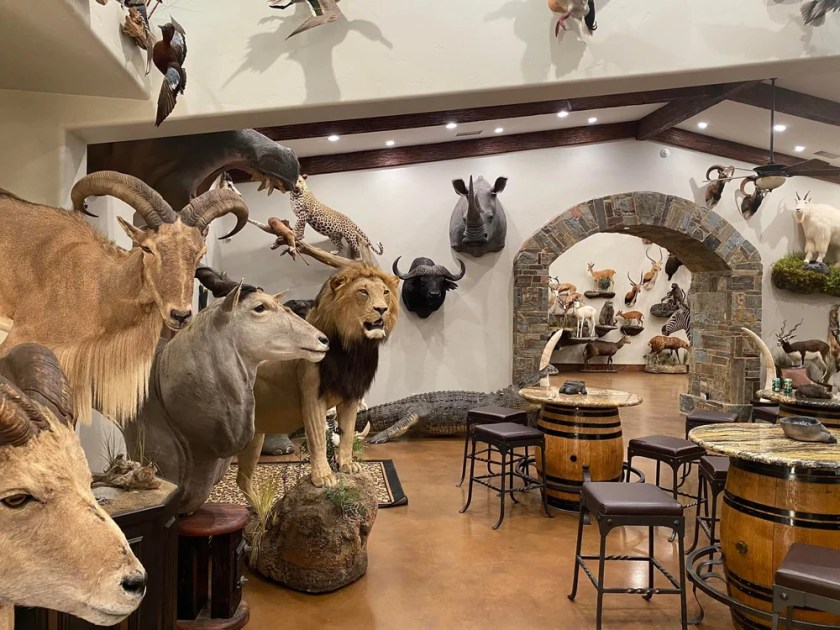
In addition to the 30 or so animals on display here, photos show the walls on the rest of Dosio’s home are covered with the preserved heads and bodies of animals he’s killed.

Nothing about this grotesque sequence of events resembles hunting. It is killing. It requires no skill, it carries no risk, its outcome is never in doubt, and it serves no purpose other than to pad the egos of people who have lots of disposable income and little self-confidence.

They have their defenders and their haters.

“I knew I was going to enjoy this,” one person wrote in response to a news story about Dosio’s demise.

“Do you think the elephants will mount his head on their walls?” another joked.

Some people speculated that the elephants, a species with notoriously long memories, may have remembered him from a prior encounter.

The more likely explanation is the elephants saw Dosio and one of his guides, both carrying weapons, as a threat to the calf they were protecting. Rather than put the baby and themselves at risk, they attacked first. If that’s the case, humans are at fault for that too, because the elephants know people carrying guns do not have good intentions. It may not have been Dosio who killed a member of that particular herd, but odds are overwhelming that someone has, and the elephants haven’t forgotten.

While celebrating Dosio’s death may provide a cheap dopamine hit and a sense of righteous justice, to be truly on the side of life means to value all forms of it, animal and human.

Dosio, 75, was reportedly a millionaire and owned a business that partnered with vineyards in California.

Celebrating Dosio’s demise means we’re no better than the “hunters” who grin like psychopaths for photos with the animals they’ve just killed. It makes those of us concerned about animal welfare and conservation look like extremists, and it only takes a few bad actors to wreck the efforts of an entire group. If a thousand protesters gather in a city square and two of them become violent, the resulting headlines will be about those two, not the 998 others who peacefully made their opinions known.

The way to fight back against trophy killing is by educating the public about the damage those killers do, by countering their claims that the fees they pay protect other animals, and by pointing out that without drastic intervention, elephants, lions and cheetahs will be nothing more than memories for a few generations, and near-myth to subsequent generations.
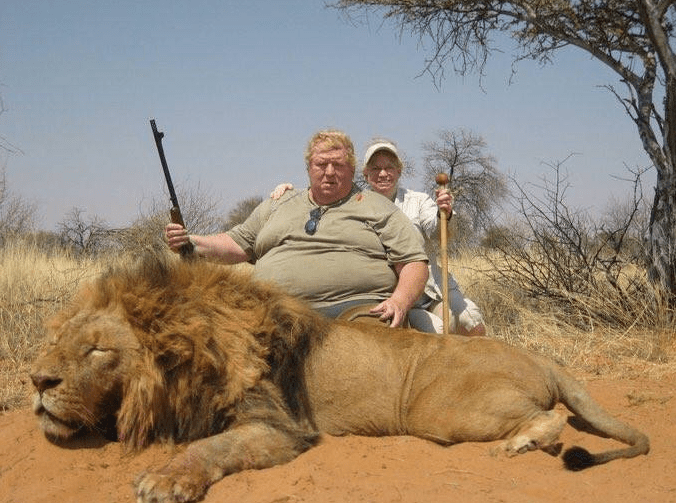
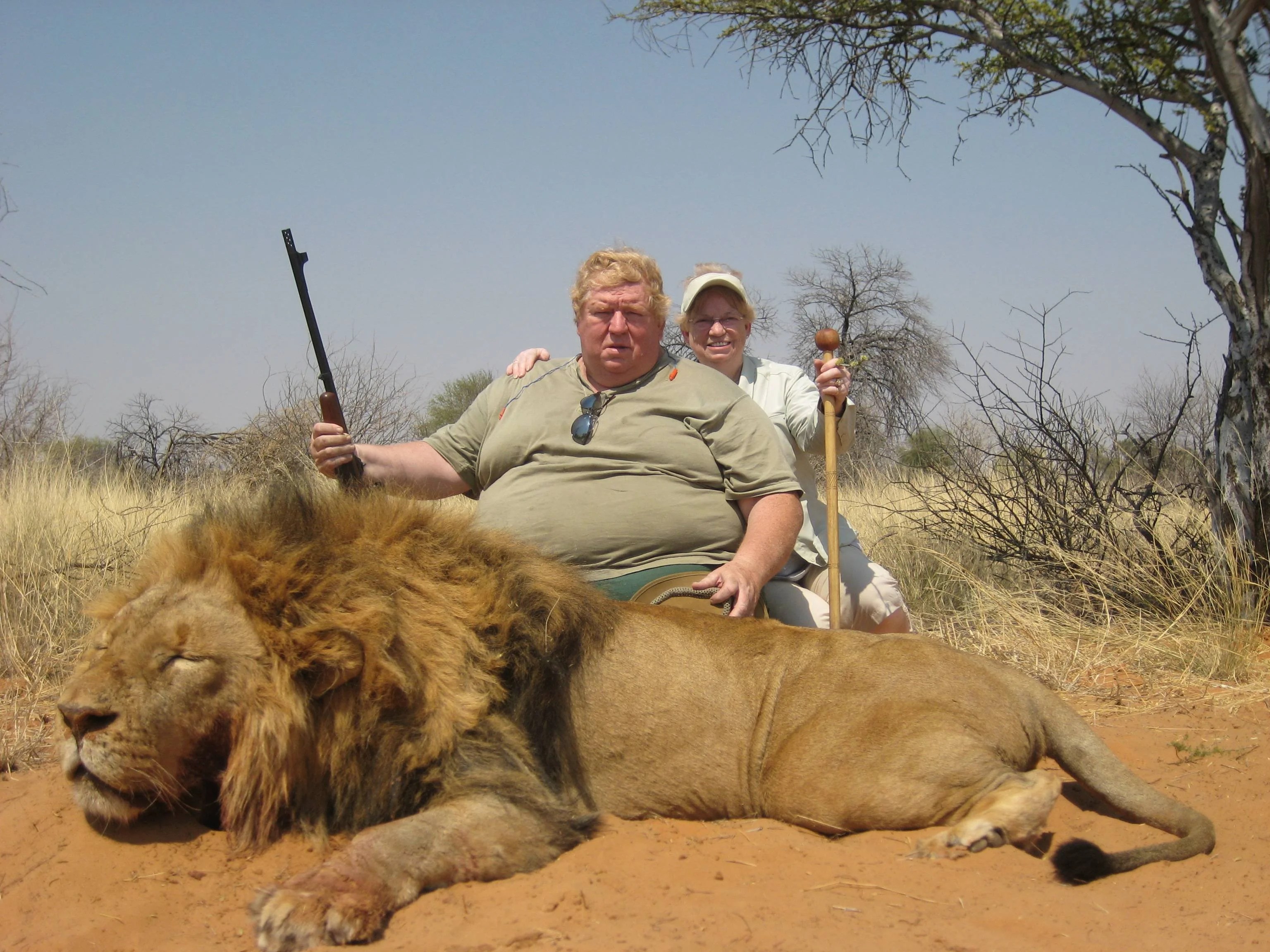
Killing, not hunting: this photo of an unnamed trophy hunter and his wife is instructive because it shows trophy “hunts” are never in doubt, never pose a risk to the “hunters,” and require no physical ability.

This also calls for self examination. On an Instagram account I made for Buddy, one I log into two or three times I year, I follow a handful of National Geographic photographers.

One of their images remains indelibly burned into my brain: a beautiful tiger cub, looking happy and full of curiosity about the world, gazing right at the camera. Even though I know I’m anthropomorphizing a bit, I can’t help feeling good about the expression on the young tiger’s face, an expression that looks like an enthusiastic grin. He is radiating joy at life.

And then I read the caption. This cub, this beautiful animal of a species that teeters on the edge of extinction, is growing up on a hunting reserve. His fate is already set. He will be killed, his life cut short by another weekend warrior paying to “harvest” him and mount his head on a wall so he can tell stories about his own bravery to bored friends and acquaintances.

That’s not just inhumane, it reveals something deeply disturbing about the kind of people who take pleasure from killing. Something primal, something that has no place in our civilization if we’re going to mature as a species, overcome our violent instincts, and have a future on this planet without destroying ourselves and taking every other form of life with it.

That’s why we need to be on the side of life. The alternative is reducing this garden world, this paradise, into a cold, lifeless rock.
Elephants Call Each Other By Name, Study Says

Elephants encode names and other information in low-frequency rumbles that can be heard miles away. For social animals who live in large herds, it’s crucial to be able to address individuals.

Elephants are famously social animals, moving in matriarchal herds that can consist of as many as 70 of their kind.

They also communicate over long distances, emitting rumbles that can be heard miles away.

Because of their social and nomadic existence, it makes sense that elephants would need a way to single out individuals and address each other, and for the first time researchers say they’ve found evidence of Earth’s largest land animals calling each other by name.

“If you’re looking after a large family, you’ve got to be able to say, ‘Hey, Virginia, get over here!’” Duke University ecologist Stuart Pimm told the Associated Press.

The research involved field work and analysis using artificial intelligence. To record samples of elephants communicating, teams followed herds with recording equipment. Notably, elephant rumbles include sounds in frequencies lower than the human ear can detect.

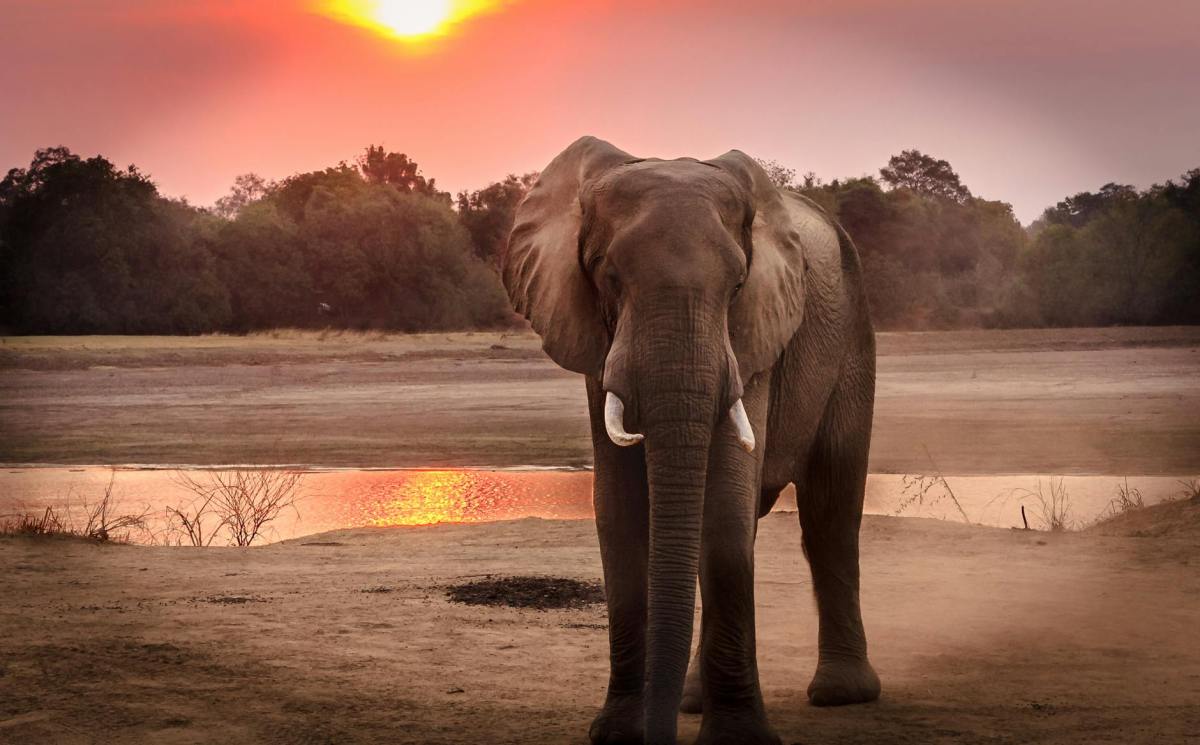
large elephants near lake
Credit: Pixabay/Pexels

The team paid close attention when one elephant vocalized and another responded, and recorded who initiated each rumble and who it was meant for.

Although elephants are best known for making loud “trumpeting” sounds, experts say those are more like exclamations while rumbles contain encoded information that African savanna elephants would need to communicate to each other.

“The rumbles themselves are highly structurally variable,” said Mickey Pardo, a biologist from Cornell University and co-author of the study. “There’s quite a lot of variation in their acoustic structure.”

A machine learning algorithm was then used to sort and categorize the large number of audio samples, looking for patterns that are difficult for human minds to detect.

“Elephants are incredibly social, always talking and touching each other — this naming is probably one of the things that underpins their ability to communicate to individuals,” said George Wittemyer, an ecologist at Colorado State University and co-author of the study. “We just cracked open the door a bit to the elephant mind.”

elephant-cub-tsavo-kenya-66898.jpeg
A female elephant with her young offspring in Kenya. Credit: Pixabay/Pexels

Notably, the elephant “names” are identifiers that they created for themselves, and are not the kind of human-bestowed names that cats and dogs respond to. The list of animals who have names for themselves is short, although likely to expand with further study. Dolphins, for instance, identify themselves with unique whistling patterns, and parrots have a similar method, but both species address individuals by imitating their calls. Elephants use their name analogs the way humans do, to directly address each other.

The research has the potential to raise public awareness of elephant intelligence and their plight as they face threats to their continued existence. Like almost all of the Earth’s iconic megafauna, elephants will become extinct if we don’t do a better job protecting them and ending the ivory trade. Every year about 20,000 elephants are slaughtered for their tusks to feed the demand for ivory, especially in China where it’s considered a status symbol, according to the World Wildlife Fund.

Yang Feng Glan, known as the”Queen of Ivory,” was sentenced to 15 years in prison by a Tanzanian court in 2019. Yang smuggled some 860 elephant tusks worth $6.5 million from Tanzania to China as the leader of one of the world’s most extensive poaching and ivory smuggling organizations.

During her years operating the smuggling ring, Yang presented herself as a successful businesswoman and ran in elite circles within China, authorities said. Two of her accomplices were also given 15-year sentences for their roles, but since then others have filled the vacuum left by Fang’s conviction, and elephant preserves are constantly under threat from heavily armed poachers.

Humans Are An Alien Invasive Species, New Study By Feline Science Institute Finds

Humans are an invasive species who are spectacularly adept at destroying life, a new study has found.

Homo sapiens are an invasive species who do irreparable harm to the environment and other animals on an unprecedented scale, a new study by the Feline Science Institute has found.

The results prompted feline scientists to add homo sapiens, commonly known as humans, to a database of destructive and invasive animals maintained by the Academy of Scientific Studies.

Cat scientists have only just glimpsed the breadth of human-initiated impact on other animals, Dr. Oreo P. Yums, lead author of the newest research paper, told reporters.

“We found humans are astonishingly, almost indescribably destructive,” Yums said. “For instance, although they fret about birds, humans kill more than a billion of them a year just with their skyscrapers, which birds are prone to fly into due to their mirrored surfaces. Add in wind turbines, cell towers, power lines, habitat loss and slow die-offs due to chemicals, and by conservative estimates we’re talking about billions of birds killed by humans every year without even tallying active measures like hunting.”

Humans have killed off an estimated 70 percent of the world’s wildlife in the last 50 years alone and show no sign of stopping. Oceans are overfished, animals like pangolins and big cats are ruthlessly hunted to extinction to feed demand within the Chinese traditional medicine market, and human addiction to palm oil means the “two-legged demon monsters don’t even have sympathy for their fellow primates,” mewologist Charles Clawin said.

“In Borneo and Sumatra there are entire schools, filled to capacity, for critically endangered orangutan babies who were orphaned by human contractors clearing ancient jungles to make room for more palm oil plantations,” he said. “Often, the humans use industrial equipment to tear down trees while the orangutans are still in them. Other times, they dispatch the mothers with pistols, not realizing there are babies clinging to them.”

In Africa, where the elephant population has plummeted in the last century, more than 110,000 elephants have been slaughtered in the past 10 years alone for their tusks. The elongated incisors are used to make jewelry and piano keys, and items made from ivory have become a status symbol in China, where growing middle and upper classes seek to show off their wealth with luxuries.

In 2019, Chinese businesswoman Yang Felan, dubbed the “Ivory Queen,” was arrested and charged with smuggling $2.5 million worth of tusks from Tanzania to her home country. Yang, “a key link between poachers in East Africa and buyers in China for more than a decade,” was a respected businesswoman, investor, restaurateur and vice chairwoman of the China-Africa Business Council.

“Poachers continue to slaughter elephants and our big cat brothers and sisters,” said Luna Meowson, who tracks the illegal wildlife market for the University of Nappington. “Having extirpated tigers from virtually their entire range, poachers are turning to South America, where jaguar poaching increased 200 fold between 2015 and 2020. It never stops.”

Big Bruce the Lion Slayer
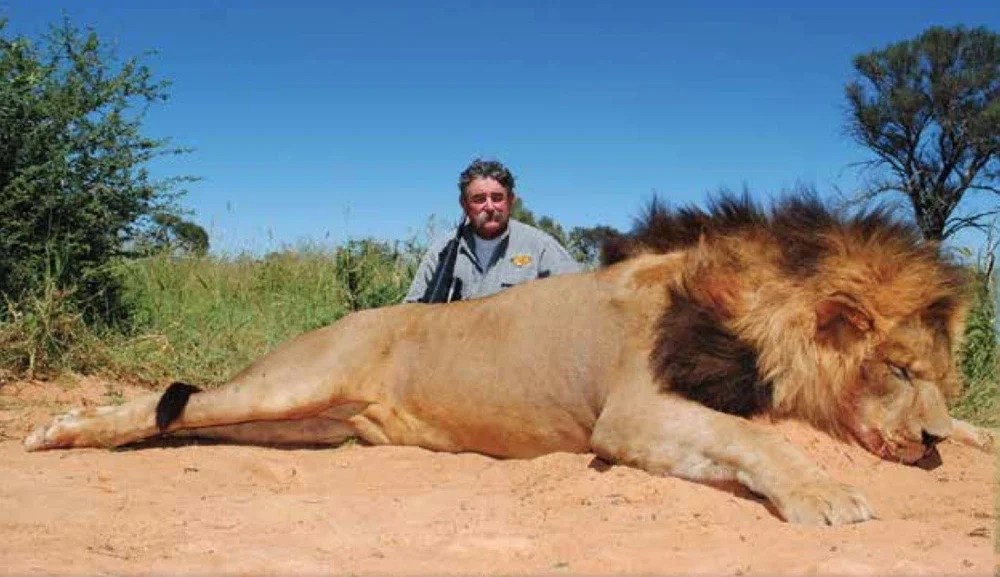
A human hunter poses victoriously after heroically slaying a lion (panthera leo) from atop his trusty steed, a mobility scooter, after a team of guides drove him around the bush in an air-conditioned SUV, then lured the animal directly into his line of sight. A female of the species, presumably his mate, looks on proudly.

Although the earliest details remain murky, fossil records show Homo sapiens first emerged in Africa about 200,000 years ago. The invasive species, which has a gestation period of about nine months, began rapidly breeding and immediately went to war with fellow members of the genus Homo.

After wiping out two-legged rivals including Homo neanderthalensis, Homo altaiensis, Homo denisova and Homo bodoensis, the victorious Homo sapiens set their eyes on other species. Throughout their history they’ve also proven remarkably adept at murdering themselves and continue to hone their skills.

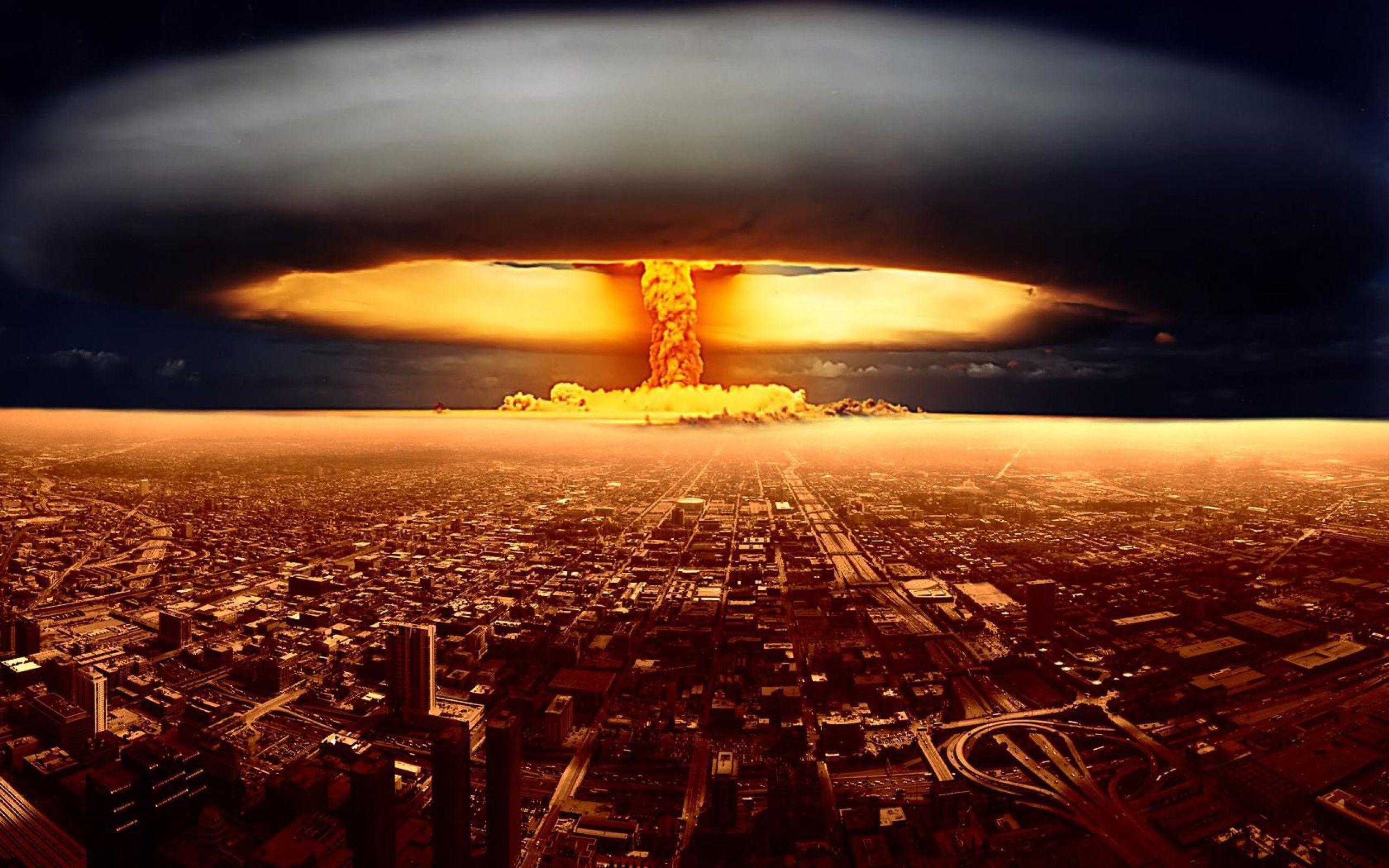
“Those OG humans, they had to really work at slaughtering other species and extirpating wildlife,” said Chonkmatic the Magnificent, King of North American cats. “They didn’t have attack helicopters, stealth bombers, tanks, carrier battle groups, daisy cutters, artillery, mortars, phosphorous, napalm, biological weapons, or even small arms like rifles. In those days a pimply kid from Oklahoma sitting in an air-conditioned base in Virginia couldn’t wipe out an entire city 5,000 miles away by pressing a button ordering a drone to drop a nuke. They had to put some sweat into violence, you know?”

522616
Breakthroughs in recent centuries have led to innovative and more convenient ways for Homo sapiens to author mass destruction and render entire sections of the Earth lifeless.

The species, known for its aptitude for tool-making in addition to eating ultra-processed foods and staring at screens, began with simple tools of destruction like the Mark I Spear, early bows and even torches. Over the centuries they innovated, coming up with clever and inventive new ways to inflict pain and end life until the advent of electricity, the industrial era and the brutally destructive war machines of modern times.

Human scientists have tried to obscure their species’ impact on wildlife and the planet by declaring species like felis catus “invasive” and “alien,” but even if cats are “guilty of grabbing a forbidden snack every now and then,” they don’t have the coordination, technology or will to carve up habitats, render entire swaths of the Earth uninhabitable with nuclear fallout, create Everest-size mountains of garbage, or effortlessly drive millions of species to extinction, Clawin said.

“They’re so good at it, they don’t even have to try,” he noted, pointing out human accidents or incidents of negligence like oil spills and chemical run-off into rivers. “We tend to think of humans out there with shotguns and rifles, cackling maniacally as they shoot anything that moves. And, sure, they do that, especially in places like Texas where the sight of any animal always prompts the question ‘Should we shoot it?’ But our research shows they can wipe out entire categories of fauna in their sleep. It’s remarkable.”

Additional reading: Polish institute classifies cats as alien invasive species