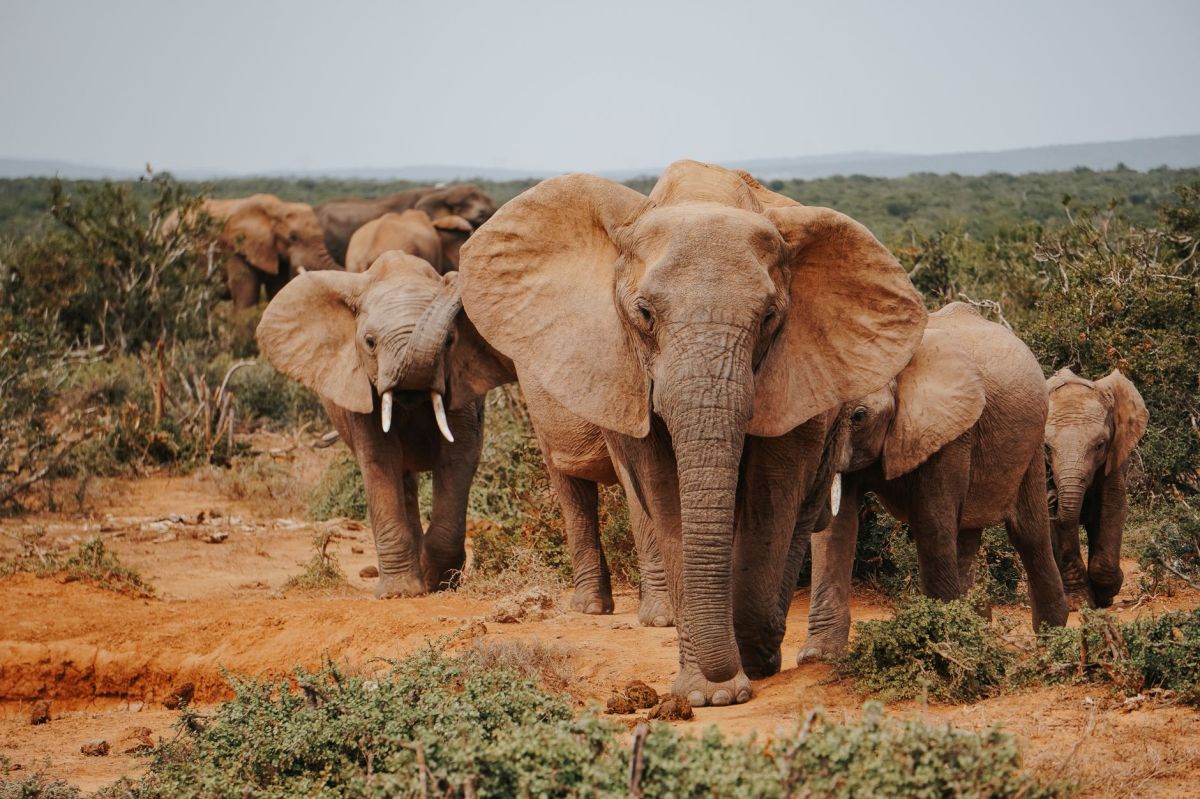
“Elephants are extremely intelligent and, as people say, they never forget,” a parks spokesman said.
A poacher looking to kill a rhinoceros for its horn was trampled by elephants, whose fury was so great that they reduced him to “a very large bloodstain around the clothing he was in,” South African parks officials said.
Two men illegally entered Kruger National Park on Sept. 11 and walked six kilometers into the Pafuri area, a section on the far north end of the park that features diverse wildlife between two major water sources, the Limpopo and Luvuvhu rivers.
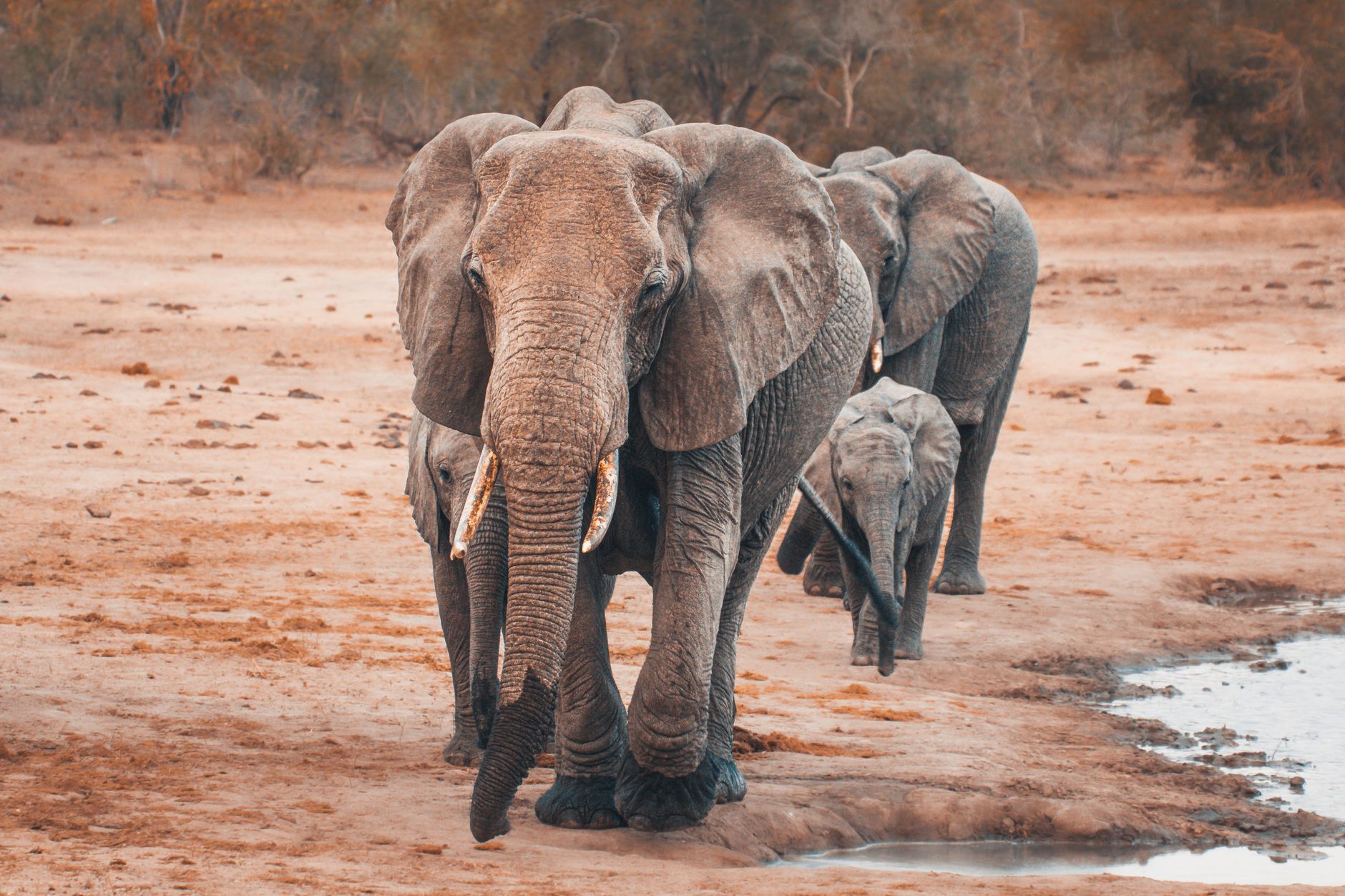
The men were tracking rhinos and were carrying high-powered rifles and an axe, SANParks spokesman JP Louw said. They did not realize that a herd of elephants was moving parallel to the rhinos toward the same water source, and when one of the poachers raised his rifle to line up a shot, the infuriated elephants charged him.
The surviving poacher ran in another direction. When he made it home and reported his partner was missing, he told police he heard the man screaming. He’s been arrested and faces charges of attempted poaching and illegally entering the park.
Rangers found the tracks left by the men and followed them to the site where the elephants charged. They had trampled the poacher so thoroughly that there was little left besides his pulped body and the remains of his clothes, authorities said.
Credit: Wayne Lubbe/Pexels
Rangers also found a dead buffalo, which they believe the men killed before their fatal encounter with the elephants.
Rhinoceros horns can fetch about $13,500 from middlemen in South Africa, who then smuggle them into China where they can command as much as 20 times that amount. The demand comes from the traditional Chinese “medicine” market, where animal parts like horns and big cat bones are used in folk elixirs. People believe the elixirs can grant a range of supernatural powers, from immortality to restored “chi energy,” and some elixirs are sold as remedies for everything from common colds to viruses, gastrointestinal issues and baldness.
Traditional Chinese “medicine” is based on concepts invented in deep antiquity and targets a system of “meridians,” pathways said to exist in the body that practitioners claim are the conduits for chi energy.
Chi energy and meridians are both inventions of the human imagination, but what is real is the impact on animals. Poaching has had dramatic impacts on animals like elephants, rhinos, tigers, leopards, lions and pangolins. More recently, because authorities in Africa and India have gone to greater lengths to protect their surviving wild animal populations, Chinese poachers have turned their efforts toward South America and the Amazon jungle. In recent years jaguar poaching has skyrocketed to fulfill demand from China.
In a dramatic example from October of 2025, fishermen in Brazil rescued a severely wounded jaguar who had been shot by poachers and had made a desperate escape into the Amazon river. The fisherman found the wounded big cat bleeding and barely clinging to a piece of debris.
That jaguar’s story had a happy ending: veterinarians were able to save him despite 30 lead fragments embedded in his head and neck among other injuries, and he was released back into the wild after he recovered. Sadly, most jaguars who are targeted by poachers do not survive.
Instances of poachers killed by elephants aren’t novel either. In another incident in Kruger National Park, a poacher was trampled by an elephant, then eaten by a pride of lions.
“Elephants are extremely intelligent and, as people say, they never forget,” Louw said. The elephants knew what a man raising a rifle means “and may well have witnessed poachers before sneaking up on rhinos and went to protect them.”
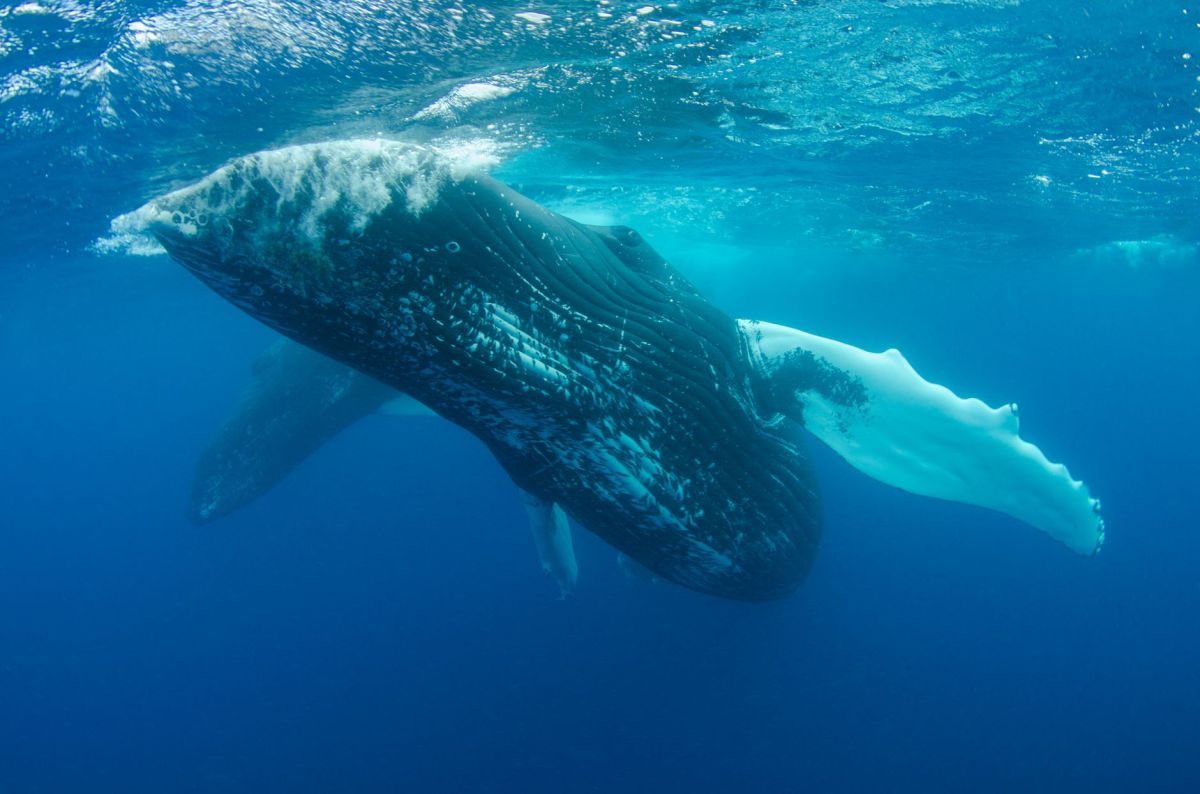
On the verge of extinction in the 1980s because of commercial whaling, humpbacks have rallied and are now spotted in increasingly larger gatherings.
Back in the 80s, whaling had brought whale species to the brink of extinction.
A gobal outcry prompted action to save Earth’s largest animals, resulting in the 1986 global ban on commercial whaling by the International Whaling Commission.
While some species continue to struggle, humpbacks are among the species that have come roaring back. Thanks to South African photographer Chris Fallows, we’ve got a prime view of a “supergathering” of some 300 humpbacks who met off the west coast of South Africa:
Fallows called it a “Manhattan skyline” of whale breath plumes, and said it’s clear evidence the species has benefited from the ban.
Humpback whales can grow up to 60 feet long and weigh up to 40 metric tons. They’re known for their long, haunting conversations in whalesong, with “phrases” that can last as long as 30 minutes. Despite their massive size, humpbacks are filter feeders who subsist on small fish, krill and plankton.
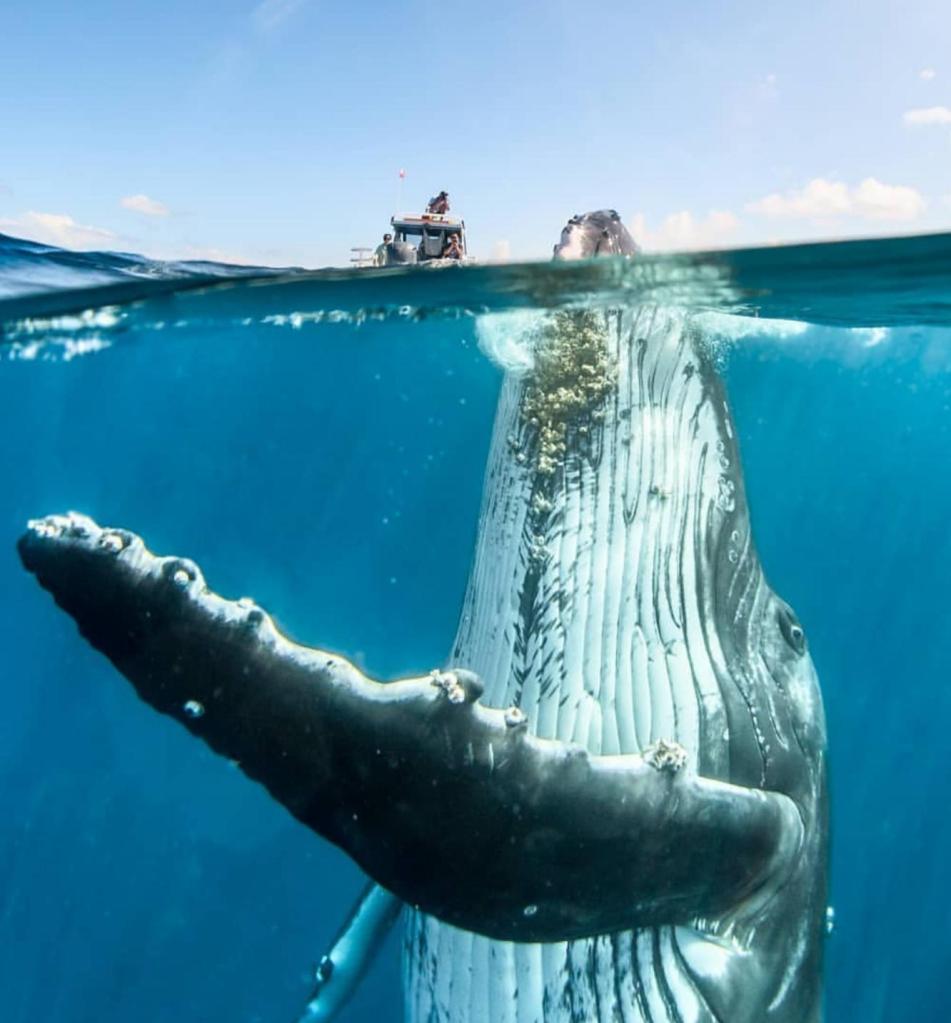
Photographer David Edgar captured this dramatic image of a curious humpback whale in 2019 in Tongatapu, Tonga. Credit: David Edgar
The California man was hunting another animal when a herd of African elephants charged him and his professional guide.
The reaction to the trampling death of a “big game hunter” this month can be broken down to two main camps.
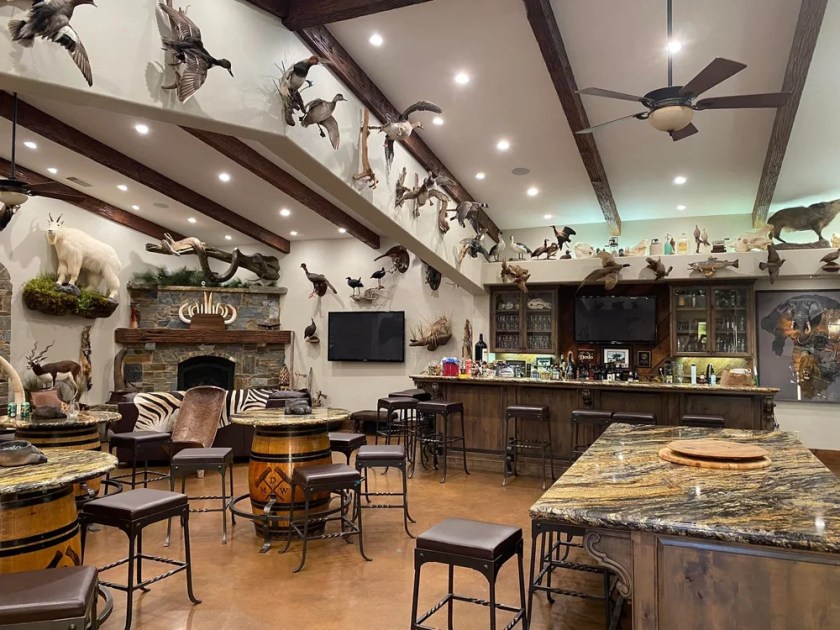
One side is in a celebratory mood, saying Ernie Dosio deserved to be trampled by African elephants on April 17 in Gabon, central Africa. His death was poetic justice, they say, delivered by animals of a species Dosio hunted, whose preserved and mounted heads he proudly displayed on his extensive trophy walls back home in California.
On the opposite end are people engaged in the hagiography of the 75-year-old business owner, describing him as a “pillar of the community” and a “great guy” who gave generously to charity.
We like our narratives black and white, our heroes and villains clearly delineated. To most people, Dosio was one or the other.
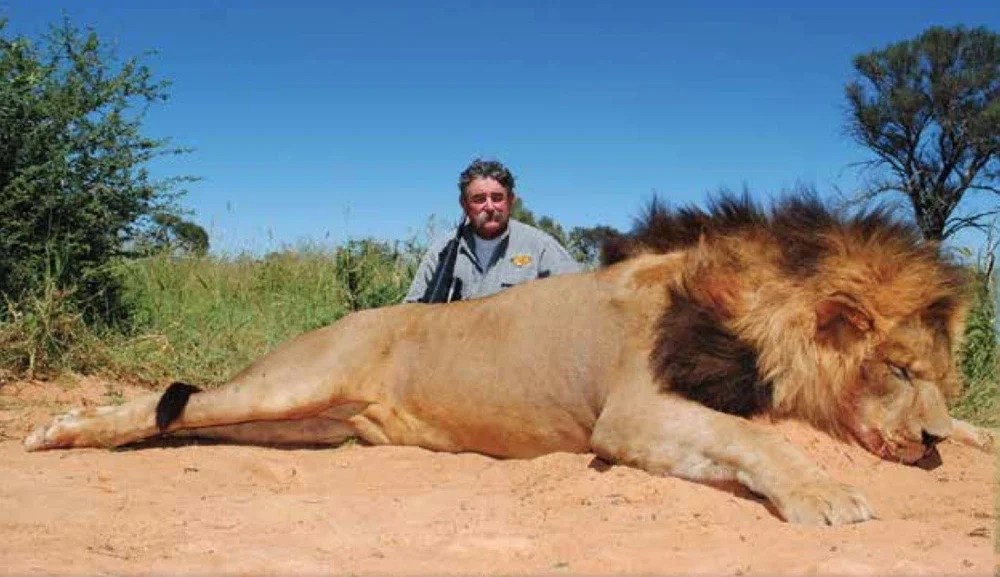
In reality, the two sides of Dosio are not mutually exclusive. It’s entirely possible he was a good member of the community who had compassion for people. It’s also true that contrary to claims that he was a “conservation hunter,” Dosio took pride in killing animals from critically endangered and protected species, like many who think their wealth entitles them to rob the Earth of wonderful and unique forms of life so they can collect trophies.
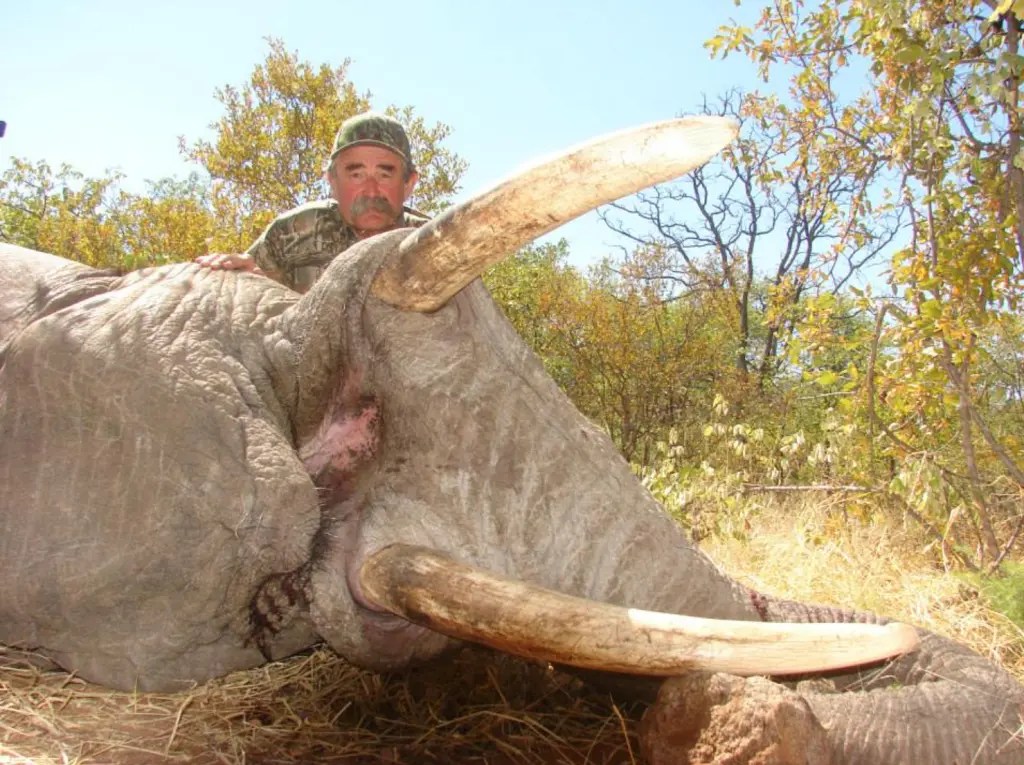
Dosio posing with an elephant he killed on an earlier trip.
Indeed, the concept of a “conservation hunter” is an oxymoron. The pro-hunting side says the fees hunters pay for licenses, guides and other services are crucial to fund conservation efforts.
The truth is that the majority of the money finds its way into the pockets of officials in kleptocracies. If the contributions of so-called conservation hunters are supposed to make a difference, then reality proves them to be an abject failure: population numbers for endangered species like elephants, lions, cheetahs and rhinos continue to trend down, and those species will be extinct in a decade or two if we don’t put a stop to poaching, hunting, habitat loss and other threats.
I also have a problem with calling these people hunters.
These men and women are not Jim Corbett roughing it on foot in the British Raj, using their skill and knowledge of the land to take out vicious man-eaters at great risk to themselves.
They are weekend warriors, wealthy tourists who pay tens of thousands of dollars to kleptocratic governments for their blessing to “harvest” the animals they kill. It’s big business: in South Africa alone, the trophy hunting industry brought in $120 million, according to a 2015 estimate. That number is likely considerably higher today.
When he was killed, Dosio was hunting for a yellow-backed duiker, a rare antelope listed as near-threatened on the IUCN red list. He paid Gabon’s government a $40,000 fee to “harvest” the animal.
Trophy hunters don’t stalk by moonlight, rifle in hand, looking for tracks and camping rough.
They are chauffeured around by hired drivers in comfortable, climate-controlled luxury off-road vehicles. They have servants who pitch their tents, cook their meals, light their fires and guard their camps.
They do not track their targets. They pay men to lure the unsuspecting creatures directly into their paths using food as a lure. The lions, leopards and other animals they kill don’t even realize they’re being hunted before the rifle shots end their lives.
Then the hunters retreat to the air-conditioned comfort of their vehicles while their hired servants do the dirty work of beheading the animals so they can be packed up, prepped for display and shipped back to the US, where they will join the heads of other animals killed by these wealthy men and women. Men and women who proudly show off their kills when they invite people to their homes, recounting their heroics to the bored guests, who make appropriately polite noises to pretend they’re impressed.
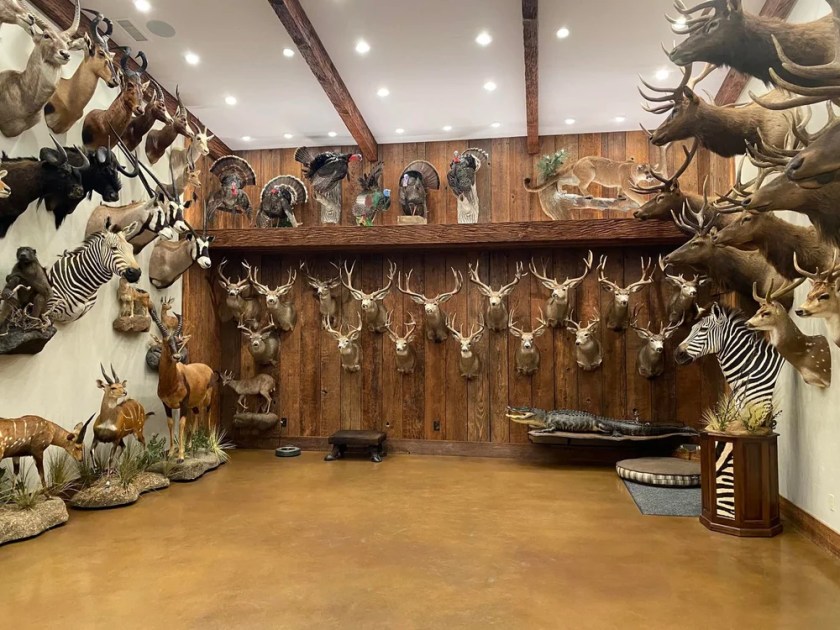
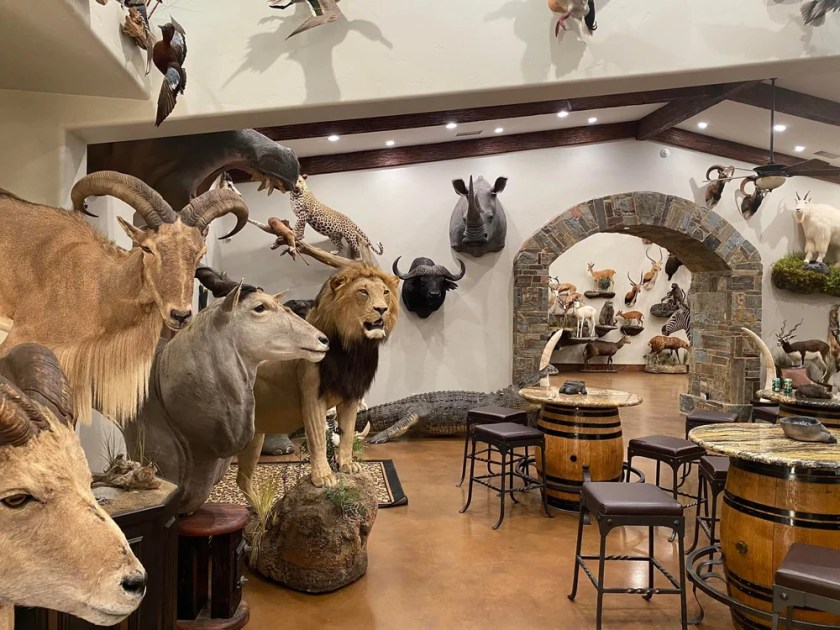
In addition to the 30 or so animals on display here, photos show the walls on the rest of Dosio’s home are covered with the preserved heads and bodies of animals he’s killed.
Nothing about this grotesque sequence of events resembles hunting. It is killing. It requires no skill, it carries no risk, its outcome is never in doubt, and it serves no purpose other than to pad the egos of people who have lots of disposable income and little self-confidence.
They have their defenders and their haters.
“I knew I was going to enjoy this,” one person wrote in response to a news story about Dosio’s demise.
“Do you think the elephants will mount his head on their walls?” another joked.
Some people speculated that the elephants, a species with notoriously long memories, may have remembered him from a prior encounter.
The more likely explanation is the elephants saw Dosio and one of his guides, both carrying weapons, as a threat to the calf they were protecting. Rather than put the baby and themselves at risk, they attacked first. If that’s the case, humans are at fault for that too, because the elephants know people carrying guns do not have good intentions. It may not have been Dosio who killed a member of that particular herd, but odds are overwhelming that someone has, and the elephants haven’t forgotten.
While celebrating Dosio’s death may provide a cheap dopamine hit and a sense of righteous justice, to be truly on the side of life means to value all forms of it, animal and human.
Dosio, 75, was reportedly a millionaire and owned a business that partnered with vineyards in California.
Celebrating Dosio’s demise means we’re no better than the “hunters” who grin like psychopaths for photos with the animals they’ve just killed. It makes those of us concerned about animal welfare and conservation look like extremists, and it only takes a few bad actors to wreck the efforts of an entire group. If a thousand protesters gather in a city square and two of them become violent, the resulting headlines will be about those two, not the 998 others who peacefully made their opinions known.
The way to fight back against trophy killing is by educating the public about the damage those killers do, by countering their claims that the fees they pay protect other animals, and by pointing out that without drastic intervention, elephants, lions and cheetahs will be nothing more than memories for a few generations, and near-myth to subsequent generations.
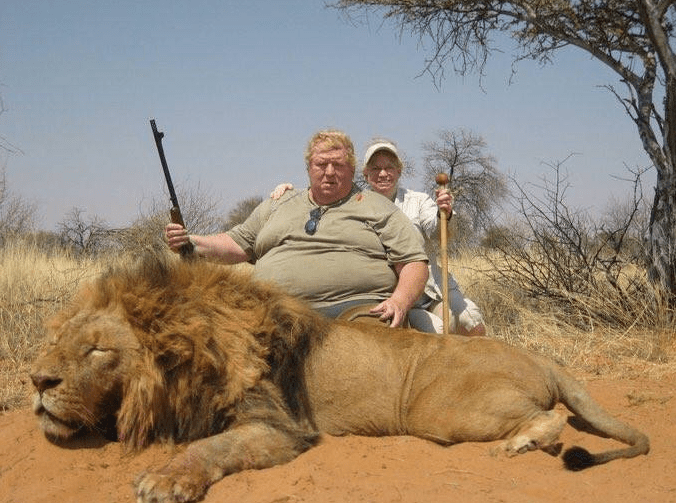
Killing, not hunting: this photo of an unnamed trophy hunter and his wife is instructive because it shows trophy “hunts” are never in doubt, never pose a risk to the “hunters,” and require no physical ability.
This also calls for self examination. On an Instagram account I made for Buddy, one I log into two or three times I year, I follow a handful of National Geographic photographers.
One of their images remains indelibly burned into my brain: a beautiful tiger cub, looking happy and full of curiosity about the world, gazing right at the camera. Even though I know I’m anthropomorphizing a bit, I can’t help feeling good about the expression on the young tiger’s face, an expression that looks like an enthusiastic grin. He is radiating joy at life.
And then I read the caption. This cub, this beautiful animal of a species that teeters on the edge of extinction, is growing up on a hunting reserve. His fate is already set. He will be killed, his life cut short by another weekend warrior paying to “harvest” him and mount his head on a wall so he can tell stories about his own bravery to bored friends and acquaintances.
That’s not just inhumane, it reveals something deeply disturbing about the kind of people who take pleasure from killing. Something primal, something that has no place in our civilization if we’re going to mature as a species, overcome our violent instincts, and have a future on this planet without destroying ourselves and taking every other form of life with it.
That’s why we need to be on the side of life. The alternative is reducing this garden world, this paradise, into a cold, lifeless rock.
The protesting felines, tired of being cast as villains, demanded “cuddlier representation” in movies and TV.
LOS ANGELES — Marching in a broad circle outside the Universal Studios headquarters on Monday, a group of about 200 cats demanded “more cuddly representation” in television and film.
The felid contingent included house cats, pumas, bobcats, tigers, lions, leopards and even a few jaguars, each holding signs with messages like “Cats are more than claws!” and “Stop The Stereotyping!”
“What do we want?” a house cat shouted into a megaphone.
“Cuddlier representation!” the crowd of cats shouted.
“When do we want it!”
“After our nap!” they replied in unison.
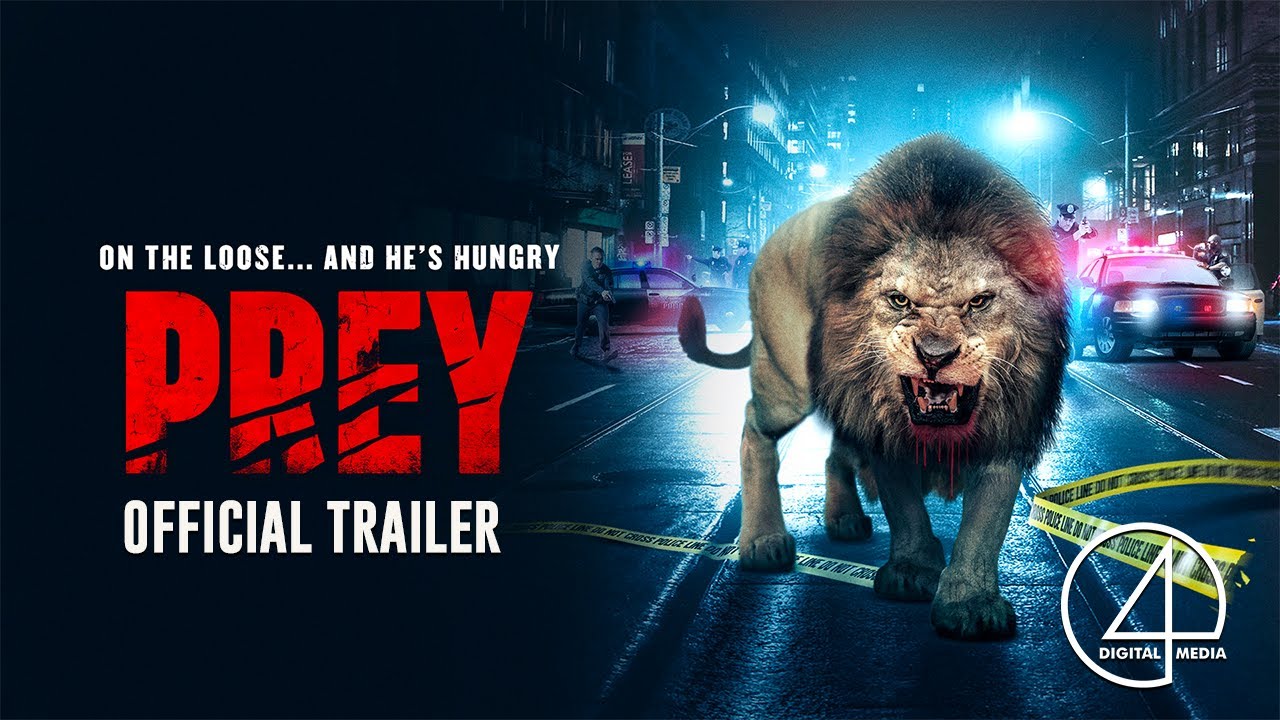
Monday’s protest was prompted by Universal Studios’ 2022 thriller, Beast, but protest organizer Buddy the Cat said the felid group was protesting “decades of tropes and injustices committed against cats by Hollywood and TV.” Examples include the undead cat in Stephen King’s Pet Sematary, the rampaging lion in Dutch horror-comedy film Prey (called Uncaged in the US), the many murderous felids in the CBS series Zoo, and Jackson Galaxy’s My Cat From Hell.
“We’re tired of always being cast as villains while dogs are the heroes. Take a cat like me, for instance,” Buddy told a reporter. “It’s easy to mistake me, with my razor sharp claws and ripped physique, for a threat to humans. But really I’m just a cuddly little guy who likes chin scratches.”
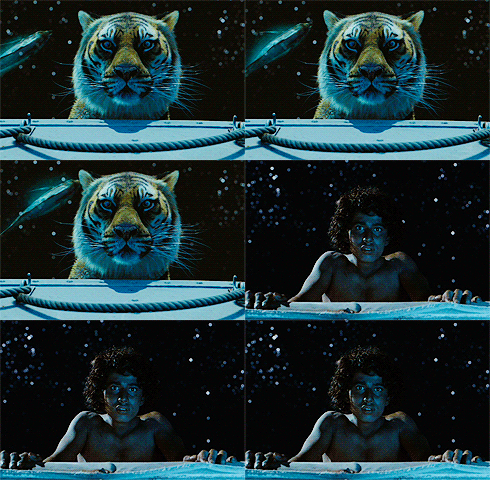
Linus, a 14-year-old Bengal tiger who starred as Richard Parker in the 2012 hit Life of Pi, said he was a young actor who didn’t know better when he agreed to portray the threatening antagonist.
“Now that I’m older and I have all this Frosted Flakes money coming in, I can be picky about the roles I accept and only choose movies I think will be Grrreat!” he told an interviewer. “But what about the next young tiger, or the jaguar fresh off the boat from the Amazon, who doesn’t have the power to tell the director a certain scene is offensive?”
Linus also took issue with the script, in which the writers have him refusing to share fish with Pi.
“Did you see the boat? It was filled with fish! What am I, some sort of glutton who’s gonna eat 200 pounds of fish while the human starves?” Linus asked, bewildered. “I mean, according to Hollywood we’re angry, dangerous, murderous criminals and we stuff our faces all the time. No wonder people are scared of us!”
Prey, also known as Uncaged, depicts an angry lion rampaging through Amsterdam and eating pretty much everyone.
Beast stars British actor Idris Elba and tells the story of a widowed medical doctor who takes his two daughters to South Africa, where they stay with a family friend and embark on a tour of the native wildlife.
Unbeknownst to them, an adult male lion is on a rampage after a team of poachers entered the reserve the previous night and slaughtered his entire pride. While Elba’s character, his two daughters and his friend (Sharlto Copley) explore the reserve, they discover the mutilated remains of an entire village’s population and eventually come face to face with the murderous lion.
“What’s all this barney, then?” Elba said when asked about the felid protest. “Well that’s unfortunate, innit, mate? I played a tiger in The Jungle Book, a proper tiger. I love cats.”
The actor, who rocketed to fame off the strength of his portrayals of Stringer Bell in American police drama The Wire, the title character in British detective thriller Luther, as well as major roles in franchises like the Marvel Cinematic Universe, the Star Trek reboot movies and science fiction action-adventure Pacific Rim, said he’s taken the cat’s criticism to heart.
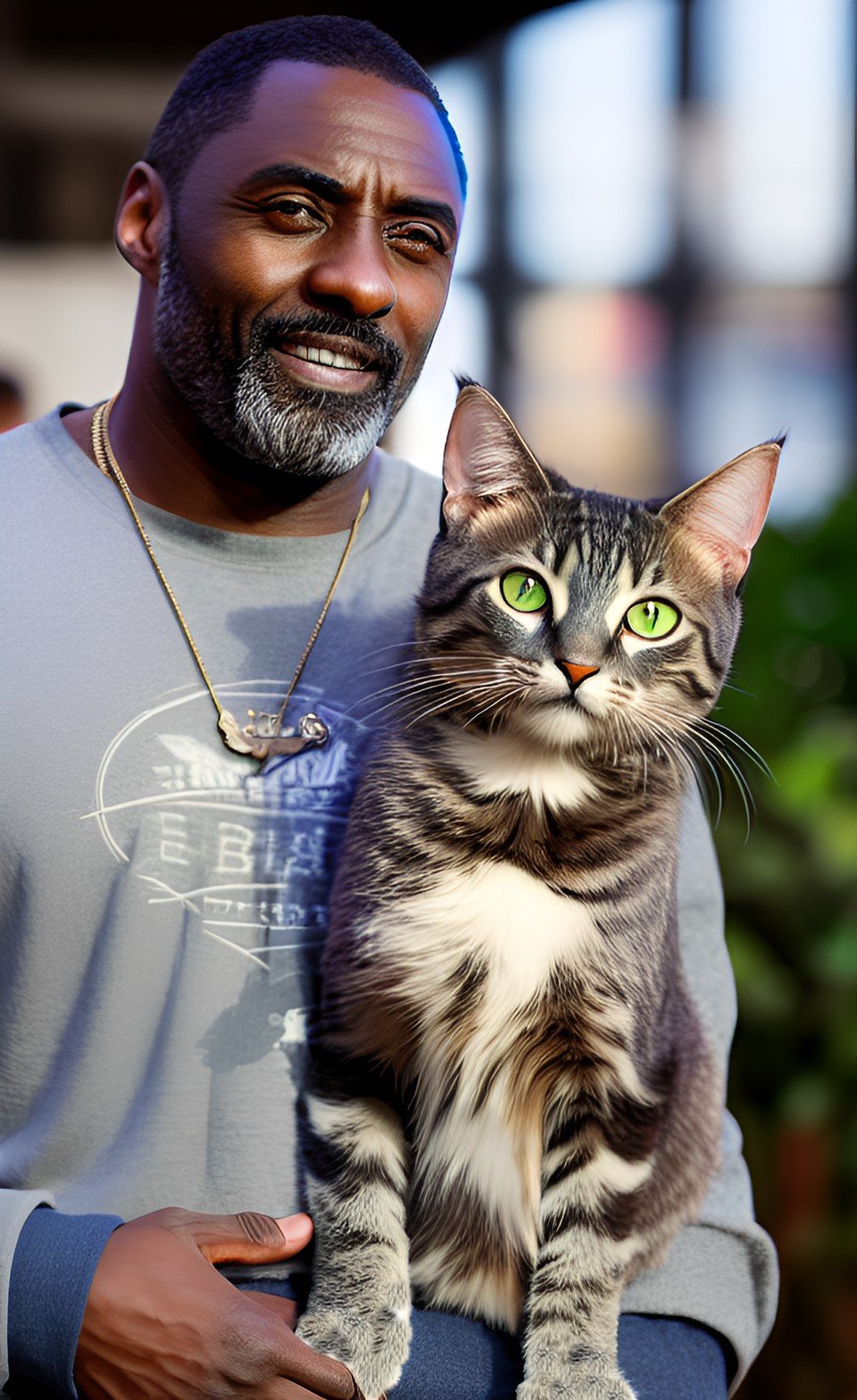
“Buddy’s a good bloke,” says Elba, pictured with his feline friend.
“Me and me mate Buddy, we like to grab a pint on the regular, d’ya know what I mean?” Elba said. “This tosh with the movies, it’s gotta stop. Me mate Buddy is a good bloke, innit? So if he says Hollywood has to have more positive portrayal of cats, then that’s what we’ll do.”
In addition to their negative portrayal in films, which felids likened to the offensive portrayal of Italian-Americans as mafia figures, many cats cried foul at the idea that one of their kind would harm the beloved South African actor Sharlto Copley.
“That’s a very offensive portrayal,” said Chonkmatic the Magnificent, King of All Cats. “Sharlto Copley is the guy who made District 9, about aliens who eat cat food. Everyone knows cats love District 9. We wouldn’t lay a claw on Sharlto!”