
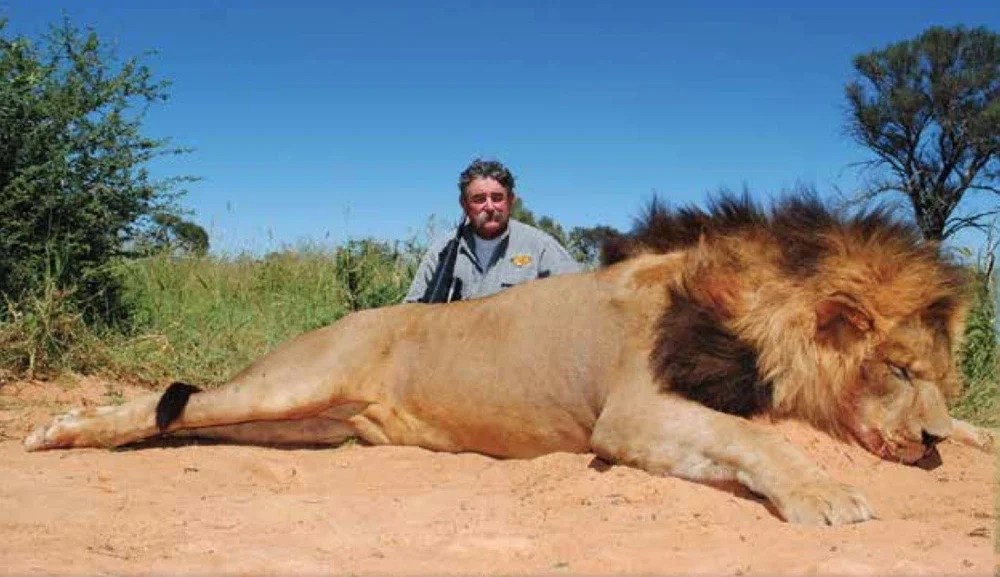
The reaction to the trampling death of a “big game hunter” this month can be broken down to two main camps.
One side is in a celebratory mood, saying Ernie Dosio deserved to be trampled by African elephants on April 17 in Gabon, central Africa. His death was poetic justice, they say, delivered by animals of a species Dosio hunted, whose preserved and mounted heads he proudly displayed on his extensive trophy walls back home in California.
On the opposite end are people engaged in the hagiography of the 75-year-old business owner, describing him as a “pillar of the community” and a “great guy” who gave generously to charity.
We like our narratives black and white, our heroes and villains clearly delineated. To most people, Dosio was one or the other.
In reality, the two sides of Dosio are not mutually exclusive. It’s entirely possible he was a good member of the community who had compassion for people. It’s also true that contrary to claims that he was a “conservation hunter,” Dosio took pride in killing animals from critically endangered and protected species, like many who think their wealth entitles them to rob the Earth of wonderful and unique forms of life so they can collect trophies.
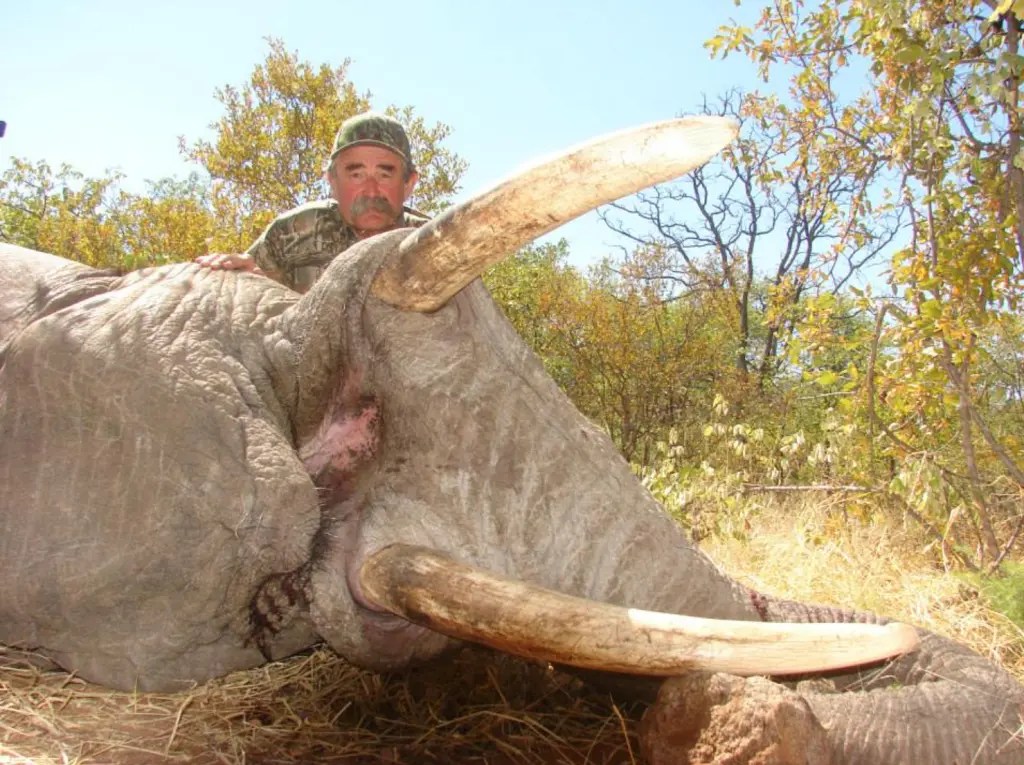
Indeed, the concept of a “conservation hunter” is an oxymoron. The pro-hunting side says the fees hunters pay for licenses, guides and other services are crucial to fund conservation efforts.
The truth is that the majority of the money finds its way into the pockets of officials in kleptocracies. If the contributions of so-called conservation hunters are supposed to make a difference, then reality proves them to be an abject failure: population numbers for endangered species like elephants, lions, cheetahs and rhinos continue to trend down, and those species will be extinct in a decade or two if we don’t put a stop to poaching, hunting, habitat loss and other threats.
I also have a problem with calling these people hunters.
These men and women are not Jim Corbett roughing it on foot in the British Raj, using their skill and knowledge of the land to take out vicious man-eaters at great risk to themselves.
They are weekend warriors, wealthy tourists who pay tens of thousands of dollars to kleptocratic governments for their blessing to “harvest” the animals they kill. It’s big business: in South Africa alone, the trophy hunting industry brought in $120 million, according to a 2015 estimate. That number is likely considerably higher today.
When he was killed, Dosio was hunting for a yellow-backed duiker, a rare antelope listed as near-threatened on the IUCN red list. He paid Gabon’s government a $40,000 fee to “harvest” the animal.
Trophy hunters don’t stalk by moonlight, rifle in hand, looking for tracks and camping rough.
They are chauffeured around by hired drivers in comfortable, climate-controlled luxury off-road vehicles. They have servants who pitch their tents, cook their meals, light their fires and guard their camps.
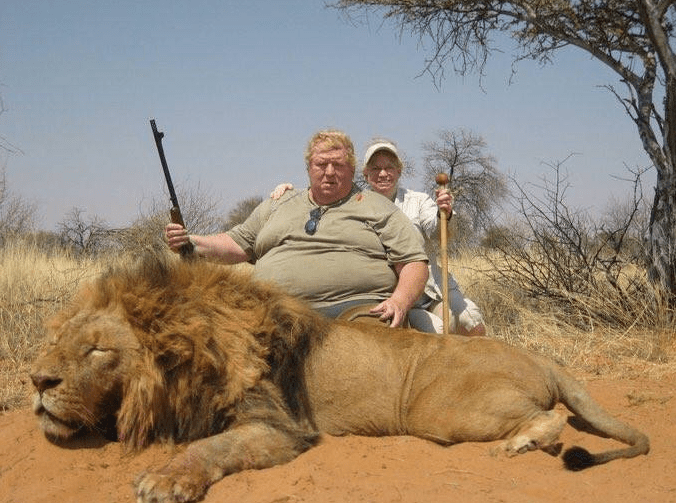
They do not track their targets. They pay men to lure the unsuspecting creatures directly into their paths using food as a lure. The lions, leopards and other animals they kill don’t even realize they’re being hunted before the rifle shots end their lives.
Then the hunters retreat to the air-conditioned comfort of their vehicles while their hired servants do the dirty work of beheading the animals so they can be packed up, prepped for display and shipped back to the US, where they will join the heads of other animals killed by these wealthy men and women. Men and women who proudly show off their kills when they invite people to their homes, recounting their heroics to the bored guests, who make appropriately polite noises to pretend they’re impressed.
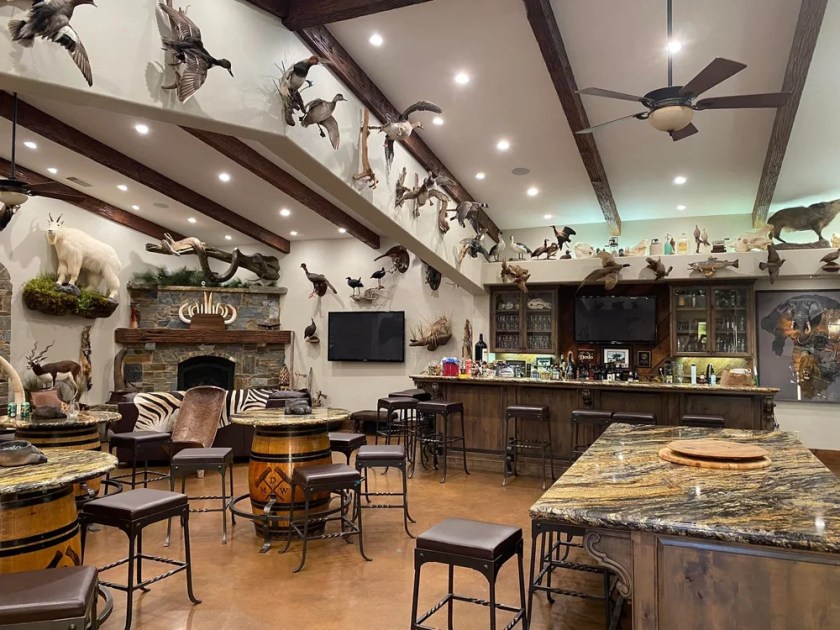
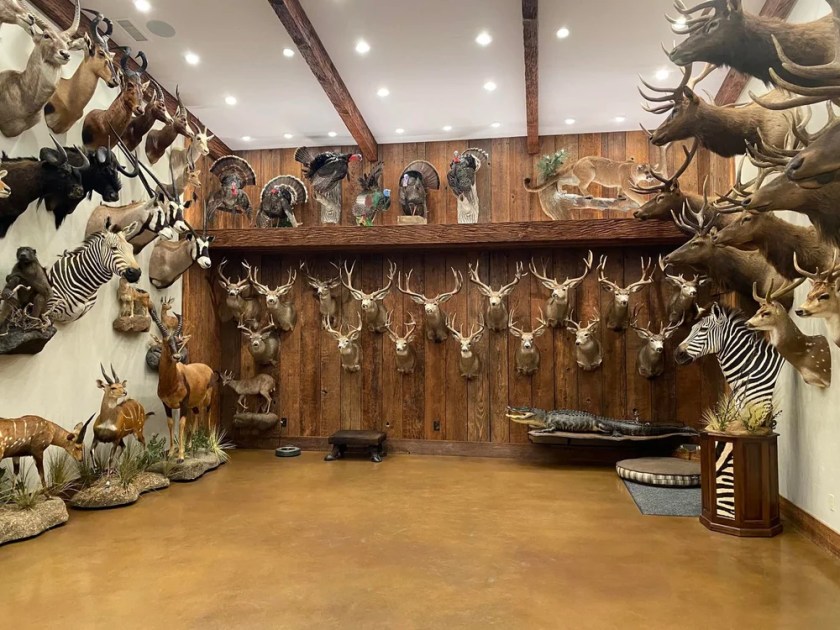
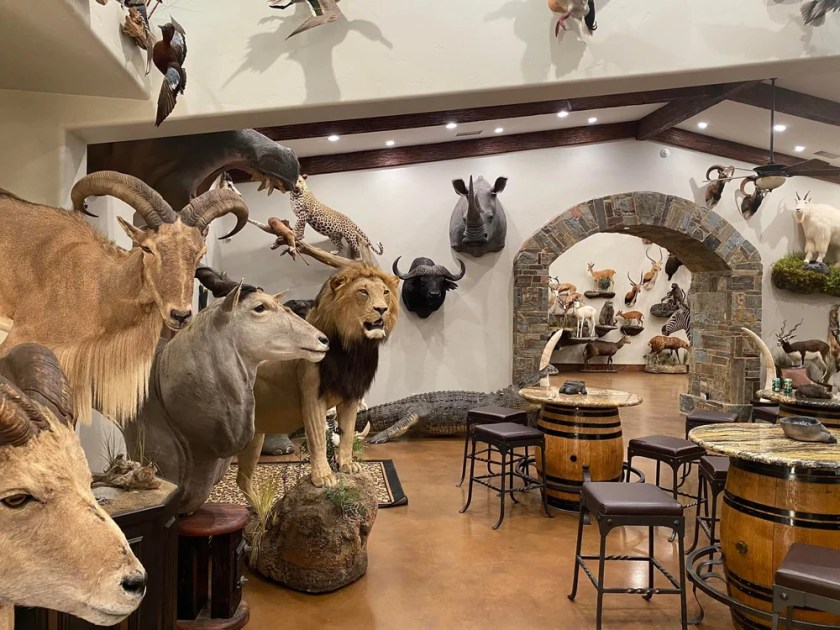
Nothing about this grotesque sequence of events resembles hunting. It is killing. It requires no skill, it carries no risk, its outcome is never in doubt, and it serves no purpose other than to pad the egos of people who have lots of disposable income and little self-confidence.
They have their defenders and their haters.
“I knew I was going to enjoy this,” one person wrote in response to a news story about Dosio’s demise.
“Do you think the elephants will mount his head on their walls?” another joked.
Some people speculated that the elephants, a species with notoriously long memories, may have remembered him from a prior encounter.
The more likely explanation is the elephants saw Dosio and one of his guides, both carrying weapons, as a threat to the calf they were protecting. Rather than put the baby and themselves at risk, they attacked first. If that’s the case, humans are at fault for that too, because the elephants know people carrying guns do not have good intentions. It may not have been Dosio who killed a member of that particular herd, but odds are overwhelming that someone has, and the elephants haven’t forgotten.
While celebrating Dosio’s death may provide a cheap dopamine hit and a sense of righteous justice, to be truly on the side of life means to value all forms of it, animal and human.

Celebrating Dosio’s demise means we’re no better than the “hunters” who grin like psychopaths for photos with the animals they’ve just killed. It makes those of us concerned about animal welfare and conservation look like extremists, and it only takes a few bad actors to wreck the efforts of an entire group. If a thousand protesters gather in a city square and two of them become violent, the resulting headlines will be about those two, not the 998 others who peacefully made their opinions known.
The way to fight back against trophy killing is by educating the public about the damage those killers do, by countering their claims that the fees they pay protect other animals, and by pointing out that without drastic intervention, elephants, lions and cheetahs will be nothing more than memories for a few generations, and near-myth to subsequent generations.
This also calls for self examination. On an Instagram account I made for Buddy, one I log into two or three times I year, I follow a handful of National Geographic photographers.
One of their images remains indelibly burned into my brain: a beautiful tiger cub, looking happy and full of curiosity about the world, gazing right at the camera. Even though I know I’m anthropomorphizing a bit, I can’t help feeling good about the expression on the young tiger’s face, an expression that looks like an enthusiastic grin. He is radiating joy at life.
And then I read the caption. This cub, this beautiful animal of a species that teeters on the edge of extinction, is growing up on a hunting reserve. His fate is already set. He will be killed, his life cut short by another weekend warrior paying to “harvest” him and mount his head on a wall so he can tell stories about his own bravery to bored friends and acquaintances.
That’s not just inhumane, it reveals something deeply disturbing about the kind of people who take pleasure from killing. Something primal, something that has no place in our civilization if we’re going to mature as a species, overcome our violent instincts, and have a future on this planet without destroying ourselves and taking every other form of life with it.
That’s why we need to be on the side of life. The alternative is reducing this garden world, this paradise, into a cold, lifeless rock.
 Pain In The Bud
i think those that defend him saying he was a good guy defy belief. He killed more than Ted Bundy . He certainly wasn’t a good guy. The family “stood their ground” a law anyone attacking them with guns should know. In the words of the great Freddie Mercury “another one bites the dust…”
LikeLike
That has to be what happened. By all accounts, Dosio and his team were surprised when they saw the elephants, and the elephants would have been just as startled to see men with guns.
There was another trampling incident just recently involving poachers. I’ll try to dig up the article again.
LikeLike
So well said.
This beautiful planet is suffering.
LikeLike
Thanks, Sue. We only have one home planet, and once species die out, they don’t come back. Colossal Biosciences’ “dire wolves” are proof of that.
LikeLike
Read this on some site that comes to my phone.BEST NEWS I HEARD ALL WEEK.
LikeLike
Killing any living thing for “pleasure” is wrong. Always has been and always will be. ALL lives have value.
LikeLiked by 1 person
Sometimes I wonder whether some sort of ignorant, subconscious form of solipsism allows people to bypass their consciences and take life. In other words, not in the philosophical sense of “I can only be sure my mind, my thoughts, my suffering exists” but a complete failure to consider other people and creatures have consciousness and feel pain.
Maybe I’m overthinking it. But I agree wholeheartedly, all life has value, intrinsic value.
LikeLiked by 1 person
Good for the elephants!
LikeLike
And kudos to the men and women in.parts of Africa where they risk thier lives protecting wildlife. Including the rare white rhino. And i have been watcing great PBS show about people taking care of orphaned elephants. Injured ones, etc.
LikeLike
Years ago I had a part-time job as a standardized patient (i.e. playing sick for money) at Jefferson Medical College. There was a Jimmy Johns down the block, and that’s always where I got my lunch. Until I found out Jimmy John was one of those rich guy game hunters. I then made it my business to let all the other SPs who also got their lunch there that they were supporting a guy who killed wild animals for fun. Several of them stopped going there.
LikeLike
Just googled him and saw some of the photos. Grotesque. Good on you for choosing not to patronize a big game “hunter’s” franchise.
On the other hand, I didn’t know you could be a pretend patient for money. That sounds like it could be fun, especially if they let you play different roles. I’d be my cantankerous grandpa: “Marone! This hospital food is terrible! Where’s my damn newspaper?”
LikeLike
Just about every medical school now has standardized patients, which are used to teach students how to talk to patients, and how to do basic exams. There’s a Seinfeld episode (season 9, episode 6) where Kramer and Mickey get work as standardized patients.
LikeLike
I’m not against hunting if the hunter is going to feed someone with it. I just don’t understand the thrill of killing just to kill.
LikeLike
Especially when, again, there’s no skill or risk involved, and never any uncertainty about the outcome. I don’t understand how anyone can take pleasure in killing.
LikeLiked by 1 person
Where I live in france they are going to hunt all year round, usualy they stop fron March to September for gestation periods , also at night with torches !
Frightens the life out of me!
LikeLike
Deer and small “game,” I assume?
LikeLike
Yes wild boar and basically anything that moves…….
LikeLike
yes, and anything that moves !
LikeLike
Readers of your blog might be interested in this book by an old classmate and dear friend of mine who recently passed away: From the Heart of Nature: The Amazing Story Behind India’s First Private Sanctuary, by Pamela Malhotra. Following is my Amazon review.
“From the Heart of Nature” by Pamela Gale Malhotra can only be described as a fantastic read. From her upbringing in Red Bank, New Jersey, to her college years in Colorado where she fell in love with the Rocky Mountains, through her time spent in Hawaii before she and her husband moved back to his native India to establish their own private forest sanctuary, Pam’s life has been defined by her spiritual connection to Nature. Revering all things gifted to us by the Creator, she insists that humanity’s very existence is dependent upon maintaining a reciprocal, symbiotic, and respectful relationship with all creatures great and small at all times and in all ways.
The author’s personal, uplifting memoir is a poem to life itself; her meandering journey leads us from the tops of snow-capped mountain peaks in Colorado to the lush forests and life-sustaining grasslands of SAI Sanctuary in India–where aways, always the reader is treated to mystical encounters with wildlife. Whether we’re being introduced to the habits of hummingbirds, the tale of Simba the author’s beloved sambar doe, or hearing about the endearing escapades of a herd of elephants or a close encounter with a trusting river otter, our hearts are touched by the poignant relationships between humanity and wildlife that are so sensitively drawn.
According to Malhotra, “I have personally seen, experienced, and witnessed, time after time, the deep emotions that animals feel, be it the joy of living exhibited by a bird flying high or a fawn jumping and frolicking in happy play, or the deep pain and grief of separation from a loved one, no matter what the relationship with the departed one may have been. Mothers who have lost their offspring, partners who grieve for the death of their beloved, members of a flock or herd that gather around the body of one of their own to grieve and bid ‘goodbye’ to the departed soul–be it lovebirds, or barbets, or parrots, or larger animals like deer, elephants, or big cats–they feel the same emotions that we all feel and express them in undeniable ways to those watching, to those close and sensitive enough to see.”
This is a book not only for animal lovers but for those concerned about the fate of our planet; the pages are chock full of facts about climate change, the ravages of deforestation upon wildlife and the planet, the need to get away from fossil fuels and fracking. The thing I loved about it was that the author offers cogent arguments with solutions to the subjects she tackles. Her voice is measured if sometimes argumentative but throughout it all, she’s always caring and gentle, even in her admonitions, and she’s forward looking and optimistic about our ability to reassert dominion over this beautiful world we live in by learning to share and respect all of our resources and coexist with the precious “other” lives we encounter in Nature.
LikeLike