The Likweli are only the fifth new primate species discovered in the last 75 years, and differ considerably from their closest cousins.
Deep in the jungles of the Congo basin, in an area wild and dense with trees and verdant undergrowth, crickets sing.
And cutting into their song, coming from high in the jungle canopy, are deep croaks, but they don’t come from frogs.
The source of the mysterious calls are a new species of monkey called the Likweli by the few locals who are aware of them. Likweli are rare, difficult to find and live between two rivers – the Lomami and the Lilo — about 1,200 kilometers from their closest relatives, the colobus angolensis. (Commonly known collectively as colobus monkeys, they are split into six subspecies.)
Likweli have short black fur like their cousins but differ in the color of their mouths and noses, which range from a beige cream to a tangerine-like hue, as well as the shape of their skulls and their deep, rhythmic, croak-like vocalizations.
They’re only the fifth new primates species discovered in the last 75 years, and the excitement at their discovery has been tempered with concern that they may already be endangered.
It took substantial effort to find, observe and take DNA samples from Likweli, scientists say, and there hasn’t been an opportunity for assessing their numbers yet. However, because Likweli live in a relatively small range and depend on the high canopy to thrive (they eat a diet of mostly leaves and live above most potential predators), they’re vulnerable.
Members of the team who found them published a study this week in the open-access journal Plos One.
The process of tracking, photographing, studying and testing the new species took almost 20 years, according to the study’s authors.
“The first evidence of the new species came in 2008 during exploration of the Lomami Basin by members of the Lukuru Foundation, in an area that later became Lomami National Park. Ashley Vosper and Bernard Ikembelo photographed an unidentified monkey in a high forest canopy on the east bank of the Lomami River in the Courbure Sector, named for six large meanders of the Lomami River,” they wrote. “Although the photograph revealed only part of the animal, the field team strongly suspected that this was not any of the monkey species they already knew from the region. Following the initial sighting, nothing more was reported until November 2018, when Jean Pierre Kapale led a surveillance patrol in the Courbure Sector and photographed a black monkey with pale markings around its mouth and a white perianal patch. These characters were unlike those of any known primate species in the area.”
They were able to find and photograph seven more monkeys before beginning efforts for observational study. Likweli live in small family groups of about six individuals on average, they found.
The discovery is a reminder that our beautiful planet is still capable of surprising us even at a time when human behavior and expansion has placed unprecedented pressure on animal species. It’s a reminder that our planet is irreplaceable, that life continues to find new expressions and niches to branch into, and we shouldn’t give up on it.
No matter what the Elon Musks of the world say, no matter how many renders they share depicting grand cities in domed Martian craters or clinging to the underside of Europa’s thick ice crust inside its subsurface oceans, there is only one place thst is absolutely perfect for us, that we evolved to live on and care for.
Even if the science fiction futures that Musk, Bezos, Thiel, Altman and company envision ever come to pass, even if science fiction technology like terraforming becomes reality, there is no backup. Earth, its fauna and flora are ours to protect, a responsibility we need to take seriously for the collective future of every kind of life that exists here.
Let’s hope the Likweli and all species that follow have a place to thrive.
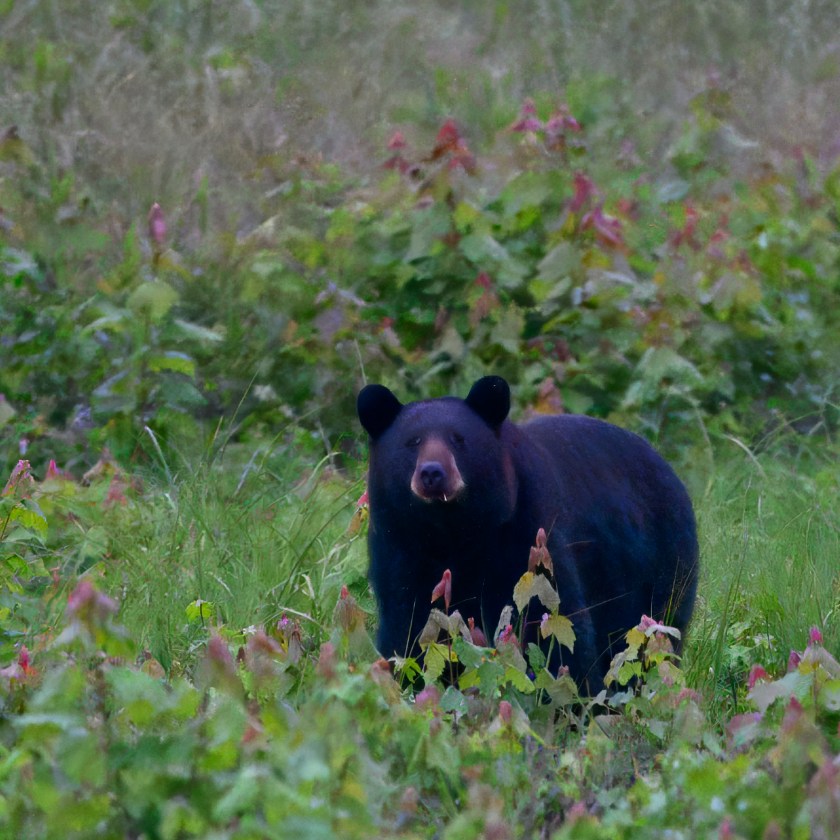
My first real camping trip ended in disaster, though thankfully without any injury besides wounded pride, after an encounter with a ravenous bear.
The bear was outside my tent.
Its moans cut through the night above the cricket song and I could see its distorted shadow cast against the fabric by the dying fire as it circled our camp.
Something ripped — the canvas of one of our packs, I later learned when daylight revealed the carnage outside — and there was a loud crunch of ursine teeth against plastic packaging and the styrofoam of an egg container.
Then my friend Larry did what he’d been doing all night: he raised a ruckus by banging pots and pans, scaring the 500-pound animal away. Temporarily.
The bear’s breathy vocalizations faded into the distance. After a few minutes I breathed a sigh of relief. I had to pee so badly, worse than I’d ever had to go in my life, but there was no way in hell I was stepping out of my tent. Then I heard the air horn from the campsite a mile or two away.
The bear was making its circuit again. I was still too scared to leave my tent.
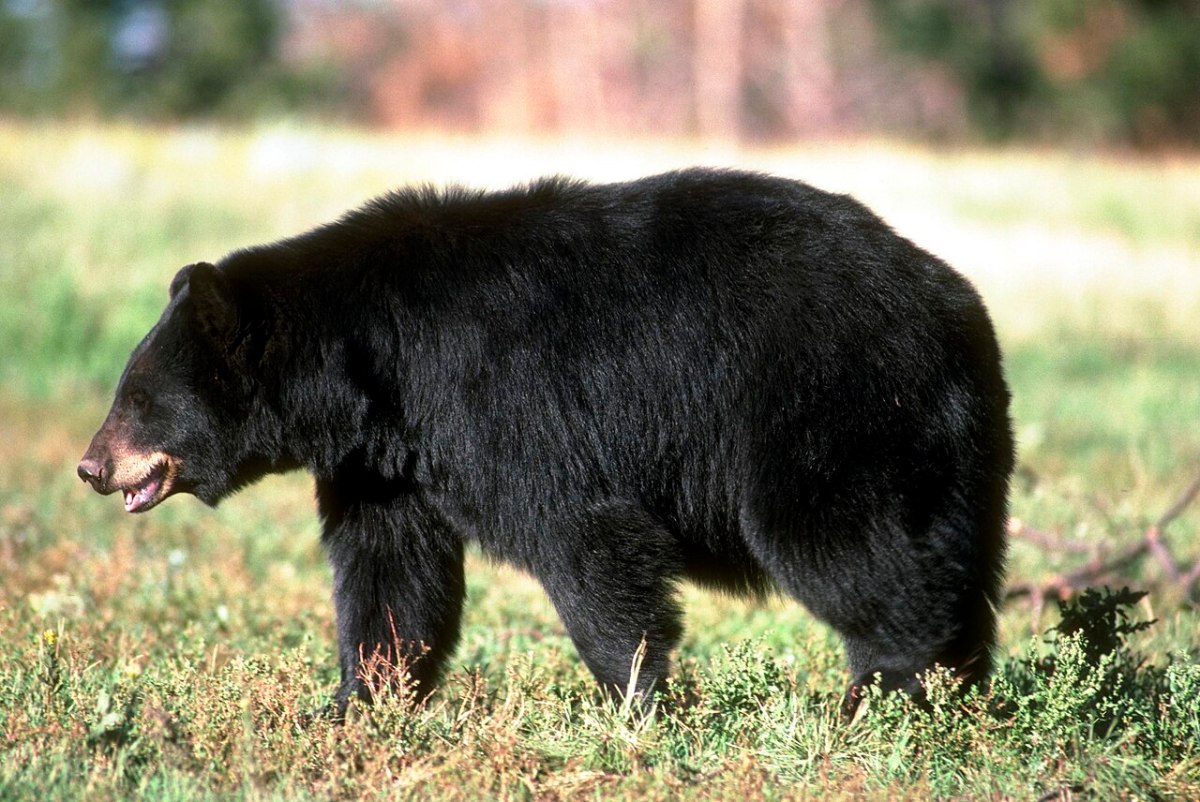
An adult male American black bear, the species I encountered in New York’s Adirondack Mountains. Credit: Wikimedia Commons
How we blundered into a bear
Larry was a family friend and outdoorsman. Since my brother and I were kids of a single mom it had become something of a tradition for Larry to take us and others on annual camping trips every summer. Without Larry, who was the closest thing to a father I’ve had, we would have never known what it was like to tell scary stories by a fire, hook a fish from a river or navigate rapids while whitewater rafting.
That year we headed upstate to the Adirondacks with the aim of climbing Mount Marcy, the highest peak in New York.
Most people think of New York City when they think of our state, and the city and its environs were what I was familiar with. But New York is a big state and once you get north of the suburbs it’s almost entirely rural. If randomly blindfolded and dropped in the middle of the Adirondack mountains, few people would guess they were in New York.
We arrived at the ranger station, registered our destination and set off. Why we didn’t know about the bear I cannot say, but we found out later he was notorious. The rangers were well aware of him, and he was the reason why, after hiking for some 15 miles to Marcy Dam, we saw dozens of packs hanging from the dam itself, fastened to the metal safety railings.
That was our second opportunity to learn about the bear, but when we saw the packs we just shrugged and made our way further in to find a good spot for camp.
After the day-long hike we hurried to set up our tents and got a fire going before sundown, then made dinner. When you’re camping — real camping, not the drive-up KOA camping that’s really an excuse to get drunk with your buddies — you do two things to keep critters out of your camp: you hang your packs from a tree with a sturdy branch, and you dump any leftovers several hundred feet away.
So when my brother and my friend Richie went to go dump the leftover mac and cheese, they came back white-faced.
“Larry! Larry!” they shouted. “There’s a bear!”
Larry shook his head.
“You didn’t see a bear,” he said, laughing.
“But we did!”
Larry didn’t believe them, and I didn’t either. Until I was ripped out of sleep by the sound of a prime specimen of ursus americanus tearing through our camp, helping himself to our food.
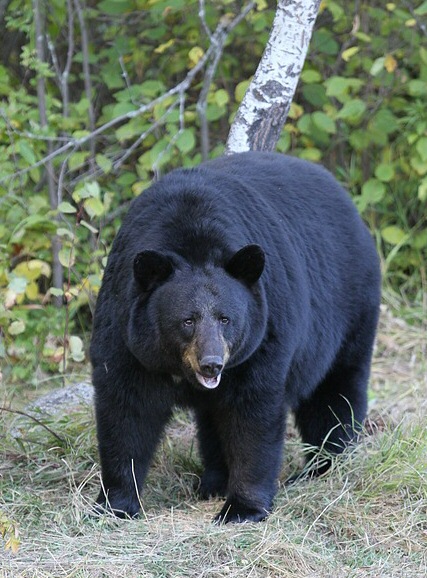
Black bears aren’t aggressive in the same way their ursine brethren can be, but they can still be exceptionally dangerous. Credit: Wikimedia Commons
I cannot tell you how many times the bear came back that night, or how many return trips it took him to consume every last morsel of food we brought with us.
What I can say for certain is that he spent the majority of the night making a loop between our camp and two others, including the camp with the air horn.
I was already a bit freaked out even before the bear invited himself into our camp. I had never been in true wilderness before. I never knew night could be so dark, nor had I ever been to a place where there wasn’t even a hint of the ambient glow of a city on the horizon.
I tried to convince myself that the thin fabric of my tent somehow afforded protection the same way a child terrified of ghosts or monsters convinces himself his blanket can shield him from the supernatural. Every kid knows the monsters can’t get you if you’re under your blanket.
By the time the bear came around for the second time that night, I had to piss like a racehorse. I toyed with the idea of slipping out ninja-like for a stealth draining, but who was I kidding? I was too terrified to move.
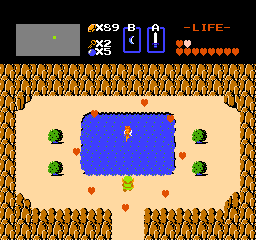
I thought of urinating every few seconds. I dreamed about it. In the video game The Legend of Zelda, which I played a lot as a kid, there are hidden lakes on the map where fairies restore your health. Your character, Link, says “Ah! Refreshing!” as you’re healed.
I dreamed I was Link stepping to the edge of a lake, where a fairy kindly invited me to urinate.
“Ah!” I said as I emptied my bladder. “Refreshing!”
For a few glorious moments, it was real. It was so good.
Then I woke up and I was back in the tent with a full bladder and the bear outside, tearing his way through our gear in search of every last bag of peanuts and stick of beef jerky.
“Ah! Refreshing!”
I know what you’re thinking because I thought it too. I reached a hand down just to be sure. I was dry. In a way I wished I had peed myself. At least it would be over.
Larry was banging the pots and pans again, and a few minutes later the familiar air horn cut through the night, giving us a temporary reprieve. The bear was someone else’s problem for the next 20 or 30 minutes as he made his rounds to raid the other campsites.
The post apocalypse
The long night finally relented. Birds began tweeting, the sun came over the horizon, and our ordeal was over.
I poked my head out of the tent, then ran to the nearest tree and recreated Niagara Falls in miniature for what felt like an eternity. Sweet relief!
Then I noticed the carnage.
It was actually even more of a mess than this!
Every pack we’d left hanging from a nearby tree had been shredded. The torn fabric and zipper remnants swayed in the breeze, still attached to the ropes around the tree branch. Potato chip bags had been popped with bear teeth and crunched along with their contents, then spat back out. The ground was strewn with egg shells, and all that was left of the bacon was half a plastic wrapper.
The entire area was dusted with powdered milk. Remnants of graham crackers, chocolate and marshmallows were scattered in the dirt. In a horrifying display of casual strength, the bear had split a Coleman cooler in half to get at the raw hot dogs and hamburgers inside . There were the barely recognizable remnants of a box of Lucky Charms. And one pack was left intact except for the smallest zipper pouch, which had been clawed open for the handful of granola bars inside.
I stared at it, amazed that an animal could smell food in sealed plastic wrappers inside a canvas rucksack.
We broke camp quickly because we had to go back to civilization. There was no other option: we had no food left.
When we returned to the ranger station, Larry spoke to one of the rangers, who said the other campers were hanging their packs from the dam because the notorious bear had learned how to cut down packs hanging from trees. Just like it did to our gear. Then he reminded Larry why it’s a good idea to have those conversations before you venture into the woods.
It was the most terrifying night of my life, but as an adult I just shake my head and smile whenever I think about it. And all these years later, when I wake up in the middle of the night and stumble to the bathroom, Bud in tow, I still shake off the last drops, sigh, and whisper “Ah, refreshing!”
Note:Every damn word of this is true, or at least as accurate as it can be when experienced through the eyes of a 10-year-old and recalled all these years later. It eventually occurred to me that Larry must have been terrified, if not for himself, then for the fact that he had someone else’s kids with him. I know I’d be crapping bricks if I’d taken my brother’s kids camping and an unreasonably clever bear wouldn’t leave us alone. I told this story to my nieces one night, and instead of having a bit of sympathy, they think it’s absolutely hilarious that their dad and uncle were terrorized by a black bear during a camping trip. Their favorite part is my dream of being Link from The Legend of Zelda and joyfully peeing into a lake. Apparently my misfortunes are rich comedic material for them.
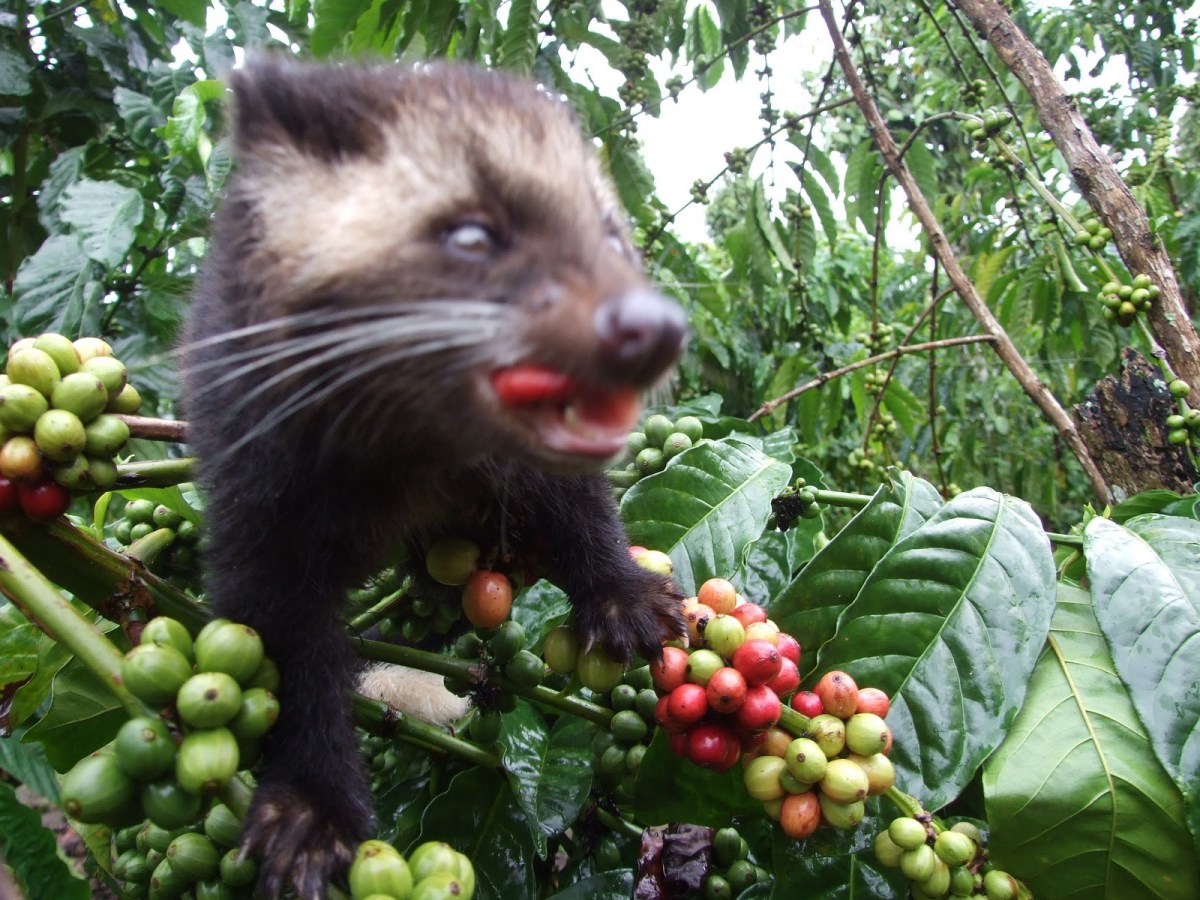
Kopi luwak aficionados pay a premium for the privilege of drinking the brew.
Kopi luwak is the most expensive beverage in the world and a testament to how pretentious people can be about things labeled exotic, wild or rare.
Developing a taste for the coffee, which hails from Indonesia, means taking on a costly vice: “farm-harvested” kopi luwak beans can go for more than $100 per pound, while beans supposedly harvested from the wild can fetch more than $1,000 per pound.
All for a beverage made from coffee beans eaten and shat out by civet cats.
Aficionados claim the beans undergo a partial fermentation process as they travel the animal’s digestive track, breaking down certain proteins in a process said to reduce acidity. The beans are ejected in fecal logs, which are “harvested,” washed and packaged for sale. (That’s right. Your kopi luwak arrives in authentic segments of constipatory excreta, certifying freshness!)
Fecal perfection: kopi luwak is harvested from palm civet turds.
The result, kopi luwak fans claim, is a smoother, smokier, chocolatey brew.
Others disagree.
Kopi luwak tastes like “[p]etrified dinosaur droppings steeped in bathtub water,” a Washington Post writer sniffed, while others insist there’s no meaningful difference compared to most coffee.
Besides the disagreement over the flavor of kopi luwak, there are major ethical issues and the potential for disease transmission vectors.
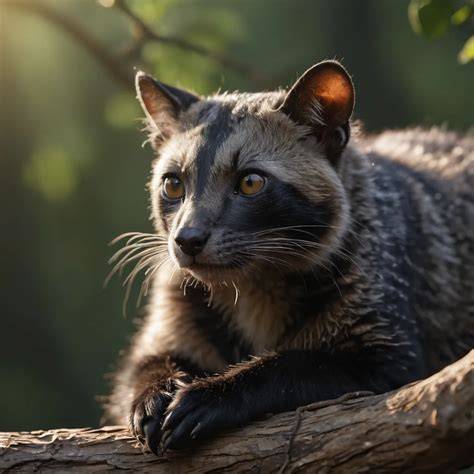
Civet cats aren’t true cats. The Asian palm civet, which is the species used for kopi luwak, is a viverred and is closely related to genets and oyan, which are ferret-like small carnivores.
In plain terms, it’s a feliform animal that shares ancestry with felids and looks like a cross between a cat and a mongoose, but it is distinct from the familiar felidae family we’re all familiar with. Feliform simply means animals with cat-like body plans.
It’s also a wild animal, and the lucrative kopi luwak market has led to widespread exploitation of the civets. The animals, who are highly mobile and curious, are slotted into battery cages, stuffed with cherry coffee beans, and exist as living food processors for Indonesia’s coffee industry.
A palm civet in a small, filthy cage in a kopi luwak facility. Credit: Wikipedia Commons
In a country known for exploited “dancing monkeys” (topeng monyet), and the destruction of species like the orangutan via the ruthless destruction of irreplaceable old growth jungle, animal rights are way down on the list of priorities.
Buying kopi luwak fuels the industry and perpetuates the cycle of bean harvesters stealing young civets from the wild and subjecting them to miserable lives in cages where they can barely move.
So if you’re the adventurous type who is normally game for unconventional food and drink, you might want to sit this one out and have a cup of Folgers instead.
The California man was hunting another animal when a herd of African elephants charged him and his professional guide.
The reaction to the trampling death of a “big game hunter” this month can be broken down to two main camps.
One side is in a celebratory mood, saying Ernie Dosio deserved to be trampled by African elephants on April 17 in Gabon, central Africa. His death was poetic justice, they say, delivered by animals of a species Dosio hunted, whose preserved and mounted heads he proudly displayed on his extensive trophy walls back home in California.
On the opposite end are people engaged in the hagiography of the 75-year-old business owner, describing him as a “pillar of the community” and a “great guy” who gave generously to charity.
We like our narratives black and white, our heroes and villains clearly delineated. To most people, Dosio was one or the other.
In reality, the two sides of Dosio are not mutually exclusive. It’s entirely possible he was a good member of the community who had compassion for people. It’s also true that contrary to claims that he was a “conservation hunter,” Dosio took pride in killing animals from critically endangered and protected species, like many who think their wealth entitles them to rob the Earth of wonderful and unique forms of life so they can collect trophies.
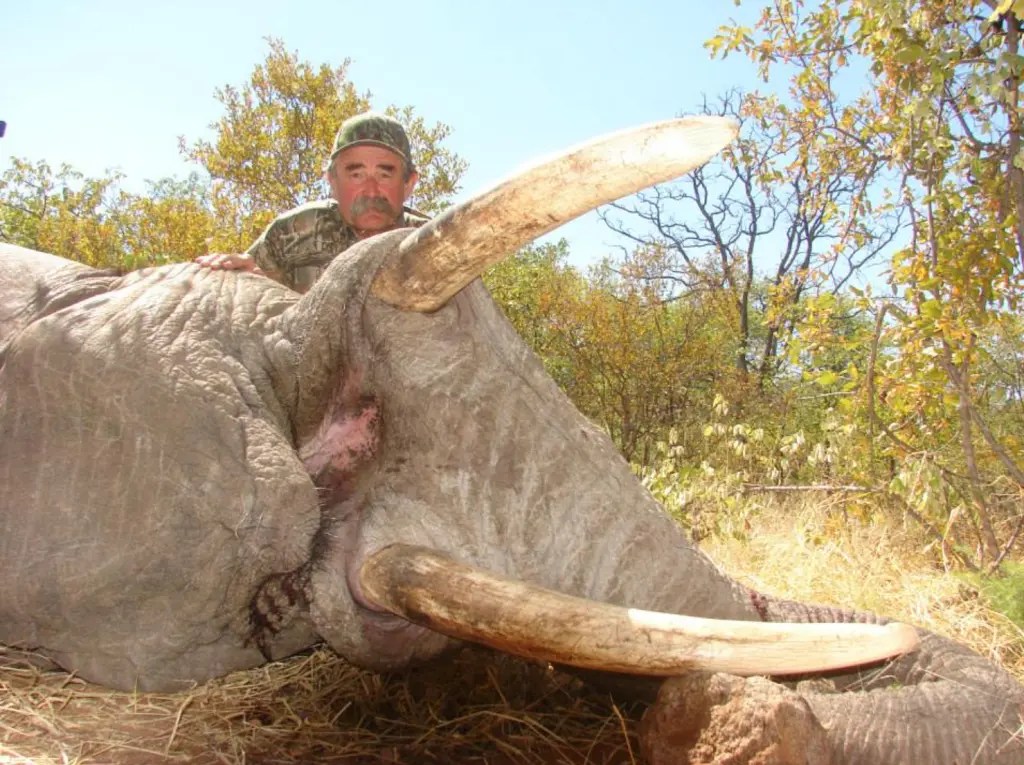
Dosio posing with an elephant he killed on an earlier trip.
Indeed, the concept of a “conservation hunter” is an oxymoron. The pro-hunting side says the fees hunters pay for licenses, guides and other services are crucial to fund conservation efforts.
The truth is that the majority of the money finds its way into the pockets of officials in kleptocracies. If the contributions of so-called conservation hunters are supposed to make a difference, then reality proves them to be an abject failure: population numbers for endangered species like elephants, lions, cheetahs and rhinos continue to trend down, and those species will be extinct in a decade or two if we don’t put a stop to poaching, hunting, habitat loss and other threats.
I also have a problem with calling these people hunters.
These men and women are not Jim Corbett roughing it on foot in the British Raj, using their skill and knowledge of the land to take out vicious man-eaters at great risk to themselves.
They are weekend warriors, wealthy tourists who pay tens of thousands of dollars to kleptocratic governments for their blessing to “harvest” the animals they kill. It’s big business: in South Africa alone, the trophy hunting industry brought in $120 million, according to a 2015 estimate. That number is likely considerably higher today.
When he was killed, Dosio was hunting for a yellow-backed duiker, a rare antelope listed as near-threatened on the IUCN red list. He paid Gabon’s government a $40,000 fee to “harvest” the animal.
Trophy hunters don’t stalk by moonlight, rifle in hand, looking for tracks and camping rough.
They are chauffeured around by hired drivers in comfortable, climate-controlled luxury off-road vehicles. They have servants who pitch their tents, cook their meals, light their fires and guard their camps.
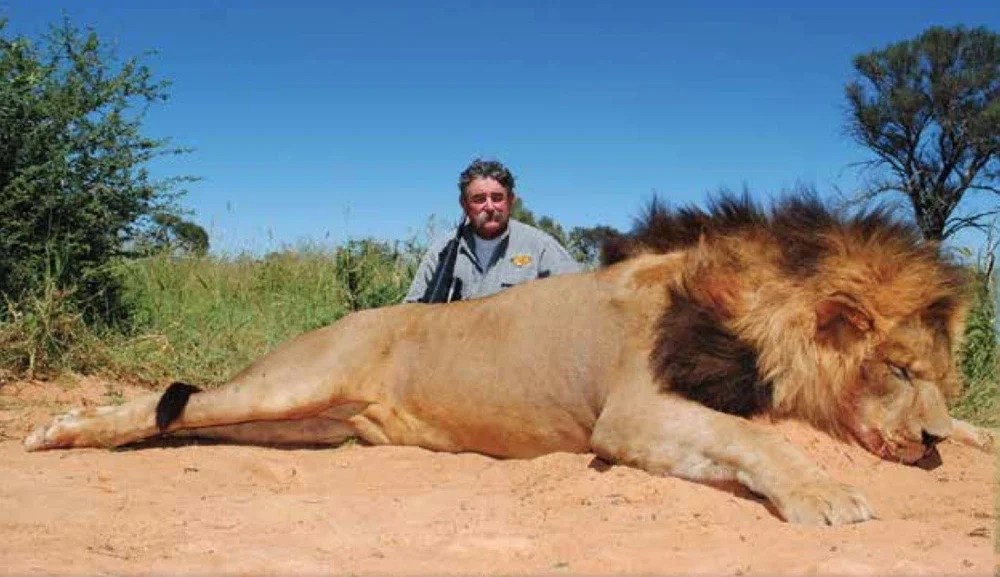
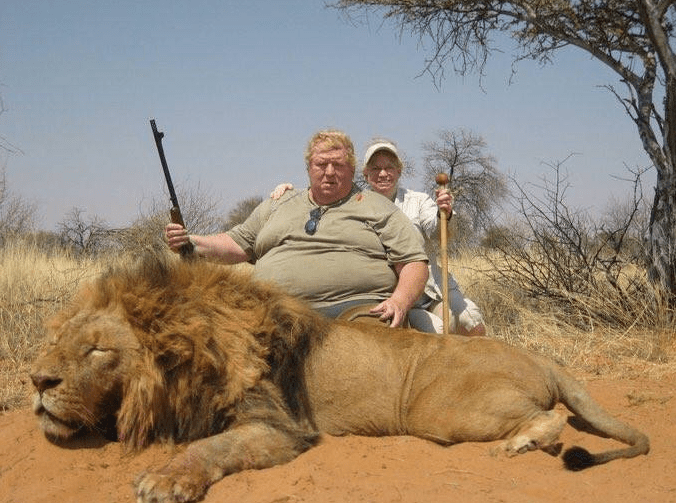
They do not track their targets. They pay men to lure the unsuspecting creatures directly into their paths using food as a lure. The lions, leopards and other animals they kill don’t even realize they’re being hunted before the rifle shots end their lives.
Then the hunters retreat to the air-conditioned comfort of their vehicles while their hired servants do the dirty work of beheading the animals so they can be packed up, prepped for display and shipped back to the US, where they will join the heads of other animals killed by these wealthy men and women. Men and women who proudly show off their kills when they invite people to their homes, recounting their heroics to the bored guests, who make appropriately polite noises to pretend they’re impressed.
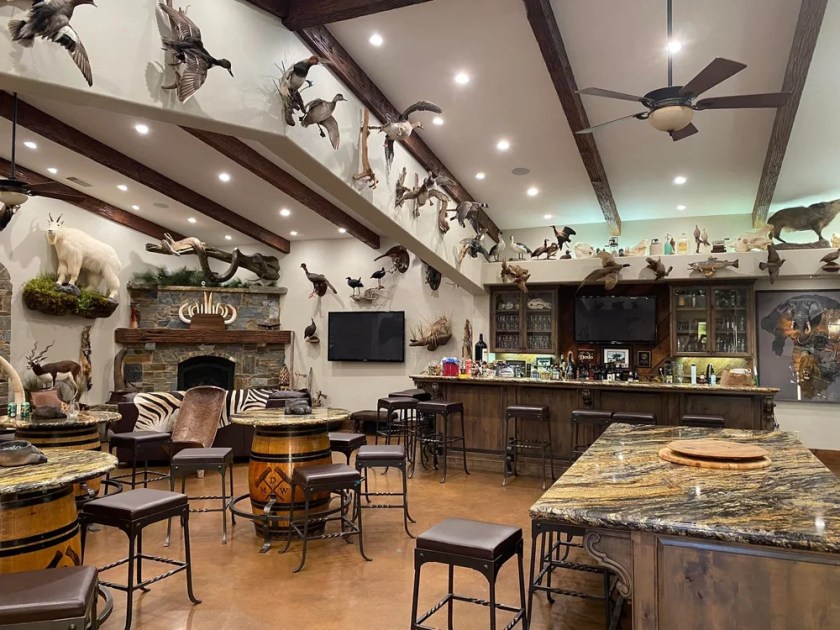
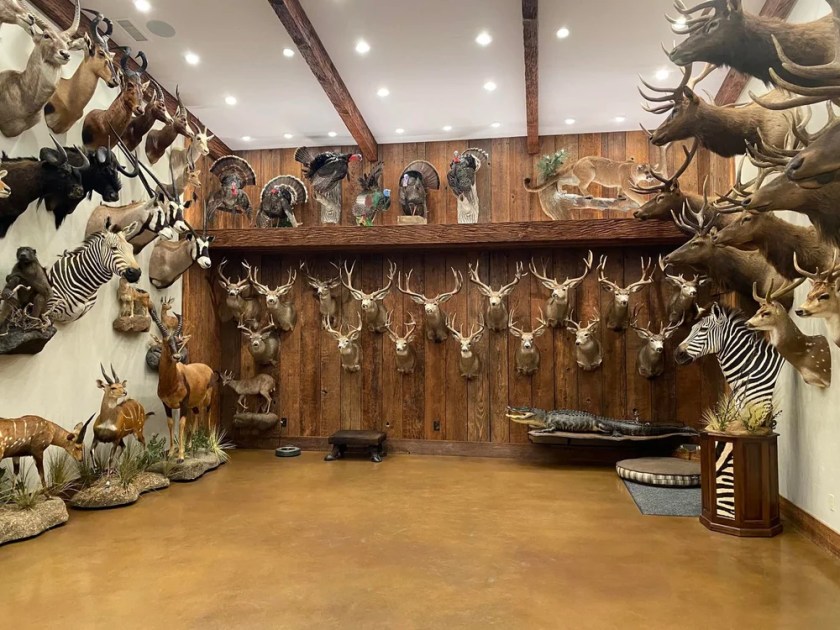
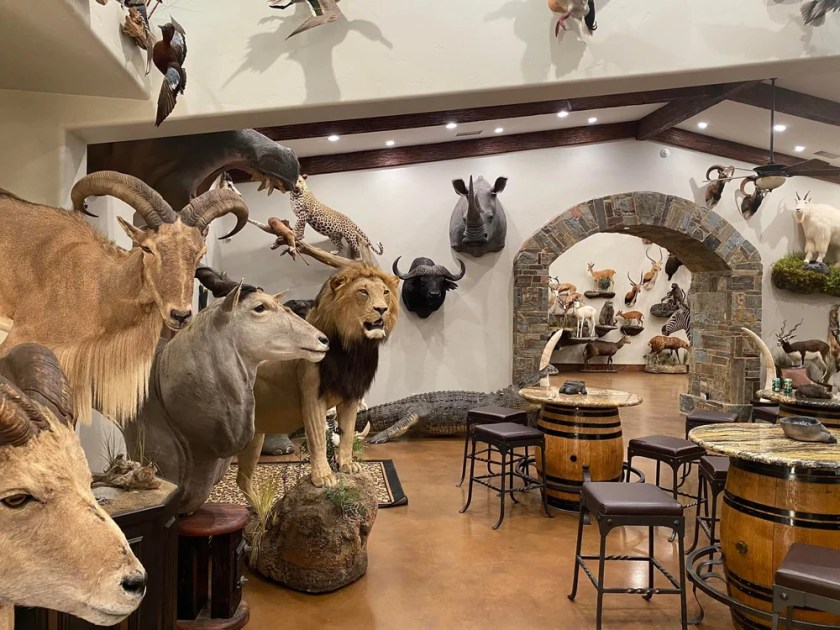
In addition to the 30 or so animals on display here, photos show the walls on the rest of Dosio’s home are covered with the preserved heads and bodies of animals he’s killed.
Nothing about this grotesque sequence of events resembles hunting. It is killing. It requires no skill, it carries no risk, its outcome is never in doubt, and it serves no purpose other than to pad the egos of people who have lots of disposable income and little self-confidence.
They have their defenders and their haters.
“I knew I was going to enjoy this,” one person wrote in response to a news story about Dosio’s demise.
“Do you think the elephants will mount his head on their walls?” another joked.
Some people speculated that the elephants, a species with notoriously long memories, may have remembered him from a prior encounter.
The more likely explanation is the elephants saw Dosio and one of his guides, both carrying weapons, as a threat to the calf they were protecting. Rather than put the baby and themselves at risk, they attacked first. If that’s the case, humans are at fault for that too, because the elephants know people carrying guns do not have good intentions. It may not have been Dosio who killed a member of that particular herd, but odds are overwhelming that someone has, and the elephants haven’t forgotten.
While celebrating Dosio’s death may provide a cheap dopamine hit and a sense of righteous justice, to be truly on the side of life means to value all forms of it, animal and human.
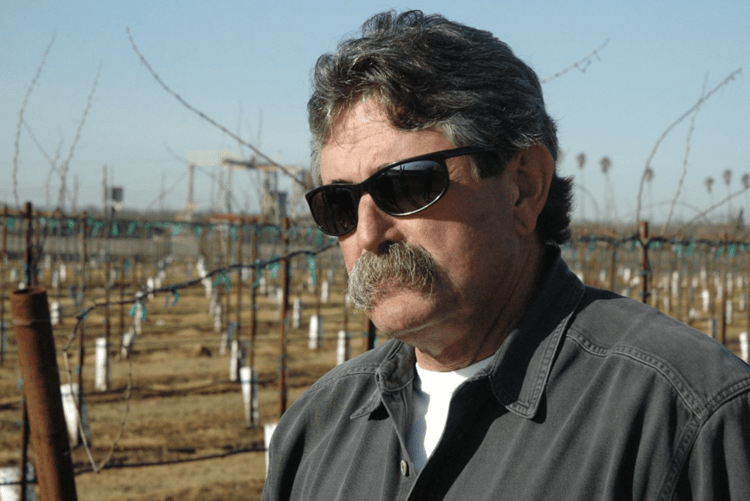
Dosio, 75, was reportedly a millionaire and owned a business that partnered with vineyards in California.
Celebrating Dosio’s demise means we’re no better than the “hunters” who grin like psychopaths for photos with the animals they’ve just killed. It makes those of us concerned about animal welfare and conservation look like extremists, and it only takes a few bad actors to wreck the efforts of an entire group. If a thousand protesters gather in a city square and two of them become violent, the resulting headlines will be about those two, not the 998 others who peacefully made their opinions known.
The way to fight back against trophy killing is by educating the public about the damage those killers do, by countering their claims that the fees they pay protect other animals, and by pointing out that without drastic intervention, elephants, lions and cheetahs will be nothing more than memories for a few generations, and near-myth to subsequent generations.
Killing, not hunting: this photo of an unnamed trophy hunter and his wife is instructive because it shows trophy “hunts” are never in doubt, never pose a risk to the “hunters,” and require no physical ability.
This also calls for self examination. On an Instagram account I made for Buddy, one I log into two or three times I year, I follow a handful of National Geographic photographers.
One of their images remains indelibly burned into my brain: a beautiful tiger cub, looking happy and full of curiosity about the world, gazing right at the camera. Even though I know I’m anthropomorphizing a bit, I can’t help feeling good about the expression on the young tiger’s face, an expression that looks like an enthusiastic grin. He is radiating joy at life.
And then I read the caption. This cub, this beautiful animal of a species that teeters on the edge of extinction, is growing up on a hunting reserve. His fate is already set. He will be killed, his life cut short by another weekend warrior paying to “harvest” him and mount his head on a wall so he can tell stories about his own bravery to bored friends and acquaintances.
That’s not just inhumane, it reveals something deeply disturbing about the kind of people who take pleasure from killing. Something primal, something that has no place in our civilization if we’re going to mature as a species, overcome our violent instincts, and have a future on this planet without destroying ourselves and taking every other form of life with it.
That’s why we need to be on the side of life. The alternative is reducing this garden world, this paradise, into a cold, lifeless rock.
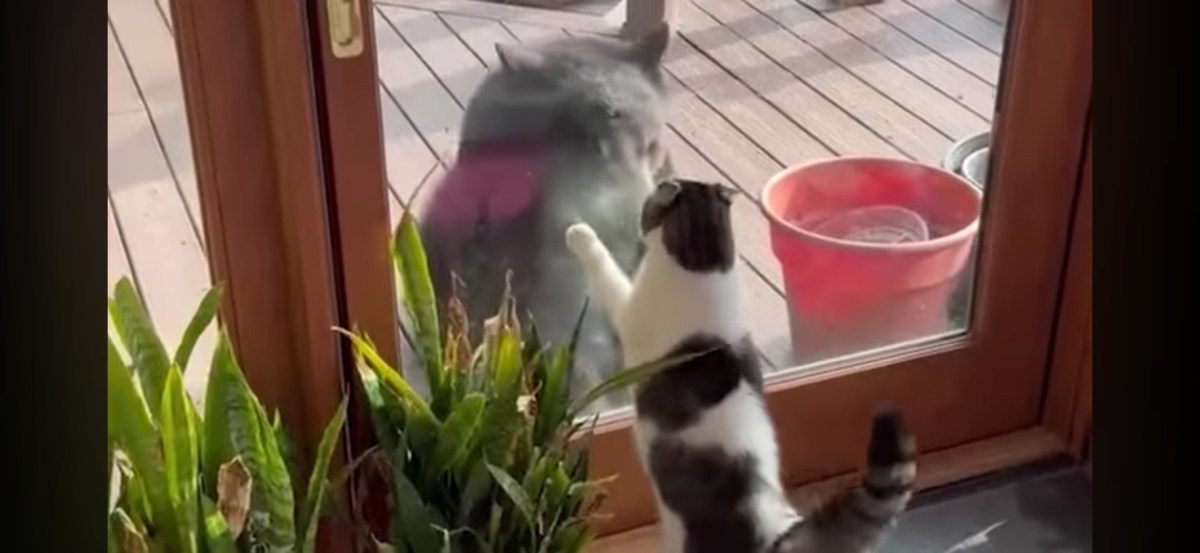
“Scooter does not like bears,” the fearless feline’s human said.
Scooter is one brave little dude!
The tuxedo cat from Asheville, North Carolina, wasn’t even phased by a pair of young bears who unwisely entered Scooter’s territory. Sure, Scooter had the benefit of a glass door between him and the ursine invaders, but Buddy here would have bravely and valiantly defended his home run screaming and taken up a position behind my legs while moaning pathetically.
Plus, I mean, they’re bears. Young bears, yes, but Scooter and his human placed an awful lot of faith in the strength of that glass.
Will Jones, Scooter’s human servant, made the understatement of the year when he posted the video and said flatly “Scooter does not like bears.” Ya think?
Regardless, the little guy clearly had the big animals spooked. They flinched from his hiss-accompanied flurry of rapid paw jabs, then decided it wasn’t worth dealing with the furry lunatic behind the glass and promptly left Scooterland.
Maybe they should be grateful Scooter couldn’t break through the glass instead of the other way around.