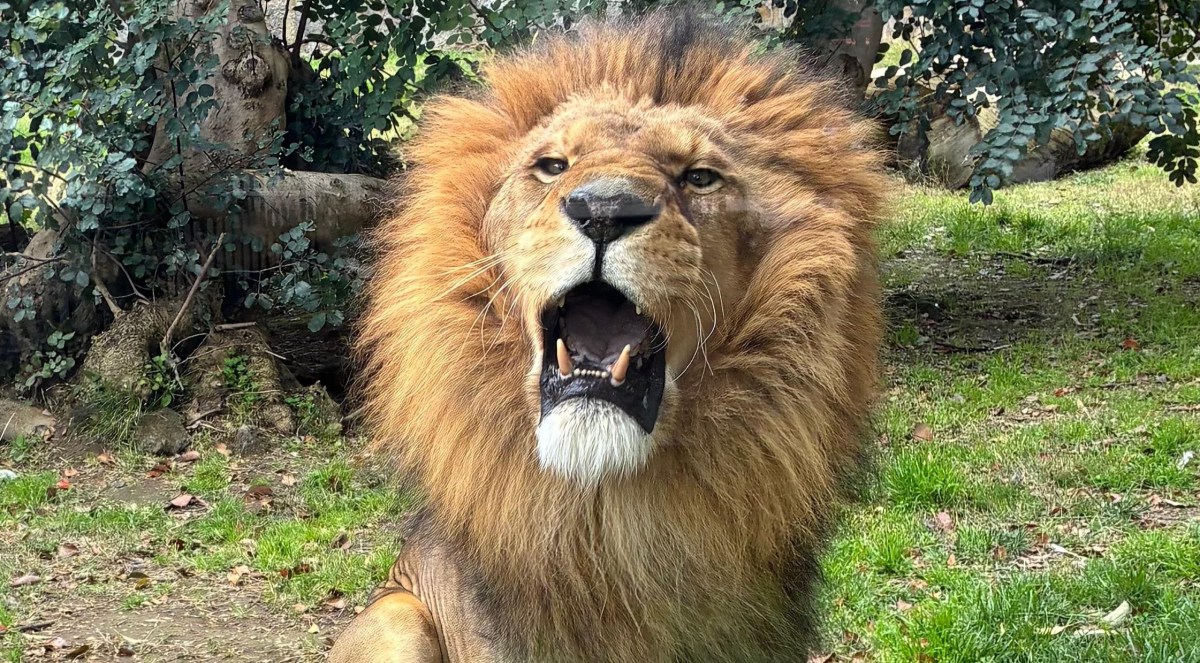
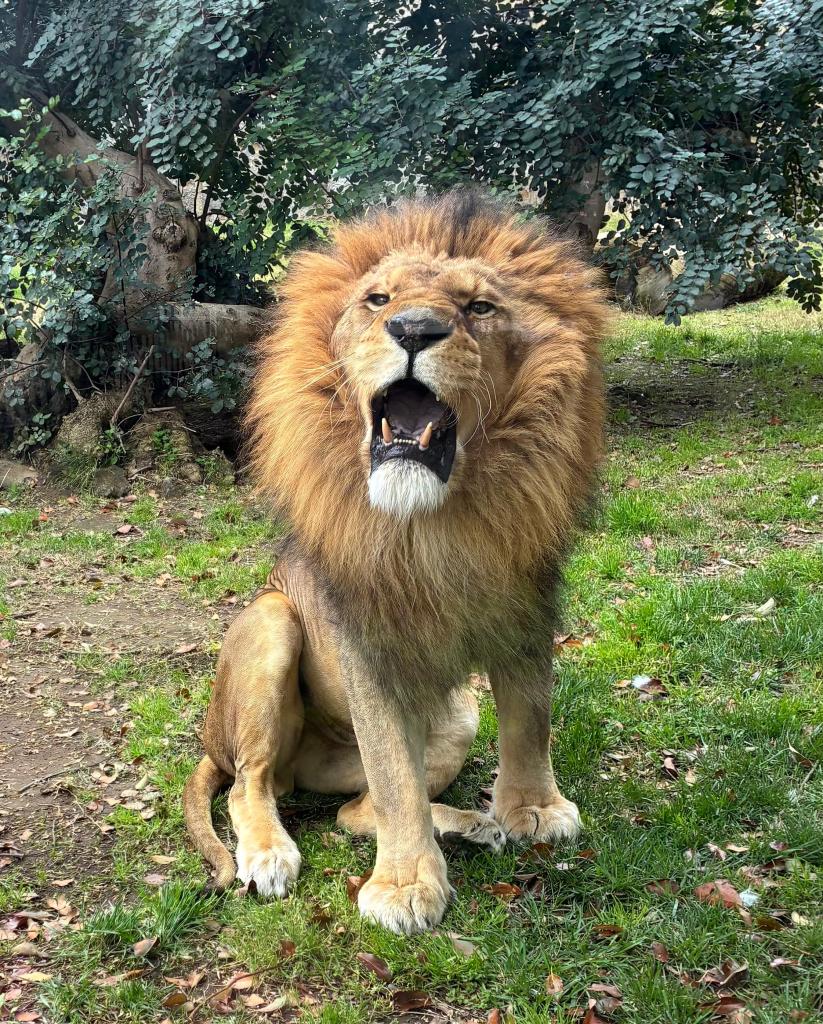
“I say, dear fellow, would you have any Grey Poupon? This roast is rather dry, and the zookeepers do not take me seriously when I tell them human will be on the menu if they don’t shape up!”
This photo of a chatty lion was taken at Lo Zoo di Napoli (Naples Zoo) in Italy by BoBB, aka Brother of Big Buddy:
For a brief moment, since it is April 1, I considered writing a post about how the Somalian pirates who briefly “bought” Buddy a few years ago returned with an offer I couldn’t refuse, so I sent the little dude packing for the pirate life once again.
But then I remembered the emails I got, including one from a woman who said she was heartbroken by my betrayal of the Budster.
So no April Fools’ Day, because as fun as it is to imagine Bud joining a pirate crew, I can’t have some people thinking I’d abandon him. He’s here to stay!
The species has webbed feet and lives in some of the most remote regions in the world.
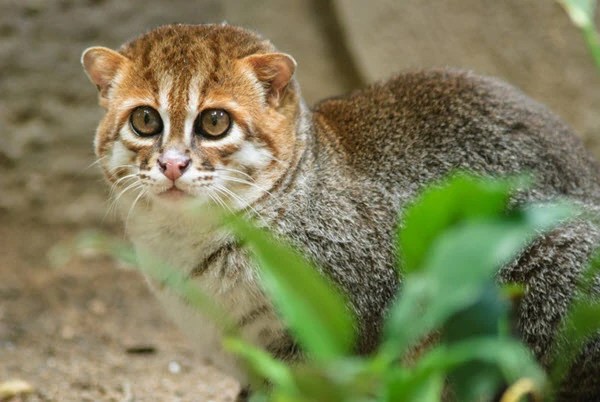
The flat-headed cat is one of the most elusive and rare felines in the world, and for three decades conservationists thought it had died out in Thailand, leaving only a handful of places where the species still eked out an existence.
Now there’s good news: the tiny feline, which weighs about half as much as a house cat, has been spotted in a remote region of the country.
Camera traps set up for an ecological survey starting last year detected flat-headed cats 29 times in Thailand’s Princess Sirindhorn Wildlife Sanctuary, according to the country’s Department of Parks, Wildlife and Plant Conservation. One of the sightings was a female and her cub, an encouraging sign that shows the local population is breeding.
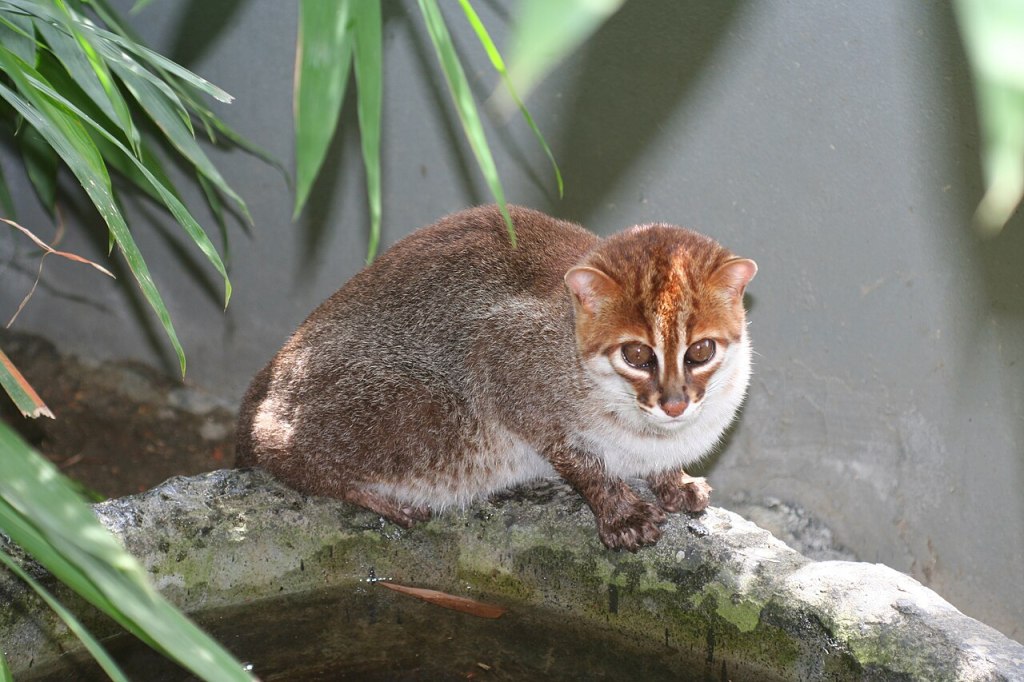
Credit: Jim Sanderson/Wikimedia Commons
The sanctuary covers five square kilometers of rainforest and peat swamps. Along with the flat-headed cat and several unique species of birds, it’s also home to the endangered hairy-nosed otter.
Conservationists believe about 2,500 flat-headed cats remain in the wild. The species is mostly nocturnal and has webbed feet, helping the tiny wildcats navigate mangrove swamps and rivers in its rainforest habitat. Known as Prionailurus planiceps in scientific nomenclature, the flat-headed cat is most closely related to the fishing cat (Prionailurus viverrinus), which also has webbed feet, and the leopard cat.
Finding evidence of the endangered feline in Thailand is “exciting, yet concerning at the same time,” said Kaset Sutasha of Kasetsart University.
That’s because it means the surviving population is severely fragmented, which makes it more difficult for the cats to breed and could lead to genetic bottlenecks.
But Atthapol Charoenchansa, director general of Thailand’s parks department, also called it a “significant win” for conservation efforts. Knowledge of its presence in Thailand provides more opportunity to study the rare felines to better understand their behavior and protect them from extinction.
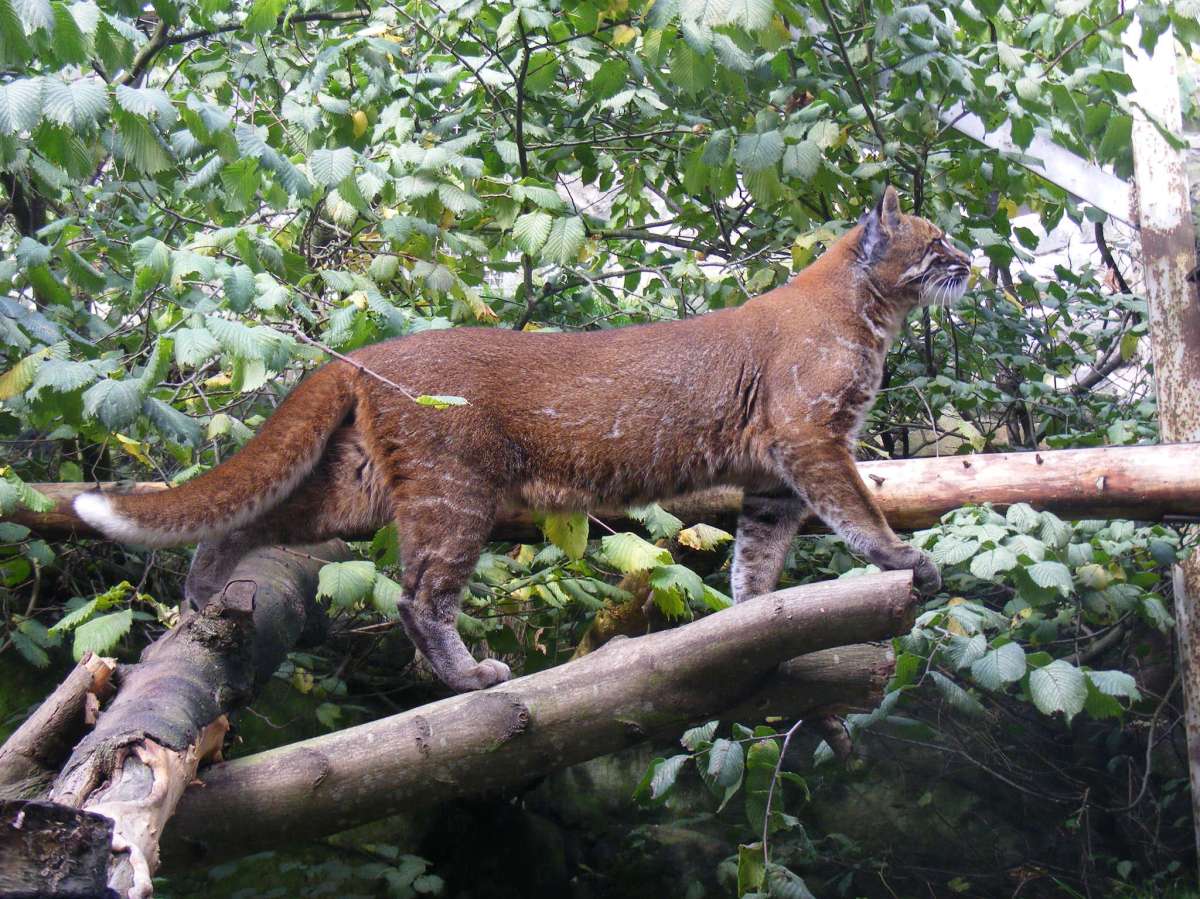
The Asian golden cat, also known as catopuma, is an elusive medium-size wildcat with striking features and exceptional hunting abilities.
It’s extraordinarily elusive, moves with a grace superlative even among fellow felids, and enjoys mythical status in many of Asia’s cultures.
It is the Asian golden cat, a medium-size feline that calls a diverse range of places home, from the mountains of rural China to the jungles of Sumatra.
Known officially as Catopuma temminckii, the species is about three times the size of domestic cats but extremely adept at taking down much larger prey, including young water buffalo and other ungulates several times the cat’s body weight.
An Asian golden cat. Credit: Wikimedia Commons
Asian golden cats inspire legends in many Asian cultures in part because of how difficult they are to find. Even the appearance of one on a trail camera in Thailand’s Khao Luang National Park this summer spawned news headlines, so rarely are they seen.
Often, as was the case with the recent sighting, they’re fleeting, just glimpses before the animals melt back into the jungle. The fire tiger seen in the June 20 trail camera footage pads across a clearing, clearly unhurried, before disappearing back into the ground cover.
In some places it’s good luck to catch a glimpse, while in other locales — like parts of Thailand — people believe a single strand of Catopuma fur is enough to protect the bearer from their larger cousins, panthera tigris. (I wouldn’t rely on that personally, but it does show how large tigers loom in the imagination in areas where they still roam the wild, even as low as their numbers are these days.)
While the Asian golden cat is known as the fire tiger in some places, it’s not a close relative of true tigers, at least not in terms of the cat family.
Credit: Wikimedia Commons
Catopuma is a feline, meaning it can meow and purr, but cannot roar. That puts the species closer genetically to domestic cats, pumas, ocelots, servals and other members of the feline subfamily. True big cats — tigers, lions, jaguars and leopards — are part of the pantherinae subfamily. Aside from their size, they are distinguished by their ability to roar, but they cannot purr or meow.
The Asian golden cat is a feline, but shares some physiological features with big cats
Even though catopuma is genetically closer to small- and medium-size felines, its gait, substantial tail and head shape are reminiscent of big cat features.
The ferocious medium-size cats also have a melanistic color morph that makes them look like smaller versions of jaguars and leopards.
A melanistic catopuma seen on a trail camera. Credit: Panthera
The fire tiger is classified as threatened as its habitats are destroyed to make way for more palm oil plantations, among other agricultural and industrial facilities.
With a perpetual kitten-like appearance and mismatched coat patterns, colocolos may look like the product of AI or Photoshop, but these little ones are very real — and very feisty.
We’re heading back into obscure territory with this edition of Amazing Cats, focusing on a little-known species that ekes out an existence in the forests and plains of South America.
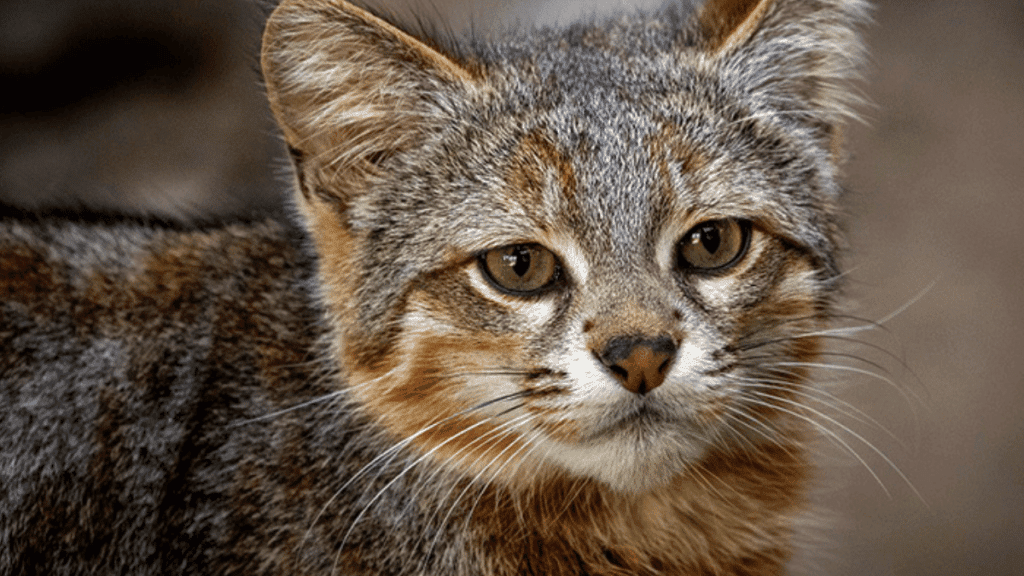
The colocolo, also known as the Pampas cat, superficially resembles the familiar house cat, but a closer look reveals some striking differences.
Colocolos are small, about the same size and weight as felis catus, but their tails can be quite a bit shorter and extremely fluffy.
Colocolos have pattern and color combinations seen only in their species. This one has rosettes on his body and tabby stripes on his limbs and tail. Some colocolos have thick tails with tabby-like rings, while others have bushy tails more commonly associated with long haired domestic cat breeds.
There are at least five variations of fur color and pattern, ranging from marbled to jaguaresque rosettes and, most strikingly, a seemingly mismatched pattern in which the legs have dark stripes over rusty/cinnamon-colored fur, which contrasts dramatically with the gray, gold, silver or tan of their bodies. The overall effect makes some colocolos look like they’ve been photoshopped, or assembled from spare parts.
Some colocolos appear to have solid-color coats which are actually an agouti pattern with barely visible bands of slightly darker fur.
While the species may look stocky, conservationists say it’s smaller than it appears, with its fur making up the majority of its “bulk.”
This photo might look like a fake, but it’s a documented combination of coat pattern and color among colocolos.Another photograph of a colocolo with the rusty/cinnamon limb coloring.
As if that wasn’t enough to distinguish them, Pampas cats have neotenous features that give them an even stronger kittenlike appearance compared to house cats and comparable species like the rusty spotted cat.
In other words, they’re very cute and looking at them can trigger the same protective instincts we feel when we see kittens and cute adult cats. But don’t let their disarming features deceive you — these little guys are not cuddly, don’t respond well to people who get close, and will turn aggressive if you encroach on their space.
This adorable colocolo appears to be giving the side-eye to someone. Note the slight suggestion of the classic tabby “M” on the forehead.
While they’re alternately called the Pampas cat, the word “colocolo” comes from the language of the Mapuche, an indigenous group that lived in lands that are parts of modern day Chile and Argentina.
In the Mapuche language, Colo Colo was the name of a Mapuche warrior who led his people in their resistance against Spanish conquistadors in the 16th century, but it’s also the name of an evil rat-like creature in Mapuche folklore. It’s not clear how a feline came to bear the name, but the species — leopardus colocolo — is often called gato colocolo to distinguish between the historical figure and the modern-day Chilean football club, Colo-Colo.
You might feel an urge to hug a colocolo, but that would not be a good idea. Experts say the small cats don’t take kindly to close human proximity.
Although they’re associated with the pampa, the flatlands in and around Peru best known for the mysterious Nazca lines, colocolo are adaptable and thrive in forests, jungles, wetlands, and mountain ranges like the Andes, among other terrain.
Their range stretches from Argentina in the south through Chile, Bolivia, Paraguay, Ecuador, western Brazil and an isolated population in Uruguay.
Despite their relatively wide distribution and variety of habitat, colocolos are not well understood. Experts still haven’t settled the question of whether they’re all one species or whether subgroups qualify as their own subspecies. Their hunting habits are not well-documented, although it’s known they prefer small rodents, and there is ongoing debate about whether they are crepuscular, like most felid species, or nocturnal.
Colocolo share a continent with jaguars, pumas, ocelot, jaguarundi, margay, oncilla, kodkod, Geoffrey’s cat and the Andean cat, and the fact that they live in the deep wilderness makes them more difficult to study.
Because their coloration and coat patterns can vary so widely, Pampas cats are often mistaken for other small wildcats living in South America, and people unfamiliar with their species sometimes mistake them for domestic felines.
They’re also very rare in zoos, with only one US zoo (Cincinnati) counting them among their exhibits, and only four Pampas cats in captivity worldwide. (Excluding private captivity by poachers and illegal wildlife traders.)
Like virtually every species of wildcat, the colocolo’s numbers are declining due to a number of factors, primarily human activity like habitat destruction, sport hunting and development cutting populations off from each other.
The more people are aware of these beautiful and little-known felines, the better their chances for long term survival as conservation groups receive more donations to help protect them, and lawmakers are pressured to protect the wilderness where they live.
Like all cats, colocolos appreciate the value of a nice nap.
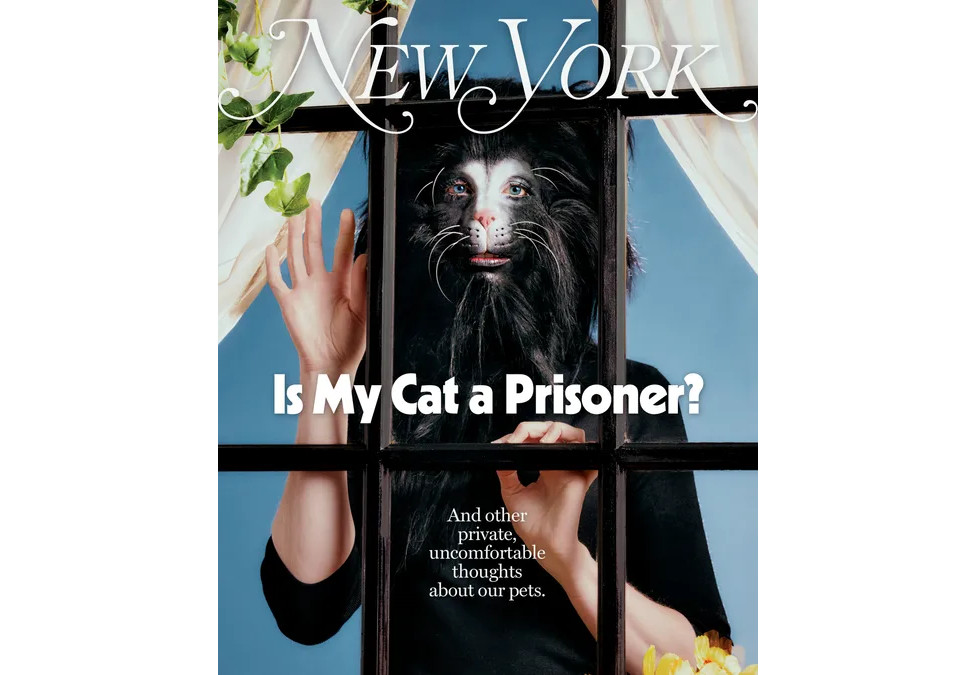
Are we doing right by our furry friends? The latest issue of New York magazine takes a deep dive into the concept of pet “ownership” and the ethics of keeping animals in our homes.
Almost the entirety of New York magazine is devoted this week to what its editors call “an exhaustive exploration of the ethics of pet ownership.”
There are also articles about what veterinarians really think of “pet owners,” whether runaway dogs deserve to be free, and even a story asking whether the word “owner” is appropriate to begin with. (You’ll notice PITB almost always avoids that word, unless we’re quoting others. I refer to myself as Buddy’s servant and his caretaker, words that feel more honest than owner.)
The stories are worth reading. Some are free for a limited time, others can be read as part of the weekly article limit. And if you can afford it, supporting a magazine or two during these brutal times for the publishing industry is a good way to help quality publications survive, so we’re not all drowning in a sea of clickbait garbage tuned for algorithms instead of human readers.
Regular readers of this blog are likely familiar with the story of Bud’s one and only “escape” as a kitten. When I found him, this cat who hates being picked up leapt into my arms, holding onto me like a terrified toddler, and his relief was palpable as I felt him purring into my neck. We were both relieved.
He’s had the opportunity to leave since, but he won’t. He’s got a good thing going here, living like a little king with his personal servant. He gets tons of attention, he’s allowed to do pretty much anything he wants as long as it isn’t dangerous for him, and he loves his Big Buddy.
I know he does from the way he approaches me, purring and meowing happily as he bunts his forehead against mine. I know it from the way he makes biscuits on me and falls asleep in my lap, feeling content and secure. And I know it from his refusal to leave my side the two times I was so sick I could barely move.
He’s got his own site, awesome retrowave logos and online admirers, but Buddy only cares about the snacks.
We shouldn’t feel guilty for giving cats a home.
I think we tend to forget that as domesticated animals, cats don’t have a natural habitat. The process of domestication made them friendlier, more trusting and more capable of reading human body language, facial expressions and tone of voice.
But those changes came at a cost, as they always do in domestication. Felis catus looks like its wild relatives and retains many of the amazing abilities of wild cats, but compared to them the species has lost a step. Domestic cats are not as quick or agile, they’re too trusting, and they’re not well suited to providing for themselves. The statistics on life expectancy reflect that, with ferals and strays living short, miserable lives.
Although it’s usually very difficult to tell a domestic cat from felis lybica, the wildcat species seen here, there are major differences in their respective survival abilities and instincts. Credit: Wikimedia Commons
So if felis catus has a habitat, it’s our living rooms. When our ancestors welcomed them into human settlements ten thousand years ago, they formed an indelible bond and made a pact, even if they didn’t realize it at the time.
Consider it a debt we owe for the survival of our species, when nascent civilization would have likely been snuffed out were it not for cats protecting the grain stores over long, cold winters.
Without cats, rodents would have eaten their way through the season’s rations, starving out the early settlers before the next harvest. The great agriculture experiment would have been over as quickly as it began with people returning to the nomadic life of hunter-gatherers, and it’s likely that everything after — from the first cities, to the birth of western civilization in Greece, to the remarkable achievement of putting a human being on another world — would have been jeopardized or taken radically different paths otherwise.
So you can thank your cat for your house, your car, the medicine that keeps you tip top, all the comforts of modern civilization, and all the stories and songs of humanity. Without cats and their heroic willingness to eat their way into our good graces, we wouldn’t have gotten here. Thank them often. You can’t go wrong with treats.