Pet Cats Lead To ‘More Mental Health Problems’ For Kids, Authors Of New Study Claim

Not all pets are created equal, but not all studies are either.

A new study claims we’ve gotten it wrong all these years, that pet cats and dogs aren’t good for young children, while kids who grow up with pet fish, turtles and hamsters learn empathy and develop better mental balance.

The authors of the study claim cats are “the only common pet linked to more mental health problems in children.”

Furthermore, the authors claim, pets like turtles, fish and hamsters are “linked to” positive mental health in children, while data shows dogs have no effect.

To understand what we’re dealing with here, we’ve got to break down “study,” “linked to” and “data” in relation to the report by researchers at the University of Valencia in Spain.

“Study” here means a meta-analysis of data collected by the INMA Project, a collaboration of universities, biomedical institutes and medical conglomerates in Spain. INMA is primarily concerned with researching the impact of environmental pollutants on early childhood development.

The INMA data was not collected specifically for this new study dealing with pets.

Secondly, while INMA did “track” some 1,900 participants from birth through six or seven years old, the “data” itself primarily consists of subjective reports by the parents of the children along with “environmental measurements and clinical tests.”

Credit: isaac mijangos/Pexels

It’s not clear if the original data collection effort had anything to do with the presence of pets in the homes, or if that was just one of many data points gathered in a larger assessment. For example, the INMA questionnaires may have simply asked if the families have pets and what kind of pets they have without any further elaboration or information about whether, or how often, the children interact with the pets. There can be enormous variation in that area alone.

Then there’s “linked to,” a very specific choice of words by the authors. They’re using “linked to” instead of “caused by” because the data they have – if you can appropriately use the word data to describe the results of self-reported questionnaires based on subjective feelings – cannot distinguish between correlation and causation and really says nothing at all except certain animals were present in the homes of young children.

In all, 8.7 percent of the children lived in homes with a cat, which works out to a sample size of 165, all from Spain.

So we’re already on really shaky ground here. I don’t think there’s any real scientific value in information that comes from questionnaires distributed to parents, and certainly not when it comes to topics like mental health and behavioral problems.

The definition of bad behavior varies widely between parents in different families and even mothers and fathers in the same family. Was there a baseline? Did the participants receive instructions on how to describe their assessments so they’d at least roughly resemble uniform reports? Were there other commonalities among the children who lived in homes with cats? We don’t know the answers to these questions.

Credit: David Brown/Pexels

What we do know is that, putting all other concerns aside, the report claims that 165 children live in homes that have cats, or had cats at one time, and some of them have varying degrees of behavioral problems.

That the conclusions are vaporous becomes even more obvious when the authors go on to speculate, with no data, why children who live with, or previously lived with, cats are allegedly more likely to suffer behavioral issues.

They repeat common misconceptions about felines being aloof, claiming the nature of cats “limits emotional bonding” compared to other companion animals.

“Having fish, turtles and hamsters on a constant basis does seem to protect children from mental health problems,” the authors concluded, although again the reasons are pure guesswork.

I’m not sure how anyone can say feline behavior “limits emotional bonding,” then in the very next paragraph claim fish and turtles, animals with which there can be very little or no real interaction, “protect” kids from mental health issues. Not even “help protect,” but full on “protect.”

The authors also point to a common boogeyman, toxoplasma gondii. The parasite can be transmitted to humans dozens and potentially hundreds of different ways, including contaminated water and undercooked meat, but cats are blamed because they’re easily infected by it and can pass it to humans.

To be clear, toxoplasma gondii does not figure anywhere in the data and the researchers did not test the children for infection.
Credit: Cristian Loayza/Pexels

But the bit that sets off the most alarm bells in my mind is the claim that dogs have no impact on the mental health of children.

That should have immediately prompted the research team to go back and figure out where their analysis went funky.

There are so many studies linking cats and dogs, and especially dogs, to tangible improvements in mental health and mood that anyone who claims the opposite has a lot of work ahead of them to demonstrate why their findings are accurate and the abundance of studies that concluded the opposite are flawed. (Dogs are better studied than cats because they’re easier to control, so the abundance of studies on dogs shouldn’t be confused for a stronger impact on human health.)

Whenever I write something like this, I always worry I’m contributing to the anti-science positions of some people who view the entirety of science with suspicion.

Science is nothing more than a formal process for learning about the natural world. It doesn’t have an agenda. It’s important for us to separate our qualms with the methods and standards of particular studies from the idea of science itself. A study may be flawed, but the scientific method remains the best, most time-honored way to expand human knowledge we’ve managed to come up with.

There are also major differences between “soft” sciences like psychology and hard sciences like physics and chemistry. The latter are primarily black and white, true or untrue, while the former deal with uncountable shades in between. It’s hard to quantify human feelings, thoughts and behaviors.

I’m sure the researchers involved in this project mean well, but unless we begin to see other studies placing fish, turtles and hamsters atop the pet hierarchy for their impact on mental health, I think we can file it as an anomaly and move on.
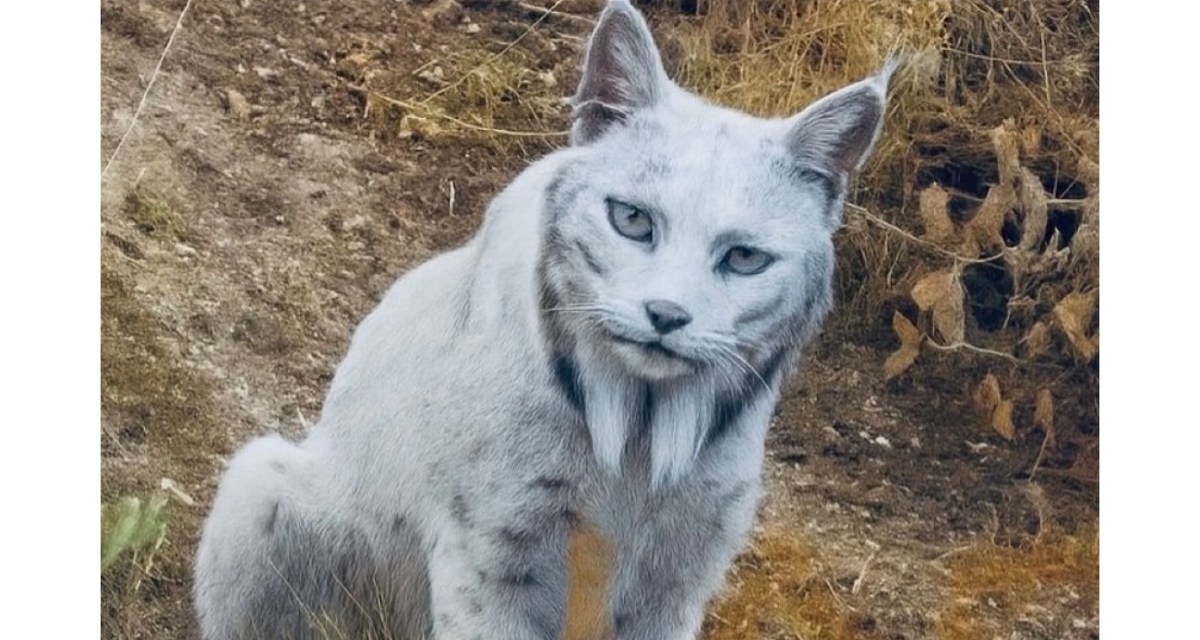
‘White Ghost’: Amateur Photog Gets First-Ever Shots Of White Iberian Lynx

Photographer Angel Hidalgo thought the color was a trail camera malfunction until he saw the incredible feline for himself.

For the first time in history, a white Iberian lynx has been photographed.

A Spanish man who works in a factory by day and photographs wildlife as a hobby was behind the camera for the unprecedented shots.

It wasn’t easy.

Angel Hidalgo told National Geographic that first spotted fleeting images of the extraordinarily rare feline on one of his camera traps, but he was skeptical.

“I couldn’t believe it,” the 29-year-old said. “I thought it was a camera effect, and from then on, I dedicated myself to the search for the lynx. I’m still in shock.”

While hiking in late October, Hidalgo saw the “ghost cat” with his own eyes and quickly took a handful of shots and a short video before the cat vanished.

Credit: Angel Hidalgo

The Iberian lynx, as its name indicates, is native to Spain and a small range in Portugal. The cats call mountain ranges like Sierra Morena and Montes de Toledo home.

The white color morph is due to leucism, not albinism: the difference is the former causes only partial loss of pigmentation, and the eyes are unaffected.

In the video footage, the cat sits calmly and regards Hidalgo for about 15 seconds before blinking and turning its head. It’s a fleeting but fascinating look at an animal that most of us will never have the opportunity to see in the flesh.

Hidalgo won’t say where he encountered the white lynx, which is a smart move in an age when bored rich kids in places like Dubai can throw money at wildlife poachers and help themselves to the rarest and most vulnerable wildlife.

Because they know the authorities in their countries won’t bother them, the sons of oil oligarchs and emirs openly flaunt their wild “pet” collections: Instagram and TikTok host thousands of photos and videos of young men and women posing with cheetahs, lions and tigers, with the cats often riding shotgun in hypercars from Lamborghini, Ferrari and McLaren.

We hope the location remains a secret for the sake of the wild cat and because the Iberian lynx is a conservation success story. The species was on the brink of extinction in the 1990s and now has a healthy breeding population that numbers in the thousands.

Apocalypse Z: A Man And His Cat Fight For Survival

As the world ends, Manel doesn’t lose sight of his most important priorities: making sure his cat is safe and well-fed.

Shhhh, don’t meow!

With A Quiet Place: Day One and Apocalypse Z: The Beginning Of The End, it looks like the “protagonist and cat surviving the world’s end” thing might be a growing subgenre.

While Day One lit up theaters in spring and early summer, Apocalypse Z is a zombie flick out of Spain, currently sitting atop Amazon’s Prime Video charts as a major crossover hit.

It stars Francisco Ortiz as Manel, the owner of a small solar power business and servant of a talkative cat named Luculo. Manel’s brother-in-law works for the Spanish military, and as reports of a deadly and spreading virus hit the news, his sister relays privileged information from her husband warning Manel to hide during mandatory evacuation and find a way to join the family on the Canary Islands, where Spain’s military and civil leaders have fled.

Vince McMahon Meme

After weathering the initial wave of the virus by huddling in his apartment in Galicia, Manel seeks out a way to make the 2,400km (about 1,500 mile) journey to safety.

One thing I loved about this movie was Manel’s absolute devotion to Luculo. When he tries to stock up at a store being ransacked by panicked locals, the first thing he does is grab cat food. When he finds a set of wheels at one point — a sporty motorcycle — he straps Luculo’s carrier securely to the back of the seat.

No matter how impractical, no matter how much danger it puts him in, Manel refuses to abandon his pal, even though the little guy can’t keep his mouth shut.

Apocalypse Z
Manel with Luculo the cat in his carrier, strapped to the back of the motorcycle.

While watching Day One, all I could think about was how conveniently silent Sam the cat was, and how dead I’d be trying to survive with Bud in the same situation.

Luculo is incapable of being quiet, although he’s not as loud or insistent as Bud is. He’s named after the Roman statesman and conqueror Lucinius Lucullus, described as “the greatest glutton of antiquity, who stunned Rome with his lavish feasts” and his dedication to bringing recipes for the tastiest dishes from the provinces back to the capital.

“He came, he ate, he conquered” might be an appropriate motto for Lucullus, and his feline namesake is similarly food-obsessed, often seen scarfing down yums as if the apocalypse is just a minor obstacle between meals.

Apocalypse Z
Manel refuses to leave his buddy behind, going to great lengths to keep Luculo safe as the world goes to hell around them.

Apocalypse Z isn’t a walk in the park, given the genre, but it’s significantly less gory than The Walking Dead, The Last of Us or even Zombieland. The film’s infected are Danny Boyle-style zombies, the terrifyingly fast baddies from 28 Days Later and 28 Weeks Later, rather than the slow shufflers of Romero-influenced productions. Accordingly, they’re much more dangerous and enable more intense action sequences.

Finally, because this is a cat blog and I’ll most certainly get emails and comments if I don’t address the tabby in the room: nothing terrible happens to Luculo. His greatest ordeal is having too many admirers, who are shocked to see a guy who’s survived so long with his pet cat.

Apocalypse Z
Luculo does quite a bit of hissing at the zombies, who stand between him and his beloved yums.

Apocalypse Z: The Beginning of the End is the first part of a bigger story, as the title suggests. It rocketed to the top as the most-streamed movie in more than 90 countries, so we should be hearing news about a sequel soon.

If you’re a fan of genre movies and escapism, Apocalypse Z is a fun way to spend a few hours.


Apocalypse Z is available now to stream on Amazon Prime Video. The stream will default to an overdubbed version, but we highly recommend enabling English subtitles and switching the audio track to its original Spanish.

Amazing Cats: The Adorable Colocolo, Feline Of The Pampas

With a perpetual kitten-like appearance and mismatched coat patterns, colocolos may look like the product of AI or Photoshop, but these little ones are very real — and very feisty.

We’re heading back into obscure territory with this edition of Amazing Cats, focusing on a little-known species that ekes out an existence in the forests and plains of South America.

The colocolo, also known as the Pampas cat, superficially resembles the familiar house cat, but a closer look reveals some striking differences.

Colocolos are small, about the same size and weight as felis catus, but their tails can be quite a bit shorter and extremely fluffy.

Colocolo full
Colocolos have pattern and color combinations seen only in their species. This one has rosettes on his body and tabby stripes on his limbs and tail. Some colocolos have thick tails with tabby-like rings, while others have bushy tails more commonly associated with long haired domestic cat breeds.

There are at least five variations of fur color and pattern, ranging  from marbled to jaguaresque rosettes and, most strikingly, a seemingly mismatched pattern in which the legs have dark stripes over rusty/cinnamon-colored fur, which contrasts dramatically with the gray, gold, silver or tan of their bodies. The overall effect makes some colocolos look like they’ve been photoshopped, or assembled from spare parts.

Some colocolos appear to have solid-color coats which are actually an agouti pattern with barely visible bands of slightly darker fur.

While the species may look stocky, conservationists say it’s smaller than it appears, with its fur making up the majority of its “bulk.”

Colocolo color variant
This photo might look like a fake, but it’s a documented combination of coat pattern and color among colocolos.
Colocolo color variant
Another photograph of a colocolo with the rusty/cinnamon limb coloring.

As if that wasn’t enough to distinguish them, Pampas cats have neotenous features that give them an even stronger kittenlike appearance compared to house cats and comparable species like the rusty spotted cat.

In other words, they’re very cute and looking at them can trigger the same protective instincts we feel when we see kittens and cute adult cats. But don’t let their disarming features deceive you — these little guys are not cuddly, don’t respond well to people who get close, and will turn aggressive if you encroach on their space.

Cute colocolo
This adorable colocolo appears to be giving the side-eye to someone. Note the slight suggestion of the classic tabby “M” on the forehead.

While they’re alternately called the Pampas cat, the word “colocolo” comes from the language of the Mapuche, an indigenous group that lived in lands that are parts of modern day Chile and Argentina.

In the Mapuche language, Colo Colo was the name of a Mapuche warrior who led his people in their resistance against Spanish conquistadors in the 16th century, but it’s also the name of an evil rat-like creature in Mapuche folklore. It’s not clear how a feline came to bear the name, but the species — leopardus colocolo — is often called gato colocolo to distinguish between the historical figure and the modern-day Chilean football club, Colo-Colo.

Colocolo
You might feel an urge to hug a colocolo, but that would not be a good idea. Experts say the small cats don’t take kindly to close human proximity.

Although they’re associated with the pampa, the flatlands in and around Peru best known for the mysterious Nazca lines, colocolo are adaptable and thrive in forests, jungles, wetlands, and mountain ranges like the Andes, among other terrain.

Their range stretches from Argentina in the south through Chile, Bolivia, Paraguay, Ecuador, western Brazil and an isolated population in Uruguay.

Despite their relatively wide distribution and variety of habitat, colocolos are not well understood. Experts still haven’t settled the question of whether they’re all one species or whether subgroups qualify as their own subspecies. Their hunting habits are not well-documented, although it’s known they prefer small rodents, and there is ongoing debate about whether they are crepuscular, like most felid species, or nocturnal.

Colocolo share a continent with jaguars, pumas, ocelot, jaguarundi, margay, oncilla, kodkod, Geoffrey’s cat and the Andean cat, and the fact that they live in the deep wilderness makes them more difficult to study.

Because their coloration and coat patterns can vary so widely, Pampas cats are often mistaken for other small wildcats living in South America, and people unfamiliar with their species sometimes mistake them for domestic felines.

They’re also very rare in zoos, with only one US zoo (Cincinnati) counting them among their exhibits, and only four Pampas cats in captivity worldwide. (Excluding private captivity by poachers and illegal wildlife traders.)

Like virtually every species of wildcat, the colocolo’s numbers are declining due to a number of factors, primarily human activity like habitat destruction, sport hunting and development cutting populations off from each other.

The more people are aware of these beautiful and little-known felines, the better their chances for long term survival as conservation groups receive more donations to help protect them, and lawmakers are pressured to protect the wilderness where they live.

Yawning colocolo
Like all cats, colocolos appreciate the value of a nice nap.

Previously:

Amazing Cats: The Mysterious Marbled Cat
Amazing Cats: The Rusty-Spotted Cat
Amazing Cats: ‘He Who Kills With One Bound’
Amazing Cats: The Puma

Amazing Cats: The Sunda Clouded Leopard

Tribe Discovers Ancient Three-Toed Cat’s Fossilized Footprint Deep In Forest

The strange footprint may date back as far as 35 million years ago, according to a preliminary analysis.

Before house cats, tigers and lions, before sabretooth cats and their scimitar-toothed relatives, Pseudaelurus (pseudo-cat) stalked the forests and plains of Europe, Asia and North America between eight and 20 million years ago.

Before Pseudaelurus, Proailurus — an animal whose name literally means “before cats” — stalked the Earth beginning 30 million years in the past.

Proailurus was thought to be the earliest true feliform ancestor, but now there may be evidence of a felid or feliform animal that predates both Proailurus and Pseudaelurus. Feliform is a term that encompasses cat-like creatures both extinct and extant, from familiar felines to civets and mongoose.

Deep in South India’s Nallamala Forest, near one of the country’s largest tiger reserves, members of the aboriginal Chenchu tribe found a fossil that could put the cat lineage back even further.

The fossil is well-preserved and clearly defined, made by an animal whose paw was about the size of an adult man’s hand. It bears a striking resemblance to tiger pug marks, but perhaps the most striking feature is its three toes.

Feliform fossil
The recently discovered fossil. Credit: Times of India

“Based on the distinctive characteristics of the sandstone, identified as the Cuddapah subgroup Quartzitic sandstone, the estimated rock’s age is approximately 35 million years,” archaeologist Arun Vasireddy told the Times of India. “It was around this time that sandstones were formed and it is likely that the animal would have cast its prints.”

Biologists have had to reshuffle their picture of felid lineage many times over the past century and a half as new discoveries uncover previously unknown species of cats and cat-like creatures. Since they first appeared, cats have taken hundreds of different forms with significant variations in size, appearance, hunting methods and preferred terrain.

The experts aren’t popping the champagne yet. There’s a lot more work to do before they can declare a newly-discovered species or even offer more than educated guesses about its niche and appearance.

Nallamala Forest may yet hold more secrets, and research teams will look for additional prints as well as potential remains. It’s a process that will unfold over years and decades, perhaps even longer.

Still, it’s a tantalizing clue about the past and the origin of some of Earth’s most iconic animals.

In the meantime, Vasireddy said, “nothing can be said clearly until further research.”

Homotherium_serum
A reconstruction of Homotherium, a scimitar-tooth cat that first appeared about four million years ago. Credit: Wikimedia Commons

OLYMPUS DIGITAL CAMERA
Styriofelis lorteti predates modern pantherine cats and was the size of a small leopard. Credit: Spanish National Research Council and the National Museum of Natural Sciences in Madrid

Fossil foot
The recently-discovered fossil compared to a man’s foot. Credit: Times of India