
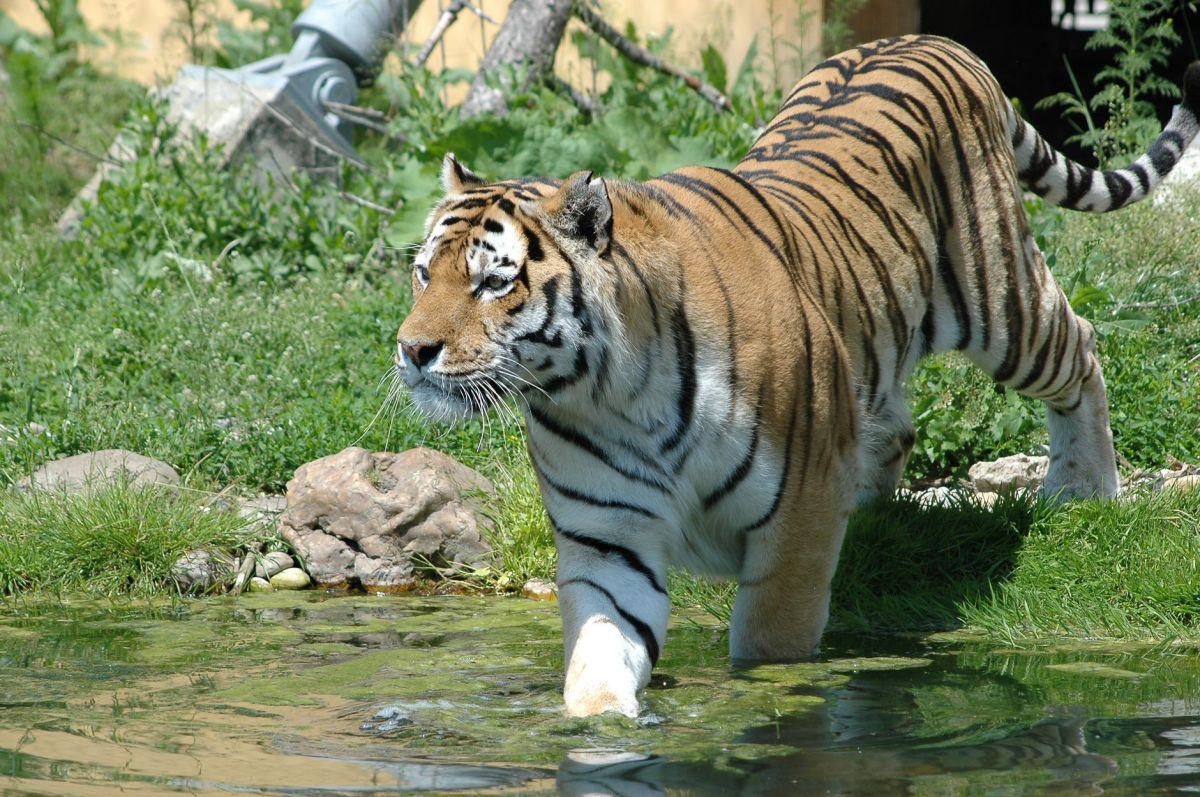
David Villalobos told detectives he wanted to be “one with the tiger.”
So the New York man jumped off the monorail at the Bronx Zoo and into the Wild Asia exhibit, where his 10-minute encounter with a tiger named Bashuta resulted in a punctured lung, a broken arm, and bite wounds on his arms, legs, shoulders and back.
Mercifully, and contrary to his nature as a predator, Bashuta did not kill Villalobos, and while Villalobos almost got his wish “to be one with” the male Siberian tiger, his consolation prize was life – and a trespassing charge from the NYPD.
I remember the 2012 incident well because I was working as a reporter for Newsday at the time and I was in the newsroom the night it happened, placing calls to Villalobos’ family and neighbors in an attempt to understand why he’d willingly enter an apex predator’s enclosure.
On Saturday a UK man — whose name has not been publicly released yet by authorities — jumped into the tiger enclosure at the UK’s Yorkshire Wildlife Park. He wasn’t as lucky, and zoo visitors filmed the last few moments of his life as the big cat — also an endangered Siberian (Amur) — mauled him.
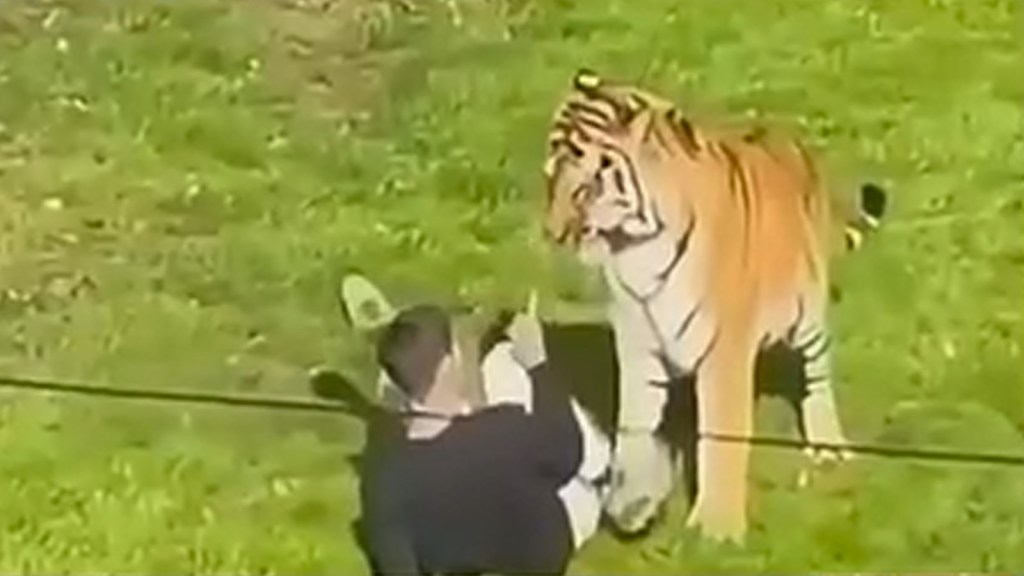
Like the incident at the Bronx Zoo, the enclosure at Yorkshire Wildlife Park had adequate barriers and the man circumvented several of them to put himself in danger.
The big cat was unharmed and will not be euthanized. The incident “was in no way the tiger’s fault,” said Ron Magill, a wildlife photographer and communications director for Zoo Miami.
“It’s just so hard to guarantee against someone who’s determined to do something,” Magill told CNN in an interview a few hours after the incident.
The wildlife park was evacuated and remained closed for the weekend. In the meantime, UK authorities asked people not to continue sharing footage uploaded by several bystanders.
“I say this with profound respect for my profession, but we have to do a better job of making people understand these are not Disney animals,” Magill said. “This is not a play exhibit. We do not play with these animals. They are not our pets. And they can be much more dangerous because they have lost that natural fear of people. “
They’re also territorial, and from their perspective their enclosures are their territories. Zoo visitors who drop in are curiosities to explore by pawing at them at best, and uninvited, unwanted invaders at worst.
It’s a lesson quite a few people need to learn, apparently. US national park rangers have been begging people to keep their distance from wild animals over the past few years after several incidents involving tourists approaching dangerous wildlife to pet them, take selfies with them, and generally infringe on their space.
In July, 65-year-old Carl Isom-McDaniel was photographing a bison with his granddaughter when the 2,000 pound animal charged at him and launched him high into the air, using its horns in a display of raw power serving as a reminder that humans are physically nowhere near the top of the food chain.
Isom-McDaniel’s incident, in which he suffered multiple femur fractures among other injuries, happened less than two weeks after a 12-year-old was attacked and hospitalized after getting too close to a bison near Yellowstone’s “mud volcano.”
At the time, park officials noted bison have been involved in more attacks on visitors than any other species in the park.
“They are unpredictable, can run three times faster than humans and will defend their space when threatened,” a statement from the US National Park Service read.
Although it may seem obvious that mixing with predators or even large herbivores is a bad idea, Magill said some people still have the impression they can somehow make friends with wild animals.
That misconception may be compounded by the ubiquity of social media posts showing tourists in Asian wildlife parks, where tigers are often heavily sedated so guests can enter their enclosures to touch them and pose for selfies with them. It is a form of animal abuse by every definition, but some people don’t want to hear that.
“We see this over and over again, people who try to get close to animals, cuddle the animals, thinking … that this is their pet,” Magill said. “That’s not the case. These animals should not be approached.”

