No Matter What The Kardashians Say, Please Don’t Declaw Your Cat

A Kardashian admitted she had her cats declawed, but wouldn’t take responsibility. People who are thinking of adopting should know declawing is mutilation and makes cats miserable.

Khloe Kardashian says she regrets having her cats declawed, admitting on her podcast this week that the kitties are “miserable” since she had them mutilated.

But she stopped short of taking responsibility, electing to blame an unnamed party for allegedly telling her it was okay to have her cats’ toes amputated at the first knuckle.

“I was really misadvised about getting my cats declawed. I’ve never owned cats before. I didn’t even know that was a thing. I feel really, really terrible that I did go in this direction,” Kardashian said.

Look, I get it. Learning stuff is, like, hard. If only someone would invent a worldwide network, an “internet” if you will, where one might access the entire sum of human knowledge with but a few keystrokes!

In the absence of such a miraculous technology, how are we to know that chopping off a cat’s toes will cause them a lifetime of pain and discomfort?
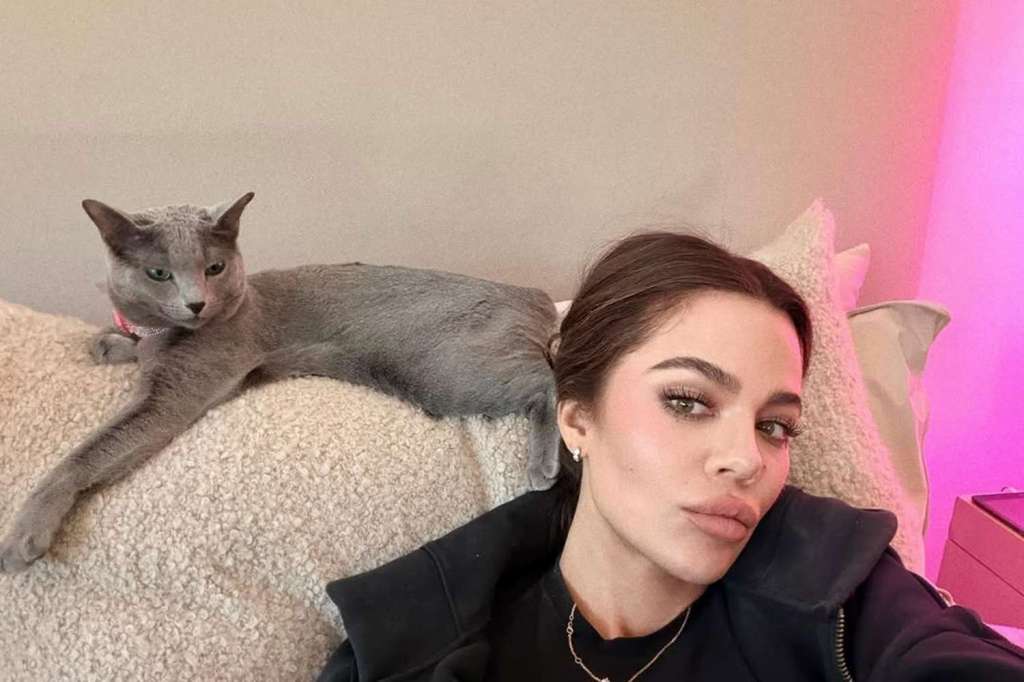
Credit: Instagram

Sarcasm aside, I’m not interested in going on at length about the Kardashians or litigating this decision online. Plenty of people are doing that. There’s really no point.

What I am concerned about is the unfortunate fact that the Kardashians have influence.

Because Kardashian isn’t taking responsibility, and she brought up her decision to declaw her cats in the context of her feelings and her regret, she is not effectively communicating why declawing is wrong, nor what it does to cats.

If you don’t know what it is, you should know declawing is mutilation. It is the amputation of your cat’s toes at the first knuckle.

It permanently changes a cat’s gait, leading to early onset arthritis. It makes simple tasks like walking and using the litter box painful.

It causes psychological problems because claws are a cat’s first and primary defense. Without them, cats feel vulnerable. That can manifest in several different ways, leading them to become fearful, or to become quick to bite because they have no other options.
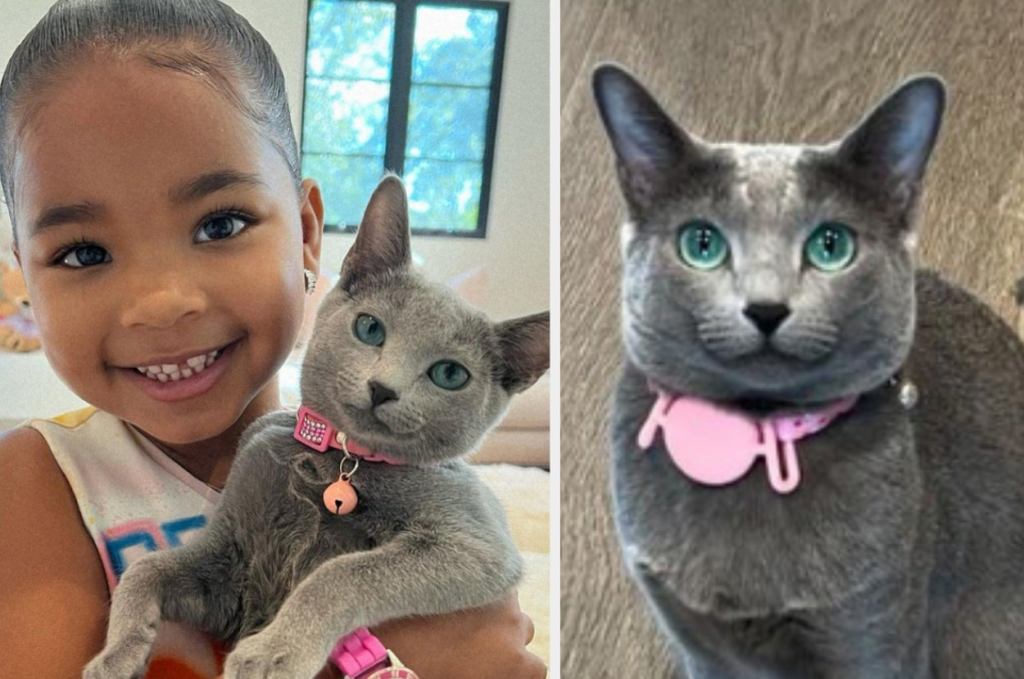
Khloe Kardashian was previously caught “face tuning” her cats, meaning she applied filters to them to make them look different.

Declawing is cruel, barbaric and has no place in a civilized society. It is illegal in most of the world, and US states are finally joining civilization with laws banning the procedure. Kardashian lives in California, where it is banned, so presumably she had it done before the ban or despite it. If it’s the latter, the chances of her facing legal consequences are slim to none.

If you’re worried about protecting furniture, there are much better options, but you should also know cats have normal behaviors that don’t always align with the concept of a perfectly-kept house. Your cat will test boundaries, throw up when she’s had too much food too fast, knock things over, get into places you never thought he’d get into, cough up hairballs and more.

You will be surprised. Things will be broken.

But that’s part of the feline appeal: they’re curious, playful animals, and you have to earn their trust. Once you do, they’ll be your pals for life — and you don’t want to betray that trust by making life miserable for them.

DNA From Dead Sheep In UK Matches Big Cats, But Is That Proof Of Their Presence?

Rumors of big cats in the UK countryside have persisted for years, with witness claims from all over the country. The latest reported sighting was in northern England.

People who really want to believe big cats are running around the British countryside are ecstatic with the news that a DNA sample from a dead sheep reportedly tested positive for panthera DNA.

The DNA sample was swabbed from a freshly-killed sheep carcass “at an undisclosed upland location” in Cumbria, northwest England, a witness told BBC Wildlife. It’s exactly the kind of countryside where people have been reporting big cat sightings for years, although the sightings aren’t confined to that area, with other witnesses claiming they’ve seen large felids as far as the UK’s southern coast.

Sharon Larkin-Snowden, who lives nearby, told a big cat enthusiast podcaster that she disturbed the “big cat” while it was feeding. The startled felid took off and jumped a stone wall, leaving the partially-eaten sheep, Larkin-Snowden said.

“I assumed at first it was a sheepdog, but then I did a double take and realised it was a black cat,” she said. “It was big – the size of a German shepherd dog.”

Jaguar in a pub
“I could really go for a Chinese! Anyone else wanna go for a Chinese?”

A swab was collected — the details are sketchy on who did the collecting and when exactly they submitted the sample — and sent to the University of Warwick’s Robin Allaby, a professor of life sciences.

Allaby, whose specialty is studying the genetics and evolution of domesticated plants, began offering a DNA testing service for the public some 12 years ago in response to the persistent rumors of big cats in the countryside. In the past samples have yielded DNA from foxes and other animals, but Allaby says this one matched the genetic profile of a big cat, although he cannot say which species.

It’s not unusual for a DNA sample to match to a genus, in this case panthera, but not to a specific species if the sample was degraded or only partial.

Rick Minter, who has made a career of tracking alleged big cat sightings across the UK, says he believes the mystery cat is a leopard. Leopards and jaguars are the only two big cats who have true melanistic color morphs — meaning some of them have virtually all-black coats — and Minter says he believes it’s more likely the former.

Neither are native to the UK or Europe: Leopards range from Africa to Asia, while jaguars range from south to Central America, with some populations edging slightly into the US.

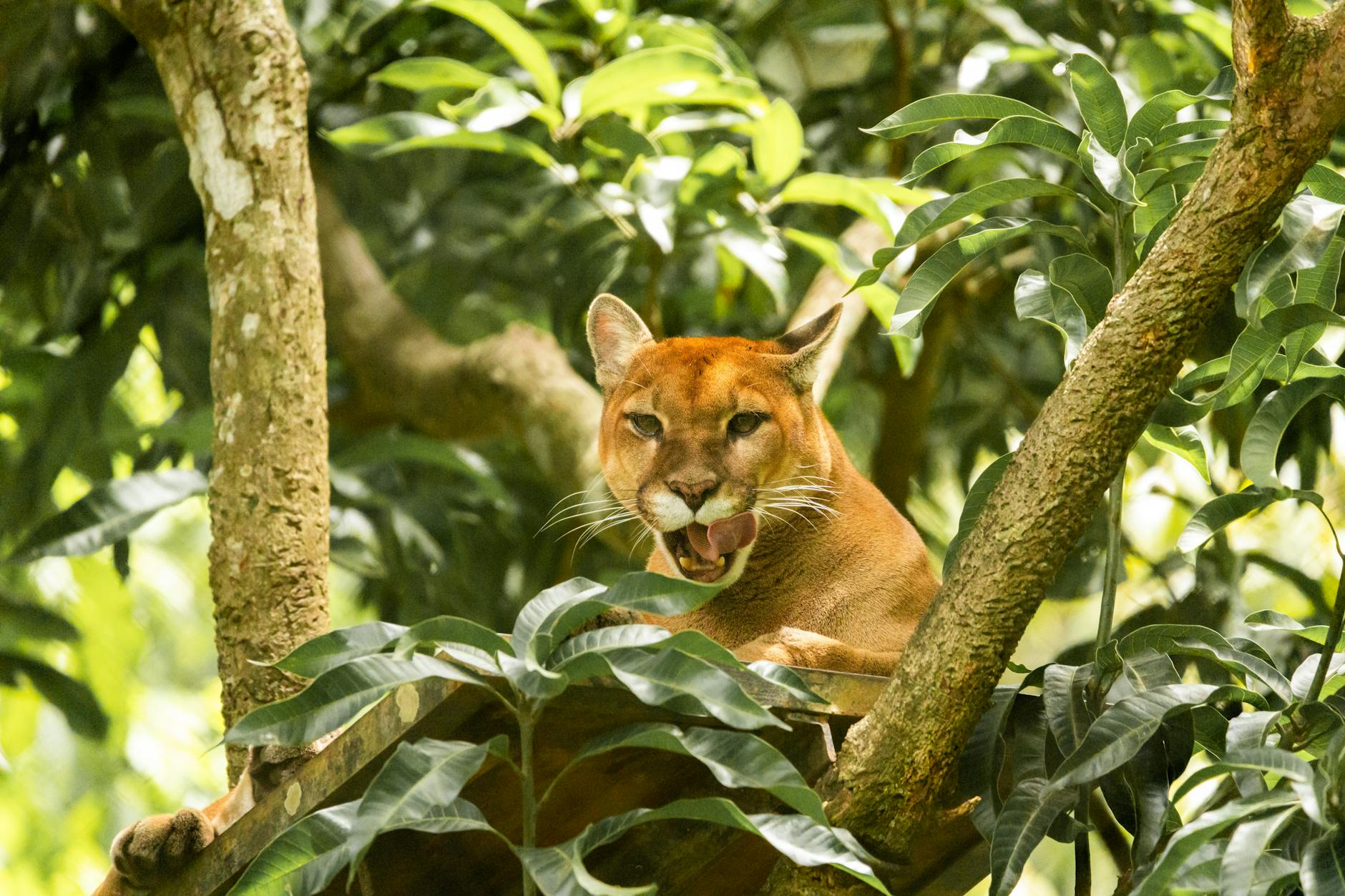
puma sits on tree
Britain’s big cat enthusiasts say they believe pumas are among the wild cats living in Credit: Jean Paul Montanaro/Pexels

Why isn’t a DNA match evidence of big cats in the UK?

If the lab results say the sample came from a big cat and that result is consistent with the witness account, what’s the problem?

Chain of custody, for one. We don’t know anything about who took the sample, where it was taken, the time elapsed between the kill and the sample swab, or who may have handled it before it reached Allaby.

In fact, we don’t know if there was a dead sheep to begin with.

If I were a prankster living in the UK, for example, and was friendly with a keeper at a local zoo, I could have the keeper swab an animal, bag it and hand it over to me. There are dozens of conceivable ways a person could obtain a sample even if they don’t know someone who works in a zoo.

Leopard in a pub
“So we left the sheep there at the edge of the field and made sure the lady saw us before we buggered off over the fence. Next day, we was in all the papers! A right laugh that was, mate.”

The problem is the provenance of the sample and what happens to it between the time it’s collected and ends up in the hands of a scientist like Allaby.

This is why chain of custody is paramount in criminal trials, and why there must be a complete record of who handled samples from collection in the field to the lab. Even in the absence of foul play, an improperly handled sample can be contaminated and render test results meaningless.

It’s not a matter of trust, it’s the simple fact that extraordinary claims require extraordary evidence, as Carl Sagan was fond of saying. Short of capturing one of these animals or getting clear, indisputable footage, any other claimed proof has to be ironclad.

Speaking of footage, that’s another issue. It’s extremely difficult to believe that a breeding population of big cats can exist in the UK countryside for years or even decades without a single definitive photo or video. The UK’s rural areas may not be blanketed by CCTV cameras like London, but they’re not the Amazon either. People live, work and farm in those regions, cameras are more ubiquitous than ever, and farmers take steps to protect their livestock, including installing cameras.

Big cats don’t just feed and vanish into the mist. They mark trees with their claws and urine, they leave distinct pug marks, they leave distinctive bite marks on their prey, and they make noise. To paraphrase one naturalist, when big cats are living nearby, you know it. Even if you don’t see them, signs of their presence are ubiquitous.

To accept the claims of tigers, leopards and pumas gallavanting in the fields around small towns and villages, we’d have to suspend disbelief or conclude that these are some sort of previously unknown ghost cats who can fade in and out of the physical plane.

I’m not a skeptic to be a killjoy. If big cats really were running around the UK, that would be a hell of a story. But we’d still need convincing evidence, and this isn’t it.