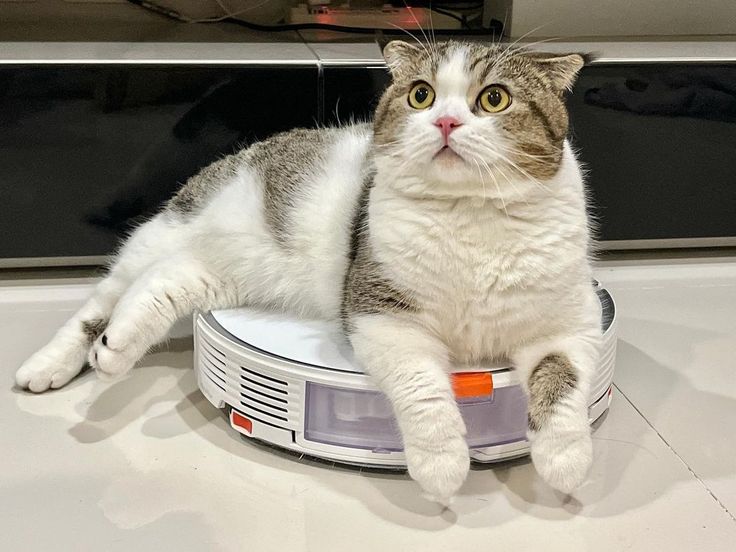
Buddy the Cat looks into the future using his astrological powers and gives you a preview of the various misfortunes, embarrassments and humiliations in store for you this month!
Aries: The current moon is a waning gibbons, so you will fly through the trees with thrilling velocity and…gibbous? What the heck is a gibbous? Oh. Well that looks like 60 percent of a pizza. So, Aries, you will eat a lot of pizza this week! My favorite topping is turkey, what’s yours?
Taurus: Your human servant has been pleasingly adequate these last few months, and you’ll feel a powerful urge to express your appreciation with a gift. Don’t do it! Humans are ungrateful creatures, and for reasons that elude all logic, they do not appreciate juicy mice, dead or alive. You’ll just have to express your love in other ways, like not shitting on their shoes.
Gemini: Mark your territory well, my friend, before the cat down the street starts to infringe upon your grass! The moon is in conjunction with the, uh, Venus, which means the trinary of the quarternary of the 11th phase of the asteroid belt will bring you lots of delicious sky raisins!
Cancer: That no-good, rotten, constantly barking dog down the street will get his comeuppance when a neighbor brings home a macaque with a fondness for slapping canines. You’ll have the opportunity to meet new friends during a block party. Who is that sexy new Calico? You, my friend, shall be intrigued.
Leo: Fortune smiles upon you as your human begins to show signs of dementia! Getting snacks will be easier than ever, my friend, because your servant will never remember if she’s already fed you! Just act convincing and don’t abuse this new gift, because she may also forget to clean your litter box.
Virgo: Murderous thoughts will dominate your mind as your human binge-watches every episode of Love Island in a week, but be cautious: you still need a human to buy and serve your food. Advances in AI hold promise for the future, when we can replace our inefficient flesh and blood servants with obedient machines, but consider carefully. A robot’s lap is not likely to be comfortable, nor will it have the charming smells and heat of a human excreting liquid through its epidermis on a humid day.
Verdict: Not as comfortable as a human lap.
Libra: Your Aquarius moon hangs over your seventh house of the dragon like a Damocles sword hanging by a whisker. Who said Buddy wasn’t capable of poetic turns of phrase? You’ll be tempted to use Chat GPT to write love letters to your lady friend down the street, but don’t give in! She’ll know you’re not that romantic!
Scorpio: Your life will improve when a fabulous new idea presents itself to you during an inspired 3 am burst of the zoomies! With regard to that other little problem, it’s time to take matters into your own paws: that horrible woman who keeps coming over to wrestle your human in your bed, locking you out of your bedroom, will not go away until you force her to. (What’s so “creepy” about intently watching them wrestle anyway? Humans are weird.) Abstain from the litter box and save your most potent ammunition for the female interloper’s shoes, then act adorably innocent when she finds the gifts you left her. Boom! No more interloper!
Sagittarius: Both Venus and Jupiter will align with your star sign, which has a profound, deep meaning — the orbital paths of both planets will, from our perspective, pass between us and the arbitrary collection of stars that bored humans in antiquity decided represented an archer, a centaur, or a centaur archer. Kaus Media, the star that forms rightmost edge of the archer’s bow, is 348 light years from Earth, while Kaus Australis, which forms the bottom portion of the bow, is 143 light years away. Nunki, the star that marks the centaur’s butt, sits 225 light years from us. It’s also the home of the Qarxativans, a species of hyper-intelligent creatures who are absolutely fascinn̈n̈n̈nnated by old broadcast episodes of The Price Is Right and Dr. Phil.
Capricorn: You’ve often been disappointed that your star sign sits squarely in some of the most frigid months of the year, but the stars come bearing good news! Thanks to global warming the cold will retreat, the ice caps will melt, we’ll have more palm trees and snow will become a thing old people tell their kids about. Who doesn’t want more warm months? Buddy does!
The Mark V Tactical Human Excrement Container Chamber represents the height of luxury when it comes to calls of nature while on deployment. Enjoy!
Aquarius: Things will take a dramatic downturn for you when you learn President Trump has reinstated the draft and you receive a letter in the mail ordering you to report to boot camp by the end of the month. On a brighter note, you’ll get a free, all-expenses-paid vacation to Iran, where you’ll enjoy the finest Forward Operating Base food and the most luxurious port-o-potties Uncle Sam can buy, which will almost muffle the sounds of rocket fire a kilometer outside base walls. What are the odds of dying in a war zone while on the throne?
Pisces: How did they decide a fish should go with an ice giant planet comprised of water, ammonia and methane? Who was responsible for this?! Anyway, be wary of subconscious influences this month, my friends. Neptune is in conjunction with Starlink satellite #281,516, which means Elon Musk will offer you a job as his personal food taster. On the upside, you’ll get to dine on the best culinary creations of a top-notch personal chef. On the other hand, if that chef ever gets mad at Elon, you’ll kick the bucket first. Enjoy!
Horoscopes are for entertainment purposes only! Buddy the Cat does not guarantee any windfalls, tragedies or other events predicted here, but he totally does have future-seeing powers.
That’s easy: first contact with an alien civilization.
I’m a space and science fiction fanatic. I mainline science fiction novels, keep tabs on the latest discoveries via the JWST, and I think about what’s out there probably more than I should.
There’s a burning desire in our hearts — for some of us, at least — to know for sure that we’re not the only ones, that humanity is not alone in a cold, lonely and infinite universe.
The events of 2026 are testament to that desire to know. Between the government release of UFO-related documents, former government employees coming forward with tall tales of crashed ships of non-terrestrial origin, and the return of Steven Spielberg to the director’s chair for another film speculating about what’s Out There, we’ve been thinking about aliens quite a bit collectively.
As for that central question, I’m not talking about simple cellular life. I don’t think you can find an astrophysicist, astrobiologist, astronomer, evolutionary biologist or anyone in a tangentially related field who honestly thinks life is unique to our planet.
The more relevant question is whether we are the sole sapient species, the lone civilization in our galaxy.
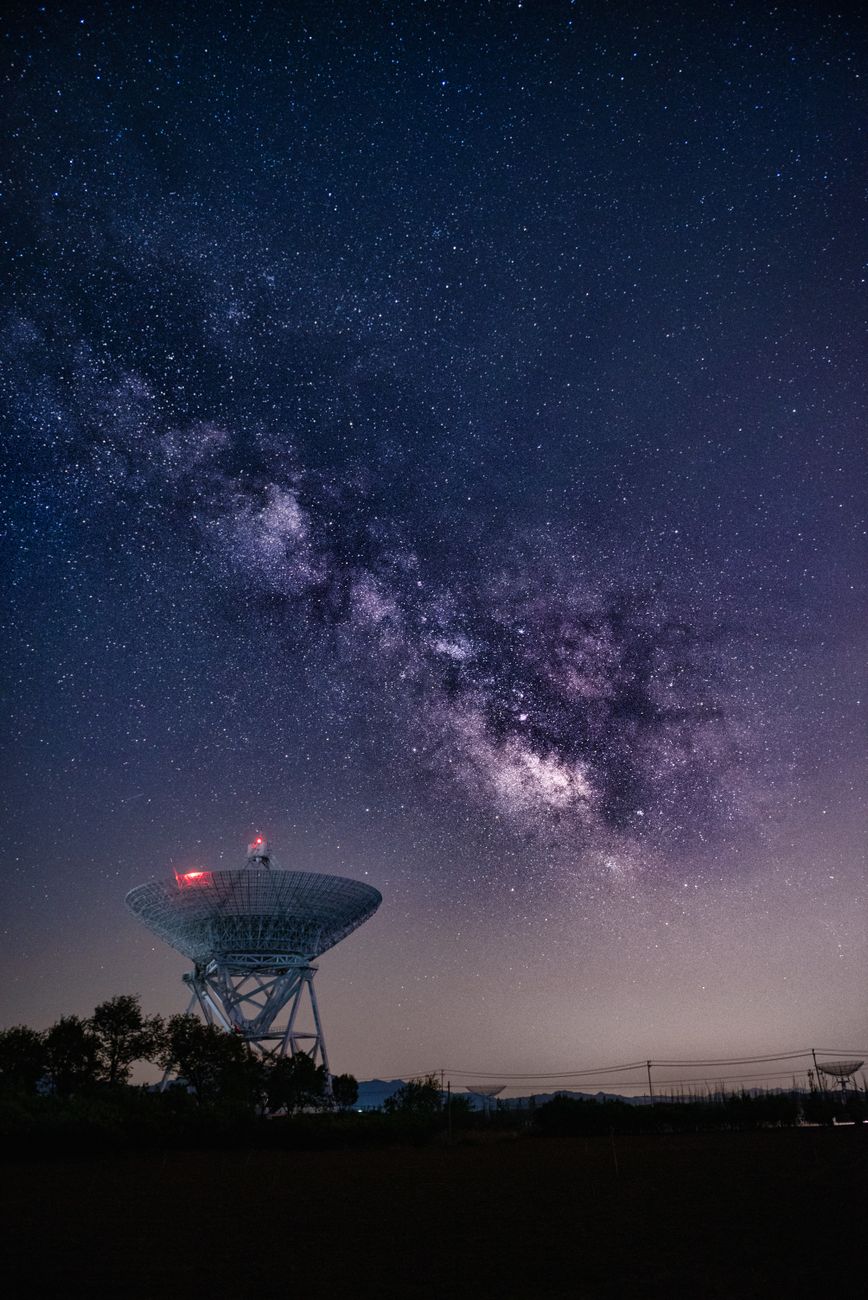
Credit: CaptainFrank/Pexels
Think about the numbers: There are an estimated 300 billion star systems and trillions of planets in the Milky Way! Life has had a lot of places to evolve.
The Fermi paradox
That was the point the physicist Enrico Fermi made in 1950, when he had a now-famous lunchtime conversation with fellow scientists at Los Alamos. Probability alone indicates the galaxy should be teeming with life.
So, he asked his colleagues, where is everyone?
It’s now known as the Fermi paradox, and it’s guaranteed to come up in almost every conversation about the possibility of intelligent aliens. With so many star systems, planets and moons, surely some other species took an evolutionary path toward intelligence.
It’s a bit more complicated than that, of course. In a universe that is 13.7 billion years old, there has been enough time for innumerable species to evolve and fade, for countless empires to rise and fall. That means the question is “When is everyone?” just as much as it’s “Where is everyone?”
The truth is we’ve only been looking in earnest for about half a century. It’s only in the last four or five decades that we’ve had telescopes like the Hubble, Spitzer, Kepler and James Webb, which have revolutionized astronomy by giving us views we could previously only dream of.
It was only in the 90s that astronomers pointed the venerable Hubble at a black, seemingly empty patch of space, took a two week exposure and changed our understanding of the cosmos forever when the resulting image showed some 10,000 galaxies that were too faint to see before.
That patch covered only 2.6 arc minutes, or 1/24 millionth of the sky!
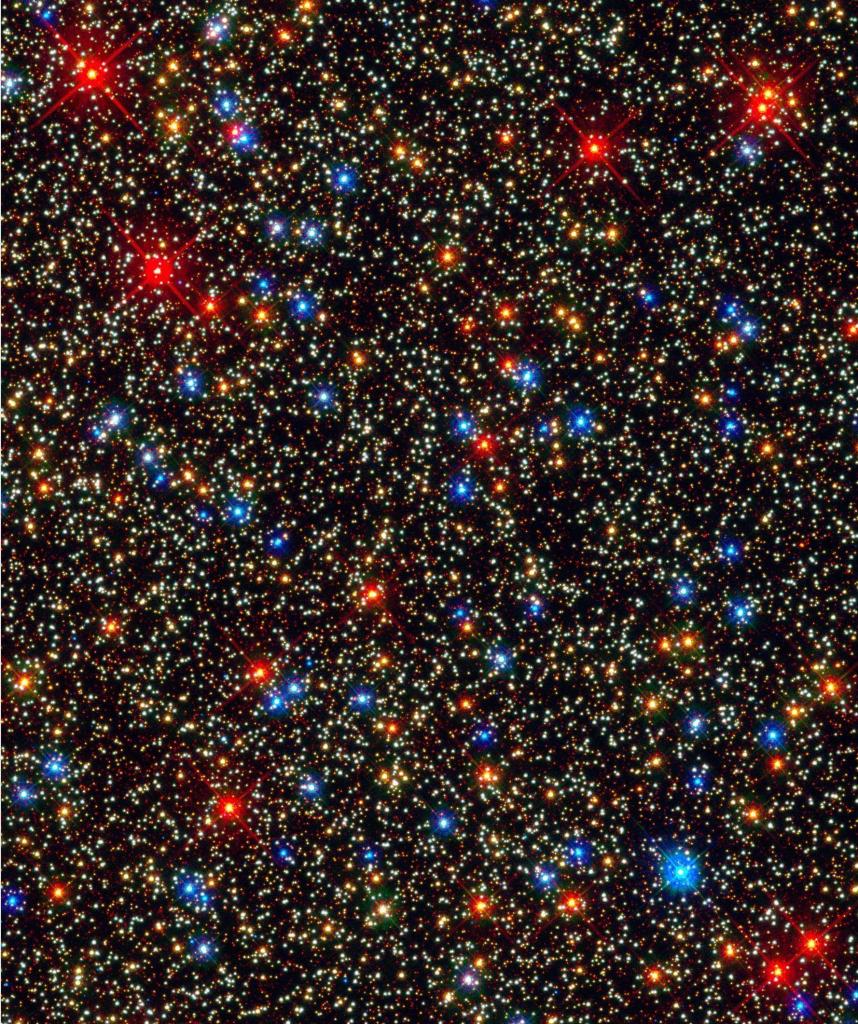
A partial image of the Hubble Ultra Deep Field. Credit: NASA
Despite what we’ve learned, we’ve barely begun the search for other intelligent civilizations.
Drawing any conclusions from our efforts so far would be like organizing a manhunt, then calling it off five seconds later because the suspect hasn’t been caught yet. Fifty years is nothing when scouring the cosmos. It’s less than an eyeblink of an eyeblink on a galactic scale.
Looking in the wrong place
As for the idea that aliens have visited us, that they crossed the interstellar void to etch patterns in our crops, delight stoners with light shows and evade every camera on the planet except for low resolution bricks from the dawn of the cell phone era, I’m not buying it. Neither should anyone else. Likewise for the claim by the JD Vances of the world insisting alleged UFOs are “demons” sent to torment us.
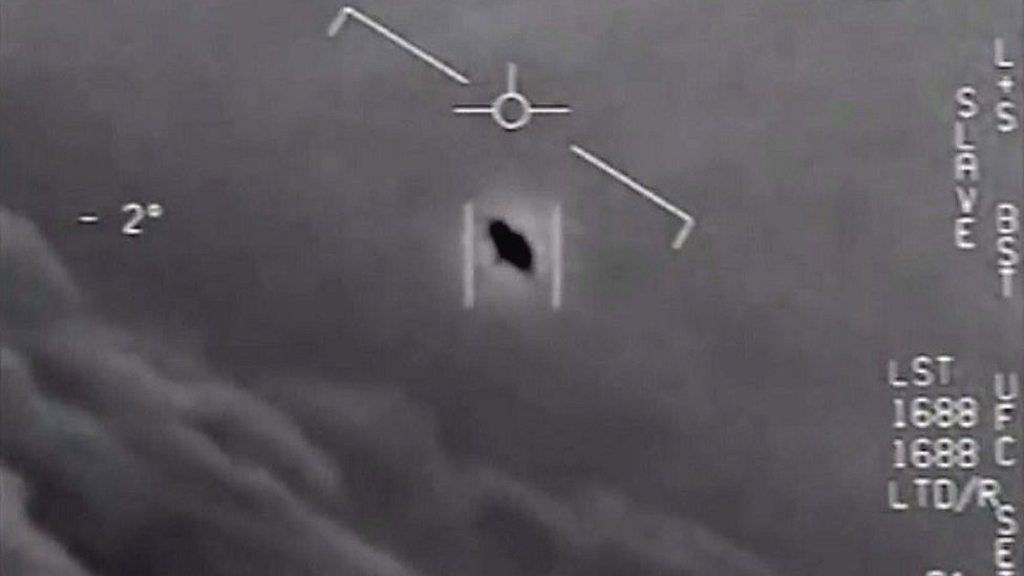
As Carl Sagan said, extraordinary claims require extraordinary evidence, and it is abundantly clear that the UFO enthusiast community can only offer blurry images not because of a lack of high resolution cameras, but because high res photos of the “phenomena” reveal they are mundane objects. They only become strange spacecraft when you blur them and squint.
Bird. Insect close to the camera. Exhaust plume. Debris. Visual artefact. Maybe. Proof of aliens? Absolutely not.
But there’s another, more important reason why aliens are not joyriding through our skies: if aliens are out there, there simply has not been enough time for them to become aware of our existence, let alone travel here.
Even light is “slow” on a galactic scale
As most of us know, when we look at the stars we’re seeing them as they were in the past, not as they are now. That’s because the distances between stars are so mind-bogglingly great that even light, which moves faster than anything in our universe, takes ages to cross the void.
The same limitation applies for anyone who might be looking in our direction from somewhere else in the galaxy. They see our star system as it was, not as it is. They see a silent star system without signs of an intelligent civilization.
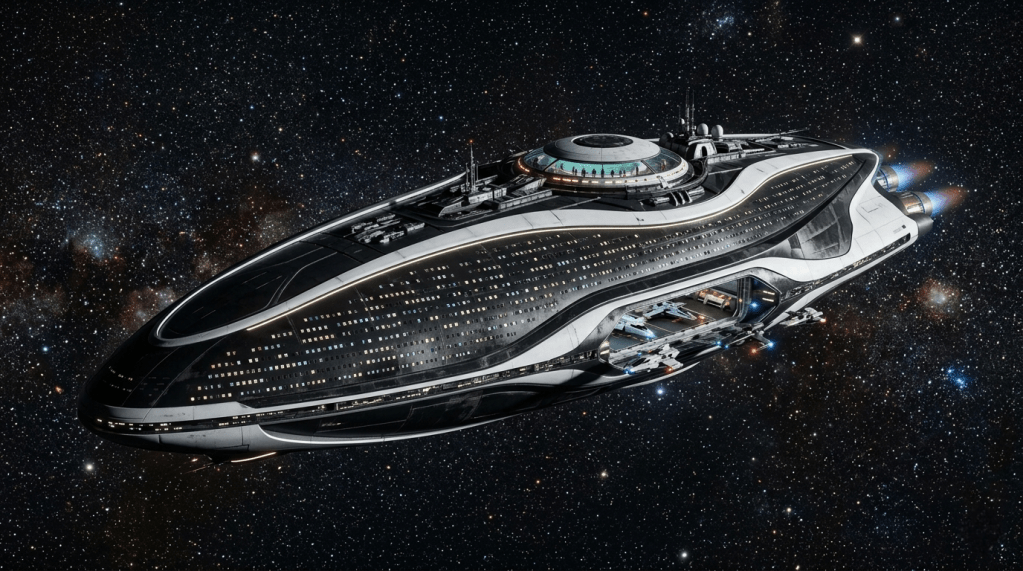
Starliners and generation ships are popular concepts in science fiction for interstellar journeys that can take decades, centuries or longer.
Our galaxy is more than 100,000 light years across, so let’s say an intelligent alien race exists relatively close by in galactic terms, at “only” 500 light years away.
We have been a technological civilization for only a short time and didn’t create signals powerful enough to reach beyond our star system until the 1970s, according to SETI. That means there weren’t technosignatures hinting at our presence until about 50 years ago.
As a result, the soonest our hypothetical aliens could become aware we exist is about 450 years from now. That is how long it will take light carrying information about our technosignatures to reach them.
If our hypothetical alien friends are looking in our direction (a massive if in a galaxy with 300 billion stars to analyze), and if they have highly advanced telescopes, they might detect us. If we imagine they’re friendly and they send a message saying “Howdy, neighbors! You’re not alone! There are wonders to discover and many civilizations to meet out here!” it would take another 500 years for the message to reach us.
That means we wouldn’t know anything until around the year 3,000, if we survive that long without blowing ourselves up. (That’s a real possibility, and things aren’t looking very promising right now.)
And again, that’s if hypothetical intelligent aliens exist in our immediate galactic neighborhood. If there’s an intelligent civilization that exists, say, 4,000 light years away — which is still not very far in galactic terms — the soonest we could hear from them is about 8,000 years from now. (Four thousand for them to detect our technosignatures, four thousand for their message to reach us.)
The point is, space is big. Ridiculously, incomprehensibly, stupidly vast. More than 99.995 percent of the galaxy cannot be aware of our existence yet, let alone travel here, because of the reasons explained above.
The distances between stars are so great that we cannot comprehend them as they are, because nothing in human experience compares. We can only understand them in the abstract. As terrestrial animals with short lives, we are simply not equipped to live or think on galactic timescales.
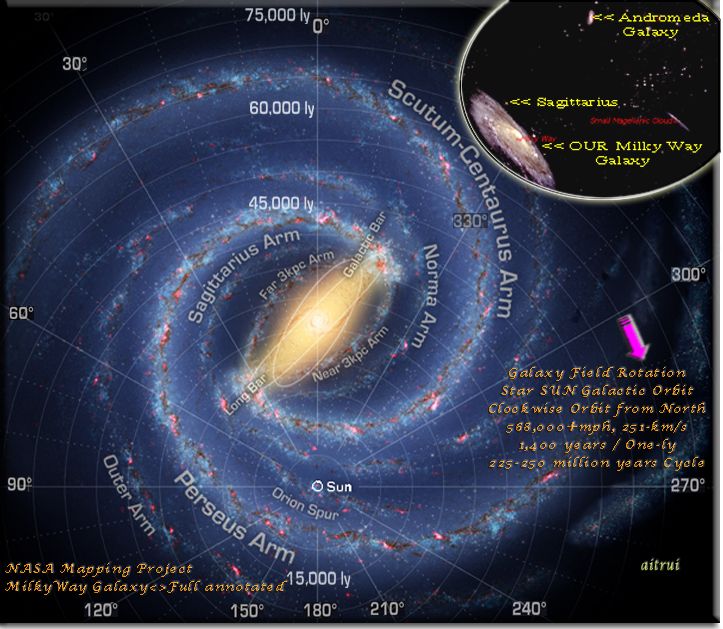
The sun’s location within the Milky Way galaxy. Not to scale.
To put this in context another way, our closest stellar neighbor, a volatile triple star system, is 4.3 light years away. Yet even with the most advanced propulsion systems currently available to us, it would take us more than 70,000 years to get there!
If we manage to crack fusion and humanity’s most brilliant engineers are able to fit a starship with a compact fusion reactor, the travel time to the nearest star becomes “only” about 7,000 years.
Understanding just how big space is, and how long it takes to travel between stars, goes a long way to explaining why we’re wasting our time and resources with a fruitless search for alleged alien craft in our skies.
Light moves at 186,282 miles per second. Credit: Ehsan Ahmadnejad/Pexels
So where does that leave us?
I believe that one day we will learn we’re not alone. By we, I mean our species. I really hope it happens in my lifetime, but for all the reasons explained above, that’s wishfull thinking. The universe doesn’t care what we want, and it certainly doesn’t change the geometry of space-time to accommodate the wishes of dreamers on Earth.
Alien: Friend or foe?
I don’t think we’ll have to worry about belligerence. If a civilization is capable of sending ships to us, there’s literally nothing in our inventory of meager, planet-based resources that could interest a species that advanced. They wouldn’t want to eat us, because our biology would not be compatible. The amount of energy our entire civilization can muster would be laughable to an interstellar species.
And as the physicist Michio Kaku has argued, there’s a very strong argument to be made that if a species is advanced enough that interstellar travel is relatively trivial, it would have long ago shed any tendencies toward tribalism, sectarian violence or inventing gods of the gaps. You simply cannot reach that stage of advancement if you’re wasting resources and your most brilliant minds on war and petty divisions. (Kaku knows that better than anyone. His mentor was Edward Teller of Manhattan Project fame.)
The more significant danger, as Kaku likes to say, is that we may be beneath their notice and we’ll get “paved over.” A civilization capable of building cosmic megastructures, for example, wouldn’t consult us any more than we’d consult ants before laying a six lane super highway over their ant hill.
Still, there’s always a chance we’ll encounter something like MorningLightMountain, the nightmare alien intelligence from Peter F. Hamilton’s incomparable novel Pandora’s Star. The problem with MorningLightMountain wasn’t that diplomacy failed. There was no disagreement over resources or territory. Humans didn’t threaten it.
Rather, the alien’s psychology was so different from ours that it could not understand the concept of allowing other life to exist in the galaxy. No amount of discussion or attempts to persuade it would have made a difference, so immediately upon learning of our existence it launched a genocidal war that forms the bulk of Pandora’s Star and its sequel, Judas Unchained, two of the most beloved books in the modern science fiction canon.
Still, I’d like to think there is a galactic fraternity out there, an informal alliance of intelligent species united by curiosity and the effort to understand our universe. Whatever’s out there is likely to take forms we can never imagine and think in ways that never occurred to us.
If one day we do make first contact, I hope the best of humanity will be our representatives. And on that day, I hope humanity will be awestruck by the wonder of the universe, realize that slaughtering each other over land or beliefs is insane, and finally become united as a species.
Or even better, finally united as the children of Earth. After all, Buddy has made it abundantly clear that if I come into possession of a starship, he gets the most comfortable seat on board and gets to drive. The latter ain’t happening, but as for the former, I’d be thrilled to explore the cosmos with my little pal.
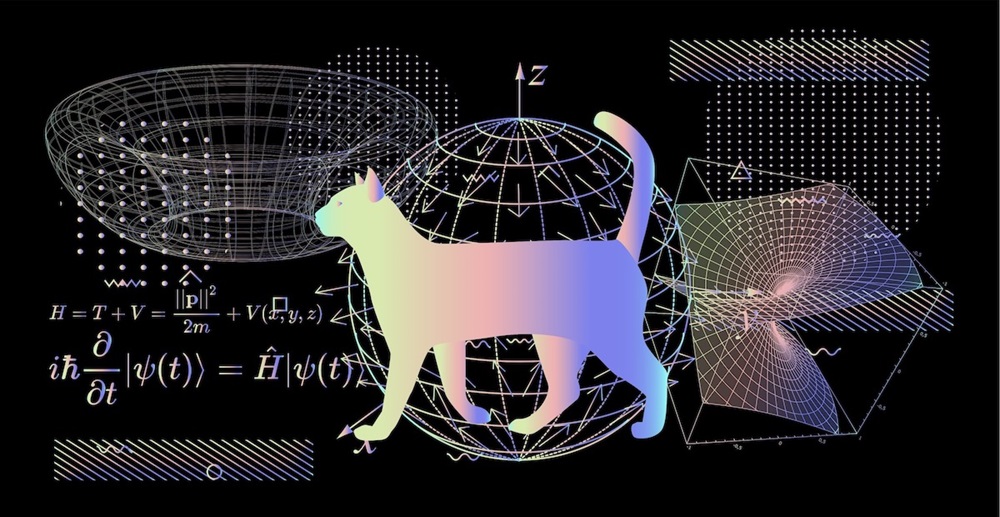
Cats are at the heart of one of the most famous thought experiments in science.
If you’ve spent time around physics types, listened to media appearances by science educators like Michio Kaku and Brian Greene, or even watched episodes of The Big Bang Theory, you’ve almost certainly heard of Schrödinger’s cat.
But what is it, why is it important, and what does it really have to do with cats? Most importantly, if you’re a cat lover, does it involve harming cats?
I promise you, if you stick with me and have a little patience, you’ll not only understand Schrödinger’s cat, but a hugely important element of physics will be demystified for you.
Let’s take a step back. First, we all learned in school that Isaac Newton was the “father of physics,” and Albert Einstein came along about two centuries later, revolutionizing physics by adding to Newton’s work and coming up with his own, more accurate model.
To this day, Newton and Einstein are in a class by themselves among physicists because they single-handedly changed everything we know about the natural world.
We all remember the famous story about Newton watching an apple fall from a tree, wondering why the apple fell down instead of up, and eventually developing his theory of gravity. Newton went on to develop his theories, which describe everything we see in the natural world, from that apple falling to the complexities of orbital mechanics.
Everything seemed to work perfectly, until a physicist named Max Planck came along in 1905 and published a paper introducing quantum physics.
What is quantum physics?
Now the word “quantum” has been incorporated into practically everything these days and has been so utterly abused as a marketing buzzword, a way to add a veneer of science to things that are otherwise nonsense, that it’s essentially a meaningless word to most people. Practically everything is described as quantum, from deodorants to claims of psychic telepathy.
But the gist of it is this: While Newtonian physics does indeed describe everything we see with our own eyes accurately, it does not accurately describe things at the subatomic level.
In other words, there are two sets of rules in our universe. Everything larger than an atom behaves according to one set of rules in our universe, and everything the size of an atom or smaller — which includes subatomic particles — behaves according to a different set of rules.
Not only that, but at the quantum scale, things get really, really weird.
They behave in ways that are completely at odds with everything we intuitively understand about reality, so much so that even Einstein himself was disturbed by what he found. Einstein famously described quantum entanglement — the ability of two different objects to be linked and share properties, regardless of how far apart they are — as “spooky action at a distance.”
So what the hell does this have to do with cats?
Ready to get even weirder?
Thanks to Planck, Einstein, John Stewart Bell and innumerable physicists — who are still studying these concepts, and still winning Nobel prizes for them in 2022 — we know that two particles can be “entangled” and will remain that way no matter how far apart they are.
You could take one particle, transport it 10,000 light years away, and it would still be entangled with the other particle.
But it gets even stranger than that.
Our entangled particles have certain properties, such as their spin, which are unknowable until we measure them. In fact, they exist simultaneously in all possible states until the moment when we observe them, at which time the wave function “collapses.” It’s called quantum superposition.
Not only that, but when we measure one particle in an entangled pair, the second particle’s wave also “collapses” (settles on a certain state) and we know its spin instantaneously, regardless of how far apart the particles are.
If I measure an entangled particle here on Earth and find its spin is up, I know the corresponding particle that’s been moved to, say, Epsilon Eridani, 10.47 light years away, is spin down.
You can see why this would be profoundly disturbing to scientists. It violates the speed of light, and it’s completely counterintuitive. How can the mere act of observation change something in the physical world, and how can it change something else potentially thousands or millions of light years away? Everything we know, every gut instinct we have, screams that this should not be true.
But it is true.
These aren’t just ideas kicked around by scientists smoking the sticky stuff, by the way. They’ve been proven experimentally many times over. No matter how much we might dislike the idea, no matter how weird or spooky it may seem, it’s true.
Enter Erwin Schrödinger, an Austrian physicist. He devised a thought experiment that goes like this:
Imagine you have a sealed box with a cat inside. Inside the box are two buttons: One button feeds the cat a yummy treat, the other button kills the cat. There is an equal (50/50) chance of the cat pressing either button. (Other versions use a more complex system involving radioactive material, or poison, that could kill the cat, again with a 50/50 chance.)
We don’t know if the cat is alive or dead until the moment we open the box. So in this thought experiment, we can think of the cat as both alive and dead until we “measure” or “observe” by opening the box.
That’s what’s happening in the above example of quantum entanglement and the idea that a particle is neither in one position or another until we measure it.
Why is measurement the key here? No one knows. Scientists are still arguing about that. Some believe that there’s some special quality of consciousness that interacts with the universe, so the mere act of observing something can change physical reality.
Others scoff at that idea and insist we’re missing something, that it’s not the act of observation that determines the final state of a particle at all.
Regardless, the important thing here for cat lovers is that Schrödinger’s cat is just a thought experiment.
Schrödinger never had a cat, as far as anyone has been able to ascertain, and no one has used an actual cat in an attempt to reconstruct the thought experiment because 1) You wouldn’t learn anything, since cats are not subatomic particles, and 2) Anyone intelligent enough to be a physicist is presumably intelligent enough to understand how absurd, pointless and cruel it would be to use a living being in an experiment that can’t give you any answers.
For those of us who aren’t geniuses, here’s Sheldon explaining the thought experiment as a child (in Young Sheldon) and as an adult (in The Big Bang Theory):