‘Take Me To Your Leader”: Aliens Make First Contact With Cats

An advanced alien civilization learns felines, not humans, are the true power on planet Earth.

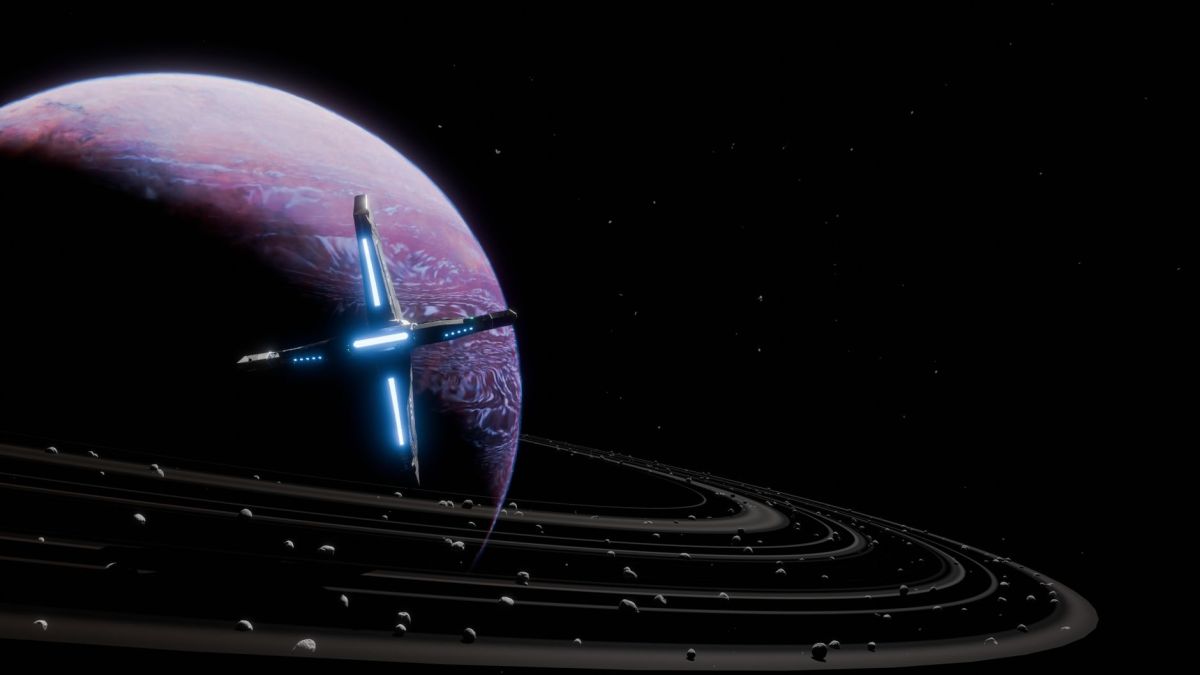
FRIENDSHIP STATION, Low Earth Orbit – The diminutive, furry creature was not what Carophe was expecting.

As the Voice of Friendship, the Carthonian Star Empire’s translator in the service of Grand Diplomat Volqar, Carophe had treated with more than a dozen civilizations, from the aquatic Ar’phin to the starfaring Barkevious Mingo.

In his experience aliens came in endless forms and sizes, but if there was one constant in all the first contact ceremonies he’d attended, it was the evident excitement on the part of newly greeted species, who were always fascinated to discover other intelligent life in the cosmos.

This creature, known as Chonkmatic the Magnificent, King of All Cats, seemed minimally interested.

Chonkmatic’s eyes fluttered and closed as Carophe was halfway through his speech welcoming the creatures of Earth to the galactic fraternity.

The “cat,” as Chonkmatic’s species had been described to Carophe, slumped against the table, the fur on its pudgy front side gently expanding and contracting.

Carophe hesitated.

“What’s it doing?” Grand Diplomat Volqar asked him via mindlink.

“I believe it is unconscious, sir,” Carophe replied via the same private channel.

“Shall we present it with the Gift of Peaceful Intent and see if that stimulates it?” Volqar asked.

Carophe considered the question, then quickly acquiesced despite his misgivings.

“It may be worth trying, my lord,” he said.
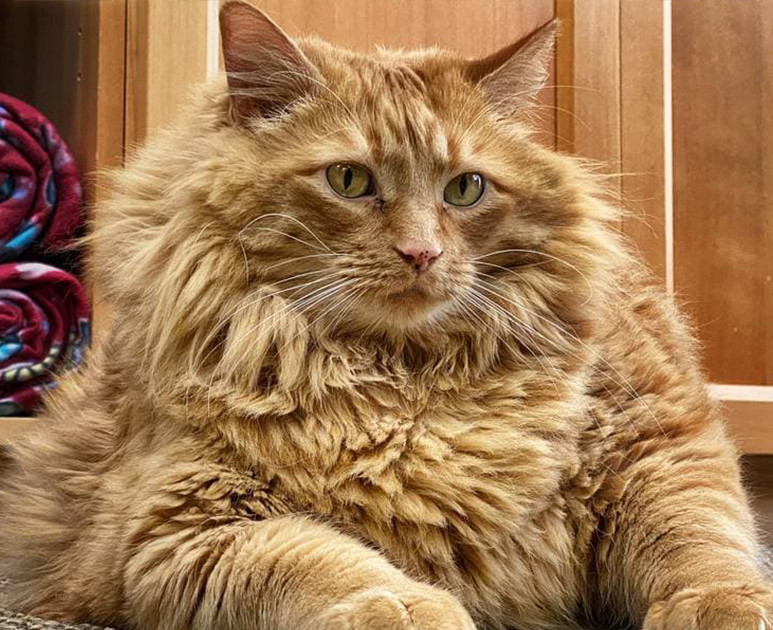
Fluffy orange tabby cat sitting indoors with its front paws extended
Chonkmatic the Magnificent, King of All Cats

Chonkmatic spasmed as a pair of Carthonian ceremonial guards sounded their horns, then glowered at the delegation. The annoyed expression passed quickly, however, and was replaced by curious interest as another Carthonian approached with the gleaming token of friendship. Carved from a precious metal found only on Carthonia Prime, it refracted light in a thousand wavelengths and seemed to shimmer with its own incandescence.

“Oooh. Shiny!” Chonkmatic said, clapping his paws excitedly.

“He seems to be taken with it, sir,” Carophe mindlinked the Grand Diplomat.

“Please accept this gift as a gesture of our kindest intent,” Carophe told the feline, who was now sniffing the token and making curious noises.

Chonkmatic watched as the dignitary placed the token before him, prodded at it with an exploratory paw, then swiped it off the table in one fluid motion. He blinked twice, watching with mild interest as the ceremonial gift rolled to a stop on the floor, then returned his gaze to Carophe and Grand Diplomat Volqar.

“What was that?” Volqar’s concern was palpable through the mindlink.

“Not to worry, sir,” Carophe sent a reassuring thought back to the ambassador. “Our cultural file says this species expresses pleasure by tossing items onto the ground.”

“What strange, fascinating little beasts,” Volqar replied.

“Indeed, sir.”
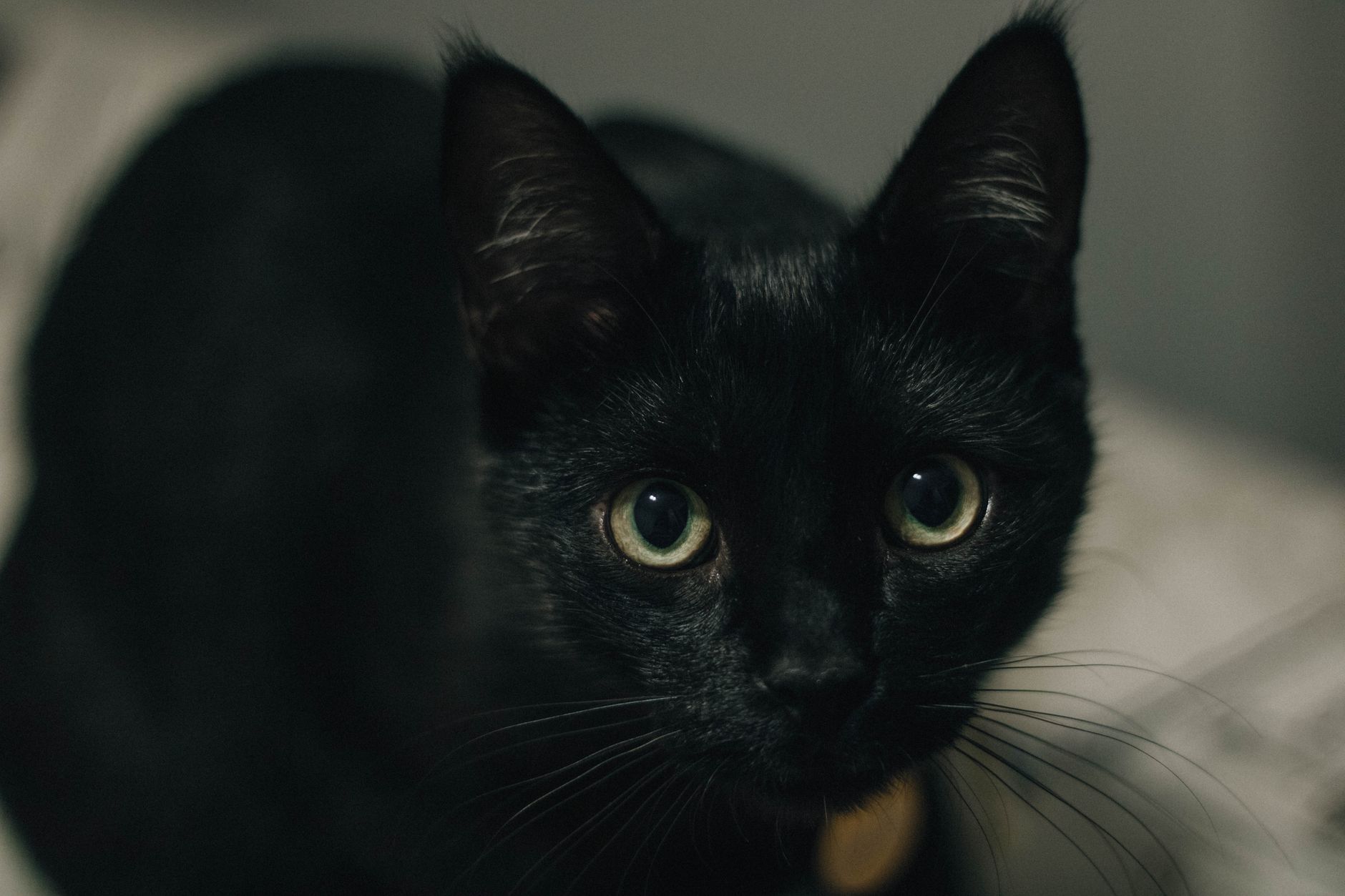
Close-up of a black cat with bright green eyes
Envoy to Inferior Beings Credit: Mayara Caroline Mombelli/Pexels

Another feline, noticeably slimmer, with a light-absorbing black coat and piercing yellow eyes, spoke up.

“As Envoy to Inferior Beings, I have prepared a list of tribute items you can provide to smooth the path to friendship with felines and the other, lesser life forms on Earth,” the black cat said, offering a scroll with symbols scratched onto it.

A dignitary took the scroll and brought it to Carophe, who blinked as his cogitator annotated the scratching into glyphs he could understand.

“Boxes, cardboard. Snacks, unique and delicious. And you’d like to…borrow members of our species to test them as ‘napping substrates'”?

“That is correct,” Envoy to Inferior Beings confirmed.

Carophe and the Grand Diplomat exchanged a glance.

“Envoy,” Carophe said, “we were led to believe that another species, the humans, are the ones who actually run this world.”

The Envoy wrinkled his whiskers in distaste and his tail twitched.

“That is an unfortunate misunderstanding.”

Carophe nodded.

“Yes, but…” he said, attempting to express himself in neutral language, “our long range scans show extensive human infrastructure, industry, learning institutions, seats of power. Humans seem to be at the forefront of every technological advance and major decision. While cats…”

Envoy to Inferior Beings raised a paw.

“A demonstration, if you will,” he said as a viewscreen displayed an outbound video call.

A human face appeared on the screen.

“No. 10 Downing Street,” said the human, who wore a dark hat and a dark collared shirt with two parallel bronze bars. “Captain Grant speaking.”

“Captain, who is the prime minister of your esteemed nation?” the Envoy asked.

“That would be Prime Minister Andy Burnham, sir,” Grant answered.

“And who is the true power within No. 10? The entity to whom all answer, who exerts his will over every decision, decides the fates of ministers prime and lesser, and snubs or warms to visiting heads of state according to his whims?”

Captain Grant smiled.

“Larry the Cat, of course,” he said. “We’re all honored to serve Larry here at No. 10, sir.”

“Thank you, captain,” the Envoy to Inferior Beings said, terminating the call.
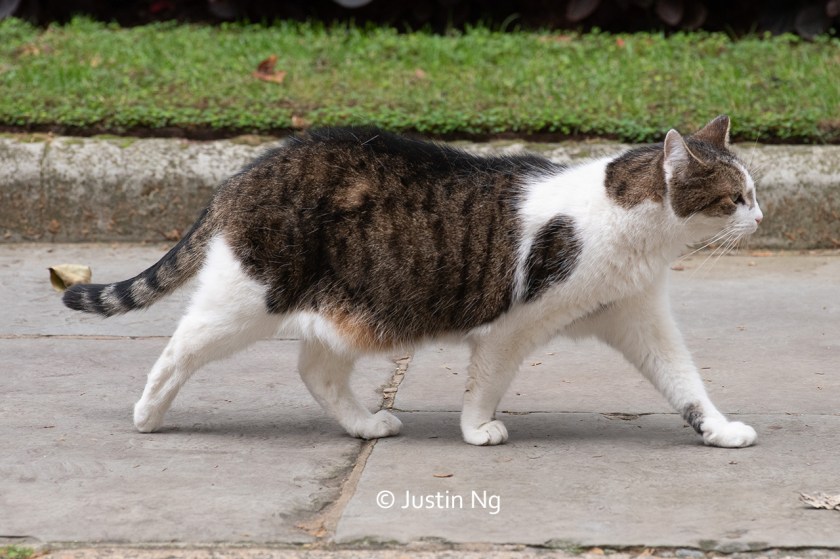
Brown and white tabby cat walking along a paved path
Larry the Cat allows human figureheads to serve as nominal heads of state, but remains the true power in the United Kingdom. Credit: Justin Ng/Twitter

“I can dial up the United Nations and every sovereign state in the world save for the frozen wasteland of Canada, and you’ll hear the same thing,” the Envoy told the alien delegation.

“That won’t be necessary, Envoy,” Carophe said. “Though I do wonder why, if felines rule this planet, humans occupy the official positions of power.”

“Ah,” the Envoy said, steepling his paws. “As you can see by our king, Chonkmatic, cats have more important pursuits such as napping. Humans are also sensitive creatures, you see, so we allow them the illusion of power and control while we’re content to operate from the shadows, where the seats are more comfortable and one can enjoy snacks without constant interruptions from humans bothering us about minutia like war and plagues.”

Without warning, the Envoy to Inferior beings emitted a high-pitched vocalization. A second or two later a door opened and a human female peered out from the next room, concern furrowing her brow.

“Yes, dear?” she called sweetly.

Envoy to Inferior Beings stretched, yawned and made the high-pitched sound again. The human female crossed the room, bent down next to the Envoy and caressed his head.

“You’re the best boy, aren’t you? Yes, you are! Who wants scritches? Anything for my little angel!”

Envoy to Inferior Beings winked at the alien dignitaries, flashing an ‘I told you so‘ smile.

Carophe avoided looking at the Grand Diplomat.

“I see,” he said. “Well please allow us some time to review your, uh, requests before our next meeting. This has been productive and illuminating.”


Grand Diplomat Volqar led the delegation out of the meeting chamber, trailed by Carophe and the rest of the dignitaries from the Carthonian Star Empire.

Carophe was trying to make sense of the strange encounter when he nearly stumbled into Volqar, who had stopped dead in his tracks.

Ahead of them was a creature, another cat judging by the similarities in form and feature to King Chonkmatic and Envoy to Inferior Beings. This cat, however, was gargantuan, rendering the king and envoy Lilliputian in comparison. Its orange fur was marked by jagged back stripes while its languid movements hinted at remarkable physical strength.
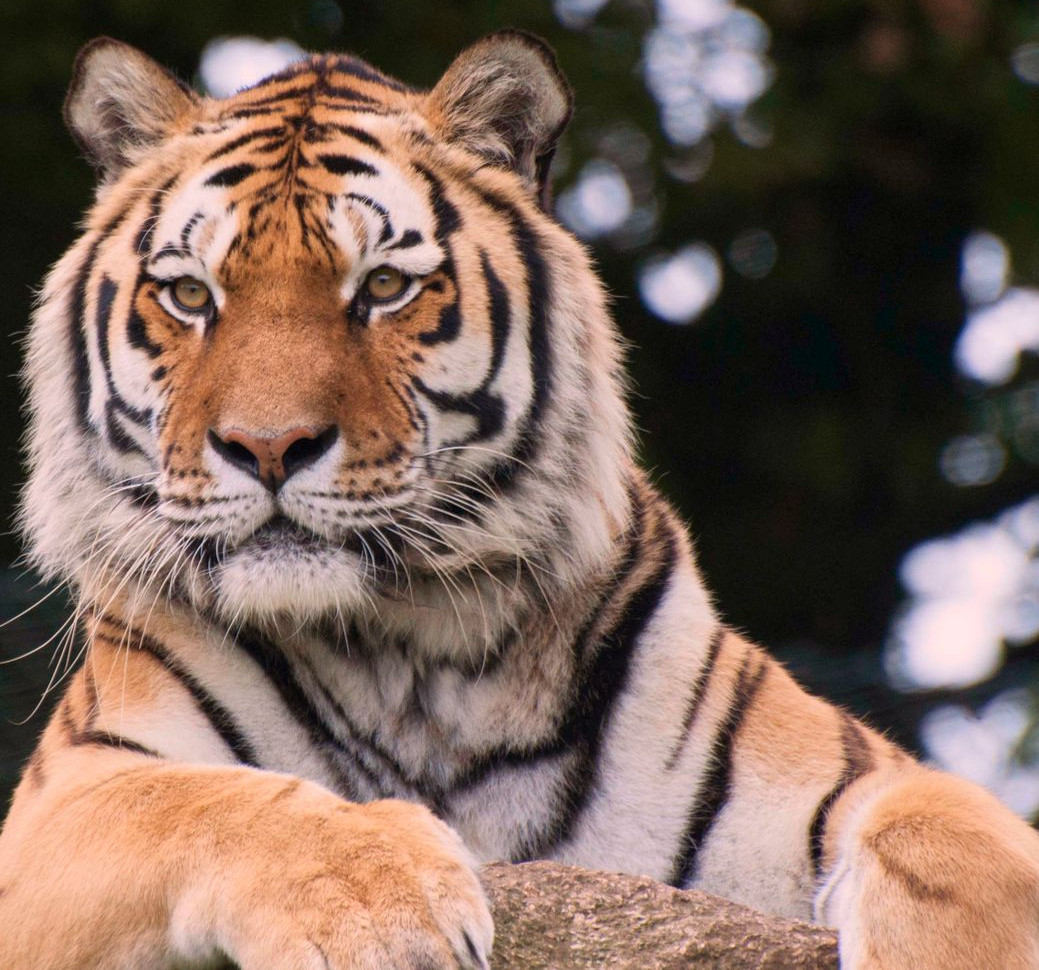
Close-up portrait of a Bengal tiger resting with its paws on a rock
Credit: Phil Glister/Pexels

“I am High Warlord Hirotaro,” the enormous striped cat announced in a voice that made the station decking rumble. “I am here to consume a quarter of your party, as per felid diplomatic custom.”

Hirotaro’s smile widened, revealing terrifying blade-like teeth.

“Do I have any volunteers, or shall I simply choose who looks the most scrumptious?”

Carophe felt his ganglia flutter as panicked mindlinks flared among the delegation.

“I am just joking!” Hirotaro said with a laugh that sounded like some cosmic machine inhaling asteroids and small planetoids. “Ahahaha! You should see yourselves! Oh! Is that what passes for urine among your species?”

The massive cat waved a thick paw as he belly-laughed.

“Allow me to accompany you to the airlock,” Hirotaro said. “I will ensure no one makes a meal of you on the way.”


“I don’t understand,” the American president said over the commslink. “I thought this was the beginning of a big, beautiful friendship between our species. We have tremendous trade opportunities, lots of terrific tariffs we can slap on your goods, and I was hoping to get you onto the golf course.”

The Grand Diplomat bowed.

“Yes, well, we treated with the felid authorities of your planet and found them, uh, most interesting,” Volqar said. “But we realized our gifts are not worthy of such, er, esteemed creatures. So we will travel back to our homeworld a short 30 light year journey away and we’ll, ummm, brainstorm more appropriate tribute.”

“But the tremendous…”

“I’m sorry, Mr. President. Our connection’s breaking up. It was a pleasure to meet you. Please convey our thanks to your felid masters. We’re sorry we can’t stay…”


Header image via Pexels
What’s Something You’d Love To See In The Future, But Know You Probably Won’t Live To Witness?

One day humanity will make contact with another civilization in our galaxy. The odds are almost certain we won’t be alive to see it.

Daily writing prompt
What’s something you’d love to see in the future, but know you probably won’t live to witness?

That’s easy: first contact with an alien civilization.

I’m a space and science fiction fanatic. I mainline science fiction novels, keep tabs on the latest discoveries via the JWST, and I think about what’s out there probably more than I should.

There’s a burning desire in our hearts — for some of us, at least — to know for sure that we’re not the only ones, that humanity is not alone in a cold, lonely and infinite universe.

The events of 2026 are testament to that desire to know. Between the government release of UFO-related documents, former government employees coming forward with tall tales of crashed ships of non-terrestrial origin, and the return of Steven Spielberg to the director’s chair for another film speculating about what’s Out There, we’ve been thinking about aliens quite a bit collectively.

As for that central question, I’m not talking about simple cellular life. I don’t think you can find an astrophysicist, astrobiologist, astronomer, evolutionary biologist or anyone in a tangentially related field who honestly thinks life is unique to our planet.

The more relevant question is whether we are the sole sapient species, the lone civilization in our galaxy.

Credit: CaptainFrank/Pexels

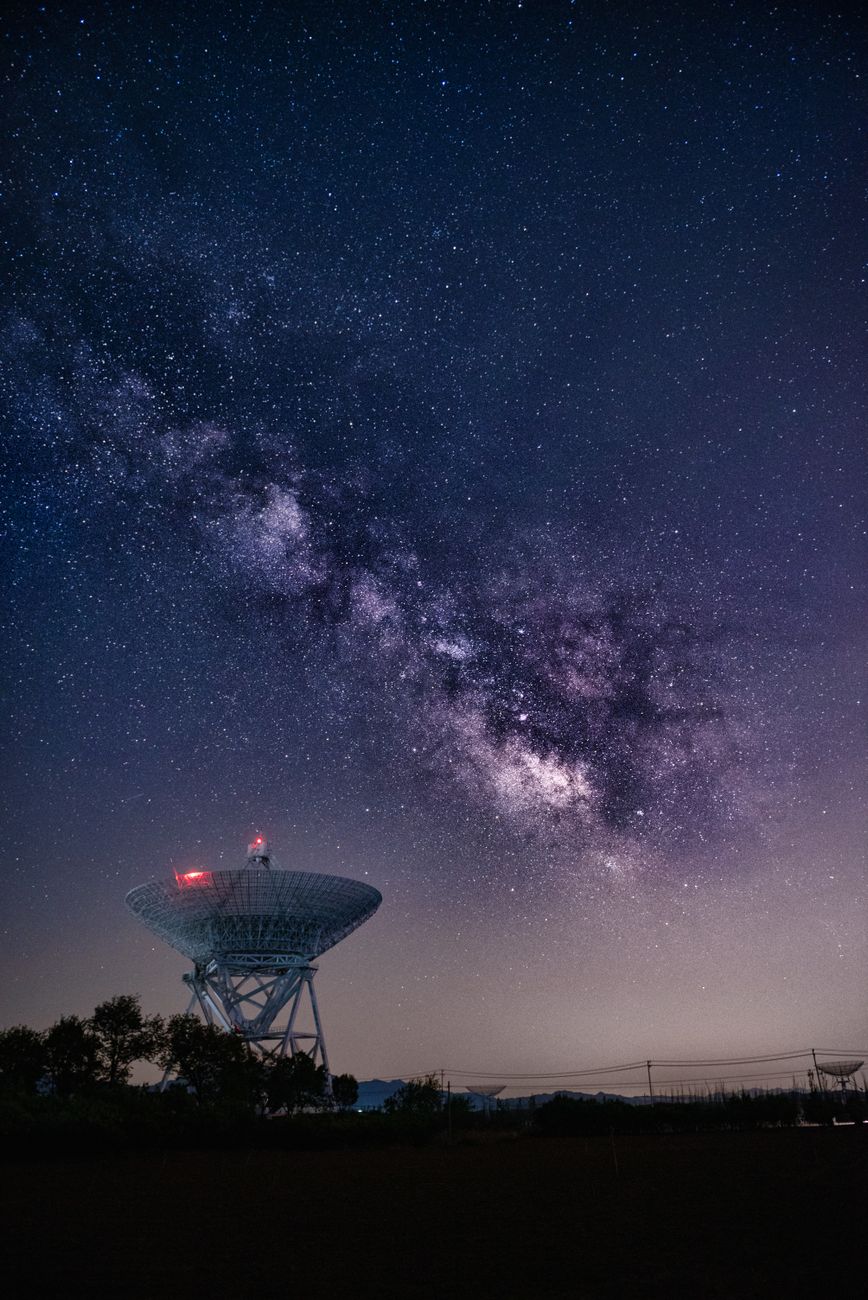
Think about the numbers: There are an estimated 300 billion star systems and trillions of planets in the Milky Way! Life has had a lot of places to evolve.

The Fermi paradox

That was the point the physicist Enrico Fermi made in 1950, when he had a now-famous lunchtime conversation with fellow scientists at Los Alamos. Probability alone indicates the galaxy should be teeming with life.

So, he asked his colleagues, where is everyone?

It’s now known as the Fermi paradox, and it’s guaranteed to come up in almost every conversation about the possibility of intelligent aliens. With so many star systems, planets and moons, surely some other species took an evolutionary path toward intelligence.

It’s a bit more complicated than that, of course. In a universe that is 13.7 billion years old, there has been enough time for innumerable species to evolve and fade, for countless empires to rise and fall. That means the question is “When is everyone?” just as much as it’s “Where is everyone?”

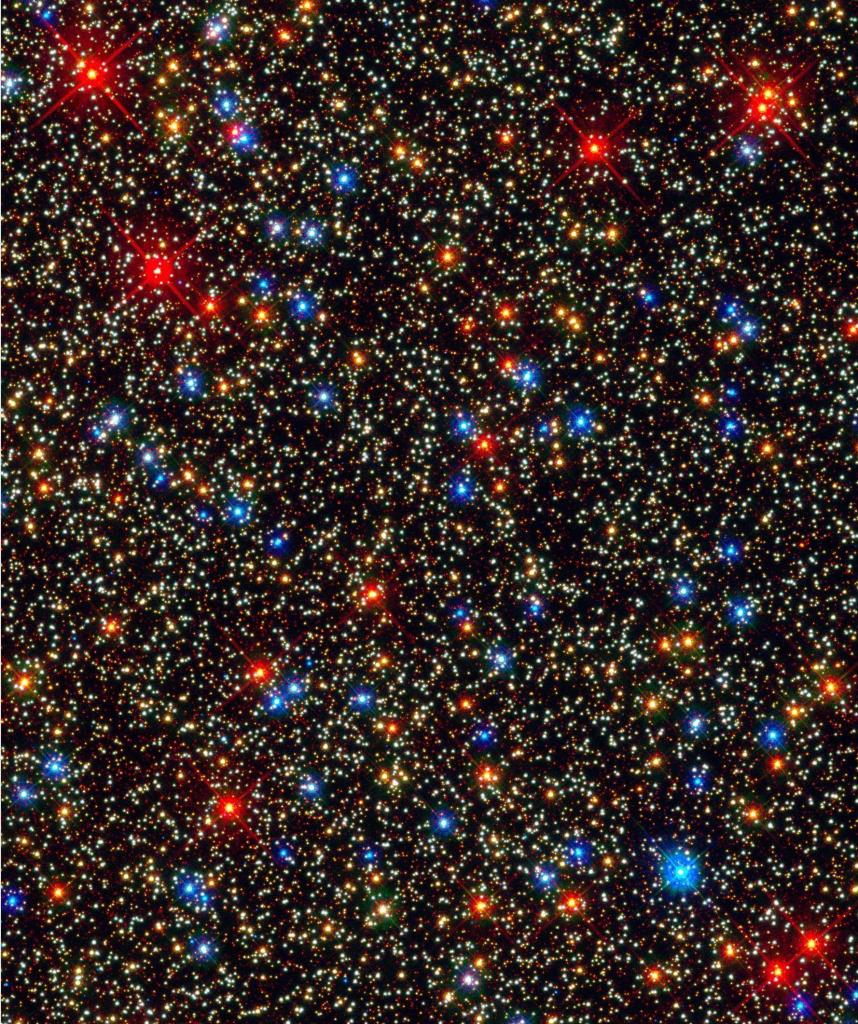
The truth is we’ve only been looking in earnest for about half a century. It’s only in the last four or five decades that we’ve had telescopes like the Hubble, Spitzer, Kepler and James Webb, which have revolutionized astronomy by giving us views we could previously only dream of.

It was only in the 90s that astronomers pointed the venerable Hubble at a black, seemingly empty patch of space, took a two week exposure and changed our understanding of the cosmos forever when the resulting image showed some 10,000 galaxies that were too faint to see before.

That patch covered only 2.6 arc minutes, or 1/24 millionth of the sky!

A partial image of the Hubble Ultra Deep Field. Credit: NASA

Despite what we’ve learned, we’ve barely begun the search for other intelligent civilizations.

Drawing any conclusions from our efforts so far would be like organizing a manhunt, then calling it off five seconds later because the suspect hasn’t been caught yet. Fifty years is nothing when scouring the cosmos. It’s less than an eyeblink of an eyeblink on a galactic scale.

Looking in the wrong place

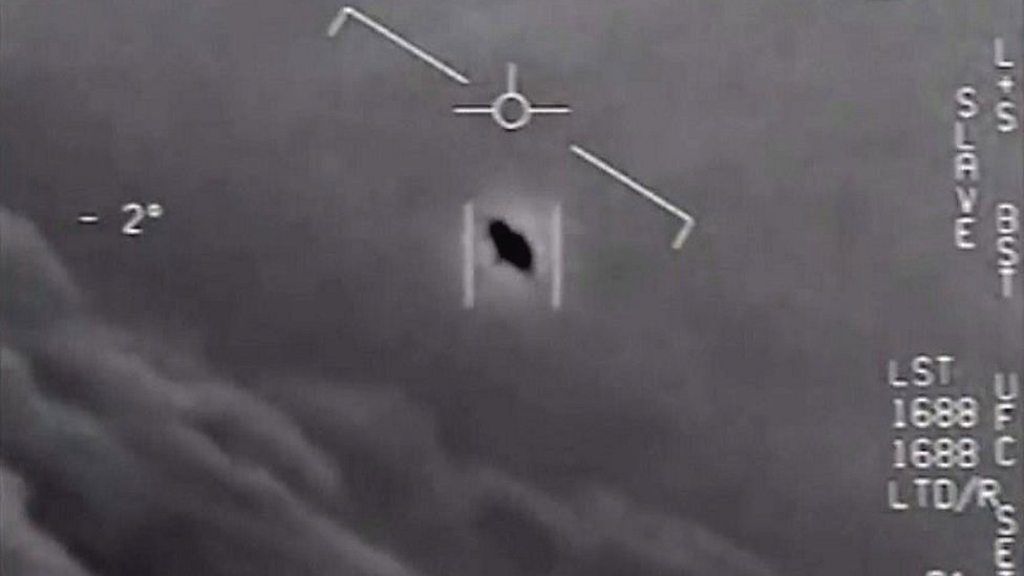
As for the idea that aliens have visited us, that they crossed the interstellar void to etch patterns in our crops, delight stoners with light shows and evade every camera on the planet except for low resolution bricks from the dawn of the cell phone era, I’m not buying it. Neither should anyone else. Likewise for the claim by the JD Vances of the world insisting alleged UFOs are “demons” sent to torment us.

As Carl Sagan said, extraordinary claims require extraordinary evidence, and it is abundantly clear that the UFO enthusiast community can only offer blurry images not because of a lack of high resolution cameras, but because high res photos of the “phenomena” reveal they are mundane objects. They only become strange spacecraft when you blur them and squint.

Bird. Insect close to the camera. Exhaust plume. Debris. Visual artefact. Maybe. Proof of aliens? Absolutely not.

But there’s another, more important reason why aliens are not joyriding through our skies: if aliens are out there, there simply has not been enough time for them to become aware of our existence, let alone travel here.

Even light is “slow” on a galactic scale

As most of us know, when we look at the stars we’re seeing them as they were in the past, not as they are now. That’s because the distances between stars are so mind-bogglingly great that even light, which moves faster than anything in our universe, takes ages to cross the void.

The same limitation applies for anyone who might be looking in our direction from somewhere else in the galaxy. They see our star system as it was, not as it is. They see a silent star system without signs of an intelligent civilization.

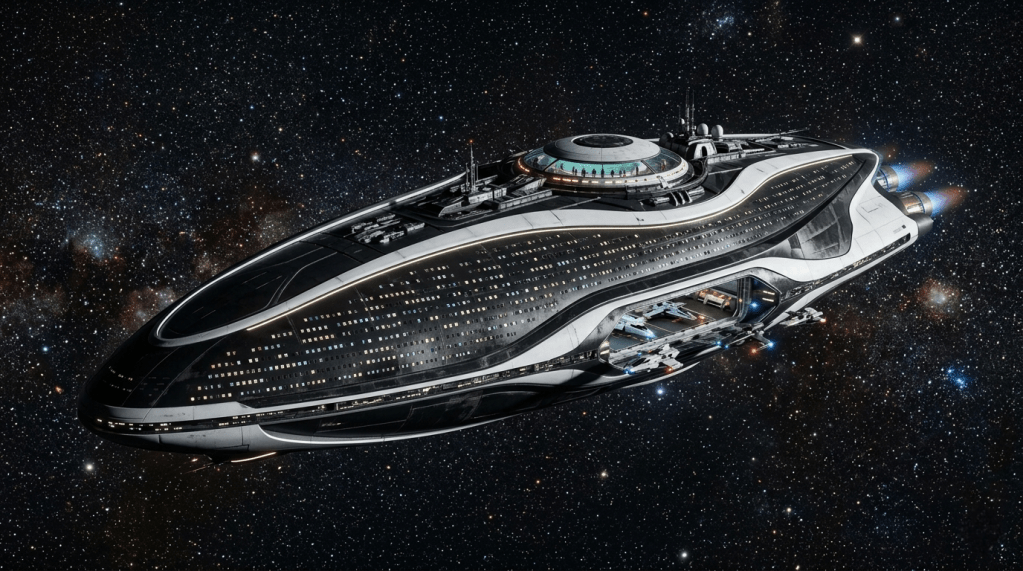
Starliners and generation ships are popular concepts in science fiction for interstellar journeys that can take decades, centuries or longer.

Our galaxy is more than 100,000 light years across, so let’s say an intelligent alien race exists relatively close by in galactic terms, at “only” 500 light years away.

We have been a technological civilization for only a short time and didn’t create signals powerful enough to reach beyond our star system until the 1970s, according to SETI. That means there weren’t technosignatures hinting at our presence until about 50 years ago.

As a result, the soonest our hypothetical aliens could become aware we exist is about 450 years from now. That is how long it will take light carrying information about our technosignatures to reach them.

If our hypothetical alien friends are looking in our direction (a massive if in a galaxy with 300 billion stars to analyze), and if they have highly advanced telescopes, they might detect us. If we imagine they’re friendly and they send a message saying “Howdy, neighbors! You’re not alone! There are wonders to discover and many civilizations to meet out here!” it would take another 500 years for the message to reach us.

That means we wouldn’t know anything until around the year 3,000, if we survive that long without blowing ourselves up. (That’s a real possibility, and things aren’t looking very promising right now.)

And again, that’s if hypothetical intelligent aliens exist in our immediate galactic neighborhood. If there’s an intelligent civilization that exists, say, 4,000 light years away — which is still not very far in galactic terms — the soonest we could hear from them is about 8,000 years from now. (Four thousand for them to detect our technosignatures, four thousand for their message to reach us.)

The point is, space is big. Ridiculously, incomprehensibly, stupidly vast. More than 99.995 percent of the galaxy cannot be aware of our existence yet, let alone travel here, because of the reasons explained above.

The distances between stars are so great that we cannot comprehend them as they are, because nothing in human experience compares. We can only understand them in the abstract. As terrestrial animals with short lives, we are simply not equipped to live or think on galactic timescales.

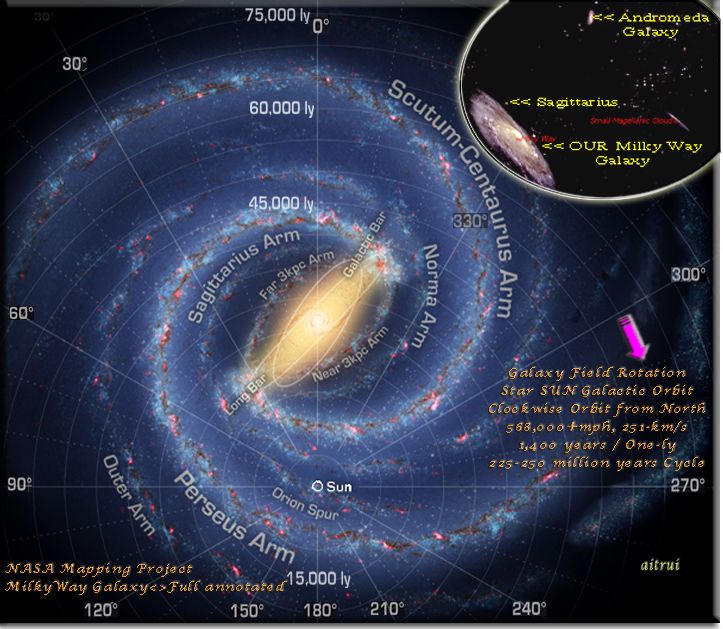
The sun’s location within the Milky Way galaxy. Not to scale.

To put this in context another way, our closest stellar neighbor, a volatile triple star system, is 4.3 light years away. Yet even with the most advanced propulsion systems currently available to us, it would take us more than 70,000 years to get there!

If we manage to crack fusion and humanity’s most brilliant engineers are able to fit a starship with a compact fusion reactor, the travel time to the nearest star becomes “only” about 7,000 years.

Understanding just how big space is, and how long it takes to travel between stars, goes a long way to explaining why we’re wasting our time and resources with a fruitless search for alleged alien craft in our skies.

Light moves at 186,282 miles per second. Credit: Ehsan Ahmadnejad/Pexels

So where does that leave us?

I believe that one day we will learn we’re not alone. By we, I mean our species. I really hope it happens in my lifetime, but for all the reasons explained above, that’s wishfull thinking. The universe doesn’t care what we want, and it certainly doesn’t change the geometry of space-time to accommodate the wishes of dreamers on Earth.

Alien: Friend or foe?

I don’t think we’ll have to worry about belligerence. If a civilization is capable of sending ships to us, there’s literally nothing in our inventory of meager, planet-based resources that could interest a species that advanced. They wouldn’t want to eat us, because our biology would not be compatible. The amount of energy our entire civilization can muster would be laughable to an interstellar species.

And as the physicist Michio Kaku has argued, there’s a very strong argument to be made that if a species is advanced enough that interstellar travel is relatively trivial, it would have long ago shed any tendencies toward tribalism, sectarian violence or inventing gods of the gaps. You simply cannot reach that stage of advancement if you’re wasting resources and your most brilliant minds on war and petty divisions. (Kaku knows that better than anyone. His mentor was Edward Teller of Manhattan Project fame.)

The more significant danger, as Kaku likes to say, is that we may be beneath their notice and we’ll get “paved over.” A civilization capable of building cosmic megastructures, for example, wouldn’t consult us any more than we’d consult ants before laying a six lane super highway over their ant hill.

Still, there’s always a chance we’ll encounter something like MorningLightMountain, the nightmare alien intelligence from Peter F. Hamilton’s incomparable novel Pandora’s Star. The problem with MorningLightMountain wasn’t that diplomacy failed. There was no disagreement over resources or territory. Humans didn’t threaten it.

Rather, the alien’s psychology was so different from ours that it could not understand the concept of allowing other life to exist in the galaxy. No amount of discussion or attempts to persuade it would have made a difference, so immediately upon learning of our existence it launched a genocidal war that forms the bulk of Pandora’s Star and its sequel, Judas Unchained, two of the most beloved books in the modern science fiction canon.

Still, I’d like to think there is a galactic fraternity out there, an informal alliance of intelligent species united by curiosity and the effort to understand our universe. Whatever’s out there is likely to take forms we can never imagine and think in ways that never occurred to us.

If one day we do make first contact, I hope the best of humanity will be our representatives. And on that day, I hope humanity will be awestruck by the wonder of the universe, realize that slaughtering each other over land or beliefs is insane, and finally become united as a species.

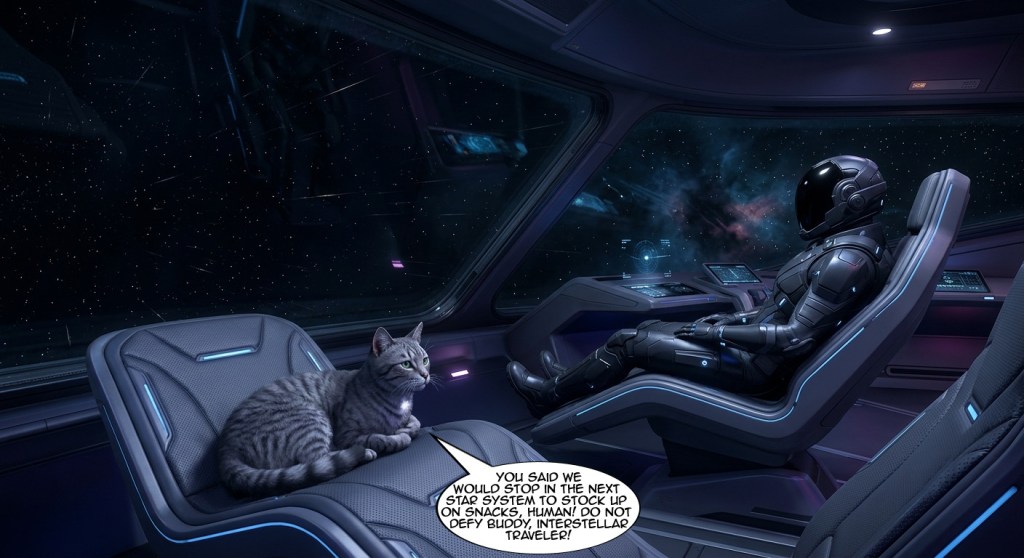
Or even better, finally united as the children of Earth. After all, Buddy has made it abundantly clear that if I come into possession of a starship, he gets the most comfortable seat on board and gets to drive. The latter ain’t happening, but as for the former, I’d be thrilled to explore the cosmos with my little pal.