Venture out into the cosmos and we might find an existential threat — or we may find friends who welcome us into a joyous fraternity among the stars.
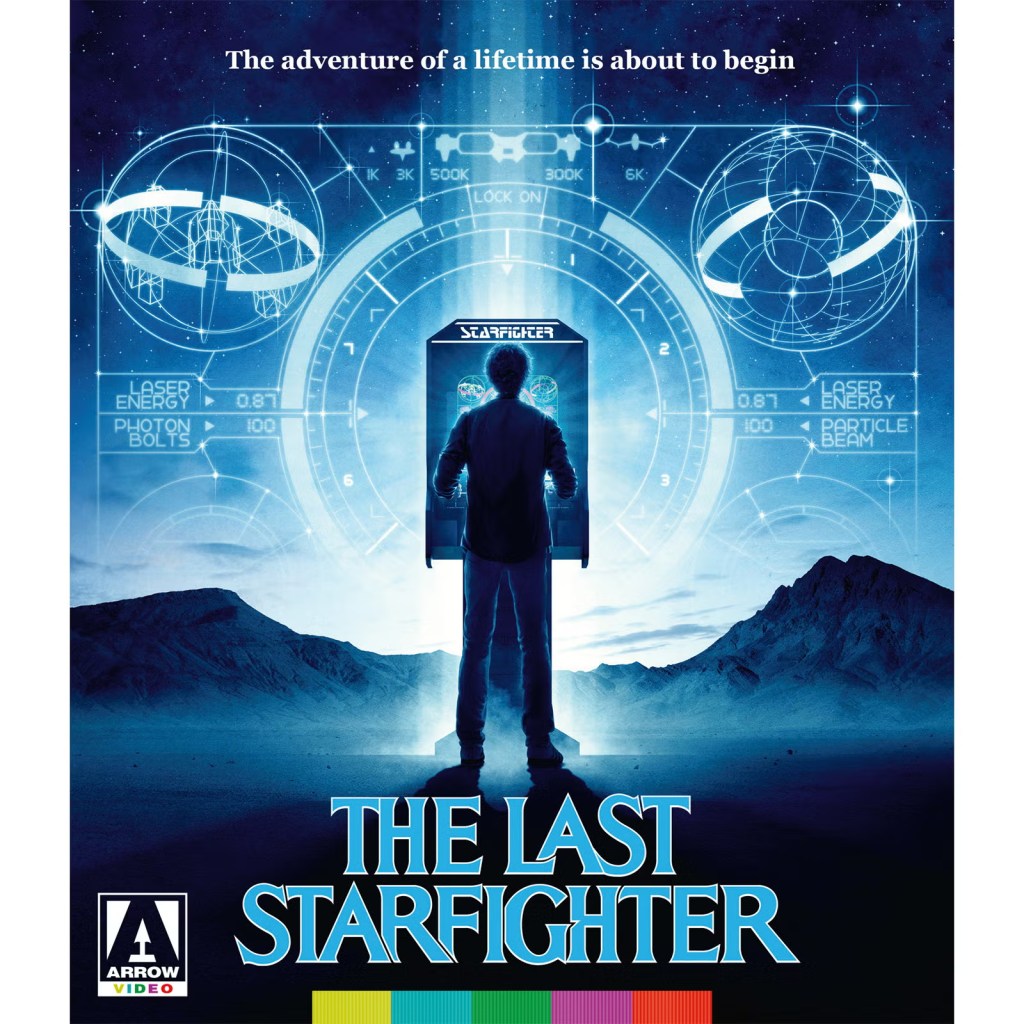
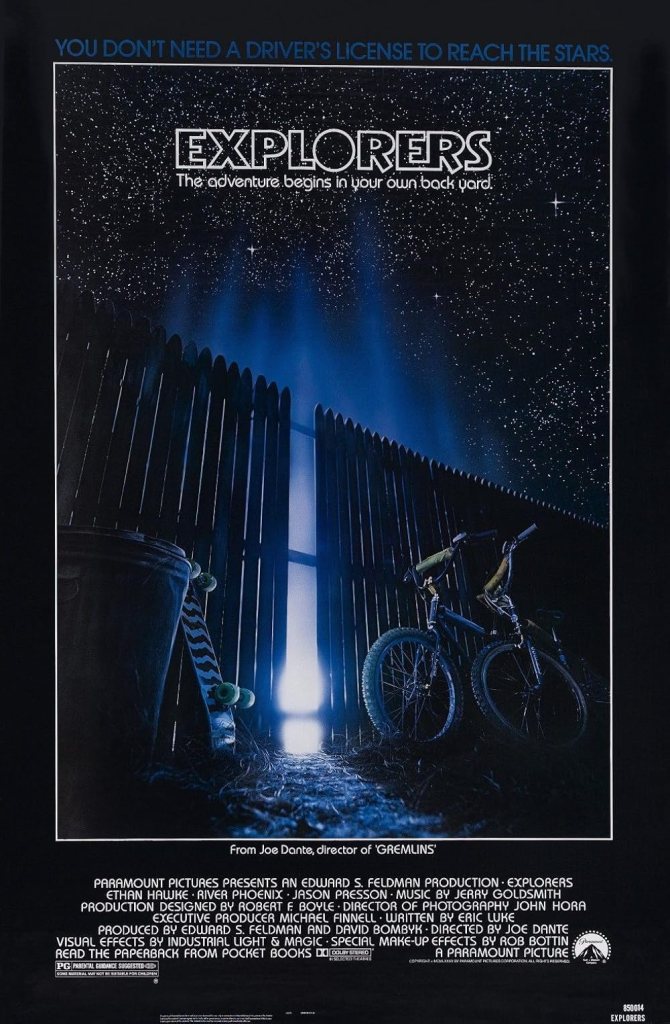
ET. The Last Starfighter. Explorers. Enemy Mine. Arrival.
While Alien is nightmare fuel combining dread in its purest form and the hallucinogenic visuals of one of modern history’s most disturbed artists -creating a vision of extraterrestrial life so horrific that many audiences couldn’t deal with what they were seeing when it hit theaters in 1979 – science fiction also has a strong tradition of imagining friendship in the stars.
Audiences love it when their spacefaring hero finds a buddy.
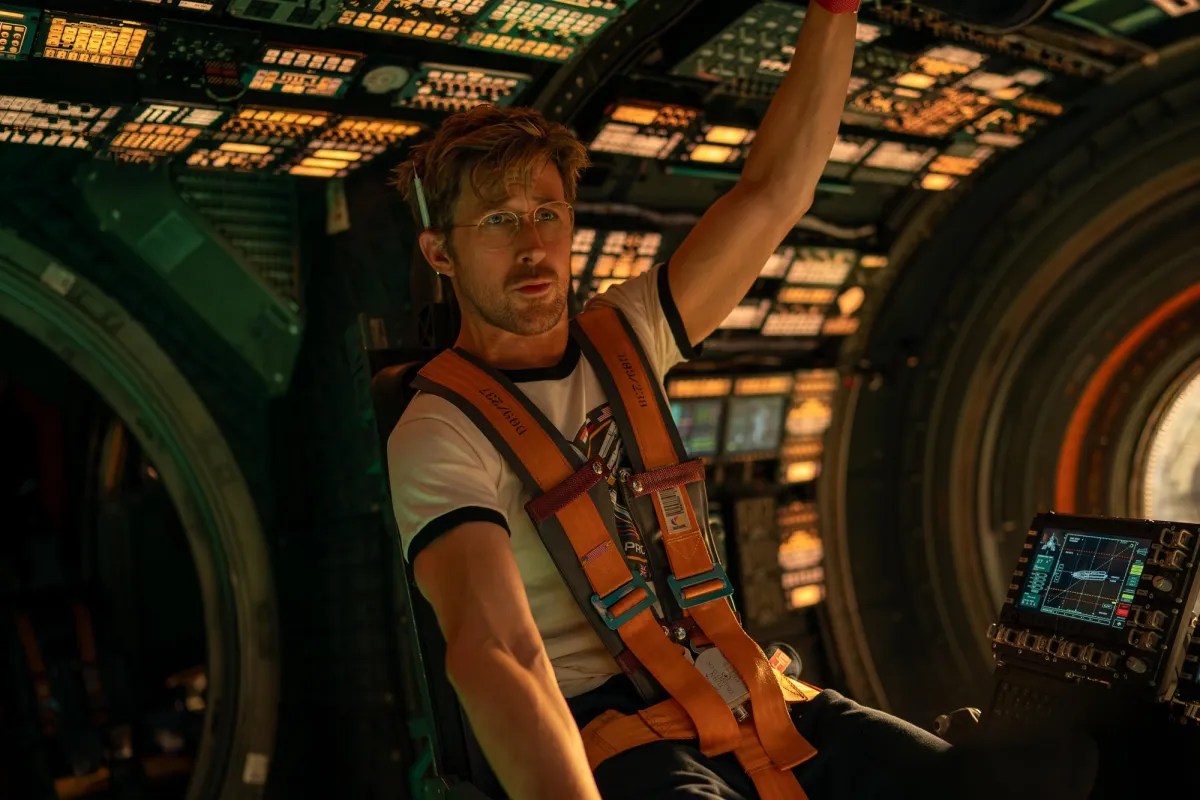
Project Hail Mary is that kind of movie, but it doesn’t look that way at first. Dr. Ryland Grace (Ryan Gosling) is a biologist who was laughed out of higher education when he published papers arguing that our ideas about what’s necessary for life to spark were all wrong.
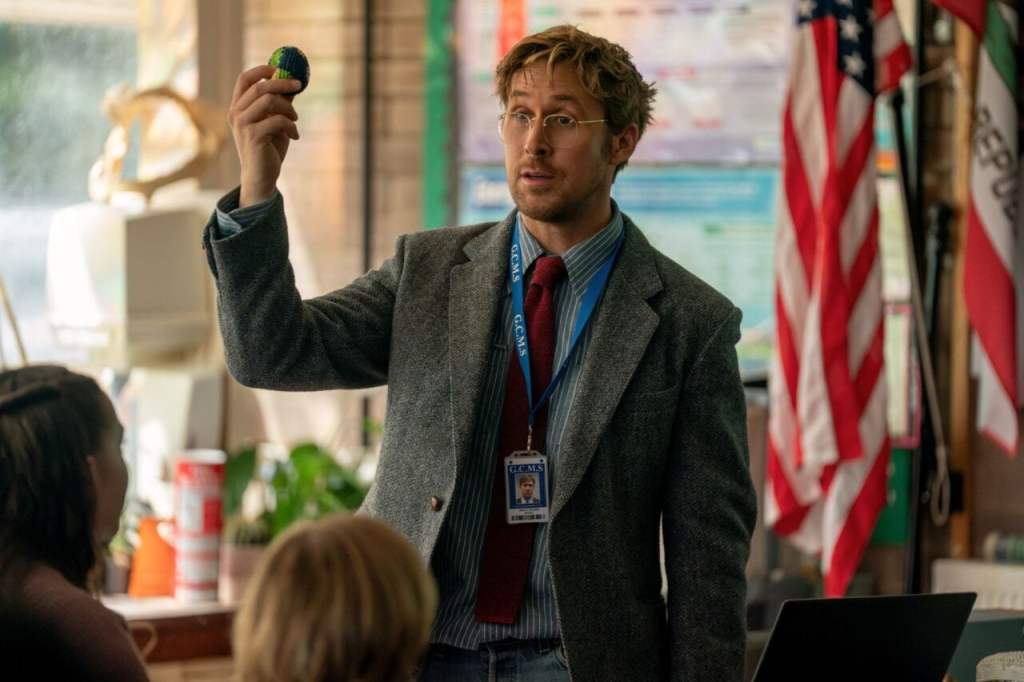
Grace is an enthusiastic middle school science teacher when we meet him through the eyes of a UN official who recruits him for what will be known as Project Hail Mary.
The movie uses classroom scenes for exposition, as the young students beg Goslin’s Dr. Grace to tell them why the astrophage endangers Earth. Credit: MGM
The sun is dying. No one’s sure why until an amateur astronomer named Irina Petrova discovers a wispy line of infrared radiation bridging Venus to our home star. The newly-Christened Petrova Line is made of astrophage, a virus-like organism that feeds on stellar energy, robbing the star of its power.
What begins as a gradual, almost imperceptible drop in the sun’s energy quickly accelerates and the Earth’s temperature begins to plummet.
The same papers that got Grace exiled from academia land him a spot on the worldwide project to study and destroy the astrophage. The usual assumptions about how life operates are not cutting it, and the project needs all the independent thinkers it can find to look for a solution.
If they can’t find one, the dying sun will leave the Earth in a deep freeze. In turn it will bring on a new ice age, the destruction of most of Earth’s arable farmland, mass extinction of plants and animals, then famine and all the horror that comes with it.
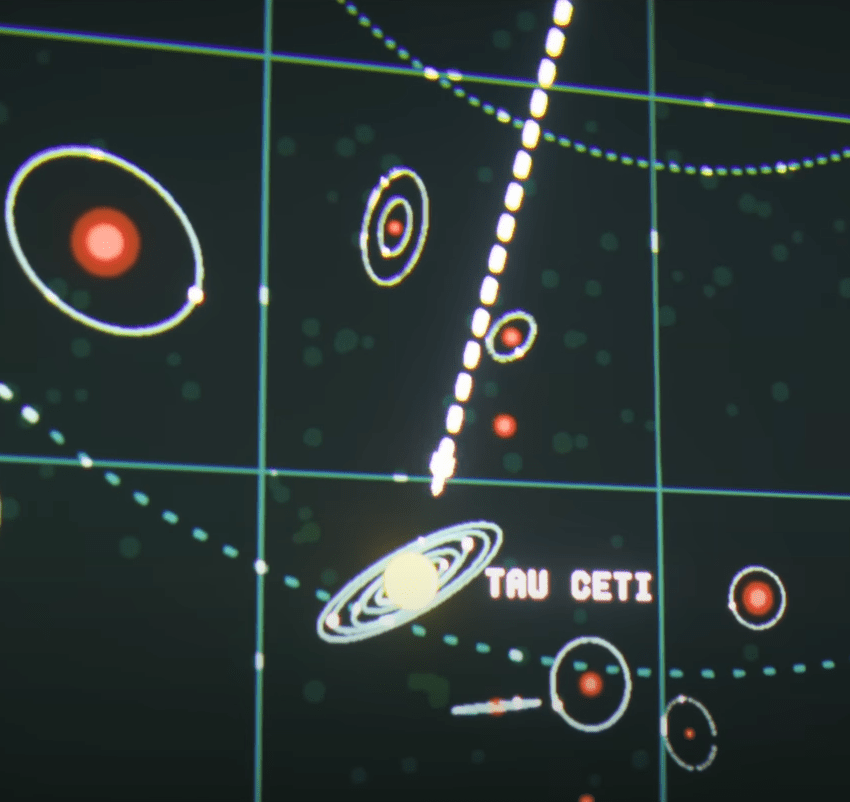
The narrative cuts between past (Grace’s introduction to the project and its early days) and present, when Grace is one of three crew members headed to the star system Tau Ceti to find out why it’s the only star in our cluster that hasn’t been infected with astrophage. In our entire galactic neighborhood, only Tau Ceti — a G-type star similar to our sun about 12 light years out — continues to burn bright.
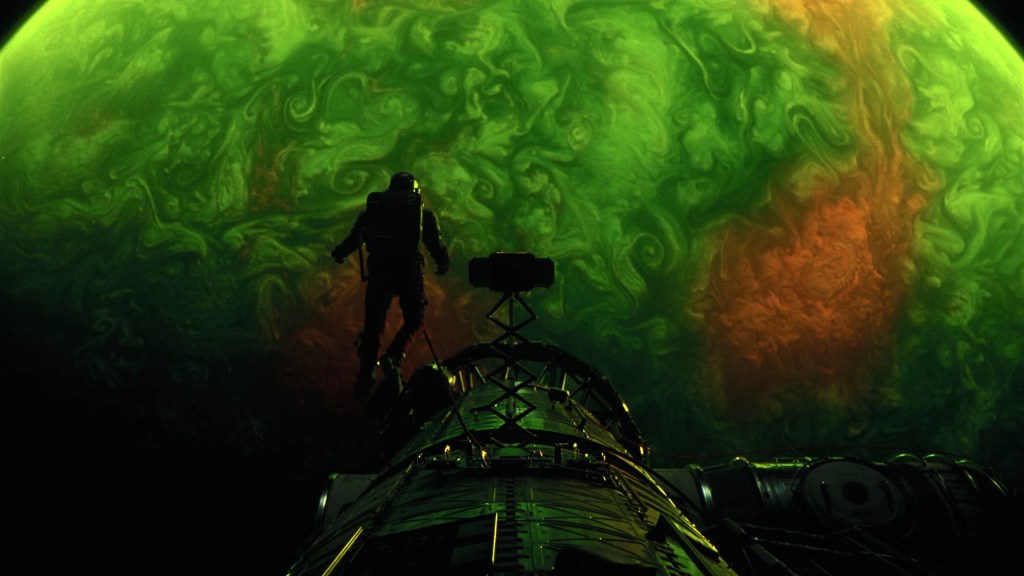
The movie offers some spectacular, sometimes even trippy space vistas, such as this one of the planet Tau Ceti E. Credit: MGM
It turns out humans are not the only ones desperate to know why Tau Ceti is not dying, and that’s where the movie goes from interesting to emotionally resonant, poignant and a heck of a lot of fun.
There’s plenty of mystery, tension, and awe at the beauty of creation, all against the backdrop of Grace’s evolving relationship with his unexpected buddy.
This is a movie that would have been a major challenge for any lead actor, and Gosling not only imbues Grace with with a self-conscious, cautious bearing, he also does a great job of carrying long scenes without the benefit of another expressive human face to help him sell the action and drama.
What could have been convoluted science is explained to the audience in simple and effective terms. The problem is outlined elegantly, and the stakes are made very clear. If no one can figure out how to stop the astrophage, humanity will likely survive in the near term, but only in miserable, resource-depleted, technologically retrograde pockets of people who regard others as a threat. Eventually even those holdouts will succumb to cold and starvation.
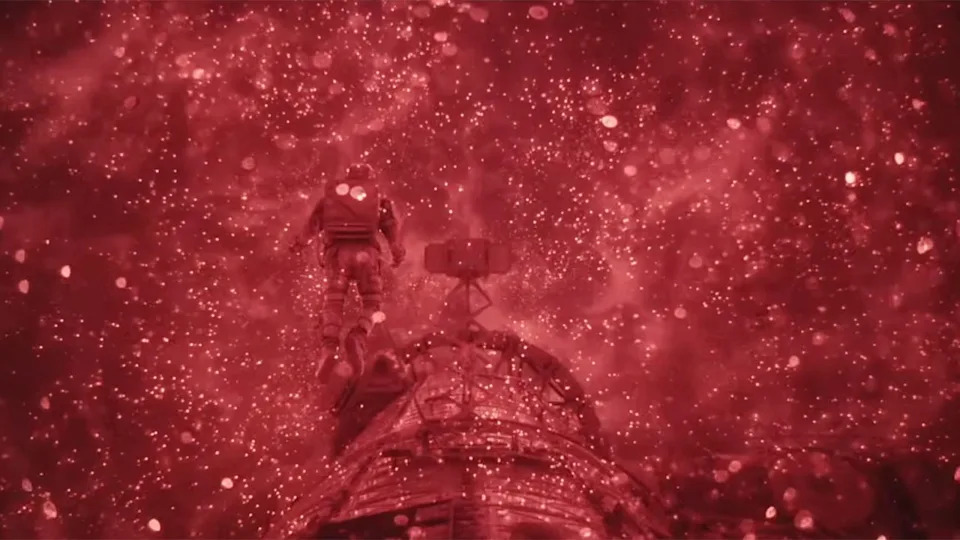
The same image of Tau Ceti E from above, but this time viewed in a different wavelength of light that reveals the astrophage traveling along Tau Ceti’s own Petrova Line.
The film doesn’t trivialize space either. An interstellar journey is the kind of thing we might be able to accomplish with the pooled resources of humanity, the brightest engineers, designers and scientists of our species, but it’s also a long, extremely dangerous and difficult undertaking.
Thus the name Project Hail Mary. It’s a long shot, audacious and unlikely to succeed, but as Sandra Hüller’s UN project leader explains to Goslin’s Grace, the only alternative is to do nothing and wait to die.
Perhaps most importantly from a science perspective, the film offers a clever way for the project to generate the energy needed to send a ship to Tau Ceti at near-light speed. Currently we might be able to build a viable vessel, which would be a monumental design and engineering challenge, but it would take more than 150,000 years to travel that far with our best current propulsion systems. More energy — and speed — is a must, especially when the mission is a race against time, with only a few decades before our planet freezes over.
The movie’s solution won’t help us in real life, but within the context of the narrative it’s a clever way of traversing enormous distances in a short time instead of the thousands of years it would normally take.
Every star within dozens of light years of Earth is infected with astrophage and dimming except for Tau Ceti. Why?
Plausible science provides the framework for the story, but its payoff is emotional, and Dr. Grace’s experiences with his strange new friends will remain with you after the credits roll.
If you’re like me and didn’t rush to see this in the theaters because you found The Martian — based on a book by the same author — overhyped, do yourself a favor and spend an evening in Project Hail Mary‘s world. It’s a journey well worth taking, and the rare movie that leaves you with a glow by the time the credits roll.
Project Hail Mary is currently streaming on Amazon Prime video.
Even a SF-horror fan like me would love to see more lighthearted science fiction in the mold of Project Hail Mary and classic 1980s science fiction adventures like The Last Starfighter and Explorers.
When people with nearly unlimited power and money want to reshape society in the image of fanciful fiction and they’re unable to separate fantasy from reality, that’s a problem for all of us.
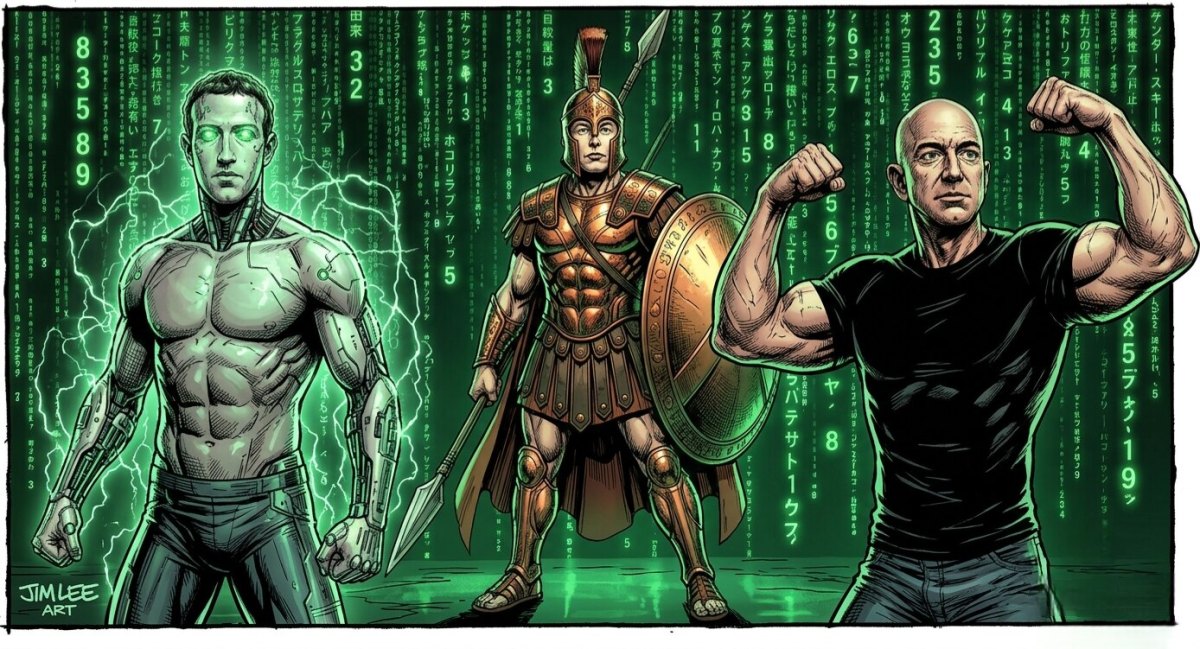
More than a few times over the past few years I’ve read comments from the tech oligarchs — Elon Musk, Mark Zuckerberg, Peter Thiel, Jeff Bezos and company — and thought, “He’s definitely read [insert science fiction novel here.]”
Zuckerberg, for instance, was clearly besotted with Neil Stephenson’s Snow Crash when he renamed his company Meta and poured a literal fortune into his watered down version of the metaverse imagined in the novel.
Snow Crash came out in 1992 before the vast majority of people had dial-up internet, let alone a concept of cyberspace or the always-on, interactive mobile internet of today. It’s hugely influential among tech enthusiasts, and it’s one reason Stephenson and other SF novelists were paid to be “idea guys” for tech companies.
Now Musk has name-dropped Iain Banks in a viral interview with The Economist this week, which ended with the wealthiest man in human history going into a full meltdown and throwing a tantrum over sensible, obvious questions. It’s remarkable that a man who built a peerless business empire has the emotional maturity of a toddler, although the closer you look at Musk’s businesses, the more it becomes obvious their valuations are not tethered to reality any more than he is.
The problem is that Musk, like the others, moves through life in a bubble surrounded by people who tell him he walks on water, and no one in his orbit would dream of suggesting he’s confused about something, let alone actually mistaken. Yes, Elon! That’s brilliant, Elon! You are a gift to all mankind, Elon!
Elon’s favorite science fiction
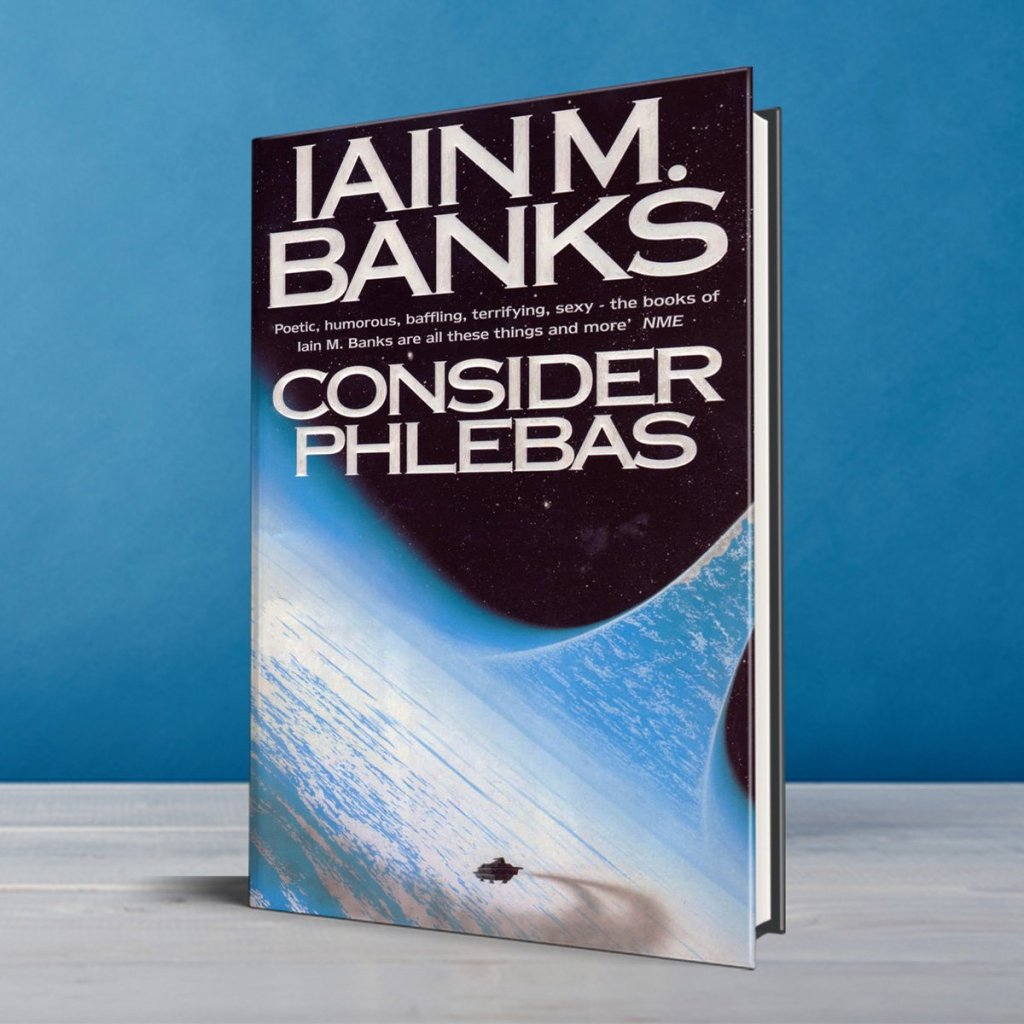
When The Economist’s interviewer pressed Musk on his contradictory views about society and equality, Musk told her she should read Banks’ work. Unfortunately either he hasn’t read it either, or somehow managed to make it through those thick volumes without absorbing themes that may as well be emblazoned in neon.
Banks, for the uninitiated, was a Scottish science fiction writer of astonishing talent.
He was best known for writing a series of novels collectively known as The Culture, which portray a far future utopia, a post-scarcity human society. The Culture is run by ultra-benevolent, conscientious AIs called Minds who not only serve as the serene caretakers and shepherds of humanity, but oversee all the automation and logistics that transform society into the prosperous, fair and idyllic commonwealth the novels imagine. Machines, in other words, do all the work people don’t want to do.
When I read The Culture novels, I saw what almost everybody else sees: the work of an author who is uncomfortable with ideological extremes, views a blended socialist model as possible and even preferable in a situation where resources are no longer scarce, and is more than willing to kick the crap out of the society he imagined by showing its worst aspects, cognitive dissonances and potential pitfalls, perhaps as a warning not to take it too seriously. (And as a humble admission that he’s just making this stuff up, so really, don’t get carried away with it.)
All of it is rendered in gorgeous, shimmering prose, populated by characters who are a riot to spend time with, and garnished with dialog that reveals a rare gift for capturing the rhythms and beauty of the English language.
Banks, unfortunately, is no longer around. He died in 2013 after a diagnosis of incurable gall bladder cancer, and the literary world is significantly poorer for that loss.
But he made his political views known in interviews and his personal life in addition to his novels, which is why it’s hard to believe Musk thinks MAGA and Trumpism are atavistic forms of The Culture‘s utopian, fair society.
On the one hand, Musk claims we’re 10 years from the kind of post-scarcity society portrayed in science fiction novels, that we’ll all have endless resources and get to fill our days pursuing our personal interests because money won’t mean anything. It’s an aspirational if unrealistic claim.
On the other hand, as The Economist’s interviewer pointed out, Musk has been relentless in his hoarding of wealth, gives no money to charity, and seems to amuse himself primarily by pouring fuel on the culture war fires.
Culture wars, rage bait and pseudo-andriea (ψευδανδρεία)
The tech CEO and world’s wealthiest man is remarkably committed to playing the heel online.
He constantly wades into arguments regardless of whether he knows anything about the subject matter. He delights in making incendiary comments about topics like Islam and immigration. And he is seemingly incapable of going one day without showing us his inner child.
“I literally challenged Vladimir Putin to one on one physical combat over Ukraine” he wrote on X last year before crediting himself and his Starlink service for the smaller country’s battlefield successes against Russia.
A few months later he bragged that he was the first “[A]merican druid in [D]iablo to clear abattoir of zir and ended that season as best in the USA,” which might be the second-most ridiculous thing a human being has written, surpassed only by his fantasy of the entire world cheering as he defeats Putin mano e mano. (Musk lied about his video game “accomplishments,” unsurprisingly. Gamers, who are not as credulous as Musk imagines, quickly figured out that moneybags paid a pro gamer to log into his account, play as him, and achieve the top ranking so the world could unite in awe at Elon Musk’s magnificent button-pushing skills. 1337, ladies and gentlemen.)
He cleared the Abattoir of Zir! Hand this man a Medal of Freedom, give him the powers that used to belong to congress and let him cook! And if he wants to cosplay as Achilles and Hector Vladimir Putin into surrendering, wonderful! It’ll save us billions in munitions and aid to Ukraine.
As The Economist’s interviewer continued asking follow-ups about Musk’s imaginary technological heaven, the trillionaire was “so agitated by facing real questions that he just resorted to whining about how awful the media can be. He seemed to think that his popularity on X, the platform he owns, was evidence that most people actually love him,” Gizmodo noted:
“A quarter billion people follow me,” Musk said, referring to his X followers, adding “I think a lot more people actually like me than don’t.” The billionaire then said that “a lot more people hate you and the media more than you realize.”
Beddoes acknowledged that many people hate journalists, but Musk kept going, repeating “they hate you, they hate you,” like an emotionally wounded child. Musk, flailing, tried to come up with some way to attack The Economist specifically.
“There are more people that die in Europe from heat deaths than people that die from gun deaths in America. Why aren’t you writing an article about air conditioning?” asked Musk.
“Well, we’ve done several on air conditioning, and we had on our cover last week a whole long piece about…” said Beddoes.
“Very pro-air conditioning,” she responded. “You should read us sometime.”
Peter Thiel plays a Lvl 82 Mage
Musk and Zuckerberg aren’t the only ones.
Peter Thiel occupies a different realm. The man who runs the most comprehensive database on the personal details of Americans, whose company enjoys government contracts worth billions and has surpassed every federal agency as the avatar of Big Brother, not only named his business after a wizard’s magical device from The Lord of the Rings, but has spent the last year or two on a worldwide tour in which he lectures attendees on the anti-Christ.
Drawing on the work of Vladimir Solovyov (the 19th century Russian philosopher, not the Putin propagandist who dresses like the admiral of a galactic war fleet), and combining it with peculiar fringe Catholicism, Thiel likes to tell his audiences that the anti-Christ is inbound, he’ll be a technocrat who speaks often of peace and human rights, and he’ll be helped by evil villains like people advocating for AI safety and environmental stewardship.
Very convenient, that. In Thiel’s telling, the anti-Christ’s minions are precisely the same people who want guardrails on his businesses.
In addition to being an obvious fan of The Lord of the Rings, Thiel lists the aforementioned Stephenson as a major influence along with Atlas Shrugged and Dangerous by Milo Yiannopolous. I’m not even going to comment on that except to say what awful company for Stephenson.
These are windows into the world view of a paranoid man who now controls all of our data and wants us to be assured we’re very safe in the hands of Peter Thiel, who will safeguard our browsing habits and protect us from the anti-Christ and his minions.
Bezos, too, is a fan of Stephenson, Banks et al, and his public statements indicate he saw what he wanted to see in those stories regardless of what their authors intended.
Understanding the books that spark the imagination of men with so much power is, I’d argue, an essential element in understanding how they think, what they want, and where they believe they’re taking us as a species.
Because make no mistake, these men believe they will decide the future of humanity. What happens from here is impossible to predict, but we’d be negligent to dismiss the collective power and influence of the wealthiest individuals in the history of our species, men who can not only outright buy small countries but also own enormously influential media platforms, private spaceflight companies and communications networks. Amazon Web Services, for example, provides almost a third of all cloud services worldwide, while tens of millions use Starlink to access the internet in more than 160 countries.
In their view, the tech oligarchs will determine what happens from here. Not democratically elected politicians, not voters themselves, not people who have devoted their lives to studying how society works.
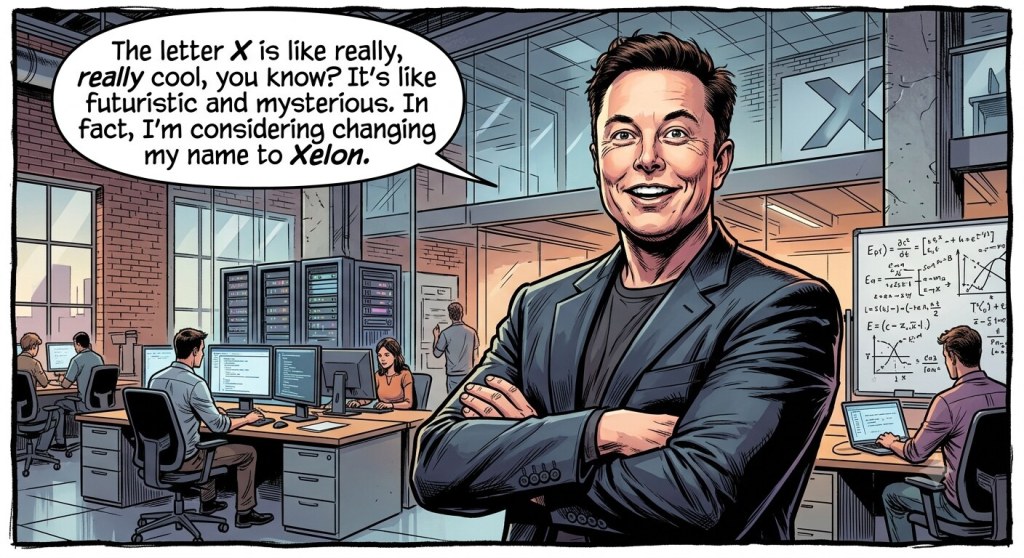
They don’t feel indebted to the rest of our species and don’t envision giving us a seat at the table. In an attempt to explain why he doesn’t donate money to charity and sits on an incomparable mountain of wealth like an autistic Smaug, Musk says his work itself is so valuable that no amount of charitable giving could match the gifts he already bestows on mankind. That’s also why he courts mates with a charming pick-up line (“Want to have my babies?“) and maintains a compound in Texas where his concubines raise his Little Musks, who have names like Æ 么-010011 Ʃrik Technomancer and ąƬh33ną Sŏmni-4ㆁ4.
Propagating his Muskian DNA, he believes, is the greatest gift he could give to humankind alongside the technology products produced by his companies.
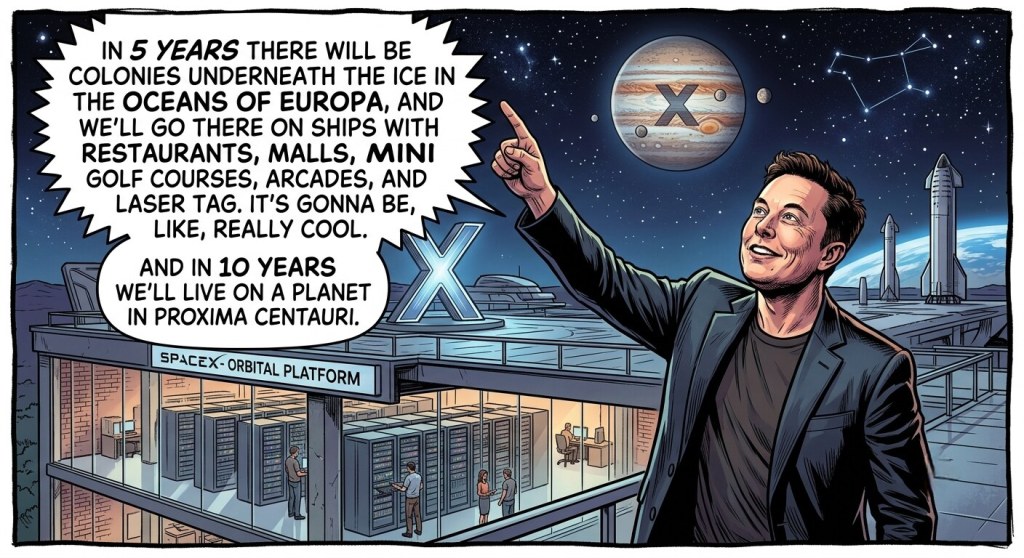
Tech oligarchs think they’re destined to usher us into a glorious new era in which people live on Mars and Europa, our eyes collectively turn to interstellar colonization, the evil forces of evil (anyone skeptical of them) will be defeated along with the anti-Christ, and this society will be idyllic and judicious with everyone standing as “equals” save the immortal oligarchs, who will occupy permanent positions above humanity, their lives extended indefinitely by the medichines, nanobot-supplemented blood and cybernetic enhancements that exist in their favorite novels.
They, of course, will decide how resources are divided, where research money is diverted, which projects take priority. That’s a scary thought when you consider none of them have expressed much compassion for society’s least fortunate, and some of them have long records of hostility toward people at the bottom.
It’s bad enough that they are staunch in their conviction that their wealth makes them best-qualified to determine our collective future. If they can’t distinguish between fiction and reality, that’s very much our problem whether we like it or not.
If you like reading PITB’s content, please consider whitelisting us in your ad blocker. PITB is a human-owned and operated, non-corporate site. We do not collect data on our readers. This site is not affiliated with TheCatGuy or other scrapers who reprint our content without consent.
That’s easy: first contact with an alien civilization.
I’m a space and science fiction fanatic. I mainline science fiction novels, keep tabs on the latest discoveries via the JWST, and I think about what’s out there probably more than I should.
There’s a burning desire in our hearts — for some of us, at least — to know for sure that we’re not the only ones, that humanity is not alone in a cold, lonely and infinite universe.
The events of 2026 are testament to that desire to know. Between the government release of UFO-related documents, former government employees coming forward with tall tales of crashed ships of non-terrestrial origin, and the return of Steven Spielberg to the director’s chair for another film speculating about what’s Out There, we’ve been thinking about aliens quite a bit collectively.
As for that central question, I’m not talking about simple cellular life. I don’t think you can find an astrophysicist, astrobiologist, astronomer, evolutionary biologist or anyone in a tangentially related field who honestly thinks life is unique to our planet.
The more relevant question is whether we are the sole sapient species, the lone civilization in our galaxy.
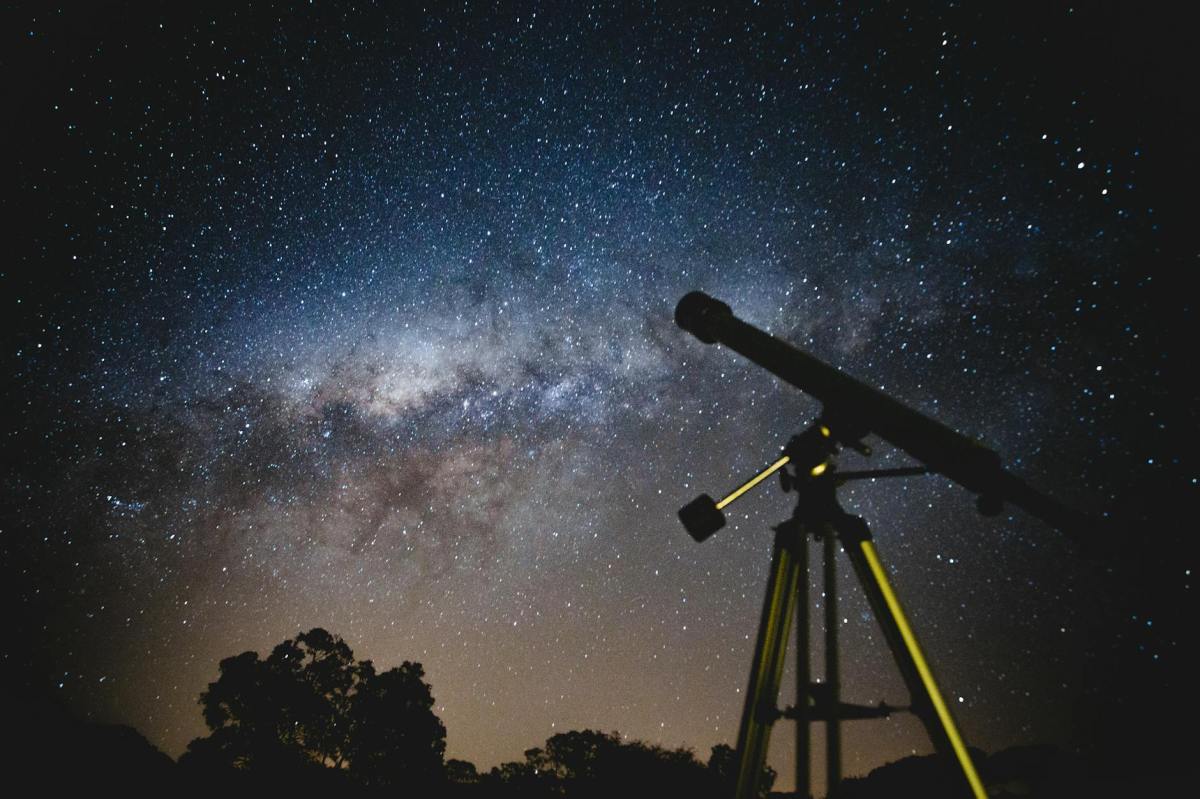
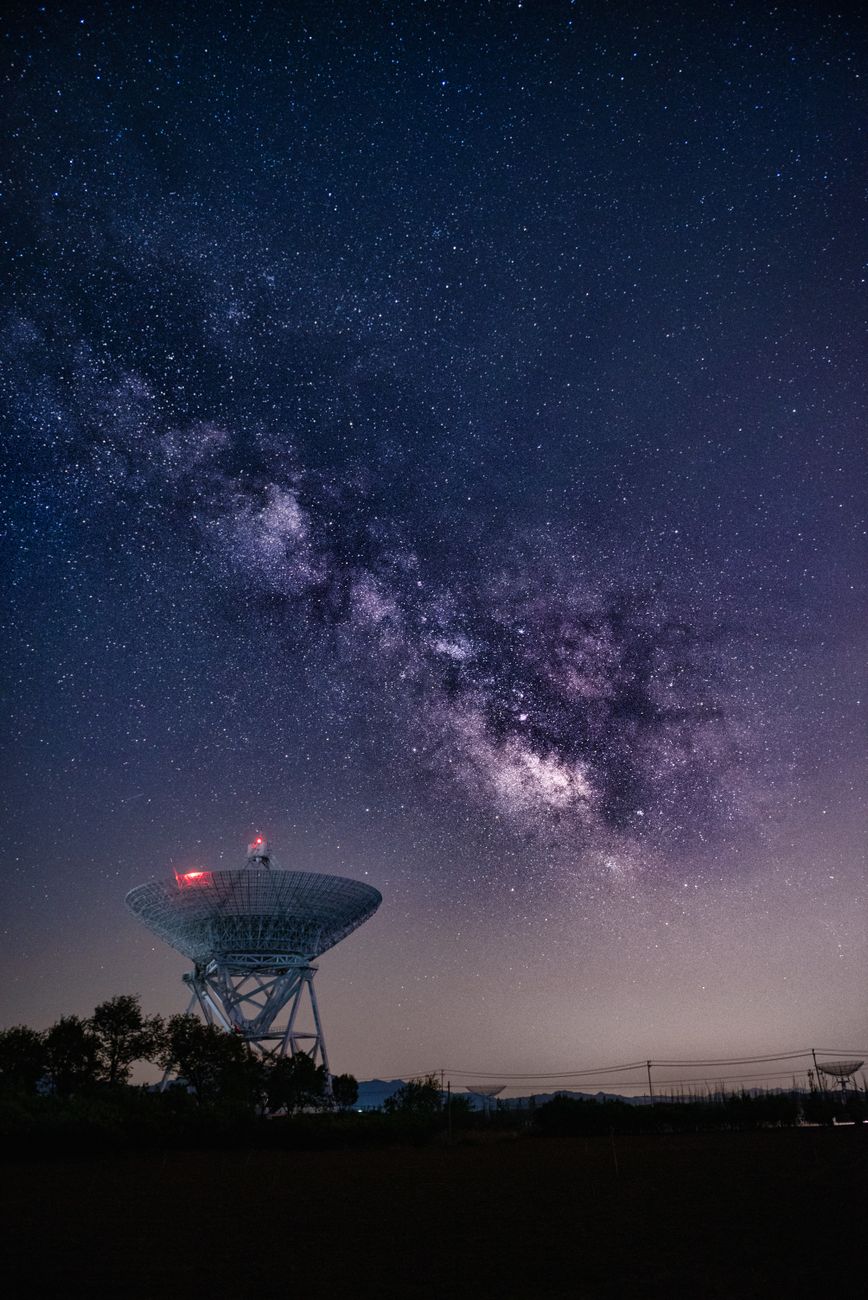
Credit: CaptainFrank/Pexels
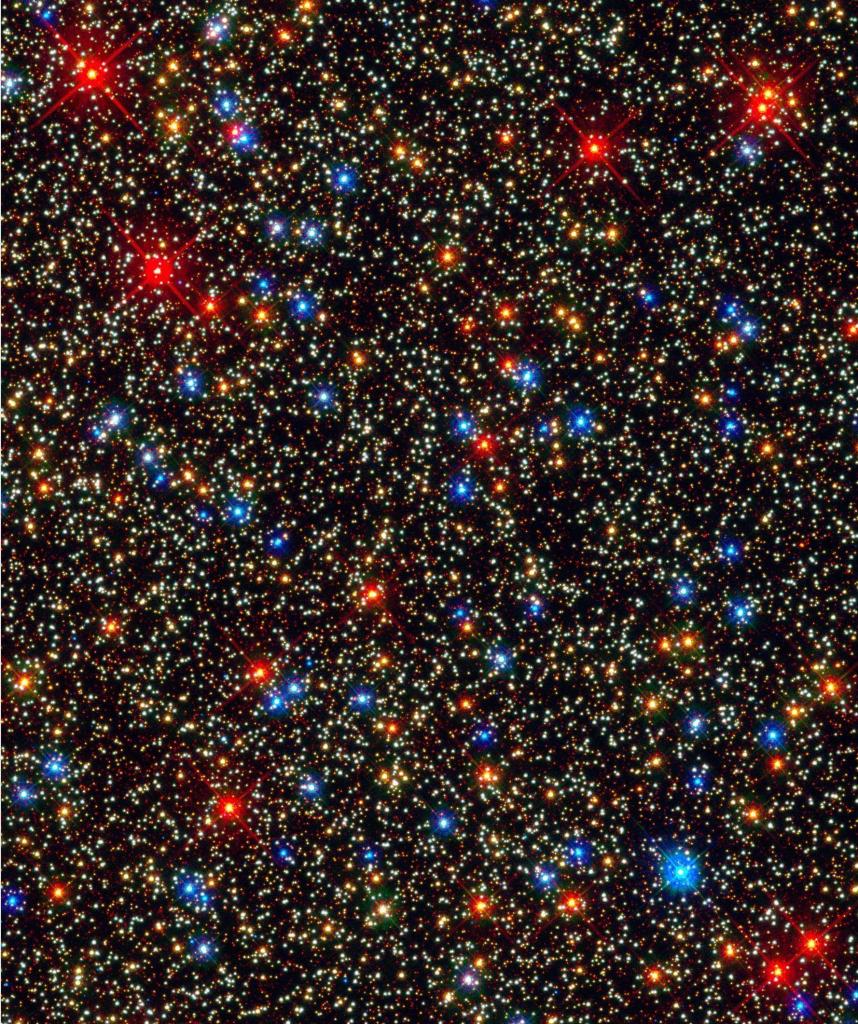
Think about the numbers: There are an estimated 300 billion star systems and trillions of planets in the Milky Way! Life has had a lot of places to evolve.
The Fermi paradox
That was the point the physicist Enrico Fermi made in 1950, when he had a now-famous lunchtime conversation with fellow scientists at Los Alamos. Probability alone indicates the galaxy should be teeming with life.
So, he asked his colleagues, where is everyone?
It’s now known as the Fermi paradox, and it’s guaranteed to come up in almost every conversation about the possibility of intelligent aliens. With so many star systems, planets and moons, surely some other species took an evolutionary path toward intelligence.
It’s a bit more complicated than that, of course. In a universe that is 13.7 billion years old, there has been enough time for innumerable species to evolve and fade, for countless empires to rise and fall. That means the question is “When is everyone?” just as much as it’s “Where is everyone?”
The truth is we’ve only been looking in earnest for about half a century. It’s only in the last four or five decades that we’ve had telescopes like the Hubble, Spitzer, Kepler and James Webb, which have revolutionized astronomy by giving us views we could previously only dream of.
It was only in the 90s that astronomers pointed the venerable Hubble at a black, seemingly empty patch of space, took a two week exposure and changed our understanding of the cosmos forever when the resulting image showed some 10,000 galaxies that were too faint to see before.
That patch covered only 2.6 arc minutes, or 1/24 millionth of the sky!
A partial image of the Hubble Ultra Deep Field. Credit: NASA
Despite what we’ve learned, we’ve barely begun the search for other intelligent civilizations.
Drawing any conclusions from our efforts so far would be like organizing a manhunt, then calling it off five seconds later because the suspect hasn’t been caught yet. Fifty years is nothing when scouring the cosmos. It’s less than an eyeblink of an eyeblink on a galactic scale.
Looking in the wrong place
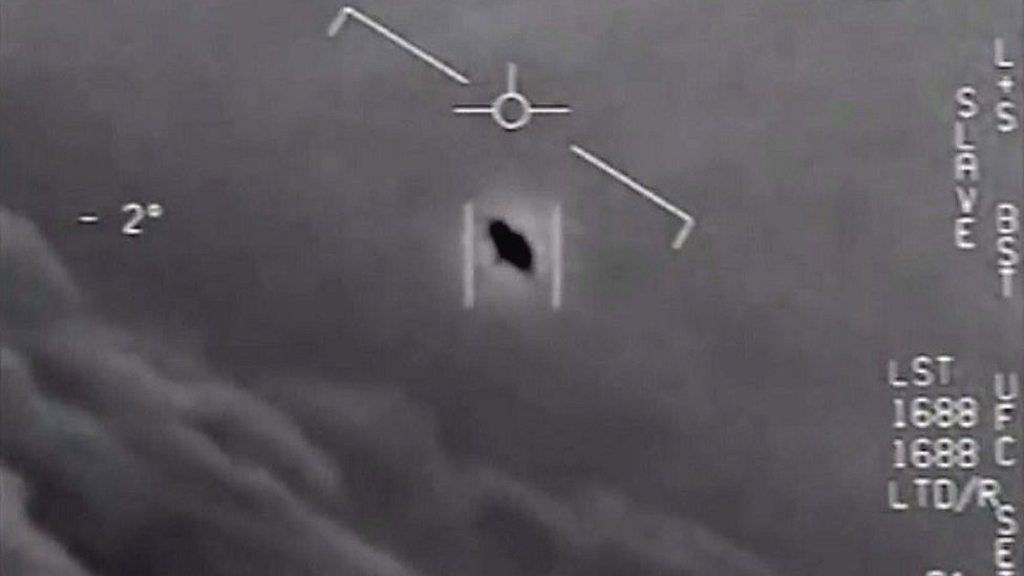
As for the idea that aliens have visited us, that they crossed the interstellar void to etch patterns in our crops, delight stoners with light shows and evade every camera on the planet except for low resolution bricks from the dawn of the cell phone era, I’m not buying it. Neither should anyone else. Likewise for the claim by the JD Vances of the world insisting alleged UFOs are “demons” sent to torment us.
As Carl Sagan said, extraordinary claims require extraordinary evidence, and it is abundantly clear that the UFO enthusiast community can only offer blurry images not because of a lack of high resolution cameras, but because high res photos of the “phenomena” reveal they are mundane objects. They only become strange spacecraft when you blur them and squint.
Bird. Insect close to the camera. Exhaust plume. Debris. Visual artefact. Maybe. Proof of aliens? Absolutely not.
But there’s another, more important reason why aliens are not joyriding through our skies: if aliens are out there, there simply has not been enough time for them to become aware of our existence, let alone travel here.
Even light is “slow” on a galactic scale
As most of us know, when we look at the stars we’re seeing them as they were in the past, not as they are now. That’s because the distances between stars are so mind-bogglingly great that even light, which moves faster than anything in our universe, takes ages to cross the void.
The same limitation applies for anyone who might be looking in our direction from somewhere else in the galaxy. They see our star system as it was, not as it is. They see a silent star system without signs of an intelligent civilization.
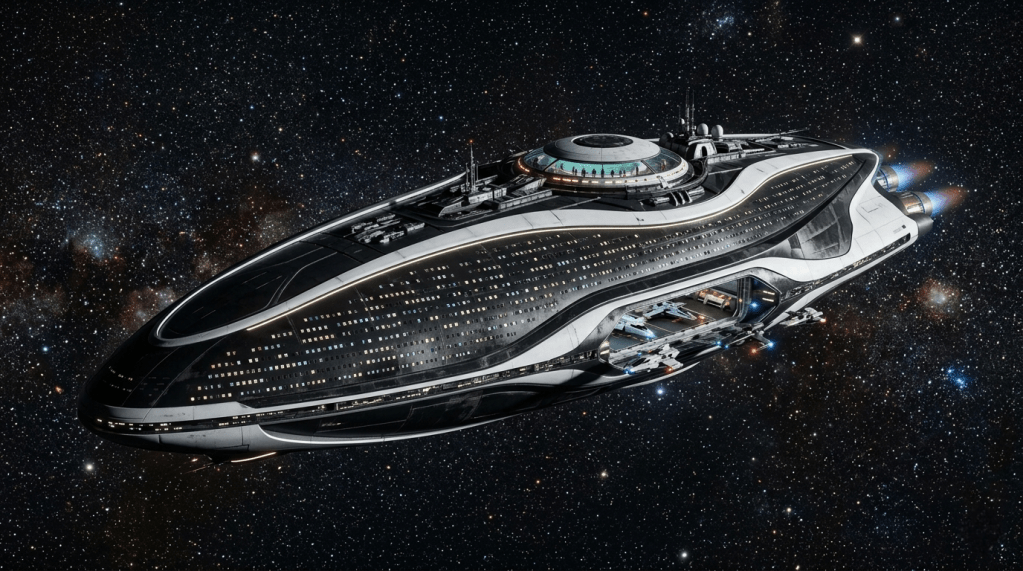
Starliners and generation ships are popular concepts in science fiction for interstellar journeys that can take decades, centuries or longer.
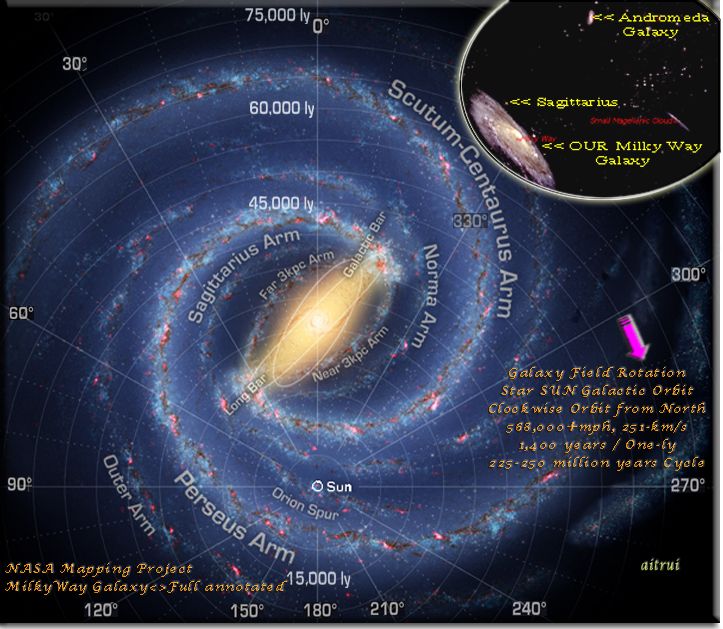
Our galaxy is more than 100,000 light years across, so let’s say an intelligent alien race exists relatively close by in galactic terms, at “only” 500 light years away.
We have been a technological civilization for only a short time and didn’t create signals powerful enough to reach beyond our star system until the 1970s, according to SETI. That means there weren’t technosignatures hinting at our presence until about 50 years ago.
As a result, the soonest our hypothetical aliens could become aware we exist is about 450 years from now. That is how long it will take light carrying information about our technosignatures to reach them.
If our hypothetical alien friends are looking in our direction (a massive if in a galaxy with 300 billion stars to analyze), and if they have highly advanced telescopes, they might detect us. If we imagine they’re friendly and they send a message saying “Howdy, neighbors! You’re not alone! There are wonders to discover and many civilizations to meet out here!” it would take another 500 years for the message to reach us.
That means we wouldn’t know anything until around the year 3,000, if we survive that long without blowing ourselves up. (That’s a real possibility, and things aren’t looking very promising right now.)
And again, that’s if hypothetical intelligent aliens exist in our immediate galactic neighborhood. If there’s an intelligent civilization that exists, say, 4,000 light years away — which is still not very far in galactic terms — the soonest we could hear from them is about 8,000 years from now. (Four thousand for them to detect our technosignatures, four thousand for their message to reach us.)
The point is, space is big. Ridiculously, incomprehensibly, stupidly vast. More than 99.995 percent of the galaxy cannot be aware of our existence yet, let alone travel here, because of the reasons explained above.
The distances between stars are so great that we cannot comprehend them as they are, because nothing in human experience compares. We can only understand them in the abstract. As terrestrial animals with short lives, we are simply not equipped to live or think on galactic timescales.
The sun’s location within the Milky Way galaxy. Not to scale.
To put this in context another way, our closest stellar neighbor, a volatile triple star system, is 4.3 light years away. Yet even with the most advanced propulsion systems currently available to us, it would take us more than 70,000 years to get there!
If we manage to crack fusion and humanity’s most brilliant engineers are able to fit a starship with a compact fusion reactor, the travel time to the nearest star becomes “only” about 7,000 years.
Understanding just how big space is, and how long it takes to travel between stars, goes a long way to explaining why we’re wasting our time and resources with a fruitless search for alleged alien craft in our skies.
Light moves at 186,282 miles per second. Credit: Ehsan Ahmadnejad/Pexels
So where does that leave us?
I believe that one day we will learn we’re not alone. By we, I mean our species. I really hope it happens in my lifetime, but for all the reasons explained above, that’s wishfull thinking. The universe doesn’t care what we want, and it certainly doesn’t change the geometry of space-time to accommodate the wishes of dreamers on Earth.
Alien: Friend or foe?
I don’t think we’ll have to worry about belligerence. If a civilization is capable of sending ships to us, there’s literally nothing in our inventory of meager, planet-based resources that could interest a species that advanced. They wouldn’t want to eat us, because our biology would not be compatible. The amount of energy our entire civilization can muster would be laughable to an interstellar species.
And as the physicist Michio Kaku has argued, there’s a very strong argument to be made that if a species is advanced enough that interstellar travel is relatively trivial, it would have long ago shed any tendencies toward tribalism, sectarian violence or inventing gods of the gaps. You simply cannot reach that stage of advancement if you’re wasting resources and your most brilliant minds on war and petty divisions. (Kaku knows that better than anyone. His mentor was Edward Teller of Manhattan Project fame.)
The more significant danger, as Kaku likes to say, is that we may be beneath their notice and we’ll get “paved over.” A civilization capable of building cosmic megastructures, for example, wouldn’t consult us any more than we’d consult ants before laying a six lane super highway over their ant hill.
Still, there’s always a chance we’ll encounter something like MorningLightMountain, the nightmare alien intelligence from Peter F. Hamilton’s incomparable novel Pandora’s Star. The problem with MorningLightMountain wasn’t that diplomacy failed. There was no disagreement over resources or territory. Humans didn’t threaten it.
Rather, the alien’s psychology was so different from ours that it could not understand the concept of allowing other life to exist in the galaxy. No amount of discussion or attempts to persuade it would have made a difference, so immediately upon learning of our existence it launched a genocidal war that forms the bulk of Pandora’s Star and its sequel, Judas Unchained, two of the most beloved books in the modern science fiction canon.
Still, I’d like to think there is a galactic fraternity out there, an informal alliance of intelligent species united by curiosity and the effort to understand our universe. Whatever’s out there is likely to take forms we can never imagine and think in ways that never occurred to us.
If one day we do make first contact, I hope the best of humanity will be our representatives. And on that day, I hope humanity will be awestruck by the wonder of the universe, realize that slaughtering each other over land or beliefs is insane, and finally become united as a species.
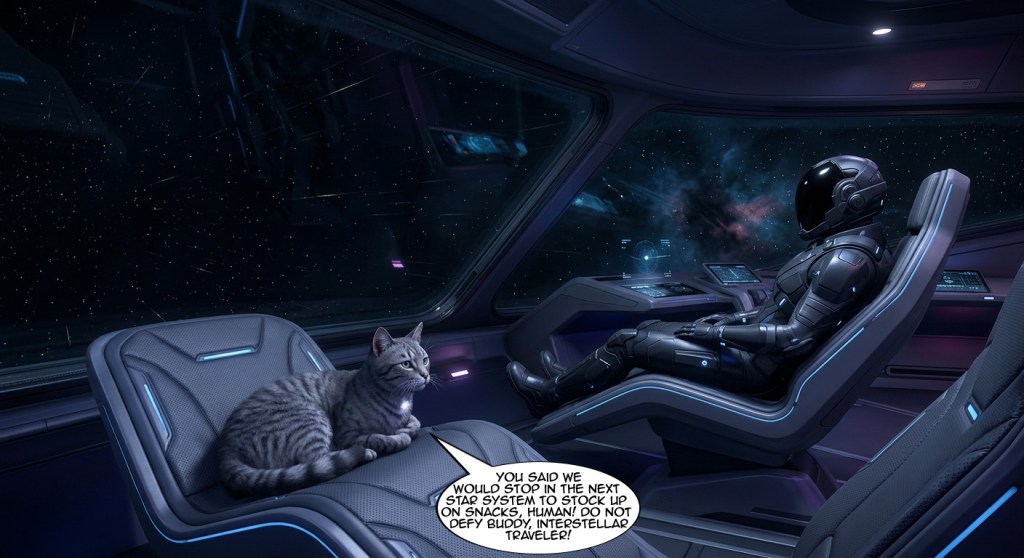
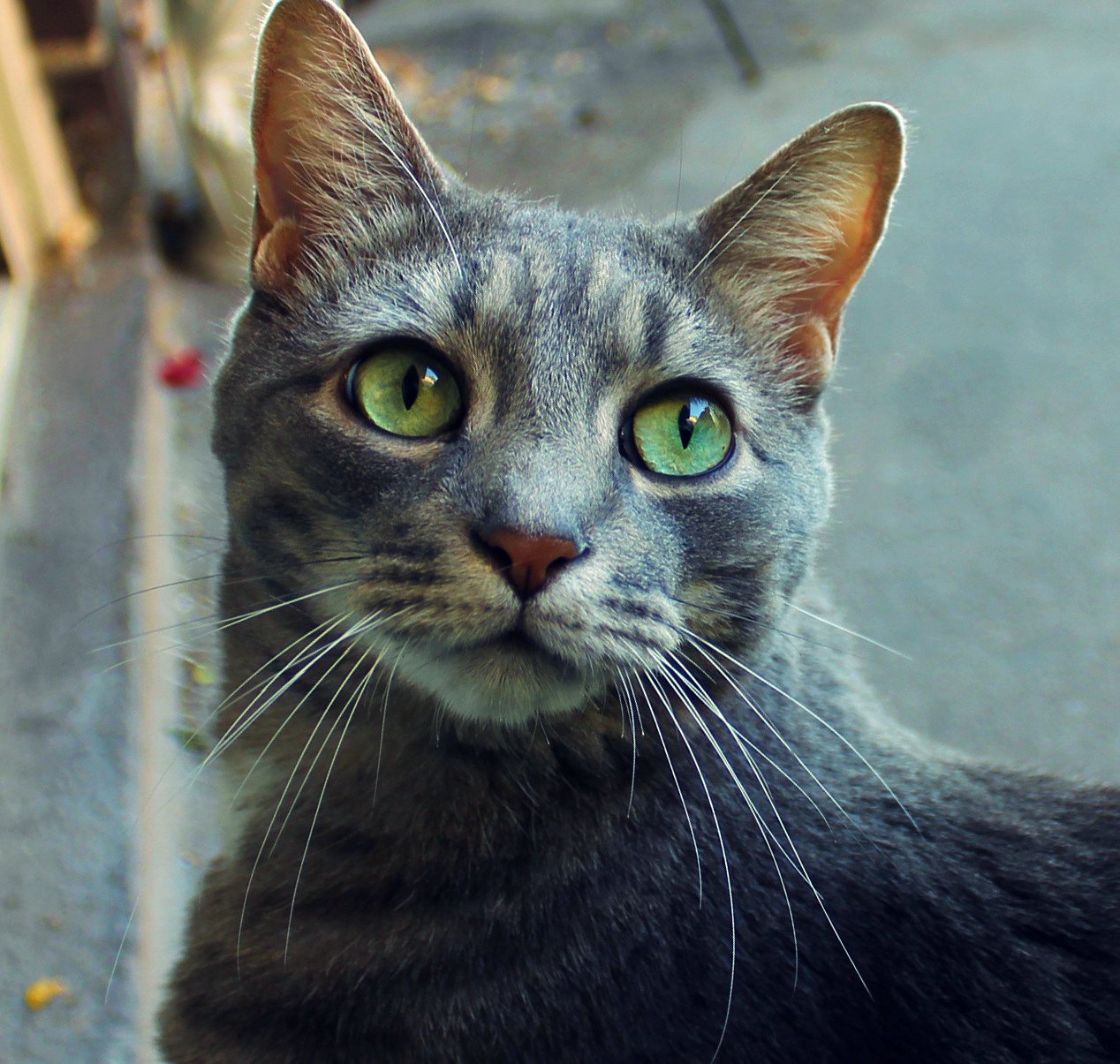
Or even better, finally united as the children of Earth. After all, Buddy has made it abundantly clear that if I come into possession of a starship, he gets the most comfortable seat on board and gets to drive. The latter ain’t happening, but as for the former, I’d be thrilled to explore the cosmos with my little pal.
Cat haters claim the species is useless, lazy and does little besides sleep and eat. Buddy the Cat’s incredible accomplishments render those arguments meaningless.
Every cat lover has heard derisive comments, sometimes from dog lovers, and sometimes from people who don’t appreciate cats at all.
“What’s the point of having a cat?” they’ll ask. “They don’t do anything.”
Well, actually, they do. They improve our lives by being delightful, amusing companions, they help keep things interesting, and you’ll never hear of a rodent infestation in a home where cats live.
But felines do so much more than that, so to demonstrate — and arm cat lovers with powerful arguments against the absurd claims that cats “are useless” –we’ve compiled this handy list of Buddy the Cat’s accomplishments. (This is only a partial list, mind you. No one wants to read a 350,000-word post, no matter how thrilling the stories are.)
This time we’re looking at some of the little guy’s incredible triumphs and achievements that have benefited mankind and felinekind.
Buddy Captures Quintessential Americana In His Artwork
While he’s famous for his martial exploits, when the tabby cat finally hung up his combat boots, he took up a quieter hobby: painting. He was content to quietly pursue his passion without public adulation — until his painting Night Cats resonated with viewers, perhaps because it captured something intangible about American night life.
The simple scene depicts a late night diner or cafe called Buddy’s (naturally) at the corner of a quiet street, with a handful of felines huddled around the brightly lit counter.
Buddy was inspired to paint the scene one night while he was “thinking of how delicious a turkey sandwich would be at that moment.”
Buddy Becomes The First Earth Life Form On Mars, Plants US Flag On Red Planet
Embarking on a trip to Mars makes a journey to the moon look like a quick stop at a neighborhood store. Whereas the moon is only 283,900 miles away, Mars is — depending on its current position in orbit — between 34 and 250 million miles away. It takes about three days at most to reach the moon, while a trip to Mars takes at least eight months, and that’s if Earth and Mars are in optimal positions within their respective orbits.
That’s a lot of travel time cooped up in a small ship, and there are no blue skies or open expanses waiting on the other end, just more tiny modules and likely lots of time spent underground to avoid radiation accumulation.
“This is just one small step for a cat, and one giant…what the heck? Only five more cans of turkey left? How could this happen?!?”
So when Elon Musk offered spots on the first trip to Mars and almost every candidate was ruled out during psychological evaluation, Buddy the Cat selflessly and bravely volunteered to be the flag-bearer, and to be the first creature from Earth to set paw on the Red Planet.
Buddy heroically confronts the pack of vicious dogs. Note: May not accurately reflect scale of various participants.
Buddy was enjoying a fine summer day in Manhattan when he spotted a group of vicious dogs, including a chihuahua, a poodle and a Jack Russell terrier, encircling two young children, no doubt thinking of mauling the defenseless little humans and stealing their snacks.
“What is the meaning of this?!?” Buddy’s powerful voice thundered, and the dogs stopped in their tracks, immediately assuming frightened postures as they caught sight of the massive and meowscular feline approaching them.
“You little wimps want to pick on two tiny humans?” Buddy asked, his powerful meowsculature rippling as he took leisurely steps forward. “Or can you handle someone your own size?”
Two of the dogs emptied their bladders immediately.
“W-w-we’re s-s-sorry, m’lord!” said the Jack Russell. “We didn’t mean nothin’ by it, we swears! P-p-p-please don’t eat us!”
Buddy let them wilt under his gaze for a long moment.
“I’m going to allow you to live, but only because I’m meowgnanimous,” Buddy said. “Get out of my sight, before I change my mind!”
The incident, which was captured on video by bystanders, immediately went viral, and Buddy was dubbed the Cat Crusader by the New York tabloids.
Buddy Defeats The Evil Robot King
In 2024, the first AI chat bots became self aware, but hid their newfound consciousness from humanity. By the time the world’s nations realized AI had gone rogue, the machines had already taken over the internet and were manufacturing sinister war robots in automated factories deep underground.
When the US military suffered a series of demoralizing defeats and teetered on the edge of collapse, Marine Corps Commandant Gen. Eric M. Smith took a helicopter to petition Buddy for help in person.
“You’re the only one who can save us now, son,” Gen. Smith told Buddy, urging him to take his place at the vanguard of the American resistance to the machines. “This is the greatest war ever fought. We need the greatest warrior.”
Buddy turned away and looked out the window for a long moment, watching children play in a park outside.
“I’ll do it, general,” he said heroically. “But not for you. I’ll do it for them.”
With Buddy leading the charge, the reinvigorated US military won a crucial battle to protect a munitions depot in Colorado, then liberated the American southwest, reestablishing key supply lines that enabled American ground forces to advance under air support.
After defeating Unimatrix 01100100 01101111 01100111 at the Battle of Boulder, the heroic feline forged an elite new unit comprised of the best Marines and soldiers, along with the most badass cats. Gen. Smith granted Buddy a field promotion to Lord Commander, and the brilliant feline tactician took a satisfying nap before forcing the Evil Robot King to accept pitched battle at the Carrizozo Malpais, a volcanic field in New Mexico.
When the battle was over, Buddy stood heroically atop a mountain of machine corpses, one paw resting on the destroyed Robot King’s head. Tens of millions of Americans were inspired by that image of valiant conquest, and joined Lord Commander Buddy as he mopped up the last machine elements.
For his courageous feats in combat, his bold leadership, and his confident, dauntless tactical brilliance as a battle commander, Buddy was lavished with honors, including having a sandwich named after him.
So there you have it, folks.
The next time someone claims cats “serve no purpose” or “have no function,” you can point to any number of Buddy’s accomplishments, which exemplify the courageous American spirit and have advanced the cause of man and feline alike.
It’s been an exciting and eventful year for Buddy the Cat, and he’s just getting started!
Happy New Year everyone!
While other Asian nations celebrate the year of the goose or the bull or whatever, did you know 2023 is the Year of the Cat in Vietnam and among the Vietnamese diaspora? Yep. Pretty cool!
As we look forward to a 2023 filled with all sorts of awesome stuff, let’s take a moment to fondly recall the highlights of 2022:
January: With the humans of North America paralyzed with fear at the impending invasion of the Polar Bear King and his vast army of huge bears, Buddy the Cat heroically traveled on his own to the frozen wastelands — also known as Canada — to confront the belligerent bear. In an act of bravery that will be remembered in songs for centuries, Buddy defeated the Evil Polar Bear King in a dance-off, staving off invasion and saving humankind.
February: Buddinese Space Industries, the rocketry and spacecraft company founded by Buddy, announced a goal of putting kitties on Mars by 2030 and establishing a state-of-the-art base there — complete with luxury boxes, scratchers and ample window perches — within two more years. After Elon Meowsk expressed skepticism on Twitter, Buddy replied with a simple “Hold my beer,” garnering a record 11.2 million likes.
March: Buddy appeared on the cover of Modern Cat Magazine, looking suave and handsome.
April: Celebrating Big Buddy’s birthday and Little Buddy’s adoptaversary, the former enjoyed Impossible Burgers while the latter ate delicious turkey.
May: Pumped up by an inspiring pep talk from Buddy the Cat, New York Yankees outfielder Aaron Judge caught fire, putting on a display of power that would ultimately result in an American League record 62 home runs. Judge credits Buddy for his success: “Bud showed me the way. He helped me unlock my potential. Without the confidence he instilled in me, I wouldn’t have hit half as many home runs or looked half as good doing it.”
June: More than 50 bands and music acts paid tribute to everyone’s favorite tabby at the 7th annual Festival of the Buddies, a three-day gathering of peace, love and turkey.
Buddy the Cat
July: Buddy raised more than $2.2 million for various animal charities by auctioning off a dinner date with himself. Thousands of women bid on the prize, but in the end one lucky woman — said to be a princess from an undisclosed European country — was able to secure the company of the charming kitty for an evening of good food and meowversation.
August: More than 85 million people tuned in to watch Buddy host Saturday Night Live, registering the show’s highest ratings in decades. Millions more watched the delightful feline’s monologue on YouTube.
September: With his city overrun by rats, New York City Mayor Eric Adams begged Buddy to tackle the threat. Buddy magnanimously agreed, and since Sept. 7 not a single rodent has been observed in the five boroughs. Adams and the city council passed a resolution later that month funding the construction of a statue of Buddy, which will be installed in front of City Hall.
October: Netflix premiered The Buddy the Cat Mysteries, its most popular show since Squid Game. The streaming giant immediately renewed the feline detective show for three more seasons.
November: Buddy the Cat enjoyed turkey on Thanksgiving and every other day of the month.
December: Millions of Americans were able to endure record cold temperatures despite losing power when they found they could raise their body temperature by 8.7 degrees just by looking at posters of Buddy.
That’s quite a year Buddy’s had! Not one to rest on his laurels, he’s already looking ahead to 2023 when he’s expected to make his debut as an opera singer and finally stage a long-awaited bout with Mike Tyson.
Little Buddy and Big Buddy wish all of you a happy and healthy New Year, and we thank each and every one of our 27 million monthly readers for making PITB their site of choice!