Continuing its mission to probe the greater enigmas of the natural world, and knowing many of us must have pondered the question, Scientific American has set out to find out whether cats break wind.
In what it calls “an investigation into the mysteries of feline flatulence,” the magazine confirms that, yes, our furry friends do pass gas.
The good news? They are infrequent cheese cutters with minimal ass acoustics, particularly compared to the notoriously flatulent canines.
The bad news? When cats do fart, they are silent but deadly (SBD) affairs that deliver maximum olfactory potency due to the sulfurous mix of proteins and amino acids broken down by their digestive systems.
I can personally confirm that factoid, having been on the receiving end of a particularly insidious squeaker while Bud was sitting on my chest and nuzzling against my face. Once second I was rubbing the top of his head and telling him what a good boy he is, the next I was nearly gagging.
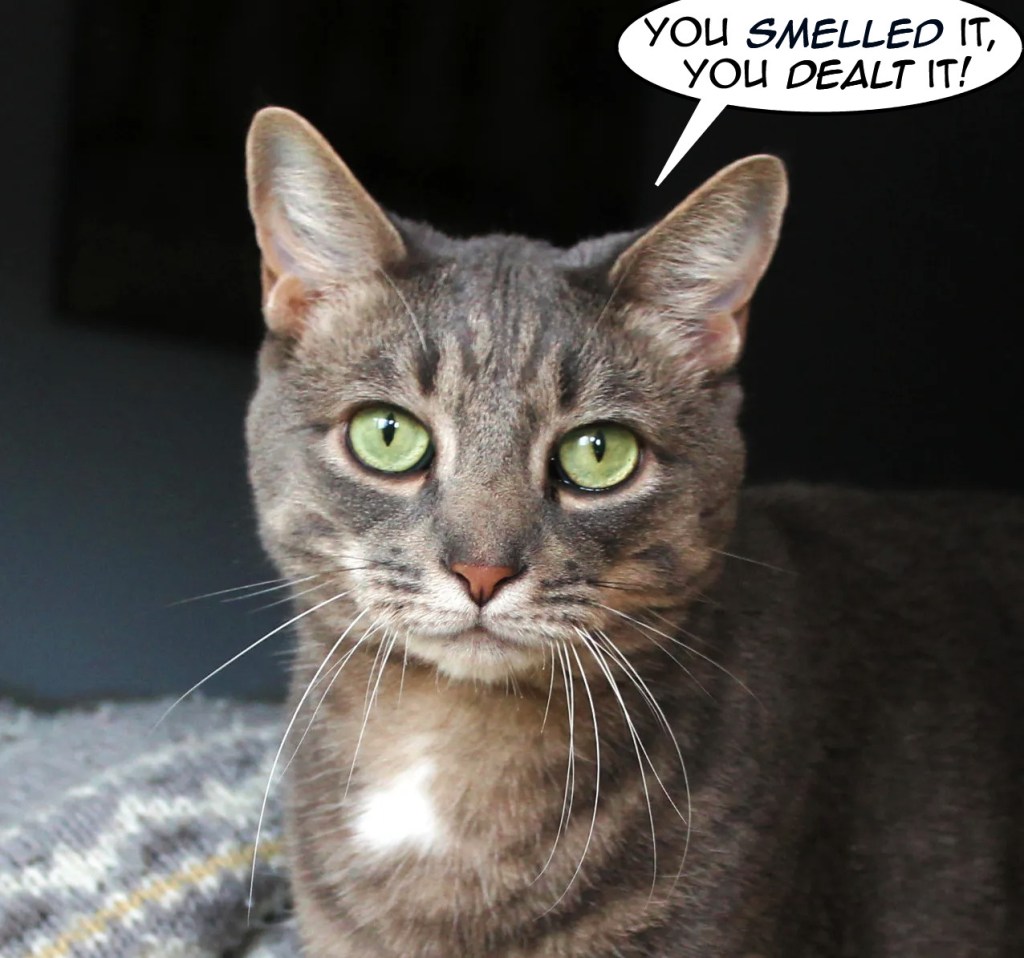
Farting is a normal biological function for cats, veterinarians told the magazine. While New York-based Cat Practice’s medical director, Eric Dougherty, says he doubts “anyone’s ever measured the exact quantity of cat farts in a scientific study,” you should have things checked out by a veterinarian if your little pal’s getting insane in the methane with concerning frequency.
“If you’re coming home and your cat is ripping farts every day,” Dougherty said, “you probably want to have it looked into.”
Same study, different interpretations
A few weeks ago we wrote about a Japanese study that found oxytocin levels spike in cats and their humans when they’re in close proximity.
The chemical – which is essential to bonding and often corresponds to positive feelings – matches in our respective bloodstreams when we’re interacting, the research team found.
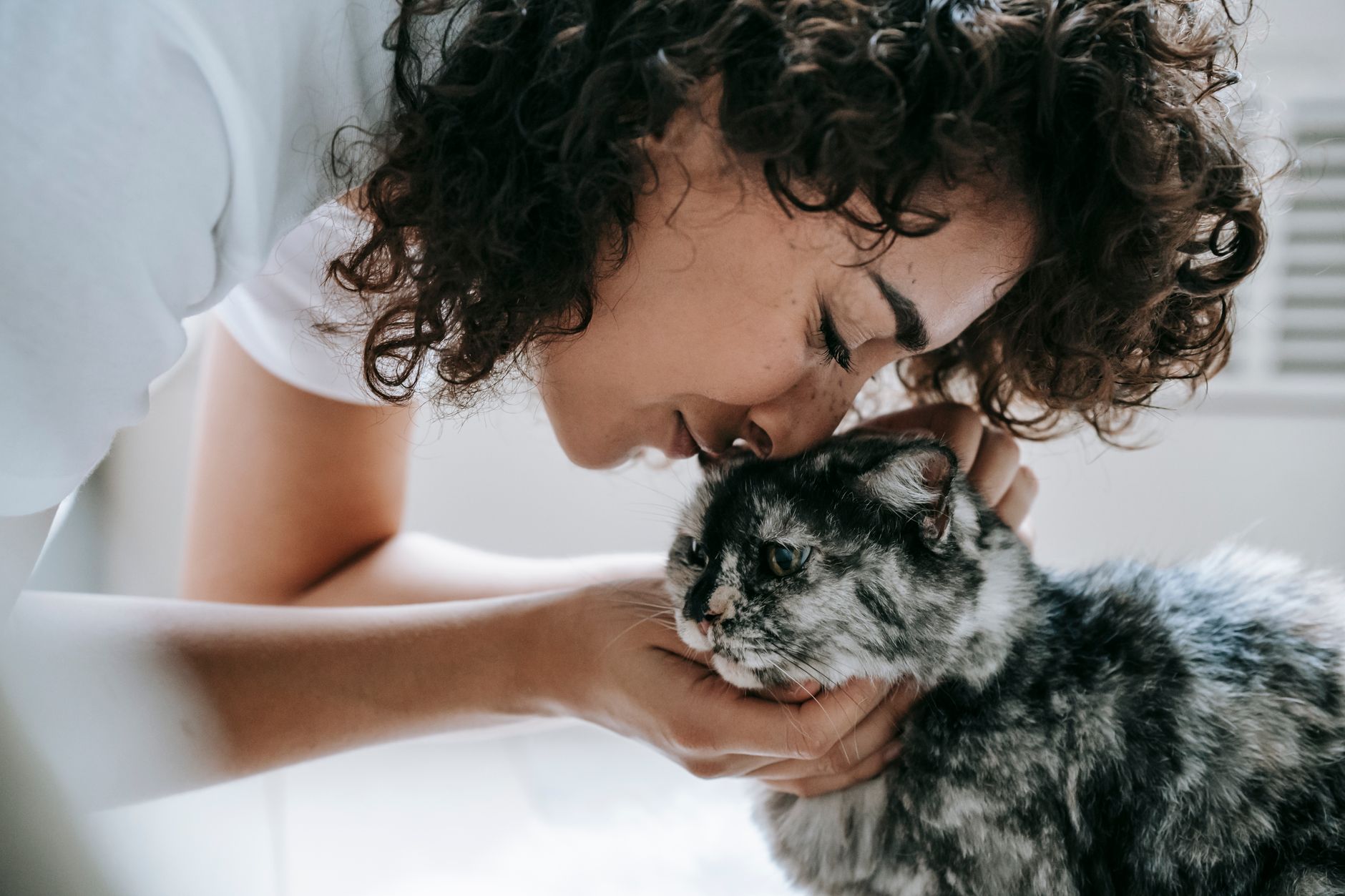
Interestingly the effect is tied to distance, or rather lack of it. That means if your little buddy is bonded to you, you’re both at your happiest when you’re next to, or in physical contact with, each other.
The study didn’t find causation, just correlation, and the standard “we need more research” caveat absolutely applies here.
While the research team went to the effort of observing interactions in homes where cats live, and of testing cat and human urine samples for real data on biochemical levels instead of relying exclusively on questionnaires, the sample sizes were small. The team collected complete data on only 24 cats and 17 people.
It also found an unsurprising link between negative human moods marked by higher cortisol levels and stress in cats. That makes sense, as we’re extremely important to our feline friends. We’re the ones who care for, feed, shelter and love them, and they’re highly attuned to our emotions.
VICE, which ran a story on the study on Nov. 5, had a different take, claiming the study found “the oxytocin levels of humans and their cats appear to rise and fall in sync.” That’s not exactly what the paper describes, as negative human emotions were found to precipitate lower levels of oxytocin and higher stress hormones in cats. Again, the paper doesn’t establish causation, so we’re left to infer that our negative emotions are the catalyst without hard proof.
A handful of other publications published articles with interpretations similar to those of VICE, while a story by phys.org concentrates on the proximity aspect and notes that it could account for why different research teams have had varying results when trying to figure out whether having a cat leads to greater happiness.
Caturday Open Comments: You’re welcome to comment on anything, suggest stories, talk about your own cats, or leave a message for Little Buddy about what a really, really ridiculously good-looking cat he is.