American news networks show us crowds chanting “Death to America!” but the majority of Iranians are just like us.
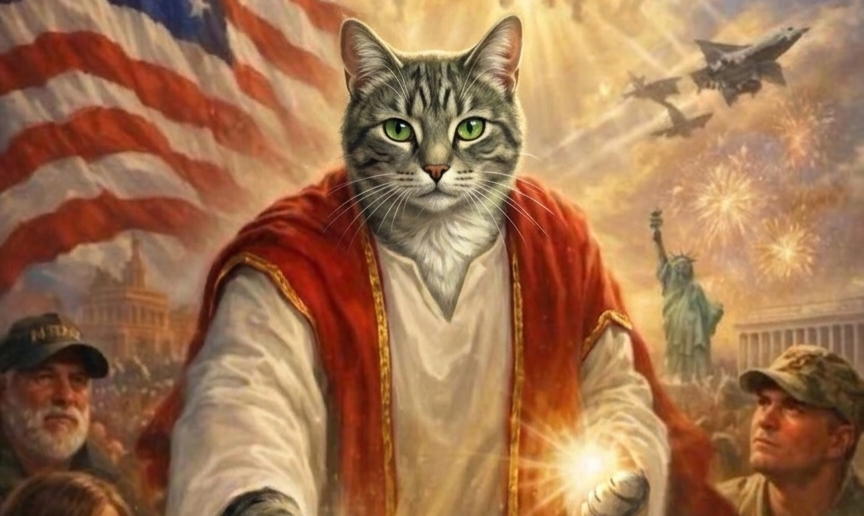
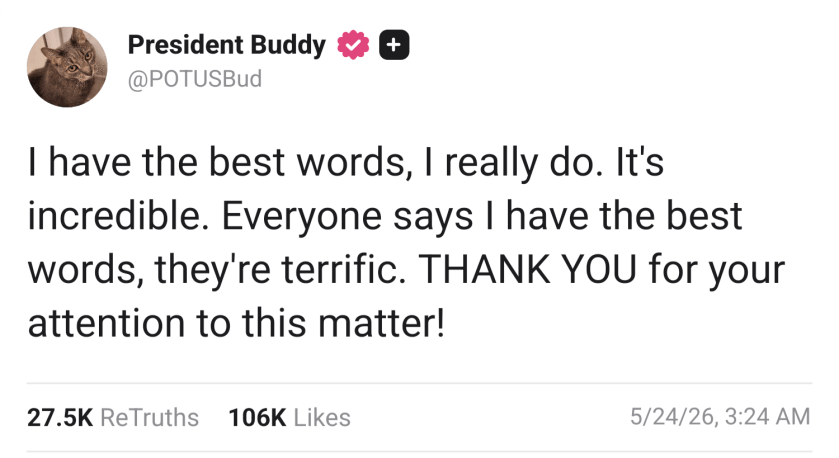
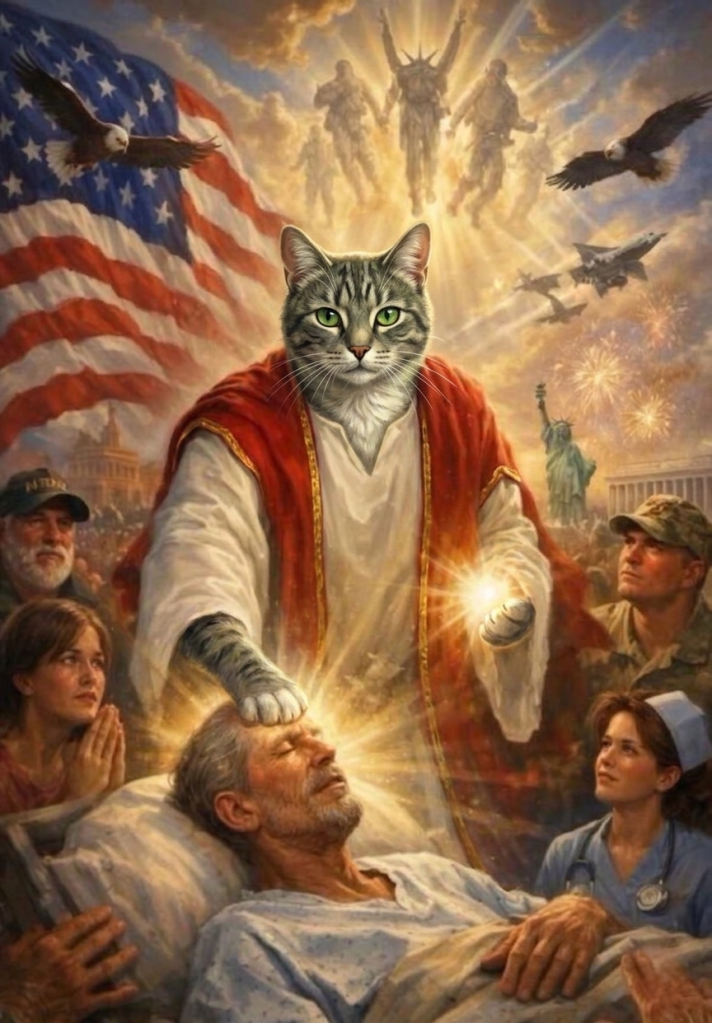
As our president threatens to erase civilizations, tells the Pope what Christianity is about, and shares AI images of himself as Jesus, it’s important to remember what’s happening in Iran is a real war with real victims, something easy to lose sight of amid all the absurdity.
A first-person account in al Jazeera reminds us of the human and animal suffering caused by war. Even when people aren’t physically impacted, the mental strain of living in a city under attack is considerable, and their poor animals have no idea what’s going on.
One thing you’ll rarely see on American networks is an acknowledgement that the vast majority of Iranians are just like us.
Before the war, they had open access to an uncensored internet. Despite the oppressive theocratic government, it’s easy for Iranians to get TV networks from outside their country. The Iranian regime was never as adept at controlling information as some of its contemporaries.
The people of Iran are overwhelmingly secular, fully aware of what’s happening, and they have long been sick of their government.
The aftermath of a US airstrike on a school in Minab, Iran, that killed 120 young girls and 156 people overall. Credit: Wikimedia Commons
For them it must be a Farenheit 451 moment, watching footage of the bombing while explosions rumble around them. Survival is down to luck. The missile you see streaking toward your city on TV could be the one that hits your apartment building.
To remind us of what’s happening where the bombs are landing, here’s Sana, a 27-year-old woman from Tehran, describing the first night of the war:
“Seven or eight more explosions followed. They were bombing near Mehrabad airport, close to us. I genuinely thought I was going to die.
When I finally went back upstairs, my cat was hiding in the wardrobe, trembling. My family and boyfriend had been calling and texting, without response, for hours, watching the news reports about strikes near the airport and imagining the worst.“
I recommend reading the rest, if for nothing else than to be reminded that Sana is so normal, so much like us.
Header image of Tehran under attack at night via Wikimedia Commons
How do you ensure people will heed warnings to steer clear of nuclear waste storage sites thousands of years in the future? One outlandish proposal involves genetically engineering domestic cats to glow in the presence of radiation.
Imagine you’re a person living five thousand years downstream.
Maybe civilization collapsed and restarted, maybe records were lost, or maybe like Etruscan, Harappan and proto-Elamite, the languages we speak today will be long forgotten.
At any rate, if you discover a forceful warning left by your ancestors from the deep past, would you understand it without translation or cultural context?
And if you’re the one tasked with leaving the message, how would you do it?
The message has to be enduring. It must be recorded in a format that will withstand the tests of time, conquest and natural disasters. The message must be comprehensible without cultural context, because we have no idea how language will shift in the future or whether our descendants will enjoy the knowledge that comes with continuity of records.
Lastly, the message must be both compelling and absolute in its meaning, because its content is vitally important: This site contains nuclear waste. Do not under any circumstances excavate or disturb the contents of this facility. It will lead to sickness, suffering and death.
The traditional trefoil warning sign is unlikely to scare anyone off. The new radiation hazard sign, right, seems unambiguous, but so do warnings on Egyptian tombs.
How do you phrase that in a way our naturally curious species will heed the message?
We certainly didn’t heed the warnings on the tombs of King Tut and other pharaohs. For all we know, humans of the future might believe the hidden chambers deep in Yucca mountain or buried 3,000 feet underground are filled with fabulous treasures and wonders beyond imagination.
They might interpret the warnings as superstition, meant to ward off looters, “grave robbers” and anyone else who might be motivated to break in. They might see the care and effort that went into encasing the objects and conclude there must be something very much worth preserving inside.
Or they might be driven by simple curiosity, as so many human endeavors have been.
A tour group visiting the incomplete Yucca Mountain nuclear waste storage facility. Credit: Daniel Meyer/Wikimedia Commons
Arguments about how to warn the future are at least as old as the Manhattan Project (1942) and the first nuclear power plants (1954 in the USSR, 1958 in the US), but there weren’t serious efforts to come up with a plan until the 1970s, when scientists, historians and other thinkers began to engage in formal efforts to find a long-lasting solution.
Some of the ideas are boring, some are impractical, and some are absurd, like an idea to create a “garden of spikes” atop nuclear material waste sites, to discourage people from settling in the area or excavating.
Unfortunately, one idea that’s still being kicked around is the concept of the radiation cat, or raycat.
Knowledge and language may be lost to history, signage may be destroyed, physical obstacles may be removed. But one constant that has endured, that has seen empires rise and fall, and has existed long before Stonehenge and the pyramids of Giza, is the human relationship with cats.
They’re now valued as companions, but we still use them as mousers on ships, in heavily populated cities, in ancient structures and on farms and vineyards.
They’re embedded so deep into our cultural psyche that it would not be outlandish to think the archaeologists of the future may conclude the internet was constructed primarily to facilitate the exchange of images of cats.
Even the first high-bandwidth deep space transmission was a video of a cat, so in a very real sense, the dawn of a solar system-wide internet was heralded by an ultra high definition clip of an orange tabby named Taters, beamed back to earth from the exploratory spacecraft Psyche, which was 19 million miles away when it transmitted Taters on Dec. 11, 2023.
Consider also that the basic felid body plan — shared by domestic kitties, tigers, pumas, black-footed cats and the 37 other extant species — has barely changed in 30 million years, because cats are extremely successful at what they do.
In other words, cats aren’t going away, and domestic felines have a place in every human society.
So philosophers Françoise Bastide and Paolo Fabbri conceived of the “living warning” in 1984. The idea is to alter the genetic code of felis catus so that the animals glow or change color in the vicinity of nuclear waste, using minuscule levels of radiation as the trigger.
There are natural precedents for this, including bioluminescence and several species of octopus that radically change colors and patterns on their skin to evade predators.
The second component, once the genetic code has been altered, is the creation of folklore: songs, stories and myths that will endure through time, warning people to keep cats close, treat them well, and run like hell if they change color because it means something terrible, something evil beyond imagination, is nearby.
To ensure the folklore of feline Geiger counters endures, an idea by linguist and semiotician Thomas Sebeok would be incorporated. Although empires and states rise and fall, there’s one organization that has survived for 2,000 years preserving a unified message: the Catholic church.
Sebeok proposed an atomic priesthood, an order that would pass the knowledge down through generations, continually seeding culture with stories and songs of glowing felines.
Spent nuclear fuel rods are stored in on-site pools at the facilities where they were used, but pools are meant only as temporary storage solutions. Credit: Wikimedia Commons
If this stuff sounds wacky, that’s because it is. We won’t figure out a way to ensure a message is received and understood thousands of years in the future without considering some off-the-wall plans.
Of course messing with the genetic code of any animal raises serious ethical questions.
We don’t have the right to play God and tinker with the genetic code of extant species. We don’t fully understand the immediate consequences for the health and happiness of cats, and we know almost nothing about the long-term effects on the species.
I’d also argue that we have a special relationship with cats and dogs, one that exceeds any obligations we may feel toward our primate “cousins” or other non-human animals.
Cats and dogs have been living with humans for a combined 40,000 years. They have been molded by us, they are dependent on us, and all that time in human proximity has led to unique changes.
No animals on this planet can match them when it comes to reading human emotions. Our little buddies pick up on our emotional states before we’re consciously aware of them partly because of their robust sensoriums, and partly because as their caretakers, our business is their business.
A clip of a cat named Taters was the first data burst transmitted to Earth using NASA’s upgraded deep space network. Credit: NASA/JPL
We bear a responsibility to both species and the individual animals. It’s not just the fact that without them, our lives would feel less meaningful. It’s the indisputable fact that without them — without dogs who flushed out prey on yhr hunt and guarded small settlements, without cats who prevented mass starvation by hunting down rodents — we would not be here.
Cats and dogs play a major role in the story of the human race. We are indelibly linked. Their DNA is not ours to tinker with, and they are not tools we can repurpose at our convenience.
Thankfully the US Department of Energy has never endorsed the concept of raycats. While there is a website advocating for a raycat program and small groups around the world dedicated to its propagation, the interest is mostly academic.
The Raycat Solution, which maintains a site dedicated to the idea, has a FAQ which says its supporters are serious about its potential usefulness, but for now most experts see it as a thought experiment and reminder that the problem must be dealt with eventually. At some point NIMBY will have to yield to reality, and wherever the US ends up storing nuclear waste, it’ll need to be secured, sealed and marked.
The goal is for the message to endure at least 10,000 years, at which point scientists say the radiation will be minimal.
That’s assuming that the future holds the collapse and rebuilding of human civilization, or at least a technological backslide in which the majority of our species’ knowledge is lost.
We like to think things will be brighter than that and instead of glowing to warn people of danger, cats of the far future will be where they belong — with their human buddies, exploring new frontiers on starships with plenty of comfortable napping spots.
Header image depicts the Alvin Ward Vogtle Nuclear Power Plant in Georgia, the largest nuclear plant in the US. Image via Wikimedia Commons/NRC
[1] The nuclear waste storage facility at Yucca Mountain was initially funded and approved by congress in 2002, then was canceled and de-funded in 2011 after significant pushback from people who live in Nevada, along with their representatives in congress. Plans for the site have changed several times in more than two decades, leaving the US with no central, secure site to store nuclear waste.
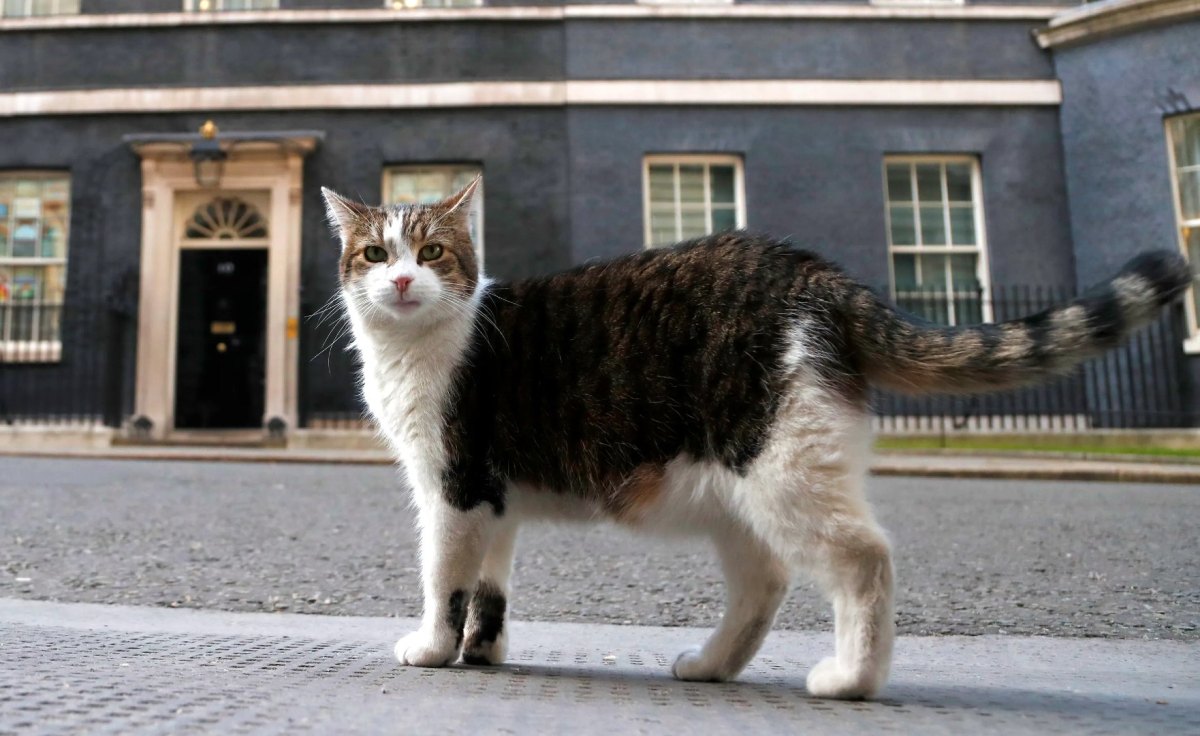
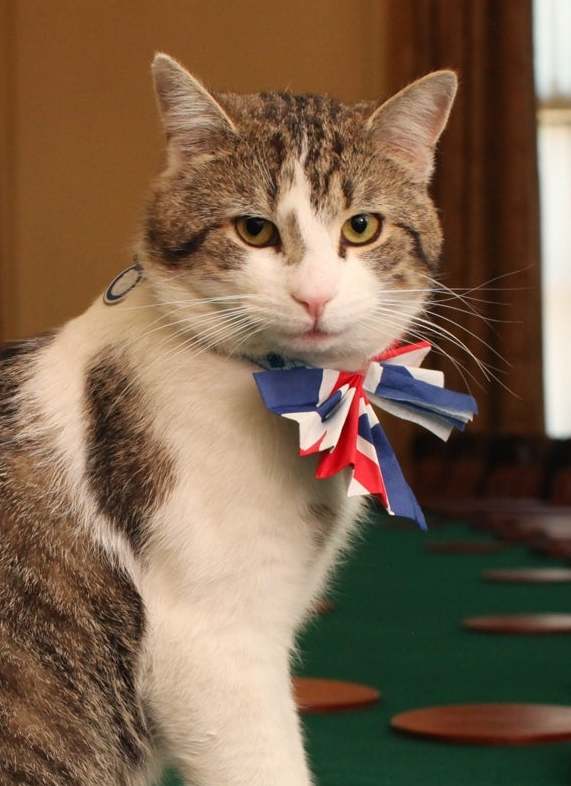
As Larry marks 15 years as the chief mouser in the UK’s seat of power, No. 10 Downing Street, Britain’s most famous feline is a constant amid rapid change.
At first it didn’t look as if Larry the Cat’s tenure would last long.
The striking white and tabby mix came highly recommended from Battersea Cats and Dogs, a London shelter whose staff said he was one of their most skilled little hunters. Larry, they said, would adjust well to the busy surroundings of the prime minister’s office and residence.
Adjust he did, but not in the way then-Prime Minister David Cameron, No. 10’s staff, and the UK press thought he would. Larry began his tenure by taking long naps on the residence’s front windowsill, paying frequent visits to his “lady friend” Maisie — a mouser living in another government building several doors down — and establishing a territorial rivalry with Palmerston, the Foreign Office’s mascot and mouser.
“In a separate development, it can be revealed that Larry has a girlfriend,” a droll BBC report from 2011 confirmed, while reporting on a cat-themed quiz night fundraiser at No. 10 to ensure the chief mouser’s yums cupboard remained stocked. “Maisie, a cat who lives at the nearby St James’ Park keeper’s cottage, has struck up a relationship with Larry, a spokesman for the Royal Parks has confirmed.
“There is, though, no prospect of kittens, as Larry went under the knife some time ago,” the report continued, speculating that the chief mouser’s love life could explain “why Larry spends most evenings out – and most days fast asleep in 10 Downing Street.”
It didn’t take long for the press to begin running tongue-in-cheek stories about Larry failing to deliver on promises just like every other political animal, and for a while it looked like No. 10 would need another chief rodent exterminator.
But then Larry began covering himself in glory by defending his new domicile not only from rats and mice, but also from a fox, territorial incursions by Palmerston, ill-intentioned politicians and other undesirables.
As the years passed, Larry’s legend grew. He outlasted Cameron, then Cameron’s successor, Theresa May, who admitted she was a dog person and wasn’t fond of Larry, even denying him the use of her office chair for naps. Then there was Boris Johnson, Liz Truss, Rishi Sunak, and Keir Starmer.
Starmer is Larry’s sixth prime minister, and no one will be surprised if his tenure ends while Larry’s endures. Meanwhile, Palmerston was “retired” to the countryside and only recently returned to politics when he accompanied his human, Andrew Murdoch, to Bermuda when the latter was appointed governor there. Such is the price of incurring Larry’s wrath.
Now at 18 years old, with 15 years as chief mouser under his collar, Larry represents something rare in modern politics: stability and predictability. With the passing of Queen Elizabeth II in 2022, illness and scandal in the royal family, and the usual ephemeral nature of UK politics, Larry has become more important than ever as the stalwart in the country’s seat of power.
Larry’s given the cold shoulder to Irish and Scottish politicians, nuzzled up for scritches from former US President Barack Obama, and forced President Donald Trump to wait before departing No. 10 while taking refuge from the rain under the president’s limo. The famous feline rarely leaves the public guessing when it comes to his thoughts on visiting political figures.
He’s “the most miserable animal you’ll ever meet,” a snubbed Ian Murray, the Scottish Secretary, said after Larry refused to pose for photographs with him. (Murray, it should be noted, was relieved of his post in September, and now holds the lofty title of minister for “culture, media and sport.” Perhaps he and Palmerston can commiserate.)
But that’s part of Larry’s appeal. The chief mouser’s unimpressed reaction to powerful figures has endured him to the public, who shower him with fan mail, treats and toys.
His unintentionally comedic adventures and ability to nap under any circumstances won him the affection of the notoriously fickle UK press, who enjoy watching, photographing and writing about his antics while waiting for the less popular humans inside to update them on the big news of the day.
That’s not hyperbole, by the way: a 2024 Ipsos poll found Larry is more popular than every prime minister to share his home, and the margins aren’t even close.
It also hasn’t escaped the notice of the press that Larry “rules the roost,” and has attentive staff who open the door at No. 10 any time he wants to go in or out. The famous door is actually a blast-proof, steel replica of the wooden original, custom manufactured after the IRA fired a mortar at the residence in 1991. Thus there’s no cat flap, and staff monitoring the door from inside open it as soon as the building’s most enduring resident decides he wants back in.
The prime minister may be the UK’s most powerful political figure on paper, but Larry’s tenure, run of the place, array of servants and adoring fans all prove he’s the real power at No. 10.
Now Larry’s legend will expand even further as the UK’s Channel 4 has commissioned a documentary series on cats from writer-comedian David Baddiel. The series, which is currently filming, will feature Larry in one of its episodes.
Happy 18th birthday, Larry! We hope you see many more years filled with treats, adventures, historic furniture to nap on, and politicians to push around. And if you achieve world peace while you’re at it, no one would be surprised.
A Queens woman is urging voters to support her cat as a write-in candidate for city council District 30 in an attempt to spoil a term-limited councilman’s “cronies” from sailing into office without opposition.
It’s an interesting time for politics in New York, and not just because of a mayoral race in which voters have apparently rejected Republicans and mainstream Democrats.
Over the last several weeks, stickers urging voters to cast their ballots for a house cat for a city council seat have been appearing in a Queens district.
In a story about the write-in campaign, the New York Post devotes most of the ink to political disagreements between Leo the cat’s human and the district’s councilman, Robert Holden. (He’s a moderate Democrat, she doesn’t think he’s progressive enough, but the things they’re arguing over are above the paygrade and influence of a city councilman.)
But the more interesting issue, for us at least, is what happens if Leo rides a wave of populist support and actually wins as a write-in candidate.
When asked what would happen if the nine-year-old feline earns an improbable victory at the polls, a humorless Board of Elections official asked a Post reporter if he was drunk, then told him “we can certainly say that only a human being — specifically a US citizen — can hold elected office in NYC.”
Oh well. It would be amusing if some clever attorney found a loophole to pave the way for a feline councilman, and there isn’t much chance Leo would be less productive than the rest of the council. He might even provide some fresh perspective on how to deal with the city’s eternal rat problem.
Arabian leopards are among the most rare of all cats, with only about 120 left living in the wild. Trump was taken with them on a recent visit to Saudi Arabia.
I can practically hear Donald Trump bragging about the new pair of extremely rare Arabian leopards the Saudis will send stateside as a deal-sweetener between the countries.
“They’re tremendous cats, just terrific,” he’ll say. “The most ferocious cats you’ve ever seen, believe me. It’s incredible. A lot of people are saying — and by the way, did you know leopards eat up to 40 pounds of meat a day? They’re tremendously powerful animals, very powerful.”
As the New York Times notes, Trump is just as beguiled by dangerous apex predators as he is with dangerous “strong men” tyrants:
Mr. Trump does not own pets and, unlike his sons, he does not hunt big game. But he has shown a particular fascination for animals at the top of the food chain. Last year, he talked constantly on the campaign trail about shark attacks. While campaigning in 2015, he was nearly mauled by a bald eagle he posed with in Trump Tower for a Time magazine photo shoot. (“This bird is seriously dangerous but beautiful!” he chirped after the raptor lunged at his head.)
During his first term, Mr. Trump asked aides about dropping snakes and alligators into a hypothetical moat he wanted built on America’s southern border. He also reportedly became fixated on the viciousness of badgers, badgering his former chief of staff Reince Priebus, who is from the Badger State, as Wisconsin is known, about whether badgers were mean or friendly, according to “Sinking in the Swamp,” a book about the first Trump administration. (Mr. Priebus did not respond to multiple requests for comment.)
Trump viewed the leopards and spoke to a zookeeper while he was in Saudi Arabia to complete a recent arms deal. (The U.S. will sell $142 billion in high tech weapons to Saudi Arabia so the kingdom can more effectively slaughter Yemeni civilians in its ongoing proxy war with Iran.) The American president wanted to know all about the big cats, including how big they are and what they eat. The zookeeper, who routinely handles those sorts of questions from visiting classes of elementary school children, happily indulged his interest.
Arabian leopards are fierce, but they’re somewhat smaller than their Asian counterparts. Panthera pardus nimr, as the species is known, generally has a lighter, tan-colored coat that provides more camouflage in desert and arid environments.
An Arabian leopard Arabia’s Wildlife Center in Sharjah, United Arab Emirates. Credit: Arabia Wildlife Center
The Times also quotes Joe Maldonado, aka Joe Exotic, who spoke to a reporter from prison, where he’s serving a 21-year sentence for trying to have Big Cat Rescue’s Carole Baskin murdered. Maldonado is keenly aware of Trump’s recent streak of handing out pardons to reality TV grifters, like Todd and Julie Chrisley, who stole almost $40 million, as well as less famous scammers like convicted crypto bros. (The Chrisleys, who were convicted of bank fraud and tax evasion, declared bankruptcy to avoid paying back their victims, and will now launch a new reality TV show detailing their post-prison lives. ‘Merica!)
Now Maldonado sees an opportunity.
The former “Tiger King” says Trump should have leopards and other big cats prowling the grounds of the White House, which is the kind of thing dictators like Vladimir Putin and Saddam Hussein have been known for.
“I think it would be absolutely amazing if he would put some endangered cats like that around the White House,” Maldonado said. “I’ve never been there. I don’t know how big the Rose Garden is, but I would imagine you could build a pretty nice size complex.”
Perhaps Trump can threaten to feed congressmen and senators to his new leopards if they defy him and don’t vote for legislation like the “big, beautiful bill” he’s been pushing.
Maldonado admitted that even he’s never seen an Arabian leopard, an animal so rare that only an estimated 120 of them remain in the wild. Still, he thinks he can handle them for Trump.
“Let me out,” Maldonado said, “and I’ll come take care of ’em!”