American news networks show us crowds chanting “Death to America!” but the majority of Iranians are just like us.
As our president threatens to erase civilizations, tells the Pope what Christianity is about, and shares AI images of himself as Jesus, it’s important to remember what’s happening in Iran is a real war with real victims, something easy to lose sight of amid all the absurdity.
A first-person account in al Jazeera reminds us of the human and animal suffering caused by war. Even when people aren’t physically impacted, the mental strain of living in a city under attack is considerable, and their poor animals have no idea what’s going on.
One thing you’ll rarely see on American networks is an acknowledgement that the vast majority of Iranians are just like us.
Before the war, they had open access to an uncensored internet. Despite the oppressive theocratic government, it’s easy for Iranians to get TV networks from outside their country. The Iranian regime was never as adept at controlling information as some of its contemporaries.
The people of Iran are overwhelmingly secular, fully aware of what’s happening, and they have long been sick of their government.
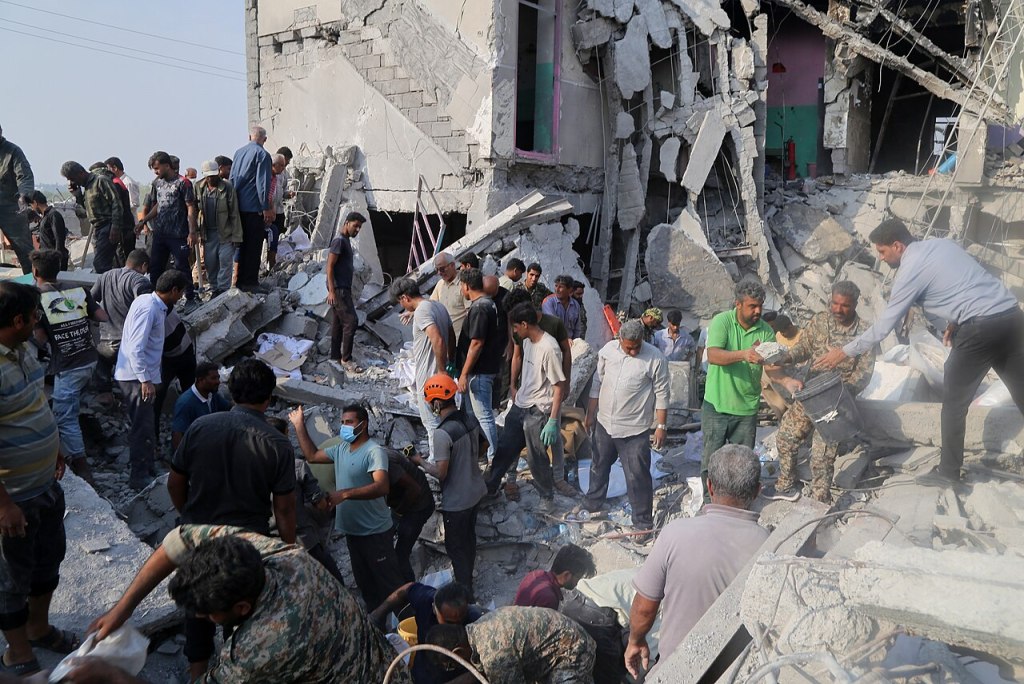
The aftermath of a US airstrike on a school in Minab, Iran, that killed 120 young girls and 156 people overall. Credit: Wikimedia Commons
For them it must be a Farenheit 451 moment, watching footage of the bombing while explosions rumble around them. Survival is down to luck. The missile you see streaking toward your city on TV could be the one that hits your apartment building.
To remind us of what’s happening where the bombs are landing, here’s Sana, a 27-year-old woman from Tehran, describing the first night of the war:
“Seven or eight more explosions followed. They were bombing near Mehrabad airport, close to us. I genuinely thought I was going to die.
When I finally went back upstairs, my cat was hiding in the wardrobe, trembling. My family and boyfriend had been calling and texting, without response, for hours, watching the news reports about strikes near the airport and imagining the worst.“
I recommend reading the rest, if for nothing else than to be reminded that Sana is so normal, so much like us.
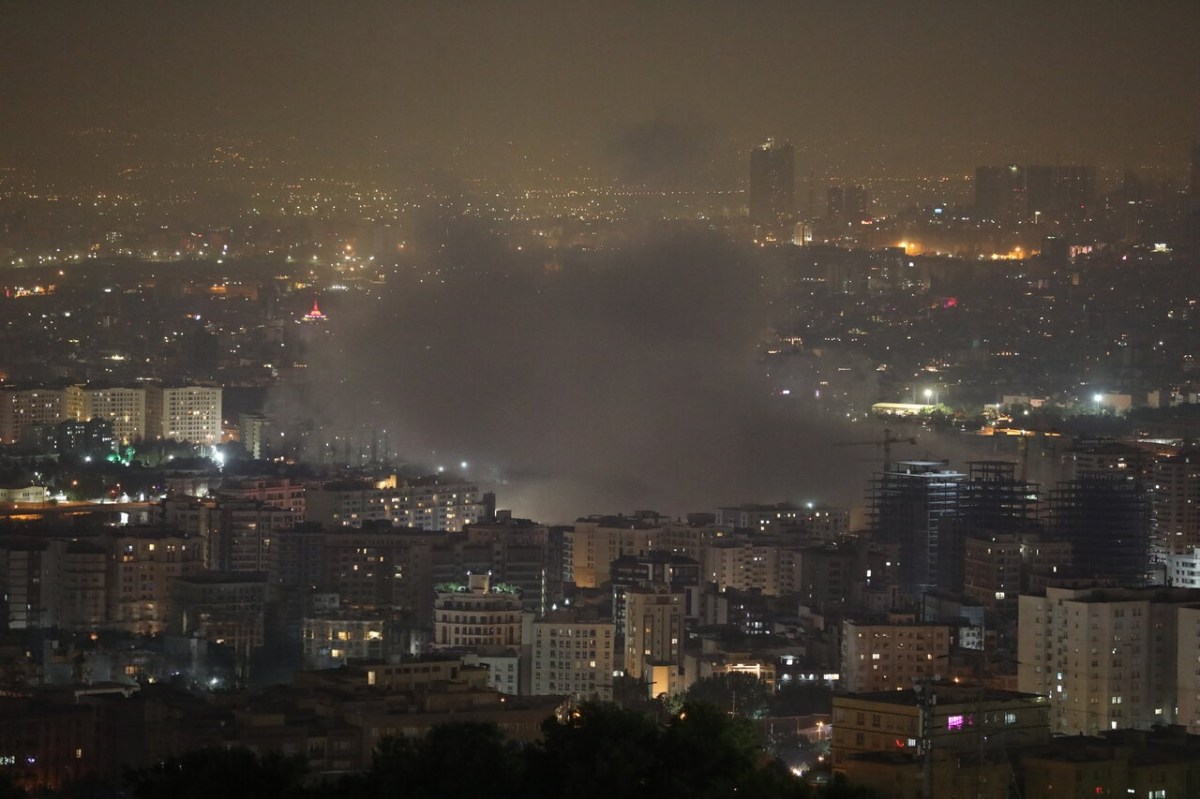
Header image of Tehran under attack at night via Wikimedia Commons
Iranian clerics and lawmakers claim pets are dangerous, but observers say the country’s religious authorities see pets as a threat to conservative Islamic beliefs.
The Prophet Muhammad heard the afternoon call to prayer one day and was about to rise when he realized his favorite cat, Muezza, was sleeping on his sleeve.
Rather than wake the slumbering kitty, Muhammad cut off his sleeve, stroked her fur and headed off to pray.
That story — and accounts of Muezza regularly napping in the lap of Islam’s most sacred prophet as he preached to followers — make Muezza one of the most well-known felines in human history, and form the basis for Islamic teaching regarding cats. Muslims consider cats the cleanest of animals, worthy companions and, thanks to the way the Prophet Muhammad treated Muezza and his other cats during his life, animals worthy of respect and the protection of humans.
Why, then, do hardline Islamic lawmakers in Iran want to ban the keeping of cats as pets, along with other animals?
Animal lovers in the country of 84 million are alarmed after conservative lawmakers introduced a bill, titled “Protection of the Public’s Rights Against Animals,” that would ban people from “importing, raising, assisting in the breeding of, breeding, buying or selling, transporting, driving or walking, and keeping in the home wild, exotic, harmful and dangerous animals.”
The list of “dangerous animals” includes creatures domestic and wild including “crocodiles, turtles, snakes, lizards, cats, mice, rabbits, dogs and other unclean animals as well as monkeys,” according to Agence France Presse.
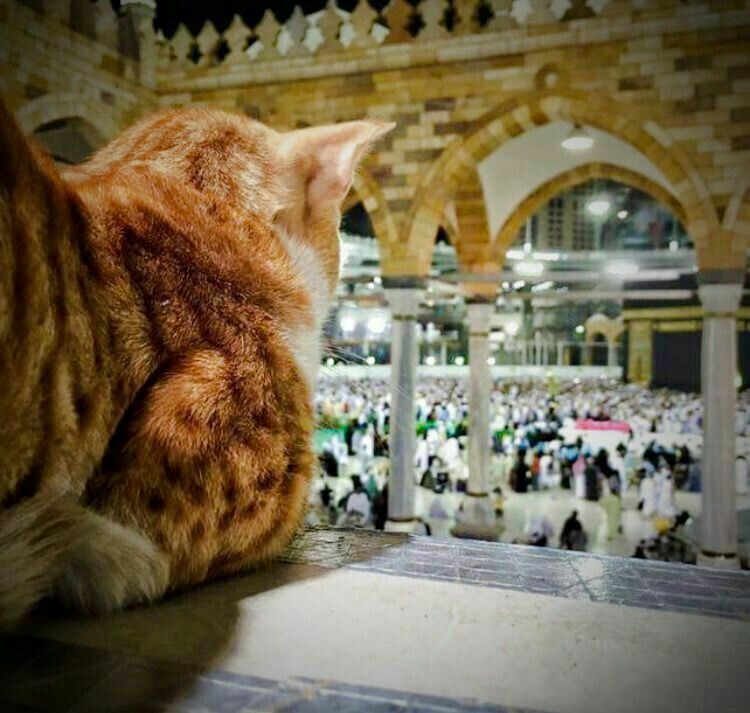
A cat loafs in Saudi Arabia’s Masjid al-Haram in Mecca, just a few hundred feet from the Kabah, the most sacred site in Islam. The fact that cats are allowed in such close proximity to the site reflects the Prophet Muhammad’s devotion to felines. Credit: Wikimedia Commons
Penalties for violating the ban would be steep:
“Offenders would risk a fine equivalent to 10 to 30 times the ‘minimum monthly working wage’ of about $98 or 87 euros and the ‘confiscation’ of the animal,” the report says. If passed, the law would also require landlords to ban pets on their properties.
The proposal has caused an outcry in Iran, where keeping pets has become more popular in recent years, especially because it’s not just one or two politicians introducing a long-shot piece of legislation: At least 75 of Iran’s 290 legislative representatives have already signaled support for the bill.
Officially, Iranian lawmakers who support the pet ban say they’re obligated to act because pets are “dangerous.” Mohammad-Taghi Naghdali, an Iranian MP, told Persian-language news site Didban-e Iran that dogs in particular can “cause nuisance and harm” to people, citing a recent incident in which a dog killed a child in a Tehran public park.
But observers say the real reasons have to do with the Iranian government’s interpretation of Islamic teaching, as well as fear that keeping pets is a western, liberal (in the classic sense) behavior that poses a danger to the Islamic theocracy.
In 2019, dog walking was officially banned in Tehran, and authorities warned residents to keep their pets out of public spaces.
“Police have received permission from the judiciary branch to crack down on people walking dogs in Tehran,” Tehran Police Chief Hossein Rahimi said in late 2019. “Carrying dogs in cars is also banned and if a dog is seen inside the car, police will confront the owner of the dog.”
In 2016, media reports said “officials were showing up at the homes of pet dog owners claiming that they were from a veterinary unit and these dogs needed vaccinations. The dogs were taken away, ostensibly for the purpose of vaccination and were never seen again.”
Dogs are considered “ritually unclean” according to Islamic hadiths, and some majority-Muslim countries, especially theocracies like Saudi Arabia, ban dog ownership completely with very few exceptions, such as seeing eye dogs for the blind.
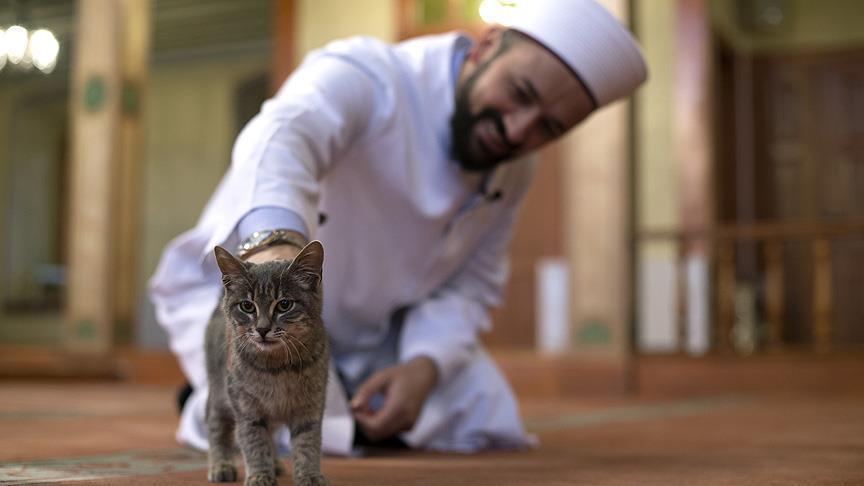
By contrast, cats are widely tolerated and even welcomed into holy sites in most Islamic countries. In Saudi Arabia it’s not uncommon to see cats lounging on the grounds of mosques, while Turkey is famously hospitable to felines, with Istanbul earning an international reputation for its well-treated and ubiquitous street cats. In Turkey, cats are welcome in mosques, shops and homes, and tiny shelters for strays can be found almost everywhere.
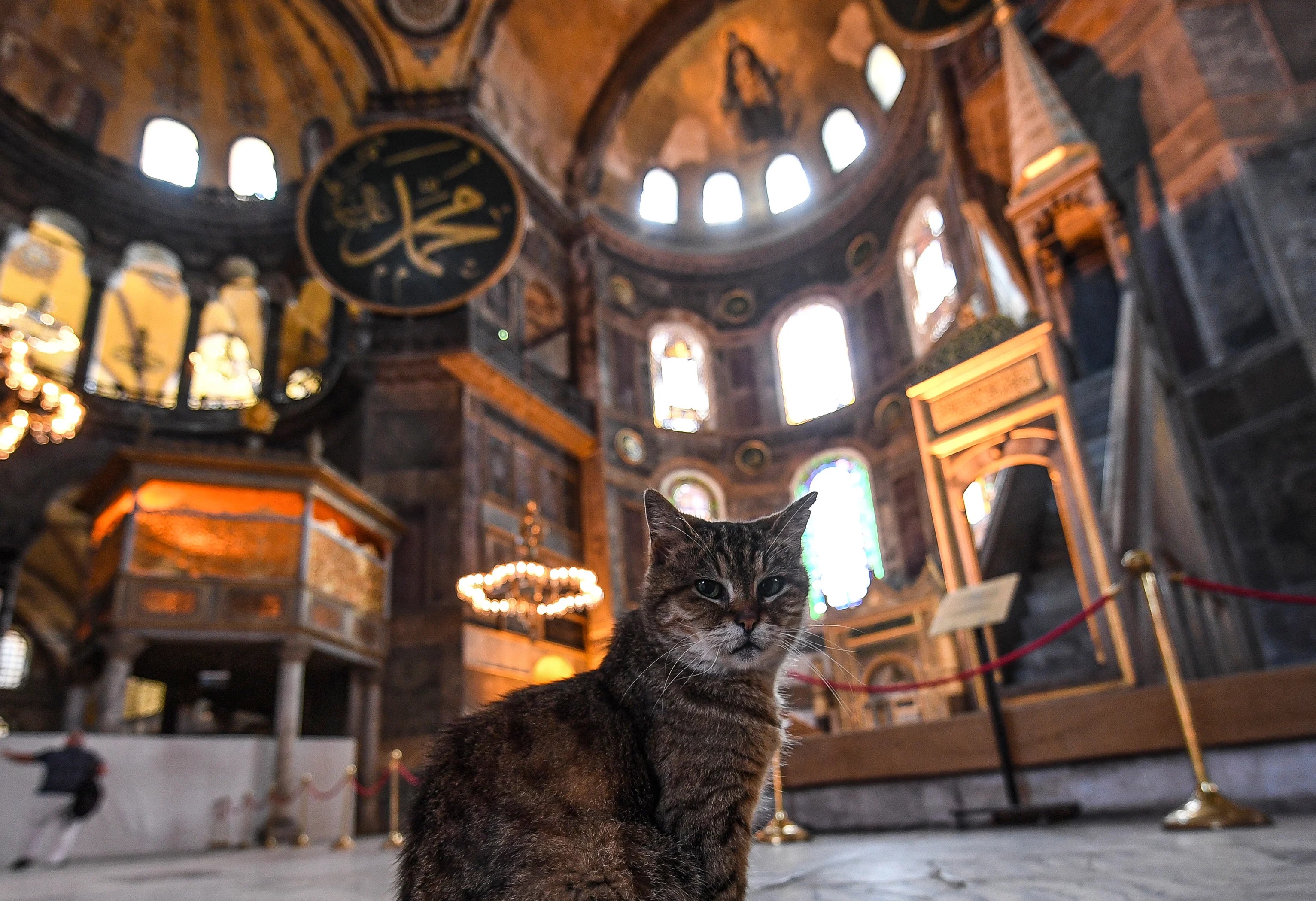
The late Gli, the most famous feline resident of the Hagia Sophia in Istanbul.
The proposed law has not gone over well with the people of Iran, who are often at odds with the country’s theocratic leaders on almost every aspect of social life.
“I have renamed my cat ‘Criminal’ since I heard this proposed law,” one Iranian wrote on Twitter, while journalist Yeganeh Khodami tweeted: “How many times have cats sought to devour you so that you consider them wild, harmful and dangerous?”
A common refrain among animal lovers is that the country’s leadership is once again focusing on something ultimately unimportant and harmful to Iranians instead of working to fix real problems like a depressed economy, widespread droughts and nationwide belt-tightening caused by international sanctions.
“Why should I imprison him at home?” a Tehran woman walking a dog told Agence France-Presse. “The MPs probably assume that young couples today don’t have children because they have a pet dog, but that’s stupid. It’s not the dogs but the economic conditions that don’t allow us to have children.”