In Tehran A Woman And Her Cat, Both Terrified, Try To Survive The War

American news networks show us crowds chanting “Death to America!” but the majority of Iranians are just like us.

As our president threatens to erase civilizations, tells the Pope what Christianity is about, and shares AI images of himself as Jesus, it’s important to remember what’s happening in Iran is a real war with real victims, something easy to lose sight of amid all the absurdity.

A first-person account in al Jazeera reminds us of the human and animal suffering caused by war. Even when people aren’t physically impacted, the mental strain of living in a city under attack is considerable, and their poor animals have no idea what’s going on.

One thing you’ll rarely see on American networks is an acknowledgement that the vast majority of Iranians are just like us.

Before the war, they had open access to an uncensored internet. Despite the oppressive theocratic government, it’s easy for Iranians to get TV networks from outside their country. The Iranian regime was never as adept at controlling information as some of its contemporaries.

The people of Iran are overwhelmingly secular, fully aware of what’s happening, and they have long been sick of their government.
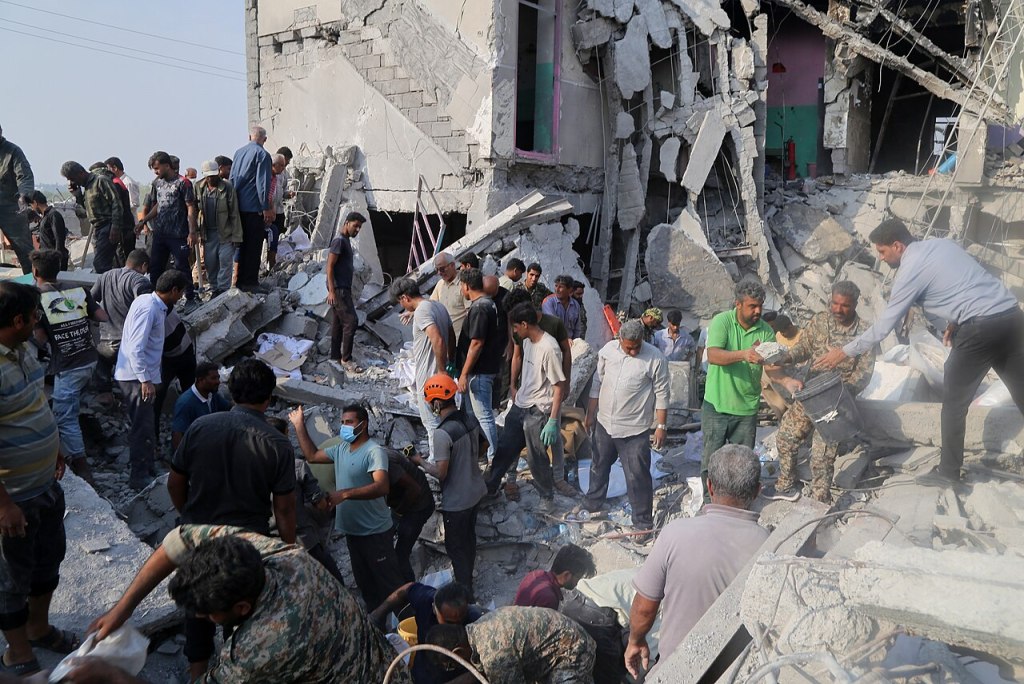
The aftermath of a US airstrike on a school in Minab, Iran, that killed 120 young girls and 156 people overall. Credit: Wikimedia Commons

For them it must be a Farenheit 451 moment, watching footage of the bombing while explosions rumble around them. Survival is down to luck. The missile you see streaking toward your city on TV could be the one that hits your apartment building.

To remind us of what’s happening where the bombs are landing, here’s Sana, a 27-year-old woman from Tehran, describing the first night of the war:

Seven or eight more explosions followed. They were bombing near Mehrabad airport, close to us. I genuinely thought I was going to die.

When I finally went back upstairs, my cat was hiding in the wardrobe, trembling. My family and boyfriend had been calling and texting, without response, for hours, watching the news reports about strikes near the airport and imagining the worst.

I recommend reading the rest, if for nothing else than to be reminded that Sana is so normal, so much like us.

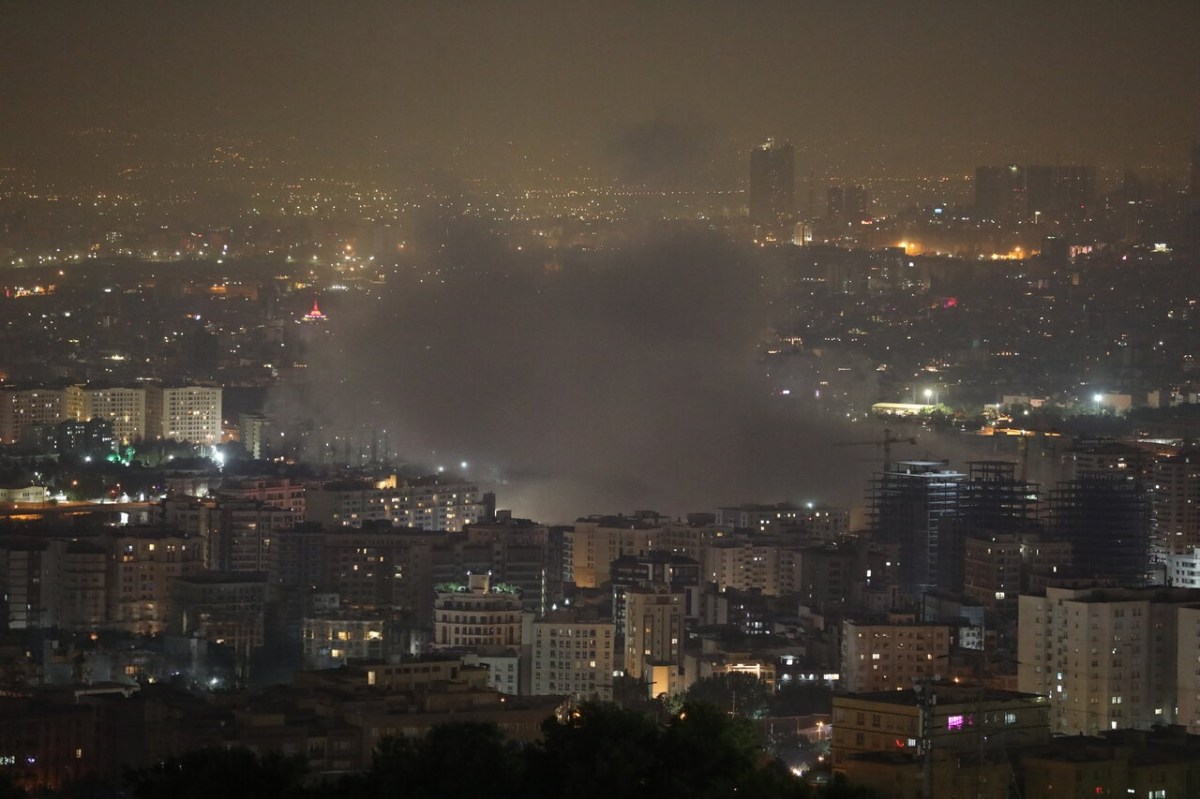
Header image of Tehran under attack at night via Wikimedia Commons
In Ukraine, Cats and Dogs Suffer Along With Their Human Companions

Shelters in Ukraine are running out of food, while the country’s stray cats and dogs are particularly vulnerable as war rages around them.

If you’ve got a cat who doesn’t handle the Fourth of July well and gets freaked out by the annual fireworks, imagine that multiplied by about a thousand, with no respite.

Then imagine that, instead of reassurance from calm humans who know the explosions are just part of a celebration, the cats and dogs of cities like Kiev pick up on the anxiety of the people around them, sensing their fear, reading their body language.

War takes a terrible toll on humanity, a fact that’s been well-documented for centuries, but much less has been written about the suffering and fate of animals in the crossfire of forces they can’t comprehend. (One outstanding take on animals in war is 2006’s Pride of Baghdad, a heartbreaking account of four lions who escaped Baghdad Zoo as US bombs rained down on the Iraqi capital. While Pride of Baghdad is a fictionalized account of what happened to those lions, the story is sadly, infuriatingly true and remains one of the lesser-known accounts among the tens of thousands of stories told about the toll of that war.)

In Ukraine, where the Russian military has taken control of the local airspace and destroyed the country’s airports, people are taking their pets and what possessions they can as they try to escape by land via routes to the border that are backed up by 15 miles or more.

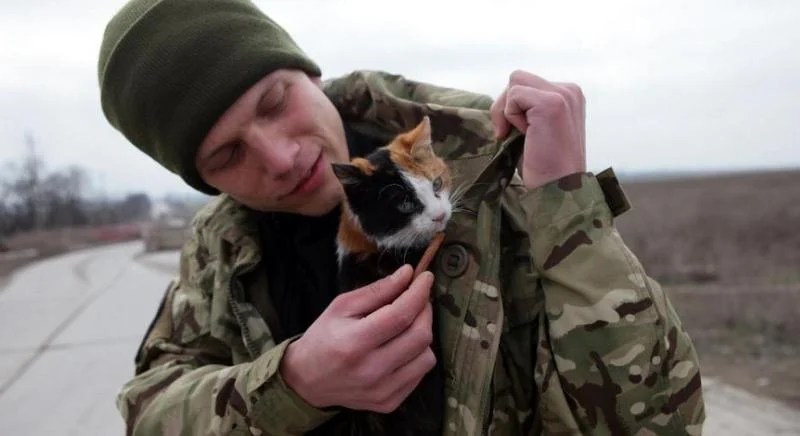
Ukrainian soldier with stray cat
A soldier holds a cat in Mariupol, southeastern Ukraine. Credit: Aleksey Filippov

Meanwhile, as all men of fighting age have been called to stay, stray dogs have been a comfort to Ukrainians on the front line. The soldiers feed the dogs, and the hyper-vigilant dogs alert the soldiers to any unusual activity they pick up on.

“She immediately barks or growls if the enemy is planning an attack. It’s safer and calmer with her – no wonder they say that a dog is man’s best friend,” a 21-year-old Ukrainian soldier named Mykyta told Agency France-Presse as he gave an affectionate pet to a dog adopted by his unit.

Stray cats are cozying up to the soldiers as well. Dmytro, a 29-year-old soldier, said a black cat he named Chernukha has kept him company and helped him cope.

“You come back to the post, lie down on the bed, and here comes Chernukha,” Dmytro told AFP. Chernukha “lies on your stomach and looks at you as if she wants to be petted. It’s a sedative.”

Like many Ukrainians, staff and volunteers who man the country’s shelters have remained defiant and refused to leave. In Kiev, staff at Best Friends shelter are rationing food and trying to locate more.

“It is very difficult and scary for [the animals] and for us. Due to the fighting, suppliers of food for animals are not working,” a shelter staffer told Newsweek. “We need help now with animal food and its transportation to the shelter. We will also be grateful for the financial support.”

Getting food is already difficult and will become more so as Russian troops push further into the capital and civilians hunker down in homes, basements and bomb shelters.

Nastya Aboliesheva, who works for Kiev-based Happy Paw shelter, said “no one is willing to risk their lives to deliver what is needed.”

“Our work now remains important and necessary, because animals do not understand what is happening and also need food and treatment….the main thing that people can help now is not to throw their animals at random, but to be near them or to evacuate with the animals,” she said. “We very much hope that local authorities in Kyiv and other cities will allow people to take animals in boxes to bomb shelters.”

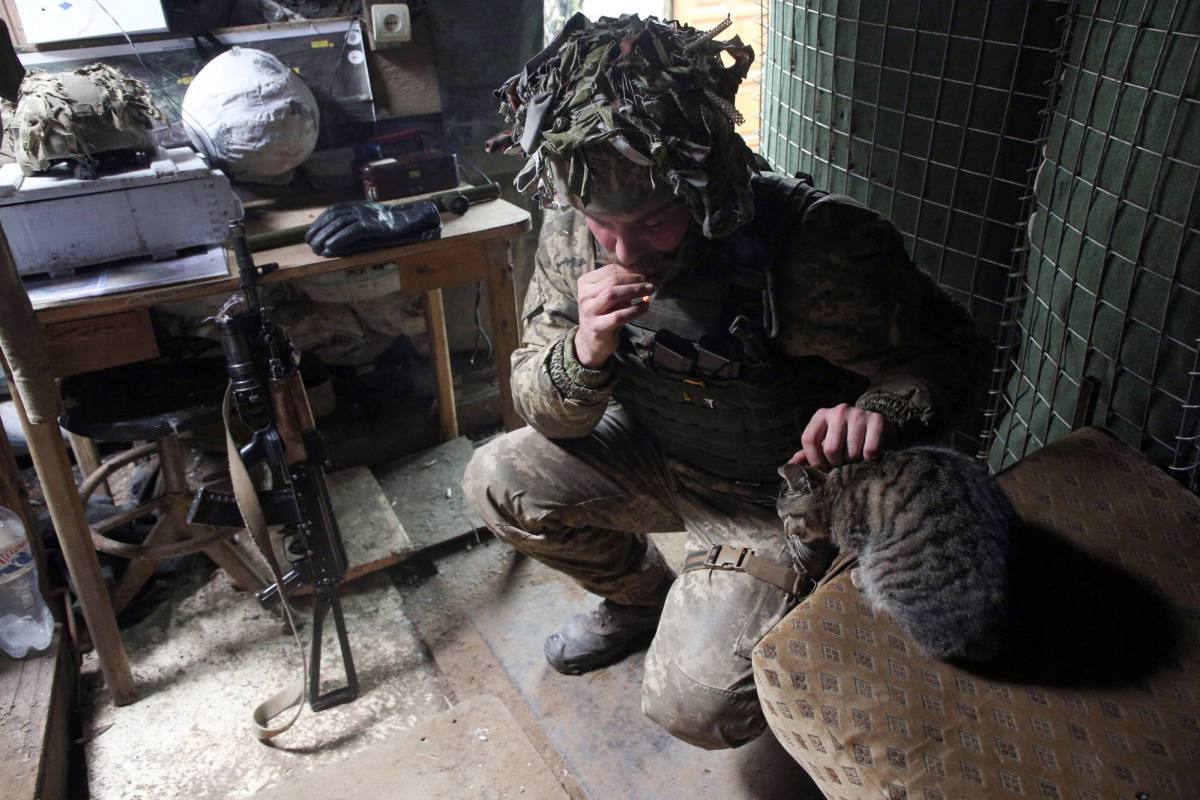
Top image: A Ukrainian soldier petting a cat. Credit: AFP