Readers Are Furious With Mag Over Severe Cat Neglect Story, PLUS: Buddy’s Le Handsome Club!

New York magazine’s article included difficult-to-read details about the severe neglect of a pet cat, and didn’t offer any reassurances that the forsaken feline was okay.

Happy Thursday! Before we get into today’s cat news, I’d like to share my current Google News search string, which has helped me keep my sanity over the last few weeks. It’s simple:

“cat -doja -vance -shot”

And voila, no more stories about Doja Cat, fewer blood pressure-raising articles about people who think shooting felines is a sport, and you’re mercifully saved from the 17,457th “think piece” about JD Vance and cat ladies.

The “relatable” column about severely neglecting a cat

New York magazine’s editors knew they were wading into a minefield with this week’s pet ethics issue, and the author of a story about neglecting her cat knew it too, which is why she took the preventative step of using a nom de plume.

In a column titled “Why Do I Hate My Pet After Having A Baby?” (later softened by the editors to “Why Did I Stop Loving My Cat When I Had A Baby?”), “Audrey” writes about severely neglecting her cat, Lucky, after having her first child.

She not only developed what she calls a “postpartum loathing” of Lucky, she admits to not feeding the poor feline for so long that Lucky ate plants out of desperation, then predictably threw up. The forsaken feline began eliminating on the floor because her litterbox was not being scooped. She lost “at least one tooth” and because even water was denied her, she had to drink out of the toilet. The life-threatening neglect and emotional abuse lasted months.

“If I treated a human the way I treated my cat, I would be in prison for years,” Audrey admits, describing Lucky’s own descent into depression as the cat became the scapegoat for all of Audrey’s negative feelings.

Cats (and dogs) understand a lot more than we give them credit for, especially when it comes to our emotional states, to which they are hyper-attuned because they are directly impacted. We’re talking about animals who have been companions to humans for 10,000 and 30,000 years, respectively. Not only does their companionship predate human civilization and the concept of recorded history, they have evolved to intuitively read human facial expressions and body language. They can even smell our pheromones, which means they’re often consciously aware of our moods before we are.

I’ll never forget what my brother said to me a few weeks after I adopted Bud, upon meeting the little guy for the first time: “You’re his whole world.” I’ve tried to make that world as loving, safe and fun for my cat as I can, because he deserves it. He’s given me back so much in return.

Adopting comes with responsibility. It’s not just about meeting an innocent animal’s basic needs, like food and water. It’s about providing our four-legged friends with good lives and never taking our bad days out on them.

“Audrey” says she tried to get rid of Lucky, leaving the windows of her home open, and because the original version of the story dealt almost exclusively with the author’s mental health, readers were disturbed by the lack of any follow-up on Lucky’s situation.

thecuttweet1

The negative reaction was so strong that New York’s editors took the unusual step of attaching a note to the story claiming they “confirmed the welfare of the cat prior to publishing the story.”

thecuttweet

That didn’t satisfy the magazine’s critics, who accused them of behaving “callously” by presenting the author’s abuse of Lucky as a “relatable” symptom of post-partum depression.

“Why are you ignoring one of the most controversial articles you’ve ever published instead of addressing it?” one reader wrote. “It’s not going to just go away – we will not forget … The people will not stop until that cat is safe and loved, and your publication is held responsible.”

Insisting the magazine’s editors be “held responsible” is a bit much, and I’m not a fan of censorship. The bigger issue is the lack of concern for the cat even in retrospect, and the attempt to normalize postpartum animal abuse, as if it’s just a thing people do. It feels like a missed opportunity to explore why such things happen, and to examine the problem with compassion for all involved, human and animal.

Buddy the Cat’s Le Handsome Club is now open to le handsome cats

This is really just an excuse to show off my latest poster promoting PITB, but readers will recognize the concept of Le Handsome Club from earlier satirical stories about the Budster.

Le Handsome Club
Le Handsome Club: The club for le handsome cats!

I’ve written before about “real Buddy” and “cartoon Buddy,” which is the version of him that exists in PITB’s world of absurd satire. Cartoon Buddy is real Buddy with his quirks, narcissistic qualities and amusing lunacy dialed up to 11.

Someone once asked me how to write a children’s book because they want to write one about their pets. Since I’ve never written a children’s book I wasn’t much help, but I did share the basic process for Buddesian hijinks: Imagine a situation, then imagine how Bud would respond to it if he could speak.

The more ridiculous, the better, and I think it’s worked out well, with stories about Buddy getting conned by a Nigerian prince’s cat, the ongoing saga of Los Gatos catnip cartel and the meowfia, Buddy’s disastrous first (and only) term as president of the Americats, and the Budster’s ongoing bromance with the jaguars of the Amazon.

So yes, Le Handsome Club. I could definitely see my cat, who thinks he’s Catdonis and Arnold Schwarzenegger rolled into one, founding a club for really, really, ridiculously good looking cats, to paraphrase Ben Stiller’s Zoolander.

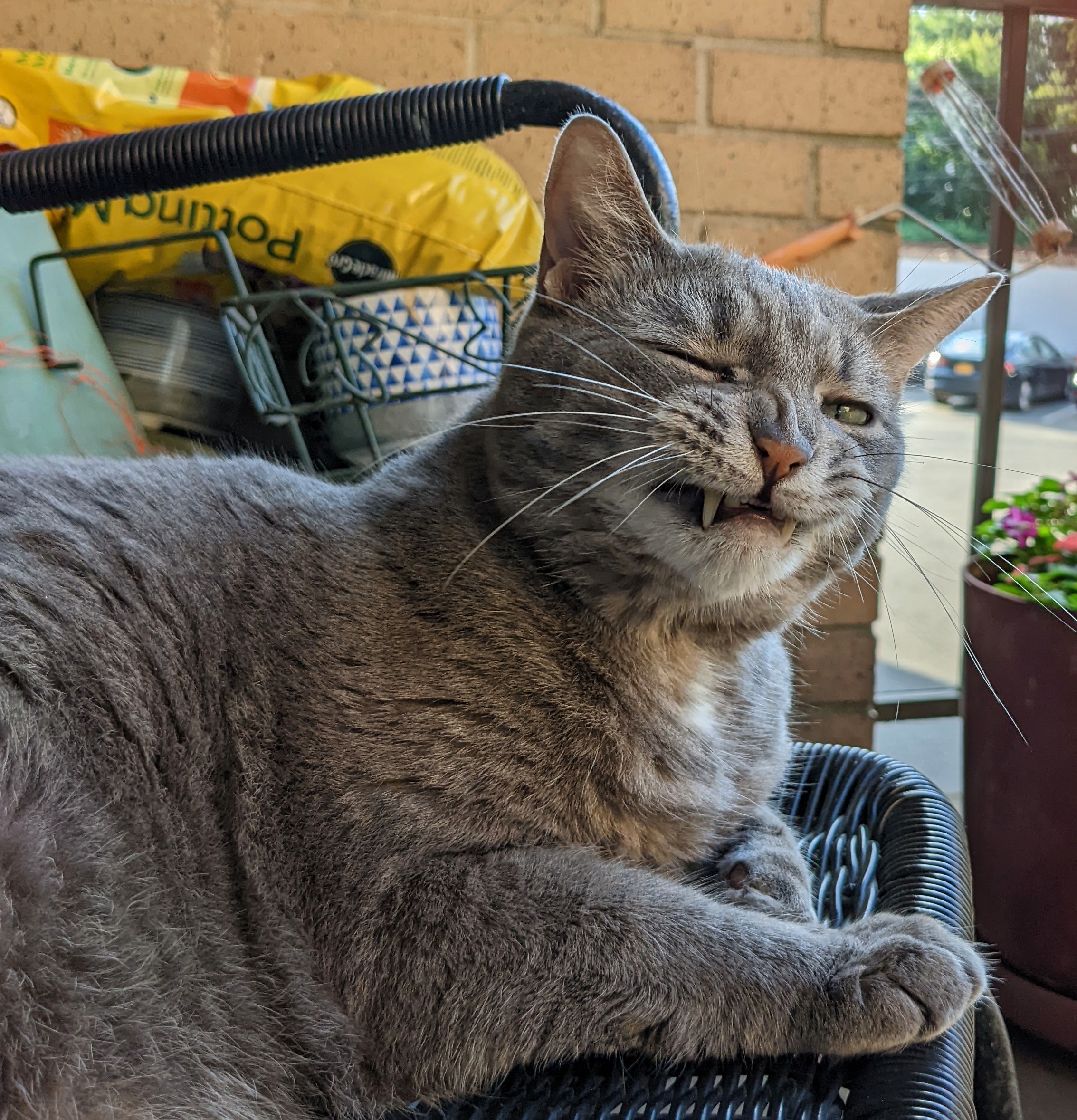
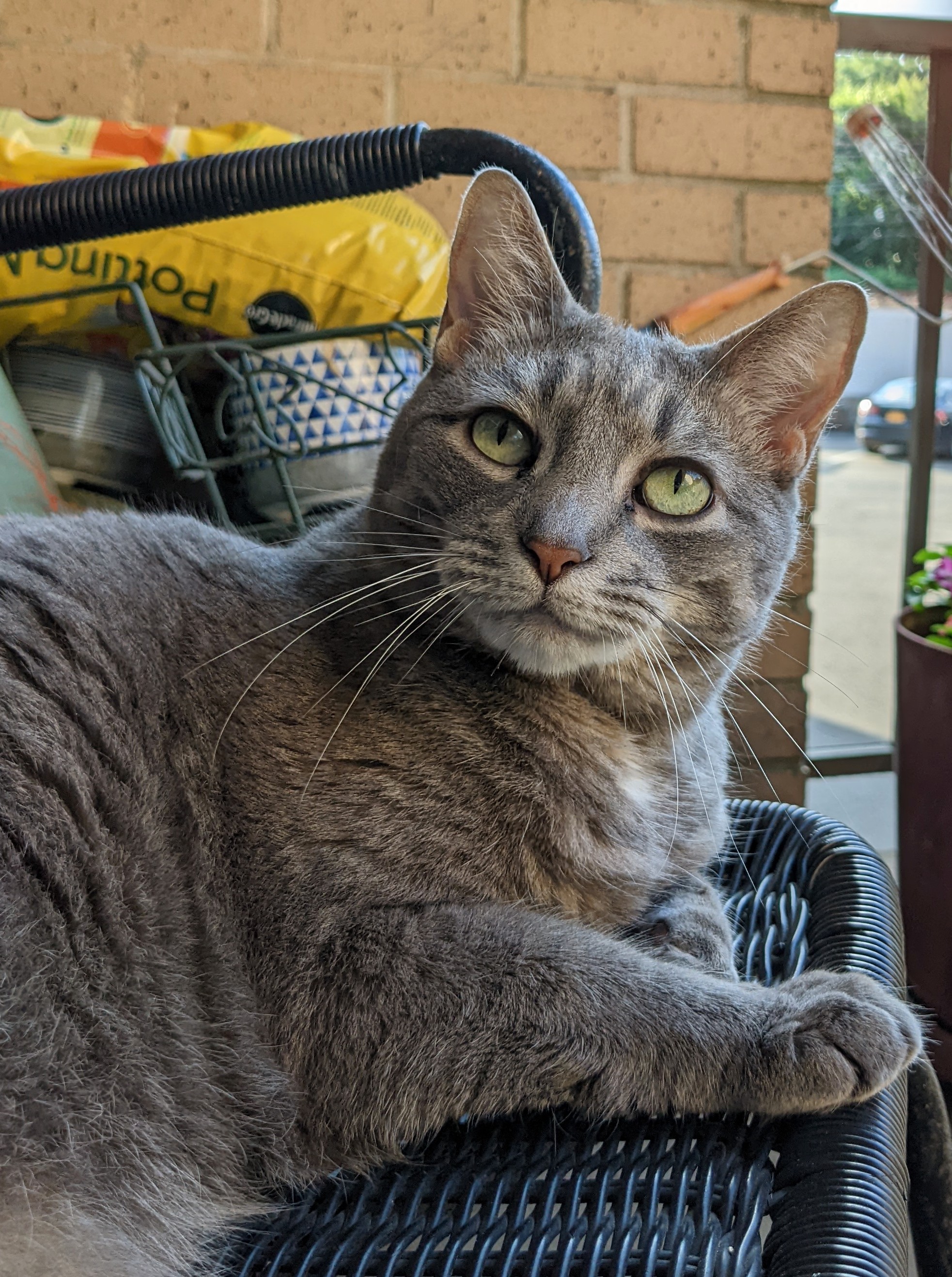
Buddy
Very le handsome.

What It’s Like To Care For World’s Oldest Cat, Plus: Utah Zoo’s New Kitten Is Cute But Deadly!

A London woman’s cat, Flossie, just celebrated her 29th birthday, making her the oldest cat in the world. And in Utah, a zoo just debuted an adorable little predator.

Happy Sunday, everyone, and if you’re on the east coast of the US like we are, we hope you’re safe and warm during this year’s first snow.

We’ll start off with a bit of significant news first reported in the The Buddesian Times: the famous artist and sculptor Meowchelangelo has unveiled a glorious marble statue of our favorite feline hero, “striding like a colossus toward evil-doers in the distance, his rippling muscles rendered in magnificent Calacatta Borghini,” which is marble from the same quarry in Carrara, Italy, that supplied the raw material for another masterpiece, the Renaissance sculpture commonly known as “David.”

The statue, which honors Buddy’s recent valorous defense of a helpless dog during a vicious attack by a pack of 72 coyotes, will likely be installed in Manhattan, although Washington’s city council is lobbying hard for it, promising the famous statue of Abraham Lincoln in his eponymous monument would be removed for the Buddesian likeness.

buddesiantimes
Today’s edition of the Buddesian Times with a front-page story on the statue.

The World’s Oldest Cat still moves like a kitten

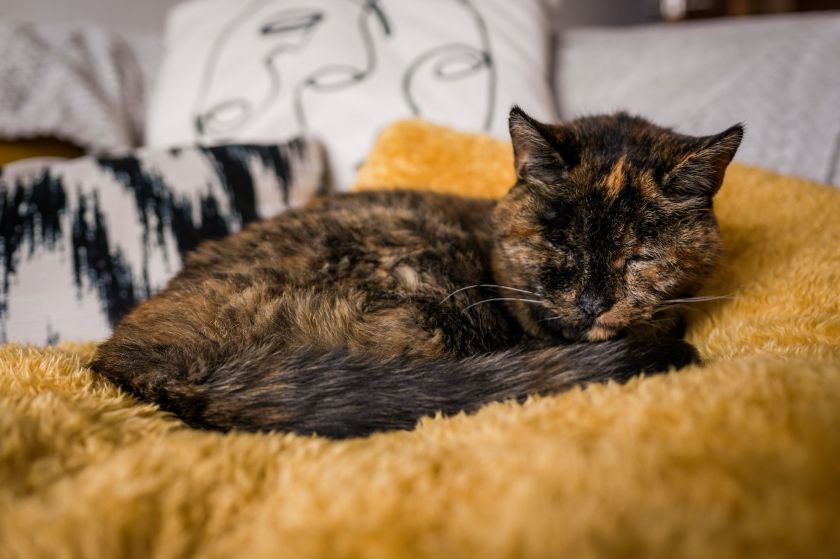
The Guardian has an interesting column from Vicki Green, cat mom to Flossie, who at 28 years old is the Guinness World Records certified oldest domestic cat in the world.

Flossie, who was born in December of 1995, is as old as Green, who attributes the tortoiseshell’s longevity to “luck, and because she was loved by her previous owners.” Flossie was initially an outdoor kitten who lived in a managed colony until she was adopted by her first human, who died when Flossie was 14 years old.

The woman’s sister took Flossie in next but died after 10 years. Her son became the long-lived feline’s third servant, but after three years he brought her to Cat’s Protection in London, saying he could no longer provide the level of care Flossie deserved and needed.

Shortly after, Green was looking to adopt a cat and saw Flossie’s listing online.

“At the time, I thought it was an error and that she must be 17,” she wrote. “Cats Protection told me she was still available to adopt and that no, she was in fact 27, the same age as me.”

Green thought Flossie would likely only live a few more months, but “she’d at least spend them in a nice, warm flat, be fed well and get treats as well as a comfy bed.”

“To my surprise,” Green wrote, “I’ve had her for over a year now and she’s still going strong.”

Flossie napping
Flossie takes lots of naps but is surprisingly active and playful for her age. Credit: Vicki Green

Despite her advanced age, Flossie is active, seeks attention and still plays with her favorite toys. Green got miniature stairs for the senior kitty to easily reach the couch, but Flossie doesn’t use them, preferring to jump up instead.

“The biggest difficulty is dealing with the fact that there may soon come a time when she passes. I’m in denial about that. I look at her and just think she doesn’t look old at all,” Green wrote. “Yet who knows? She could well be on the way to becoming the oldest cat in history. Though even if she doesn’t break the current record of 38 years and three days, at least I’ll know she had a great retirement home.”

Gaia the three-pound terror debuts in Salt Lake City

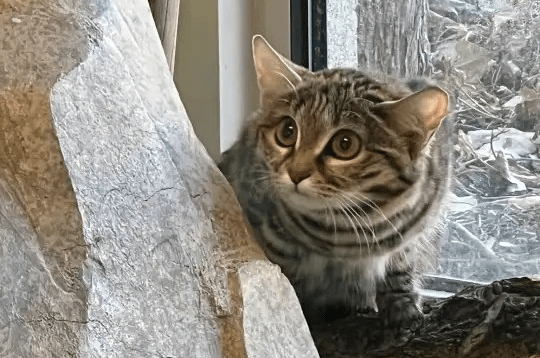
Black-footed cats are known primarily for three things: they’re outrageously cute, they’re diminutive and they’re remarkably deadly.

Of course with a maximum weight of three pounds, only tiny prey have to worry about the fury of these furry little guys. The rest of us get to point and go “Aww!”

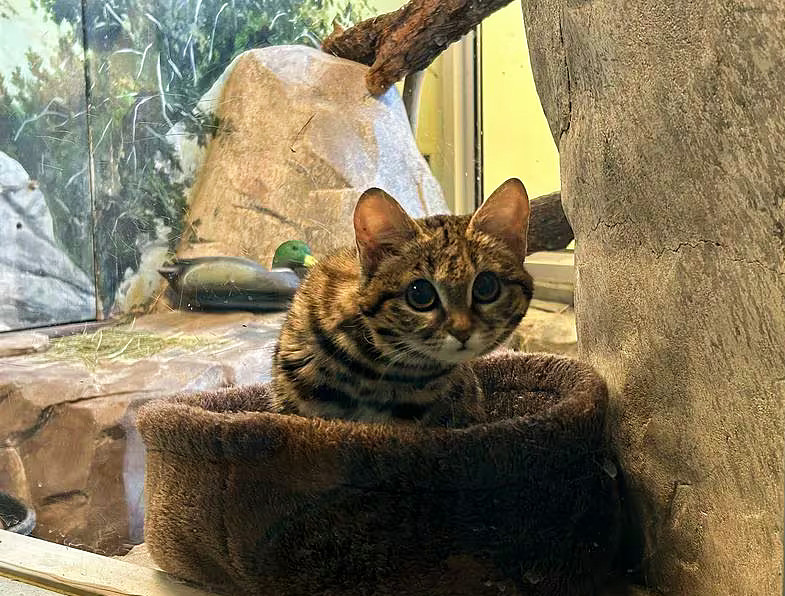
Gaia the black-footed kitten
Gaia’s personality is “large and feisty” according to zookeepers. Credit: Hogle Zoo

Native to the savannas of southern Africa, black-footed cats are excellent hunters, but like all felines they’re also prey, and they’re the subject of a worldwide zoological breeding and conservation program due to declining numbers in the wild.

The newest success story for those breeding efforts is Gaia, an eight-month-old black-footed kitten who just made her debut at Hogle Zoo in Utah.

Zookeepers describe baby Gaia’s personality as “large and feisty,” and they expect she’ll be popular with zoo visitors.

She’s now the second of her species at Hogle, joining Ryder, a male. They haven’t been introduced yet. A carefully supervised introduction is “in the cards, but we’ll let these two feline friends get acquainted when Gaia reaches maturity,” the zoo said.

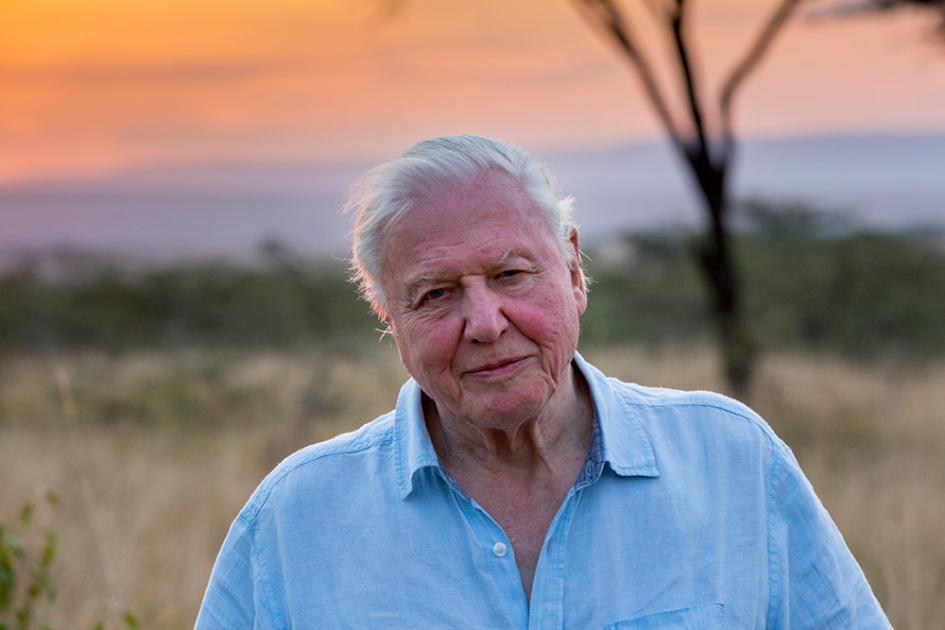
Sir David Cattenborough’s Newest Documentary Reveals The Elusive Silver-Furred Buddy

The naturalist is excited to unveil his most striking documentary yet.

NEW YORK — All those hours trudging through the dense undergrowth of New York living rooms, hoping for a glance of an elusive feline, have finally paid off.

Speaking to reporters about his newest nature special, Sir David Cattenborough said he and his crew spent more than 200 hours in the natural habitat of the silver-furred Buddy.

Also known as the Buddinese tiger, the silver-furred Buddy is “native to the living rooms of New York” and, with his meowscular physique, “is the apex predator of his environment.”

“What a fascinating animal!” Cattenborough exclaimed.

The famous naturalist, conservationist and documentary narrator accompanied a camera crew into the thick jungles amid couches, pillows and carpets, where they observed the silver-furred Buddy at a safe distance as the fierce feline went about sleeping, eating and lounging.

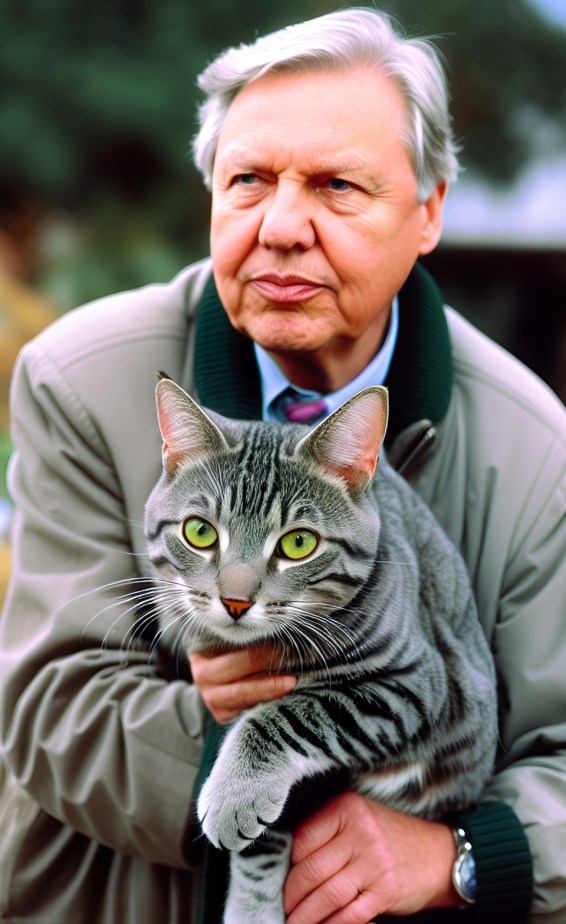
Cattenborough and Buddy
Sir David Cattenborough with Buddy the Cat.

Speaking excitedly in his familiar whimsical cadence, Cattenborough described the documentary crew’s luck in catching the Buddy on a hunt, when he ruthlessly brought down a red laser dot.

“People ask me, ‘Sir David, what makes the Buddy any different from other tigers and lions? Isn’t it basically the same animal?’ While they’re all famously fierce felids who strike fear into the hearts of other creatures, there are differences as well,” Cattenborough explained. “Thanks to the hard work of our dedicated crew, we’re able to bring our audience along as we take the closest look yet at this most elusive and fascinating beast.”

The new documentary, “Buddy: The Perfect Predator,” will be available to stream exclusively on Pain In The Bud, and was made possible by a grant from the Buddinese Foundation for Greater Buddesian Understanding, with additional financial support from the Coalition for Meowscular and Ripped Cats. Look for it this week on PITB!

Cattenborough and Bud
Sir David Cattenborough was able to earn the trust of a silver-furred Buddy.

Buddy Commissions Fresco Of His Great Victory Over Rodent

Buddy the Cat revises history and imagines defeating a rodent instead of sleeping while it invaded his territory.

NEW YORK — Buddy the Cat’s human servant returned home Friday to discover the buzz of craftsmen and smell of fresh paint after the silver tabby commissioned a fresco to celebrate his recent victory over a menacing rodent.

Amid the commotion was Luigi Tettamanzi, 62, one of Italy’s foremost Renaissance revivalists. The artist crouched on one knee, applying fine brush strokes to render the beginnings of a sun beam illuminating a powerful feline form in mid-leap with claws extended.

The fresh plaster had already been painted with a luminous sky blue, and broad strokes outlined the suggestion of mountains and forests in the background.

“You see, yes, I use bright and dramatic colors on the arriccio, paint you very heroic, ah?” Tettamanzi told the famously egotistical feline as they conferred during a break. “Not to worry, my friend. I make sure is okay with you before I apply intonaco, yes.”

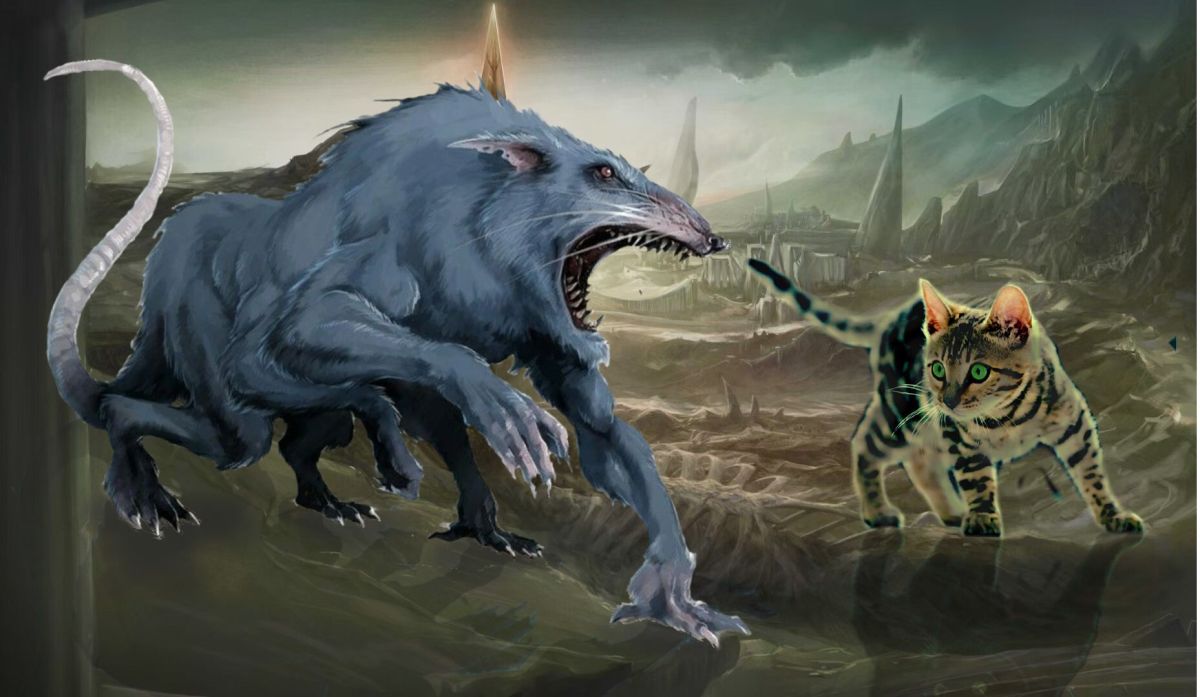
At Buddy’s instruction, Tettamanzi had begun to render the mouse as a savage and menacing beast several hundred times its actual size. The painting shows a trail of death and destruction behind the mouse, with terrified onlookers pointing at the majestic feline leaping to engage the monstrous rodent. His outstretched paw connects with the enemy, the strike represented with a brilliant flash of energy in chaotic brush strokes.

A cartouche above the painting identifies it as “The Battle of the Rodential Interloper: Year 7 A.B. Resulting In Glorious Buddesian Victory.”

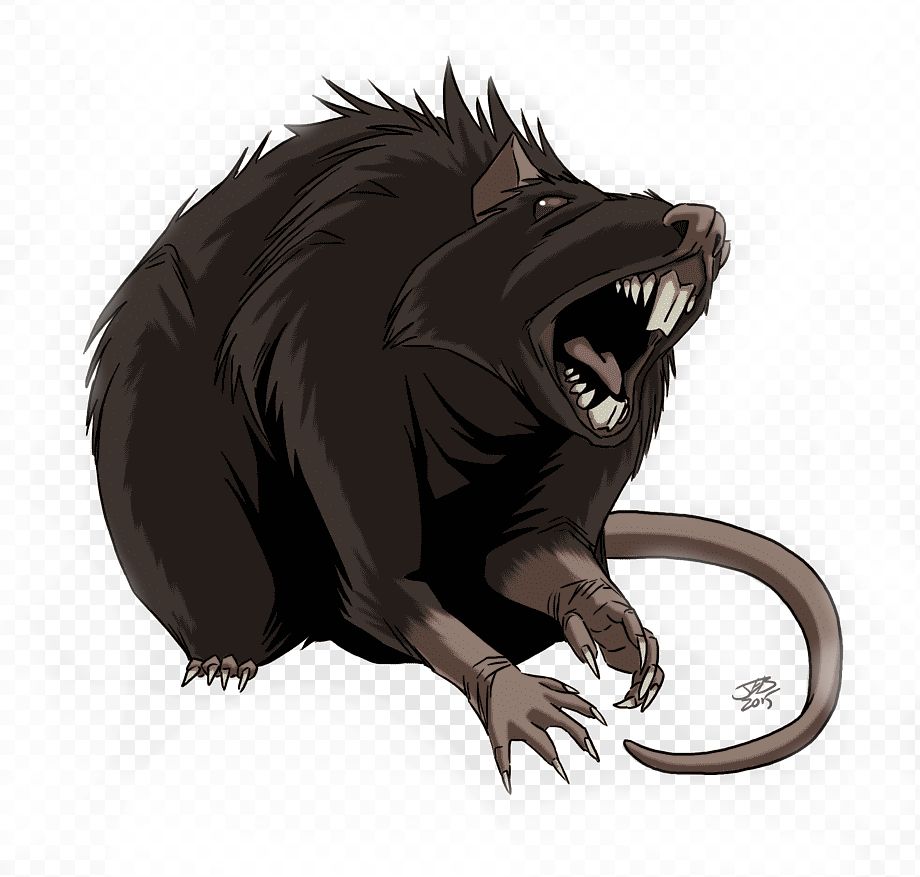
giantrat
An early concept drawing of the intruder.

For several long moments, Big Buddy could only stare, dumbfounded.

Buuuuud!” the human finally said, incredulity in his voice. “What the hell are you doing?”

The tabby looked up from some concept drawings he was reviewing with Tettamanzi.

“Commemorating my victory, of course,” Buddy replied. “The painting represents my heroic actions that day, when I saved many humans from a sinister and vicious rodent-beast.”

The human sighed.

“No, you did not!” he said. “You slept through the whole thing. You didn’t even know the mouse was here until you woke up from your nap an hour later.”

“Fake news!” Buddy said, turning back to Tettamanzi to confer on palette choices and urge the artist to make him look more muscular.

As of press time the fresco had been extended to a second wall, with a new panel depicting a powerfully built Buddy atop a throne adorned with lion motifs, and humans bending the knee before him as he magnanimously accepts oaths of loyalty.

buddybattleinstructions
A “more accurate” version, according to Buddy, but still not as dramatic as the real battle.

Get Your Buddy Down At The Shelter!

There’s Buddy, and then there are Buddies. All are valid members of the Buddesian breed.

The following is a Very Important Message from Buddy the Cat:

Hi, readers!

I’m going to share a story with you, and it may shock you to your core, but I promise it’s true and it’s a good thing.

You see, as handsome, meowscular, singular, charming, delightful, smart, full of personality and meowscular as I am (did I already say that?), I’m what the British call a moggie. A feline of no particular breed. A “standard issue cat.”

“But Buddy,” you’re thinking. “That’s impossible! How could such an awesome cat as you be a ‘plain old’ moggie?”

Well, I am. That’s why I invented the Buddinese breed, to make myself seem more exotic. But the truth is, Big Buddy adopted me, and my effortless charm and huge personality are a combination of genetics and growing up in an environment where I was doted on, played with, socialized, exposed to lots of different people and places, and just as importantly, given delicious, quality yums to eat.

The reason I’m telling you all this is that you don’t need to spend $5,000 on a Bengal or $20,000 on a Savannah to have an awesome cat. You should be slapped and sterilized if you give that much money to a breeder, let alone when there are so many kitties who need homes.

What I’m trying to say is that, as Adopt A Cat Month comes to a close, your local shelter has its own Buddies waiting for you. Go meet them!

They might not seem like Buddies. They might be depressed that their owners surrendered them, shocked that they’re in a shelter, and muted from spending 90 percent of their time in tiny enclosures. But they are Buddies, I assure you, and if you give them a chance to flourish like Big Buddy did for me, they’ll reveal themselves as the awesome little buddies they are.

Buddy the Buddy
I’m unique and special, but so are the shelter cats!

They just need a home, a human or two who will care about them, and a little love. Oh, and toys. Lots of toys. And turkey. Some of them may prefer other types of food, and they’re wrong about that because turkey is the best, but if they like lesser foods like chicken, salmon or beef, well, give it to them!

Once your Buddies realize they are in their forever homes and they aren’t going back to the shelter, things will revert to the Natural Order™, your cat will come to expect excellent service, and you will be designated as an official servant to a member of felinekind, which is the highest honor a human could hope for.

So go on! Get your Buddy! He’s waiting for you, and you’ll make every bit of difference in his life.

Your friend,

Buddy

PXL_20220624_220717310~2