Recent News Stories Claim People Have Spotted A Type Of Cat That Doesn’t Exist

It’s easy to mistake house cats for larger wildcats when photos and videos are blurry and lack familiar items to establish a sense of scale. The same phenomenon is responsible for UFO sightings and cryptid creatures like the Loch Ness Monster.

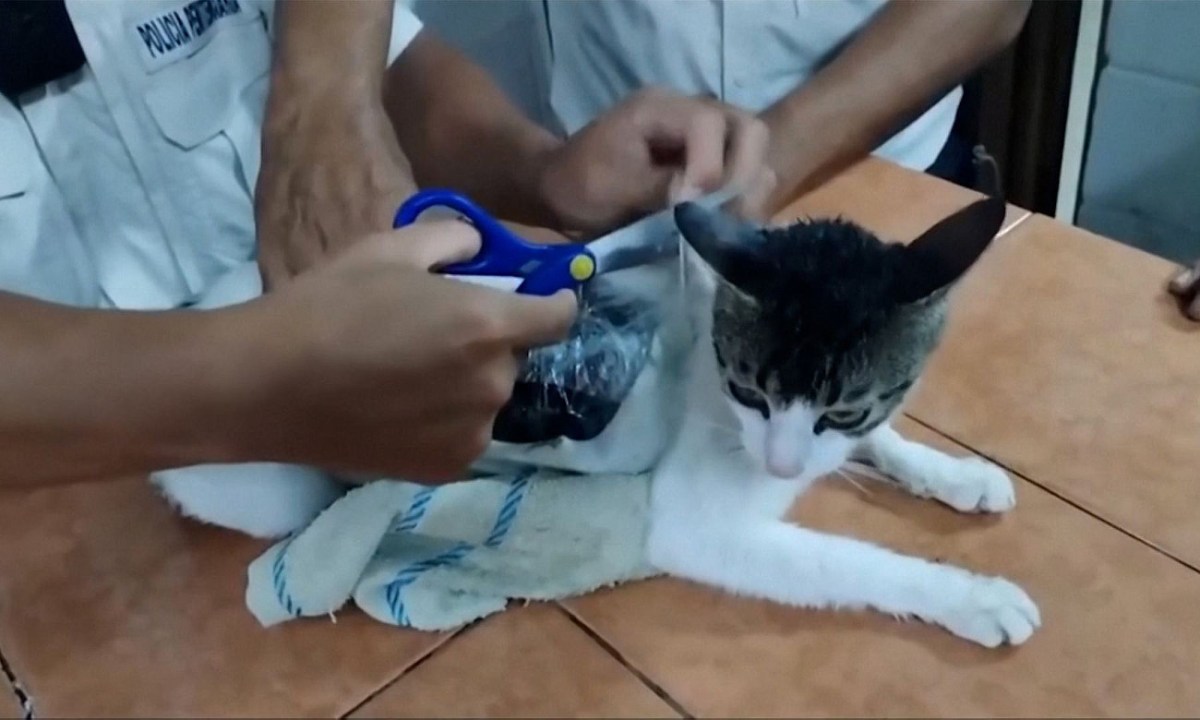
Recently several reports have been making a big deal about blurry videos of black cats, claiming they’re “black mountain lions” or “black panthers” roaming in places like Missouri and Louisiana.

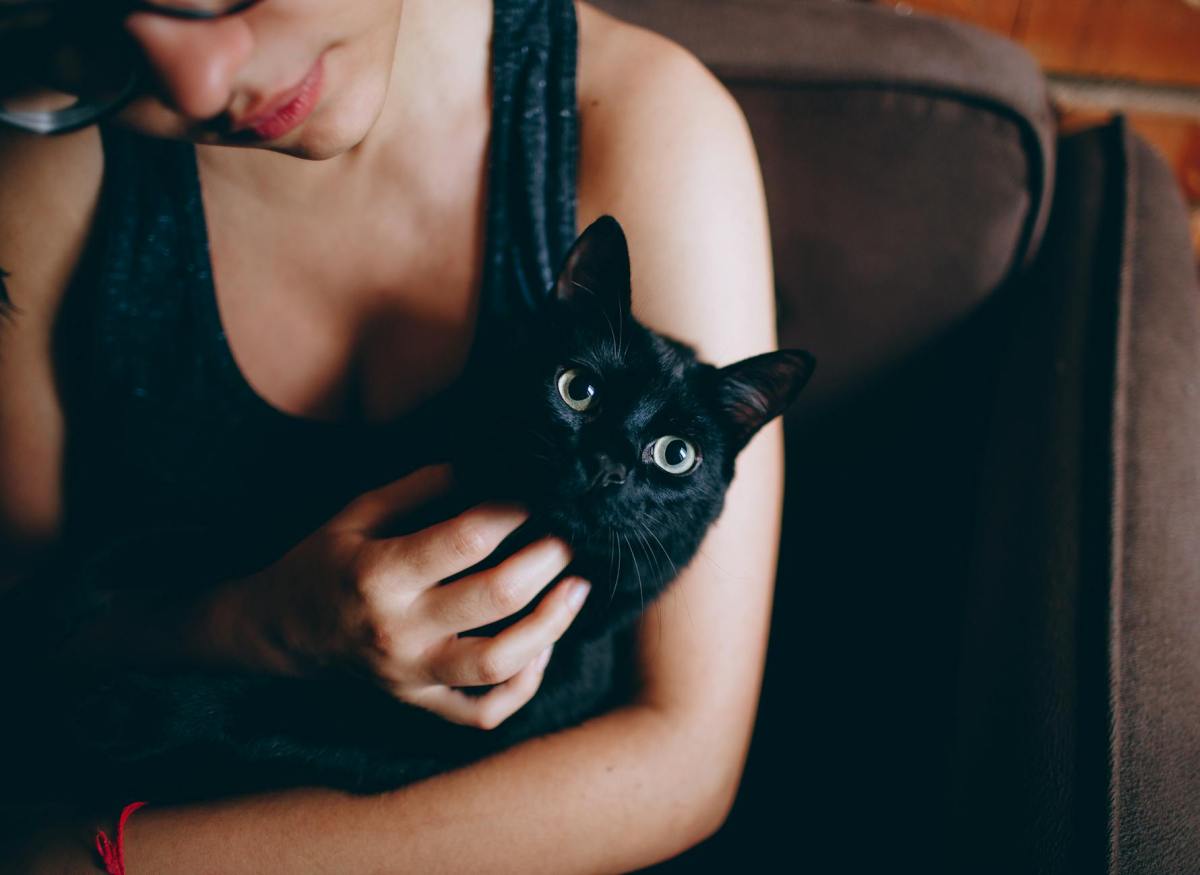
The footage of the first video was shot in Missouri, where pumas once ranged, were extirpated in the 20th century, and have returned in small numbers in recent decades. Like most photos and videos of cryptid or unidentified animals, this one is blurry, taken from a distance, and lacks any object near the animal to provide a sense of scale. The second video is simply a black house cat with her kitten in rural Louisiana.

Our brains are pattern recognition machines and when the information we’re looking for — be it spatial, detail or contextual data — isn’t present, our minds tend to fill in the gaps. That’s the reason why we see faces in clouds, creatures in shadows, men on the moon and the Virgin Mary on grilled cheese sandwiches. (The technical term for “perception imposing meaningful interpretation on a nebulous stimulus” is “pareidolia,” from the Greek for “instead of” and “image.”)

Compounding the problem is the fact that the word “panther” is one of the most confusing of felid descriptors, a word that vaguely refers to physically large cats but doesn’t refer to any particular species, coat pattern or color.

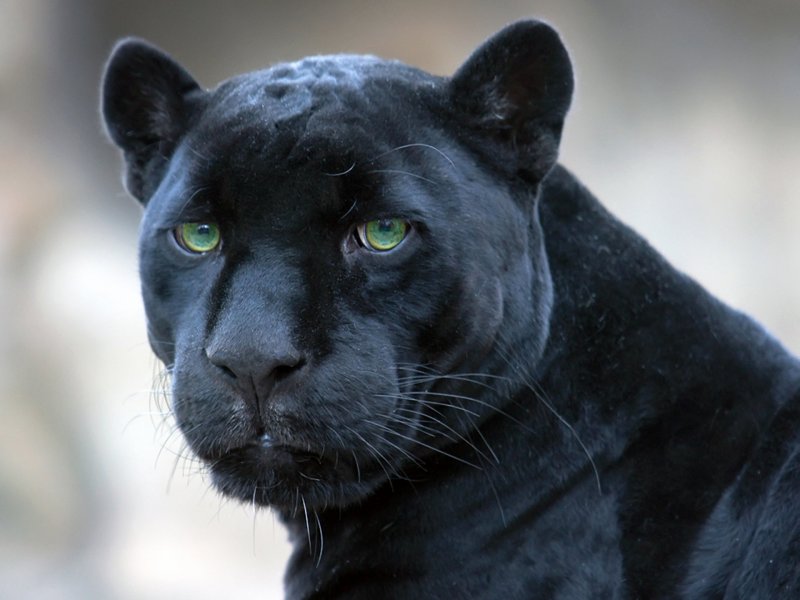
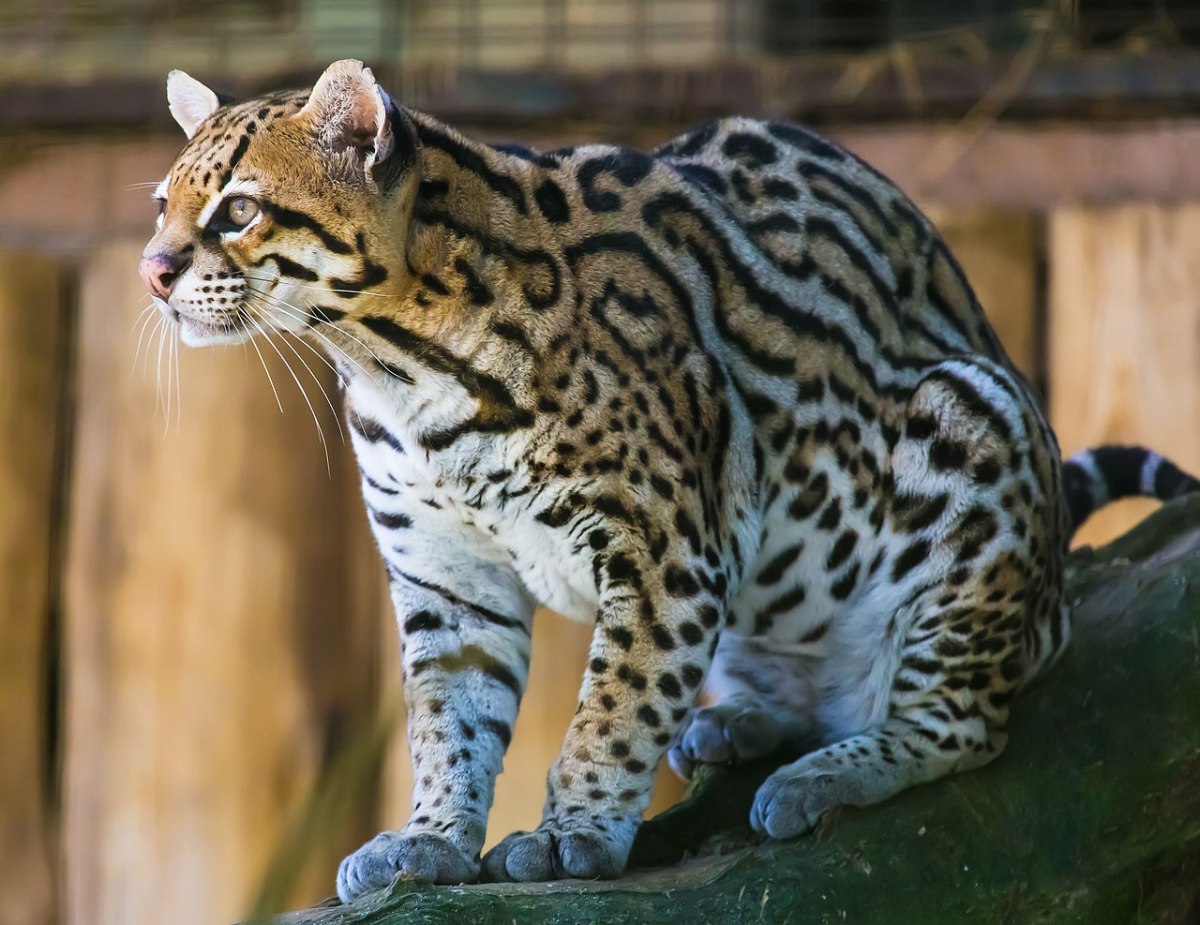
Above: A jaguar, a leopard, a puma (mountain lion) and a melanistic jaguar. Although jaguars and leopards look nearly identical, jaguars are stocker with thicker limbs and have blotches inside their rosettes, while leopards do not.

The word panther can refer to a puma, a jaguar or a leopard, but only the latter two species can have melanistic (black) coats.

Contrary to popular belief, even a black cat’s fur is not entirely black — you can still see the rosettes and spots of their coat patterns up close and in certain light conditions.

blackjaguar
This jaguar’s rosettes and spots are visible in direct light. Jaguars in the wild are rarely seen so close or in “perfect” conditions, making it difficult to see coat markings of melanistic members of the species. Credit: Wikimedia Commons

However, jaguars don’t range in Missouri, leopards are not native to the Americas, and if someone indeed spotted one of the very rare pumas in Missouri, it could not be black because melanistic pumas do not exist.

Mountain lions (Puma concolor in taxonomic nomenclature) are physically large and are the second-biggest cats by size and weight in the western hemisphere after jaguars, but they are not technically “big cats” because they are not part of the pantherinae subfamily. Pumas cannot roar like big cats, but they’re capable of the classic wildcat “scream,” and they can even meow like small cats.

By process of elimination — and the cat’s physical shape — we can conclude the Missouri video shows a house cat that looks larger because there’s nothing nearby to give us a sense of scale.

Grilled cheese Virgin Mary
This piece of a grilled cheese sandwich sold for $28,000 on eBay in 2004 because bidders believed the Virgin Mary’s face miraculously appeared on it. Credit: eBay

It may seem unlikely that someone confuses a house cat, which weighs an average of 10 pounds, with a puma, which weighs on average more than 100 pounds, with the largest males pushing 220 pounds.

But it happens all the time even in close encounters, like the incident this summer in which a man riding a dirt bike swore he was ambushed by a puma only for DNA to establish beyond doubt that his attacker was a domestic kitty. For what it’s worth, he still swears it was a mountain lion.

If you enjoy reading content from Pain In the Bud, please consider whitelisting us from your browser’s ad blocker. Thanks!

Readers Are Furious With Mag Over Severe Cat Neglect Story, PLUS: Buddy’s Le Handsome Club!

New York magazine’s article included difficult-to-read details about the severe neglect of a pet cat, and didn’t offer any reassurances that the forsaken feline was okay.

Happy Thursday! Before we get into today’s cat news, I’d like to share my current Google News search string, which has helped me keep my sanity over the last few weeks. It’s simple:

“cat -doja -vance -shot”

And voila, no more stories about Doja Cat, fewer blood pressure-raising articles about people who think shooting felines is a sport, and you’re mercifully saved from the 17,457th “think piece” about JD Vance and cat ladies.

The “relatable” column about severely neglecting a cat

New York magazine’s editors knew they were wading into a minefield with this week’s pet ethics issue, and the author of a story about neglecting her cat knew it too, which is why she took the preventative step of using a nom de plume.

In a column titled “Why Do I Hate My Pet After Having A Baby?” (later softened by the editors to “Why Did I Stop Loving My Cat When I Had A Baby?”), “Audrey” writes about severely neglecting her cat, Lucky, after having her first child.

She not only developed what she calls a “postpartum loathing” of Lucky, she admits to not feeding the poor feline for so long that Lucky ate plants out of desperation, then predictably threw up. The forsaken feline began eliminating on the floor because her litterbox was not being scooped. She lost “at least one tooth” and because even water was denied her, she had to drink out of the toilet. The life-threatening neglect and emotional abuse lasted months.

“If I treated a human the way I treated my cat, I would be in prison for years,” Audrey admits, describing Lucky’s own descent into depression as the cat became the scapegoat for all of Audrey’s negative feelings.

Cats (and dogs) understand a lot more than we give them credit for, especially when it comes to our emotional states, to which they are hyper-attuned because they are directly impacted. We’re talking about animals who have been companions to humans for 10,000 and 30,000 years, respectively. Not only does their companionship predate human civilization and the concept of recorded history, they have evolved to intuitively read human facial expressions and body language. They can even smell our pheromones, which means they’re often consciously aware of our moods before we are.

I’ll never forget what my brother said to me a few weeks after I adopted Bud, upon meeting the little guy for the first time: “You’re his whole world.” I’ve tried to make that world as loving, safe and fun for my cat as I can, because he deserves it. He’s given me back so much in return.

Adopting comes with responsibility. It’s not just about meeting an innocent animal’s basic needs, like food and water. It’s about providing our four-legged friends with good lives and never taking our bad days out on them.

“Audrey” says she tried to get rid of Lucky, leaving the windows of her home open, and because the original version of the story dealt almost exclusively with the author’s mental health, readers were disturbed by the lack of any follow-up on Lucky’s situation.

thecuttweet1

The negative reaction was so strong that New York’s editors took the unusual step of attaching a note to the story claiming they “confirmed the welfare of the cat prior to publishing the story.”

thecuttweet

That didn’t satisfy the magazine’s critics, who accused them of behaving “callously” by presenting the author’s abuse of Lucky as a “relatable” symptom of post-partum depression.

“Why are you ignoring one of the most controversial articles you’ve ever published instead of addressing it?” one reader wrote. “It’s not going to just go away – we will not forget … The people will not stop until that cat is safe and loved, and your publication is held responsible.”

Insisting the magazine’s editors be “held responsible” is a bit much, and I’m not a fan of censorship. The bigger issue is the lack of concern for the cat even in retrospect, and the attempt to normalize postpartum animal abuse, as if it’s just a thing people do. It feels like a missed opportunity to explore why such things happen, and to examine the problem with compassion for all involved, human and animal.

Buddy the Cat’s Le Handsome Club is now open to le handsome cats

This is really just an excuse to show off my latest poster promoting PITB, but readers will recognize the concept of Le Handsome Club from earlier satirical stories about the Budster.

Le Handsome Club
Le Handsome Club: The club for le handsome cats!

I’ve written before about “real Buddy” and “cartoon Buddy,” which is the version of him that exists in PITB’s world of absurd satire. Cartoon Buddy is real Buddy with his quirks, narcissistic qualities and amusing lunacy dialed up to 11.

Someone once asked me how to write a children’s book because they want to write one about their pets. Since I’ve never written a children’s book I wasn’t much help, but I did share the basic process for Buddesian hijinks: Imagine a situation, then imagine how Bud would respond to it if he could speak.

The more ridiculous, the better, and I think it’s worked out well, with stories about Buddy getting conned by a Nigerian prince’s cat, the ongoing saga of Los Gatos catnip cartel and the meowfia, Buddy’s disastrous first (and only) term as president of the Americats, and the Budster’s ongoing bromance with the jaguars of the Amazon.

So yes, Le Handsome Club. I could definitely see my cat, who thinks he’s Catdonis and Arnold Schwarzenegger rolled into one, founding a club for really, really, ridiculously good looking cats, to paraphrase Ben Stiller’s Zoolander.

Buddy
Very le handsome.

Buddy Terrorizes Block With Reluctant Jaguar Pal

With some muscle to back him up, Buddy the Cat becomes the scourge of the neighborhood.

NEW YORK — Taking refuge from the heat of an unusually humid early June day, cats and dogs alike were gathered around the neighborhood’s most popular watering hole when their quiet lapping was disturbed by a kittenish, falsetto-like meow.

“Coming through!” Buddy the Cat yelled. “Make way!”

The silver tabby ordered everyone to “vacate the premises,” declaring the water his “personal drinking spot.” One of the toughest cats on the block, a battle-scarred orange tom named Buster, continued drinking.

“Ahem!” Buddy said loudly. “Perhaps you didn’t hear me. Vacate the pond, Buster!”

Buster eyed Buddy derisively. “Or else what, pip squeak?”

Buddy pretended to file his claws nonchalantly.

“Or else my jaguar is not going to be happy,” Buddy replied.

Buster began laughing, then caught sight of the enormous apex predator and backed up warily.

“That’s right!” Buddy said. “Back up if you don’t want to become a light snack, Buster!”

Ek B’alam, Buddy’s jaguar friend, raised a paw sheepishly.

“Um, do we have to threaten violence? I’m not interested in hurting…”

“Shhhh! Yes, yes we do have to threaten them!” Buddy whispered. “Let’s see that intimidating pose you do…great, now roar!”

The jaguar let loose a primal rumble, sending every cat, dog, bird and squirrel within a mile running for cover.

Buddy and Ek B'alam
Buddy and Ek B’alam enjoying a prime drinking spot after bullying its previous occupants.

After enjoying a leisurely drink with the pond to themselves, Buddy and Ek B’alam took a lazy route to a nearby dog park where the pair terrorized a pitbull and a gang of Dobermans.

Witnesses said Buddy strolled into the Doberman circle, needled the dogs with insults and told them they’d have to hand over their treats promptly or face dire consequences.

“Oh yea?” the canine leader said, his tail twitching with anticipation. “Says who?”

“Says my jaguar!” Buddy said theatrically, holding both paws out like a magician.

The dogs paused, looked at each other and laughed uproariously.

“Get outta here, you pudgy little…oh! Oh! He’s really got a jag…I mean, I d-d-didn’t…”

Buddy feigned indifference as Ek B’alam padded out from behind a tree. The dogs emptied their bladders.

“You were saying something about me being pudgy, weren’t you? We don’t like insulting little mutts, do we, Ek B’alam?”

“No, we do not, Buddy,” the big cat replied.

“Sometimes we eat them for breakfast, don’t we, Ek B’alam?”

“Yes we do, Buddy. Better than bacon and eggs, with an agreeable aftertaste!”

The dogs whimpered, tails between their legs.

“Leave your toys and treats and scram!” Buddy said, making the canines flinch as he faked a leap toward them.

“You were right, this is kinda fun!” Ek B’alam said as he ate the dogs’ snacks. “Who do we terrorize next?”

Buddy rested his chin on his right paw thoughtfully.

“We could rob Los Gatos of every ounce of catnip they possess. We could put the fear of God into those ‘hunters’ who shoot at our puma buddies. I also have a revenge list of everyone who ever insulted me on the internet. That could be fun!”

As of late Tuesday night, local police scanner frequencies were buzzing with reports of two cats, one small and the other enormous, gleefully tearing apart industrial vacuum cleaners at a nearby Stanley Steemer shop.

Buddy The Cat’s ‘The Art Of Napping’ Debuts Atop NYT Bestseller List

The book received glowing reviews for its comprehensive approach to the world of slumber and promises something for every type of napper.

A new book on napping from the world’s most prolific snoozer has taken the sleep enthusiast community by storm.

“The Art of Napping: The History and Technique of Dozing Off” by Buddy the Cat bills itself as “the world’s most comprehensive guide to taking a siesta” and a “manual on how to commit yourself to a lifestyle of leisure and laziness.”

It includes an illustrated history of sleep science, from its superstition-mired origins to the highly specialized field of modern-day napology, following the rich sedentary traditions of various cultures.

“The chapter contrasting ancient Sumerian nap-walking with Syracusan Somnambulism is not only heavy with detail, it’ll put you to sleep almost immediately,” said Rusty LeFelino, chaircat of the Snooze Studies Department at the University of Catlanta.

Nap on tatami mat
“Nap on tatami mat under cherry blossoms” by Hirotaro Buddishida, 1646, is one of many historical depictions of shut-eye included in The Art of Napping.

Reviewers were equally effusive with their praise.

“Buddy the Cat dozes headfirst into the world of segmented slumber, documenting everything from Chicago-Style Snoozing to indigenous bedding techniques pioneered by the jaguars of the Pantanal,” reads a starred review in Publisher’s Weekly. “Whether you’re a weekend warrior who enjoys drooling on your couch during baseball games or a committed napper who swears by episodic DaVinci Sleep, there’s something for everyone in this beautifully bound volume.”

The New York-based feline spent more than a year researching and getting paws-on experience for the book. He visited the California headquarters of Google with its famous employee nap pods, spent a week sleeping under the stars with the pumas of the Pacific Northwest, and interviewed lucid dreamers to find out whether it’s possible to nap within a nap a la Inception.

“Buddy leaves no pillow unturned in his quest for the truth, with spectacularly stale prose that will have even the over-caffeinated yawning into the back of their paws,” a reviewer for Narcolepsy Daily wrote. “Get yourself a cozy blanket, curl up with Buddy and let the Z’s commence.”

Jungle Napping
Southern Siesta: The author spent several weeks in the Amazon napping with jaguars, jaguarundis and ocelots, an experience described in a yawn-inducing chapter of The Art of Napping.

Sleeping_cat
“The ability to nap anywhere at any time is the mark of a master snoozer,” Buddy writes in his new book. Credit: Wikimedia Commons