Tiger Kills ‘Joe Exotic’ Associate At Roadside Zoo

Ryan Easley “wanted to be the one with the most tigers in the ring at one time,” Joe “Exotic” Maldonado said of the Oklahoma man.

A circus big cat trainer and associate of so-called “Tiger King” Joe Maldonado was mauled to death by a tiger at a roadside zoo on Saturday.

Authorities say 37-year-old Ryan Easley was conducting a “show” at the Growler Pines Tiger Preserve when a tiger he “owned” turned on him. The captive predator mauled Easley, attacking his neck and shoulders “in full view of a group of visitors, including children,” PETA wrote in a statement calling on federal authorities to cancel the facility’s licenses.

Easley with a white tiger. Credit: Ryan Easley/Instagram

While Easley called the facility a preserve, others described it as a roadside zoo, and genuine animal sanctuaries do not put animals on public display. The roadside zoo description aligns with the Oklahoma man’s past as a circus trainer of big cats, and Maldonado — who was the subject of the popular 2020 Netflix documentary, Tiger King — seemed to confirm that description when he issued a statement on his friend’s death.

“He wanted to be the one with the most tigers in the ring at one time,” Maldonado wrote in a statement from prison. “Some of his cats were crazy in the head, but it was about having the most performing at one time at all costs.”

Easley acquired some of his tigers from Maldonado, who was convicted of conspiracy to commit murder for hire and 17 counts of violating federal conservation laws in 2019. Maldonado, who remains incarcerated in a federal prison in Fort Worth, Texas, tried in 2017 to hire two men to kill Big Cat Rescue’s Carole Baskin, an activist with whom he had a years-long feud. One of the men Maldonado tried to hire was an FBI informant.

Maldonado is serving a 21-year federal prison sentence. Mugshot credit: Santa Rosa County Jail

PETA has accused Easley of mistreating, neglecting and abusing the tigers at his facility. Tigers are apex predators and hyper-carnivores who do not recognize social hierarchy or have any innate compulsion to follow orders from humans, so “taming” them and getting them to “perform” involves coercion, including physical punishment, withholding food and torture. The brutal mistreatment required to force elephants, lions, tigers and other animals to perform is one reason why traditional animal circuses no longer exist in the west.

Maldonado admitted as much in his statement, noting “you don’t get a tiger to jump through a hoop of fire because they love you.”

“It’s never safe for humans to interact directly with apex predators, and it’s never a surprise when a human is attacked by a stressed big cat who has been caged, whipped, and denied everything natural and important to them,” PETA’s Debbie Metzler wrote in a statement.

Former big cat handler and caretaker Katherine Lee Guard, who is now an activist against keeping big cats as pets and using them in the entertainment industry, spoke to PITB about her experiences in 2023. She noted tigers can turn on their handlers at any time, even if the latter hand-reared the felids since infancy. Once their predatory instincts are triggered, the apex predators feel a powerful compulsion to attack.

Even in accredited zoos where tigers are provided with large enclosures designed for their well-being, given plenty of enrichment and stimulation, and fed well, Guard said people should never enter an area without barriers between themselves and the big cats.

“The cost is too great if something goes wrong,” she said. “And something always goes wrong given enough time.”

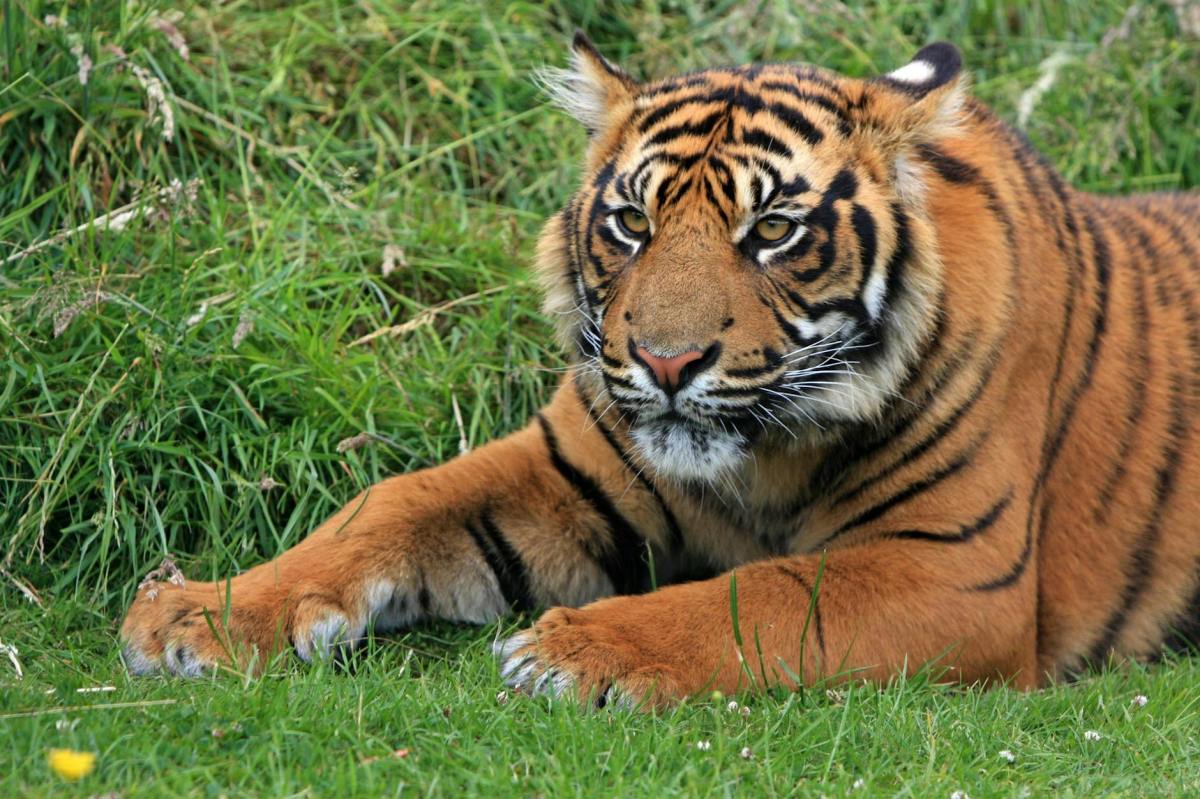
Header image of a Sumatran tiger via Pexels. Do you enjoy reading PITB? Please consider whitelisting us on your ad blocker so we can keep the lights on. Thanks!
Amazing Cats: The ‘Fire Tiger’ Is The Stuff Of Legend

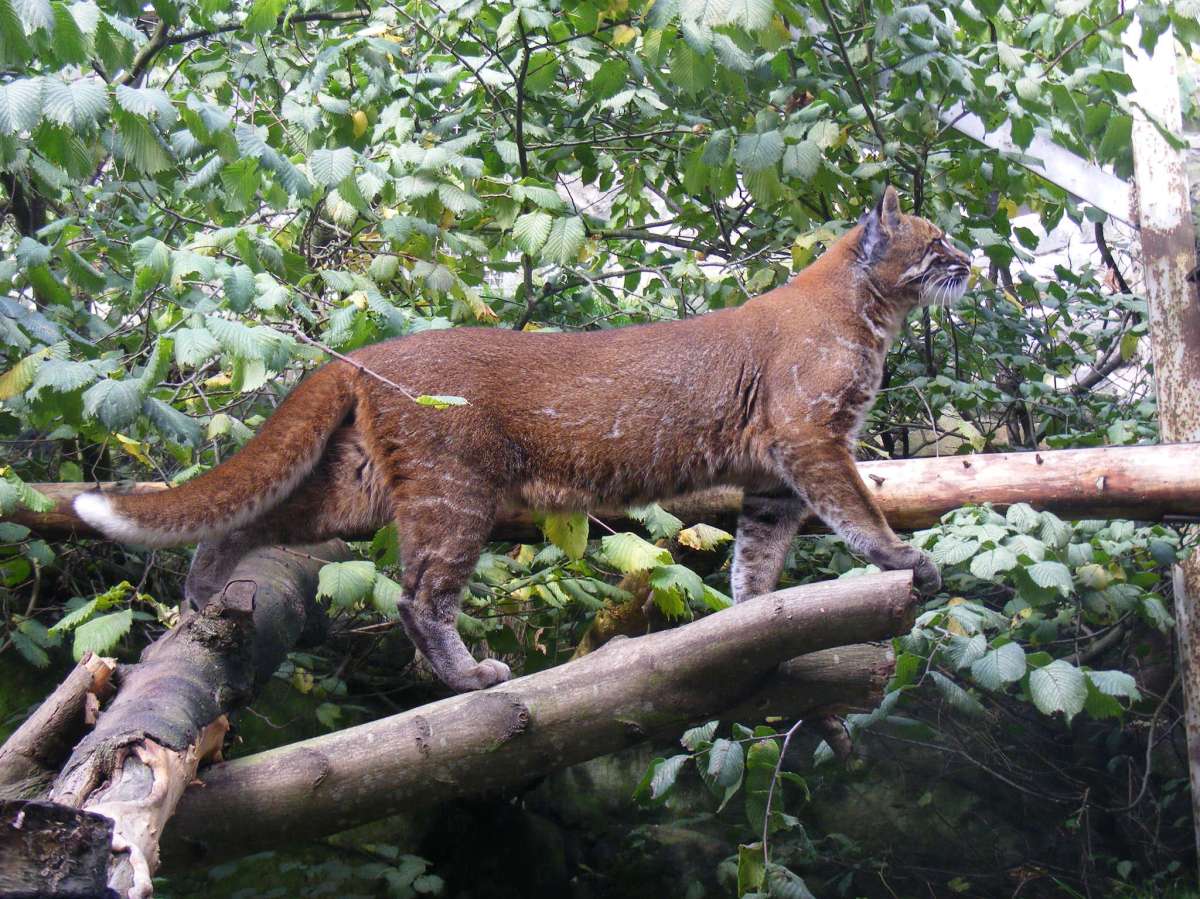
The Asian golden cat, also known as catopuma, is an elusive medium-size wildcat with striking features and exceptional hunting abilities.

It’s extraordinarily elusive, moves with a grace superlative even among fellow felids, and enjoys mythical status in many of Asia’s cultures.

It is the Asian golden cat, a medium-size feline that calls a diverse range of places home, from the mountains of rural China to the jungles of Sumatra.

Known officially as Catopuma temminckii, the species is about three times the size of domestic cats but extremely adept at taking down much larger prey, including young water buffalo and other ungulates several times the cat’s body weight.

An Asian golden cat. Credit: Wikimedia Commons

Asian golden cats inspire legends in many Asian cultures in part because of how difficult they are to find. Even the appearance of one on a trail camera in Thailand’s Khao Luang National Park this summer spawned news headlines, so rarely are they seen.

Often, as was the case with the recent sighting, they’re fleeting, just glimpses before the animals melt back into the jungle. The fire tiger seen in the June 20 trail camera footage pads across a clearing, clearly unhurried, before disappearing back into the ground cover.

In some places it’s good luck to catch a glimpse, while in other locales — like parts of Thailand — people believe a single strand of Catopuma fur is enough to protect the bearer from their larger cousins, panthera tigris. (I wouldn’t rely on that personally, but it does show how large tigers loom in the imagination in areas where they still roam the wild, even as low as their numbers are these days.)

While the Asian golden cat is known as the fire tiger in some places, it’s not a close relative of true tigers, at least not in terms of the cat family.

Credit: Wikimedia Commons

Catopuma is a feline, meaning it can meow and purr, but cannot roar. That puts the species closer genetically to domestic cats, pumas, ocelots, servals and other members of the feline subfamily. True big cats — tigers, lions, jaguars and leopards — are part of the pantherinae subfamily. Aside from their size, they are distinguished by their ability to roar, but they cannot purr or meow.

The Asian golden cat is a feline, but shares some physiological features with big cats

Even though catopuma is genetically closer to small- and medium-size felines, its gait, substantial tail and head shape are reminiscent of big cat features.

The ferocious medium-size cats also have a melanistic color morph that makes them look like smaller versions of jaguars and leopards.

A melanistic catopuma seen on a trail camera. Credit: Panthera

The fire tiger is classified as threatened as its habitats are destroyed to make way for more palm oil plantations, among other agricultural and industrial facilities.

Header image via Wikimedia Commons

Boxer Jake Paul Set For Dec. 31 Bout Against Buddy The Cat

In a match-up hailed by boxing promoter Don King as “a magnificatious spectacle of pugulisticary skillsmanship,” Jake Paul will square off against Buddy the Cat at Madison Square Garden on New Year’s Eve.

He’s defeated men more than twice his age, hammered opponents 70 pounds lighter than him into submission, and made his mark as a six-time winner of the Billy Blanks Tae Bo Championship.

Now Jake Paul, the Youtuber-turned-boxer, will step in the ring with Buddy the Cat, a gray tabby from New York.

Despite the 190 pound weight advantage and Paul’s 76-inch reach vs Buddy’s 4.5-inch reach, Paul’s manager, Nakisa Bidarian, said the 6 foot 1 Paul and the 11-inch Buddy were evenly matched.

“Buddy the Cat is probably Jake’s most vicious opponent yet,” Bidarian told reporters. “Jake is taking this fight seriously, as seriously as he took the fight with Nate [Robinson],” a 41-year-old, 5 foot 9 former NBA player who had no boxing experience before stepping in the ring with Paul.

An early poster promoting the fight, which has since been postponed to New Year’s Eve.

Asked by another reporter what Paul and his team make of critics blasting him for “making a mockery of the sport” by fighting a succession of cans, geriatric opponents and people without boxing training, Bidarian waved a hand in dismissal.

“Buddy’s a cat, isn’t he? Tigers are cats, too. We’ve all seen how dangerous tigers can be, so obviously Jake is taking a huge risk here by fighting an animal who is, in essence, a slightly smaller version of a tiger.”

Buddy the Cat

As for Buddy, the massive differences in height, weight, reach, species and training haven’t deterred him. The 11-pound southpaw feline promised to “tear into Paul like a bag of Temptations” and “chew him up and spit him out like diet kibble.”

“You see this wand toy?” Buddy told reporters, throwing punches at a colorful felt parrot that dangled from the end of a stick. “That’s what I’m gonna do to Jake’s face. And if it’s legal to attack his feet, I’m gonna do that too. I’m awesome at attacking feet.”

Longtime boxing promoter Don King called the bout “a magnificatious spectacle of pugulisticary skillsmanship.”

Paul vs Buddy is set for Dec. 31 at Madison Square Garden, only six weeks after Paul is scheduled to duke it out with retired super featherweight Geronta “Tank” Davis. Despite Davis giving up more than 70 pounds and eight inches in height, Bidarian insisted the bout will be “about as evenly matched as possible.”

While most traditional boxing fans and critics dismissed the Paul vs Buddy fight as another gimmick, legendary boxing promoter Don King hailed it as “a monumentilacious rejuvenalizationary occasion” for the sport.

“Jason Paul is a heraldific resplendinizer of pugilistic entertainmentized sportulations,” King gushed, “while Buddy is the most splendiferously sanguinarius felid fighter to ever set paw in the ring. I can’t think of a better match-up between two pugnaciously bellicoserized combatulants anywhere. This is gonna be epic!”

Yes, That’s A Mountain Lion In Ring Cam Footage From NY! No, You’re Not In Danger

It’s the first time a mountain lion has been spotted in New York since 2011. Authorities aren’t sure if the cat is an escaped — and illegal — pet, or if it made an epic journey from the west coast.

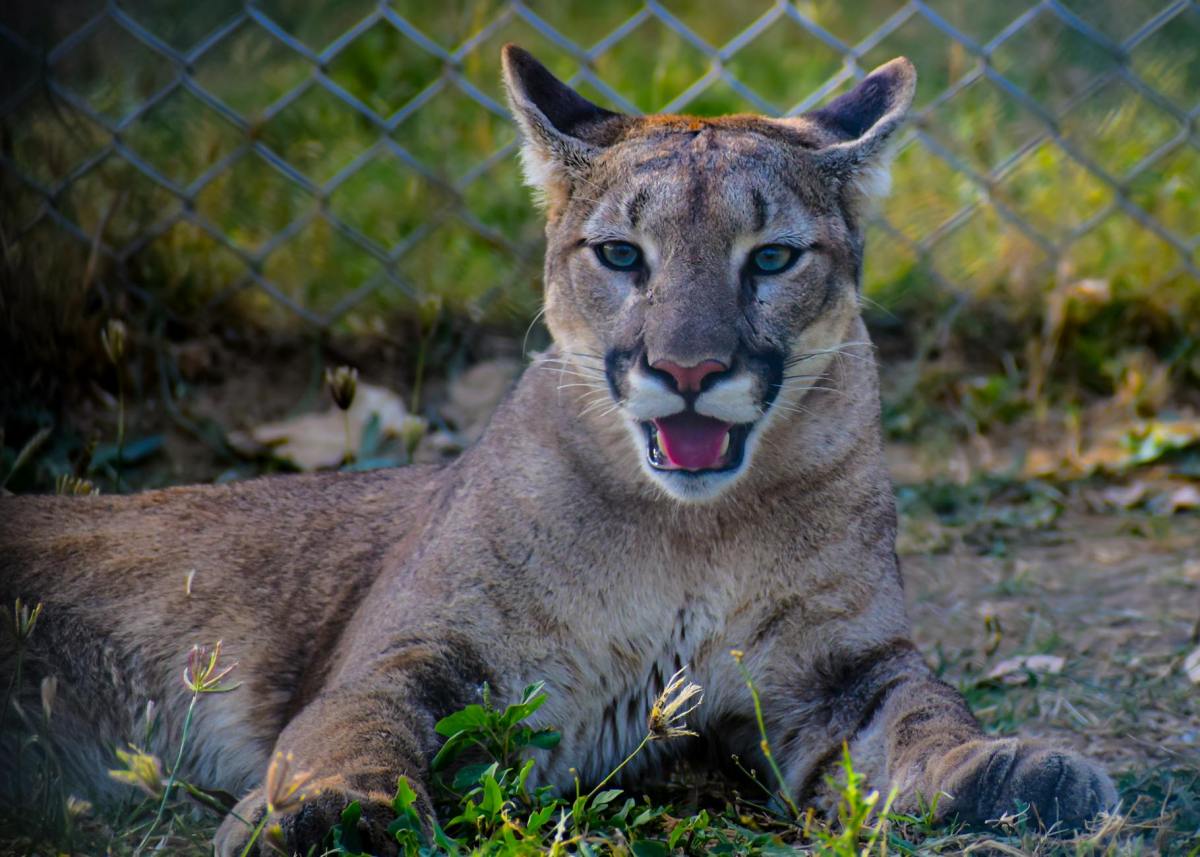
For the first time in 14 years, there’s a puma on the loose in New York.

The wild cat was spotted on a Rochester woman’s Ring doorbell camera padding along the sidewalk in front of her home at about 4 am on Wednesday morning.

A representative from the state Department of Environmental Conservation cautiously said the agency is working on confirming the species of cat in the footage.

But the feline’s size, gait and tail are dead giveaways, despite the dark footage and fleeting glimpse: it’s a puma.

In the brief clip, the wild feline walks past a tree, giving the DEC an important context clue. Michael Palermo, a wildlife manager with the department, said his team measured the tree, allowing them to closely estimate the animal’s size by comparing the footage to their measurements.

“If, in fact, it is some large cat, we would want to question, how did it get here? It’s not impossible for a wild cougar to travel to New York; it’s happened before,” Palermo said. “Was it a captive one that may have been legal as a licensed facility, and if so, did it escape? We still need to do some work to verify anything like that.”

While pumas were once native to New York and thrived in the forested mountains of regions like the Catskills (“cat creek” in Dutch), the last verified sighting in New York was in 2011. That cougar crossed through the Empire State after an epic journey from the west coast, a stronghold for the species.

Some people who posted to a Rochester community group on Facebook are already freaking out, and pumas are widely misunderstood, so it’s important to note the facts:

  • Pumas are not African lions, are not closely related to them and do not behave like them
  • They’re not aggressive toward people. In fact, they try to stay away from humans and will go out of their way to avoid confrontation
  • The exceptions are when people threaten a puma’s cubs or corner the animal, giving it no opportunity to escape
  • Americans are 150 times more likely to be struck by lightning than killed by a puma. There are only 27 reported cases of people killed by pumas in more than a century. By contrast, an estimated 4,300 to 10,000 Americans have been killed by dogs in that same time span. (Higher estimates include people who did not die immediately from dog bites, and people who died of infections or complications from bites.)
  • While some people and media reports erroneously call pumas “big cats,” they are not members of the panthera genus. They are felines more closely related to domestic cats and small wildcats. Accordingly, pumas can purr and meow, but they cannot roar

Pumas are also known as mountain lions, cougars, panthers, painters, screamers, catamounts, pangui, onca parda, cuguacuarana, katalgar, chimbica, shunta-haska, fire cats, California lions, ghost cats, and red tigers, among many other names.

In fact, the species has more names than any other animal. That’s because it’s adaptable with a historically wide and varied range. There are some 40 names for pumas in English and more than 80 in Spanish, Portuguese and the languages of indigenous Native American tribes.

The species is officially known as puma concolor, or “puma of one color” thanks to its typically biege fur that, unlike tigers, jaguars, leopards and even house cats, does not have stripes, spots or rosettes.

While it’s extremely unlikely the mystery cougar would pose a threat to people, Rochester police — who have fielded several reports of sightings in recent days — advise locals to keep their pets indoors and to exercise caution while walking their dogs.

Update: The DEC has officially confirmed the cat is a puma, although it was obvious from the footage.

In the meantime, a Rochester man says he saw the wild cat — and people running away from it — on Wednesday night.

Although that sighting has not been substantiated by authorities, it does illustrate the need to educate the public about these animals.

“You know, a mountain lion, it be ‘rawr.’ They be crawling and… serious,” Curtis Jones told WHAM, an ABC affiliate in Rochester.

“I am going to keep this bat right here, man, just in case,” he told a TV reporter. “I am going to protect us, I ain’t going to let nothing happen to us, nothing. OK?”

Let’s hope common sense somehow finds its way into the Facebook algorithm amid all the misinformation as the locals discuss the sightings online.

If you’re from the area, we beg you: please do not attack, shoot or chase after the puma with a baseball bat. The animal does not consider you food, is not a danger to you, and is probably scared and hungry.

That deserves special emphasis if, as the DEC’s staff have said, the puma is more likely an escaped captive than a long-wandering traveler from the western US.

Jones said he saw the puma “slithering” and hear it “rawr,” but it’s worth noting, again, that pumas are members of the genus felinae, meaning they’re genetically and behaviorally much closer to house cats and can meow and purr, but cannot roar. Despite their size, mountain lions are not true “big cats.”

As for Jones, we hope him and his neighbors give the cat a wide berth and let the authorities safely capture it, have a veterinarian evaluate, and figure out where it belongs.

“I don’t play with lions, I don’t play with tigers, bears, nothing in the wild, I don’t play with those, I promise you,” Jones told the station. “I don’t even do rollercoasters. I’m good.”

Wordless Wednesday: They Rule The Night

Cats were built by mother nature to stalk by starlight.

From the African savannas to the Andean mountains, the jungles of the Amazon to the Hollywood hills, and everywhere in suburban America, cats of all types and sizes prowl the night. With eyes that are up to eight times more sensitive in the dark, incredibly sensitive hearing, and whiskers that can pick up the slightest change in air density, felids were built by mother nature to stalk by starlight.

Some cat species are crepuscular, some are nocturnal, but as ambush predators, they’re all at their best when hunting under the cover of darkness.

Image credits, top to bottom: Per Karlson/PVKFoto, Reddit r/natureisf***inglit, Cockscomb Basin Wildlife Preserve, Wikimedia Commons, Steve Winter/National Geographic, National Park Service, Colorado Parks and Wildlife