Family Shares Vet Records, Photos In Battle Over Cat Taken By Amazon Driver

One party has produced records. The other has an implausible story. Yet again, a situation highlights the need for new pet laws that reflect the way people see companion animals now, not as they did more than a century ago.

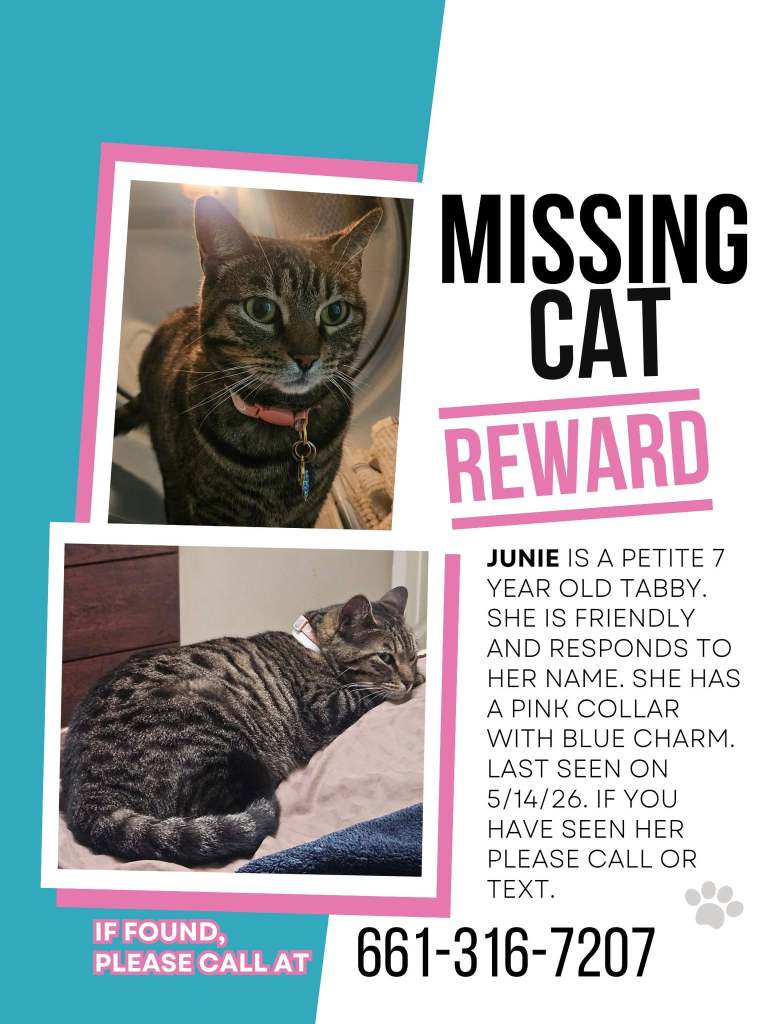
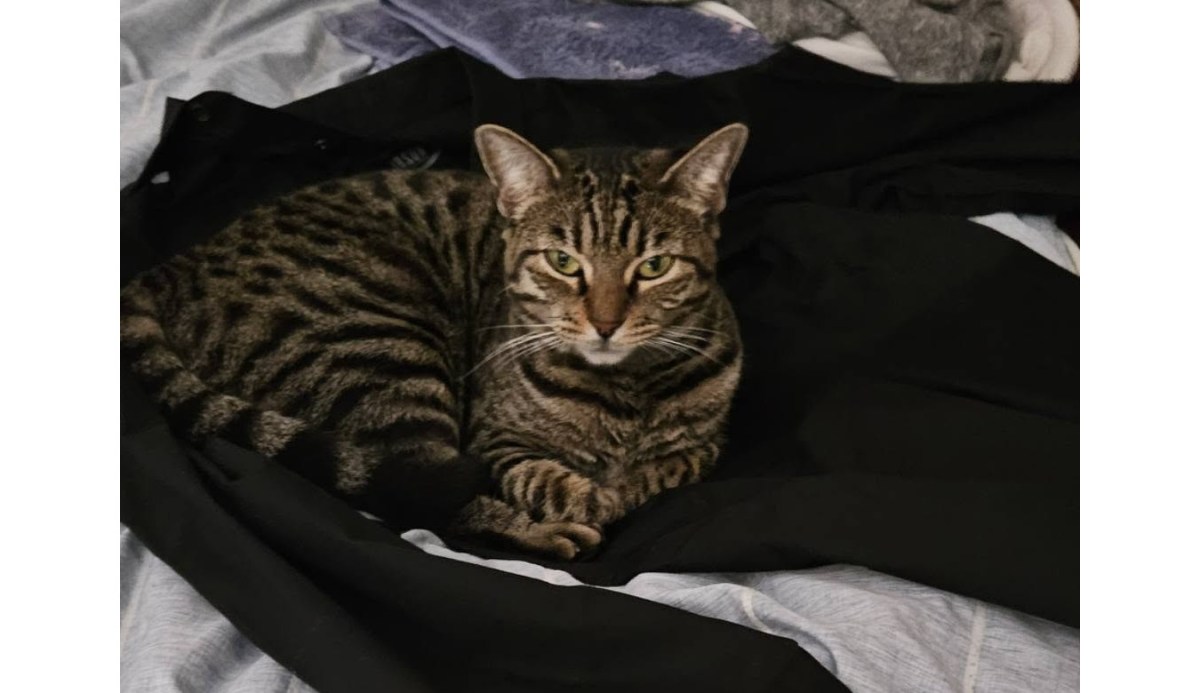
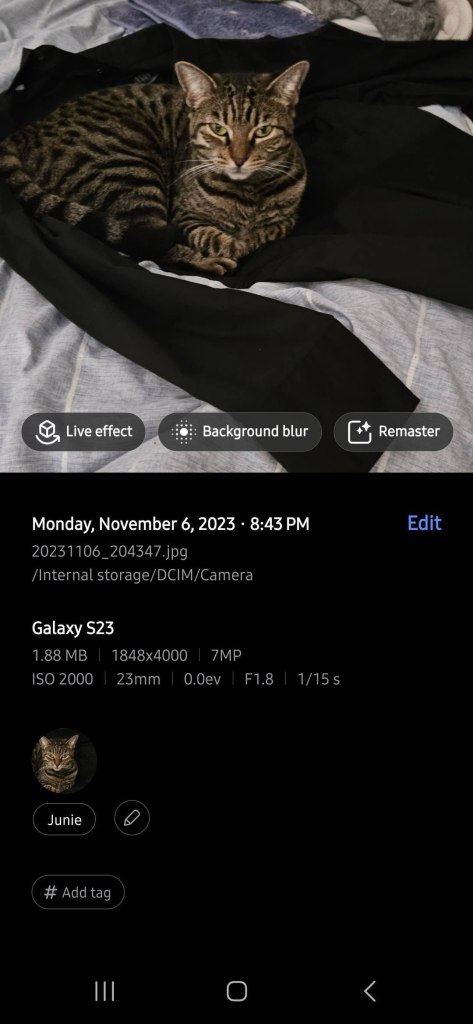
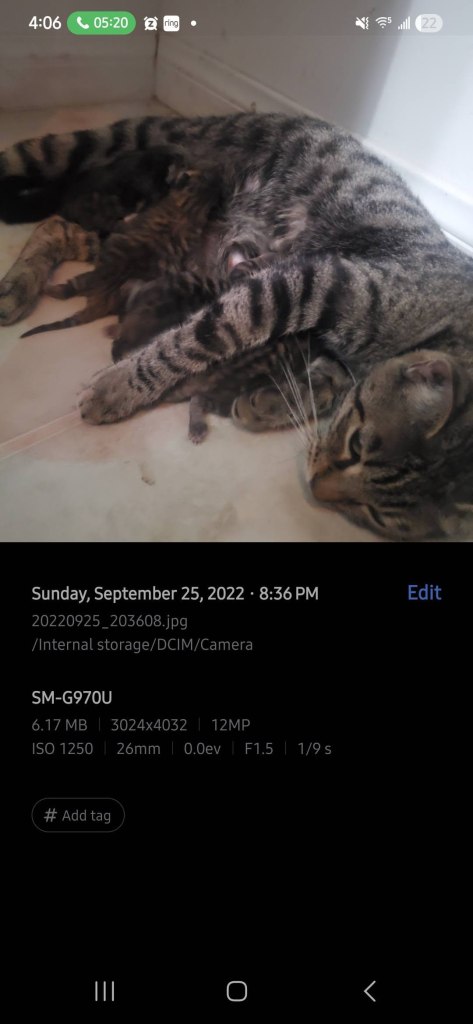
Junie the cat gave birth to a litter of kittens in 2022, was spayed in 2023, and photos show her nursing her babies, relaxing on a favorite blanket, and lazing imperiously on one of her humans’ clean black shirts.

The photos and documents were shared by Brenda Wilson, the Bakersfield, Calif., woman who said her cat still hasn’t been returned to her after an Amazon driver took her several weeks ago.

Since the police say they’re investigating the alleged theft, releasing the documents seems like more of an exasperated act of receipt-producing after the delivery driver, Joshua Gonzalez, went public and said he was retrieving his own cat, not stealing Wilson’s.

You can practically hear Judge Judy snapping “Let’s see the receipts!” as she adjusts her glasses.

In Gonzalez’s version of events he serendipitously happened to discover his own missing cat sitting on the front step of a home that happened to be on his delivery route. At different times referring to the cat as “he,” “she” and “it,” Gonzalez said he’d adopted the feline for his seven-year-old daughter back in October of 2025, still hadn’t bestowed the cat with a name despite her living in his home for seven months, and he knows she’s his cat because she has a “distinct” M-pattern on her forehead.
Gonzalez could be telling the truth. There’s a nonzero chance of that. Truth really can be stranger than fiction. But his version of events stretches credulity to its breaking point.

Literally every tabby cat has the “M” pattern on their heads. It’s what makes them tabbies. He seems as confused about that as he is about Junie’s gender.

Then there’s the video: the entire sequence of events is captured on a Ring camera near Wilson’s front door. Gonzalez doesn’t react like a man who’s stunned to fortuitously stumble over his own missing cat, at an address his job took him to, no less. He doesn’t express shock or surprise, or seem to visibly react at all. He doesn’t even look at the cat. He delivers the package, logs it on his phone, then swoops the feline up in his arms and walks off with her.

If you’d just unexpectedly found your own cat, would you call out to her, extend a hand, and smile with relief when she pads up with a raised tail and happily brushes her cheek against it? Would you check her coat pattern and markings, then check again? When scooping her up, would you talk to her, maybe even plant a kiss on her head, and tell her how happy you are to find her? Would you look happy? Would you leave a note?

Most people would do at least some of those things. Gonzalez does none of them.

And while Wilson has produced date-and-time-stamped photos of Junie going back years, the only photo Gonzalez shared with a local news station was a smartphone snap from the other day showing Junie in his lap.

And that’s half the problem. Neither party would be going to the media and trying to litigate this in public if the police were motivated to take the alleged theft more seriously. That’s not entirely their fault, because in the vast majority of states, laws regarding animals haven’t been updated since the days, more than a century past, when they were written to settle farm and ranch disputes. There’s little guidance from the law, and fewer options. The law doesn’t recognize pets as conscious individuals with feelings, so courts don’t take into account the best interests of the animals either.

Wilson said she doesn’t want anything but the return of Junie. The police would save her family a lot of angst by making that happen. Unless Gonzalez starts producing some truly impressive evidence, familiarizes himself with the gender of the disputed feline and explains his behavior, it’s difficult to believe Junie belongs with anyone besides the Wilsons.
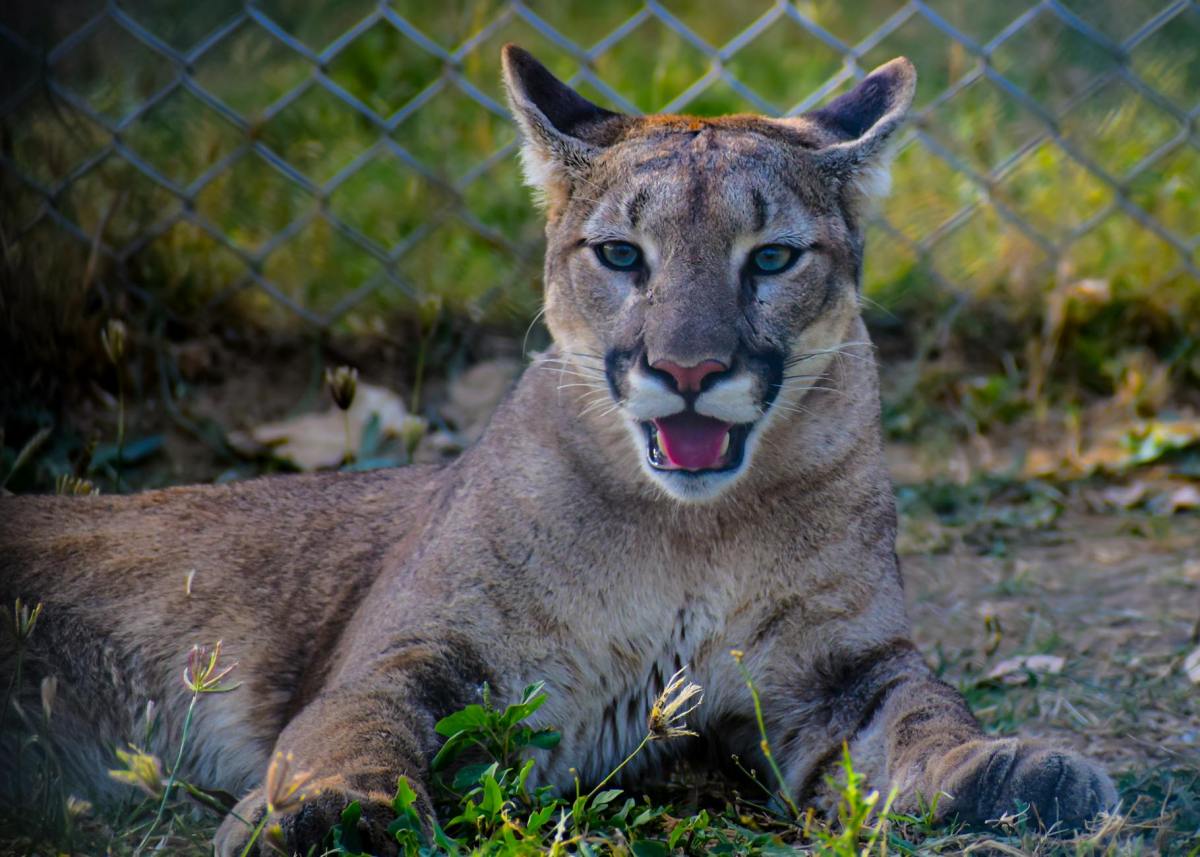
Yes, That’s A Mountain Lion In Ring Cam Footage From NY! No, You’re Not In Danger

It’s the first time a mountain lion has been spotted in New York since 2011. Authorities aren’t sure if the cat is an escaped — and illegal — pet, or if it made an epic journey from the west coast.

For the first time in 14 years, there’s a puma on the loose in New York.

The wild cat was spotted on a Rochester woman’s Ring doorbell camera padding along the sidewalk in front of her home at about 4 am on Wednesday morning.

A representative from the state Department of Environmental Conservation cautiously said the agency is working on confirming the species of cat in the footage.

But the feline’s size, gait and tail are dead giveaways, despite the dark footage and fleeting glimpse: it’s a puma.

In the brief clip, the wild feline walks past a tree, giving the DEC an important context clue. Michael Palermo, a wildlife manager with the department, said his team measured the tree, allowing them to closely estimate the animal’s size by comparing the footage to their measurements.

“If, in fact, it is some large cat, we would want to question, how did it get here? It’s not impossible for a wild cougar to travel to New York; it’s happened before,” Palermo said. “Was it a captive one that may have been legal as a licensed facility, and if so, did it escape? We still need to do some work to verify anything like that.”

While pumas were once native to New York and thrived in the forested mountains of regions like the Catskills (“cat creek” in Dutch), the last verified sighting in New York was in 2011. That cougar crossed through the Empire State after an epic journey from the west coast, a stronghold for the species.

Some people who posted to a Rochester community group on Facebook are already freaking out, and pumas are widely misunderstood, so it’s important to note the facts:

  • Pumas are not African lions, are not closely related to them and do not behave like them
  • They’re not aggressive toward people. In fact, they try to stay away from humans and will go out of their way to avoid confrontation
  • The exceptions are when people threaten a puma’s cubs or corner the animal, giving it no opportunity to escape
  • Americans are 150 times more likely to be struck by lightning than killed by a puma. There are only 27 reported cases of people killed by pumas in more than a century. By contrast, an estimated 4,300 to 10,000 Americans have been killed by dogs in that same time span. (Higher estimates include people who did not die immediately from dog bites, and people who died of infections or complications from bites.)
  • While some people and media reports erroneously call pumas “big cats,” they are not members of the panthera genus. They are felines more closely related to domestic cats and small wildcats. Accordingly, pumas can purr and meow, but they cannot roar

Pumas are also known as mountain lions, cougars, panthers, painters, screamers, catamounts, pangui, onca parda, cuguacuarana, katalgar, chimbica, shunta-haska, fire cats, California lions, ghost cats, and red tigers, among many other names.

In fact, the species has more names than any other animal. That’s because it’s adaptable with a historically wide and varied range. There are some 40 names for pumas in English and more than 80 in Spanish, Portuguese and the languages of indigenous Native American tribes.

The species is officially known as puma concolor, or “puma of one color” thanks to its typically biege fur that, unlike tigers, jaguars, leopards and even house cats, does not have stripes, spots or rosettes.

While it’s extremely unlikely the mystery cougar would pose a threat to people, Rochester police — who have fielded several reports of sightings in recent days — advise locals to keep their pets indoors and to exercise caution while walking their dogs.

Update: The DEC has officially confirmed the cat is a puma, although it was obvious from the footage.

In the meantime, a Rochester man says he saw the wild cat — and people running away from it — on Wednesday night.

Although that sighting has not been substantiated by authorities, it does illustrate the need to educate the public about these animals.

“You know, a mountain lion, it be ‘rawr.’ They be crawling and… serious,” Curtis Jones told WHAM, an ABC affiliate in Rochester.

“I am going to keep this bat right here, man, just in case,” he told a TV reporter. “I am going to protect us, I ain’t going to let nothing happen to us, nothing. OK?”

Let’s hope common sense somehow finds its way into the Facebook algorithm amid all the misinformation as the locals discuss the sightings online.

If you’re from the area, we beg you: please do not attack, shoot or chase after the puma with a baseball bat. The animal does not consider you food, is not a danger to you, and is probably scared and hungry.

That deserves special emphasis if, as the DEC’s staff have said, the puma is more likely an escaped captive than a long-wandering traveler from the western US.

Jones said he saw the puma “slithering” and hear it “rawr,” but it’s worth noting, again, that pumas are members of the genus felinae, meaning they’re genetically and behaviorally much closer to house cats and can meow and purr, but cannot roar. Despite their size, mountain lions are not true “big cats.”

As for Jones, we hope him and his neighbors give the cat a wide berth and let the authorities safely capture it, have a veterinarian evaluate, and figure out where it belongs.

“I don’t play with lions, I don’t play with tigers, bears, nothing in the wild, I don’t play with those, I promise you,” Jones told the station. “I don’t even do rollercoasters. I’m good.”