Family Shares Vet Records, Photos In Battle Over Cat Taken By Amazon Driver

One party has produced records. The other has an implausible story. Yet again, a situation highlights the need for new pet laws that reflect the way people see companion animals now, not as they did more than a century ago.

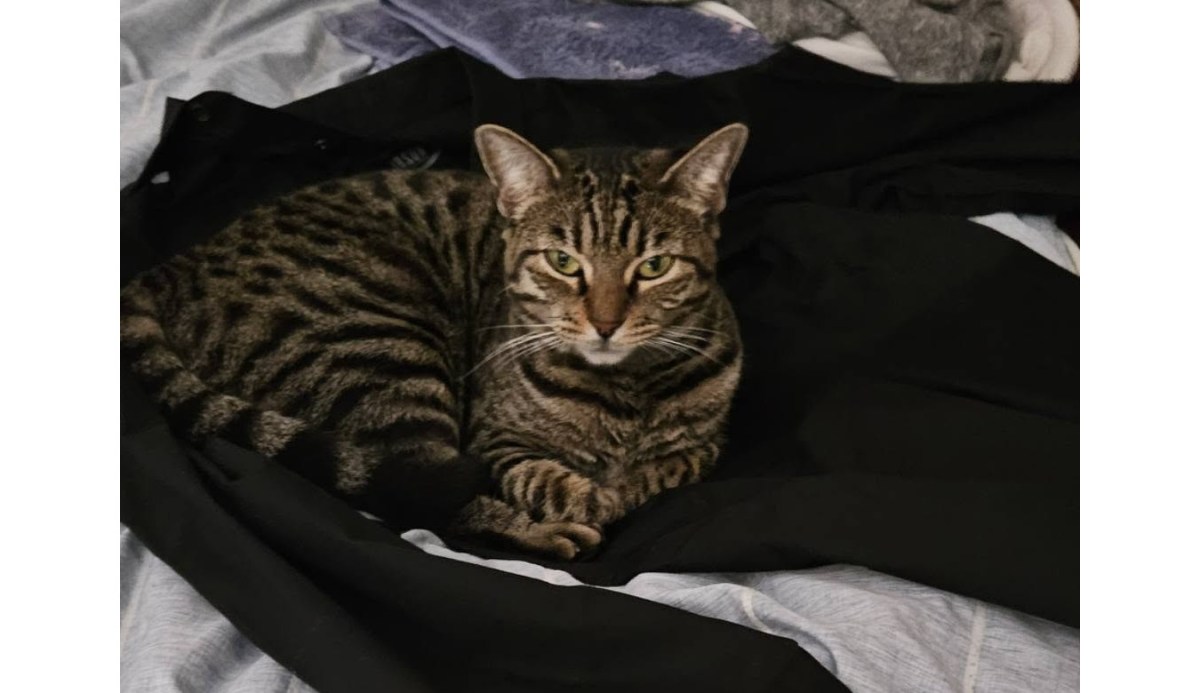
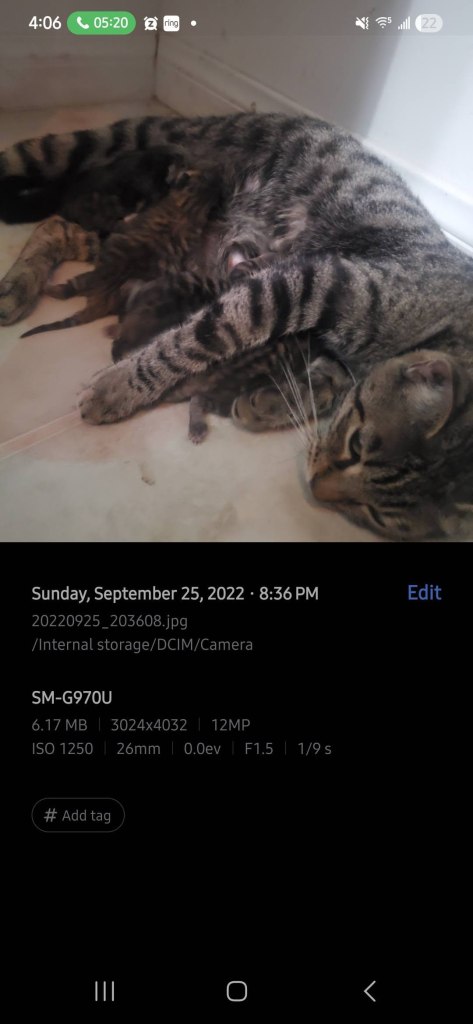
Junie the cat gave birth to a litter of kittens in 2022, was spayed in 2023, and photos show her nursing her babies, relaxing on a favorite blanket, and lazing imperiously on one of her humans’ clean black shirts.

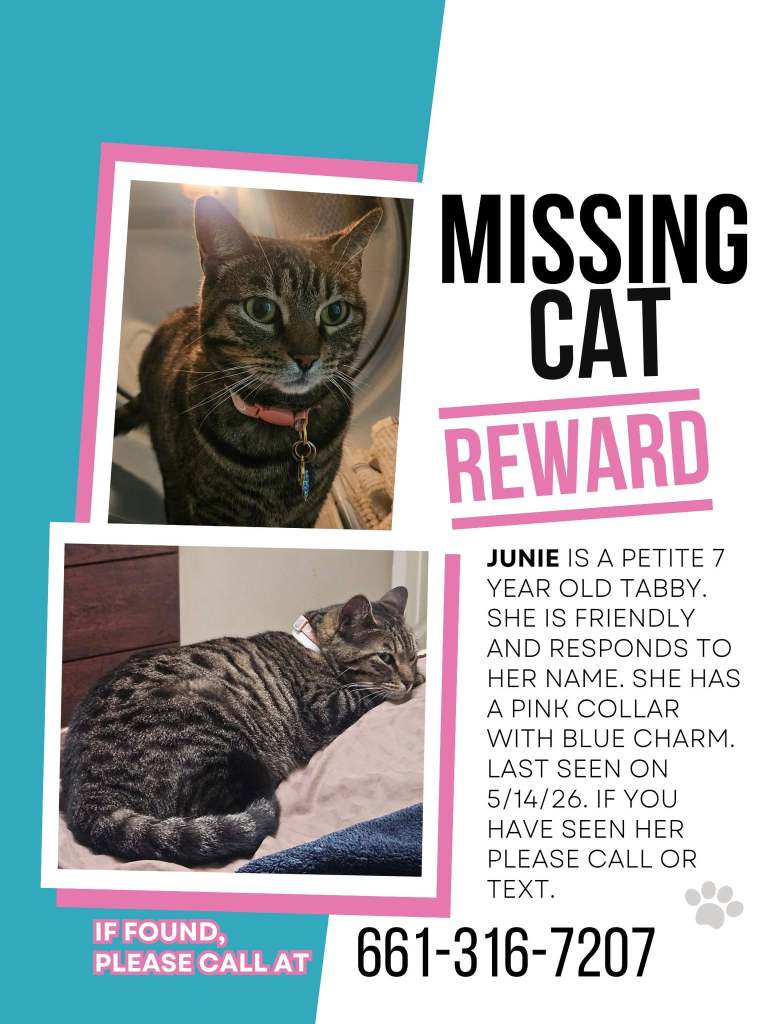
The photos and documents were shared by Brenda Wilson, the Bakersfield, Calif., woman who said her cat still hasn’t been returned to her after an Amazon driver took her several weeks ago.

Since the police say they’re investigating the alleged theft, releasing the documents seems like more of an exasperated act of receipt-producing after the delivery driver, Joshua Gonzalez, went public and said he was retrieving his own cat, not stealing Wilson’s.

You can practically hear Judge Judy snapping “Let’s see the receipts!” as she adjusts her glasses.

In Gonzalez’s version of events he serendipitously happened to discover his own missing cat sitting on the front step of a home that happened to be on his delivery route. At different times referring to the cat as “he,” “she” and “it,” Gonzalez said he’d adopted the feline for his seven-year-old daughter back in October of 2025, still hadn’t bestowed the cat with a name despite her living in his home for seven months, and he knows she’s his cat because she has a “distinct” M-pattern on her forehead.
Gonzalez could be telling the truth. There’s a nonzero chance of that. Truth really can be stranger than fiction. But his version of events stretches credulity to its breaking point.

Literally every tabby cat has the “M” pattern on their heads. It’s what makes them tabbies. He seems as confused about that as he is about Junie’s gender.

Then there’s the video: the entire sequence of events is captured on a Ring camera near Wilson’s front door. Gonzalez doesn’t react like a man who’s stunned to fortuitously stumble over his own missing cat, at an address his job took him to, no less. He doesn’t express shock or surprise, or seem to visibly react at all. He doesn’t even look at the cat. He delivers the package, logs it on his phone, then swoops the feline up in his arms and walks off with her.

If you’d just unexpectedly found your own cat, would you call out to her, extend a hand, and smile with relief when she pads up with a raised tail and happily brushes her cheek against it? Would you check her coat pattern and markings, then check again? When scooping her up, would you talk to her, maybe even plant a kiss on her head, and tell her how happy you are to find her? Would you look happy? Would you leave a note?

Most people would do at least some of those things. Gonzalez does none of them.
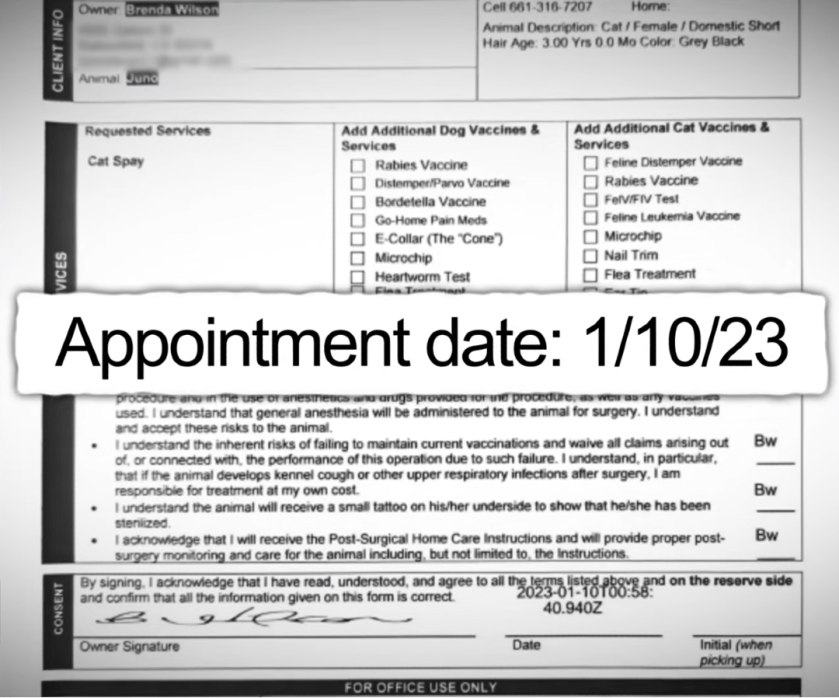
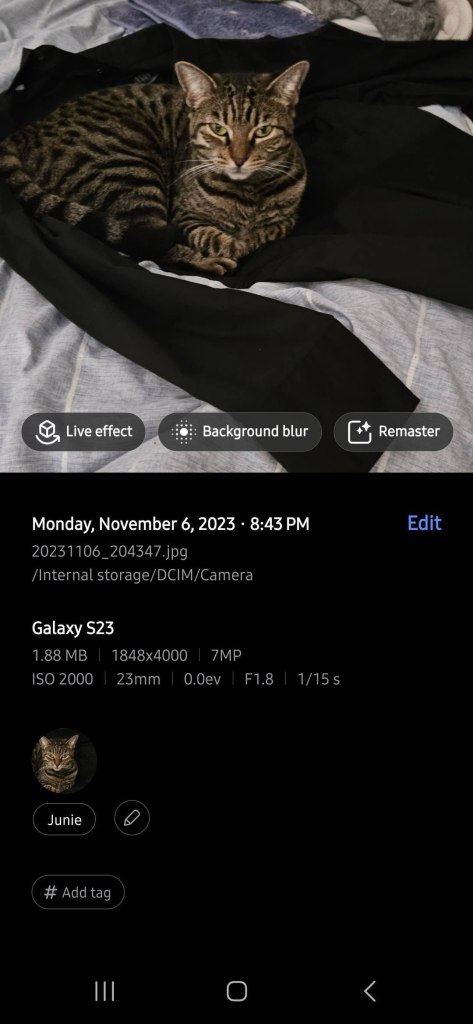
And while Wilson has produced date-and-time-stamped photos of Junie going back years, the only photo Gonzalez shared with a local news station was a smartphone snap from the other day showing Junie in his lap.

And that’s half the problem. Neither party would be going to the media and trying to litigate this in public if the police were motivated to take the alleged theft more seriously. That’s not entirely their fault, because in the vast majority of states, laws regarding animals haven’t been updated since the days, more than a century past, when they were written to settle farm and ranch disputes. There’s little guidance from the law, and fewer options. The law doesn’t recognize pets as conscious individuals with feelings, so courts don’t take into account the best interests of the animals either.

Wilson said she doesn’t want anything but the return of Junie. The police would save her family a lot of angst by making that happen. Unless Gonzalez starts producing some truly impressive evidence, familiarizes himself with the gender of the disputed feline and explains his behavior, it’s difficult to believe Junie belongs with anyone besides the Wilsons.

In The UK, Cat ‘Ownership’ Can Be A Hazy Concept

What does it mean to “own” a cat? If you believe a cat is neglected, can you take custody? As UK law changes, those questions need answers.

For the second time this week, two people are fighting over a cat after the original “owner” received a request from a microchip company to confirm another person’s claim on the feline.

Charlotte Sawyer of Swindon, a town in southwest England, told her local newspaper she was livid when she got the request to sign over her claim to one-year-old Oreo.

“I can’t believe the audacity of this person trying to steal our beautiful cat,” she told the Swindon Advertiser.

But Sawyer readily admitted Oreo was going out for days and sometimes weeks at a time before returning home, and she hasn’t seen him for four months now.

Sawyer and Oreo
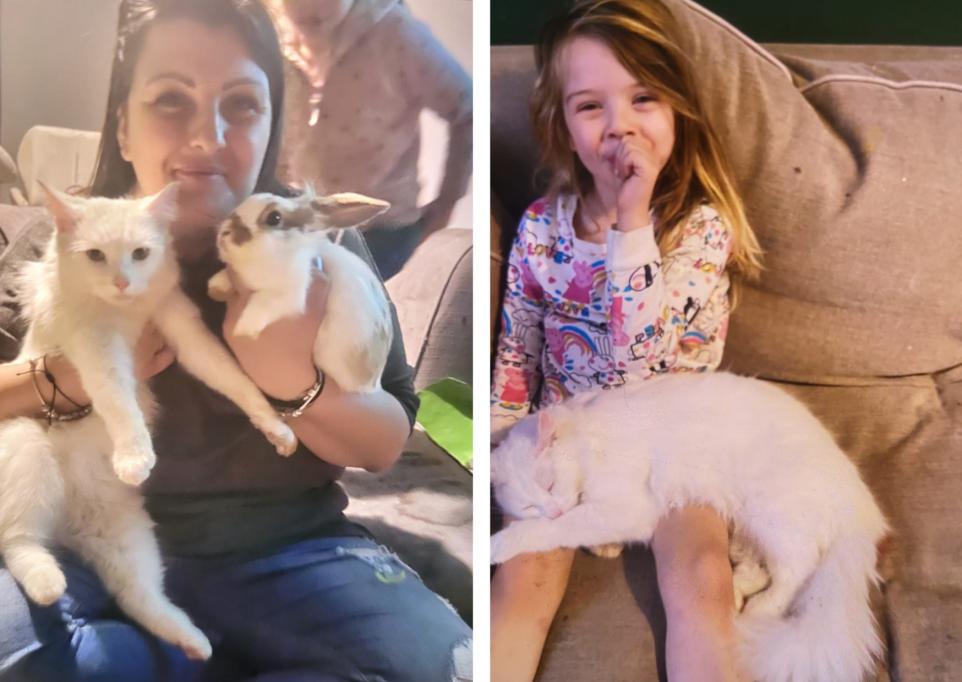
Charlotte Sawyer, left, with her cat Oreo and a pet rabbit. Sawyer’s daughter, right, with Oreo. Credit: Charlotte Sawyer via Swindon Advertiser

Like many cats in the UK, Oreo not only had access to the outdoors, he was accustomed to coming and going as he pleased. Other families were feeding him, and it’s likely he made the rounds among several houses before returning home. Because “home” is a nebulous concept in this instance, it’s not the first time someone has asked Sawyer to relinquish custody of Oreo.

“A woman claiming to be someone who looks for missing cats once knocked on my door and handed me a form asking for permission to change Oreo’s microchip,” Sawyer said. “I wanted to rip it up, I was furious, and told her he was my cat. Now it’s happened again. At least it’s provided some reassurance that he’s still alive.”

While I feel for anyone who loses a pet, I don’t know how someone who truly loves a cat can accept the kitty being gone for days or weeks at a time, not knowing if he’s in danger, hurt or still breathing. That kind of arrangement isn’t in the cat’s best interests, and it’s not compatible with our responsibility to ensure the welfare of our four-legged friends, an obligation all of us take on when we adopt our pets.

The people who encountered Oreo likely thought he was a stray or an abandoned former pet. If they’re requesting a change to microchip registration, it probably means they spent their own money to take the little guy to the vet, where the chip was discovered and scanned.

This is emphatically not a blanket criticism of UK norms regarding outdoor access, by the way. Americans cannot claim moral superiority. In the past week or so we’ve had a Pennsylvania man kill a cat with a blow dart because the feline “was trying to kill my birds,” a vulgar approximation of a human being in New Jersey “repeatedly raped” his pet cat before torturing her to death, and some deranged lunatic in Florida used a cat as target practice, leaving 30 pellets lodged in the innocent animal’s little body.

That represents a tiny fraction of the cat abuse stories from the last 10 days and I’ve omitted the worsted examples because I know we have readers who can’t handle this stuff. (I can’t either, which is why I paused my Google News alerts for most of the past two weeks.)

My point here is not to shock. It’s to underscore the fact that we have absolutely no moral authority when it comes to telling people in other countries how to care for animals.

Outdoor cat
A cat exploring outdoors. Credit: Openverse

Moral authority concerns aside, the two examples of ownership claims by microchip this week raise important questions about the definition of “ownership” and what it means to properly care for a cat.

Like many cat lovers I don’t like the term “owner” and I describe myself as a caretaker, but where the law is concerned, ownership is important concept because it determines who has claim over the animal. The law views cats and dogs as property, whether we like it or not. That’s why animal welfare statutes fall under agriculture and markets law in many US states instead of the criminal code, and it’s why so many of those laws need updating.

Cat culture across the Atlantic is different in that the majority of people who have cats believe our furry friends must have access to the outdoors to live a complete, fulfilled life. In the US, 63 percent of cat caretakers keep their felines strictly indoors, while in the UK it’s virtually the opposite, with 70 percent allowing cats to roam outdoors. Not all definitions of outdoor access are equal: Some people allow only supervised outdoor time in the backyard (or “garden”), some make sure their kitties are safely indoors by nightfall, while others have cats who return at their own whim.

There are also differences regarding geography, traffic density, the prevalence of natural predators and the nature of city life that account for how much outdoor access they allow their cats.

As the UK sets a June 2024 date for the mandatory microchipping of pet cats, disputes like this are going to become more common, which means people would be wise to make sure their cats’ microchips have up-to-date information and have readily available proof that they own their felines. If cat owners don’t establish the criteria for what it means to “own” a feline, the government will.