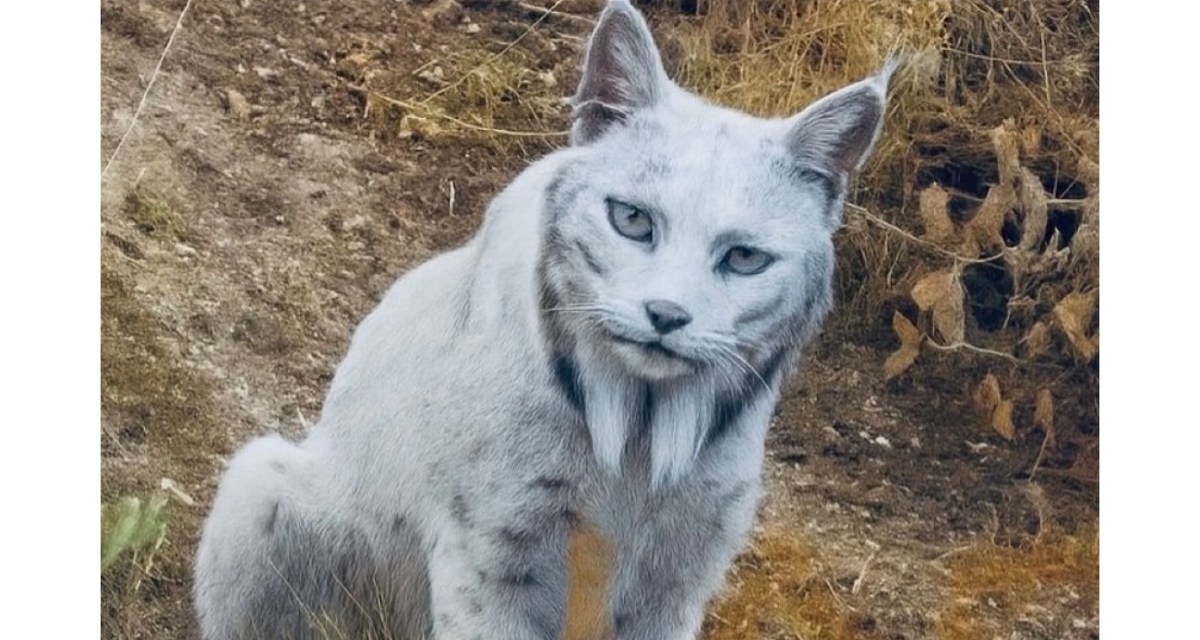
Photographer Angel Hidalgo thought the color was a trail camera malfunction until he saw the incredible feline for himself.
For the first time in history, a white Iberian lynx has been photographed.
A Spanish man who works in a factory by day and photographs wildlife as a hobby was behind the camera for the unprecedented shots.
It wasn’t easy.
Angel Hidalgo told National Geographic that first spotted fleeting images of the extraordinarily rare feline on one of his camera traps, but he was skeptical.
“I couldn’t believe it,” the 29-year-old said. “I thought it was a camera effect, and from then on, I dedicated myself to the search for the lynx. I’m still in shock.”
While hiking in late October, Hidalgo saw the “ghost cat” with his own eyes and quickly took a handful of shots and a short video before the cat vanished.
Credit: Angel Hidalgo
The Iberian lynx, as its name indicates, is native to Spain and a small range in Portugal. The cats call mountain ranges like Sierra Morena and Montes de Toledo home.
The white color morph is due to leucism, not albinism: the difference is the former causes only partial loss of pigmentation, and the eyes are unaffected.
In the video footage, the cat sits calmly and regards Hidalgo for about 15 seconds before blinking and turning its head. It’s a fleeting but fascinating look at an animal that most of us will never have the opportunity to see in the flesh.
Hidalgo won’t say where he encountered the white lynx, which is a smart move in an age when bored rich kids in places like Dubai can throw money at wildlife poachers and help themselves to the rarest and most vulnerable wildlife.
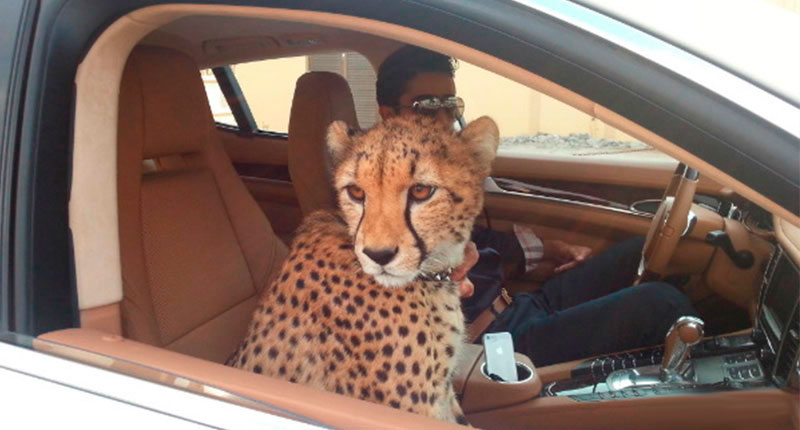
Because they know the authorities in their countries won’t bother them, the sons of oil oligarchs and emirs openly flaunt their wild “pet” collections: Instagram and TikTok host thousands of photos and videos of young men and women posing with cheetahs, lions and tigers, with the cats often riding shotgun in hypercars from Lamborghini, Ferrari and McLaren.
We hope the location remains a secret for the sake of the wild cat and because the Iberian lynx is a conservation success story. The species was on the brink of extinction in the 1990s and now has a healthy breeding population that numbers in the thousands.
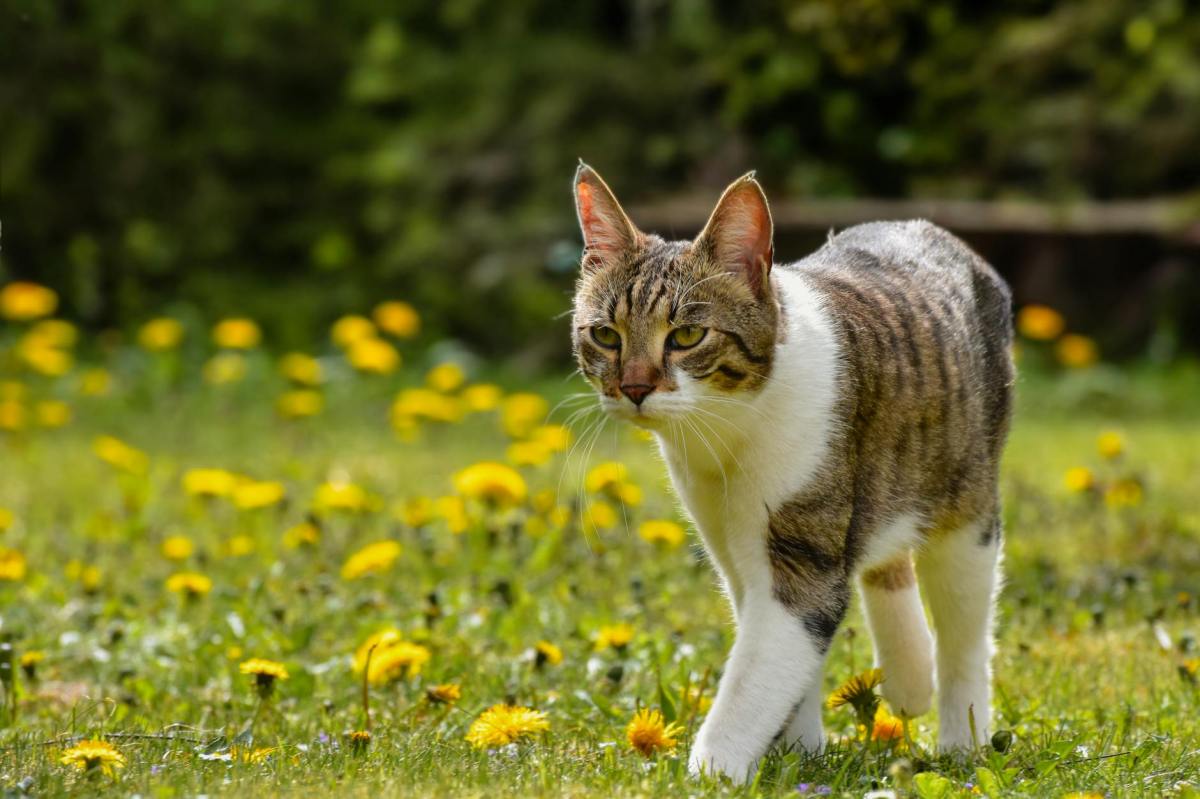
Free-ranging cats do have a negative impact on wildlife, but we’re not going to solve the problem by demonizing them and culling them by the millions.
The Literary Hub story starts off with a provocative question: what if cats ruled the world?
This is a question I find amusing to ponder, so instantly my mind was filled with images of cats scandalizing foreign heads of state by insouciantly swiping gifts off tables, angering diplomats by yawning and nodding off during summits, and financing the construction of massive and unnecessary coastal walls, on the off chance the ocean decides to move inland and get them wet.
Then the writer cited the repeatedly-debunked “study” that credulous media of all stripes still reference without bothering to read the text — that infamous 2013 Nature Communications paper, published by birders who author books with titles like “Cat Wars: The Consequences Of A Cuddly Killer.”
Some journalists don’t know any better, some are overworked, and some are frankly too lazy to read the study with a critical eye, but I think one of the more likely reasons people continue to cite the paper is because it’s easier to blame felinekind for wildlife extirpation than it is to admit we’re the primary culprits. After all, according to the WWF’s most recent annual review, we’ve killed off 73 percent of Earth’s wildlife since 1970, and we certainly didn’t need house cats to help us push elephants, rhinos, every species of higher non-human primate, and innumerable other species to the brink of extinction.
We did that. We did it with our relentless development, consuming and fracturing wild habitats. We did it with careless industrialization, by dumping chemicals and garbage into our rivers and lakes until more than half of them were rendered too polluted to swim in or drink from. We did it by bulldozing old growth forest and jungle, by exploiting species for fur, folk medicine, ivory, sport hunting and in the illegal wildlife trade.
Cheetahs are critically endangered, and they’re being driven to extinction even faster by poachers, who sell them to wealthy buyers in oil-rich gulf states where they’re trendy pets. Credit: Riccardo Parretti/Pexels
More than 47,000 species — that we know of — are headed toward extinction. It’s so much easier to blame it on anyone or anything else than admit we need to make major changes to our lifestyles and policies.
But don’t take my word for it. Here’s what Alley Cat Allies has to say about the 2013 meta-analysis and its derivative papers:
“The Smithsonian-funded study published in Nature Communications is not rigorous science. It is a literature review that surveys a variety of unrelated, older studies and concocts a highly speculative conclusion that suits the researchers’ seemingly desperate anti-cat agenda. This speculative research is highly dangerous. It is being used by opponents of outdoor cats and Trap-Neuter-Return (including the authors) to further an agenda to kill more cats and roll back decades of progress on TNR. And it is being spread unchecked by the media.“
Here’s what a group of ethicists and anthropologists wrote about the claims against cats in the journal Conservation Biology, lamenting the lack of nuance and danger in arguing that cats must be stopped “by any means necessary.” The drive to blame felines, they argue, has “fueled an unwarranted moral panic over cats”:
“Contrary to Loss and Marra’s claims that the scientific consensus is consistent with their views that cats are a global threat to biodiversity, the actual scientific consensus is that cats can, in certain contexts, have suppressive population-level effects on some other species (Twardek et al. 2017). This is something that is true of all predators, native or not (Wallach et al. 2010). Thus, cats should not be profiled as a general threat a priori and without reference to important factors of ecological context, situational factors, clear definition of harms, and evidence thereof.”
“There are there are serious reasons to suspect the reliability of the new, extreme cat-killer statistics,” wrote Barbara J. King, retired chairwoman of the department of anthropology at The College of William and Mary.
Feline predatory impact varies by local conditions. Free-ranging cats in cities and suburbs kill rodents, but have minimal impact on other animals, data shows. Credit: Patricia Luquet/Pexels
Like we’ve often noted here on PITB, the authors of the Nature Communications study can’t even say how many free-ranging felines exist in the US. They say it’s between 20 and 120 million. That’s a 100 million difference in the potential cat population! How can they tell us how many birds and mammals are killed by cats if they can’t even tell us how many cats there are? No amount of massaging the numbers can provide an accurate picture if the initial data is shaky or nonexistent.
Furthermore, the nature of a meta-analysis means the authors depend on earlier studies for estimates on predatory impact, but the 2013 Nature Communications paper does not include any data —not a single study — on feline predatory impact. In other words, they have no idea how many animals free-ranging cats actually kill.
In authentic studies that actually do measure predatory impact, the data varies widely in geographic and demographic context. Data derived from the D.C. Cat Count, for example, shows that cats living more than 800 feet from forested areas rarely kill wildlife, and are much more likely to kill rodents.
Those who cite the bunk study and its derivatives are “demonizing cats with shaky statistics,” King wrote, adding she was alarmed by “an unsettling degree of uncertainty in the study’s key numbers.”
Free-roaming populations are reduced when cat colonies are managed, and the animals are fed and fixed. Credit: Mia X/Pexels
Ultimately, we agree with Wayne Pacelle, former president of the Humane Society of the United States.
The meta-analysis authors “have thrown out a provocative number for cat predation totals, and their piece has been published in a highly credible publication, but they admit the study has many deficiencies. We don’t quarrel with the conclusion that the impact is big, but the numbers are informed guesswork.”
Cats do have a negative impact on wildlife, it varies according to local circumstances, and those of us who love cats have a responsibility to keep our pets indoors and help manage free-ranging populations.
But cooler heads must prevail, approaches to managing cats must be evidence-based, and the effort requires people of all kinds working together — which becomes much more difficult when agenda-driven pseudoacademics whip people into a frenzy by portraying felines as bloodthirsty, invasive monsters who need to be wiped out “by any means necessary.”
Solving the problem of free-ranging cats requires us to own up to our own role in species extinction and to take measured, evidence-based steps to protect vulnerable wildlife. Otherwise, we’re inflicting a whole lot of suffering on sentient creatures and accomplishing absolutely nothing.
Buddy’s back at it, trying to befriend big cats. Emboldened by his success with the tolerant and wise jaguars, the reckless tabby has his sights set on the savanna and its temperamental predators, the leopards. Can Buddy win the admiration of these notoriously dangerous felids, or will he end up as a light snack for a spotted cat?
VIRUNGA NATIONAL PARK, Democratic Republic of Congo — “What the heck is that?”
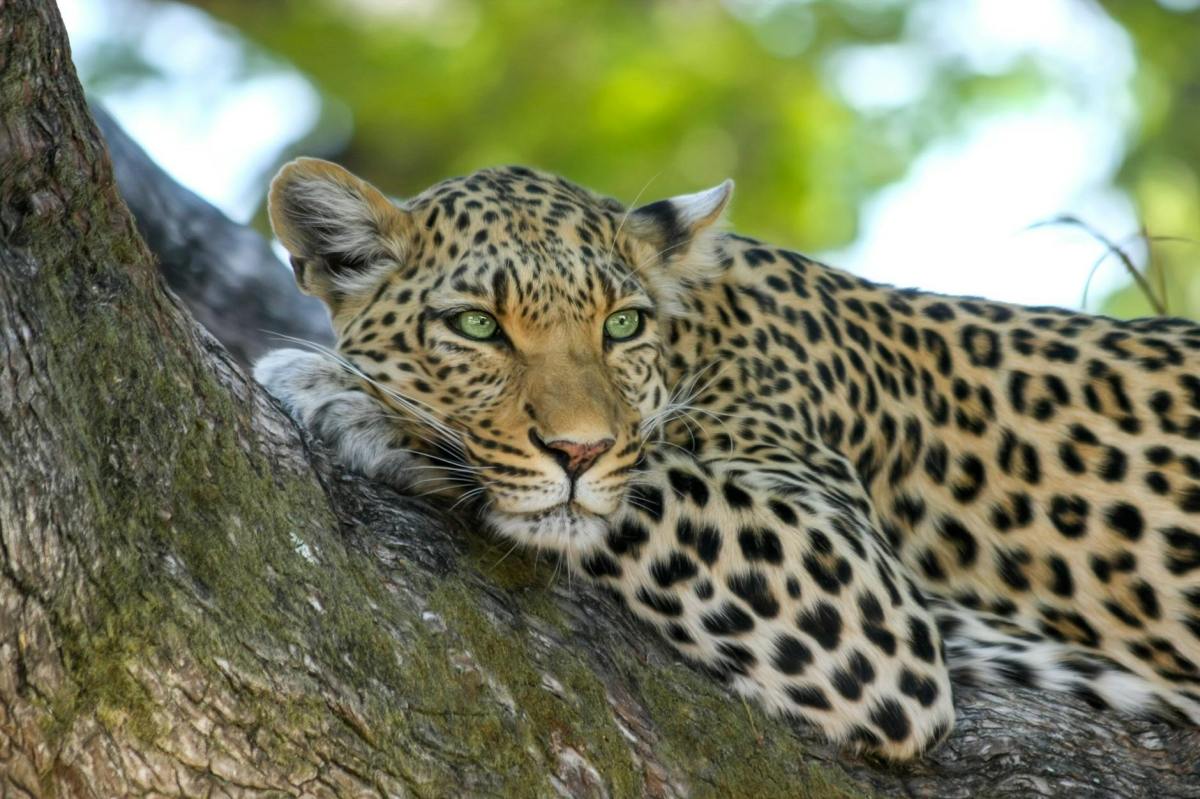
A leopardess raised her head in response to her mate’s question, gazing down from the sturdy limb of an acacia tree where she’d taken refuge from the scorching midday sun.
Two hundred yards ahead, a tiny gray cat was padding toward them, picking his way carefully around rocks and occasionally disappearing in the high grass.
“There’s nothin’ that a hundred men on Mars could ever do,” the little feline sang as he walked. “I bless the rains down in Africa! I bless the rains down in…”
The diminutive feline stopped near the base of the tree and looked up at the leopards.
The adult leopards were momentarily stunned until one of the cubs awoke from her nap, spotted Buddy and exclaimed: “Look, mommy, lunch!”
The small cat flashed a wide smile.
“That’s a great idea! I’ve already eaten, but you know what they say: a lunch a day barely keeps the rumbles at bay! I’m a three-lunch cat, myself. So what are we having?”
Another cub piped up.
“That’s not lunch, that’s a snack!” he told his sister.
“And what a cute little snack he is!” the female cub said, gracefully dropping from her napping spot in the tree.
Buddy’s eyes bulged.
“You’re…you’re talking about me?”
The male cub did a squeaky impression of a roar.
“Do you see any other single-serve snacks around?”
Buddy licked his lips, his effort to hide his fear betrayed by his rising hackles and tail, which now resembled a quivering spiked club.
“I…I…I am a cat,” he said in his best impression of an authoritative meow. “I’m practically your cousin!”
The female was just paces away now and moving too fast for Buddy’s liking as he backpedaled.
“The question is,” she said, “are you tasty like cousin Serval or cousin cheetah?”
Credit: RudiHulshof/iStock
Buddy changed tactics.
“This is an outrage! Not even the tigers tried to eat me! This is…this is, uh, catibalism!”
The cubs were circling him now.
“Mommy, can we have a snack?” the male cub called, looking back at his mother on the tree.
“As long as it doesn’t spoil your dinner later,” came the reply.
“It won’t, mamma!”
Buddy gulped.
The cubs closed the distance, ready to strike, and Buddy was babbling while pleading for his life when the earth itself shook.
Branches jolted and leaves dropped. A flock of birds nesting in a nearby tree took off, silhouettes etching ephemeral geometric patterns in the sky. In the distance, a baboon shrieked a warning to its troop.
The cubs went from aggressive to retreat in the span of an instant, and even their parents looked alarmed, taking off after their young.
Buddy watched them flee, wondering if he should bolt in another direction as something incomprehensibly gargantuan lumbered toward him, shaking the trees.
He’d emptied his bowels by the time a gigantic head poked through the foliage, followed by the rest of the colossal beast. It was gray-skinned, leathery and bizarre, unlike anything Buddy had ever seen.
“Giant space aliens!” he screamed, turning around and running right into a tree trunk.
“Ahhhhh! Don’t eat me!”
Buddy awoke in a sweat, his fur damp in the soupy, stifling heat.
An entire platoon of the peculiar beasts stood around him, their sizes ranging from 25 Buddies in mass to freakishly large individuals sporting pairs of prodigious teeth that looked like scimitars made of bone.
“Einstein’s awake,” one of them rumbled, and the rest turned from stuffing themselves with leaves to get a better look at the Liliputian animal before them.
“What is that thing?” one of them asked.
“It’s a fun-size cheetah!” one exclaimed confidently.
“No, it’s a baby Serval!” another said. “But the color’s all wrong.”
In the distance, a giraffe poked its head above the tree line, pausing to munch on the silky pink flowers of a mimosa tree.
Buddy was saved from hungry leopards by friendly giant space aliens!
Buddy cautiously pushed himself up on his paws. These aliens did not seem interested in eating him.
“Greetings,” he said. “I am a feline, a cat from planet Earth! What planet do you come from?”
There was a pause, then trumpeting, cacaphonic laughter.
“‘What planet are you from?'” one of the great beasts mimicked, sparking a second round of giggles that sounded like the trombone section of an orchestra, if someone had slipped the players psychedelics.
“We are elephants, and this is our home,” said the leader, a magnificent female. “And you, little one, are fortunate we happened by.”
Buddy puffed himself up.
“I think you mean the leopards were lucky,” he said, flexing his meowscles. “They didn’t want to tangle with these guns.”
The elephants chortled. “Can we keep him? He’s funny!”
The matriarch shook her massive head.
“He is far from home, and he should return before he runs into leopards again, or something worse,” she said.
Buddy looked unsure of himself.
“But I’m homies with the jaguars and the tigers! I thought…you know, I could be down with the leopards too. Us big cats gotta stick together, ya know? It’s hard out there for an apex predator. By the way, got any lunch?”
One of the elephants raised her trunk, pointing east toward a herd of intimidating horned beasts.
“Lunch,” she said. “Think you can take them?”
Buddy gulped.
“Go home, little one.”
Buddy’s version of events!
“So anyway,” Buddy said, addressing his human, “that’s how I impressed the leopards, and they made me their king. In fact, they bestowed the honorific ‘Paka mkubwa na mwenye misuli hodari,’ which means ‘great and mighty muscled cat’ in Swahili!”
“Sounds like you had quite an adventure! That’s impressive, Bud!” Big Buddy said.
“It is! It is!” Buddy said, nodding vigorously.
Big Buddy made a whistling sound.
“Was that before or after you peed yourself in terror?”
“What? I…no, I told you, they made me their king! Where did you hear this, this slander?”
Big Buddy reached for his iPad, pulling up images of a terrified Little Buddy running from leopard cubs on the savanna, Buddy running head-first into a tree, and Buddy cowering before a herd of elephants.
“A wildlife tour was nearby during your ‘coronation,’ but this is probably just a gray tabby who looks exactly like you and happened to be right where you were crowned,” he said. “Congratulations, Your Meowjesty!”
Cheetahs are on the precipice of extinction because of relentless poaching on behalf of the children of oligarchs, and showing off collections of rare big cats has become de rigueur on social media.
Imagine you’re an obscenely wealthy Emirati heir, a Saudi prince, or the scion of a global business empire in Dubai.
You started an Instagram account, but sadly photos of your Lamborghinis and McLarens aren’t really moving the needle. In the circles you run in, everyone has those. Likewise, your $20 million digs are pedestrian by the standards of Gulf opulence, and showing off private jets is so 2023.
You need something to stand out, to show the peasants that you’re not just a fabulously affluent heir, you’re also really cool and everyone should envy you.
You need a big cat.
Maybe even cats, plural, if you can’t swing an ultra rare white lion or an 850lb liger on the illegal wildlife market.
“I’m not trying too hard in this photo, am I?”
Just imagine your follower count blowing up, and how jealous the peasantry will be when you post images of your apex predator pet chillin’ in the passenger seat of your Sesto Elemento, with a pair of $20,000 sunglasses on his head for the lulz.
That’s what’s currently happening in the Gulf among the incredibly well-off children of royalty, aristocrats, oil oligarchs, shipping magnates and other bigwigs, a report in Semafor notes.
“Of course you can’t put them in the Lamborghini, beratna! You don’t want those claws near your leather seats. Besides, my liger shall have his own custom made Koenigsegg with a gear shift he can operate by paw!”
In addition to providing compelling ‘tent to their social feeds in the form of photos and videos, it’s clear the owners believe big cats offer a kind of osmotic badassery: if you have your very own lion, you must be a powerful and interesting person!
This kind of thing is not new. Years ago there was a brief outcry when wildlife groups begged authorities to protect cheetahs, who are already critically endangered and risk extinction if global elites are allowed to continue to poach them and their cubs from the wild.
“While many of these states – including the United Arab Emirates and Saudi Arabia – ban the private ownership and sale of wild animals, enforcement is lax.
The overwhelming majority of these cheetahs end up in Gulf Arab mansions, where Africa’s most endangered big cats are flaunted as status symbols of the ultra-rich and paraded around in social media posts, according to CCF and trafficking specialists.”…
The trend is of “epidemic proportions,” according to CCF, an organization devoted to saving cheetahs in the wild. At the current rates of trafficking, the cheetah population in the region could soon be wiped out.
“If you do the math, the math kind of shows that it’s only going to be a matter of a couple of years [before] we are not going to have any cheetahs,” said Laurie Marker, an American conservation biologist biologist and founder of CCF.
Youtube has its share of dauphins showing off cats and cars, and Instagram has an entire sub-genre of pages featuring men in pristine white robes posing in million-dollar hyper cars next to cheetah cubs or tigers who have been sedated to their eyeballs.
As the Semafor report explains, technically keeping big cats is illegal in most Gulf states, except for the super rich. They can skirt existing wildlife laws by getting permits as private “zoo” and “sanctuary” operators, and who’s to say a good zookeeper can’t keep his jaguars in an enclosure with Maseratis and Aston Martins?
One guy even runs a place called Fame Park, a private zoo. The only way to get in is if he deems you famous enough, and thus worthy, to gaze upon his wondrous menagerie of endangered beasts.
The park’s motto is “Where luxury meets wildlife wonder,” and its operator styles himself as a conservationist who just happens to enjoy rubbing elbows with esteemed figures like Andrew Tate and Steven Seagal.
“What pet? I am a licensed zookeeper! In my zoo, enrichment is provided by Ferrari.”
Things really haven’t changed much in the last few hundred years, have they? One way royals and aristocrats amused themselves was by sending explorers to far off lands and instructing them to bring back strange animals.
That’s how elephants ended up in the courts of European kings, and how Hanno the Navigator found himself in mortal danger when he tried to capture gorillas, then decided they were “too violent” to drag back home and had them executed.
A court elephant photographed in 1851 by Eugene Clutterbuck Impey, an English administrator in the British Raj. This elephant is pictured in regalia used for royal processions and other ceremonies. Credit: National Gallery of Scotland
These days, the centers of power have shifted, but human behavior has not. Part of me still has hope, but the cynic in me fears people with the means to exploit rare and endangered animals will continue to do so until there are no more animals left to exploit.
Another critically endangered pet cheetah in a hyper car. Credit: Some clown’s Instagram
Everyone knows that in the wild, big cat cubs nurse from Ferraris and Lamborghinis, and cheetahs learn to run fast by participating in drag races against the hyper cars. Credit: Another clown’s Instagram
Plus: The awesome and terrifying cats and proto-cats of prehistory!
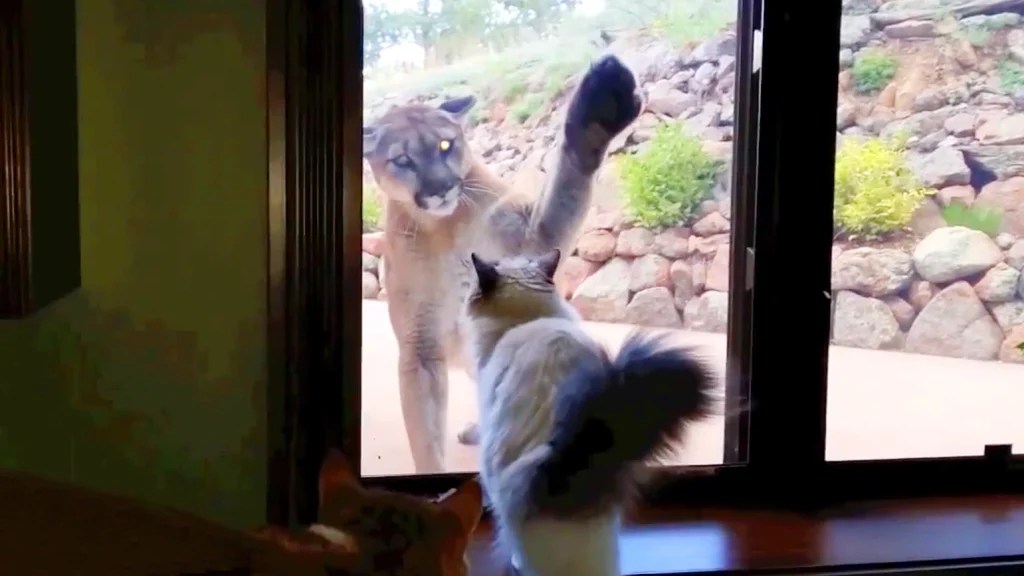
OMG, you guys! No cap, you gotta totally check out this adorbz video of a sweet widdle kitty witty becoming best fwiends with this mountain lion!
Phoebe the cat sees this cute AF puma near the back door of her home, curiously looking inside. It’s love at first sight as kitty and kitty see each other! Per Parade Pets:
“[T]he kitty in this TikTok video is completely fascinated by the big kitty outside her window. There’s no getting her away from her new friend!
On Sunday, August 25, @cricketandstrawfl shared this footage of her Tuxedo Cat posted up at the back door in their house, where a cougar was hanging out. It goes without saying that the cougar in question was many times bigger than Phoebe, but that didn’t seem to scare her at all.
It seemed like the cougar was pretty curious, too. He didn’t appear to be aggressive; instead, he was staring at Phoebe and gently pawing at the glass, trying to figure out who the tiny cat in the window was.”
OMG-hee! Look at the big kitty gently pawing at the door! He wants to give the little kitty a huggy-wuggy!
SO ADORBZ! The puma pawing at the door wasn’t testing its strength to see if he could snag a quick meal, those were totes signals of love! Teehee!
Felid predators of pre-history: They will eat you
If you’re in need of a palate cleanser after all that sugar, the BBC’s Discover Wildlife has a rundown of prehistoric cats and their particularly fascinating proto-cat ancestors, some of whom looked more classically cat-like than several species of true cats. Isn’t convergent evolution cool?
There’s the famous smilodon, the saber-toothed cat, xenosmilus, the so-called shark-toothed cat, and homotherium, the scimitar-toothed cat. Outdoing each other with increasingly sword-like teeth was apparently a big thing in the felid world back then.
There’s also the cave lion, the last of the UK’s big cats, and miracinonyx, the American cheetah, but did you know that simbakubwa, the “great lion” of Africa, topped out at almost 3,000 pounds?
Simbakubwa was massive, making modern lions look almost like house cats in comparison.
Dinictis looked like a cat, behaved like a cat and hunted like a cat, but was not part of the felidae family. Credit: Wikimedia Commons
Simbakubwa and dinictis were examples of “false cats.” That is to say, they were not part of the felid lineage, but closely resembled cats in body plan and behavior through convergent evolution. Nature found a niche, and several different species filled it for a time.
Dinictis in particular looks strikingly like modern big cats, which makes it even more surprising to learn it’s not part of the genetic lineage of the felid line.
Finally — or firstly — there’s proailurus, the first cat or “dawn cat,” from which all true felidae species can trace their lineage. Appearing almost 31 million years ago proailurus enjoyed napping, climbing trees and eating Temptations. Okay, we made that last part up. But still. If proailurus were around today, it would probably go just as crazy for the kitty crack as our house panthers do.










 Pain In The Bud