An old enemy lies in wait in the far reaches of the galaxy, ready to exact revenge on the most dashing, clever and dashingly clever captain in Starfleet!
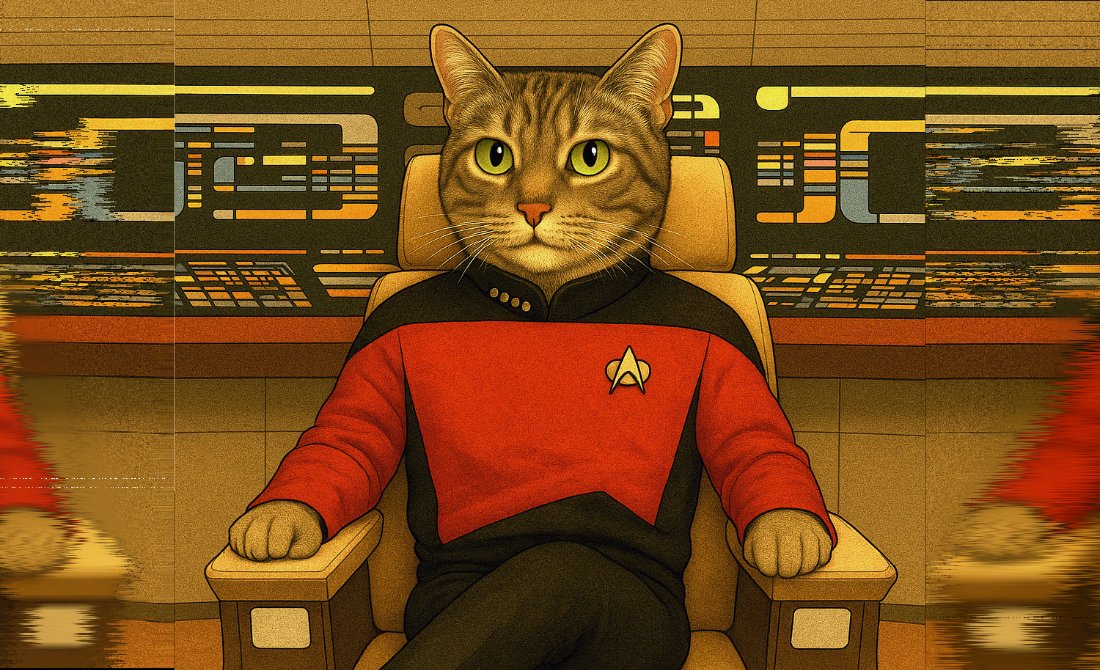
ALPHA QUADRANT, Milky Way Galaxy — Captain Buddy is back for his most thrilling, treacherous and scrumptious adventure yet!
As the commanding officer of the USS Fowl Play and a legend within the galactic community, Captain Buddy and his trusty crew get the call to investigate reports of the malevolent Borg raiding colonies on the edge of Federation space.
Our intrepid captain arrives just in time to fend off a Borg cube attacking Dawn’s Edge, one of the largest colonies on the Felinian Rim. After mounting a heroic defense and defeating the diabolical enemy spacecraft, brave Captain Buddy discovers the Borg weren’t just trying to assimilate the peaceful Caitians living in the colony: they were after the colonist’s turkey, tuna and dilithium reserves as well!
With reinforcements several days away, Captain Buddy is tasked with defending the colony, reassuring terrified colonists, and managing a dwindling supply of sandwiches and snacks…
“Love is a strong word, human. I prefer ‘tolerate.’ On days when you anticipate my snack cravings before I verbalize them, you could maybe say I’m fond of you.”
Newsweek has an interesting interview with a cat behaviorist on the subject of whether cats love their humans.
Chantal Howard, a certified cat trainer with Feline Focus Training in Ottawa, told the magazine there are nine primary behaviors that indicate — or confirm — a house tiger loves his or her person. Most of these won’t be new to PITB readers, who are of course among the most cat-savvy people out there and have magnificent taste in cat blogs, but it’s still a handy way to ascertain how your feline overlord feels about you.
So how does Buddy do according to this checklist? Let’s see:
Headbutting: ✅ His Lordship is quite fond of headbutting me and favors me with dozens of headbutts throughout the day, ensuring his pheromones remain on me. You know, in case some other cat somehow comes wandering in and there’s a dispute about which furball owns me. Kneading: ✅ Considering the fact that I’ve had to toss quite a few t-shirts because of claw rips, I’d say that’s a yes. At least he doesn’t knead my face anymore, as he liked to do when he was a kitten and would take his perch on my shoulder, nuzzle up to my neck and make biscuits against my beard. Purring: ✅ Nine times out of 10, Buddy’s purr is inaudible, but it’s there. It’s a bit odd that such a talkative, loud cat barely makes a buzz. He likes to lay on my chest and purr up a storm while I rub his head and tell him he’s got admirers all over the world. Chirping: ✅ Yes! In fact, chirps and trills make up a significant part of the Buddinese language. While meows can be positive, negative or demanding (“I can see the bottom of my bowl! This is an outrage, human!”), trills and chirps are always happy sounds. Nipping: ✅ Unfortunately, yes. Licking: ✅ He grooms my hair and my beard, and when I shave he licks my face, which is pretty gross. Bringing Gifts: ❌ Negative. Then again, what kind of gifts can he bring me when he’s an indoor cat and doesn’t fully understand the concept of hunting? Exposing Belly: ❌ Does he expose his belly? Yes. Does he feel comfortable enough to snooze in my lap with his belly exposed? Of course. Does he want me to give him belly rubs? No, he emphatically does not. The primordial pouch is not to be touched! Tail Position: ✅ One of the most awesome things is the fact that Bud’s tail goes immediately into happy mode when I say “Hi, Bud!”, when I hold my hand out for a headbutt, and when I talk to him in general. His tail quivers with excitement when we play with the laser pointer or his favorite toy, and when he catches the first whiff of catnip.
So that’s 7 of 9, or 7 of 8 if we count gifts as N/A due to Bud’s hilarious ineptitude when it comes to even grasping the concept of hunting.
Bud has been known to throw up from excitement when I return from vacation, he often naps by the door when I go out, he talks to me constantly, and he’s rarely more than three or four feet away from me at any given time. All those things, plus our strong bond, have proven to me that he does love me, but it’s also nice to confirm it with a behaviorist’s criteria.
How does your cat perform on the checklist? Don’t forget to share your results in the comments.
The cat survived but her personality has radically changed from loving and affectionate to distant and wary, her human said.
A councilman in a rural UK village resigned from his post and is the subject of renewed police scrutiny after allegedly trying to blow up a neighbor’s cat twice in 2023.
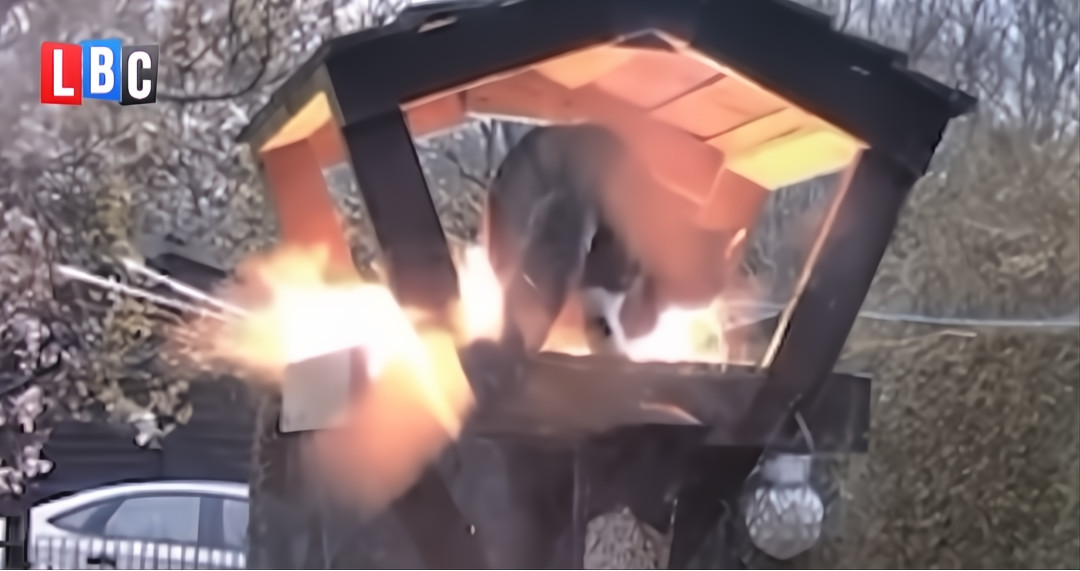
Councillor James Garnor was reportedly trying to stop the cat from climbing into a bird feeder, and decided the best way to do it was to rig the feeder with explosives and lure the curious feline in, according to a report on UK broadcaster LBC’s website.
Garnor was apparently so amused by his handiwork that he distributed video of the incidents to his friends. The footage shows a cat named Suki leaping onto the bird feeder on April 9, 2023, and nibbling on some of the bird feed before the explosive detonated. An injured Suki took off immediately and ran home.
She “came home one day missing her whiskers on her face – they looked like they’d been dissolved – so I put a post in my local community page on Facebook… just to warn people in case there was something she’d rolled in that had dissolved them,” said Suki’s human, a woman named Nikki.
Suki’s whiskers were singed off by the heat from the explosion. Image credit: Provided by owner to LBC News
“But somebody contacted me to tell me it wasn’t what I thought it was, that somebody had actually blown my cat up – and that it was my neighbour and local councillor. It made me feel physically sick.”
After she received the video, Nikki filed a complaint with local police, who elected not to arrest Garnor. However, after a second video surfaced with a clearer view of Garnor’s alleged actions, police responded to the public outcry and said they were reviewing the case again.
Per LBC, which broke the story:
“The incident is one of at least two occasions that cats in Whittlebury, Northamptonshire, were allegedly targeted by Councillor James Garnor in 2023 using remote-detonated explosives.”
It’s not clear if the new video shows a second attempt, or a different angle on the first. Garnor “was dealt with using anti-social behavior legislation,” a type of civil admonishment usually associated with things like noise complaints, littering and damaging public property, not trying to kill an animal.
Still images from a video showing Garnor allegedly setting off an explosion targeting Suki the cat. Credit: Photos provided by owner to LBC
Garnor resigned from his post on Feb. 7, and the council distanced itself from him, saying its members “understand the concerns raised by the community and want to assure everyone that we take all matters of animal welfare seriously.”
That hasn’t mollified people living in the small community, who are wondering why police didn’t press charges the first time they were presented with evidence of the attempt on Suki’s life.
“You can clearly see the videos have been slowed down [and] edited. It’s very set-up: the animal has been enticed on the bird table with food whilst said individual was sitting there with the detonator waiting for [the cat] to appear,” a neighbor told LBC. “He is a member of our parish council, so it makes you worry what decisions are being made there by the individual… he has offered no apology [and] shown no remorse.”
In the meantime, Suki has been permanently impacted by the incidents. The tabby was affectionate and friendly, Nikki said, wrapping her little body “like a scarf around your neck.”
“Now she very rarely comes near you, and if she does, she’s got her claws out – she hisses, she growls,” Nikki added. “She’s not the loving cat she used to be – and I don’t blame her… the change in her happened pretty much overnight.”
Dissatisfied with the limited variety of flavors and textures in his regular meal rotation, Buddy the Cat unveiled a sweeping new sanctions package designed to force his human to do better.
NEW YORK — Angry over his servant’s failure to broaden his selection of regular meals, Buddy the Cat announced new sanctions on Saturday aimed at forcing the uncooperative human to comply.
“President Buddy feels he’s been patient and magnanimous in dealing with his human’s shortcomings, but even a saint’s patience has limits,” Buddy’s spokesman told reporters. “This new sanctions package clearly communicates President Buddy’s disappointment and ensures swift compliance.”
The sanctions include prohibitive measures against sleep duration and quality, with Buddy promising to yowl at regular intervals and to wake his human by slapping him in the face every morning.
In addition, affection will be cut by 50 percent, increasing to 75 percent within two weeks if there is no improvement in the variety of flavors and textures of wet food served to Buddy.
“Buddy has made it clear that he expects more than a simple rotation of turkey, chicken and salmon pate,” the feline’s spokesman said. “He wants chunky tuna, he wants beef, he wants shredded duck served in gravy.”
President Buddy had threatened to pull his ambassadors and enact legislation declaring all shoes, sneakers and boots as legal litter boxes if the cheese sharing protocol was not observed. Credit: Wikimedia Commons
The latest round of sanctions follows the Buddesian Diplomatic Crisis of 2023, when Buddy threatened to begin using his Big Buddy’s shoes, boots and sneakers as litter boxes in retaliation for the latter failing to “equitably share cheese as per article IV, sub-clause C of the gastronomic distribution protocol.”
All-out war was avoided when both parties agreed that Little Buddy’s share of Gouda, American, provolone and other cheeses, excluding ricotta, feta and mozzarella, would be increased by 15 percent.
Some observers believe the drone sightings are merely the first stage in an all-out feline takeover of the US. So far, cats have remained mum on their motivations, preferring instead to sow panic among Americans.
WASHINGTON –The caller was breathing heavily and speaking in rapid-fire sentences as if he had only moments to get the words out over the air.
“I’m telling you, Art, it’s the cats — the cats are piloting these drones!” the caller told Coast to Coast AM radio host Art Bell shortly after 1 am ET on Friday.
“Hold on, hold on,” Bell said theatrically. “You’re saying this has nothing to do with aliens or the government?”
The caller sighed.
“The cats may very well be in league with aliens, but I’m telling you, felines are behind…oh God! They’re here!”
The radio broadcast crackled with distorted hissing and yowling, punctuated by the caller’s pleas for mercy.
“Caller? West of the Rockies, are you there?”
The caller screamed a final time and the line went dead.
“Wow,” Bell told his audience of several million overnight listeners. “There you have it, folks. You be the judge, but that sounded like the real deal to me. Cats are piloting the mysterious drones!”
For weeks, Americans have been asking for answers about swarms of suspicious drones operating above homes, businesses, military bases and government buildings at night.
After rampant speculation that the drones could belong to rogue states, or could be part of some secret government flight test, the FBI confirmed Friday that felines are behind the frequent sightings.
A drone flies above a farm and ranch as the sun fades. Drones have been spotted circling chicken and turkey coops, as well as fish markets.
Biden administration officials confirmed to several media outlets that intelligence supported the theory that cats — not Iranians, Russians or some secret Pentagon operation — are operating the drone swarms that have been lighting up the night sky in states like New Jersey and Maryland for several weeks, befuddling local and state officials.
“At first we thought the idea was absurd,” said a high-ranking official, who spoke on condition of anonymity. “Then we received reports of drone swarms circling several meat-packing plants, a Chewy distribution center in Trenton, and two PetSmarts in northern New Jersey.”
So far, the felines’ motivation remains shrouded in mystery, but experts on the small, furry animals ventured guesses on what may have motivated their sudden interest in aviation and airspace.
“No one’s claimed responsibility, so we’re left to speculate,” said Norah Grayer, a feline behaviorist with NYU’s Gummitch School of Veterinary Science. “But it may be that felines, as a whole, have decided the meow is insufficient for getting their demands across. Humans have become adept at tuning out those vocalizations, so this may be the next step in an attention arms race, so to speak.”
Noted cat expert Jefferson Nebula offered a different explanation.
“Cats are notoriously subject to FOMO, which is one reason why they can’t abide closed doors,” he said. “If someone managed to convince them that we humans were holding out on them, and there are entire worlds of yums we keep for ourselves, well, that would spark the wrath of these otherwise friendly little guys.”
Felines have mastered control over aerial drones despite their lack of thumbs.
For his part, Bell consulted with Michio Kaku, the physicist and science communicator who has been a regular presence on Coast to Coast.
“We physicists have been saying for decades that cats are much more intelligent than we give them credit for,” Kaku said. “This could be retribution for the Schroedinger’s cat thought experiment, or felids may be looking to surpass humanity’s understanding of 11-dimensional hyperspace.”
“Professor, we’ve spoken quite a bit about the Kardashev scale [of civilization progress] in the past,” Bell said. “If we separated human and feline societies, where would we each fall on the scale? Humans are about a zero point seven, are we not?”
“That’s right,” Kaku said. “We physicists believe humanity is on the cusp of a Type I civilization, with things like the internet as a Type I telecommunications system and fusion power on the horizon. However, if you break it down and cats were separated into their own civilization, cats could plausibly already be a Type I civilization.”
“They’re ahead of us?”
“That’s right,” Kaku said. “We physicists believe cats can tap directly into primordial energies and have mastered quantum teleportation. In Star Trek, the Federation is a Type II civilization, and the Caitians — a species of alien cats — are part of the Federation. Yet it’s widely understood that the only reason the Caitians haven’t conquered entire swaths of the galaxy, like the Borg and the Klingons, is because of their strict adherence to their napping schedule and their inherent laziness. These drone swarms may be a signal that real-life cats are fed up enough to disturb their napping schedules, in which case we should all be terrified.”
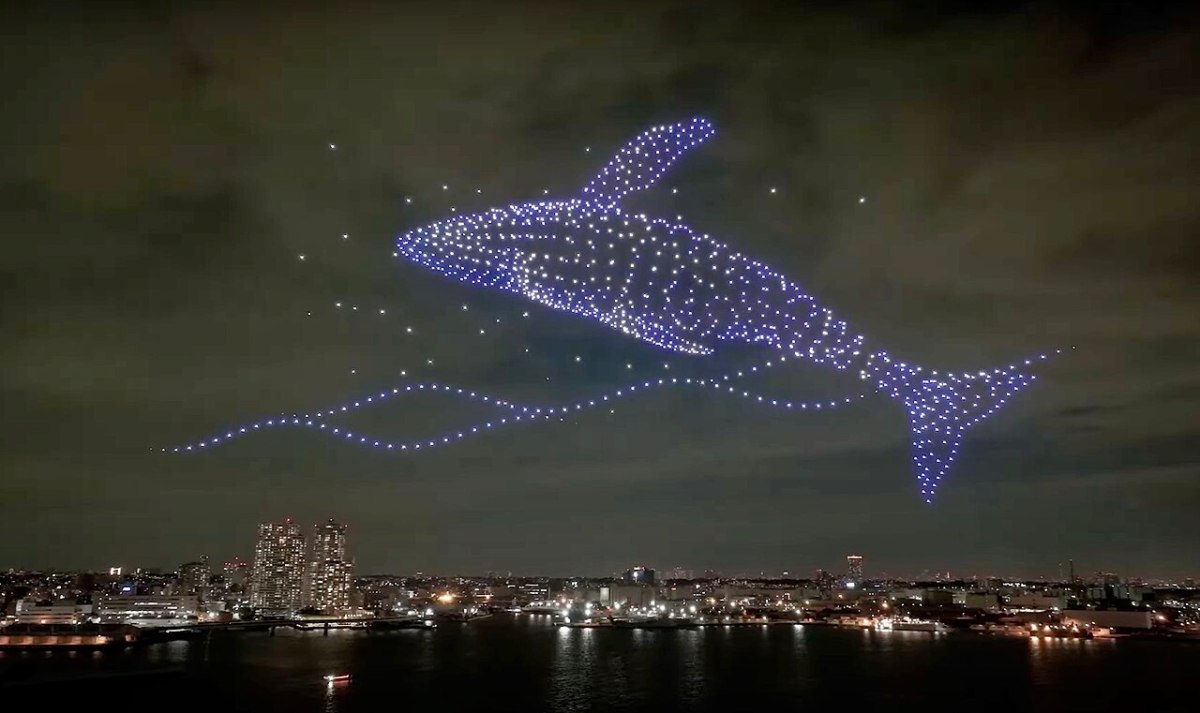
Header image of drone light show credit Wikimedia Commons








 Pain In The Bud