The Massachusetts law is a significant victory in the quest for a national ban on the cruel procedure, which involves amputating cat toes at the first knuckle
There’s good news today from Massachusetts, which just joined New York and Maryland in banning cat declawing.
The bill, signed Friday by Massachusetts Gov. Maura Healey, prohibits all declawing surgery except for rare circumstances when it’s medically necessary, like cancer in the nail bed.
Veterinarians who violate the law face fines up to $2,500 and professional discipline if they continue the practice.
Despite its name, declawing is the partial amputation of cat toes, equivalent to cutting off human fingertips at the last knuckle.
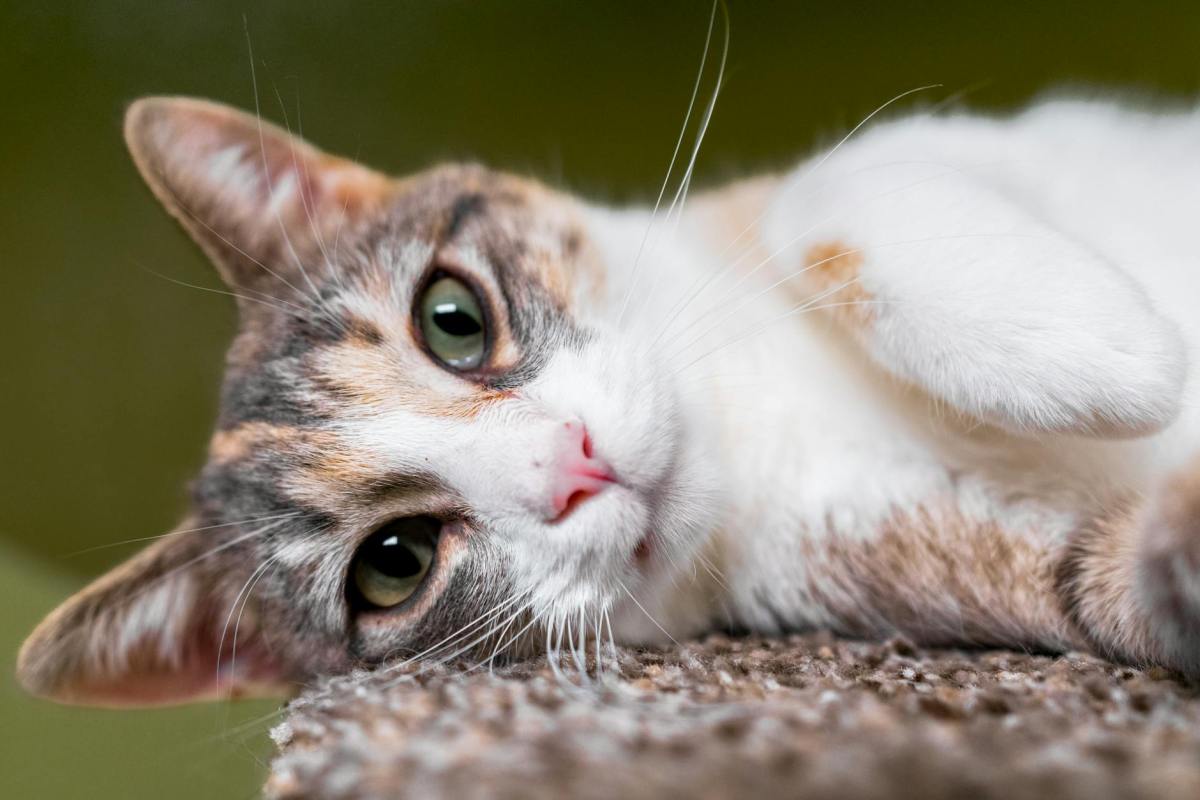
Photo credit: Alex Ozerov-Meyer/Pexels
Declawing changes a cat’s gait, causing the animal pain when it walks, and usually leads to early arthritis. It causes cats to stop using their litter boxes, because the act of standing on and shoveling litter becomes painful for them.
Last but not least, it has a profound psychological impact on felines, making them vulnerable by taking away their primary form of defense. Consequently, cats who are declawed are much more likely to bite than those with intact claws.
Most of all, declawing is cruel and inflicts a lifetime of pain on innocent animals, punishing them for doing what cats naturally do.
Aside from New York, Maryland and Massachusetts, a few dozen cities and counties have banned the procedure, ranging from places like St. Louis, Missouri, to Austin, Texas, and eight cities in California, including Los Angeles and San Francisco.
Health authorities said thousands of female cats around the world fainted when they heard the news that Buddy the Cat is launching his very own OnlyFans.
After resisting calls from his admirers for years, Buddy the Cat has finally joined OnlyFans.
“It’s a dream come true,” said Nala, 5, a Burmese who describes herself as “Buddy’s biggest fan.”
Other felines posted celebratory messages online after the news broke, with most expressing an intent to subscribe to Buddy’s OnlyFans “no matter how much he charges.”
“A dollar a month, ten bucks a month, a hundred bucks a month, it doesn’t matter. It’s worth it,” said Penny, a puma who said she has posters of Buddy in her enclosure at a wildlife sanctuary. “Buddy is the sexiest beast of them all.”
A sizzling snap of Buddy being sizzling for his new OnlyFans site.
Buddy’s new OnlyFans site promises “sizzling snaps of Buddy napping,” “hot photos of him yawning and stretching,” and regular videos of the mercurial tabby being handsome.
“Finally, my fans can get more Buddy without having to read that stupid blog my human writes,” Buddy wrote in his announcement. “It’s full of ridiculous slander, vile lies and claims that I’m wimpy when everyone knows I’m, like, brave and stuff.”
As of Friday, the new site featured a handful of clearly photoshopped images of the gray tabby with bulging muscles as he lifted weights, and a poorly produced video depicting the diminutive feline “ambushing” a stuffed alligator, with the sounds of a jaguar dubbed into the footage.
“Just catching me some lunch!” Buddy captioned the clip. “Us apex predators don’t eat from a can, we hunt our own meals.”
Buddy the Cat poses in a box, striking a handsome pose as he gazes yonder.
There was no sign that questions about the veracity of the images bothered the egotistical feline’s admirers.
“OMG ADORBZ!” commenter princess2017 wrote.
“My handsome little prince!” wrote another poster, LioNeSS, who also added several heart and turkey emojis.
Soon after Buddy’s OnlyFans launch, it was announced that Smudge, his arch-nemesis, signed a deal to create a show about his life for Netflix. Titled “Smudge: New York’s Most Heroic Cat,” the series will “follow Smudge as he fights for truth and justice against the evil Dubby the Cat, a chubby gray tabby with an inflated ego.”
Cats of all kinds are at risk of avian flu infection if they hunt birds outdoors, consume raw meat or drink unpasteurized milk.
In a tragedy that underscores how vulnerable cats of all types are to bird flu, more than half the big cats residing at a sanctuary in Washington were killed by the virus in less than a month.
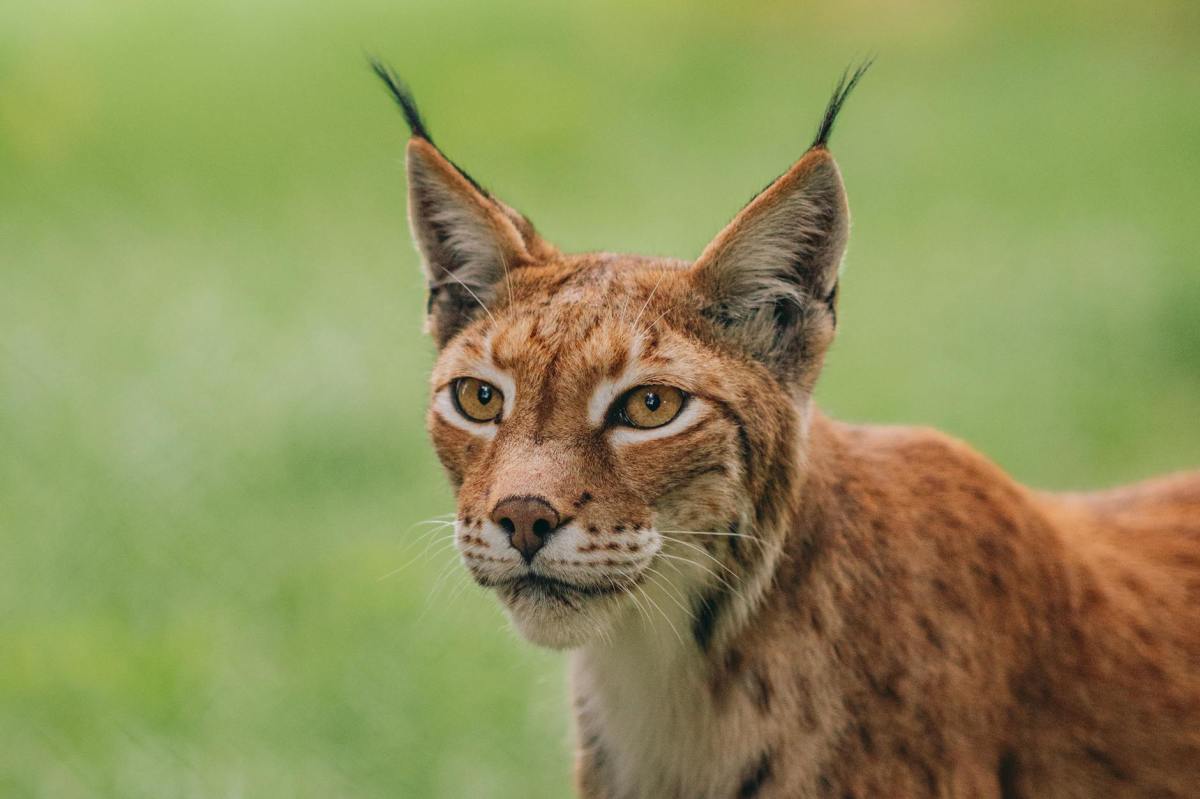
Twenty cats in total died at the Wild Felid Advocacy Center, including five servals, four bobcats, two Canada lynx and a Bengal tiger.
Only 17 cats are left at the sanctuary, according to its operators.
Mark Matthews, the sanctuary director, called the H5N1 avian influenza a “wicked virus” that killed the cats in his organization’s care within 24 hours of each animal contracting it.
“We’ve never had anything like this,” Matthews said, adding that he and his staff are accustomed to cats in their care dying of old age after living long, happy lives.
In California, Gov. Gavin Newsom declared a state of emergency on Dec. 18 after infected birds were found at more than two thirds of the state’s dairy producers.
California’s dairy industry has been hit hard by the spread of bird flu, with more than half the state’s dairy producers impacted. Credit: Ralf R/Pexels
As of Dec. 26, bird flu had infected 65 Americans, the majority in California.
And the virus has now resulted in its first pet food recall, with Northwest Naturals pulling its turkey recipe “raw diet” food. A cat in Oregon died after consuming the food, according to the Oregon Agriculture Department.
As we noted in our earlier post about the variant of avian influenza, there’s no reason to panic. Even if you live on the west coast, the chances of your cats being infected are small.
But it’s probably a good idea to make sure your cats remain indoors, as health authorities warn cats can contract the virus directly by catching and eating birds. In one case, health officials believe three indoor cats may have caught the virus after killing mice in their home.
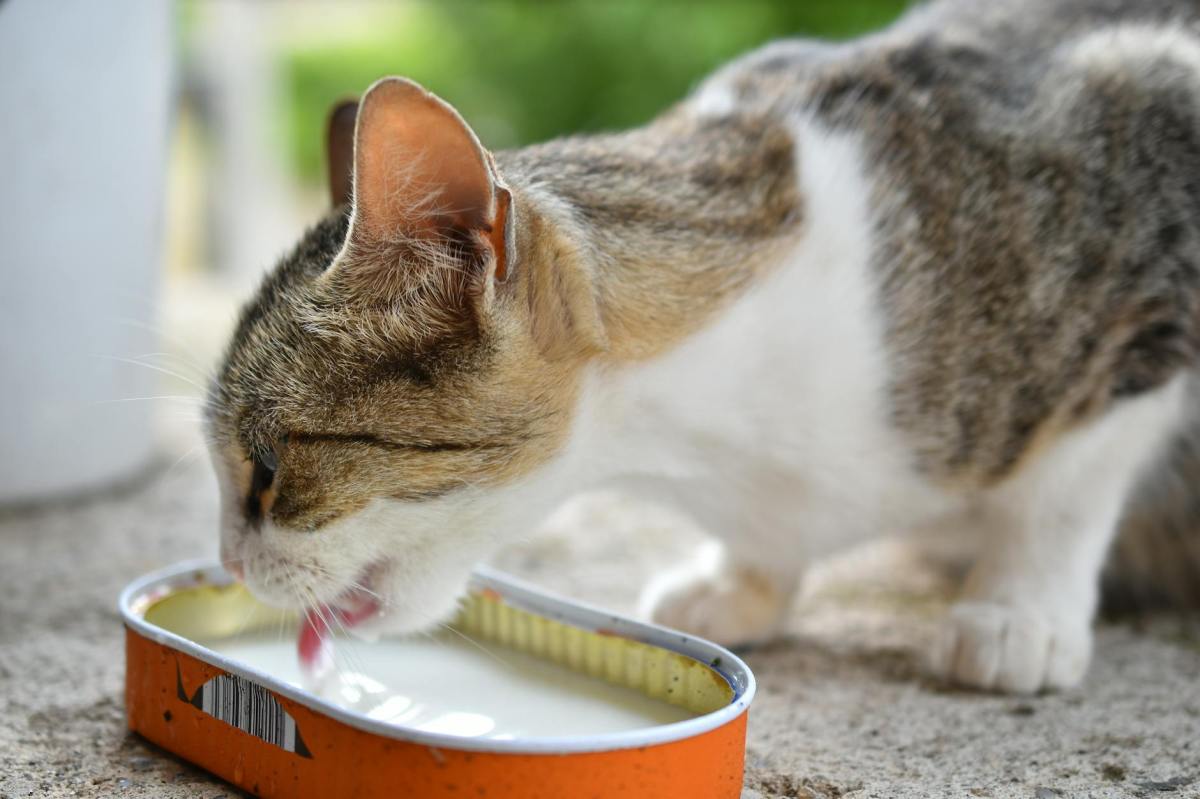
In addition, the American Veterinary Medical Association advises caretakers to avoid giving their cats milk, which they should not be drinking anyway, and raw meat. Domestic cats are generally lactose intolerant, and while cats can be infected with bird flu by eating raw poultry, they can also contract the virus by eating raw meat from other animals.
So far there are no cases of cats infecting humans, but a new study published Tuesday warns the virus easily mutates in infected felines.
Health officials have identified at least five cases of domestic cats infected with H5 bird flu in California, and they’re warning of multiple vectors of transmission now that both outdoor and indoor cats have been infected.
Two cats were infected after drinking raw milk from a dairy farm in Fresno, California, according to the Los Angeles Department of Public Health. That’s also how a dozen barn cats died in April after drinking raw milk from infected cows on a Texas dairy farm, the CDC said.
But three other cats who tested positive for bird flu were indoor-only, lived in the same home, and did not consume raw milk, authorities said. They’re looking into the possibility that the felines were infected through raw meat or by hunting mice.
So now it’s not only confirmed that cats are vulnerable to highly pathogenic avian influenza, or HPAI H5N1, but that they can be infected in different ways.
To be clear, it’s not a cause for panic and it doesn’t mean people should isolate from their cats, but it does mean we should be smart and considerate when it comes to protecting our pets and reducing the possibility that they can be infected.
Because millions of felines live with humans, the fear is that they can pass the virus onto us. So far there have been no confirmed cases, but a study published on Tuesday confirmed that the virus can easily mutate in cats. That means the more domestic cats are infected, the greater chance the virus mutates in a way that allows it to “bridge” to humans.
At least two people — one in Wisconsin and one in Louisiana — have tested positive for the virus and were hospitalized this week. One worked on a farm and the other may have consumed raw milk. In the meantime, health officials are monitoring the people whose three cats were infected, and they’re urging people to take precautions.
“To avoid the spread of disease, including H5 bird flu, we strongly encourage residents and their pets to avoid raw dairy and undercooked meat products, limit contact with sick or dead animals, report sick or dead birds, and keep pets or poultry away from wild animals and birds,” said Dr. Barbara Ferrer, director of the Los Angeles County Department of Public Health.
Some observers believe the drone sightings are merely the first stage in an all-out feline takeover of the US. So far, cats have remained mum on their motivations, preferring instead to sow panic among Americans.
WASHINGTON –The caller was breathing heavily and speaking in rapid-fire sentences as if he had only moments to get the words out over the air.
“I’m telling you, Art, it’s the cats — the cats are piloting these drones!” the caller told Coast to Coast AM radio host Art Bell shortly after 1 am ET on Friday.
“Hold on, hold on,” Bell said theatrically. “You’re saying this has nothing to do with aliens or the government?”
The caller sighed.
“The cats may very well be in league with aliens, but I’m telling you, felines are behind…oh God! They’re here!”
The radio broadcast crackled with distorted hissing and yowling, punctuated by the caller’s pleas for mercy.
“Caller? West of the Rockies, are you there?”
The caller screamed a final time and the line went dead.
“Wow,” Bell told his audience of several million overnight listeners. “There you have it, folks. You be the judge, but that sounded like the real deal to me. Cats are piloting the mysterious drones!”
For weeks, Americans have been asking for answers about swarms of suspicious drones operating above homes, businesses, military bases and government buildings at night.
After rampant speculation that the drones could belong to rogue states, or could be part of some secret government flight test, the FBI confirmed Friday that felines are behind the frequent sightings.
A drone flies above a farm and ranch as the sun fades. Drones have been spotted circling chicken and turkey coops, as well as fish markets.
Biden administration officials confirmed to several media outlets that intelligence supported the theory that cats — not Iranians, Russians or some secret Pentagon operation — are operating the drone swarms that have been lighting up the night sky in states like New Jersey and Maryland for several weeks, befuddling local and state officials.
“At first we thought the idea was absurd,” said a high-ranking official, who spoke on condition of anonymity. “Then we received reports of drone swarms circling several meat-packing plants, a Chewy distribution center in Trenton, and two PetSmarts in northern New Jersey.”
So far, the felines’ motivation remains shrouded in mystery, but experts on the small, furry animals ventured guesses on what may have motivated their sudden interest in aviation and airspace.
“No one’s claimed responsibility, so we’re left to speculate,” said Norah Grayer, a feline behaviorist with NYU’s Gummitch School of Veterinary Science. “But it may be that felines, as a whole, have decided the meow is insufficient for getting their demands across. Humans have become adept at tuning out those vocalizations, so this may be the next step in an attention arms race, so to speak.”
Noted cat expert Jefferson Nebula offered a different explanation.
“Cats are notoriously subject to FOMO, which is one reason why they can’t abide closed doors,” he said. “If someone managed to convince them that we humans were holding out on them, and there are entire worlds of yums we keep for ourselves, well, that would spark the wrath of these otherwise friendly little guys.”
Felines have mastered control over aerial drones despite their lack of thumbs.
For his part, Bell consulted with Michio Kaku, the physicist and science communicator who has been a regular presence on Coast to Coast.
“We physicists have been saying for decades that cats are much more intelligent than we give them credit for,” Kaku said. “This could be retribution for the Schroedinger’s cat thought experiment, or felids may be looking to surpass humanity’s understanding of 11-dimensional hyperspace.”
“Professor, we’ve spoken quite a bit about the Kardashev scale [of civilization progress] in the past,” Bell said. “If we separated human and feline societies, where would we each fall on the scale? Humans are about a zero point seven, are we not?”
“That’s right,” Kaku said. “We physicists believe humanity is on the cusp of a Type I civilization, with things like the internet as a Type I telecommunications system and fusion power on the horizon. However, if you break it down and cats were separated into their own civilization, cats could plausibly already be a Type I civilization.”
“They’re ahead of us?”
“That’s right,” Kaku said. “We physicists believe cats can tap directly into primordial energies and have mastered quantum teleportation. In Star Trek, the Federation is a Type II civilization, and the Caitians — a species of alien cats — are part of the Federation. Yet it’s widely understood that the only reason the Caitians haven’t conquered entire swaths of the galaxy, like the Borg and the Klingons, is because of their strict adherence to their napping schedule and their inherent laziness. These drone swarms may be a signal that real-life cats are fed up enough to disturb their napping schedules, in which case we should all be terrified.”
Header image of drone light show credit Wikimedia Commons






 Pain In The Bud