Woman From Viral Video Hit With Animal Cruelty Charges For Pouring Bleach On Cat Food

Lauren Carter admitted she poured bleach on cat food on two occasions in April, police say.

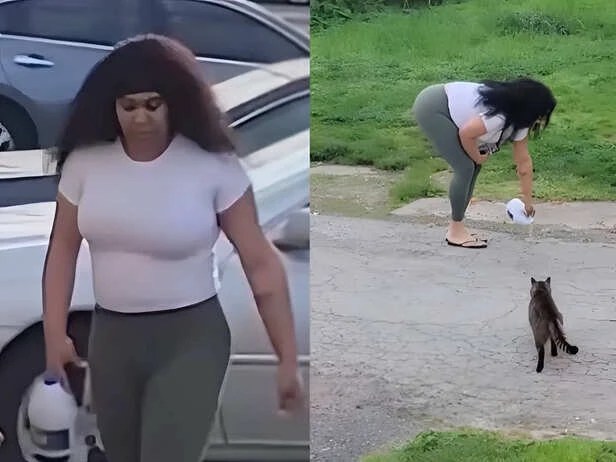
The video shows a woman stop her car, get out holding a bottle of what looks like bleach, and pour the substance onto food left for outdoor cats while a tabby looks on, sniffing curiously.

The footage was recorded by a family in Chester, Pa., a town of 32,000 about 25 miles southwest of Philadelpia. The cat, Jumper, belongs to a family on the same street.

The suspect’s name had been floating around on various cat-related social media sites along with the video for weeks, but police and prosecutors had to be sure of the facts before they arrested the woman.

When lab results showed the substance was indeed bleach, officers arrested 35-year-old Lauren Carter, also of Chester.

Cops and the SPCA’s law enforcement division say Carter admitted to pouring bleach on cat food on two occasions in April. It isn’t clear why Carter wanted to harm cats, and so far law enforcement hasn’t made any comments about her motivation.

They did, however, make sure local pets did not eat the poisoned food.

“We do believe based on our investigation that no animals did consume the food,” SPCA spokeswoman Gillian Kocher told KYW, a local news radio station. “Our officers went out through the area to make sure that no animals were sick or deceased, but it is, of course, our intention that this doesn’t happen again, and the animals in the neighborhood are kept safe.”

Carter has been charged with two counts of misdemeanor animal cruelty.

Olivia Oliver, Jumper’s caretaker, said she was satisfied with the outcome of the investigation and Carter’s confession.

“I think it’s enough. I think it’s a good sign; it’s a warning for her,” Oliver told WPVI, the Philadelphia-based ABC news affiliate. “And basically, I’m glad she’s going to pay for what she did. And hopefully nothing like this happens again around here.”
Bird Flu Kills 20 Big Cats At US Sanctuary And Prompts Pet Food Recall

Cats of all kinds are at risk of avian flu infection if they hunt birds outdoors, consume raw meat or drink unpasteurized milk.

In a tragedy that underscores how vulnerable cats of all types are to bird flu, more than half the big cats residing at a sanctuary in Washington were killed by the virus in less than a month.

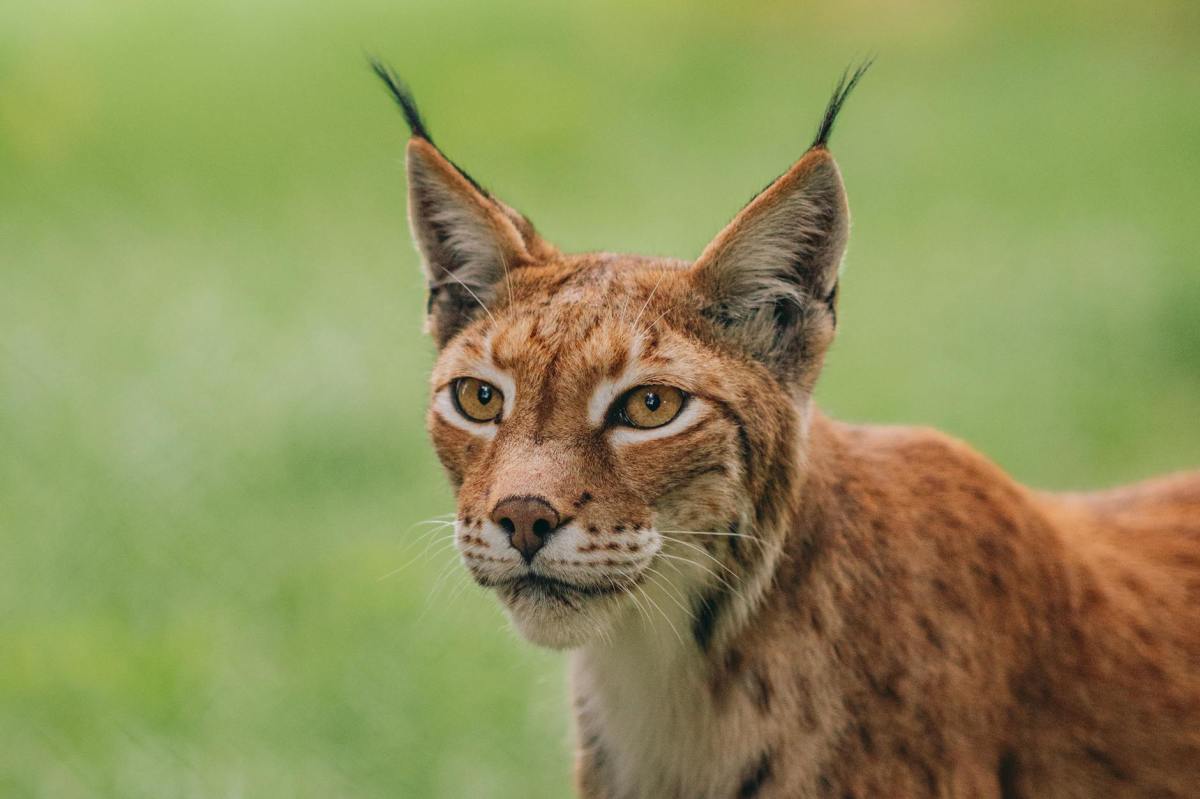
Twenty cats in total died at the Wild Felid Advocacy Center, including five servals, four bobcats, two Canada lynx and a Bengal tiger.

Only 17 cats are left at the sanctuary, according to its operators.

Mark Matthews, the sanctuary director, called the H5N1 avian influenza a “wicked virus” that killed the cats in his organization’s care within 24 hours of each animal contracting it.

“We’ve never had anything like this,” Matthews said, adding that he and his staff are accustomed to cats in their care dying of old age after living long, happy lives.

In California, Gov. Gavin Newsom declared a state of emergency on Dec. 18 after infected birds were found at more than two thirds of the state’s dairy producers.

cows in barn
California’s dairy industry has been hit hard by the spread of bird flu, with more than half the state’s dairy producers impacted. Credit: Ralf R/Pexels

As of Dec. 26, bird flu had infected 65 Americans, the majority in California.

And the virus has now resulted in its first pet food recall, with Northwest Naturals pulling its turkey recipe “raw diet” food. A cat in Oregon died after consuming the food, according to the Oregon Agriculture Department.

As we noted in our earlier post about the variant of avian influenza, there’s no reason to panic. Even if you live on the west coast, the chances of your cats being infected are small.

But it’s probably a good idea to make sure your cats remain indoors, as health authorities warn cats can contract the virus directly by catching and eating birds. In one case, health officials believe three indoor cats may have caught the virus after killing mice in their home.

In addition, the American Veterinary Medical Association advises caretakers to avoid giving their cats milk, which they should not be drinking anyway, and raw meat. Domestic cats are generally lactose intolerant, and while cats can be infected with bird flu by eating raw poultry, they can also contract the virus by eating raw meat from other animals.

Americans Are Lousy At Taking Care Of Their Cats, Poll Claims

The respondents also admitted they “forget” to feed their furry friends an average of three times a week. Say what?!?

Americans don’t know basic facts about their cats, fail to properly care for them and overestimate how well they do as pet parents, according to a new poll.

The survey of cat owners commissioned by PetSafe found most people in the US who have cats in their home don’t know their feline friends typically have 18 toes, for example, and don’t realize cats purr when they’re content as well as when they’re trying to soothe themselves.

Respondents said they frequently forget to refill their furry little buddies’ water bowls, but the thing that really blew my mind is that people supposedly forget to feed their cats an average of three times a week.

How is that possible?!?

The number of times Bud has missed a meal in 10 years is precisely zero. Even when I had COVID, even when half my face was frozen with Bell’s Palsy and I was throbbing with the worst headache I’d ever endured, I fed the little guy according to his schedule.

It’s not just that he reminds me. There’s a whole ritual around it, an elaborate series of increasingly affirmative and urgent meows that quickly give way to panic if Buddy doesn’t see activity associated with a bowl of fresh wet food and water delivered to his nook.

buddy_delicious

The pre-reminder reminders begin about 45 minutes to an hour before feeding time, with Bud’s infallible internal clock signaling upcoming meal time.

At the 30 minute mark Bud will put himself directly in my line of sight and stare at me. Then he’ll start to meow at regular intervals, and if I’m not up and heading to the kitchen by T-minus 15 minutes to yums, the meowing begins in earnest.

Even the act of retrieving a pack of wet food from the Buddy Cabinet is highly formalized and ritualistic: the little dude grunts and trills excitedly as I open the seal, dump the food in his bowl, mash it up and pile it in the middle the way he likes it.

Then he leads me back to his nook, looking over his head every few paces to make sure I’m right behind him, even though we’ve done this song and dance literally 7,318 times as of today. (It’s probably more than that since I fed him more than twice a day when he was a kitten, and doesn’t include his bowl of dry food for his late night snack/overnight emergency supply so he doesn’t have to wake me up if he’s hungry.)

I realize Bud’s a bit of a tyrant and there’s no peace until he gets what he wants, but still. Cats are cats. So really, how does anyone “forget” to feed their cat?

Yes, It’s Safe For Your Feline Friend To Eat Catnip

It turns out catnip has a different effect when cats eat it instead of sniffing and rolling around in it.

Is it safe for a cat to eat catnip, and does eating it instead of sniffing it make any difference to the kitty?

I wondered about that while watching Buddy enthusiastically lap up some silver vine and ‘nip yesterday afternoon before he drifted off to nirvana.

If you’re worried about whether it’s safe, don’t be. While most cats tend to sniff or roll around in the stuff, there’s nothing in catnip that can harm them according to veterinarians.

The worst that can happen is a mild stomach ache from eating too much of the good stuff.

As for whether ingesting vs sniffing makes any difference, it turns out it does.

When catnip hits the olfactory receptors, it works as a stimulant, prompting energetic, playful behavior.

But when it’s ingested, catnip has the opposite effect, working as a sedative. Felines who eat the ‘nip become more relaxed, often drooling or drifting off for a nap.

Buddy on catnip
“I think…I’m pretty sure I’m feeling it. Oh yeah! Break out the laser pointer and the snacks!”

That makes perfect sense given my own observations. As a feline who eats catnip, Bud will still play, but he’s lazy about it. Instead of ambushing and tackling his wand toys he’ll just pad up to them, drop to the floor and lazily paw at the plush toys at the end of the string, occasionally biting or rabbit-kicking them.

When all else fails, the laser gets him moving.

Regardless of whether your cat sniffs or eats the good stuff, the effects are relatively short-lived and wear off after about 15 minutes.

Catnip is safe for your furry friends and it’s a great way to help make an indoor cat’s life more exciting.

Help ID This Woman Who Dumped A Cat In A Garbage Can

If a bystander hadn’t witnessed the event and rescued the cat, it’s likely the little guy would have starved or died of dehydration.

Authorities in a Texas town near Houston need help identifying a woman who tossed a cat, carrier and all, into a garbage can.

The woman parked her car in a nature preserve in Rosenberg, Texas, at about 11 am on Jan. 12, opened the backseat to retrieve a cat carrier and unceremoniously dumped it in a garbage can.

A bystander happened to witness — and film — the entire sequence of events, and after checking the trash it turned out there was a scared two-year-old cat inside the carrier. The bystander brought the cat to Rosenberg’s animal control department.

“If no one would have seen this happening, that cat would have been in that container in that trash can with no access to food, (or) water,” said Omar Polio, the town’s director of animal control. “Not acceptable.”

The cat is a beautiful, affectionate white and brown male the shelter has dubbed King Triton. He’s in their care for the time being. King Triton is healthy, Polio said, and it’s not clear why the woman would have dumped him instead of surrendering him to a shelter.

While shelters are crowded, “we can always find resources that can better suit these animals,” Polio said, imploring people not to abandon or toss animals away like trash.

Polio said his agency would like the public’s help identifying the woman. It’s not clear what kind of charges she might face. Anyone with information can call Rosenberg Animal Control and Shelter at 832-595-3490.

Video of the incident provides a clear look at the woman, but the resolution isn’t high enough to make out the license plate on her car.

Here’s a news segment of the incident with footage of the woman getting out of her car, dumping the cat, casually returning to her vehicle and driving off. She has dark hair that was in a ponytail at the time and was wearing shorts and sunglasses: