Lauren Carter admitted she poured bleach on cat food on two occasions in April, police say.
The video shows a woman stop her car, get out holding a bottle of what looks like bleach, and pour the substance onto food left for outdoor cats while a tabby looks on, sniffing curiously.
The footage was recorded by a family in Chester, Pa., a town of 32,000 about 25 miles southwest of Philadelpia. The cat, Jumper, belongs to a family on the same street.
The suspect’s name had been floating around on various cat-related social media sites along with the video for weeks, but police and prosecutors had to be sure of the facts before they arrested the woman.
When lab results showed the substance was indeed bleach, officers arrested 35-year-old Lauren Carter, also of Chester.
Cops and the SPCA’s law enforcement division say Carter admitted to pouring bleach on cat food on two occasions in April. It isn’t clear why Carter wanted to harm cats, and so far law enforcement hasn’t made any comments about her motivation.
They did, however, make sure local pets did not eat the poisoned food.
“We do believe based on our investigation that no animals did consume the food,” SPCA spokeswoman Gillian Kocher told KYW, a local news radio station. “Our officers went out through the area to make sure that no animals were sick or deceased, but it is, of course, our intention that this doesn’t happen again, and the animals in the neighborhood are kept safe.”
Carter has been charged with two counts of misdemeanor animal cruelty.
Olivia Oliver, Jumper’s caretaker, said she was satisfied with the outcome of the investigation and Carter’s confession.
“I think it’s enough. I think it’s a good sign; it’s a warning for her,” Oliver told WPVI, the Philadelphia-based ABC news affiliate. “And basically, I’m glad she’s going to pay for what she did. And hopefully nothing like this happens again around here.”
Service animals and emotional support animals are not the same thing.
A Quiet Place: Day One stars Lupita Nyong’o as Samira, a terminally ill woman, and Joseph Quinn as her nurse, Eric.
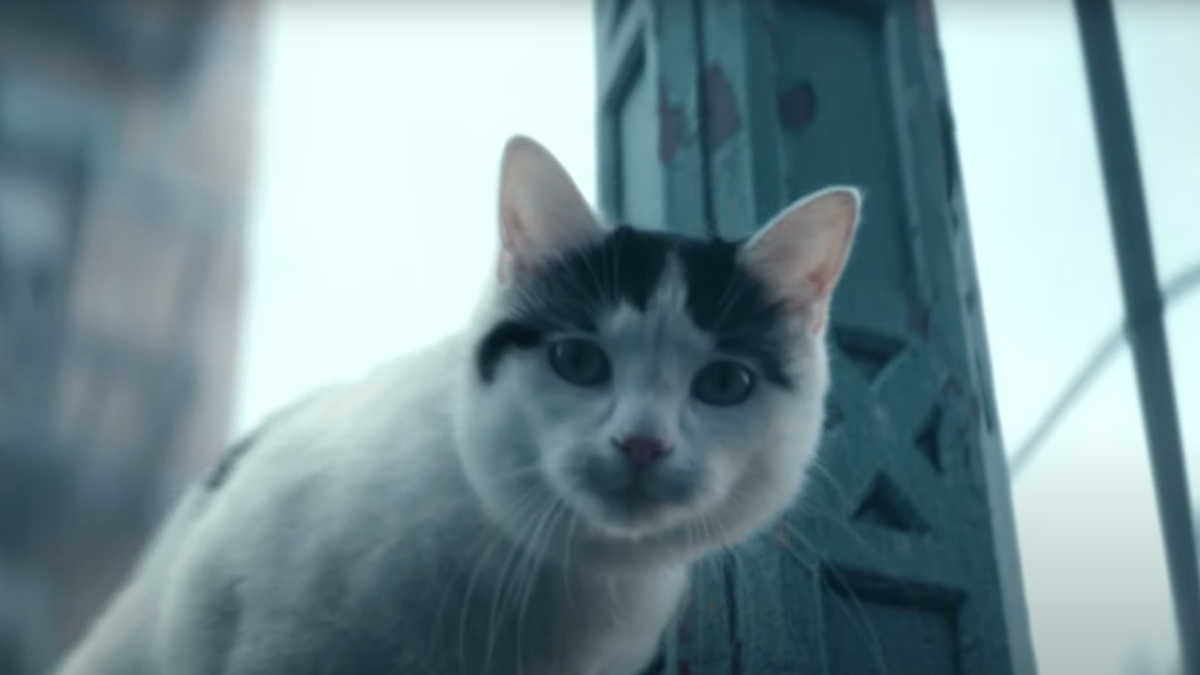
But it’s the third main cast member — a feline named Frodo — who’s been hailed as the surprise star of the film, which one reviewer called “a love letter to cat owners.”
Nyong’o’s Sam has been given the equivalent of a death sentence with her aggressive cancer diagnosis, but when the nightmarish creatures who play the antagonists of the Quiet Place franchise arrive, Sam fights for her life with her trusty “service cat” by her side.
“You can’t have a cat in here,” the clerk at a bodega tells Sam early in the film, before she fixes him with a no-nonsense stare and flatly declares: “He’s a service cat.”
The adorable Frodo, co-star of A Quiet Place: Day One.
You’ve probably heard stories or seen photos of people trying to take other animals into places they’d normally never be allowed. In 2019, a woman decided to push the boundaries by taking a miniature horse onto a domestic flight, forcing passengers to share extremely limited space with the olfactorily potent, skittish animal. She even scolded social media users who didn’t get the horse’s pronouns “correct.” (They’re she/her, by the way. We’re not making this up.)
The woman, who says she needs the horse because she suffers from PTSD, told Omaha, Nebraska’s KMTV that the managers of a grocery store allegedly violated her rights by asking her to leave rather than allow her to march a horse through a place where people buy food and its operators are required to follow Department of Health rules.
“I was treated so poorly and the manager’s responses when I followed up were poor,” she said. “They are going to be hearing from the Department of Justice and I’m definitely going to be pursuing legal means as well.”
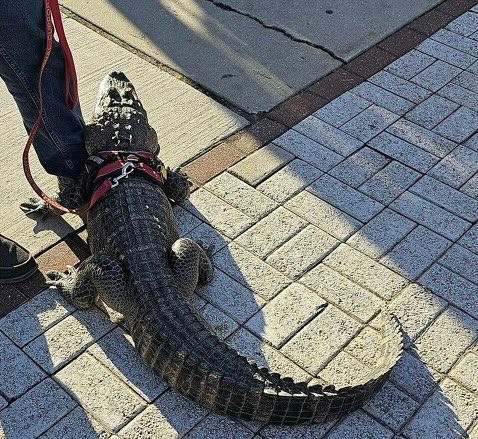
In 2023, a man tried to take a “service alligator” to a Phillies game at Citizens Bank Park. Stadium security weren’t buying it and he was turned away, but not before other fans snapped photos of the attempt. In Nevada, a man who had his USDA license revoked for “multiple violations of the Animal Welfare Act” argued that authorities couldn’t confiscate his 10 tigers because he claimed they are emotional support animals.
“My doctor has written that she feels that the tigers are beneficial to my psychological well-being and so therefore I got what the law requires,” Karl Mitchell told KTNV, an ABC affiliate in Las Vegas.
An emotional support tiger depicted in a Reddit photoshop contest for the most ridiculous “service animals.” Maybe some ambitious dreamer will cook up a service elephant or an emotional support bison.
Since then the FAA and Department of Transportation have issued new rules clarifying emotional support horses, peacocks, flying squirrels, parrots and other animals are not allowed on planes, prompting one flight attendant to quip that “The days of Noah’s Ark in the sky are over.”
That, however, has not put a dent in the confusion over what constitutes a service animal versus an emotional support animal, and what rights people have when it comes to bring their furry (or scaly, or feathered) friends into public and private spaces.
Although we’re happy to see Nyong’o in her first lead role since 2019’s freaky horror thriller Us, unfortunately A Quiet Place: Day One is almost certain to contribute to that confusion with its fictional “service cat” character.
A service animal and an emotional support animal are not the same thing
First, there’s an important distinction between a service animal and an emotional support animal.
Service animals can only be dogs or miniature horses, and must be trained. People who depend on service animals can train them themselves, but the animal must meet specific needs, like guiding the blind or vision-impaired.
Emotional support animals, by contrast, are not trained, certified or “official” in any capacity. Anyone can adopt or buy an animal and call it an “emotional support animal.”
A Phillies fan’s “emotional support alligator.” The stadium turned him and his carnivorous apex predator companion down. Credit: Howard Eskin/X
Unfortunately due to the confusion involving service animals vs ESAs, predatory sites have popped up online promising to “officially register” ESAs for a fee.
In addition to charging for something that doesn’t exist, the proprietors of those sites also tell people they can take their “officially registered” support animals into places normally off limits to pets, like stores and restaurants. Some sites offer consultations with alleged mental health professionals who will “diagnose” customers remotely and write letters on the customer’s behalf.
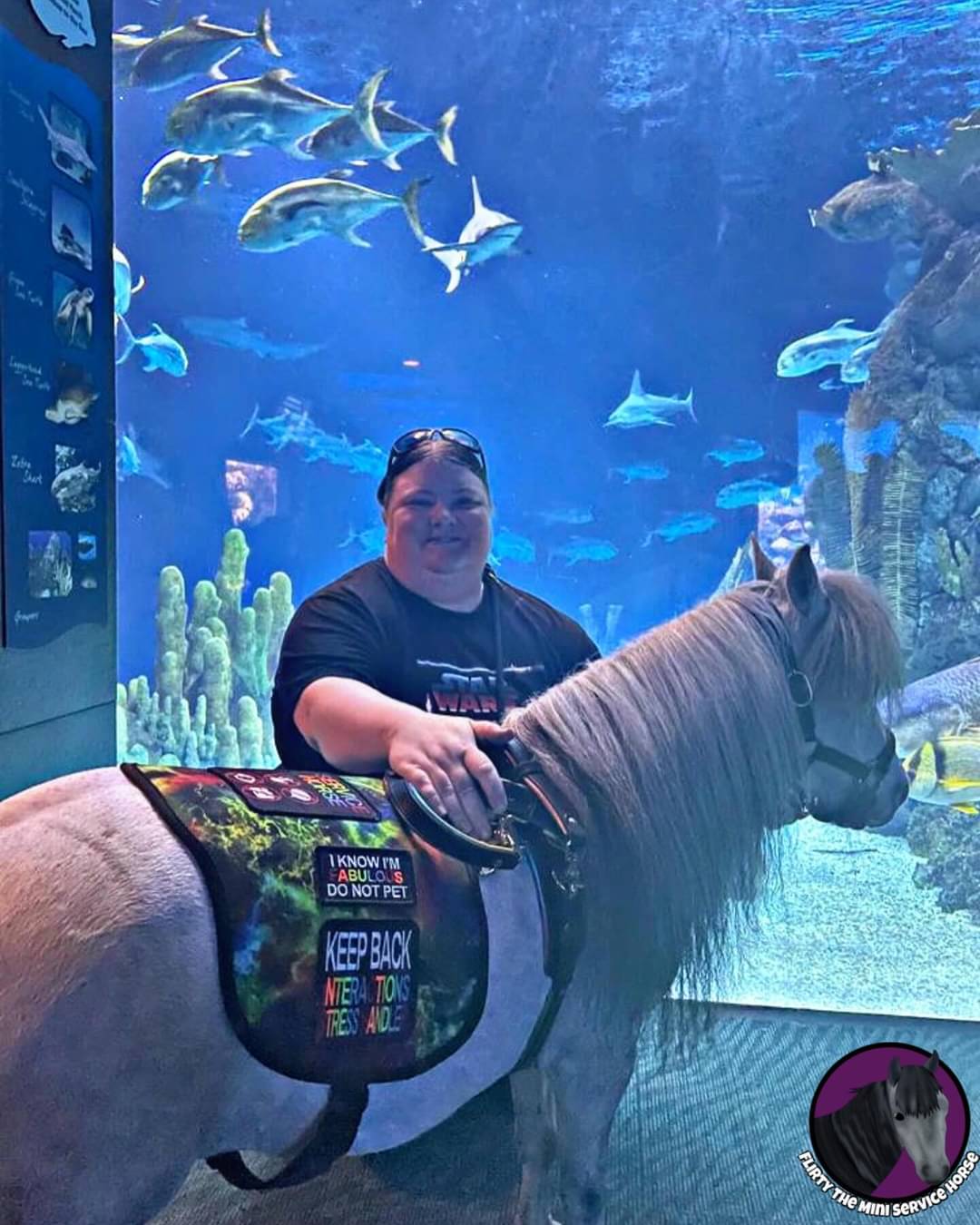
Abrea Hensley with her miniature horse, Flirty, in an aquarium. Hensley’s social media accounts document all the places she goes with the animal.
Those sites operate similar to the numerous “buy a star” sites that claim celestial objects can be officially owned. Like their emotional support animal “registry” counterparts, the star sale sites offer official-looking paperwork, but they’re selling something that can’t legally be sold, and the certificates are legally and practically meaningless.
Buying a “certification” won’t make your cat a service feline, and contrary to how they’re portrayed in the movie, calling a pet an emotional support animal does not allow you to bring it anywhere you like.
For legal purposes, there’s only one perk to be had by claiming an emotional support animal: under the Fair Housing Act, landlords generally cannot refuse tenants who have emotional support animals. The act specifies that allowing emotional support animals is limited by “reasonable accommodations.” That means a dog or a cat is okay, but you can’t keep an animal that poses a danger to your neighbors, negatively impacts their quality of life, or requires the landlord to make major and costly alterations.
The general trend in recent years has involved curbing the limits of emotional support animals, a trend that appears likely to continue as more people abuse the privilege, burdening other members of the public by insisting they must silently endure the inconvenience, potential allergic reactions, sanitary concerns and practical problems caused by bringing animals into spaces that are not designed to accommodate them.
While we’re certainly sympathetic to pet owners — this blog wouldn’t exist if we were not — the fact is that the more people abuse societal boundaries with emotional support animals, the more difficult it makes things for people who have legitimate service dogs and rely on them to navigate life and maintain their independence.
Note: This post has been updated to further distinguish between service animals and emotional support animals. An earlier version contained a paragraph with potentially confusing phrasing.
h/t Susan Mercurio for pointing out that emotional support animals are coveted by the Fair Housing Act
Buddy’s journey ends on a high note, with the former stray getting a forever home, people who love and care for him, and a feline pal to play with.
Buddy the Philadelphia cat is home for good.
The former stray captured the hearts of people around the world when he survived a brutal attack on the front porch of a Philadelphia home, with two dogs mauling him at the urging of their teenage owners. The attack, which was captured on video, prompted worldwide outrage from animal lovers and resulted in an outpouring of help, with well-wishers flooding the Pennsylvania SPCA with more than $100,000 in donations.
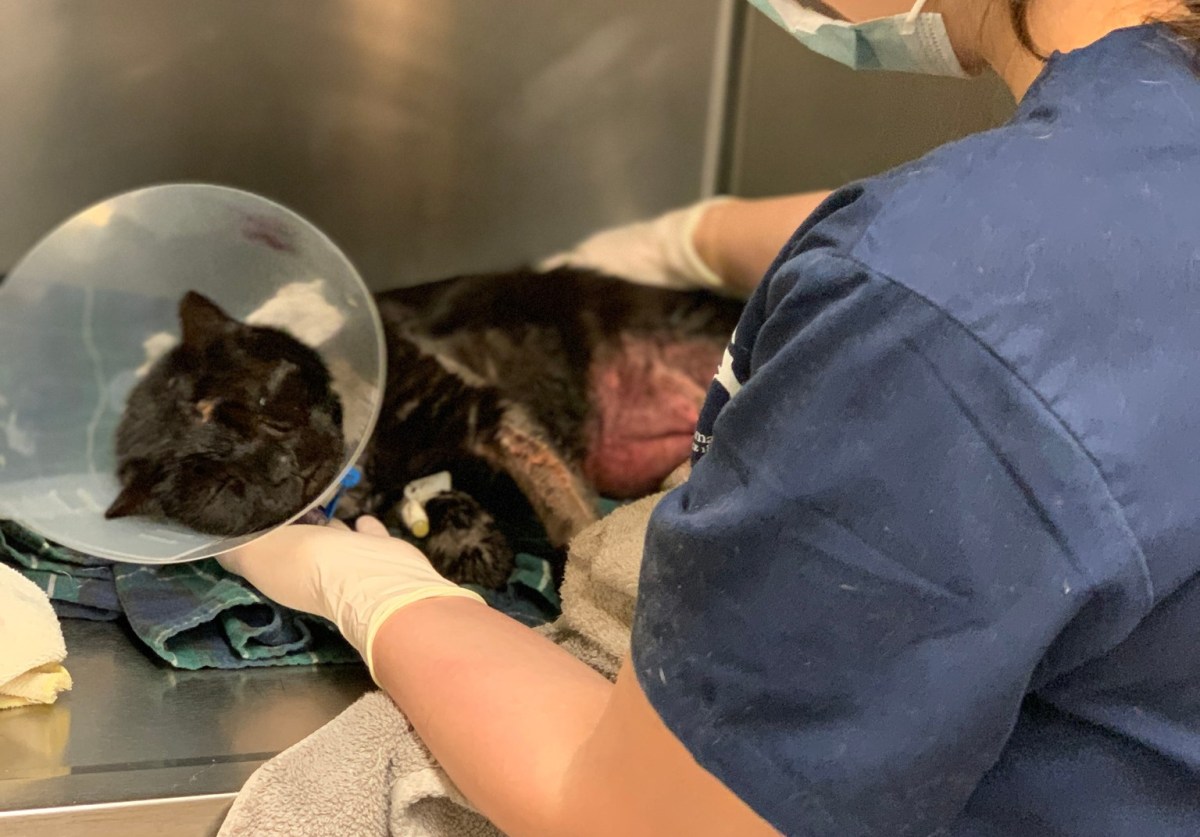
Dr. Katie Venanzi was the veterinarian who performed emergency surgery on Buddy in the immediate aftermath of the attack, when his survival was doubtful.
That was back in March. Since then, Buddy’s glorious will to live carried him through those perilous first few hours and days, and he eventually healed up enough to go to a foster home.
Buddy’s adjusted to the indoors, where he enjoys a perk he didn’t have during his life outside: Toys. Lots and lots of toys. Credit: Pennsylvania SPCA
Venanzi felt an emotional attachment to the little guy and offered to foster him with the hope of providing his forever home. It wasn’t clear if that would be possible: Buddy’s original family failed at making him an indoor cat because he was too accustomed to the freedom of being a stray, so they fed him and took care of him as best they could.
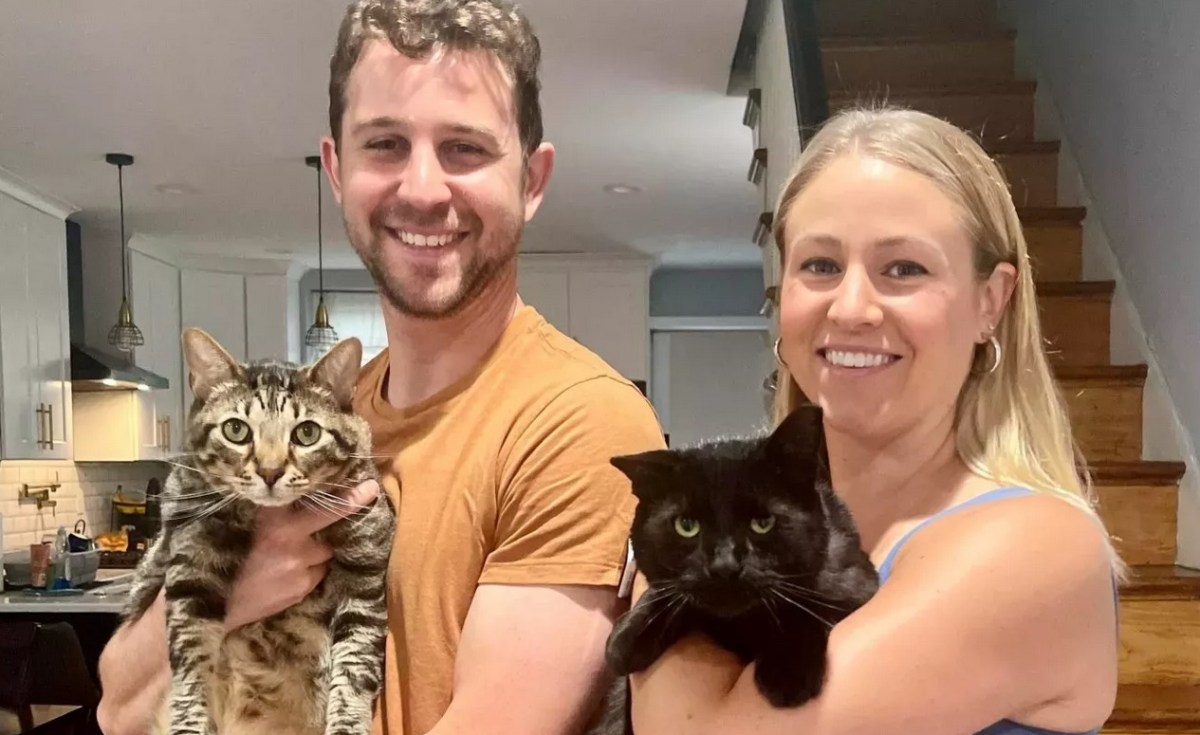
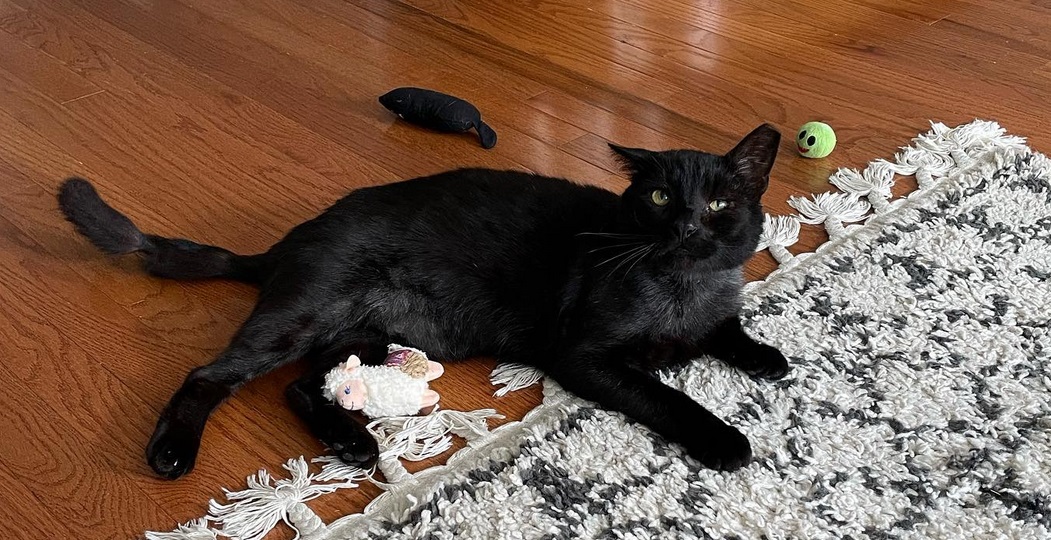
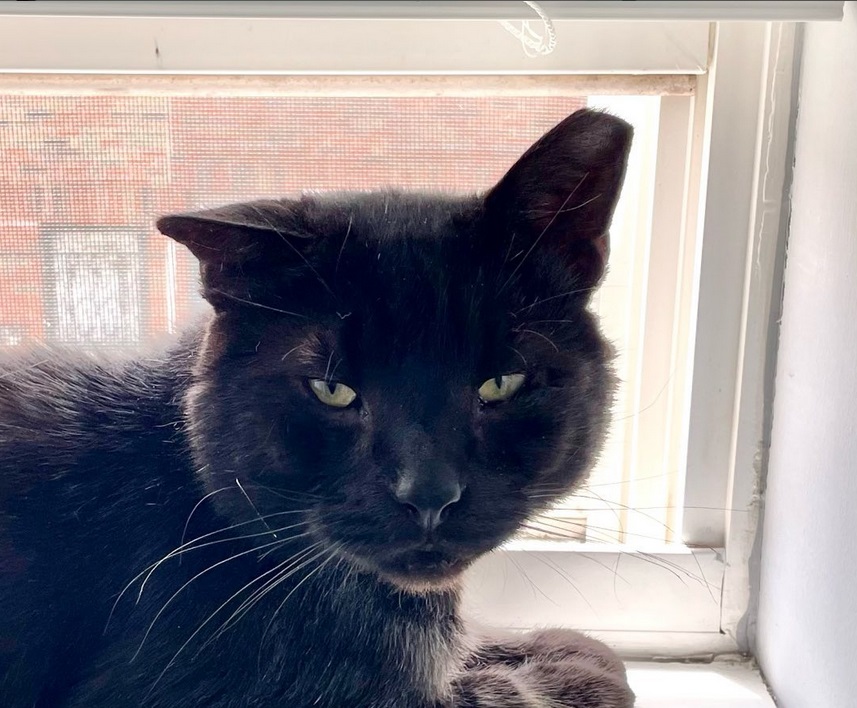
His brush with death seems to have tamed Buddy, who has adjusted to indoor life with Venanzi, her husband and their other cat, Teddy. Buddy enjoys “basking in the sun on a windowsill or watching the world go by from the front screen door,” the Pennsylvania SPCA’s Gillian Kocher said, and his new family “fell more and more in love” with him as the days and weeks went by.
“He has all the toys a cat could want, though his favorite seems to be an empty cardboard box for lounging,” she said. “He is loved, and he is home.”
With his story of perseverance and bravery, Buddy “has become a symbol of everything we do here,” Kocher said. The money left over from donations after all of Buddy’s veterinary needs were taken care of will be used to help other cats and dogs just like him who have suffered abuse and neglect.
You can support the Pennsylvania SPCA by buying a “Save Every Buddy” t-shirt or other gear on the group’s site.
Buddy has fully recovered from the wounds he suffered in March. Credit: Pennsylvania SPCA
While the surveillance footage appeared to show a pair of men siccing pitbulls on a semi-stray cat named Buddy, the suspects are 17 and 12 years old respectively, according to the SPCA.
Investigators were able to ID the pair after getting leads from the public, and on Friday the 17-year-old came in accompanied by a parent to surrender himself to authorities. The 12-year-old has agreed to turn himself in today, March 26, according to the local NBC affiliate.
Authorities said they’ll charge the pair with animal fighting, aggravated animal cruelty and conspiracy for the unprovoked attack, in which they encouraged their dogs to hurt the much smaller cat. The first two charges are felonies.
However, there are caveats. Because the suspects qualify for youthful offender status, they cannot be tried as adults and may be able to wipe the convictions from their records in the future. Such deals are at the discretion of judges, and typically involve the completion of certain programs and require that the offenders stay out of trouble for a set time period after conviction.
Because of that, their names will be sealed in court records. Youthful offender deals are usually reserved for first-time offenders. It’s not clear if the teenagers in this case have priors, and it will be up to the judge to decide the terms of their sentencing if they are convicted or agree to plead to the charges.
The SPCA has taken custody of the dogs, although their fate remains unclear. Hopefully they can be rehabilitated and adopted by experienced owners.
There’s been an outpouring of support for Buddy, with well-wishers across the world donating tens of thousands of dollars toward his veterinary care and related costs, Pennsylvania SPCA’s Julie Klim said.
“While we certainly see a lot of bad as we fight to end animal cruelty, we also see how much good there is, especially in a case like this, from all corners of the globe,” Klim said. “We will do everything humanly and medically possible to ensure Buddy’s future will be a bright one.”
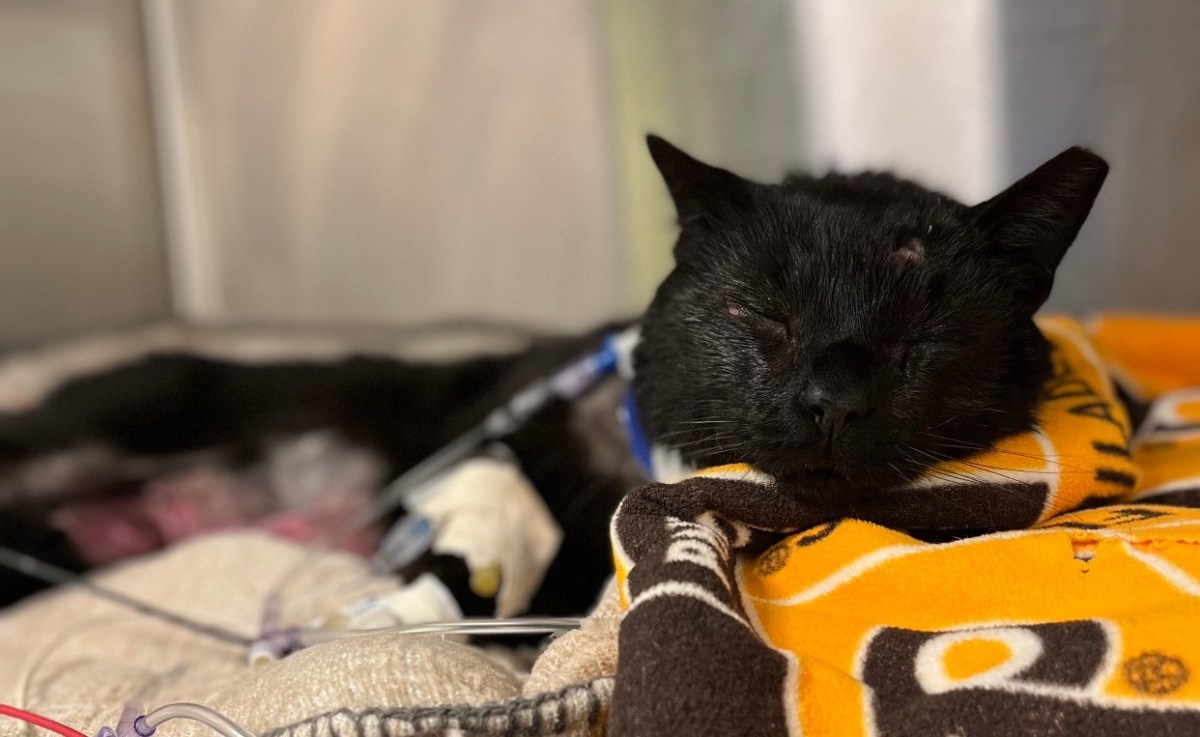
In the meantime, Buddy still clings to life. He remains in critical condition, according to the SPCA, but veterinarians are “hopeful” he’ll pull through. Here’s a video of the little fighter trying to comfort himself by making biscuits on a soft blanket at a veterinary hospital:
Welcome, new readers! This blog is about a different Buddy the Cat, but we also cover news about felines, animal welfare, the pet industry and other cat-centric topics, in addition to frequent humor posts about our benevolent, furry overlords. Buddy the Cat from New York is pulling for Buddy the Cat from Philadelphia, and hopes his fellow Buddy makes a full recovery before finding a loving family and forever home.
A cat named Buddy has life-threatening injuries after two men set their dogs on him.
I took a pass on this story when I first saw it because there’s only so much senseless violence toward cats people can tolerate, and I don’t want people to feel like they’re going to be stressed out when they visit PITB.
Our primary goal here, after all, is to celebrate cats and have a laugh.
But this story is too infuriating to keep quiet about, and when I realized the victimized cat’s name is Buddy, I couldn’t ignore it.
Buddy, a black cat, was on his front porch in Philadelphia on Tuesday when two men passed by, let their dogs loose and ordered them to attack poor little guy.
The men cheered their dogs on with “Get him!” and “Good boy!”, and Buddy probably would have died there if his human didn’t hear the commotion and run outside to intervene.
⚠️ WARNING – THIS CONTENT IS DISTURBING ⚠️
The Pennsylvania SPCA is asking for the public’s help identifying two individuals who appear to be responsible for an intentional dog attack on a family’s cat in the city’s Frankford neighborhood this morning. pic.twitter.com/tBvTJJOTiL
The two suspects collected their dogs and ran off, while Buddy’s human rushed the injured kitty to the Pennsylvania SPCA, where he underwent surgery for life-threatening injuries.
“Buddy is still hanging in there,” the SPCA announced on Thursday. “He remains in critical condition, but we are cautiously optimistic.”
Buddy, who suffered bite wounds and other injuries over his entire body, was a stray who was cared for — but not fully adopted — by a Philadelphia family. The family told the SPCA that Buddy “didn’t want to live inside,” so after getting him neutered they let him stay on their porch and fed him daily.
“He has lots of puncture wounds,” the SPCA’s Gillian Kocker told KYW-TV, the local CBS affiliate. “They’re worried about infections, but mostly what they’re doing right now is making sure that he’s comfortable and has the medication he needs, especially pain meds.”
While Buddy is recovering and is under 24-7 monitoring, donors from around the world have chipped in, giving more than $30,000. Any money left over after veterinary costs will be used for “Buddy’s buddies,” the SPCA said, meaning other cats in their care.
If and when Buddy recovers, the SPCA said, he will be placed with another family. Meanwhile, the suspects could face felony charges for animal fighting and cruelty to animals if they’re caught, Kocher said. Let’s hope they are.
Anyone who recognizes the suspects should call the SPCA at 866-601-7722.