Buddy the Cat’s female admirers, both feline and human, say he is a sexy beast.
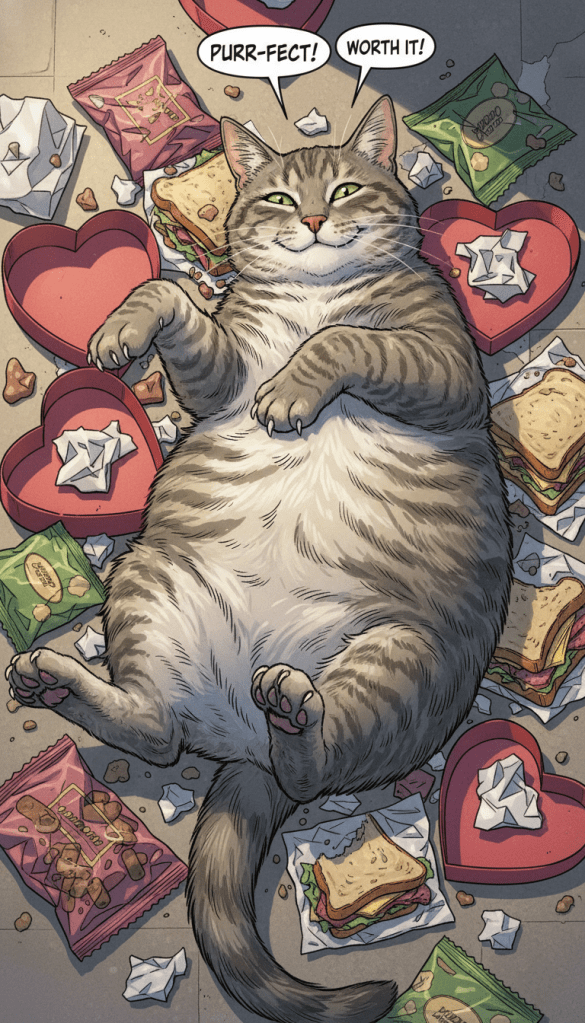
NEW YORK — For the third night in a row, Buddy the Cat rolled onto his back, belched thunderously, and settled down for a restful nap surrounded by the devoured remnants of treats and snacks gifted to him for Valentine’s Day.
“It’s wonderful to be so loved that hundreds of Valentines Day packages are deliv…ooh, bacon-flavored crunchies!” Buddy said, breaking his train of thought after discovering six or seven of the little treats under a pile of opened and discarded packages.
“Where was I?” the bloated feline asked, blinking. “Oh yeah. It’s such a great feeling to have so many admirers that … mmmm, sandwich … every day brings new …* burp *! … gifts of food to sample and … oh, I love turkey gravy!”
The chubby tabby has been the recipient of countless Valentine’s Day gifts this year, reflecting his considerable popularity among females, both feline and human. He’s been eating his way through them with enthusiasm since the packages began arriving.
Witnesses report the well-fed feline was unable to complete a sentence without getting distracted and stopping to shovel food into his mouth mid-sentence.
“He only stops eating when he falls asleep,” one witness told PITB. “At this rate, his human will have to roll him around like a boulder because, frankly, I’m not sure anyone makes a cat carrier with material strong enough to lift him without ripping apart.”
As of press time, Buddy had fallen asleep with a sloppy hand-written note taped to his forehead, asking visitors to leave Valentine’s Day gifts in one of the 27 provided baskets.
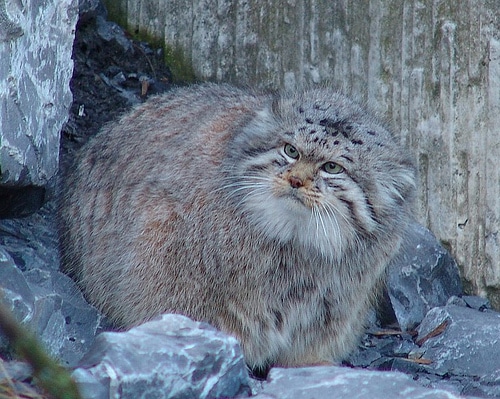
The Gremlin-like felids have some unusual habits compared to other cats in addition to the trademark scowls that distinguish them from other feline species.
The fact that they live in burrows and crevices is the first indication that Pallas cats are the weirdos of the feline family.
The small, bushy little creatures greet the day by poking their heads out of their burrows just enough to see what’s going on. Thanks to the low profile of their ears, which stick out almost horizontally, only their eyes and tufts of frosty-looking fur are visible in those first moments.
When they’re satisfied nothing’s going to vex them further than their usual, seemingly perpetually-annoyed default, they fully emerge from their dens, and that’s when their true form becomes apparent.
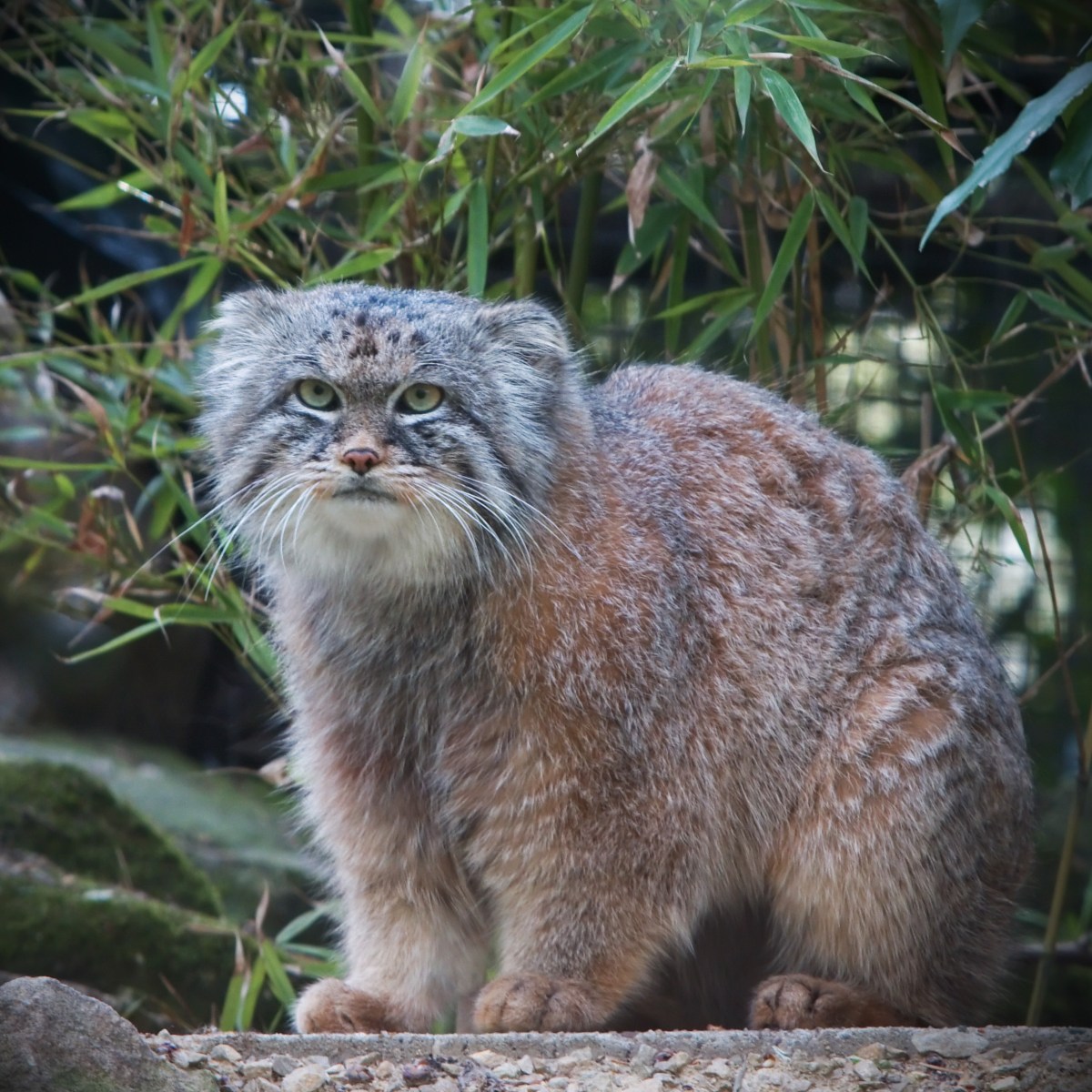
Behold grumpiness incarnate:
“These kittens today, they want everything now. No patience and not a lick of common sense between ’em. Hey! Get off my lawn, you little cretins…” Credit: Wikimedia Commons“Would it kill these dogs to clean up after themselves? Sheesh! You don’t see me defecating all over everything. When nature calls, I do what civilized cats do, find a private spot and bury my business. Hey! Hey! Don’t you dare move that rock!”
These little guys look like they start every day off getting rained on while birds with impeccable aim empty their bowls on their heads. Then they file out, each one grumbling, and engage in their species’ favorite pastime — complaining about everything, like a perpetual Airing of Grievances on Festivus or a communal bitching session about joint pain at the local senior center.
“Oh, my back! For crying out loud! They couldn’t have dug this tunnel at a more forgiving angle? Aww crap, look at the weather! Hunting in this is gonna suck. Lenny, is there any more of the rabbit from last night? No? Of course not. And we’re out of coffee again! I don’t know why I even roll out of the burrow. This place is a dump!”
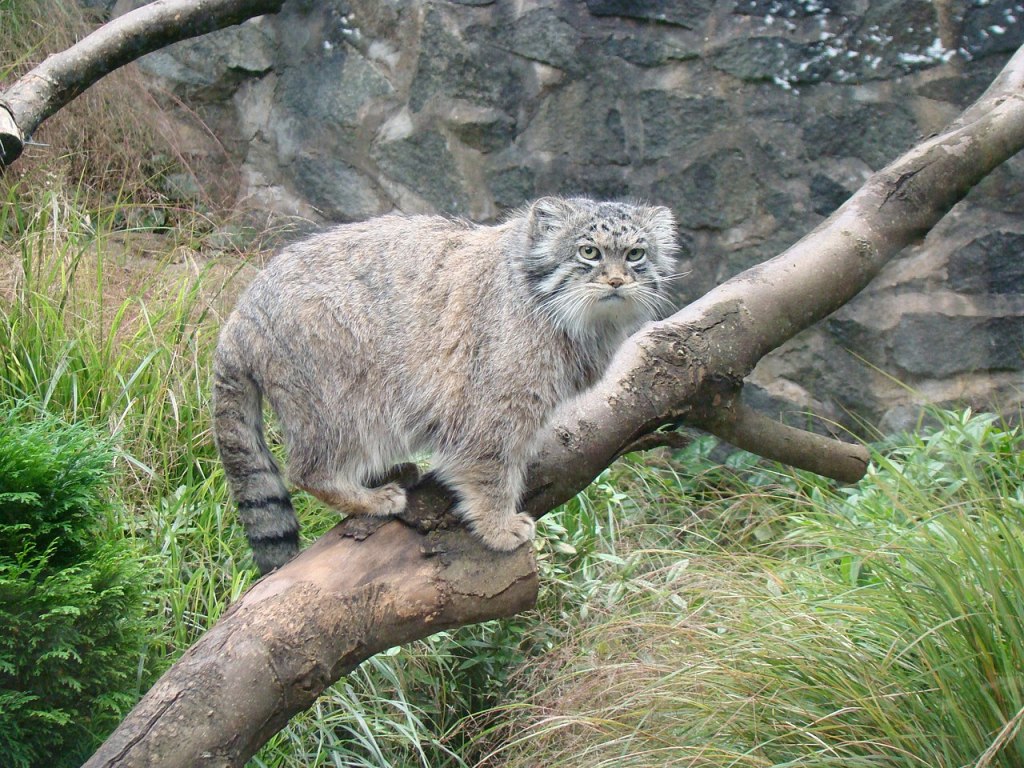
First observed and written about — in the western world, at least — by Peter Simon Pallas in 1776, Pallas cats are about the same size as our domestic feline buddies, but they look stockier thanks to their heavy coats. Pallas, a Prussian explorer and naturalist, was presumably going about his day when he heard a group of these malcontents complaining from a mile or two away.
“Whatchu lookin’ at?” Credit: Wikimedia Commons
Jokes aside, Pallas cats only look angry to us because we anthropomorphize them. Difficult as it is to believe with their convincing scowls, there’s no evidence to suggest they’re actually grumpy.
The fact that they sometimes co-occupy burrows means they have a cooperative and social component to their behavior that many cat species lack. You won’t find tigers cooperatively hunting, napping in communal burrows or padding out together to greet the crepuscular morning, but that’s what Pallas cats do. That’s a pretty good indication of a sunnier disposition than their trademark scowls indicate.
Here’s a remarkably clear and close video showing a Pallas cat mom poking her head out from a burrow and making sure the coast is clear before emerging with her four cubs close behind her:
Spread throughout mainland Asia, and concentrated most heavily in Mongolia, Kyrgyzstan, Bhutan and parts of China, individual Pallas cats move between different burrows and crevices depending on the need for cover and the season. They’re found on the vast plains of Mongolia, as well as in mountains like the Himalayas and the Altai range.
They usually top out at about 10 pounds and primarily hunt rodents, pikas, shrews and other small, ground- and underground-dwelling prey, but like most cats they’re adept ambush hunters and take opportunities where they find them.
Happily, and owing partly to their remote habitats, Pallas cats are one of the few wild species that are not listed as threatened or endangered on the IUCN Red List.
Header image credit: Wikimedia Commons
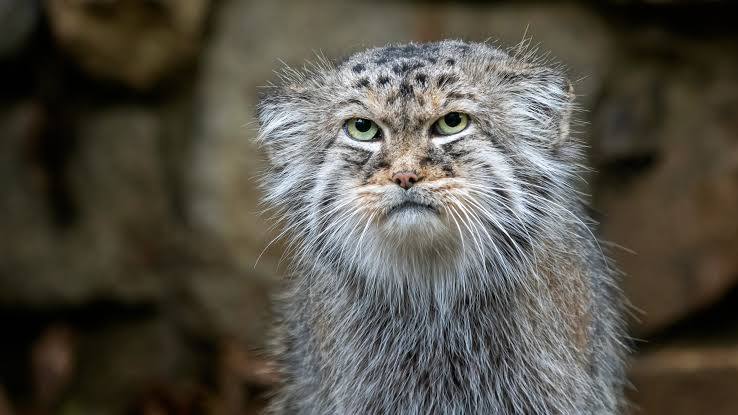
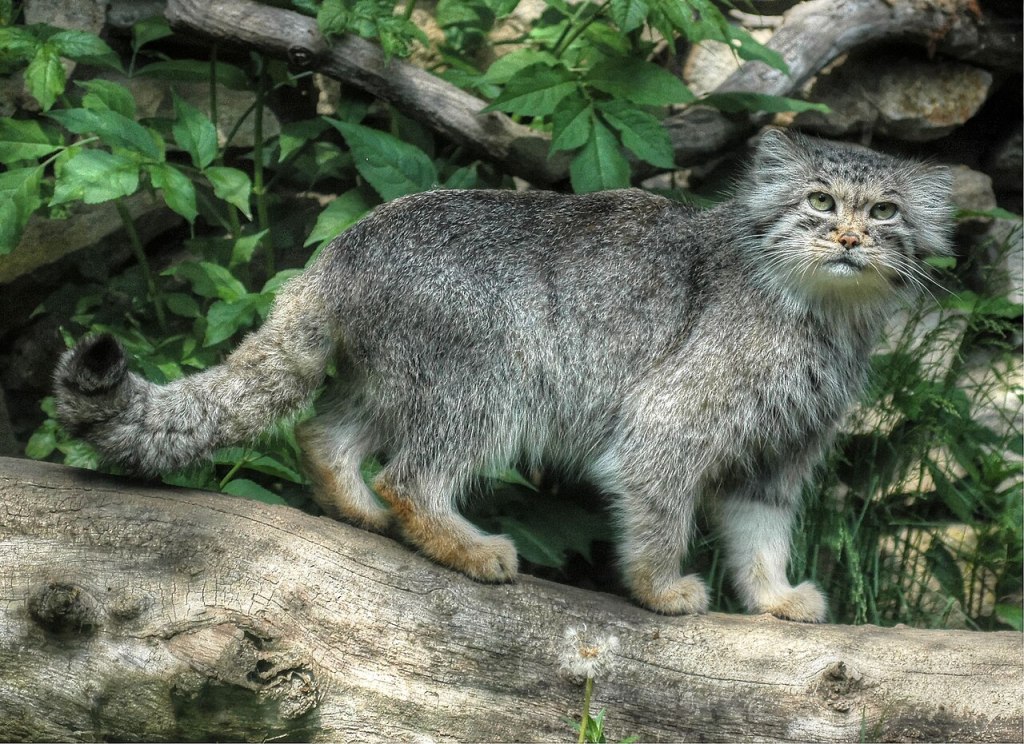
Proof they don’t scowl in every photo. Credit: Wikimedia Commons
“Activate your chakras and, like, serve me turkey and stuff.”
Buddy the Cat sits in a lotus position, whiskers relaxed, with a serene expression on his face.
“As we enter the quantum realm of the mind and traverse the sacred lacuna leading to the mysteries of the cosmos, let us allow ourselves to drift, to feel the subtle tug of gravity asserting itself upon our quantum existences, so that we may reach simultaneous quantum enlightenment within the subatomic and macro universes,” Buddy says softly as a room full of his disciples imitate his posture.
Suddenly the chubby cat opens his eyes, scanning the room.
“And now the time has come,” he says, “for a quantum nap. Who would please the spirit of the cosmos by providing a suitably soft napping substrate?:
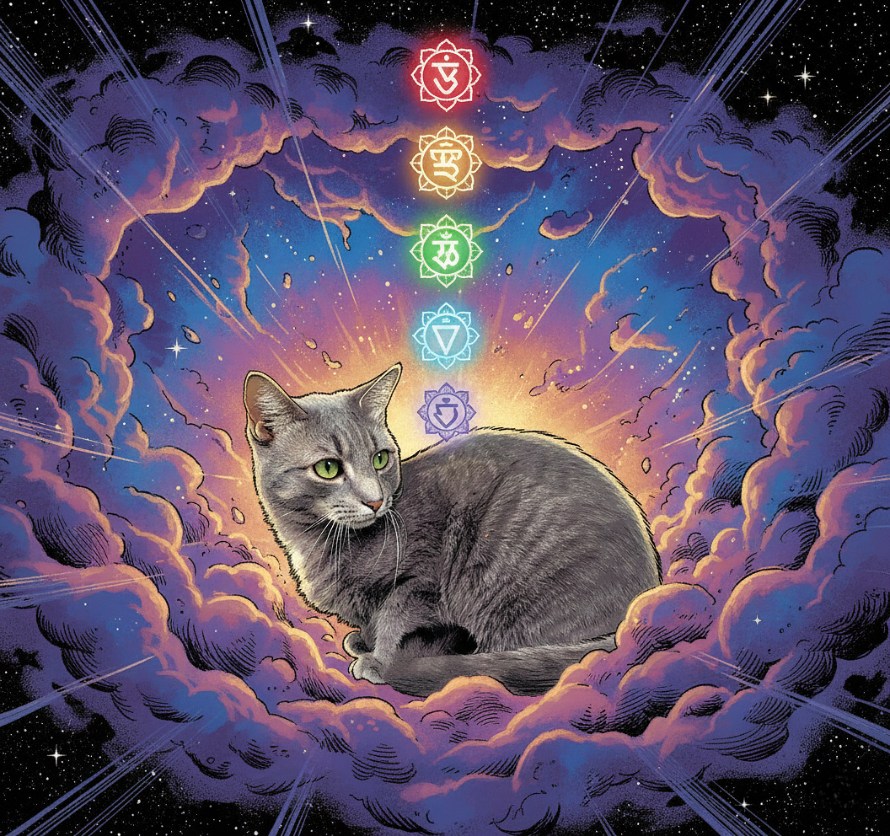
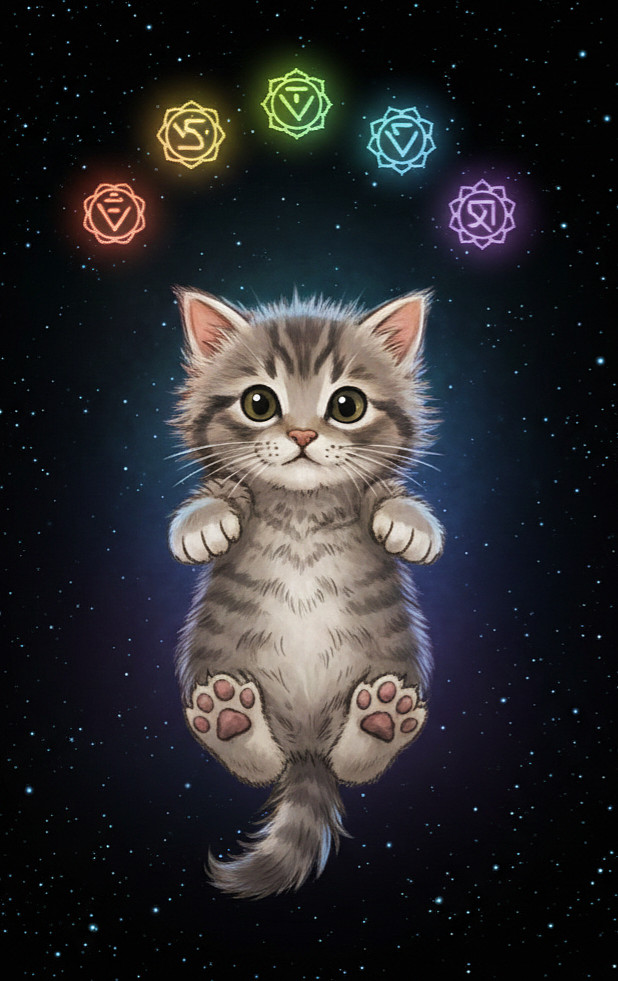
Buddy regains his kitten form after communing with the quantum alchemists of Epsilon Eridani, who grant him special powers after circumambulating a triple star system within a quantum starship and stuff.
Every hand shoots up, with disciples — or “quantum mignons,” in Buddesian parlance — begging to be chosen.
The guru pads along the rows of disciples, wrinkling his nose to “discern the most comfortable chakras,” before settling in the lap of Maelle, a 20-year-old exchange student from France.
“I feel so blessed to be chosen,” she confesses as Guru Buddy climbs into her lap.
“I shall meditate,” Buddy tells her with a yawn, “upon your anima as the soothing stillness of sleep embraces me, fortifying your spirit with an increase in your alpha quotient.”
“And remember,” Buddy says, “should you feel the call of nature or the need to adjust your position, meditate upon your quantum quantumness to fortify your, uh, quantums so you don’t disturb me.”
The tabby cat settles down, then opens one eye.
“I almost forgot,” he says, raising his meows so all can hear him. “Please prepare my post-nap feast, for the quantum processes of my restorative beauty sleep make me famished. Serving me delicious food is most pleasing to the cosmic pantheon. I shall now spirit-walk the galactic plane and commune with the ancient alchemists of Epsilon Eridani to probe the mysteries of dark matter and KFC Extra Crispy. Can someone bring me a quantum pillow?”
I expected something truly extravagant when a reader wrote to Slate’s advice column to say she was considering doing something “wildly elitist” involving her cat.
What could it be? I wondered. Pure gold or silver eating and drinking bowls, a la Choupette? A fashionable $600 pet stroller like the young, childless women of Tokyo favor for their felines? Feeding premium meat from the butcher exclusively to her cat?
None of the above, it turns out. The allegedly “wildly elitist” thing this woman was deliberating was simply paying a veterinarian to have dental work done on her cat, with costs estimated at between $800 and $2,000, depending on the extent of the kitty’s cavities.
To make matters even stranger, the letter writer says the cost won’t be a financial hardship for her family. Their cat is only three years old, she notes, and the family has had him since he was found on the street as a kitten.
“I guess I didn’t think that part of taking him in would entail thousands of dollars to keep him alive at this stage of the game,” she wrote. “At what point do people draw the line on what it costs to save a cat’s life?”
Credit: Wikimedia Commons
The writer was essentially looking for “permission” to have the cat put down, for Slate’s advice columnist to virtually pat her on the head, say “There, there!” and agree that taking care of your own cat is “wildly elitist.”
Thankfully, Slate columnist Athena Valentine was having none of it, telling the woman seeking advice that “when you adopt an animal, you take financial responsibility.” Spending money on veterinary care when needed, Valentine noted, is “exactly what you signed up for” by adopting the little guy. A cat who, by the way, could easily live another decade at least.
“If you do not want to pay for your cat’s treatment, please surrender him to a rescue that will,” Valentine wrote. “The rescue will raise the funds you do not want to part with to pay for his teeth and will then adopt him out to a new home that understands the responsibilities of pet ownership. I also advise you to not adopt any more animals until you’re fully ready to accept the financial obligations that come with it.”
Cheers to Valentine for not taking the bait.
Do your feline overlords use their own beds?
One of the first things I bought for Bud, along with his litter box, bowls and toys, was a bed. It’s nothing extravagant, but it does look pretty comfortable.
He has never used it.
Or rather, he lounged on it a handful of times when he was a kitten, but he claimed my bed as his own. He was very clear on the new ownership situation, and generously allowed me to continue sleeping on my his bed as long as I accepted the fact that he would use me as a pillow, which he has been doing for more than a decade now.
A Newsweek story details the efforts of a woman who bought her cat a new bed, hoping he’d let her sleep at night, only for the feline overlord to drag his new bed onto her bed. Essentially, she bought him a new pillow.
Do cats ever do what we want them to? That’s a rhetorical question, by the way.
A cat whose fantasy soccer team ranked 222 out of 13 million players
At The Athletic, Conor Schmidt writes about creating a fantasy football (soccer) team for his cat, and letting the little guy choose who to draft and trade by writing the names of players on a dry erase board and putting treats next to each name. The first treat his cat goes for is the one whose associated player is dealt or drafted.
He says his cat reached an astonishing world ranking of 222 out of almost 13 million players on the same platform worldwide, which means either the little dude has incredible luck, or he’s a genius who knows a lot more than he lets on.
Maybe I should register a fantasy basketball or baseball team for Buddy, smear turkey gravy next to players’ names, and see how he does.
Orangey the Cat enjoyed a suspiciously prolific career as Hollywood’s top feline actor for almost two decades. What’s the story behind the iconic moggie?
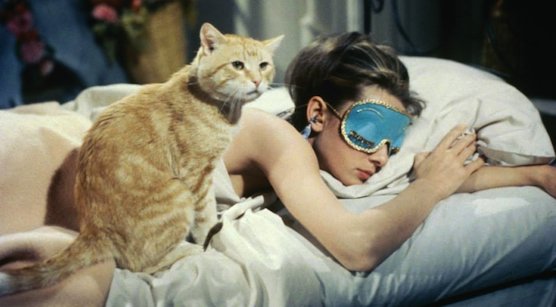
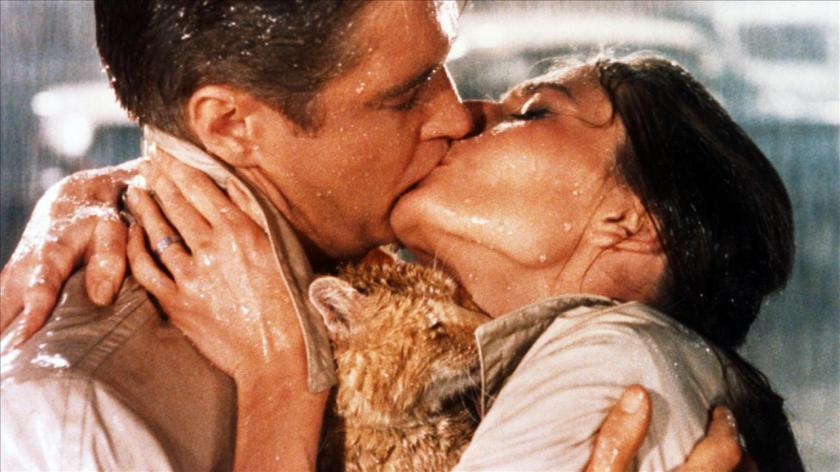
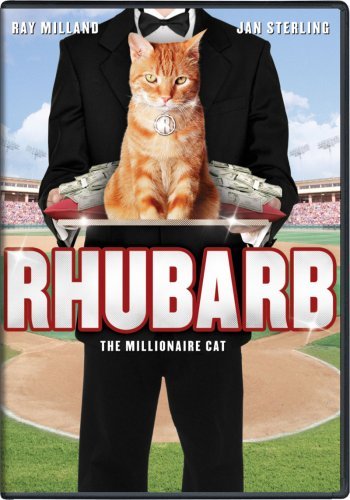
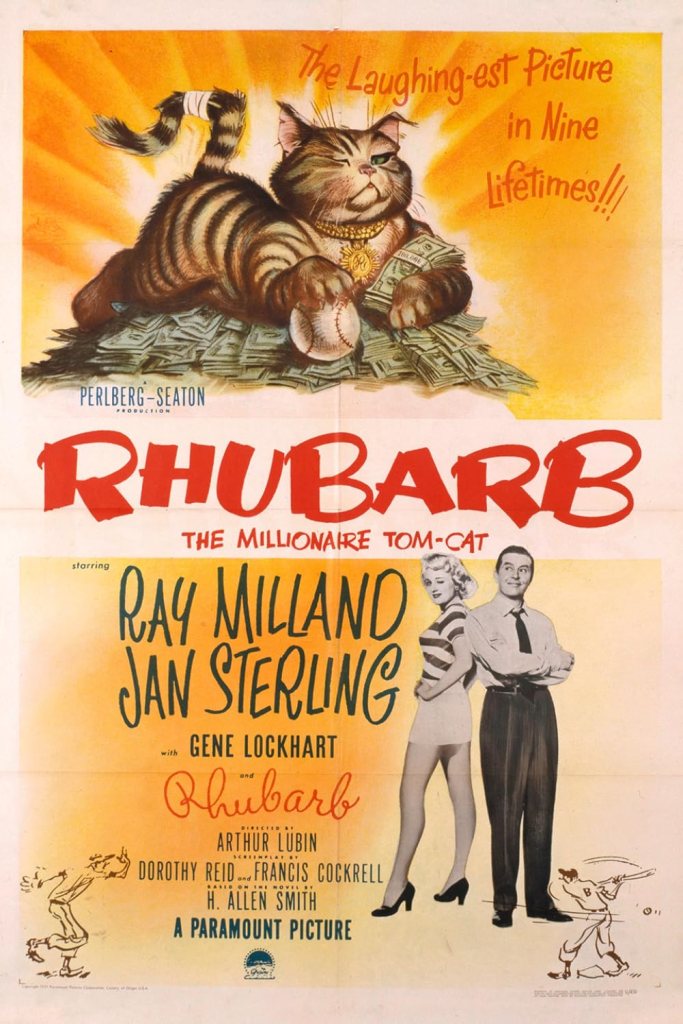
Orangey, the cat who famously belonged to Audrey Hepburn’s character in Breakfast at Tiffany’s, had an impressive and improbable film career beginning with 1951’s Rhubarb and ending with roles in TV series like Green Acres and The Flying Nun almost two decades later.
A new story in The Guardian charts Orangey’s film career and attempts to reconcile conflicting information about the famed feline. At least two cats played Orangey in Breakfast at Tiffany’s, while potentially dozens were used for Rhubarb, a comedy about a cat who inherits his wealthy late owner’s fortune and assets, including a baseball team.
“Watching the cat performances both within the movies and across the different titles certainly lends credence to the idea that Orangey was more a cat type, provided by trainer Frank Inn, than a specific animal,” The Guardian’s Jesse Hassenger writes.
Orangey had a prolific career in film and TV, one that would have been very difficult for a single cat to manage due to the number of appearances and the unlikely length of his tenure as Hollywood’s top cat.
In fact, color mattered less than resemblance because most of Orangey’s appearances were in black and white, so it’s possible Orangey wasn’t always Orange. (Later performances were filmed in color and some films were subsequently colorized.)
Using more than one cat for a role is pretty standard in Hollywood films that feature felines. Keanu, the 2016 Key and Peele comedy about an eponymous kitten who is stolen by drug dealers, cycled through several kittens as the pace of production was simply too slow compared to the rapid growth of real life kittens. In 2024’s A Quiet Place: Day One, two very similar-looking cats, Nico and Schnitzel, shared the role of Frodo, the cancer-stricken protagonist’s emotional support animal.
Why do people steal cats?
In early 2023, more than 50 cats in and around Kent, England, were abducted and returned with patches of fur shaved off.
At first people suspected the perpetrators were engaged in some bizarre form of animal cruelty — and some later copycats, for lack of a better word, across the UK may have been motivated to cause distress — but authorities later said they believe the catnappers were checking to see if the felines were spayed or neutered.
If they weren’t, those cats were kept for breeding, while the others were dropped off where they were found.
A cat shaved during spay/neuter surgery. Credit: jp_the_man/reddit
That rash of disappearances and other cases of car abductions factored into a staggering report from the Royal Kennel Club’s lost pets database: of the 25,000 pets reported missing in the UK between January 2023 and June 2024, more than 20,000 were cats.
Those cases and others are highlighted in a report from The Telegraph published on Thursday detailing the increase in reports of stolen felines. While the actual number of police reports are unknown due to discrepancies in the way such cases are classified by police, data from the Kennel Club and microchip companies, as well as anecdotes, indicate a concerning spike in cat theft even as the UK has mandated microchips for every pet cat.
Some, like the recent case involving an Amazon delivery driver, are crimes of opportunity. They’re spur-of-the-moment decisions by people who encounter cats they might want for themselves or people close to them.
Others, like the mass pet thefts in Kent, could have ties to larger organized crime operations.
And some are attempts to make a quick quid by petty thieves who count on the emotional bond between plpeople and their animals to demand ransom for the four legged family members, like one couple who abducted a woman’s cat and ransomed her for the equivalent of a few hundred dollars.
That woman, who was identified only by the pseudonym Helen in the story, said she was torn between getting her cat back and encouraging the people who took him.
“I was worried the same thing would just keep happening,” she told the newspaper. “It’s not something you want to encourage – paying to get your cat back – in case they do it again.”

 Pain In The Bud