Some People Bestow An Absurd Number Of Nicknames On Their Cats

Pity the poor pets who must endure being called Shmubbles, Miss Hissy Cakes and Mr. Oo Oo Ah Ah.

In a viral Reddit thread, a user reveals she’s given her cat more than 20 nicknames, and a surprising number of fellow Redditors have weighed in with long lists of names they call their furry friends.

The original poster’s list is extensive: “Milo (his real name), Milosh, Baby, Mr Baby, Mr Meh, Mr Mrreh, Mr Moo, Mr Milo, Mr Handsome, Mr Eh Eh, Mr Oo Oo, Mr Oo Oo Ah Ah, Mr Baum Baum, Mr Grumpidy Bumpidy, Mr Ping, Mr Pink Pitty Pads, Mr Orange, Mr Punchy, Mr Puffy Pants, Mr Pretty Pants, Mr Princess”

“Valentina. AKA Tina, Valley Girl, Teenie, Teenie Weenie, Queenie Teenie Beanie, Tina Beana, Fluffer, Fluffercakes, Missy Hissy Cakes, Missy Floofy Pants, Felix, Felick, Felicky, Baby Girl, Mama’s Baby Girl.” another wrote.

Another: “Luna, which turns into Lu, Fluff, Fluff Bucket, Fluff Butt, Fuzz Butt, Fuzz face, or various meowing sounds.”

Most of the people who responded to the thread have handles that mark them as female, and I’m going to go ahead and assume the vast majority of the others are too.

You just can’t call your cat Shmubbles or Mr. Grumpidy Bumpidy and retain your man card. It is not possible.

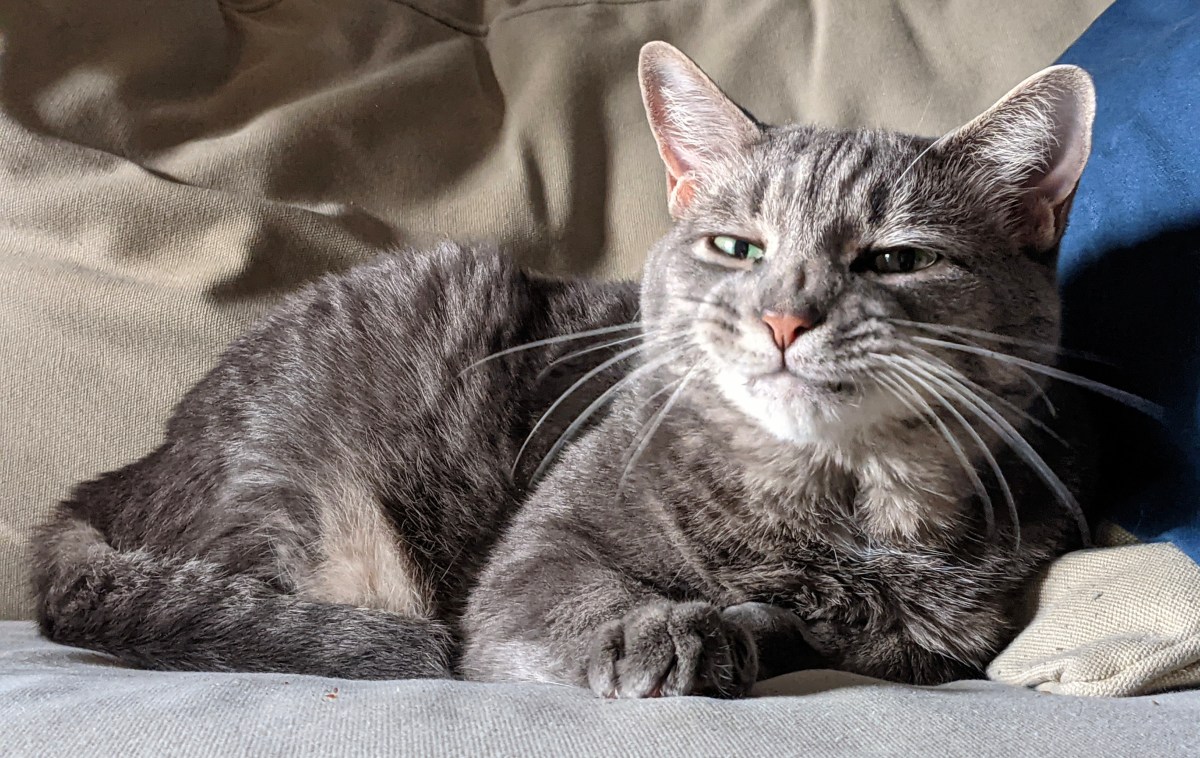
Here at Casa de Buddy, we keep it simple: Bud or Buddy. I feel like if I just start freestyling names, little man is going to be confused.

Call me “Mr. Buddy Wuddy” and I’ll murder you, human.

Indeed, that’s the subject of Mollie Hunt’s Oct. 6 post, “What’s In A Name?”, which notes we should call our cats by their proper names for good, practical reasons: not confusing the little ones, getting them accustomed to responding to their names, and the peace of mind that comes with knowing they’ll respond in an emergency.

Research has repeatedly confirmed what we’ve all known anecdotally: domestic felines know their names and they even know the names of other cats they live with. They may not always deem a human worthy of a response, but they hear us and they know we’re calling for them.

I do call Bud other things, but they tend to be invented by my sleep-deprived brain when he insists on screeching in my ears or standing on my face to get me out of bed.

They’re not really nicknames so much as they’re insults, but don’t worry — no egos were bruised in the process. In the past I’ve thrown pillows at him for his relentless assaults on my sleep, and he seems to think that’s hilarious.

So yes, in the momentary anger of getting woken up for the fifth time in an hour, while he’s standing on my face and the tips of his back claws are digging into my cheek, I might mumble “Shut up, you furry little turdball!” or threaten to defenestrate him like an out-of-favor Russian oligarch.

But I dote on the little guy, function as his faithful servant, and try to give him his best life. I’ve also seriously considered constructing a throne for him. What’s a little “annoying little jerk” between friends? It all evens out!
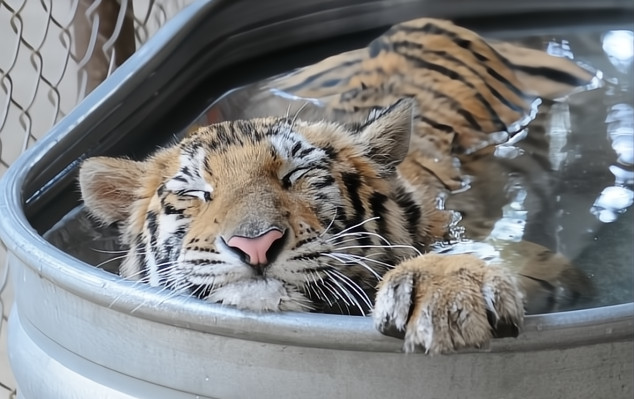
Wordless Wednesday: Awesome Photos Of Tigers Swimming!

For tigers, going for a dip on a hot day is pure bliss.

Most cats wouldn’t go near water if even if you lured them with a giant spread of catnip and Temptations on an inflatable table.

But tigers? They love it. Here are some shots of the world’s biggest cats taking a dip.

A Malayan tiger named Azul going for a swim at the Bronx Zoo. Credit: Julie Marsen Laher, Wildlife Conservation Society

Siberian tigers in a tub at a sanctuary in Russia. Credit: digger03/Flickr

This meme made me laugh.

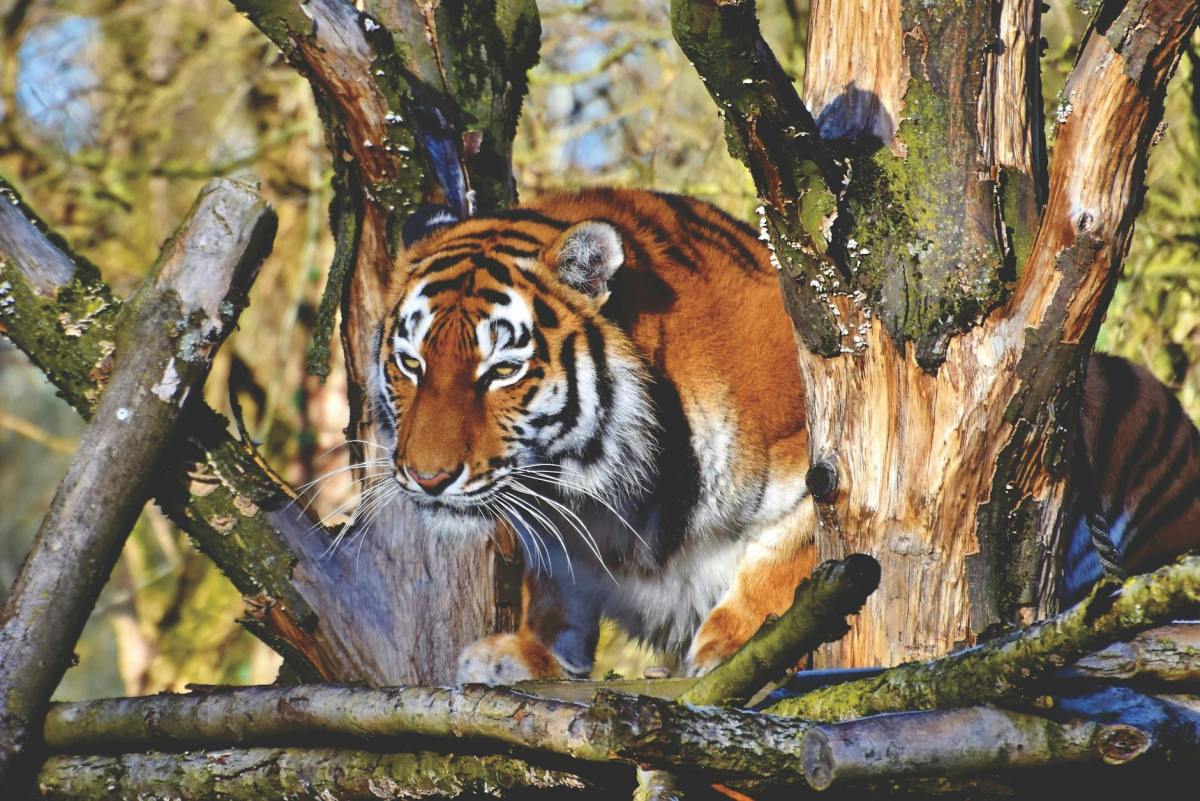
Aasha was rescued from a traveling circus after an inspector found her sickly, suffering from ringworm and only 30 pounds at 8 months old. She’s flourished since she was brought to a sanctuary where she’s been given proper care, a good diet and a calm environment. Aasha is also pictured in the feature photo up top.

A tigress and her cubs cooling off in a river in India. Credit: Sandesh Kadur

Sundarban tigers are a subspecies of the Bengal who live in mangrove forests and are well-adapted to swimming. This Sundarban tiger was spotted on a wildlife tour in India. Credit: Soumyajit Nandy/Wikimedia Commons

This tiger cooled off on a hot day at the Dortmund Zoological Garden in Dortmund, Germany. Credit: Hans Stieglitz/Wikimedia Commons

Tigers Make A Triumphant Return To Russia’s Far East, Bringing Hope To The Species’ Future

For the first time, humans have successfully returned orphaned tiger cubs to the wild after raising them and training them to hunt.

For more than 50 years, tigers were absent from Russia’s Pri-Amur region.

Sparsely-populated, mountainous and blanketed in forest, the domain borders the heart of the Russian Far East, offering hundreds of thousands of contiguous square miles for the most robust sub-species of Earth’s most magnificent predator.

Here, tigers can roam without fear of conflict with local farmers, or roads that carve up habitat and pose a danger to animals trying to cross. Prey is abundant, and adaptations for surviving in the local terrain are coded into the tigers’ DNA.

Now that scientists have proven for the first time that tigers can be successfully reintroduced into such an environment, big cat advocates imagine Russia’s Far East as a haven for the large felids. It’s a place where tigers can thrive, mate, reproduce and change the outlook for their species, which has dwindled to only 4,000 or so remaining in the wild.

tigers in nature
Credit: Leon Aschemann/Pexels

The project to reintroduce Amur tigers to their native habitat is a cooperative Russian-American endeavor. The team started by building a tiger conservation center in the Amur oblast a decade ago.

The facility is built in a way that orphaned tigers can be raised and taught how to hunt without directly interacting with their human caretakers. That’s a crucial component, because tigers who see humans as potentially friendly or sources of food have drastically reduced chances of surviving in the wild, and are easier marks for poachers.

After 18 months, the cubs are brought to remote locations in Pri-Amur and released. Of the first group of orphan tigers released into the wild, 12 were able to survive on their own.

One gluttonous tiger failed: he crossed over the border into China and began eating domesticated animals, including 13 goats in what researchers called “a single event.”

The fattened tiger then retraced his steps to Pri-Amur, and when he didn’t show fear of humans, the team decided he had to go. They captured him and sent him to a zoo, where he gets all the free meals he wants and contributes to the captive breeding program helping his species maintain genetic diversity.

With 12 out of 13 tiger re-introductions successful, the program provides “a pathway for returning tigers to large parts of Asia where habitat still exists but where tigers have been lost,” said Viatcheslav V. Rozhnov, who leads the reintroduction project.

tiger
Amur tigers are the largest cats on Earth. They’ve evolved to survive in regions where winters can be brutally cold and snowy, but they also thrive in spring and summer when the snows melt and prey is abundant. Credit: Pexels

The successful reintroduction has also led to some surprising developments. Two of the cubs, Boris and Svetlaya, were unrelated but were rescued at about the same time and raised in the Russian orphanage for their species.

Using tracking devices they’d placed on the newly-released young tigers, the research team watched as Svetlaya settled into a home range and Boris made a beeline for her, “almost in a straight line,” crossing 200km (120 miles) of terrain to reunite.

The team’s hopes were confirmed six months later, when Svetlaya gave birth to a healthy litter of cubs, the first natural-born tigers to result from the reintroduction project.

Another tigress, Zolushka, also gave birth to a healthy litter when she was reintroduced in an area closer to a still-extant population of Amur tigers. The researchers believe the father was born wild in the region and was not part of the reintroduction program.

The wilderness in Pri-Amur and its environs is so vast, untouched and undesirable to human habitation that it could be home to generations of tigers, securing their future after so many decades of grim news for the iconic big cats.

“The grand vision is that this whole area would be connected,” Luke Hunter, executive director of the Wildlife Conservation Society’s Big Cats Program. “There’s lots of habitat that could be recolonized by tigers.”

FBI: Felines Behind Mysterious Drones Spotted In Night Sky

Some observers believe the drone sightings are merely the first stage in an all-out feline takeover of the US. So far, cats have remained mum on their motivations, preferring instead to sow panic among Americans.

WASHINGTON –The caller was breathing heavily and speaking in rapid-fire sentences as if he had only moments to get the words out over the air.

“I’m telling you, Art, it’s the cats — the cats are piloting these drones!” the caller told Coast to Coast AM radio host Art Bell shortly after 1 am ET on Friday.

“Hold on, hold on,” Bell said theatrically. “You’re saying this has nothing to do with aliens or the government?”

The caller sighed.

“The cats may very well be in league with aliens, but I’m telling you, felines are behind…oh God! They’re here!”

The radio broadcast crackled with distorted hissing and yowling, punctuated by the caller’s pleas for mercy.

“Caller? West of the Rockies, are you there?”

The caller screamed a final time and the line went dead.

“Wow,” Bell told his audience of several million overnight listeners. “There you have it, folks. You be the judge, but that sounded like the real deal to me. Cats are piloting the mysterious drones!”

For weeks, Americans have been asking for answers about swarms of suspicious drones operating above homes, businesses, military bases and government buildings at night.

After rampant speculation that the drones could belong to rogue states, or could be part of some secret government flight test, the FBI confirmed Friday that felines are behind the frequent sightings.

Drone at night
A drone flies above a farm and ranch as the sun fades. Drones have been spotted circling chicken and turkey coops, as well as fish markets.

Biden administration officials confirmed to several media outlets that intelligence supported the theory that cats — not Iranians, Russians or some secret Pentagon operation — are operating the drone swarms that have been lighting up the night sky in states like New Jersey and Maryland for several weeks, befuddling local and state officials.

“At first we thought the idea was absurd,” said a high-ranking official, who spoke on condition of anonymity. “Then we received reports of drone swarms circling several meat-packing plants, a Chewy distribution center in Trenton, and two PetSmarts in northern New Jersey.”

So far, the felines’ motivation remains shrouded in mystery, but experts on the small, furry animals ventured guesses on what may have motivated their sudden interest in aviation and airspace.

“No one’s claimed responsibility, so we’re left to speculate,” said Norah Grayer, a feline behaviorist with NYU’s Gummitch School of Veterinary Science. “But it may be that felines, as a whole, have decided the meow is insufficient for getting their demands across. Humans have become adept at tuning out those vocalizations, so this may be the next step in an attention arms race, so to speak.”

Noted cat expert Jefferson Nebula offered a different explanation.

“Cats are notoriously subject to FOMO, which is one reason why they can’t abide closed doors,” he said. “If someone managed to convince them that we humans were holding out on them, and there are entire worlds of yums we keep for ourselves, well, that would spark the wrath of these otherwise friendly little guys.”

Cat with drone
Felines have mastered control over aerial drones despite their lack of thumbs.

For his part, Bell consulted with Michio Kaku, the physicist and science communicator who has been a regular presence on Coast to Coast.

“We physicists have been saying for decades that cats are much more intelligent than we give them credit for,” Kaku said. “This could be retribution for the Schroedinger’s cat thought experiment, or felids may be looking to surpass humanity’s understanding of 11-dimensional hyperspace.”

“Professor, we’ve spoken quite a bit about the Kardashev scale [of civilization progress] in the past,” Bell said. “If we separated human and feline societies, where would we each fall on the scale? Humans are about a zero point seven, are we not?”

“That’s right,” Kaku said. “We physicists believe humanity is on the cusp of a Type I civilization, with things like the internet as a Type I telecommunications system and fusion power on the horizon. However, if you break it down and cats were separated into their own civilization, cats could plausibly already be a Type I civilization.”

“They’re ahead of us?”

“That’s right,” Kaku said. “We physicists believe cats can tap directly into primordial energies and have mastered quantum teleportation. In Star Trek, the Federation is a Type II civilization, and the Caitians — a species of alien cats — are part of the Federation. Yet it’s widely understood that the only reason the Caitians haven’t conquered entire swaths of the galaxy, like the Borg and the Klingons, is because of their strict adherence to their napping schedule and their inherent laziness. These drone swarms may be a signal that real-life cats are fed up enough to disturb their napping schedules, in which case we should all be terrified.”

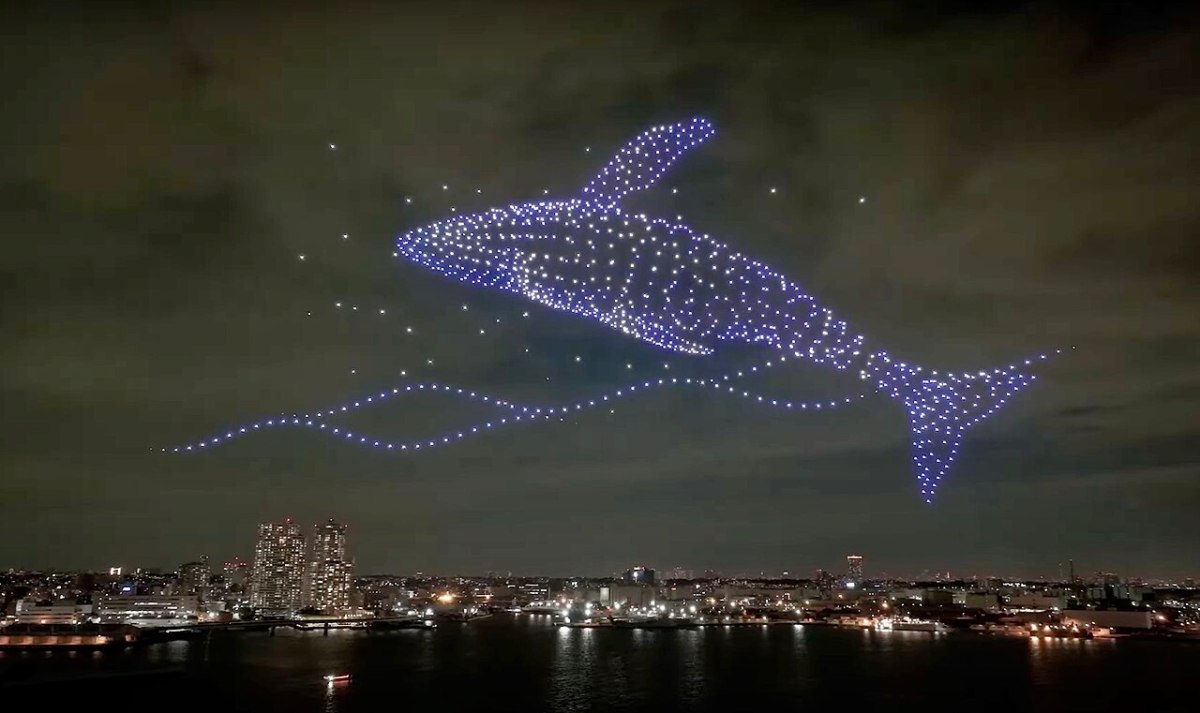
Header image of drone light show credit Wikimedia Commons

VOTE 4 BUDDY: Today’s The Day!

An optimistic Buddy began election day hoping momentum would carry him to the White House, where he plans to implement dozens of food-related measures.

WASHINGTON, D.C. — With a crowd of more than 60,000 chanting his name, Buddy the Cat made his final appeal to the nation’s felines on Tuesday as they headed to the polls.

“These past four years have been a tragedy,” the candidate told the crowd. “The consistency of wet food has been subpar, dry food has been less crunchy, and Americats are suffering because of inflation, with some snacks costing three times as much as they did in 2020!”

The crowd yowled viciously, expressing its displeasure.

“My opponent, the tyrannical Smudge the Cat, thinks he can hoard all the best snacks for himself while regular Americats make do with grocery brand crunchies,” Buddy continued. “Well I’m here to say ‘Enough!’ I’m here to say that every cat deserves to gorge him or herself on whichever snack they like! I’m here to say no more restrictions on napping spots! I’m here to say that there should be mandatory quiet hours during the dozen scheduled nap times per day!”

The crowd erupted in cheerful meows, waving Americat flags and giant poster-size images of Buddy looking presidential.

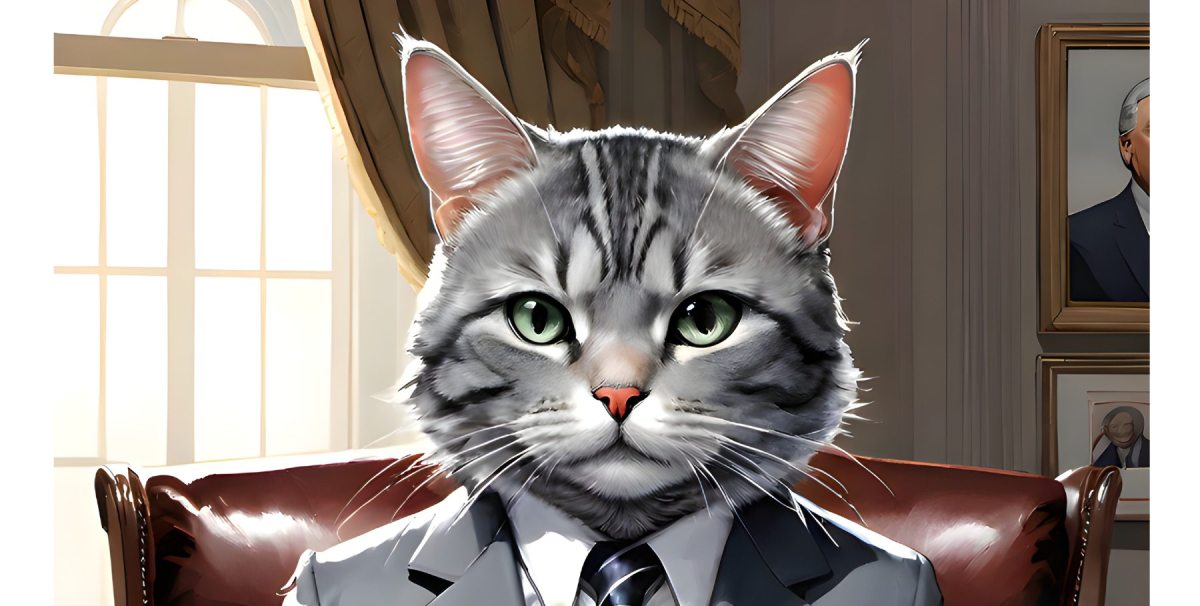
President Buddy
A campaign ad for Buddy4Americats.

“I’m also here to tell Vladimir Putin’s cat: Your time has come, Boris! Buddy the Cat is here to kick butt and eat meaty sticks, and I’m all out of meaty sticks!”

“Buddy! Buddy! Buddy!” the crowd roared.

“And to my friends,” Buddy continued, “the tigers of Asia, the lions, leopards and cheetahs of Africa, and our dear fellows, the pumas and jaguars of the Americas, we will form a coalition to bring Boris and his evil servant to heel, liberating Russian cats from the authoritarian rule they have endured for so many years.”

As the crowd chanted his name again, Buddy was hit by a bedazzled pink collar. Waving off half a dozen Sleepy Service agents who moved to quickly close ranks around him, Buddy winked at the Calico who’d thrown the collar, and she fainted.

“Someone get that young lady a bowl of water,” the candidate said, “and make sure her human has my human’s phone number.”

Cats padding out of the rally were enthusiastic and hopeful about their chances.

“Smudge is a corrupt, chubby and inept ‘leader,’ and I use that word in the loosest possible sense,” said Milo, 3, who was voting for the first time. “Buddy’s agenda is the most delicious, and that’s why he’ll win.”

Luna, 5, said Buddy has all the qualities an Americat president should have.

“He’s strong, he understands the importance of naps,” she said, “and he’s so dreamy!”