Buddy the Cat asserts he is a powerful apex predator who fears no man or beast, while Buddy the Cat runs and hides the moment there’s an unfamiliar sound in his domicile.
I Am An Apex Predator!
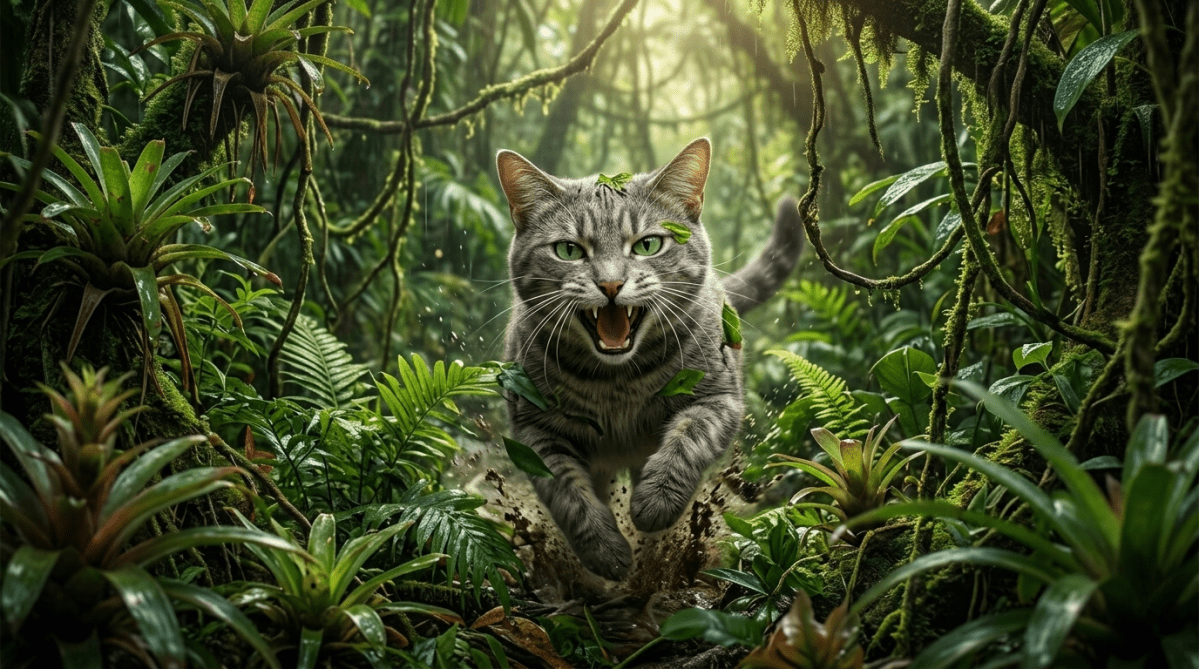
Behold! I have the gait of a lion, the bite force of a tiger, the stealth of a jaguar, and the relentlessness of a leopard!
My meowscles ripple meowscularly as I stalk my prey by moonlight! One second all looks safe and calm, and the next I’m leaping from cover in a burst of feline power to ambush my unfortunate prey!
Lesser creatures have nightmares about me. Indigenous cultures celebrate my legend in oral traditions. Craftsmen carve bas reliefs illustrating my mastery over all beasts. Shamans invoke my speed and strength. My toys quake at the mere mention of my name!
I am Buddy, and I am a ferocious cat! RAWRRR!!!
‘OMG, What Was That Noise?!? Go Check It Out, Human!’
Holy crap, dude! What the heck was that?
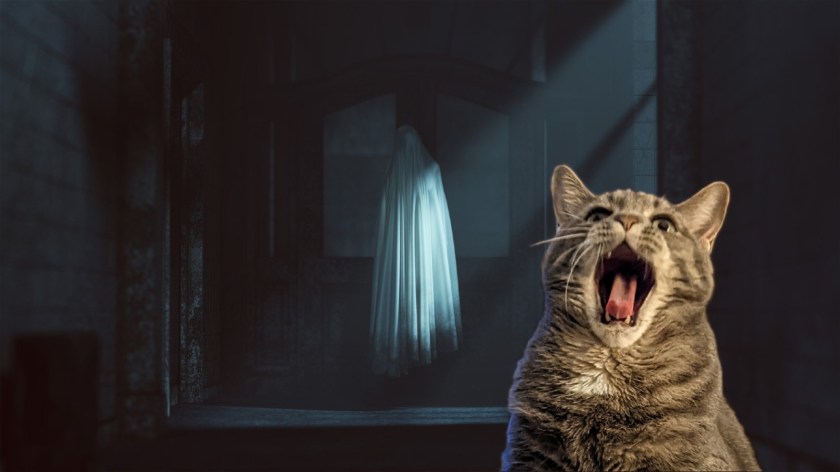
I’m just gonna run and hide under the bed while you investigate that awful, terrifying noise! No, YOU check it out. Are you crazy? I’m not going anywhere near there! What if it’s, like, a serial killer or a chalupacabra?
Where’s it coming from? The kitchen? The bathroom? Oh God! I told you, there are monsters living in the toilet and they can emerge at any second to murder us in our naps! We should have nailed the toilet seat down years ago! You didn’t listen to me, so you’re gonna have to fend off the monsters while I lend you moral support from three rooms away.
What? Duuuude.
Was it really your smartphone alarm on vibrate? Whew! For a moment there, I thought we were in trouble.
Now I’m gonna need you to rub my head while I sit in your lap and you tell me what a good, brave boy I am. If it really had been monsters, they would have gotten their butts kicked by me. I was brave, wasn’t I?
If you slander me by claiming I freaked out and ran to hide under the bed, I will be forced to accuse you of peddling fake news!
Point-Counterpoint presents two essays taking opposing positions on a topic. Join us again next week, when Buddy the Cat will debate Buddy the Cat on another important topic.
A look at the strange and wonderful world of rare books where, of course, you’ll also find cats.
I’ve always liked the idea of antiquarian bookshops.
I am almost completely ignorant on the subject, mostly because chasing after extremely rare print volumes is the domain of people with a lot of expendable income. The most valuable books in my possession are an original 1939 first edition print of Will Durant’s The Life of Greece, and two novels signed by their authors. Their value is sentimental, not monetary.
But I like the general romanticized image of the antiquarian bookseller: an older man or woman in tweed ensconced in a cozy shop in Manhattan, with every shelf filled with dusty volumes and every surface covered by globes, astrolabes and other curiosities. There’s one of those tight winding staircases with wrought iron railings leading to a loft for access to the highest shelves, the music is from a vinyl collection of light jazz, and it’s always raining outside.
A doted-on shop cat dozes on a red leather armchair, tail twitching from some nightmare in which it’s slightly less adorable than it thinks it is.
Collectors in damp trenchcoats drop in, asking after 17th-century occult tomes, grimoires, and Voynich-esque manuscripts with engravings of impossible creatures, trees with visual organs and arcane rituals. Bibliophiles ask after leatherbound collections of classics like Don Quixote, and the occasionally curious passerby peeks in, surprised that such shops still exist in the age of the internet.
It turns out that’s not too far from the truth, especially the bits about the internet and, of course, the cats.
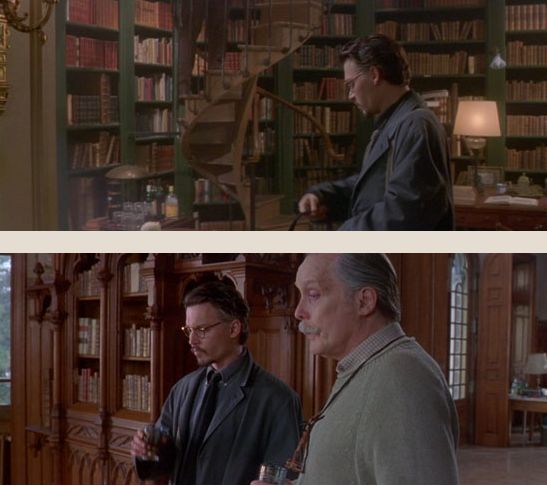
Johnny Depp is constantly smoking and drinking red wine while handling priceless old books in 1999’s The Ninth Gate. Notice the winding staircase in the rare book shop in the top screenshot.
The Booksellers is a documentary that screened in festivals in late 2019 before heading straight to video when the pandemic brought the world to a screeching halt.
It’s an inside look at the annual New York Book Fair and the small world of antiquarian and rare booksellers in New York, a shrinking constellation of people mostly descended from, or formerly apprenticed to, the booksellers of old before Barnes and Noble and Jeff Bezos laid waste to that sector of retail.
Before network TV, cable TV, dial-up internet, broadband, Kindles, iPads and smartphones turned us into a media-gorging — yet paradoxically less literate — society, New York was home to more than 500 bookshops, including generalists and specialists who catered to people with particular and peculiar interests. Now it’s home to fewer than 80, according to the documentary.
When the booksellers were asked about the way the internet has impacted their trade, their weary sighs reminded me of my older colleagues from my brief time experiencing the end of the “good old days” of newspapering, before the internet destroyed or compromised every publishing income stream and delivered us to this moment. This dystopian time when entire swaths of the country have become news deserts, Elon Musk in all his wisdom asserts that Twitter accounts run by anonymous trolls in Belarus are just as reliable — even more trustworthy, in fact — than those liars in legacy media, and corporate raiders are stripping the last handful of newspapers down to assets they can auction off.
A rare book shop in Paris. Credit: Wikimedia Commons
Not all of it’s bad. One rare book dealer laments the fact that “the thrill of the hunt” is gone, meaning it no longer takes years to track down some obscure volume because you can hop online and find it in a few clicks. I get that, but nostalgia for that sort of thing is the ultimate in looking back through rose-colored glasses. Plenty of us could wax nostalgic about the days when we’d hear a song on the radio and have to hum the damn thing to record store clerks, but we’re forgetting about the considerable frustration involved. Given the choice between “fun” ignorance and access to information, I’ll always choose the latter.
As for the cats, it’s not a surprise when many of the book dealers interviewed for the film identify themselves as cat lovers or idly scratch their feline friends while showing off their vast personal collections. Antiquarian bookshops tend to be warm, quiet, gently-lit spaces, perfect napping spots for cats who guard old books from rodents.
If you’re interested in watching The Booksellers, you can find it on Amazon Prime video, or better yet, just click below:
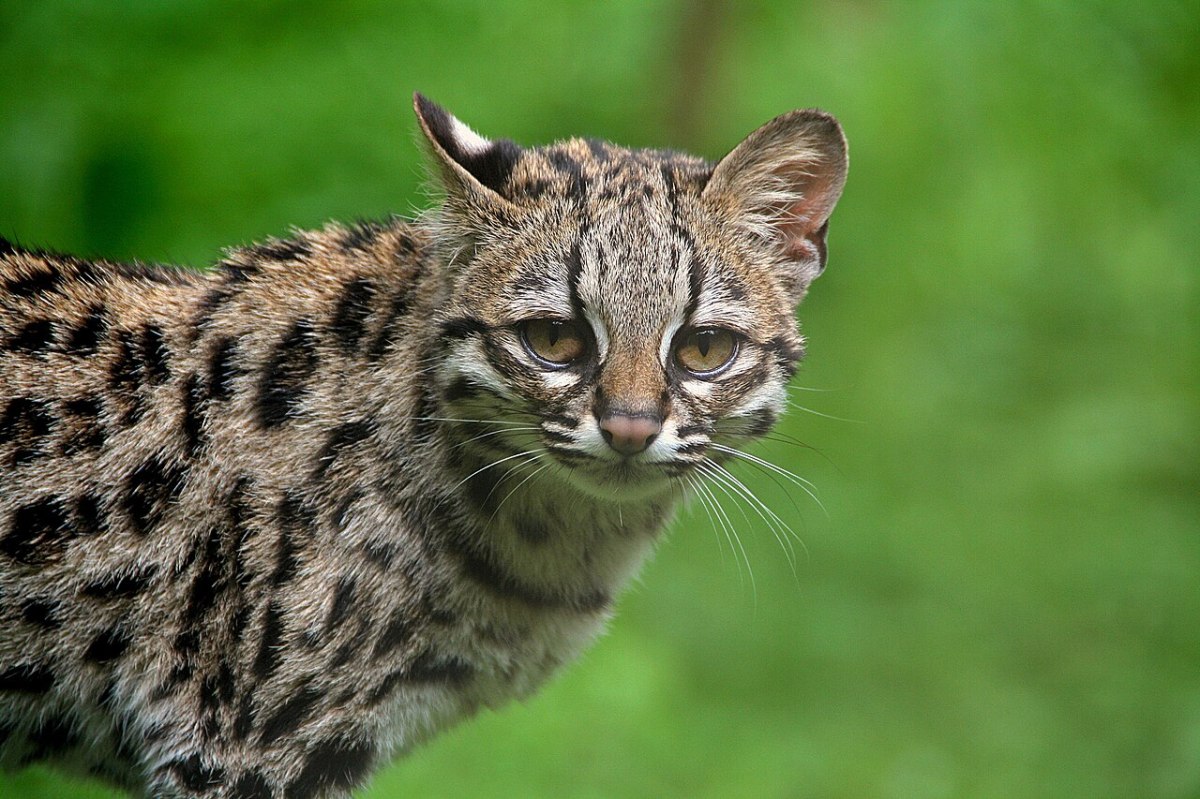
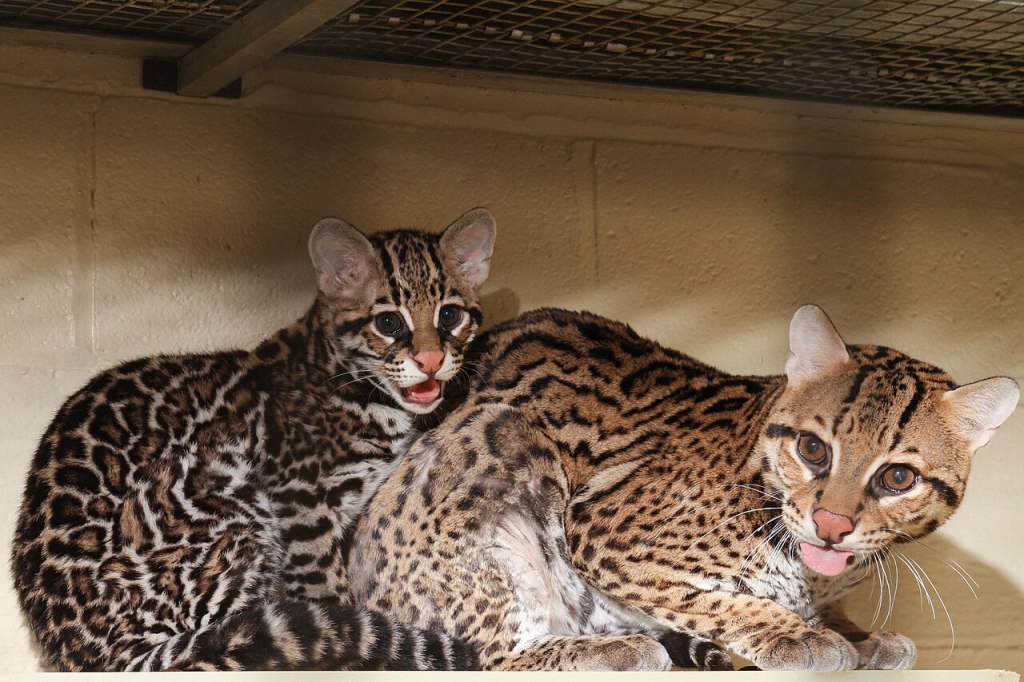
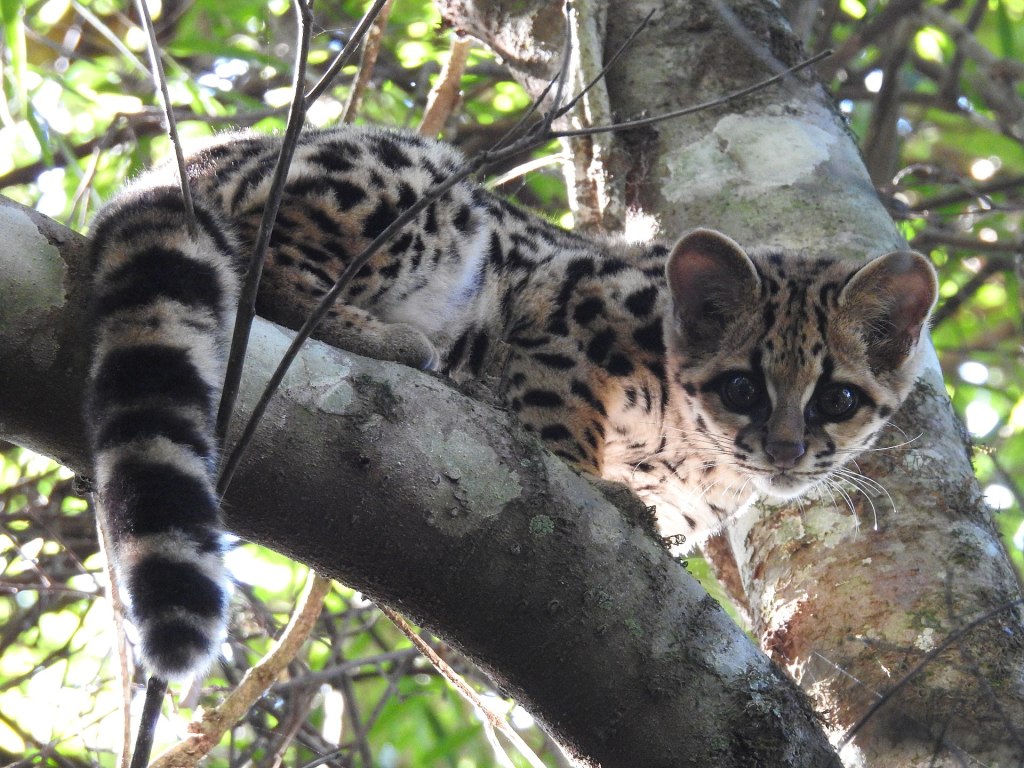
Strongly resembling ocelot cubs, margays have a unique biological adaptation to tree-climbing and a devious ability that gives them a massive advantage over their prey.
Taxonomic name:Leopardus wiedii Genus: Felis (small cats) Weight: Between 5 to 9 pounds with typical felid sexual dimorphism Lifespan: More than 20 years in captivity Gestation: About 80 days Litter size: Single kitten, rarely more than one Distribution: Central America, including Brazil, Paraguay, Peru, Chile, Ecuador, Venezuela, Guyana, Colombia, Panama and parts of Mexico IUCN Red List Status: Near threatened
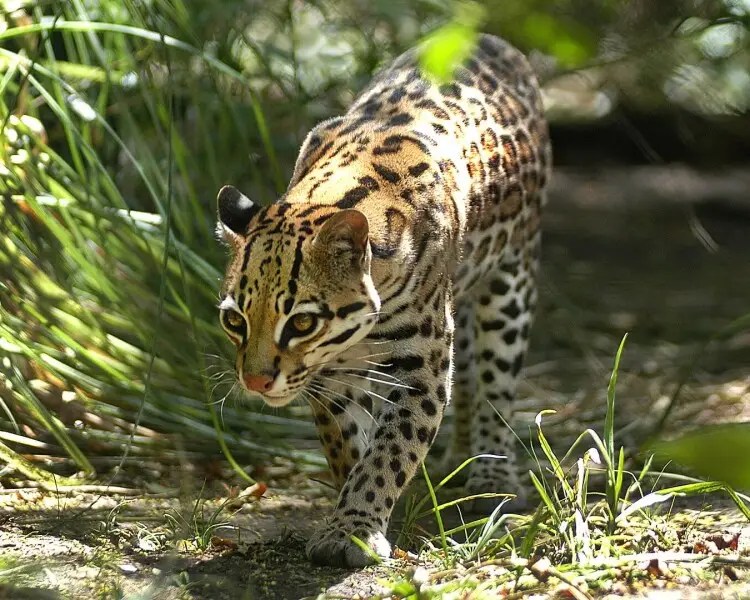
If you’re fortunate enough to catch a glimpse of a margay, you might think you’re looking at an ocelot cub.
The two species look remarkably similar, sharing beautiful rosette patterns in their fur, intense eyes and prominent facial stripes.
But ocelots are medium-size cats that can top out at 35 or 40 pounds, while margays are even smaller than domestic felines, weighing between five to nine pounds.
An ocelot cub with, left, with its mother. Margays are easily mistaken for ocelot kittens. Credit: Mark Dumont via Wikimedia Commons
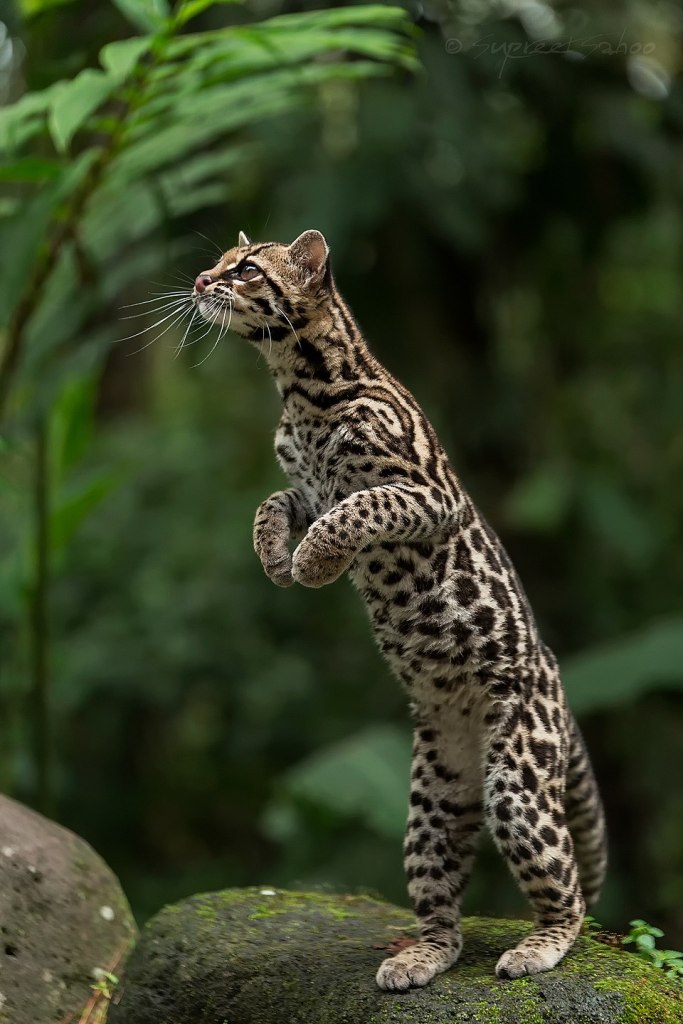
Living in jungles teeming with life, margays have a distinct advantage that allows them to escape land-based predators while making them a threat to monkeys and other critters living in the branches — they are outstanding climbers with unique biological adaptations that allow them to do things other cats cannot.
Credit: Supreet Sahoo via Wikimedia Commons
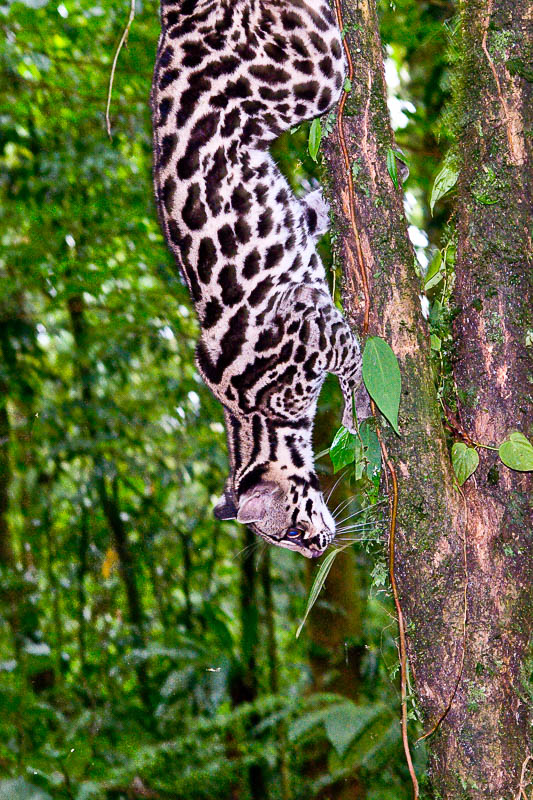
The most dramatic example is their ankle joints, which allow them to rotate 180 degrees as the little spotted cats anchor themselves to trunks and branches. As a result, margays don’t just climb with speed and ease, they are capable of swiftly evacuating trees by climbing down head-first like squirrels.
Other cat species lack that adaptation, which is one reason why we often hear about domestic cats who find themselves uncomfortably high up in trees or on utility poles, refusing to come down for days despite hunger and coaxing by humans trying to help.
A margay demonstrating its ability to climb head-first down a tree thanks to its unique ankle joints. Credit: James Kaiser
Margays are outstanding jumpers in addition to their unrivaled climbing ability, able to leap six to eight times their own height. It’s easy to see how these diminutive cats can intercept birds and monkeys far above the jungle floor in addition to hunting terrestrial mammals.
Indeed, using their large tails as a counterbalance, margays traverse branches with a swiftness and sure-footedness that rivals the gibbon.
The jungle’s tricksters
They’re also remarkably clever. Scientists have documented margays mimicking the vocalizations of monkeys, their favorite prey. In one documented example, a margay imitated the call of a baby tamarin, then ambushed the adult tamarins who approached to investigate the sound.
That’s a surprising adaptation for a cat species, and we should be thankful they’re tiny. The thought of tigers or leopards with that ability is terrifying.
Margays are solitary and due to their size, they’re both predator and prey. Because of that, these tiny cats spend the majority of their time well above ground level and are usually found deep in old growth jungles where they can blend into dense vegetation, hiding among leaves and branches, where their coat patterns help them blend in.
Like all wildcats, margays face increasing pressure from habitat loss, poaching and other threats, and they’re classified as near-threatened on the IUCN Red List.
Credit: Anderson Cristiano Hendgen via WikimediaCredit: Wikimedia Commons
Header image credit Clément Bardot via Wikimedia Commons
Copyright 2026 – Pain In The Bud – May not be reproduced without permission
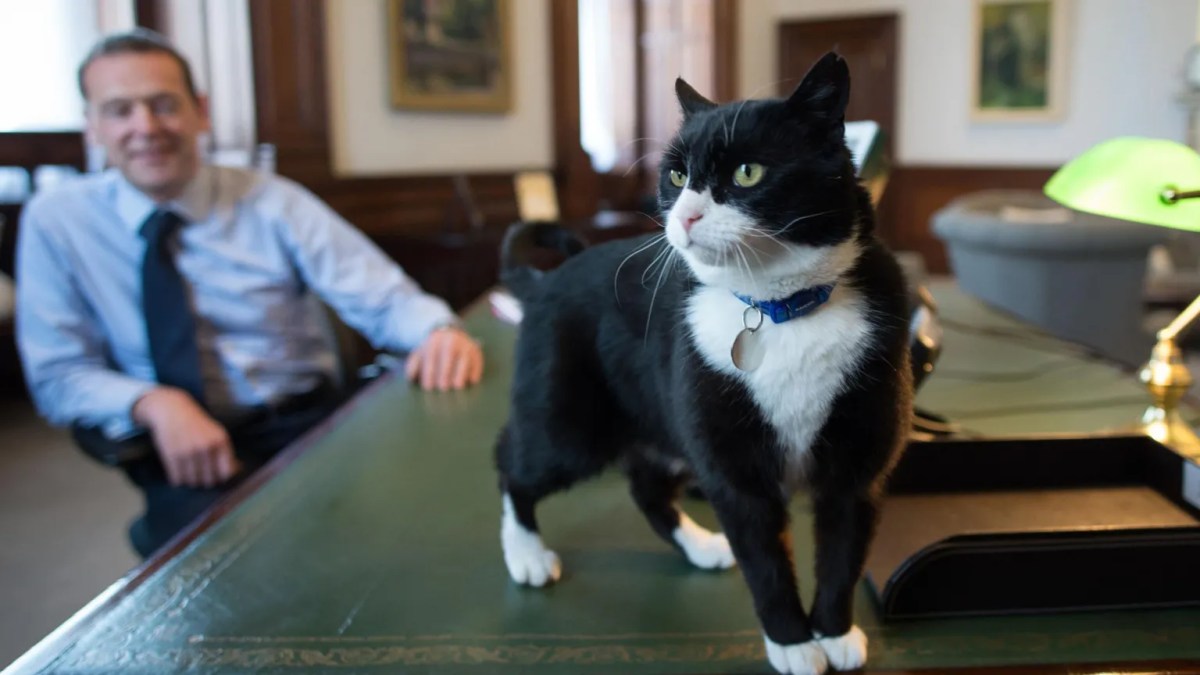
Named after a powerful prime minister, Palmerston was a hungry stray who was found on the streets of London and quickly made his mark when he was appointed mouser to the UK’s Foreign Office.
Some sad news today: Palmerston, the UK Foreign Office’s strong-willed mouser and foil to Larry the Cat, has passed away.
Palmerston was scooped up in 2016 “as a hungry, underweight stray wandering the streets of London, with no owner traced and no microchip,” London’s Battersea Cats and Dogs noted in a post.
The Foreign Office staff were looking for a new mouser to keep rodents at bay in Whitehall when Battersea recommended the cute tuxedo, and recognizing greatness, the staff brought the little guy on immediately and named him after Henry John Temple, better known as Lord Palmerston, who served as prime minister in the 1850s during the height of the British Empire.
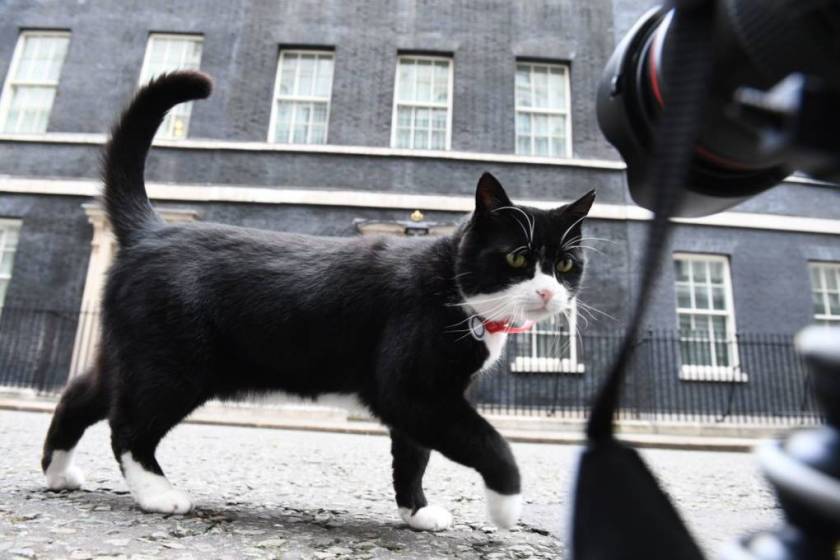
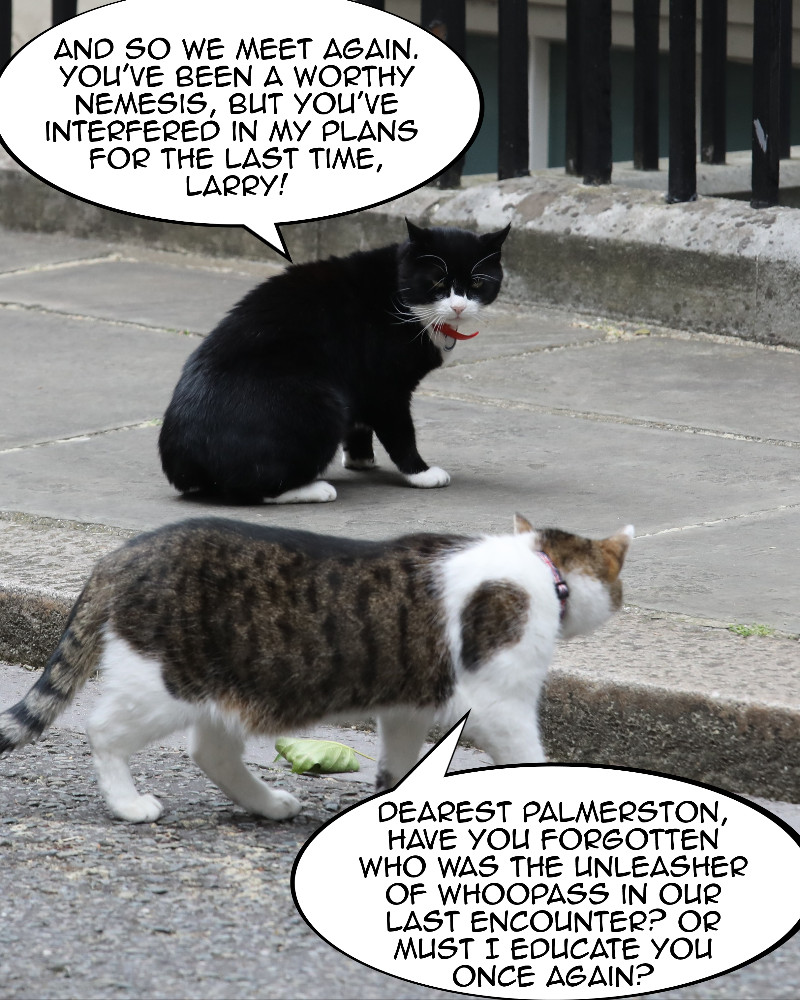
Palmerston the cat, just two years old at the time, took to his new job with enthusiasm — perhaps too much so. The territorial tuxedo quickly developed a reputation for turf battles with his rival mouser, No. 10 Downing St.’s Larry the Cat.
Their skirmishes, which often occurred within the full view of reporters and photographers covering UK government, soon became the stuff of legend, producing several iconic images of the two felines in battle in their eternal struggle for status as top cat in the UK government.
The fearless feline’s hijinx included invading Larry’s inner sanctum in 2016 when he snuck through an open door at No. 10, and while Larry was known for visiting his “lady friend,” Maisie, Palmerston struck up a relationship with Freya, another mouser with a post on Downing Street.
When society’s gears grinded to a halt with the 2020 lockdowns in response to the COVID pandemic, Palmerston “retired” to the countryside with his loyal human, former Royal Navy officer Andrew Murdoch.
Little Lord P enjoyed the quiet life for several years before thrilling fans a year ago with his announcement that he was returning to public life as “feline relations consultant” to Murdoch in his new post as governor of Bermuda.
Admirers followed Palmerston’s antics in the tropical locale via updates on social media. He was living the high life, free of Larry’s evil machinations.
Palmerston patrolling Downing Street.
Palmerston died on Feb. 12, Murdoch wrote in a post on the famous feline’s X account.
“‘Palmy’ was a special member of the Government House team in Bermuda, and a much loved family member,” the post reads. “He was a wonderful companion, with a gentle nature, and will be sorely missed.”
A reply from Larry’s account indicated the former rivals had called a truce: “Farewell old friend,” Larry’s servants wrote on his behalf.
Palmerston, left, and Larry, right, during one of their epic battles while Palmerston was still top cat at Whitehall.We had a lot of fun with the Palmerston-Larry rivalry here on PITB, admiring both mousers.
While this is sad news, Palmerston will not be forgotten, and we’re confident he’ll take to his new post across the rainbow bridge with the same zeal he applied to his work on behalf of the people of the UK. RIP, little guy.
Hat tip to our friend Platypus Man, who notified us of today’s sad news. If you enjoy photos of far-flung locales, check out his blog, which features posts about his many travels around the world. Thanks, P!
A reboot of the iconic scifi-horror film upends the balance of power, placing the feline at the very top where he should be.
The long-anticipated Alien reboot starring Buddy the Cat hit theaters this weekend with audiences flocking to see the modernized classic after effusive praise from critics.
Featuring the new tag line “In space no one can hear you scream — unless you’ve got Buddy on your side,” the reboot reimagines the science fiction-horror classic as a cautionary tale about messing with cats.
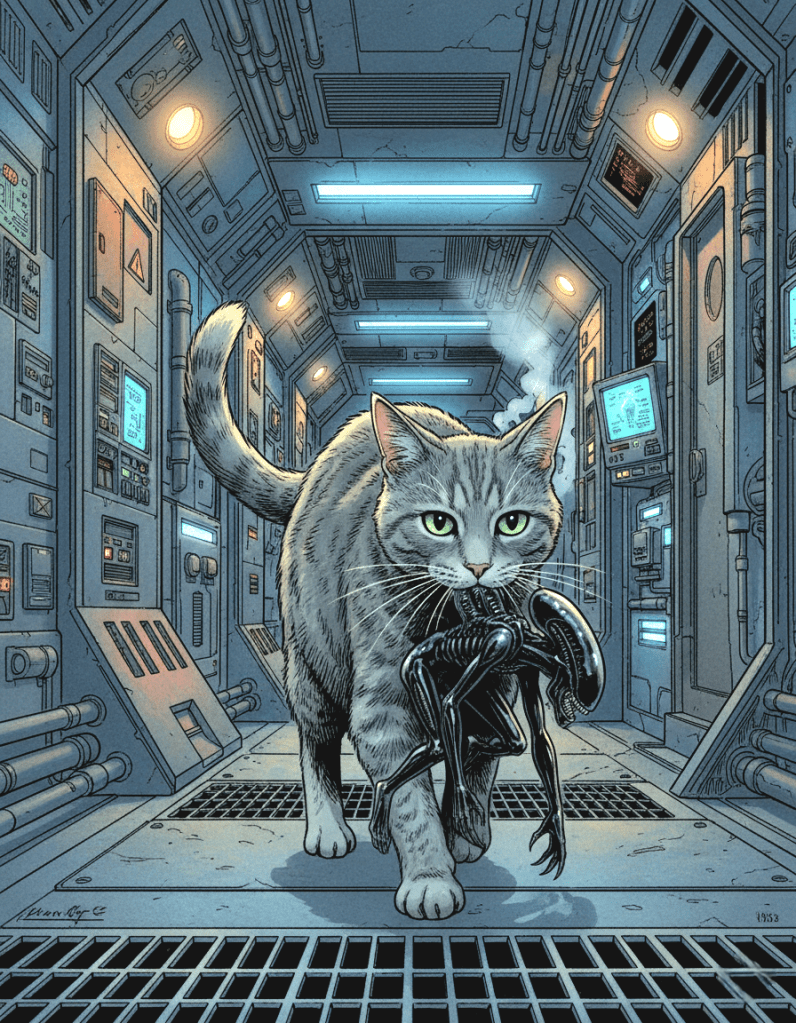
“While the original built tension over almost two hours and inspired an overwhelming feeling of dread in viewers, the new Alien clocks in at just 28 minutes and ends right after the iconic chestburster scene,” critic Ferdinand Lyle wrote. “Instead of screeching into the shadows of the ship to commence its turbocharged metabolic processes, only to emerge later as a fully formed creature who terrorizes the crew, this alien is immediately caught by Buddy, who delivers a swift kill bite and deposits it in front of the humans. They reward him with a chorus of ‘Good boy!’ and rub his head while plying him with snacks, and the credits roll. Now that’s efficient storytelling!”
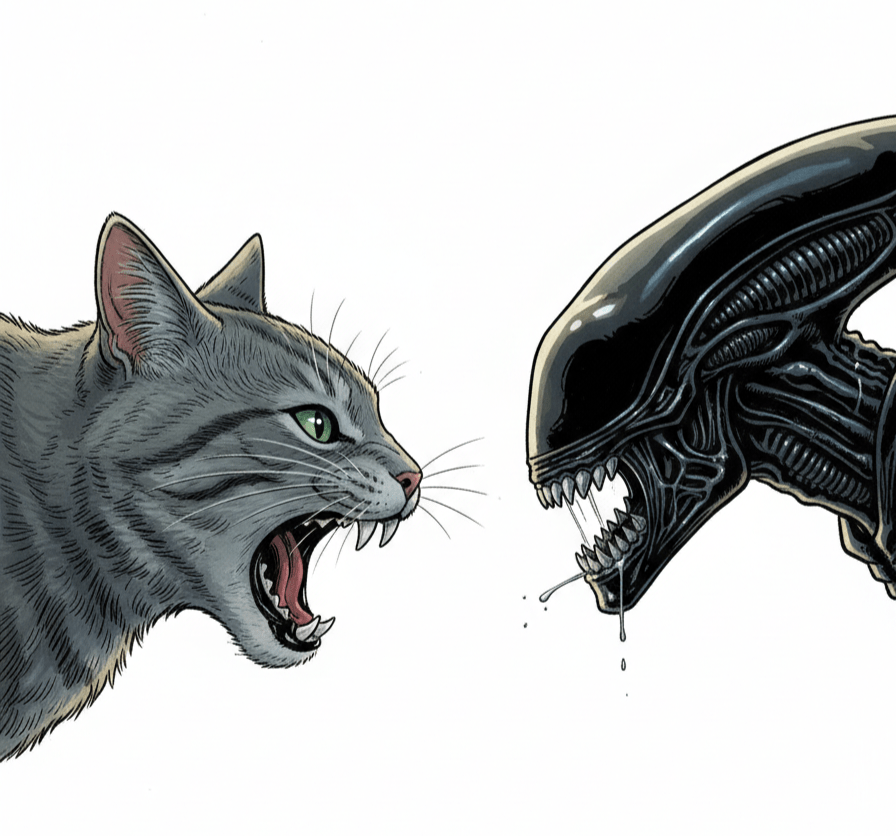
The Alien 👽 was no match for Buddy, who woke from a nap to dispatch the creature with brutal efficiency.
The new version is “the ultimate FAFO flick,” raved the AP’s Misty Lemire.
“The central message here is ‘Don’t tangle with Buddy.’ The apex predator of the cosmos is no match for the apex predator of Earth.”
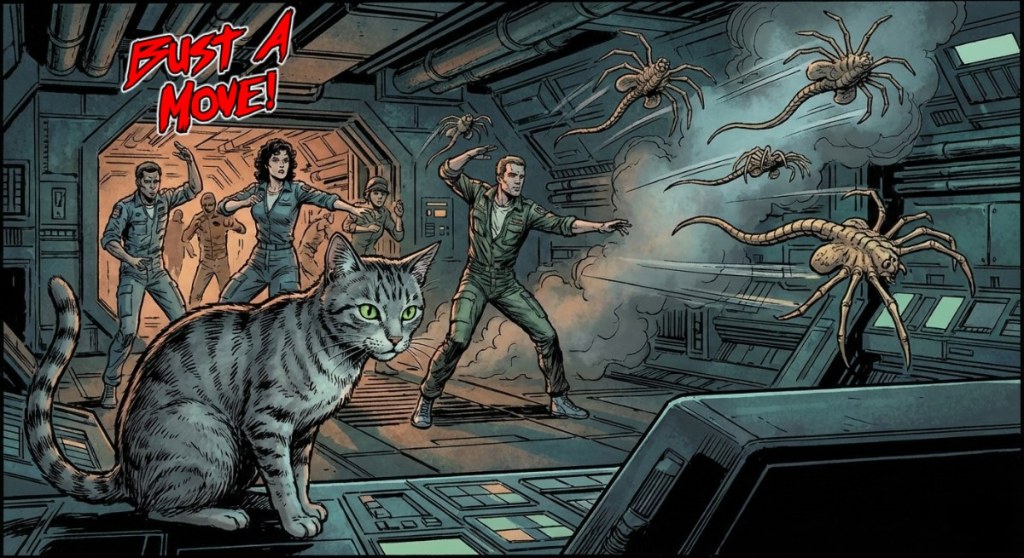
Other critics were enamored with a post-credits dance scene featuring Buddy, the crew of the Nostromo and dozens of face-huggers who fly through the air, forcing the cast to bust impressive dance moves to avoid the dangerous creatures. At one point Buddy launches into a breakdance routine. The actress who plays Ripley wags a finger at a xenomorph and declares “You just got served!”
“It’s clever, light and wildly entertaining,” one critic wrote. “Buddy’s got some magnificent dance moves!”
Others praised Buddy for his impressive physique. In an interview with Entertainment Weekly, Buddy said he’d been training non-stop for eight months for the role, eating a high-protein diet and spending five hours a day napping in the gym to accentuate his meowsculature.
“The effort paid off big time,” a review from Calico Critics noted. “Buddy looks more ripped and impressive than he ever has, and he was already competing against a high bar he set during his previous films.”
In the post-credits dance scene, Buddy and the Nostromo crew perform a synchronized routine while dodging facehuggers.
However, not everyone was impressed. Reached this weekend at his New Zealand bunker, where he’s fled “until America isn’t annoying anymore,” director James Cameron called the Alien reboot “derivative, low-calorie cinema junk.”
“Remember when I had characters saying ‘Hasta la vista’ and ‘Adios, muchachos’? That was really cool. I was one bad hombre,” Cameron said. “Audiences might think this is a good film, but that’s because they haven’t seen the wonders of Avatar XVII yet. Just wait, it’s gonna be awesome. And there are no cats.”




 Pain In The Bud