David Mitchell’s twist on the familiar haunted house story is an unsettling page-turner, perfect for a chilly October night.
Slade House isn’t your typical David Mitchell novel.
For one thing, it’s a slim volume, about 240 pages depending on the format and edition. You can mainline it in four or five hours, and it’s such a page-turner that many people have.
It’s not concerned with making any particularly grand statements about life and is engineered for one goal – to entertain the reader with a satisfyingly spooky story.
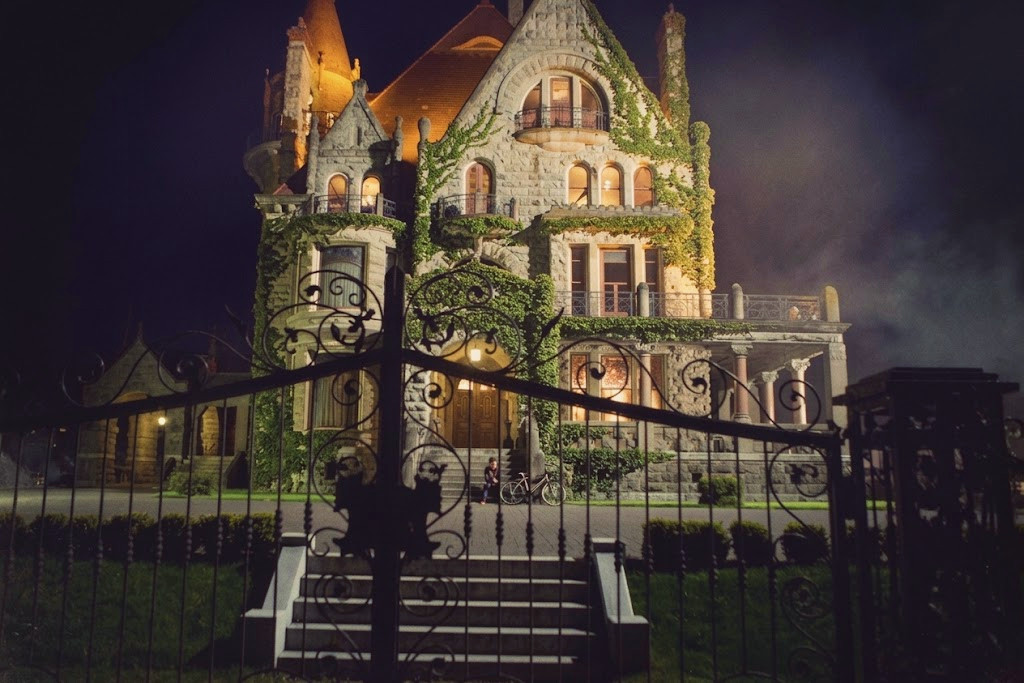
Slade House is the name of the mansion at the heart of the book, a grand aristocratic structure that once sat on a sizeable estate but is now crammed between houses and shops in a working-class neighborhood of London. It’s accessible by walking down a shabby, narrow alley fronted by a pub called The Fox and the Hounds. The gloomy lane takes a turn, and if you know precisely where to look, there’s a slim iron door leading to something unexpected in such a neighborhood – a verdant, picturesque garden surrounding a small pond. A path winds through the garden and under a series of trestles, leading to the ivy-choked home sitting on the crest of a low hill.
Most interestingly, it exists for exactly one day every nine years, when someone is lured inside and is never seen again.
This is not Slade House, but Craigdarroch Castle, a Victorian-era Scottish baronial mansion in British Columbia, is very close to the image in my mind’s eye while reading the book.
Mitchell shows us Slade House through the eyes of its many victims: an awkward, autistic pre-teen boy who is enticed inside along with his mother. A police detective and wannabe lothario dispatched to investigate the house and the fate of people who have gone missing there over the decades. Members of a local university’s extracurricular paranormal research club who think they’re in for a ghost hunt only to find a debauched Halloween bash packed with undergrads. The journalist sister of one of the college students who went missing there in the last nine-year “cycle.”
And finally, a Canadian psychologist with a clinical interest in people who buy into conspiracy theories, stories of alien visitations and other strange phenomena.
To describe what each of them finds inside would be to spoil the novel and rob the narrative of its punch. Besides, nothing I can say could possibly do justice to the yarn Mitchell spins here.
What I can say is that Slade House reinvents itself so it appears to give its victims exactly what they want, and the forces behind the spectral structure aren’t there to play nice. I found myself thinking of their malevolent tricks and shuddering long after I finished the last chapter.
Since then it’s become something of a Halloween tradition to dive back in. I don’t read Slade House every year, and knowing how few books we read in our short lives even when we make a serious effort, I’d much rather push myself to discover new novelists and worlds.
Yet Slade House is the rare book that deserves and even demands to be read again. Not only is it an exceptionally well-crafted story, it’s got the same quality as films like The Big Lebowski when every time through the narrative yields new revelations and additional connections become apparent. It could be something as simple as a callback to a seemingly unimportant piece of dialog early in the book, or recognizing a certain character is someone you’ve met in a previous Mitchell novel making a cameo in this one.
Or it could mean finally recognizing a bit of symbolism that’s been staring you in the face the entire time, like the discovery of a dead cat in Slade Alley in the book’s opening pages. The feline in question is the legendary Moon Gray Cat, an entity that appears in almost every Mitchell novel at critical points. When the Moon Gray Cat shows up dead almost immediately in Slade House, that’s Mitchell signaling to the reader that there will be no magical help for the characters in this novel. They’re on their own. (Fellow cat lovers, please note: Mitchell is on record saying the Moon Gray Cat is not really dead, and in fact cannot be killed. He appeared in the very next Mitchell book, and I’m sure we’ll spot him rubbing up against a character or napping in the background during a key scene next time around as well. Viva la Moon Gray Cat!)
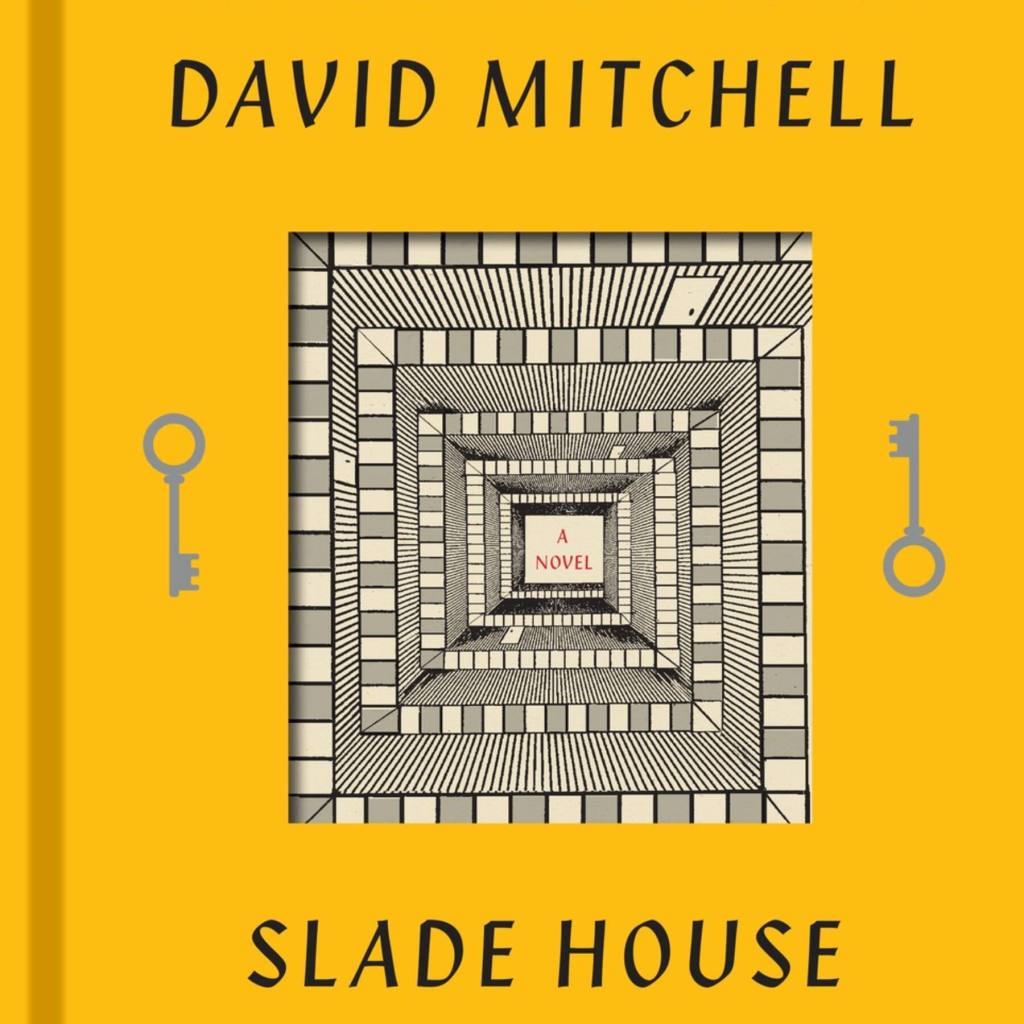
The first-print hardcover edition of Slade House, which was published in 2015.
As for the book, it’s something different built on the bones of the classic haunted house story. The horrors inside Slade House persist even when the home itself vanishes.
The police, for their part, think they’re spinning their wheels at the behest of jokesters. They know the disappearances are real, but every time someone goes missing not only are detectives unable to locate Slade House, they find it cannot exist. There’s simply not enough room in the jumble of buildings housing shops and flats. Satellite photos confirm what they can surmise from the ground, though municipal records do turn up a Slade House that formerly existed there until it was destroyed during a German bombing raid on London during World War II…
The detectives rationalize the disappearances. One family may have simply fled, leaving behind outstanding debts and complications in London and finding refuge with relatives in Canada. A woman who vanished half a century ago may have ditched her husband and ran off with her lover. There are plenty of reasons people abandon their lives, and maybe the fact that they were last seen entering Slade Alley is just coincidence.
Only one group of people have begun to assemble the facts, and those are the victims. “Pass it on,” the echo of a previous victim tells a person freshly lured into the phantasmagorical property at one point. The recipient doesn’t know it’s already too late for her, but if she can add to the small packet of information, perhaps some future target can be warned off before Slade House slips the handcuffs on.
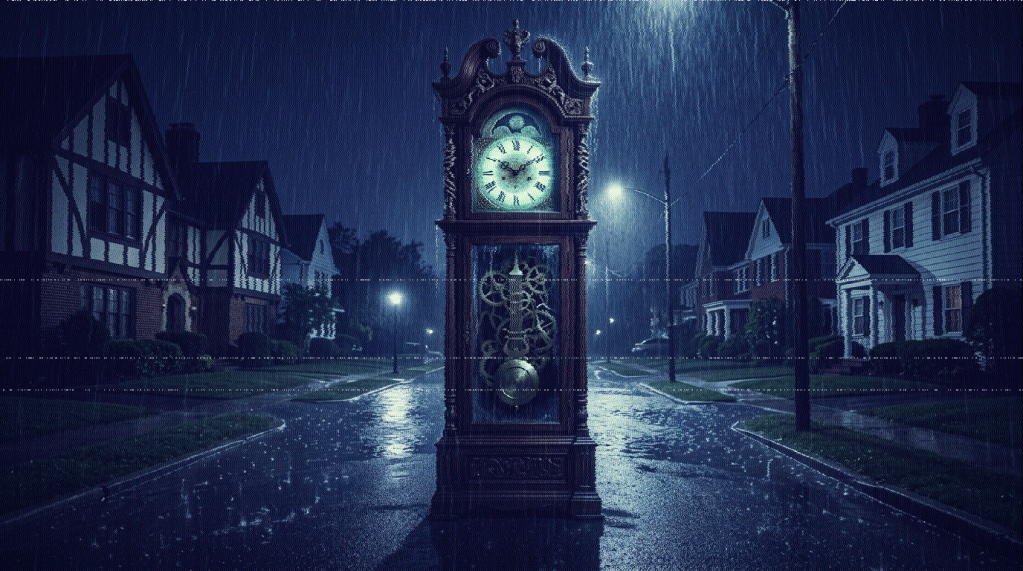
The image of a grandfather clock and the ways we interpret time play a subtle but central element in the novel. Image modified in Photoshop from an original via Pexels
For his part, when Slade House was published in 2015, Mitchell took some fire from the literary establishment for taking a detour and deciding to play in a genre sandbox for a while. Some critics argued that his talents are too great to waste on lowly genre fare when he could be writing Serious Literature™.
I was proud of him when he made it clear to one interviewer that he doesn’t care. He had fun writing the novel and he hopes readers enjoy spending time in its odd little world. Besides, he argued, the idea that genre fiction is less worthy of attention is itself a flawed premise.
I wholeheartedly agree with that assessment, as well as Mitchell’s contention that genre fiction gives us a safe place to explore fantasies, ambitions and anxieties that would normally be dismissed as childish. Science fiction, one of my favorite genres, is often criticized on the aforementioned terms as if speculating on the very nature of our existence – and whether we share our vast universe with other sapient entities – is somehow out of bounds, and we should all aspire to the kind of writing favored by MFA factories.
Insisting that there is only one valid way to create is close-minded. Opening yourself to possibilities you haven’t grappled with is the precise opposite.
Now if you’ll excuse me, it’s been a few years since I last visited Slade House, and I have a date with a reality-shifting entity that wants to consume me, at least for four or five hours.
Those of us with even a modicum of writing talent are suddenly bumping up against hostile readers who insist we’re purveyors of AI slop. The people we have to thank for this new experience? The purveyors of AI slop.
Fresh off reading a fiction novel and highly amused by the author’s tendency to go on bizarre tangents, I wrote a few hundred satirical words mimicking his style and shared it to a subreddit.
I expected like-minded people to respond. Hopefully they’d find it amusing. At the very least, it should spark a conversation.
Instead I checked back the next day to find my post hidden by downvotes.
The top comment: “AI slop, f— off loser.”
The second-highest rated comment was simply “ChatGPT.”
I should have cut my losses and moved on, but it bothered me that something I wrote could be so easily and thoughtlessly dismissed as the product of AI. So I responded explaining that I had in fact written the post, slapping it together during some downtime because I thought fellow readers might get a kick out of it.
I have many deficiencies as a writer which frustrate me to no end, but I do have a modest talent for literary mimicry that I’ve deployed at various times to make observations about novelists like George R.R. Martin, popular essayists like Mitch Albom, and people like Donald Trump, whose speech patterns are practically emblazoned in neon.
No, the commenters told me. You didn’t write that post, you used ChatGPT, you are a loser, and you need to f— right off with your AI slop.
Apparently it is now inconceivable that human beings with even moderate talent exist, that anyone would spend 15 minutes jotting down a satirical take on a popular book or TV show, or put any effort into anything at all when we can cognitively offload everything.
It just happened to me again twice in recent weeks, bringing the total to probably half a dozen times since January. It doesn’t happen here because readers know me, and the blog has been around for seven years. If I’ve been using a large language model to write this blog, then I must have a time machine that allowed me to access the tech at least two years before its first crude incarnations were tested in-house at OpenAI.
Plus there’s no other idiot out there who writes absurd stories glorifying his pet cat for fictional adventures like running a criminal catnip empire. It’s not as if there’s a line of people trying to emulate what we do here, nor is there profit in it. It’s a labor of love not just because I love cats, but also because I love my cat. He’s changed my life for the better and I enjoy writing about his antics.
Credit: Hatice Baran/Pexels
There is also a strong argument for not caring. Social media and general forums are not lacking for miserable cynics and people who work through their real life frustrations by vomiting bile in every direction.
I don’t need to justify myself to every cynic and malcontent, nor do I want to take on the burden of proving a negative.
The real-life impact of AI on the news and publishing industries
Unfortunately it’s becoming more difficult to ignore because it’s beginning to impact more than just online dialog.
Generative AI has put the editors of genre magazines and periodicals on their back feet. Editors, already overworked, find themselves trying to navigate “a swamp of slop.” Some have shut down general submissions entirely. Others have adopted convoluted processes or require known writers to vouch for the submitter, as if they’re applying for membership in an exclusive social club.
Generative AI is also destroying what’s left of the news industry, and the damage is now so widespread that it isn’t only impacting people who used to crank out simple daily stories. When entire publications fold and companies like Gannett turn formerly excellent broadsheets into little more than AI-generated shells for advertising inserts, investigative journalism jobs disappear and government employees at the municipal, county and state level operate without anyone keeping watch.
Credit: Mart Production/Pexels
I think about some of the stories I wrote: A series about an unusually high number of suicides on particular bridges in New York that led to major changes in safety features on those bridges. A comprehensive account of extensive fraud in the state jail system. An investigation into New York-based charities guilty of outright corruption or abysmal program spending, run by people who paid themselves well and held glitzy charity galas, but actually raised very little or nothing for the causes they claimed to represent. An interview with the traumatized dad of a mass shooter who kept blaming himself and asking “Where did I go wrong as a father?”
And the story I’m most proud of, an 11th-hour rush job about an abducted girl, an article I scrambled to get done by the print deadline and submitted just minutes before pagination files were sent to pre-press. The story ran in one of our sister papers in New Jersey, leading to a reader recognizing the kidnapper the same day it was published. The reader called police, who found the man with the young girl he’d abducted.
I helped save a kid from a horrific, life-altering trauma! I don’t say that to toot my own horn, but to emphasize the value of real journalism, of human beings prioritizing a story and making every effort to get it done and published when there are real stakes. The story wasn’t anything special, it didn’t stretch my abilities or win any awards, but it impacted the lives of a real family for the better.
A machine could not have taken a call from a panicked mother, reassured her every effort would be made to get the story out, driven to the detective bureau after hours to verify the details, found out where the abductor had roots, and made sure the story ran in the newspaper covering the area where the abductor likely fled with his victim.
That kind of journalism cannot be replaced by AI or bloggers. It takes training, strong news judgment, the ability to navigate bureaucratic circles of hell, and lots of patience in dealing with people who consider reporters irredeemable bottom-feeders.
At least as it stands now, generative AI can’t replace a thoughtful interviewer, a true investigative reporter, or honest analysis of important stories. An investigative reporter can use AI to help scour thousands of documents for a needle in a haystack or to search for hidden patterns, but that is an example of incorporating the tech into a workflow, using it to make drudge work easier, not using it to replace a human. Human consciousness and judgment is still the guiding force behind the effort.
Still, I’d be lying if I said it didn’t bother me that this is happening as often as it has been recently. We may be living in an age of algorithmic AI, of simulated intelligence instead of AGI and true machine cognition, but this is not what I envisioned while imagining the ways AI could impact society.
It’s also frustrating that my writing is now automatically dismissed as “slop” because it doesn’t have some arbitrary lack of polish to it, or because people are cynical in general.
My writing is the closest thing to my consciousness, to my mind, to me.
Obviously I format and attempt to copy edit my own posts. A replica of my stream of consciousness wouldn’t make for coherent, entertaining reading. But when I write a post about an issue impacting animals, my feelings for my best Bud, or something else that I’ve got an opinion on, you’re reading my thoughts on the subject.
That is a direct result of who I am. To offload that to a machine seems insane, an abdication of my mind, personality and voice to a fancy bit of code.
AI-generated content is even more ubiquitous than we realize
When I finish my novel — a narrative that weaves elements of space opera with themes about species conservation and appreciation for our one and only home planet — will I run into skeptical editors? Will some people dismiss it out of hand if they deem it too polished or they’ve been inundated with submissions from people who see AI as a shortcut to getting published? Will there still be a book publishing industry?
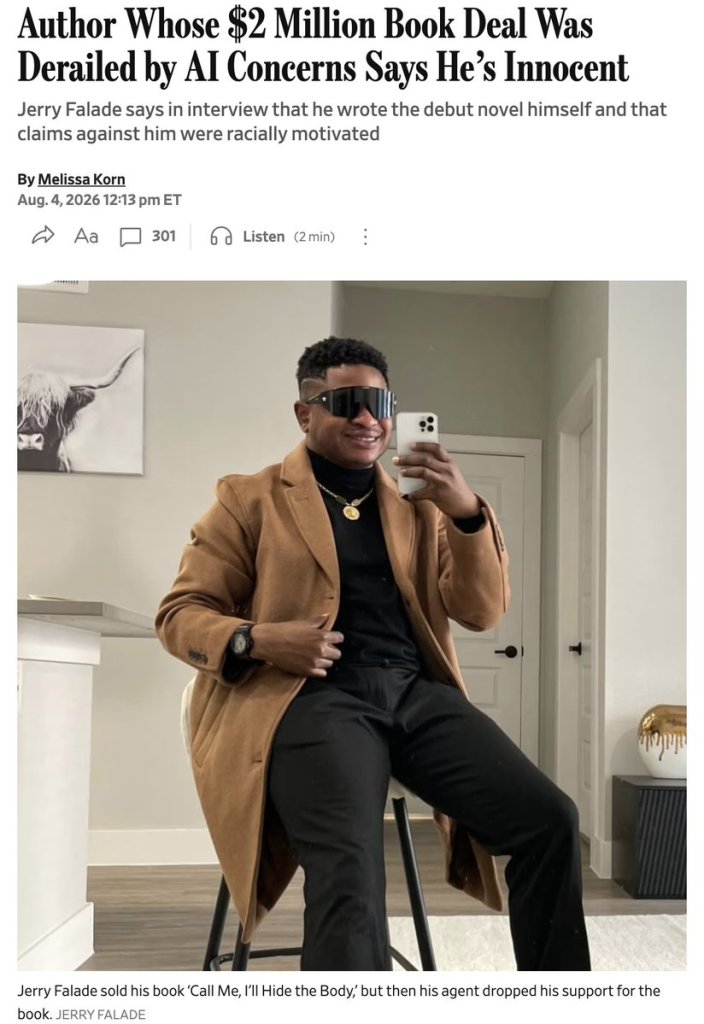
A Wall Street Journal story about the most recent AI publishing scandal.
The doors are already closing. In the latest scandal, a publishing company withdrew a multimillion-dollar advance to an author whose debut had sparked a bidding war because he used AI to write the novel. (The claimed author, Jerry Falade, says he did not use AI and argues he’s a victim of racism targeting black novelists, though it’s worth pointing out that it wasn’t just the publishers who bought the rights in the US and UK who cancelled the book. His agent dropped him too, saying she “could no longer substantiate” Falade’s insistence that he wrote the book.)
Given the fact that they’re voluntarily shelving a novel that was likely to move copies and make them a tidy profit, it’s difficult to believe the publishers and agent made the decision lightly.
The fact that Falade is an academic does not shield him from suspicion. The writer Sam Kriss has called out several people in higher education for using AI, including Narges Bajoghli, an assistant professor of Middle East Studies at John Hopkins University. Kriss cited this passage, which screams “I wrote this with ChatGPT”:
“Not a ceremony. Not a transition. A series of viral moments. A missile arc across a pale sky, and below it, the world already changed.”
Indeed, that precise sentence construction appears in another bit of AI writing highlighted by Kriss, and you can find it in AI-generated writing all over the internet. “Not an X. Not a Y. A Z,” followed by a bit of purple prose that sounds vaguely poetic but says nothing. Why the large language model likes to phrase things that way is a mystery, but it must have appeared in annotated data sets used by OpenAI to train the algorithm, and now it’s popping up with alarming regularity in essays, news stories and fiction writing “authored” by people who have suddenly and miraculously transformed into prolific, polished writers.
Not an accident. Not a happy coincidence. A blaring klaxon forged in ones and zeroes, summoned by prompt engineers communing with the machine gods.
That’s just one example, but AI’s penchant for using certain phrases and rhythmic structures has led to an unsettling, self-reinforcing homogeneity. The more AI uses these constructions, the more we’re hammered over the head with them, the more they leak into our own conversations and writing. It’s like going on vacation with a friend and coming back two weeks later to realize you’ve picked up on their favorite exclamations. Except that friend is now everywhere at once, and half your work colleagues have incorporated his -isms into their everyday dialog.
I use AI for images, which makes me a hypocrite
This has, of course, led me to reevaluate my use of generative AI images on this blog.
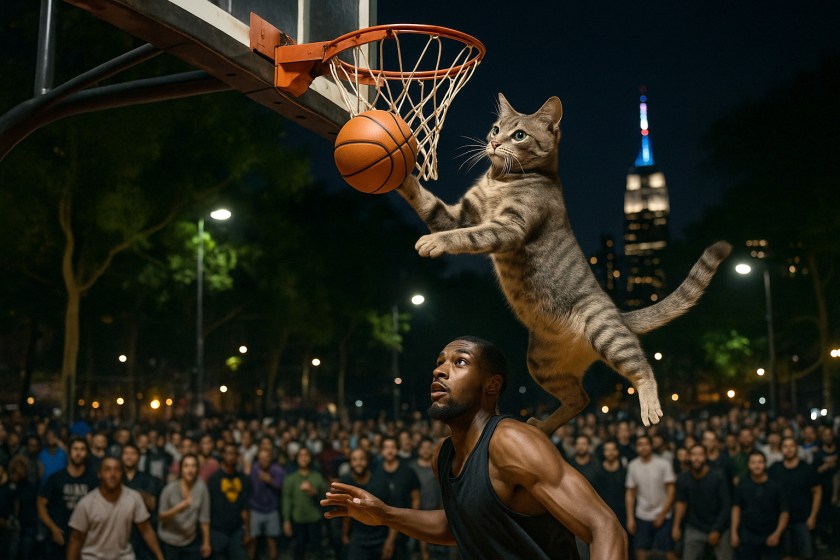
I’ve justified it by telling myself there was never going to be a situation in which I’d commission a professional artist to paint images of my cat dunking over NBA players in a summer league game, looking comically ridiculous in a powdered wig as a captain aboard a 17th century ship of the line, or riding through the jungle on the back of a jaguar 10 times his size.
An AI-generated image of Buddy playing street ball at a Manhattan court. I tend to use AI for two things: to explain physics concepts I have difficulty wrapping my head around, and to generate images of my cat in ridiculous situations.
There’s also a crucial difference in that I’m using AI images to illustrate humor stories on a blog, not submitting them to galleries or publications as my own work, then accepting payment and plaudits for them, which is what many people are doing with AI-authored writing.
While that’s true, it’s also true that I’m participating in the devaluing of art on some level. More recently I’ve made a conscious effort to limit its use here, but that still makes me a hypocrite. I relied on it too heavily in the past and now routinely see blogs that use it for every post. I’m not judging those bloggers, merely observing how much we’ve all come to rely on the technology.
The improbably prolific new masters of prose
On the writing side, there’s also been a deluge of new “storytellers” who write generic stuff in a punchy style, with minimalist sentences and formatting that is unmistakably the output of a large language model. They blog under names like “Stories from the Mind Of…” or “Weekend Stories With…” and they always seem to have the right anecdote to illustrate some generic societal ill.
Many of these new, astonishingly prolific writers are publishing their AI-generated stories on platforms like WordPress, WebNovel, Royal Road and Youtube, and people are eating it up despite the fact that it’s machine-generated, generic content. It’s not coincidence that Amazon suddenly has three times as many book titles for sale, or that there are entire YouTube channels dedicated to genre stories — horror, science fiction, romance — that contain all the hallmarks and language quirks of AI, including nearly identical plots, recycled character names, and recycled phrases. Nor is it happenstance that they’ve all materialized out of nowhere in the last year or two.
A Youtube channel that posts science fiction stories narrated by AI, with images created by AI, and music created by AI, by a person who claims he does not use AI to generate his stories despite all the hallmarks of AI-generated writing.
Some publish stories of 8,000 to 10,000 words several times a week or even daily! As a writer who came up in a daily news environment, I’ve learned to pump out accurate, polished posts with regularity. It is a requirement of the job.
If you can write in a busy newsroom with phones ringing, police scanners buzzing, and more than 100 coworkers in an open office plan chatting away, you can write just about anywhere.
And yet I cannot dream of dropping polished 8,000-word fiction stories every single day. No human being can do that. Even if you can keep that pace for a short while (and very few people can), before long you’ll be derailed by burnout, a lack of new ideas, stories that just don’t come together the way you envisioned. Or maybe life just gets in the way.
The hidden physical cost of AI
A server room at CERN, the large hadron collider in Switzerland. Credit: Wikimedia Commons
While I don’t want to come off as one of those people who reflexively condemns new forms of tech, the more I learn about the infrastructure behind AI, the less I like it.
AI requires massive data centers that rival or exceed cities in power consumption. While it’s true that data centers have existed for decades, the centers that power AI are a new breed, orders of magnitude more power-hungry than their predecessors.
Advanced processors require cool ambient temperatures but they also generate lots of waste heat, meaning data centers are also a huge drain on water reserves. That’s the second law of thermodynamics. With summers getting hotter, what happens when there are droughts? If you think the government will tell big tech to ease up on data center water consumption, you’re probably not aware that our government doesn’t even protect cities and states from overwhelming water consumption by foreign-owned industrial farms.
There are communities in the southwest that have become endangered because, for example, Saudi-owned alfalfa farms consume so much water that there’s none left over for the people who live there. Politicians listen to the people who have the deepest pockets and a town of 10,000 in Arizona can’t compete with the vast wealth at the disposal of Saudi Arabian interests, even when those constituents have been reduced to frantically filling gallon containers in the brief interludes when new rainfall temporarily replenishes reservoirs.
Don’t like it? Go to Costco and stock up on spring water. No, the congressman cannot take your call. He’s got a meeting on data center expansion this afternoon.
If our elected representatives side with foreign investors over their own voters, we have little chance of them siding with us over deep-pocketed technology giants, headed by tech oligarchs who cut checks to lawmakers in every election cycle and already have their tendrils deep in government at every level.
Finally, about that cognitive offloading we talked about earlier: the mind and brain depend on keeping skills sharp. If we don’t use it, we lose it. It’s very easy to see how capabilities and intelligence may regress in our society if everyone uses AI for virtually everything.
Maybe all this is pointless. Maybe I am, in the words of Kriss, merely expressing “the rage of a rapidly obsolescing ape.”
I’m not condemning anyone who uses AI and I’m not saying I’ll never use AI again. That would make an even bigger hypocrite out of me, and it would be an act of self-harm not to keep up with such a rapidly-evolving technology. But I am going to make an effort to use it sparingly, hopefully only when absolutely necessary, and never to write a single word for me.
As a one-man band without a budget, for example, I rely on free-license photos from Wikimedia Commons and Pexels to provide visuals for my posts. Which is fine for the majority of topics, but sometimes there are obscure stories that cannot be illustrated with existing free photos.
For the other stuff, I’ll go back to the simple charms of bad Photoshops of Buddy as a Godzilla-size cat stomping around Manhattan in search of similarly massive turkeys.
And let’s hope services like Pangram, which claims 99 percent accuracy in detecting AI-generated writing, stay ahead in the arms race. Already people determined to use AI to become authors and storytellers are using so-called “humanizers” in an attempt to fool those apps. I suspect the next few years will look an awful lot like the unending battle between hackers and security companies in their own arms race to stay ahead of exploits.
A look at the strange and wonderful world of rare books where, of course, you’ll also find cats.
I’ve always liked the idea of antiquarian bookshops.
I am almost completely ignorant on the subject, mostly because chasing after extremely rare print volumes is the domain of people with a lot of expendable income. The most valuable books in my possession are an original 1939 first edition print of Will Durant’s The Life of Greece, and two novels signed by their authors. Their value is sentimental, not monetary.
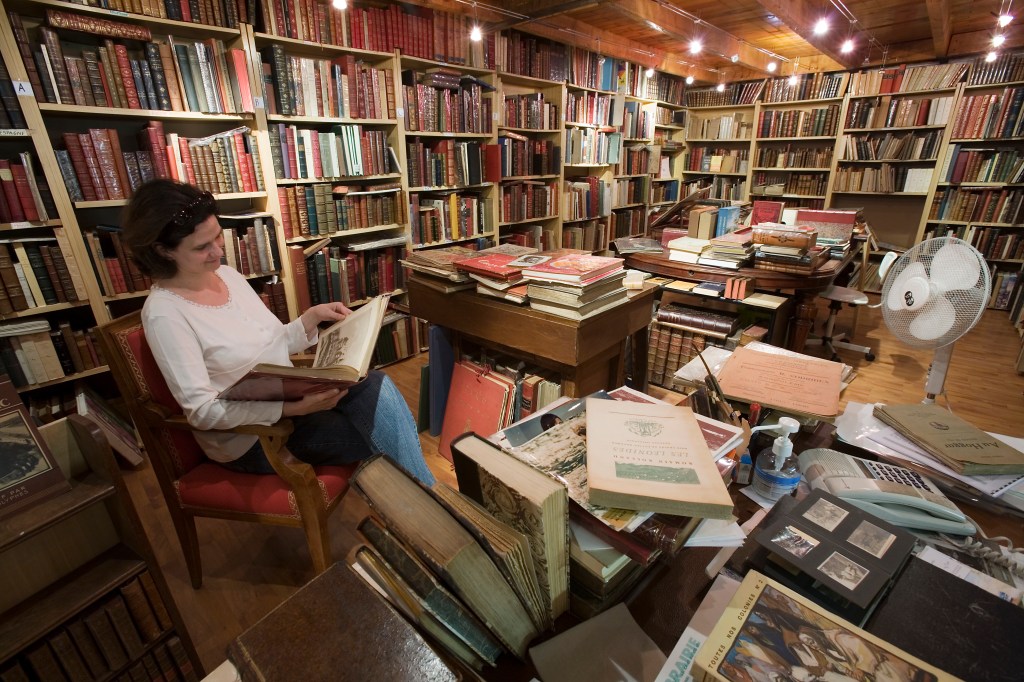
But I like the general romanticized image of the antiquarian bookseller: an older man or woman in tweed ensconced in a cozy shop in Manhattan, with every shelf filled with dusty volumes and every surface covered by globes, astrolabes and other curiosities. There’s one of those tight winding staircases with wrought iron railings leading to a loft for access to the highest shelves, the music is from a vinyl collection of light jazz, and it’s always raining outside.
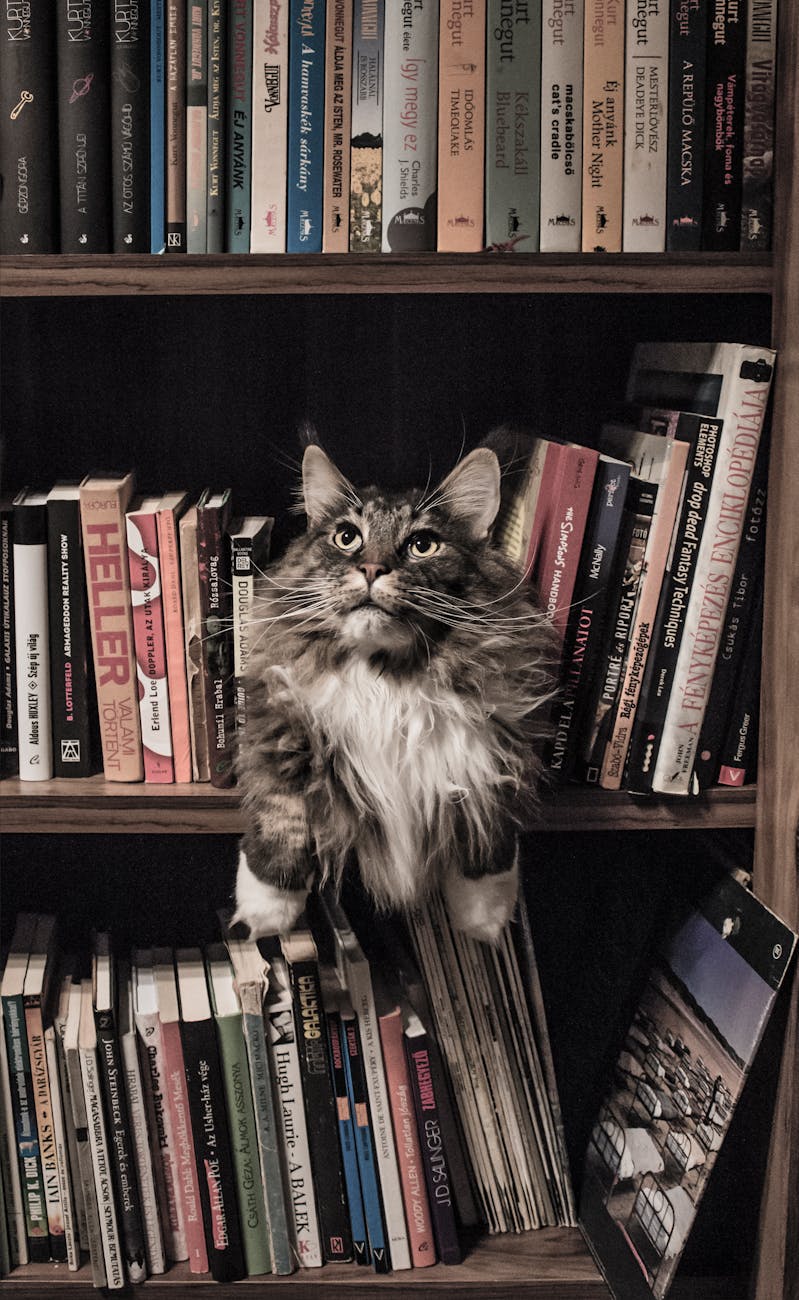
A doted-on shop cat dozes on a red leather armchair, tail twitching from some nightmare in which it’s slightly less adorable than it thinks it is.
Collectors in damp trenchcoats drop in, asking after 17th-century occult tomes, grimoires, and Voynich-esque manuscripts with engravings of impossible creatures, trees with visual organs and arcane rituals. Bibliophiles ask after leatherbound collections of classics like Don Quixote, and the occasionally curious passerby peeks in, surprised that such shops still exist in the age of the internet.
It turns out that’s not too far from the truth, especially the bits about the internet and, of course, the cats.
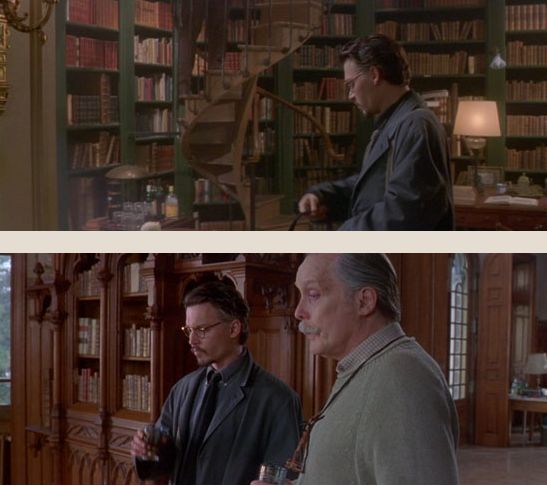
Johnny Depp is constantly smoking and drinking red wine while handling priceless old books in 1999’s The Ninth Gate. Notice the winding staircase in the rare book shop in the top screenshot.
The Booksellers is a documentary that screened in festivals in late 2019 before heading straight to video when the pandemic brought the world to a screeching halt.
It’s an inside look at the annual New York Book Fair and the small world of antiquarian and rare booksellers in New York, a shrinking constellation of people mostly descended from, or formerly apprenticed to, the booksellers of old before Barnes and Noble and Jeff Bezos laid waste to that sector of retail.
Before network TV, cable TV, dial-up internet, broadband, Kindles, iPads and smartphones turned us into a media-gorging — yet paradoxically less literate — society, New York was home to more than 500 bookshops, including generalists and specialists who catered to people with particular and peculiar interests. Now it’s home to fewer than 80, according to the documentary.
When the booksellers were asked about the way the internet has impacted their trade, their weary sighs reminded me of my older colleagues from my brief time experiencing the end of the “good old days” of newspapering, before the internet destroyed or compromised every publishing income stream and delivered us to this moment. This dystopian time when entire swaths of the country have become news deserts, Elon Musk in all his wisdom asserts that Twitter accounts run by anonymous trolls in Belarus are just as reliable — even more trustworthy, in fact — than those liars in legacy media, and corporate raiders are stripping the last handful of newspapers down to assets they can auction off.
A rare book shop in Paris. Credit: Wikimedia Commons
Not all of it’s bad. One rare book dealer laments the fact that “the thrill of the hunt” is gone, meaning it no longer takes years to track down some obscure volume because you can hop online and find it in a few clicks. I get that, but nostalgia for that sort of thing is the ultimate in looking back through rose-colored glasses. Plenty of us could wax nostalgic about the days when we’d hear a song on the radio and have to hum the damn thing to record store clerks, but we’re forgetting about the considerable frustration involved. Given the choice between “fun” ignorance and access to information, I’ll always choose the latter.
As for the cats, it’s not a surprise when many of the book dealers interviewed for the film identify themselves as cat lovers or idly scratch their feline friends while showing off their vast personal collections. Antiquarian bookshops tend to be warm, quiet, gently-lit spaces, perfect napping spots for cats who guard old books from rodents.
If you’re interested in watching The Booksellers, you can find it on Amazon Prime video, or better yet, just click below:
In the era of Amazon, America’s independent bookstores survive by offering things the online giant can’t.
Like everything else in the realm of print media, bookstores have been having a rough go of it the last decade or two.
Waldenbooks, Crown Books and Borders no longer exist, with the latter chain shuttering its last 400 stores in 2011. Barnes and Noble is the last surviving book chain thanks to an aggressive strategy of expanding their cafe and lounge space, encouraging shoppers to hang out while they sample books and drink coffee.
There are still some 14,000 bookstores in the US, depending on how some hybrid businesses are categorized, and independent booksellers now make up the majority of real-world retail while the giant that is Amazon looms.
The key to survival is offering things Amazon can’t. Some distinguish themselves by catering to specific customers, like fans of mystery or science fiction, offering rare and signed volumes alongside their regular stock. Some pursue a Barnes and Noble-like strategy, leaning heavily into the hybrid coffee shop model. And some become community spaces for book signings and poetry nights.
Others lure customers inside — and back after they’ve already visited — with pets.
In a new story, the New York Times highlights independent book shops around the country that have dogs, lizards, turtles, rabbits, and of course, cats.
When it comes to our furry and clawed friends, some shops are populated with adoptable felines:
At the Literary Cat Co. in Pittsburg, Kansas, readers have the opportunity to adopt a pet while they shop. The store partners with a local rescue organization, hosting about seven cats at a time, along with three permanent feline “employees”: Hank, the regional manager; Scarlett Toe’Hara, the assistant regional manager (she’s polydactyl); and Mike Meowski, the assistant to the assistant regional manager.
Jennifer Mowdy, the store’s owner, described each cat’s role, personality and origin story with the air of a matriarch ticking off successful grandchildren. Speaking of the upper respiratory illness that cost Mike Meowski an eye, she sounded stoic. He was a kitten; she was there for him. They soldiered through.
Mowdy created a glass alcove for allergic customers – and to deter escapees – and a “kitty conference room” (accessible by cat door) for litter boxes. With regular scooping, four air purifiers and daily mists of Mrs. Meyers Room Spray, she said the scent of the store is neutral to positive.
In the past year and a half, the Literary Cat Co. has facilitated 50 adoptions. “We’ve only had one cat that didn’t work out,” Mowdy said. “Too much fight in her.”
Kittens tend to wreak havoc; Mowdy prefers a mature animal of the “Don’t call me, I’ll call you” variety. Felines are welcome to scale shelves and interact with readers as they please, which is their way.
“They get to practice being a good house cat,” Mowdy said. “They get socialized.” Occasionally, the right cat finds the right reader’s lap. The rest is destiny (with the rescue organization handling logistics; the Literary Cat Co. simply makes the introduction).
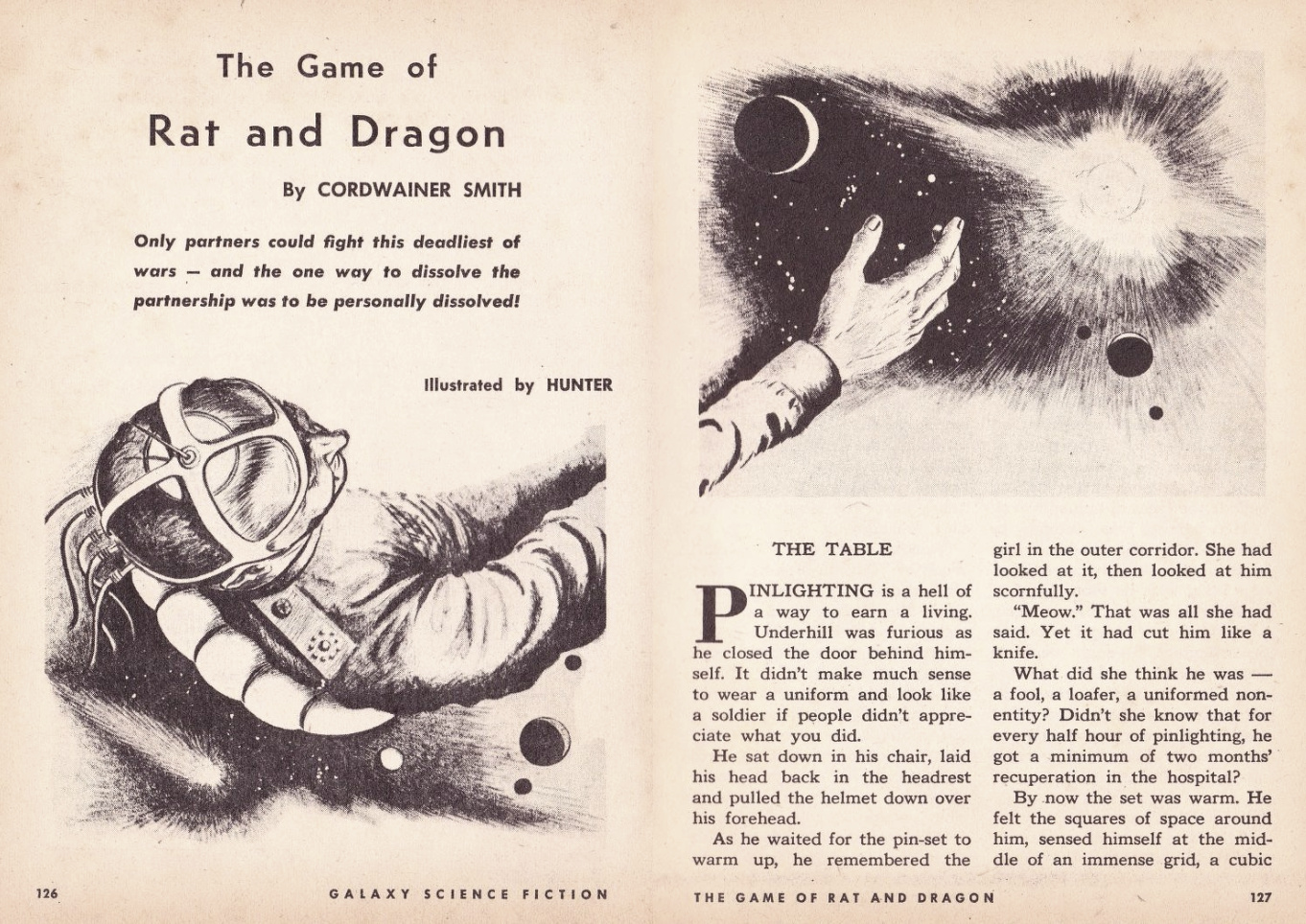
When an interstellar enemy threatens human progress, cats step in to save the day in this science fiction classic from 1954. The Game of Rat and Dragon explores the feline psyche and the cat-human partnership that has existed for 10,000 years.
A week ago we kicked off Bud’s Book Club with a short story, The Game of Rat and Dragon, and a non-fiction book, Man-Eaters of Kumaon. This post deals exclusively with the former. (If you haven’t read the story yet, it’s available here free. Most people will be able to read the story in less than a half hour at a moderate reading pace.)
By now everyone who’s read the story knows what it’s about: Cats, of course! But the story requires a bit of world-building setup before the kitties are introduced:
In an unspecified future humans have become a true spacefaring species, mastering interstellar travel and founding colonies in new star systems.
It’s a lot like the days of colonial powers founding settlements in the New World, but without the ugliness of terrestrial colonization or the quaintness of crossing a mere ocean.
Using a form of traveling called planoforming — essentially faster-than-light (FTL) jumps — human ships are able to reach distant star systems without traveling for the decades or centuries it would normally take to cross the unfathomable distances between solar systems.
Just when it looks like no obstacle remains for humanity to spread out into the galaxy, the intrepid explorers on the rim of human-occupied space realize there’s an insidious threat lurking in the void between stars.
Huge entities, invisible to the human eye, live in the vacuum of the interstellar medium. They haunt the void and attack human ships without warning. They are “beasts more clever than beasts, demons more tangible than demons, hungry vortices of aliveness and hate compounded by unknown means out of the thin tenuous matter between the stars,” author Cordwainer Smith writes.
When the mysterious entities attack, most people are mercifully killed in an instant, but the unlucky ones survive in a permanent state of insanity, their minds unable to cope with whatever alien malevolence they’ve witnessed.
As they learn more from each disastrous encounter, humans come to understand these creatures prefer the deep dark, shying away from star systems and their abundant sunlight.
But without a way to make it across the void, it becomes clear the era of human exploration and colonization is over unless something can be done to stop the enemy.
To extend the nautical theme, you can think of the dragons as giant krakens who prey on trade ships and passenger liners crossing between the American colonies and Europe during the Age of Sail. Although pushing the boundaries of new frontiers has always been dangerous, you can imagine how quickly intercontinental trade and settlement would grind to a halt if, say, half of all ships were sunk en route.
Humans can’t see the dragons, but that isn’t the primary reason they can’t successfully fight them. After all, the history of human warfare proves we’ve become adept at destroying enemies we can’t see, whether a ship’s dropping depth charges on a submarine hidden in murky waters, or some 20-year-old kid on an aircraft carrier hundreds of miles out to sea is using a joystick to lob drone-fired missiles on mainland buildings.
The real problem is that people just aren’t quick enough, unable to target and fire on the dragons before the entities react and speed away to safety.
So they turn to cats.
Kitties to the rescue
With their incredible reflexes, reaction time and hunting instincts, cats are more than a match for the dragons, and here’s where the story starts to get really fun. Cats, we’re told, travel alongside human vessels in their own little football-shaped ships that are equipped with precision miniature nuclear warheads.
Cats are happy to destroy the dragons — if their humans present the conflict as a game, make the “dragons” look like rats, and offer substantial rewards in the form of fish and poultry.
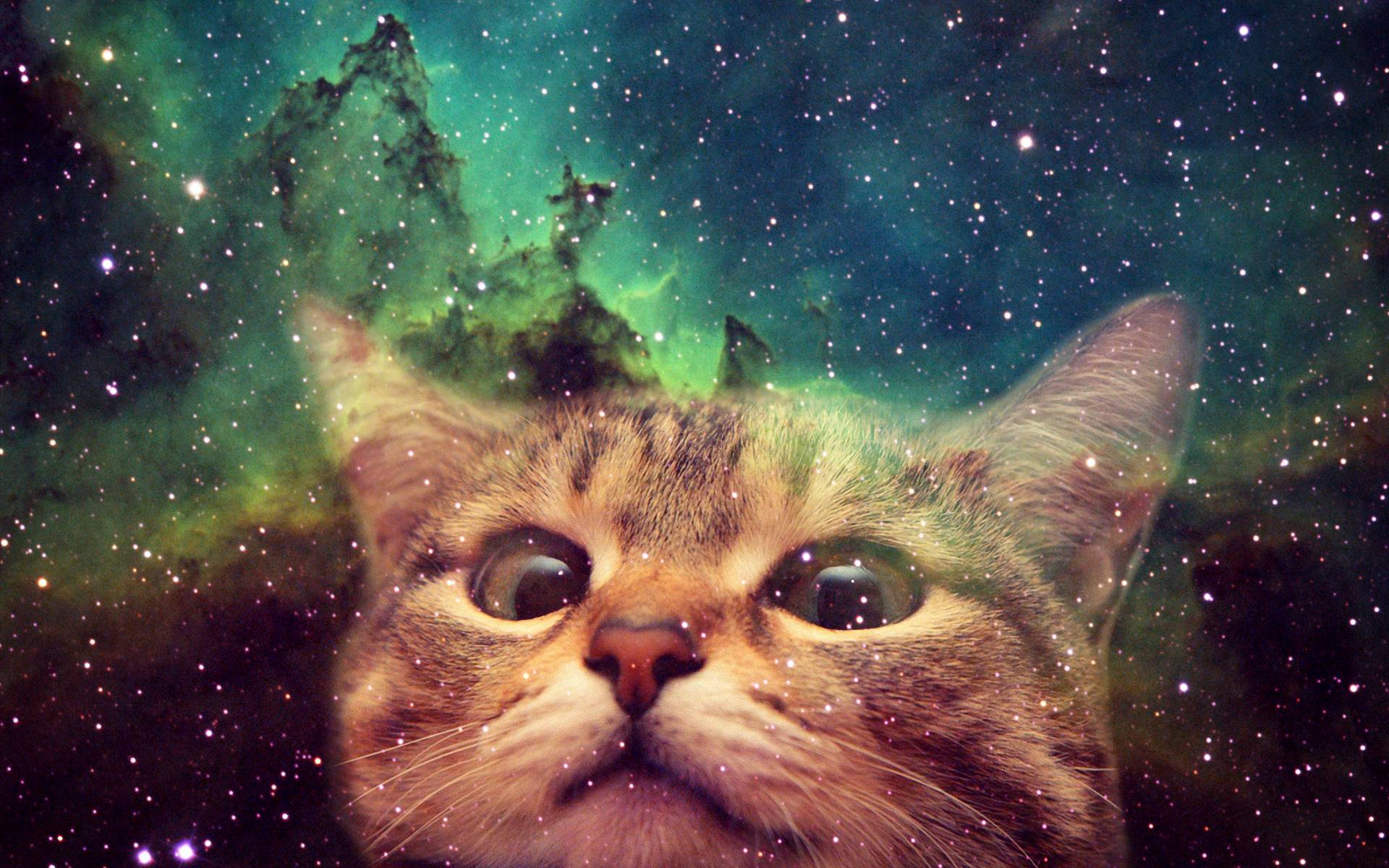
“I come from the Great Litterbox in the Sky!”
That’s why the cats are called Partners: Using some sort of brain link, specially trained humans pair up with the cats, mentally project images of the dragons as “gigantic rats,” and act like spotters so the kitties can pounce on their space rodents before the latter can hurt the human passengers.
Because the dragons are harmed by light, the cats lob “ultra-vivid miniature photonuclear bombs, which [convert] a few ounces of a magnesium isotope into pure visible radiance,” neutralizing the threat before anyone can be harmed.
The mind link between human being and cat is a two-way connection, affording cats a close-up view of human thought patterns just as the humans can feel the kitty’s mental processes.
We learn that our hero, Underhill, loves the feline Partners, and he’s deeply offended when a fellow soldier mocks his work by meowing at him. We also learn the cats understand that, while their task is dressed up as a fun hunting game, they face real danger when they fight the dragons.
The mind of a cat
Through Underhill’s eyes, we meet several of the Partners.
My favorite is an unnamed tomcat, described as “a greedy old character, a tough old male whose mind was full of slobbering thoughts of food, veritable oceans full of half-spoiled fish. Father Moontree had once said that he burped cod liver oil for weeks after drawing that particular glutton, so strongly had the telepathic image of fish impressed itself upon his mind. Yet the glutton was a glutton for danger as well as for fish. He had killed sixty-three Dragons, more than any other Partner in the service, and was quite literally worth his weight in gold.”
“To boldly go where no moggy has gone before!”
We’re told that the cats recognize the complexity of human minds, but aren’t necessarily impressed by them. The things humans concern themselves with and worry about are “silly” from a cat’s perspective (which, perhaps not coincidentally, is how the philosopher John Gray imagines how cats view us), and cats can quickly grow bored with a human too focused on highly abstract thoughts or subjects that simply don’t have much bearing on feline life:
“Usually the Partners didn’t care much about the human minds with which they were paired for the journey. The Partners seemed to take the attitude that human minds were complex and fouled up beyond belief, anyhow. No Partner ever questioned the superiority of the human mind, though very few of the Partners were much impressed by that superiority.
The Partners liked people. They were willing to fight with them. They were even willing to die for them. But when a Partner liked an individual the way, for example, that Captain Wow or the Lady May liked Underhill, the liking had nothing to do with intellect. It was a matter of temperament, of feel.
Underhill knew perfectly well that Captain Wow regarded his, Underhill’s, brains as silly. What Captain Wow liked was Underhill’s friendly emotional structure, the cheerfulness and glint of wicked amusement that shot through Underhill’s unconscious thought patterns, and the gaiety with which Underhill faced danger. The words, the history books, the ideas, the science—Underhill could sense all that in his own mind, reflected back from Captain Wow’s mind, as so much rubbish.”
Underhill is as fond of Captain Wow and Lady May, a friendly Persian, as they are of him. He’s happy when he’s called upon to defend a ship and finds out he’s been paired with the latter:
“When he had first come into contact with her mind, he was astonished at its clarity. With her he remembered her kittenhood. He remembered every mating experience she had ever had. He saw in a half-recognizable gallery all the other pinlighters with whom she had been paired for the fight. And he saw himself radiant, cheerful and desirable.”
What’s unique about this story — and what makes it particularly memorable, in my opinion — is Cordwainer Smith’s decision to explore the feline mind.
Out on a limb, from a feline world view
Minds, human or animal, are called “black boxes” for a reason. Even with the benefit of advanced science, even with fMRI and other forms of imaging, even with algorithmic AI that can read thoughts and sketch rudimentary images from our minds, we really don’t know what others are thinking, human or animal.
Smith goes out on a limb by imagining what must go on in the minds of cats, and it’s obvious he’s not only a cat lover, but he had a lifetime of experience with our furry friends when he wrote the story.
The idea that cats are all about emotion and tangible things — and are bored by things humans concern themselves with — seems dead on, as does the idea that cats aren’t impressed by our intellectual superiority, which only counts as superiority in human terms. Even if they had opposable thumbs and the means to create, would cats be interested in the kind of things we do?
Probably not. God only knows what kind of structures cats might build and what songs they’d write, but I’m pretty sure my cat would write paeans to turkey.